

Structure, function and diversity of the healthy human microbiome
Open accessThe DOI matches its Crossref record; 29 of the 29 references it cites were found in a registry or an index.
Abstract
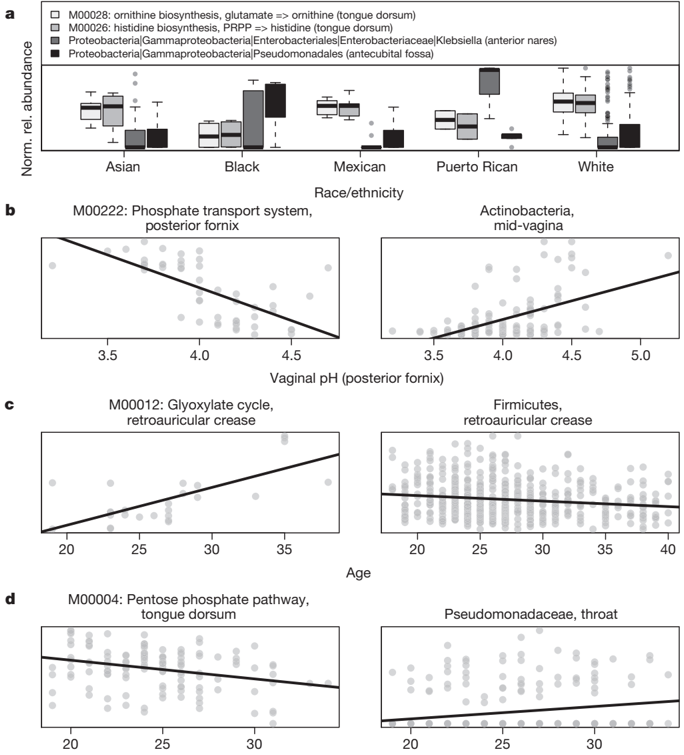
Studies of the human microbiome have revealed that even healthy individuals differ remarkably in the microbes that occupy habitats such as the gut, skin and vagina. Much of this diversity remains unexplained, although diet, environment, host genetics and early microbial exposure have all been implicated. Accordingly, to characterize the ecology of human-associated microbial communities, the Human Microbiome Project has analysed the largest cohort and set of distinct, clinically relevant body habitats so far. We found the diversity and abundance of each habitat’s signature microbes to vary widely even among healthy subjects, with strong niche specialization both within and among individuals. The project encountered an estimated 81–99% of the genera, enzyme families and community configurations occupied by the healthy Western microbiome. Metagenomic carriage of metabolic pathways was stable among individuals despite variation in community structure, and ethnic/racial background proved to be one of the strongest associations of both pathways and microbes with clinical metadata. These results thus delineate the range of structural and functional configurations normal in the microbial communities of a healthy population, enabling future characterization of the epidemiology, ecology and translational applications of the human microbiome.
Overview
The claims and statistics of this paper haven’t been checked yet.
Free: it reads the open-access text and checks the first 5 claims that cite a source we can check. Create a free account to check every claim.
Integrity signals
Registry
Cites
Statistics
Figures
Verification
Claims the paper makes
The claims and statistics of this paper haven’t been checked yet.
Free: it reads the open-access text and checks the first 5 claims that cite a source we can check. Create a free account to check every claim.
Claims other papers make about this one
Each is checked against this paper’s own text: does it say what the citing paper says it does?
The cited source doesn’t support the claim as written.
In the citing paper
“newly diagnosed cases with adenocarcinoma of the colon or rectum were recruited prior to surgery and treatment during 1985–19891, 2. Controls were patients awaiting elective surgery for non-oncologic, non-gastrointestinal conditions at these hospitals during the same period.”
From Assessment of variation in microbial community amplicon sequencing by the Microbiome Quality Control (MBQC) project consortium (2017) · cites this paper as [1]
Checked by a reasoning model — may be wrong.
Experimental — accuracy not yet measuredThe source backs part of the claim, not all of it — or backs it for a different population, condition or comparison.
In the citing paper
“Multiple factors affect the composition of the human gut microbiome, including geography, diet, infection and drug usage56,61–64.”
From Intestinal microbiota signatures of clinical response and immune-related adverse events in melanoma patients treated with anti-PD-1 (2022) · cites this paper as [64]
Experimental — accuracy not yet measuredThe source backs part of the claim, not all of it — or backs it for a different population, condition or comparison.
In the citing paper
“suggesting that no severe gut microbiome dysbiosis was present in the study group at baseline”
From Gut microbiome affects the response to anti-PD-1 immunotherapy in patients with hepatocellular carcinoma (2019) · cites this paper as [9]
Experimental — accuracy not yet measuredThe source backs part of the claim, not all of it — or backs it for a different population, condition or comparison.
In the citing paper
“Gut microbiota comprise thousands of microbial species that are involved in host metabolism by regulating energy extraction, activation of the immune system, drug metabolism, and other processes.”
From The Gut Microbiome Contributes to a Substantial Proportion of the Variation in Blood Lipids (2015) · cites this paper as [3]
Experimental — accuracy not yet measuredThe source backs part of the claim, not all of it — or backs it for a different population, condition or comparison.
In the citing paper
“The human gut microbiota contains thousands of different bacterial taxa as well as various archaea, eukaryotic microbes and viruses, more than three million genes, and harbors an enormous metabolic capacity [1, 2].”
From The athletic gut microbiota (2020) · cites this paper as [1]
Experimental — accuracy not yet measured
20 more claims about this paper
Create a free account to see every claim other papers make about this one.
Self-check
Percentages, sums and reported differences re-computed from the paper’s own numbers.
The self-check needs the paper’s full text.
Citations
Cites
Fast and accurate short read alignment with Burrows-Wheeler transform
Li, H., & Durbin, R. (2009) · Bioinformatics · doi:10.1093/bioinformatics/btp324 · Cited by 58,607
QIIME allows analysis of high-throughput community sequencing data
Caporaso, J. G., Kuczynski, J., Stombaugh, J., Bittinger, K., Bushman, F. D., Costello, E. K., Fierer, N., Peña, A. G., Goodrich, J. K., Gordon, J. I., et al. (2010) · Nature Methods · doi:10.1038/nmeth.f.303 · Cited by 34,887
Fast and accurate long-read alignment with Burrows-Wheeler transform.
Li, H., & Durbin, R. (2010) · Bioinformatics · doi:10.1093/bioinformatics/btp698 · Cited by 12,063
A human gut microbial gene catalogue established by metagenomic sequencing
MetaHIT Consortium, Qin, J., Li, R., Raes, J., Arumugam, M., Burgdorf, K. S., Manichanh, C., Nielsen, T., Pons, N., Levenez, F., et al. (2010) · Nature · doi:10.1038/nature08821 · Cited by 11,624
A core gut microbiome in obese and lean twins
Turnbaugh, P. J., Hamady, M., Yatsunenko, T., Cantarel, B. L., Duncan, A., Ley, R. E., Sogin, M. L., Jones, W. J., Roe, B. A., Affourtit, J. P., et al. (2009) · Nature · doi:10.1038/nature07540 · Cited by 7,823
Self-citationSokol, H., Pigneur, B., Watterlot, L., Lakhdari, O., Bermúdez-Humarán, L. G., Gratadoux, J.-J., Blugeon, S., Bridonneau, C., Furet, J.-P., Corthier, G., et al. (2008) · Proceedings of the National Academy of Sciences · doi:10.1073/pnas.0804812105 · Cited by 4,413
Vaginal microbiome of reproductive-age women
Ravel, J., Gajer, P., Abdo, Z., Schneider, G. M., Koenig, S. S. K., McCulle, S. L., Karlebach, S., Gorle, R., Russell, J., Tacket, C. O., et al. (2011) · Proceedings of the National Academy of Sciences · doi:10.1073/pnas.1002611107 · Cited by 4,254
Bacterial Community Variation in Human Body Habitats Across Space and Time
Costello, E. K., Lauber, C. L., Hamady, M., Fierer, N., Gordon, J. I., & Knight, R. (2009) · Science · doi:10.1126/science.1177486 · Cited by 3,231
Defining the normal bacterial flora of the oral cavity
Aas, J. A., Paster, B. J., Stokes, L. N., Olsen, I., & Dewhirst, F. E. (2005) · Journal of Clinical Microbiology · doi:10.1128/jcm.43.11.5721-5732.2005 · Cited by 3,092
Topographical and Temporal Diversity of the Human Skin Microbiome
Grice, E. A., Kong, H. H., Conlan, S., Deming, C. B., Davis, J., Young, A. C., Program, N. C. S., Bouffard, G. G., Blakesley, R. W., Murray, P. R., et al. (2009) · Science · doi:10.1126/science.1171700 · Cited by 2,953
Cited by
Items 801–900 of 1,676
Hyde, E. R., Andrade, F., Vaksman, Z., Parthasarathy, K., Jiang, H., Parthasarathy, D. K., Torregrossa, A. C., Tribble, G., Kaplan, H. B., Petrosino, J. F., et al. (2014) · PLoS ONE · doi:10.1371/journal.pone.0088645 · Cited by 275
The skin microbiome: Current perspectives and future challenges
Chen, Y. E., & Tsao, H. (2013) · Journal of the American Academy of Dermatology · doi:10.1016/j.jaad.2013.01.016 · Cited by 268
Sharma, N., 1 Department of Microbiology, G. C., Bhatia, S., Singh Sodhi, A., Batra, N., & 2 Department of Biotechnology, G. C. (2018) · AIMS Microbiology · doi:10.3934/microbiol.2018.1.42 · Cited by 253
Microbiome dynamics of human epidermis following skin barrier disruption
Zeeuwen, P. L., Boekhorst, J., van den Bogaard, E. H., de Koning, H. D., van de Kerkhof, P. M., Saulnier, D. M., van Swam, I. I., van Hijum, S. A., Kleerebezem, M., Schalkwijk, J., et al. (2012) · Genome Biology · doi:10.1186/gb-2012-13-11-r101 · Cited by 274
A selective gut bacterial bile salt hydrolase alters host metabolism
Yao, L., Seaton, S. C., Ndousse-Fetter, S., Adhikari, A. A., DiBenedetto, N., Mina, A. I., Banks, A. S., Bry, L., & Devlin, A. S. (2018) · eLife · doi:10.7554/elife.37182 · Cited by 274
Beneficial modulation of the gut microbiota
Walsh, C. J., Guinane, C. M., O'Toole, P. W., & Cotter, P. D. (2014) · FEBS Letters · doi:10.1016/j.febslet.2014.03.035 · Cited by 274
Metagenomics for pathogen detection in public health
Miller, R. R., Montoya, V., Gardy, J. L., Patrick, D. M., & Tang, P. (2013) · Genome Medicine · doi:10.1186/gm485 · Cited by 272
The microbiota and microbiome in pancreatic cancer: more influential than expected
Wei, M.-Y., Shi, S., Liang, C., Meng, Q.-C., Hua, J., Zhang, Y.-Y., Liu, J., Zhang, B., Xu, J., & Yu, X.-J. (2019) · Molecular Cancer · doi:10.1186/s12943-019-1008-0 · Cited by 268
Stability of the human faecal microbiome in a cohort of adult men
Mehta, R. S., Abu-Ali, G. S., Drew, D. A., Lloyd-Price, J., Subramanian, A., Lochhead, P., Joshi, A. D., Ivey, K. L., Khalili, H., Brown, G. T., et al. (2018) · Nature Microbiology · doi:10.1038/s41564-017-0096-0 · Cited by 273
Kibe, R., Kurihara, S., Sakai, Y., Suzuki, H., Ooga, T., Sawaki, E., Muramatsu, K., Nakamura, A., Yamashita, A., Kitada, Y., et al. (2014) · Scientific Reports · doi:10.1038/srep04548 · Cited by 271
The gut microbiome: the role of a virtual organ in the endocrinology of the host
Evans, J. M., Morris, L. S., & Marchesi, J. R. (2013) · Journal of Endocrinology · doi:10.1530/joe-13-0131 · Cited by 264
Contribution of Lactobacillus iners to Vaginal Health and Diseases: A Systematic Review
Zheng, N., Guo, R., Wang, J., Zhou, W., & Ling, Z. (2021) · Frontiers in Cellular and Infection Microbiology · doi:10.3389/fcimb.2021.792787 · Cited by 255
“L. iners can destroy or replace G. vaginalis to form biofilms in vitro (Hummelen et al., 2010; Zhou et al., 2010).”
BackgroundEnhanced virome sequencing using targeted sequence capture
Wylie, T. N., Wylie, K. M., Herter, B. N., & Storch, G. A. (2015) · Genome Research · doi:10.1101/gr.191049.115 · Cited by 263
Sex differences in gut microbiota in patients with major depressive disorder
Chen, J.-J., Zheng, P., Liu, Y.-Y., Zhong, X.-G., Wang, H.-Y., Guo, Y.-J., & Xie, P. (2018) · Neuropsychiatric Disease and Treatment · doi:10.2147/ndt.s159322 · Cited by 272
Pathways in Microbe-Induced Obesity
Cox, L. M., & Blaser, M. J. (2013) · Cell Metabolism · doi:10.1016/j.cmet.2013.05.004 · Cited by 266
Temporal development of the infant gut microbiome
Moore, R. E., & Townsend, S. D. (2019) · Open Biology · doi:10.1098/rsob.190128 · Cited by 264
Biodiversity and functional genomics in the human microbiome
Morgan, X. C., Segata, N., & Huttenhower, C. (2013) · Trends in Genetics · doi:10.1016/j.tig.2012.09.005 · Cited by 263
The balance of metagenomic elements shapes the skin microbiome in acne and health
Barnard, E., Shi, B., Kang, D., Craft, N., & Li, H. (2016) · Scientific Reports · doi:10.1038/srep39491 · Cited by 259
The Protective Role of Butyrate against Obesity and Obesity-Related Diseases
Coppola, S., Avagliano, C., Calignano, A., & Berni Canani, R. (2021) · Molecules · doi:10.3390/molecules26030682 · Cited by 261
Universality of human microbial dynamics
Bashan, A., Gibson, T. E., Friedman, J., Carey, V. J., Weiss, S. T., Hohmann, E. L., & Liu, Y.-Y. (2016) · Nature · doi:10.1038/nature18301 · Cited by 270
“Next, we systematically analyzed cross-sectional microbial samples of different body sites from two large-scale metagenomic studies, the Human Microbial Project (HMP) 9,15 and the Student Microbiome Project (SMP) 16 .”
InfluentialXue, Z., Zhang, W., Wang, L., Hou, R., Zhang, M., Fei, L., Zhang, X., Huang, H., Bridgewater, L. C., Jiang, Y., et al. (2015) · mBio · doi:10.1128/mbio.00022-15 · Cited by 265
The gut microbiota: A treasure for human health
Li, D., Wang, P., Wang, P., Hu, X., & Chen, F. (2016) · Biotechnology Advances · doi:10.1016/j.biotechadv.2016.08.003 · Cited by 261
“Moreover, the early exposure to a wide range of microbes from surrounding environment is crucial for the development of a healthy immune system (Ege et al., 2011), which play a critical role on the normal intestinal microbial establishment (Hwang et al., 2012).”
BackgroundBelizário, J. E., & Faintuch, J. (2018) · Experientia Supplementum · doi:10.1007/978-3-319-74932-7_13 · Cited by 255
Understanding the interactions between bacteria in the human gut through metabolic modeling
Shoaie, S., Karlsson, F., Mardinoglu, A., Nookaew, I., Bordel, S., & Nielsen, J. (2013) · Scientific Reports · doi:10.1038/srep02532 · Cited by 261
Role of the Gut Microbiome in Obesity and Diabetes Mellitus
Barlow, G. M., Yu, A., & Mathur, R. (2015) · Nutrition in Clinical Practice · doi:10.1177/0884533615609896 · Cited by 262
Early pregnancy vaginal microbiome trends and preterm birth
Stout, M. J., Zhou, Y., Wylie, K. M., Tarr, P. I., Macones, G. A., & Tuuli, M. G. (2017) · American Journal of Obstetrics and Gynecology · doi:10.1016/j.ajog.2017.05.030 · Cited by 264
Gut microbiota phenotypes of obesity
Stanislawski, M. A., Dabelea, D., Lange, L. A., Wagner, B. D., & Lozupone, C. A. (2019) · npj Biofilms and Microbiomes · doi:10.1038/s41522-019-0091-8 · Cited by 268
Beckmann, J. S., & Lew, D. (2016) · Genome Medicine · doi:10.1186/s13073-016-0388-7 · Cited by 258
“…alien ” genes (our microbiome or metagenome), with perhaps up to tenfold more microbial cells than human cells, and the collective number of microbial protein-coding genes (and thus gene complexity) is orders of magnitude larger (close to 500 times) than that encoded by our nuclear genome [57, 58].”
BackgroundAlteration of the gut microbiota in Chinese population with chronic kidney disease
Jiang, S., Xie, S., Lv, D., Wang, P., He, H., Zhang, T., Zhou, Y., Lin, Q., Zhou, H., Jiang, J., et al. (2017) · Scientific Reports · doi:10.1038/s41598-017-02989-2 · Cited by 266
Gao, R., Zhu, C., Li, H., Yin, M., Pan, C., Huang, L., Kong, C., Wang, X., Zhang, Y., Qu, S., et al. (2018) · Obesity · doi:10.1002/oby.22088 · Cited by 258
Pereira-Marques, J., Hout, A., Ferreira, R. M., Weber, M., Pinto-Ribeiro, I., van Doorn, L.-J., Knetsch, C. W., & Figueiredo, C. (2019) · Frontiers in Microbiology · doi:10.3389/fmicb.2019.01277 · Cited by 259
Numberger, D., Ganzert, L., Zoccarato, L., Mühldorfer, K., Sauer, S., Grossart, H.-P., & Greenwood, A. D. (2019) · Scientific Reports · doi:10.1038/s41598-019-46015-z · Cited by 267
Nonpareil 3: Fast Estimation of Metagenomic Coverage and Sequence Diversity
Rodriguez-R, L. M., Gunturu, S., Tiedje, J. M., Cole, J. R., & Konstantinidis, K. T. (2018) · mSystems · doi:10.1128/msystems.00039-18 · Cited by 266
Brown, A. F., Leech, J. M., Rogers, T. R., & McLoughlin, R. M. (2014) · Frontiers in Immunology · doi:10.3389/fimmu.2013.00507 · Cited by 246
Yildiz, S., Mazel-Sanchez, B., Kandasamy, M., Manicassamy, B., & Schmolke, M. (2018) · Microbiome · doi:10.1186/s40168-017-0386-z · Cited by 264
Reynolds, L. A., Smith, K. A., Filbey, K. J., Harcus, Y., Hewitson, J. P., Redpath, S. A., Valdez, Y., Yebra, M. J., Finlay, B. B., & Maizels, R. M. (2014) · Gut Microbes · doi:10.4161/gmic.32155 · Cited by 258
Environment shapes the fecal microbiome of invasive carp species
Eichmiller, J. J., Hamilton, M. J., Staley, C., Sadowsky, M. J., & Sorensen, P. W. (2016) · Microbiome · doi:10.1186/s40168-016-0190-1 · Cited by 254
Theis, K. R., Romero, R., Winters, A. D., Greenberg, J. M., Gomez-Lopez, N., Alhousseini, A., Bieda, J., Maymon, E., Pacora, P., Fettweis, J. M., et al. (2019) · American Journal of Obstetrics and Gynecology · doi:10.1016/j.ajog.2018.10.018 · Cited by 258
Systematic review: human gut dysbiosis induced by non-antibiotic prescription medications
Le Bastard, Q., Al‐Ghalith, G. A., Grégoire, M., Chapelet, G., Javaudin, F., Dailly, E., Batard, E., Knights, D., & Montassier, E. (2018) · Alimentary Pharmacology & Therapeutics · doi:10.1111/apt.14451 · Cited by 263
Bikel, S., Valdez-Lara, A., Cornejo-Granados, F., Rico, K., Canizales-Quinteros, S., Soberón, X., Del Pozo-Yauner, L., & Ochoa-Leyva, A. (2015) · Computational and Structural Biotechnology Journal · doi:10.1016/j.csbj.2015.06.001 · Cited by 263
“high levels of human DNA in different microbiome samples, such as mid-vagina, throat and saliva samples [51,52].”
BackgroundMethodConStrains identifies microbial strains in metagenomic datasets
Luo, C., Knight, R., Siljander, H., Knip, M., Xavier, R. J., & Gevers, D. (2015) · Nature Biotechnology · doi:10.1038/nbt.3319 · Cited by 267
Probiotics, Prebiotics, and Synbiotics: Gut and Beyond
Vyas, U., & Ranganathan, N. (2012) · Gastroenterology Research and Practice · doi:10.1155/2012/872716 · Cited by 256
MMseqs software suite for fast and deep clustering and searching of large protein sequence sets
Hauser, M., Steinegger, M., & Söding, J. (2016) · Bioinformatics · doi:10.1093/bioinformatics/btw006 · Cited by 271
Gut microbiome in chronic kidney disease: challenges and opportunities
Nallu, A., Sharma, S., Ramezani, A., Muralidharan, J., & Raj, D. (2017) · Translational Research · doi:10.1016/j.trsl.2016.04.007 · Cited by 255
Role of gut microbiota in infectious and inflammatory diseases
Maciel-Fiuza, M. F., Muller, G. C., Campos, D. M. S., do Socorro Silva Costa, P., Peruzzo, J., Bonamigo, R. R., Veit, T., & Vianna, F. S. L. (2023) · Frontiers in Microbiology · doi:10.3389/fmicb.2023.1098386 · Cited by 233
“The predominant genera of Bacteroidetes in the human gastrointestinal tract are Bacteroides, Prevotella and Porphyromonas (Qin et al., 2010; Huttenhower et al., 2012).”
BackgroundBashir, M., Prietl, B., Tauschmann, M., Mautner, S. I., Kump, P. K., Treiber, G., Wurm, P., Gorkiewicz, G., Högenauer, C., & Pieber, T. R. (2016) · European Journal of Nutrition · doi:10.1007/s00394-015-0966-2 · Cited by 254
Production of α-Galactosylceramide by a Prominent Member of the Human Gut Microbiota
Wieland Brown, L. C., Penaranda, C., Kashyap, P. C., Williams, B. B., Clardy, J., Kronenberg, M., Sonnenburg, J. L., Comstock, L. E., Bluestone, J. A., & Fischbach, M. A. (2013) · PLoS Biology · doi:10.1371/journal.pbio.1001610 · Cited by 257
The Human Gut Phage Community and Its Implications for Health and Disease
Manrique, P., Dills, M., & Young, M. (2017) · Viruses · doi:10.3390/v9060141 · Cited by 254
Potential role of the intestinal microbiota in programming health and disease: Figure 1
Goulet, O. (2015) · Nutrition Reviews · doi:10.1093/nutrit/nuv039 · Cited by 254
Profiling the Urinary Microbiome in Men with Positive versus Negative Biopsies for Prostate Cancer
Shrestha, E., White, J. R., Yu, S.-H., Kulac, I., Ertunc, O., De Marzo, A. M., Yegnasubramanian, S., Mangold, L. A., Partin, A. W., & Sfanos, K. S. (2018) · Journal of Urology · doi:10.1016/j.juro.2017.08.001 · Cited by 261
Abraham, D., Feher, J., Scuderi, G. L., Szabo, D., Dobolyi, A., Cservenak, M., Juhasz, J., Ligeti, B., Pongor, S., Gomez-Cabrera, M. C., et al. (2019) · Experimental Gerontology · doi:10.1016/j.exger.2018.12.005 · Cited by 260
The lung mycobiome: an emerging field of the human respiratory microbiome
Nguyen, L. D. N., Viscogliosi, E., & Delhaes, L. (2015) · Frontiers in Microbiology · doi:10.3389/fmicb.2015.00089 · Cited by 260
Tessler, M., Neumann, J. S., Afshinnekoo, E., Pineda, M., Hersch, R., Velho, L. F. M., Segovia, B. T., Lansac-Toha, F. A., Lemke, M., DeSalle, R., et al. (2017) · Scientific Reports · doi:10.1038/s41598-017-06665-3 · Cited by 245
Dombrowski, N., Teske, A. P., & Baker, B. J. (2018) · Nature Communications · doi:10.1038/s41467-018-07418-0 · Cited by 265
The Colorful World of Extracellular Electron Shuttles
Glasser, N. R., Saunders, S. H., & Newman, D. K. (2017) · Annual Review of Microbiology · doi:10.1146/annurev-micro-090816-093913 · Cited by 260
“Microbes are colorful figuratively in that they accomplish stunning metabolic feats, which are increasingly being recognized for their important roles in promoting human health (57, 117) and shaping the composition of the atmosphere, lithosphere, and hydrosphere (59) and for their biotechnological potential (72), to l…”
BackgroundSorbara, M. T., Dubin, K., Littmann, E. R., Moody, T. U., Fontana, E., Seok, R., Leiner, I. M., Taur, Y., Peled, J. U., van den Brink, M. R. M., et al. (2019) · Journal of Experimental Medicine · doi:10.1084/jem.20181639 · Cited by 259
Microbial wars: competition in ecological niches and within the microbiome
Bauer, M. A., Kainz, K., Carmona-Gutierrez, D., & Madeo, F. (2018) · Microbial Cell · doi:10.15698/mic2018.05.628 · Cited by 243
The influence of ethnicity and geography on human gut microbiome composition
Gaulke, C. A., & Sharpton, T. J. (2018) · Nature Medicine · doi:10.1038/s41591-018-0210-8 · Cited by 258
Aging progression of human gut microbiota
Xu, C., Zhu, H., & Qiu, P. (2019) · BMC Microbiology · doi:10.1186/s12866-019-1616-2 · Cited by 258
Ying, S., Zeng, D.-N., Chi, L., Tan, Y., Galzote, C., Cardona, C., Lax, S., Gilbert, J., & Quan, Z.-X. (2015) · PLOS ONE · doi:10.1371/journal.pone.0141842 · Cited by 253
Implications of the Westernized Diet in the Onset and Progression of IBD
Rizzello, F., Spisni, E., Giovanardi, E., Imbesi, V., Salice, M., Alvisi, P., Valerii, M. C., & Gionchetti, P. (2019) · Nutrients · doi:10.3390/nu11051033 · Cited by 250
The Gut Microbiota: Emerging Evidence in Autoimmune Diseases
Zhang, X., Chen, B.-D., Zhao, L.-D., & Li, H. (2020) · Trends in Molecular Medicine · doi:10.1016/j.molmed.2020.04.001 · Cited by 232
Nylund, L., Nermes, M., Isolauri, E., Salminen, S., de Vos, W. M., & Satokari, R. (2015) · Allergy · doi:10.1111/all.12549 · Cited by 254
Ecological dynamics of the vaginal microbiome in relation to health and disease
Greenbaum, S., Greenbaum, G., Moran-Gilad, J., & Weintraub, A. Y. (2019) · American Journal of Obstetrics and Gynecology · doi:10.1016/j.ajog.2018.11.1089 · Cited by 239
Current understanding of the Alzheimer’s disease-associated microbiome and therapeutic strategies
Seo, D.-O., & Holtzman, D. M. (2024) · Experimental & Molecular Medicine · doi:10.1038/s12276-023-01146-2 · Cited by 230
Prediction of Early Childhood Caries via Spatial-Temporal Variations of Oral Microbiota
Teng, F., Yang, F., Huang, S., Bo, C., Xu, Z. Z., Amir, A., Knight, R., Ling, J., & Xu, J. (2015) · Cell Host & Microbe · doi:10.1016/j.chom.2015.08.005 · Cited by 247
Enterococci and Their Interactions with the Intestinal Microbiome
Dubin, K., & Pamer, E. G. (2017) · Microbiology Spectrum · doi:10.1128/microbiolspec.bad-0014-2016 · Cited by 239
“The intestinal microbiota of healthy individuals is composed of a diverse consortium of bacteria (17, 146, 147).”
BackgroundUrinary Microbiome: Yin and Yang of the Urinary Tract
Perez-Carrasco, V., Soriano-Lerma, A., Soriano, M., Gutiérrez-Fernández, J., & Garcia-Salcedo, J. A. (2021) · Frontiers in Cellular and Infection Microbiology · doi:10.3389/fcimb.2021.617002 · Cited by 241
“The Human Microbiome Project has analyzed the composition of bacterial communities in several human body niches such as the oral cavity, skin, gastrointestinal tract or vagina, and its role in health and disease (Huttenhower et al., 2012).”
BackgroundClostridium difficile and the microbiota
Seekatz, A. M., & Young, V. B. (2014) · Journal of Clinical Investigation · doi:10.1172/jci72336 · Cited by 255
The skin microbiome: potential for novel diagnostic and therapeutic approaches to cutaneous disease
Grice, E. (2014) · Seminars in Cutaneous Medicine and Surgery · doi:10.12788/j.sder.0087 · Cited by 247
Nonpareil: a redundancy-based approach to assess the level of coverage in metagenomic datasets
Rodriguez-R, L. M., & Konstantinidis, K. T. (2014) · Bioinformatics · doi:10.1093/bioinformatics/btt584 · Cited by 257
Healthy Human Gastrointestinal Microbiome: Composition and Function After a Decade of Exploration
Ruan, W., Engevik, M. A., Spinler, J. K., & Versalovic, J. (2020) · Digestive Diseases and Sciences · doi:10.1007/s10620-020-06118-4 · Cited by 233
Balance Trees Reveal Microbial Niche Differentiation
Morton, J. T., Sanders, J., Quinn, R. A., McDonald, D., Gonzalez, A., Vázquez-Baeza, Y., Navas-Molina, J. A., Song, S. J., Metcalf, J. L., Hyde, E. R., et al. (2017) · mSystems · doi:10.1128/msystems.00162-16 · Cited by 254
Self-citationEffect of fecal microbiota transplant on symptoms of psychiatric disorders: a systematic review
Chinna Meyyappan, A., Forth, E., Wallace, C. J. K., & Milev, R. (2020) · BMC Psychiatry · doi:10.1186/s12888-020-02654-5 · Cited by 254
Proteobacteria explain significant functional variability in the human gut microbiome
Bradley, P. H., & Pollard, K. S. (2017) · Microbiome · doi:10.1186/s40168-017-0244-z · Cited by 249
Gut microbiome composition and diversity are related to human personality traits
Johnson, K. V.-A. (2020) · Human Microbiome Journal · doi:10.1016/j.humic.2019.100069 · Cited by 240
Importance of Bacteroidetes in host–microbe interactions and ecosystem functioning
Pan, X., Raaijmakers, J. M., & Carrión, V. J. (2023) · Trends in Microbiology · doi:10.1016/j.tim.2023.03.018 · Cited by 242
Otaru, N., Ye, K., Mujezinovic, D., Berchtold, L., Constancias, F., Cornejo, F. A., Krzystek, A., de Wouters, T., Braegger, C., Lacroix, C., et al. (2021) · Frontiers in Microbiology · doi:10.3389/fmicb.2021.656895 · Cited by 243
Chen, X., Huang, Y.-A., You, Z.-H., Yan, G.-Y., & Wang, X.-S. (2017) · Bioinformatics · doi:10.1093/bioinformatics/btw715 · Cited by 252
The Human Gut Microbiome: A Review of the Effect of Obesity and Surgically Induced Weight Loss
Sweeney, T. E., & Morton, J. M. (2013) · JAMA Surgery · doi:10.1001/jamasurg.2013.5 · Cited by 250
Paucibacterial Microbiome and Resident DNA Virome of the Healthy Conjunctiva
Doan, T., Akileswaran, L., Andersen, D., Johnson, B., Ko, N., Shrestha, A., Shestopalov, V., Lee, C. S., Lee, A. Y., & Van Gelder, R. N. (2016) · Investigative Opthalmology & Visual Science · doi:10.1167/iovs.16-19803 · Cited by 246
Evolutionary Biology Needs Wild Microbiomes
Hird, S. M. (2017) · Frontiers in Microbiology · doi:10.3389/fmicb.2017.00725 · Cited by 252
“Thus, it may not be surprising that every animal is a host for a complex microbial community (its microbiome), containing billions to trillions of microorganisms, belonging to hundreds to thousands of species (Bäckhed et al., 2005; Qin et al., 2010; HumanMicrobiome Project Consortium, 2012) from all divisions of life…”
BackgroundMucus models to evaluate the diffusion of drugs and particles
Lock, J. Y., Carlson, T. L., & Carrier, R. L. (2018) · Advanced Drug Delivery Reviews · doi:10.1016/j.addr.2017.11.001 · Cited by 244
Seasonal shifts in the gut microbiome indicate plastic responses to diet in wild geladas
Baniel, A., Amato, K. R., Beehner, J. C., Bergman, T. J., Mercer, A., Perlman, R. F., Petrullo, L., Reitsema, L., Sams, S., Lu, A., et al. (2021) · Microbiome · doi:10.1186/s40168-020-00977-9 · Cited by 249
“Finally, the present study found that the gelada gut microbiome was largely explained by individual identity (20%), a pattern consistent with data from a range of vertebrates (Bik et al. 2016; Antwis et al. 2018; Trosvik et al. 2018; Kolodny et al. 2019), including humans (Costello et al. 2009; Human Microbiome Projec…”
BackgroundButyrate and the Fine-Tuning of Colonic Homeostasis: Implication for Inflammatory Bowel Diseases
Gasaly, N., Hermoso, M. A., & Gotteland, M. (2021) · International Journal of Molecular Sciences · doi:10.3390/ijms22063061 · Cited by 240
The Microbiome of the Prostate Tumor Microenvironment
Cavarretta, I., Ferrarese, R., Cazzaniga, W., Saita, D., Lucianò, R., Ceresola, E. R., Locatelli, I., Visconti, L., Lavorgna, G., Briganti, A., et al. (2017) · European Urology · doi:10.1016/j.eururo.2017.03.029 · Cited by 247
Reconstruction of ancient microbial genomes from the human gut
Wibowo, M. C., Yang, Z., Borry, M., Hübner, A., Huang, K. D., Tierney, B. T., Zimmerman, S., Barajas-Olmos, F., Contreras-Cubas, C., García-Ortiz, H., et al. (2021) · Nature · doi:10.1038/s41586-021-03532-0 · Cited by 246
A microbial perspective of human developmental biology
Charbonneau, M. R., Blanton, L. V., DiGiulio, D. B., Relman, D. A., Lebrilla, C. B., Mills, D. A., & Gordon, J. I. (2016) · Nature · doi:10.1038/nature18845 · Cited by 250
Li, Z., Feng, C., Pang, W., Tian, C., & Zhao, Y. (2021) · ACS Nano · doi:10.1021/acsnano.1c02407 · Cited by 250
The influence of diet on anti-cancer immune responsiveness
Soldati, L., Di Renzo, L., Jirillo, E., Ascierto, P. A., Marincola, F. M., & De Lorenzo, A. (2018) · Journal of Translational Medicine · doi:10.1186/s12967-018-1448-0 · Cited by 242
Gomez, A., Petrzelkova, K. J., Burns, M. B., Yeoman, C. J., Amato, K. R., Vlckova, K., Modry, D., Todd, A., Jost Robinson, C. A., Remis, M. J., et al. (2016) · Cell Reports · doi:10.1016/j.celrep.2016.02.013 · Cited by 248
Lewis, F. M. T., Bernstein, K. T., & Aral, S. O. (2017) · Obstetrics & Gynecology · doi:10.1097/aog.0000000000001932 · Cited by 248
Architectural Design Drives the Biogeography of Indoor Bacterial Communities
Kembel, S. W., Meadow, J. F., O’Connor, T. K., Mhuireach, G., Northcutt, D., Kline, J., Moriyama, M., Brown, G. Z., Bohannan, B. J. M., & Green, J. L. (2014) · PLoS ONE · doi:10.1371/journal.pone.0087093 · Cited by 243
Iatsenko, I., Boquete, J.-P., & Lemaitre, B. (2018) · Immunity · doi:10.1016/j.immuni.2018.09.017 · Cited by 238
Baseline human gut microbiota profile in healthy people and standard reporting template
King, C. H., Desai, H., Sylvetsky, A. C., LoTempio, J., Ayanyan, S., Carrie, J., Crandall, K. A., Fochtman, B. C., Gasparyan, L., Gulzar, N., et al. (2019) · PLOS ONE · doi:10.1371/journal.pone.0206484 · Cited by 235
The human microbiome in disease and pathology
Manos, J. (2022) · APMIS · doi:10.1111/apm.13225 · Cited by 220
Chiu, C. Y. (2013) · Current Opinion in Microbiology · doi:10.1016/j.mib.2013.05.001 · Cited by 234
An analysis of human microbe–disease associations
Ma, W., Zhang, L., Zeng, P., Huang, C., Li, J., Geng, B., Yang, J., Kong, W., Zhou, X., & Cui, Q. (2017) · Briefings in Bioinformatics · doi:10.1093/bib/bbw005 · Cited by 244
Heritable components of the human fecal microbiome are associated with visceral fat
Beaumont, M., Goodrich, J. K., Jackson, M. A., Yet, I., Davenport, E. R., Vieira-Silva, S., Debelius, J., Pallister, T., Mangino, M., Raes, J., et al. (2016) · Genome Biology · doi:10.1186/s13059-016-1052-7 · Cited by 244
Cervicovaginal microbiota, women's health, and reproductive outcomes
Kroon, S. J., Ravel, J., & Huston, W. M. (2018) · Fertility and Sterility · doi:10.1016/j.fertnstert.2018.06.036 · Cited by 235
Metadata
- Authors
- The Human Microbiome Project Consortium
- Venue
- Nature
- Published
- 2012-06
- Volume
- 486
- Issue
- 7402
- Pages
- 207-214
- ISSN
- 0028-0836 (ISSN-L)
- 1476-4687
- PMC
- PMC3564958
- OpenAlex
- W2128769815
- Semantic Scholar
- 0c431405ec1eb4b84a52ed1fcc530454a4b8bf6f
- Cited by
- 11,726
- References
- 29
- Citations by year
- 2026: 586 · 2025: 748 · 2024: 890 · 2023: 950 · 2022: 1024 · 2021: 1202 · 2020: 1137 · 2019: 1032 · 2018: 863 · 2017: 853 · 2016: 732 · 2015: 651 · 2014: 532 · 2013: 413 · 2012: 104
- FWCI
- 218.52
- Type
- journal article
- Language
- en
- Open access
- hybrid
- doi.org
- Licence
- cc-by-nc-sa
- creativecommons.org/licenses/by-nc-sa/3.0/ (tdm)
- Locations
- Nature (publishedVersion, cc-by-nc-sa)
- PubMed (publishedVersion)
- Goce Delchev University Repository (Goce Delčev University of Štip) (acceptedVersion)
- Europe PMC (PubMed Central) (acceptedVersion)
- PubMed Central (acceptedVersion)
- eScholarship (California Digital Library) (submittedVersion, cc-by)
- Rutgers University Community Repository (Rutgers University) (submittedVersion)
- Open Access Server of the Woods Hole Scientific Community (Woods Hole Scientific Community) (submittedVersion)
- eScholarship (California Digital Library) (submittedVersion)
- Funders
- National Science Foundation (DEAC02-05CH11231, 1053486, 0812111)
- Howard Hughes Medical Institute (DE-AC02-05CH11231)
- U.S. Department of Energy (-AC02-05CH11231, Contract No. DE-AC02-05-CH11231, 05CH11231, No. DE-AC02-05-CH11231, DE AC02 05CH11231, DE-AC02-)
- Gordon and Betty Moore Foundation
- Rice University
- Gladstone Institutes
- Crohn's and Colitis Foundation
- Crohn's and Colitis Foundation of Canada
- Fonds Wetenschappelijk Onderzoek (DE-AC02-05CH11231)
- Vlaamse regering
- National Institutes of Health (5r01hg005172-03, n01hg62088-6-0-1, DE-AC02–05CH11231, DBI-1053486, DP2OD001500, 5r01hg004857-03, n01ai30071-19-0-3)
- Defense Threat Reduction Agency (B104153I, DE-AC02-05CH11231, B084531I)
- Office of Science (No. DE-AC02- 05-CH11231, DEAC02–05CH11231, AC02-05CH11231, DE-AC02, 05CH11231, Contract No. DE-AC02-05CH11231)
- Horace H. Rackham School of Graduate Studies, University of Michigan
- National Human Genome Research Institute (R01HG004885, U54HG003067, R01HG005975, R01-HG004857, U54HG004969, R01HG004853, U54HG003079, U01HG004866, R01HG005969, R01-HG005172, U54HG003273, R01HG004872, R21HG005811, U54HG004968, N01 HG062088, R01HG004906, R01HG004908, U54HG004973, R01HG004856, R01HG004900, R01HG005171, R01HG004877)
- National Cancer Institute (R21CA139193)
- National Institute of General Medical Sciences (T32GM087237)
- National Institute of Allergy and Infectious Diseases (UH2AI083263, UH3AI083263, U54AI084844, T32AI007528, N01 AI030071)
- National Institute of Diabetes and Digestive and Kidney Diseases (UH2DK083990, UH3DK083993)
- National Institute of Arthritis and Musculoskeletal and Skin Diseases (UH2 AR057504, UH2AR057506, UH3-AR057504)
- National Institute of Dental and Craniofacial Research (P30DE020751, R01DE021574, U01DE016937, RC1DE0202098, R37DE016937, RC1DE020298)
- U.S. National Library of Medicine
- Division of Biological Infrastructure (DBI-1053486)
- Army Research Office (DE-AC02-05CH11231, W911NF-11-1-0473, W911NF, W911NF-11)
- Los Alamos National Laboratory (DE-AC02-05CH11231)
- Topics
- Life Sciences › Biochemistry, Genetics and Molecular Biology › Molecular Biology › Gut microbiota and health
- Physical Sciences › Environmental Science › Ecology › Microbial Community Ecology and Physiology
- Health Sciences › Dentistry › Periodontics › Oral microbiology and periodontitis research
- Keywords
- human microbiome, healthy individuals, microbial diversity, gut microbiota, skin microbiome, vaginal microbiota, ecological specialization, metabolic pathways, Human Microbiome Project, metagenomics, microbial ecology
- MeSH terms
- Adolescent, Adult, Bacteria, Female, Health, Humans, Male, Phenotype, RNA, Ribosomal, 16S, Ecosystem, Biodiversity, Metabolic Networks and Pathways, Metagenome, Young Adult, Metagenomics
About these checks
Registry, retraction, Cites and statistics results are computed, not judged, with one exception: a printed reference that no index lists is read once by a model before it counts as a citation error. Claims are extracted by a model and kept only when their quote appears verbatim in the text; each cited source is then checked, with a model’s help, for whether it says what the claim relies on. Those verdicts can be wrong — read the claim’s quote and the cited source before relying on one.
Statistics and arithmetic are recomputed, not judged.
Confidence bands are shown only for fields calibrated on our annotated test set. None is calibrated yet, so no band is shown.
What counts as a claim ›How we measure confidence ›How we check this ›
Are you an author, or do you see a problem with this page? Request a review
Data sources
Bibliographic data: Semantic Scholar, OpenAlex, Crossref.
Contains information from the Semantic Scholar Academic Graph Datasets, made available under the ODC Attribution License (ODC-BY 1.0).
Semantic Scholar’s data is described in: Kinney, R., et al. (2023). The Semantic Scholar Open Data Platform. arXiv:2301.10140.
