

Structure, function and diversity of the healthy human microbiome
Open accessThe DOI matches its Crossref record; 29 of the 29 references it cites were found in a registry or an index.
Abstract
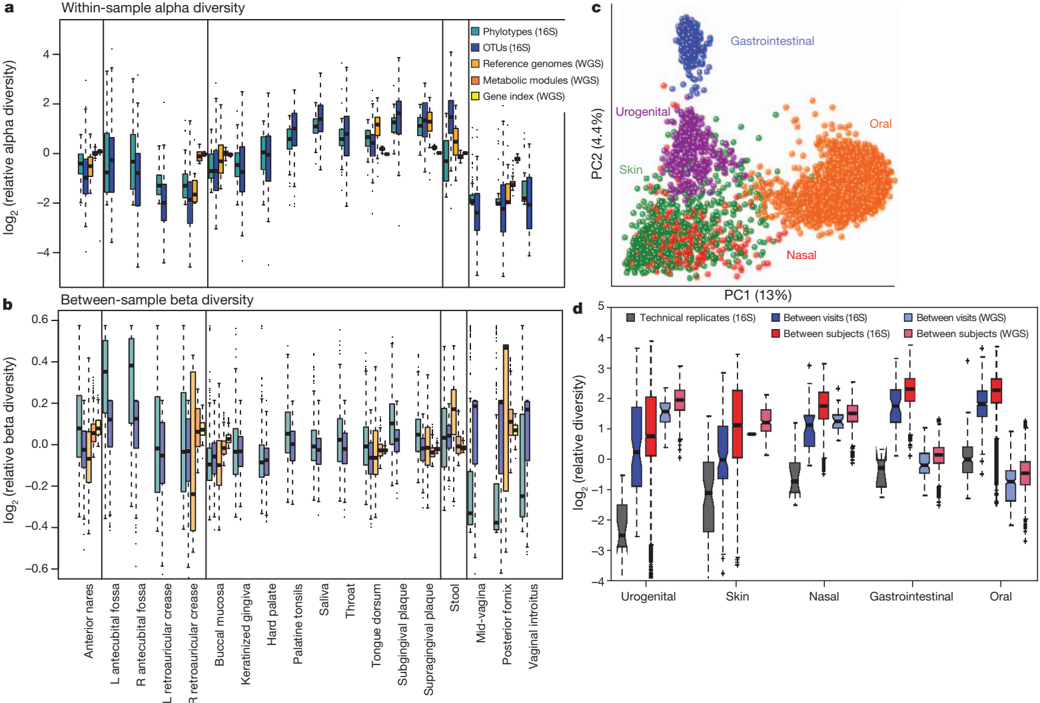
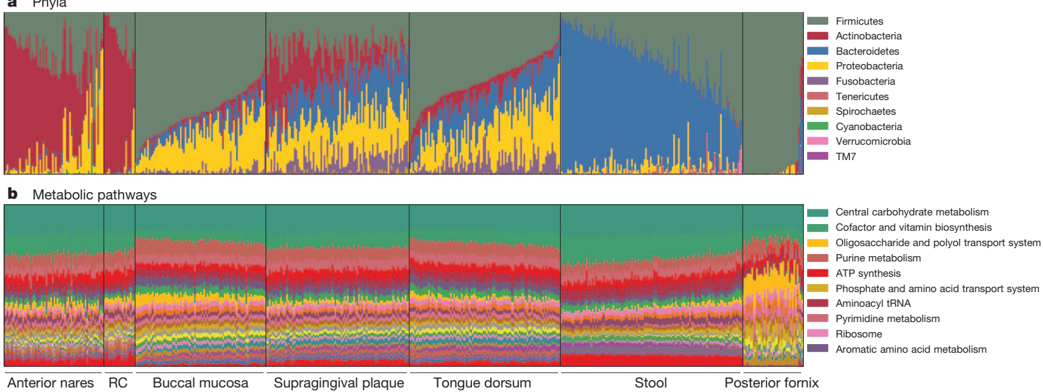
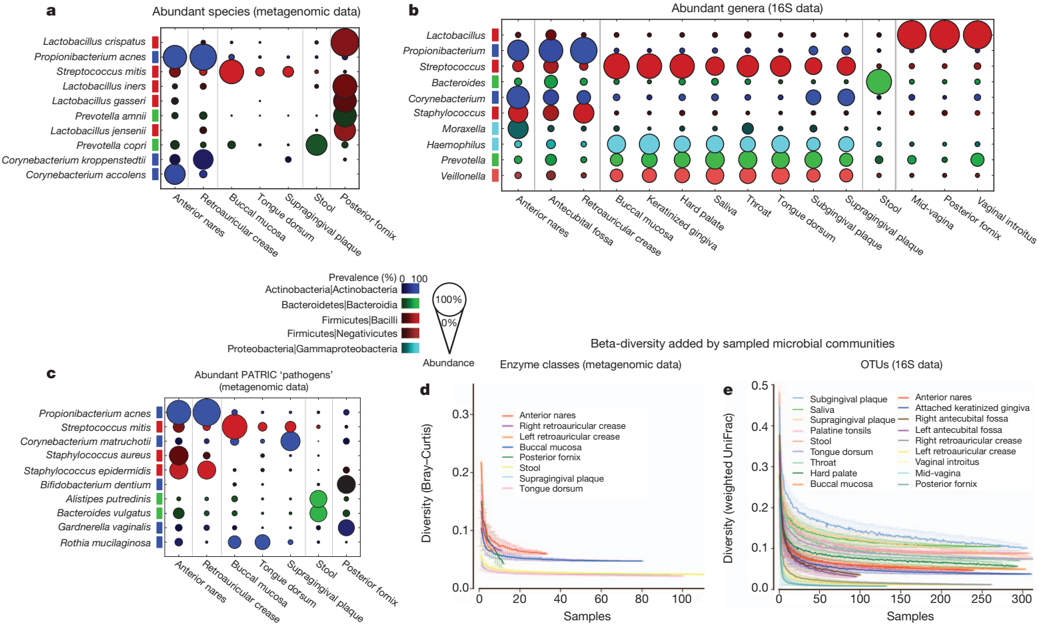
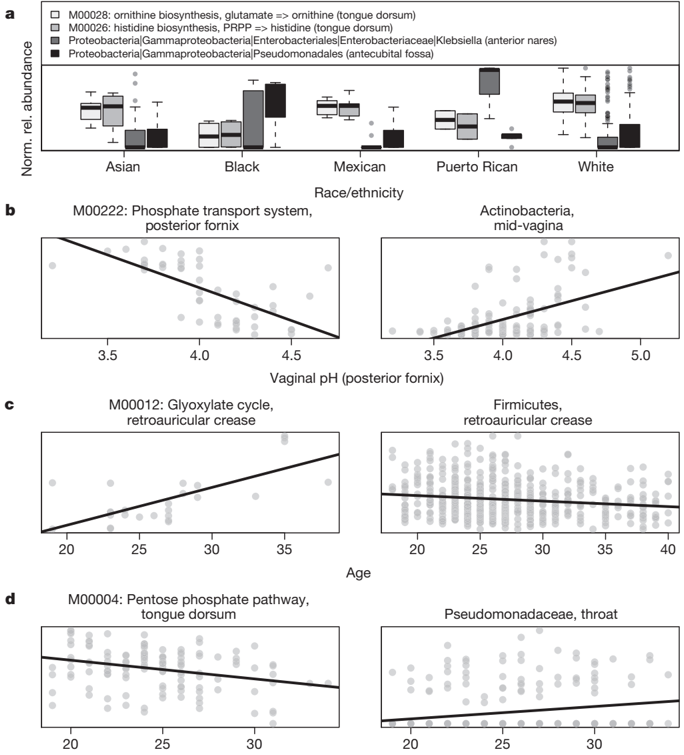
Studies of the human microbiome have revealed that even healthy individuals differ remarkably in the microbes that occupy habitats such as the gut, skin and vagina. Much of this diversity remains unexplained, although diet, environment, host genetics and early microbial exposure have all been implicated. Accordingly, to characterize the ecology of human-associated microbial communities, the Human Microbiome Project has analysed the largest cohort and set of distinct, clinically relevant body habitats so far. We found the diversity and abundance of each habitat’s signature microbes to vary widely even among healthy subjects, with strong niche specialization both within and among individuals. The project encountered an estimated 81–99% of the genera, enzyme families and community configurations occupied by the healthy Western microbiome. Metagenomic carriage of metabolic pathways was stable among individuals despite variation in community structure, and ethnic/racial background proved to be one of the strongest associations of both pathways and microbes with clinical metadata. These results thus delineate the range of structural and functional configurations normal in the microbial communities of a healthy population, enabling future characterization of the epidemiology, ecology and translational applications of the human microbiome.
Overview
The claims and statistics of this paper haven’t been checked yet.
Free: it reads the open-access text and checks the first 5 claims that cite a source we can check. Create a free account to check every claim.
Integrity signals
Registry
Cites
Statistics
Figures
Verification
Claims the paper makes
The claims and statistics of this paper haven’t been checked yet.
Free: it reads the open-access text and checks the first 5 claims that cite a source we can check. Create a free account to check every claim.
Claims other papers make about this one
Each is checked against this paper’s own text: does it say what the citing paper says it does?
The cited source doesn’t support the claim as written.
In the citing paper
“newly diagnosed cases with adenocarcinoma of the colon or rectum were recruited prior to surgery and treatment during 1985–19891, 2. Controls were patients awaiting elective surgery for non-oncologic, non-gastrointestinal conditions at these hospitals during the same period.”
From Assessment of variation in microbial community amplicon sequencing by the Microbiome Quality Control (MBQC) project consortium (2017) · cites this paper as [1]
Checked by a reasoning model — may be wrong.
Experimental — accuracy not yet measuredThe source backs part of the claim, not all of it — or backs it for a different population, condition or comparison.
In the citing paper
“Multiple factors affect the composition of the human gut microbiome, including geography, diet, infection and drug usage56,61–64.”
From Intestinal microbiota signatures of clinical response and immune-related adverse events in melanoma patients treated with anti-PD-1 (2022) · cites this paper as [64]
Experimental — accuracy not yet measuredThe source backs part of the claim, not all of it — or backs it for a different population, condition or comparison.
In the citing paper
“suggesting that no severe gut microbiome dysbiosis was present in the study group at baseline”
From Gut microbiome affects the response to anti-PD-1 immunotherapy in patients with hepatocellular carcinoma (2019) · cites this paper as [9]
Experimental — accuracy not yet measuredThe source backs part of the claim, not all of it — or backs it for a different population, condition or comparison.
In the citing paper
“Gut microbiota comprise thousands of microbial species that are involved in host metabolism by regulating energy extraction, activation of the immune system, drug metabolism, and other processes.”
From The Gut Microbiome Contributes to a Substantial Proportion of the Variation in Blood Lipids (2015) · cites this paper as [3]
Experimental — accuracy not yet measuredThe source backs part of the claim, not all of it — or backs it for a different population, condition or comparison.
In the citing paper
“The human gut microbiota contains thousands of different bacterial taxa as well as various archaea, eukaryotic microbes and viruses, more than three million genes, and harbors an enormous metabolic capacity [1, 2].”
From The athletic gut microbiota (2020) · cites this paper as [1]
Experimental — accuracy not yet measured
20 more claims about this paper
Create a free account to see every claim other papers make about this one.
Self-check
Percentages, sums and reported differences re-computed from the paper’s own numbers.
The self-check needs the paper’s full text.
Citations
Cites
Fast and accurate short read alignment with Burrows-Wheeler transform
Li, H., & Durbin, R. (2009) · Bioinformatics · doi:10.1093/bioinformatics/btp324 · Cited by 58,607
QIIME allows analysis of high-throughput community sequencing data
Caporaso, J. G., Kuczynski, J., Stombaugh, J., Bittinger, K., Bushman, F. D., Costello, E. K., Fierer, N., Peña, A. G., Goodrich, J. K., Gordon, J. I., et al. (2010) · Nature Methods · doi:10.1038/nmeth.f.303 · Cited by 34,887
Fast and accurate long-read alignment with Burrows-Wheeler transform.
Li, H., & Durbin, R. (2010) · Bioinformatics · doi:10.1093/bioinformatics/btp698 · Cited by 12,063
A human gut microbial gene catalogue established by metagenomic sequencing
MetaHIT Consortium, Qin, J., Li, R., Raes, J., Arumugam, M., Burgdorf, K. S., Manichanh, C., Nielsen, T., Pons, N., Levenez, F., et al. (2010) · Nature · doi:10.1038/nature08821 · Cited by 11,624
A core gut microbiome in obese and lean twins
Turnbaugh, P. J., Hamady, M., Yatsunenko, T., Cantarel, B. L., Duncan, A., Ley, R. E., Sogin, M. L., Jones, W. J., Roe, B. A., Affourtit, J. P., et al. (2009) · Nature · doi:10.1038/nature07540 · Cited by 7,823
Self-citationSokol, H., Pigneur, B., Watterlot, L., Lakhdari, O., Bermúdez-Humarán, L. G., Gratadoux, J.-J., Blugeon, S., Bridonneau, C., Furet, J.-P., Corthier, G., et al. (2008) · Proceedings of the National Academy of Sciences · doi:10.1073/pnas.0804812105 · Cited by 4,413
Vaginal microbiome of reproductive-age women
Ravel, J., Gajer, P., Abdo, Z., Schneider, G. M., Koenig, S. S. K., McCulle, S. L., Karlebach, S., Gorle, R., Russell, J., Tacket, C. O., et al. (2011) · Proceedings of the National Academy of Sciences · doi:10.1073/pnas.1002611107 · Cited by 4,254
Bacterial Community Variation in Human Body Habitats Across Space and Time
Costello, E. K., Lauber, C. L., Hamady, M., Fierer, N., Gordon, J. I., & Knight, R. (2009) · Science · doi:10.1126/science.1177486 · Cited by 3,231
Defining the normal bacterial flora of the oral cavity
Aas, J. A., Paster, B. J., Stokes, L. N., Olsen, I., & Dewhirst, F. E. (2005) · Journal of Clinical Microbiology · doi:10.1128/jcm.43.11.5721-5732.2005 · Cited by 3,092
Topographical and Temporal Diversity of the Human Skin Microbiome
Grice, E. A., Kong, H. H., Conlan, S., Deming, C. B., Davis, J., Young, A. C., Program, N. C. S., Bouffard, G. G., Blakesley, R. W., Murray, P. R., et al. (2009) · Science · doi:10.1126/science.1171700 · Cited by 2,953
Cited by
Items 1,501–1,600 of 1,676
The Impact of Intratumoral and Gastrointestinal Microbiota on Systemic Cancer Therapy
Cogdill, A. P., Gaudreau, P. O., Arora, R., Gopalakrishnan, V., & Wargo, J. A. (2018) · Trends in Immunology · doi:10.1016/j.it.2018.09.007 · Cited by 98
Horrocks, V., King, O. G., Yip, A. Y. G., Marques, I. M., & McDonald, J. A. K. (2023) · Microbiology · doi:10.1099/mic.0.001377 · Cited by 104
Dargenio, V. N., Dargenio, C., Castellaneta, S., De Giacomo, A., Laguardia, M., Schettini, F., Francavilla, R., & Cristofori, F. (2023) · Nutrients · doi:10.3390/nu15071620 · Cited by 98
“Bacterial species composition differs widely among individuals [174], although the microbiota of the GI tract is fairly preserved at the phylum level, where Firmicutes and Bacteroidetes prevail [174,175].”
BackgroundLópez-Moreno, A., & Aguilera, M. (2021) · Journal of Clinical Medicine · doi:10.3390/jcm10071461 · Cited by 97
Promising dawn in tumor microenvironment therapy: engineering oral bacteria
Wang, Z., Sun, W., Hua, R., Wang, Y., Li, Y., & Zhang, H. (2024) · International Journal of Oral Science · doi:10.1038/s41368-024-00282-3 · Cited by 97
“30,145 This high level of diversity implies the existence of potential metabolic capacities and functionality within the oral microbiota that can be harnessed to address various diseases.”
BackgroundSelf-citationKuka, J., Liepinsh, E., Makrecka-Kuka, M., Liepins, J., Cirule, H., Gustina, D., Loza, E., Zharkova-Malkova, O., Grinberga, S., Pugovics, O., et al. (2014) · Life Sciences · doi:10.1016/j.lfs.2014.09.028 · Cited by 97
The effect of the stress hormone cortisol on the metatranscriptome of the oral microbiome
Duran-Pinedo, A. E., Solbiati, J., & Frias-Lopez, J. (2018) · npj Biofilms and Microbiomes · doi:10.1038/s41522-018-0068-z · Cited by 96
Selective targeting of skin pathobionts and inflammation with topically applied lactobacilli
Lebeer, S., Oerlemans, E. F. M., Claes, I., Henkens, T., Delanghe, L., Wuyts, S., Spacova, I., van den Broek, M. F. L., Tuyaerts, I., Wittouck, S., et al. (2022) · Cell Reports Medicine · doi:10.1016/j.xcrm.2022.100521 · Cited by 95
Han, D., Gao, P., Li, R., Tan, P., Xie, J., Zhang, R., & Li, J. (2020) · Journal of Advanced Research · doi:10.1016/j.jare.2020.07.010 · Cited by 93
The connection between microbiome and schizophrenia
Golofast, B., & Vales, K. (2020) · Neuroscience & Biobehavioral Reviews · doi:10.1016/j.neubiorev.2019.12.011 · Cited by 92
Of microbes and minds: A narrative review on the second brain aging
Calvani, R., Picca, A., Lo Monaco, M. R., Landi, F., Bernabei, R., & Marzetti, E. (2018) · Frontiers in Medicine · doi:10.3389/fmed.2018.00053 · Cited by 92
“Despite this taxonomic inter-individual variability, adult gut microbiota display a relatively consistent functional capacity in healthy persons (70, 71).”
BackgroundMetabolic independence drives gut microbial colonization and resilience in health and disease
Watson, A. R., Füssel, J., Veseli, I., DeLongchamp, J. Z., Silva, M., Trigodet, F., Lolans, K., Shaiber, A., Fogarty, E., Runde, J. M., et al. (2023) · Genome Biology · doi:10.1186/s13059-023-02924-x · Cited by 92
Valverde-Molina, J., & García-Marcos, L. (2023) · Nutrients · doi:10.3390/nu15030486 · Cited by 92
Diet leaves a genetic signature in a keystone member of the gut microbiota
Dapa, T., Ramiro, R. S., Pedro, M. F., Gordo, I., & Xavier, K. B. (2022) · Cell Host & Microbe · doi:10.1016/j.chom.2022.01.002 · Cited by 91
Bioinformatics for the Human Microbiome Project
Gevers, D., Pop, M., Schloss, P. D., & Huttenhower, C. (2012) · PLoS Computational Biology · doi:10.1371/journal.pcbi.1002779 · Cited by 91
Self-citationTaxa-function robustness in microbial communities
Eng, A., & Borenstein, E. (2018) · Microbiome · doi:10.1186/s40168-018-0425-4 · Cited by 89
An ecological framework to understand the efficacy of fecal microbiota transplantation
Xiao, Y., Angulo, M. T., Lao, S., Weiss, S. T., & Liu, Y.-Y. (2020) · Nature Communications · doi:10.1038/s41467-020-17180-x · Cited by 89
Alteration of the Gut Microbiome in Inflammatory Bowel Disease
Andoh, A., & Nishida, A. (2023) · Digestion · doi:10.1159/000525925 · Cited by 88
Tamburini, F. B., Maghini, D., Oduaran, O. H., Brewster, R., Hulley, M. R., Sahibdeen, V., Norris, S. A., Tollman, S., Kahn, K., Wagner, R. G., et al. (2022) · Nature Communications · doi:10.1038/s41467-021-27917-x · Cited by 88
Impact of a 3-Months Vegetarian Diet on the Gut Microbiota and Immune Repertoire
Zhang, C., Björkman, A., Cai, K., Liu, G., Wang, C., Li, Y., Xia, H., Sun, L., Kristiansen, K., Wang, J., et al. (2018) · Frontiers in Immunology · doi:10.3389/fimmu.2018.00908 · Cited by 87
(2015) · PubMed · Cited by 86
Edlund, A., Yang, Y., Yooseph, S., Hall, A. P., Nguyen, D. D., Dorrestein, P. C., Nelson, K. E., He, X., Lux, R., Shi, W., et al. (2015) · The ISME Journal · doi:10.1038/ismej.2015.72 · Cited by 84
Self-citationWong, J. M. (2014) · The American Journal of Clinical Nutrition · doi:10.3945/ajcn.113.071639 · Cited by 84
Association of dietary patterns with the gut microbiota in older, community-dwelling men
Shikany, J. M., Demmer, R. T., Johnson, A. J., Fino, N. F., Meyer, K., Ensrud, K. E., Lane, N. E., Orwoll, E. S., Kado, D. M., Zmuda, J. M., et al. (2019) · The American Journal of Clinical Nutrition · doi:10.1093/ajcn/nqz174 · Cited by 83
Molecular Nutrition Research—The Modern Way Of Performing Nutritional Science
Norheim, F., Gjelstad, I., Hjorth, M., Vinknes, K., Langleite, T., Holen, T., Jensen, J., Dalen, K., Karlsen, A., Kielland, A., et al. (2012) · Nutrients · doi:10.3390/nu4121898 · Cited by 83
Andreu-Sánchez, S., Blanco-Míguez, A., Wang, D., Golzato, D., Manghi, P., Heidrich, V., Fackelmann, G., Zhernakova, D. V., Kurilshikov, A., Valles-Colomer, M., et al. (2025) · Cell · doi:10.1016/j.cell.2025.04.014 · Cited by 81
Self-citationLitvak, Y., & Bäumler, A. J. (2019) · PLoS Pathogens · doi:10.1371/journal.ppat.1007563 · Cited by 80
Pan, M., Hidalgo-Cantabrana, C., Goh, Y. J., Sanozky-Dawes, R., & Barrangou, R. (2020) · Frontiers in Microbiology · doi:10.3389/fmicb.2019.03146 · Cited by 79
Skin Microbiome, Metabolome and Skin Phenome, from the Perspectives of Skin as an Ecosystem
Chen, H., Zhao, Q., Zhong, Q., Duan, C., Krutmann, J., Wang, J., & Xia, J. (2022) · Phenomics · doi:10.1007/s43657-022-00073-y · Cited by 79
Microbial embryonal colonization during pipefish male pregnancy
Beemelmanns, A., Poirier, M., Bayer, T., Kuenzel, S., & Roth, O. (2019) · Scientific Reports · doi:10.1038/s41598-018-37026-3 · Cited by 78
Ancient DNA analysis identifies marine mollusc shells as new metagenomic archives of the past
Der Sarkissian, C., Pichereau, V., Dupont, C., Ilsøe, P. C., Perrigault, M., Butler, P., Chauvaud, L., Eiríksson, J., Scourse, J., Paillard, C., et al. (2017) · Molecular Ecology Resources · doi:10.1111/1755-0998.12679 · Cited by 78
Carlucci, C., Petrof, E. O., & Allen-Vercoe, E. (2016) · EBioMedicine · doi:10.1016/j.ebiom.2016.09.029 · Cited by 77
Pharmacometabonomics and personalized medicine
Everett, J. R., Loo, R. L., & Pullen, F. S. (2013) · Annals of Clinical Biochemistry International Journal of Laboratory Medicine · doi:10.1177/0004563213497929 · Cited by 75
Profiling bacterial community in upper respiratory tracts
Yi, H., Yong, D., Lee, K., Cho, Y.-J., & Chun, J. (2014) · BMC Infectious Diseases · doi:10.1186/s12879-014-0583-3 · Cited by 75
The role of gut microbiota in Clostridium difficile infection
Samarkos, M., Mastrogianni, E., & Kampouropoulou, O. (2018) · European Journal of Internal Medicine · doi:10.1016/j.ejim.2018.02.006 · Cited by 75
Flannery, J. E., Stagaman, K., Burns, A. R., Hickey, R. J., Roos, L. E., Giuliano, R. J., Fisher, P. A., & Sharpton, T. J. (2020) · mBio · doi:10.1128/mbio.02780-19 · Cited by 75
“Raw metagenome sequences were prepared for analysis using the Shot-cleaner workflow (73), which follows the Human Microbiome Project Consortium data processing guidelines (74).”
Gut–Brain Axis in Regulation of Blood Pressure
Yang, T., & Zubcevic, J. (2017) · Frontiers in Physiology · doi:10.3389/fphys.2017.00845 · Cited by 74
“Despite this variation among individuals, the microbial genes involved in the basic up-keep of metabolic activities are functionally similar between individuals (Consortium, 2012).”
BackgroundFrom taxonomy to metabolic output: what factors define gut microbiome health?
Wilmanski, T., Rappaport, N., Diener, C., Gibbons, S. M., & Price, N. D. (2021) · Gut Microbes · doi:10.1080/19490976.2021.1907270 · Cited by 73
“However, given the vast diversity in gut microbiome composition reported between healthy individuals over the last decade, there is little evidence for such a strict taxonomic core.(8,16) Indeed, there appear to be myriad taxonomic compositions that support a healthy, functional microbiome-host relationship across div…”
BackgroundWind, T. T., Gacesa, R., Vich Vila, A., de Haan, J. J., Jalving, M., Weersma, R. K., & Hospers, G. A. P. (2020) · Melanoma Research · doi:10.1097/cmr.0000000000000656 · Cited by 73
Duranti, S., Lugli, G. A., Milani, C., James, K., Mancabelli, L., Turroni, F., Alessandri, G., Mangifesta, M., Mancino, W., Ossiprandi, M. C., et al. (2019) · Environmental Microbiology · doi:10.1111/1462-2920.14705 · Cited by 72
Zhang, D., Zhang, J., Kalimuthu, S., Liu, J., Song, Z.-M., He, B.-B., Cai, P., Zhong, Z., Feng, C., Neelakantan, P., et al. (2023) · Microbiome · doi:10.1186/s40168-023-01540-y · Cited by 72
Zeng, Y., Zeng, D., Ni, X., Zhu, H., Jian, P., Zhou, Y., Xu, S., Lin, Y., Li, Y., Yin, Z., et al. (2017) · AMB Express · doi:10.1186/s13568-017-0378-1 · Cited by 72
Self-citationUpper Respiratory Symptoms, Gut Health and Mucosal Immunity in Athletes
Colbey, C., Cox, A. J., Pyne, D. B., Zhang, P., Cripps, A. W., & West, N. P. (2018) · Sports Medicine · doi:10.1007/s40279-017-0846-4 · Cited by 72
Clinical translation of microbe‐based therapies: Current clinical landscape and preclinical outlook
Vargason, A. M., & Anselmo, A. C. (2018) · Bioengineering & Translational Medicine · doi:10.1002/btm2.10093 · Cited by 71
“The human body coexists with microbiota, or communities of microbes, within the gastrointestinal (GI) tract, mouth, skin, vagina, and other tissues.(1) Each distinct microbiome, which encompasses the microbiota and their genetic material, balances key microbial populations in these tissues to regulate both health and…”
BackgroundBottom-Up Approaches to Synthetic Cooperation in Microbial Communities
Rodríguez Amor, D., & Dal Bello, M. (2019) · Life · doi:10.3390/life9010022 · Cited by 71
Gut microbiota and aging-A focus on centenarians
Cӑtoi, A. F., Corina, A., Katsiki, N., Vodnar, D. C., Andreicuț, A. D., Stoian, A. P., Rizzo, M., & Pérez-Martínez, P. (2020) · Biochimica et Biophysica Acta (BBA) - Molecular Basis of Disease · doi:10.1016/j.bbadis.2020.165765 · Cited by 70
(2022) · doi:10.1016/j.hsr.2021.100010 · Cited by 69
Cargo transport shapes the spatial organization of a microbial community
Shrivastava, A., Patel, V. K., Tang, Y., Yost, S. C., Dewhirst, F. E., & Berg, H. C. (2018) · Proceedings of the National Academy of Sciences · doi:10.1073/pnas.1808966115 · Cited by 68
Gut-pancreas-liver Axis as a target for treatment of NAFLD/NASH
Svegliati-Baroni, G., Patrício, B., Lioci, G., Macedo, M. P., & Gastaldelli, A. (2020) · International Journal of Molecular Sciences · doi:10.3390/ijms21165820 · Cited by 66
Oral Bacterial and Fungal Microbiome Impacts Colorectal Carcinogenesis
Klimesova, K., Jiraskova Zakostelska, Z., & Tlaskalova-Hogenova, H. (2018) · Frontiers in Microbiology · doi:10.3389/fmicb.2018.00774 · Cited by 67
“…entire oral microbiome: Firmicutes, with the Streptococcus as a dominant genus, Bacteroidetes, strongly represented by Prevotella and Proteobacteria, with highly abundant Haemophilus, Fusobacteria, and Actinobacteria (Human Microbiome Project Consortium, 2012; Huse et al., 2012; Zhou et al., 2013).”
BackgroundInfluentialSalami, M. (2021) · Frontiers in Neuroscience · doi:10.3389/fnins.2021.613120 · Cited by 67
“Different strains of bacteria have been demonstrated to produce neurotransmitters such as GABA, serotonin, catecholamines, melatonin, acetylcholine and histamine (Asano et al., 2012; Barrett et al., 2012; Thomas et al., 2012), and the neuromodulator BDNF.”
BackgroundByrd, A. L., Liu, M., Fujimura, K. E., Lyalina, S., Nagarkar, D. R., Charbit, B., Bergstedt, J., Patin, E., Harrison, O. J., Quintana-Murci, L., et al. (2021) · Journal of Experimental Medicine · doi:10.1084/jem.20200606 · Cited by 63
Beyond phylotyping: understanding the impact of gut microbiota on host biology
Reigstad, C. S., & Kashyap, P. C. (2013) · Neurogastroenterology & Motility · doi:10.1111/nmo.12134 · Cited by 66
Extracellular DNA in oral microbial biofilms
Jakubovics, N. S., & Grant Burgess, J. (2015) · Microbes and Infection · doi:10.1016/j.micinf.2015.03.015 · Cited by 66
Air Pollution, Early Life Microbiome, and Development
Vallès, Y., & Francino, M. P. (2018) · Current Environmental Health Reports · doi:10.1007/s40572-018-0215-y · Cited by 65
Diabetes and the Gut Microbiome
Lau, W. L., Tran, T., Rhee, C. M., Kalantar-Zadeh, K., & Vaziri, N. D. (2021) · Seminars in Nephrology · doi:10.1016/j.semnephrol.2021.03.005 · Cited by 65
Fecal microbiota signatures of adult patients with different types of short bowel syndrome
Huang, Y., Guo, F., Li, Y., Wang, J., & Li, J. (2017) · Journal of Gastroenterology and Hepatology · doi:10.1111/jgh.13806 · Cited by 64
Bacterial amylases enable glycogen degradation by the vaginal microbiome
Jenkins, D. J., Woolston, B. M., Hood-Pishchany, M. I., Pelayo, P., Konopaski, A. N., Quinn Peters, M., France, M. T., Ravel, J., Mitchell, C. M., Rakoff-Nahoum, S., et al. (2023) · Nature Microbiology · doi:10.1038/s41564-023-01447-2 · Cited by 63
Stability and dynamics of the human gut microbiome and its association with systemic immune traits
(2020) · doi:10.1101/2020.01.17.909853 · Cited by 63
Asthma in the Precision Medicine Era: Biologics and Probiotics
Chiu, C.-J., & Huang, M.-T. (2021) · International Journal of Molecular Sciences · doi:10.3390/ijms22094528 · Cited by 60
“With intensive research in the field of microbiota over the past decade, including the completion of the NIH-funded Human Microbiota Project (HMP) [96,97], we have come to appreciate more the role of microbiota in maintaining health and that alterations in the gut microbiota, i.e., dysbiosis, not only causes perturbat…”
BackgroundBenameur, T., Porro, C., Twfieg, M.-E., Benameur, N., Panaro, M. A., Filannino, F. M., & Hasan, A. (2023) · Brain Sciences · doi:10.3390/brainsci13081226 · Cited by 60
Candida albicans at Host Barrier Sites: Pattern Recognition Receptors and Beyond
Swidergall, M. (2019) · Pathogens · doi:10.3390/pathogens8010040 · Cited by 59
“The skin surface is a unique niche, harboring a distinct community of bacteria and fungi [62,63].”
BackgroundTranslational Aspects of the Human Respiratory Virome
Mitchell, A. B., Oliver, B. G. G., & Glanville, A. R. (2016) · American Journal of Respiratory and Critical Care Medicine · doi:10.1164/rccm.201606-1278ci · Cited by 59
Abdallah, A., Elemba, E., Zhong, Q., & Sun, Z. (2020) · Current Protein & Peptide Science · doi:10.2174/1389203721666200212095503 · Cited by 59
Analysis of metabolome changes in the bile acid pool in feces and plasma of antibiotic-treated rats
Behr, C., Slopianka, M., Haake, V., Strauss, V., Sperber, S., Kamp, H., Walk, T., Beekmann, K., Rietjens, I. M. C. M., & van Ravenzwaay, B. (2019) · Toxicology and Applied Pharmacology · doi:10.1016/j.taap.2018.11.012 · Cited by 58
Pros and cons of methylation-based enrichment methods for ancient DNA
Seguin-Orlando, A., Gamba, C., Sarkissian, C. D., Ermini, L., Louvel, G., Boulygina, E., Sokolov, A., Nedoluzhko, A., Lorenzen, E. D., Lopez, P., et al. (2015) · Scientific Reports · doi:10.1038/srep11826 · Cited by 58
Multi-omic detection of Mycobacterium leprae in archaeological human dental calculus
Fotakis, A. K., Denham, S. D., Mackie, M., Orbegozo, M. I., Mylopotamitaki, D., Gopalakrishnan, S., Sicheritz-Pontén, T., Olsen, J. V., Cappellini, E., Zhang, G., et al. (2020) · Philosophical Transactions of the Royal Society B: Biological Sciences · doi:10.1098/rstb.2019.0584 · Cited by 58
Edlund, A., Yang, Y., Yooseph, S., He, X., Shi, W., & McLean, J. S. (2018) · Microbiome · doi:10.1186/s40168-018-0591-4 · Cited by 57
Dawson, B. M., Barton, P. S., & Wallman, J. F. (2020) · Forensic Science International · doi:10.1016/j.forsciint.2020.110515 · Cited by 56
Shapiro, H., Suez, J., & Elinav, E. (2017) · Journal of Diabetes · doi:10.1111/1753-0407.12501 · Cited by 56
The human microbiome in clinical translation: from bench to bedside
Bautista, J., Echeverría, C. E., Maldonado-Noboa, I., Ojeda-Mosquera, S., Hidalgo-Tinoco, C., & López-Cortés, A. (2025) · Frontiers in Microbiology · doi:10.3389/fmicb.2025.1632435 · Cited by 55
So you want to do biocodicology? A field guide to the biological analysis of parchment
Fiddyment, S., Teasdale, M. D., Vnouček, J., Lévêque, É., Binois, A., & Collins, M. J. (2019) · Heritage Science · doi:10.1186/s40494-019-0278-6 · Cited by 55
Outer membrane utilisomes mediate glycan uptake in gut Bacteroidetes
White, J. B. R., Silale, A., Feasey, M., Heunis, T., Zhu, Y., Zheng, H., Gajbhiye, A., Firbank, S., Baslé, A., Trost, M., et al. (2023) · Nature · doi:10.1038/s41586-023-06146-w · Cited by 55
“The distal gut microbiome is dominated by two bacterial phyla: the Gram-positive Firmicutes, and the Gram-negative Bacteroidetes 6 .”
Discovery of disease-adapted bacterial lineages in inflammatory bowel diseases
Kumbhari, A., Cheng, T. N. H., Ananthakrishnan, A. N., Kochar, B., Burke, K. E., Shannon, K., Lau, H., Xavier, R. J., & Smillie, C. S. (2024) · Cell Host & Microbe · doi:10.1016/j.chom.2024.05.022 · Cited by 54
Karl, J. P., Fu, X., Wang, X., Zhao, Y., Shen, J., Zhang, C., Wolfe, B. E., Saltzman, E., Zhao, L., & Booth, S. L. (2015) · The American Journal of Clinical Nutrition · doi:10.3945/ajcn.115.109496 · Cited by 53
New technologies for developing phage-based tools to manipulate the human microbiome
Khan Mirzaei, M., & Deng, L. (2022) · Trends in Microbiology · doi:10.1016/j.tim.2021.04.007 · Cited by 53
“Microbiome assemblages from different individuals with similar health status are also more alike in terms of their functional profiles than their composition [24,25].”
BackgroundProbing the diversity of healthy oral microbiome with bioinformatics approaches
Moon, J.-H., & Lee, J.-H. (2016) · BMB Reports · doi:10.5483/bmbrep.2016.49.12.164 · Cited by 53
How diet can impact gut microbiota to promote or endanger health
Chassaing, B., Vijay-Kumar, M., & Gewirtz, A. T. (2017) · Current Opinion in Gastroenterology · doi:10.1097/mog.0000000000000401 · Cited by 52
Zhang, I., Pletcher, S. D., Goldberg, A. N., Barker, B. M., & Cope, E. K. (2017) · Frontiers in Microbiology · doi:10.3389/fmicb.2017.02477 · Cited by 51
Metabolic Interactions between Bacteria and Fungi in Commensal Oral Biofilms
Lof, M., Janus, M., & Krom, B. (2017) · Journal of Fungi · doi:10.3390/jof3030040 · Cited by 51
Gut microbial profile in biliary atresia: a case‐control study
Wang, J., Qian, T., Jiang, J., Yang, Y., Shen, Z., Huang, Y., Chen, G., Zheng, S., & Dong, R. (2020) · Journal of Gastroenterology and Hepatology · doi:10.1111/jgh.14777 · Cited by 51
Lee, J., Zilm, P. S., & Kidd, S. P. (2020) · Frontiers in Microbiology · doi:10.3389/fmicb.2020.00321 · Cited by 51
Suzuki, K., Nakamura, K., Shimizu, Y., Yokoi, Y., Ohira, S., Hagiwara, M., Wang, Y., Song, Y., Aizawa, T., & Ayabe, T. (2021) · Scientific Reports · doi:10.1038/s41598-021-89308-y · Cited by 50
Understanding and Modulating Mammalian-Microbial Communication for Improved Human Health
Mani, S., Boelsterli, U. A., & Redinbo, M. R. (2014) · Annual Review of Pharmacology and Toxicology · doi:10.1146/annurev-pharmtox-011613-140007 · Cited by 48
Pressing needs of biomedical text mining in biocuration and beyond: opportunities and challenges
Singhal, A., Leaman, R., Catlett, N., Lemberger, T., McEntyre, J., Polson, S., Xenarios, I., Arighi, C., & Lu, Z. (2016) · Database · doi:10.1093/database/baw161 · Cited by 48
The impact of the gut microbiome on tumor immunotherapy: from mechanism to application strategies
Guo, C., Kong, L., Xiao, L., Liu, K., Cui, H., Xin, Q., Gu, X., Jiang, C., & Wu, J. (2023) · Cell & Bioscience · doi:10.1186/s13578-023-01135-y · Cited by 48
El-Awady, A., de Sousa Rabelo, M., Meghil, M. M., Rajendran, M., Elashiry, M., Stadler, A. F., Foz, A. M., Susin, C., Romito, G. A., Arce, R. M., et al. (2019) · npj Biofilms and Microbiomes · doi:10.1038/s41522-019-0084-7 · Cited by 48
Lan, K., Xie, G., & Jia, W. (2013) · Evidence-based Complementary and Alternative Medicine · doi:10.1155/2013/819147 · Cited by 47
Bourgonje, A. R., Roo-Brand, G., Lisotto, P., Sadaghian Sadabad, M., Reitsema, R. D., de Goffau, M. C., Faber, K. N., Dijkstra, G., & Harmsen, H. J. M. (2022) · Frontiers in Immunology · doi:10.3389/fimmu.2022.842911 · Cited by 47
The environmental microbiome, allergic disease, and asthma
Kelly, M. S., Bunyavanich, S., Phipatanakul, W., & Lai, P. S. (2022) · The Journal of Allergy and Clinical Immunology: In Practice · doi:10.1016/j.jaip.2022.06.006 · Cited by 47
Gut microbiota and inflammatory bowel disease: the role of antibiotics in disease management
Kerman, D. H., & Deshpande, A. R. (2014) · Postgraduate Medicine · doi:10.3810/pgm.2014.07.2779 · Cited by 47
Gut microbiota in ALS: possible role in pathogenesis?
McCombe, P. A., Henderson, R. D., Lee, A., Lee, J. D., Woodruff, T. M., Restuadi, R., McRae, A., Wray, N. R., Ngo, S., & Steyn, F. J. (2019) · Expert Review of Neurotherapeutics · doi:10.1080/14737175.2019.1623026 · Cited by 46
“Differingmicrobes can share functional capacity andwhile microbial composition changes over time, the function of metabolic pathways remains stable [38].”
BackgroundThe oral microbiome, nitric oxide and exercise performance
Bryan, N. S., Burleigh, M. C., & Easton, C. (2022) · Nitric Oxide · doi:10.1016/j.niox.2022.05.004 · Cited by 46
Goals in Nutrition Science 2015–2020
Allison, D. B., Bassaganya-Riera, J., Burlingame, B., Brown, A. W., le Coutre, J., Dickson, S. L., van Eden, W., Garssen, J., Hontecillas, R., Khoo, C. S. H., et al. (2015) · Frontiers in Nutrition · doi:10.3389/fnut.2015.00026 · Cited by 45
Self-citationIron at the host-microbe interface
Gerner, R. R., Nuccio, S.-P., & Raffatellu, M. (2020) · Molecular Aspects of Medicine · doi:10.1016/j.mam.2020.100895 · Cited by 45
Sharpton, T., Lyalina, S., Luong, J., Pham, J., Deal, E. M., Armour, C., Gaulke, C., Sanjabi, S., & Pollard, K. S. (2017) · mSystems · doi:10.1128/msystems.00036-17 · Cited by 45
Zapała, B., Stefura, T., Wójcik-Pędziwiatr, M., Kabut, R., Bałajewicz-Nowak, M., Milewicz, T., Dudek, A., Stój, A., & Rudzińska-Bar, M. (2021) · Journal of Clinical Medicine · doi:10.3390/jcm10235698 · Cited by 44
Data-driven prediction of colonization outcomes for complex microbial communities
Wu, L., Wang, X.-W., Tao, Z., Wang, T., Zuo, W., Zeng, Y., Liu, Y.-Y., & Dai, L. (2024) · Nature Communications · doi:10.1038/s41467-024-46766-y · Cited by 44
“However, the composition of the human gut microbiota can vary signi fi cantly across individuals 23,24 and over time 25,26 .”
Data-driven prediction of colonization outcomes for complex microbial communities
(2023) · doi:10.1101/2023.04.19.537502 · Cited by 44
Metadata
- Authors
- The Human Microbiome Project Consortium
- Venue
- Nature
- Published
- 2012-06
- Volume
- 486
- Issue
- 7402
- Pages
- 207-214
- ISSN
- 0028-0836 (ISSN-L)
- 1476-4687
- PMC
- PMC3564958
- OpenAlex
- W2128769815
- Semantic Scholar
- 0c431405ec1eb4b84a52ed1fcc530454a4b8bf6f
- Cited by
- 11,726
- References
- 29
- Citations by year
- 2026: 586 · 2025: 748 · 2024: 890 · 2023: 950 · 2022: 1024 · 2021: 1202 · 2020: 1137 · 2019: 1032 · 2018: 863 · 2017: 853 · 2016: 732 · 2015: 651 · 2014: 532 · 2013: 413 · 2012: 104
- FWCI
- 218.52
- Type
- journal article
- Language
- en
- Open access
- hybrid
- doi.org
- Licence
- cc-by-nc-sa
- creativecommons.org/licenses/by-nc-sa/3.0/ (tdm)
- Locations
- Nature (publishedVersion, cc-by-nc-sa)
- PubMed (publishedVersion)
- Goce Delchev University Repository (Goce Delčev University of Štip) (acceptedVersion)
- Europe PMC (PubMed Central) (acceptedVersion)
- PubMed Central (acceptedVersion)
- eScholarship (California Digital Library) (submittedVersion, cc-by)
- Rutgers University Community Repository (Rutgers University) (submittedVersion)
- Open Access Server of the Woods Hole Scientific Community (Woods Hole Scientific Community) (submittedVersion)
- eScholarship (California Digital Library) (submittedVersion)
- Funders
- National Science Foundation (DEAC02-05CH11231, 1053486, 0812111)
- Howard Hughes Medical Institute (DE-AC02-05CH11231)
- U.S. Department of Energy (-AC02-05CH11231, Contract No. DE-AC02-05-CH11231, 05CH11231, No. DE-AC02-05-CH11231, DE AC02 05CH11231, DE-AC02-)
- Gordon and Betty Moore Foundation
- Rice University
- Gladstone Institutes
- Crohn's and Colitis Foundation
- Crohn's and Colitis Foundation of Canada
- Fonds Wetenschappelijk Onderzoek (DE-AC02-05CH11231)
- Vlaamse regering
- National Institutes of Health (5r01hg005172-03, n01hg62088-6-0-1, DE-AC02–05CH11231, DBI-1053486, DP2OD001500, 5r01hg004857-03, n01ai30071-19-0-3)
- Defense Threat Reduction Agency (B104153I, DE-AC02-05CH11231, B084531I)
- Office of Science (No. DE-AC02- 05-CH11231, DEAC02–05CH11231, AC02-05CH11231, DE-AC02, 05CH11231, Contract No. DE-AC02-05CH11231)
- Horace H. Rackham School of Graduate Studies, University of Michigan
- National Human Genome Research Institute (R01HG004885, U54HG003067, R01HG005975, R01-HG004857, U54HG004969, R01HG004853, U54HG003079, U01HG004866, R01HG005969, R01-HG005172, U54HG003273, R01HG004872, R21HG005811, U54HG004968, N01 HG062088, R01HG004906, R01HG004908, U54HG004973, R01HG004856, R01HG004900, R01HG005171, R01HG004877)
- National Cancer Institute (R21CA139193)
- National Institute of General Medical Sciences (T32GM087237)
- National Institute of Allergy and Infectious Diseases (UH2AI083263, UH3AI083263, U54AI084844, T32AI007528, N01 AI030071)
- National Institute of Diabetes and Digestive and Kidney Diseases (UH2DK083990, UH3DK083993)
- National Institute of Arthritis and Musculoskeletal and Skin Diseases (UH2 AR057504, UH2AR057506, UH3-AR057504)
- National Institute of Dental and Craniofacial Research (P30DE020751, R01DE021574, U01DE016937, RC1DE0202098, R37DE016937, RC1DE020298)
- U.S. National Library of Medicine
- Division of Biological Infrastructure (DBI-1053486)
- Army Research Office (DE-AC02-05CH11231, W911NF-11-1-0473, W911NF, W911NF-11)
- Los Alamos National Laboratory (DE-AC02-05CH11231)
- Topics
- Life Sciences › Biochemistry, Genetics and Molecular Biology › Molecular Biology › Gut microbiota and health
- Physical Sciences › Environmental Science › Ecology › Microbial Community Ecology and Physiology
- Health Sciences › Dentistry › Periodontics › Oral microbiology and periodontitis research
- Keywords
- human microbiome, healthy individuals, microbial diversity, gut microbiota, skin microbiome, vaginal microbiota, ecological specialization, metabolic pathways, Human Microbiome Project, metagenomics, microbial ecology
- MeSH terms
- Adolescent, Adult, Bacteria, Female, Health, Humans, Male, Phenotype, RNA, Ribosomal, 16S, Ecosystem, Biodiversity, Metabolic Networks and Pathways, Metagenome, Young Adult, Metagenomics
About these checks
Registry, retraction, Cites and statistics results are computed, not judged, with one exception: a printed reference that no index lists is read once by a model before it counts as a citation error. Claims are extracted by a model and kept only when their quote appears verbatim in the text; each cited source is then checked, with a model’s help, for whether it says what the claim relies on. Those verdicts can be wrong — read the claim’s quote and the cited source before relying on one.
Statistics and arithmetic are recomputed, not judged.
Confidence bands are shown only for fields calibrated on our annotated test set. None is calibrated yet, so no band is shown.
What counts as a claim ›How we measure confidence ›How we check this ›
Are you an author, or do you see a problem with this page? Request a review
Data sources
Bibliographic data: Semantic Scholar, OpenAlex, Crossref.
Contains information from the Semantic Scholar Academic Graph Datasets, made available under the ODC Attribution License (ODC-BY 1.0).
Semantic Scholar’s data is described in: Kinney, R., et al. (2023). The Semantic Scholar Open Data Platform. arXiv:2301.10140.
