

Structure, function and diversity of the healthy human microbiome
Open accessThe DOI matches its Crossref record; 29 of the 29 references it cites were found in a registry or an index.
Abstract
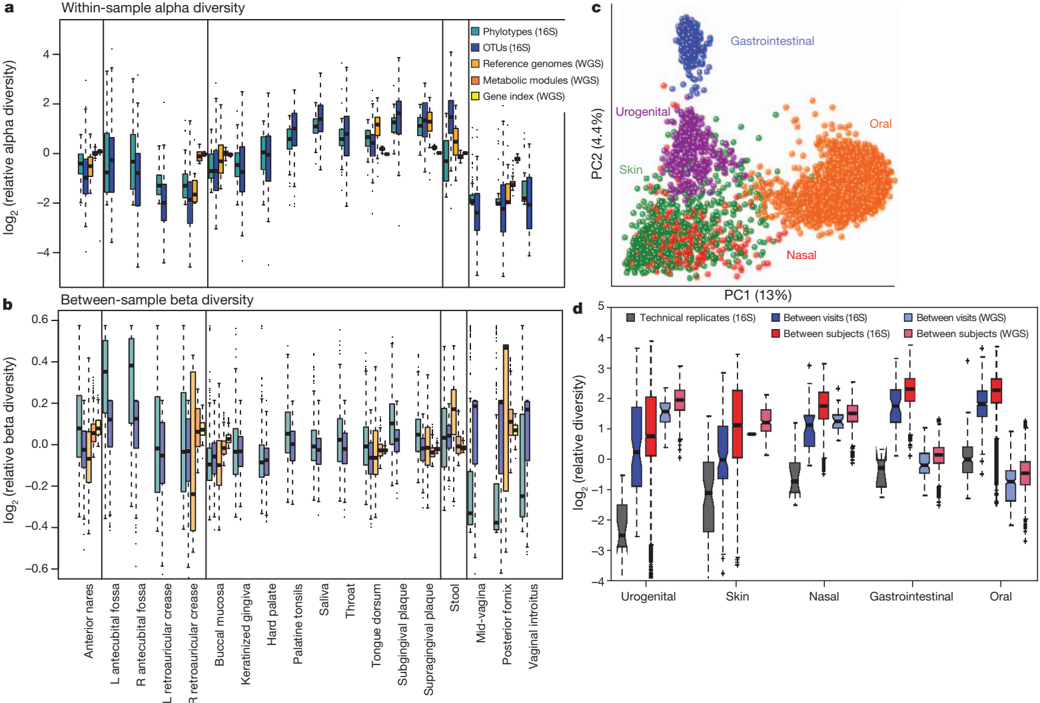
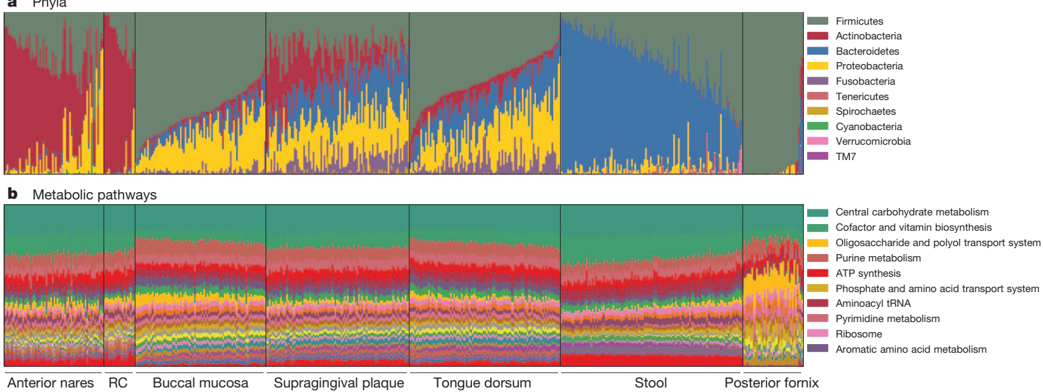
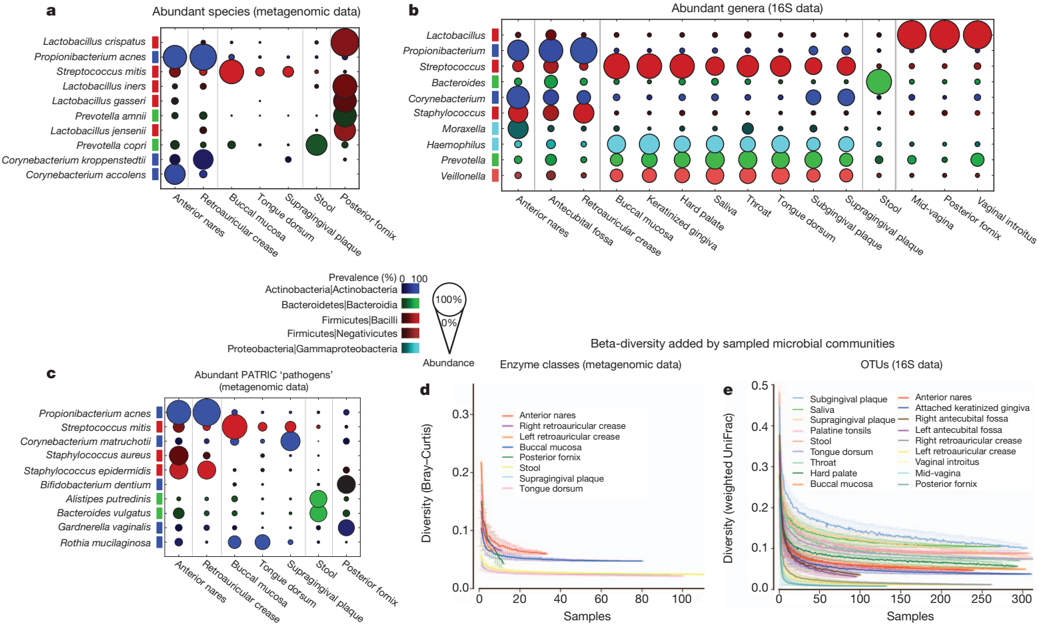
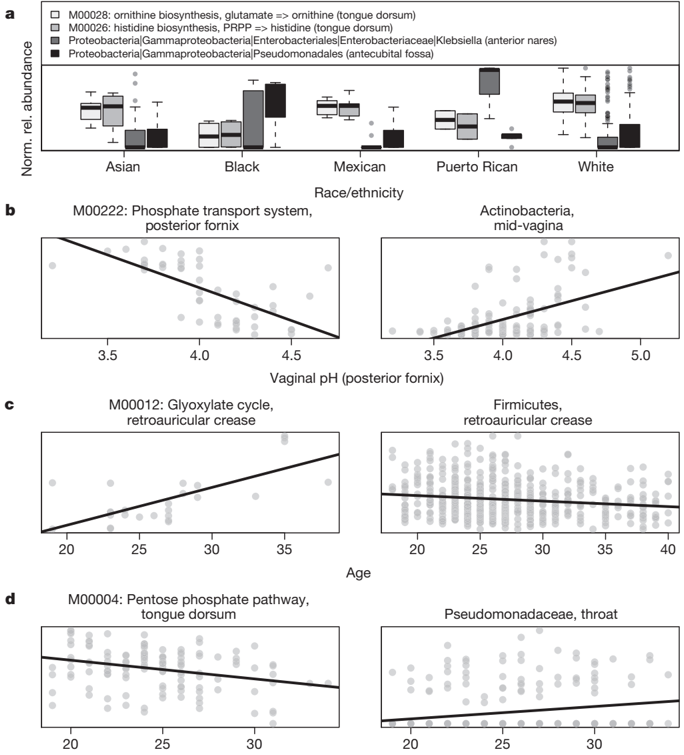
Studies of the human microbiome have revealed that even healthy individuals differ remarkably in the microbes that occupy habitats such as the gut, skin and vagina. Much of this diversity remains unexplained, although diet, environment, host genetics and early microbial exposure have all been implicated. Accordingly, to characterize the ecology of human-associated microbial communities, the Human Microbiome Project has analysed the largest cohort and set of distinct, clinically relevant body habitats so far. We found the diversity and abundance of each habitat’s signature microbes to vary widely even among healthy subjects, with strong niche specialization both within and among individuals. The project encountered an estimated 81–99% of the genera, enzyme families and community configurations occupied by the healthy Western microbiome. Metagenomic carriage of metabolic pathways was stable among individuals despite variation in community structure, and ethnic/racial background proved to be one of the strongest associations of both pathways and microbes with clinical metadata. These results thus delineate the range of structural and functional configurations normal in the microbial communities of a healthy population, enabling future characterization of the epidemiology, ecology and translational applications of the human microbiome.
Overview
The claims and statistics of this paper haven’t been checked yet.
Free: it reads the open-access text and checks the first 5 claims that cite a source we can check. Create a free account to check every claim.
Integrity signals
Registry
Cites
Statistics
Figures
Verification
Claims the paper makes
The claims and statistics of this paper haven’t been checked yet.
Free: it reads the open-access text and checks the first 5 claims that cite a source we can check. Create a free account to check every claim.
Claims other papers make about this one
Each is checked against this paper’s own text: does it say what the citing paper says it does?
The cited source doesn’t support the claim as written.
In the citing paper
“newly diagnosed cases with adenocarcinoma of the colon or rectum were recruited prior to surgery and treatment during 1985–19891, 2. Controls were patients awaiting elective surgery for non-oncologic, non-gastrointestinal conditions at these hospitals during the same period.”
From Assessment of variation in microbial community amplicon sequencing by the Microbiome Quality Control (MBQC) project consortium (2017) · cites this paper as [1]
Checked by a reasoning model — may be wrong.
Experimental — accuracy not yet measuredThe source backs part of the claim, not all of it — or backs it for a different population, condition or comparison.
In the citing paper
“Multiple factors affect the composition of the human gut microbiome, including geography, diet, infection and drug usage56,61–64.”
From Intestinal microbiota signatures of clinical response and immune-related adverse events in melanoma patients treated with anti-PD-1 (2022) · cites this paper as [64]
Experimental — accuracy not yet measuredThe source backs part of the claim, not all of it — or backs it for a different population, condition or comparison.
In the citing paper
“suggesting that no severe gut microbiome dysbiosis was present in the study group at baseline”
From Gut microbiome affects the response to anti-PD-1 immunotherapy in patients with hepatocellular carcinoma (2019) · cites this paper as [9]
Experimental — accuracy not yet measuredThe source backs part of the claim, not all of it — or backs it for a different population, condition or comparison.
In the citing paper
“Gut microbiota comprise thousands of microbial species that are involved in host metabolism by regulating energy extraction, activation of the immune system, drug metabolism, and other processes.”
From The Gut Microbiome Contributes to a Substantial Proportion of the Variation in Blood Lipids (2015) · cites this paper as [3]
Experimental — accuracy not yet measuredThe source backs part of the claim, not all of it — or backs it for a different population, condition or comparison.
In the citing paper
“The human gut microbiota contains thousands of different bacterial taxa as well as various archaea, eukaryotic microbes and viruses, more than three million genes, and harbors an enormous metabolic capacity [1, 2].”
From The athletic gut microbiota (2020) · cites this paper as [1]
Experimental — accuracy not yet measured
20 more claims about this paper
Create a free account to see every claim other papers make about this one.
Self-check
Percentages, sums and reported differences re-computed from the paper’s own numbers.
The self-check needs the paper’s full text.
Citations
Cites
Fast and accurate short read alignment with Burrows-Wheeler transform
Li, H., & Durbin, R. (2009) · Bioinformatics · doi:10.1093/bioinformatics/btp324 · Cited by 58,607
QIIME allows analysis of high-throughput community sequencing data
Caporaso, J. G., Kuczynski, J., Stombaugh, J., Bittinger, K., Bushman, F. D., Costello, E. K., Fierer, N., Peña, A. G., Goodrich, J. K., Gordon, J. I., et al. (2010) · Nature Methods · doi:10.1038/nmeth.f.303 · Cited by 34,887
Fast and accurate long-read alignment with Burrows-Wheeler transform.
Li, H., & Durbin, R. (2010) · Bioinformatics · doi:10.1093/bioinformatics/btp698 · Cited by 12,063
A human gut microbial gene catalogue established by metagenomic sequencing
MetaHIT Consortium, Qin, J., Li, R., Raes, J., Arumugam, M., Burgdorf, K. S., Manichanh, C., Nielsen, T., Pons, N., Levenez, F., et al. (2010) · Nature · doi:10.1038/nature08821 · Cited by 11,624
A core gut microbiome in obese and lean twins
Turnbaugh, P. J., Hamady, M., Yatsunenko, T., Cantarel, B. L., Duncan, A., Ley, R. E., Sogin, M. L., Jones, W. J., Roe, B. A., Affourtit, J. P., et al. (2009) · Nature · doi:10.1038/nature07540 · Cited by 7,823
Self-citationSokol, H., Pigneur, B., Watterlot, L., Lakhdari, O., Bermúdez-Humarán, L. G., Gratadoux, J.-J., Blugeon, S., Bridonneau, C., Furet, J.-P., Corthier, G., et al. (2008) · Proceedings of the National Academy of Sciences · doi:10.1073/pnas.0804812105 · Cited by 4,413
Vaginal microbiome of reproductive-age women
Ravel, J., Gajer, P., Abdo, Z., Schneider, G. M., Koenig, S. S. K., McCulle, S. L., Karlebach, S., Gorle, R., Russell, J., Tacket, C. O., et al. (2011) · Proceedings of the National Academy of Sciences · doi:10.1073/pnas.1002611107 · Cited by 4,254
Bacterial Community Variation in Human Body Habitats Across Space and Time
Costello, E. K., Lauber, C. L., Hamady, M., Fierer, N., Gordon, J. I., & Knight, R. (2009) · Science · doi:10.1126/science.1177486 · Cited by 3,231
Defining the normal bacterial flora of the oral cavity
Aas, J. A., Paster, B. J., Stokes, L. N., Olsen, I., & Dewhirst, F. E. (2005) · Journal of Clinical Microbiology · doi:10.1128/jcm.43.11.5721-5732.2005 · Cited by 3,092
Topographical and Temporal Diversity of the Human Skin Microbiome
Grice, E. A., Kong, H. H., Conlan, S., Deming, C. B., Davis, J., Young, A. C., Program, N. C. S., Bouffard, G. G., Blakesley, R. W., Murray, P. R., et al. (2009) · Science · doi:10.1126/science.1171700 · Cited by 2,953
Cited by
Items 701–800 of 1,676
The Oral Microbiome in Health and Its Implication in Oral and Systemic Diseases
(2016) · Advances in Applied Microbiology · doi:10.1016/bs.aambs.2016.08.002 · Cited by 306
Whole-Genome Sequencing in Outbreak Analysis
Gilchrist, C. A., Turner, S. D., Riley, M. F., Petri, W. A., & Hewlett, E. L. (2015) · Clinical Microbiology Reviews · doi:10.1128/cmr.00075-13 · Cited by 288
Sex differences in the gut microbiome–brain axis across the lifespan
Jašarević, E., Morrison, K. E., & Bale, T. L. (2016) · Philosophical Transactions of the Royal Society B: Biological Sciences · doi:10.1098/rstb.2015.0122 · Cited by 293
Does the vaginal microbiota play a role in the development of cervical cancer?
Kyrgiou, M., Mitra, A., & Moscicki, A.-B. (2017) · Translational Research · doi:10.1016/j.trsl.2016.07.004 · Cited by 282
Global spread of three multidrug-resistant lineages of Staphylococcus epidermidis
Lee, J. Y. H., Monk, I. R., Gonçalves da Silva, A., Seemann, T., Chua, K. Y. L., Kearns, A., Hill, R., Woodford, N., Bartels, M. D., Strommenger, B., et al. (2018) · Nature Microbiology · doi:10.1038/s41564-018-0230-7 · Cited by 299
Heiss, C. N., & Olofsson, L. E. (2019) · Journal of Neuroendocrinology · doi:10.1111/jne.12684 · Cited by 304
Gut microbiota diversity across ethnicities in the United States
Brooks, A. W., Priya, S., Blekhman, R., & Bordenstein, S. R. (2018) · PLOS Biology · doi:10.1371/journal.pbio.2006842 · Cited by 304
The gut microbiome and obesity
John, G. K., & Mullin, G. E. (2016) · Current Oncology Reports · doi:10.1007/s11912-016-0528-7 · Cited by 304
Altered brain-gut axis in autism: comorbidity or causative mechanisms
Mayer, E. A., Padua, D., & Tillisch, K. (2014) · BioEssays · doi:10.1002/bies.201400075 · Cited by 304
Blaser, M. J. (2014) · Journal of Clinical Investigation · doi:10.1172/jci78366 · Cited by 297
Making a microbiome: the many determinants of host-associated microbial community composition
Adair, K. L., & Douglas, A. E. (2017) · Current Opinion in Microbiology · doi:10.1016/j.mib.2016.11.002 · Cited by 284
The food-gut axis: lactic acid bacteria and their link to food, the gut microbiome and human health
De Filippis, F., Pasolli, E., & Ercolini, D. (2020) · FEMS Microbiology Reviews · doi:10.1093/femsre/fuaa015 · Cited by 303
Dzutsev, A., Badger, J. H., Perez-Chanona, E., Roy, S., Salcedo, R., Smith, C. K., & Trinchieri, G. (2017) · Annual Review of Immunology · doi:10.1146/annurev-immunol-051116-052133 · Cited by 302
Self-citationHybrid Volatolomics and Disease Detection
Broza, Y. Y., Mochalski, P., Ruzsanyi, V., Amann, A., & Haick, H. (2015) · Angewandte Chemie International Edition · doi:10.1002/anie.201500153 · Cited by 290
UGA is an additional glycine codon in uncultured SR1 bacteria from the human microbiota
Campbell, J. H., O’Donoghue, P., Campbell, A. G., Schwientek, P., Sczyrba, A., Woyke, T., Söll, D., & Podar, M. (2013) · Proceedings of the National Academy of Sciences · doi:10.1073/pnas.1303090110 · Cited by 304
Cervicovaginal Microbiota and Reproductive Health: The Virtue of Simplicity
Anahtar, M. N., Gootenberg, D. B., Mitchell, C. M., & Kwon, D. S. (2018) · Cell Host & Microbe · doi:10.1016/j.chom.2018.01.013 · Cited by 297
Reduced microbiome alpha diversity in young patients with ADHD
Prehn-Kristensen, A., Zimmermann, A., Tittmann, L., Lieb, W., Schreiber, S., Baving, L., & Fischer, A. (2018) · PLOS ONE · doi:10.1371/journal.pone.0200728 · Cited by 292
The Skin Microbiota: Balancing Risk and Reward
Flowers, L., & Grice, E. A. (2020) · Cell Host & Microbe · doi:10.1016/j.chom.2020.06.017 · Cited by 276
Cancer-promoting effects of microbial dysbiosis
Sheflin, A. M., Whitney, A. K., & Weir, T. L. (2014) · Current Oncology Reports · doi:10.1007/s11912-014-0406-0 · Cited by 301
The Role of the Microbiota in Inflammation, Carcinogenesis, and Cancer Therapy
Dzutsev, A., Goldszmid, R. S., Viaud, S., Zitvogel, L., & Trinchieri, G. (2015) · European Journal of Immunology · doi:10.1002/eji.201444972 · Cited by 300
Microbiota regulation of the mammalian gut-brain axis
Burokas, A., Moloney, R. D., Dinan, T. G., & Cryan, J. F. (2015) · Advances in applied microbiology · doi:10.1016/bs.aambs.2015.02.001 · Cited by 300
Sulfide as a Mucus Barrier-Breaker in Inflammatory Bowel Disease?
Ijssennagger, N., van der Meer, R., & van Mil, S. W. C. (2016) · Trends in Molecular Medicine · doi:10.1016/j.molmed.2016.01.002 · Cited by 296
Sewage Reflects the Microbiomes of Human Populations
Newton, R. J., McLellan, S. L., Dila, D. K., Vineis, J. H., Morrison, H. G., Eren, A. M., & Sogin, M. L. (2015) · mBio · doi:10.1128/mbio.02574-14 · Cited by 299
The role of the local microbial ecosystem in respiratory health and disease
de Steenhuijsen Piters, W. A. A., Sanders, E. A. M., & Bogaert, D. (2015) · Philosophical Transactions of the Royal Society B: Biological Sciences · doi:10.1098/rstb.2014.0294 · Cited by 283
IgA Function in Relation to the Intestinal Microbiota
Macpherson, A. J., Yilmaz, B., Limenitakis, J. P., & Ganal-Vonarburg, S. C. (2018) · Annual Review of Immunology · doi:10.1146/annurev-immunol-042617-053238 · Cited by 290
Schwimmer, J. B., Johnson, J. S., Angeles, J. E., Behling, C., Belt, P. H., Borecki, I., Bross, C., Durelle, J., Goyal, N. P., Hamilton, G., et al. (2019) · Gastroenterology · doi:10.1053/j.gastro.2019.06.028 · Cited by 298
Biogeography of the intestinal mucosal and lumenal microbiome in the rhesus macaque
Yasuda, K., Oh, K., Ren, B., Tickle, T. L., Franzosa, E. A., Wachtman, L. M., Miller, A. D., Westmoreland, S. V., Mansfield, K. G., Vallender, E. J., et al. (2015) · Cell Host & Microbe · doi:10.1016/j.chom.2015.01.015 · Cited by 298
Self-citationMcNulty, N. P., Wu, M., Erickson, A. R., Pan, C., Erickson, B. K., Martens, E. C., Pudlo, N. A., Muegge, B. D., Henrissat, B., Hettich, R. L., et al. (2013) · PLoS Biology · doi:10.1371/journal.pbio.1001637 · Cited by 292
Social behavior shapes the chimpanzee pan-microbiome
Moeller, A. H., Foerster, S., Wilson, M. L., Pusey, A. E., Hahn, B. H., & Ochman, H. (2016) · Science Advances · doi:10.1126/sciadv.1500997 · Cited by 296
Microbial terroir for wine grapes
Gilbert, J. A., van der Lelie, D., & Zarraonaindia, I. (2014) · Proceedings of the National Academy of Sciences · doi:10.1073/pnas.1320471110 · Cited by 280
The bovine milk microbiota: insights and perspectives from -omics studies
Addis, M. F., Tanca, A., Uzzau, S., Oikonomou, G., Bicalho, R. C., & Moroni, P. (2016) · Molecular BioSystems · doi:10.1039/c6mb00217j · Cited by 281
Dalmasso, G., Cougnoux, A., Delmas, J., Darfeuille-Michaud, A., & Bonnet, R. (2014) · Gut Microbes · doi:10.4161/19490976.2014.969989 · Cited by 296
Effects of Antibiotics on Human Microbiota and Subsequent Disease
Keeney, K. M., Yurist-Doutsch, S., Arrieta, M.-C., & Finlay, B. B. (2014) · Annual Review of Microbiology · doi:10.1146/annurev-micro-091313-103456 · Cited by 291
McBurney, M. I., Davis, C., Fraser, C. M., Schneeman, B. O., Huttenhower, C., Verbeke, K., Walter, J., & Latulippe, M. E. (2019) · The Journal of Nutrition · doi:10.1093/jn/nxz154 · Cited by 282
Commensal Microbiota Modulation of Natural Resistance to Virus Infection
Stefan, K. L., Kim, M. V., Iwasaki, A., & Kasper, D. L. (2020) · Cell · doi:10.1016/j.cell.2020.10.047 · Cited by 295
“(Human Microbiome Project, 2012; *Lead Contact: Dennis_Kasper@hms.harvard.edu.”
BackgroundInfluentialNutritional preferences of human gut bacteria reveal their metabolic idiosyncrasies
Tramontano, M., Andrejev, S., Pruteanu, M., Klünemann, M., Kuhn, M., Galardini, M., Jouhten, P., Zelezniak, A., Zeller, G., Bork, P., et al. (2018) · Nature Microbiology · doi:10.1038/s41564-018-0123-9 · Cited by 295
Gut-Resident Lactobacilli Activate Hepatic Nrf2 and Protect Against Oxidative Liver Injury
Saeedi, B. J., Liu, K. H., Owens, J. A., Hunter-Chang, S., Camacho, M. C., Eboka, R. U., Chandrasekharan, B., Baker, N. F., Darby, T. M., Robinson, B. S., et al. (2020) · Cell Metabolism · doi:10.1016/j.cmet.2020.03.006 · Cited by 295
Composition Diversity and Abundance of Gut Microbiome in Prediabetes and Type 2 Diabetes
Sr Fellow New Mexico Center for the Advancement of Research, E., Shah, V., Lambeth, S. M., Carson, T., Lowe, J., Ramaraj, T., Leff, J. W., Luo, L., & Bell, C. J. (2015) · Journal of Diabetes and Obesity · doi:10.15436/2376-0949.15.031 · Cited by 287
The oral microbiota and its role in carcinogenesis
Stasiewicz, M., & Karpiński, T. M. (2022) · Seminars in Cancer Biology · doi:10.1016/j.semcancer.2021.11.002 · Cited by 282
Hansen, R., Russell, R. K., Reiff, C., Louis, P., McIntosh, F., Berry, S. H., Mukhopadhya, I., Bisset, M. W., Barclay, A. R., Bishop, J., et al. (2012) · American Journal of Gastroenterology · doi:10.1038/ajg.2012.335 · Cited by 288
Role of microbial communities in the pathogenesis of periodontal diseases and caries
Mira, A., Simon‐Soro, A., & Curtis, M. A. (2017) · Journal of Clinical Periodontology · doi:10.1111/jcpe.12671 · Cited by 279
Di Stefano, M., Polizzi, A., Santonocito, S., Romano, A., Lombardi, T., & Isola, G. (2022) · International Journal of Molecular Sciences · doi:10.3390/ijms23095142 · Cited by 292
“The hard surfaces of teeth and the soft tissues of the oral mucosa are colonized by one of the most heterogeneous microbial communities found in the human organism, ranking second in terms of species diversity and complexity only to the gastrointestinal microbiota and including bacteria, archaea, fungi, and viruses [1…”
BackgroundMicrobiome in healthy skin, update for dermatologists
Dréno, B., Araviiskaia, E., Berardesca, E., Gontijo, G., Sanchez Viera, M., Xiang, L. F., Martin, R., & Bieber, T. (2016) · Journal of the European Academy of Dermatology and Venereology · doi:10.1111/jdv.13965 · Cited by 292
The biogeography of polymicrobial infection
Stacy, A., McNally, L., Darch, S. E., Brown, S. P., & Whiteley, M. (2016) · Nature Reviews Microbiology · doi:10.1038/nrmicro.2015.8 · Cited by 294
Sub-clinical detection of gut microbial biomarkers of obesity and type 2 diabetes
Yassour, M., Lim, M. Y., Yun, H. S., Tickle, T. L., Sung, J., Song, Y.-M., Lee, K., Franzosa, E. A., Morgan, X. C., Gevers, D., et al. (2016) · Genome Medicine · doi:10.1186/s13073-016-0271-6 · Cited by 284
Cross-species comparisons of host genetic associations with the microbiome
Goodrich, J. K., Davenport, E. R., Waters, J. L., Clark, A. G., & Ley, R. E. (2016) · Science · doi:10.1126/science.aad9379 · Cited by 290
Schloss, P. D. (2018) · mBio · doi:10.1128/mbio.00525-18 · Cited by 280
Transcriptional signature primes human oral mucosa for rapid wound healing
Iglesias-Bartolome, R., Uchiyama, A., Molinolo, A. A., Abusleme, L., Brooks, S. R., Callejas-Valera, J. L., Edwards, D., Doci, C., Asselin-Labat, M.-L., Onaitis, M. W., et al. (2018) · Science Translational Medicine · doi:10.1126/scitranslmed.aap8798 · Cited by 281
Mechanism of the Gut Microbiota Colonization Resistance and Enteric Pathogen Infection
Khan, I., Bai, Y., Zha, L., Ullah, N., Ullah, H., Shah, S. R. H., Sun, H., & Zhang, C. (2021) · Frontiers in Cellular and Infection Microbiology · doi:10.3389/fcimb.2021.716299 · Cited by 291
“The normal average healthy gut microbiome is not defined yet; however, it is generally characterized by the presence of high diversity and richness of beneficial bacteria and a lower number of pathogenic bacteria/pathobionts in a healthy state of the host (Raman et al., 2005; Huttenhower et al., 2012).”
BackgroundGanapathy, V., Thangaraju, M., Prasad, P. D., Martin, P. M., & Singh, N. (2013) · Current Opinion in Pharmacology · doi:10.1016/j.coph.2013.08.006 · Cited by 290
Human gut microbiota community structures in urban and rural populations in Russia
Tyakht, A. V., Kostryukova, E. S., Popenko, A. S., Belenikin, M. S., Pavlenko, A. V., Larin, A. K., Karpova, I. Y., Selezneva, O. V., Semashko, T. A., Ospanova, E. A., et al. (2013) · Nature Communications · doi:10.1038/ncomms3469 · Cited by 282
The gut microbiota–brain axis in neurological disorder
Ullah, H., Arbab, S., Tian, Y., Liu, C.-Q., Chen, Y., Qijie, L., Khan, M. I. U., Hassan, I. U., & Li, K. (2023) · Frontiers in Neuroscience · doi:10.3389/fnins.2023.1225875 · Cited by 255
An atlas of β-glucuronidases in the human intestinal microbiome
Pollet, R. M., D'Agostino, E. H., Walton, W. G., Xu, Y., Little, M. S., Biernat, K. A., Pellock, S. J., Patterson, L. M., Creekmore, B. C., Isenberg, H. N., et al. (2017) · Structure · doi:10.1016/j.str.2017.05.003 · Cited by 289
Tanabe, A. S., & Toju, H. (2013) · PLoS ONE · doi:10.1371/journal.pone.0076910 · Cited by 300
Biochemistry of complex glycan depolymerisation by the human gut microbiota
Ndeh, D., & Gilbert, H. J. (2018) · FEMS Microbiology Reviews · doi:10.1093/femsre/fuy002 · Cited by 284
Mobile genes in the human microbiome are structured from global to individual scales
Brito, I. L., Yilmaz, S., Huang, K., Xu, L., Jupiter, S. D., Jenkins, A. P., Naisilisili, W., Tamminen, M., Smillie, C. S., Wortman, J. R., et al. (2016) · Nature · doi:10.1038/nature18927 · Cited by 288
Scott, A. J., Alexander, J. L., Merrifield, C. A., Cunningham, D., Jobin, C., Brown, R., Alverdy, J., O’Keefe, S. J., Gaskins, H. R., Teare, J., et al. (2019) · Gut · doi:10.1136/gutjnl-2019-318556 · Cited by 288
Smoking and microbiome in oral, airway, gut and some systemic diseases
Huang, C., & Shi, G. (2019) · Journal of Translational Medicine · doi:10.1186/s12967-019-1971-7 · Cited by 288
Microbiome, Metagenomics, and High-Dimensional Compositional Data Analysis
Li, H. (2015) · Annual Review of Statistics and Its Application · doi:10.1146/annurev-statistics-010814-020351 · Cited by 288
Hyde, E. R., Haarmann, D. P., Lynne, A. M., Bucheli, S. R., & Petrosino, J. F. (2013) · PLoS ONE · doi:10.1371/journal.pone.0077733 · Cited by 273
Perera, M., Al-hebshi, N. N., Speicher, D. J., Perera, I., & Johnson, N. W. (2016) · Journal of Oral Microbiology · doi:10.3402/jom.v8.32762 · Cited by 281
Adaptive immune education by gut microbiota antigens
Zhao, Q., & Elson, C. O. (2018) · Immunology · doi:10.1111/imm.12896 · Cited by 268
Gut Microbiota Composition and Blood Pressure: The CARDIA Study
Sun, S., Lulla, A., Sioda, M., Winglee, K., Wu, M. C., Jacobs, D. R., Shikany, J. M., Lloyd-Jones, D. M., Launer, L. J., Fodor, A. A., et al. (2019) · Hypertension · doi:10.1161/hypertensionaha.118.12109 · Cited by 282
Degnan, P. H., Barry, N. A., Mok, K. C., Taga, M. E., & Goodman, A. L. (2014) · Cell Host & Microbe · doi:10.1016/j.chom.2013.12.007 · Cited by 283
“…not only between but also within genomes: in the phylum Bacteroidetes, which comprise over 80% of the microbiota of some individuals (Human Microbiome Project Consortium, 2012a), the majority of species possess duplicate, triplicate, or even quadruplicate copies of these proteins (Figure 1C).”
Gastrointestinal biofilms in health and disease
Motta, J.-P., Wallace, J. L., Buret, A. G., Deraison, C., & Vergnolle, N. (2021) · Nature Reviews Gastroenterology & Hepatology · doi:10.1038/s41575-020-00397-y · Cited by 270
The altered landscape of the human skin microbiome in patients with primary immunodeficiencies
Oh, J., Freeman, A. F., Program, N. C. S., Park, M., Sokolic, R., Candotti, F., Holland, S. M., Segre, J. A., & Kong, H. H. (2013) · Genome Research · doi:10.1101/gr.159467.113 · Cited by 282
Wallace, B. D., Roberts, A. B., Pollet, R. M., Ingle, J. D., Biernat, K. A., Pellock, S. J., Venkatesh, M. K., Guthrie, L., O’Neal, S. K., Robinson, S. J., et al. (2015) · Chemistry & Biology · doi:10.1016/j.chembiol.2015.08.005 · Cited by 285
Potential Role for the Gut Microbiota in Modulating Host Circadian Rhythms and Metabolic Health
Parkar, S. G., Kalsbeek, A., & Cheeseman, J. F. (2019) · Microorganisms · doi:10.3390/microorganisms7020041 · Cited by 285
Exploring Bacteroidetes: Metabolic key points and immunological tricks of our gut commensals
Gibiino, G., Lopetuso, L. R., Scaldaferri, F., Rizzatti, G., Binda, C., & Gasbarrini, A. (2018) · Digestive and Liver Disease · doi:10.1016/j.dld.2018.03.016 · Cited by 278
Tzeng, A., Sangwan, N., Jia, M., Liu, C.-C., Keslar, K. S., Downs-Kelly, E., Fairchild, R. L., Al-Hilli, Z., Grobmyer, S. R., & Eng, C. (2021) · Genome Medicine · doi:10.1186/s13073-021-00874-2 · Cited by 275
Bifidobacteria exhibit social behavior through carbohydrate resource sharing in the gut
Milani, C., Lugli, G. A., Duranti, S., Turroni, F., Mancabelli, L., Ferrario, C., Mangifesta, M., Hevia, A., Viappiani, A., Scholz, M., et al. (2015) · Scientific Reports · doi:10.1038/srep15782 · Cited by 284
Biogeography of the Oral Microbiome: The Site-Specialist Hypothesis
Mark Welch, J. L., Dewhirst, F. E., & Borisy, G. G. (2019) · Annual Review of Microbiology · doi:10.1146/annurev-micro-090817-062503 · Cited by 284
Microbial Geography of the Oral Cavity
Simón-Soro, Á., Tomás, I., Cabrera-Rubio, R., Catalan, M. D., Nyvad, B., & Mira, A. (2013) · Journal of Dental Research · doi:10.1177/0022034513488119 · Cited by 280
“Human Microbiome Project Consortium (2012).”
Dohlman, A. B., Arguijo Mendoza, D., Ding, S., Gao, M., Dressman, H., Iliev, I. D., Lipkin, S. M., & Shen, X. (2021) · Cell Host & Microbe · doi:10.1016/j.chom.2020.12.001 · Cited by 277
“Introduction The human body supports an ecosystem of 10–100 trillion microorganisms (Luckey, 1972; Sender et al., 2016), representing 500–1,000 unique species per individual (Human Microbiome Project Consortium, 2012; Qin et al., 2010).”
BackgroundInfluentialHigh-throughput, single-microbe genomics with strain resolution, applied to a human gut microbiome
Zheng, W., Zhao, S., Yin, Y., Zhang, H., Needham, D. M., Evans, E. D., Dai, C. L., Lu, P. J., Alm, E. J., & Weitz, D. A. (2022) · Science · doi:10.1126/science.abm1483 · Cited by 283
Marine mammals harbor unique microbiotas shaped by and yet distinct from the sea
Bik, E. M., Costello, E. K., Switzer, A. D., Callahan, B. J., Holmes, S. P., Wells, R. S., Carlin, K. P., Jensen, E. D., Venn-Watson, S., & Relman, D. A. (2016) · Nature Communications · doi:10.1038/ncomms10516 · Cited by 279
Colbert, L. E., El Alam, M. B., Wang, R., Karpinets, T., Lo, D., Lynn, E. J., Harris, T. A., Elnaggar, J. H., Yoshida-Court, K., Tomasic, K., et al. (2023) · Cancer Cell · doi:10.1016/j.ccell.2023.09.012 · Cited by 270
Lowrey, L., Woodhams, D. C., Tacchi, L., & Salinas, I. (2015) · Applied and Environmental Microbiology · doi:10.1128/aem.01826-15 · Cited by 276
Lankelma, J. M., van Vught, L. A., Belzer, C., Schultz, M. J., van der Poll, T., de Vos, W. M., & Wiersinga, W. J. (2017) · Intensive Care Medicine · doi:10.1007/s00134-016-4613-z · Cited by 283
Evaluating Causality of Gut Microbiota in Obesity and Diabetes in Humans
Meijnikman, A. S., Gerdes, V. E., Nieuwdorp, M., & Herrema, H. (2018) · Endocrine Reviews · doi:10.1210/er.2017-00192 · Cited by 278
The microbiome quality control project: baseline study design and future directions
Sinha, R., Abnet, C. C., White, O., Knight, R., & Huttenhower, C. (2015) · Genome Biology · doi:10.1186/s13059-015-0841-8 · Cited by 265
Huang, Y. J., & Boushey, H. A. (2015) · Journal of Allergy and Clinical Immunology · doi:10.1016/j.jaci.2014.11.011 · Cited by 271
Designing Micro- and Nanoswimmers for Specific Applications
Katuri, J., Ma, X., Stanton, M. M., & Sánchez, S. (2017) · Accounts of Chemical Research · doi:10.1021/acs.accounts.6b00386 · Cited by 275
Gut-Brain Psychology: Rethinking Psychology From the Microbiota–Gut–Brain Axis
Liang, S., Wu, X., & Jin, F. (2018) · Frontiers in Integrative Neuroscience · doi:10.3389/fnint.2018.00033 · Cited by 263
ESHRE good practice recommendations on recurrent implantation failure
ESHRE Working Group on Recurrent Implantation Failure, Cimadomo, D., de los Santos, M. J., Griesinger, G., Lainas, G., Le Clef, N., McLernon, D. J., Montjean, D., Toth, B., Vermeulen, N., et al. (2023) · Human Reproduction Open · doi:10.1093/hropen/hoad023 · Cited by 237
“In recent years, the Human Microbiome Project has highlighted the importance of micro-organisms and their genomes in human health and disease (Human Microbiome Project Consortium, 2012).”
BackgroundMachine learning for microbiologists
Asnicar, F., Thomas, A. M., Passerini, A., Waldron, L., & Segata, N. (2024) · Nature Reviews Microbiology · doi:10.1038/s41579-023-00984-1 · Cited by 256
“…of sequence sets and costs of downstream analysis and storage, greedy clustering algorithms 53,54,61 have enabled an in-depth view of the structure, diversity and function of microbial communities across habitats ranging from human body sites to the depths of the Arctic Mid-Ocean Ridge 62–64 .”
The Microbiota and Microbiome in Aging: Potential Implications in Health and Age‐Related Diseases
Zapata, H. J., & Quagliarello, V. J. (2015) · Journal of the American Geriatrics Society · doi:10.1111/jgs.13310 · Cited by 279
Everard, A., & Cani, P. D. (2014) · Reviews in Endocrine and Metabolic Disorders · doi:10.1007/s11154-014-9288-6 · Cited by 261
“Even if these inter-individual variations exist, functions encoded by microbial genes exhibit great similarity between individuals [10].”
BackgroundProduction of butyrate from lysine and the Amadori product fructoselysine by a human gut commensal
Bui, T. P. N., Ritari, J., Boeren, S., de Waard, P., Plugge, C. M., & de Vos, W. M. (2015) · Nature Communications · doi:10.1038/ncomms10062 · Cited by 271
Lack of detection of a human placenta microbiome in samples from preterm and term deliveries
Leiby, J. S., McCormick, K., Sherrill-Mix, S., Clarke, E. L., Kessler, L. R., Taylor, L. J., Hofstaedter, C. E., Roche, A. M., Mattei, L. M., Bittinger, K., et al. (2018) · Microbiome · doi:10.1186/s40168-018-0575-4 · Cited by 271
Voorhies, A. A., Mark Ott, C., Mehta, S., Pierson, D. L., Crucian, B. E., Feiveson, A., Oubre, C. M., Torralba, M., Moncera, K., Zhang, Y., et al. (2019) · Scientific Reports · doi:10.1038/s41598-019-46303-8 · Cited by 265
Humans differ in their personal microbial cloud
Meadow, J. F., Altrichter, A. E., Bateman, A. C., Stenson, J., Brown, G., Green, J. L., & Bohannan, B. J. M. (2015) · PeerJ · doi:10.7717/peerj.1258 · Cited by 266
Effects of bowel cleansing on the intestinal microbiota
Jalanka, J., Salonen, A., Salojärvi, J., Ritari, J., Immonen, O., Marciani, L., Gowland, P., Hoad, C., Garsed, K., Lam, C., et al. (2015) · Gut · doi:10.1136/gutjnl-2014-307240 · Cited by 263
Enteric Micromotor Can Selectively Position and Spontaneously Propel in the Gastrointestinal Tract
Li, J., Thamphiwatana, S., Liu, W., Esteban-Fernández de Ávila, B., Angsantikul, P., Sandraz, E., Wang, J., Xu, T., Soto, F., Ramez, V., et al. (2016) · ACS Nano · doi:10.1021/acsnano.6b04795 · Cited by 277
Engevik, M. A., Luk, B., Chang-Graham, A. L., Hall, A., Herrmann, B., Ruan, W., Endres, B. T., Shi, Z., Garey, K. W., Hyser, J. M., et al. (2019) · mBio · doi:10.1128/mbio.01087-19 · Cited by 269
Leaky Gut: Effect of Dietary Fiber and Fats on Microbiome and Intestinal Barrier
Usuda, H., Okamoto, T., & Wada, K. (2021) · International Journal of Molecular Sciences · doi:10.3390/ijms22147613 · Cited by 250
Randomized controlled trial for time-restricted eating in healthy volunteers without obesity
Xie, Z., Sun, Y., Ye, Y., Hu, D., Zhang, H., He, Z., Zhao, H., Yang, H., & Mao, Y. (2022) · Nature Communications · doi:10.1038/s41467-022-28662-5 · Cited by 276
Gut microbiota of humans, dogs and cats: current knowledge and future opportunities and challenges
Deng, P., & Swanson, K. S. (2015) · British Journal of Nutrition · doi:10.1017/s0007114514002943 · Cited by 249
Warinner, C., Speller, C., & Collins, M. J. (2015) · Philosophical Transactions of the Royal Society B: Biological Sciences · doi:10.1098/rstb.2013.0376 · Cited by 253
Microbiota succession throughout life from the cradle to the grave
Martino, C., Dilmore, A. H., Burcham, Z. M., Metcalf, J. L., Jeste, D., & Knight, R. (2022) · Nature Reviews Microbiology · doi:10.1038/s41579-022-00768-z · Cited by 275
Self-citation
Metadata
- Authors
- The Human Microbiome Project Consortium
- Venue
- Nature
- Published
- 2012-06
- Volume
- 486
- Issue
- 7402
- Pages
- 207-214
- ISSN
- 0028-0836 (ISSN-L)
- 1476-4687
- PMC
- PMC3564958
- OpenAlex
- W2128769815
- Semantic Scholar
- 0c431405ec1eb4b84a52ed1fcc530454a4b8bf6f
- Cited by
- 11,726
- References
- 29
- Citations by year
- 2026: 586 · 2025: 748 · 2024: 890 · 2023: 950 · 2022: 1024 · 2021: 1202 · 2020: 1137 · 2019: 1032 · 2018: 863 · 2017: 853 · 2016: 732 · 2015: 651 · 2014: 532 · 2013: 413 · 2012: 104
- FWCI
- 218.52
- Type
- journal article
- Language
- en
- Open access
- hybrid
- doi.org
- Licence
- cc-by-nc-sa
- creativecommons.org/licenses/by-nc-sa/3.0/ (tdm)
- Locations
- Nature (publishedVersion, cc-by-nc-sa)
- PubMed (publishedVersion)
- Goce Delchev University Repository (Goce Delčev University of Štip) (acceptedVersion)
- Europe PMC (PubMed Central) (acceptedVersion)
- PubMed Central (acceptedVersion)
- eScholarship (California Digital Library) (submittedVersion, cc-by)
- Rutgers University Community Repository (Rutgers University) (submittedVersion)
- Open Access Server of the Woods Hole Scientific Community (Woods Hole Scientific Community) (submittedVersion)
- eScholarship (California Digital Library) (submittedVersion)
- Funders
- National Science Foundation (DEAC02-05CH11231, 1053486, 0812111)
- Howard Hughes Medical Institute (DE-AC02-05CH11231)
- U.S. Department of Energy (-AC02-05CH11231, Contract No. DE-AC02-05-CH11231, 05CH11231, No. DE-AC02-05-CH11231, DE AC02 05CH11231, DE-AC02-)
- Gordon and Betty Moore Foundation
- Rice University
- Gladstone Institutes
- Crohn's and Colitis Foundation
- Crohn's and Colitis Foundation of Canada
- Fonds Wetenschappelijk Onderzoek (DE-AC02-05CH11231)
- Vlaamse regering
- National Institutes of Health (5r01hg005172-03, n01hg62088-6-0-1, DE-AC02–05CH11231, DBI-1053486, DP2OD001500, 5r01hg004857-03, n01ai30071-19-0-3)
- Defense Threat Reduction Agency (B104153I, DE-AC02-05CH11231, B084531I)
- Office of Science (No. DE-AC02- 05-CH11231, DEAC02–05CH11231, AC02-05CH11231, DE-AC02, 05CH11231, Contract No. DE-AC02-05CH11231)
- Horace H. Rackham School of Graduate Studies, University of Michigan
- National Human Genome Research Institute (R01HG004885, U54HG003067, R01HG005975, R01-HG004857, U54HG004969, R01HG004853, U54HG003079, U01HG004866, R01HG005969, R01-HG005172, U54HG003273, R01HG004872, R21HG005811, U54HG004968, N01 HG062088, R01HG004906, R01HG004908, U54HG004973, R01HG004856, R01HG004900, R01HG005171, R01HG004877)
- National Cancer Institute (R21CA139193)
- National Institute of General Medical Sciences (T32GM087237)
- National Institute of Allergy and Infectious Diseases (UH2AI083263, UH3AI083263, U54AI084844, T32AI007528, N01 AI030071)
- National Institute of Diabetes and Digestive and Kidney Diseases (UH2DK083990, UH3DK083993)
- National Institute of Arthritis and Musculoskeletal and Skin Diseases (UH2 AR057504, UH2AR057506, UH3-AR057504)
- National Institute of Dental and Craniofacial Research (P30DE020751, R01DE021574, U01DE016937, RC1DE0202098, R37DE016937, RC1DE020298)
- U.S. National Library of Medicine
- Division of Biological Infrastructure (DBI-1053486)
- Army Research Office (DE-AC02-05CH11231, W911NF-11-1-0473, W911NF, W911NF-11)
- Los Alamos National Laboratory (DE-AC02-05CH11231)
- Topics
- Life Sciences › Biochemistry, Genetics and Molecular Biology › Molecular Biology › Gut microbiota and health
- Physical Sciences › Environmental Science › Ecology › Microbial Community Ecology and Physiology
- Health Sciences › Dentistry › Periodontics › Oral microbiology and periodontitis research
- Keywords
- human microbiome, healthy individuals, microbial diversity, gut microbiota, skin microbiome, vaginal microbiota, ecological specialization, metabolic pathways, Human Microbiome Project, metagenomics, microbial ecology
- MeSH terms
- Adolescent, Adult, Bacteria, Female, Health, Humans, Male, Phenotype, RNA, Ribosomal, 16S, Ecosystem, Biodiversity, Metabolic Networks and Pathways, Metagenome, Young Adult, Metagenomics
About these checks
Registry, retraction, Cites and statistics results are computed, not judged, with one exception: a printed reference that no index lists is read once by a model before it counts as a citation error. Claims are extracted by a model and kept only when their quote appears verbatim in the text; each cited source is then checked, with a model’s help, for whether it says what the claim relies on. Those verdicts can be wrong — read the claim’s quote and the cited source before relying on one.
Statistics and arithmetic are recomputed, not judged.
Confidence bands are shown only for fields calibrated on our annotated test set. None is calibrated yet, so no band is shown.
What counts as a claim ›How we measure confidence ›How we check this ›
Are you an author, or do you see a problem with this page? Request a review
Data sources
Bibliographic data: Semantic Scholar, OpenAlex, Crossref.
Contains information from the Semantic Scholar Academic Graph Datasets, made available under the ODC Attribution License (ODC-BY 1.0).
Semantic Scholar’s data is described in: Kinney, R., et al. (2023). The Semantic Scholar Open Data Platform. arXiv:2301.10140.
