

Structure, function and diversity of the healthy human microbiome
Open accessThe DOI matches its Crossref record; 29 of the 29 references it cites were found in a registry or an index.
Abstract
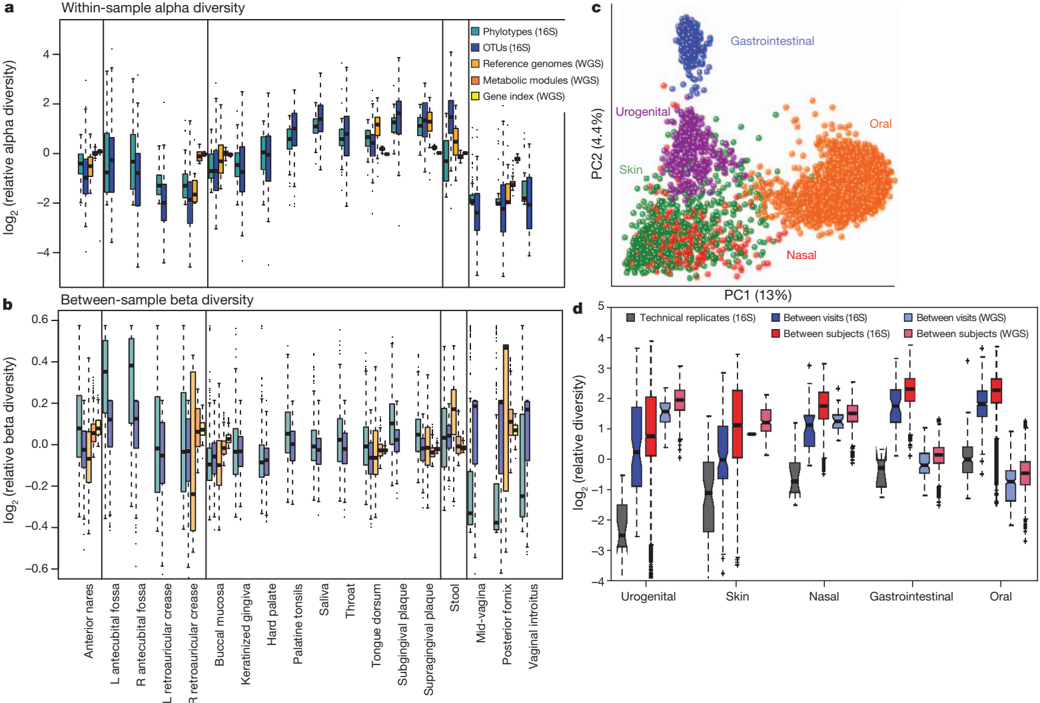
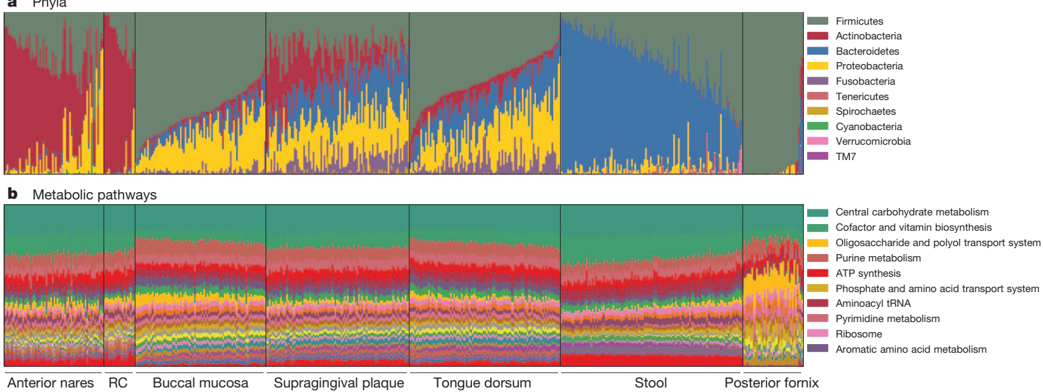
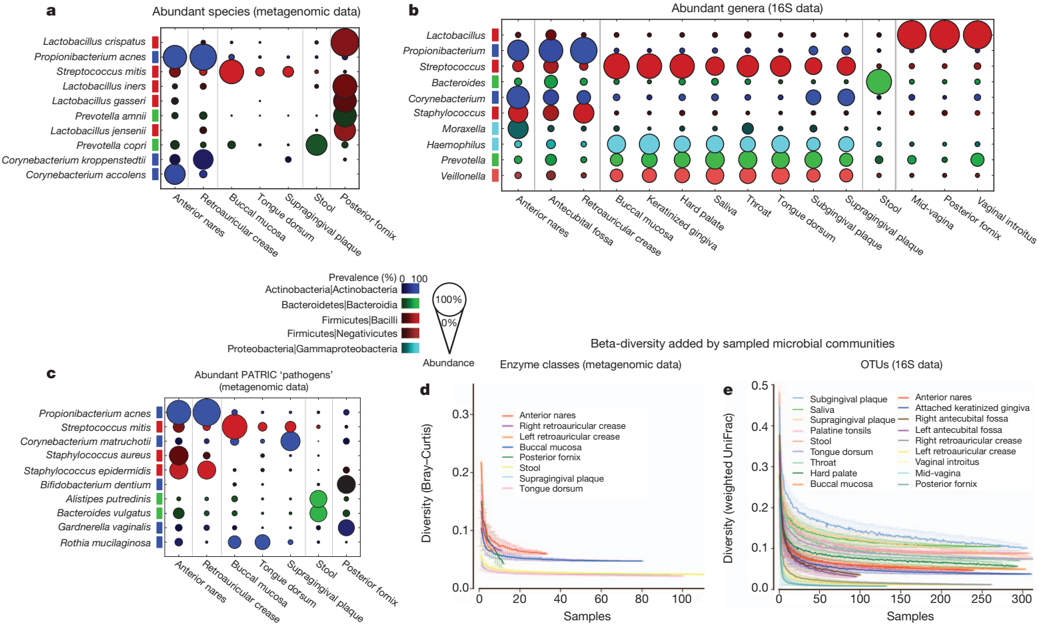
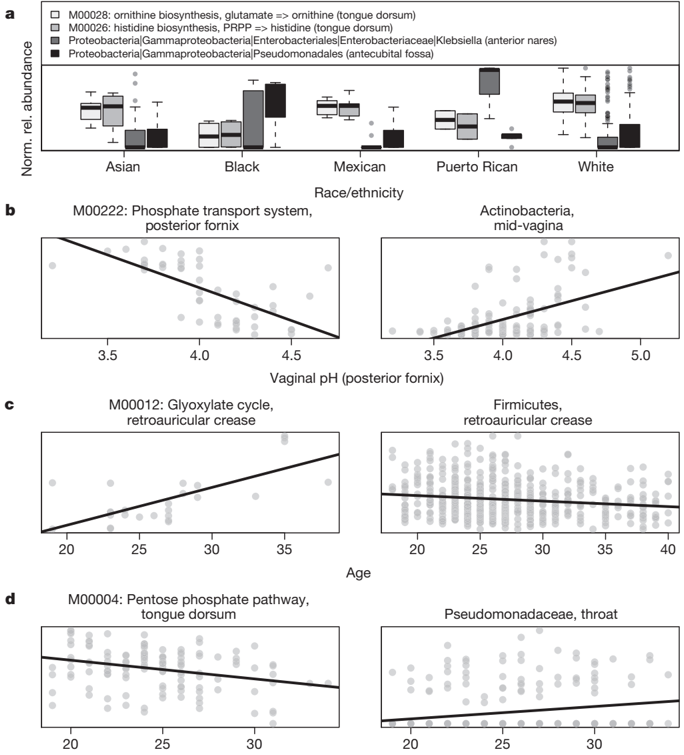
Studies of the human microbiome have revealed that even healthy individuals differ remarkably in the microbes that occupy habitats such as the gut, skin and vagina. Much of this diversity remains unexplained, although diet, environment, host genetics and early microbial exposure have all been implicated. Accordingly, to characterize the ecology of human-associated microbial communities, the Human Microbiome Project has analysed the largest cohort and set of distinct, clinically relevant body habitats so far. We found the diversity and abundance of each habitat’s signature microbes to vary widely even among healthy subjects, with strong niche specialization both within and among individuals. The project encountered an estimated 81–99% of the genera, enzyme families and community configurations occupied by the healthy Western microbiome. Metagenomic carriage of metabolic pathways was stable among individuals despite variation in community structure, and ethnic/racial background proved to be one of the strongest associations of both pathways and microbes with clinical metadata. These results thus delineate the range of structural and functional configurations normal in the microbial communities of a healthy population, enabling future characterization of the epidemiology, ecology and translational applications of the human microbiome.
Overview
The claims and statistics of this paper haven’t been checked yet.
Free: it reads the open-access text and checks the first 5 claims that cite a source we can check. Create a free account to check every claim.
Integrity signals
Registry
Cites
Statistics
Figures
Verification
Claims the paper makes
The claims and statistics of this paper haven’t been checked yet.
Free: it reads the open-access text and checks the first 5 claims that cite a source we can check. Create a free account to check every claim.
Claims other papers make about this one
Each is checked against this paper’s own text: does it say what the citing paper says it does?
The cited source doesn’t support the claim as written.
In the citing paper
“newly diagnosed cases with adenocarcinoma of the colon or rectum were recruited prior to surgery and treatment during 1985–19891, 2. Controls were patients awaiting elective surgery for non-oncologic, non-gastrointestinal conditions at these hospitals during the same period.”
From Assessment of variation in microbial community amplicon sequencing by the Microbiome Quality Control (MBQC) project consortium (2017) · cites this paper as [1]
Checked by a reasoning model — may be wrong.
Experimental — accuracy not yet measuredThe source backs part of the claim, not all of it — or backs it for a different population, condition or comparison.
In the citing paper
“Multiple factors affect the composition of the human gut microbiome, including geography, diet, infection and drug usage56,61–64.”
From Intestinal microbiota signatures of clinical response and immune-related adverse events in melanoma patients treated with anti-PD-1 (2022) · cites this paper as [64]
Experimental — accuracy not yet measuredThe source backs part of the claim, not all of it — or backs it for a different population, condition or comparison.
In the citing paper
“suggesting that no severe gut microbiome dysbiosis was present in the study group at baseline”
From Gut microbiome affects the response to anti-PD-1 immunotherapy in patients with hepatocellular carcinoma (2019) · cites this paper as [9]
Experimental — accuracy not yet measuredThe source backs part of the claim, not all of it — or backs it for a different population, condition or comparison.
In the citing paper
“Gut microbiota comprise thousands of microbial species that are involved in host metabolism by regulating energy extraction, activation of the immune system, drug metabolism, and other processes.”
From The Gut Microbiome Contributes to a Substantial Proportion of the Variation in Blood Lipids (2015) · cites this paper as [3]
Experimental — accuracy not yet measuredThe source backs part of the claim, not all of it — or backs it for a different population, condition or comparison.
In the citing paper
“The human gut microbiota contains thousands of different bacterial taxa as well as various archaea, eukaryotic microbes and viruses, more than three million genes, and harbors an enormous metabolic capacity [1, 2].”
From The athletic gut microbiota (2020) · cites this paper as [1]
Experimental — accuracy not yet measured
20 more claims about this paper
Create a free account to see every claim other papers make about this one.
Self-check
Percentages, sums and reported differences re-computed from the paper’s own numbers.
The self-check needs the paper’s full text.
Citations
Cites
Fast and accurate short read alignment with Burrows-Wheeler transform
Li, H., & Durbin, R. (2009) · Bioinformatics · doi:10.1093/bioinformatics/btp324 · Cited by 58,607
QIIME allows analysis of high-throughput community sequencing data
Caporaso, J. G., Kuczynski, J., Stombaugh, J., Bittinger, K., Bushman, F. D., Costello, E. K., Fierer, N., Peña, A. G., Goodrich, J. K., Gordon, J. I., et al. (2010) · Nature Methods · doi:10.1038/nmeth.f.303 · Cited by 34,887
Fast and accurate long-read alignment with Burrows-Wheeler transform.
Li, H., & Durbin, R. (2010) · Bioinformatics · doi:10.1093/bioinformatics/btp698 · Cited by 12,063
A human gut microbial gene catalogue established by metagenomic sequencing
MetaHIT Consortium, Qin, J., Li, R., Raes, J., Arumugam, M., Burgdorf, K. S., Manichanh, C., Nielsen, T., Pons, N., Levenez, F., et al. (2010) · Nature · doi:10.1038/nature08821 · Cited by 11,624
A core gut microbiome in obese and lean twins
Turnbaugh, P. J., Hamady, M., Yatsunenko, T., Cantarel, B. L., Duncan, A., Ley, R. E., Sogin, M. L., Jones, W. J., Roe, B. A., Affourtit, J. P., et al. (2009) · Nature · doi:10.1038/nature07540 · Cited by 7,823
Self-citationSokol, H., Pigneur, B., Watterlot, L., Lakhdari, O., Bermúdez-Humarán, L. G., Gratadoux, J.-J., Blugeon, S., Bridonneau, C., Furet, J.-P., Corthier, G., et al. (2008) · Proceedings of the National Academy of Sciences · doi:10.1073/pnas.0804812105 · Cited by 4,413
Vaginal microbiome of reproductive-age women
Ravel, J., Gajer, P., Abdo, Z., Schneider, G. M., Koenig, S. S. K., McCulle, S. L., Karlebach, S., Gorle, R., Russell, J., Tacket, C. O., et al. (2011) · Proceedings of the National Academy of Sciences · doi:10.1073/pnas.1002611107 · Cited by 4,254
Bacterial Community Variation in Human Body Habitats Across Space and Time
Costello, E. K., Lauber, C. L., Hamady, M., Fierer, N., Gordon, J. I., & Knight, R. (2009) · Science · doi:10.1126/science.1177486 · Cited by 3,231
Defining the normal bacterial flora of the oral cavity
Aas, J. A., Paster, B. J., Stokes, L. N., Olsen, I., & Dewhirst, F. E. (2005) · Journal of Clinical Microbiology · doi:10.1128/jcm.43.11.5721-5732.2005 · Cited by 3,092
Topographical and Temporal Diversity of the Human Skin Microbiome
Grice, E. A., Kong, H. H., Conlan, S., Deming, C. B., Davis, J., Young, A. C., Program, N. C. S., Bouffard, G. G., Blakesley, R. W., Murray, P. R., et al. (2009) · Science · doi:10.1126/science.1171700 · Cited by 2,953
Cited by
Items 901–1,000 of 1,676
Metagenomic engineering of the mammalian gut microbiome in situ
Ronda, C., Chen, S. P., Cabral, V., Yaung, S. J., & Wang, H. H. (2019) · Nature Methods · doi:10.1038/s41592-018-0301-y · Cited by 236
Elvers, K. T., Wilson, V. J., Hammond, A., Duncan, L., Huntley, A. L., Hay, A. D., & van der Werf, E. T. (2020) · BMJ Open · doi:10.1136/bmjopen-2019-035677 · Cited by 225
Blum, H. E. (2017) · Advances in Medical Sciences · doi:10.1016/j.advms.2017.04.005 · Cited by 218
Fungi of the Murine Gut: Episodic Variation and Proliferation during Antibiotic Treatment
Dollive, S., Chen, Y.-Y., Grunberg, S., Bittinger, K., Hoffmann, C., Vandivier, L., Cuff, C., Lewis, J. D., Wu, G. D., & Bushman, F. D. (2013) · PLoS ONE · doi:10.1371/journal.pone.0071806 · Cited by 239
Wang, J., Qi, J., Zhao, H., He, S., Zhang, Y., Wei, S., & Zhao, F. (2013) · Scientific Reports · doi:10.1038/srep01843 · Cited by 242
Volatile Organic Compound Mediated Interactions at the Plant-Microbe Interface
Junker, R. R., & Tholl, D. (2013) · Journal of Chemical Ecology · doi:10.1007/s10886-013-0325-9 · Cited by 238
“Humans and other animals sustain intimate relationships with diverse microbiota, as demonstrated by the recent characterization of the human gut microbiome (Huttenhower et al. 2012; Spor et al. 2011).”
BackgroundGut microbiome in type 1 diabetes: A comprehensive review
Zheng, P., Li, Z., & Zhou, Z. (2018) · Diabetes/Metabolism Research and Reviews · doi:10.1002/dmrr.3043 · Cited by 228
“Microbes in the gut and intestine are generally divided into Gram-positive (G+) and Gram-negative (G-) populations.(27,28) Usually gastrointestinal tracts are dominated by four”
BackgroundOral–Gut Microbiome Axis in Gastrointestinal Disease and Cancer
Park, S.-Y., Hwang, B.-O., Lim, M., Ok, S.-H., Lee, S.-K., Chun, K.-S., Park, K.-K., Hu, Y., Chung, W.-Y., & Song, N.-Y. (2021) · Cancers · doi:10.3390/cancers13092124 · Cited by 232
Maternal vertical transmission affecting early-life microbiota development
Wang, S., Ryan, C. A., Boyaval, P., Dempsey, E. M., Ross, R. P., & Stanton, C. (2020) · Trends in Microbiology · doi:10.1016/j.tim.2019.07.010 · Cited by 243
Hickey, C. A., Kuhn, K. A., Donermeyer, D. L., Porter, N. T., Jin, C., Cameron, E. A., Jung, H., Kaiko, G. E., Wegorzewska, M., Malvin, N. P., et al. (2015) · Cell Host & Microbe · doi:10.1016/j.chom.2015.04.002 · Cited by 247
Lazado, C. C., Caipang, C. M. A., & Estante, E. G. (2015) · Fish & Shellfish Immunology · doi:10.1016/j.fsi.2015.02.023 · Cited by 237
Tunable Expression Tools Enable Single-Cell Strain Distinction in the Gut Microbiome
Whitaker, W. R., Shepherd, E. S., & Sonnenburg, J. L. (2017) · Cell · doi:10.1016/j.cell.2017.03.041 · Cited by 244
Practical considerations for large-scale gut microbiome studies
Vandeputte, D., Tito, R. Y., Vanleeuwen, R., Falony, G., & Raes, J. (2017) · FEMS Microbiology Reviews · doi:10.1093/femsre/fux027 · Cited by 238
Hallmarks of cancer—the new testament
Senga, S. S., & Grose, R. P. (2021) · Open Biology · doi:10.1098/rsob.200358 · Cited by 221
“The concept of the human body being a vessel for other microorganisms is well established—the microbial metagenome in our body outnumbers our genome by at least 100fold [87].”
BackgroundPrebiotic and Probiotic Regulation of Bone Health: Role of the Intestine and its Microbiome
McCabe, L., Britton, R. A., & Parameswaran, N. (2015) · Current Osteoporosis Reports · doi:10.1007/s11914-015-0292-x · Cited by 227
Genomic Medicine: A Decade of Successes, Challenges, and Opportunities
McCarthy, J. J., McLeod, H. L., & Ginsburg, G. S. (2013) · Science Translational Medicine · doi:10.1126/scitranslmed.3005785 · Cited by 239
Glycobiome: Bacteria and mucus at the epithelial interface
Ouwerkerk, J. P., de Vos, W. M., & Belzer, C. (2013) · Best Practice & Research Clinical Gastroenterology · doi:10.1016/j.bpg.2013.03.001 · Cited by 226
Extensive Strain-Level Copy-Number Variation across Human Gut Microbiome Species
Greenblum, S., Carr, R., & Borenstein, E. (2015) · Cell · doi:10.1016/j.cell.2014.12.038 · Cited by 244
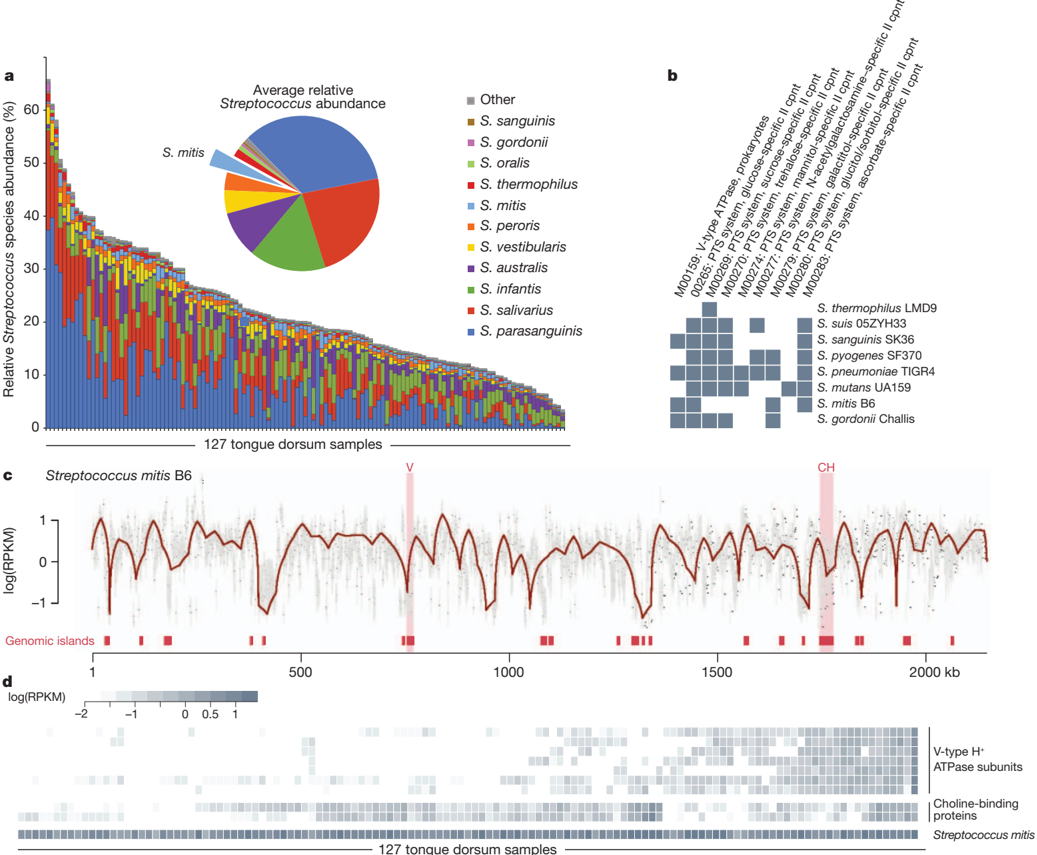
“…variable coverage and the coordinated loss of genes from specific gene families within the Streptococcus mitis B6 genome (Human Microbiome Project Consortium, 2012) or a diverse array of strain-specific adhesion-like protein genes across cultured strains of Methanobrevibacter smithii (Hansen et…”
Early‐life gut microbiome and egg allergy
Fazlollahi, M., Chun, Y., Grishin, A., Wood, R. A., Burks, A. W., Dawson, P., Jones, S. M., Leung, D. Y. M., Sampson, H. A., Sicherer, S. H., et al. (2018) · Allergy · doi:10.1111/all.13389 · Cited by 231
Non-alcoholic fatty liver and the gut microbiota
Bashiardes, S., Shapiro, H., Rozin, S., Shibolet, O., & Elinav, E. (2016) · Molecular Metabolism · doi:10.1016/j.molmet.2016.06.003 · Cited by 241
“Furthermore, increased microbiome-modulated metabolites such as lipopolysaccharides, short chain fatty acids (SCFAs), bile acids, and ethanol, may affect liver pathology through multiple direct and indirect mechanisms.”
BackgroundKnowing your friends: invertebrate innate immunity fosters beneficial bacterial symbioses
Nyholm, S. V., & Graf, J. (2012) · Nature Reviews Microbiology · doi:10.1038/nrmicro2894 · Cited by 232
Vindigni, S. M., Zisman, T. L., Suskind, D. L., & Damman, C. J. (2016) · Therapeutic Advances in Gastroenterology · doi:10.1177/1756283x16644242 · Cited by 229
Hasain, Z., Mokhtar, N. M., Kamaruddin, N. A., Mohamed Ismail, N. A., Razalli, N. H., Gnanou, J. V., & Raja Ali, R. A. (2020) · Frontiers in Cellular and Infection Microbiology · doi:10.3389/fcimb.2020.00188 · Cited by 225
Checinska, A., Probst, A. J., Vaishampayan, P., White, J. R., Kumar, D., Stepanov, V. G., Fox, G. E., Nilsson, H. R., Pierson, D. L., Perry, J., et al. (2015) · Microbiome · doi:10.1186/s40168-015-0116-3 · Cited by 236
SteadyCom: Predicting microbial abundances while ensuring community stability
Chan, S. H. J., Simons, M. N., & Maranas, C. D. (2017) · PLOS Computational Biology · doi:10.1371/journal.pcbi.1005539 · Cited by 231
The skin microbiome of vertebrates
Ross, A. A., Rodrigues Hoffmann, A., & Neufeld, J. D. (2019) · Microbiome · doi:10.1186/s40168-019-0694-6 · Cited by 232
Emerging roles of the microbiome in cancer
Bultman, S. J. (2014) · Carcinogenesis · doi:10.1093/carcin/bgt392 · Cited by 239
Phylogeny, culturing, and metagenomics of the human gut microbiota
Walker, A. W., Duncan, S. H., Louis, P., & Flint, H. J. (2014) · Trends in Microbiology · doi:10.1016/j.tim.2014.03.001 · Cited by 239
Patel, V. C., Lee, S., McPhail, M. J. W., Da Silva, K., Guilly, S., Zamalloa, A., Witherden, E., Støy, S., Manakkat Vijay, G. K., Pons, N., et al. (2022) · Journal of Hepatology · doi:10.1016/j.jhep.2021.09.010 · Cited by 227
Microbiota-mediated inflammation and antimicrobial defense in the intestine
Caballero, S., & Pamer, E. G. (2015) · Annual Review of Immunology · doi:10.1146/annurev-immunol-032713-120238 · Cited by 238
Oral microbiota and cancer development
Tuominen, H., & Rautava, J. (2021) · Pathobiology · doi:10.1159/000510979 · Cited by 238
Categorization of the gut microbiota: enterotypes or gradients?
Jeffery, I. B., Claesson, M. J., O'Toole, P. W., & Shanahan, F. (2012) · Nature Reviews Microbiology · doi:10.1038/nrmicro2859 · Cited by 238
Ramiro-Garcia, J., Hermes, G. D. A., Giatsis, C., Sipkema, D., Zoetendal, E. G., Schaap, P. J., & Smidt, H. (2018) · F1000Research · doi:10.12688/f1000research.9227.2 · Cited by 202
Metatranscriptome of human faecal microbial communities in a cohort of adult men
Abu-Ali, G. S., Mehta, R. S., Lloyd-Price, J., Mallick, H., Branck, T., Ivey, K. L., Drew, D. A., DuLong, C., Rimm, E., Izard, J., et al. (2018) · Nature Microbiology · doi:10.1038/s41564-017-0084-4 · Cited by 233
Microbiome manipulation by a soil-borne fungal plant pathogen using effector proteins
Snelders, N. C., Rovenich, H., Petti, G. C., Rocafort, M., van den Berg, G. C. M., Vorholt, J. A., Mesters, J. R., Seidl, M. F., Nijland, R., & Thomma, B. P. H. J. (2020) · Nature Plants · doi:10.1038/s41477-020-00799-5 · Cited by 236
“Higher organisms, including plants, associate with a pleth-ora of microbes that collectively form their microbiome, which represents a key determinant for their health 3–7 .”
Highly multiplexed spatial mapping of microbial communities
Shi, H., Shi, Q., Grodner, B., Lenz, J. S., Zipfel, W. R., Brito, I. L., & De Vlaminck, I. (2020) · Nature · doi:10.1038/s41586-020-2983-4 · Cited by 245
Interactions in the microbiome: communities of organisms and communities of genes
Boon, E., Meehan, C. J., Whidden, C., Wong, D. H.-J., Langille, M. G. I., & Beiko, R. G. (2014) · FEMS Microbiology Reviews · doi:10.1111/1574-6976.12035 · Cited by 230
It’s the song, not the singer: an exploration of holobiosis and evolutionary theory
Doolittle, W. F., & Booth, A. (2017) · Biology & Philosophy · doi:10.1007/s10539-016-9542-2 · Cited by 224
Gut microbiota dysbiosis in a cohort of patients with psoriasis
Hidalgo‐Cantabrana, C., Gómez, J., Delgado, S., Requena‐López, S., Queiro‐Silva, R., Margolles, A., Coto, E., Sánchez, B., & Coto‐Segura, P. (2019) · British Journal of Dermatology · doi:10.1111/bjd.17931 · Cited by 236
Structure, Function, and Biology of the Enterococcus faecalis Cytolysin
Van Tyne, D., Martin, M., & Gilmore, M. (2013) · Toxins · doi:10.3390/toxins5050895 · Cited by 219
Shaiber, A., Willis, A. D., Delmont, T. O., Roux, S., Chen, L.-X., Schmid, A. C., Yousef, M., Watson, A. R., Lolans, K., Esen, Ö. C., et al. (2020) · Genome Biology · doi:10.1186/s13059-020-02195-w · Cited by 227
Analyses of the Stability and Core Taxonomic Memberships of the Human Microbiome
Li, K., Bihan, M., & Methé, B. A. (2013) · PLoS ONE · doi:10.1371/journal.pone.0063139 · Cited by 235
“The NIH sponsored HMP has provided an unprecedented opportunity to examine the microbial diversity within and across body habitats and individuals, through pyrosequencing-based profiling of 16S rRNA gene sequences (16S) from oral, skin, distal gut, and vaginal body habitats from over 200 healthy individuals [11,12,13].”
BackgroundMethodSelf-citationGeva-Zatorsky, N., Alvarez, D., Hudak, J. E., Reading, N. C., Erturk-Hasdemir, D., Dasgupta, S., von Andrian, U. H., & Kasper, D. L. (2015) · Nature Medicine · doi:10.1038/nm.3929 · Cited by 237
Impact of gut microbiota on diabetes mellitus
Blandino, G., Inturri, R., Lazzara, F., Di Rosa, M., & Malaguarnera, L. (2016) · Diabetes & Metabolism · doi:10.1016/j.diabet.2016.04.004 · Cited by 231
McHardy, I. H., Li, X., Tong, M., Ruegger, P., Jacobs, J., Borneman, J., Anton, P., & Braun, J. (2013) · Microbiome · doi:10.1186/2049-2618-1-26 · Cited by 234
The impact of skin care products on skin chemistry and microbiome dynamics
Bouslimani, A., da Silva, R., Kosciolek, T., Janssen, S., Callewaert, C., Amir, A., Dorrestein, K., Melnik, A. V., Zaramela, L. S., Kim, J.-N., et al. (2019) · BMC Biology · doi:10.1186/s12915-019-0660-6 · Cited by 234
Self-citationReview: Microbiome in Inflammatory Arthritis and Human Rheumatic Diseases
Scher, J. U., Littman, D. R., & Abramson, S. B. (2016) · Arthritis & Rheumatology · doi:10.1002/art.39259 · Cited by 228
Rapid bacterial genome sequencing: methods and applications in clinical microbiology
Bertelli, C., & Greub, G. (2013) · Clinical Microbiology and Infection · doi:10.1111/1469-0691.12217 · Cited by 218
Fungal-Bacterial Interactions in Health and Disease
Krüger, W., Vielreicher, S., Kapitan, M., Jacobsen, I., & Niemiec, M. (2019) · Pathogens · doi:10.3390/pathogens8020070 · Cited by 227
“Today, it is common knowledge that the human body contains as many microbes as the cells it consists of, and that the microbial communities are influenced by external and internal host factors such as food choices or genetics, respectively [7,8].”
InfluentialAlterations of the Skin and Gut Microbiome in Psoriasis and Psoriatic Arthritis
Olejniczak-Staruch, I., Ciążyńska, M., Sobolewska-Sztychny, D., Narbutt, J., Skibińska, M., & Lesiak, A. (2021) · International Journal of Molecular Sciences · doi:10.3390/ijms22083998 · Cited by 212
Functional roles and metabolic niches in the honey bee gut microbiota
Bonilla-Rosso, G., & Engel, P. (2018) · Current Opinion in Microbiology · doi:10.1016/j.mib.2017.12.009 · Cited by 224
Gupta, A., Dhakan, D. B., Maji, A., Saxena, R., P.K., V. P., Mahajan, S., Pulikkan, J., Kurian, J., Gomez, A. M., Scaria, J., et al. (2019) · mSystems · doi:10.1128/msystems.00438-19 · Cited by 227
Magruder, M., Sholi, A. N., Gong, C., Zhang, L., Edusei, E., Huang, J., Albakry, S., Satlin, M. J., Westblade, L. F., Crawford, C., et al. (2019) · Nature Communications · doi:10.1038/s41467-019-13467-w · Cited by 229
Ultra-deep sequencing of Hadza hunter-gatherers recovers vanishing gut microbes
Carter, M. M., Olm, M. R., Merrill, B. D., Dahan, D., Tripathi, S., Spencer, S. P., Yu, F. B., Jain, S., Neff, N., Jha, A. R., et al. (2023) · Cell · doi:10.1016/j.cell.2023.05.046 · Cited by 216
“Human Microbiome Project Consortium (2012).”
Diversity and functional landscapes in the microbiota of animals in the wild
Levin, D., Raab, N., Pinto, Y., Rothschild, D., Zanir, G., Godneva, A., Mellul, N., Futorian, D., Gal, D., Leviatan, S., et al. (2021) · Science · doi:10.1126/science.abb5352 · Cited by 233
Mancuso, C., & Santangelo, R. (2018) · Pharmacological Research · doi:10.1016/j.phrs.2017.12.009 · Cited by 232
Gut microbiota and autism: key concepts and findings
Ding, H. T., Taur, Y., & Walkup, J. T. (2017) · Journal of Autism and Developmental Disorders · doi:10.1007/s10803-016-2960-9 · Cited by 232
The gut microbiota of Colombians differs from that of Americans, Europeans and Asians
Escobar, J. S., Klotz, B., Valdes, B. E., & Agudelo, G. M. (2014) · BMC Microbiology · doi:10.1186/s12866-014-0311-6 · Cited by 227
Analysis of the mouse gut microbiome using full-length 16S rRNA amplicon sequencing
Shin, J., Lee, S., Go, M.-J., Lee, S. Y., Kim, S. C., Lee, C.-H., & Cho, B.-K. (2016) · Scientific Reports · doi:10.1038/srep29681 · Cited by 224
Performing Skin Microbiome Research: A Method to the Madness
Kong, H. H., Andersson, B., Clavel, T., Common, J. E., Jackson, S. A., Olson, N. D., Segre, J. A., & Traidl-Hoffmann, C. (2017) · Journal of Investigative Dermatology · doi:10.1016/j.jid.2016.10.033 · Cited by 227
(2020) · Progress in Molecular Biology and Translational Science · doi:10.1016/bs.pmbts.2020.04.003 · Cited by 212
Zhang, S.-L., Mao, Y.-Q., Zhang, Z.-Y., Li, Z.-M., Kong, C.-Y., Chen, H.-L., Cai, P.-R., Han, B., Ye, T., & Wang, L.-S. (2021) · Theranostics · doi:10.7150/thno.54476 · Cited by 224
Morton, E. R., Lynch, J., Froment, A., Lafosse, S., Heyer, E., Przeworski, M., Blekhman, R., & Ségurel, L. (2015) · PLOS Genetics · doi:10.1371/journal.pgen.1005658 · Cited by 231
The contribution of culturomics to the repertoire of isolated human bacterial and archaeal species
Bilen, M., Dufour, J.-C., Lagier, J.-C., Cadoret, F., Daoud, Z., Dubourg, G., & Raoult, D. (2018) · Microbiome · doi:10.1186/s40168-018-0485-5 · Cited by 231
Virulence genes are a signature of the microbiome in the colorectal tumor microenvironment
Burns, M. B., Lynch, J., Starr, T. K., Knights, D., & Blekhman, R. (2015) · Genome Medicine · doi:10.1186/s13073-015-0177-8 · Cited by 231
Brusca, S. B., Abramson, S. B., & Scher, J. U. (2014) · Current Opinion in Rheumatology · doi:10.1097/bor.0000000000000008 · Cited by 228
Ancient genomic changes associated with domestication of the horse
Librado, P., Gamba, C., Gaunitz, C., Der Sarkissian, C., Pruvost, M., Albrechtsen, A., Fages, A., Khan, N., Schubert, M., Jagannathan, V., et al. (2017) · Science · doi:10.1126/science.aam5298 · Cited by 223
Transmission of the gut microbiota: spreading of health
Browne, H. P., Neville, B. A., Forster, S. C., & Lawley, T. D. (2017) · Nature Reviews Microbiology · doi:10.1038/nrmicro.2017.50 · Cited by 232
A metabolic modeling platform for the computation of microbial ecosystems in time and space (COMETS)
Dukovski, I., Bajić, D., Chacón, J. M., Quintin, M., Vila, J. C. C., Sulheim, S., Pacheco, A. R., Bernstein, D. B., Riehl, W. J., Korolev, K. S., et al. (2021) · Nature Protocols · doi:10.1038/s41596-021-00593-3 · Cited by 213
From Benchtop to Desktop: Important Considerations when Designing Amplicon Sequencing Workflows
Murray, D. C., Coghlan, M. L., & Bunce, M. (2015) · PLOS ONE · doi:10.1371/journal.pone.0124671 · Cited by 224
Changes in the Eye Microbiota Associated with Contact Lens Wearing
Shin, H., Price, K., Albert, L., Dodick, J., Park, L., & Dominguez-Bello, M. G. (2016) · mBio · doi:10.1128/mbio.00198-16 · Cited by 226
Metagenomics uncovers gaps in amplicon-based detection of microbial diversity
Eloe-Fadrosh, E. A., Ivanova, N. N., Woyke, T., & Kyrpides, N. C. (2016) · Nature Microbiology · doi:10.1038/nmicrobiol.2015.32 · Cited by 221
Age and Gender Affect the Composition of Fungal Population of the Human Gastrointestinal Tract
Strati, F., Di Paola, M., Stefanini, I., Albanese, D., Rizzetto, L., Lionetti, P., Calabrò, A., Jousson, O., Donati, C., Cavalieri, D., et al. (2016) · Frontiers in Microbiology · doi:10.3389/fmicb.2016.01227 · Cited by 224
Pharmacomicrobiomics: a novel route towards personalized medicine?
Doestzada, M., Vila, A. V., Zhernakova, A., Koonen, D. P. Y., Weersma, R. K., Touw, D. J., Kuipers, F., Wijmenga, C., & Fu, J. (2018) · Protein & Cell · doi:10.1007/s13238-018-0547-2 · Cited by 210
Gut microbiome in multiple sclerosis: The players involved and the roles they play
Shahi, S. K., Freedman, S. N., & Mangalam, A. K. (2017) · Gut Microbes · doi:10.1080/19490976.2017.1349041 · Cited by 217
The role of the gut microbiota in dietary interventions for depression and anxiety
Bear, T. L. K., Dalziel, J. E., Coad, J., Roy, N. C., Butts, C. A., & Gopal, P. K. (2020) · Advances in Nutrition · doi:10.1093/advances/nmaa016 · Cited by 229
Microbiome disturbances and autism spectrum disorders
Rosenfeld, C. S. (2015) · Drug Metabolism and Disposition · doi:10.1124/dmd.115.063826 · Cited by 229
Ultra-deep and quantitative saliva proteome reveals dynamics of the oral microbiome
Grassl, N., Kulak, N. A., Pichler, G., Geyer, P. E., Jung, J., Schubert, S., Sinitcyn, P., Cox, J., & Mann, M. (2016) · Genome Medicine · doi:10.1186/s13073-016-0293-0 · Cited by 221
Capturing the diversity of the human gut microbiota through culture-enriched molecular profiling
Lau, J. T., Whelan, F. J., Herath, I., Lee, C. H., Collins, S. M., Bercik, P., & Surette, M. G. (2016) · Genome Medicine · doi:10.1186/s13073-016-0327-7 · Cited by 218
Aging-related changes in the diversity of women’s skin microbiomes associated with oral bacteria
Shibagaki, N., Suda, W., Clavaud, C., Bastien, P., Takayasu, L., Iioka, E., Kurokawa, R., Yamashita, N., Hattori, Y., Shindo, C., et al. (2017) · Scientific Reports · doi:10.1038/s41598-017-10834-9 · Cited by 226
Altered Gut Microbiota in Type 2 Diabetes: Just a Coincidence?
Sircana, A., Framarin, L., Leone, N., Berrutti, M., Castellino, F., Parente, R., De Michieli, F., Paschetta, E., & Musso, G. (2018) · Current Diabetes Reports · doi:10.1007/s11892-018-1057-6 · Cited by 223
Dąbrowska, K., & Abedon, S. T. (2019) · Microbiology and Molecular Biology Reviews · doi:10.1128/mmbr.00012-19 · Cited by 212
The Bigger Picture: Why Oral Mucosa Heals Better Than Skin
Waasdorp, M., Krom, B. P., Bikker, F. J., van Zuijlen, P. P. M., Niessen, F. B., & Gibbs, S. (2021) · Biomolecules · doi:10.3390/biom11081165 · Cited by 207
Ferrario, C., Taverniti, V., Milani, C., Fiore, W., Laureati, M., De Noni, I., Stuknyte, M., Chouaia, B., Riso, P., & Guglielmetti, S. (2014) · The Journal of Nutrition · doi:10.3945/jn.114.197723 · Cited by 228
Global chemical analysis of biology by mass spectrometry
Aksenov, A. A., da Silva, R., Knight, R., Lopes, N. P., & Dorrestein, P. C. (2017) · Nature Reviews Chemistry · doi:10.1038/s41570-017-0054 · Cited by 230
Intestinal microbiota enhances pancreatic carcinogenesis in preclinical models
Thomas, R. M., Gharaibeh, R. Z., Gauthier, J., Beveridge, M., Pope, J. L., Guijarro, M. V., Yu, Q., He, Z., Ohland, C., Newsome, R., et al. (2018) · Carcinogenesis · doi:10.1093/carcin/bgy073 · Cited by 222
New approaches for metagenome assembly with short reads
Ayling, M., Clark, M. D., & Leggett, R. M. (2020) · Briefings in Bioinformatics · doi:10.1093/bib/bbz020 · Cited by 218
Le Roy, T., Moens de Hase, E., Van Hul, M., Paquot, A., Pelicaen, R., Régnier, M., Depommier, C., Druart, C., Everard, A., Maiter, D., et al. (2022) · Gut · doi:10.1136/gutjnl-2020-323778 · Cited by 226
Bui, T. P. N., Mannerås-Holm, L., Puschmann, R., Wu, H., Troise, A. D., Nijsse, B., Boeren, S., Bäckhed, F., Fiedler, D., & deVos, W. M. (2021) · Nature Communications · doi:10.1038/s41467-021-25081-w · Cited by 220
Dal Bello, M., Lee, H., Goyal, A., & Gore, J. (2021) · Nature Ecology & Evolution · doi:10.1038/s41559-021-01535-8 · Cited by 225
Fournière, M., Latire, T., Souak, D., Feuilloley, M. G. J., & Bedoux, G. (2020) · Microorganisms · doi:10.3390/microorganisms8111752 · Cited by 227
“Emergence of new technologies, such as next-generation sequencing (NGS), enable the comprehensive study of the human microbiome [2,3].”
BackgroundHelbert, W., Poulet, L., Drouillard, S., Mathieu, S., Loiodice, M., Couturier, M., Lombard, V., Terrapon, N., Turchetto, J., Vincentelli, R., et al. (2019) · Proceedings of the National Academy of Sciences · doi:10.1073/pnas.1815791116 · Cited by 227
The microbiota in inflammatory bowel disease: Current and therapeutic insights
Lane, E. R., Zisman, T., & Suskind, D. (2017) · Journal of Inflammation Research · doi:10.2147/jir.s116088 · Cited by 226
Sequencing 16S rRNA gene fragments using the PacBio SMRT DNA sequencing system.
Schloss, P. D., Jenior, M. L., Koumpouras, C. C., Westcott, S. L., & Highlander, S. K. (2016) · PeerJ · doi:10.7717/peerj.1869 · Cited by 226
Hall, M. W., Singh, N., Ng, K. F., Lam, D. K., Goldberg, M. B., Tenenbaum, H. C., Neufeld, J. D., G. Beiko, R., & Senadheera, D. B. (2017) · npj Biofilms and Microbiomes · doi:10.1038/s41522-016-0011-0 · Cited by 226
Update of probiotics in human world: A nonstop source of benefactions till the end of time
Zommiti, M., Feuilloley, M. G. J., & Connil, N. (2020) · Microorganisms · doi:10.3390/microorganisms8121907 · Cited by 225
The Gut Microbiota and Dysbiosis in Autism Spectrum Disorders
Hughes, H. K., Rose, D., & Ashwood, P. (2018) · Current Neurology and Neuroscience Reports · doi:10.1007/s11910-018-0887-6 · Cited by 225
MetAMOS: a modular and open source metagenomic assembly and analysis pipeline
Treangen, T. J., Koren, S., Sommer, D. D., Liu, B., Astrovskaya, I., Ondov, B., Darling, A. E., Phillippy, A. M., & Pop, M. (2013) · Genome Biology · doi:10.1186/gb-2013-14-1-r2 · Cited by 225
Ross, A. A., Müller, K. M., Weese, J. S., & Neufeld, J. D. (2018) · Proceedings of the National Academy of Sciences · doi:10.1073/pnas.1801302115 · Cited by 225
Martínez-del Campo, A., Bodea, S., Hamer, H. A., Marks, J. A., Haiser, H. J., Turnbaugh, P. J., & Balskus, E. P. (2015) · mBio · doi:10.1128/mbio.00042-15 · Cited by 224
Metadata
- Authors
- The Human Microbiome Project Consortium
- Venue
- Nature
- Published
- 2012-06
- Volume
- 486
- Issue
- 7402
- Pages
- 207-214
- ISSN
- 0028-0836 (ISSN-L)
- 1476-4687
- PMC
- PMC3564958
- OpenAlex
- W2128769815
- Semantic Scholar
- 0c431405ec1eb4b84a52ed1fcc530454a4b8bf6f
- Cited by
- 11,726
- References
- 29
- Citations by year
- 2026: 586 · 2025: 748 · 2024: 890 · 2023: 950 · 2022: 1024 · 2021: 1202 · 2020: 1137 · 2019: 1032 · 2018: 863 · 2017: 853 · 2016: 732 · 2015: 651 · 2014: 532 · 2013: 413 · 2012: 104
- FWCI
- 218.52
- Type
- journal article
- Language
- en
- Open access
- hybrid
- doi.org
- Licence
- cc-by-nc-sa
- creativecommons.org/licenses/by-nc-sa/3.0/ (tdm)
- Locations
- Nature (publishedVersion, cc-by-nc-sa)
- PubMed (publishedVersion)
- Goce Delchev University Repository (Goce Delčev University of Štip) (acceptedVersion)
- Europe PMC (PubMed Central) (acceptedVersion)
- PubMed Central (acceptedVersion)
- eScholarship (California Digital Library) (submittedVersion, cc-by)
- Rutgers University Community Repository (Rutgers University) (submittedVersion)
- Open Access Server of the Woods Hole Scientific Community (Woods Hole Scientific Community) (submittedVersion)
- eScholarship (California Digital Library) (submittedVersion)
- Funders
- National Science Foundation (DEAC02-05CH11231, 1053486, 0812111)
- Howard Hughes Medical Institute (DE-AC02-05CH11231)
- U.S. Department of Energy (-AC02-05CH11231, Contract No. DE-AC02-05-CH11231, 05CH11231, No. DE-AC02-05-CH11231, DE AC02 05CH11231, DE-AC02-)
- Gordon and Betty Moore Foundation
- Rice University
- Gladstone Institutes
- Crohn's and Colitis Foundation
- Crohn's and Colitis Foundation of Canada
- Fonds Wetenschappelijk Onderzoek (DE-AC02-05CH11231)
- Vlaamse regering
- National Institutes of Health (5r01hg005172-03, n01hg62088-6-0-1, DE-AC02–05CH11231, DBI-1053486, DP2OD001500, 5r01hg004857-03, n01ai30071-19-0-3)
- Defense Threat Reduction Agency (B104153I, DE-AC02-05CH11231, B084531I)
- Office of Science (No. DE-AC02- 05-CH11231, DEAC02–05CH11231, AC02-05CH11231, DE-AC02, 05CH11231, Contract No. DE-AC02-05CH11231)
- Horace H. Rackham School of Graduate Studies, University of Michigan
- National Human Genome Research Institute (R01HG004885, U54HG003067, R01HG005975, R01-HG004857, U54HG004969, R01HG004853, U54HG003079, U01HG004866, R01HG005969, R01-HG005172, U54HG003273, R01HG004872, R21HG005811, U54HG004968, N01 HG062088, R01HG004906, R01HG004908, U54HG004973, R01HG004856, R01HG004900, R01HG005171, R01HG004877)
- National Cancer Institute (R21CA139193)
- National Institute of General Medical Sciences (T32GM087237)
- National Institute of Allergy and Infectious Diseases (UH2AI083263, UH3AI083263, U54AI084844, T32AI007528, N01 AI030071)
- National Institute of Diabetes and Digestive and Kidney Diseases (UH2DK083990, UH3DK083993)
- National Institute of Arthritis and Musculoskeletal and Skin Diseases (UH2 AR057504, UH2AR057506, UH3-AR057504)
- National Institute of Dental and Craniofacial Research (P30DE020751, R01DE021574, U01DE016937, RC1DE0202098, R37DE016937, RC1DE020298)
- U.S. National Library of Medicine
- Division of Biological Infrastructure (DBI-1053486)
- Army Research Office (DE-AC02-05CH11231, W911NF-11-1-0473, W911NF, W911NF-11)
- Los Alamos National Laboratory (DE-AC02-05CH11231)
- Topics
- Life Sciences › Biochemistry, Genetics and Molecular Biology › Molecular Biology › Gut microbiota and health
- Physical Sciences › Environmental Science › Ecology › Microbial Community Ecology and Physiology
- Health Sciences › Dentistry › Periodontics › Oral microbiology and periodontitis research
- Keywords
- human microbiome, healthy individuals, microbial diversity, gut microbiota, skin microbiome, vaginal microbiota, ecological specialization, metabolic pathways, Human Microbiome Project, metagenomics, microbial ecology
- MeSH terms
- Adolescent, Adult, Bacteria, Female, Health, Humans, Male, Phenotype, RNA, Ribosomal, 16S, Ecosystem, Biodiversity, Metabolic Networks and Pathways, Metagenome, Young Adult, Metagenomics
About these checks
Registry, retraction, Cites and statistics results are computed, not judged, with one exception: a printed reference that no index lists is read once by a model before it counts as a citation error. Claims are extracted by a model and kept only when their quote appears verbatim in the text; each cited source is then checked, with a model’s help, for whether it says what the claim relies on. Those verdicts can be wrong — read the claim’s quote and the cited source before relying on one.
Statistics and arithmetic are recomputed, not judged.
Confidence bands are shown only for fields calibrated on our annotated test set. None is calibrated yet, so no band is shown.
What counts as a claim ›How we measure confidence ›How we check this ›
Are you an author, or do you see a problem with this page? Request a review
Data sources
Bibliographic data: Semantic Scholar, OpenAlex, Crossref.
Contains information from the Semantic Scholar Academic Graph Datasets, made available under the ODC Attribution License (ODC-BY 1.0).
Semantic Scholar’s data is described in: Kinney, R., et al. (2023). The Semantic Scholar Open Data Platform. arXiv:2301.10140.
