

Structure, function and diversity of the healthy human microbiome
Open accessThe DOI matches its Crossref record; 29 of the 29 references it cites were found in a registry or an index.
Abstract
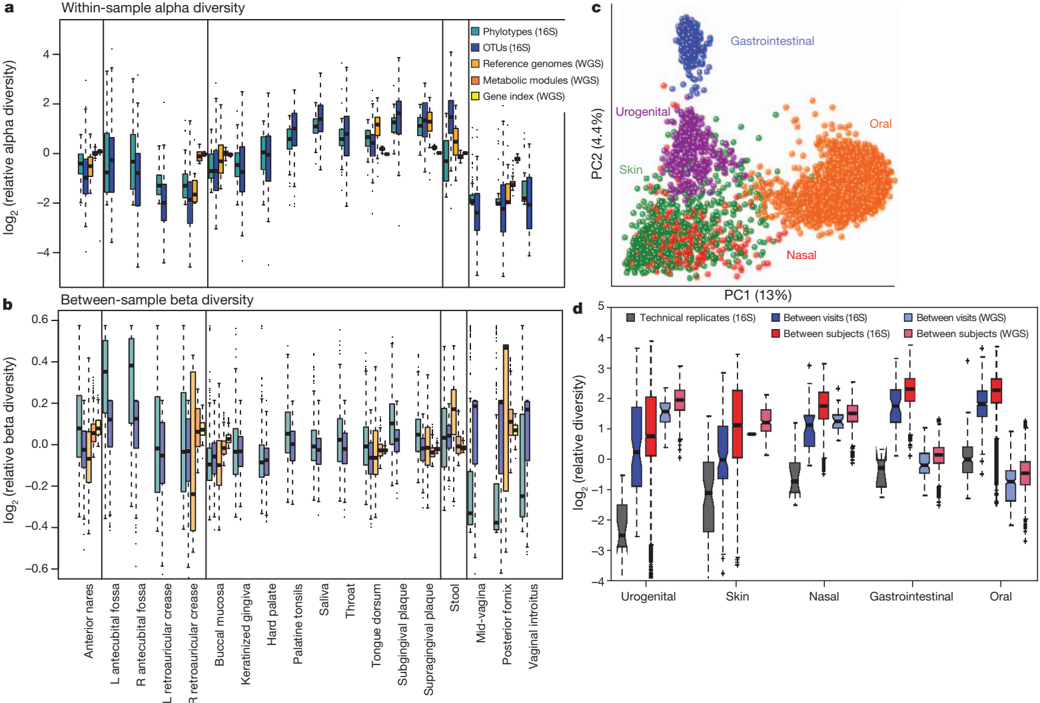
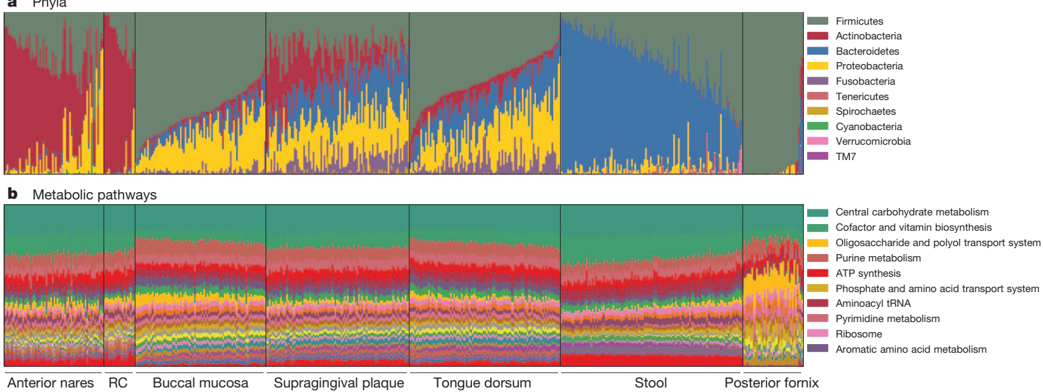
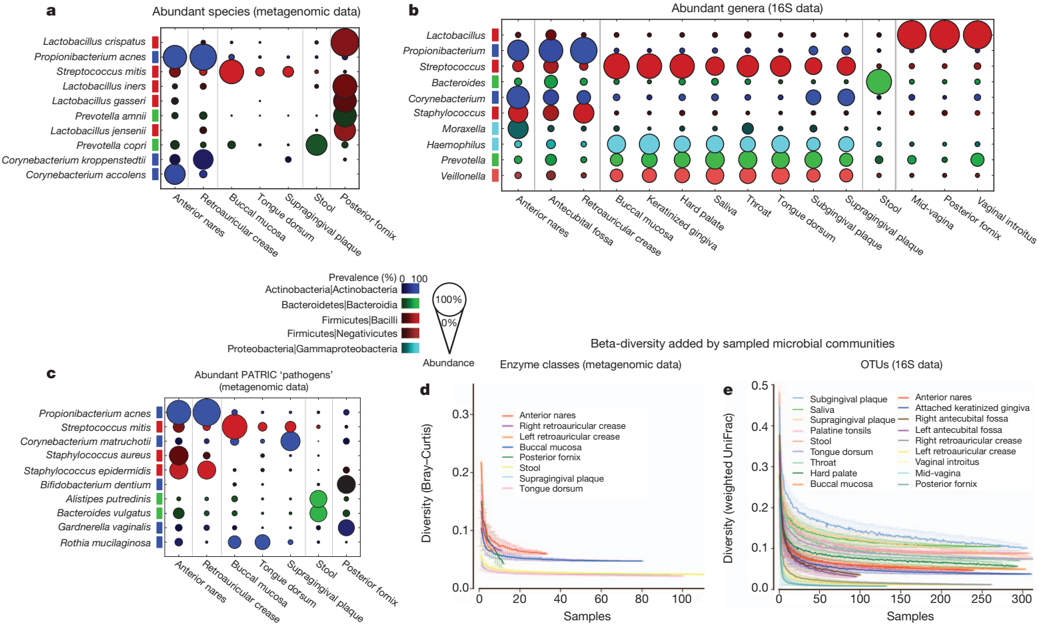
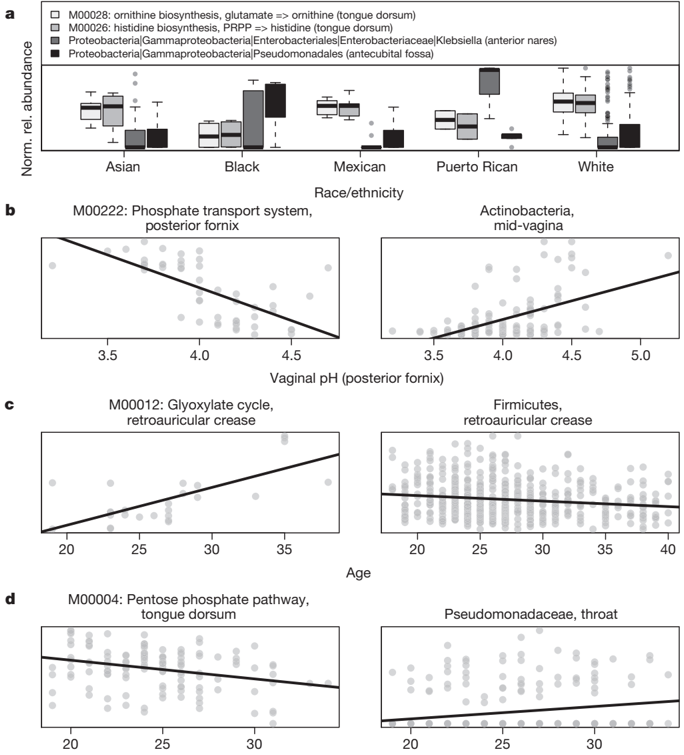
Studies of the human microbiome have revealed that even healthy individuals differ remarkably in the microbes that occupy habitats such as the gut, skin and vagina. Much of this diversity remains unexplained, although diet, environment, host genetics and early microbial exposure have all been implicated. Accordingly, to characterize the ecology of human-associated microbial communities, the Human Microbiome Project has analysed the largest cohort and set of distinct, clinically relevant body habitats so far. We found the diversity and abundance of each habitat’s signature microbes to vary widely even among healthy subjects, with strong niche specialization both within and among individuals. The project encountered an estimated 81–99% of the genera, enzyme families and community configurations occupied by the healthy Western microbiome. Metagenomic carriage of metabolic pathways was stable among individuals despite variation in community structure, and ethnic/racial background proved to be one of the strongest associations of both pathways and microbes with clinical metadata. These results thus delineate the range of structural and functional configurations normal in the microbial communities of a healthy population, enabling future characterization of the epidemiology, ecology and translational applications of the human microbiome.
Overview
The claims and statistics of this paper haven’t been checked yet.
Free: it reads the open-access text and checks the first 5 claims that cite a source we can check. Create a free account to check every claim.
Integrity signals
Registry
Cites
Statistics
Figures
Verification
Claims the paper makes
The claims and statistics of this paper haven’t been checked yet.
Free: it reads the open-access text and checks the first 5 claims that cite a source we can check. Create a free account to check every claim.
Claims other papers make about this one
Each is checked against this paper’s own text: does it say what the citing paper says it does?
The cited source doesn’t support the claim as written.
In the citing paper
“newly diagnosed cases with adenocarcinoma of the colon or rectum were recruited prior to surgery and treatment during 1985–19891, 2. Controls were patients awaiting elective surgery for non-oncologic, non-gastrointestinal conditions at these hospitals during the same period.”
From Assessment of variation in microbial community amplicon sequencing by the Microbiome Quality Control (MBQC) project consortium (2017) · cites this paper as [1]
Checked by a reasoning model — may be wrong.
Experimental — accuracy not yet measuredThe source backs part of the claim, not all of it — or backs it for a different population, condition or comparison.
In the citing paper
“Multiple factors affect the composition of the human gut microbiome, including geography, diet, infection and drug usage56,61–64.”
From Intestinal microbiota signatures of clinical response and immune-related adverse events in melanoma patients treated with anti-PD-1 (2022) · cites this paper as [64]
Experimental — accuracy not yet measuredThe source backs part of the claim, not all of it — or backs it for a different population, condition or comparison.
In the citing paper
“suggesting that no severe gut microbiome dysbiosis was present in the study group at baseline”
From Gut microbiome affects the response to anti-PD-1 immunotherapy in patients with hepatocellular carcinoma (2019) · cites this paper as [9]
Experimental — accuracy not yet measuredThe source backs part of the claim, not all of it — or backs it for a different population, condition or comparison.
In the citing paper
“Gut microbiota comprise thousands of microbial species that are involved in host metabolism by regulating energy extraction, activation of the immune system, drug metabolism, and other processes.”
From The Gut Microbiome Contributes to a Substantial Proportion of the Variation in Blood Lipids (2015) · cites this paper as [3]
Experimental — accuracy not yet measuredThe source backs part of the claim, not all of it — or backs it for a different population, condition or comparison.
In the citing paper
“The human gut microbiota contains thousands of different bacterial taxa as well as various archaea, eukaryotic microbes and viruses, more than three million genes, and harbors an enormous metabolic capacity [1, 2].”
From The athletic gut microbiota (2020) · cites this paper as [1]
Experimental — accuracy not yet measured
20 more claims about this paper
Create a free account to see every claim other papers make about this one.
Self-check
Percentages, sums and reported differences re-computed from the paper’s own numbers.
The self-check needs the paper’s full text.
Citations
Cites
Fast and accurate short read alignment with Burrows-Wheeler transform
Li, H., & Durbin, R. (2009) · Bioinformatics · doi:10.1093/bioinformatics/btp324 · Cited by 58,607
QIIME allows analysis of high-throughput community sequencing data
Caporaso, J. G., Kuczynski, J., Stombaugh, J., Bittinger, K., Bushman, F. D., Costello, E. K., Fierer, N., Peña, A. G., Goodrich, J. K., Gordon, J. I., et al. (2010) · Nature Methods · doi:10.1038/nmeth.f.303 · Cited by 34,887
Fast and accurate long-read alignment with Burrows-Wheeler transform.
Li, H., & Durbin, R. (2010) · Bioinformatics · doi:10.1093/bioinformatics/btp698 · Cited by 12,063
A human gut microbial gene catalogue established by metagenomic sequencing
MetaHIT Consortium, Qin, J., Li, R., Raes, J., Arumugam, M., Burgdorf, K. S., Manichanh, C., Nielsen, T., Pons, N., Levenez, F., et al. (2010) · Nature · doi:10.1038/nature08821 · Cited by 11,624
A core gut microbiome in obese and lean twins
Turnbaugh, P. J., Hamady, M., Yatsunenko, T., Cantarel, B. L., Duncan, A., Ley, R. E., Sogin, M. L., Jones, W. J., Roe, B. A., Affourtit, J. P., et al. (2009) · Nature · doi:10.1038/nature07540 · Cited by 7,823
Self-citationSokol, H., Pigneur, B., Watterlot, L., Lakhdari, O., Bermúdez-Humarán, L. G., Gratadoux, J.-J., Blugeon, S., Bridonneau, C., Furet, J.-P., Corthier, G., et al. (2008) · Proceedings of the National Academy of Sciences · doi:10.1073/pnas.0804812105 · Cited by 4,413
Vaginal microbiome of reproductive-age women
Ravel, J., Gajer, P., Abdo, Z., Schneider, G. M., Koenig, S. S. K., McCulle, S. L., Karlebach, S., Gorle, R., Russell, J., Tacket, C. O., et al. (2011) · Proceedings of the National Academy of Sciences · doi:10.1073/pnas.1002611107 · Cited by 4,254
Bacterial Community Variation in Human Body Habitats Across Space and Time
Costello, E. K., Lauber, C. L., Hamady, M., Fierer, N., Gordon, J. I., & Knight, R. (2009) · Science · doi:10.1126/science.1177486 · Cited by 3,231
Defining the normal bacterial flora of the oral cavity
Aas, J. A., Paster, B. J., Stokes, L. N., Olsen, I., & Dewhirst, F. E. (2005) · Journal of Clinical Microbiology · doi:10.1128/jcm.43.11.5721-5732.2005 · Cited by 3,092
Topographical and Temporal Diversity of the Human Skin Microbiome
Grice, E. A., Kong, H. H., Conlan, S., Deming, C. B., Davis, J., Young, A. C., Program, N. C. S., Bouffard, G. G., Blakesley, R. W., Murray, P. R., et al. (2009) · Science · doi:10.1126/science.1171700 · Cited by 2,953
Cited by
Items 1,101–1,200 of 1,676
Role of gut microbiota in cardiovascular diseases
Novakovic, M., Rout, A., Kingsley, T., Kirchoff, R., Singh, A., Verma, V., Kant, R., & Chaudhary, R. (2020) · World Journal of Cardiology · doi:10.4330/wjc.v12.i4.110 · Cited by 202
Microbiome diversity and dysbiosis in aquaculture
Infante‐Villamil, S., Huerlimann, R., & Jerry, D. R. (2021) · Reviews in Aquaculture · doi:10.1111/raq.12513 · Cited by 202
Immune Checkpoint Inhibitors in Triple Negative Breast Cancer Treatment: Promising Future Prospects
Thomas, R., Al-Khadairi, G., & Decock, J. (2021) · Frontiers in Oncology · doi:10.3389/fonc.2020.600573 · Cited by 202
“Gut and Breast Microbiome The gut microbiome is a recognized master modulator of the development and maintenance of a healthy immune system (97, 98).”
BackgroundWright, E. K., Kamm, M. A., Teo, S. M., Inouye, M., Wagner, J., & Kirkwood, C. D. (2015) · Inflammatory Bowel Diseases · doi:10.1097/mib.0000000000000382 · Cited by 202
Large-scale comparative metagenomics of Blastocystis, a common member of the human gut microbiome
Beghini, F., Pasolli, E., Truong, T. D., Putignani, L., Cacciò, S. M., & Segata, N. (2017) · The ISME Journal · doi:10.1038/ismej.2017.139 · Cited by 201
“A total of 121 subjects, 43 from the HMP data set (Huttenhower et al., 2012) and 78 from the Nielsen data set (Nielsen et al.”
Self-citationWu, M., Yang, S., Wang, S., Cao, Y., Zhao, R., Li, X., Xing, Y., & Liu, L. (2020) · Frontiers in Pharmacology · doi:10.3389/fphar.2020.00223 · Cited by 201
Mas-Capdevila, A., Teichenne, J., Domenech-Coca, C., Caimari, A., Del Bas, J. M., Escoté, X., & Crescenti, A. (2020) · Nutrients · doi:10.3390/nu12051488 · Cited by 201
“The gastrointestinal tract is colonized by more than 1011 cells per mL of content, with the five main microbiota phyla being Firmicutes, Bacteroidetes, Proteobacteria, Actinobacteria, and Verrucomicrobia [99].”
BackgroundYou’ve got male: Sex and the microbiota-gut-brain axis across the lifespan
Jaggar, M., Rea, K., Spichak, S., Dinan, T. G., & Cryan, J. F. (2020) · Frontiers in Neuroendocrinology · doi:10.1016/j.yfrne.2019.100815 · Cited by 200
The human gut mycobiome: pitfalls and potentials—a mycologist’s perspective
Suhr, M. J., & Hallen-Adams, H. E. (2015) · Mycologia · doi:10.3852/15-147 · Cited by 200
Therapeutic modulation of intestinal dysbiosis
Walker, A. W., & Lawley, T. D. (2013) · Pharmacological Research · doi:10.1016/j.phrs.2012.09.008 · Cited by 200
Early gut colonizers shape parasite susceptibility and microbiota composition in honey bee workers
Schwarz, R. S., Moran, N. A., & Evans, J. D. (2016) · Proceedings of the National Academy of Sciences · doi:10.1073/pnas.1606631113 · Cited by 200
Microbiota fingerprints lose individually identifying features over time
Wilkins, D., Leung, M. H. Y., & Lee, P. K. H. (2017) · Microbiome · doi:10.1186/s40168-016-0209-7 · Cited by 200
Intestinal Microbiota in Type 2 Diabetes and Chronic Kidney Disease
Sabatino, A., Regolisti, G., Cosola, C., Gesualdo, L., & Fiaccadori, E. (2017) · Current Diabetes Reports · doi:10.1007/s11892-017-0841-z · Cited by 200
Kowarsky, M., Camunas-Soler, J., Kertesz, M., De Vlaminck, I., Koh, W., Pan, W., Martin, L., Neff, N. F., Okamoto, J., Wong, R. J., et al. (2017) · Proceedings of the National Academy of Sciences · doi:10.1073/pnas.1707009114 · Cited by 200
Methodologies for animals’ geographies: cultures, communication and genomics
Hodgetts, T., & Lorimer, J. (2015) · cultural geographies · doi:10.1177/1474474014525114 · Cited by 200
Diet-microbiota interactions and their implications for healthy living
Jeffery, I., & O'Toole, P. (2013) · Nutrients · doi:10.3390/nu5010234 · Cited by 199
A broken promise: microbiome differential abundance methods do not control the false discovery rate
Hawinkel, S., Mattiello, F., Bijnens, L., & Thas, O. (2019) · Briefings in Bioinformatics · doi:10.1093/bib/bbx104 · Cited by 199
“functions such as food digestion [1], resistance to infection [2], maturation of the immune system [3, 4] and anatomic development [2].”
Involvement of the gut microbiota and barrier function in glucocorticoid-induced osteoporosis
Schepper, J. D., Collins, F., Rios-Arce, N. D., Kang, H. J., Schaefer, L., Gardinier, J. D., Raghuvanshi, R., Quinn, R. A., Britton, R., Parameswaran, N., et al. (2020) · Journal of Bone and Mineral Research · doi:10.1002/jbmr.3947 · Cited by 199
Martínez, I., Maldonado-Gomez, M. X., Gomes-Neto, J. C., Kittana, H., Ding, H., Schmaltz, R., Joglekar, P., Cardona, R. J., Marsteller, N. L., Kembel, S. W., et al. (2018) · eLife · doi:10.7554/elife.36521 · Cited by 199
Shifts in the Fecal Microbiota Associated with Adenomatous Polyps
Hale, V. L., Chen, J., Johnson, S., Harrington, S. C., Yab, T. C., Smyrk, T. C., Nelson, H., Boardman, L. A., Druliner, B. R., Levin, T. R., et al. (2017) · Cancer Epidemiology, Biomarkers & Prevention · doi:10.1158/1055-9965.epi-16-0337 · Cited by 199
The Landscape Ecology and Microbiota of the Human Nose, Mouth, and Throat
Proctor, D. M., & Relman, D. A. (2017) · Cell Host & Microbe · doi:10.1016/j.chom.2017.03.011 · Cited by 199
The Placental Microbiome Varies in Association with Low Birth Weight in Full-Term Neonates
Zheng, J., Xiao, X., Zhang, Q., Mao, L., Yu, M., & Xu, J. (2015) · Nutrients · doi:10.3390/nu7085315 · Cited by 199
“Recently published works by the HMP Consortium have provided the first reliable estimates of the breadth of structure, function, and diversity of the healthy human microbiome across multiple body sites [7].”
BackgroundHanus, M., Parada-Venegas, D., Landskron, G., Wielandt, A. M., Hurtado, C., Alvarez, K., Hermoso, M. A., López-Köstner, F., & De la Fuente, M. (2021) · Frontiers in Immunology · doi:10.3389/fimmu.2021.612826 · Cited by 199
Human gut microbiota and healthy aging: Recent developments and future prospective
Kumar, M., Babaei, P., Ji, B., & Nielsen, J. (2016) · Nutrition and Healthy Aging · doi:10.3233/nha-150002 · Cited by 198
Microbiota in T-cell homeostasis and inflammatory diseases
Lee, N., & Kim, W.-U. (2017) · Experimental & Molecular Medicine · doi:10.1038/emm.2017.36 · Cited by 198
Moore, S. J., MacDonald, J. T., Wienecke, S., Ishwarbhai, A., Tsipa, A., Aw, R., Kylilis, N., Bell, D. J., McClymont, D. W., Jensen, K., et al. (2018) · Proceedings of the National Academy of Sciences · doi:10.1073/pnas.1715806115 · Cited by 198
“…nonmodel organisms for novel antibiotic discovery (12, 13), while for health-care applications there is great interest in developing new “ living therapies ” for the engineering of the human microbiome, which is comprised of thousands of microbial species, many of which remain uncharacterized (14).”
BackgroundMethodDevelopment of the Pediatric Gut Microbiome: Impact on Health and Disease
Ihekweazu, F. D., & Versalovic, J. (2018) · The American Journal of the Medical Sciences · doi:10.1016/j.amjms.2018.08.005 · Cited by 198
Clos-Garcia, M., Andrés-Marin, N., Fernández-Eulate, G., Abecia, L., Lavín, J. L., van Liempd, S., Cabrera, D., Royo, F., Valero, A., Errazquin, N., et al. (2019) · eBioMedicine · doi:10.1016/j.ebiom.2019.07.031 · Cited by 198
“The microbiome has a significant role in maintaining health [37,47].”
BackgroundThe role of the gastrointestinal microbiome in Helicobacter pylori pathogenesis
Sheh, A., & Fox, J. G. (2013) · Gut Microbes · doi:10.4161/gmic.26205 · Cited by 198
Bahr, S. M., Tyler, B. C., Wooldridge, N., Butcher, B. D., Burns, T. L., Teesch, L. M., Oltman, C. L., Azcarate-Peril, M. A., Kirby, J. R., & Calarge, C. A. (2015) · Translational Psychiatry · doi:10.1038/tp.2015.135 · Cited by 197
Cooper, P., Walker, A. W., Reyes, J., Chico, M., Salter, S. J., Vaca, M., & Parkhill, J. (2013) · PLoS ONE · doi:10.1371/journal.pone.0076573 · Cited by 197
Tomida, S., Nguyen, L., Chiu, B.-H., Liu, J., Sodergren, E., Weinstock, G. M., & Li, H. (2013) · mBio · doi:10.1128/mbio.00003-13 · Cited by 197
The Interplay Between Reproductive Tract Microbiota and Immunological System in Human Reproduction
Al-Nasiry, S., Ambrosino, E., Schlaepfer, M., Morré, S. A., Wieten, L., Voncken, J. W., Spinelli, M., Mueller, M., & Kramer, B. W. (2020) · Frontiers in Immunology · doi:10.3389/fimmu.2020.00378 · Cited by 196
Spatial Ecology of the Human Tongue Dorsum Microbiome
Wilbert, S. A., Mark Welch, J. L., & Borisy, G. G. (2020) · Cell Reports · doi:10.1016/j.celrep.2020.02.097 · Cited by 196
“Sequence analysis was carried out with previously published oligotypes (Eren et al., 2014) of the V1-V3 region of the 16S ribosomal RNA gene defined by re-analysis of publicly available data from the Human Microbiome Project (Human Microbiome Project Consortium, 2012).”
BackgroundMethodBacterial communities on classroom surfaces vary with human contact
Meadow, J. F., Altrichter, A. E., Kembel, S. W., Moriyama, M., O’Connor, T. K., Womack, A. M., Brown, G. Z., Green, J. L., & Bohannan, B. J. M. (2014) · Microbiome · doi:10.1186/2049-2618-2-7 · Cited by 196
Challenges and Approaches in Microbiome Research: From Fundamental to Applied
Sergaki, C., Lagunas, B., Lidbury, I., Gifford, M. L., & Schäfer, P. (2018) · Frontiers in Plant Science · doi:10.3389/fpls.2018.01205 · Cited by 196
Weber, D., Oefner, P. J., Hiergeist, A., Koestler, J., Gessner, A., Weber, M., Hahn, J., Wolff, D., Stämmler, F., Spang, R., et al. (2015) · Blood · doi:10.1182/blood-2015-04-638858 · Cited by 195
An Improved Method for High Quality Metagenomics DNA Extraction from Human and Environmental Samples
Bag, S., Saha, B., Mehta, O., Anbumani, D., Kumar, N., Dayal, M., Pant, A., Kumar, P., Saxena, S., Allin, K. H., et al. (2016) · Scientific Reports · doi:10.1038/srep26775 · Cited by 195
Thorsen, J., Brejnrod, A., Mortensen, M., Rasmussen, M. A., Stokholm, J., Al-Soud, W. A., Sørensen, S., Bisgaard, H., & Waage, J. (2016) · Microbiome · doi:10.1186/s40168-016-0208-8 · Cited by 195
“Additionally, for dataset B2, we used public data from the Human Microbiome Project [34], testing separation ability between the tongue dorsum ( n = 316) and hard palate ( n = 301) 16S V3-5 samples (http://hmpdacc.org/HMQCP/).”
MethodHuang, H., Ren, Z., Gao, X., Hu, X., Zhou, Y., Jiang, J., Lu, H., Yin, S., Ji, J., Zhou, L., et al. (2020) · Genome Medicine · doi:10.1186/s13073-020-00796-5 · Cited by 195
CAMISIM: simulating metagenomes and microbial communities
Fritz, A., Hofmann, P., Majda, S., Dahms, E., Dröge, J., Fiedler, J., Lesker, T. R., Belmann, P., DeMaere, M. Z., Darling, A. E., et al. (2019) · Microbiome · doi:10.1186/s40168-019-0633-6 · Cited by 194
Plant microbiome structure and benefits for sustainable agriculture
Santos, L. F., & Olivares, F. L. (2021) · Current Plant Biology · doi:10.1016/j.cpb.2021.100198 · Cited by 194
Thousands of previously unknown phages discovered in whole-community human gut metagenomes
Benler, S., Yutin, N., Antipov, D., Rayko, M., Shmakov, S., Gussow, A. B., Pevzner, P., & Koonin, E. V. (2021) · Microbiome · doi:10.1186/s40168-021-01017-w · Cited by 194
Fusobacterium nucleatum and cancer
Alon‐Maimon, T., Mandelboim, O., & Bachrach, G. (2022) · Periodontology 2000 · doi:10.1111/prd.12426 · Cited by 194
Dynamics of the normal gut microbiota: A longitudinal one-year population study in Sweden
Olsson, L. M., Boulund, F., Nilsson, S., Khan, M. T., Gummesson, A., Fagerberg, L., Engstrand, L., Perkins, R., Uhlén, M., Bergström, G., et al. (2022) · Cell Host & Microbe · doi:10.1016/j.chom.2022.03.002 · Cited by 194
Exploring gut microbes in human health and disease: Pushing the envelope
Sun, J., & Chang, E. B. (2014) · Genes & Diseases · doi:10.1016/j.gendis.2014.08.001 · Cited by 194
“Taxonomic information provided by the study of 16S rRNA gene sets does not provide much information of community function, although attempts have been made by using reference genomes of highly representedmicrobiota to infer function.(27) This approach remains unproven, largely because the genome inventories of microbi…”
BackgroundWagner Mackenzie, B., Waite, D. W., & Taylor, M. W. (2015) · Frontiers in Microbiology · doi:10.3389/fmicb.2015.00130 · Cited by 193
Synthetic ecology of the human gut microbiota
Vrancken, G., Gregory, A. C., Huys, G. R. B., Faust, K., & Raes, J. (2019) · Nature Reviews Microbiology · doi:10.1038/s41579-019-0264-8 · Cited by 193
Experimental design and quantitative analysis of microbial community multiomics
Mallick, H., Ma, S., Franzosa, E. A., Vatanen, T., Morgan, X. C., & Huttenhower, C. (2017) · Genome Biology · doi:10.1186/s13059-017-1359-z · Cited by 192
Self-citationMetabolome analysis for investigating host-gut microbiota interactions
Chen, M. X., Wang, S.-Y., Kuo, C.-H., & Tsai, I.-L. (2019) · Journal of the Formosan Medical Association · doi:10.1016/j.jfma.2018.09.007 · Cited by 192
Gut Microbial Succession Follows Acute Secretory Diarrhea in Humans
David, L. A., Weil, A., Ryan, E. T., Calderwood, S. B., Harris, J. B., Chowdhury, F., Begum, Y., Qadri, F., LaRocque, R. C., & Turnbaugh, P. J. (2015) · mBio · doi:10.1128/mbio.00381-15 · Cited by 192
Hakim, H., Dallas, R., Wolf, J., Tang, L., Schultz-Cherry, S., Darling, V., Johnson, C., Karlsson, E. A., Chang, T.-C., Jeha, S., et al. (2018) · Clinical Infectious Diseases · doi:10.1093/cid/ciy153 · Cited by 192
Gut microbiome composition is associated with temperament during early childhood
Christian, L. M., Galley, J. D., Hade, E. M., Schoppe-Sullivan, S., Kamp Dush, C., & Bailey, M. T. (2015) · Brain, Behavior, and Immunity · doi:10.1016/j.bbi.2014.10.018 · Cited by 191
“There are remarkable differences in microbial communities across individuals (Huttenhower et al., 2012).”
BackgroundThe vaginal mycobiome: A contemporary perspective on fungi in women's health and diseases
Bradford, L. L., & Ravel, J. (2017) · Virulence · doi:10.1080/21505594.2016.1237332 · Cited by 191
Humans as holobionts: implications for prevention and therapy
van de Guchte, M., Blottière, H. M., & Doré, J. (2018) · Microbiome · doi:10.1186/s40168-018-0466-8 · Cited by 191
“Only a limited number of the known bacterial phyla are represented among the dominant gut microbiota (mainly Bacteroidetes and Firmicutes, and to a lesser extent Proteobacteria and Actinobacteria [21]).”
BackgroundCCLasso: correlation inference for compositional data through Lasso
Fang, H., Huang, C., Zhao, H., & Deng, M. (2015) · Bioinformatics · doi:10.1093/bioinformatics/btv349 · Cited by 191
Gálvez, E. J. C., Iljazovic, A., Amend, L., Lesker, T. R., Renault, T., Thiemann, S., Hao, L., Roy, U., Gronow, A., Charpentier, E., et al. (2020) · Cell Host & Microbe · doi:10.1016/j.chom.2020.09.012 · Cited by 191
SUPER-FOCUS: a tool for agile functional analysis of shotgun metagenomic data
Silva, G. G. Z., Green, K. T., Dutilh, B. E., & Edwards, R. A. (2016) · Bioinformatics · doi:10.1093/bioinformatics/btv584 · Cited by 191
DeepMicro: Deep representation learning for disease prediction based on microbiome data
Oh, M., & Zhang, L. (2020) · Scientific Reports · doi:10.1038/s41598-020-63159-5 · Cited by 190
DESMAN: a new tool for de novo extraction of strains from metagenomes
Quince, C., Delmont, T. O., Raguideau, S., Alneberg, J., Darling, A. E., Collins, G., & Eren, A. M. (2017) · Genome Biology · doi:10.1186/s13059-017-1309-9 · Cited by 190
“Strains in this data set were present in each sample with varying abundances determined by 16S rRNA community profiles obtained from the Human Microbiome Project (HMP) [21].”
MethodGut Microbial Community Structure and Complications After Kidney Transplantation: A Pilot Study
Lee, J. R., Muthukumar, T., Dadhania, D., Toussaint, N. C., Ling, L., Pamer, E., & Suthanthiran, M. (2014) · Transplantation · doi:10.1097/tp.0000000000000370 · Cited by 190
Di Lorenzo, F., De Castro, C., Silipo, A., & Molinaro, A. (2019) · FEMS Microbiology Reviews · doi:10.1093/femsre/fuz002 · Cited by 190
Emerging Priorities for Microbiome Research
Cullen, C. M., Aneja, K. K., Beyhan, S., Cho, C. E., Woloszynek, S., Convertino, M., McCoy, S. J., Zhang, Y., Anderson, M. Z., Alvarez-Ponce, D., et al. (2020) · Frontiers in Microbiology · doi:10.3389/fmicb.2020.00136 · Cited by 190
“Human microbial signatures are diverse across body parts (The Human Microbiome Project Consortium, 2012) and can be affected by a variety of lifestyle factors (Casarin et al., 2012; Yatsunenko et al., 2012; Bizzarro et al., 2013; Song et al., 2013; David et al., 2014; Kort et al., 2014; Moon et al.,…”
Engineering Microbial Living Therapeutics: The Synthetic Biology Toolbox
Pedrolli, D. B., Ribeiro, N. V., Squizato, P. N., de Jesus, V. N., Cozetto, D. A., Tuma, R. B., Gracindo, A., Cesar, M. B., Freire, P. J. C., da Costa, A. F. M., et al. (2019) · Trends in Biotechnology · doi:10.1016/j.tibtech.2018.09.005 · Cited by 189
Microbiota and Lifestyle: A Special Focus on Diet
Redondo-Useros, N., Nova, E., González-Zancada, N., Díaz, L. E., Gómez-Martínez, S., & Marcos, A. (2020) · Nutrients · doi:10.3390/nu12061776 · Cited by 189
Alterations in the gut microbiotas of children with food sensitization in early life
Chen, C., Chen, K., Kong, M., Chang, H., & Huang, J. (2016) · Pediatric Allergy and Immunology · doi:10.1111/pai.12522 · Cited by 189
Kyrgiou, M., Mitra, A., Arbyn, M., Stasinou, S. M., Martin-Hirsch, P., Bennett, P., & Paraskevaidis, E. (2014) · BMJ · doi:10.1136/bmj.g6192 · Cited by 188
Zeeuwen, P. L. J. M., Kleerebezem, M., Timmerman, H. M., & Schalkwijk, J. (2013) · Current Opinion in Allergy & Clinical Immunology · doi:10.1097/aci.0b013e328364ebeb · Cited by 188
Dysbiosis in intestinal inflammation: Cause or consequence
Buttó, L. F., & Haller, D. (2016) · International Journal of Medical Microbiology · doi:10.1016/j.ijmm.2016.02.010 · Cited by 188
Pretreatment gut microbiome predicts chemotherapy-related bloodstream infection
Montassier, E., Al-Ghalith, G. A., Ward, T., Corvec, S., Gastinne, T., Potel, G., Moreau, P., de la Cochetiere, M. F., Batard, E., & Knights, D. (2016) · Genome Medicine · doi:10.1186/s13073-016-0301-4 · Cited by 188
Galloway‐Peña, J. R., Smith, D. P., Sahasrabhojane, P., Ajami, N. J., Wadsworth, W. D., Daver, N. G., Chemaly, R. F., Marsh, L., Ghantoji, S. S., Pemmaraju, N., et al. (2016) · Cancer · doi:10.1002/cncr.30039 · Cited by 188
Hsu, T., Joice, R., Vallarino, J., Abu-Ali, G., Hartmann, E. M., Shafquat, A., DuLong, C., Baranowski, C., Gevers, D., Green, J. L., et al. (2016) · mSystems · doi:10.1128/msystems.00018-16 · Cited by 188
Chu, D. M., Meyer, K. M., Prince, A. L., & Aagaard, K. M. (2016) · Gut Microbes · doi:10.1080/19490976.2016.1241357 · Cited by 188
Gut Protozoa: Friends or Foes of the Human Gut Microbiota?
Chabé, M., Lokmer, A., & Ségurel, L. (2017) · Trends in Parasitology · doi:10.1016/j.pt.2017.08.005 · Cited by 188
Li, H., Goh, B. N., Teh, W. K., Jiang, Z., Goh, J. P. Z., Goh, A., Wu, G., Hoon, S. S., Raida, M., Camattari, A., et al. (2018) · Journal of Investigative Dermatology · doi:10.1016/j.jid.2017.11.034 · Cited by 188
Xu, X., Zarecki, R., Medina, S., Ofaim, S., Liu, X., Chen, C., Hu, S., Brom, D., Gat, D., Porob, S., et al. (2019) · The ISME Journal · doi:10.1038/s41396-018-0288-5 · Cited by 188
Outer Membrane Vesicle-Host Cell Interactions
Cecil, J. D., Sirisaengtaksin, N., O’Brien-Simpson, N. M., & Krachler, A. M. (2019) · Microbiology Spectrum · doi:10.1128/microbiolspec.psib-0001-2018 · Cited by 188
Fraune, S., Anton-Erxleben, F., Augustin, R., Franzenburg, S., Knop, M., Schröder, K., Willoweit-Ohl, D., & Bosch, T. C. G. (2015) · The ISME Journal · doi:10.1038/ismej.2014.239 · Cited by 188
Elshahed, M. S., Miron, A., Aprotosoaie, A. C., & Farag, M. A. (2021) · Carbohydrate Polymers · doi:10.1016/j.carbpol.2020.117388 · Cited by 188
“Other tissues including heart, adipose tissue, kidney, and muscle metabolize the remainder of SCFAs. per individual (Huttenhower et al., 2012; Sender, Fuchs, & Milo, 2016; Qin et al., 2010).”
BackgroundDuran-Pinedo, A. E., & Frias-Lopez, J. (2015) · Microbes and Infection · doi:10.1016/j.micinf.2015.03.014 · Cited by 187
Microbiology Meets Big Data: The Case of Gut Microbiota–Derived Trimethylamine
Falony, G., Vieira-Silva, S., & Raes, J. (2015) · Annual Review of Microbiology · doi:10.1146/annurev-micro-091014-104422 · Cited by 187
Sijen, T. (2015) · Forensic Science International: Genetics · doi:10.1016/j.fsigen.2014.11.015 · Cited by 187
Ramiro-Garcia, J., Hermes, G. D. A., Giatsis, C., Sipkema, D., Zoetendal, E. G., Schaap, P. J., & Smidt, H. (2016) · F1000Research · doi:10.12688/f1000research.9227.1 · Cited by 187
Wastewater surveillance of antibiotic-resistant bacterial pathogens: A systematic review
Tiwari, A., Kurittu, P., Al-Mustapha, A. I., Heljanko, V., Johansson, V., Thakali, O., Mishra, S. K., Lehto, K.-M., Lipponen, A., Oikarinen, S., et al. (2022) · Frontiers in Microbiology · doi:10.3389/fmicb.2022.977106 · Cited by 187
“…known as Bacteroidetes) and Bacillota (earlier Firmicutes), and two minor phyla, Actinomycetota (earlier Actinobacteria) and Pseudomonadota (earlier Proteobacteria) are the most dominant in the human gut microbiota (The Human Microbiome Project Consortium, 2012; Casals-Pascual et al., 2018).”
BackgroundPregnancy's Stronghold on the Vaginal Microbiome
Walther-António, M. R. S., Jeraldo, P., Berg Miller, M. E., Yeoman, C. J., Nelson, K. E., Wilson, B. A., White, B. A., Chia, N., & Creedon, D. J. (2014) · PLoS ONE · doi:10.1371/journal.pone.0098514 · Cited by 187
Gut microbiota and diet in patients with different glucose tolerance
Egshatyan, L., Kashtanova, D., Popenko, A., Tkacheva, O., Tyakht, A., Alexeev, D., Karamnova, N., Kostryukova, E., Babenko, V., Vakhitova, M., et al. (2016) · Endocrine Connections · doi:10.1530/ec-15-0094 · Cited by 187
Szulińska, M., Łoniewski, I., Van Hemert, S., Sobieska, M., & Bogdański, P. (2018) · Nutrients · doi:10.3390/nu10060773 · Cited by 187
Developing a metagenomic view of xenobiotic metabolism
Haiser, H. J., & Turnbaugh, P. J. (2013) · Pharmacological Research · doi:10.1016/j.phrs.2012.07.009 · Cited by 186
Siderophore-mediated iron acquisition and modulation of host-bacterial interactions
Ellermann, M., & Arthur, J. C. (2017) · Free Radical Biology and Medicine · doi:10.1016/j.freeradbiomed.2016.10.489 · Cited by 186
Environmental Influences on the Human Microbiome and Implications for Noncommunicable Disease
Ahn, J., & Hayes, R. B. (2021) · Annual Review of Public Health · doi:10.1146/annurev-publhealth-012420-105020 · Cited by 186
Microbial Biogeography and Core Microbiota of the Rat Digestive Tract
Li, D., Chen, H., Mao, B., Yang, Q., Zhao, J., Gu, Z., Zhang, H., Chen, Y. Q., & Chen, W. (2017) · Scientific Reports · doi:10.1038/srep45840 · Cited by 186
The Threat of Antimicrobial Resistance on the Human Microbiome
Brinkac, L., Voorhies, A., Gomez, A., & Nelson, K. E. (2017) · Microbial Ecology · doi:10.1007/s00248-017-0985-z · Cited by 186
Panek, M., Čipčić Paljetak, H., Barešić, A., Perić, M., Matijašić, M., Lojkić, I., Vranešić Bender, D., Krznarić, Ž., & Verbanac, D. (2018) · Scientific Reports · doi:10.1038/s41598-018-23296-4 · Cited by 186
The gut microbiota and its interactions with cardiovascular disease
Xu, H., Wang, X., Feng, W., Liu, Q., Zhou, S., Liu, Q., & Cai, L. (2020) · Microbial Biotechnology · doi:10.1111/1751-7915.13524 · Cited by 186
Role of probiotics to combat viral infections with emphasis on COVID-19
Sundararaman, A., Ray, M., Ravindra, P. V., & Halami, P. M. (2020) · Applied Microbiology and Biotechnology · doi:10.1007/s00253-020-10832-4 · Cited by 185
Procedures for Fecal Microbiota Transplantation in Murine Microbiome Studies
Bokoliya, S. C., Dorsett, Y., Panier, H., & Zhou, Y. (2021) · Frontiers in Cellular and Infection Microbiology · doi:10.3389/fcimb.2021.711055 · Cited by 185
“After the initial characterization of the microbiome in the healthy population from the Human Microbiome Project (Human Microbiome Project, 2012a; Human Microbiome Project, 2012b), accumulating data from animal and human studies have advocated that gut microbiome dysbiosis (alteration) is gy | www.frontiersin.org Sept…”
BackgroundInfluentialProgram, F. T. C. P. E., Bassis, C. M., Moore, N. M., Lolans, K., Seekatz, A. M., Weinstein, R. A., Young, V. B., & Hayden, M. K. (2017) · BMC Microbiology · doi:10.1186/s12866-017-0983-9 · Cited by 185
Food additives, contaminants and other minor components: effects on human gut microbiota—a review
Roca-Saavedra, P., Mendez-Vilabrille, V., Miranda, J. M., Nebot, C., Cardelle-Cobas, A., Franco, C. M., & Cepeda, A. (2018) · Journal of Physiology and Biochemistry · doi:10.1007/s13105-017-0564-2 · Cited by 185
Gut microbiome and its role in cardiovascular diseases
Ahmadmehrabi, S., & Tang, W. H. W. (2017) · Current Opinion in Cardiology · doi:10.1097/hco.0000000000000445 · Cited by 185
Noto, J. M., & Peek, R. M. (2017) · PLOS Pathogens · doi:10.1371/journal.ppat.1006573 · Cited by 185
Metadata
- Authors
- The Human Microbiome Project Consortium
- Venue
- Nature
- Published
- 2012-06
- Volume
- 486
- Issue
- 7402
- Pages
- 207-214
- ISSN
- 0028-0836 (ISSN-L)
- 1476-4687
- PMC
- PMC3564958
- OpenAlex
- W2128769815
- Semantic Scholar
- 0c431405ec1eb4b84a52ed1fcc530454a4b8bf6f
- Cited by
- 11,726
- References
- 29
- Citations by year
- 2026: 586 · 2025: 748 · 2024: 890 · 2023: 950 · 2022: 1024 · 2021: 1202 · 2020: 1137 · 2019: 1032 · 2018: 863 · 2017: 853 · 2016: 732 · 2015: 651 · 2014: 532 · 2013: 413 · 2012: 104
- FWCI
- 218.52
- Type
- journal article
- Language
- en
- Open access
- hybrid
- doi.org
- Licence
- cc-by-nc-sa
- creativecommons.org/licenses/by-nc-sa/3.0/ (tdm)
- Locations
- Nature (publishedVersion, cc-by-nc-sa)
- PubMed (publishedVersion)
- Goce Delchev University Repository (Goce Delčev University of Štip) (acceptedVersion)
- Europe PMC (PubMed Central) (acceptedVersion)
- PubMed Central (acceptedVersion)
- eScholarship (California Digital Library) (submittedVersion, cc-by)
- Rutgers University Community Repository (Rutgers University) (submittedVersion)
- Open Access Server of the Woods Hole Scientific Community (Woods Hole Scientific Community) (submittedVersion)
- eScholarship (California Digital Library) (submittedVersion)
- Funders
- National Science Foundation (DEAC02-05CH11231, 1053486, 0812111)
- Howard Hughes Medical Institute (DE-AC02-05CH11231)
- U.S. Department of Energy (-AC02-05CH11231, Contract No. DE-AC02-05-CH11231, 05CH11231, No. DE-AC02-05-CH11231, DE AC02 05CH11231, DE-AC02-)
- Gordon and Betty Moore Foundation
- Rice University
- Gladstone Institutes
- Crohn's and Colitis Foundation
- Crohn's and Colitis Foundation of Canada
- Fonds Wetenschappelijk Onderzoek (DE-AC02-05CH11231)
- Vlaamse regering
- National Institutes of Health (5r01hg005172-03, n01hg62088-6-0-1, DE-AC02–05CH11231, DBI-1053486, DP2OD001500, 5r01hg004857-03, n01ai30071-19-0-3)
- Defense Threat Reduction Agency (B104153I, DE-AC02-05CH11231, B084531I)
- Office of Science (No. DE-AC02- 05-CH11231, DEAC02–05CH11231, AC02-05CH11231, DE-AC02, 05CH11231, Contract No. DE-AC02-05CH11231)
- Horace H. Rackham School of Graduate Studies, University of Michigan
- National Human Genome Research Institute (R01HG004885, U54HG003067, R01HG005975, R01-HG004857, U54HG004969, R01HG004853, U54HG003079, U01HG004866, R01HG005969, R01-HG005172, U54HG003273, R01HG004872, R21HG005811, U54HG004968, N01 HG062088, R01HG004906, R01HG004908, U54HG004973, R01HG004856, R01HG004900, R01HG005171, R01HG004877)
- National Cancer Institute (R21CA139193)
- National Institute of General Medical Sciences (T32GM087237)
- National Institute of Allergy and Infectious Diseases (UH2AI083263, UH3AI083263, U54AI084844, T32AI007528, N01 AI030071)
- National Institute of Diabetes and Digestive and Kidney Diseases (UH2DK083990, UH3DK083993)
- National Institute of Arthritis and Musculoskeletal and Skin Diseases (UH2 AR057504, UH2AR057506, UH3-AR057504)
- National Institute of Dental and Craniofacial Research (P30DE020751, R01DE021574, U01DE016937, RC1DE0202098, R37DE016937, RC1DE020298)
- U.S. National Library of Medicine
- Division of Biological Infrastructure (DBI-1053486)
- Army Research Office (DE-AC02-05CH11231, W911NF-11-1-0473, W911NF, W911NF-11)
- Los Alamos National Laboratory (DE-AC02-05CH11231)
- Topics
- Life Sciences › Biochemistry, Genetics and Molecular Biology › Molecular Biology › Gut microbiota and health
- Physical Sciences › Environmental Science › Ecology › Microbial Community Ecology and Physiology
- Health Sciences › Dentistry › Periodontics › Oral microbiology and periodontitis research
- Keywords
- human microbiome, healthy individuals, microbial diversity, gut microbiota, skin microbiome, vaginal microbiota, ecological specialization, metabolic pathways, Human Microbiome Project, metagenomics, microbial ecology
- MeSH terms
- Adolescent, Adult, Bacteria, Female, Health, Humans, Male, Phenotype, RNA, Ribosomal, 16S, Ecosystem, Biodiversity, Metabolic Networks and Pathways, Metagenome, Young Adult, Metagenomics
About these checks
Registry, retraction, Cites and statistics results are computed, not judged, with one exception: a printed reference that no index lists is read once by a model before it counts as a citation error. Claims are extracted by a model and kept only when their quote appears verbatim in the text; each cited source is then checked, with a model’s help, for whether it says what the claim relies on. Those verdicts can be wrong — read the claim’s quote and the cited source before relying on one.
Statistics and arithmetic are recomputed, not judged.
Confidence bands are shown only for fields calibrated on our annotated test set. None is calibrated yet, so no band is shown.
What counts as a claim ›How we measure confidence ›How we check this ›
Are you an author, or do you see a problem with this page? Request a review
Data sources
Bibliographic data: Semantic Scholar, OpenAlex, Crossref.
Contains information from the Semantic Scholar Academic Graph Datasets, made available under the ODC Attribution License (ODC-BY 1.0).
Semantic Scholar’s data is described in: Kinney, R., et al. (2023). The Semantic Scholar Open Data Platform. arXiv:2301.10140.
