

Structure, function and diversity of the healthy human microbiome
Open accessThe DOI matches its Crossref record; 29 of the 29 references it cites were found in a registry or an index.
Abstract
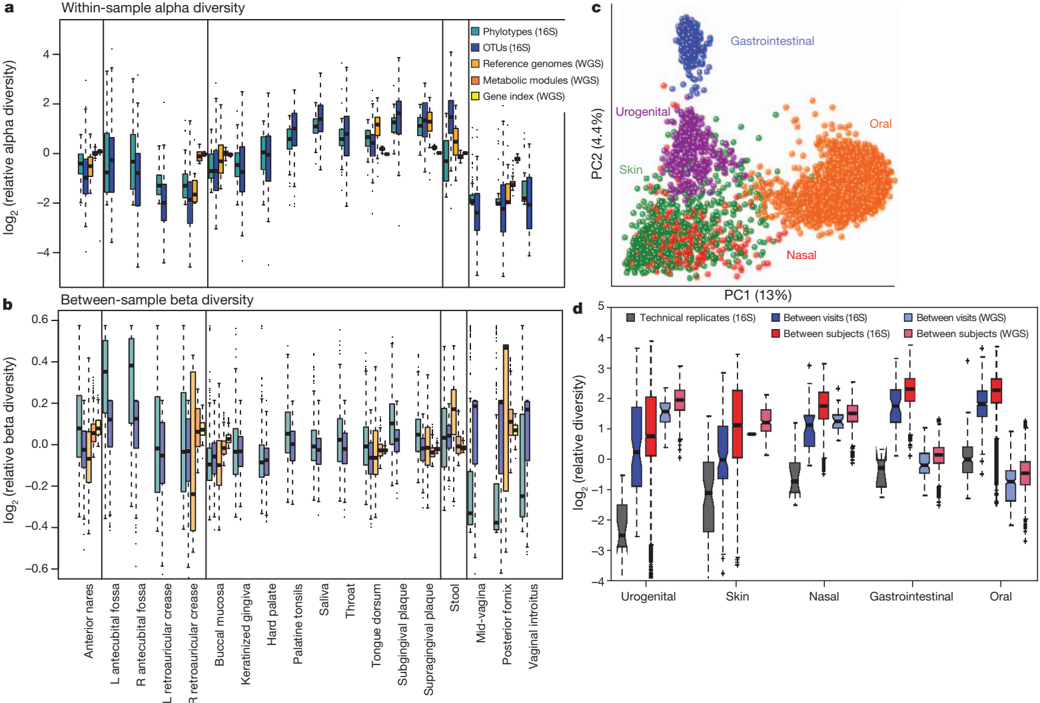
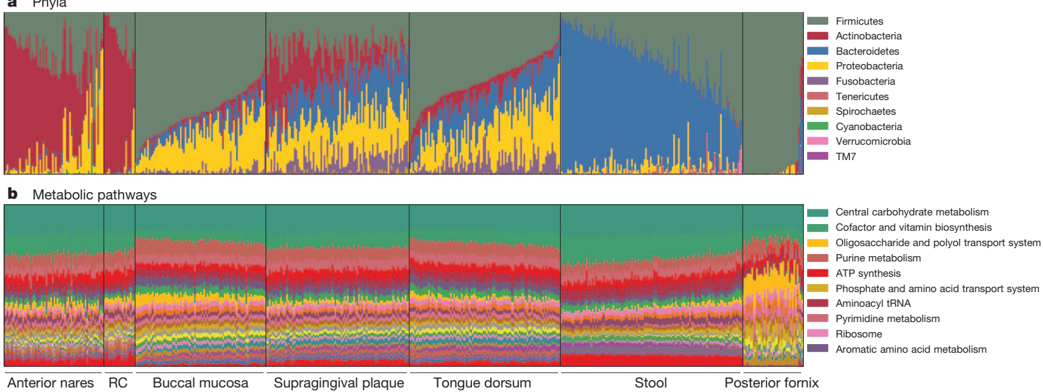
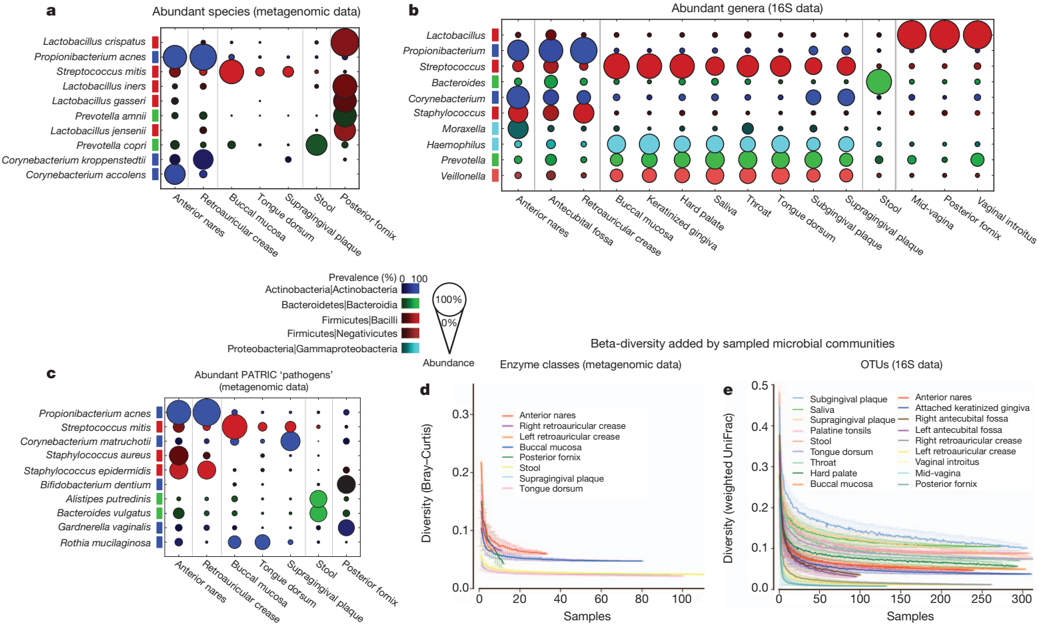
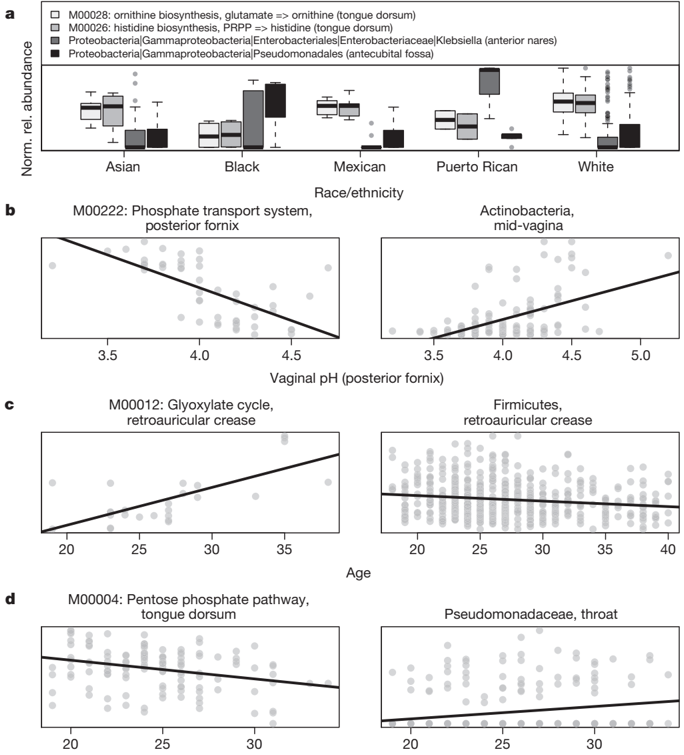
Studies of the human microbiome have revealed that even healthy individuals differ remarkably in the microbes that occupy habitats such as the gut, skin and vagina. Much of this diversity remains unexplained, although diet, environment, host genetics and early microbial exposure have all been implicated. Accordingly, to characterize the ecology of human-associated microbial communities, the Human Microbiome Project has analysed the largest cohort and set of distinct, clinically relevant body habitats so far. We found the diversity and abundance of each habitat’s signature microbes to vary widely even among healthy subjects, with strong niche specialization both within and among individuals. The project encountered an estimated 81–99% of the genera, enzyme families and community configurations occupied by the healthy Western microbiome. Metagenomic carriage of metabolic pathways was stable among individuals despite variation in community structure, and ethnic/racial background proved to be one of the strongest associations of both pathways and microbes with clinical metadata. These results thus delineate the range of structural and functional configurations normal in the microbial communities of a healthy population, enabling future characterization of the epidemiology, ecology and translational applications of the human microbiome.
Overview
The claims and statistics of this paper haven’t been checked yet.
Free: it reads the open-access text and checks the first 5 claims that cite a source we can check. Create a free account to check every claim.
Integrity signals
Registry
Cites
Statistics
Figures
Verification
Claims the paper makes
The claims and statistics of this paper haven’t been checked yet.
Free: it reads the open-access text and checks the first 5 claims that cite a source we can check. Create a free account to check every claim.
Claims other papers make about this one
Each is checked against this paper’s own text: does it say what the citing paper says it does?
The cited source doesn’t support the claim as written.
In the citing paper
“newly diagnosed cases with adenocarcinoma of the colon or rectum were recruited prior to surgery and treatment during 1985–19891, 2. Controls were patients awaiting elective surgery for non-oncologic, non-gastrointestinal conditions at these hospitals during the same period.”
From Assessment of variation in microbial community amplicon sequencing by the Microbiome Quality Control (MBQC) project consortium (2017) · cites this paper as [1]
Checked by a reasoning model — may be wrong.
Experimental — accuracy not yet measuredThe source backs part of the claim, not all of it — or backs it for a different population, condition or comparison.
In the citing paper
“Multiple factors affect the composition of the human gut microbiome, including geography, diet, infection and drug usage56,61–64.”
From Intestinal microbiota signatures of clinical response and immune-related adverse events in melanoma patients treated with anti-PD-1 (2022) · cites this paper as [64]
Experimental — accuracy not yet measuredThe source backs part of the claim, not all of it — or backs it for a different population, condition or comparison.
In the citing paper
“suggesting that no severe gut microbiome dysbiosis was present in the study group at baseline”
From Gut microbiome affects the response to anti-PD-1 immunotherapy in patients with hepatocellular carcinoma (2019) · cites this paper as [9]
Experimental — accuracy not yet measuredThe source backs part of the claim, not all of it — or backs it for a different population, condition or comparison.
In the citing paper
“Gut microbiota comprise thousands of microbial species that are involved in host metabolism by regulating energy extraction, activation of the immune system, drug metabolism, and other processes.”
From The Gut Microbiome Contributes to a Substantial Proportion of the Variation in Blood Lipids (2015) · cites this paper as [3]
Experimental — accuracy not yet measuredThe source backs part of the claim, not all of it — or backs it for a different population, condition or comparison.
In the citing paper
“The human gut microbiota contains thousands of different bacterial taxa as well as various archaea, eukaryotic microbes and viruses, more than three million genes, and harbors an enormous metabolic capacity [1, 2].”
From The athletic gut microbiota (2020) · cites this paper as [1]
Experimental — accuracy not yet measured
20 more claims about this paper
Create a free account to see every claim other papers make about this one.
Self-check
Percentages, sums and reported differences re-computed from the paper’s own numbers.
The self-check needs the paper’s full text.
Citations
Cites
Fast and accurate short read alignment with Burrows-Wheeler transform
Li, H., & Durbin, R. (2009) · Bioinformatics · doi:10.1093/bioinformatics/btp324 · Cited by 58,607
QIIME allows analysis of high-throughput community sequencing data
Caporaso, J. G., Kuczynski, J., Stombaugh, J., Bittinger, K., Bushman, F. D., Costello, E. K., Fierer, N., Peña, A. G., Goodrich, J. K., Gordon, J. I., et al. (2010) · Nature Methods · doi:10.1038/nmeth.f.303 · Cited by 34,887
Fast and accurate long-read alignment with Burrows-Wheeler transform.
Li, H., & Durbin, R. (2010) · Bioinformatics · doi:10.1093/bioinformatics/btp698 · Cited by 12,063
A human gut microbial gene catalogue established by metagenomic sequencing
MetaHIT Consortium, Qin, J., Li, R., Raes, J., Arumugam, M., Burgdorf, K. S., Manichanh, C., Nielsen, T., Pons, N., Levenez, F., et al. (2010) · Nature · doi:10.1038/nature08821 · Cited by 11,624
A core gut microbiome in obese and lean twins
Turnbaugh, P. J., Hamady, M., Yatsunenko, T., Cantarel, B. L., Duncan, A., Ley, R. E., Sogin, M. L., Jones, W. J., Roe, B. A., Affourtit, J. P., et al. (2009) · Nature · doi:10.1038/nature07540 · Cited by 7,823
Self-citationSokol, H., Pigneur, B., Watterlot, L., Lakhdari, O., Bermúdez-Humarán, L. G., Gratadoux, J.-J., Blugeon, S., Bridonneau, C., Furet, J.-P., Corthier, G., et al. (2008) · Proceedings of the National Academy of Sciences · doi:10.1073/pnas.0804812105 · Cited by 4,413
Vaginal microbiome of reproductive-age women
Ravel, J., Gajer, P., Abdo, Z., Schneider, G. M., Koenig, S. S. K., McCulle, S. L., Karlebach, S., Gorle, R., Russell, J., Tacket, C. O., et al. (2011) · Proceedings of the National Academy of Sciences · doi:10.1073/pnas.1002611107 · Cited by 4,254
Bacterial Community Variation in Human Body Habitats Across Space and Time
Costello, E. K., Lauber, C. L., Hamady, M., Fierer, N., Gordon, J. I., & Knight, R. (2009) · Science · doi:10.1126/science.1177486 · Cited by 3,231
Defining the normal bacterial flora of the oral cavity
Aas, J. A., Paster, B. J., Stokes, L. N., Olsen, I., & Dewhirst, F. E. (2005) · Journal of Clinical Microbiology · doi:10.1128/jcm.43.11.5721-5732.2005 · Cited by 3,092
Topographical and Temporal Diversity of the Human Skin Microbiome
Grice, E. A., Kong, H. H., Conlan, S., Deming, C. B., Davis, J., Young, A. C., Program, N. C. S., Bouffard, G. G., Blakesley, R. W., Murray, P. R., et al. (2009) · Science · doi:10.1126/science.1171700 · Cited by 2,953
Cited by
Items 1,401–1,500 of 1,676
Kanai, T., Mikami, Y., & Hayashi, A. (2015) · Journal of Gastroenterology · doi:10.1007/s00535-015-1084-x · Cited by 159
Gut Microbiome Profiles Are Associated With Type 2 Diabetes in Urban Africans
Doumatey, A. P., Adeyemo, A., Zhou, J., Lei, L., Adebamowo, S. N., Adebamowo, C., & Rotimi, C. N. (2020) · Frontiers in Cellular and Infection Microbiology · doi:10.3389/fcimb.2020.00063 · Cited by 159
NSAID–Gut Microbiota Interactions
Maseda, D., & Ricciotti, E. (2020) · Frontiers in Pharmacology · doi:10.3389/fphar.2020.01153 · Cited by 159
Mayneris-Perxachs, J., Arnoriaga-Rodríguez, M., Luque-Córdoba, D., Priego-Capote, F., Pérez-Brocal, V., Moya, A., Burokas, A., Maldonado, R., & Fernández-Real, J.-M. (2020) · Microbiome · doi:10.1186/s40168-020-00913-x · Cited by 159
Fiebiger, U., Bereswill, S., & Heimesaat, M. M. (2016) · European Journal of Microbiology and Immunology · doi:10.1556/1886.2016.00036 · Cited by 159
“This particularly concerns the microbial composition of the microbiota in the intestinal tract [4, 5].”
BackgroundParasitic Protozoa and Interactions with the Host Intestinal Microbiota
Burgess, S. L., Gilchrist, C. A., Lynn, T. C., & Petri, W. A. (2017) · Infection and Immunity · doi:10.1128/iai.00101-17 · Cited by 159
Synthetic Biology and Engineered Live Biotherapeutics: Toward Increasing System Complexity
Ozdemir, T., Fedorec, A. J. H., Danino, T., & Barnes, C. P. (2018) · Cell Systems · doi:10.1016/j.cels.2018.06.008 · Cited by 159
Deciphering the effect of reproductive tract microbiota on human reproduction
Moreno, I., & Simon, C. (2019) · Reproductive Medicine and Biology · doi:10.1002/rmb2.12249 · Cited by 159
The Ocular Microbiome: Molecular Characterisation of a Unique and Low Microbial Environment
Ozkan, J., & Willcox, M. D. (2019) · Current Eye Research · doi:10.1080/02713683.2019.1570526 · Cited by 159
Gastro-Intestinal and Oral Microbiome Signatures Associated with Healthy Aging
Singh, H., Torralba, M. G., Moncera, K. J., DiLello, L., Petrini, J., Nelson, K. E., & Pieper, R. (2019) · GeroScience · doi:10.1007/s11357-019-00098-8 · Cited by 158
Self-citationCodella, R., Luzi, L., & Terruzzi, I. (2018) · Digestive and Liver Disease · doi:10.1016/j.dld.2017.11.016 · Cited by 158
Willis, J. R., González-Torres, P., Pittis, A. A., Bejarano, L. A., Cozzuto, L., Andreu-Somavilla, N., Alloza-Trabado, M., Valentín, A., Ksiezopolska, E., Company, C., et al. (2018) · Microbiome · doi:10.1186/s40168-018-0592-3 · Cited by 158
“Similar to previous oral microbiome surveys [7, 29], we found high alpha (within sample) diversity (mean Shannon diversity 2.”
ResultDysbiosis in gastrointestinal disorders
Chang, C., & Lin, H. (2016) · Best Practice & Research Clinical Gastroenterology · doi:10.1016/j.bpg.2016.02.001 · Cited by 158
The Microbiome, Timing, and Barrier Function in the Context of Allergic Disease
Wesemann, D. R., & Nagler, C. R. (2016) · Immunity · doi:10.1016/j.immuni.2016.02.002 · Cited by 158
Microbial biofilms and the human skin microbiome
Brandwein, M., Steinberg, D., & Meshner, S. (2016) · npj Biofilms and Microbiomes · doi:10.1038/s41522-016-0004-z · Cited by 158
Michl, S. C., Ratten, J.-M., Beyer, M., Hasler, M., LaRoche, J., & Schulz, C. (2017) · PLOS ONE · doi:10.1371/journal.pone.0177735 · Cited by 158
Postmortem succession of gut microbial communities in deceased human subjects
DeBruyn, J. M., & Hauther, K. A. (2017) · PeerJ · doi:10.7717/peerj.3437 · Cited by 158
Fusobacterium nucleatum as a prognostic marker of colorectal cancer in a Japanese population
Yamaoka, Y., Suehiro, Y., Hashimoto, S., Hoshida, T., Fujimoto, M., Watanabe, M., Imanaga, D., Sakai, K., Matsumoto, T., Nishioka, M., et al. (2018) · Journal of Gastroenterology · doi:10.1007/s00535-017-1382-6 · Cited by 158
Exploring Preterm Birth as a Polymicrobial Disease: An Overview of the Uterine Microbiome
Payne, M. S., & Bayatibojakhi, S. (2014) · Frontiers in Immunology · doi:10.3389/fimmu.2014.00595 · Cited by 158
Clinical implications of shared genetics and pathogenesis in autoimmune diseases
Zhernakova, A., Withoff, S., & Wijmenga, C. (2013) · Nature Reviews Endocrinology · doi:10.1038/nrendo.2013.161 · Cited by 158
Age and the aging process significantly alter the small bowel microbiome
Leite, G., Pimentel, M., Barlow, G. M., Chang, C., Hosseini, A., Wang, J., Parodi, G., Sedighi, R., Rezaie, A., & Mathur, R. (2021) · Cell Reports · doi:10.1016/j.celrep.2021.109765 · Cited by 158
Toward a Deeper Understanding of Gut Microbiome in Depression: The Promise of Clinical Applicability
Liu, L., Wang, H., Zhang, H., Chen, X., Zhang, Y., Wu, J., Zhao, L., Wang, D., Pu, J., Ji, P., et al. (2022) · Advanced Science · doi:10.1002/advs.202203707 · Cited by 158
Chumpitazi, B. P., Hollister, E. B., Oezguen, N., Tsai, C. M., McMeans, A. R., Luna, R. A., Savidge, T. C., Versalovic, J., & Shulman, R. J. (2014) · Gut Microbes · doi:10.4161/gmic.27923 · Cited by 156
Gut–Skin Axis: Unravelling the Connection between the Gut Microbiome and Psoriasis
Thye, A. Y.-K., Bah, Y.-R., Law, J. W.-F., Tan, L. T.-H., He, Y.-W., Wong, S.-H., Thurairajasingam, S., Chan, K.-G., Lee, L.-H., & Letchumanan, V. (2022) · Biomedicines · doi:10.3390/biomedicines10051037 · Cited by 156
The Role of the Microbiome in Rheumatic Diseases
Yeoh, N., Burton, J. P., Suppiah, P., Reid, G., & Stebbings, S. (2013) · Current Rheumatology Reports · doi:10.1007/s11926-012-0314-y · Cited by 155
“It has become clear that bacterial populations differ not only between individuals but also within individuals, depending on the body site sampled and the time of sampling [3, 4].”
BackgroundAging and the human gut microbiota—from correlation to causality
Saraswati, S., & Sitaraman, R. (2015) · Frontiers in Microbiology · doi:10.3389/fmicb.2014.00764 · Cited by 153
Mukherjee, S., Mitra, R., Maitra, A., Gupta, S., Kumaran, S., Chakrabortty, A., & Majumder, P. P. (2016) · Scientific Reports · doi:10.1038/srep36062 · Cited by 153
Intestinal transgene delivery with native E. coli chassis allows persistent physiological changes
Russell, B. J., Brown, S. D., Siguenza, N., Mai, I., Saran, A. R., Lingaraju, A., Maissy, E. S., Dantas Machado, A. C., Pinto, A. F. M., Sanchez, C., et al. (2022) · Cell · doi:10.1016/j.cell.2022.06.050 · Cited by 151
“EcAZ-1, EcAZ-2, EcAZ-2 BSH+ , and EcAZ-2 IL10+ will be made available subject to a materials transfer agreement with the University of California, San Diego.”
Self-citationLactobacillus rhamnosus GG: An Overview to Explore the Rationale of Its Use in Cancer
Banna, G. L., Torino, F., Marletta, F., Santagati, M., Salemi, R., Cannarozzo, E., Falzone, L., Ferraù, F., & Libra, M. (2017) · Frontiers in Pharmacology · doi:10.3389/fphar.2017.00603 · Cited by 150
“Although each individual have a distinctive microbiota (The Human Microbiome Project Consortium, 2012), the gut bacterial population is mainly addressable to Firmicutes and Bacteroidetes (Ley et al., 2006) and it can greatly differ in composition and abundance across the intestinal tract, especially comparing the smal…”
BackgroundExploration of bacterial community classes in major human habitats
Zhou, Y., Mihindukulasuriya, K. A., Gao, H., La Rosa, P. S., Wylie, K. M., Martin, J. C., Kota, K., Shannon, W. D., Mitreva, M., Sodergren, E., et al. (2014) · Genome Biology · doi:10.1186/gb-2014-15-5-r66 · Cited by 149
Self-citationIntrinsic challenges in ancient microbiome reconstruction using 16S rRNA gene amplification
Ziesemer, K. A., Mann, A. E., Sankaranarayanan, K., Schroeder, H., Ozga, A. T., Brandt, B. W., Zaura, E., Waters-Rist, A., Hoogland, M., Salazar-García, D. C., et al. (2015) · Scientific Reports · doi:10.1038/srep16498 · Cited by 148
De Filippis, F., Vannini, L., La Storia, A., Laghi, L., Piombino, P., Stellato, G., Serrazanetti, D. I., Gozzi, G., Turroni, S., Ferrocino, I., et al. (2014) · PLoS ONE · doi:10.1371/journal.pone.0112373 · Cited by 146
“[19] and that it can play a protective role in the health of the oral”
BackgroundDiet in Parkinson’s Disease: Critical Role for the Microbiome
Jackson, A., Forsyth, C. B., Shaikh, M., Voigt, R. M., Engen, P. A., Ramirez, V., & Keshavarzian, A. (2019) · Frontiers in Neurology · doi:10.3389/fneur.2019.01245 · Cited by 145
A Logistic Normal Multinomial Regression Model for Microbiome Compositional Data Analysis
Xia, F., Chen, J., Fung, W. K., & Li, H. (2013) · Biometrics · doi:10.1111/biom.12079 · Cited by 144
Costantini, L., Magno, S., Albanese, D., Donati, C., Molinari, R., Filippone, A., Masetti, R., & Merendino, N. (2018) · Scientific Reports · doi:10.1038/s41598-018-35329-z · Cited by 144
Candida and Other Fungal Species: Forgotten Players of Healthy Oral Microbiota
Krom, B. P., Kidwai, S., & ten Cate, J. M. (2014) · Journal of Dental Research · doi:10.1177/0022034514521814 · Cited by 144
Does consumption of fermented foods modify the human gut microbiota?
Stiemsma, L. T., Nakamura, R. E., Nguyen, J. G., & Michels, K. B. (2020) · The Journal of Nutrition · doi:10.1093/jn/nxaa077 · Cited by 144
Bahr, S. M., Weidemann, B. J., Castro, A. N., Walsh, J. W., deLeon, O., Burnett, C. M. L., Pearson, N. A., Murry, D. J., Grobe, J. L., & Kirby, J. R. (2015) · EBioMedicine · doi:10.1016/j.ebiom.2015.10.018 · Cited by 143
Altered gut microbiota associated with symptom severity in schizophrenia
Li, S., Zhuo, M., Huang, X., Huang, Y., Zhou, J., Xiong, D., Li, J., Liu, Y., Pan, Z., Li, H., et al. (2020) · PeerJ · doi:10.7717/peerj.9574 · Cited by 142
Characterizing oral microbial communities across dentition states and colonization niches
Mason, M. R., Chambers, S., Dabdoub, S. M., Thikkurissy, S., & Kumar, P. S. (2018) · Microbiome · doi:10.1186/s40168-018-0443-2 · Cited by 142
On the ecosystemic network of saliva in healthy young adults
Zaura, E., Brandt, B. W., Prodan, A., Teixeira de Mattos, M. J., Imangaliyev, S., Kool, J., Buijs, M. J., Jagers, F. L. P. W., Hennequin-Hoenderdos, N. L., Slot, D. E., et al. (2017) · The ISME Journal · doi:10.1038/ismej.2016.199 · Cited by 142
“This suggests that salivary metabolism after overnight fasting in different individuals carrying different microbiota is driven by similar processes and fits well to previously described functional redundancy of human microbial communities (The Human Microbiome Consortium, 2012).”
BackgroundGut OncoMicrobiome Signatures (GOMS) as next-generation biomarkers for cancer immunotherapy
Thomas, A. M., Fidelle, M., Routy, B., Kroemer, G., Wargo, J. A., Segata, N., & Zitvogel, L. (2023) · Nature Reviews Clinical Oncology · doi:10.1038/s41571-023-00785-8 · Cited by 141
Self-citationMolecular Insights into Microbial β-Glucuronidase Inhibition to Abrogate CPT-11 Toxicity
Roberts, A. B., Wallace, B. D., Venkatesh, M. K., Mani, S., & Redinbo, M. R. (2013) · Molecular Pharmacology · doi:10.1124/mol.113.085852 · Cited by 140
Galloway-Peña, J. R., Shi, Y., Peterson, C. B., Sahasrabhojane, P., Gopalakrishnan, V., Brumlow, C. E., Daver, N. G., Alfayez, M., Boddu, P. C., Khan, M. A. W., et al. (2020) · Clinical Infectious Diseases · doi:10.1093/cid/ciz777 · Cited by 140
The esophageal microbiota in health and disease
Di Pilato, V., Freschi, G., Ringressi, M. N., Pallecchi, L., Rossolini, G. M., & Bechi, P. (2016) · Annals of the New York Academy of Sciences · doi:10.1111/nyas.13127 · Cited by 139
“In this scenario, the following aspects would seem important for future investigations: (1) enrollment of larger cohorts of homogeneous categories of subjects and inclusion of longitudinal followups; (2) expanding the studies addressed to investigate the transcriptomic and metabolomic aspects of the esophageal microbi…”
BackgroundDNA extraction for human microbiome studies: the issue of standardization
Greathouse, K. L., Sinha, R., & Vogtmann, E. (2019) · Genome Biology · doi:10.1186/s13059-019-1843-8 · Cited by 138
Mechanistic links between gut microbial community dynamics, microbial functions and metabolic health
Ha, C. W. (2014) · World Journal of Gastroenterology · doi:10.3748/wjg.v20.i44.16498 · Cited by 137
Staphylococcus aureus Colonization of the Human Nose and Interaction with Other Microbiome Members
Laux, C., Peschel, A., & Krismer, B. (2019) · Microbiology Spectrum · doi:10.1128/microbiolspec.gpp3-0029-2018 · Cited by 136
The role of the skin and gut microbiome in psoriatic disease
Yan, D., Issa, N., Afifi, L., Jeon, C., Chang, H.-W., & Liao, W. (2017) · Current Dermatology Reports · doi:10.1007/s13671-017-0178-5 · Cited by 135
Sims, T. T., El Alam, M. B., Karpinets, T. V., Dorta-Estremera, S., Hegde, V. L., Nookala, S., Yoshida-Court, K., Wu, X., Biegert, G. W. G., Delgado Medrano, A. Y., et al. (2021) · Communications Biology · doi:10.1038/s42003-021-01741-x · Cited by 135
The microbiome and its potential as a cancer preventive intervention
Bultman, S. J. (2016) · Seminars in Oncology · doi:10.1053/j.seminoncol.2015.09.001 · Cited by 134
Nonalcoholic fatty liver disease: a challenge from mechanisms to therapy.
Tarantino, G., Citro, V., & Capone, D. (2019) · Journal of Clinical Medicine · doi:10.3390/jcm9010015 · Cited by 134
Piccinno (2025) · doi:10.1038/s41591-025-03693-9 · Cited by 133
Autism: Metabolism, Mitochondria, and the Microbiome
Macfabe, D. (2013) · Global Advances in Health and Medicine · doi:10.7453/gahmj.2013.089 · Cited by 131
Park, S., Ji, Y., Jung, H.-Y., Park, H., Kang, J., Choi, S.-H., Shin, H., Hyun, C.-K., Kim, K.-T., & Holzapfel, W. H. (2017) · Applied Microbiology and Biotechnology · doi:10.1007/s00253-016-7953-2 · Cited by 130
Host-Microbiota Interactions Shape Local and Systemic Inflammatory Diseases
Grigg, J. B., & Sonnenberg, G. F. (2017) · The Journal of Immunology · doi:10.4049/jimmunol.1601621 · Cited by 130
Differential preservation of endogenous human and microbial DNA in dental calculus and dentin
Mann, A. E., Sabin, S., Ziesemer, K., Vågene, Å. J., Schroeder, H., Ozga, A. T., Sankaranarayanan, K., Hofman, C. A., Fellows Yates, J. A., Salazar-García, D. C., et al. (2018) · Scientific Reports · doi:10.1038/s41598-018-28091-9 · Cited by 130
Burleigh, M. C., Liddle, L., Monaghan, C., Muggeridge, D. J., Sculthorpe, N., Butcher, J. P., Henriquez, F. L., Allen, J. D., & Easton, C. (2018) · Free Radical Biology and Medicine · doi:10.1016/j.freeradbiomed.2018.03.023 · Cited by 127
Pyrosequencing analysis of the human microbiota of healthy Chinese undergraduates
Ling, Z., Liu, X., Luo, Y., Yuan, L., Nelson, K. E., Wang, Y., Xiang, C., & Li, L. (2013) · BMC Genomics · doi:10.1186/1471-2164-14-390 · Cited by 127
Self-citationModeling metabolism of the human gut microbiome
Magnúsdóttir, S., & Thiele, I. (2018) · Current Opinion in Biotechnology · doi:10.1016/j.copbio.2017.12.005 · Cited by 127
Current Advances in Chitosan Nanoparticles Based Oral Drug Delivery for Colorectal Cancer Treatment
Choukaife, H., Seyam, S., Alallam, B., Doolaanea, A. A., & Alfatama, M. (2022) · International Journal of Nanomedicine · doi:10.2147/ijn.s375229 · Cited by 127
“Nevertheless, the dominant species appear to be consistent and represent the majority of the colonic flora.(82) These bacteria secrete many enzymes such as azoreductase, α-arabinosidase, β-galactosidase, β-glucuronidase, β-xylosidase, deaminase, nitroreductase, urea hydroxylase.”
BackgroundZhao, X., Jiang, Y., Xi, H., Chen, L., & Feng, X. (2020) · Geburtshilfe und Frauenheilkunde · doi:10.1055/a-1081-2036 · Cited by 124
Self-citationCombining bleach and mild predigestion improves ancient DNA recovery from bones
Boessenkool, S., Hanghøj, K., Nistelberger, H. M., Der Sarkissian, C., Gondek, A. T., Orlando, L., Barrett, J. H., & Star, B. (2017) · Molecular Ecology Resources · doi:10.1111/1755-0998.12623 · Cited by 124
“…damage patterns and calculated the probability of observing cytosine deamination in double-strand context (dd), cytosine deamination in single-strand context (ds) and the probability of terminating in a singlestranded overhang (k) using MAPDAMAGE v.2.0.6 (Ginolhac et al. 2011; Jonsson et al. 2013).”
MethodInfluentialEnvironmental and mucosal microbiota and their role in childhood asthma
Birzele, L. T., Depner, M., Ege, M. J., Engel, M., Kublik, S., Bernau, C., Loss, G. J., Genuneit, J., Horak, E., Schloter, M., et al. (2017) · Allergy · doi:10.1111/all.13002 · Cited by 124
Gut microbiome of an 11th Century A.D. pre-Columbian Andean mummy
Santiago-Rodriguez, T. M., Fornaciari, G., Luciani, S., Dowd, S. E., Toranzos, G. A., Marota, I., & Cano, R. J. (2015) · PLoS ONE · doi:10.1371/journal.pone.0138135 · Cited by 123
Klimenko, N. S., Tyakht, A. V., Popenko, A. S., Vasiliev, A. S., Altukhov, I. A., Ischenko, D. S., Shashkova, T. I., Efimova, D. A., Nikogosov, D. A., Osipenko, D. A., et al. (2018) · Nutrients · doi:10.3390/nu10050576 · Cited by 123
Recommendations for Probiotic Use—2015 Update: Proceedings and Consensus Opinion
Floch, M. H., Walker, W. A., Sanders, M. E., Nieuwdorp, M., Kim, A. S., Brenner, D. A., Qamar, A. A., Miloh, T. A., Guarino, A., Guslandi, M., et al. (2015) · Journal of Clinical Gastroenterology · doi:10.1097/mcg.0000000000000420 · Cited by 119
Macke, L., Schulz, C., Koletzko, L., & Malfertheiner, P. (2020) · Alimentary Pharmacology & Therapeutics · doi:10.1111/apt.15604 · Cited by 118
Dynamics of the nasal microbiota in infancy: A prospective cohort study
Mika, M., Mack, I., Korten, I., Qi, W., Aebi, S., Frey, U., Latzin, P., & Hilty, M. (2015) · Journal of Allergy and Clinical Immunology · doi:10.1016/j.jaci.2014.12.1909 · Cited by 118
Microbiome-health interactions in older people
O’Toole, P. W., & Jeffery, I. B. (2018) · Cellular and Molecular Life Sciences · doi:10.1007/s00018-017-2673-z · Cited by 117
Su, T., Liu, R., Lee, A., Long, Y., Du, L., Lai, S., Chen, X., Wang, L., Si, J., Owyang, C., et al. (2018) · Gastroenterology Research and Practice · doi:10.1155/2018/6961783 · Cited by 117
Assessing the variation within the oral microbiome of healthy adults
Nearing, J. T., DeClercq, V., Van Limbergen, J., & Langille, M. G. I. (2020) · mSphere · doi:10.1128/msphere.00451-20 · Cited by 117
Computational methods for chromosome-scale haplotype reconstruction
Garg, S. (2021) · Genome Biology · doi:10.1186/s13059-021-02328-9 · Cited by 116
Quinn, R. A., Lim, Y. W., Maughan, H., Conrad, D., Rohwer, F., & Whiteson, K. L. (2014) · mBio · doi:10.1128/mbio.00956-13 · Cited by 115
A spatial gradient of bacterial diversity in the human oral cavity shaped by salivary flow
Proctor, D. M., Fukuyama, J. A., Loomer, P. M., Armitage, G. C., Lee, S. A., Davis, N. M., Ryder, M. I., Holmes, S. P., & Relman, D. A. (2018) · Nature Communications · doi:10.1038/s41467-018-02900-1 · Cited by 115
KUWAHARA, A., MATSUDA, K., KUWAHARA, Y., ASANO, S., INUI, T., & MARUNAKA, Y. (2020) · Biomedical Research · doi:10.2220/biomedres.41.199 · Cited by 112
The role of the gut microbiota in the metabolism of polyphenols as characterized by gnotobiotic mice
Pasinetti, G. M., Singh, R., Westfall, S., Herman, F., Faith, J., & Ho, L. (2018) · Journal of Alzheimer s Disease · doi:10.3233/jad-171151 · Cited by 112
“The gut microbiota is a community of diverse bacteria and microorganisms that form symbiotic relationships with their hosts to maintain host health [39, 40].”
Salivary Microbiota and Metabolome Associated with Celiac Disease
Francavilla, R., Ercolini, D., Piccolo, M., Vannini, L., Siragusa, S., De Filippis, F., De Pasquale, I., Di Cagno, R., Di Toma, M., Gozzi, G., et al. (2014) · Applied and Environmental Microbiology · doi:10.1128/aem.00362-14 · Cited by 111
Podlesny, D., Durdevic, M., Paramsothy, S., Kaakoush, N. O., Högenauer, C., Gorkiewicz, G., Walter, J., & Fricke, W. F. (2022) · Cell Reports Medicine · doi:10.1016/j.xcrm.2022.100711 · Cited by 111
Fukudo, S., Hongo, M., Kaneko, H., Takano, M., & Ueno, R. (2015) · Clinical Gastroenterology and Hepatology · doi:10.1016/j.cgh.2014.08.026 · Cited by 110
Population structure of human gut bacteria in a diverse cohort from rural Tanzania and Botswana
Hansen, M. E. B., Rubel, M. A., Bailey, A. G., Ranciaro, A., Thompson, S. R., Campbell, M. C., Beggs, W., Dave, J. R., Mokone, G. G., Mpoloka, S. W., et al. (2019) · Genome Biology · doi:10.1186/s13059-018-1616-9 · Cited by 110
Association of dietary fibre intake and gut microbiota in adults
Lin, D., Peters, B. A., Friedlander, C., Freiman, H. J., Goedert, J. J., Sinha, R., Miller, G., Bernstein, M. A., Hayes, R. B., & Ahn, J. (2018) · British Journal of Nutrition · doi:10.1017/s0007114518002465 · Cited by 109
Gut microbiome and bone: To build, destroy, or both?
Yan, J., & Charles, J. F. (2017) · Current Osteoporosis Reports · doi:10.1007/s11914-017-0382-z · Cited by 108
Advancements toward a systems level understanding of the human oral microbiome
McLean, J. S. (2014) · Frontiers in Cellular and Infection Microbiology · doi:10.3389/fcimb.2014.00098 · Cited by 108
“…in genomics to allow for a far more comprehensive survey of the microbial species and their associated genes present in the oral cavity both through the generation of hundreds of new reference genomes from cultivated oral strains to deep metagenomic sequencing of human subjects(Consortium, 2012b).”
BackgroundBrown, J. M., & Hazen, S. L. (2017) · Journal of Biological Chemistry · doi:10.1074/jbc.r116.765388 · Cited by 108
Community Interactions of Oral Streptococci
Jakubovics, N. S., Yassin, S. A., & Rickard, A. H. (2014) · Advances in Applied Microbiology · doi:10.1016/b978-0-12-800261-2.00002-5 · Cited by 107
Jakubovics, N. S. (2015) · Journal of Molecular Biology · doi:10.1016/j.jmb.2015.09.022 · Cited by 107
Aleti, G., Baker, J. L., Tang, X., Alvarez, R., Dinis, M., Tran, N. C., Melnik, A. V., Zhong, C., Ernst, M., Dorrestein, P. C., et al. (2019) · mBio · doi:10.1128/mbio.00321-19 · Cited by 107
Stehlikova, Z., Kostovcik, M., Kostovcikova, K., Kverka, M., Juzlova, K., Rob, F., Hercogova, J., Bohac, P., Pinto, Y., Uzan, A., et al. (2019) · Frontiers in Microbiology · doi:10.3389/fmicb.2019.00438 · Cited by 105
Wang, Y., Wang, S., Wu, C., Chen, X., Duan, Z., Xu, Q., Jiang, W., Xu, L., Wang, T., Su, L., et al. (2019) · mSystems · doi:10.1128/msystems.00450-19 · Cited by 105
Prevalence of antibiotic resistance genes among human gut-derived bifidobacteria
Duranti, S., Lugli, G. A., Mancabelli, L., Turroni, F., Milani, C., Mangifesta, M., Ferrario, C., Anzalone, R., Viappiani, A., van Sinderen, D., et al. (2017) · Applied and Environmental Microbiology · doi:10.1128/aem.02894-16 · Cited by 103
Press, M. O., Wiser, A. H., Kronenberg, Z. N., Langford, K. W., Shakya, M., Lo, C.-C., Mueller, K. A., Sullivan, S. T., Chain, P. S. G., & Liachko, I. (2017) · bioRxiv (Cold Spring Harbor Laboratory) · doi:10.1101/198713 · Cited by 103
Praegnatio Perturbatio—Impact of Endocrine-Disrupting Chemicals
Padmanabhan, V., Song, W., & Puttabyatappa, M. (2021) · Endocrine Reviews · doi:10.1210/endrev/bnaa035 · Cited by 103
Bhattarai, Y., Schmidt, B. A., Linden, D. R., Larson, E. D., Grover, M., Beyder, A., Farrugia, G., & Kashyap, P. C. (2017) · American Journal of Physiology-Gastrointestinal and Liver Physiology · doi:10.1152/ajpgi.00448.2016 · Cited by 102
Siderophore-mediated zinc acquisition enhances enterobacterial colonization of the inflamed gut
Behnsen, J., Zhi, H., Aron, A. T., Subramanian, V., Santus, W., Lee, M. H., Gerner, R. R., Petras, D., Liu, J. Z., Green, K. D., et al. (2021) · Nature Communications · doi:10.1038/s41467-021-27297-2 · Cited by 101
“During homeostasis, the gut microbiota is primarily composed of obligate anaerobes belonging to the phyla Bacteroidetes and Firmicutes 6 .”
BackgroundEarly-life gut microbiome modulation reduces the abundance of antibiotic-resistant bacteria
Casaburi, G., Duar, R. M., Vance, D. P., Mitchell, R., Contreras, L., Frese, S. A., Smilowitz, J. T., & Underwood, M. A. (2019) · Antimicrobial Resistance & Infection Control · doi:10.1186/s13756-019-0583-6 · Cited by 101
“Both MetaPhlAn2 and PanPhlan were used with their default settings as described in the updated global profiling of the Human Microbiome Project (2017) [33, 34].”
MethodDistinct patterns in the gut microbiota after surgical or medical therapy in obese patients
Medina, D. A., Pedreros, J. P., Turiel, D., Quezada, N., Pimentel, F., Escalona, A., & Garrido, D. (2017) · PeerJ · doi:10.7717/peerj.3443 · Cited by 101
“…increases in 92 Proteobacteria (E. coli, Enterobacter spp.), decreases in Clostridium and changes in Bacteroides 93 and Prevotella (Zhang et al., 2009; Furet et al., 2010; Li et al., 2011; Huttenhower et al., 2012; PeerJ reviewing PDF | (2017:02:16264:1:1:NEW 10 May 2017) 94 Kong et al., 2013).”
BackgroundMicrobiota abnormalities in inflammatory airway diseases — Potential for therapy
Gollwitzer, E. S., & Marsland, B. J. (2014) · Pharmacology & Therapeutics · doi:10.1016/j.pharmthera.2013.08.002 · Cited by 100
Sims, T. T., Colbert, L. E., Zheng, J., Delgado Medrano, A. Y., Hoffman, K. L., Ramondetta, L., Jazaeri, A., Jhingran, A., Schmeler, K. M., Daniel, C. R., et al. (2019) · Gynecologic Oncology · doi:10.1016/j.ygyno.2019.09.002 · Cited by 100
Morovic, W., Hibberd, A. A., Zabel, B., Barrangou, R., & Stahl, B. (2016) · Frontiers in Microbiology · doi:10.3389/fmicb.2016.01747 · Cited by 99
Metadata
- Authors
- The Human Microbiome Project Consortium
- Venue
- Nature
- Published
- 2012-06
- Volume
- 486
- Issue
- 7402
- Pages
- 207-214
- ISSN
- 0028-0836 (ISSN-L)
- 1476-4687
- PMC
- PMC3564958
- OpenAlex
- W2128769815
- Semantic Scholar
- 0c431405ec1eb4b84a52ed1fcc530454a4b8bf6f
- Cited by
- 11,726
- References
- 29
- Citations by year
- 2026: 586 · 2025: 748 · 2024: 890 · 2023: 950 · 2022: 1024 · 2021: 1202 · 2020: 1137 · 2019: 1032 · 2018: 863 · 2017: 853 · 2016: 732 · 2015: 651 · 2014: 532 · 2013: 413 · 2012: 104
- FWCI
- 218.52
- Type
- journal article
- Language
- en
- Open access
- hybrid
- doi.org
- Licence
- cc-by-nc-sa
- creativecommons.org/licenses/by-nc-sa/3.0/ (tdm)
- Locations
- Nature (publishedVersion, cc-by-nc-sa)
- PubMed (publishedVersion)
- Goce Delchev University Repository (Goce Delčev University of Štip) (acceptedVersion)
- Europe PMC (PubMed Central) (acceptedVersion)
- PubMed Central (acceptedVersion)
- eScholarship (California Digital Library) (submittedVersion, cc-by)
- Rutgers University Community Repository (Rutgers University) (submittedVersion)
- Open Access Server of the Woods Hole Scientific Community (Woods Hole Scientific Community) (submittedVersion)
- eScholarship (California Digital Library) (submittedVersion)
- Funders
- National Science Foundation (DEAC02-05CH11231, 1053486, 0812111)
- Howard Hughes Medical Institute (DE-AC02-05CH11231)
- U.S. Department of Energy (-AC02-05CH11231, Contract No. DE-AC02-05-CH11231, 05CH11231, No. DE-AC02-05-CH11231, DE AC02 05CH11231, DE-AC02-)
- Gordon and Betty Moore Foundation
- Rice University
- Gladstone Institutes
- Crohn's and Colitis Foundation
- Crohn's and Colitis Foundation of Canada
- Fonds Wetenschappelijk Onderzoek (DE-AC02-05CH11231)
- Vlaamse regering
- National Institutes of Health (5r01hg005172-03, n01hg62088-6-0-1, DE-AC02–05CH11231, DBI-1053486, DP2OD001500, 5r01hg004857-03, n01ai30071-19-0-3)
- Defense Threat Reduction Agency (B104153I, DE-AC02-05CH11231, B084531I)
- Office of Science (No. DE-AC02- 05-CH11231, DEAC02–05CH11231, AC02-05CH11231, DE-AC02, 05CH11231, Contract No. DE-AC02-05CH11231)
- Horace H. Rackham School of Graduate Studies, University of Michigan
- National Human Genome Research Institute (R01HG004885, U54HG003067, R01HG005975, R01-HG004857, U54HG004969, R01HG004853, U54HG003079, U01HG004866, R01HG005969, R01-HG005172, U54HG003273, R01HG004872, R21HG005811, U54HG004968, N01 HG062088, R01HG004906, R01HG004908, U54HG004973, R01HG004856, R01HG004900, R01HG005171, R01HG004877)
- National Cancer Institute (R21CA139193)
- National Institute of General Medical Sciences (T32GM087237)
- National Institute of Allergy and Infectious Diseases (UH2AI083263, UH3AI083263, U54AI084844, T32AI007528, N01 AI030071)
- National Institute of Diabetes and Digestive and Kidney Diseases (UH2DK083990, UH3DK083993)
- National Institute of Arthritis and Musculoskeletal and Skin Diseases (UH2 AR057504, UH2AR057506, UH3-AR057504)
- National Institute of Dental and Craniofacial Research (P30DE020751, R01DE021574, U01DE016937, RC1DE0202098, R37DE016937, RC1DE020298)
- U.S. National Library of Medicine
- Division of Biological Infrastructure (DBI-1053486)
- Army Research Office (DE-AC02-05CH11231, W911NF-11-1-0473, W911NF, W911NF-11)
- Los Alamos National Laboratory (DE-AC02-05CH11231)
- Topics
- Life Sciences › Biochemistry, Genetics and Molecular Biology › Molecular Biology › Gut microbiota and health
- Physical Sciences › Environmental Science › Ecology › Microbial Community Ecology and Physiology
- Health Sciences › Dentistry › Periodontics › Oral microbiology and periodontitis research
- Keywords
- human microbiome, healthy individuals, microbial diversity, gut microbiota, skin microbiome, vaginal microbiota, ecological specialization, metabolic pathways, Human Microbiome Project, metagenomics, microbial ecology
- MeSH terms
- Adolescent, Adult, Bacteria, Female, Health, Humans, Male, Phenotype, RNA, Ribosomal, 16S, Ecosystem, Biodiversity, Metabolic Networks and Pathways, Metagenome, Young Adult, Metagenomics
About these checks
Registry, retraction, Cites and statistics results are computed, not judged, with one exception: a printed reference that no index lists is read once by a model before it counts as a citation error. Claims are extracted by a model and kept only when their quote appears verbatim in the text; each cited source is then checked, with a model’s help, for whether it says what the claim relies on. Those verdicts can be wrong — read the claim’s quote and the cited source before relying on one.
Statistics and arithmetic are recomputed, not judged.
Confidence bands are shown only for fields calibrated on our annotated test set. None is calibrated yet, so no band is shown.
What counts as a claim ›How we measure confidence ›How we check this ›
Are you an author, or do you see a problem with this page? Request a review
Data sources
Bibliographic data: Semantic Scholar, OpenAlex, Crossref.
Contains information from the Semantic Scholar Academic Graph Datasets, made available under the ODC Attribution License (ODC-BY 1.0).
Semantic Scholar’s data is described in: Kinney, R., et al. (2023). The Semantic Scholar Open Data Platform. arXiv:2301.10140.
