

A global reference for human genetic variation
Open accessThe DOI matches its Crossref record; 38 of the 39 references it cites were found in a registry or an index.
Abstract
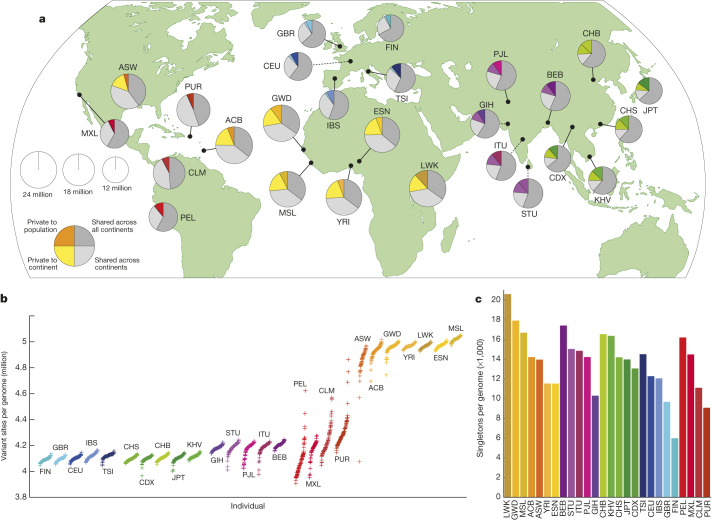
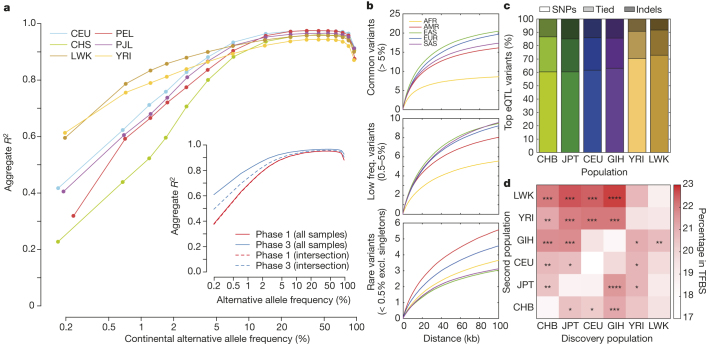
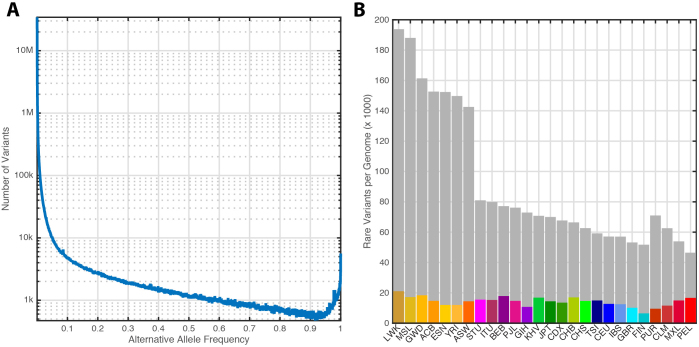
The 1000 Genomes Project set out to provide a comprehensive description of common human genetic variation by applying whole-genome sequencing to a diverse set of individuals from multiple populations. Here we report completion of the project, having reconstructed the genomes of 2,504 individuals from 26 populations using a combination of low-coverage whole-genome sequencing, deep exome sequencing, and dense microarray genotyping. We characterized a broad spectrum of genetic variation, in total over 88 million variants (84.7 million single nucleotide polymorphisms (SNPs), 3.6 million short insertions/deletions (indels), and 60,000 structural variants), all phased onto high-quality haplotypes. This resource includes >99% of SNP variants with a frequency of >1% for a variety of ancestries. We describe the distribution of genetic variation across the global sample, and discuss the implications for common disease studies. Results for the final phase of the 1000 Genomes Project are presented including whole-genome sequencing, targeted exome sequencing, and genotyping on high-density SNP arrays for 2,504 individuals across 26 populations, providing a global reference data set to support biomedical genetics. The 1000 Genomes Project has sought to comprehensively catalogue human genetic variation across populations, providing a valuable public genomic resource. The data obtained so far have found applications ranging from association studies and fine mapping studies to the filtering of likely neutral variants in rare-disease cohorts. The authors now report on the final phase of the project, phase 3, which covers previously uncharacterized areas of human genetic diversity in terms of the populations sampled and categories of characterized variation. The sample now includes more than 2,500 individuals from 26 global populations, with low coverage whole-genome and deep exome sequencing, as well as dense microarray genotyping. They find that while most common variants are shared across populations, rarer variants are often restricted to closely related populations. The authors also demonstrate the use of the phase 3 dataset as a reference panel for imputation to improve the resolution in genetic association studies.
Overview
The claims and statistics of this paper haven’t been checked yet.
Free: it reads the open-access text and checks the first 5 claims that cite a source we can check. Create a free account to check every claim.
Integrity signals
Registry
Cites
Statistics
Figures




Verification
Claims the paper makes
The claims and statistics of this paper haven’t been checked yet.
Free: it reads the open-access text and checks the first 5 claims that cite a source we can check. Create a free account to check every claim.
Claims other papers make about this one
Each is checked against this paper’s own text: does it say what the citing paper says it does?
The cited source doesn’t support the claim as written.
In the citing paper
“The pangenome contains 47 phased, diploid assemblies from a cohort of genetically diverse individuals1.”
From A draft human pangenome reference. (2023) · cites this paper as [1]
Checked by a reasoning model — may be wrong.
Experimental — accuracy not yet measuredThe source backs part of the claim, not all of it — or backs it for a different population, condition or comparison.
In the citing paper
“In addition, per the Exome Sequencing Project, 1000 Genomes, and dbSNP population frequency databases that are publicly available, these ATM, BRCA1, BRCA2, and COL3A1 gene variants are found in the general population at frequencies too high to be associated with disease (Table 3) (refs.22,23,24).”
From False-positive results released by direct-to-consumer genetic tests highlight the importance of clinical confirmation testing for appropriate patient care (2018) · cites this paper as [23]
Experimental — accuracy not yet measuredThe source backs part of the claim, not all of it — or backs it for a different population, condition or comparison.
In the citing paper
“For the common variants that underlie the bulk of complex-disease risk, the resolution of association mapping is often limited by the haplotype structure of the human genome2–4.”
From A brief history of human disease genetics (2020) · cites this paper as [3]
Experimental — accuracy not yet measuredThe source backs part of the claim, not all of it — or backs it for a different population, condition or comparison.
In the citing paper
“The locus on chromosome 18 showed limited regional association with AD, but the index variant was not present in our analysis because it no longer appears in the 1000 Genomes Phase 3 reference panel21.”
From Transancestral GWAS of alcohol dependence reveals common genetic underpinnings with psychiatric disorders (2018) · cites this paper as [21]
Experimental — accuracy not yet measuredThe source backs part of the claim, not all of it — or backs it for a different population, condition or comparison.
In the citing paper
“Using T2T-CHM13 directly improves genomic analyses; for example, discovering 3.7 million additional single-nucleotide polymorphisms (SNPs) in regions non-syntenic to GRCh38 and better representing the true copy number variants (CNVs) of samples from the 1000 Genomes Project (1KG) compared with GRCh38 (refs. 1,4).”
From A draft human pangenome reference. (2023) · cites this paper as [1]
Experimental — accuracy not yet measured
16 more claims about this paper
Create a free account to see every claim other papers make about this one.
Self-check
Percentages, sums and reported differences re-computed from the paper’s own numbers.
The self-check needs the paper’s full text.
Citations
Cites
An integrated encyclopedia of DNA elements in the human genome
The ENCODE Project Consortium (2012) · Nature · doi:10.1038/nature11247 · Cited by 18,072
Fast model-based estimation of ancestry in unrelated individuals
Alexander, D. H., Novembre, J., & Lange, K. (2009) · Genome Research · doi:10.1101/gr.094052.109 · Cited by 9,898
A map of human genome variation from population-scale sequencing.
The 1000 Genomes Project Consortium (2010) · Nature · doi:10.1038/nature09534 · Cited by 7,877
Self-citationAn integrated map of genetic variation from 1,092 human genomes
The 1000 Genomes Project Consortium (2012) · Nature · doi:10.1038/nature11632 · Cited by 7,711
Self-citationComplement factor H polymorphism in age-related macular degeneration
Klein, R. J., Zeiss, C., Chew, E. Y., Tsai, J.-Y., Sackler, R. S., Haynes, C., Henning, A. K., SanGiovanni, J. P., Mane, S. M., Mayne, S. T., et al. (2005) · Science · doi:10.1126/science.1109557 · Cited by 4,492
Inference of human population history from individual whole-genome sequences
Li, H., & Durbin, R. (2011) · Nature · doi:10.1038/nature10231 · Cited by 2,590
Self-citationAn integrated map of structural variation in 2,504 human genomes
Sudmant, P. H., Rausch, T., Gardner, E. J., Handsaker, R. E., Abyzov, A., Huddleston, J., Zhang, Y., Ye, K., Jun, G., Hsi-Yang Fritz, M., et al. (2015) · Nature · doi:10.1038/nature15394 · Cited by 2,354
Self-citationFast and accurate genotype imputation in genome-wide association studies through pre-phasing
Howie, B., Fuchsberger, C., Stephens, M., Marchini, J., & Abecasis, G. R. (2012) · Nature Genetics · doi:10.1038/ng.2354 · Cited by 1,737
Self-citationSequencing of 50 Human Exomes Reveals Adaptation to High Altitude
Yi, X., Liang, Y., Huerta-Sanchez, E., Jin, X., Cuo, Z. X. P., Pool, J. E., Xu, X., Jiang, H., Vinckenbosch, N., Korneliussen, T. S., et al. (2010) · Science · doi:10.1126/science.1190371 · Cited by 1,611
Self-citationThe AMD Genetics Clinical Study Group, Gold, B., Merriam, J. E., Zernant, J., Hancox, L. S., Taiber, A. J., Gehrs, K., Cramer, K., Neel, J., Bergeron, J., et al. (2006) · Nature Genetics · doi:10.1038/ng1750 · Cited by 1,075
Self-citation
Cited by
Items 1,001–1,100 of 1,376
Complex genetic variation in nearly complete human genomes
Logsdon, G. A., Ebert, P., Audano, P. A., Loftus, M. G., Porubskỳ, D., Ebler, J., Yilmaz, F., Hallast, P., Prodanov, T., Yoo, D., et al. (2025) · Nature · doi:10.1038/s41586-025-09140-6 · Cited by 205
Self-citationSpinal muscular atrophy diagnosis and carrier screening from genome sequencing data
Chen, X., Sanchis-Juan, A., French, C. E., Connell, A. J., Delon, I., Kingsbury, Z., Chawla, A., Halpern, A. L., Taft, R. J., Bentley, D. R., et al. (2020) · Genetics in Medicine · doi:10.1038/s41436-020-0754-0 · Cited by 137
Self-citationTowards utilization of the human genome and microbiome for personalized nutrition
Bashiardes, S., Godneva, A., Elinav, E., & Segal, E. (2018) · Current Opinion in Biotechnology · doi:10.1016/j.copbio.2017.11.013 · Cited by 137
Tobita, T., Nomura, S., Fujita, T., Morita, H., Asano, Y., Onoue, K., Ito, M., Imai, Y., Suzuki, A., Ko, T., et al. (2018) · Scientific Reports · doi:10.1038/s41598-018-20114-9 · Cited by 144
Genome-wide somatic variant calling using localized colored de Bruijn graphs
Narzisi, G., Corvelo, A., Arora, K. S., Bergmann, E. A., Shah, M. J., Musunuri, R., Emde, A., Robine, N., Vacic, V., & Zody, M. C. (2018) · Communications Biology · doi:10.1038/s42003-018-0023-9 · Cited by 145
Frequencies of clinically important CYP2C19 and CYP2D6 alleles are graded across Europe
Petrović, J., Pešić, V., & Lauschke, V. M. (2019) · European Journal of Human Genetics · doi:10.1038/s41431-019-0480-8 · Cited by 140
Dennis, J. K., Sealock, J., Straub, P., Lee, Y. A., Hucks, D., Actkins, K. V., Faucon, A. B., Feng, Y. A., Ge, T., Goleva, S. B., et al. (2021) · Genome Medicine · doi:10.1186/s13073-020-00820-8 · Cited by 155
The Need for a Human Pangenome Reference Sequence
Miga, K. H., & Wang, T. (2021) · Annual Review of Genomics and Human Genetics · doi:10.1146/annurev-genom-120120-081921 · Cited by 137
Lanktree, M. B., Thériault, S., Walsh, M. W., & Paré, G. (2017) · American Journal of Kidney Diseases · doi:10.1053/j.ajkd.2017.06.011 · Cited by 143
DESGESCO (Dementia Genetics Spanish Consortium), E. (. D. E. D. B., van der Lee, S. J., biobank), E. (. D. E. D., IFGC (International FTD-Genomics Consortium), I. (. I. P. D. G. C., IPDGC (The International Parkinson Disease Genomics Consortium), Dementia), R.-F. (. A. M. F. I. F.-T., (NBB), N. B. B., The GIFT (Genetic Investigation in Frontotemporal Dementia and Alzheimer’s Disease) Study Group, Conway, O. J., Jansen, I., et al. (2019) · Acta Neuropathologica · doi:10.1007/s00401-019-02026-8 · Cited by 120
Self-citationComprehensive genome analysis and variant detection at scale using DRAGEN
Behera, S., Catreux, S., Rossi, M., Truong, S., Huang, Z., Ruehle, M., Visvanath, A., Parnaby, G., Roddey, C., Onuchic, V., et al. (2025) · Nature Biotechnology · doi:10.1038/s41587-024-02382-1 · Cited by 137
Self-citationChong, R., Insigne, K. D., Yao, D., Burghard, C. P., Wang, J., Hsiao, Y.-H. E., Jones, E. M., Goodman, D. B., Xiao, X., & Kosuri, S. (2019) · Molecular Cell · doi:10.1016/j.molcel.2018.10.037 · Cited by 130
Self-citationIdentifying Y-chromosome haplogroups in arbitrarily large samples of sequenced or genotyped men
Poznik, G. D. (2016) · doi:10.1101/088716 · Cited by 130
Conditional Selection of Genomic Alterations Dictates Cancer Evolution and Oncogenic Dependencies
Mina, M., Raynaud, F., Tavernari, D., Battistello, E., Sungalee, S., Saghafinia, S., Laessle, T., Sanchez-Vega, F., Schultz, N., Oricchio, E., et al. (2017) · Cancer Cell · doi:10.1016/j.ccell.2017.06.010 · Cited by 129
Zhou, W., Brumpton, B., Kabil, O., Gudmundsson, J., Thorleifsson, G., Weinstock, J., Zawistowski, M., Nielsen, J. B., Chaker, L., Medici, M., et al. (2020) · Nature Communications · doi:10.1038/s41467-020-17718-z · Cited by 129
Martiniano, R., Garrison, E., Jones, E. R., Manica, A., & Durbin, R. (2020) · Genome Biology · doi:10.1186/s13059-020-02160-7 · Cited by 128
Self-citationGenome-wide de novo L1 Retrotransposition Connects Endonuclease Activity with Replication
Flasch, D. A., Macia, Á., Sánchez, L., Ljungman, M., Heras, S. R., García-Pérez, J. L., Wilson, T. E., & Moran, J. V. (2019) · Cell · doi:10.1016/j.cell.2019.02.050 · Cited by 127
Personal transcriptome variation is poorly explained by current genomic deep learning models
Huang, C., Shuai, R. W., Baokar, P., Chung, R., Rastogi, R., Kathail, P., & Ioannidis, N. M. (2023) · Nature Genetics · doi:10.1038/s41588-023-01574-w · Cited by 127
“To test these existing sequence-to-expression models on personal genome variation, we use RNA-seq data from the Geuvadis consortium, measured on lymphoblastoid cell lines (LCLs) and paired with WGS data from 421 individuals in the 1000 Genomes Project 14 .”
MethodLiu, G., Peng, J., Liao, Z., Locascio, J. J., Corvol, J.-C., Zhu, F., Dong, X., Maple-Grødem, J., Campbell, M. C., Elbaz, A., et al. (2021) · Nature Genetics · doi:10.1038/s41588-021-00847-6 · Cited by 127
“To identify geographical outliers, a pruned data set containing 86,998 LD-independent SNPs were merged with the 1000 Genomes Project data set 78 .”
Makałowski, W., Gotea, V., Pande, A., & Makałowska, I. (2019) · Methods in Molecular Biology · doi:10.1007/978-1-4939-9074-0_6 · Cited by 127
Origins and genetic legacies of the Caribbean Taino
Schroeder, H., Sikora, M., Gopalakrishnan, S., Cassidy, L. M., Maisano Delser, P., Sandoval Velasco, M., Schraiber, J. G., Rasmussen, S., Homburger, J. R., Ávila-Arcos, M. C., et al. (2018) · Proceedings of the National Academy of Sciences · doi:10.1073/pnas.1716839115 · Cited by 126
“Mallick S, et al. (2016) The Simons Genome Diversity Project: 300 genomes from 142 diverse populations.”
BackgroundMethodInfluentialBrikell, I., Larsson, H., Lu, Y., Pettersson, E., Chen, Q., Kuja-Halkola, R., Karlsson, R., Lahey, B. B., Lichtenstein, P., & Martin, J. (2020) · Molecular Psychiatry · doi:10.1038/s41380-018-0109-2 · Cited by 126
Self-citationDetecting archaic introgression using an unadmixed outgroup
Skov, L., Hui, R., Shchur, V., Hobolth, A., Scally, A., Schierup, M. H., & Durbin, R. (2018) · PLoS Genetics · doi:10.1371/journal.pgen.1007641 · Cited by 125
Self-citationRare pathogenic variants predispose to hepatocellular carcinoma in nonalcoholic fatty liver disease
Pelusi, S., Baselli, G., Pietrelli, A., Dongiovanni, P., Donati, B., McCain, M. V., Meroni, M., Fracanzani, A. L., Romagnoli, R., Petta, S., et al. (2019) · Scientific Reports · doi:10.1038/s41598-019-39998-2 · Cited by 125
Single-cell genomics meets human genetics
Cuomo, A. S. E., Nathan, A., Raychaudhuri, S., MacArthur, D. G., & Powell, J. E. (2023) · Nature Reviews Genetics · doi:10.1038/s41576-023-00599-5 · Cited by 124
Mondal, M., Bertranpetit, J., & Lao, O. (2019) · Nature Communications · doi:10.1038/s41467-018-08089-7 · Cited by 124
Genome-Wide Association Study of Suicide Death and Polygenic Prediction of Clinical Antecedents
Docherty, A. R., Shabalin, A. A., DiBlasi, E., Monson, E., Mullins, N., Adkins, D. E., Bacanu, S.-A., Bakian, A. V., Crowell, S., Chen, D., et al. (2020) · American Journal of Psychiatry · doi:10.1176/appi.ajp.2020.19101025 · Cited by 124
Pich, O., Muiños, F., Sabarinathan, R., Reyes-Salazar, I., Gonzalez-Perez, A., & Lopez-Bigas, N. (2018) · Cell · doi:10.1016/j.cell.2018.10.004 · Cited by 123
Promoter-interacting expression quantitative trait loci are enriched for functional genetic variants
Chandra, V., Bhattacharyya, S., Schmiedel, B. J., Madrigal, A., Gonzalez-Colin, C., Fotsing, S., Crinklaw, A., Seumois, G., Mohammadi, P., Kronenberg, M., et al. (2021) · Nature Genetics · doi:10.1038/s41588-020-00745-3 · Cited by 122
Nassar, A. H., Adib, E., Abou Alaiwi, S., El Zarif, T., Groha, S., Akl, E. W., Nuzzo, P. V., Mouhieddine, T. H., Perea-Chamblee, T., Taraszka, K., et al. (2022) · Cancer Cell · doi:10.1016/j.ccell.2022.08.022 · Cited by 121
Haber, M., Doumet-Serhal, C., Scheib, C., Xue, Y., Danecek, P., Mezzavilla, M., Youhanna, S., Martiniano, R., Prado-Martinez, J., Szpak, M., et al. (2017) · The American Journal of Human Genetics · doi:10.1016/j.ajhg.2017.06.013 · Cited by 117
Shi, H., Gazal, S., Kanai, M., Koch, E. M., Schoech, A. P., Siewert, K. M., Kim, S. S., Luo, Y., Amariuta, T., Huang, H., et al. (2021) · Nature Communications · doi:10.1038/s41467-021-21286-1 · Cited by 119
From Omics to Multi-Omics: A Review of Advantages and Tradeoffs
Hayes, C. N., Nakahara, H., Ono, A., Tsuge, M., & Oka, S. (2024) · Genes · doi:10.3390/genes15121551 · Cited by 119
“…to assess the range of variation among individuals within and among populations, including the Human HapMap project [36], the 1000 Genomes project [37], the UK Biobank [38], and All of US [39]; the last of which aims to include a diverse group of more than a million people in the United States.”
Genetics of schizophrenia in the South African Xhosa
Gulsuner, S., Stein, D. J., Susser, E. S., Sibeko, G., Pretorius, A., Walsh, T., Majara, L., Mndini, M. M., Mqulwana, S. G., Ntola, O. A., et al. (2020) · Science · doi:10.1126/science.aay8833 · Cited by 118
Self-citationAMELIE speeds Mendelian diagnosis by matching patient phenotype and genotype to primary literature
Birgmeier, J., Haeussler, M., Deisseroth, C. A., Steinberg, E. H., Jagadeesh, K. A., Ratner, A. J., Guturu, H., Wenger, A. M., Diekhans, M. E., Stenson, P. D., et al. (2020) · Science Translational Medicine · doi:10.1126/scitranslmed.aau9113 · Cited by 118
Shriner, D., & Rotimi, C. N. (2018) · The American Journal of Human Genetics · doi:10.1016/j.ajhg.2018.02.003 · Cited by 118
Neandertal Introgression Sheds Light on Modern Human Endocranial Globularity
Gunz, P., Tilot, A. K., Wittfeld, K., Teumer, A., Shapland, C. Y., van Erp, T. G. M., Dannemann, M., Vernot, B., Neubauer, S., Guadalupe, T., et al. (2019) · Current Biology · doi:10.1016/j.cub.2018.10.065 · Cited by 117
Wood, A. R., Jonsson, A., Jackson, A. U., Wang, N., van Leewen, N., Palmer, N. D., Kobes, S., Deelen, J., Boquete-Vilarino, L., Paananen, J., et al. (2017) · Diabetes · doi:10.2337/db16-1452 · Cited by 117
“imputed up to ~39M SNPs and indels from 2184 haplotypes available from the 1000 Genomes Project Phase 1 - version 3 (35)).”
BackgroundIdentification of ALK in thinness
Orthofer, M., Valsesia, A., Mägi, R., Wang, Q.-P., Kaczanowska, J., Kozieradzki, I., Leopoldi, A., Cikes, D., Zopf, L. M., Tretiakov, E. O., et al. (2020) · Cell · doi:10.1016/j.cell.2020.04.034 · Cited by 117
Kerns, S. L., Fachal, L., Dorling, L., Barnett, G. C., Baran, A., Peterson, D. R., Hollenberg, M., Hao, K., Narzo, A. D., Ahsen, M. E., et al. (2020) · JNCI: Journal of the National Cancer Institute · doi:10.1093/jnci/djz075 · Cited by 117
Khan, S. S., Post, W. S., Guo, X., Tan, J., Zhu, F., Bos, D., Sedaghati-Khayat, B., van Rooij, J., Aday, A., Allen, N. B., et al. (2023) · JAMA · doi:10.1001/jama.2023.7575 · Cited by 117
Self-citationDyslipidemia, inflammation, calcification, and adiposity in aortic stenosis: a genome-wide study
Yu Chen, H., Dina, C., Small, A. M., Shaffer, C. M., Levinson, R. T., Helgadóttir, A., Capoulade, R., Munter, H. M., Martinsson, A., Cairns, B. J., et al. (2023) · European Heart Journal · doi:10.1093/eurheartj/ehad142 · Cited by 116
Wells, M. F., Nemesh, J., Ghosh, S., Mitchell, J. M., Salick, M. R., Mello, C. J., Meyer, D., Pietilainen, O., Piccioni, F., Guss, E. J., et al. (2023) · Cell Stem Cell · doi:10.1016/j.stem.2023.01.010 · Cited by 116
“4,99 It is possible that evolutionary selection has historically favored the rs34481144-C allele in places with high rates of mosquito-borne RNA virus infections.”
BackgroundA genetic link between risk for Alzheimer's disease and severe COVID-19 outcomes via the OAS1 gene
Magusali, N., Graham, A. C., Piers, T. M., Panichnantakul, P., Yaman, U., Shoai, M., Reynolds, R. H., Botia, J. A., Brookes, K. J., Guetta-Baranes, T., et al. (2021) · Brain · doi:10.1093/brain/awab337 · Cited by 111
Guiblet, W. M., Cremona, M. A., Harris, R. S., Chen, D., Eckert, K. A., Chiaromonte, F., Huang, Y.-F., & Makova, K. D. (2021) · Nucleic Acids Research · doi:10.1093/nar/gkaa1269 · Cited by 115
The genomic impact of European colonization of the Americas
Ongaro, L., Scliar, M. O., Flores, R., Raveane, A., Marnetto, D., Sarno, S., Gnecchi-Ruscone, G. A., Alarcón-Riquelme, M. E., Patin, E., Wangkumhang, P., et al. (2019) · Current Biology · doi:10.1016/j.cub.2019.09.076 · Cited by 114
Somatic Mutagenesis in Mammals and Its Implications for Human Disease and Aging
Zhang, L., & Vijg, J. (2018) · Annual Review of Genetics · doi:10.1146/annurev-genet-120417-031501 · Cited by 108
An autism spectrum disorder-related de novo mutation hotspot discovered in the GEF1 domain of Trio
Sadybekov, A., Tian, C., Arnesano, C., Katritch, V., & Herring, B. E. (2017) · Nature Communications · doi:10.1038/s41467-017-00472-0 · Cited by 112
Genetic variability in response to amyloid beta deposition influences Alzheimer’s disease risk
Salih, D. A., Bayram, S., Guelfi, S., Reynolds, R. H., Shoai, M., Ryten, M., Brenton, J. W., Zhang, D., Matarin, M., Botia, J. A., et al. (2019) · Brain Communications · doi:10.1093/braincomms/fcz022 · Cited by 110
Self-citationBelloy, M. E., Napolioni, V., Han, S. S., Le Guen, Y., Greicius, M. D., & Initiative, F. T. A. D. N. (2020) · JAMA Neurology · doi:10.1001/jamaneurol.2020.0414 · Cited by 110
A catalog of single nucleotide changes distinguishing modern humans from archaic hominins
Kuhlwilm, M., & Boeckx, C. (2019) · Scientific Reports · doi:10.1038/s41598-019-44877-x · Cited by 108
Burger, J., Link, V., Blöcher, J., Schulz, A., Sell, C., Pochon, Z., Diekmann, Y., Žegarac, A., Hofmanová, Z., Winkelbach, L., et al. (2020) · Current Biology · doi:10.1016/j.cub.2020.08.033 · Cited by 108
“We extracted all SNP’s from whole genome sequences generated from European (CEU, FIN, GBR, IBS and TSI, together named EUR), SouthEast Asian (GIH, PJL, BEB, STU, and ITU, together named SAS), East Asian (CHB, JPT, CHS, CDX and KHV, together named EAS) and Yoruban (YRI) populations that are part of the 1000 Genomes Pro…”
MethodInfluentialFunctional implications of Neandertal introgression in modern humans
Dannemann, M., Prüfer, K., & Kelso, J. (2017) · Genome biology · doi:10.1186/s13059-017-1181-7 · Cited by 92
An ancestral recombination graph of human, Neanderthal, and Denisovan genomes
Schaefer, N. K., Shapiro, B., & Green, R. E. (2021) · Science Advances · doi:10.1126/sciadv.abc0776 · Cited by 106
The history and evolution of the Denisovan- EPAS1 haplotype in Tibetans
Zhang, X., Witt, K. E., Bañuelos, M. M., Ko, A., Yuan, K., Xu, S., Nielsen, R., & Huerta-Sanchez, E. (2021) · Proceedings of the National Academy of Sciences · doi:10.1073/pnas.2020803118 · Cited by 105
Jinam, T. A., Phipps, M. E., Aghakhanian, F., Majumder, P. P., Datar, F., Stoneking, M., Sawai, H., Nishida, N., Tokunaga, K., Kawamura, S., et al. (2017) · Genome Biology and Evolution · doi:10.1093/gbe/evx118 · Cited by 103
Genome–microbiome interplay provides insight into the determinants of the human blood metabolome
Diener, C., Dai, C. L., Wilmanski, T., Baloni, P., Smith, B., Rappaport, N., Hood, L., Magis, A. T., & Gibbons, S. M. (2022) · Nature Metabolism · doi:10.1038/s42255-022-00670-1 · Cited by 102
Joint estimates of heterozygosity and runs of homozygosity for modern and ancient samples
Renaud, G., Hanghøj, K., Korneliussen, T. S., Willerslev, E., & Orlando, L. (2019) · Genetics · doi:10.1534/genetics.119.302057 · Cited by 101
Archaic adaptive introgression in TBX15/WARS2
Racimo, F., Gokhman, D., Fumagalli, M., Ko, A., Hansen, T., Moltke, I., Albrechtsen, A., Carmel, L., Huerta-Sánchez, E., & Nielsen, R. (2016) · Molecular Biology and Evolution · doi:10.1093/molbev/msw283 · Cited by 101
“…in the high-coverage Denisova genome (Meyer et al. 2012), 4) the alleles present in a present-day human genome from the 1,000 Genomes Project (Auton et al. 2015) (HG00436) that is homozygous for the introgressed tract, 5) the alleles in a present-day human genome (HG00407) that does not…”
BackgroundMethodInfluentialDoran, A. G., Wong, K., Flint, J., Adams, D. J., Hunter, K. W., & Keane, T. M. (2016) · Genome Biology · doi:10.1186/s13059-016-1024-y · Cited by 101
Genetic Variations Associated with Vitamin A Status and Vitamin A Bioavailability
Borel, P., & Desmarchelier, C. (2017) · Nutrients · doi:10.3390/nu9030246 · Cited by 100
“Interestingly, the minor allele of the SNP is highly prevalent in populations from Latin American (about 70%), whereas it is found at a much lower frequency (around 20%) in populations from Europe and Africa [95].”
BackgroundInfluentialXiao, X., Liu, H., Liu, X., Zhang, W., Zhang, S., & Jiao, B. (2021) · Frontiers in Aging Neuroscience · doi:10.3389/fnagi.2021.695808 · Cited by 99
“, 2016), 1,000 Genomes Project (Auton et al., 2015), and the ExAC Browser (Lek et al.”
BackgroundSelf-citationHiNT: a computational method for detecting copy number variations and translocations from Hi-C data
Wang, S., Lee, S., Chu, C., Jain, D., Kerpedjiev, P., Nelson, G. M., Walsh, J. M., Alver, B. H., & Park, P. J. (2020) · Genome Biology · doi:10.1186/s13059-020-01986-5 · Cited by 99
Self-citationA wealth of discovery built on the Human Genome Project — by the numbers
Gates, A. J., Gysi, D. M., Kellis, M., & Barabási, A.-L. (2021) · Nature · doi:10.1038/d41586-021-00314-6 · Cited by 98
Molecular quantitative trait loci
Aguet, F., Alasoo, K., Li, Y. I., Battle, A., Im, H. K., Montgomery, S. B., & Lappalainen, T. (2023) · Nature Reviews Methods Primers · doi:10.1038/s43586-022-00188-6 · Cited by 98
Self-citationEvolutionary history and adaptation of a human pygmy population of Flores Island, Indonesia
Tucci, S., Vohr, S. H., McCoy, R. C., Vernot, B., Robinson, M. R., Barbieri, C., Nelson, B. J., Fu, W., Purnomo, G. A., Sudoyo, H., et al. (2018) · Science · doi:10.1126/science.aar8486 · Cited by 97
Self-citationTOP-LD: A tool to explore linkage disequilibrium with TOPMed whole-genome sequence data
Huang, L., Rosen, J. D., Sun, Q., Chen, J., Wheeler, M. M., Zhou, Y., Min, Y.-I., Kooperberg, C., Conomos, M. P., Stilp, A. M., et al. (2022) · The American Journal of Human Genetics · doi:10.1016/j.ajhg.2022.04.006 · Cited by 97
Self-citationRare ATG7 genetic variants predispose patients to severe fatty liver disease
Baselli, G. A., Jamialahmadi, O., Pelusi, S., Ciociola, E., Malvestiti, F., Saracino, M., Santoro, L., Cherubini, A., Dongiovanni, P., Maggioni, M., et al. (2022) · Journal of Hepatology · doi:10.1016/j.jhep.2022.03.031 · Cited by 97
“As a further control group for the burden test analysis, we included 404 healthy NFEs from the 1000 genomes project with individuallevel genotype data, whose genetic data were processed by the same pipeline of cases.(14) Evaluation of family members is reported in the supplementary methods.”
The performance of genome sequencing as a first-tier test for neurodevelopmental disorders
van der Sanden, B. P. G. H., Schobers, G., Corominas Galbany, J., Koolen, D. A., Sinnema, M., van Reeuwijk, J., Stumpel, C. T. R. M., Kleefstra, T., de Vries, B. B. A., Ruiterkamp-Versteeg, M., et al. (2023) · European Journal of Human Genetics · doi:10.1038/s41431-022-01185-9 · Cited by 97
Walker, V. M., Kehoe, P. G., Martin, R. M., & Davies, N. M. (2020) · International Journal of Epidemiology · doi:10.1093/ije/dyz155 · Cited by 96
Walker, V. M., Kehoe, P. G., Martin, R. M., & Davies, N. M. (2018) · doi:10.1101/486878 · Cited by 96
Detecting adaptive introgression in human evolution using convolutional neural networks
Gower, G., Picazo, P. I., Fumagalli, M., & Racimo, F. (2021) · eLife · doi:10.7554/elife.64669 · Cited by 95
Cyrius: accurate CYP2D6 genotyping using whole-genome sequencing data
Chen, X., Shen, F., Gonzaludo, N., Malhotra, A., Rogert, C., Taft, R. J., Bentley, D. R., & Eberle, M. A. (2021) · The Pharmacogenomics Journal · doi:10.1038/s41397-020-00205-5 · Cited by 95
Self-citationIdentifying the favored mutation in a positive selective sweep.
Akbari, A., Vitti, J. J., Iranmehr, A., Bakhtiari, M., Sabeti, P. C., Mirarab, S., & Bafna, V. (2018) · Nature Methods · doi:10.1038/nmeth.4606 · Cited by 95
Genetic Risk Variants Associated With Comorbid Alcohol Dependence and Major Depression
Zhou, H., Polimanti, R., Yang, B.-Z., Wang, Q., Han, S., Sherva, R., Nuñez, Y. Z., Zhao, H., Farrer, L. A., Kranzler, H. R., et al. (2017) · JAMA Psychiatry · doi:10.1001/jamapsychiatry.2017.3275 · Cited by 94
“html)(31) and the 1000Genomes phase 3 reference panel.(32)TheAfrican American and European American samples were imputed separately.”
BackgroundGao, X., Meng, L.-X., Ma, K.-L., Liang, J., Wang, H., Gao, Q., & Wang, T. (2019) · European Psychiatry · doi:10.1016/j.eurpsy.2019.05.004 · Cited by 94
Yuan, K., Longchamps, R. J., Pardiñas, A. F., Yu, M., Chen, T.-T., Lin, S.-C., Chen, Y., Lam, M., Liu, R., Xia, Y., et al. (2023) · doi:10.1101/2023.01.07.23284293 · Cited by 94
An intronic VNTR affects splicing of ABCA7 and increases risk of Alzheimer’s disease
On Behalf of the BELNEU Consortium, De Roeck, A., Duchateau, L., Van Dongen, J., Cacace, R., Bjerke, M., Van den Bossche, T., Cras, P., Vandenberghe, R., De Deyn, P. P., et al. (2018) · Acta Neuropathologica · doi:10.1007/s00401-018-1841-z · Cited by 93
Gur, R. E., Bassett, A. S., McDonald-McGinn, D. M., Bearden, C. E., Chow, E., Emanuel, B. S., Owen, M., Swillen, A., Van den Bree, M., Vermeesch, J., et al. (2017) · Molecular Psychiatry · doi:10.1038/mp.2017.161 · Cited by 93
Association of Rare APOE Missense Variants V236E and R251G With Risk of Alzheimer Disease
Le Guen, Y., Belloy, M. E., Grenier-Boley, B., de Rojas, I., Castillo-Morales, A., Jansen, I., Nicolas, A., Bellenguez, C., Dalmasso, C., Küçükali, F., et al. (2022) · JAMA Neurology · doi:10.1001/jamaneurol.2022.1166 · Cited by 93
“In our analysis, we only considered missense variants with a minor allele count greater than 10 in any APOE main geno-typegroupsinournext-generationsequencingdiscovery(stage 1) to avoid outlier-confounded effect size estimates.”
Rathore, N., Ramani, S. R., Pantua, H., Payandeh, J., Bhangale, T., Wuster, A., Kapoor, M., Sun, Y., Kapadia, S. B., Gonzalez, L., et al. (2018) · PLOS Genetics · doi:10.1371/journal.pgen.1007427 · Cited by 93
“major allele (65%) in East Asian populations [23].”
BackgroundVery low-depth whole-genome sequencing in complex trait association studies
Gilly, A., Southam, L., Suveges, D., Kuchenbaecker, K., Moore, R., Melloni, G. E. M., Hatzikotoulas, K., Farmaki, A.-E., Ritchie, G., Schwartzentruber, J., et al. (2019) · Bioinformatics · doi:10.1093/bioinformatics/bty1032 · Cited by 93
Novel genetic loci affecting facial shape variation in humans
Xiong, Z., Dankova, G., Howe, L. J., Lee, M. K., Hysi, P. G., de Jong, M. A., Zhu, G., Adhikari, K., Li, D., Li, Y., et al. (2019) · eLife · doi:10.7554/elife.49898 · Cited by 92
“, 2012) and imputed to the 1000 Genomes reference panel (Phase 1, Version3) (Auton et al., 2015) using IMPUTE3 V2.”
MethodSelf-citationThe human-induced pluripotent stem cell initiative-data resources for cellular genetics
Streeter, I., Harrison, P. W., Faulconbridge, A., The HipSci Consortium, Flicek, P., Parkinson, H., & Clarke, L. (2017) · Nucleic Acids Research · doi:10.1093/nar/gkw928 · Cited by 92
Self-citationSirén, J., Garrison, E., Novak, A. M., Paten, B., & Durbin, R. (2020) · Bioinformatics · doi:10.1093/bioinformatics/btz575 · Cited by 92
Self-citationKatz, D. H., Tahir, U. A., Bick, A. G., Pampana, A., Ngo, D., Benson, M. D., Yu, Z., Robbins, J. M., Chen, Z.-Z., Cruz, D. E., et al. (2022) · Circulation · doi:10.1161/circulationaha.121.055117 · Cited by 92
Self-citationAccurate estimation of SNP-heritability from biobank-scale data irrespective of genetic architecture
Hou, K., Burch, K. S., Majumdar, A., Shi, H., Mancuso, N., Wu, Y., Sankararaman, S., & Pasaniuc, B. (2019) · Nature Genetics · doi:10.1038/s41588-019-0465-0 · Cited by 91
Warrier, V., Stauffer, E.-M., Huang, Q. Q., Wigdor, E. M., Slob, E. A. W., Seidlitz, J., Ronan, L., Valk, S. L., Mallard, T. T., Grotzinger, A. D., et al. (2023) · Nature Genetics · doi:10.1038/s41588-023-01475-y · Cited by 91
Common risk variants identified in autism spectrum disorder
Grove, J., Ripke, S., Als, T. D., Mattheisen, M., Walters, R., Won, H., Pallesen, J., Agerbo, E., Andreassen, O. A., Anney, R., et al. (2017) · doi:10.1101/224774 · Cited by 89
Self-citationKarch, C. M., Wen, N., Fan, C. C., Yokoyama, J. S., Kouri, N., Ross, O. A., Höglinger, G., Müller, U., Ferrari, R., Hardy, J., et al. (2018) · JAMA Neurology · doi:10.1001/jamaneurol.2018.0372 · Cited by 89
The UCL low-density lipoprotein receptor gene variant database: pathogenicity update
Leigh, S., Futema, M., Whittall, R., Taylor-Beadling, A., Williams, M., den Dunnen, J. T., & Humphries, S. E. (2017) · Journal of Medical Genetics · doi:10.1136/jmedgenet-2016-104054 · Cited by 88
Griswold, A. J., Celis, K., Bussies, P. L., Rajabli, F., Whitehead, P. L., Hamilton‐Nelson, K. L., Beecham, G. W., Dykxhoorn, D. M., Nuytemans, K., Wang, L., et al. (2021) · Alzheimer's & Dementia · doi:10.1002/alz.12287 · Cited by 87
Beyond Endometriosis Genome-Wide Association Study: From Genomics to Phenomics to the Patient
Rahmioglu, N., Morris, A., Nyholt, D., Montgomery, G., Becker, C., Missmer, S., & Zondervan, K. (2016) · Seminars in Reproductive Medicine · doi:10.1055/s-0036-1585408 · Cited by 84
Vijayakrishnan, J., Studd, J., Broderick, P., Kinnersley, B., Holroyd, A., Law, P. J., Kumar, R., Allan, J. M., Harrison, C. J., Moorman, A. V., et al. (2018) · Nature Communications · doi:10.1038/s41467-018-03178-z · Cited by 84
Self-citationHaskamp, S., Bruns, H., Hahn, M., Hoffmann, M., Gregor, A., Löhr, S., Hahn, J., Schauer, C., Ringer, M., Flamann, C., et al. (2020) · The American Journal of Human Genetics · doi:10.1016/j.ajhg.2020.07.001 · Cited by 84
Beggs, A. H., Byrne, B. J., De Chastonay, S., Haselkorn, T., Hughes, I., James, E. S., Kuntz, N. L., Simon, J., Swanson, L. C., Yang, M. L., et al. (2018) · Muscle & Nerve · doi:10.1002/mus.26018 · Cited by 83
“Respiratory, thoracic and mediastinal disorders 29 (81) 52 (84) 81 (83) Respiratory failure 19 (53) 33 (53) 52 (53) Respiratory distress 10 (28) 22 (35) 32 (33)”
Haplotype-aware pantranscriptome analyses using spliced pangenome graphs
Sibbesen, J. A., Eizenga, J. M., Novak, A. M., Sirén, J., Chang, X., Garrison, E., & Paten, B. (2023) · Nature Methods · doi:10.1038/s41592-022-01731-9 · Cited by 83
Quantifying the contribution of Neanderthal introgression to the heritability of complex traits
McArthur, E., Rinker, D. C., & Capra, J. A. (2021) · Nature Communications · doi:10.1038/s41467-021-24582-y · Cited by 71
Initiative, F. T. A. D. N., Ridge, P. G., Karch, C. M., Hsu, S., Arano, I., Teerlink, C. C., Ebbert, M. T. W., Gonzalez Murcia, J. D., Farnham, J. M., Damato, A. R., et al. (2017) · Genome Medicine · doi:10.1186/s13073-017-0486-1 · Cited by 83
Nuclear DNA from two early Neandertals reveals 80,000 years of genetic continuity in Europe
Peyrégne, S., Slon, V., Mafessoni, F., de Filippo, C., Hajdinjak, M., Nagel, S., Nickel, B., Essel, E., Le Cabec, A., Wehrberger, K., et al. (2019) · Science Advances · doi:10.1126/sciadv.aaw5873 · Cited by 82
Metadata
- Authors
- The 1000 Genomes Project Consortium, authors, C., Auton, A., Abecasis, G. R., Steering committee, Altshuler, D. M., Durbin, R. M., Abecasis, G. R., Bentley, D. R., Chakravarti, A., Clark, A. G., Donnelly, P., Eichler, E. E., Flicek, P., Gabriel, S. B., Gibbs, R. A., Green, E. D., Hurles, M. E., Knoppers, B. M., Korbel, J. O., Lander, E. S., Lee, C., Lehrach, H., Mardis, E. R., Marth, G. T., McVean, G. A., Nickerson, D. A., Schmidt, J. P., Sherry, S. T., Wang, J., Wilson, R. K., Production group, Baylor College of Medicine, Gibbs, R. A., Boerwinkle, E., Doddapaneni, H., Han, Y., Korchina, V., Kovar, C., Lee, S., Muzny, D., Reid, J. G., Zhu, Y., BGI-Shenzhen, Wang, J., Chang, Y., Feng, Q., Fang, X., Guo, X., Jian, M., Jiang, H., Jin, X., Lan, T., Li, G., Li, J., Li, Y., Liu, S., Liu, X., Lu, Y., Ma, X., Tang, M., Wang, B., Wang, G., Wu, H., Wu, R., Xu, X., Yin, Y., Zhang, D., Zhang, W., Zhao, J., Zhao, M., Zheng, X., Broad Institute of MIT and Harvard, Lander, E. S., Altshuler, D. M., Gabriel, S. B., Gupta, N., Coriell Institute for Medical Research, Gharani, N., Toji, L. H., Gerry, N. P., Resch, A. M., European Molecular Biology Laboratory, E. B. I., Flicek, P., Barker, J., Clarke, L., Gil, L., Hunt, S. E., Kelman, G., Kulesha, E., Leinonen, R., McLaren, W. M., Radhakrishnan, R., Roa, A., Smirnov, D., Smith, R. E., Streeter, I., Thormann, A., Toneva, I., Vaughan, B., Zheng-Bradley, X., Illumina, Bentley, D. R., Grocock, R., Humphray, S., James, T., Kingsbury, Z., Max Planck Institute for Molecular Genetics, Lehrach, H., Sudbrak, R., Albrecht, M. W., Amstislavskiy, V. S., Borodina, T. A., Lienhard, M., Mertes, F., Sultan, M., Timmermann, B., Yaspo, M.-L., McDonnell Genome Institute at Washington University, Mardis, E. R., Wilson, R. K., Fulton, L., Fulton, R., Health, U. N. I. O., Sherry, S. T., Ananiev, V., Belaia, Z., Beloslyudtsev, D., Bouk, N., Chen, C., Church, D., Cohen, R., Cook, C., Garner, J., Hefferon, T., Kimelman, M., Liu, C., Lopez, J., Meric, P., O’Sullivan, C., Ostapchuk, Y., Phan, L., Ponomarov, S., Schneider, V., Shekhtman, E., Sirotkin, K., Slotta, D., Zhang, H., University of Oxford, McVean, G. A., Wellcome Trust Sanger Institute, Durbin, R. M., Balasubramaniam, S., Burton, J., Danecek, P., Keane, T. M., Kolb-Kokocinski, A., McCarthy, S., Stalker, J., Quail, M., Analysis group, Affymetrix, Schmidt, J. P., Davies, C. J., Gollub, J., Webster, T., Wong, B., Zhan, Y., Albert Einstein College of Medicine, Auton, A., Campbell, C. L., Kong, Y., Marcketta, A., Baylor College of Medicine, Gibbs, R. A., Yu, F., Antunes, L., Bainbridge, M., Muzny, D., Sabo, A., Huang, Z., BGI-Shenzhen, Wang, J., Coin, L. J. M., Fang, L., Guo, X., Jin, X., Li, G., Li, Q., Li, Y., Li, Z., Lin, H., Liu, B., Luo, R., Shao, H., Xie, Y., Ye, C., Yu, C., Zhang, F., Zheng, H., Zhu, H., Bilkent University, Alkan, C., Dal, E., Kahveci, F., Boston College, Marth, G. T., Garrison, E. P., Kural, D., Lee, W.-P., Fung Leong, W., Stromberg, M., Ward, A. N., Wu, J., Zhang, M., Broad Institute of MIT and Harvard, Daly, M. J., DePristo, M. A., Handsaker, R. E., Altshuler, D. M., Banks, E., Bhatia, G., del Angel, G., Gabriel, S. B., Genovese, G., Gupta, N., Li, H., Kashin, S., Lander, E. S., McCarroll, S. A., Nemesh, J. C., Poplin, R. E., Laboratory, C. S. H., Yoon, S. C., Lihm, J., Makarov, V., Cornell University, Clark, A. G., Gottipati, S., Keinan, A., Rodriguez-Flores, J. L., Laboratory, E. M. B., Korbel, J. O., Rausch, T., Fritz, M. H., Stütz, A. M., European Molecular Biology Laboratory, E. B. I., Flicek, P., Beal, K., Clarke, L., Datta, A., Herrero, J., McLaren, W. M., Ritchie, G. R. S., Smith, R. E., Zerbino, D., Zheng-Bradley, X., Harvard University, Sabeti, P. C., Shlyakhter, I., Schaffner, S. F., Vitti, J., Database, H. G. M., Cooper, D. N., Ball, E. V., Stenson, P. D., Illumina, Bentley, D. R., Barnes, B., Bauer, M., Keira Cheetham, R., Cox, A., Eberle, M., Humphray, S., Kahn, S., Murray, L., Peden, J., Shaw, R., Sinai, I. S. O. M. A. M., Kenny, E. E., Louisiana State University, Batzer, M. A., Konkel, M. K., Walker, J. A., Hospital, M. G., MacArthur, D. G., Lek, M., Max Planck Institute for Molecular Genetics, Sudbrak, R., Amstislavskiy, V. S., Herwig, R., McDonnell Genome Institute at Washington University, Mardis, E. R., Ding, L., Koboldt, D. C., Larson, D., Ye, K., McGill University, Gravel, S., National Eye Institute, N., Swaroop, A., Chew, E., New York Genome Center, Lappalainen, T., Erlich, Y., Gymrek, M., Frederick Willems, T., Ontario Institute for Cancer Research, Simpson, J. T., Pennsylvania State University, Shriver, M. D., Rutgers Cancer Institute of New Jersey, Rosenfeld, J. A., Stanford University, Bustamante, C. D., Montgomery, S. B., De La Vega, F. M., Byrnes, J. K., Carroll, A. W., DeGorter, M. K., Lacroute, P., Maples, B. K., Martin, A. R., Moreno-Estrada, A., Shringarpure, S. S., Zakharia, F., Tel-Aviv University, Halperin, E., Baran, Y., Medicine, T. J. L. F. G., Lee, C., Cerveira, E., Hwang, J., Malhotra, A., Plewczynski, D., Radew, K., Romanovitch, M., Zhang, C., Scientific, T. F., Hyland, F. C. L., Translational Genomics Research Institute, Craig, D. W., Christoforides, A., Homer, N., Izatt, T., Kurdoglu, A. A., Sinari, S. A., Squire, K., Health, U. N. I. O., Sherry, S. T., Xiao, C., University of California, S. D., Sebat, J., Antaki, D., Gujral, M., Noor, A., Ye, K., University of California, S. F., Burchard, E. G., Hernandez, R. D., Gignoux, C. R., University of California, S. C., Haussler, D., Katzman, S. J., James Kent, W., University of Chicago, Howie, B., University College London, Ruiz-Linares, A., University of Geneva, Dermitzakis, E. T., University of Maryland School of Medicine, Devine, S. E., University of Michigan, Abecasis, G. R., Min Kang, H., Kidd, J. M., Blackwell, T., Caron, S., Chen, W., Emery, S., Fritsche, L., Fuchsberger, C., Jun, G., Li, B., Lyons, R., Scheller, C., Sidore, C., Song, S., Sliwerska, E., Taliun, D., Tan, A., Welch, R., Kate Wing, M., Zhan, X., University of Montréal, Awadalla, P., Hodgkinson, A., University of North Carolina at Chapel Hill, Li, Y., University of North Carolina at Charlotte, Shi, X., Quitadamo, A., University of Oxford, Lunter, G., McVean, G. A., Marchini, J. L., Myers, S., Churchhouse, C., Delaneau, O., Gupta-Hinch, A., Kretzschmar, W., Iqbal, Z., Mathieson, I., Menelaou, A., Rimmer, A., Xifara, D. K., University of Puerto Rico, Oleksyk, T. K., University of Texas Health Sciences Center at Houston, Fu, Y., Liu, X., Xiong, M., University of Utah, Jorde, L., Witherspoon, D., Xing, J., University of Washington, Eichler, E. E., Browning, B. L., Browning, S. R., Hormozdiari, F., Sudmant, P. H., Weill Cornell Medical College, Khurana, E., Wellcome Trust Sanger Institute, Durbin, R. M., Hurles, M. E., Tyler-Smith, C., Albers, C. A., Ayub, Q., Balasubramaniam, S., Chen, Y., Colonna, V., Danecek, P., Jostins, L., Keane, T. M., McCarthy, S., Walter, K., Xue, Y., Yale University, Gerstein, M. B., Abyzov, A., Balasubramanian, S., Chen, J., Clarke, D., Fu, Y., Harmanci, A. O., Jin, M., Lee, D., Liu, J., Jasmine Mu, X., Zhang, J., Zhang, Y., Structural variation group, BGI-Shenzhen, Li, Y., Luo, R., Zhu, H., Bilkent University, Alkan, C., Dal, E., Kahveci, F., Boston College, Marth, G. T., Garrison, E. P., Kural, D., Lee, W.-P., Ward, A. N., Wu, J., Zhang, M., Broad Institute of MIT and Harvard, McCarroll, S. A., Handsaker, R. E., Altshuler, D. M., Banks, E., del Angel, G., Genovese, G., Hartl, C., Li, H., Kashin, S., Nemesh, J. C., Shakir, K., Laboratory, C. S. H., Yoon, S. C., Lihm, J., Makarov, V., Cornell University, Degenhardt, J., Laboratory, E. M. B., Korbel, J. O., Fritz, M. H., Meiers, S., Raeder, B., Rausch, T., Stütz, A. M., European Molecular Biology Laboratory, E. B. I., Flicek, P., Paolo Casale, F., Clarke, L., Smith, R. E., Stegle, O., Zheng-Bradley, X., Illumina, Bentley, D. R., Barnes, B., Keira Cheetham, R., Eberle, M., Humphray, S., Kahn, S., Murray, L., Shaw, R., Leiden University Medical Center, Lameijer, E.-W., Louisiana State University, Batzer, M. A., Konkel, M. K., Walker, J. A., McDonnell Genome Institute at Washington University, Ding, L., Hall, I., Ye, K., Stanford University, Lacroute, P., Medicine, T. J. L. F. G., Lee, C., Cerveira, E., Malhotra, A., Hwang, J., Plewczynski, D., Radew, K., Romanovitch, M., Zhang, C., Translational Genomics Research Institute, Craig, D. W., Homer, N., Health, U. N. I. O., Church, D., Xiao, C., University of California, S. D., Sebat, J., Antaki, D., Bafna, V., Michaelson, J., Ye, K., University of Maryland School of Medicine, Devine, S. E., Gardner, E. J., University of Michigan, Abecasis, G. R., Kidd, J. M., Mills, R. E., Dayama, G., Emery, S., Jun, G., University of North Carolina at Charlotte, Shi, X., Quitadamo, A., University of Oxford, Lunter, G., McVean, G. A., University of Texas MD Anderson Cancer Center, Chen, K., Fan, X., Chong, Z., Chen, T., University of Utah, Witherspoon, D., Xing, J., University of Washington, Eichler, E. E., Chaisson, M. J., Hormozdiari, F., Huddleston, J., Malig, M., Nelson, B. J., Sudmant, P. H., Vanderbilt University School of Medicine, Parrish, N. F., Weill Cornell Medical College, Khurana, E., Wellcome Trust Sanger Institute, Hurles, M. E., Blackburne, B., Lindsay, S. J., Ning, Z., Walter, K., Zhang, Y., Yale University, Gerstein, M. B., Abyzov, A., Chen, J., Clarke, D., Lam, H., Jasmine Mu, X., Sisu, C., Zhang, J., Zhang, Y., Exome group, Baylor College of Medicine, Gibbs, R. A., Yu, F., Bainbridge, M., Challis, D., Evani, U. S., Kovar, C., Lu, J., Muzny, D., Nagaswamy, U., Reid, J. G., Sabo, A., Yu, J., BGI-Shenzhen, Guo, X., Li, W., Li, Y., Wu, R., Boston College, Marth, G. T., Garrison, E. P., Fung Leong, W., Ward, A. N., Broad Institute of MIT and Harvard, del Angel, G., DePristo, M. A., Gabriel, S. B., Gupta, N., Hartl, C., Poplin, R. E., Cornell University, Clark, A. G., Rodriguez-Flores, J. L., European Molecular Biology Laboratory, E. B. I., Flicek, P., Clarke, L., Smith, R. E., Zheng-Bradley, X., Hospital, M. G., MacArthur, D. G., McDonnell Genome Institute at Washington University, Mardis, E. R., Fulton, R., Koboldt, D. C., McGill University, Gravel, S., Stanford University, Bustamante, C. D., Translational Genomics Research Institute, Craig, D. W., Christoforides, A., Homer, N., Izatt, T., Health, U. N. I. O., Sherry, S. T., Xiao, C., University of Geneva, Dermitzakis, E. T., University of Michigan, Abecasis, G. R., Min Kang, H., University of Oxford, McVean, G. A., Yale University, Gerstein, M. B., Balasubramanian, S., Habegger, L., Functional interpretation group, Cornell University, Yu, H., European Molecular Biology Laboratory, E. B. I., Flicek, P., Clarke, L., Cunningham, F., Dunham, I., Zerbino, D., Zheng-Bradley, X., Harvard University, Lage, K., Berg Jespersen, J., Horn, H., Stanford University, Montgomery, S. B., DeGorter, M. K., Weill Cornell Medical College, Khurana, E., Wellcome Trust Sanger Institute, Tyler-Smith, C., Chen, Y., Colonna, V., Xue, Y., Yale University, Gerstein, M. B., Balasubramanian, S., Fu, Y., Kim, D., Chromosome Y group, Albert Einstein College of Medicine, Auton, A., Marcketta, A., History, A. M. O. N., Desalle, R., Narechania, A., Arizona State University, Wilson Sayres, M. A., Boston College, Garrison, E. P., Broad Institute of MIT and Harvard, Handsaker, R. E., Kashin, S., McCarroll, S. A., Cornell University, Rodriguez-Flores, J. L., European Molecular Biology Laboratory, E. B. I., Flicek, P., Clarke, L., Zheng-Bradley, X., New York Genome Center, Erlich, Y., Gymrek, M., Frederick Willems, T., Stanford University, Bustamante, C. D., Mendez, F. L., David Poznik, G., Underhill, P. A., Medicine, T. J. L. F. G., Lee, C., Cerveira, E., Malhotra, A., Romanovitch, M., Zhang, C., University of Michigan, Abecasis, G. R., University of Queensland, Coin, L., Shao, H., Virginia Bioinformatics Institute, Mittelman, D., Wellcome Trust Sanger Institute, Tyler-Smith, C., Ayub, Q., Banerjee, R., Cerezo, M., Chen, Y., Fitzgerald, T. W., Louzada, S., Massaia, A., McCarthy, S., Ritchie, G. R., Xue, Y., Yang, F., Data coordination center group, Baylor College of Medicine, Gibbs, R. A., Kovar, C., Kalra, D., Hale, W., Muzny, D., Reid, J. G., BGI-Shenzhen, Wang, J., Dan, X., Guo, X., Li, G., Li, Y., Ye, C., Zheng, X., Broad Institute of MIT and Harvard, Altshuler, D. M., European Molecular Biology Laboratory, E. B. I., Flicek, P., Clarke, L., Zheng-Bradley, X., Illumina, Bentley, D. R., Cox, A., Humphray, S., Kahn, S., Max Planck Institute for Molecular Genetics, Sudbrak, R., Albrecht, M. W., Lienhard, M., McDonnell Genome Institute at Washington University, Larson, D., Translational Genomics Research Institute, Craig, D. W., Izatt, T., Kurdoglu, A. A., Health, U. N. I. O., Sherry, S. T., Xiao, C., University of California, S. C., Haussler, D., University of Michigan, Abecasis, G. R., University of Oxford, McVean, G. A., Wellcome Trust Sanger Institute, Durbin, R. M., Balasubramaniam, S., Keane, T. M., McCarthy, S., Stalker, J., Samples and ELSI group, Chakravarti, A., Knoppers, B. M., Abecasis, G. R., Barnes, K. C., Beiswanger, C., Burchard, E. G., Bustamante, C. D., Cai, H., Cao, H., Durbin, R. M., Gerry, N. P., Gharani, N., Gibbs, R. A., Gignoux, C. R., Gravel, S., Henn, B., Jones, D., Jorde, L., Kaye, J. S., Keinan, A., Kent, A., Kerasidou, A., Li, Y., Mathias, R., McVean, G. A., Moreno-Estrada, A., Ossorio, P. N., Parker, M., Resch, A. M., Rotimi, C. N., Royal, C. D., Sandoval, K., Su, Y., Sudbrak, R., Tian, Z., Tishkoff, S., Toji, L. H., Tyler-Smith, C., Via, M., Wang, Y., Yang, H., Yang, L., Zhu, J., collection, S., (GBR), B. F. E. A. S., Bodmer, W., Colombians in Medellín, C. (., Bedoya, G., Ruiz-Linares, A., (CHS), H. C. S., Cai, Z., Gao, Y., Chu, J., (FIN), F. I. F., Peltonen, L., (IBS), I. P. I. S., Garcia-Montero, A., Orfao, A., (PUR), P. R. I. P. R., Dutil, J., Martinez-Cruzado, J. C., Oleksyk, T. K., (ACB), A. C. I. B., Barnes, K. C., Mathias, R. A., Hennis, A., Watson, H., McKenzie, C., (BEB), B. I. B., Qadri, F., LaRocque, R., Sabeti, P. C., Chinese Dai in Xishuangbanna, C. (., Zhu, J., Deng, X., (ESN), E. I. N., Sabeti, P. C., Asogun, D., Folarin, O., Happi, C., Omoniwa, O., Stremlau, M., Tariyal, R., (GWD), G. I. W. D. –. M., Jallow, M., Sisay Joof, F., Corrah, T., Rockett, K., Kwiatkowski, D., (STU), I. T. I. T. U. (. A. S. L. T. I. T. U., Kooner, J., Kinh in Ho Chi Minh City, V. (., Tịnh Hiê`n, T., Dunstan, S. J., Thuy Hang, N., (MSL), M. I. S. L., Fonnie, R., Garry, R., Kanneh, L., Moses, L., Sabeti, P. C., Schieffelin, J., Grant, D. S., Peruvian in Lima, P. (., Gallo, C., Poletti, G., Punjabi in Lahore, P. (., Saleheen, D., Rasheed, A., management, S., Brooks, L. D., Felsenfeld, A. L., McEwen, J. E., Vaydylevich, Y., Green, E. D., Duncanson, A., Dunn, M., Schloss, J. A., Wang, J., Yang, H., Writing group, Auton, A., Brooks, L. D., Durbin, R. M., Garrison, E. P., Min Kang, H., Korbel, J. O., Marchini, J. L., McCarthy, S., McVean, G. A., & Abecasis, G. R.
- Affiliations
- Albert Einstein College of Medicine (US)
- Centre for Human Genetics (GB)
- University of Washington (US)
- Baylor College of Medicine (US)
- BGI Group (China) (CN)
- European Bioinformatics Institute (GB)
- Illumina (United Kingdom) (GB)
- Max Planck Institute for Molecular Genetics (DE)
- Washington University in St. Louis (US)
- National Institutes of Health (US)
- Wellcome Sanger Institute (GB)
- Affymetrix (United States) (US)
- Broad Institute (US)
- Illumina (United States) (US)
- Ontario Institute for Cancer Research (CA)
- Stanford University (US)
- Tel Aviv University (IL)
- Ewha Womans University (KR)
- The Jackson Laboratory for Genomic Medicine (US)
- Thermo Fisher Scientific (United States) (US)
- University of California San Diego (US)
- Translational Genomics Research Institute (US)
- University of California, Los Angeles (US)
- University of Geneva (CH)
- University of Maryland, Baltimore (US)
- University of Michigan (US)
- University of Pittsburgh (US)
- University of North Carolina at Chapel Hill (US)
- University of Sassari (IT)
- University of North Carolina at Charlotte (US)
- Yale University (US)
- University of Oxford (GB)
- Rutgers, The State University of New Jersey (US)
- Institute of Genetics and Biophysics (IT)
- Radboud University Nijmegen (NL)
- Bilkent University (TR)
- University of Utah (US)
- Leiden University Medical Center (NL)
- The University of Texas MD Anderson Cancer Center (US)
- Mayo Clinic (US)
- Howard Hughes Medical Institute (US)
- Vanderbilt University (US)
- Arizona State University (US)
- American Museum of Natural History (US)
- Coriell Institute For Medical Research (US)
- Stony Brook University (US)
- John Radcliffe Hospital (GB)
- Universidad de Antioquia (CO)
- University of Wisconsin–Madison (US)
- Consejo Superior de Investigaciones Científicas (ES)
- Duke University (US)
- University of Puerto Rico-Mayaguez (PR)
- University of the West Indies (TT)
- Irrua Specialist Teaching Hospital (NG)
- Redeemer's University (NG)
- Harvard University (US)
- MRC Unit the Gambia (GM)
- Chinese Academy of Medical Sciences & Peking Union Medical College (CN)
- Hammersmith Hospital (GB)
- Oxford University Clinical Research Unit (VN)
- Ministry of Health and Sanitation (SL)
- Tulane University (US)
- Universidad Peruana Cayetano Heredia (PE)
- Center for Non-Communicable Diseases (PK)
- Wellcome Trust (GB)
- Macau University of Science and Technology (MO)
- The University of Melbourne (AU)
- ORCID
- Donnelly, Peter
- Nickerson, Deborah A.
- Boerwinkle, Eric
- Han, Yi
- Korchina, Viktoriya
- Zhu, Yiming
- Chang, Yuqi
- Feng, Qiang
- Fang, Xiaodong
- Jian, Min
- Jiang, Hui
- Lan, Tianming
- Liu, Xiao
- Lu, Yao
- Tang, Meifang
- Wang, Bo
- Wang, Guangbiao
- Wu, Honglong
- Xu, Xun
- Yin, Ye
- Zhang, Dandan
- Zhang, Wenwei
- Zhao, Jiao
- Gil, Laurent
- Hunt, Sarah E.
- Kulesha, Eugene
- Leinonen, Rasko
- Radhakrishnan, Rajesh
- Smirnov, Dmitriy
- Streeter, Ian
- Thormann, Anja
- Vaughan, Brendan
- James, Terena
- Borodina, Tatiana A.
- Mertes, Florian
- Sultan, Marc
- Yaspo, Marie-Laure
- Fulton, Lucinda
- Chen, Chao
- Garner, John
- Hefferon, Timothy
- O’Sullivan, Chris
- Phan, Lon
- Sirotkin, Karl
- Quail, Michael
- Gollub, Jeremy
- Kong, Yu
- Antunes, Lilian
- Huang, Zhuoyi
- Fang, Lin
- Li, Qibin
- Li, Zhenyu
- Liu, Binghang
- Yu, Chang
- Zhang, Fan
- Zheng, Hancheng
- Daly, Mark J.
- Gottipati, Srikanth
- Beal, Kathryn
- Datta, Avik
- Herrero, Javier
- Shlyakhter, Ilya
- Schaffner, Stephen F.
- Cooper, David N.
- Bauer, Markus
- Kenny, Eimear E.
- Lek, Monkol
- Herwig, Ralf
- Swaroop, Anand
- Chew, Emily
- Lappalainen, Tuuli
- Simpson, Jared T.
- Shriver, Mark D.
- Rosenfeld, Jeffrey A.
- Byrnes, Jake K.
- Carroll, Andrew W.
- Martin, Alicia R.
- Shringarpure, Suyash S.
- Halperin, Eran
- Gujral, Madhusudan
- Noor, Amina
- Hernandez, Ryan D.
- Katzman, Sol J.
- Chen, Wei
- Fritsche, Lars
- Fuchsberger, Christian
- Li, Bingshan
- Lyons, Robert
- Sidore, Carlo
- Taliun, Daniel
- Welch, Ryan
- Zhan, Xiaowei
- Awadalla, Philip
- Hodgkinson, Alan
- Li, Yun
- Myers, Simon
- Churchhouse, Claire
- Delaneau, Olivier
- Kretzschmar, Warren
- Iqbal, Zamin
- Mathieson, Iain
- Liu, Xiaoming
- Xiong, Momiao
- Browning, Brian L.
- Browning, Sharon R.
- Harmanci, Arif O.
- Lee, Donghoon
- Liu, Jeremy
- Meiers, Sascha
- Raeder, Benjamin
- Stegle, Oliver
- Lameijer, Eric-Wubbo
- Hall, Ira
- Bafna, Vineet
- Michaelson, Jacob
- Gardner, Eugene J.
- Mills, Ryan E.
- Dayama, Gargi
- Chen, Ken
- Chong, Zechen
- Chen, Tenghui
- Chaisson, Mark J.
- Huddleston, John
- Malig, Maika
- Nelson, Bradley J.
- Parrish, Nicholas F.
- Lindsay, Sarah J.
- Ning, Zemin
- Lam, Hugo
- Sisu, Cristina
- Evani, Uday S.
- Lu, James
- Yu, Jin
- Yu, Haiyuan
- Cunningham, Fiona
- Dunham, Ian
- Lage, Kasper
- Horn, Heiko
- Kim, Donghoon
- Desalle, Rob
- Narechania, Apurva
- Mendez, Fernando L.
- Underhill, Peter A.
- Mittelman, David
- Banerjee, Ruby
- Louzada, Sandra
- Yang, Fengtang
- Kalra, Divya
- Cai, Hongyu
- Cao, Hongzhi
- Henn, Brenna
- Kaye, Jane S.
- Kent, Alastair
- Kerasidou, Angeliki
- Ossorio, Pilar N.
- Parker, Michael
- Rotimi, Charles N.
- Royal, Charmaine D.
- Sandoval, Karla
- Tishkoff, Sarah
- Wang, Yuhong
- Yang, Ling
- Bodmer, Walter
- Bedoya, Gabriel
- Cai, Zhiming
- Gao, Yang
- Chu, Jiayou
- Peltonen, Leena
- Dutil, Julie
- Hennis, Anselm
- Qadri, Firdausi
- LaRocque, Regina
- Asogun, Danny
- Happi, Christian
- Stremlau, Matt
- Jallow, Muminatou
- Corrah, Tumani
- Rockett, Kirk
- Kwiatkowski, Dominic
- Kooner, Jaspal
- Dunstan, Sarah J.
- Garry, Robert
- Moses, Lina
- Schieffelin, John
- Grant, Donald S.
- Gallo, Carla
- Poletti, Giovanni
- Saleheen, Danish
- Dunn, Michael
- Schloss, Jeffery A.
- Venue
- Nature
- Published
- 2015-09-30
- Volume
- 526
- Issue
- 7571
- Pages
- 68-74
- ISSN
- 0028-0836 (ISSN-L)
- 1476-4687
- PMC
- PMC4750478
- OpenAlex
- W2104549677
- Cited by
- 18,247
- References
- 39
- Citations by year
- 2026: 1561 · 2025: 1994 · 2024: 2148 · 2023: 1789 · 2022: 1893 · 2021: 2106 · 2020: 1872 · 2019: 1686 · 2018: 1428 · 2017: 1171 · 2016: 535 · 2015: 36
- FWCI
- 727.46
- Type
- journal article
- Language
- en
- Open access
- hybrid
- doi.org
- Licence
- cc-by-nc-sa
- creativecommons.org/licenses/by-nc-sa/3.0/ (tdm)
- creativecommons.org/licenses/by-nc-sa/3.0/ (vor)
- Locations
- Nature (publishedVersion, cc-by-nc-sa)
- PubMed Central (publishedVersion, cc-by-nc-sa)
- PubMed (publishedVersion)
- Research at the University of Copenhagen (University of Copenhagen) (publishedVersion, other-oa)
- ORCA Online Research @Cardiff (Cardiff University) (acceptedVersion)
- SERVAL (Université de Lausanne) (acceptedVersion, cc-by-nc-sa)
- Bilkent University Institutional Repository (Bilkent University) (submittedVersion)
- IRIS (submittedVersion, cc-by-nc-sa)
- MPG.PuRe (Max Planck Society) (submittedVersion, other-oa)
- Radboud Repository (Radboud University) (submittedVersion)
- Carolina Digital Repository (University of North Carolina at Chapel Hill) (submittedVersion)
- Digital Access to Scholarship at Harvard (DASH) (Harvard University) (submittedVersion, cc-by)
- Civil War Book Review (submittedVersion)
- Cold Spring Harbor Laboratory Institutional Repository (Cold Spring Harbor Laboratory) (submittedVersion)
- DSpace@MIT (Massachusetts Institute of Technology) (submittedVersion, cc-by-nc-sa)
- UCL Discovery (University College London) (submittedVersion)
- eScholarship (California Digital Library) (submittedVersion)
- The HKU Scholars Hub (University of Hong Kong) (submittedVersion)
- Minerva Access (University of Melbourne) (submittedVersion, cc-by-nc-sa)
- Technical University of Denmark, DTU Orbit (Technical University of Denmark, DTU) (submittedVersion, cc-by-nc-sa)
- Universidad Peruana Cayetano Heredia Institutional Repository (submittedVersion, cc-by-nc-nd)
- Spiral (Imperial College London) (submittedVersion, cc-by-nc-sa)
- Radboud Repository (Radboud University) (submittedVersion, other-oa)
- PMC
- UNC Libraries
- Funders
- National Science Foundation (83,84, WT098051, 1147470)
- Howard Hughes Medical Institute
- Alfred P. Sloan Foundation
- Simons Foundation
- Massachusetts General Hospital
- Boston College
- Yale University
- Vanderbilt University
- Harvard University
- Arizona State University
- University of Washington
- Louisiana State University
- McGill University
- Wellcome Trust (WT090770/Z/09/Z, 095552/Z/11/Z, 089276, 095908, 100956, WT095908, WT100956/Z/13/Z, WT086084/Z/08/Z, 090770, WT 098051, 095552, /Z/11/Z, 089276/Z/09/Z, WT109497, 102541, 090532, WT0855322/Z/08/Z, WT097307, 096599, 090532/Z/09/Z, 090532/Z/09/, 090532/Z)
- European Molecular Biology Laboratory
- Broad Institute
- Simons Foundation Autism Research Initiative
- National Institute for Health and Care Research (090532/Z/09/Z., WT098051)
- British Heart Foundation (090532/Z/09/Z)
- University of Oxford (090532/Z/09/Z)
- Deutsche Forschungsgemeinschaft
- Schweizerischer Nationalfonds zur Förderung der Wissenschaftlichen Forschung (130342, WT098051)
- National Natural Science Foundation of China (59,60, 863 Program, 31161130357)
- Bundesministerium für Bildung und Forschung (01GS08201, 0316190A, 0315428A)
- Ewha Womans University
- Government of Jiangxi Province
- Lundbeckfonden (R170-2014-1039)
- Max-Planck-Gesellschaft
- Bilkent Üniversitesi
- Université de Genève
- Ministero dello Sviluppo Economico
- H. Lundbeck A/S
- National Institutes of Health (DP5OD9154, DP2OD6514, HHSN272201000025C, 1dp2od006514-01, 10,11, DP5OD009154, 1147470)
- Directorate for Biological Sciences
- School of Medicine, Vanderbilt University
- Weill Cornell Medical College
- University of Texas MD Anderson Cancer Center
- Canadian Institutes of Health Research (136855)
- Fonds de Recherche du Québec - Santé
- Medical Research Council (090532/Z09/Z, WT098051)
- Biotechnology and Biological Sciences Research Council (BB/I02593X/1, BB/I021213/1)
- Japan Society for the Promotion of Science (PE13075, 10144)
- Instituto de Salud Carlos III (IPT13/0001, IPT13/0001-ISCIII-SGEFI/FEDER, PRB2 IPT13/0001)
- National High-tech Research and Development Program (2012AA02A201)
- National Key Research and Development Program of China (2011CB809202, 2011CB809201, 2011CB809202, 2011CB809201)
- Ontario Ministry of Research and Innovation
- National Heart, Lung, and Blood Institute (R01HL087699, R01HL104608, R01HL87699, T32HL94284, HHSN268201100040C, T32HL094284)
- National Human Genome Research Institute (R01HG007644, U41HG007497, R01HG006855, U54HG003067, U01HG005211, U41HG7497, U01HG5214, U01HG6513, U54HG3273, RC2HG5552, U01HG005718, U41HG007635, U54HG003079, U41HG002371, U54HG3067, R01HG5214, R01HG2385, R01HG005701, U54HG003273, U01HG5718, R01HG002898, U01HG5211, U01HG006513, U01HG005214, U01HG005715, U01HG005728, R01HG6855, RC2HG005552, R01HG7068, R01HG007068, U01HG5715, U41HG7635, R01HG007022, R01HG5701, R01HG004960, R01HG2898, U01HG5728, R01HG7644, U54HG3079, R01HG4960, R01HG002385)
- National Cancer Institute (R01CA166661, R01CA172652)
- National Institute of General Medical Sciences (R01GM104390, P01GM99568, P01GM099568, R01GM108805, R01GM113657, R01GM059290, T32GM007790, R01 GM59290, T32GM7790)
- National Institute of Allergy and Infectious Diseases (HHSN272201000025C)
- National Institute of Diabetes and Digestive and Kidney Diseases (R01DK075787)
- FP7 Ideas: European Research Council (617306)
- Topics
- Life Sciences › Biochemistry, Genetics and Molecular Biology › Genetics › Genetic Associations and Epidemiology
- Life Sciences › Biochemistry, Genetics and Molecular Biology › Genetics › Forensic and Genetic Research
- Life Sciences › Biochemistry, Genetics and Molecular Biology › Genetics › Genomics and Rare Diseases
- Keywords
- 1000 Genomes Project, human genetic variation, common genetic variants, single nucleotide polymorphisms, structural variants, haplotype phasing, population genetic variation, reference panel, imputation, genetic association studies, rare variants
- MeSH terms
- Demography, Disease Susceptibility, Genetics, Medical, Genetics, Population, Genotype, Haplotypes, Humans, Reference Standards, Genetic Variation, Genome, Human, Sequence Analysis, DNA, Physical Chromosome Mapping, Polymorphism, Single Nucleotide, Genomics, Rare Diseases, Internationality, Quantitative Trait Loci, INDEL Mutation, Genome-Wide Association Study, High-Throughput Nucleotide Sequencing, Exome, Datasets as Topic
About these checks
Registry, retraction, Cites and statistics results are computed, not judged, with one exception: a printed reference that no index lists is read once by a model before it counts as a citation error. Claims are extracted by a model and kept only when their quote appears verbatim in the text; each cited source is then checked, with a model’s help, for whether it says what the claim relies on. Those verdicts can be wrong — read the claim’s quote and the cited source before relying on one.
Statistics and arithmetic are recomputed, not judged.
Confidence bands are shown only for fields calibrated on our annotated test set. None is calibrated yet, so no band is shown.
What counts as a claim ›How we measure confidence ›How we check this ›
Are you an author, or do you see a problem with this page? Request a review
Data sources
Bibliographic data: Semantic Scholar, OpenAlex, Crossref.
Contains information from the Semantic Scholar Academic Graph Datasets, made available under the ODC Attribution License (ODC-BY 1.0).
Semantic Scholar’s data is described in: Kinney, R., et al. (2023). The Semantic Scholar Open Data Platform. arXiv:2301.10140.
