

Mitochondrial TCA cycle metabolites control physiology and disease
Open accessThe DOI matches its Crossref record; 99 of the 99 references it cites were found in a registry or an index.
Abstract
Mitochondria are signaling organelles that regulate a wide variety of cellular functions and can dictate cell fate. Multiple mechanisms contribute to communicate mitochondrial fitness to the rest of the cell. Recent evidence confers a new role for TCA cycle intermediates, generally thought to be important for biosynthetic purposes, as signaling molecules with functions controlling chromatin modifications, DNA methylation, the hypoxic response, and immunity. This review summarizes the mechanisms by which the abundance of different TCA cycle metabolites controls cellular function and fate in different contexts. We will focus on how these metabolites mediated signaling can affect physiology and disease.
Overview
The claims and statistics of this paper haven’t been checked yet.
Free: it reads the open-access text and checks the first 5 claims that cite a source we can check. Create a free account to check every claim.
Integrity signals
Registry
Cites
Statistics
Figures
Verification
Claims the paper makes
The claims and statistics of this paper haven’t been checked yet.
Free: it reads the open-access text and checks the first 5 claims that cite a source we can check. Create a free account to check every claim.
Claims other papers make about this one
Each is checked against this paper’s own text: does it say what the citing paper says it does?
The source backs part of the claim, not all of it — or backs it for a different population, condition or comparison.
In the citing paper
“In addition to serving as a major route for energy production, the TCA cycle also supplies key intermediates for conversion into glucose, lipids and non-essential amino acids [56].”
From The HIF Axes in Cancer - Angiogenesis, Metabolism and Immune-Modulation (2025) · cites this paper as [56]
Experimental — accuracy not yet measuredThe cited source says what the claim attributes to it.
In the citing paper
“Although additional studies are needed, ample experimental data support the recognition of R-2-HG, succinate, and fumarate as oncometabolites.”
From Glutamine reliance in cell metabolism (2020) · cites this paper as [112]
In the citing paper
“OGDH undergoes substrate inhibition by succinyl-CoA, which also serves as an allosteric inhibitor of CS (134, 136).”
From Regulation and function of the mammalian tricarboxylic acid cycle (2023) · cites this paper as [134]
Self-check
Percentages, sums and reported differences re-computed from the paper’s own numbers.
The self-check needs the paper’s full text.
Citations
Cites
Induction of Apoptotic Program in Cell-Free Extracts: Requirement for dATP and Cytochrome c
Liu, X., Kim, C. N., Yang, J., Jemmerson, R., & Wang, X. (1996) · Cell · doi:10.1016/s0092-8674(00)80085-9 · Cited by 5,167
Succinate is an inflammatory signal that induces IL-1β through HIF-1α
Tannahill, G. M., Curtis, A. M., Adamik, J., Palsson-McDermott, E. M., McGettrick, A. F., Goel, G., Frezza, C., Bernard, N. J., Kelly, B., Foley, N. H., et al. (2013) · Nature · doi:10.1038/nature11986 · Cited by 4,176
Cancer-associated IDH1 mutations produce 2-hydroxyglutarate
Dang, L., White, D. W., Gross, S., Bennett, B. D., Bittinger, M. A., Driggers, E. M., Fantin, V. R., Jang, H. G., Jin, S., Keenan, M. C., et al. (2009) · Nature · doi:10.1038/nature08617 · Cited by 4,154
AMPK: guardian of metabolism and mitochondrial homeostasis
Herzig, S., & Shaw, R. J. (2018) · Nature Reviews Molecular Cell Biology · doi:10.1038/nrm.2017.95 · Cited by 4,061
Hypoxia-inducible factors in physiology and medicine
Semenza, G. L. (2012) · Cell · doi:10.1016/j.cell.2012.01.021 · Cited by 3,645
A guide to immunometabolism for immunologists
O'Neill, L. A. J., Kishton, R. J., & Rathmell, J. (2016) · Nature Reviews Immunology · doi:10.1038/nri.2016.70 · Cited by 3,315
Oxygen sensing by metazoans: the central role of the HIF hydroxylase pathway.
Kaelin, W. G., & Ratcliffe, P. J. (2008) · Molecular Cell · doi:10.1016/j.molcel.2008.04.009 · Cited by 3,251
Fundamentals of Cancer Metabolism
DeBerardinis, R. J., & Chandel, N. S. (2016) · Science Advances · doi:10.1126/sciadv.1600200 · Cited by 3,013
Self-citationIschaemic accumulation of succinate controls reperfusion injury through mitochondrial ROS
Chouchani, E. T., Pell, V. R., Gaude, E., Aksentijević, D., Sundier, S. Y., Robb, E. L., Logan, A., Nadtochiy, S. M., Ord, E. N. J., Smith, A. C., et al. (2014) · Nature · doi:10.1038/nature13909 · Cited by 2,907
Xu, W., Yang, H., Liu, Y., Yang, Y., Wang, P., Kim, S.-H., Ito, S., Yang, C., Wang, P., Xiao, M.-T., et al. (2011) · Cancer Cell · doi:10.1016/j.ccr.2010.12.014 · Cited by 2,875
Cited by
Macrophages in immunoregulation and therapeutics
Chen, S., Saeed, A. F. U. H., Liu, Q., Jiang, Q., Xu, H., Xiao, G. G., Rao, L., & Duo, Y. (2023) · Signal Transduction and Targeted Therapy · doi:10.1038/s41392-023-01452-1 · Cited by 2,229
“IRF3 tracks the secretion of IFNs, including IFN-α and IFN-β.”
BackgroundInfluentialCancer metabolism: looking forward
Martínez-Reyes, I., & Chandel, N. S. (2021) · Nature Reviews Cancer · doi:10.1038/s41568-021-00378-6 · Cited by 1,824
Self-citationRedox metabolism: ROS as specific molecular regulators of cell signaling and function
Lennicke, C., & Cochemé, H. M. (2021) · Molecular Cell · doi:10.1016/j.molcel.2021.08.018 · Cited by 1,246
Mitochondrial dysfunction: mechanisms and advances in therapy
Zong, Y., Li, H., Liao, P., Chen, L., Pan, Y., Zheng, Y., Zhang, C., Liu, D., Zheng, M., & Gao, J. (2024) · Signal Transduction and Targeted Therapy · doi:10.1038/s41392-024-01839-8 · Cited by 1,172
“75 These feed into the tricarboxylic acid (TCA) cycle, further fueling electron transport and ATP production.”
BackgroundGlutamine reliance in cell metabolism
Yoo, H. C., Yu, Y. C., Sung, Y., & Han, J. M. (2020) · Experimental & Molecular Medicine · doi:10.1038/s12276-020-00504-8 · Cited by 1,021
Metabolism of immune cells in cancer
Leone, R. D., & Powell, J. D. (2020) · Nature Reviews Cancer · doi:10.1038/s41568-020-0273-y · Cited by 877
The role of metabolism in chondrocyte dysfunction and the progression of osteoarthritis
Zheng, L., Zhang, Z., Sheng, P., & Mobasheri, A. (2021) · Ageing Research Reviews · doi:10.1016/j.arr.2020.101249 · Cited by 741
Metabolomics in cancer research and emerging applications in clinical oncology
Schmidt, D. R., Patel, R., Kirsch, D. G., Lewis, C. A., Vander Heiden, M. G., & Locasale, J. W. (2021) · CA: A Cancer Journal for Clinicians · doi:10.3322/caac.21670 · Cited by 648
Metabolic reprogramming in macrophage responses
Liu, Y., Xu, R., Gu, H., Zhang, E., Qu, J., Cao, W., Huang, X., Yan, H., He, J., & Cai, Z. (2021) · Biomarker Research · doi:10.1186/s40364-020-00251-y · Cited by 641
Mitochondrial signal transduction
Picard, M., & Shirihai, O. S. (2022) · Cell Metabolism · doi:10.1016/j.cmet.2022.10.008 · Cited by 638
“226,227 These include metabolites from the TCA cycle 216 and from one-carbon metabolism.”
BackgroundMultifaceted mitochondria: moving mitochondrial science beyond function and dysfunction
Monzel, A. S., Enríquez, J. A., & Picard, M. (2023) · Nature Metabolism · doi:10.1038/s42255-023-00783-1 · Cited by 606
“Inside the cell, they release metabolites for signalling in the nucleus where mitochondria-derived molecules are the required substrates and cofactors of epigenetic modifications on the DNA and histones 30,31 .”
BackgroundDisruption of mitochondrial complex I induces progressive parkinsonism
González-Rodríguez, P., Zampese, E., Stout, K. A., Guzman, J. N., Ilijic, E., Yang, B., Tkatch, T., Stavarache, M. A., Wokosin, D. L., Gao, L., et al. (2021) · Nature · doi:10.1038/s41586-021-04059-0 · Cited by 546
Regulation and function of the mammalian tricarboxylic acid cycle
Arnold, P. K., & Finley, L. W. S. (2023) · Journal of Biological Chemistry · doi:10.1016/j.jbc.2022.102838 · Cited by 535
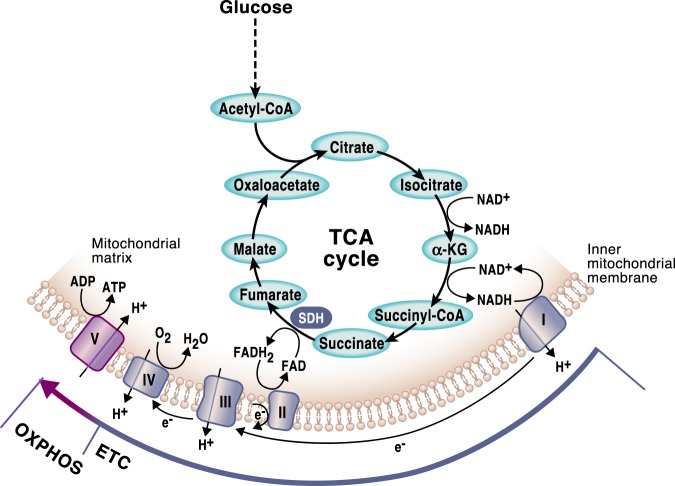
“In the ETC, complex I and complex II oxidize NADH and FADH2, respectively, to provide the oxidized electron carriers required for continuous TCA cycle activity (134).”
BackgroundMitochondria at the crossroads of health and disease
Suomalainen, A., & Nunnari, J. (2024) · Cell · doi:10.1016/j.cell.2024.04.037 · Cited by 478
Chronic inflammation and the hallmarks of aging
Baechle, J. J., Chen, N., Makhijani, P., Winer, S., Furman, D., & Winer, D. A. (2023) · Molecular Metabolism · doi:10.1016/j.molmet.2023.101755 · Cited by 471
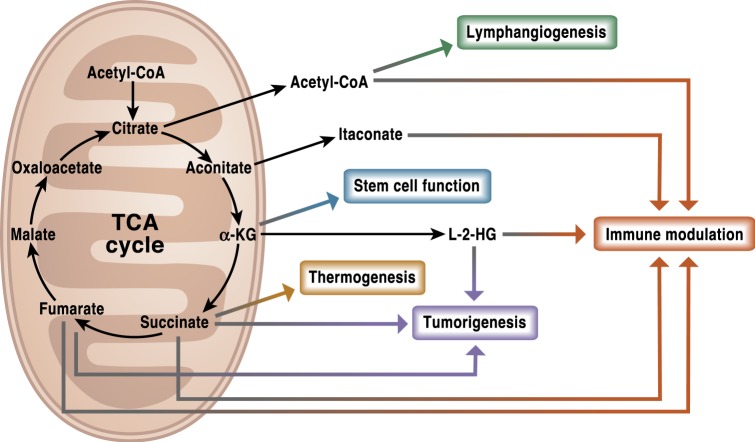
“In addition to mtDNA and ROS, mitochondrial dysfunction releases TCA cycle intermediate metabolites into the cytosol with immunomodulatory effects [324].”
BackgroundMitochondria as Signaling Organelles Control Mammalian Stem Cell Fate
Chakrabarty, R. P., & Chandel, N. S. (2021) · Cell Stem Cell · doi:10.1016/j.stem.2021.02.011 · Cited by 464
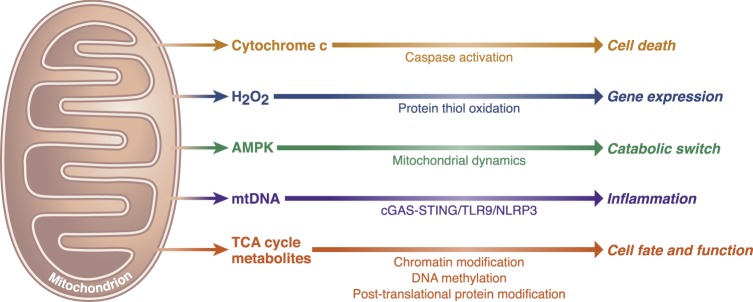
“The third function of mitochondrial metabolism that emerged in the past two decades is that the release of disparate signaling moieties controls cell fate and function (Figure 2) (Martínez-Reyes and Chandel, 2020).”
BackgroundSelf-citationReactive Oxygen Species in Macrophages: Sources and Targets
Canton, M., Sánchez-Rodríguez, R., Spera, I., Venegas, F. C., Favia, M., Viola, A., & Castegna, A. (2021) · Frontiers in Immunology · doi:10.3389/fimmu.2021.734229 · Cited by 449
Krämer, J., Kang, R., Grimm, L. M., De Cola, L., Picchetti, P., & Biedermann, F. (2022) · Chemical Reviews · doi:10.1021/acs.chemrev.1c00746 · Cited by 449
AMPK: restoring metabolic homeostasis over space and time
Trefts, E., & Shaw, R. J. (2021) · Molecular Cell · doi:10.1016/j.molcel.2021.08.015 · Cited by 448
Neutrophil profiling illuminates anti-tumor antigen-presenting potency
Wu, Y., Ma, J., Yang, X., Nan, F., Zhang, T., Ji, S., Rao, D., Feng, H., Gao, K., Gu, X., et al. (2024) · Cell · doi:10.1016/j.cell.2024.02.005 · Cited by 435
Mitochondrial calcium exchange in physiology and disease
Garbincius, J. F., & Elrod, J. W. (2022) · Physiological Reviews · doi:10.1152/physrev.00041.2020 · Cited by 412
Sarcopenia and frailty in decompensated cirrhosis
Tandon, P., Montano-Loza, A. J., Lai, J. C., Dasarathy, S., & Merli, M. (2021) · Journal of Hepatology · doi:10.1016/j.jhep.2021.01.025 · Cited by 408
Metabolomics Reveal Nanoplastic-Induced Mitochondrial Damage in Human Liver and Lung Cells
Lin, S., Zhang, H., Wang, C., Su, X.-L., Song, Y., Wu, P., Yang, Z., Wong, M.-H., Cai, Z., & Zheng, C. (2022) · Environmental Science & Technology · doi:10.1021/acs.est.2c03980 · Cited by 391
Perspectives on skeletal muscle stem cells
Relaix, F., Bencze, M., Borok, M. J., Der Vartanian, A., Gattazzo, F., Mademtzoglou, D., Perez-Diaz, S., Prola, A., Reyes-Fernandez, P. C., Rotini, A., et al. (2021) · Nature Communications · doi:10.1038/s41467-020-20760-6 · Cited by 387
Jiang, L., Wang, P., Song, X., Zhang, H., Ma, S., Wang, J., Li, W., Lv, R., Liu, X., Ma, S., et al. (2021) · Nature Communications · doi:10.1038/s41467-021-21186-4 · Cited by 383
Oxidative Stress: Signaling Pathways, Biological Functions, and Disease
Liu, S., Liu, J., Wang, Y., Deng, F., & Deng, Z. (2025) · MedComm · doi:10.1002/mco2.70268 · Cited by 359
Mitochondria as a Cellular Hub in Infection and Inflammation
Andrieux, P., Chevillard, C., Cunha-Neto, E., & Nunes, J. P. S. (2021) · International Journal of Molecular Sciences · doi:10.3390/ijms222111338 · Cited by 346
“Later, the fumarate is converted into malate then in oxaloacetate and the cycle then restarts [29].”
Cellular senescence: all roads lead to mitochondria
Martini, H., & Passos, J. F. (2023) · The FEBS Journal · doi:10.1111/febs.16361 · Cited by 334
Mitochondria-associated programmed cell death as a therapeutic target for age-related disease
Nguyen, T. T., Wei, S., Nguyen, T. H., Jo, Y., Zhang, Y., Park, W., Gariani, K., Oh, C.-M., Kim, H. H., Ha, K.-T., et al. (2023) · Experimental & Molecular Medicine · doi:10.1038/s12276-023-01046-5 · Cited by 325
Wu, H., Zhao, X., Hochrein, S. M., Eckstein, M., Gubert, G. F., Knöpper, K., Mansilla, A. M., Öner, A., Doucet-Ladevèze, R., Schmitz, W., et al. (2023) · Nature Communications · doi:10.1038/s41467-023-42634-3 · Cited by 322
“6i) 39,40 .”
InfluentialMechanisms of mitochondrial respiratory adaptation
Bennett, C. F., Latorre-Muro, P., & Puigserver, P. (2022) · Nature Reviews Molecular Cell Biology · doi:10.1038/s41580-022-00506-6 · Cited by 309
Oxidative phosphorylation selectively orchestrates tissue macrophage homeostasis
Wculek, S. K., Heras-Murillo, I., Mastrangelo, A., Mañanes, D., Galán, M., Miguel, V., Curtabbi, A., Barbas, C., Chandel, N. S., Enríquez, J. A., et al. (2023) · Immunity · doi:10.1016/j.immuni.2023.01.011 · Cited by 307
“29 Importantly, the ETC complex II is also known as succinate dehydrogenase (SDH) and an enzyme within the TCA cycle, whereas complex I, III, and IV only participate in the ETC and OXPHOS.”
BackgroundInfluentialSelf-citationCrosstalk between glucose metabolism, lactate production and immune response modulation
Ye, L., Jiang, Y., & Zhang, M. (2022) · Cytokine & Growth Factor Reviews · doi:10.1016/j.cytogfr.2022.11.001 · Cited by 306
Levoux, J., Prola, A., Lafuste, P., Gervais, M., Chevallier, N., Koumaiha, Z., Kefi, K., Braud, L., Schmitt, A., Yacia, A., et al. (2021) · Cell Metabolism · doi:10.1016/j.cmet.2020.12.006 · Cited by 290
Up-down regulation of HIF-1α in cancer progression
Rashid, M., Zadeh, L. R., Baradaran, B., Molavi, O., Ghesmati, Z., Sabzichi, M., & Ramezani, F. (2021) · Gene · doi:10.1016/j.gene.2021.145796 · Cited by 283
pH-gated succinate secretion regulates muscle remodeling in response to exercise
Reddy, A., Bozi, L. H. M., Yaghi, O. K., Mills, E. L., Xiao, H., Nicholson, H. E., Paschini, M., Paulo, J. A., Garrity, R., Laznik-Bogoslavski, D., et al. (2020) · Cell · doi:10.1016/j.cell.2020.08.039 · Cited by 279
The Functional Impact of Mitochondrial Structure Across Subcellular Scales
Glancy, B., Kim, Y., Katti, P., & Willingham, T. B. (2020) · Frontiers in Physiology · doi:10.3389/fphys.2020.541040 · Cited by 265
“Metabolites generated by the tricarboxylic acid (TCA) cycle in the matrix have recently been identified as important regulators of gene activity (Chandel, 2014; Martínez-Reyes and Chandel, 2020), and the matrix is home to key reactions within several essential biosynthesis pathways often involving extramitochondrial c…”
BackgroundMitochondria Targeting as an Effective Strategy for Cancer Therapy
Ghosh, P., Vidal, C., Dey, S., & Zhang, L. (2020) · International Journal of Molecular Sciences · doi:10.3390/ijms21093363 · Cited by 263
“Abbreviations ACC acetyl coenzyme A carboxylase ACLY ATP citrate lyase AOA aminooxyacetate AML acute myeloid leukemia AMPK AMP-activated protein kinase ANT adenine nucleotide transporter ATP adenosine Triphosphate AH aconitate hydratase CML chronic myeloid leukemia CycT cyclopamine tartrate DMN1L dynamin 1-like relate…”
BackgroundInfluentialHeavy metals induced mitochondrial dysfunction in animals: Molecular mechanism of toxicity
Sun, Q., Li, Y., Shi, L., Hussain, R., Mehmood, K., Tang, Z., & Zhang, H. (2022) · Toxicology · doi:10.1016/j.tox.2022.153136 · Cited by 258
Smart reprograming of plants against salinity stress using modern biotechnological tools
Raza, A., Tabassum, J., Fakhar, A. Z., Sharif, R., Chen, H., Zhang, C., Ju, L., Fotopoulos, V., Siddique, K. H. M., Singh, R. K., et al. (2023) · Critical Reviews in Biotechnology · doi:10.1080/07388551.2022.2093695 · Cited by 257
Overview of the Mechanisms of Oxidative Stress: Impact in Inflammation of the Airway Diseases
Albano, G. D., Gagliardo, R. P., Montalbano, A. M., & Profita, M. (2022) · Antioxidants · doi:10.3390/antiox11112237 · Cited by 256
“Mitochondria are, also, essential organelles within the cells where most ATP is produced via oxidative phosphorylation (OXPHOS) [39,40].”
BackgroundOxidative Stress and Mitochondrial Dysfunction in Chronic Kidney Disease
Ho, H.-J., & Shirakawa, H. (2022) · Cells · doi:10.3390/cells12010088 · Cited by 255
Ritterhoff, J., & Tian, R. (2023) · Nature Reviews Cardiology · doi:10.1038/s41569-023-00887-x · Cited by 254
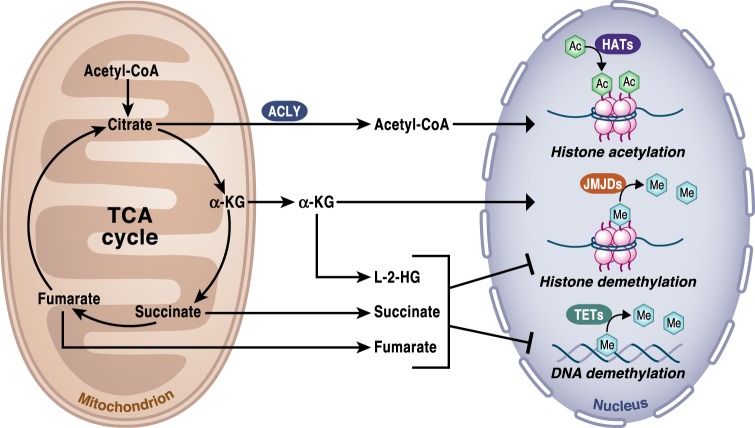
“For example, histone demethylases function as either flavin adenine dinucleotide (FAD)-dependent amine oxidases or α-ketoglutarate (α-KG)-dependent hydroxylases 5 . βOHB regulates HDAC function 5,133–135 , and NAD + is required for sirtuin deacetylase activity 5,136 .”
BackgroundMitochondrial function in immune cells in health and disease
Faas, M. M., & de Vos, P. (2020) · Biochimica et Biophysica Acta (BBA) - Molecular Basis of Disease · doi:10.1016/j.bbadis.2020.165845 · Cited by 246
Tricarboxylic Acid (TCA) Cycle Intermediates: Regulators of Immune Responses
Choi, I., Son, H., & Baek, J.-H. (2021) · Life · doi:10.3390/life11010069 · Cited by 241
“Additionally, acetyl-CoA is a precursor for fatty acids, steroids, and certain amino acids, such as glutamate, proline, and arginine [16].”
BackgroundMetabolic networks in mutant KRAS-driven tumours: tissue specificities and the microenvironment
Kerk, S. A., Papagiannakopoulos, T., Shah, Y. M., & Lyssiotis, C. A. (2021) · Nature Reviews Cancer · doi:10.1038/s41568-021-00375-9 · Cited by 237
Pleiotropic effects of mitochondria in aging
Lima, T., Li, T. Y., Mottis, A., & Auwerx, J. (2022) · Nature Aging · doi:10.1038/s43587-022-00191-2 · Cited by 236
PERK is a critical metabolic hub for immunosuppressive function in macrophages
Raines, L. N., Zhao, H., Wang, Y., Chen, H.-Y., Gallart-Ayala, H., Hsueh, P.-C., Cao, W., Koh, Y., Alamonte-Loya, A., Liu, P.-S., et al. (2022) · Nature Immunology · doi:10.1038/s41590-022-01145-x · Cited by 235
VDAC1 at the Intersection of Cell Metabolism, Apoptosis, and Diseases
Shoshan-Barmatz, V., Shteinfer-Kuzmine, A., & Verma, A. (2020) · Biomolecules · doi:10.3390/biom10111485 · Cited by 228
“Therefore, by supplying these metabolites, mitochondria can regulate the expression of also involved in controlling chromatin modifications, DNA methylation, hypoxic response, immunity, and post-translational modifications of proteins, and can thereby influence the function [191].”
BackgroundDoblado, L., Lueck, C., Rey, C., Samhan-Arias, A. K., Prieto, I., Stacchiotti, A., & Monsalve, M. (2021) · International Journal of Molecular Sciences · doi:10.3390/ijms22083903 · Cited by 228
“The capacity of the eukaryotic cell to regulate mitochondrial function provides the organisms with key metabolic plasticity, essential for a wide variety of cell functions [1,2].”
BackgroundClemente-Suárez, V., Redondo-Flórez, L., Beltrán-Velasco, A., Ramos-Campo, D., Belinchón-deMiguel, P., Martinez-Guardado, I., Dalamitros, A., Yáñez-Sepúlveda, R., Martín-Rodríguez, A., & Tornero-Aguilera, J. (2023) · Biomedicines · doi:10.3390/biomedicines11092488 · Cited by 219
“The oxaloacetate is now free to rejoin the cycle, while NADH and FADH2 transport the liberated energy to the mitochondrial electron transport chain [14].”
BackgroundEpigenetic inheritance of diet-induced and sperm-borne mitochondrial RNAs
Tomar, A., Gomez-Velazquez, M., Gerlini, R., Comas-Armangué, G., Makharadze, L., Kolbe, T., Boersma, A., Dahlhoff, M., Burgstaller, J. P., Lassi, M., et al. (2024) · Nature · doi:10.1038/s41586-024-07472-3 · Cited by 216
“Oxidative phosphorylation is essential to cellular and organismal physiology 49 .”
Nrf2 as a regulator of mitochondrial function: Energy metabolism and beyond
Esteras, N., & Abramov, A. Y. (2022) · Free Radical Biology and Medicine · doi:10.1016/j.freeradbiomed.2022.07.013 · Cited by 211
“…leading to the generation of different intermediate metabolites that are transported to the cytosol for biosynthetic and signalling purposes [15], and the provision of the reduced equivalents NADH and FADH 2 , that will later serve as substrates for the mitochondrial ETC eventually leading…”
Wu, X., Hou, H., Liu, Y., Yin, S., Bian, S., Liang, S., Wan, C., Yuan, S., Xiao, K., Liu, B., et al. (2022) · Journal of Hazardous Materials · doi:10.1016/j.jhazmat.2021.126834 · Cited by 210
Mitochondrial dysfunction in the regulation of aging and aging-related diseases
Zhang, X., Gao, Y., Zhang, S., Wang, Y., Pei, X., Chen, Y., Zhang, J., Zhang, Y., Du, Y., Hao, S., et al. (2025) · Cell Communication and Signaling · doi:10.1186/s12964-025-02308-7 · Cited by 215
“During aging, the abundance and subcellular distribution of acetyl-CoA are dynamically altered in response to mitochondrial perturbations or pathological conditions [133].”
Iron and copper: critical executioners of ferroptosis, cuproptosis and other forms of cell death
Li, Y., Du, Y., Zhou, Y., Chen, Q., Luo, Z., Ren, Y., Chen, X., & Chen, G. (2023) · Cell Communication and Signaling · doi:10.1186/s12964-023-01267-1 · Cited by 208
Mitochondrial dysfunction in microglia: a novel perspective for pathogenesis of Alzheimer’s disease
Li, Y., Xia, X., Wang, Y., & Zheng, J. C. (2022) · Journal of Neuroinflammation · doi:10.1186/s12974-022-02613-9 · Cited by 207
“The TCA cycle, performed within the matrix of the mitochondrion, consists of eight enzymatic steps that consume and regenerate citrate [52].”
BackgroundTrained immunity: adaptation within innate immune mechanisms
Domínguez-Andrés, J., dos Santos, J. C., Bekkering, S., Mulder, W. J. M., van der Meer, J. W. M., Riksen, N. P., Joosten, L. A. B., & Netea, M. G. (2023) · Physiological Reviews · doi:10.1152/physrev.00031.2021 · Cited by 205
Histone lactylation: from tumor lactate metabolism to epigenetic regulation
Yu, X., Yang, J., Xu, J., Pan, H., Wang, W. J., Yu, X., & Shi, S. (2024) · International Journal of Biological Sciences · doi:10.7150/ijbs.91492 · Cited by 207
“Oxidation of one glucose molecule can produce more than 36 molecules of ATP (depending on the metabolic pathway) [17].”
BackgroundHuang, H., Li, G., He, Y., Chen, J., Yan, J., Zhang, Q., Li, L., & Cai, X. (2024) · Frontiers in Immunology · doi:10.3389/fimmu.2024.1404441 · Cited by 206
“It serves both as a substrate for succinate dehydrogenase (SDH) and as an electron donor in the electron transport chain (ETC) (3).”
BackgroundInfluentialMitochondria as Cellular and Organismal Signaling Hubs
Shen, K., Pender, C. L., Bar-Ziv, R., Zhang, H., Wickham, K., Willey, E., Durieux, J., Ahmad, Q., & Dillin, A. (2022) · Annual Review of Cell and Developmental Biology · doi:10.1146/annurev-cellbio-120420-015303 · Cited by 194
Lactate limits CNS autoimmunity by stabilizing HIF-1α in dendritic cells
Sanmarco, L. M., Rone, J. M., Polonio, C. M., Fernandez Lahore, G., Giovannoni, F., Ferrara, K., Gutierrez-Vazquez, C., Li, N., Sokolovska, A., Plasencia, A., et al. (2023) · Nature · doi:10.1038/s41586-023-06409-6 · Cited by 193
Review of Eukaryote Cellular Membrane Lipid Composition, with Special Attention to the Fatty Acids
Ali, O., & Szabó, A. (2023) · International Journal of Molecular Sciences · doi:10.3390/ijms242115693 · Cited by 191
Mitochondrial OXPHOS Biogenesis: Co-Regulation of Protein Synthesis, Import, and Assembly Pathways
Tang, J. X., Thompson, K., Taylor, R. W., & Oláhová, M. (2020) · International Journal of Molecular Sciences · doi:10.3390/ijms21113820 · Cited by 191
“Acetyl-CoA enters a series of enzyme-catalyzed reactions in the tricarboxylic acid (TCA) cycle producing NADH and FADH2 reducing equivalents (Figure 1) [5,6].”
BackgroundMitochondria reactive oxygen species signaling in immune responses
Weinberg, S. E., & Chandel, N. S. (2025) · Immunity · doi:10.1016/j.immuni.2025.07.012 · Cited by 192
Self-citationIns and outs of the TCA cycle: the central role of anaplerosis
Inigo, M., Deja, S., & Burgess, S. C. (2021) · Annual Review of Nutrition · doi:10.1146/annurev-nutr-120420-025558 · Cited by 189
Mitochondrial function in development and disease
Rossmann, M. P., Dubois, S. M., Agarwal, S., & Zon, L. I. (2021) · Disease Models & Mechanisms · doi:10.1242/dmm.048912 · Cited by 184
“Excellent recent reviews have extensively summarized mitochondrial metabolism (Lee et al., 2020b; Martinez-Reyes and Chandel, 2020; Spinelli and Haigis, 2018).”
BackgroundAnalyzing cell-type-specific dynamics of metabolism in kidney repair
Wang, G., Heijs, B., Kostidis, S., Mahfouz, A., Rietjens, R. G. J., Bijkerk, R., Koudijs, A., van der Pluijm, L. A. K., van den Berg, C. W., Dumas, S. J., et al. (2022) · Nature Metabolism · doi:10.1038/s42255-022-00615-8 · Cited by 182
Mitochondrial metabolic reprogramming in diabetic kidney disease
Fan, X., Yang, M., Lang, Y., Lu, S., Kong, Z., Gao, Y., Shen, N., Zhang, D., & Lv, Z. (2024) · Cell Death and Disease · doi:10.1038/s41419-024-06833-0 · Cited by 184
“The regulatory enzymes of the TCA cycle are activated under conditions of high ATP demand; conversely, in cases of impaired mitochondrial respiration, the accumulation of large amounts of NADH slows down the cycle [12].”
BackgroundA review of cytokine-based pathophysiology of Long COVID symptoms
Low, R. N., Low, R. J., & Akrami, A. (2023) · Frontiers in Medicine · doi:10.3389/fmed.2023.1011936 · Cited by 178
“Mitochondria provide the metabolites essential for chromatin remodeling and DNA methylation in epigenetic DNA modifications (251).”
BackgroundShi, X., Zhou, H., Wei, J., Mo, W., Li, Q., & Lv, X. (2022) · Redox Biology · doi:10.1016/j.redox.2022.102553 · Cited by 180
“The TCA cycle converts acetyl- CoA to CO2 and harvests electrons for the electronic transport chain, which involves a series of enzyme-catalyzed reactions to produce ATP in the mitochondrial matrix [2].”
BackgroundInfluentialThe tricarboxylic acid (TCA) cycle: a malleable metabolic network to counter cellular stress
MacLean, A., Legendre, F., & Appanna, V. D. (2023) · Critical Reviews in Biochemistry and Molecular Biology · doi:10.1080/10409238.2023.2201945 · Cited by 175
“This electron movement generates a proton motive force and a membrane potential that drive the phosphorylation of ADP to the universal chemical energy, ATP with the aid of Complex V (ATP synthase) (Martínez-Reyes and Chandel 2020; Nolfi-Donegan et al.”
MethodMitochondrial Metabolism Regulation of T Cell–Mediated Immunity
Steinert, E. M., Vasan, K., & Chandel, N. S. (2021) · Annual Review of Immunology · doi:10.1146/annurev-immunol-101819-082015 · Cited by 173
Self-citationChen, L., Qin, Y., Liu, B., Gao, M., Li, A., Li, X., & Gong, G. (2022) · Frontiers in Cell and Developmental Biology · doi:10.3389/fcell.2022.871357 · Cited by 171
“Acetyl-coenzyme A (CoA), produced from fatty acids, amino acids or pyruvate oxidation, triggered the initiation of tricarboxylic acid cycle (TCA) cycle, during which NAD and FAD are convert to NADH and FAD (Martinez-Reyes and Chandel, 2020).”
BackgroundInfluentialAcetyl-CoA regulates lipid metabolism and histone acetylation modification in cancer
He, W., Li, Q., & Li, X. (2023) · Biochimica et Biophysica Acta (BBA) - Reviews on Cancer · doi:10.1016/j.bbcan.2022.188837 · Cited by 169
Polyol pathway and redox balance in diabetes
Garg, S. S., & Gupta, J. (2022) · Pharmacological Research · doi:10.1016/j.phrs.2022.106326 · Cited by 171
Pancreatic Beta-cell Dysfunction in Type 2 Diabetes
Khin, P. P., Lee, J. H., & Jun, H. (2023) · European Journal of Inflammation · doi:10.1177/1721727x231154152 · Cited by 167
Mitochondrial-to-nuclear communication in aging: an epigenetic perspective
Zhu, D., Li, X., & Tian, Y. (2022) · Trends in Biochemical Sciences · doi:10.1016/j.tibs.2022.03.008 · Cited by 165
Mullen, P. J., Garcia, G., Purkayastha, A., Matulionis, N., Schmid, E. W., Momcilovic, M., Sen, C., Langerman, J., Ramaiah, A., Shackelford, D. B., et al. (2021) · Nature Communications · doi:10.1038/s41467-021-22166-4 · Cited by 165
Copper homeostasis and cuproptosis in mitochondria
Tian, Z., Jiang, S., Zhou, J., & Zhang, W. (2023) · Life Sciences · doi:10.1016/j.lfs.2023.122223 · Cited by 166
Roles of reactive oxygen species in inflammation and cancer
Yu, Y., Liu, S., Yang, L., Song, P., Liu, Z., Liu, X., Yan, X., & Dong, Q. (2024) · MedComm · doi:10.1002/mco2.519 · Cited by 164
“46 ROS can also influence energy metabolism in cells.”
BackgroundDeregulated mitochondrial microRNAs in Alzheimer's disease: Focus on synapse and mitochondria
Gowda, P., Reddy, P. H., & Kumar, S. (2022) · Ageing Research Reviews · doi:10.1016/j.arr.2021.101529 · Cited by 163
Metabolic reprogramming, oxidative stress, and pulmonary hypertension
Pokharel, M. D., Marciano, D. P., Fu, P., Franco, M. C., Unwalla, H. J., Tieu, K., Fineman, J. R., Wang, T., & Black, S. M. (2023) · Redox Biology · doi:10.1016/j.redox.2023.102797 · Cited by 163
“NADH and FADH2 can enter the ETC to participate in oxidative phosphorylation [32].”
BackgroundSimilarities and interplay between senescent cells and macrophages
Behmoaras, J., & Gil, J. (2021) · Journal of Cell Biology · doi:10.1083/jcb.202010162 · Cited by 158
“Indeed, mitochondrial function and metabolites are the focus of increasing reports studying the immune and metabolic interplay in macrophage effector functions (Mart́ınez-Reyes and Chandel, 2020) and during senescence (Kaplon et al., 2013; LópezOt́ın et al., 2013; Moiseeva et al., 2009).”
BackgroundThe protective role of exercise against age-related neurodegeneration
Sujkowski, A., Hong, L., Wessells, R. J., & Todi, S. V. (2022) · Ageing Research Reviews · doi:10.1016/j.arr.2021.101543 · Cited by 134
Role of amino acid metabolism in mitochondrial homeostasis
Li, Q., & Hoppe, T. (2023) · Frontiers in Cell and Developmental Biology · doi:10.3389/fcell.2023.1127618 · Cited by 159
“A variety of metabolites from the TCA cycle are essential for cellular signaling and macromolecule synthesis (Martínez-Reyes and Chandel, 2020).”
BackgroundMetabolic Reprogramming and Reactive Oxygen Species in T Cell Immunity
Peng, H., Lucavs, J., Ballard, D. J., Das, J. K., Kumar, A., Wang, L., Ren, Y., Xiong, X., & Song, J. J. (2021) · Frontiers in Immunology · doi:10.3389/fimmu.2021.652687 · Cited by 157
From Data to Cure: A Comprehensive Exploration of Multi-omics Data Analysis for Targeted Therapies
Mukherjee, A., Abraham, S., Singh, A., Balaji, S., & Mukunthan, K. S. (2024) · Molecular Biotechnology · doi:10.1007/s12033-024-01133-6 · Cited by 156
“Additionally, metabolites such as succinate, fumarate, and α-KG, termed oncometabolites, accumulate in cancer cells due to mutations in fumarate hydratase and succinate dehydrogenase genes, further influencing epigenetic alterations [170, 172].”
The crosstalk between HIFs and mitochondrial dysfunctions in cancer development
Bao, X., Zhang, J., Huang, G., Yan, J., Xu, C., Dou, Z., Sun, C., & Zhang, H. (2021) · Cell Death & Disease · doi:10.1038/s41419-021-03505-1 · Cited by 152
Very long chain fatty acid metabolism is required in acute myeloid leukemia
Tcheng, M., Roma, A., Ahmed, N., Smith, R. W., Jayanth, P., Minden, M. D., Schimmer, A. D., Hess, D. A., Hope, K. J., Rea, K. A., et al. (2021) · Blood · doi:10.1182/blood.2020008551 · Cited by 150
Nuclear-Mitochondrial Interactions
Walker, B. R., & Moraes, C. T. (2022) · Biomolecules · doi:10.3390/biom12030427 · Cited by 150
“fumarate Oxidation of succinate HIF-1α Histone modifications [125,131]”
BackgroundInfluentialIn Response to Precision Medicine: Current Subcellular Targeting Strategies for Cancer Therapy
Li, Z., Zou, J., & Chen, X. S. (2023) · Advanced Materials · doi:10.1002/adma.202209529 · Cited by 149
Mitochondria‐targeted nanoparticles in treatment of neurodegenerative diseases
Zhang, Y., Yang, H. N., Wei, D., Zhang, X., Wang, J., Wu, X., & Chang, J. K. (2021) · Exploration · doi:10.1002/exp.20210115 · Cited by 148
Guo, P., Furnary, T., Vasiliou, V., Yan, Q., Nyhan, K., Jones, D. P., Johnson, C. H., & Liew, Z. (2022) · Environment International · doi:10.1016/j.envint.2022.107159 · Cited by 145
Metabolic regulation of skeletal cell fate and function in physiology and disease
van Gastel, N., & Carmeliet, G. (2021) · Nature Metabolism · doi:10.1038/s42255-020-00321-3 · Cited by 145
SARS-CoV-2 Mediated Endothelial Dysfunction: The Potential Role of Chronic Oxidative Stress
Chang, R. P., Mamun, A., Dominic, A., & Le, N. (2021) · Frontiers in Physiology · doi:10.3389/fphys.2020.605908 · Cited by 148
The serum metabolome of COVID-19 patients is distinctive and predictive
Shi, D., Ren, Y., Lv, L., Jiang, H., Lu, Y., Sheng, J., Xie, J., Wu, W., Xia, J., Xu, K., et al. (2021) · Metabolism · doi:10.1016/j.metabol.2021.154739 · Cited by 145
“TCA cycle metabolites play important roles in non-metabolic signaling regulation of innate and adaptive immunity, lipid and nucleotide synthesis and DNA methylation, which may contribute to SARS-CoV-2 pathogenesis [29].”
BackgroundGABA regulates IL-1β production in macrophages
Fu, J., Han, Z., Wu, Z., Xia, Y., Yang, G., Yin, Y., & Ren, W. (2022) · Cell Reports · doi:10.1016/j.celrep.2022.111770 · Cited by 146
Zhang, F., Lv, M., Wang, S., Li, M., Wang, Y., Hu, C., Hu, W., Wang, X., Wang, X., Liu, Z., et al. (2023) · Bioactive Materials · doi:10.1016/j.bioactmat.2023.08.008 · Cited by 146
Mitochondrial aspartate regulates TNF biogenesis and autoimmune tissue inflammation
Wu, B., Zhao, T. V., Jin, K., Hu, Z., Abdel, M. P., Warrington, K. J., Goronzy, J. J., & Weyand, C. M. (2021) · Nature Immunology · doi:10.1038/s41590-021-01065-2 · Cited by 141
Metadata
- Authors
- Martínez-Reyes, I., & Chandel, N. S.
- Affiliations
- Northwestern University (US)
- Corresponding author
- Chandel, Navdeep S.
- Venue
- Nature Communications
- Published
- 2020-01-03
- Volume
- 11
- Issue
- 1
- Pages
- 102-102
- ISSN
- 2041-1723 (ISSN-L)
- PMC
- PMC6941980
- OpenAlex
- W2997046468
- Semantic Scholar
- 8c3b7c2ed33880607083f58b0582ef7a49588008
- Cited by
- 2,813
- References
- 99
- Citations by year
- 2026: 510 · 2025: 594 · 2024: 522 · 2023: 425 · 2022: 407 · 2021: 259 · 2020: 96
- FWCI
- 28.43
- Type
- journal article
- Language
- en
- Open access
- gold
- doi.org
- Licence
- cc-by
- creativecommons.org/licenses/by/4.0 (tdm)
- creativecommons.org/licenses/by/4.0 (vor)
- Locations
- Nature Communications (publishedVersion, cc-by)
- Europe PMC (PubMed Central) (publishedVersion, cc-by)
- PubMed Central (publishedVersion, cc-by)
- PubMed (publishedVersion)
- RePEc: Research Papers in Economics (submittedVersion)
- DOAJ (DOAJ: Directory of Open Access Journals) (submittedVersion)
- DOAJ (DOAJ: Directory of Open Access Journals) (submittedVersion, cc-by-sa)
- Funders
- U.S. Department of Health & Human Services | National Institutes of Health (5P01AG049665-04, 5P01HL071643-14)
- Topics
- Life Sciences › Biochemistry, Genetics and Molecular Biology › Molecular Biology › Mitochondrial Function and Pathology
- Life Sciences › Biochemistry, Genetics and Molecular Biology › Cancer Research › Cancer, Hypoxia, and Metabolism
- Life Sciences › Biochemistry, Genetics and Molecular Biology › Molecular Biology › Metabolism, Diabetes, and Cancer
- Keywords
- mitochondrial TCA cycle, TCA cycle intermediates, chromatin modification, DNA methylation, hypoxia response, immunity, cell fate, mitochondrial fitness, disease
- MeSH terms
- Animals, Citric Acid Cycle, Humans, Mitochondria, Signal Transduction, DNA Methylation
About these checks
Registry, retraction, Cites and statistics results are computed, not judged, with one exception: a printed reference that no index lists is read once by a model before it counts as a citation error. Claims are extracted by a model and kept only when their quote appears verbatim in the text; each cited source is then checked, with a model’s help, for whether it says what the claim relies on. Those verdicts can be wrong — read the claim’s quote and the cited source before relying on one.
Statistics and arithmetic are recomputed, not judged.
Confidence bands are shown only for fields calibrated on our annotated test set. None is calibrated yet, so no band is shown.
What counts as a claim ›How we measure confidence ›How we check this ›
Are you an author, or do you see a problem with this page? Request a review
Data sources
Bibliographic data: Semantic Scholar, OpenAlex, Crossref.
Contains information from the Semantic Scholar Academic Graph Datasets, made available under the ODC Attribution License (ODC-BY 1.0).
Semantic Scholar’s data is described in: Kinney, R., et al. (2023). The Semantic Scholar Open Data Platform. arXiv:2301.10140.
