

Dissociable roles of prefrontal plasticity in decision-making strategy and execution of habitual behavior
Open accessThe DOI matches its Crossref record; 79 of the 79 references it cites were found in a registry or an index; 44 of the 54 sources its claims cite were checked for support.
Abstract
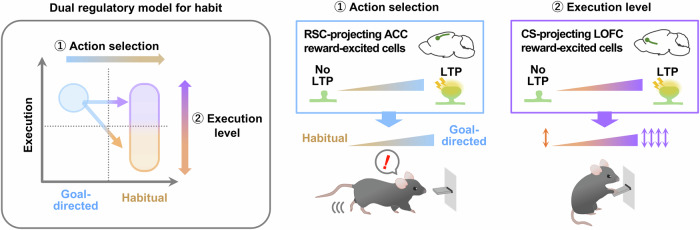
Habits are essential for sustaining adaptive behaviors but can also lead to maladaptive behaviors such as compulsive and addictive disorders. They emerge through a shift in decision-making from motivation-driven strategy to an automatic one. During this, the level of habit execution, such as frequency and duration, is superficially maintained despite a decline in motivational drive, raising the question of how the amount of execution is maintained even when decision-making strategies undergo substantial changes. By developing a unique paradigm capable of inducing habit formation within a defined time window in male mice, we found that shift in decision-making and amount of habit execution are controlled by plasticity in distinct cortical pathways. Erasure of each plasticity selectively altered the decision-making strategy or the execution level without affecting the other. These findings reveal a dual regulatory model for habit, providing insights into the neurocircuit mechanisms underlying both adaptive and maladaptive habits. Neural mechanisms underlying habits are not fully understood. By identifying specific synaptic adaptations, the authors demonstrate that distinct prefrontal cortical neurons differentially govern decision-making strategies and habit execution.
Overview
CoChat Summary
TL;DR
This mouse study argues that habitual behavior has two dissociable components: the decision-making strategy that becomes habitual, and the execution level of the behavior. Using a sequential VR→VI operant paradigm, the authors link goal-directed strategy to plasticity in RSC-projecting ACC neurons and execution level to plasticity in CS-projecting LOFC neurons.
Key findings
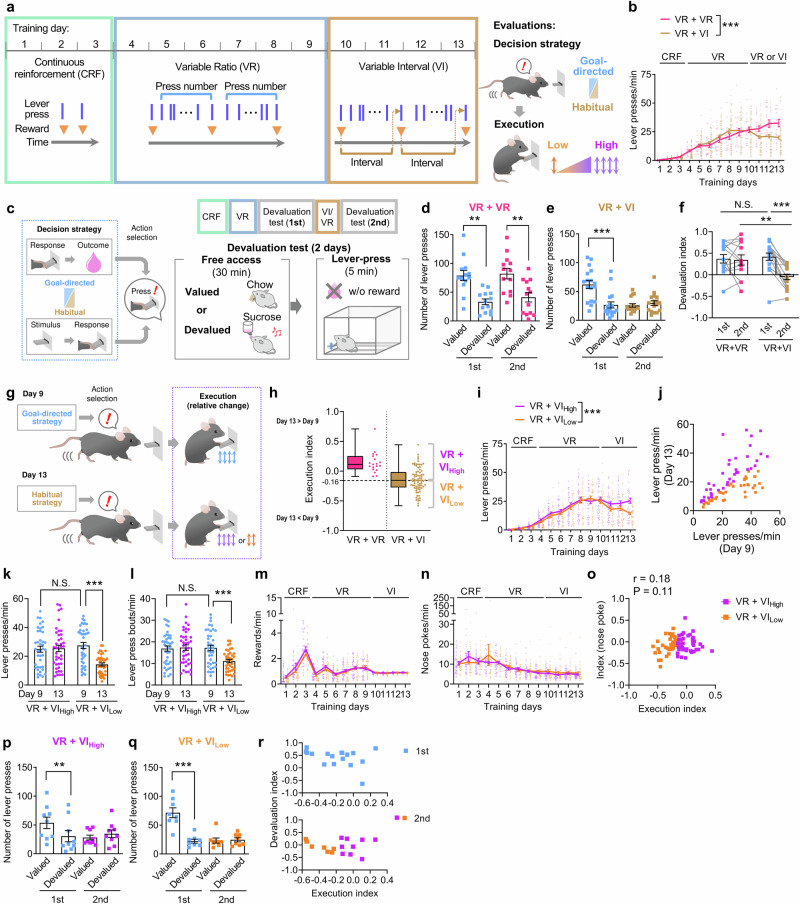
- In the sequential VR→VI task, mice shifted from goal-directed to habitual behavior: after VR training, devaluation reduced lever pressing, but after 4 days of VI training, devaluation indices were close to zero; in contrast, 13 days of VR training (VR+VR) still showed goal-directed responding.
- The execution index varied across mice in the VR+VI group, with a median of −0.16 (max 0.44, min −0.58, SD 0.21), whereas the VR+VR group had a median of 0.11 (max 0.71, min −0.09, SD 0.18), indicating that execution level changed independently of strategy.
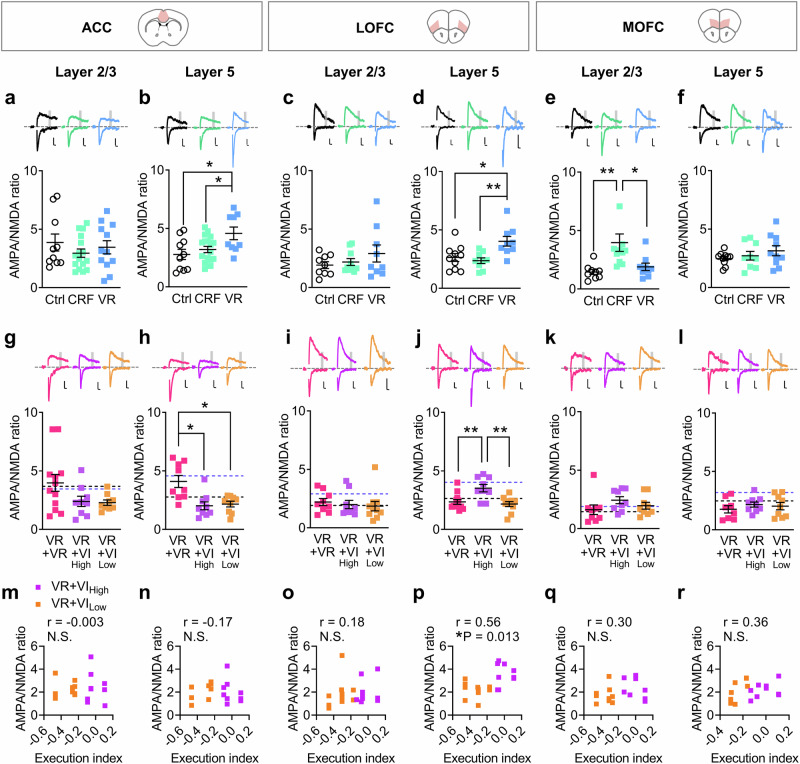
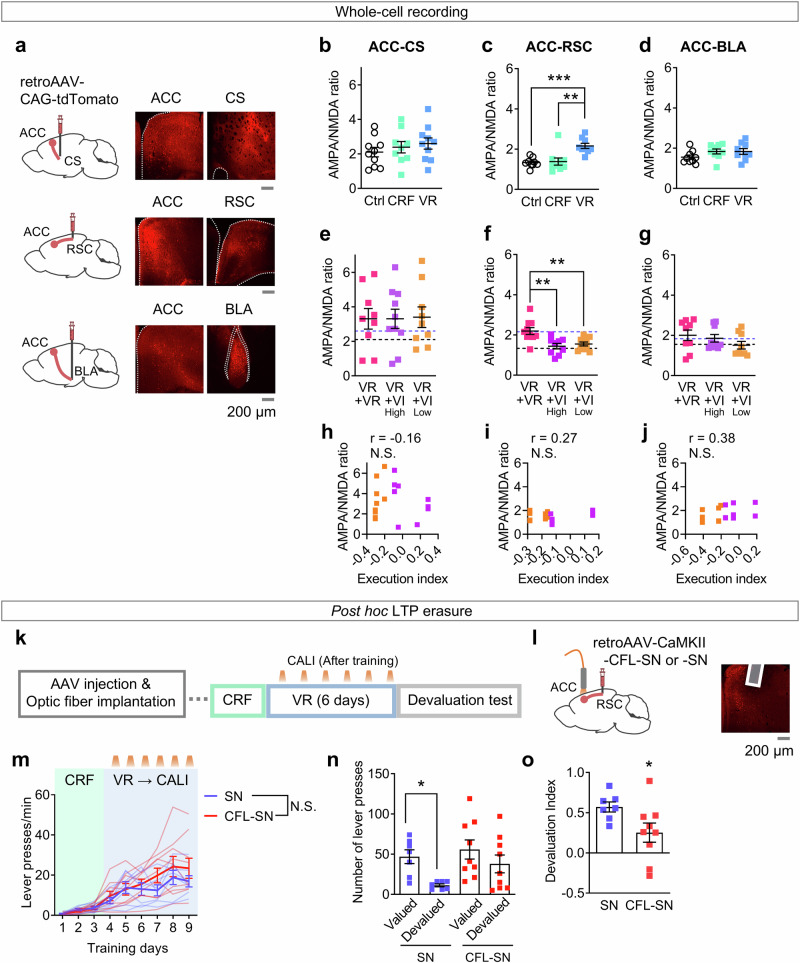
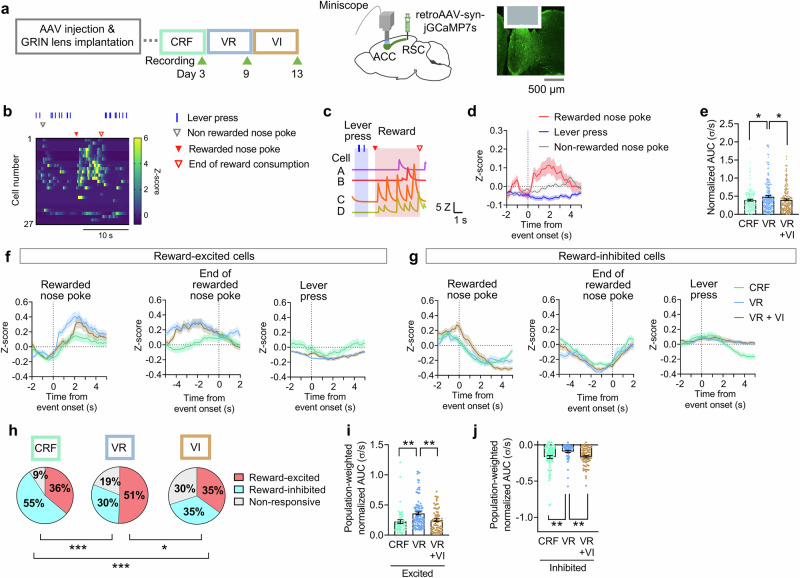
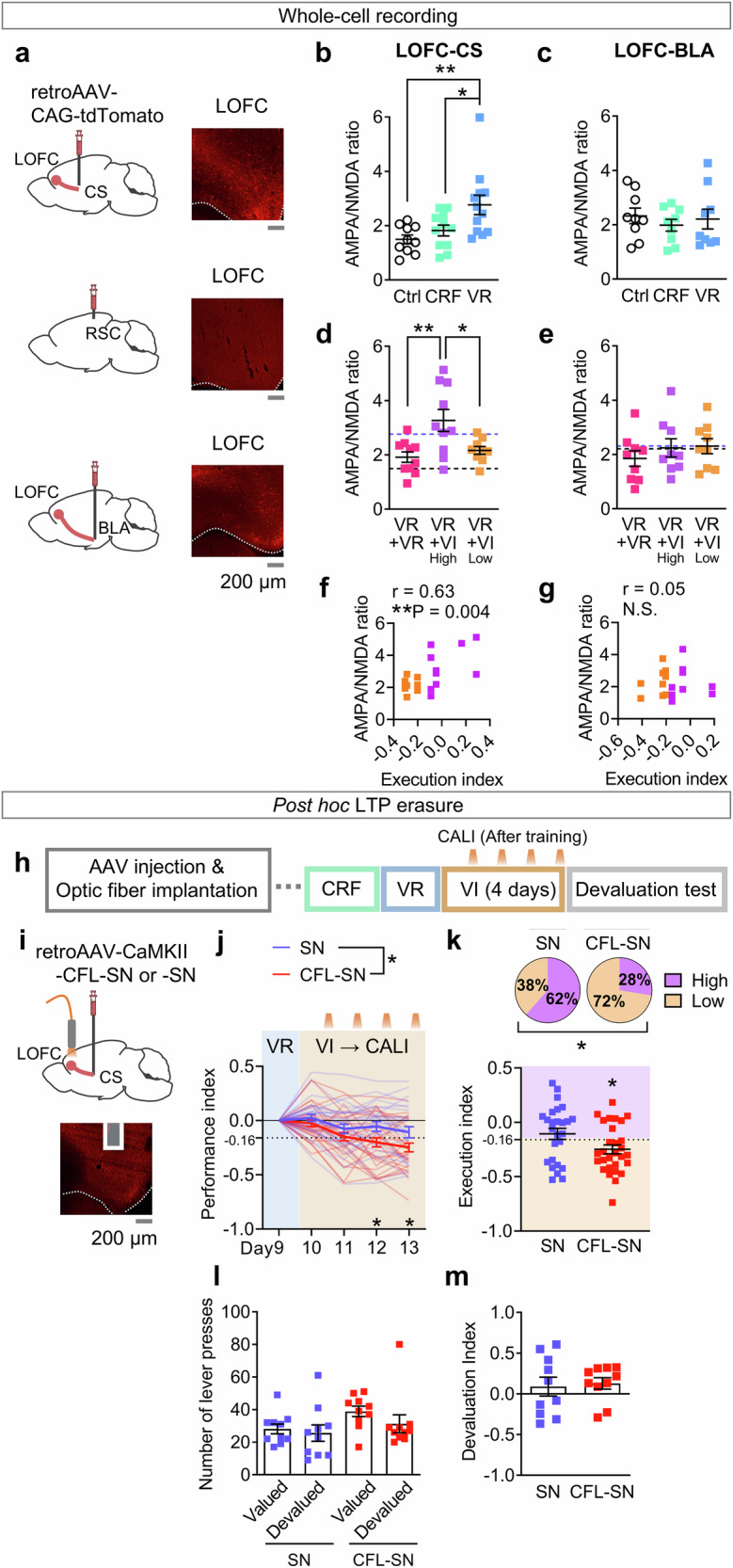
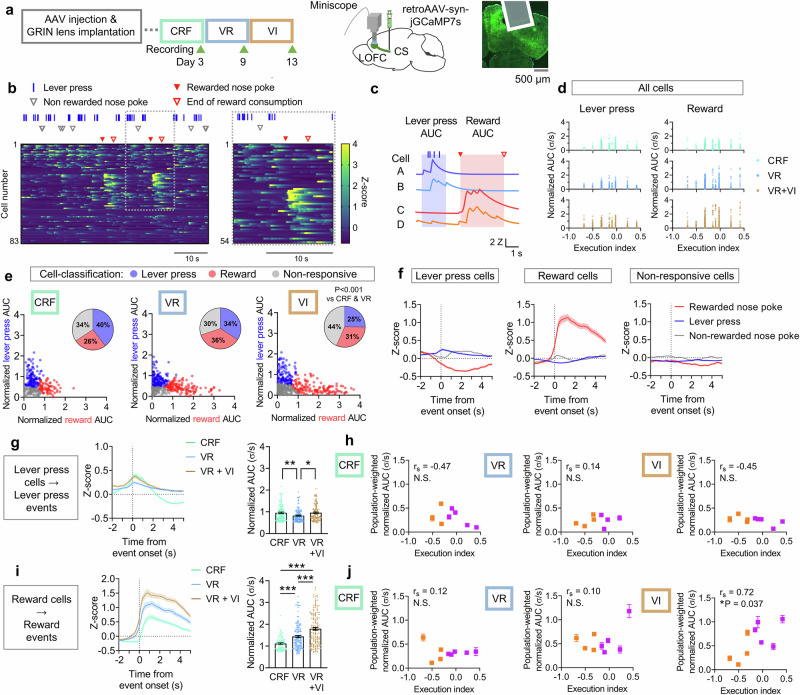
- Synaptic potentiation shifted across prefrontal regions: after CRF, AMPA/NMDA increased in MOFC L2/3; after VR training, increases were seen in ACC L5 and LOFC L5; after VR→VI switching, ACC L5 potentiation returned to control, while LOFC L5 potentiation remained elevated in the high-execution group and correlated with execution index.
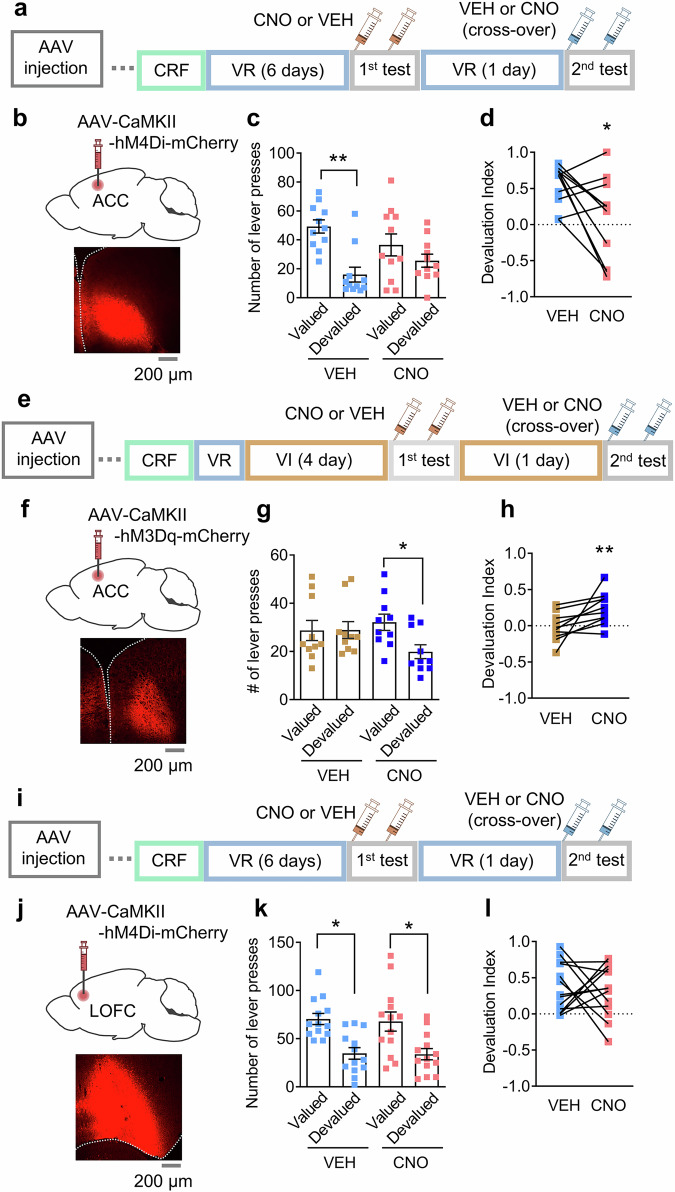
- Manipulating these circuits changed different aspects of habit: erasing LTP in RSC-projecting ACC neurons made behavior habitual (smaller devaluation index), while erasing LTP in CS-projecting LOFC neurons lowered execution index and reduced the proportion of VR+VIHigh mice; activating ACC could revert habitual behavior back to goal-directed behavior.
Methods
- Male C57BL/6J mice were trained in a two-step operant paradigm: 3 CRF sessions, then 6 VR sessions (VR10 then VR20), followed by 4 VI60 sessions; the key comparison was the last VR vs the last VI session, and execution index was defined from the change in lever-press rate.
- Behavioral readouts included devaluation tests, omission tests, plus additional T-maze spatial discrimination/reversal and marble burying assays; neural approaches included ex vivo electrophysiology, DREADD manipulations, optogenetic CALI/LTP erasure, and in vivo Ca2+ imaging.
- Main analyses used AMPA/NMDA ratios, Ca2+ event classification, and linear mixed effects models with mouse ID as a random intercept; p-values were adjusted by Benjamini–Hochberg FDR.
Limitations
- The paper states that in vivo Ca2+ imaging could not longitudinally track the same neurons across training days because of image-alignment and mechanical displacement issues.
- The authors note potential off-target effects of CNO via conversion to clozapine, though they argue this is mitigated by consistency with CALI results.
- It is evident from the text that the study used only male mice, which limits generalization to females; this is stated as a design choice to reduce estrous-cycle variability.
Model-written summary. Check it against the paper before relying on it.
Integrity signals
Registry
Cites
Statistics
Figures
Verification
Claims the paper makes
21 Valid · 0 Not valid · 1 Not checked · 91 Own results and interpretations
The cited sources support only part of this claim — read each source’s verdict below.
In the paper
“The ACC is required for monitoring and prediction of an action-outcome relationship30,31, by representing various reward-related information, such as reward value and cost of action32–34.”
§ Dissociable roles of prefrontal plasticity in decision-making strategy and execution of habitual behavior > Discussion
What the sources say
- Not checked — no full text of the sourcecites [30] Yuan, Z. et al. A corticoamygdalar pathway controls reward devaluation and depression using dynamic inhibition code. Neuron 111, 3837–3853.e5 (2023). 37734380 source
- Not checked — no full text of the sourcecites [31] Kennerley, S. W., Walton, M. E., Behrens, T. E., Buckley, M. J. & Rushworth, M. F. Optimal decision making and the anterior cingulate cortex. Nat. Neurosci. 9, 940–947 (2006). 16783368 source
- Supportedcites [32] Akam, T. et al. The anterior cingulate cortex predicts future states to mediate model-based action selection. Neuron 109, 149–163.e7 (2021). 33152266 PMC7837117 source
The Introduction associates ACC with monitoring action outcomes, and the Results report that ACC represents predicted states given chosen actions. The Discussion reports that inhibiting ACC reduced the use of action–state transitions to guide later choices. The sentence cites this source for monitoring and prediction; its separate claims about reward value and action cost carry different citations. (LLM, conf=0.89)
- Not checked — no full text of the sourcecites [33] Rudebeck, P. H., Walton, M. E., Smyth, A. N., Bannerman, D. M. & Rushworth, M. F. Separate neural pathways process different decision costs. Nat. Neurosci. 9, 1161–1168 (2006). 16921368 source
- Partly supportedcites [34] Monosov, I. E. Anterior cingulate is a source of valence-specific information about value and uncertainty. Nat. Commun. 8, 134 (2017). 28747623 PMC5529456 sourceExperimental — accuracy not yet measured
The Results section ('Many ACC cells signal value of either reward or punishment'; page not specified) reports ACC neurons encoding predicted reward value and signaling reward deliveries and omissions. The cited paper does not establish that the ACC is required for action–outcome monitoring, and the passages examined do not show that its neurons represent the cost of an action. (LLM, conf=0.85)
plainstates a cause- Asserted: passes — The authors put it forward as true.
- Checkable: passes — It can be checked against evidence.
- Load-bearing: passes — The paper’s conclusions depend on it.
- Based: passes — The paper gives a reason why it holds.
A result the paper reports from its own data — it cites no other source for it, so there is none to check. The quote shows it is in the paper.
In the paper
“As for other behavioral metrics, there was no significant difference in the frequencies of rewards acquisitions nor nose pokes between the VR+VIHigh and VR+VILow groups (Fig. 1m, n).”
§ Dissociable roles of prefrontal plasticity in decision-making strategy and execution of habitual behavior > Results > Dissociable control of decision-making strategy and execution level of habitual behavior
plain- Asserted: passes — The authors put it forward as true.
- Checkable: passes — It can be checked against evidence.
- Load-bearing: passes — The paper’s conclusions depend on it.
- Based: passes — The paper gives a reason why it holds.
A result the paper reports from its own data — it cites no other source for it, so there is none to check. The quote shows it is in the paper.
In the paper
“Although there were slight decreases in nose poke frequencies over the course of the training period, the index of nose poke frequency calculated using the same method as the execution index showed no significant correlation with the execution index (Fig. 1o).”
§ Dissociable roles of prefrontal plasticity in decision-making strategy and execution of habitual behavior > Results > Dissociable control of decision-making strategy and execution level of habitual behavior
plain- Asserted: passes — The authors put it forward as true.
- Checkable: passes — It can be checked against evidence.
- Load-bearing: passes — The paper’s conclusions depend on it.
- Based: passes — The paper gives a reason why it holds.
A result the paper reports from its own data — it cites no other source for it, so there is none to check. The quote shows it is in the paper.
In the paper
“The execution index varied among mice trained in the VR + VI task from positive to negative with a median value of −0.16 (max: 0.44, min: −0.58, standard deviation (SD): 0.21).”
§ Dissociable roles of prefrontal plasticity in decision-making strategy and execution of habitual behavior > Results > Dissociable control of decision-making strategy and execution level of habitual behavior
plain- Asserted: passes — The authors put it forward as true.
- Checkable: passes — It can be checked against evidence.
- Load-bearing: passes — The paper’s conclusions depend on it.
- Based: passes — The paper gives a reason why it holds.
A result the paper reports from its own data — it cites no other source for it, so there is none to check. The quote shows it is in the paper.
In the paper
“This was not simply the result of prolonged training, because mice that underwent 13 days of VR training (VR + VR) continued to exhibit a reduction in the number of lever presses in the devalued condition (2nd test; Fig. 1d, f).”
§ Dissociable roles of prefrontal plasticity in decision-making strategy and execution of habitual behavior > Results > Experimental induction of a transition between goal-directed and habitual behaviors
plain- Asserted: passes — The authors put it forward as true.
- Checkable: passes — It can be checked against evidence.
- Load-bearing: passes — The paper’s conclusions depend on it.
- Based: passes — The paper gives a reason why it holds.
52 more claims
Create a free account to see all 113 claims and every source verdict.
- It may state two separate claims as one. 40
- Probably not a substantial claim. 22
- The quote only partly states this claim. 1
Citations
Cites
A framework for studying the neurobiology of value-based decision making
Rangel, A., Camerer, C., & Montague, P. R. (2008) · Nature Reviews Neuroscience · doi:10.1038/nrn2357 · Cited by 2,184
Balleine, B. W., & O'Doherty, J. P. (2010) · Neuropsychopharmacology · doi:10.1038/npp.2009.131 · Cited by 1,775 · cited 3×
“While decision-making and execution levelsingoal-directed behavior are regulated by evaluations of cost and bene fi t 9,10 , habitual actions, at least at the level of decision-making, proceed automatically without such value-based evaluations.”
Wood, W., & Rünger, D. (2016) · Annual Review of Psychology · doi:10.1146/annurev-psych-122414-033417 · Cited by 1,445 · cited 1×
“Habit formation has been conceptualized as a shift in decision-making — from a fl exible, motivation-dependent goal-directed strategy to a more rigid, automatic one 2,5,7 .”
Actions and habits: The development of behavioural autonomy
Dickinson, A. (1985) · Philosophical Transactions of the Royal Society of London. B, Biological Sciences · doi:10.1098/rstb.1985.0010 · Cited by 1,217 · cited 4×
“Previous studies have demonstrated that training with ratio-based and interval-based operant conditioning tasks have contrasting outcomes on animal behaviors 3,5,11 .”
InfluentialGläscher, J., Daw, N., Dayan, P., & O'Doherty, J. P. (2010) · Neuron · doi:10.1016/j.neuron.2010.04.016 · Cited by 1,166 · cited 2×
“As conceptualized by computational studies 2,41,46 , rewarded experience updates the model for stimulus-response-outcome associations when using a model-based learning strategy.”
A taxonomy of transcriptomic cell types across the isocortex and hippocampal formation
Yao, Z., van Velthoven, C. T. J., Nguyen, T. N., Goldy, J., Sedeno-Cortes, A. E., Baftizadeh, F., Bertagnolli, D., Casper, T., Chiang, M., Crichton, K., et al. (2021) · Cell · doi:10.1016/j.cell.2021.04.021 · Cited by 1,065 · cited 1×
“ACC neurons are a heterogenous population in terms of both gene expression and projection patterns 22,23 .”
Gardner, B. (2015) · Health Psychology Review · doi:10.1080/17437199.2013.876238 · Cited by 1,016
Dolan, R. J., & Dayan, P. (2013) · Neuron · doi:10.1016/j.neuron.2013.09.007 · Cited by 977 · cited 3×
“Habit formation has been conceptualized as a shift in decision-making — from a fl exible, motivation-dependent goal-directed strategy to a more rigid, automatic one 2,5,7 .”
A shared neural ensemble links distinct contextual memories encoded close in time
Cai, D. J., Aharoni, D., Shuman, T., Shobe, J., Biane, J., Song, W., Wei, B., Veshkini, M., La-Vu, M., Lou, J., et al. (2016) · Nature · doi:10.1038/nature17955 · Cited by 968 · cited 2×
“On the 3rd CRF, 6th VR, and 4th VI sessions (the last session of each training schedule), calcium transients during the session were recorded at 30 Hz using the UCLA Miniscope DAQ software (version 1.10).”
InfluentialOptimal decision making and the anterior cingulate cortex
Kennerley, S. W., Walton, M. E., Behrens, T. E. J., Buckley, M. J., & Rushworth, M. F. S. (2006) · Nature Neuroscience · doi:10.1038/nn1724 · Cited by 948 · cited 1×
“The ACC is required for monitoring and prediction of an action-outcome relationship 30,31 , by representing various reward-related information, such as reward value and cost of action 32 – 34 .”
Orbitofrontal Cortex as a Cognitive Map of Task Space
Wilson, R. C., Takahashi, Y. K., Schoenbaum, G., & Niv, Y. (2014) · Neuron · doi:10.1016/j.neuron.2013.11.005 · Cited by 885
Choice, uncertainty and value in prefrontal and cingulate cortex
Rushworth, M. F. S., & Behrens, T. E. J. (2008) · Nature Neuroscience · doi:10.1038/nn2066 · Cited by 866 · cited 1×
“We focused on anterior cingulate, lateral and medial orbitofrontal cortices (ACC, LOFC and MOFC), as they have been implicated in reinforcement learning and decision-making 10,19 .”
Structural and Molecular Remodeling of Dendritic Spine Substructures during Long-Term Potentiation
Bosch, M., Castro, J., Saneyoshi, T., Matsuno, H., Sur, M., & Hayashi, Y. (2014) · Neuron · doi:10.1016/j.neuron.2014.03.021 · Cited by 637 · cited 17×
“Further investigation is required to elucidate the mechanisms underlying this transient LTP in the MOFC and its speci fi c contribution to the initial acquisition of action-outcome contingencies.”
InfluentialSelf-citationGremel, C. M., & Costa, R. M. (2013) · Nature Communications · doi:10.1038/ncomms3264 · Cited by 618 · cited 10×
“Previous studies have demonstrated that training with ratio-based and interval-based operant conditioning tasks have contrasting outcomes on animal behaviors 3,5,11 .”
InfluentialCharacterizing a psychiatric symptom dimension related to deficits in goal-directed control
Gillan, C. M., Kosinski, M., Whelan, R., Phelps, E. A., & Daw, N. D. (2016) · eLife · doi:10.7554/elife.11305 · Cited by 586 · cited 1×
“Abnormally strong habit is considered as a possible cause of excessively repeated execution of certain behavior(s) shown in patients with compulsivity 67,68 .”
Separate neural pathways process different decision costs
Rudebeck, P. H., Walton, M. E., Smyth, A. N., Bannerman, D. M., & Rushworth, M. F. S. (2006) · Nature Neuroscience · doi:10.1038/nn1756 · Cited by 580
A comprehensive excitatory input map of the striatum reveals novel functional organization
Hunnicutt, B. J., Jongbloets, B. C., Birdsong, W. T., Gertz, K. J., Zhong, H., & Mao, T. (2016) · eLife · doi:10.7554/elife.19103 · Cited by 536 · cited 3×
“According to previous studies 58 – 60 , the location of CS is de fi ned as the intermediate zone between the dorsomedial striatum and the dorso-lateral striatum on the mediolateral axis, and between the dorsal striatum and the ventral striatum on the dorsoventral axis.”
YIN, H., KNOWLTON, B., & BALLEINE, B. (2006) · Behavioural Brain Research · doi:10.1016/j.bbr.2005.07.012 · Cited by 532
Obsessive-compulsive disorder: Puzzles and prospects
Robbins, T. W., Vaghi, M. M., & Banca, P. (2019) · Neuron · doi:10.1016/j.neuron.2019.01.046 · Cited by 510 · cited 1×
“Abnormally strong habit is considered as a possible cause of excessively repeated execution of certain behavior(s) shown in patients with compulsivity 67,68 .”
Repeated cortico-striatal stimulation generates persistent OCD-like behavior
Ahmari, S. E., Spellman, T., Douglass, N. L., Kheirbek, M. A., Simpson, H. B., Deisseroth, K., Gordon, J. A., & Hen, R. (2013) · Science · doi:10.1126/science.1234733 · Cited by 502 · cited 1×
“Accumulating evidence from animal and clinical research has shown that hyperactivity in the OFC-striatum pathway plays a pivotal role in the pathology of compulsivity 64 – 66 .”
Optogenetic stimulation of lateral orbitofronto-striatal pathway suppresses compulsive behaviors
Burguière, E., Monteiro, P., Feng, G., & Graybiel, A. M. (2013) · Science · doi:10.1126/science.1232380 · Cited by 457
Binge-Eating Disorder: Reward Sensitivity and Brain Activation to Images of Food
Schienle, A., Schäfer, A., Hermann, A., & Vaitl, D. (2009) · Biological Psychiatry · doi:10.1016/j.biopsych.2008.09.028 · Cited by 447
Orbitofrontal Cortex Mediates Outcome Encoding in Pavlovian But Not Instrumental Conditioning
Ostlund, S. B., & Balleine, B. W. (2007) · The Journal of Neuroscience · doi:10.1523/jneurosci.5443-06.2007 · Cited by 379 · cited 1×
“In addition, other prior studies have shown the OFC has no, or a limited contribution to behavior fl exibility and de fi ning decision strategies 45,46 .”
Han, L., Wu, Y., Fang, K., Sweeney, S., Roesner, U. K., Parrish, M., Patel, K., Walter, T., Piermattei, J., Trimboli, A., et al. (2023) · Nature Communications · doi:10.1038/s41467-022-34464-6 · Cited by 369
Experience Strengthening Transmission by Driving AMPA Receptors into Synapses
Takahashi, T., Svoboda, K., & Malinow, R. (2003) · Science · doi:10.1126/science.1079886 · Cited by 310
The mouse cortico–basal ganglia–thalamic network
Foster, N. N., Barry, J., Korobkova, L., Garcia, L., Gao, L., Becerra, M., Sherafat, Y., Peng, B., Li, X., Choi, J.-H., et al. (2021) · Nature · doi:10.1038/s41586-021-03993-3 · Cited by 307 · cited 1×
“However, recent histological analyses revealed distinct projections to striatal regions from each cortical region 59,60 suggesting that these histologically separated pathways have distinct functions.”
Fettes, P., Schulze, L., & Downar, J. (2017) · Frontiers in Systems Neuroscience · doi:10.3389/fnsys.2017.00025 · Cited by 299 · cited 1×
“While functional segregations between LOFC and MOFC have been widely reported 54 – 56 , it is noteworthy that the loci of training-induced LTP undergoes a spatial transition from the MOFC to the LOFC followed by the progression of behavioral learning.”
Model-based learning protects against forming habits
Gillan, C. M., Otto, A. R., Phelps, E. A., & Daw, N. D. (2015) · Cognitive, Affective, & Behavioral Neuroscience · doi:10.3758/s13415-015-0347-6 · Cited by 283 · cited 1×
“Moreover, human studies have shown that habit formation is blocked while model-based learning is predominant, suggesting inhibitory mechanisms of the goal-directed strategy on the habitual strategy 43 .”
Miller, K. J., Shenhav, A., & Ludvig, E. A. (2019) · Psychological Review · doi:10.1037/rev0000120 · Cited by 280 · cited 1×
“Supporting this, computational studies have proposed two parallel forms of reinforcement learning, model-based and model-free (or value-free) learning corresponding to goal-directed and habitual strategies, respectively, that develop concurrently during behavior acquisition 2,41,42 .”
Exposure to the Taste of Alcohol Elicits Activation of the Mesocorticolimbic Neurocircuitry
Filbey, F. M., Claus, E., Audette, A. R., Niculescu, M., Banich, M. T., Tanabe, J., Du, Y. P., & Hutchison, K. E. (2008) · Neuropsychopharmacology · doi:10.1038/sj.npp.1301513 · Cited by 270 · cited 1×
“Symptom-related, cue-induced hyperactivity in the OFC and increased functional connectivity between the OFC and striatum have been reported in patients with compulsive disorders 69 – 72 .”
Rotge, J.-Y., Guehl, D., Dilharreguy, B., Cuny, E., Tignol, J., Bioulac, B., Allard, M., Burbaud, P., & Aouizerate, B. (2008) · Journal of Psychiatry and Neuroscience · doi:10.1139/jpn.0838 · Cited by 254
Endocannabinoid Modulation of Orbitostriatal Circuits Gates Habit Formation
Gremel, C. M., Chancey, J. H., Atwood, B. K., Luo, G., Neve, R., Ramakrishnan, C., Deisseroth, K., Lovinger, D. M., & Costa, R. M. (2016) · Neuron · doi:10.1016/j.neuron.2016.04.043 · Cited by 251 · cited 1×
“This index takes a positive value when subjects rely on a goal-directed strategy and approaches zero when they employ a habitual strategy, irrespective of absolute lever press number 18 .”
Organization of long-range inputs and outputs of frontal cortex for top-down control
Zhang, S., Xu, M., Chang, W.-C., Ma, C., Hoang Do, J. P., Jeong, D., Lei, T., Fan, J. L., & Dan, Y. (2016) · Nature Neuroscience · doi:10.1038/nn.4417 · Cited by 242 · cited 1×
“ACC neurons are a heterogenous population in terms of both gene expression and projection patterns 22,23 .”
Gardner, B., Phillips, L. A., & Judah, G. (2016) · British Journal of Health Psychology · doi:10.1111/bjhp.12189 · Cited by 232
Camille, N., Tsuchida, A., & Fellows, L. K. (2011) · The Journal of Neuroscience · doi:10.1523/jneurosci.3164-11.2011 · Cited by 195 · cited 1×
“…studies of ACC and OFC highlight their dissociative roles in encoding outcome value; the OFC encodes outcome-related information during Pavlovian (cue-outcome) learning rather than during the instrumental (action-outcome) learning, while the opposite contribution is found in the ACC 47,48 .”
Stochastic synaptic plasticity underlying compulsion in a model of addiction
Pascoli, V., Hiver, A., Van Zessen, R., Loureiro, M., Achargui, R., Harada, M., Flakowski, J., & Lüscher, C. (2018) · Nature · doi:10.1038/s41586-018-0789-4 · Cited by 185 · cited 1×
“Accumulating evidence from animal and clinical research has shown that hyperactivity in the OFC-striatum pathway plays a pivotal role in the pathology of compulsivity 64 – 66 .”
Stepwise synaptic plasticity events drive the early phase of memory consolidation
Goto, A., Bota, A., Miya, K., Wang, J., Tsukamoto, S., Jiang, X., Hirai, D., Murayama, M., Matsuda, T., McHugh, T. J., et al. (2021) · Science · doi:10.1126/science.abj9195 · Cited by 184 · cited 2×
“Inactivation of co fi lin by chromophore-assisted light inactivation (CALI) using a photosensitizer protein SuperNova (SN) erases LTP post hoc, without affecting basal synaptic transmission or the stability of pre-existing synapses 28 .”
Self-citationA proportional but slower NMDA potentiation follows AMPA potentiation in LTP
Watt, A. J., Sjöström, P. J., Häusser, M., Nelson, S. B., & Turrigiano, G. G. (2004) · Nature Neuroscience · doi:10.1038/nn1220 · Cited by 174 · cited 2×
“In the late stages of LTP, NMDA currents are potentiated following potentiation of AMPA currents, resulting in a reset of the AMPA/NMDA ratio 21 .”
Anterior cingulate cortex and its input to the basolateral amygdala control innate fear response
Jhang, J., Lee, H., Kang, M. S., Lee, H.-S., Park, H., & Han, J.-H. (2018) · Nature Communications · doi:10.1038/s41467-018-05090-y · Cited by 171
The Anterior Cingulate Cortex Predicts Future States to Mediate Model-Based Action Selection
Akam, T., Rodrigues-Vaz, I., Marcelo, I., Zhang, X., Pereira, M., Oliveira, R. F., Dayan, P., & Costa, R. M. (2021) · Neuron · doi:10.1016/j.neuron.2020.10.013 · Cited by 170
Noonan, M. P., Chau, B. K. H., Rushworth, M. F. S., & Fellows, L. K. (2017) · The Journal of Neuroscience · doi:10.1523/jneurosci.0692-17.2017 · Cited by 167
Contextual control of instrumental actions and habits.
Thrailkill, E. A., & Bouton, M. E. (2015) · Journal of Experimental Psychology: Animal Learning and Cognition · doi:10.1037/xan0000045 · Cited by 165 · cited 1×
“By contrast, when a behavior is stably rewarded in a speci fi c context, this contextual stability has been proposed to facilitate execution of a habitual behavior, possibly through serving the contextual information as a promoter 8,14,53 .”
Endocannabinoid signaling is critical for habit formation
Hilário, M. R. F. (2007) · Frontiers in Integrative Neuroscience · doi:10.3389/neuro.07.006.2007 · Cited by 164 · cited 1×
“In contrast, with interval-based tasks, rewards are delivered on the fi rst lever press after a speci fi c amount of time has passed since the prior reward 12,13 .”
Anterior cingulate is a source of valence-specific information about value and uncertainty
Monosov, I. E. (2017) · Nature Communications · doi:10.1038/s41467-017-00072-y · Cited by 163
Dopamine subsystems that track internal states
Grove, J. C. R., Gray, L. A., La Santa Medina, N., Sivakumar, N., Ahn, J. S., Corpuz, T. V., Berke, J. D., Kreitzer, A. C., & Knight, Z. A. (2022) · Nature · doi:10.1038/s41586-022-04954-0 · Cited by 143
de Sousa, A. F., Cowansage, K. K., Zutshi, I., Cardozo, L. M., Yoo, E. J., Leutgeb, S., & Mayford, M. (2019) · Proceedings of the National Academy of Sciences · doi:10.1073/pnas.1818432116 · Cited by 138 · cited 1×
“Since both the ACC and RSC are crucial for learning and memory of associative information, which is transferred from the hippocampus 28,38 , it is conceivable that information of action-outcome association for goal-directed decision-making, which is transiently encoded in the hippocampus at earlier…”
Retrosplenial cortex and its role in cue-specific learning and memory
Todd, T. P., Fournier, D. I., & Bucci, D. J. (2019) · Neuroscience & Biobehavioral Reviews · doi:10.1016/j.neubiorev.2019.04.016 · Cited by 117
Instrumental uncertainty as a determinant of behavior under interval schedules of reinforcement
DeRusso, A. L. (2010) · Frontiers in Integrative Neuroscience · doi:10.3389/fnint.2010.00017 · Cited by 111
Distinct recruitment of dorsomedial and dorsolateral striatum erodes with extended training
Vandaele, Y., Mahajan, N. R., Ottenheimer, D. J., Richard, J. M., Mysore, S. P., & Janak, P. H. (2019) · eLife · doi:10.7554/elife.49536 · Cited by 108 · cited 2×
“Accumulating evidence supports dichotomous control mechanisms, such as “ dorsomedial versus dorsolateral striatum ” and “ associative versus sensorimotor circuits “ 57,58 .”
Context, attention, and the switch between habit and goal-direction in behavior
Bouton, M. E. (2021) · Learning & Behavior · doi:10.3758/s13420-021-00488-z · Cited by 100 · cited 2×
“By contrast, when a behavior is stably rewarded in a speci fi c context, this contextual stability has been proposed to facilitate execution of a habitual behavior, possibly through serving the contextual information as a promoter 8,14,53 .”
Minian, an open-source miniscope analysis pipeline
Dong, Z., Mau, W., Feng, Y., Pennington, Z. T., Chen, L., Zaki, Y., Rajan, K., Shuman, T., Aharoni, D. B., & Cai, D. J. (2022) · eLife · doi:10.7554/elife.70661 · Cited by 97 · cited 1×
“Contrast and brightness of the videos were adjusted using FFmpeg and semi-automatically processed with the MiniAn pipeline 74 for removing sensor noise and background fl uorescence, motion correction and source separation were performed by a constrained non-negative matrix factorization (CNMF)…”
Amygdala-cortical collaboration in reward learning and decision making
Wassum, K. M. (2022) · eLife · doi:10.7554/elife.80926 · Cited by 97 · cited 1×
“…target a particular region, or if it is more global encompassing the entire ACC, we injected retrograde AAV encoding tdTomato into the major targets of ACC: the central striatum (CS), ret-rosplenialcortex(RSC),andthebasolateralamygdala(BLA)tolabeleach subclass of ACC projection neuron 24 – 26 (Fig.”
Choice Coding in Frontal Cortex during Stimulus-Guided or Action-Guided Decision-Making
Luk, C.-H., & Wallis, J. D. (2013) · The Journal of Neuroscience · doi:10.1523/jneurosci.4920-12.2013 · Cited by 96 · cited 1×
“…studies of ACC and OFC highlight their dissociative roles in encoding outcome value; the OFC encodes outcome-related information during Pavlovian (cue-outcome) learning rather than during the instrumental (action-outcome) learning, while the opposite contribution is found in the ACC 47,48 .”
Regulation of habit formation in the dorsal striatum
Malvaez, M., & Wassum, K. M. (2018) · Current Opinion in Behavioral Sciences · doi:10.1016/j.cobeha.2017.11.005 · Cited by 96 · cited 1×
“Accumulating evidence supports dichotomous control mechanisms, such as “ dorsomedial versus dorsolateral striatum ” and “ associative versus sensorimotor circuits “ 57,58 .”
The relationship between habits and motor skills in humans
Du, Y., Krakauer, J. W., & Haith, A. M. (2022) · Trends in Cognitive Sciences · doi:10.1016/j.tics.2022.02.002 · Cited by 92
Strengthened Inputs from Secondary Motor Cortex to Striatum in a Mouse Model of Compulsive Behavior
Corbit, V. L., Manning, E. E., Gittis, A. H., & Ahmari, S. E. (2019) · The Journal of Neuroscience · doi:10.1523/jneurosci.1728-18.2018 · Cited by 80
Dopamine signaling in the dorsomedial striatum promotes compulsive behavior
Seiler, J. L., Cosme, C. V., Sherathiya, V. N., Schaid, M. D., Bianco, J. M., Bridgemohan, A. S., & Lerner, T. N. (2022) · Current Biology · doi:10.1016/j.cub.2022.01.055 · Cited by 77
Panayi, M. C., & Killcross, S. (2018) · eLife · doi:10.7554/elife.37357 · Cited by 69 · cited 3×
“While possible causes for this inconsistency, such as heterogeneity of the OFC subdivisions and testing protocols, have been postulated 5,44 – 46 , a speci fi c role for the OFC in goal-directed strategies is still to be fully elucidated.”
Methods for Studying Habitual Behavior in Mice
Rossi, M. A., & Yin, H. H. (2012) · Current Protocols in Neuroscience · doi:10.1002/0471142301.ns0829s60 · Cited by 66
Goal-directed actions transiently depend on dorsal hippocampus
Bradfield, L. A., Leung, B. K., Boldt, S., Liang, S., & Balleine, B. W. (2020) · Nature Neuroscience · doi:10.1038/s41593-020-0693-8 · Cited by 65
Abe, Y., Sakai, Y., Nishida, S., Nakamae, T., Yamada, K., Fukui, K., & Narumoto, J. (2015) · European Neuropsychopharmacology · doi:10.1016/j.euroneuro.2015.08.017 · Cited by 56
Whole-brain mapping of efferent projections of the anterior cingulate cortex in adult male mice
Shi, W., Xue, M., Wu, F., Fan, K., Chen, Q., Xu, F., Li, X., Bi, G., Lu, J.-S., & Zhuo, M. (2022) · Molecular Pain · doi:10.1177/17448069221094529 · Cited by 56
A neuronal mechanism for motivational control of behavior
Courtin, J., Bitterman, Y., Müller, S., Hinz, J., Hagihara, K. M., Müller, C., & Lüthi, A. (2022) · Science · doi:10.1126/science.abg7277 · Cited by 53 · cited 1×
“While decision-making and execution levelsingoal-directed behavior are regulated by evaluations of cost and bene fi t 9,10 , habitual actions, at least at the level of decision-making, proceed automatically without such value-based evaluations.”
Projection-specific deficits in synaptic transmission in adult Sapap3-knockout mice
Hadjas, L. C., Schartner, M. M., Cand, J., Creed, M. C., Pascoli, V., Lüscher, C., & Simmler, L. D. (2020) · Neuropsychopharmacology · doi:10.1038/s41386-020-0747-3 · Cited by 46
A stress-sensitive frontostriatal circuit supporting effortful reward-seeking behavior
Fetcho, R. N., Parekh, P. K., Chou, J., Kenwood, M. M., Chalençon, L., Estrin, D. J., Johnson, M. M., & Liston, C. M. (2023) · Neuron · doi:10.1016/j.neuron.2023.10.020 · Cited by 46
A corticoamygdalar pathway controls reward devaluation and depression using dynamic inhibition code
Yuan, Z., Qi, Z., Wang, R., Cui, Y., An, S., Wu, G., Feng, Q., Lin, R., Dai, R., Li, A., et al. (2023) · Neuron · doi:10.1016/j.neuron.2023.08.022 · Cited by 45
Sebold, M., Schad, D. J., Nebe, S., Garbusow, M., Jünger, E., Kroemer, N. B., Kathmann, N., Zimmermann, U. S., Smolka, M. N., Rapp, M. A., et al. (2016) · Journal of Cognitive Neuroscience · doi:10.1162/jocn_a_00945 · Cited by 41 · cited 1×
“Pavlovian learning is known to facilitates execution of operantbehaviorthroughPavlovian-instrumentaltransfer,particularly when the response is habitual 49,50 .”
Duan, L. Y., Horst, N. K., Cranmore, S. A. W., Horiguchi, N., Cardinal, R. N., Roberts, A. C., & Robbins, T. W. (2021) · Neuron · doi:10.1016/j.neuron.2021.06.003 · Cited by 41
Leveraging cognitive neuroscience for making and breaking real-world habits
Buabang, E. K., Donegan, K. R., Rafei, P., & Gillan, C. M. (2025) · Trends in Cognitive Sciences · doi:10.1016/j.tics.2024.10.006 · Cited by 34 · cited 3×
“By contrast, when a behavior is stably rewarded in a speci fi c context, this contextual stability has been proposed to facilitate execution of a habitual behavior, possibly through serving the contextual information as a promoter 8,14,53 .”
Disinhibition of the orbitofrontal cortex biases decision-making in obesity
Seabrook, L. T., Naef, L., Baimel, C., Judge, A., Kenney, T., Ellis, M., Tayyab, T., Armstrong, M., Qiao, M., Floresco, S., et al. (2022) · Nature Neuroscience · doi:10.1038/s41593-022-01210-6 · Cited by 32 · cited 1×
“The dose of CNO was chosen based on previous studies 5,75 .”
A dual-pathway architecture for stress to disrupt agency and promote habit
Giovanniello, J. R., Paredes, N., Wiener, A., Ramírez-Armenta, K., Oragwam, C., Uwadia, H. O., Yu, A. L., Lim, K., Pimenta, J. S., Vilchez, G. E., et al. (2025) · Nature · doi:10.1038/s41586-024-08580-w · Cited by 30 · cited 1×
“Consistent with this observation, previous behavioral studies in rodents have consistently shown that disruption of brain regions implicated in goal-directed strategy, including the dorsomedial striatum,preserves reinforcement learning, yet facilitates habitformation 5,40 .”
The Effect of Ratio and Interval Training on Pavlovian-Instrumental Transfer in Mice
Wiltgen, B. J., Sinclair, C., Lane, C., Barrows, F., Molina, M., & Chabanon-Hicks, C. (2012) · PLoS ONE · doi:10.1371/journal.pone.0048227 · Cited by 28 · cited 1×
“Pavlovian learning is known to facilitates execution of operantbehaviorthroughPavlovian-instrumentaltransfer,particularly when the response is habitual 49,50 .”
Human habit neural circuitry may be perturbed in eating disorders
Wang, A. R., Kuijper, F. M., Barbosa, D. A. N., Hagan, K. E., Lee, E., Tong, E., Choi, E. Y., McNab, J. A., Bohon, C., & Halpern, C. H. (2023) · Science Translational Medicine · doi:10.1126/scitranslmed.abo4919 · Cited by 27 · cited 1×
“Symptom-related, cue-induced hyperactivity in the OFC and increased functional connectivity between the OFC and striatum have been reported in patients with compulsive disorders 69 – 72 .”
Habit formation viewed as structural change in the behavioral network
Yamada, K., & Toda, K. (2023) · Communications Biology · doi:10.1038/s42003-023-04500-2 · Cited by 18 · cited 1×
“Previous studies have demonstrated that training with ratio-based and interval-based operant conditioning tasks have contrasting outcomes on animal behaviors 3,5,11 .”
Training-induced circuit-specific excitatory synaptogenesis in mice is required for effort control
Severino, F. P. U., Lawal, O. O., Sakers, K., Wang, S., Kim, N., Friedman, A. D., Johnson, S. A., Sriworarat, C., Hughes, R. N., Soderling, S. H., et al. (2023) · Nature Communications · doi:10.1038/s41467-023-41078-z · Cited by 13
Functional specialization of medial and lateral orbitofrontal cortex in inferential decision-making
Qiu, L., Qiu, Y., Liao, J., Li, J., Zhang, X., Chen, K., Huang, Q., & Huang, R. (2024) · iScience · doi:10.1016/j.isci.2024.110007 · Cited by 13
Asaoka, N., Ibi, M., Hatakama, H., Nagaoka, K., Iwata, K., Matsumoto, M., Katsuyama, M., Kaneko, S., & Yabe‐Nishimura, C. (2021) · Journal of Neuroscience · doi:10.1523/jneurosci.2121-20.2021 · Cited by 12 · cited 2×
“After completion of the two-step operant training, T-maze spatial discrimination training wasperformedbased ontheprotocolreported in our previous study 73 .”
Self-citationPeterson, S., Chavira, J., Garcia Arango, J. A., Seamans, D., Cimino, E. D., & Keiflin, R. (2024) · Current Biology · doi:10.1016/j.cub.2024.10.049 · Cited by 7 · cited 2×
“In addition, it has been reported that the OFC is critical for contextual knowledge of outcome expectation, which hierarchically regulates performanceof already acquired behaviors 51,52 .”
Hatakama, H., Asaoka, N., Nagayasu, K., Shirakawa, H., & Kaneko, S. (2024) · Translational Psychiatry · doi:10.1038/s41398-024-02731-3 · Cited by 5
Self-citation
Metadata
- Authors
- Asaoka, N., Pagano, D., & Hayashi, Y.
- Affiliations
- Kyoto University (JP)
- Corresponding author
- Asaoka, Nozomi
- Hayashi, Yasunori
- Venue
- Nature Communications
- Published
- 2026-07-27
- Volume
- 17
- Issue
- 1
- ISSN
- 2041-1723 (ISSN-L)
- PMC
- PMC13408161
- OpenAlex
- W7171429318
- Cited by
- 0
- References
- 76
- FWCI
- 0.00
- Type
- journal article
- Language
- en
- Open access
- gold
- doi.org
- Licence
- cc-by-nc-nd
- creativecommons.org/licenses/by-nc-nd/4.0 (tdm)
- creativecommons.org/licenses/by-nc-nd/4.0 (vor)
- Locations
- Nature Communications (publishedVersion, cc-by-nc-nd)
- PubMed (publishedVersion)
- Institutional Repositories DataBase (IRDB) (submittedVersion, cc-by-nc-nd)
- DOAJ (DOAJ: Directory of Open Access Journals) (submittedVersion)
- PubMed Central (submittedVersion, cc-by-nc-nd)
- Kyoto University Research Information Repository (Kyoto University) (submittedVersion, cc-by-nc-nd)
- Funders
- MEXT | Japan Society for the Promotion of Science (JP22K15291, JP25K02556, JP18H05434, JP22H04981)
- Japan Agency for Medical Research and Development (JP24wm0625507)
- Uehara Memorial Foundation
- Takeda Science Foundation
- Astellas Foundation for Research on Metabolic Disorders
- Naito Foundation
- NOVARTIS Foundation (Japan) for the Promotion of Science (NOVARTIS Foundation
- Human Frontier Science Program (RGP0022/2013)
- MEXT | JST | Core Research for Evolutional Science and Technology (JPMJCR20E4)
- Topics
- Life Sciences › Neuroscience › Cellular and Molecular Neuroscience › Neurotransmitter Receptor Influence on Behavior
- Life Sciences › Neuroscience › Endocrine and Autonomic Systems › Neuroendocrine regulation and behavior
- Life Sciences › Neuroscience › Cognitive Neuroscience › Memory and Neural Mechanisms
- Keywords
- habit formation, prefrontal cortex, synaptic plasticity, decision strategies, automatism, compulsive behavior, addiction, cortical circuits
- MeSH terms
- Animals, Behavior, Animal, Decision Making, Habits, Male, Mice, Inbred C57BL, Motivation, Neuronal Plasticity, Prefrontal Cortex
About these checks
Registry, retraction, Cites and statistics results are computed, not judged, with one exception: a printed reference that no index lists is read once by a model before it counts as a citation error. Claims are extracted by a model and kept only when their quote appears verbatim in the text; each cited source is then checked, with a model’s help, for whether it says what the claim relies on. Those verdicts can be wrong — read the claim’s quote and the cited source before relying on one.
The claim verdicts this report counts are experimental: their accuracy is not yet measured.
A language model drew the claims from the paper on 2026-10-09, under version 3 of the claim definition (model deepseek-v4.1-flash, prompt extract-v3).
A second model labelled each claim on 2026-10-09 (model jev-1.13-20260917, definition revision gold-guideline-v0.2).
Cited sources are checked with a language model’s help (gpt-6-sol).
Statistics and arithmetic are recomputed, not judged.
Confidence bands are shown only for fields calibrated on our annotated test set. None is calibrated yet, so no band is shown.
What counts as a claim ›How we measure confidence ›How we check this ›
Are you an author, or do you see a problem with this page? Request a review
Data sources
Bibliographic data: Semantic Scholar, OpenAlex, Crossref.
Contains information from the Semantic Scholar Academic Graph Datasets, made available under the ODC Attribution License (ODC-BY 1.0).
Semantic Scholar’s data is described in: Kinney, R., et al. (2023). The Semantic Scholar Open Data Platform. arXiv:2301.10140.
