

Penning micro-trap for quantum computing
Open accessThe DOI matches its Crossref record; 73 of the 88 references it cites were found in a registry or an index; 32 of the 54 sources its claims cite were checked for support.
Abstract
Abstract Trapped ions in radio-frequency traps are among the leading approaches for realizing quantum computers, because of high-fidelity quantum gates and long coherence times 1–3 . However, the use of radio-frequencies presents several challenges to scaling, including requiring compatibility of chips with high voltages 4 , managing power dissipation 5 and restricting transport and placement of ions 6 . Here we realize a micro-fabricated Penning ion trap that removes these restrictions by replacing the radio-frequency field with a 3 T magnetic field. We demonstrate full quantum control of an ion in this setting, as well as the ability to transport the ion arbitrarily in the trapping plane above the chip. This unique feature of the Penning micro-trap approach opens up a modification of the quantum charge-coupled device architecture with improved connectivity and flexibility, facilitating the realization of large-scale trapped-ion quantum computing, quantum simulation and quantum sensing.
Overview
CoChat Summary
TL;DR
The paper reports a micro-fabricated Penning ion trap for quantum computing that replaces rf confinement with a 3 T magnetic field, removing key scaling constraints of conventional rf traps. The authors demonstrate full quantum control of a single ^9Be^+ ion and arbitrary 2D transport above the chip with negligible transport-induced heating.
Key findings
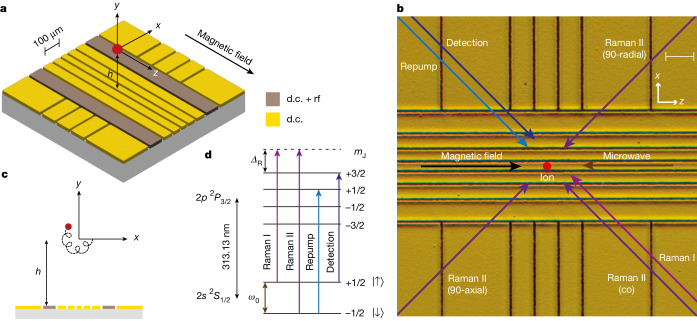
- The trap uses a static quadrupolar electric potential plus a homogeneous magnetic field of about 3 T, and the ions are held 152 μm above the chip surface.
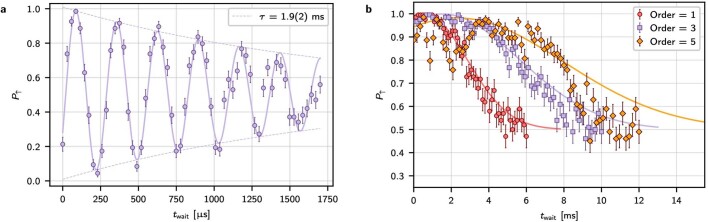
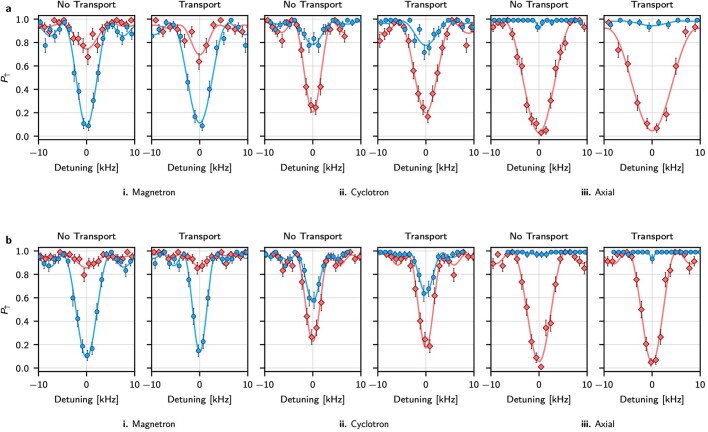
- The authors report a qubit coherence time of 1.9(2) ms with Raman beams; with Uhrig dynamical decoupling, the extracted coherence time increases to 3.2(1) ms, 5.8(3) ms, and 8.0(7) ms for orders 1, 3, and 5, respectively.
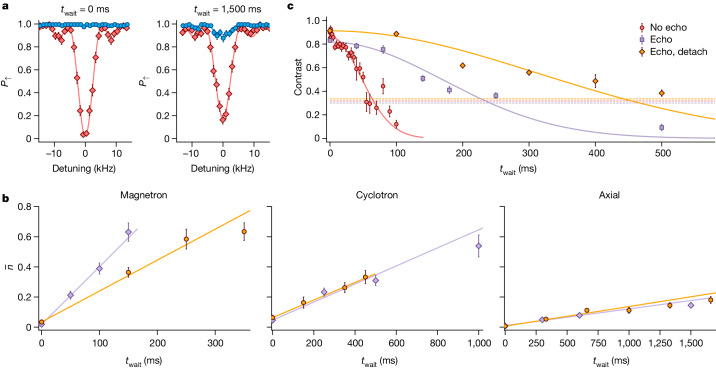
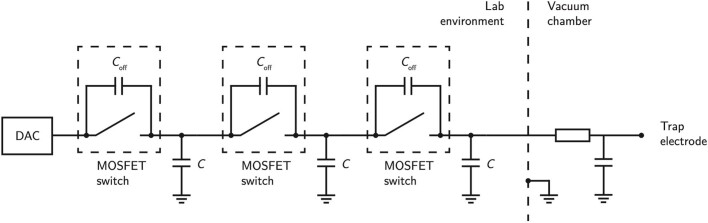
- Motional-state Ramsey measurements give a 1/e coherence time of 66(5) ms, extended to 240(20) ms with an echo pulse and to 440(50) ms when trap electrodes are detached from external voltage sources.
- They measure heating rates and state that the axial-mode electric-field noise is lower than any comparable measurement in a trap of similar size; transport over up to 250 μm shows no evidence of motional excitation beyond natural heating.
Methods
- Single ^9Be^+ ions were trapped in a cryogenic, ultrahigh-vacuum surface-electrode Penning trap inside a 3 T superconducting magnet; the trap was fabricated with 25 electrodes on a planar sapphire substrate and operated at 6.5 K.
- Quantum control used stimulated Raman transitions and microwave fields for qubit operations, Doppler cooling, sideband cooling, Ramsey spectroscopy, and sideband thermometry.
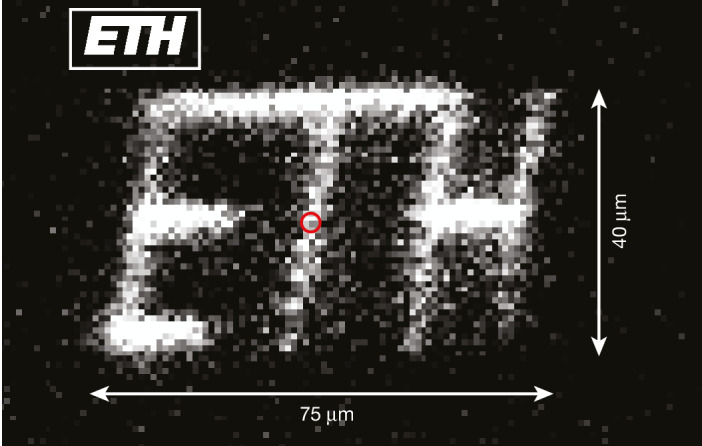
- The main analyses included spin-coherence measurements, motional heating measurements, motional Ramsey/echo sequences, and adiabatic 2D ion transport with fluorescence imaging.
Limitations
- The study is restricted to a single trap site and a single ion, so multi-site QCCD operation is not yet demonstrated.
- The paper states that scaling to large numbers of sites will require better loading, improved light delivery, and further studies of heating versus ion-electrode distance.
- Evident from the text: several reported values are stated qualitatively or are partially omitted in the provided excerpt (for example some mean occupations/temperatures and some heating-rate expressions), so the summary is limited to the explicitly stated numbers.
Model-written summary. Check it against the paper before relying on it.
Integrity signals
Registry
Cites
Statistics
Figures
Verification
Claims the paper makes
13 Valid · 2 Not valid · 9 Not checked · 47 Own results and interpretations
Every source the paper cites for this claim was checked and supports it.
In the paper
“However, scaling the system size to support orders-of-magnitude more qubits8,9 seems highly challenging10–13.”
§ Penning micro-trap for quantum computing > Main
What the sources say
- Supportedcites [10] Pogorelov, I. et al. Compact ion-trap quantum computing demonstrator. PRX Quantum 2, 020343 (2021). source
The Introduction (p. 1) states that 'Meeting the demands of state preparation and measurement in a scalable fashion is therefore a major challenge in trapped ion quantum computing,' and lists 'a host of new challenges such as manufacturing many, effectively identical qubits, and improving the scaling in number of control and readout lines, while maintaining low error rates,' problems 'that need to be overcome as quantum devices scale to hundreds of qubits.' The abstract (p. 1) adds that 'the nature of traditional laboratory setups does not offer itself readily to scaling up system sizes,' and the Introduction notes that useful devices 'will require substantially more qubits than current architectures can sustain' — which carries the claim's orders-of-magnitude growth qualifier. The hedged 'seems highly challenging' is thus stated by this source with equal or greater confidence. (LLM, conf=0.85)
- Supportedcites [11] Cetina, M. et al. Control of transverse motion for quantum gates on individually addressed atomic qubits. PRX Quantum 3, 010334 (2022). source
The Introduction (p. 1) frames growth of qubit number as the central difficulty — 'The central challenge to scaling a quantum computer is maintaining high-fidelity coherent quantum operations while growing the number of qubits' — and states that extending the >20-qubit linear chains of this work to hundreds of qubits (an order of magnitude more) 'will likely require a modular architecture' with shuttling or photonic interconnects. The discussion (p. 4) adds a quantitative obstacle: gate errors scaling as N^6 'would limit the use of long chains with high-fidelity operations.' Together our copy clearly treats orders-of-magnitude scaling as highly challenging, matching the hedged paraphrase (the paper's sympathetic-cooling proposal mitigates one specific noise source but does not contradict that framing). (LLM, conf=0.85)
- Supportedcites [12] Kranzl, F. et al. Controlling long ion strings for quantum simulation and precision measurements. Phys. Rev. A 105, 052426 (2022). source
The Introduction identifies several difficulties in controlling larger trapped-ion systems, including cooling more motional modes, increased collision rates, heating, varying qubit frequencies, and single-ion addressing. The Abstract likewise says that scaling to long ion strings requires overcoming several challenges. The orders-of-magnitude target is attached to other citations in the citing sentence; this source supports the characterization of scaling as highly challenging. (LLM, conf=0.90)
- Supportedcites [13] Pino, J. M. et al. Demonstration of the trapped-ion quantum ccd computer architecture. Nature 592, 209–213 (2021). source
The paper states that engineering a QCCD machine across multiple interaction zones has slowed progress toward larger qubit numbers (p. 1). It also says the path to systems of thousands or millions of qubits remains unclear and describes connectivity and error-correction complications (p. 5). (LLM, conf=0.92)
hedged- Asserted: passes — The authors put it forward as true.
- Checkable: passes — It can be checked against evidence.
- Load-bearing: passes — The paper’s conclusions depend on it.
- Based: passes — The paper gives a reason why it holds.
- Supported
The cited sources support only part of this claim — read each source’s verdict below.
In the paper
“Although successful demonstrations of junctions have been performed, these require dedicated large-footprint regions of the chip that limit trap density17–21.”
§ Penning micro-trap for quantum computing > Main
What the sources say
- Partly supportedcites [17] Zhang, C., Mehta, K. K. & Home, J. P. Optimization and implementation of a surface-electrode ion trap junction. New J. Phys. 24, 073030 (2022). sourceExperimental — accuracy not yet measured
Section 4 (page not available) says that optical access will eventually limit the density of usable trap modules in larger arrays connected by multiple junctions. Section 5 describes space devoted to optical inputs and electrical connections on this chip, but does not say that successful junction demonstrations require dedicated large-footprint regions or that those regions limit trap density. (LLM, conf=0.78)
- Partly supportedcites [18] Blakestad, R. B. et al. High-fidelity transport of trapped-ion qubits through an x-junction trap array. Phys. Rev. Lett. 102, 153002 (2009). sourceExperimental — accuracy not yet measured
The paper reports successful ion transport through an X-junction (p. 1) and concludes that junction transport is viable for trap arrays (p. 4). Its description of the electrode layout (p. 1) does not say that junctions require large-footprint chip regions or limit trap density. (LLM, conf=0.86)
- Partly supportedcites [19] Moehring, D. L. et al. Design, fabrication and experimental demonstration of junction surface ion traps. New J. Phys. 13, 075018 (2011). sourceExperimental — accuracy not yet measured
The Introduction reports successful testing of Y-junction surface ion traps, including junction shuttling. The Design and fabrication section describes a junction region, but our copy does not say that junctions require large-footprint regions or that they limit trap density. (LLM, conf=0.87)
- Partly supportedcites [20] Shu, G. et al. Heating rates and ion-motion control in a y-junction surface-electrode trap. Phys. Rev. A 89, 062308 (2014). sourceExperimental — accuracy not yet measured
The Introduction (p. 1) describes a trap with a central Y-junction, and the Conclusion (p. 10) reports reliable ion-motion operations in it. The paper does not say that junctions require dedicated large-footprint chip regions or that they limit trap density. (LLM, conf=0.88)
- Partly supportedcites [21] Burton, W. C. et al. Transport of multispecies ion crystals through a junction in a radio-frequency paul trap. Phys. Rev. Lett. 130, 173202 (2023). sourceExperimental — accuracy not yet measured
The introduction (p. 1) describes prior demonstrations of transport through several junction geometries, and the authors report their own successful X-junction transport (p. 1). Neither passage says that junctions require dedicated large-footprint chip regions or that they limit trap density; searches for footprint, spacing, and density found no support for that part. (LLM, conf=0.85)
boostedstates a cause- Asserted: passes — The authors put it forward as true.
- Checkable: passes — It can be checked against evidence.
- Load-bearing: passes — The paper’s conclusions depend on it.
- Based: passes — The paper gives a reason why it holds.
- Partly supported
Every source the paper cites for this claim was checked and supports it.
In the paper
“The trap was fabricated at PTB, Braunschweig, using a single-layer processing method62 depositing gold electrodes by electroplating on a sapphire substrate.”
§ Penning micro-trap for quantum computing > Methods > Trap design and fabrication
What the sources say
- Supportedcites [62] Bautista-Salvador, A. et al. Multilayer ion trap technology for scalable quantum computing and quantum simulation. New J. Phys. 21, 043011 (2019). source
Section 2.1 (Single level processing (SLP) method) states that 'all steps are carried out on 3 inch diameter wafers in a fabrication line located at Physikalisch-Technische Bundesanstalt, Braunschweig', and that the trap geometry is defined by electrodeposition of Au in a sulphite-based bath (gold electroplating) after a Ti/Au seed layer. The same section and the Figure 1 caption ('Gold structures with high aspect ratio supported on sapphire') confirm sapphire as one of the substrates on which these SLP gold structures were made, so each element of the claim (PTB Braunschweig, single-layer processing, electroplated gold electrodes, sapphire substrate) is stated in our copy. Note that the multilayer chip operated in Section 3 uses the MLP method on a high-resistivity Si wafer, but the claim is attached only to the single-layer method described in 2.1. (LLM, conf=0.85)
plain- Asserted: passes — The authors put it forward as true.
- Checkable: passes — It can be checked against evidence.
- Load-bearing: unclear — It is unclear whether the paper’s conclusions depend on it.
- Based: passes — The paper gives a reason why it holds.
- Supported
The cited sources support only part of this claim — read each source’s verdict below.
In the paper
“The corresponding electric-field spectral noise density for the axial mode, , is lower than any comparable measurement in a trap of similar size46,47.”
§ Penning micro-trap for quantum computing > Main
What the sources say
- Supportedcites [46] Lakhmanskiy, K. et al. Observation of superconductivity and surface noise using a single trapped ion as a field probe. Phys. Rev. A 99, 023405 (2019). source
The Results (p. 3) report an axial-mode electric-field spectral noise density of 5.2(11) × 10⁻¹⁶ V² m⁻² Hz⁻¹ at 12 K and state that, to the authors’ knowledge, it was the lowest measured with a trapped ion. That broader comparison supports the claim about comparable traps of similar size. (LLM, conf=0.91)
- Partly supportedcites [47] Brownnutt, M., Kumph, M., Rabl, P. & Blatt, R. Ion-trap measurements of electric-field noise near surfaces. Rev. Mod. Phys. 87, 1419–1482 (2015). sourceExperimental — accuracy not yet measured
The review compares electric-field noise measurements across traps of different sizes, including axial-mode measurements (section 1, Frequency scaling at room temperature; page unavailable). It provides a basis for comparison, but the cited passages do not identify the citing paper’s corresponding measurement or establish that it is lower than every comparable measurement in a similarly sized trap. (LLM, conf=0.78)
plain- Asserted: passes — The authors put it forward as true.
- Checkable: passes — It can be checked against evidence.
- Load-bearing: passes — The paper’s conclusions depend on it.
- Based: passes — The paper gives a reason why it holds.
- Supported
The cited sources support only part of this claim — read each source’s verdict below.
In the paper
“Power dissipation is likely to be a very severe constraint in trap arrays of more than 100 sites5,23.”
§ Penning micro-trap for quantum computing > Main
What the sources say
- Partly supportedcites [5] Malinowski, M., Allcock, D. T. C. & Ballance, C. J. How to wire a 1000-qubit trapped-ion quantum computer. PRX Quantum 4, 040313 (2023). sourceExperimental — accuracy not yet measured
The Introduction (page unavailable) says DAC power dissipation is a significant challenge for a 1000-qubit trapped-ion processor, especially in cryogenic environments. It does not establish that power dissipation is a very severe constraint for trap arrays generally once they exceed 100 sites. (LLM, conf=0.85)
- Partly supportedcites [23] Jain, S., Alonso, J., Grau, M. & Home, J. P. Scalable arrays of micro-penning traps for quantum computing and simulation. Phys. Rev. X 10, 031027 (2020). sourceExperimental — accuracy not yet measured
The Introduction says RF power dissipation increases with the number of trap sites, and XI. SCALING describes dissipation in a thousands-site RF array as most likely infeasible. It does not identify more than 100 sites as the threshold for a severe constraint, and it contrasts RF traps with micro-Penning arrays, whose estimated dissipation is much lower. (LLM, conf=0.87)
hedgedstates a possible cause- Asserted: passes — The authors put it forward as true.
- Checkable: passes — It can be checked against evidence.
- Load-bearing: passes — The paper’s conclusions depend on it.
- Based: passes — The paper gives a reason why it holds.
- Partly supported
38 more claims
Create a free account to see all 71 claims and to verify the 14 references still open.
- Probably not a substantial claim. 14
- It may state two separate claims as one. 16
- Borderline: one of the tests for a substantial claim is unclear. 1
- The quote only partly states this claim. 1
Citations
Cites
Architecture for a large-scale ion-trap quantum computer
Kielpinski, D., Monroe, C., & Wineland, D. J. (2002) · Nature · doi:10.1038/nature00784 · Cited by 1,589 · cited 2×
“An important component of the QCCD architecture 14 is ion transport.”
Experimental issues in coherent quantum-state manipulation of trapped atomic ions
Wineland, D. J., Monroe, C., Itano, W. M., Leibfried, D., King, B. E., & Meekhof, D. M. (1998) · Journal of Research of the National Institute of Standards and Technology · doi:10.6028/jres.103.019 · Cited by 1,497 · cited 1×
“Increased spin-coherence times could be achieved through improvements to the mechanical stability of the magnet, or in the longer term through the use of decoherence-free subspaces, which were considered in the original QCCD proposals 14,50,51 .”
Geonium theory: Physics of a single electron or ion in a Penning trap
Brown, L. S., & Gabrielse, G. (1986) · Reviews of Modern Physics · doi:10.1103/revmodphys.58.233 · Cited by 1,367 · cited 1×
“Here, m is the mass of the ion, ω z is the axial frequency and e is the elementary charge.”
New measurement of the electron magnetic moment and the fine structure constant
Hanneke, D., Fogwell, S., & Gabrielse, G. (2008) · Physical Review Letters · doi:10.1103/physrevlett.100.120801 · Cited by 1,138
Experimental demonstration of a robust, high-fidelity geometric two ion-qubit phase gate
Leibfried, D., DeMarco, B., Meyer, V., Lucas, D., Barrett, M., Britton, J., Itano, W. M., Jelenković, B., Langer, C., Rosenband, T., et al. (2003) · Nature · doi:10.1038/nature01492 · Cited by 1,083 · cited 2×
“…previous work 23,32 , here we conceptualize that ions in separated sites are brought close to each other to use the Coulomb interaction for two-qubit gate protocols implemented through applied laser or microwave fields 33,34 , before being transported to additional locations for further operations.”
Britton, J. W., Sawyer, B. C., Keith, A. C., Wang, C.-C. J., Freericks, J. K., Uys, H., Biercuk, M. J., & Bollinger, J. J. (2012) · Nature · doi:10.1038/nature10981 · Cited by 941 · cited 1×
“Although successful demonstrations of junctions have been performed, these require dedicated large-footprint regions of the chip that limit trap density 17–21 .”
How to factor 2048 bit RSA integers in 8 hours using 20 million noisy qubits
Gidney, C., & Ekerå, M. (2021) · Quantum · doi:10.22331/q-2021-04-15-433 · Cited by 830 · cited 1×
“However, the use of radio-frequencies presents several challenges to scaling, including requiring compatibility of chips with high voltages 4 , managing power dissipation 5 and restricting transport and placement of ions 6 .”
Entanglement and quantum computation with ions in thermal motion
Sørensen, A., & Mølmer, K. (2000) · Physical Review A · doi:10.1103/physreva.62.022311 · Cited by 783 · cited 1×
“We note that the coherence”
High-Fidelity Quantum Logic Gates Using Trapped-Ion Hyperfine Qubits
Ballance, C. J., Harty, T. P., Linke, N. M., Sepiol, M. A., & Lucas, D. M. (2016) · Physical Review Letters · doi:10.1103/physrevlett.117.060504 · Cited by 777 · cited 1×
“However, the use of radio-frequencies presents several challenges to scaling, including requiring compatibility of chips with high voltages 4 , managing power dissipation 5 and restricting transport and placement of ions 6 .”
Resolved-Sideband Raman Cooling of a Bound Atom to the 3D Zero-Point Energy
Monroe, C., Meekhof, D. M., King, B. E., Jefferts, S. R., Itano, W. M., Wineland, D. J., & Gould, P. (1995) · Physical Review Letters · doi:10.1103/physrevlett.75.4011 · Cited by 731 · cited 2×
“…roughly As the bright state |↑⟩ has a higher energy than the dark state |↓⟩, the blue sideband cannot be driven when the ion is in the ground state of the axial mode. b , Average phonon number n calculated using the sideband-ratio method 44 for all three modes as a function of increasing t wait .”
Minimization of ion micromotion in a Paul trap
Berkeland, D. J., Miller, J. D., Bergquist, J. C., Itano, W. M., & Wineland, D. J. (1998) · Journal of Applied Physics · doi:10.1063/1.367318 · Cited by 720 · cited 1×
“These have been used to realize small-scale quantum algorithms and quantum error correction protocols.”
Keeping a Quantum Bit Alive by Optimized π -Pulse Sequences
Uhrig, G. S. (2007) · Physical Review Letters · doi:10.1103/physrevlett.98.100504 · Cited by 716 · cited 1×
“Similar values are measured with the microwave field, indicating that laser phase noise from beam path fluctuations or imperfect phase-locking does not significantly contribute to dephasing.”
Optimized dynamical decoupling in a model quantum memory
Biercuk, M. J., Uys, H., VanDevender, A. P., Shiga, N., Itano, W. M., & Bollinger, J. J. (2009) · Nature · doi:10.1038/nature07951 · Cited by 654 · cited 1×
“Further characterization of the magnetic field noise is performed by applying different orders of the Uhrig dynamical decoupling sequence 40,41 , with the resulting extracted coherence time from the measurements being 3.2(1) ms, 5.8(3) ms and 8.0(7) ms for orders 1, 3 and 5, respectively.”
InfluentialDemonstration of the trapped-ion quantum CCD computer architecture
Pino, J. M., Dreiling, J. M., Figgatt, C., Gaebler, J. P., Moses, S. A., Allman, M. S., Baldwin, C. H., Foss-Feig, M., Hayes, D., Mayer, K., et al. (2021) · Nature · doi:10.1038/s41586-021-03318-4 · Cited by 547 · cited 2×
“One of the primary paths to scaling is the quantum charge-coupled device (QCCD) architecture, which involves arrays of trapping zones between which ions are shuttled during algorithms 13–16 .”
Quantum spin dynamics and entanglement generation with hundreds of trapped ions
Bohnet, J. G., Sawyer, B. C., Britton, J. W., Wall, M. L., Rey, A. M., Foss-Feig, M., & Bollinger, J. J. (2016) · Science · doi:10.1126/science.aad9958 · Cited by 546
A scalable quantum computer with ions in an array of microtraps
Cirac, J. I., & Zoller, P. (2000) · Nature · doi:10.1038/35007021 · Cited by 516 · cited 1×
“Increased spin-coherence times could be achieved through improvements to the mechanical stability of the magnet, or in the longer term through the use of decoherence-free subspaces, which were considered in the original QCCD proposals 14,50,51 .”
Ion-trap measurements of electric-field noise near surfaces
Brownnutt, M., Kumph, M., Rabl, P., & Blatt, R. (2015) · Reviews of Modern Physics · doi:10.1103/revmodphys.87.1419 · Cited by 413 · cited 1×
“We note that the coherence”
Compact Ion-Trap Quantum Computing Demonstrator
Pogorelov, I., Feldker, T., Marciniak, C. D., Postler, L., Jacob, G., Krieglsteiner, O., Podlesnic, V., Meth, M., Negnevitsky, V., Stadler, M., et al. (2021) · PRX Quantum · doi:10.1103/prxquantum.2.020343 · Cited by 387 · cited 1×
“Here we realize a micro-fabricated Penning ion trap that removes these restrictions by replacing the radio-frequency field with a 3 T magnetic field.”
Self-citationIntegrated multi-wavelength control of an ion qubit
Niffenegger, R. J., Stuart, J., Sorace-Agaskar, C., Kharas, D., Bramhavar, S., Bruzewicz, C. D., Loh, W., Maxson, R. T., McConnell, R., Reens, D., et al. (2020) · Nature · doi:10.1038/s41586-020-2811-x · Cited by 330
Single ion qubit with estimated coherence time exceeding one hour
Wang, P., Luan, C.-Y., Qiao, M., Um, M., Zhang, J., Wang, Y., Yuan, X., Gu, M., Zhang, J., & Kim, K. (2021) · Nature Communications · doi:10.1038/s41467-020-20330-w · Cited by 321 · cited 1×
“Trapped atomic ions are among the most advanced technologies for realizing quantum computation and quantum simulation, based on a combination of high-fidelity quantum gates 1–3 and long coherence times 7 .”
Integrated optical multi-ion quantum logic
Mehta, K. K., Zhang, C., Malinowski, M., Nguyen, T.-L., Stadler, M., & Home, J. P. (2020) · Nature · doi:10.1038/s41586-020-2823-6 · Cited by 318 · cited 1×
“For scaling to large numbers of sites, it is likely that scalable approaches to light delivery will be required, which might necessitate switching to an ion species that is more amenable to integrated optics 52–55 .”
Self-citationRealization of Real-Time Fault-Tolerant Quantum Error Correction
Ryan-Anderson, C., Bohnet, J. G., Lee, K., Gresh, D., Hankin, A., Gaebler, J. P., Francois, D., Chernoguzov, A., Lucchetti, D., Brown, N. C., et al. (2021) · Physical Review X · doi:10.1103/physrevx.11.041058 · Cited by 306 · cited 1×
“We demonstrate full quantum control of an ion in this setting, as well as the ability to transport the ion arbitrarily in the trapping plane above the chip.”
Decoherence and decay of motional quantum states of a trapped atom coupled to engineered reservoirs
Turchette, Q. A., Myatt, C. J., King, B. E., Sackett, C. A., Kielpinski, D., Itano, W. M., Monroe, C., & Wineland, D. J. (2000) · Physical Review A · doi:10.1103/physreva.62.053807 · Cited by 285 · cited 1×
“We note that the coherence”
Complete Methods Set for Scalable Ion Trap Quantum Information Processing
Home, J. P., Hanneke, D., Jost, J. D., Amini, J. M., Leibfried, D., & Wineland, D. J. (2009) · Science · doi:10.1126/science.1177077 · Cited by 283
Self-citationIntegrated optical multi-ion quantum logic
Mehta, K. K., Zhang, C., Malinowski, M., Nguyen, T. L., Stadler, M., & Home, J. (2020) · RePEc: Research Papers in Economics · Cited by 260
Self-citationSurface-electrode architecture for ion-trap quantum information processing
Chiaverini, J., Blakestad, R. B., Britton, J., Jost, J. D., Langer, C., Leibfried, D., Ozeri, R., & Wineland, D. J. (2005) · Quantum Information and Computation · doi:10.26421/qic5.6-1 · Cited by 257
Quantum Computer Systems for Scientific Discovery
Alexeev, Y., Bacon, D., Brown, K. R., Calderbank, R., Carr, L. D., Chong, F. T., DeMarco, B., Englund, D., Farhi, E., Fefferman, B., et al. (2021) · PRX Quantum · doi:10.1103/prxquantum.2.017001 · Cited by 248 · cited 1×
“However, the use of radio-frequencies presents several challenges to scaling, including requiring compatibility of chips with high voltages 4 , managing power dissipation 5 and restricting transport and placement of ions 6 .”
Integrated optical addressing of an ion qubit
Mehta, K. K., Bruzewicz, C. D., McConnell, R., Ram, R. J., Sage, J. M., & Chiaverini, J. (2016) · Nature Nanotechnology · doi:10.1038/nnano.2016.139 · Cited by 242
Quantum Computer Systems for Scientific Discovery
Alexeev, Y., Bacon, D., Brown, K. R., Calderbank, R., Carr, L. D., Chong, F. T., DeMarco, B., Englund, D., Farhi, E., Fefferman, B., et al. (2021) · DSpace@MIT (Massachusetts Institute of Technology) · doi:10.6082/h7fqg-6vt65 · Cited by 240
Surface-electrode architecture for ion-trap quantum information processing
(2005) · CERN Document Server (European Organization for Nuclear Research) · doi:10.5555/2011670.2011671 · Cited by 195
High-fidelity laser-free universal control of trapped ion qubits
Srinivas, R., Burd, S. C., Knaack, H. M., Sutherland, R. T., Kwiatkowski, A., Glancy, S., Knill, E., Wineland, D. J., Leibfried, D., Wilson, A. C., et al. (2021) · Nature · doi:10.1038/s41586-021-03809-4 · Cited by 174 · cited 2×
“Trapped ions in radio-frequency traps are among the leading approaches for realizing quantum computers, because of high-fidelity quantum gates and long coherence times 1–3 .”
High-Fidelity Transport of Trapped-Ion Qubits through anX-Junction Trap Array
Blakestad, R. B., Ospelkaus, C., VanDevender, A. P., Amini, J. M., Britton, J., Leibfried, D., & Wineland, D. J. (2009) · Physical Review Letters · doi:10.1103/physrevlett.102.153002 · Cited by 167
Self-citationHigh-Fidelity Bell-State Preparation with Ca + 40 Optical Qubits
Clark, C. R., Tinkey, H. N., Sawyer, B. C., Meier, A. M., Burkhardt, K. A., Seck, C. M., Shappert, C. M., Guise, N. D., Volin, C. E., Fallek, S. D., et al. (2021) · Physical Review Letters · doi:10.1103/physrevlett.127.130505 · Cited by 165
Observation of the 1S–2S transition in trapped antihydrogen
Ahmadi, M., Alves, B. X. R., Baker, C. J., Bertsche, W., Butler, E., Capra, A., Carruth, C., Cesar, C. L., Charlton, M., Cohen, S., et al. (2017) · Nature · doi:10.1038/nature21040 · Cited by 162 · cited 1×
“However, challenges arise because of the intrinsic nature of the radio-frequency (rf) fields, which require specialized junctions for two-dimensional (2D) connectivity of different regions of the trap.”
High-precision comparison of the antiproton-to-proton charge-to-mass ratio
Ulmer, S., Smorra, C., Mooser, A., Franke, K., Nagahama, H., Schneider, G., Higuchi, T., Van Gorp, S., Blaum, K., Matsuda, Y., et al. (2015) · Nature · doi:10.1038/nature14861 · Cited by 147
Materials challenges for trapped-ion quantum computers
Brown, K. R., Chiaverini, J., Sage, J. M., & Häffner, H. (2021) · Nature Reviews Materials · doi:10.1038/s41578-021-00292-1 · Cited by 120 · cited 1×
“However, the use of radio-frequencies presents several challenges to scaling, including requiring compatibility of chips with high voltages 4 , managing power dissipation 5 and restricting transport and placement of ions 6 .”
(2017) · doi:10.1103/physrevlett.118.053002 · Cited by 102
Interface between Trapped-Ion Qubits and Traveling Photons with Close-to-Optimal Efficiency
Schupp, J., Krcmarsky, V., Krutyanskiy, V., Meraner, M., Northup, T. E., & Lanyon, B. P. (2021) · PRX Quantum · doi:10.1103/prxquantum.2.020331 · Cited by 94
Design, fabrication and experimental demonstration of junction surface ion traps
Moehring, D. L., Highstrete, C., Stick, D., Fortier, K. M., Haltli, R., Tigges, C., & Blain, M. G. (2011) · New Journal of Physics · doi:10.1088/1367-2630/13/7/075018 · Cited by 93
Tunable spin–spin interactions and entanglement of ions in separate potential wells
Wilson, A. C., Colombe, Y., Brown, K. R., Knill, E., Leibfried, D., & Wineland, D. J. (2014) · Nature · doi:10.1038/nature13565 · Cited by 89 · cited 2×
“We note that the coherence”
Demonstration of the trapped-ion quantum CCD computer architecture
Pino, J. M., Dreiling, J., Figgatt, C., Gaebler, J., Moses, S. A., Allman, M. S., Baldwin, C. H., Foss‐Feig, M., Hayes, D., Mayer, K., et al. (2021) · RePEc: Research Papers in Economics · Cited by 87
Stahl, S., Galve, F., Alonso, J., Djekic, S., Quint, W., Valenzuela, T., Verd�, J., Vogel, M., & Werth, G. (2005) · The European Physical Journal D · doi:10.1140/epjd/e2004-00179-x · Cited by 78 · cited 1×
“Beyond the static arrays considered in previous work 23,32 , here we conceptualize that ions in separated sites are brought close to each other to use the Coulomb interaction for two-qubit gate protocols implemented through applied laser or microwave fields 33,34 , before being transported to…”
Integrated multi-wavelength control of an ion qubit
Niffenegger, R., Stuart, J., Sorace-Agaskar, C. M., Kharas, D., Bramhavar, S., Bruzewicz, C., Loh, W., Maxson, R., McConnell, R., Reens, D., et al. (2020) · RePEc: Research Papers in Economics · Cited by 68
Ion traps fabricated in a CMOS foundry
Mehta, K. K., Eltony, A. M., Bruzewicz, C. D., Chuang, I. L., Ram, R. J., Sage, J. M., & Chiaverini, J. (2014) · Applied Physics Letters · doi:10.1063/1.4892061 · Cited by 64 · cited 1×
“The use of advanced standard fabrication methods such as CMOS 56,57 is facilitated, compared with rf traps, by the lack of high-voltage rf signals.”
Chip-Integrated Voltage Sources for Control of Trapped Ions
Stuart, J., Panock, R., Bruzewicz, C. D., Sedlacek, J. A., McConnell, R., Chuang, I. L., Sage, J. M., & Chiaverini, J. (2019) · Physical Review Applied · doi:10.1103/physrevapplied.11.024010 · Cited by 64
Integrated optical addressing of a trapped ytterbium ion
Ivory, M., Setzer, W. J., Karl, N., McGuinness, H., DeRose, C., Blain, M., Stick, D., Gehl, M., & Parazzoli, L. P. (2021) · Physical Review X · doi:10.1103/physrevx.11.041033 · Cited by 62 · cited 1×
“We note that the coherence”
Heating rates and ion-motion control in a Y -junction surface-electrode trap
Shu, G., Vittorini, G., Buikema, A., Nichols, C. S., Volin, C., Stick, D., & Brown, K. R. (2014) · Physical Review A · doi:10.1103/physreva.89.062308 · Cited by 58
Axialization of Laser Cooled Magnesium Ions in a Penning Trap
Powell, H. F., Segal, D. M., & Thompson, R. C. (2002) · Physical Review Letters · doi:10.1103/physrevlett.89.093003 · Cited by 57 · cited 1×
“Further details about the apparatus can be found in the Methods.”
Direct Measurement of the Proton Magnetic Moment
DiSciacca, J., & Gabrielse, G. (2012) · Physical Review Letters · doi:10.1103/physrevlett.108.153001 · Cited by 56 · cited 1×
“However, challenges arise because of the intrinsic nature of the radio-frequency (rf) fields, which require specialized junctions for two-dimensional (2D) connectivity of different regions of the trap.”
Control of Transverse Motion for Quantum Gates on Individually Addressed Atomic Qubits
Cetina, M., Egan, L. N., Noel, C., Goldman, M. L., Biswas, D., Risinger, A. R., Zhu, D., & Monroe, C. (2022) · PRX Quantum · doi:10.1103/prxquantum.3.010334 · Cited by 54
How to Wire a 1000 -Qubit Trapped-Ion Quantum Computer
Malinowski, M., Allcock, D. T. C., & Ballance, C. J. (2023) · PRX Quantum · doi:10.1103/prxquantum.4.040313 · Cited by 54
Lo, H.-Y., Alonso, J., Kienzler, D., Keitch, B. C., de Clercq, L. E., Negnevitsky, V., & Home, J. (2013) · Applied Physics B · doi:10.1007/s00340-013-5605-0 · Cited by 38 · cited 1×
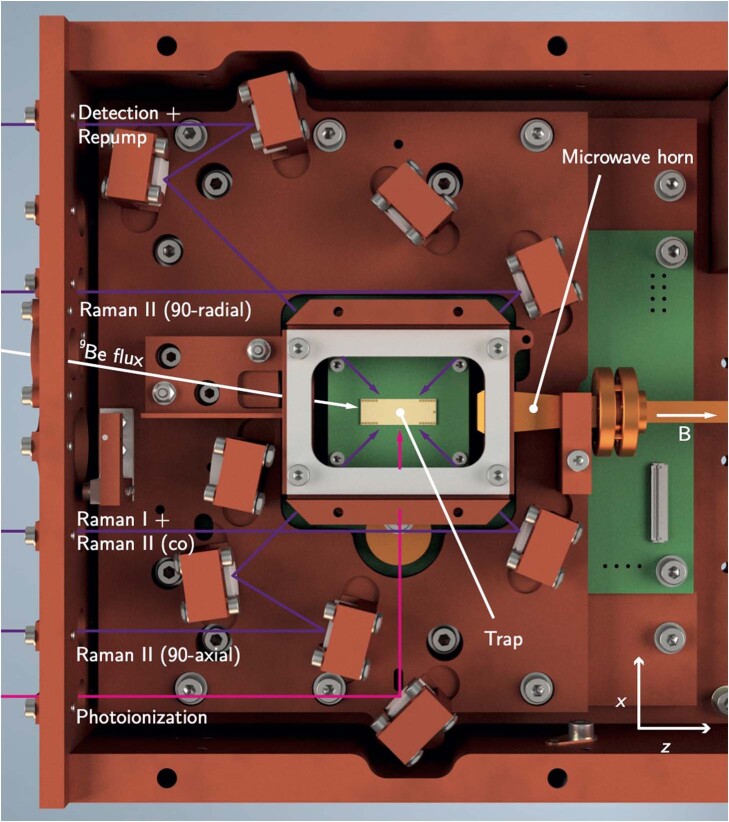
“Using a laser at 235 nm, we load the trap by resonance-enhanced multiphoton ionization of neutral atoms produced from either a resistively heated oven or an ablation source 35 .”
Self-citationControlling long ion strings for quantum simulation and precision measurements
Kranzl, F., Joshi, M. K., Maier, C., Brydges, T., Franke, J., Blatt, R., & Roos, C. F. (2022) · Physical Review A · doi:10.1103/physreva.105.052426 · Cited by 32
Lo, H.-Y., Alonso, J., Kienzler, D., Keitch, B. C., de Clercq, L. E., Negnevitsky, V., & Home, J. (2014) · reroDoc Digital Library · doi:10.3929/ethz-b-000071017 · Cited by 30
Self-citationScalable arrays of micro-penning traps for quantum computing and simulation
Jain, S., Alonso, J., Grau, M., & Home, J. P. (2020) · Physical Review X · doi:10.1103/physrevx.10.031027 · Cited by 30 · cited 5×
“However, challenges arise because of the intrinsic nature of the radio-frequency (rf) fields, which require specialized junctions for two-dimensional (2D) connectivity of different regions of the trap.”
InfluentialSelf-citationTransport of Multispecies Ion Crystals through a Junction in a Radio-Frequency Paul Trap
Burton, W. C., Estey, B., Hoffman, I. M., Perry, A. R., Volin, C., & Price, G. (2023) · Physical Review Letters · doi:10.1103/physrevlett.130.173202 · Cited by 29 · cited 1×
“This unique feature of the Penning micro-trap approach opens up a modification of the quantum charge-coupled device architecture with improved connectivity and flexibility, facilitating the realization of large-scale trapped-ion quantum computing, quantum simulation and quantum sensing.”
Multilayer ion trap technology for scalable quantum computing and quantum simulation
Bautista-Salvador, A., Zarantonello, G., Hahn, H., Preciado-Grijalva, A., Morgner, J., Wahnschaffe, M., & Ospelkaus, C. (2019) · New Journal of Physics · doi:10.1088/1367-2630/ab0e46 · Cited by 27 · cited 1×
“The trap was fabricated at PTB, Braunschweig, using a single-layer processing method 62 depositing gold electrodes by electroplating on a sapphire substrate.”
Self-citationFast shuttling of ions in a scalable Penning trap array
Crick, D. R., Donnellan, S., Ananthamurthy, S., Thompson, R. C., & Segal, D. M. (2010) · Review of Scientific Instruments · doi:10.1063/1.3276699 · Cited by 24 · cited 1×
“We note that the coherence”
Industrially microfabricated ion trap with 1 eV trap depth
Auchter, S., Axline, C., Decaroli, C., Valentini, M., Purwin, L., Oswald, R., Matt, R., Aschauer, E., Colombe, Y., Holz, P., et al. (2022) · Quantum Science and Technology · doi:10.1088/2058-9565/ac7072 · Cited by 23 · cited 1×
“We note that the coherence”
Self-citationMultilayer ion trap technology for scalable quantum computing and quantum simulation
Bautista-Salvador, A., Zarantonello, G., Hahn, H., Preciado-Grijalva, A., Morgner, J., Wahnschaffe, M., & Ospelkaus, C. (2019) · Institutional Repository of Leibniz Universität Hannover (Leibniz Universität Hannover) · doi:10.15488/10409 · Cited by 22
Self-citationHellwig, M., Bautista-Salvador, A., Singer, K., Werth, G., & Schmidt-Kaler, F. (2010) · New Journal of Physics · doi:10.1088/1367-2630/12/6/065019 · Cited by 21 · cited 1×
“An alternative to rf electric fields for radial confinement is to use a Penning trap in which only static electric and magnetic fields are used, which is an extremely attractive feature for scaling because of the lack of power dissipation and geometrical restrictions on the placement of ions 23,24 .”
Self-citationSideband cooling of small ion Coulomb crystals in a Penning trap
Stutter, G., Hrmo, P., Jarlaud, V., Joshi, M. K., Goodwin, J. F., & Thompson, R. C. (2018) · Journal of Modern Optics · doi:10.1080/09500340.2017.1376719 · Cited by 21 · cited 2×
“We note that the coherence”
Self-citationSideband cooling of the radial modes of motion of a single ion in a Penning trap
Hrmo, P., Joshi, M. K., Jarlaud, V., Corfield, O., & Thompson, R. C. (2019) · Physical Review A · doi:10.1103/physreva.100.043414 · Cited by 21 · cited 2×
“We note that the coherence”
Self-citationObservation of superconductivity and surface noise using a single trapped ion as a field probe
Lakhmanskiy, K., Holz, P. C., Schärtl, D., Ames, B., Assouly, R., Monz, T., Colombe, Y., & Blatt, R. (2019) · Physical Review A · doi:10.1103/physreva.99.023405 · Cited by 18 · cited 1×
“We note that the coherence”
Mielke, J., Pick, J., Coenders, J. A., Meiners, T., Niemann, M., Cornejo, J. M., Ulmer, S., & Ospelkaus, C. (2021) · Journal of Physics B Atomic Molecular and Optical Physics · doi:10.1088/1361-6455/ac319d · Cited by 16 · cited 1×
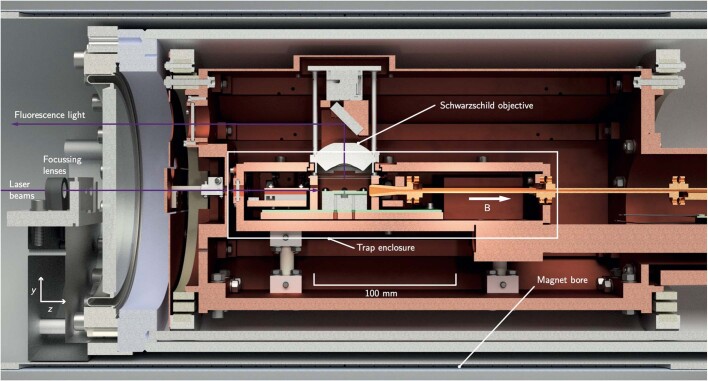
“State-dependent fluorescence with the detection laser allows for discrimination between the two qubit states based on photon counts collected on a photomultiplier tube using an imaging system that uses a 0.55 NA Schwarzschild objective.”
InfluentialSelf-citationPopulation dynamics in sideband cooling of trapped ions outside the Lamb-Dicke regime
Joshi, M. K., Hrmo, P., Jarlaud, V., Oehl, F., & Thompson, R. C. (2019) · Physical Review A · doi:10.1103/physreva.99.013423 · Cited by 11 · cited 1×
“We note that the coherence”
Self-citationChip-integrated voltage sources for control of trapped ions
Stuart, J., Panock, R. L., Bruzewicz, C., Sedlacek, J. A., McConnell, R., Chuang, I. L., Sage, J., & Chiaverini, J. (2018) · DSpace@MIT (Massachusetts Institute of Technology) · doi:10.48550/arxiv.1810.07152 · Cited by 11
Surface science motivated by heating of trapped ions from the quantum ground state
Hite, D. A., McKay, K. S., & Pappas, D. P. (2021) · New Journal of Physics · doi:10.1088/1367-2630/ac2c2c · Cited by 11 · cited 1×
“This flexibility of ion placement has advantages in many areas of ion-trap physics, for instance, in placing ions in anti-nodes of optical cavities 58 , or sampling field noise from surfaces of interest 59,60 .”
Optimization and implementation of a surface-electrode ion trap junction
Zhang, C., Mehta, K. K., & Home, J. P. (2022) · New Journal of Physics · doi:10.1088/1367-2630/ac7db6 · Cited by 10 · cited 1×
“Although successful demonstrations of junctions have been performed, these require dedicated large-footprint regions of the chip that limit trap density 17–21 .”
Self-citationHigh-fidelity transport of trapped-ion qubits in a multilayer array
Palani, D., Hasse, F., Kiefer, P., Boeckling, F., Schroeder, J.-P., Warring, U., & Schaetz, T. (2023) · Physical Review A · doi:10.1103/physreva.107.l050601 · Cited by 9 · cited 2×
“However, the use of radio-frequencies presents several challenges to scaling, including requiring compatibility of chips with high voltages 4 , managing power dissipation 5 and restricting transport and placement of ions 6 .”
Heating rates and ion motion control in a Y-junction surface-electrode trap.
Stick, D., Shu, G., Vittorini, G., Volin, C., Buikena, A., Nichols, C. S., & Brown, K. R. (2014) · New Journal of Physics · Cited by 8
Measurement of electric-field noise from interchangeable samples with a trapped-ion sensor
McKay, K. S., Hite, D. A., Kent, P. D., Kotler, S., Leibfried, D., Slichter, D. H., Wilson, A. C., & Pappas, D. P. (2021) · Physical Review A · doi:10.1103/physreva.104.052610 · Cited by 8 · cited 1×
“We note that the coherence”
Controlling long ion strings for quantum simulation and precision measurements
Kranzl, F., Joshi, M. K., Maier, C., et al. (2022) · Zenodo (CERN European Organization for Nuclear Research) · doi:10.5281/zenodo.7409067 · Cited by 3
Cited by
Liu, Y., Singh, S., Smith, K. C., Crane, E., Martyn, J. M., Eickbusch, A., Schuckert, A., Li, R. D., Sinanan-Singh, J., Soley, M. B., et al. (2026) · PRX Quantum · doi:10.1103/4rf7-9tfx · Cited by 171
Progress in Trapped-Ion Quantum Simulation
Foss‐Feig, M., Pagano, G., Potter, A. C., & Yao, N. Y. (2024) · Annual Review of Condensed Matter Physics · doi:10.1146/annurev-conmatphys-032822-045619 · Cited by 96
“Reference (164) showed that short-depth measurement circuits and adaptive feedback could be used to prepare the ground-space of certain classes of discrete gauge theories with non-Abelian excitations.”
BackgroundInfluentialUniversal quantum gate set for Gottesman–Kitaev–Preskill logical qubits
Matsos, V. G., Valahu, C. H., Millican, M. J., Navickas, T., Kolesnikow, X. C., Biercuk, M. J., & Tan, T. R. (2025) · Nature Physics · doi:10.1038/s41567-025-03002-8 · Cited by 78
“These include linear Coulomb crystals 35,36 , two-dimensional ion arrays 37–40 , quantum charge-coupled devices 25,41 and micro-Penning traps 42 .”
Bilayer Crystals of Trapped Ions for Quantum Information Processing
Hawaldar, S., Shahi, P., Carter, A. L., Rey, A. M., Bollinger, J. J., & Shankar, A. (2024) · Physical Review X · doi:10.1103/physrevx.14.031030 · Cited by 18
“[60].”
Effect of Chemical Modification in Trigonal Gd(III) Molecular Qubits
Hansen, S. H., Buch, C. D., Weihe, H., & Piligkos, S. (2025) · Inorganic Chemistry · doi:10.1021/acs.inorgchem.4c04789 · Cited by 11
Metadata
- Authors
- Jain, S., Sägesser, T., Hrmo, P., Torkzaban, C., Stadler, M., Oswald, R., Axline, C., Bautista-Salvador, A., Ospelkaus, C., Kienzler, D., & Home, J.
- Affiliations
- ETH Zurich (CH)
- Leibniz University Hannover (DE)
- Corresponding author
- Jain, Shreyans
- ORCID
- Venue
- Nature
- Published
- 2024-03-13
- Volume
- 627
- Issue
- 8004
- Pages
- 510-514
- ISSN
- 0028-0836 (ISSN-L)
- 1476-4687
- PMC
- PMC10954548
- OpenAlex
- W4392762830
- Cited by
- 33
- References
- 88
- Citations by year
- 2026: 10 · 2025: 14 · 2024: 9
- FWCI
- 4.85
- Type
- journal article
- Language
- en
- Open access
- hybrid
- doi.org
- Licence
- cc-by
- creativecommons.org/licenses/by/4.0 (tdm)
- creativecommons.org/licenses/by/4.0 (vor)
- Locations
- Nature (publishedVersion, cc-by)
- PubMed (publishedVersion)
- arXiv (Cornell University) (submittedVersion)
- Institutional Repository of Leibniz Universität Hannover (Leibniz Universität Hannover) (submittedVersion, cc-by-nc-nd)
- RePEc: Research Papers in Economics (submittedVersion)
- arXiv (Cornell University)
- Funders
- European Commission (801285, 820495, EU-H2020, HORIZON2020, H2020, H2020 FET, H2020-FETFLAG-2018-03)
- Deutsche Forschungsgemeinschaft (CRC 1227)
- Eidgenössische Technische Hochschule Zürich
- Horizon 2020 Framework Programme (EU‐H2020, 801285, 818195, 820495, H2020-FETFLAG-2018-03)
- Topics
- Physical Sciences › Physics and Astronomy › Atomic and Molecular Physics, and Optics › Quantum Information and Cryptography
- Physical Sciences › Computer Science › Artificial Intelligence › Quantum Computing Algorithms and Architecture
- Physical Sciences › Physics and Astronomy › Atomic and Molecular Physics, and Optics › Cold Atom Physics and Bose-Einstein Condensates
- Keywords
- Penning ion trap, trapped-ion quantum computing, magnetic trapping, ion transport, quantum charge-coupled device, quantum simulation, quantum sensing
About these checks
Registry, retraction, Cites and statistics results are computed, not judged, with one exception: a printed reference that no index lists is read once by a model before it counts as a citation error. Claims are extracted by a model and kept only when their quote appears verbatim in the text; each cited source is then checked, with a model’s help, for whether it says what the claim relies on. Those verdicts can be wrong — read the claim’s quote and the cited source before relying on one.
The claim verdicts this report counts are experimental: their accuracy is not yet measured.
A language model drew the claims from the paper on 2026-10-10, under version 3 of the claim definition (model deepseek-v4.1-flash, prompt extract-v3).
A second model labelled each claim on 2026-10-10 (model jev-1.13-20260917, definition revision gold-guideline-v0.2).
Cited sources are checked with a language model’s help (qwen3.8-omni-flash and gpt-6-sol).
Statistics and arithmetic are recomputed, not judged.
Confidence bands are shown only for fields calibrated on our annotated test set. None is calibrated yet, so no band is shown.
What counts as a claim ›How we measure confidence ›How we check this ›
Are you an author, or do you see a problem with this page? Request a review
Data sources
Bibliographic data: Semantic Scholar, OpenAlex, Crossref.
Contains information from the Semantic Scholar Academic Graph Datasets, made available under the ODC Attribution License (ODC-BY 1.0).
Semantic Scholar’s data is described in: Kinney, R., et al. (2023). The Semantic Scholar Open Data Platform. arXiv:2301.10140.
