

REM Sleep, Prefrontal Theta, and the Consolidation of Human Emotional Memory
Open accessThe DOI matches its Crossref record; 69 of the 69 references it cites were found in a registry or an index.
Abstract
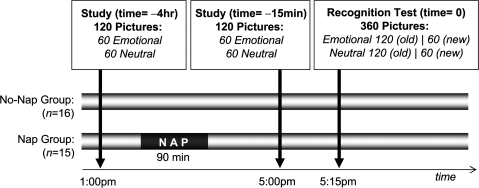
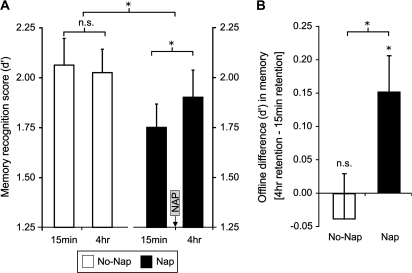
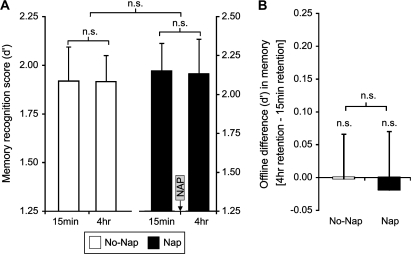
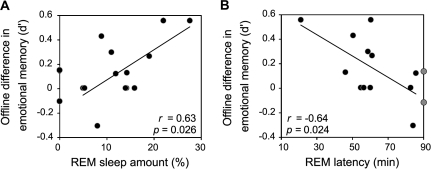
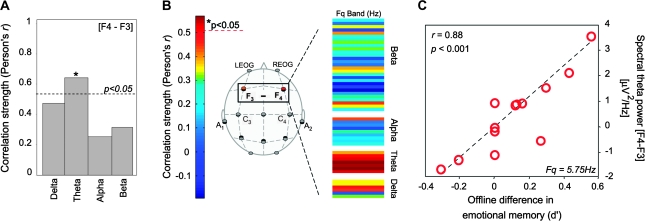
Both emotion and sleep are independently known to modulate declarative memory. Memory can be facilitated by emotion, leading to enhanced consolidation across increasing time delays. Sleep also facilitates offline memory processing, resulting in superior recall the next day. Here we explore whether rapid eye movement (REM) sleep, and aspects of its unique neurophysiology, underlie these convergent influences on memory. Using a nap paradigm, we measured the consolidation of neutral and negative emotional memories, and the association with REM-sleep electrophysiology. Subjects that napped showed a consolidation benefit for emotional but not neutral memories. The No-Nap control group showed no evidence of a consolidation benefit for either memory type. Within the Nap group, the extent of emotional memory facilitation was significantly correlated with the amount of REM sleep and also with right-dominant prefrontal theta power during REM. Together, these data support the role of REM-sleep neurobiology in the consolidation of emotional human memories, findings that have direct translational implications for affective psychiatric and mood disorders.
Overview
The claims and statistics of this paper haven’t been checked yet.
Free: it reads the open-access text and checks the first 5 claims that cite a source we can check. Create a free account to check every claim.
Integrity signals
Registry
Cites
Statistics
Figures
Verification
Claims the paper makes
The claims and statistics of this paper haven’t been checked yet.
Free: it reads the open-access text and checks the first 5 claims that cite a source we can check. Create a free account to check every claim.
Claims other papers make about this one
Each is checked against this paper’s own text: does it say what the citing paper says it does?
The source backs part of the claim, not all of it — or backs it for a different population, condition or comparison.
In the citing paper
“The integration of memories during sleep probably relies on an interleaved hippocampal reactivation of new and associated old memories and occurs in a fine-tuned interaction with cortical slow oscillations (< 1 Hz) and thalamocortical fast-spindle activity (13-15 Hz). 12”
From Effects of Sleep after Experimental Trauma on Intrusive Emotional Memories. (2016) · cites this paper as [12]
Experimental — accuracy not yet measuredThe source backs part of the claim, not all of it — or backs it for a different population, condition or comparison.
In the citing paper
“REM sleep plays a pivotal role in the processing of salient and emotional waking-life experiences, strongly contributing to the emotional memory consolidation”
From The Functional Role of Dreaming in Emotional Processes (2019) · cites this paper as Nishida et al., 2009
Experimental — accuracy not yet measuredThe source backs part of the claim, not all of it — or backs it for a different population, condition or comparison.
In the citing paper
“the results on EEG pattern related to the incorporated memories converged to assign a crucial role of REM theta oscillations in emotional re-processing”
From The Functional Role of Dreaming in Emotional Processes (2019) · cites this paper as Nishida et al., 2009
Experimental — accuracy not yet measuredThe source backs part of the claim, not all of it — or backs it for a different population, condition or comparison.
In the citing paper
“compelling evidence indicates that the potential EEG marker of emotional processes is the frontal theta activity (5–7 Hz) during REM sleep”
From The Functional Role of Dreaming in Emotional Processes (2019) · cites this paper as Nishida et al., 2009
Experimental — accuracy not yet measuredThe source backs part of the claim, not all of it — or backs it for a different population, condition or comparison.
In the citing paper
“The topographical changes of cortical oscillatory activity during sleep involve regions upon which relies a successful memory encoding in wakefulness.96”
From Spotlight on dream recall: the ages of dreams (2018) · cites this paper as [96]
Experimental — accuracy not yet measured
11 more claims about this paper
Create a free account to see every claim other papers make about this one.
Self-check
Percentages, sums and reported differences re-computed from the paper’s own numbers.
The self-check needs the paper’s full text.
Citations
Cites
Rechtschaffen, A. (1968) · Medical Entomology and Zoology · Cited by 12,654
Detection Theory: A User's Guide
Macmillan, N. A., & Creelman, C. D. (1991) · Cited by 5,415
Memory - A century of consolidation
McGaugh, J. L. (2000) · Science · doi:10.1126/science.287.5451.248 · Cited by 4,250
Theta oscillations in the hippocampus
Buzsáki, G. (2002) · Neuron · doi:10.1016/s0896-6273(02)00586-x · Cited by 3,332
International Affective Picture System (IAPS) : Technical Manual and Affective Ratings
Lang, P. J. (1995) · Medical Entomology and Zoology · Cited by 2,870
THE AMYGDALA MODULATES THE CONSOLIDATION OF MEMORIES OF EMOTIONALLY AROUSING EXPERIENCES
McGaugh, J. L. (2004) · Annual Review of Neuroscience · doi:10.1146/annurev.neuro.27.070203.144157 · Cited by 2,296
Huber, R., Felice Ghilardi, M., Massimini, M., & Tononi, G. (2004) · Nature · doi:10.1038/nature02663 · Cited by 1,854
Hemispheric encoding/retrieval asymmetry in episodic memory: positron emission tomography findings.
Tulving, E., Kapur, S., Craik, F. I., Moscovitch, M., & Houle, S. (1994) · Proceedings of the National Academy of Sciences · doi:10.1073/pnas.91.6.2016 · Cited by 1,595
Human emotion and memory: Interactions of the amygdala and hippocampal complex
Phelps, E. A. (2004) · Current Opinion in Neurobiology · doi:10.1016/j.conb.2004.03.015 · Cited by 1,577 · cited 5×
“Moreover, this behavioral benefit has been related to specific changes in neurochemical and neurophysiological states in certain subcortical and cortical networks (Cahill 2000; McGaugh 2000; Pare et al. 2002; McGaugh 2004; Phelps 2004).”
InfluentialAnxiety and affective style: role of prefrontal cortex and amygdala
Davidson, R. J. (2002) · Biological Psychiatry · doi:10.1016/s0006-3223(01)01328-2 · Cited by 1,135
Research works printed but not linked: 4
- Hoffmann, 1988, Brazilian journal of medical and biological research = Revista brasileira de pesquisas m dicas e biol gicas / Sociedade Brasileira de Biof sica ... [et al.], 21, 141
- 2005, PNAS, 102, 2626, 10.1073/pnas.0409848102 · DOI · Paper page
- Par, 2002, Trends in cognitive sciences, 6, 306, 10.1016/s1364-6613(02)01924-1 · DOI · Paper page
- 2006, Annual review of psychology, 10, 139
Cited by
Items 101–200 of 716
Ackermann, S., Hartmann, F., Papassotiropoulos, A., de Quervain, D. J. F., & Rasch, B. (2015) · SLEEP · doi:10.5665/sleep.4748 · Cited by 87
Spaeth, M., Rizzi, M., & Sarzi‐Puttini, P. (2011) · Best Practice & Research Clinical Rheumatology · doi:10.1016/j.berh.2011.03.004 · Cited by 87
Sleep and Cortisol Interact to Support Memory Consolidation
Bennion, K. A., Mickley Steinmetz, K. R., Kensinger, E. A., & Payne, J. D. (2015) · Cerebral Cortex · doi:10.1093/cercor/bht255 · Cited by 87
Closed-Loop Acoustic Stimulation Enhances Sleep Oscillations But Not Memory Performance
Henin, S., Borges, H., Shankar, A., Sarac, C., Melloni, L., Friedman, D., Flinker, A., Parra, L. C., Buzsaki, G., Devinsky, O., et al. (2019) · eneuro · doi:10.1523/eneuro.0306-19.2019 · Cited by 87
Alger, S. E., Lau, H., & Fishbein, W. (2012) · Neurobiology of Learning and Memory · doi:10.1016/j.nlm.2012.06.003 · Cited by 86
Fear Conditioning, Safety Learning, and Sleep in Humans
Marshall, A. J., Acheson, D. T., Risbrough, V. B., Straus, L. D., & Drummond, S. P. A. (2014) · The Journal of Neuroscience · doi:10.1523/jneurosci.0478-14.2014 · Cited by 86
Schäfer, S. K., Wirth, B. E., Staginnus, M., Becker, N., Michael, T., & Sopp, M. R. (2020) · Sleep Medicine Reviews · doi:10.1016/j.smrv.2020.101280 · Cited by 85
Kuriyama, K., Soshi, T., & Kim, Y. (2010) · Biological Psychiatry · doi:10.1016/j.biopsych.2010.08.015 · Cited by 84
Emotional memory processing is influenced by sleep quality
Tempesta, D., De Gennaro, L., Natale, V., & Ferrara, M. (2015) · Sleep Medicine · doi:10.1016/j.sleep.2015.01.024 · Cited by 84
Sleep in a comparative context: Investigating how human sleep differs from sleep in other primates
Nunn, C. L., & Samson, D. R. (2018) · American Journal of Physical Anthropology · doi:10.1002/ajpa.23427 · Cited by 82
Consolidative mechanisms of emotional processing in REM sleep and PTSD
Murkar, A. L. A., & De Koninck, J. (2018) · Sleep Medicine Reviews · doi:10.1016/j.smrv.2018.03.001 · Cited by 81
Cellini, N., Torre, J., Stegagno, L., & Sarlo, M. (2016) · Neurobiology of Learning and Memory · doi:10.1016/j.nlm.2016.06.015 · Cited by 81
Frontal beta-theta network during REM sleep
Vijayan, S., Lepage, K. Q., Kopell, N. J., & Cash, S. S. (2017) · eLife · doi:10.7554/elife.18894 · Cited by 81
Treatment-refractory posttraumatic stress disorder (TRPTSD): a review and framework for the future
Koek, R. J., Schwartz, H. N., Scully, S., Langevin, J., Spangler, S. L., Korotinsky, A., Jou, K., & Leuchter, A. F. (2016) · Progress in Neuro-Psychopharmacology and Biological Psychiatry · doi:10.1016/j.pnpbp.2016.01.015 · Cited by 81
Giraudier, M., Ventura‐Bort, C., & Weymar, M. (2020) · Frontiers in Psychology · doi:10.3389/fpsyg.2020.01276 · Cited by 81
REM Sleep-Dependent Bidirectional Regulation of Hippocampal-Based Emotional Memory and LTP
Ravassard, P., Hamieh, A. M., Joseph, M. A., Fraize, N., Libourel, P.-A., Lebarillier, L., Arthaud, S., Meissirel, C., Touret, M., Malleret, G., et al. (2016) · Cerebral Cortex · doi:10.1093/cercor/bhu310 · Cited by 80
The impact of overnight consolidation upon memory for emotional and neutral encoding contexts
Lewis, P. A., Cairney, S., Manning, L., & Critchley, H. D. (2011) · Neuropsychologia · doi:10.1016/j.neuropsychologia.2011.05.009 · Cited by 79
“Based on the literature showing emotion-specific memory nhancements after sleep (Hu et al., 2006; Nishida et al., 2009; ayne et al., 2008; Payne & Kensinger, 2011; Sterpenich et al., 2007, 009; Wagner et al., 2005, 2006) we expected to find an interaction etween sleep and valence, with sleep exerting a greater proteci…”
BackgroundWhat about dreams ? State of the art and open questions
Scarpelli, S., Alfonsi, V., Gorgoni, M., & Gennaro, L. D. (2022) · Journal of Sleep Research · doi:10.1111/jsr.13609 · Cited by 80
Pesonen, A., Gradisar, M., Kuula, L., Short, M. A., Merikanto, I., Tark, R., Räikkönen, K., & Lahti, J. M. T. (2018) · Journal of Affective Disorders · doi:10.1016/j.jad.2018.11.077 · Cited by 79
Sleep Deprivation Disrupts Recall of Conditioned Fear Extinction
Straus, L. D., Acheson, D. T., Risbrough, V. B., & Drummond, S. P. A. (2017) · Biological Psychiatry: Cognitive Neuroscience and Neuroimaging · doi:10.1016/j.bpsc.2016.05.004 · Cited by 77
Groch, S., Zinke, K., Wilhelm, I., & Born, J. (2015) · Neurobiology of Learning and Memory · doi:10.1016/j.nlm.2014.08.013 · Cited by 76
Nocturnal Mnemonics: Sleep and Hippocampal Memory Processing
Saletin, J. M., & Walker, M. P. (2012) · Frontiers in Neurology · doi:10.3389/fneur.2012.00059 · Cited by 76
Self-citationSlow Wave Sleep Induced by GABA Agonist Tiagabine Fails to Benefit Memory Consolidation
Feld, G. B., Wilhelm, I., Ma, Y., Groch, S., Binkofski, F., Mölle, M., & Born, J. (2013) · Sleep · doi:10.5665/sleep.2954 · Cited by 76
Assessing the dream-lag effect for rem and nrem stage 2 dreams
Blagrove, M., Fouquet, N. C., Henley-Einion, J. A., Pace-Schott, E. F., Davies, A. C., Neuschaffer, J. L., & Turnbull, O. H. (2011) · PLoS ONE · doi:10.1371/journal.pone.0026708 · Cited by 75
Sleep confers a benefit for retention of statistical language learning in 6.5 month old infants
Simon, K. N. S., Werchan, D. M., Goldstein, M. R., Sweeney, L., Bootzin, R. R., Nadel, L., & Gómez, R. L. (2016) · Brain and Language · doi:10.1016/j.bandl.2016.05.002 · Cited by 75
Psychological Effect of an Analogue Traumatic Event Reduced by Sleep Deprivation
Porcheret, K., Holmes, E. A., Goodwin, G. M., Foster, R. G., & Wulff, K. (2015) · Sleep · doi:10.5665/sleep.4802 · Cited by 74
van Rijn, E., Eichenlaub, J.-B., Lewis, P. A., Walker, M. P., Gaskell, M. G., Malinowski, J. E., & Blagrove, M. (2015) · Neurobiology of Learning and Memory · doi:10.1016/j.nlm.2015.01.009 · Cited by 74
Self-citationSheaves, B., Onwumere, J., Keen, N., Stahl, D., & Kuipers, E. (2015) · The Canadian Journal of Psychiatry · doi:10.1177/070674371506000804 · Cited by 74
The sleep benefit in episodic memory: An integrative review and a meta-analysis.
Berres, S., & Erdfelder, E. (2021) · Psychological Bulletin · doi:10.1037/bul0000350 · Cited by 74
Barham, M. P., Enticott, P. G., Conduit, R., & Lum, J. A. G. (2016) · Neuroscience & Biobehavioral Reviews · doi:10.1016/j.neubiorev.2016.01.009 · Cited by 74
Stress, sleep, and the selective consolidation of emotional memories
Payne, J. D., & Kensinger, E. A. (2017) · Current Opinion in Behavioral Sciences · doi:10.1016/j.cobeha.2017.09.006 · Cited by 74
Liu, S., Shen, J., Li, Y., Wang, J., Wang, J., Xu, J., Wang, Q., & Chen, R. (2021) · Frontiers in Neurology · doi:10.3389/fneur.2021.643855 · Cited by 74
Reward biases spontaneous neural reactivation during sleep
Sterpenich, V., van Schie, M. K. M., Catsiyannis, M., Ramyead, A., Perrig, S., Yang, H.-D., Van De Ville, D., & Schwartz, S. (2021) · Nature Communications · doi:10.1038/s41467-021-24357-5 · Cited by 71
Why REM sleep? Clues beyond the laboratory in a more challenging world
Horne, J. (2012) · Biological Psychology · doi:10.1016/j.biopsycho.2012.10.010 · Cited by 70
Memory Consolidation, The Diurnal Rhythm of Cortisol, And The Nature Of Dreams
Payne, J. D. (2010) · International Review of Neurobiology · doi:10.1016/s0074-7742(10)92006-0 · Cited by 69
Sex differences within sleep in gonadally intact rats
Swift, K. M., Keus, K., Echeverria, C. G., Cabrera, Y., Jimenez, J., Holloway, J., Clawson, B. C., & Poe, G. R. (2019) · SLEEP · doi:10.1093/sleep/zsz289 · Cited by 69
The role of sleep in cognitive processing: focusing on memory consolidation
Chambers, A. M. (2017) · WIREs Cognitive Science · doi:10.1002/wcs.1433 · Cited by 69
Sopp, M. R., Michael, T., Weeß, H.-G., & Mecklinger, A. (2017) · Cognitive, Affective, & Behavioral Neuroscience · doi:10.3758/s13415-017-0542-8 · Cited by 68
McNamara, P., Auerbach, S., Johnson, P., Harris, E., & Doros, G. (2010) · Journal of Affective Disorders · doi:10.1016/j.jad.2009.06.030 · Cited by 67
Gorgoni, M., D'Atri, A., Scarpelli, S., Reda, F., & De Gennaro, L. (2020) · Sleep Medicine · doi:10.1016/j.sleep.2019.06.025 · Cited by 66
Juvina, I., Larue, O., & Hough, A. R. (2017) · Cognitive Systems Research · doi:10.1016/j.cogsys.2017.06.002 · Cited by 66
Abnormalities in sleep patterns in individuals at risk for psychosis and bipolar disorder
Zanini, M. A., Castro, J., Cunha, G. R., Asevedo, E., Pan, P. M., Bittencourt, L., Coelho, F. M., Tufik, S., Gadelha, A., Bressan, R. A., et al. (2015) · Schizophrenia Research · doi:10.1016/j.schres.2015.08.023 · Cited by 64
Waxmonsky, J. G., Mayes, S. D., Calhoun, S. L., Fernandez-Mendoza, J., Waschbusch, D. A., Bendixsen, B. H., & Bixler, E. O. (2017) · Sleep Medicine · doi:10.1016/j.sleep.2017.02.006 · Cited by 64
Brown, G. D. A. (. D. A. )., & Lewandowsky, S. (2010) · Psychology Press eBooks · doi:10.4324/9780203851647 · Cited by 64
Neuroscience-driven discovery and development of sleep therapeutics
Dresler, M., Spoormaker, V. I., Beitinger, P., Czisch, M., Kimura, M., Steiger, A., & Holsboer, F. (2014) · Pharmacology & Therapeutics · doi:10.1016/j.pharmthera.2013.10.012 · Cited by 63
Lau, E. Y. Y., Wong, M. L., Lau, K. N. T., Hui, F., & Tseng, C. (2015) · PLoS ONE · doi:10.1371/journal.pone.0125752 · Cited by 63
The impact of frequent napping and nap practice on sleep-dependent memory in humans
McDevitt, E. A., Sattari, N. S., Duggan, K. A., Cellini, N., Whitehurst, L. N., Perera, C., Reihanabad, N., Granados, S., Hernandez, L. T., & Mednick, S. C. (2018) · Scientific Reports · doi:10.1038/s41598-018-33209-0 · Cited by 62
The Role of Sleep in Human Declarative Memory Consolidation
Alger, S. E., Chambers, A. M., Cunningham, T. J., & Payne, J. D. (2014) · Current topics in behavioral neurosciences · doi:10.1007/7854_2014_341 · Cited by 62
Werner, G. G., Schabus, M., Blechert, J., Kolodyazhniy, V., & Wilhelm, F. H. (2015) · Psychophysiology · doi:10.1111/psyp.12404 · Cited by 61
REM sleep and memory reorganization: Potential relevance for psychiatry and psychotherapy
Landmann, N., Kühn, M., Maier, J.-G., Spiegelhalder, K., Baglioni, C., Frase, L., Riemann, D. W., Sterr, A., & Nissen, C. (2015) · Neurobiology of Learning and Memory · doi:10.1016/j.nlm.2015.01.004 · Cited by 60
Llewellyn, S., & Hobson, J. A. (2015) · Neurobiology of Learning and Memory · doi:10.1016/j.nlm.2015.04.005 · Cited by 60
Davidson, P., Jönsson, P., Carlsson, I., & Pace-Schott, E. (2021) · Nature and Science of Sleep · doi:10.2147/nss.s286701 · Cited by 59
A systematic and meta-analytic review of the impact of sleep restriction on memory formation
Crowley, R., Alderman, E., Javadi, A., & Tamminen, J. (2024) · Neuroscience & Biobehavioral Reviews · doi:10.1016/j.neubiorev.2024.105929 · Cited by 61
Sleep’s contribution to memory formation
Lutz, N. D., Harkotte, M., & Born, J. (2025) · Physiological Reviews · doi:10.1152/physrev.00054.2024 · Cited by 59
Alger, S. E., & Payne, J. D. (2016) · Cognitive Affective & Behavioral Neuroscience · doi:10.3758/s13415-016-0460-1 · Cited by 58
Horton, C. L. (2017) · Frontiers in Psychiatry · doi:10.3389/fpsyt.2017.00159 · Cited by 58
Trait And Neurobiological Correlates Of Individual Differences In Dream Recall And Dream Content
Blagrove, M., & Pace-Schott, E. F. (2010) · International review of neurobiology · doi:10.1016/s0074-7742(10)92008-4 · Cited by 57
Gilson, M., Deliens, G., Leproult, R., Bodart, A., Nonclercq, A., Ercek, R., & Peigneux, P. (2015) · Brain Sciences · doi:10.3390/brainsci6010001 · Cited by 57
Narcolepsy and emotional experience: a review of the literature
Schiappa, C., Scarpelli, S., D’Atri, A., Gorgoni, M., & Gennaro, L. D. (2018) · Behavioral and Brain Functions · doi:10.1186/s12993-018-0151-x · Cited by 56
Fear extinction memory is negatively associated with REM sleep in insomnia disorder
Bottary, R. M., Seo, J., Daffre, C., Gazecki, S., Moore, K. N., Kopotiyenko, K., Dominguez, J. P., Gannon, K., Lasko, N. B., Roth, B. R., et al. (2020) · SLEEP · doi:10.1093/sleep/zsaa007 · Cited by 55
Role of normal sleep and sleep apnea in human memory processing
Ahuja, S., Chen, R. K., Kam, K., Pettibone, W. D., Osorio, R. S., & Varga, A. W. (2018) · Nature and Science of Sleep · doi:10.2147/nss.s125299 · Cited by 55
Hippocampal information processing across sleep/wake cycles
Mizuseki, K., & Miyawaki, H. (2017) · Neuroscience Research · doi:10.1016/j.neures.2017.04.018 · Cited by 55
Groch, S., Wilhelm, I., Lange, T., & Born, J. (2013) · Psychoneuroendocrinology · doi:10.1016/j.psyneuen.2013.08.006 · Cited by 55
van Marle, H. J. F., Hermans, E. J., Qin, S., Overeem, S., & Fernández, G. (2013) · Psychoneuroendocrinology · doi:10.1016/j.psyneuen.2013.01.009 · Cited by 54
Memory Processing in Relation to Sleep
Peigneux, P., & Smith, C. T. (2011) · Elsevier eBooks · doi:10.1016/b978-1-4160-6645-3.00029-3 · Cited by 54
Learning, Memory, and Sleep in Humans
Payne, J. D. (2011) · Sleep Medicine Clinics · doi:10.1016/j.jsmc.2010.12.005 · Cited by 54
Slow wave and REM sleep deprivation effects on explicit and implicit memory during sleep.
Casey, S. J., Solomons, L. C., Steier, J. S., Kabra, N., Burnside, A. M., Pengo, M. F., Moxham, J., Goldstein, L. H., & Kopelman, M. D. (2016) · Neuropsychology · doi:10.1037/neu0000314 · Cited by 55
Denis, D., Sanders, K. E. G., Kensinger, E. A., & Payne, J. D. (2022) · Proceedings of the National Academy of Sciences · doi:10.1073/pnas.2202657119 · Cited by 54
Scarpelli, S., Gorgoni, M., D’Atri, A., Reda, F., & Gennaro, L. D. (2019) · Journal of Clinical Medicine · doi:10.3390/jcm8101737 · Cited by 54
Eichenlaub, J.-B., van Rijn, E., Gaskell, M. G., Lewis, P. A., Maby, E., Malinowski, J. E., Walker, M. P., Boy, F., & Blagrove, M. (2018) · Social Cognitive and Affective Neuroscience · doi:10.1093/scan/nsy041 · Cited by 53
“, 2014), and suggests frontal theta activity as a brain mechanism underlying such processing (Nishida et al., 2009; PrehnKristensen et al., 2013; Cowdin et al., 2014; Durrant et al., 2015; Seeley et al., 2016; Marquis et al., 2017).”
BackgroundSelf-citationMorgenthaler, J., Wiesner, C. D., Hinze, K., Abels, L. C., Prehn-Kristensen, A., & Göder, R. (2014) · PLoS ONE · doi:10.1371/journal.pone.0089849 · Cited by 53
Rihm, J. S., & Rasch, B. (2015) · Neurobiology of Learning and Memory · doi:10.1016/j.nlm.2015.04.008 · Cited by 53
An attempt to identify reproducible high-density EEG markers of PTSD during sleep
Wang, C., Ramakrishnan, S., Laxminarayan, S., Dovzhenok, A. A., Cashmere, J. D., Germain, A., & Reifman, J. (2019) · SLEEP · doi:10.1093/sleep/zsz207 · Cited by 53
Both slow wave and rapid eye movement sleep contribute to emotional memory consolidation
Yüksel, Ç., Denis, D., Coleman, J., Ren, B., Oh, A., Cox, R., Morgan, A., Sato, E., & Stickgold, R. (2025) · Communications Biology · doi:10.1038/s42003-025-07868-5 · Cited by 53
Scherer, K. R. (2012) · Behavioral and Brain Sciences · doi:10.1017/s0140525x11001750 · Cited by 52
Emotional bias of sleep-dependent processing shifts from negative to positive with aging
Jones, B. J., Schultz, K. S., Adams, S., Baran, B., & Spencer, R. M. C. (2016) · Neurobiology of Aging · doi:10.1016/j.neurobiolaging.2016.05.019 · Cited by 51
Sleep selectively enhances hippocampus-dependent memory in mice.
Cai, D. J., Shuman, T., Gorman, M. R., Sage, J. R., & Anagnostaras, S. G. (2009) · Behavioral Neuroscience · doi:10.1037/a0016415 · Cited by 51
Selective effects of sleep on emotional memory: What mechanisms are responsible?
Bennion, K. A., Payne, J. D., & Kensinger, E. A. (2015) · Translational Issues in Psychological Science · doi:10.1037/tps0000019 · Cited by 51
Alger, S. E., Kensinger, E. A., & Payne, J. D. (2018) · Neurobiology of Aging · doi:10.1016/j.neurobiolaging.2018.03.030 · Cited by 50
Richards, A., Metzler, T. J., Ruoff, L. M., Inslicht, S. S., Rao, M., Talbot, L. S., & Neylan, T. C. (2013) · Journal of Sleep Research · doi:10.1111/jsr.12064 · Cited by 49
“Conversely, increased REM sleep has also been shown to be correlated with greater consolidation of emotionally salient memories, the mechanisms and benefits of which, in PTSD and healthy subjects, remain unclear (Baran et al., 2012; Nishida et al., 2009).”
BackgroundMemory editing during sleep: mechanisms, clinical applications, and technological innovations
Xia, T., & Hu, X. (2025) · Trends in Cognitive Sciences · doi:10.1016/j.tics.2025.07.010 · Cited by 49
Daydreams and nap dreams: Content comparisons
Carr, M., & Nielsen, T. (2015) · Consciousness and Cognition · doi:10.1016/j.concog.2015.06.012 · Cited by 49
Early-life trauma is associated with rapid eye movement sleep fragmentation among military veterans
Insana, S. P., Kolko, D. J., & Germain, A. (2012) · Biological Psychology · doi:10.1016/j.biopsycho.2012.01.001 · Cited by 49
Delayed Onset of a Daytime Nap Facilitates Retention of Declarative Memory
Alger, S. E., Lau, H., & Fishbein, W. (2010) · PLoS ONE · doi:10.1371/journal.pone.0012131 · Cited by 48
“Reviewing the literature using recognition tasks comparing neutral and emotional stimuli, the majority of studies found benefits to performance after a period of sleep only when the stimuli contained an emotional component, making the memory trace stronger and more salient, with corresponding stronger neuronal connect…”
BackgroundNo effect of odor-induced memory reactivation during REM sleep on declarative memory stability
Cordi, M. J., Diekelmann, S., Born, J., & Rasch, B. (2014) · Frontiers in Systems Neuroscience · doi:10.3389/fnsys.2014.00157 · Cited by 48
Sleep EEG oscillations in neurodevelopmental disorders without intellectual disabilities
Gorgoni, M., Scarpelli, S., Reda, F., & Gennaro, L. D. (2019) · Sleep Medicine Reviews · doi:10.1016/j.smrv.2019.101224 · Cited by 48
Sleep architecture and sleep-related mentation in securely and insecurely attached people
McNamara, P., Pace-Schott, E. F., Johnson, P., Harris, E., & Auerbach, S. (2011) · Attachment & Human Development · doi:10.1080/14616734.2011.553999 · Cited by 47
“Empirical studies show that REM is indeed responsible for consolidation of emotional memories (Hu, Stylos-Allan, & Walker, 2006 ; Nishida, Pearsall, Buckner, & Walker, 2008 ; Wagner, Gais, & Born, 2001 ; Wagner, Hallschmid, Rasch, & Born, 2006 ).”
Sleep and intrusive memories immediately after a traumatic event in emergency department patients
Porcheret, K., Iyadurai, L., Bonsall, M. B., Goodwin, G. M., Beer, S. A., Darwent, M., & Holmes, E. A. (2020) · Sleep · doi:10.1093/sleep/zsaa033 · Cited by 46
Integrating sleep, neuroimaging, and computational approaches for precision psychiatry
Goldstein‐Piekarski, A. N., Holt-Gosselin, B., O’Hora, K., & Williams, L. M. (2019) · Neuropsychopharmacology · doi:10.1038/s41386-019-0483-8 · Cited by 46
Interaction of Sleep and Emotional Content on the Production of False Memories
McKeon, S., Pace-Schott, E. F., & Spencer, R. M. C. (2012) · PLoS ONE · doi:10.1371/journal.pone.0049353 · Cited by 46
Kim, S. Y., Kark, S. M., Daley, R. T., Alger, S. E., Reboucas, D. A., Kensinger, E. A., & Payne, J. D. (2019) · Hippocampus · doi:10.1002/hipo.23138 · Cited by 46
Paré, D., & Headley, D. B. (2023) · Neurobiology of Stress · doi:10.1016/j.ynstr.2023.100529 · Cited by 46
Nedelcovych, M. T., Gould, R. W., Zhan, X., Bubser, M., Gong, X., Grannan, M. D., Thompson, A. D., Ivarsson, M., Lindsley, C. W., Conn, P. J., et al. (2015) · ACS Chemical Neuroscience · doi:10.1021/cn500342u · Cited by 46
Brockington, G. (2011) · Digital Library of Theses and Dissertations (Universidade de São Paulo) · doi:10.11606/t.48.2011.tde-01082013-155030 · Cited by 46
Dream to Predict? REM Dreaming as Prospective Coding
Llewellyn, S. (2016) · Frontiers in Psychology · doi:10.3389/fpsyg.2015.01961 · Cited by 45
Simor, P., Pajkossy, P., Horváth, K., & Bódizs, R. (2012) · Brain and Cognition · doi:10.1016/j.bandc.2012.01.006 · Cited by 45
Schenker, M. T., Ney, L. J., Miller, L. N., Felmingham, K. L., Nicholas, C. L., & Jordan, A. S. (2021) · Sleep Medicine Reviews · doi:10.1016/j.smrv.2021.101501 · Cited by 44
Mechanisms Underlying Encoding of Short-Lived Versus Durable Episodic Memories
Sneve, M. H., Grydeland, H., Nyberg, L. H., Bowles, B., Amlien, I. K., Langnes, E., Walhovd, K. B., & Fjell, A. M. (2015) · Journal of Neuroscience · doi:10.1523/jneurosci.4434-14.2015 · Cited by 44
Picard‐Deland, C., Aumont, T., Samson-Richer, A., Paquette, T., & Nielsen, T. (2021) · Neurobiology of Learning and Memory · doi:10.1016/j.nlm.2021.107460 · Cited by 43
Sleep and Memory Consolidation
Spencer, R. M. C., Walker, M. P., & Stickgold, R. (2017) · Springer eBooks · doi:10.1007/978-1-4939-6578-6_13 · Cited by 43
Self-citation
Metadata
- Authors
- Nishida, M., Pearsall, J., Buckner, R. L., & Walker, M. P.
- Affiliations
- Tokyo Medical and Dental University (JP)
- Howard Hughes Medical Institute (US)
- University of California, Berkeley (US)
- Corresponding author
- Walker, M. P.
- Venue
- Cerebral Cortex
- Publisher
- Oxford University Press (OUP)
- Published
- 2008-10-01
- Volume
- 19
- Issue
- 5
- Pages
- 1158-1166
- ISSN
- 1047-3211 (ISSN-L)
- 1460-2199
- PMC
- PMC2665156
- OpenAlex
- W2139705940
- Semantic Scholar
- 327050a9b0af4acf6ce91b4688ef89fc9b8de013
- Cited by
- 603
- References
- 69
- Citations by year
- 2026: 21 · 2025: 37 · 2024: 26 · 2023: 33 · 2022: 26 · 2021: 37 · 2020: 43 · 2019: 51 · 2018: 44 · 2017: 38 · 2016: 33 · 2015: 50 · 2014: 38 · 2013: 39 · 2012: 23
- FWCI
- 10.88
- Type
- journal article
- Language
- en
- Open access
- hybrid
- doi.org
- Licence
- cc-by-nc
- Locations
- Cerebral Cortex (publishedVersion, cc-by-nc)
- PubMed Central (publishedVersion, cc-by-nc)
- PubMed (publishedVersion)
- Digital Access to Scholarship at Harvard (DASH) (Harvard University) (submittedVersion, cc-by)
- Funders
- Howard Hughes Medical Institute
- National Institute of Mental Health (R03MH069935, MH069935)
- Topics
- Life Sciences › Neuroscience › Cognitive Neuroscience › Sleep and Wakefulness Research
- Life Sciences › Neuroscience › Cognitive Neuroscience › Memory and Neural Mechanisms
- Life Sciences › Neuroscience › Cognitive Neuroscience › Memory Processes and Influences
- Keywords
- REM sleep, emotional memory consolidation, sleep-dependent memory consolidation, mood disorders
- MeSH terms
- Adolescent, Adult, Emotions, Female, Humans, Functional Laterality, Male, Reaction Time, Sleep, REM, Theta Rhythm, Prefrontal Cortex, Recognition, Psychology, Young Adult
About these checks
Registry, retraction, Cites and statistics results are computed, not judged, with one exception: a printed reference that no index lists is read once by a model before it counts as a citation error. Claims are extracted by a model and kept only when their quote appears verbatim in the text; each cited source is then checked, with a model’s help, for whether it says what the claim relies on. Those verdicts can be wrong — read the claim’s quote and the cited source before relying on one.
Statistics and arithmetic are recomputed, not judged.
Confidence bands are shown only for fields calibrated on our annotated test set. None is calibrated yet, so no band is shown.
What counts as a claim ›How we measure confidence ›How we check this ›
Are you an author, or do you see a problem with this page? Request a review
Data sources
Bibliographic data: Semantic Scholar, OpenAlex, Crossref.
Contains information from the Semantic Scholar Academic Graph Datasets, made available under the ODC Attribution License (ODC-BY 1.0).
Semantic Scholar’s data is described in: Kinney, R., et al. (2023). The Semantic Scholar Open Data Platform. arXiv:2301.10140.
