

REM Sleep, Prefrontal Theta, and the Consolidation of Human Emotional Memory
Open accessThe DOI matches its Crossref record; 69 of the 69 references it cites were found in a registry or an index.
Abstract
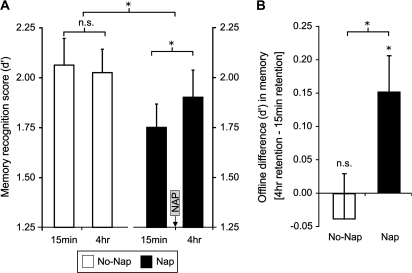
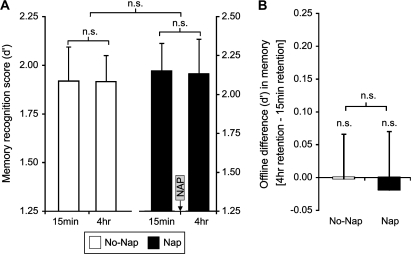
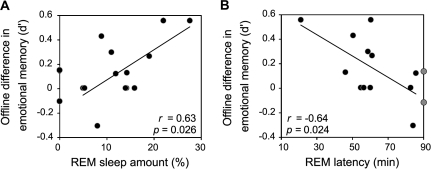
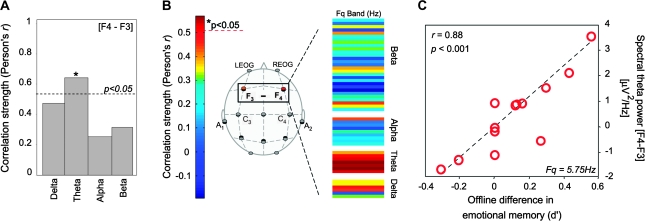
Both emotion and sleep are independently known to modulate declarative memory. Memory can be facilitated by emotion, leading to enhanced consolidation across increasing time delays. Sleep also facilitates offline memory processing, resulting in superior recall the next day. Here we explore whether rapid eye movement (REM) sleep, and aspects of its unique neurophysiology, underlie these convergent influences on memory. Using a nap paradigm, we measured the consolidation of neutral and negative emotional memories, and the association with REM-sleep electrophysiology. Subjects that napped showed a consolidation benefit for emotional but not neutral memories. The No-Nap control group showed no evidence of a consolidation benefit for either memory type. Within the Nap group, the extent of emotional memory facilitation was significantly correlated with the amount of REM sleep and also with right-dominant prefrontal theta power during REM. Together, these data support the role of REM-sleep neurobiology in the consolidation of emotional human memories, findings that have direct translational implications for affective psychiatric and mood disorders.
Overview
The claims and statistics of this paper haven’t been checked yet.
Free: it reads the open-access text and checks the first 5 claims that cite a source we can check. Create a free account to check every claim.
Integrity signals
Registry
Cites
Statistics
Figures
Verification
Claims the paper makes
The claims and statistics of this paper haven’t been checked yet.
Free: it reads the open-access text and checks the first 5 claims that cite a source we can check. Create a free account to check every claim.
Claims other papers make about this one
Each is checked against this paper’s own text: does it say what the citing paper says it does?
The source backs part of the claim, not all of it — or backs it for a different population, condition or comparison.
In the citing paper
“The integration of memories during sleep probably relies on an interleaved hippocampal reactivation of new and associated old memories and occurs in a fine-tuned interaction with cortical slow oscillations (< 1 Hz) and thalamocortical fast-spindle activity (13-15 Hz). 12”
From Effects of Sleep after Experimental Trauma on Intrusive Emotional Memories. (2016) · cites this paper as [12]
Experimental — accuracy not yet measuredThe source backs part of the claim, not all of it — or backs it for a different population, condition or comparison.
In the citing paper
“REM sleep plays a pivotal role in the processing of salient and emotional waking-life experiences, strongly contributing to the emotional memory consolidation”
From The Functional Role of Dreaming in Emotional Processes (2019) · cites this paper as Nishida et al., 2009
Experimental — accuracy not yet measuredThe source backs part of the claim, not all of it — or backs it for a different population, condition or comparison.
In the citing paper
“the results on EEG pattern related to the incorporated memories converged to assign a crucial role of REM theta oscillations in emotional re-processing”
From The Functional Role of Dreaming in Emotional Processes (2019) · cites this paper as Nishida et al., 2009
Experimental — accuracy not yet measuredThe source backs part of the claim, not all of it — or backs it for a different population, condition or comparison.
In the citing paper
“compelling evidence indicates that the potential EEG marker of emotional processes is the frontal theta activity (5–7 Hz) during REM sleep”
From The Functional Role of Dreaming in Emotional Processes (2019) · cites this paper as Nishida et al., 2009
Experimental — accuracy not yet measuredThe source backs part of the claim, not all of it — or backs it for a different population, condition or comparison.
In the citing paper
“The topographical changes of cortical oscillatory activity during sleep involve regions upon which relies a successful memory encoding in wakefulness.96”
From Spotlight on dream recall: the ages of dreams (2018) · cites this paper as [96]
Experimental — accuracy not yet measured
11 more claims about this paper
Create a free account to see every claim other papers make about this one.
Self-check
Percentages, sums and reported differences re-computed from the paper’s own numbers.
The self-check needs the paper’s full text.
Citations
Cites
Rechtschaffen, A. (1968) · Medical Entomology and Zoology · Cited by 12,654
Detection Theory: A User's Guide
Macmillan, N. A., & Creelman, C. D. (1991) · Cited by 5,415
Memory - A century of consolidation
McGaugh, J. L. (2000) · Science · doi:10.1126/science.287.5451.248 · Cited by 4,250
Theta oscillations in the hippocampus
Buzsáki, G. (2002) · Neuron · doi:10.1016/s0896-6273(02)00586-x · Cited by 3,332
International Affective Picture System (IAPS) : Technical Manual and Affective Ratings
Lang, P. J. (1995) · Medical Entomology and Zoology · Cited by 2,870
THE AMYGDALA MODULATES THE CONSOLIDATION OF MEMORIES OF EMOTIONALLY AROUSING EXPERIENCES
McGaugh, J. L. (2004) · Annual Review of Neuroscience · doi:10.1146/annurev.neuro.27.070203.144157 · Cited by 2,296
Huber, R., Felice Ghilardi, M., Massimini, M., & Tononi, G. (2004) · Nature · doi:10.1038/nature02663 · Cited by 1,854
Hemispheric encoding/retrieval asymmetry in episodic memory: positron emission tomography findings.
Tulving, E., Kapur, S., Craik, F. I., Moscovitch, M., & Houle, S. (1994) · Proceedings of the National Academy of Sciences · doi:10.1073/pnas.91.6.2016 · Cited by 1,595
Human emotion and memory: Interactions of the amygdala and hippocampal complex
Phelps, E. A. (2004) · Current Opinion in Neurobiology · doi:10.1016/j.conb.2004.03.015 · Cited by 1,577 · cited 5×
“Moreover, this behavioral benefit has been related to specific changes in neurochemical and neurophysiological states in certain subcortical and cortical networks (Cahill 2000; McGaugh 2000; Pare et al. 2002; McGaugh 2004; Phelps 2004).”
InfluentialAnxiety and affective style: role of prefrontal cortex and amygdala
Davidson, R. J. (2002) · Biological Psychiatry · doi:10.1016/s0006-3223(01)01328-2 · Cited by 1,135
Research works printed but not linked: 4
- Hoffmann, 1988, Brazilian journal of medical and biological research = Revista brasileira de pesquisas m dicas e biol gicas / Sociedade Brasileira de Biof sica ... [et al.], 21, 141
- 2005, PNAS, 102, 2626, 10.1073/pnas.0409848102 · DOI · Paper page
- Par, 2002, Trends in cognitive sciences, 6, 306, 10.1016/s1364-6613(02)01924-1 · DOI · Paper page
- 2006, Annual review of psychology, 10, 139
Cited by
Diekelmann, S., & Born, J. (2010) · Nature Reviews Neuroscience · doi:10.1038/nrn2762 · Cited by 3,760
Rasch, B., & Born, J. (2013) · Physiological Reviews · doi:10.1152/physrev.00032.2012 · Cited by 2,783
The brain basis of emotion: a meta-analytic review
Lindquist, K. A., Wager, T. D., Kober, H., Bliss-Moreau, E., & Barrett, L. F. (2012) · Behavioral and Brain Sciences · doi:10.1017/s0140525x11000446 · Cited by 2,320
Mechanisms of systems memory consolidation during sleep
Klinzing, J. G., Niethard, N., & Born, J. (2019) · Nature Neuroscience · doi:10.1038/s41593-019-0467-3 · Cited by 1,176
Overnight therapy? The role of sleep in emotional brain processing
Walker, M. P., & van der Helm, E. (2009) · Psychological Bulletin · doi:10.1037/a0016570 · Cited by 1,087
Self-citationThe role of sleep in emotional brain function
Goldstein, A. N., & Walker, M. P. (2014) · Annual Review of Clinical Psychology · doi:10.1146/annurev-clinpsy-032813-153716 · Cited by 1,052
“…consolidation of emotional (and not neutral) memory (Figure 2a&b), but the amount of EEG theta activity (4 – 7 Hz) – a dominant electrical oscillation of REM sleep expressed over the prefrontal cortex – predicts the overnight emotional memory retention benefit (Figure 2c&d) (Nishida et al 2009).”
BackgroundInfluentialSelf-citationThe Role of Sleep in Cognition and Emotion
Walker, M. P. (2009) · Annals of the New York Academy of Sciences · doi:10.1111/j.1749-6632.2009.04416.x · Cited by 993
Self-citationSleep-dependent memory triage: evolving generalization through selective processing
Stickgold, R., & Walker, M. P. (2013) · Nature Neuroscience · doi:10.1038/nn.3303 · Cited by 755
Self-citationSleep disturbances as the hallmark of PTSD: where are we now?
Germain, A. (2013) · American Journal of Psychiatry · doi:10.1176/appi.ajp.2012.12040432 · Cited by 634
REM, not incubation, improves creativity by priming associative networks
Cai, D. J., Mednick, S. A., Harrison, E. M., Kanady, J. C., & Mednick, S. C. (2009) · Proceedings of the National Academy of Sciences · doi:10.1073/pnas.0900271106 · Cited by 556
Sleep, Plasticity and Memory from Molecules to Whole-Brain Networks
Abel, T., Havekes, R., Saletin, J. M., & Walker, M. P. (2013) · Current Biology · doi:10.1016/j.cub.2013.07.025 · Cited by 552
Self-citationREM sleep dysregulation in depression: state of the art
Palagini, L., Baglioni, C., Ciapparelli, A., Gemignani, A., & Riemann, D. (2013) · Sleep Medicine Reviews · doi:10.1016/j.smrv.2012.11.001 · Cited by 513
Overlapping memory replay during sleep builds cognitive schemata
Lewis, P. A., & Durrant, S. J. (2011) · Trends in Cognitive Sciences · doi:10.1016/j.tics.2011.06.004 · Cited by 512
Sleep and emotional processing
Tempesta, D., Socci, V., De Gennaro, L., & Ferrara, M. (2018) · Sleep Medicine Reviews · doi:10.1016/j.smrv.2017.12.005 · Cited by 443
A systematic review of sleep disturbance in anxiety and related disorders
Cox, R. C., & Olatunji, B. O. (2016) · Journal of Anxiety Disorders · doi:10.1016/j.janxdis.2015.12.001 · Cited by 395
REM sleep depotentiates amygdala activity to previous emotional experiences
van der Helm, E., Yao, J., Dutt, S., Rao, V., Saletin, J. M., & Walker, M. P. (2011) · Current Biology · doi:10.1016/j.cub.2011.10.052 · Cited by 379
“Alternatively, or in addition, such findings may be explained by the recognized benefit of REM on emotional memory consolidation [3, 26–28], associated with theta EEG activity [29, 30], thereby decreasing postsleep stimulus novelty and hence emotion reactivity.”
Self-citationTiming of light exposure affects mood and brain circuits
Bedrosian, T. A., & Nelson, R. J. (2017) · Translational Psychiatry · doi:10.1038/tp.2016.262 · Cited by 356
Sleep—A brain-state serving systems memory consolidation
Brodt, S., Inostroza, M., Niethard, N., & Born, J. (2023) · Neuron · doi:10.1016/j.neuron.2023.03.005 · Cited by 343
Coherent amygdalocortical theta promotes fear memory consolidation during paradoxical sleep
Popa, D., Duvarci, S., Popescu, A. T., Léna, C., & Paré, D. (2010) · Proceedings of the National Academy of Sciences · doi:10.1073/pnas.0913016107 · Cited by 338
Concurrent Impairments in Sleep and Memory in Amnestic Mild Cognitive Impairment
Westerberg, C. E., Mander, B. A., Florczak, S. M., Weintraub, S., Mesulam, M.-M., Zee, P. C., & Paller, K. A. (2012) · Journal of the International Neuropsychological Society · doi:10.1017/s135561771200001x · Cited by 306
Sleep and its importance in adolescence and in common adolescent somatic and psychiatric conditions
Brand, S., & Kirov, R. (2011) · International Journal of General Medicine · doi:10.2147/ijgm.s11557 · Cited by 298
Dreaming as mind wandering: evidence from functional neuroimaging and first-person content reports
Fox, K. C. R., Nijeboer, S., Solomonova, E., Domhoff, G. W., & Christoff, K. (2013) · Frontiers in Human Neuroscience · doi:10.3389/fnhum.2013.00412 · Cited by 289
“The presence of emotional and personally relevant content in dreams may be related to the fact that emotional and impactful events are preferentially consolidated in memory (McGaugh et al., 2002; Nishida et al., 2009).”
BackgroundA role for REM sleep in recalibrating the sensitivity of the human brain to specific emotions
Gujar, N., McDonald, S. A., Nishida, M., & Walker, M. P. (2011) · Cerebral Cortex · doi:10.1093/cercor/bhq064 · Cited by 276
Self-citationDifferential Effects of Non-REM and REM Sleep on Memory Consolidation?
Ackermann, S., & Rasch, B. (2014) · Current Neurology and Neuroscience Reports · doi:10.1007/s11910-013-0430-8 · Cited by 257
Iyadurai, L., Visser, R. M., Lau-Zhu, A., Porcheret, K., Horsch, A., Holmes, E. A., & James, E. L. (2019) · Clinical Psychology Review · doi:10.1016/j.cpr.2018.08.005 · Cited by 256
Processing of emotional reactivity and emotional memory over sleep
Baran, B., Pace-Schott, E. F., Ericson, C., & Spencer, R. M. C. (2012) · The Journal of Neuroscience · doi:10.1523/jneurosci.2532-11.2012 · Cited by 254
“Given that REM latency has also been shown to predict emotional memory processing (Nishida et al., 2009), we examined whether this measure (time to enter REM), predicted behavioral measures.”
InfluentialCircadian rhythms and sleep in bipolar disorder
Murray, G., & Harvey, A. (2010) · Bipolar Disorders · doi:10.1111/j.1399-5618.2010.00843.x · Cited by 248
The role of REM sleep theta activity in emotional memory
Hutchison, I. C., & Rathore, S. (2015) · Frontiers in Psychology · doi:10.3389/fpsyg.2015.01439 · Cited by 245
“…Ekstrom et al., 2005; Lega et al., 2012) and during REM sleep (Cantero et al., 2003) which is also observed in the neocortex (Cape et al., 2000; Nishida et al., 2009), this activity does not appear to be synchronized between the hippocampus and neocortex (Cantero et al., 2003; Axmacher et…”
BackgroundInfluentialEffects of sleep on memory for conditioned fear and fear extinction.
Pace-Schott, E. F., Germain, A., & Milad, M. R. (2015) · Psychological Bulletin · doi:10.1037/bul0000014 · Cited by 218
Sleep promotes the neural reorganization of remote emotional memory
Sterpenich, V., Albouy, G., Darsaud, A., Schmidt, C., Vandewalle, G., Dang Vu, T. T., Desseilles, M., Phillips, C., Degueldre, C., Balteau, E., et al. (2009) · The Journal of Neuroscience · doi:10.1523/jneurosci.0561-09.2009 · Cited by 217
“Retrieval of emotional (relative to neutral) material several hours after encoding is enhanced if the interval contains an episode of sleep (Hu et al., 2006; Payne et al., 2008; Nishida et al., 2009), especially rapid eye movement (REM) sleep (Wagner et al., 2001), rather than a period of wake.”
BackgroundSleep and anxiety in late childhood and early adolescence
McMakin, D. L., & Alfano, C. A. (2015) · Current Opinion in Psychiatry · doi:10.1097/yco.0000000000000204 · Cited by 210
Groch, S., Wilhelm, I., Diekelmann, S., & Born, J. (2013) · Neurobiology of Learning and Memory · doi:10.1016/j.nlm.2012.10.006 · Cited by 208
The microstructure of REM sleep: Why phasic and tonic?
Simor, P., van der Wijk, G., Nobili, L., & Peigneux, P. (2020) · Sleep Medicine Reviews · doi:10.1016/j.smrv.2020.101305 · Cited by 207
The Role of Memory Reactivation during Wakefulness and Sleep in Determining Which Memories Endure
Oudiette, D., Antony, J. W., Creery, J. D., & Paller, K. A. (2013) · The Journal of Neuroscience · doi:10.1523/jneurosci.5497-12.2013 · Cited by 204
Richards, A., Kanady, J. C., & Neylan, T. C. (2020) · Neuropsychopharmacology · doi:10.1038/s41386-019-0486-5 · Cited by 200
Brain Oscillations in Sport: Toward EEG Biomarkers of Performance
Cheron, G., Petit, G., Cheron, J., Leroy, A., Cebolla, A., Cevallos, C., Petieau, M., Hoellinger, T., Zarka, D., Clarinval, A.-M., et al. (2016) · Frontiers in Psychology · doi:10.3389/fpsyg.2016.00246 · Cited by 192
The Functional Role of Dreaming in Emotional Processes
Scarpelli, S., Bartolacci, C., D'Atri, A., Gorgoni, M., & De Gennaro, L. (2019) · Frontiers in Psychology · doi:10.3389/fpsyg.2019.00459 · Cited by 190
“Moreover, the extent of emotional consolidation was significantly correlated with the proportion of REM sleep (Nishida et al., 2009).”
BackgroundInfluentialMarshall, L., Kirov, R., Brade, J., Mölle, M., & Born, J. (2011) · PLoS ONE · doi:10.1371/journal.pone.0016905 · Cited by 188
“Indications in the present study for an influence of theta-tDCS during REM sleep on control tests are supportive of processes during REM affecting cortical associations and emotional tone of dreams and/or memories [59,60].”
BackgroundThe reorganisation of memory during sleep
Landmann, N., Kühn, M., Piosczyk, H., Feige, B., Baglioni, C., Spiegelhalder, K., Frase, L., Riemann, D. W., Sterr, A., & Nissen, C. (2014) · Sleep Medicine Reviews · doi:10.1016/j.smrv.2014.03.005 · Cited by 185
Sleep promotes lasting changes in selective memory for emotional scenes
Payne, J. D., Chambers, A. M., & Kensinger, E. A. (2012) · Frontiers in Integrative Neuroscience · doi:10.3389/fnint.2012.00108 · Cited by 183
“Keywords: emotional memory formation, emotional memory enhancement, sleep, sleep and memory, memory consolidation, memory, emotion Emotional memories form the core of our personal histories.”
BackgroundResultInfluentialCognitive and emotional processes during dreaming: a neuroimaging view
Desseilles, M., Dang-Vu, T. T., Sterpenich, V., & Schwartz, S. (2011) · Consciousness and Cognition · doi:10.1016/j.concog.2010.10.005 · Cited by 182
Sanford, L. D., Suchecki, D., & Meerlo, P. (2014) · Current topics in behavioral neurosciences · doi:10.1007/7854_2014_314 · Cited by 178
Klune, C. B., Jin, B., & DeNardo, L. A. (2021) · eLife · doi:10.7554/elife.64567 · Cited by 174
NREM and REM Sleep: Complementary Roles in Recovery after Wakefulness
Vyazovskiy, V. V., & Delogu, A. (2014) · The Neuroscientist · doi:10.1177/1073858413518152 · Cited by 169
The role of rapid eye movement sleep for amygdala-related memory processing
Genzel, L., Spoormaker, V. I., Konrad, B. N., & Dresler, M. (2015) · Neurobiology of Learning and Memory · doi:10.1016/j.nlm.2015.01.008 · Cited by 161
The role of sleep and sleep deprivation in consolidating fear memories
Menz, M. M., Rihm, J. S., Salari, N., Born, J., Kalisch, R., Pape, H. C., Marshall, L., & Büchel, C. (2013) · NeuroImage · doi:10.1016/j.neuroimage.2013.03.001 · Cited by 158
“Possibly the position of scalp electrodes (C3, C4) might have been suboptimal for theta band analysis as e.g. Nishida et al. (2009), show a positive relationship between the amount of emotional memory improvement and right-dominant prefrontal theta power (F4–F3).”
Sleep intensity and the evolution of human cognition
Samson, D. R., & Nunn, C. L. (2015) · Evolutionary Anthropology Issues News and Reviews · doi:10.1002/evan.21464 · Cited by 154
The Role of Sleep in Directed Forgetting and Remembering of Human Memories
Saletin, J. M., Goldstein, A. N., & Walker, M. P. (2011) · Cerebral Cortex · doi:10.1093/cercor/bhr034 · Cited by 151
Self-citationCho, J. R., Joo, E. Y., Koo, D. L., & Hong, S. B. (2013) · Sleep Medicine · doi:10.1016/j.sleep.2013.09.007 · Cited by 151
Trauma associated sleep disorder: a parasomnia induced by trauma
Mysliwiec, V., Brock, M. S., Creamer, J. L., O'Reilly, B. M., Germain, A., & Roth, B. J. (2018) · Sleep Medicine Reviews · doi:10.1016/j.smrv.2017.01.004 · Cited by 150
Spoormaker, V. I., Sturm, A., Andrade, K. C., Schröter, M. S., Goya‐Maldonado, R., Holsboer, F., Wetter, T. C., Sämann, P. G., & Czisch, M. (2010) · Journal of Psychiatric Research · doi:10.1016/j.jpsychires.2010.04.017 · Cited by 150
Vanhollebeke, G., Smet, S. D., Raedt, R. D., Baeken, C., van Mierlo, P., & Vanderhasselt, M. (2022) · Neurobiology of Stress · doi:10.1016/j.ynstr.2022.100452 · Cited by 150
Kaestner, E. J., Wixted, J. T., & Mednick, S. C. (2013) · Journal of Cognitive Neuroscience · doi:10.1162/jocn_a_00433 · Cited by 149
Enhanced emotional reactivity after selective REM sleep deprivation in humans: an fMRI study
Rosales-Lagarde, A., Armony, J. L., del Río-Portilla, Y., Trejo-Martínez, D., Conde, R., & Corsi-Cabrera, M. (2012) · Frontiers in Behavioral Neuroscience · doi:10.3389/fnbeh.2012.00025 · Cited by 143
Cairney, S. A., Durrant, S. J., Power, R., & Lewis, P. A. (2015) · Cerebral Cortex · doi:10.1093/cercor/bht349 · Cited by 139
“superior retention of emotional memories (Wagner et al. 2001; Nishida et al. 2009; Payne et al. 2012; Groch et al. 2013).”
Marzano, C., Ferrara, M., Mauro, F., Moroni, F., Gorgoni, M., Tempesta, D., Cipolli, C., & De Gennaro, L. (2011) · The Journal of Neuroscience · doi:10.1523/jneurosci.0412-11.2011 · Cited by 137
Memory consolidation as an adaptive process
Cowan, E. T., Schapiro, A. C., Dunsmoor, J. E., & Murty, V. P. (2021) · Psychonomic Bulletin & Review · doi:10.3758/s13423-021-01978-x · Cited by 133
Sleep disturbances, TBI and PTSD: Implications for treatment and recovery
Gilbert, K. S., Kark, S. M., Gehrman, P., & Bogdanova, Y. (2015) · Clinical Psychology Review · doi:10.1016/j.cpr.2015.05.008 · Cited by 133
Napping and the selective consolidation of negative aspects of scenes
Payne, J. D., Kensinger, E. A., Wamsley, E. J., Spreng, R. N., Alger, S. E., Gibler, K., Schacter, D. L., & Stickgold, R. (2015) · Emotion · doi:10.1037/a0038683 · Cited by 130
“Further, following previous findings (Nishida et al., 2009; Payne et al., 2012b), we predicted that this consolidation benefit would be related to theta activity as well as the amount of REM sleep obtained in the nap.”
InfluentialHo, Y.-T., Tsai, Y.-C., Kuo, T. B. J., & Yang, C. C. H. (2021) · Nutrients · doi:10.3390/nu13082820 · Cited by 130
Losing Neutrality: The Neural Basis of Impaired Emotional Control without Sleep
Simon, E. B., Oren, N., Sharon, H., Kirschner, A., Goldway, N., Okon-Singer, H., Tauman, R., Deweese, M. M., Keil, A., & Hendler, T. (2015) · The Journal of Neuroscience · doi:10.1523/jneurosci.1314-15.2015 · Cited by 126
A Review of the Relationship Between Emotional Learning and Memory, Sleep, and PTSD
Colvonen, P. J., Straus, L. D., Acheson, D. T., & Gehrman, P. (2019) · Current Psychiatry Reports · doi:10.1007/s11920-019-0987-2 · Cited by 126
Targeted Memory Reactivation During Slow Wave Sleep Facilitates Emotional Memory Consolidation
Cairney, S. A., Durrant, S. J., Hulleman, J., & Lewis, P. A. (2014) · Sleep · doi:10.5665/sleep.3572 · Cited by 125
Prehn-Kristensen, A., Munz, M., Molzow, I., Wilhelm, I., Wiesner, C. D., & Baving, L. (2013) · PLoS ONE · doi:10.1371/journal.pone.0065098 · Cited by 121
“Here, the PFC may play a critical role: frontally generated slow oscillations during SWS are believed to drive the reactivation of hippocampus-associated memory representation [62], while frontal theta power during REM sleep might reflect the memory boosting synchronisation of PFC and amygdala activity during REM slee…”
BackgroundHippocampal memory consolidation during sleep: a comparison of mammals and birds
Rattenborg, N. C., Martinez‐Gonzalez, D., Roth, T. C., & Pravosudov, V. V. (2011) · Biological Reviews · doi:10.1111/j.1469-185x.2010.00165.x · Cited by 120
Effects of Sleep after Experimental Trauma on Intrusive Emotional Memories.
Kleim, B., Wysokowsky, J., Schmid, N., Seifritz, E., & Rasch, B. (2016) · Sleep · doi:10.5665/sleep.6310 · Cited by 119
Sleep and the processing of emotions
Deliens, G., Gilson, M., & Peigneux, P. (2014) · Experimental Brain Research · doi:10.1007/s00221-014-3832-1 · Cited by 119
Sleep in children enhances preferentially emotional declarative but not procedural memories
Prehn-Kristensen, A., Göder, R., Chirobeja, S., Breßmann, I., Ferstl, R., & Baving, L. (2009) · Journal of Experimental Child Psychology · doi:10.1016/j.jecp.2009.01.005 · Cited by 117
Memory, sleep, and dreaming: experiencing consolidation
Wamsley, E. J., & Stickgold, R. (2011) · Sleep Medicine Clinics · doi:10.1016/j.jsmc.2010.12.008 · Cited by 115
Seifpour, S., Niknazar, H., Mikaeili, M., & Nasrabadi, A. M. (2018) · Expert Systems with Applications · doi:10.1016/j.eswa.2018.03.020 · Cited by 115
Prehn-Kristensen, A., Göder, R., Fischer, J., Wilhelm, I., Seeck-Hirschner, M., Aldenhoff, J., & Baving, L. (2011) · Sleep Medicine · doi:10.1016/j.sleep.2010.10.010 · Cited by 114
“As suggested by Nishida and colleagues, it is not the amount of REM sleep per se but rather the prefrontal theta activity during REM sleep that benefits emotional memory consolidation [56].”
BackgroundSleep enhances exposure therapy
Kleim, B., Wilhelm, F. H., Temp, L., Margraf, J., Wiederhold, B. K., & Rasch, B. (2014) · Psychological Medicine · doi:10.1017/s0033291713001748 · Cited by 113
“2011), or retention of previously encoded emotional pictures or texts (Wagner et al. 2001; Payne et al. 2008; Nishida et al. 2009).”
BackgroundInfluentialBinder, S., Baier, P. C., Mölle, M., Inostroza, M., Born, J., & Marshall, L. (2011) · Neurobiology of Learning and Memory · doi:10.1016/j.nlm.2011.12.004 · Cited by 113
Sleep spindles preferentially consolidate weakly encoded memories
Denis, D., Mylonas, D., Poskanzer, C., Bursal, V., Payne, J. D., & Stickgold, R. (2021) · The Journal of Neuroscience · doi:10.1523/jneurosci.0818-20.2021 · Cited by 112
Theta oscillations synchronize human medial prefrontal cortex and amygdala during fear learning
Chen, S., Tan, Z., Xia, W., Gomes, C. A., Zhang, X., Zhou, W., Liang, S., Axmacher, N., & Wang, L. (2021) · Science Advances · doi:10.1126/sciadv.abf4198 · Cited by 112
Increased fragmentation of sleep–wake cycles in the 5XFAD mouse model of Alzheimer’s disease
Sethi, M., Joshi, S., Webb, R. L., Beckett, T. L., Donohue, K. D., Murphy, M. P., O’Hara, B. F., & Duncan, M. J. (2015) · Neuroscience · doi:10.1016/j.neuroscience.2015.01.035 · Cited by 111
Sleep Supports Selective Retention of Associative Memories Based on Relevance for Future Utilization
van Dongen, E. V., Thielen, J.-W., Takashima, A., Barth, M., & Fernández, G. (2012) · PLoS ONE · doi:10.1371/journal.pone.0043426 · Cited by 110
“from two recent studies that demonstrated that sleep stabilizes emotional over neutral memories [12,13].”
ResultBetter than sleep: Theta neurofeedback training accelerates memory consolidation
Reiner, M., Rozengurt, R., & Barnea, A. (2013) · Biological Psychology · doi:10.1016/j.biopsycho.2013.10.010 · Cited by 110
Napping promotes inter-session habituation to emotional stimuli
Pace-Schott, E. F., Shepherd, E., Spencer, R. M. C., Marcello, M., Tucker, M., Propper, R. E., & Stickgold, R. (2011) · Neurobiology of Learning and Memory · doi:10.1016/j.nlm.2010.10.006 · Cited by 109
“REM sleep may be especially important for the consolidation and modulation of emotional memory (Levin & Nielsen, 2007; Nishida et al., 2009; Wagner et al., 2001).”
BackgroundWells, A. M., Ridener, E., Bourbonais, C. A., Kim, W., Pantazopoulos, H., Carroll, F. I., Kim, K.-S., Cohen, B. M., & Carlezon, W. A. (2017) · The Journal of Neuroscience · doi:10.1523/jneurosci.0885-17.2017 · Cited by 108
Vagal nerve stimulation as a promising tool in the improvement of cognitive disorders
Broncel, A., Bocian, R., Kłos‐Wojtczak, P., Kulbat-Warycha, K., & Konopacki, J. (2019) · Brain Research Bulletin · doi:10.1016/j.brainresbull.2019.11.011 · Cited by 108
Sterpenich, V., Schmidt, C., Albouy, G., Matarazzo, L., Vanhaudenhuyse, A., Boveroux, P., Degueldre, C., Leclercq, Y., Balteau, E., Collette, F., et al. (2014) · Sleep · doi:10.5665/sleep.3762 · Cited by 107
Wiesner, C. D., Pulst, J., Krause, F., Elsner, M., Baving, L., Pedersen, A., Prehn-Kristensen, A., & Göder, R. (2015) · Neurobiology of Learning and Memory · doi:10.1016/j.nlm.2015.02.008 · Cited by 105
Complementary contributions of non-REM and REM sleep to visual learning
Tamaki, M., Wang, Z., Barnes-Diana, T., Guo, D., Berard, A. V., Walsh, E., Watanabe, T., & Sasaki, Y. (2020) · Nature Neuroscience · doi:10.1038/s41593-020-0666-y · Cited by 105
Lehmann, M., Schreiner, T., Seifritz, E., & Rasch, B. (2016) · Scientific Reports · doi:10.1038/srep39229 · Cited by 103
Sleep and emotional memory processing
van der Helm, E., & Walker, M. P. (2011) · Sleep Medicine Clinics · doi:10.1016/j.jsmc.2010.12.010 · Cited by 102
Self-citationSleep loss increases dissociation and affects memory for emotional stimuli
der Kloet, D. V. H., Giesbrecht, T., & Merckelbach, H. L. G. J. (2014) · Journal of Behavior Therapy and Experimental Psychiatry · doi:10.1016/j.jbtep.2014.11.002 · Cited by 101
REM obstructive sleep apnea: risk for adverse health outcomes and novel treatments
Varga, A. W., & Mokhlesi, B. (2018) · Sleep And Breathing · doi:10.1007/s11325-018-1727-2 · Cited by 101
Fear in dreams and in wakefulness: Evidence for day/night affective homeostasis
Sterpenich, V, Perogamvros, L., Tononi, G., & Schwartz, S. (2019) · bioRxiv (Cold Spring Harbor Laboratory) · doi:10.1101/534099 · Cited by 99
Fear in dreams and in wakefulness: Evidence for day/night affective homeostasis
Sterpenich, V., Perogamvros, L., Tononi, G., & Schwartz, S. (2020) · Human Brain Mapping · doi:10.1002/hbm.24843 · Cited by 99
How rhythms of the sleeping brain tune memory and synaptic plasticity
Puentes-Mestril, C., Roach, J., Niethard, N., Zochowski, M., & Aton, S. J. (2019) · Sleep · doi:10.1093/sleep/zsz095 · Cited by 97
Poor Sleep Quality Predicts Deficient Emotion Information Processing over Time in Early Adolescence
Soffer-Dudek, N., Sadeh, A., Dahl, R. E., & Rosenblat-Stein, S. (2011) · Sleep · doi:10.5665/sleep.1386 · Cited by 96
Llewellyn, S. (2013) · Behavioral and Brain Sciences · doi:10.1017/s0140525x12003135 · Cited by 95
Differential Effects of Controllable and Uncontrollable Footshock Stress on Sleep in Mice
Sanford, L. D., Yang, L., Wellman, L. L., Liu, X., & Tang, X. (2010) · Sleep · doi:10.1093/sleep/33.5.621 · Cited by 94
Contribution of norepinephrine to emotional memory consolidation during sleep
Groch, S., Wilhelm, I., Diekelmann, S., Sayk, F., Gais, S., & Born, J. (2011) · Psychoneuroendocrinology · doi:10.1016/j.psyneuen.2011.03.006 · Cited by 93
Cowdin, N., Kobayashi, I., & Mellman, T. A. (2014) · Experimental Brain Research · doi:10.1007/s00221-014-3857-5 · Cited by 92
“Experiments implicate REM sleep in enhancing consolidation of memories with a negative valence (Nishida et al. 2009; Wagner et al. 2001).”
InfluentialFinan, P. H., Richards, J. M., Gamaldo, C. E., Han, D., Leoutsakos, J. M., Salas, R., Irwin, M. R., & Smith, M. T. (2016) · Journal of Clinical Sleep Medicine · doi:10.5664/jcsm.6262 · Cited by 90
Preferential Consolidation of Emotional Memory During Sleep: A Meta-Analysis
Lipinska, G., Stuart, B., Thomas, K. G. F., Baldwin, D. S., & Bolinger, E. (2019) · Frontiers in Psychology · doi:10.3389/fpsyg.2019.01014 · Cited by 90
Feld, G. B., & Born, J. (2019) · Neuropsychopharmacology · doi:10.1038/s41386-019-0490-9 · Cited by 90
The effect of zolpidem on memory consolidation over a night of sleep
Zhang, J., Yetton, B., Whitehurst, L. N., Naji, M., & Mednick, S. C. (2020) · Sleep · doi:10.1093/sleep/zsaa084 · Cited by 89
“Although the theta that can be measured via scalp EEG in humans is unlikely the same as the hippocampal theta measured in rodents, human memory studies have shown a relation between theta EEG and emotional memory consolidation during REM sleep [70, 71].”
Background
Metadata
- Authors
- Nishida, M., Pearsall, J., Buckner, R. L., & Walker, M. P.
- Affiliations
- Tokyo Medical and Dental University (JP)
- Howard Hughes Medical Institute (US)
- University of California, Berkeley (US)
- Corresponding author
- Walker, M. P.
- Venue
- Cerebral Cortex
- Publisher
- Oxford University Press (OUP)
- Published
- 2008-10-01
- Volume
- 19
- Issue
- 5
- Pages
- 1158-1166
- ISSN
- 1047-3211 (ISSN-L)
- 1460-2199
- PMC
- PMC2665156
- OpenAlex
- W2139705940
- Semantic Scholar
- 327050a9b0af4acf6ce91b4688ef89fc9b8de013
- Cited by
- 603
- References
- 69
- Citations by year
- 2026: 21 · 2025: 37 · 2024: 26 · 2023: 33 · 2022: 26 · 2021: 37 · 2020: 43 · 2019: 51 · 2018: 44 · 2017: 38 · 2016: 33 · 2015: 50 · 2014: 38 · 2013: 39 · 2012: 23
- FWCI
- 10.88
- Type
- journal article
- Language
- en
- Open access
- hybrid
- doi.org
- Licence
- cc-by-nc
- Locations
- Cerebral Cortex (publishedVersion, cc-by-nc)
- PubMed Central (publishedVersion, cc-by-nc)
- PubMed (publishedVersion)
- Digital Access to Scholarship at Harvard (DASH) (Harvard University) (submittedVersion, cc-by)
- Funders
- Howard Hughes Medical Institute
- National Institute of Mental Health (R03MH069935, MH069935)
- Topics
- Life Sciences › Neuroscience › Cognitive Neuroscience › Sleep and Wakefulness Research
- Life Sciences › Neuroscience › Cognitive Neuroscience › Memory and Neural Mechanisms
- Life Sciences › Neuroscience › Cognitive Neuroscience › Memory Processes and Influences
- Keywords
- REM sleep, emotional memory consolidation, sleep-dependent memory consolidation, mood disorders
- MeSH terms
- Adolescent, Adult, Emotions, Female, Humans, Functional Laterality, Male, Reaction Time, Sleep, REM, Theta Rhythm, Prefrontal Cortex, Recognition, Psychology, Young Adult
About these checks
Registry, retraction, Cites and statistics results are computed, not judged, with one exception: a printed reference that no index lists is read once by a model before it counts as a citation error. Claims are extracted by a model and kept only when their quote appears verbatim in the text; each cited source is then checked, with a model’s help, for whether it says what the claim relies on. Those verdicts can be wrong — read the claim’s quote and the cited source before relying on one.
Statistics and arithmetic are recomputed, not judged.
Confidence bands are shown only for fields calibrated on our annotated test set. None is calibrated yet, so no band is shown.
What counts as a claim ›How we measure confidence ›How we check this ›
Are you an author, or do you see a problem with this page? Request a review
Data sources
Bibliographic data: Semantic Scholar, OpenAlex, Crossref.
Contains information from the Semantic Scholar Academic Graph Datasets, made available under the ODC Attribution License (ODC-BY 1.0).
Semantic Scholar’s data is described in: Kinney, R., et al. (2023). The Semantic Scholar Open Data Platform. arXiv:2301.10140.
