

Three Systems of Insular Functional Connectivity Identified with Cluster Analysis
Open accessThe DOI matches its Crossref record; 87 of the 88 references it cites were found in a registry or an index.
Abstract
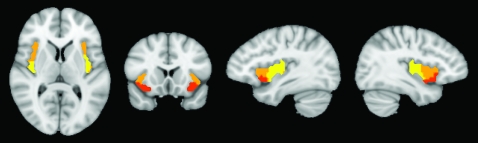
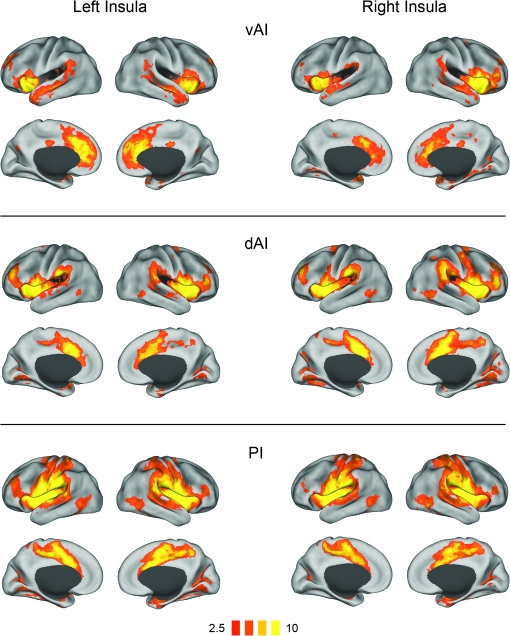
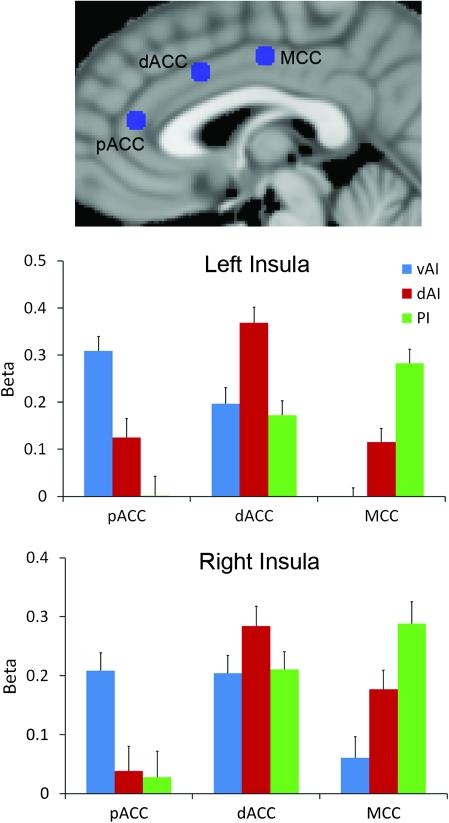
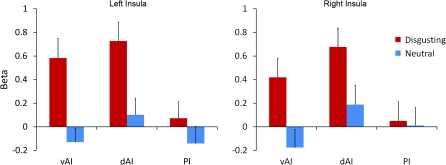
Despite much research on the function of the insular cortex, few studies have investigated functional subdivisions of the insula in humans. The present study used resting-state functional connectivity magnetic resonance imaging (MRI) to parcellate the human insular lobe based on clustering of functional connectivity patterns. Connectivity maps were computed for each voxel in the insula based on resting-state functional MRI (fMRI) data and segregated using cluster analysis. We identified 3 insular subregions with distinct patterns of connectivity: a posterior region, functionally connected with primary and secondary somatomotor cortices; a dorsal anterior to middle region, connected with dorsal anterior cingulate cortex, along with other regions of a previously described control network; and a ventral anterior region, primarily connected with pregenual anterior cingulate cortex. Applying these regions to a separate task data set, we found that dorsal and ventral anterior insula responded selectively to disgusting images, while posterior insula did not. These results demonstrate that clustering of connectivity patterns can be used to subdivide cerebral cortex into anatomically and functionally meaningful subregions; the insular regions identified here should be useful in future investigations on the function of the insula.
Overview
The claims and statistics of this paper haven’t been checked yet.
Free: it reads the open-access text and checks the first 5 claims that cite a source we can check. Create a free account to check every claim.
Integrity signals
Registry
Cites
Statistics
Figures
Verification
Claims the paper makes
The claims and statistics of this paper haven’t been checked yet.
Free: it reads the open-access text and checks the first 5 claims that cite a source we can check. Create a free account to check every claim.
Claims other papers make about this one
Each is checked against this paper’s own text: does it say what the citing paper says it does?
The source backs part of the claim, not all of it — or backs it for a different population, condition or comparison.
In the citing paper
“On the contrary, AIC as well as other subregions of the insular cortex work closely coupled with other brain regions and networks (Cauda et al., 2011; Deen et al., 2011; Peltz et al., 2011) to translate different modalities of information effectively into subjective awareness.”
From Anterior insular cortex and emotional awareness (2013) · cites this paper as Deen et al., 2011
Experimental — accuracy not yet measuredThe cited source says what the claim attributes to it.
In the citing paper
“Much of these data rest on assuming a central role for the anterior insular cortex (AIC), operating within a rich functional network [30], both as a comparator that registers top-down predictions against bottom-up prediction errors and as a source of anticipatory visceromotor control [6-9,15,16].”
From Interoceptive inference, emotion, and the embodied self (2013) · cites this paper as [30]
In the citing paper
“It is commonly divided into anterior and posterior parts, based on the cytoarchitectonic and functional connectivity”
From The Insula: A Brain Stimulation Target for the Treatment of Addiction (2019) · cites this paper as Deen et al., 2011
Self-check
Percentages, sums and reported differences re-computed from the paper’s own numbers.
The self-check needs the paper’s full text.
Citations
Cites
Normalized cuts and image segmentation
Shi, J., & Malik, J. (2000) · IEEE Transactions on Pattern Analysis and Machine Intelligence · doi:10.1109/34.868688 · Cited by 15,502
Co-Planar Stereotaxic Atlas of the Human Brain
Talairach, J., & Tournoux, P. (1988) · Medical Entomology and Zoology · Cited by 11,798
Functional connectivity in the motor cortex of resting human brain using echo‐planar mri
Biswal, B., Zerrin Yetkin, F., Haughton, V. M., & Hyde, J. S. (1995) · Magnetic Resonance in Medicine · doi:10.1002/mrm.1910340409 · Cited by 9,812
Advances in Neural Information Processing Systems 14: Proceedings of the 2001 Conference
(2002) · The MIT Press eBooks · doi:10.7551/mitpress/1120.001.0001 · Cited by 8,890
The human brain is intrinsically organized into dynamic, anticorrelated functional networks
Fox, M. D., Snyder, A. Z., Vincent, J. L., Corbetta, M., Van Essen, D. C., & Raichle, M. E. (2005) · Proceedings of the National Academy of Sciences · doi:10.1073/pnas.0504136102 · Cited by 8,553 · cited 3×
“…variation in distant regions, even in the absence of external stimulation, have been observed in a range of networks and have been used as an assay of functional connectivity in the human brain (Biswal et al. 1995; Lowe et al. 1998; Greicius et al. 2003; Beckmann et al. 2005; Fox et al. 2005).”
On Spectral Clustering: Analysis and an algorithm
Ng, A. Y., Jordan, M. I., & Weiss, Y. (2001) · Cited by 8,159
Co-planar stereotaxic atlas of the human brain
Laitinen, L. (1989) · Clinical Neurology and Neurosurgery · doi:10.1016/0303-8467(89)90128-5 · Cited by 7,565
Dissociable intrinsic connectivity networks for salience processing and executive control
Seeley, W. W., Menon, V., Schatzberg, A. F., Keller, J., Glover, G. H., Kenna, H., Reiss, A. L., & Greicius, M. D. (2007) · The Journal of Neuroscience · doi:10.1523/jneurosci.5587-06.2007 · Cited by 7,426 · cited 5×
“A correlation between vAI and pACC was also found by Margulies et al. (2007), in a cingulate-seeded connectivity analysis; vAI and pACC were also included in the salience network described by Seeley et al. (2007).”
BackgroundResultInfluentialHow do you feel — now? The anterior insula and human awareness
(Bud) Craig, A. D. (2009) · Nature Reviews Neuroscience · doi:10.1038/nrn2555 · Cited by 6,657
Functional connectivity in the resting brain: a network analysis of the default mode hypothesis
Greicius, M. D., Krasnow, B., Reiss, A. L., & Menon, V. (2003) · Proceedings of the National Academy of Sciences · doi:10.1073/pnas.0135058100 · Cited by 6,358 · cited 2×
“…variation in distant regions, even in the absence of external stimulation, have been observed in a range of networks and have been used as an assay of functional connectivity in the human brain (Biswal et al. 1995; Lowe et al. 1998; Greicius et al. 2003; Beckmann et al. 2005; Fox et al. 2005).”
BackgroundMethodInfluential
Cited by
Salience processing and insular cortical function and dysfunction
Uddin, L. Q. (2015) · Nature Reviews Neuroscience · doi:10.1038/nrn3857 · Cited by 2,083
Interoceptive inference, emotion, and the embodied self
Seth, A. K. (2013) · Trends in Cognitive Sciences · doi:10.1016/j.tics.2013.09.007 · Cited by 1,816
Structure and Function of the Human Insula
Uddin, L. Q., Nomi, J. S., Hébert-Seropian, B., Ghaziri, J., & Boucher, O. (2017) · Journal of Clinical Neurophysiology · doi:10.1097/wnp.0000000000000377 · Cited by 1,262
Behavioral interpretations of intrinsic connectivity networks
Laird, A. R., Fox, P. M., Eickhoff, S. B., Turner, J. A., Ray, K. L., McKay, D. R., Glahn, D. C., Beckmann, C. F., Smith, S. M., & Fox, P. T. (2011) · Journal of Cognitive Neuroscience · doi:10.1162/jocn_a_00077 · Cited by 1,023
Bernhardt, B. C., & Singer, T. (2012) · Annual Review of Neuroscience · doi:10.1146/annurev-neuro-062111-150536 · Cited by 952
An Interoceptive Predictive Coding Model of Conscious Presence
Seth, A. K., Suzuki, K., & Critchley, H. D. (2012) · Frontiers in Psychology · doi:10.3389/fpsyg.2011.00395 · Cited by 950
“THE INSULAR CORTEX, INTEROCEPTION, AND EMOTION The human insular cortex is a large and highly interconnected structure, deeply embedded in the brain (see Figure 2; Augustine, 1996; Medford and Critchley, 2010; Deen et al., 2011).”
BackgroundMethodBeissner, F., Meissner, K., Bar, K.-J., & Napadow, V. (2013) · Journal of Neuroscience · doi:10.1523/jneurosci.1103-13.2013 · Cited by 920
“The insula is a functionally heterogeneous structure and has been shown previously to consist of at least three functional subregions exhibiting differential connectivity with the cingulate cortex (Deen et al., 2011).”
BackgroundChang, L. J., Yarkoni, T., Khaw, M. W., & Sanfey, A. G. (2013) · Cerebral Cortex · doi:10.1093/cercor/bhs065 · Cited by 879
“Our work addresses a number of limitations associated with previous functional connectivity (Cauda et al. 2011; Deen et al. 2011) and meta-analyses (Wager and Feldman-Barrett 2004; Mutschler et al.”
InfluentialSescousse, G., Caldú, X., Segura, B., & Dreher, J.-C. (2013) · Neuroscience & Biobehavioral Reviews · doi:10.1016/j.neubiorev.2013.02.002 · Cited by 782
Anterior insular cortex and emotional awareness
Gu, X., Hof, P. R., Friston, K. J., & Fan, J. (2013) · Journal of Comparative Neurology · doi:10.1002/cne.23368 · Cited by 712
“…that the insular cortex works closely with a network of regions, including the ACC (Critchley, 2004; Critchley et al., 2004; Medford and Critchley, 2010; Fan et al., 2011; Denny et al., 2012; Lindquist et al., 2012), somatosensory cortex (Gu et al., 2013), and amygdala (Etkin and Wager, 2007).”
InfluentialMenon, V. (2015) · Brain Mapping · doi:10.1016/b978-0-12-397025-1.00052-x · Cited by 625
Palaniyappan, L., & Liddle, P. F. (2012) · Journal of Psychiatry and Neuroscience · doi:10.1503/jpn.100176 · Cited by 548
Mars, R. B., Sallet, J., Schuffelgen, U., Jbabdi, S., Toni, I., & Rushworth, M. F. S. (2012) · Cerebral Cortex · doi:10.1093/cercor/bhr268 · Cited by 520
“2010), insular cortex (Deen et al. 2011), parahippocampal cortex (Vincent et al.”
BackgroundMethodResting state functional connectivity in addiction: Lessons learned and a road ahead
Sutherland, M. T., McHugh, M. J., Pariyadath, V., & Stein, E. A. (2012) · NeuroImage · doi:10.1016/j.neuroimage.2012.01.117 · Cited by 494
“these insular functional subdivisions using rsFC analyses has generally bolstered such a conceptualization (Cauda et al., 2011; Deen et al., 2011; Taylor et al., 2009).”
MethodThe neurobiology of interoception in health and disease
Quadt, L., Critchley, H. D., & Garfinkel, S. N. (2018) · Annals of the New York Academy of Sciences · doi:10.1111/nyas.13915 · Cited by 434
Visceral Signals Shape Brain Dynamics and Cognition
Azzalini, D., Rebollo, I., & Tallon-Baudry, C. (2019) · Trends in Cognitive Sciences · doi:10.1016/j.tics.2019.03.007 · Cited by 409
Simmons, W. K., Avery, J. A., Barcalow, J. C., Bodurka, J., Drevets, W. C., & Bellgowan, P. (2013) · Human Brain Mapping · doi:10.1002/hbm.22113 · Cited by 401
“This finding agrees very well with recent findings demonstrating functional connectivity between the dorsal anterior insula and the anterior prefrontal region implicated in attention and cognitive control [Deen et al., 2011; Touroutoglou et al., 2012].”
ResultA convergent functional architecture of the insula emerges across imaging modalities
Kelly, C., Toro, R., Di Martino, A., Cox, C. L., Bellec, P., Castellanos, F. X., & Milham, M. P. (2012) · NeuroImage · doi:10.1016/j.neuroimage.2012.03.021 · Cited by 374
“Finally, as others have pointed out (Deen et al., 2011; Laird et al., 2011) the use of pre-defined ROIs allows researchers to test hypotheses concerning differential localization or timing of stimulus or task-evoked responses without “double-dipping” (Kriegeskorte et al., 2009; Vul et al., 2009).”
InfluentialCommon Dysfunction of Large-Scale Neurocognitive Networks Across Psychiatric Disorders
Sha, Z., Wager, T. D., Mechelli, A., & He, Y. (2019) · Biological Psychiatry · doi:10.1016/j.biopsych.2018.11.011 · Cited by 367
“A previous coactivation meta-analysis reported that the posterior insula, a component of the SN, is associated with sensorimotor processes (49), suggesting that basic sensory features of the environment have excessive influence on cognitive processing in the diseased brain (48).”
Cai, W., Ryali, S., Chen, T., Li, C.-S. R., & Menon, V. (2014) · The Journal of Neuroscience · doi:10.1523/jneurosci.3048-14.2014 · Cited by 362
“DOI:10.1523/JNEUROSCI.3048-14.2014 Copyright © 2014 the authors 0270-6474/14/3414652-16$15.00/0 cuits associated with each subdivision (Cohen et al., 2008; Deen et al., 2011).”
InfluentialNeural correlates of maintaining one’s political beliefs in the face of counterevidence
Kaplan, J. T., Gimbel, S. I., & Harris, S. (2016) · Scientific Reports · doi:10.1038/srep39589 · Cited by 347
The role of the salience network in cognitive and affective deficits
Schimmelpfennig, J., Topczewski, J., Zajkowski, W., & Jankowiak-Siuda, K. (2023) · Frontiers in Human Neuroscience · doi:10.3389/fnhum.2023.1133367 · Cited by 325
“Functional MRI data suggests that at least three subdivisions can be recognized within the insula on the basis of differential FC patterns: a dorsal anterior (dAI) involved in high-level cognitive control processes (activated by tasks requiring attention and redirecting information to the DLPFC-PPC loop), a ventral an…”
BackgroundDörfel, D., Lamke, J.-P., Hummel, F., Wagner, U., Erk, S., & Walter, H. (2014) · NeuroImage · doi:10.1016/j.neuroimage.2014.06.051 · Cited by 322
“The anterior insula has been frequently associated with emotional awareness (Craig, 2009; Deen et al., 2011; Menon and Uddin, 2010) and social emotions (Lamm and Singer, 2010; Singer et al.”
BackgroundAnterior insula as a gatekeeper of executive control
Molnar-Szakacs, I., & Uddin, L. Q. (2022) · Neuroscience & Biobehavioral Reviews · doi:10.1016/j.neubiorev.2022.104736 · Cited by 305
“and posterior (PI; red), following the parcellation scheme reported by Deen and colleagues (Deen et al., 2011).”
ResultThe Corticocortical Structural Connectivity of the Human Insula
Ghaziri, J., Tucholka, A., Girard, G., Houde, J.-C., Boucher, O., Gilbert, G., Descoteaux, M., Lippé, S., Rainville, P., & Nguyen, D. K. (2017) · Cerebral Cortex · doi:10.1093/cercor/bhv308 · Cited by 303
Identifying and Mapping Connectivity Patterns of Brain Network Hubs in Alzheimer's Disease
Dai, Z., Yan, C., Li, K., Wang, Z., Wang, J., Cao, M., Lin, Q., Shu, N., Xia, M., Bi, Y., et al. (2015) · Cerebral Cortex · doi:10.1093/cercor/bhu246 · Cited by 297
Where in the Brain Is Depression?
Pandya, M., Altinay, M., Malone, D. A., & Anand, A. (2012) · Current Psychiatry Reports · doi:10.1007/s11920-012-0322-7 · Cited by 295
Meta-analytic clustering of the insular cortex
Cauda, F., Costa, T., Torta, D. M. E., Sacco, K., D'Agata, F., Duca, S., Geminiani, G., Fox, P. T., & Vercelli, A. (2012) · NeuroImage · doi:10.1016/j.neuroimage.2012.04.012 · Cited by 292
“…tract-tracing (Cerliani et al., in press) documented a rostrocaudal trajectory of connectivity that can be subdivided in two (in the paper of Deen et al. (2011); three) major complementary networks involving the ventral-anterior and dorsal-posterior insula: one network links the anterior…”
Morrison, I., Bjornsdotter, M., & Olausson, H. (2011) · Journal of Neuroscience · doi:10.1523/jneurosci.0397-11.2011 · Cited by 290
“This region is activated by a broad range of visceral and somatosensory stimulation in humans (Kurth et al., 2010a), including human touch (Lovero et al., 2009), and is highly functionally connected with sensorimotor cortices (Deen et al., 2010; Cauda et al., 2011).”
BackgroundCerliani, L., Thomas, R. M., Jbabdi, S., Siero, J. C. W., Nanetti, L., Crippa, A., Gazzola, V., D'Arceuil, H., & Keysers, C. (2012) · Human Brain Mapping · doi:10.1002/hbm.21338 · Cited by 285
“[Color figure can be viewed in the online issue, which is available at wileyonlinelibrary.com.] r 2017 r r 2018 r on the insula based on resting-state functional connectivity [Cauda et al., 2011; Deen et al., 2010].”
BackgroundMethodInteroception and drug addiction
Paulus, M. P., & Stewart, J. L. (2014) · Neuropharmacology · doi:10.1016/j.neuropharm.2013.07.002 · Cited by 281
“, 2009) or three (Deen et al., 2011) compartments, which may serve different functions in these large scale networks.”
BackgroundTouroutoglou, A., Hollenbeck, M., Dickerson, B. C., & Feldman Barrett, L. (2012) · NeuroImage · doi:10.1016/j.neuroimage.2012.02.012 · Cited by 276
“Our findings are consistent with several prior studies (Britz et al., 2010; Cauda et al., 2011; Deen et al., 2011; Nelson et al., 2010; Seeley et al., 2007; Taylor et al., 2009) and extend them by providing additional detail regarding the subcortical connectivity of these two networks.”
InfluentialBeyond the Tripartite Cognition–Emotion–Interoception Model of the Human Insular Cortex
Uddin, L. Q., Kinnison, J., Pessoa, L., & Anderson, M. L. (2014) · Journal of Cognitive Neuroscience · doi:10.1162/jocn_a_00462 · Cited by 275
“, 2010) and indicate a more “cognitive” dorsal AI, a more “emotional” ventral AI, and a “somatomotor” posterior insula (see also Chang et al., 2012; Kelly et al., 2012; Deen et al., 2010; Kurth et al., 2010; Taylor et al., 2009).”
InfluentialDevelopmental changes in large-scale network connectivity in autism
Nomi, J. S., & Uddin, L. Q. (2015) · NeuroImage: Clinical · doi:10.1016/j.nicl.2015.02.024 · Cited by 274
“However, other work suggests that insula subregions such as the dorsal anterior, ventral anterior, and posterior insula regions vary substantially in their functional roles and patterns of connectivity (Deen et al., 2011; Uddin et al., 2014).”
ResultConnectivity‐based parcellation: Critique and implications
Eickhoff, S. B., Thirion, B., Varoquaux, G., & Bzdok, D. (2015) · Human Brain Mapping · doi:10.1002/hbm.22933 · Cited by 273
“based on resting-state correlations [Deen et al., 2011], and (d)”
MethodBaur, V., Hänggi, J., Langer, N., & Jäncke, L. (2013) · Biological Psychiatry · doi:10.1016/j.biopsych.2012.06.003 · Cited by 258
“Specific seed ROIs showed differential rsFC patterns related to AI and PI, respectively, as shown previously (27,28).”
BackgroundResultSang, L., Qin, W., Liu, Y., Han, W., Zhang, Y., Jiang, T., & Yu, C. (2012) · NeuroImage · doi:10.1016/j.neuroimage.2012.04.011 · Cited by 257
“…the full distribution of regions belonging to a functional network, has been used to parcellate heterogeneous brain structures (Anwander et al., 2007; Deen et al., 2011) and to investigate specific rsFC patterns of each subregion (Margulies et al., 2009; Yu et al., 2011; Zhang and Li, 2012).”
BackgroundUnconscious processing of emotions and the right hemisphere
Gainotti, G. (2012) · Neuropsychologia · doi:10.1016/j.neuropsychologia.2011.12.005 · Cited by 228
Error awareness and the insula: links to neurological and psychiatric diseases
Klein, T. A., Ullsperger, M., & Danielmeier, C. (2013) · Frontiers in Human Neuroscience · doi:10.3389/fnhum.2013.00014 · Cited by 210
Systematic Meta-Analysis of Insula Volume in Schizophrenia
Shepherd, A. M., Matheson, S. L., Laurens, K. R., Carr, V. J., & Green, M. J. (2012) · Biological Psychiatry · doi:10.1016/j.biopsych.2012.04.020 · Cited by 207
Lane, R. D., Weihs, K. L., Herring, A., Hishaw, A., & Smith, R. (2015) · Neuroscience & Biobehavioral Reviews · doi:10.1016/j.neubiorev.2015.06.007 · Cited by 204
“The insula transfers this information to a variety of other structures including the various sectors of the anterior cingulate cortex (ACC) (Deen et al., 2011).”
BackgroundCloutman, L. L., Binney, R. J., Drakesmith, M., Parker, G. J. M., & Lambon Ralph, M. A. (2012) · NeuroImage · doi:10.1016/j.neuroimage.2011.11.016 · Cited by 202
“Previous anatomical and functional connectivity studies in both primates and humans have identified differences in insular connectivity along both the anterior– posterior and dorsal–ventral planes, consistent with the (micro-) structural organization of the insula (Cauda et al., 2011; Deen et al., 2011; Mesulam and Mu…”
InfluentialCona, G., Scarpazza, C., Sartori, G., Moscovitch, M., & Bisiacchi, P. S. (2015) · Neuroscience & Biobehavioral Reviews · doi:10.1016/j.neubiorev.2015.02.007 · Cited by 196
Stomach-brain synchrony reveals a novel, delayed-connectivity resting-state network in humans
Rebollo, I., Devauchelle, A.-D., Béranger, B., & Tallon-Baudry, C. (2018) · eLife · doi:10.7554/elife.33321 · Cited by 194
“Thus, we performed post-hoc region-of-interest analysis of the three insular subdivisions (anterior dorsal, anterior ventral, posterior [Deen et al., 2011]) in both hemispheres.”
MethodClustering of Resting State Networks
Lee, M. H., Hacker, C. D., Snyder, A. Z., Corbetta, M., Zhang, D., Leuthardt, E. C., & Shimony, J. S. (2012) · PLoS ONE · doi:10.1371/journal.pone.0040370 · Cited by 190
“The anterior-posterior division of insular cortex seen in our division of the SMN has also been seen in other resting state [50,51] and diffusion studies [52].”
An approach for parcellating human cortical areas using resting-state correlations
Wig, G. S., Laumann, T. O., & Petersen, S. E. (2014) · NeuroImage · doi:10.1016/j.neuroimage.2013.07.035 · Cited by 186
“…there have been a number of additional applications of RSFC-based analysis with the goal of identifying areas (and also systems) in the brain (e.g., Deen et al., 2011; Doucet et al., 2011; Goulas et al., 2012; Kahnt et al., 2012; Kelly et al., 2010; Kim et al., 2010, 2013; Leech et al., 2012;…”
Riedl, V., Bienkowska, K., Strobel, C., Tahmasian, M., Grimmer, T., Förster, S., Friston, K. J., Sorg, C., & Drzezga, A. (2014) · The Journal of Neuroscience · doi:10.1523/jneurosci.0492-14.2014 · Cited by 185
“During CLOSED conditions, one-sample t tests (FWE corrected, p 0.05) revealed strictly separated withinnetwork FC of the visual and salience networks, as described in previous studies (Deen et al., 2011; Yeo et al., 2011).”
ResultInfluentialDisruption of anterior insula modulation of large-scale brain networks in schizophrenia
Moran, L. V., Tagamets, M. A., Sampath, H., O’Donnell, A., Stein, E. A., Kochunov, P., & Hong, L. E. (2013) · Biological Psychiatry · doi:10.1016/j.biopsych.2013.02.029 · Cited by 181
“(PIns) insula (26, 36-38)], we functionally parcellated the insula into three regions.”
BackgroundMethodResultInfluentialFood related processes in the insular cortex
Frank, S., Kullmann, S., & Veit, R. (2013) · Frontiers in Human Neuroscience · doi:10.3389/fnhum.2013.00499 · Cited by 181
Neuroimaging the consciousness of self: Review, and conceptual-methodological framework
Frewen, P., Schroeter, M. L., Riva, G., Cipresso, P., Fairfield, B., Padulo, C., Kemp, A. H., Palaniyappan, L., Owolabi, M., Kusi-Mensah, K., et al. (2020) · Neuroscience & Biobehavioral Reviews · doi:10.1016/j.neubiorev.2020.01.023 · Cited by 179
“However, Deen and colleagues subsequently found that functional connectivity within the A-Ins could be further parcellated into the ventral A-Ins (VA-Ins) versus the dorsal A-Ins (DAIns), each of which also exhibited differential connectivity with ACC and mid-cingulate that were further differentiable from that of the…”
InfluentialNode Detection Using High-Dimensional Fuzzy Parcellation Applied to the Insular Cortex
Vercelli, U., Diano, M., Costa, T., Nani, A., Duca, S., Geminiani, G., Vercelli, A., & Cauda, F. (2016) · Neural Plasticity · doi:10.1155/2016/1938292 · Cited by 177
“Some authors (Deen et al. 2011; Kurth et al. 2010b; Mutschler et al. 2009; Nelson et al. 2010b; Small 2010; Wager and Feldaman Barret 2004) have suggested a differentiation or a gradient of connectivity between the dorsal and ventral anterior insula that we failed to demonstrate in our previous…”
BackgroundMethodInfluentialCai, W., Chen, T., Ryali, S., Kochalka, J., Li, C.-S. R., & Menon, V. (2016) · Cerebral Cortex · doi:10.1093/cercor/bhv046 · Cited by 176
“functional parcellation studies have demonstrated strong functional covariance between the AI and dACC (Cauda et al. 2011; Deen et al. 2011; Chang et al. 2013).”
Nomi, J. S., Farrant, K., Damaraju, E., Rachakonda, S., Calhoun, V. D., & Uddin, L. Q. (2016) · Human Brain Mapping · doi:10.1002/hbm.23135 · Cited by 175
“, 2001] and studies showing functional links between the PI and sensorimotor areas [Deen et al., 2011; Uddin et al., 2014].”
BackgroundMethodResultInfluentialWiech, K., Jbabdi, S., Lin, C. S., Andersson, J., & Tracey, I. (2014) · Pain · doi:10.1016/j.pain.2014.07.009 · Cited by 171
“Our findings thereby confirm observations from tracer studies in macaques [29,31], previous DTI studies in humans [12], and resting state analyses [11,16].”
ResultALE meta‐analysis reveals dissociable networks for affective and discriminative aspects of touch
Morrison, I. (2016) · Human Brain Mapping · doi:10.1002/hbm.23103 · Cited by 167
Insular and hippocampal gray matter volume reductions in patients with major depressive disorder
Stratmann, M., Konrad, C., Kugel, H., Krug, A., Schöning, S., Ohrmann, P., Uhlmann, C., Postert, C., Suslow, T., Heindel, W., et al. (2014) · PLoS ONE · doi:10.1371/journal.pone.0102692 · Cited by 164
“Cytoarchitectonic studies as well as functional MRI and connectivity data indicate a set of anatomically and functional different regions within the insula [55,57–63].”
BackgroundMacroanatomy and 3D probabilistic atlas of the human insula
Faillenot, I., Heckemann, R. A., Frot, M., & Hammers, A. (2017) · NeuroImage · doi:10.1016/j.neuroimage.2017.01.073 · Cited by 161
“The equally available individual atlases will enable individual MRIs to be segmented into insular subregions via multiatlas techniques like MAPER, with good accuracy as quantified in this paper.”
InfluentialIncreased insula coactivation with salience networks in insomnia
Chen, M. C., Chang, C., Glover, G. H., & Gotlib, I. H. (2014) · Biological Psychology · doi:10.1016/j.biopsycho.2013.12.016 · Cited by 160
Neural processing of dynamic emotional facial expressions in psychopaths
Decety, J., Skelly, L. R., Yoder, K. J., & Kiehl, K. A. (2013) · Social Neuroscience · doi:10.1080/17470919.2013.866905 · Cited by 161
Insular cortex: Functional complexity and clinical correlations
Benarroch, E. E. (2019) · Neurology · doi:10.1212/wnl.0000000000008525 · Cited by 160
“Restingstate fMRI studies indicate the presence of at least 3 functional subdivisions in the human insula, a posterior region functionally connected with areas involved in sensorimotor processing; a dorsal anterior region functionally connected with areas involved in cognitive control; and a ventral anterior subdivisi…”
ResultHarris, A. M., Hare, T. A., & Rangel, A. (2013) · Journal of Neuroscience · doi:10.1523/jneurosci.5816-12.2013 · Cited by 156
“In contrast to many fMRI studies of self-control, we also found highly significant neural generators localized to mid- to posterior insular cortex, a region associated with integration of interoceptive sensations such as temperature, pain, and sensual touch (Craig, 2002; Deen et al., 2011).”
ResultThe Insula: A “Hub of Activity” in Migraine
Borsook, D., Veggeberg, R., Erpelding, N., Borra, R., Linnman, C., Burstein, R., & Becerra, L. (2016) · The Neuroscientist · doi:10.1177/1073858415601369 · Cited by 146
Torta, D. M., Legrain, V., Mouraux, A., & Valentini, E. (2017) · Cortex · doi:10.1016/j.cortex.2017.01.010 · Cited by 127
How the brain reacts to social stress (exclusion) – A scoping review
Wang, H., Braun, C., & Enck, P. (2017) · Neuroscience & Biobehavioral Reviews · doi:10.1016/j.neubiorev.2017.05.012 · Cited by 150
“Additionally, differing from the posterior insula, the anterior insula has functions of subjective awareness and cognitive control, because of connectivity to the middle and dorsal ACC (Bolling et al 2011b, Cascio et al 2015, Craig 2009, Deen et al 2011, Dosenbach et al 2007).”
GABA in the insula — a predictor of the neural response to interoceptive awareness
Wiebking, C., Duncan, N. W., Tiret, B., Hayes, D. J., Marjaǹska, M., Doyon, J., Bajbouj, M., & Northoff, G. (2014) · NeuroImage · doi:10.1016/j.neuroimage.2013.04.042 · Cited by 130
“In addition, functional connectivity analyses have been used to identify networks of regions in the brain that have patterns of spontaneous activity that are correlated with that in the insula (Cauda et al., 2011; Deen et al., 2011).”
Indovina, I., Riccelli, R., Chiarella, G., Petrolo, C., Augimeri, A., Giofrè, L., Lacquaniti, F., Staab, J. P., & Passamonti, L. (2015) · Frontiers in Behavioral Neuroscience · doi:10.3389/fnbeh.2015.00334 · Cited by 140
“Strong reciprocal connections were identified between posterior and anterior insula and perisylvian regions, frontal opercula, hippocampus and anterior cingulate cortex (Deen et al., 2011; Almashaikhi et al., 2014a,b).”
BackgroundStroke in right dorsal anterior insular cortex Is related to myocardial injury
Krause, T., Werner, K., Fiebach, J. B., Villringer, K., Piper, S. K., Hæusler, K. G., Endres, M., Scheitz, J. F., & Nolte, C. H. (2017) · Annals of Neurology · doi:10.1002/ana.24906 · Cited by 145
“Based on diverging patterns of functional connectivity, the insular cortex can be segregated into three subregions: a dorsal anterior region, a ventral anterior region, and a posterior region, respectively.(49) Likewise, two metaanalyses of functional imaging studies in healthy adults show that, besides a right-to-lef…”
BackgroundConnectivity-based parcellation reveals interhemispheric differences in the insula
András, J., Molnár, P., Bogner, P., Béresová, M., & Berényi, E. L. (2011) · Brain Topography · doi:10.1007/s10548-011-0205-y · Cited by 145
“…connectivities We conclude that the DTI-based segmentation greatly overlaps with the same depictions of studies using fMRI (Cauda et al. 2011; Deen et al. 2011); and it is noteworthy that connections of the ventral part of the long insular gyri and the anterior short insular gyri are…”
InfluentialPain-free resting-state functional brain connectivity predicts individual pain sensitivity
Spisák, T., Kincses, B., Schlitt, F., Zunhammer, M., Schmidt‐Wilcke, T., Kincses, Z. T., & Bingel, U. (2020) · Nature Communications · doi:10.1038/s41467-019-13785-z · Cited by 146
Tired and Apprehensive: Anxiety Amplifies the Impact of Sleep Loss on Aversive Brain Anticipation
Goldstein, A. N., Greer, S. M., Saletin, J. M., Harvey, A. G., Nitschke, J. B., & Walker, M. P. (2013) · Journal of Neuroscience · doi:10.1523/jneurosci.5578-12.2013 · Cited by 127
“This statistically significant insula asymmetry contributes to an ongoing discussion in the literature about anatomic specificity and laterality in insula function (Damasio, 2003; Craig, 2009; Deen et al., 2011; Simmons et al., 2011).”
BackgroundSelective Disruption of Sociocognitive Structural Brain Networks in Autism and Alexithymia
Bernhardt, B. C., Valk, S. L., Silani, G., Bird, G., Frith, U., & Singer, T. (2014) · Cerebral Cortex · doi:10.1093/cercor/bht182 · Cited by 131
The Insula: A Brain Stimulation Target for the Treatment of Addiction
Ibrahim, C., Rubin-Kahana, D. S., Pushparaj, A., Musiol, M., Blumberger, D. M., Daskalakis, Z. J., Zangen, A., & Le Foll, B. (2019) · Frontiers in Pharmacology · doi:10.3389/fphar.2019.00720 · Cited by 133
Central control of autonomic function and involvement in neurodegenerative disorders
(2013) · Handbook of Clinical Neurology · doi:10.1016/b978-0-444-53491-0.00005-5 · Cited by 129
Nicholson, A. A., Sapru, I., Densmore, M., Frewen, P. A., Neufeld, R. W. J., Théberge, J., McKinnon, M. C., & Lanius, R. A. (2016) · Psychiatry Research: Neuroimaging · doi:10.1016/j.pscychresns.2016.02.002 · Cited by 128
“The posterior insula region has been identified as a multimodal convergence zone for sensory information and body condition (Craig, 2009; Deen et al., 2011), where posterior portions of the left insula have been linked to the processing of homeostatic interactions with sensory-evoked emotions…”
InfluentialDeSouza, D. D., Davis, K. D., & Hodaie, M. (2015) · Pain · doi:10.1097/j.pain.0000000000000156 · Cited by 139
“Functional MRI studies have corroborated the role of the vAI insula in affect and the dorsal AI in salience detection.(9,12,30) With effective treatment for TN, vAI normalization may reflect the cessation of the affective components of pain or other cognitive functions associated”
ResultCouto, B., Sedeño, L., Sposato, L. A., Sigman, M., Riccio, P. M., Salles, A., Lopez, V., Schroeder, J., Manes, F., & Ibanez, A. (2013) · Cortex · doi:10.1016/j.cortex.2012.08.006 · Cited by 116
Ambrosi, E., Arciniegas, D. B., Madan, A., Curtis, K. N., Patriquin, M. A., Jorge, R. E., Spalletta, G., Fowler, J. C., Frueh, B. C., & Salas, R. (2017) · Acta Psychiatrica Scandinavica · doi:10.1111/acps.12724 · Cited by 121
“Cognizant of recent evidence suggesting functionally distinct roles of subregions within the insula and amygdala (23, 24), we explored the differential contributions of each insula and amygdala subregion to the functional networks involved in emotion and emotional regulation in bipolar disorder and major depressive di…”
BackgroundMethodInfluentialGao, X., Yu, H., Sáez, I., Blue, P. R., Zhu, L., Hsu, M., & Zhou, X. (2018) · Proceedings of the National Academy of Sciences · doi:10.1073/pnas.1802523115 · Cited by 133
Better living through understanding the insula: Why subregions can make all the difference
Centanni, S. W., Janes, A. C., Haggerty, D. L., Atwood, B. K., & Hopf, F. W. (2021) · Neuropharmacology · doi:10.1016/j.neuropharm.2021.108765 · Cited by 130
“…of between 2 and 13 insula sub-regions based on anatomic and/or functional information used in the parcellation technique (Wager, 2004; Deen et al., 2011; Cauda et al., 2012; Chang et al., 2013; Uddin et al., 2014; Alcauter et al., 2015; Droutman et al., 2015; Glasser et al., 2016;…”
MethodDamage to insula abolishes cognitive distortions during simulated gambling
Clark, L., Studer, B., Bruss, J., Tranel, D., & Bechara, A. (2014) · Proceedings of the National Academy of Sciences · doi:10.1073/pnas.1322295111 · Cited by 117
“Although an integrative model has been proposed that anterior insula represents predictions of internal states and decision uncertainty (53), other work highlights functional segregation within the insula, in which decisionmaking localizes to the anterior, agranular insula adjacent to the orbitofrontal region, and vis…”
BackgroundFlexible brain network reconfiguration supporting inhibitory control
Spielberg, J. M., Miller, G. A., Heller, W., & Banich, M. T. (2015) · Proceedings of the National Academy of Sciences · doi:10.1073/pnas.1500048112 · Cited by 126
“Interestingly, the particular right AI ROI identified in the present work corresponds to what has been labeled dorsal AI (42), which tends to coactivate with fronto-parietal association cortex, as opposed to ventral AI, which is thought to be more relevant for affective processes (43).”
BackgroundPang, Y., Chen, H., Wang, Y., Long, Z., He, Z., Zhang, H., Liao, W., Cui, Q., & Chen, H. (2018) · Progress in Neuro-Psychopharmacology and Biological Psychiatry · doi:10.1016/j.pnpbp.2018.03.020 · Cited by 119
“The seeds were created by using cluster analysis in accordance with previous literature (Deen et al., 2011), in which the insula were subdivided based on clustering of FC patterns.”
Gong, D., He, H., Liu, D., Ma, W., Dong, L., Luo, C., & Yao, D. (2015) · Scientific Reports · doi:10.1038/srep09763 · Cited by 105
Posttraumatic stress disorder: a theoretical model of the hyperarousal subtype
Weston, C. S. E. (2014) · Frontiers in Psychiatry · doi:10.3389/fpsyt.2014.00037 · Cited by 114
Increased anterior insula activity in anxious individuals is linked to diminished perceived control
Alvarez, R. P., Kirlic, N., Misaki, M., Bodurka, J., Rhudy, J. L., Paulus, M. P., & Drevets, W. C. (2015) · Translational Psychiatry · doi:10.1038/tp.2015.84 · Cited by 113
Structural Connections of Functionally Defined Human Insular Subdivisions
Nomi, J. S., Schettini, E., Broce, I., Dick, A. S., & Uddin, L. Q. (2018) · Cerebral Cortex · doi:10.1093/cercor/bhx211 · Cited by 102
Jung, W. H., Jang, J. H., Park, J. W., Kim, E., Goo, E.-H., Im, O.-S., & Kwon, J. S. (2014) · PLoS ONE · doi:10.1371/journal.pone.0106768 · Cited by 104
“Other studies have used clustering analysis, an increasingly popular and validated method, to parcellate the supplementary motor area (SMA) [18], Broca’s area [19], insula [20], OFC [21], cerebellum [22], and cerebral cortex [23].”
MethodLi, Y., Yuan, K., Cai, C., Feng, D., Yin, J., Bi, Y., Shi, S., Yu, D., Jin, C., von Deneen, K. M., et al. (2015) · Drug and Alcohol Dependence · doi:10.1016/j.drugalcdep.2015.03.023 · Cited by 115
Fazeli, S., & Büchel, C. (2018) · The Journal of Neuroscience · doi:10.1523/jneurosci.0671-18.2018 · Cited by 109
“Moreover, the observed functional dissociation between insular subregions resonates with previous accounts of insular subspecialization for different features of aversive stimuli (Baliki et al., 2009; Deen et al., 2011; Nomi et al., 2017).”
BackgroundResultBrain functional connectivity in headache disorders: A narrative review of MRI investigations
Chong, C. D., Schwedt, T. J., & Hougaard, A. (2017) · Journal of Cerebral Blood Flow & Metabolism · doi:10.1177/0271678x17740794 · Cited by 108
“Key regions: Precentral and postcentral gyrus, posterior insula, middle and superior frontal gyrus.(86,87)”
BackgroundHe, H., Yang, M., Duan, M., Chen, X., Lai, Y., Xia, Y., Shao, J., Biswal, B. B., Luo, C., & Yao, D. (2018) · Frontiers in Neuroscience · doi:10.3389/fnins.2017.00744 · Cited by 111
“The human insular cortex forms a distinct lobe and involves three major functionally unique subregions (Deen et al., 2011), including the ventral anterior insula (vAI), dorsal anterior insula (dAI), and the posterior insula (PI).”
BackgroundFunctional connectivity of insular efferences
Almashaikhi, T., Rheims, S., Jung, J., Ostrowsky‐Coste, K., Montavont, A., de Bellescize, J., Arzimanoglou, A. A., Kéo‐Kosal, P., Guénot, M., Bertrand, O., et al. (2014) · Human Brain Mapping · doi:10.1002/hbm.22549 · Cited by 110
“Tracer injection studies in macaques as well as human neuroimaging studies have enabled to develop a framework whereby the connectivity between the insula and other brain regions has been divided into two complementary networks, one involving the anterior insula which plays a role in emotional aspects through connecti…”
BackgroundMethodResultInfluentialZhang, J.-T., Yao, Y.-W., Li, C.-S. R., Zang, Y.-F., Shen, Z.-J., Liu, L., Wang, L.-J., Liu, B., & Fang, X.-Y. (2016) · Addiction Biology · doi:10.1111/adb.12247 · Cited by 104
“grating bodily signals and external stimuli to influence ongoing behavior, we hypothesized altered rsFC between the posterior insula and somatosensory cortices in IGDs (Cauda et al. 2011; Deen et al. 2011; Paulus & Stewart 2014).”
BackgroundInfluentialBabo-Rebelo, M., Wolpert, N., Adam, C., Hasboun, D., & Tallon-Baudry, C. (2016) · Philosophical Transactions of the Royal Society B: Biological Sciences · doi:10.1098/rstb.2016.0004 · Cited by 106
He, C., Chen, Y., Jian, T., Chen, H., Guo, X., Wang, J., Wu, L., Chen, H., & Duan, X. (2018) · Autism Research · doi:10.1002/aur.2020 · Cited by 107
Nicholson, A. A., Harricharan, S., Densmore, M., Neufeld, R. W. J., Ros, T., McKinnon, M. C., Frewen, P. A., Théberge, J., Jetly, R., Pedlar, D., et al. (2020) · NeuroImage: Clinical · doi:10.1016/j.nicl.2020.102262 · Cited by 92
“By contrast, the posterior insula region has been identified as a multimodal convergence zone for sensory information, including pain and body condition (Craig et al., 2011; Deen et al., 2011) and is the”
Neuroimaging studies in patients with psychogenic non-epileptic seizures: A systematic meta-review
Mcsweeney, M., Reuber, M., & Levita, L. (2017) · NeuroImage: Clinical · doi:10.1016/j.nicl.2017.07.025 · Cited by 97
“When comparing this group of PNES patients to a comparison group with epilepsy without PNES (n = 102), Devinsky et al. (2001) found significantly more right-sided abnormalities in the PNES group (71%) compared to the epilepsy group without PNES (46.5%). While Reuber et al. (2002) also found evidence of brain disease i…”
InfluentialPain and emotion in the insular cortex: evidence for functional reorganization in major depression
Mutschler, I., Ball, T., Wankerl, J., & Strigo, I. A. (2012) · Neuroscience Letters · doi:10.1016/j.neulet.2012.03.095 · Cited by 98
Insular function in autism: Update and future directions in neuroimaging and interventions
Nomi, J. S., Molnar-Szakacs, I., & Uddin, L. Q. (2018) · Progress in Neuro-Psychopharmacology and Biological Psychiatry · doi:10.1016/j.pnpbp.2018.10.015 · Cited by 113
How grossed out are you? The neural bases of emotion regulation from childhood to adolescence
Pitskel, N. B., Bolling, D. Z., Kaiser, M. D., Crowley, M. J., & Pelphrey, K. A. (2011) · Developmental Cognitive Neuroscience · doi:10.1016/j.dcn.2011.03.004 · Cited by 100
“, 1997, 2000), while the left insula ROI was defined by manually drawing insular gray matter on the Montreal Neurological Institute (MNI) 152 standard brain and then converted to Talairach space by normalizing the MNI brain, as previously described (Deen et al., 2010).”
Self-citation
Metadata
- Authors
- Deen, B., Pitskel, N. B., & Pelphrey, K. A.
- Affiliations
- Yale University (US)
- Corresponding author
- Deen, Ben
- Venue
- Cerebral Cortex
- Publisher
- Oxford University Press (OUP)
- Published
- 2010-11-19
- Volume
- 21
- Issue
- 7
- Pages
- 1498-1506
- ISSN
- 1047-3211 (ISSN-L)
- 1460-2199
- PMC
- PMC3116731
- OpenAlex
- W2140582125
- Cited by
- 716
- References
- 88
- Citations by year
- 2026: 36 · 2025: 33 · 2024: 36 · 2023: 53 · 2022: 52 · 2021: 61 · 2020: 53 · 2019: 51 · 2018: 51 · 2017: 53 · 2016: 48 · 2015: 49 · 2014: 49 · 2013: 45 · 2012: 33
- FWCI
- 17.65
- Type
- journal article
- Language
- en
- Open access
- hybrid
- doi.org
- Licence
- cc-by-nc
- Locations
- Cerebral Cortex (publishedVersion, cc-by-nc)
- PubMed Central (publishedVersion, cc-by-nc)
- PubMed (publishedVersion)
- Funders
- Autism Speaks
- National Institute of Mental Health (K01MH071284, R25MH077823)
- Topics
- Life Sciences › Neuroscience › Cognitive Neuroscience › Functional Brain Connectivity Studies
- Health Sciences › Medicine › Radiology, Nuclear Medicine and Imaging › Advanced Neuroimaging Techniques and Applications
- Health Sciences › Medicine › Psychiatry and Mental health › Psychosomatic Disorders and Their Treatments
- Keywords
- insula, functional connectivity, resting-state functional connectivity, somatomotor cortex, anterior cingulate cortex, pregenual anterior cingulate cortex, disgust, control network
- MeSH terms
- Adolescent, Adult, Brain Mapping, Cerebral Cortex, Emotions, Female, Humans, Male, Nerve Net, Photic Stimulation, Psychomotor Performance, Cluster Analysis, Young Adult
About these checks
Registry, retraction, Cites and statistics results are computed, not judged, with one exception: a printed reference that no index lists is read once by a model before it counts as a citation error. Claims are extracted by a model and kept only when their quote appears verbatim in the text; each cited source is then checked, with a model’s help, for whether it says what the claim relies on. Those verdicts can be wrong — read the claim’s quote and the cited source before relying on one.
Statistics and arithmetic are recomputed, not judged.
Confidence bands are shown only for fields calibrated on our annotated test set. None is calibrated yet, so no band is shown.
What counts as a claim ›How we measure confidence ›How we check this ›
Are you an author, or do you see a problem with this page? Request a review
Data sources
Bibliographic data: Semantic Scholar, OpenAlex, Crossref.
Contains information from the Semantic Scholar Academic Graph Datasets, made available under the ODC Attribution License (ODC-BY 1.0).
Semantic Scholar’s data is described in: Kinney, R., et al. (2023). The Semantic Scholar Open Data Platform. arXiv:2301.10140.
