

The DOI matches its Crossref record; 54 of the 54 references it cites were found in a registry or an index; none of the 37 sources its claims cite is checked for support yet.
p62/SQSTM1 cooperates with Parkin for perinuclear clustering of depolarized mitochondria
Open accessAbstract
PINK1 and Parkin were first identified as the causal genes responsible for familial forms of early‐onset Parkinson’s disease (PD), a prevalent neurodegenerative disorder. PINK1 encodes a mitochondrial serine/threonine protein kinase, whereas Parkin encodes an ubiquitin‐protein ligase. PINK1 and Parkin cooperate to maintain mitochondrial integrity; however, the detailed molecular mechanism of how Parkin‐catalyzed ubiquitylation results in mitochondrial integrity remains an enigma. In this study, we show that Parkin‐catalyzed K63‐linked polyubiquitylation of depolarized mitochondria resulted in ubiquitylated mitochondria being transported along microtubules to cluster in the perinuclear region, which was interfered by pathogenic mutations of Parkin. In addition, p62/SQSTM1 (hereafter referred to as p62) was recruited to depolarized mitochondria after Parkin‐directed ubiquitylation. Intriguingly, deletion of p62 in mouse embryonic fibroblasts resulted in a gross loss of mitochondrial perinuclear clustering but did not hinder mitochondrial degradation. Thus, p62 is required for ubiquitylation‐dependent clustering of damaged mitochondria, which resembles p62‐mediated ‘aggresome’ formation of misfolded/unfolded proteins after ubiquitylation.
Overview
AI snapshot
Written from the paper’s full text.
TL;DR
Parkin-catalyzed K63-linked ubiquitylation of depolarized mitochondria drives their microtubule-dependent perinuclear clustering, and p62/SQSTM1 is required for this clustering but not for mitochondrial degradation in MEFs. The study links Parkin, p62, and aggresome-like mitochondrial quarantine, while leaving the role of p62 in mitophagy unresolved.
Key findings
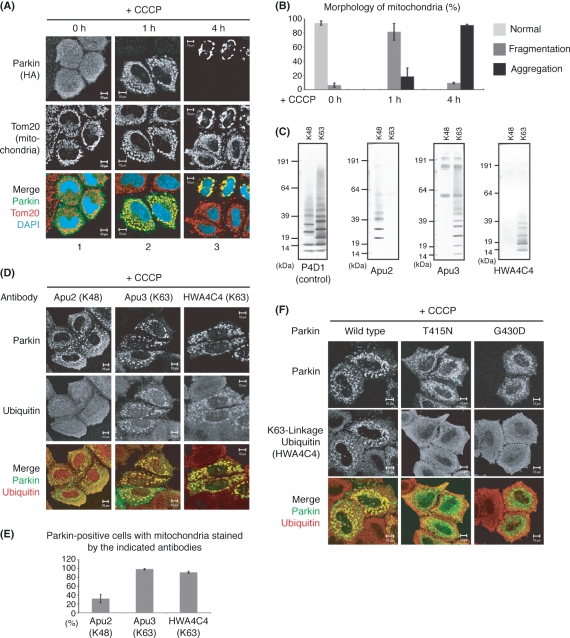
- Parkin rapidly moved to CCCP-depolarized mitochondria and ubiquitylated them by t = 1 h; mitochondria later concentrated in the perinuclear region at t > 4 h in Parkin-expressing HeLa cells, and this clustering was Parkin dependent.
- Linkage-specific antibodies showed that Parkin-localized mitochondria were stained by K63-linked ubiquitin antibodies Apu3 and HWA4C4, but not by K48-linked Apu2; signals disappeared with E3-inactivated Parkin mutations T415N and G430D.
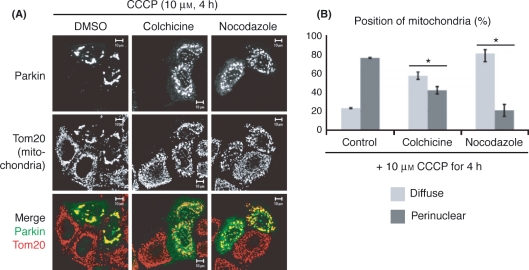
- Microtubule inhibitors nocodazole (10 μg/mL) and colchicine (50 μg/mL) dissipated perinuclear mitochondrial clusters, whereas latrunculin A/B had no effect.
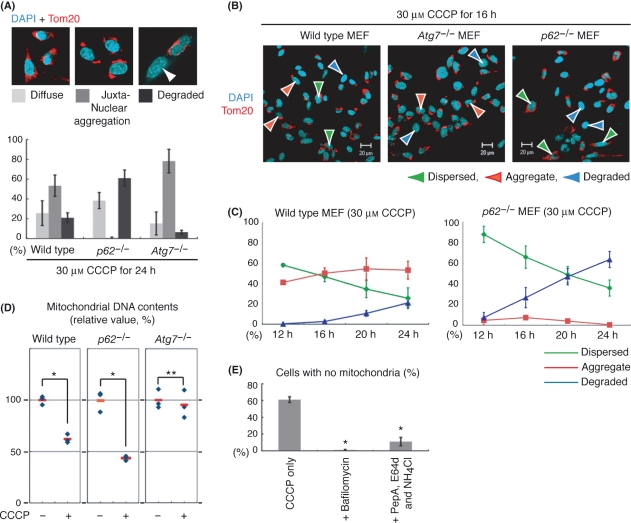
- p62 was recruited to depolarized mitochondria after Parkin-directed ubiquitylation; p62 deletion in MEFs caused gross loss of perinuclear clustering but did not hinder degradation. mtDNA 12s rRNA after CCCP fell to 62 ± 4% in wild-type MEFs, 95 ± 13% in Atg7−/− MEFs, and 43 ± 2% in p62−/− MEFs.
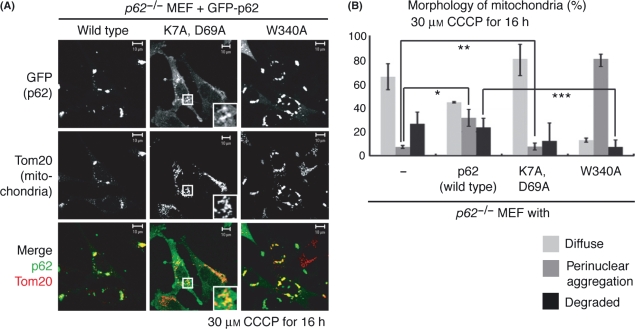
- p62 PB1 mutant K7A/D69A failed to restore clustering in p62−/− MEFs, whereas W340A restored clustering but delayed mitochondrial degradation.
Methods
- HeLa cells expressing HA-Parkin or pathogenic Parkin mutants were treated with 10 μM CCCP; MEFs (wild-type, p62−/−, Atg7−/−) expressing HA- or GFP-Parkin were treated with 30 μM CCCP and analyzed by immunocytochemistry.
- Mitochondrial morphology was scored in more than 100 cells per condition across at least three experiments, with Welch’s t-test or Student’s t-test where reported; linkage-specific anti-ubiquitin antibodies were validated by immunoblotting against K48- or K63-linked polyubiquitin chains.
- Additional assays included COX electron microscopy, real-time quantitative PCR for mitochondrial 12s ribosomal RNA normalized to GAPDH, and inhibitor treatments with bafilomycin A1 or E64d/pepstatin A/NH4Cl.
Limitations
- The paper states that its results “do not rule out completely the involvement of p62 in Parkin-mediated mitophagy” and that a role for p62 in degradation is substitutable in MEFs, possibly due to functional redundancy with proteins such as NBR1, Alfy, and BAG3.
- The authors note their p62 result conflicts with Geisler et al. (2010), who reported p62 is required for Parkin-dependent mitophagy; they attribute the discrepancy to methodological differences (p62 knockout MEFs versus p62 siRNA in HeLa cells) and state further analysis is needed.
- Evident from the text: the study relies on cultured HeLa cells and MEFs with exogenous Parkin and CCCP-induced depolarization, not in vivo neurons; MEFs required higher CCCP concentrations and longer incubation than HeLa cells, and the p62−/− phenotype was interpreted with possible redundant factors.
Model-written summary. Check it against the paper before relying on it.
Integrity signals
Registry
Cites
Statistics
Figures
Verification
Claims the paper makes
30 Own result · 23 Not checked yet · 17 Own interpretation · 6 Own method · 3 No basis given
None of the sources cited for this claim have been checked yet.
In the paper
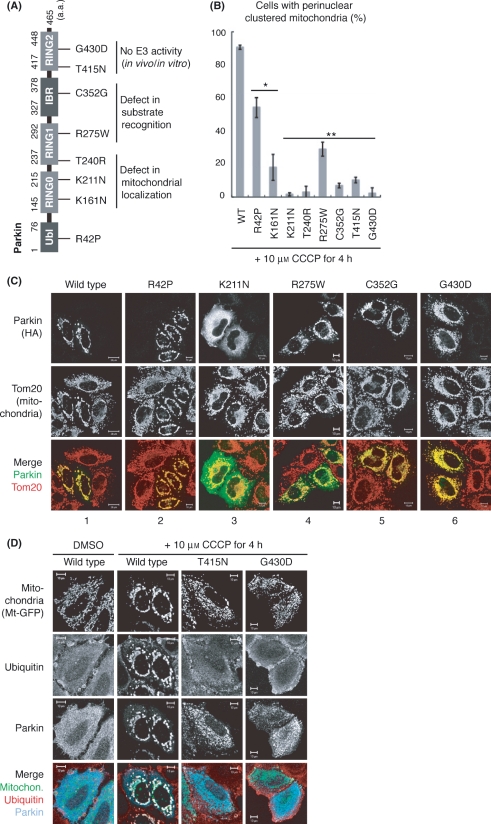
“The K161N, K211N and T240R mutations, which severely compromised the mitochondrial localization of Parkin (Geisler et al. 2010; Matsuda et al. 2010; Narendra et al. 2010), inhibited the mitochondrial clustering.”
§ p62/SQSTM1 cooperates with Parkin for perinuclear clustering of depolarized mitochondria > Results > Various pathogenic mutations of Parkin impede mitochondrial clustering
plaindirect- Asserted: passes — The authors put it forward as true.
- Checkable: passes — It can be checked against evidence.
- Load-bearing: passes — The paper’s conclusions depend on it.
- Based: passes — The paper gives a reason why it holds.
A result the paper reports from its own data — it cites no other source for it, so there is none to check. The quote shows it is in the paper.
In the paper
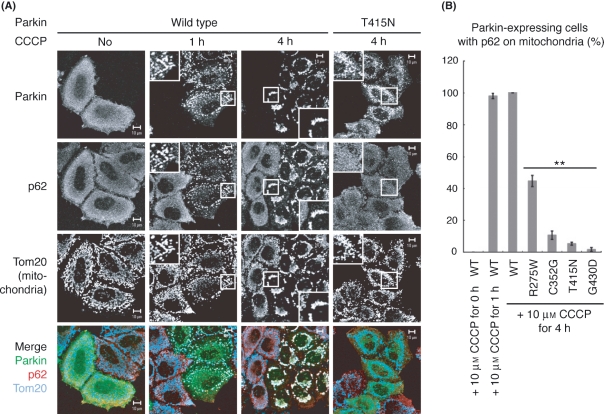
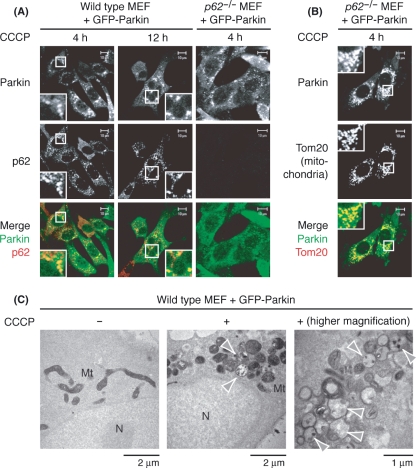
“Under steady-state conditions in HeLa cells, endogenous p62 was mainly localized throughout the cytosol irrespective of the presence or absence of Parkin, whereas p62 was rapidly recruited to the mitochondria only in Parkin-expressing cells after CCCP treatment for 1 h (Fig. 4A), as also reported by Springer et al. recently (Geisler et al. 2010).”
§ p62/SQSTM1 cooperates with Parkin for perinuclear clustering of depolarized mitochondria > Results > p62/SQSTM1 is not essential for mitochondrial degradation
plain- Asserted: passes — The authors put it forward as true.
- Checkable: passes — It can be checked against evidence.
- Load-bearing: unclear — It is unclear whether the paper’s conclusions depend on it.
- Based: passes — The paper gives a reason why it holds.
A result the paper reports from its own data — it cites no other source for it, so there is none to check. The quote shows it is in the paper.
In the paper
“In this study, we show that Parkin-catalyzed K63-linked polyubiquitylation of depolarized mitochondria resulted in ubiquitylated mitochondria being transported along microtubules to cluster in the perinuclear region, which was interfered by pathogenic mutations of Parkin.”
§ p62/SQSTM1 cooperates with Parkin for perinuclear clustering of depolarized mitochondria > Abstract
boosteddirect- Asserted: passes — The authors put it forward as true.
- Checkable: passes — It can be checked against evidence.
- Load-bearing: passes — The paper’s conclusions depend on it.
- Based: passes — The paper gives a reason why it holds.
A result the paper reports from its own data — it cites no other source for it, so there is none to check. The quote shows it is in the paper.
In the paper
“In addition, p62/SQSTM1 (hereafter referred to as p62) was recruited to depolarized mitochondria after Parkin-directed ubiquitylation.”
- Also stated in: § p62/SQSTM1 is not essential for mitochondrial degradation · plain
“whereas p62 was rapidly recruited to the mitochondria only in Parkin-expressing cells after CCCP treatment for 1 h (Fig. 4A)”
§ p62/SQSTM1 cooperates with Parkin for perinuclear clustering of depolarized mitochondria > Abstract
plaindirect- Asserted: passes — The authors put it forward as true.
- Checkable: passes — It can be checked against evidence.
- Load-bearing: passes — The paper’s conclusions depend on it.
- Based: passes — The paper gives a reason why it holds.
- Also stated in: § p62/SQSTM1 is not essential for mitochondrial degradation · plain
A result the paper reports from its own data — it cites no other source for it, so there is none to check. The quote shows it is in the paper.
In the paper
“which was interfered by pathogenic mutations of Parkin.”
- Also stated in: § Various pathogenic mutations of Parkin impede mitochondrial clustering · plain
“Various pathogenic mutations of Parkin impede mitochondrial clustering”
§ p62/SQSTM1 cooperates with Parkin for perinuclear clustering of depolarized mitochondria > Abstract
plaindirect- Asserted: passes — The authors put it forward as true.
- Checkable: passes — It can be checked against evidence.
- Load-bearing: passes — The paper’s conclusions depend on it.
- Based: passes — The paper gives a reason why it holds.
- Also stated in: § Various pathogenic mutations of Parkin impede mitochondrial clustering · plain
A result the paper reports from its own data — it cites no other source for it, so there is none to check. The quote shows it is in the paper.
In the paper
“Intriguingly, deletion of p62 in mouse embryonic fibroblasts resulted in a gross loss of mitochondrial perinuclear clustering but did not hinder mitochondrial degradation.”
- Also stated in: § p62/SQSTM1 is necessary for perinuclear clustering of damaged mitochondria · plain
“we noticed that the perinuclear clustering of depolarized mitochondria was almost completely inhibited in p62 deficient MEFs (Fig. 6A–C).”
§ p62/SQSTM1 cooperates with Parkin for perinuclear clustering of depolarized mitochondria > Abstract
plaindirect- Asserted: passes — The authors put it forward as true.
- Checkable: passes — It can be checked against evidence.
- Load-bearing: passes — The paper’s conclusions depend on it.
- Based: passes — The paper gives a reason why it holds.
- Also stated in: § p62/SQSTM1 is necessary for perinuclear clustering of damaged mitochondria · plain
A result the paper reports from its own data — it cites no other source for it, so there is none to check. The quote shows it is in the paper.
In the paper
“After treatment with nocodazole (10 μg/mL) or colchicine (50 μg/mL), the perinuclear mitochondria clusters dissipated (Fig. 2A).”
§ p62/SQSTM1 cooperates with Parkin for perinuclear clustering of depolarized mitochondria > Results > Mitochondrial clustering is microtubule dependent
plaindirect- Asserted: passes — The authors put it forward as true.
- Checkable: passes — It can be checked against evidence.
- Load-bearing: passes — The paper’s conclusions depend on it.
- Based: passes — The paper gives a reason why it holds.
A result the paper reports from its own data — it cites no other source for it, so there is none to check. The quote shows it is in the paper.
In the paper
“Interestingly, mitochondria later concentrated to the perinuclear region at t > 4 h (Fig. 1A,B) and finally degraded as reported (Narendra et al. 2008) (not shown).”
§ p62/SQSTM1 cooperates with Parkin for perinuclear clustering of depolarized mitochondria > Results > Parkin-catalyzed K63-linked polyubiquitylation promotes mitochondrial clustering
plain- Asserted: passes — The authors put it forward as true.
- Checkable: passes — It can be checked against evidence.
- Load-bearing: passes — The paper’s conclusions depend on it.
- Based: passes — The paper gives a reason why it holds.
A result the paper reports from its own data — it cites no other source for it, so there is none to check. The quote shows it is in the paper.
In the paper
“but did not hinder mitochondrial degradation.”
§ p62/SQSTM1 cooperates with Parkin for perinuclear clustering of depolarized mitochondria > Abstract
plain- Asserted: passes — The authors put it forward as true.
- Checkable: passes — It can be checked against evidence.
- Load-bearing: passes — The paper’s conclusions depend on it.
- Based: passes — The paper gives a reason why it holds.
A result the paper reports from its own data — it cites no other source for it, so there is none to check. The quote shows it is in the paper.
In the paper
“These results suggest that Parkin ubiquitylates the damaged mitochondria mainly via K63-linked polyubiquitylation and are consistent, in part, with the recent report by Geisler et al. (2010).”
§ p62/SQSTM1 cooperates with Parkin for perinuclear clustering of depolarized mitochondria > Results > Parkin-catalyzed K63-linked polyubiquitylation promotes mitochondrial clustering
hedgeddirect- Asserted: passes — The authors put it forward as true.
- Checkable: passes — It can be checked against evidence.
- Load-bearing: passes — The paper’s conclusions depend on it.
- Based: passes — The paper gives a reason why it holds.
- It may state two separate claims as one. 14
- Probably not a substantial claim. 17
A result the paper reports from its own data — it cites no other source for it, so there is none to check. The quote shows it is in the paper.
In the paper
“In the R275W and C352G mutations, Parkin associated with depolarized mitochondria, but mitochondrial ubiquitylation and juxtanuclear clustering were severely inhibited (Fig. 3C and not shown).”
§ p62/SQSTM1 cooperates with Parkin for perinuclear clustering of depolarized mitochondria > Results > Various pathogenic mutations of Parkin impede mitochondrial clustering
plaindirect- Asserted: passes — The authors put it forward as true.
- Checkable: passes — It can be checked against evidence.
- Load-bearing: passes — The paper’s conclusions depend on it.
- Based: passes — The paper gives a reason why it holds.
It may state two separate claims as one.
None of the sources cited for this claim have been checked yet.
In the paper
“This perinuclear transport and clustering of mitochondria are Parkin dependent, because this phenomenon was only observed in Parkin-expressing HeLa cells that lack an endogenous Parkin gene (Denison et al. 2003) (Fig. 1A, panel 3).”
§ p62/SQSTM1 cooperates with Parkin for perinuclear clustering of depolarized mitochondria > Results > Parkin-catalyzed K63-linked polyubiquitylation promotes mitochondrial clustering
plaindirect- Asserted: passes — The authors put it forward as true.
- Checkable: passes — It can be checked against evidence.
- Load-bearing: passes — The paper’s conclusions depend on it.
- Based: passes — The paper gives a reason why it holds.
It may state two separate claims as one.
A result the paper reports from its own data — it cites no other source for it, so there is none to check. The quote shows it is in the paper.
In the paper
“In mitochondria fragmented with the mitochondrial uncoupler, carbonyl cyanide m-chlorophenylhydrazone (CCCP), Parkin quickly moved to depolarized mitochondria and ubiquitylated them (t = 1 h).”
§ p62/SQSTM1 cooperates with Parkin for perinuclear clustering of depolarized mitochondria > Results > Parkin-catalyzed K63-linked polyubiquitylation promotes mitochondrial clustering
plaindirect- Asserted: passes — The authors put it forward as true.
- Checkable: passes — It can be checked against evidence.
- Load-bearing: passes — The paper’s conclusions depend on it.
- Based: passes — The paper gives a reason why it holds.
It may state two separate claims as one.
A result the paper reports from its own data — it cites no other source for it, so there is none to check. The quote shows it is in the paper.
In the paper
“In wild-type MEFs, p62 was again selectively recruited to the mitochondria after CCCP treatment at t = 4 h, although the transport efficiency was lower than that of HeLa cells (data not shown), and depolarized mitochondria were later clustered in the perinuclear region similar to HeLa cells at t > 12 h (Fig. 5A).”
§ p62/SQSTM1 cooperates with Parkin for perinuclear clustering of depolarized mitochondria > Results > p62/SQSTM1 is not essential for mitochondrial degradation
plaincorrelational- Asserted: passes — The authors put it forward as true.
- Checkable: passes — It can be checked against evidence.
- Load-bearing: unclear — It is unclear whether the paper’s conclusions depend on it.
- Based: passes — The paper gives a reason why it holds.
It may state two separate claims as one.
A result the paper reports from its own data — it cites no other source for it, so there is none to check. The quote shows it is in the paper.
In the paper
“Mitochondrial localization of p62 was only observed in Parkin-expressing cells and disappeared when Parkin mutants deficient in substrate recognition or E3 activity (R275W, C352G, T415N and G430D; Fig. 3A) were introduced (Fig. 4), suggesting that ubiquitylation-catalyzed Parkin is required for the recruitment of p62 onto depolarized mitochondria.”
§ p62/SQSTM1 cooperates with Parkin for perinuclear clustering of depolarized mitochondria > Results > p62/SQSTM1 is not essential for mitochondrial degradation
hedgeddirect- Asserted: passes — The authors put it forward as true.
- Checkable: passes — It can be checked against evidence.
- Load-bearing: passes — The paper’s conclusions depend on it.
- Based: passes — The paper gives a reason why it holds.
It may state two separate claims as one.
A result the paper reports from its own data — it cites no other source for it, so there is none to check. The quote shows it is in the paper.
In the paper
“Electron microscopic analysis showed that juxtanuclear-clustered mitochondria aggregated in grape-like clusters and not fused to each other to make single large mitochondrion (Fig. 5C).”
§ p62/SQSTM1 cooperates with Parkin for perinuclear clustering of depolarized mitochondria > Results > p62/SQSTM1 is not essential for mitochondrial degradation
plain- Asserted: passes — The authors put it forward as true.
- Checkable: passes — It can be checked against evidence.
- Load-bearing: unclear — It is unclear whether the paper’s conclusions depend on it.
- Based: passes — The paper gives a reason why it holds.
It may state two separate claims as one.
None of the sources cited for this claim have been checked yet.
In the paper
“PINK1 then recruits Parkin from the cytoplasm to depolarized mitochondria that then undergo Parkin-catalyzed ubiquitylation, meaning that PINK1 and Parkin cooperate to ubiquitylate mitochondria with low membrane potentials (Narendra et al. 2008, 2010; Geisler et al. 2010; Matsuda et al. 2010; Vives-Bauza et al. 2010).”
§ p62/SQSTM1 cooperates with Parkin for perinuclear clustering of depolarized mitochondria > Introduction
What the sources say
- Not checked yetcites Narendra et al. 2008, 2010
- Not checked yetcites Geisler et al. 2010
- Not checked yetcites Matsuda et al. 2010
plaindirect- Asserted: passes — The authors put it forward as true.
- Checkable: passes — It can be checked against evidence.
- Load-bearing: passes — The paper’s conclusions depend on it.
- Based: passes — The paper gives a reason why it holds.
Probably not a substantial claim. It may state two separate claims as one.
None of the sources cited for this claim have been checked yet.
In the paper
“PINK1 then recruits Parkin from the cytoplasm to depolarized mitochondria that then undergo Parkin-catalyzed ubiquitylation, meaning that PINK1 and Parkin cooperate to ubiquitylate mitochondria with low membrane potentials (Narendra et al. 2008, 2010; Geisler et al. 2010; Matsuda et al. 2010; Vives-Bauza et al. 2010).”
§ p62/SQSTM1 cooperates with Parkin for perinuclear clustering of depolarized mitochondria > Introduction
What the sources say
- Not checked yetcites Narendra et al. 2008, 2010
- Not checked yetcites Geisler et al. 2010
- Not checked yetcites Matsuda et al. 2010
plaindirect- Asserted: passes — The authors put it forward as true.
- Checkable: passes — It can be checked against evidence.
- Load-bearing: passes — The paper’s conclusions depend on it.
- Based: passes — The paper gives a reason why it holds.
Probably not a substantial claim.
None of the sources cited for this claim have been checked yet.
In the paper
“Parkin has the potential to catalyze several types of ubiquitylation: multiple monoubiquitylation, Lys-48-linked polyubiquitylation and Lys-63-linked polyubiquitylation (Lim 2007; Matsuda & Tanaka 2010).”
§ p62/SQSTM1 cooperates with Parkin for perinuclear clustering of depolarized mitochondria > Results > Parkin-catalyzed K63-linked polyubiquitylation promotes mitochondrial clustering
What the sources say
- Not checked yetcites Lim 2007
- Not checked yetcites Matsuda & Tanaka 2010
hedgedconditional- Asserted: passes — The authors put it forward as true.
- Checkable: passes — It can be checked against evidence.
- Load-bearing: fails — The paper’s conclusions may not depend on it.
- Based: passes — The paper gives a reason why it holds.
Probably not a substantial claim. The paper’s conclusions may not depend on it. It may state two separate claims as one.
What the paper did — it cites no source for this, so there is none to check. The quote shows it is in the paper.
In the paper
“Staining with single antibodies alone indicated that the merged data described earlier were not derived from channel crosstalk (Fig. S1 in Supporting Information).”
§ p62/SQSTM1 cooperates with Parkin for perinuclear clustering of depolarized mitochondria > Results > p62/SQSTM1 is not essential for mitochondrial degradation
hedged- Asserted: passes — The authors put it forward as true.
- Checkable: passes — It can be checked against evidence.
- Load-bearing: fails — The paper’s conclusions may not depend on it.
- Based: passes — The paper gives a reason why it holds.
Probably not a substantial claim. The paper’s conclusions may not depend on it.
None of the sources cited for this claim have been checked yet.
In the paper
“p62 can interact with both ubiquitin and the autophagic machinery LC-3 (Bjorkoy et al. 2005; Komatsu et al. 2007; Pankiv et al. 2007; Ichimura et al. 2008; Noda et al. 2008; Shvets et al. 2008) and thus p62 is a plausible factor that links Parkin-catalyzed ubiquitylation with mitochondrial degradation via autophagy.”
§ p62/SQSTM1 cooperates with Parkin for perinuclear clustering of depolarized mitochondria > Results > p62/SQSTM1 is not essential for mitochondrial degradation
What the sources say
- Not checked yetcites Bjorkoy et al. 2005
- Not checked yetcites Komatsu et al. 2007
- Not checked yetcites Pankiv et al. 2007
plaincorrelational- Asserted: passes — The authors put it forward as true.
- Checkable: passes — It can be checked against evidence.
- Load-bearing: passes — The paper’s conclusions depend on it.
- Based: passes — The paper gives a reason why it holds.
It may state two separate claims as one.
In the paper
“bafilomycin A1 (an inhibitor of vacuolar-type H+-ATPase that prevents autophagosome-lysosome fusion and/or intralysosomal degradation)”
§ p62/SQSTM1 cooperates with Parkin for perinuclear clustering of depolarized mitochondria > Results > p62/SQSTM1 is not essential for mitochondrial degradation
What the sources say
- Not checked yetcites Mizushima et al. 2010
plaindirect- Asserted: passes — The authors put it forward as true.
- Checkable: passes — It can be checked against evidence.
- Load-bearing: passes — The paper’s conclusions depend on it.
- Based: passes — The paper gives a reason why it holds.
Probably not a substantial claim. It may state two separate claims as one.
What the paper did — it cites no source for this, so there is none to check. The quote shows it is in the paper.
In the paper
“Immunoblotting against K48- and K63-linked polyubiquitin chains, whose linkage was directly confirmed by MALDI-TOF mass spectrometry (data not shown), showed the high specificity of the antibodies (Fig. 1C).”
§ p62/SQSTM1 cooperates with Parkin for perinuclear clustering of depolarized mitochondria > Results > Parkin-catalyzed K63-linked polyubiquitylation promotes mitochondrial clustering
plain- Asserted: passes — The authors put it forward as true.
- Checkable: passes — It can be checked against evidence.
- Load-bearing: passes — The paper’s conclusions depend on it.
- Based: passes — The paper gives a reason why it holds.
It may state two separate claims as one.
None of the sources cited for this claim have been checked yet.
In the paper
“However, overproduction of mutant ubiquitin can change the ubiquitylation linkage, and thus careful interpretation of observed results is required (Pickart & Raasi 2005; Saeki et al. 2009).”
§ p62/SQSTM1 cooperates with Parkin for perinuclear clustering of depolarized mitochondria > Results > Parkin-catalyzed K63-linked polyubiquitylation promotes mitochondrial clustering
What the sources say
- Not checked yetcites Pickart & Raasi 2005
- Not checked yetcites Saeki et al. 2009
plaindirect- Asserted: passes — The authors put it forward as true.
- Checkable: passes — It can be checked against evidence.
- Load-bearing: passes — The paper’s conclusions depend on it.
- Based: passes — The paper gives a reason why it holds.
Probably not a substantial claim.
None of the sources cited for this claim have been checked yet.
In the paper
“Moreover, PINK1 functions upstream of Parkin, because forced overexpression of Parkin rescues loss-of-function phenotypes of PINK1 but not vice versa (Clark et al. 2006; Park et al. 2006; Yang et al. 2006).”
§ p62/SQSTM1 cooperates with Parkin for perinuclear clustering of depolarized mitochondria > Introduction
What the sources say
- Not checked yetcites Clark et al. 2006
- Not checked yetcites Park et al. 2006
- Not checked yetcites Yang et al. 2006
plaindirect- Asserted: passes — The authors put it forward as true.
- Checkable: passes — It can be checked against evidence.
- Load-bearing: fails — The paper’s conclusions may not depend on it.
- Based: passes — The paper gives a reason why it holds.
Probably not a substantial claim. The paper’s conclusions may not depend on it.
What the paper did — it cites no source for this, so there is none to check. The quote shows it is in the paper.
In the paper
“To check the specificity of linkage-specific anti-ubiquitin antibodies, Lys 48- or Lys 63-linked polyubiquitin chain (Enzo Life Sciences) was used as a positive control and subjected to immunoblotting.”
§ p62/SQSTM1 cooperates with Parkin for perinuclear clustering of depolarized mitochondria > Experimental procedures > Immunocytochemistry
plain- Asserted: passes — The authors put it forward as true.
- Checkable: passes — It can be checked against evidence.
- Load-bearing: fails — The paper’s conclusions may not depend on it.
- Based: passes — The paper gives a reason why it holds.
Probably not a substantial claim. The paper’s conclusions may not depend on it.
In the paper
“mitochondria are delivered to areas of the axon where metabolic demand is high, such as synapses, active growth cones and branches (Hollenbeck & Saxton 2005).”
§ p62/SQSTM1 cooperates with Parkin for perinuclear clustering of depolarized mitochondria > Discussion > Function of depolarized mitochondria juxtanuclear clustering
What the sources say
- Not checked yetcites Hollenbeck & Saxton 2005
plaindirect- Asserted: passes — The authors put it forward as true.
- Checkable: passes — It can be checked against evidence.
- Load-bearing: fails — The paper’s conclusions may not depend on it.
- Based: passes — The paper gives a reason why it holds.
Probably not a substantial claim. The paper’s conclusions may not depend on it.
What the paper did — it cites no source for this, so there is none to check. The quote shows it is in the paper.
In the paper
“To prevent carry-over contamination, 0.5 unit of Uracil DNA Glycosylase (Invitrogen) was added during PCR”
§ p62/SQSTM1 cooperates with Parkin for perinuclear clustering of depolarized mitochondria > Experimental procedures > Measurement of mitochondrial DNA contents
plaindirect- Asserted: passes — The authors put it forward as true.
- Checkable: passes — It can be checked against evidence.
- Load-bearing: fails — The paper’s conclusions may not depend on it.
- Based: passes — The paper gives a reason why it holds.
Probably not a substantial claim. The paper’s conclusions may not depend on it.
A conclusion the paper draws from its own results — it cites no other source for it, so there is none to check. The quote shows it is in the paper.
In the paper
“(note that complete disruption of p62 cannot cause this type of titration and thus cannot confer the dominant effect).”
§ p62/SQSTM1 cooperates with Parkin for perinuclear clustering of depolarized mitochondria > Discussion > Function of p62 in the degradation of depolarized mitochondria
plaindirect- Asserted: passes — The authors put it forward as true.
- Checkable: passes — It can be checked against evidence.
- Load-bearing: passes — The paper’s conclusions depend on it.
- Based: passes — The paper gives a reason why it holds.
It may state two separate claims as one.
- Rests on an assumption: Complete disruption of p62 cannot cause this type of titration and thus cannot confer the dominant effect.
A conclusion the paper draws from its own results — it cites no other source for it, so there is none to check. The quote shows it is in the paper.
In the paper
“and thus mitochondrial clustering might be involved in this process.”
§ p62/SQSTM1 cooperates with Parkin for perinuclear clustering of depolarized mitochondria > Discussion > Function of depolarized mitochondria juxtanuclear clustering
hedgedconditional- Asserted: passes — The authors put it forward as true.
- Checkable: passes — It can be checked against evidence.
- Load-bearing: fails — The paper’s conclusions may not depend on it.
- Based: passes — The paper gives a reason why it holds.
Probably not a substantial claim. The paper’s conclusions may not depend on it.
None of the sources cited for this claim have been checked yet.
In the paper
“with mitochondria-dedicated selective autophagy (termed mitophagy) considered to be essential for this clearance pathway (Narendra et al. 2008; Twig et al. 2008).”
§ p62/SQSTM1 cooperates with Parkin for perinuclear clustering of depolarized mitochondria > Introduction
What the sources say
- Not checked yetcites Narendra et al. 2008
- Not checked yetcites Twig et al. 2008
plaindirect- Asserted: passes — The authors put it forward as true.
- Checkable: passes — It can be checked against evidence.
- Load-bearing: passes — The paper’s conclusions depend on it.
- Based: passes — The paper gives a reason why it holds.
Probably not a substantial claim.
What the paper did — it cites no source for this, so there is none to check. The quote shows it is in the paper.
In the paper
“samples were prepared in triplicate for each condition.”
§ p62/SQSTM1 cooperates with Parkin for perinuclear clustering of depolarized mitochondria > Experimental procedures > Measurement of mitochondrial DNA contents
plain- Asserted: passes — The authors put it forward as true.
- Checkable: passes — It can be checked against evidence.
- Load-bearing: fails — The paper’s conclusions may not depend on it.
- Based: passes — The paper gives a reason why it holds.
Probably not a substantial claim. The paper’s conclusions may not depend on it.
In the paper
“These results suggest that oligomerization of p62 but not interaction with LC3 is essential for the mitochondrial clustering triggered by Parkin.”
§ p62/SQSTM1 cooperates with Parkin for perinuclear clustering of depolarized mitochondria > Results > p62/SQSTM1 is necessary for perinuclear clustering of damaged mitochondria
What the sources say
- Not checked yetcites Lamark et al. 2003
hedgeddirect- Asserted: passes — The authors put it forward as true.
- Checkable: passes — It can be checked against evidence.
- Load-bearing: passes — The paper’s conclusions depend on it.
- Based: passes — The paper gives a reason why it holds.
It may state two separate claims as one.
- Rests on an assumption: The K7A/D69A double mutation in the PB1 domain abolishes p62 oligomerization.
In the paper
“The defect in p62−/− MEFs, however, is concealed by other functionally redundant protein(s) (see Discussion).”
§ p62/SQSTM1 cooperates with Parkin for perinuclear clustering of depolarized mitochondria > Results > p62/SQSTM1 is necessary for perinuclear clustering of damaged mitochondria
What the sources say
- Not checked yetcites Kirkin et al. 2009
plaindirect- Asserted: passes — The authors put it forward as true.
- Checkable: passes — It can be checked against evidence.
- Load-bearing: fails — The paper’s conclusions may not depend on it.
- Based: passes — The paper gives a reason why it holds.
Probably not a substantial claim. The paper’s conclusions may not depend on it.
In the paper
“methodological differences (i.e. we used p62 knockout MEFs whereas they used p62 siRNA in HeLa cells) may account for the conflicting observations”
§ p62/SQSTM1 cooperates with Parkin for perinuclear clustering of depolarized mitochondria > Discussion > Function of p62 in the degradation of depolarized mitochondria
What the sources say
- Not checked yetcites Geisler et al. (2010)
hedgedconditional- Asserted: passes — The authors put it forward as true.
- Checkable: passes — It can be checked against evidence.
- Load-bearing: fails — The paper’s conclusions may not depend on it.
- Based: passes — The paper gives a reason why it holds.
Probably not a substantial claim. The paper’s conclusions may not depend on it.
A conclusion the paper draws from its own results — it cites no other source for it, so there is none to check. The quote shows it is in the paper.
In the paper
“The most plausible explanation for this result is that the p62 W340A mutant competes for certain common factor(s) with functionally redundant protein(s), and thus has a dominant effect”
§ p62/SQSTM1 cooperates with Parkin for perinuclear clustering of depolarized mitochondria > Discussion > Function of p62 in the degradation of depolarized mitochondria
hedgeddirectSingle case- Asserted: passes — The authors put it forward as true.
- Checkable: passes — It can be checked against evidence.
- Load-bearing: passes — The paper’s conclusions depend on it.
- Based: passes — The paper gives a reason why it holds.
It may state two separate claims as one.
- Rests on an assumption: The p62 W340A mutant cannot interact with LC3.
A conclusion the paper draws from its own results — it cites no other source for it, so there is none to check. The quote shows it is in the paper.
In the paper
“The similarity between aggresome and mitochondrial clustering, although superficial at the moment, suggests that the two ubiquitin-mediated cytoprotective events have something in common.”
§ p62/SQSTM1 cooperates with Parkin for perinuclear clustering of depolarized mitochondria > Discussion > Function of depolarized mitochondria juxtanuclear clustering
hedgedcorrelational- Asserted: passes — The authors put it forward as true.
- Checkable: fails — It may be too vague to check against evidence.
- Load-bearing: fails — The paper’s conclusions may not depend on it.
- Based: passes — The paper gives a reason why it holds.
Probably not a substantial claim. It may be too vague to check against evidence. The paper’s conclusions may not depend on it.
A conclusion the paper draws from its own results — it cites no other source for it, so there is none to check. The quote shows it is in the paper.
In the paper
“This series of events is reminiscent of aggresome formation”
§ p62/SQSTM1 cooperates with Parkin for perinuclear clustering of depolarized mitochondria > Discussion > Function of depolarized mitochondria juxtanuclear clustering
plaincorrelational- Asserted: passes — The authors put it forward as true.
- Checkable: passes — It can be checked against evidence.
- Load-bearing: fails — The paper’s conclusions may not depend on it.
- Based: passes — The paper gives a reason why it holds.
Probably not a substantial claim. The paper’s conclusions may not depend on it.
The paper relies on this without support.
Endogenous Parkin is undetectable in mouse embryonic fibroblasts.
“Because endogenous Parkin is undetectable in MEFs, HA- or GFP-Parkin was introduced into control (p62+/+) and p62 KO (p62−/−) MEFs (Komatsu et al. 2007) by retro-viral transfection (Kitamura et al. 2003).”
The paper relies on this without support.
MEFs are less sensitive than HeLa cells to CCCP, requiring higher concentrations and longer incubation to observe the phenotype.
“Because MEFs are less sensitive than HeLa cells to CCCP, higher concentrations of CCCP (30 μm) and longer incubation are required to observe the phenotype.”
The paper relies on this without support.
The p62 W340A mutant cannot interact with LC3.
“the p62 W340A mutant, which cannot interact with LC3 (Fig. 7B)”
The paper relies on this without support.
Complete disruption of p62 cannot cause this type of titration and thus cannot confer the dominant effect.
“(note that complete disruption of p62 cannot cause this type of titration and thus cannot confer the dominant effect).”
The paper relies on this without support.
The K7A/D69A double mutation in the PB1 domain abolishes p62 oligomerization.
“we introduced a K7A/D69A double mutation in the PB1 domain”
Claims other papers make about this one
Each is checked against this paper’s own text: does it say what the citing paper says it does?
The cited source doesn’t support the claim as written.
In the citing paper
“This results in the preferential degradation of mitochondrial outer membrane proteins by the proteasome, while inner membrane proteins and mitochondrial DNA 558 remain intact.”
From Guidelines for the use and interpretation of assays for monitoring autophagy (2012) · cites this paper as [558]
Checked by a reasoning model — may be wrong.
Experimental — accuracy not yet measuredThe source backs part of the claim, not all of it — or backs it for a different population, condition or comparison.
In the citing paper
“During mitochondrial degradation in cultured cells, depolarized mitochondria cluster with p6224. Depolarized mitochondria are ubiquitylated by Parkin, recognized by p62, transported via microtubules to aggregates, and degraded by autophagy.”
From Loss of autophagy in dopaminergic neurons causes Lewy pathology and motor dysfunction in aged mice (2018) · cites this paper as [24]
Experimental — accuracy not yet measuredIn the citing paper
“During mitochondrial degradation in cultured cells, depolarized mitochondria cluster with p6224.”
From Loss of autophagy in dopaminergic neurons causes Lewy pathology and motor dysfunction in aged mice (2018) · cites this paper as [24]
Self-check
Percentages, sums and reported differences re-computed from the paper’s own numbers.
Each contradiction between two passages listed here was confirmed by an independent check.
Rated minor: it would not touch a result — a value no result rests on, a p-value that stays on the same side of the significance level, or a conflict that is clerical, resolved elsewhere in the paper, or outside its own findings.
In the paper
§ p62/SQSTM1 cooperates with Parkin for perinuclear clustering of depolarized mitochondria > Discussion > Function of p62 in the degradation of depolarized mitochondria
“They showed that knockdown of p62 in HeLa cells dramatically inhibited the final clearance of damaged mitochondria”
§ p62/SQSTM1 cooperates with Parkin for perinuclear clustering of depolarized mitochondria > Discussion > Function of p62 in the degradation of depolarized mitochondria
“cells with uncleared mitochondria decreased from 85% to 20% with p62 siRNA treatment.”
Rated minor: it would not touch a result — a value no result rests on, a p-value that stays on the same side of the significance level, or a conflict that is clerical, resolved elsewhere in the paper, or outside its own findings.
In the paper
§ p62/SQSTM1 cooperates with Parkin for perinuclear clustering of depolarized mitochondria > Results > Various pathogenic mutations of Parkin impede mitochondrial clustering
“HA-Parkin mutants harboring one of eight pathogenic mutations (R42P, K161N, T240R, R275W, C352G, T415N and G430D; Fig. 3A)”
§ p62/SQSTM1 cooperates with Parkin for perinuclear clustering of depolarized mitochondria > Results > Various pathogenic mutations of Parkin impede mitochondrial clustering
“The K161N, K211N and T240R mutations, which severely compromised the mitochondrial localization of Parkin (Geisler et al. 2010; Matsuda et al. 2010; Narendra et al. 2010), inhibited the mitochondrial clustering.”
Citations
Cites
Mutations in the parkin gene cause autosomal recessive juvenile parkinsonism
Kitada, T., Asakawa, S., Hattori, N., Matsumine, H., Yamamura, Y., Minoshima, S., Yokochi, M., Mizuno, Y., & Shimizu, N. (1998) · Nature · doi:10.1038/33416 · Cited by 5,227 · cited 1×
“One familial form of the PD gene causing autosomal recessive juvenile Parkinsonism (AR-JP) is Parkin (also known as PARK2), which encodes an E3 ubiquitin ligase, a substrate recognition member of the ubiquitylation pathway (Kitada et al. 1998; Shimura et al. 2000).”
BackgroundSelf-citationPankiv, S., Clausen, T. H., Lamark, T., Brech, A., Bruun, J.-A., Outzen, H., Øvervatn, A., Bjørkøy, G., & Johansen, T. (2007) · Journal of Biological Chemistry · doi:10.1074/jbc.m702824200 · Cited by 4,578
Methods in Mammalian Autophagy Research
Mizushima, N., Yoshimori, T., & Levine, B. (2010) · Cell · doi:10.1016/j.cell.2010.01.028 · Cited by 4,497 · cited 2×
“Moreover, treatment with bafilomycin A1 (an inhibitor of vacuolar-type H-ATPase that prevents autophagosome-lysosome fusion and ⁄ or intralysosomal degradation) or a cocktail of lysosomal inhibitors (E64d, pepstatin A and ammonium chloride) (Mizushima et al. 2010) inhibited the mitochondrial degradation of p62 ⁄ ) MEF…”
BackgroundParkin is recruited selectively to impaired mitochondria and promotes their autophagy
Narendra, D., Tanaka, A., Suen, D.-F., & Youle, R. J. (2008) · The Journal of Cell Biology · doi:10.1083/jcb.200809125 · Cited by 4,026 · cited 5×
“…endogenous and exogenous stresses, such as unnecessary generation of reactive oxygen species (ROS) and mtDNA mutations, is critical, with mitochondria-dedicated selective autophagy (termed mitophagy) considered to be essential for this clearance pathway (Narendra et al. 2008; Twig et al. 2008).”
BackgroundInfluentialHereditary Early-Onset Parkinson's Disease Caused by Mutations in PINK1
Valente, E. M., Abou-Sleiman, P. M., Caputo, V., Muqit, M. M. K., Harvey, K., Gispert, S., Ali, Z., Del Turco, D., Bentivoglio, A. R., Healy, D. G., et al. (2004) · Science · doi:10.1126/science.1096284 · Cited by 3,481 · cited 2×
“The other early-onset PD gene encodes a mitochondria-targeted serine-threonine kinase termed PTEN induced putative kinase 1 (PINK1) (Valente et al. 2004).”
BackgroundBjørkøy, G., Lamark, T., Brech, A., Outzen, H., Perander, M., Øvervatn, A., Stenmark, H., & Johansen, T. (2005) · The Journal of Cell Biology · doi:10.1083/jcb.200507002 · Cited by 3,276
Fission and selective fusion govern mitochondrial segregation and elimination by autophagy
Twig, G., Elorza, A., Molina, A. J. A., Mohamed, H., Wikstrom, J. D., Walzer, G., Stiles, L., Haigh, S. E., Katz, S., Las, G., et al. (2008) · The EMBO Journal · doi:10.1038/sj.emboj.7601963 · Cited by 3,082 · cited 2×
“…endogenous and exogenous stresses, such as unnecessary generation of reactive oxygen species (ROS) and mtDNA mutations, is critical, with mitochondria-dedicated selective autophagy (termed mitophagy) considered to be essential for this clearance pathway (Narendra et al. 2008; Twig et al. 2008).”
BackgroundPINK1 Is Selectively Stabilized on Impaired Mitochondria to Activate Parkin
Narendra, D. P., Jin, S. M., Tanaka, A., Suen, D.-F., Gautier, C. A., Shen, J., Cookson, M. R., & Youle, R. J. (2010) · PLoS Biology · doi:10.1371/journal.pbio.1000298 · Cited by 2,944 · cited 5×
“…by likely inhibiting an as-yet-unknown processing protease that catalyzes conversion of the mature PINK1 (approximately 60 kDa) to an intermediate short form (approximately 50 kDa), which is further exclusively degraded by the proteasome pathway (Matsuda et al. 2010; Narendra et al. 2010).”
BackgroundInfluentialPINK1/Parkin-mediated mitophagy is dependent on VDAC1 and p62/SQSTM1
Geisler, S., Holmström, K. M., Skujat, D., Fiesel, F. C., Rothfuss, O. C., Kahle, P. J., & Springer, W. (2010) · Nature Cell Biology · doi:10.1038/ncb2012 · Cited by 2,835 · cited 10×
“PINK1 then recruits Parkin from the cytoplasm to depolarized mitochondria that then undergo Parkin-catalyzed ubiquitylation, meaning that PINK1 and Parkin cooperate to ubiquitylate mitochondria with low membrane potentials (Narendra et al. 2008, 2010; Geisler et al. 2010; Matsuda et al. 2010; Vives-Bauza et al. 2010).”
BackgroundMethodInfluentialImpairment of starvation-induced and constitutive autophagy in Atg7 -deficient mice
Komatsu, M., Waguri, S., Ueno, T., Iwata, J., Murata, S., Tanida, I., Ezaki, J., Mizushima, N., Ohsumi, Y., Uchiyama, Y., et al. (2005) · The Journal of Cell Biology · doi:10.1083/jcb.200412022 · Cited by 2,331 · cited 1×
“When Atg7 (an essential gene for autophagy) KO MEFs (Komatsu et al. 2005) were used as a positive control, the clearance of depolarized mitochondria was considerably impeded after CCCP treatment for 24 h [Fig.”
MethodSelf-citation
Cited by
Sorted by citations
Autophagy: Renovation of Cells and Tissues
Mizushima, N., & Komatsu, M. (2011) · Cell · doi:10.1016/j.cell.2011.10.026 · Cited by 6,615
“occurs normally in p62-deficient cells (Narendra et al., 2010b; Okatsu et al., 2010).”
BackgroundSelf-citationGuidelines for the use and interpretation of assays for monitoring autophagy (3rd edition).
Klionsky, D. J., Abdelmohsen, K., Abe, A., Abedin, M. J., Abeliovich, H., Acevedo Arozena, A., Adachi, H., Adams, C. M., Adams, P. D., Adeli, K., et al. (2016) · Autophagy · doi:10.1080/15548627.2015.1100356 · Cited by 5,894
Self-citationGuidelines for the use and interpretation of assays for monitoring autophagy
Klionsky, D. J., Abdalla, F. C., Abeliovich, H., Abraham, R. T., Acevedo-Arozena, A., Adeli, K., Agholme, L., Agnello, M., Agostinis, P., Aguirre-Ghiso, J. A., et al. (2012) · Autophagy · doi:10.4161/auto.19496 · Cited by 3,996
Self-citationYoule, R. J., & Narendra, D. P. (2011) · Nature Reviews Molecular Cell Biology · doi:10.1038/nrm3028 · Cited by 3,273
Guidelines for the use and interpretation of assays for monitoring autophagy (4th edition) 1
Klionsky, D. J., Abdel-Aziz, A. K., Abdelfatah, S., Abdellatif, M., Abdoli, A., Abel, S., Abeliovich, H., Abildgaard, M. H., Abudu, Y. P., Acevedo-Arozena, A., et al. (2021) · Autophagy · doi:10.1080/15548627.2020.1797280 · Cited by 2,897
Self-citationThe ubiquitin kinase PINK1 recruits autophagy receptors to induce mitophagy
Lazarou, M., Sliter, D. A., Kane, L. A., Sarraf, S. A., Wang, C., Burman, J. L., Sideris, D. P., Fogel, A. I., & Youle, R. J. (2015) · Nature · doi:10.1038/nature14893 · Cited by 2,774
The Roles of PINK1, Parkin, and Mitochondrial Fidelity in Parkinson’s Disease
Pickrell, A. M., & Youle, R. J. (2015) · Neuron · doi:10.1016/j.neuron.2014.12.007 · Cited by 2,310
“Although an initial report indicated that p62 is required for Parkin-mediated mitophagy (Geisler et al., 2010a), two groups using p62-KOmouse embryonic fibroblasts did not find that it is essential for mitophagy (Narendra et al., 2010a; Okatsu et al., 2010).”
BackgroundSwatek, K. N., & Komander, D. (2016) · Cell Research · doi:10.1038/cr.2016.39 · Cited by 2,141
Mitophagy and Quality Control Mechanisms in Mitochondrial Maintenance
Pickles, S., Vigié, P., & Youle, R. J. (2018) · Current Biology · doi:10.1016/j.cub.2018.01.004 · Cited by 2,081
Selective autophagy mediated by autophagic adapter proteins
Johansen, T., & Lamark, T. (2011) · Autophagy · doi:10.4161/auto.7.3.14487 · Cited by 1,788
NF-κB Restricts Inflammasome Activation via Elimination of Damaged Mitochondria
Zhong, Z., Umemura, A., Sanchez-Lopez, E., Liang, S., Shalapour, S., Wong, J., He, F., Boassa, D., Perkins, G., Ali, S. R., et al. (2016) · Cell · doi:10.1016/j.cell.2015.12.057 · Cited by 1,197
Chu, C. T., Ji, J., Dagda, R. K., Jiang, J. F., Tyurina, Y. Y., Kapralov, A. A., Tyurin, V. A., Yanamala, N., Shrivastava, I. H., Mohammadyani, D., et al. (2013) · Nature Cell Biology · doi:10.1038/ncb2837 · Cited by 1,083
Mitophagy: mechanisms, pathophysiological roles, and analysis
Ding, W.-X., & Yin, X.-M. (2012) · bchm · doi:10.1515/hsz-2012-0119 · Cited by 1,032
“SMURF1 In a recent high-content, genome-wide small interfering RNA screen to detect genes required for the colocalization of Sindbis virus capsid protein with autophagolysosomes, Orvedahl et al. (2011) identifi ed 141 candidate genes required for viral autophagy.”
BackgroundBroad activation of the ubiquitin–proteasome system by Parkin is critical for mitophagy
Chan, N. C., Salazar, A. M., Pham, A. H., Sweredoski, M. J., Kolawa, N. J., Graham, R. L. J., Hess, S., & Chan, D. C. (2011) · Human Molecular Genetics · doi:10.1093/hmg/ddr048 · Cited by 993
“However, p62 appears to be involved in controlling mitochondrial distribution and is not essential for degradation of mitochondria (17,18).”
BackgroundResultInfluentialMitochondrial dynamics and mitochondrial quality control
Ni, H.-M., Williams, J. A., & Ding, W.-X. (2015) · Redox Biology · doi:10.1016/j.redox.2014.11.006 · Cited by 931
“In addition, Parkin also recruits Ambra1 (a Beclin-1 interacting protein) to depolarized mitochondria to initiate engulfment of damaged mitochondria by autophagosomes [68].”
BackgroundWong, Y. C., & Holzbaur, E. L. F. (2014) · Proceedings of the National Academy of Sciences · doi:10.1073/pnas.1405752111 · Cited by 812
“These results further support a role for p62 as a regulator of mitochondrial aggregation and clustering during parkin-dependent mitophagy (25, 26).”
BackgroundMethodResultInfluentialNarendra, D. P., Kane, L. A., Hauser, D. N., Fearnley, I. M., & Youle, R. J. (2010) · Autophagy · doi:10.4161/auto.6.8.13426 · Cited by 810
p62/ SQSTM 1 functions as a signaling hub and an autophagy adaptor
Katsuragi, Y., Ichimura, Y., & Komatsu, M. (2015) · FEBS Journal · doi:10.1111/febs.13540 · Cited by 811
Self-citationMitochondrial processing peptidase regulates PINK1 processing, import and Parkin recruitment
Greene, A. W., Grenier, K., Aguileta, M. A., Muise, S., Farazifard, R., Haque, M. E., McBride, H. M., Park, D. S., & Fon, E. A. (2012) · The EMBO Reports · doi:10.1038/embor.2012.14 · Cited by 711
“In contrast, CCCP induced larger perinuclear GFPParkin-positive mitochondrial clusters, as reported previously [22].”
ResultExner, N., Lutz, A. K., Haass, C., & Winklhofer, K. F. (2012) · The EMBO Journal · doi:10.1038/emboj.2012.170 · Cited by 677
PINK1- and Parkin-mediated mitophagy at a glance
Jin, S. M., & Youle, R. J. (2012) · Journal of Cell Science · doi:10.1242/jcs.093849 · Cited by 656
Yoshii, S. R., Kishi, C., Ishihara, N., & Mizushima, N. (2011) · Journal of Biological Chemistry · doi:10.1074/jbc.m110.209338 · Cited by 612
Okatsu, K., Oka, T., Iguchi, M., Imamura, K., Kosako, H., Tani, N., Kimura, M., Go, E., Koyano, F., Funayama, M., et al. (2012) · Nature Communications · doi:10.1038/ncomms2016 · Cited by 629
Self-citationShiba-Fukushima, K., Imai, Y., Yoshida, S., Ishihama, Y., Kanao, T., Sato, S., & Hattori, N. (2012) · Scientific Reports · doi:10.1038/srep01002 · Cited by 577
Self-citationCleaning house: selective autophagy of organelles
Anding, A. L., & Baehrecke, E. H. (2017) · Developmental Cell · doi:10.1016/j.devcel.2017.02.016 · Cited by 576
“Whether p62/SQSTM1 is necessary for the PINK1/Parkin mitophagy pathway is inconclusive, as the data are conflicting (Geisler et al., 2010; Lazarou et al., 2015; Narendra et al., 2010b; Okatsu et al., 2010).”
BackgroundMitochondria: The Next (Neurode)Generation
Schon, E. A., & Przedborski, S. (2011) · Neuron · doi:10.1016/j.neuron.2011.06.003 · Cited by 568
Asymmetric apportioning of aged mitochondria between daughter cells is required for stemness
Katajisto, P., Döhla, J., Chaffer, C. L., Pentinmikko, N., Marjanovic, N. D., Iqbal, S., Zoncu, R., Chen, W. W., Weinberg, R. A., & Sabatini, D. M. (2015) · Science · doi:10.1126/science.1260384 · Cited by 558
“Mitochondria that have lower membrane potential (ΔΨm)–an index of mitochondrial function– localize perinuclearly (18), and high ΔΨm is linked to stem-like traits (19, 20).”
BackgroundThe role of PINK1–Parkin in mitochondrial quality control
Narendra, D. P., & Youle, R. J. (2024) · Nature Cell Biology · doi:10.1038/s41556-024-01513-9 · Cited by 600
“Two other ubiquitin-binding adaptors, the paralogues p62 (also known as SQSTM1) and NBR1, are also recruited but cannot induce mitophagy in the absence of the other autophagy adaptors 52,53 .”
Aggrephagy: Selective Disposal of Protein Aggregates by Macroautophagy
Lamark, T., & Johansen, T. (2012) · International Journal of Cell Biology · doi:10.1155/2012/736905 · Cited by 514
“For instance, p62 is involved in clustering of mitochondria during mitophagy [237, 238].”
BackgroundIntegration of cellular bioenergetics with mitochondrial quality control and autophagy
Hill, B. G., Benavides, G. A., Lancaster, J. R., Ballinger, S. W., Dell’Italia, L., Zhang, J., & Darley-Usmar, V. M. (2012) · Biological Chemistry · doi:10.1515/hsz-2012-0198 · Cited by 495
“…p62 may then be involved in recruiting the mitochondrial cargo into autophagosomes (Pankiv et al., 2007 ; Ding et al. , 2010 ; Geisler et al. , 2010 ), although contradictory reports exist concerning whether p62 is indeed essential for mitophagy (Narendra et al. , 2010a ; Okatsu et al. , 2010 ).”
Crosstalk Between Mammalian Autophagy and the Ubiquitin-Proteasome System
Kocatürk, N. M., & Gözüaçık, D. (2018) · Frontiers in Cell and Developmental Biology · doi:10.3389/fcell.2018.00128 · Cited by 442
“On the other hand, the autophagy receptor p62 was essential for clustering of damaged mitochondria in perinuclear region of the cells, but not for mitophagy (Narendra et al., 2010; Okatsu et al., 2010).”
BackgroundThe three ‘P’s of mitophagy: PARKIN.; PINK1.; and post-translational modifications
Durcan, T. M., & Fon, E. A. (2015) · Genes & Development · doi:10.1101/gad.262758.115 · Cited by 400
“…receptors such as p62, optineurin, and NBR1 (Geisler et al. 2010; Narendra et al. 2010a; Chan et al. 2011;Wong andHolzbaur 2014), which in turn elicits the targeting of the damaged mitochondria to LC3-positive phagophores for clearance in the lysosome (Narendra et al. 2010a; Okatsu et al. 2010).”
BackgroundAMBRA1 is able to induce mitophagy via LC3 binding, regardless of PARKIN and p62/SQSTM1
Strappazzon, F., Nazio, F., Corrado, M., Cianfanelli, V, Romagnoli, A., Fimia, G. M., Campello, S., Nardacci, R., Piacentini, M., Campanella, M., et al. (2015) · Cell Death & Differentiation · doi:10.1038/cdd.2014.139 · Cited by 399
Hamacher‐Brady, A., & Brady, N. R. (2015) · Cellular and Molecular Life Sciences · doi:10.1007/s00018-015-2087-8 · Cited by 410
“Mechanistically, p62 has a role in clustering mitochondria during mitophagy [55, 81, 82], and has been reported to be required [79], or dispensable in downstream mitochondrial degradation [55, 81].”
BackgroundUSP8 regulates mitophagy by removing K6‐linked ubiquitin conjugates from parkin
Durcan, T. M., Tang, M. Y., Pérusse, J. R., Dashti, E. A., Aguileta, M. A., McLelland, G., Gros, P., Shaler, T. A., Faubert, D., Coulombe, B., et al. (2014) · The EMBO Journal · doi:10.15252/embj.201489729 · Cited by 375
Structure and function of Parkin E3 ubiquitin ligase reveals aspects of RING and HECT ligases
Riley, B. E., Lougheed, J. C., Callaway, K., Velasquez, M., Brecht, E., Nguyen, L., Shaler, T. A., Walker, D., Yang, Y., Regnström, K. J., et al. (2013) · Nature Communications · doi:10.1038/ncomms2982 · Cited by 378
Targeting Mitochondrial Dysfunction: Role for PINK1 and Parkin in Mitochondrial Quality Control
Narendra, D. P., & Youle, R. J. (2011) · Antioxidants & Redox Signaling · doi:10.1089/ars.2010.3799 · Cited by 367
“At least in mouse embryonic fibroblasts lacking VDAC1 or p62, VDAC1 (49) and p62 (28, 32) appear to be dispensible for Parkin-induced mitophagy, although p62 appears to be required for mitochondrial clustering (28, 32).”
BackgroundNBR1 acts as an autophagy receptor for peroxisomes
Deosaran, E., Larsen, K. B., Hua, R., Sargent, G., Wang, Y., Kim, S., Lamark, T., Jauregui, M., Law, K., Lippincott-Schwartz, J., et al. (2012) · Journal of Cell Science · doi:10.1242/jcs.114819 · Cited by 232
“…in mitophagy (the autophagic degradation of mitochondria); however, it is not clear whether p62 is required for targeting of ubiquitylated mitochondria to autophagosomes or serves a different functional role (Ding et al., 2010; Geisler et al., 2010; Narendra et al., 2010; Okatsu et al., 2010).”
BackgroundPreconditioning Involves Selective Mitophagy Mediated by Parkin and p62/SQSTM1
Huang, C., Andres, A. M., Ratliff, E. P., Hernandez, G., Lee, P. P. W., & Gottlieb, R. A. (2011) · PLoS ONE · doi:10.1371/journal.pone.0020975 · Cited by 347
Mitochondrial Quality Control Mediated by PINK1 and Parkin: Links to ParkinsonismPreprint
Narendra, D. P., Walker, J. E., & Youle, R. J. (2012) · Cold Spring Harbor Perspectives in Biology · doi:10.1101/cshperspect.a011338 · Cited by 360
“…potential is restored (Tanaka et al. 2010); (2) the spherical mitochondria form clumps that resemble bunches of grapes (Narendra et al. 2010a; Okatsu et al. 2010); (3) the clumps of mitochondria are gathered in a perinuclear localization possibly because of increased minus end transport…”
BackgroundInfluentialThe deubiquitinase USP15 antagonizes Parkin-mediated mitochondrial ubiquitination and mitophagy
Cornelissen, T., Haddad, D., Wauters, F., Van Humbeeck, C., Mandemakers, W., Koentjoro, B., Sue, C., Gevaert, K., De Strooper, B., Verstreken, P., et al. (2014) · Human Molecular Genetics · doi:10.1093/hmg/ddu244 · Cited by 327
Pathogenesis of Parkinson's disease
Hirsch, E. C., Jenner, P., & Przedborski, S. (2013) · Movement Disorders · doi:10.1002/mds.25032 · Cited by 336
Matsumoto, G., Shimogori, T., Hattori, N., & Nukina, N. (2015) · Human Molecular Genetics · doi:10.1093/hmg/ddv179 · Cited by 317
“It is controversial whether p62 is required for mitophagy (26,37,44,45).”
BackgroundSelf-citationMolecular Mechanisms of Mitochondrial Autophagy/Mitophagy in the Heart
Saito, T., & Sadoshima, J. (2015) · Circulation Research · doi:10.1161/circresaha.116.303790 · Cited by 329
“However, whether p62 is essential for Parkin-mediated mitochondrial autophagy is controversial.(59,82,83) Although degradation of the IMM and matrix proteins occurs through mitochondrial autophagy, degradation of OMM proteins can take place also through a proteasomedependent mechanism mediated by Parkin.”
Yun, J., Puri, R., Yang, H., Lizzio, M. A., Wu, C., Sheng, Z.-H., & Guo, M. (2014) · eLife · doi:10.7554/elife.01958 · Cited by 303
“This leads to recruitment of Parkin to the depolarized mitochondria, ultimately resulting in autophagic degradation of these mitochondria (Narendra et al., 2008; Ding et al., 2010; Gegg et al., 2010; Geisler et al., 2010; Matsuda et al., 2010; Narendra et al., 2010; Okatsu et al., 2010; Tanaka et al., 2010; Vives-Bauz…”
BackgroundParkin-Independent Mitophagy Controls Chemotherapeutic Response in Cancer Cells
Villa, E., Proïcs, E., Rubio‐Patiño, C., Obba, S., Zunino, B., Bossowski, J. P., Rozier, R., Chiche, J., Mondragón, L., Riley, J. S., et al. (2017) · Cell Reports · doi:10.1016/j.celrep.2017.08.087 · Cited by 325
“While p62 was initially shown to be critical for removing depolarized mitochondria by transporting them to autophagosomes, later studies suggested a possible redundancy with the related Ub- and Atg8/LC3II-binding protein NBR1 (Narendra et al., 2010; Okatsu et al., 2010), NDP52 (nuclear domain 10 protein 52, also known…”
Backgroundp62/SQSTM1/A170: Physiology and pathology
Komatsu, M., Kageyama, S., & Ichimura, Y. (2012) · Pharmacological Research · doi:10.1016/j.phrs.2012.07.004 · Cited by 316
Self-citationChang, Y., Yan, W., He, X., Zhang, L., Li, C., Huang, H., Nace, G., Geller, D. A., Lin, J., & Tsung, A. (2012) · Gastroenterology · doi:10.1053/j.gastro.2012.04.009 · Cited by 290
Itakura, E., Kishi-Itakura, C., Koyama-Honda, I., & Mizushima, N. (2012) · Journal of Cell Science · doi:10.1242/jcs.094110 · Cited by 286
“This model, however, is also controversial; recent reports have suggested that p62 is not essential for mitochondrial recognition by the autophagosome, but rather is important for perinuclear clustering of depolarized mitochondria (Narendra et al., 2010b; Okatsu et al., 2010).”
ResultKim, M., Bae, S. H., Ryu, J., Kwon, Y., Oh, J.-H., Kwon, J., Moon, J., Kim, K., Miyawaki, A., Lee, M. G., et al. (2016) · Autophagy · doi:10.1080/15548627.2016.1183081 · Cited by 289
Parkin Interacts with Ambra1 to Induce Mitophagy
Van Humbeeck, C., Cornelissen, T., Hofkens, H., Mandemakers, W., Gevaert, K., De Strooper, B., & Vandenberghe, W. (2011) · Journal of Neuroscience · doi:10.1523/jneurosci.1917-11.2011 · Cited by 287
Parkin and mitophagy in cancer
Bernardini, J. P., Lazarou, M., & Dewson, G. (2016) · Oncogene · doi:10.1038/onc.2016.302 · Cited by 291
p62/SQSTM1 – steering the cell through health and disease
Sánchez‐Martín, P., & Komatsu, M. (2018) · Journal of Cell Science · doi:10.1242/jcs.222836 · Cited by 289
“whereas others proposed that it is only required for mitochondrial clustering (Narendra et al., 2010; Okatsu et al., 2010).”
BackgroundSelf-citationRole and Mechanisms of Mitophagy in Liver Diseases
Ma, X., McKeen, T., Zhang, J., & Ding, W. (2020) · Cells · doi:10.3390/cells9040837 · Cited by 288
Spatiotemporally controlled induction of autophagy-mediated lysosome turnover
Hung, Y.-H., Chen, L. M.-W., Yang, J., & Yang, W. Y. (2013) · Nature Communications · doi:10.1038/ncomms3111 · Cited by 276
Mitochondrial and lysosomal biogenesis are activated following PINK 1/parkin‐mediated mitophagy
Ivankovic, D., Chau, K., Schapira, A. H. V., & Gegg, M. E. (2016) · Journal of Neurochemistry · doi:10.1111/jnc.13412 · Cited by 264
Phosphorylated ubiquitin chain is the genuine Parkin receptor
Okatsu, K., Koyano, F., Kimura, M., Kosako, H., Saeki, Y., Tanaka, K., & Matsuda, N. (2015) · The Journal of Cell Biology · doi:10.1083/jcb.201410050 · Cited by 272
“A mitochondrial localized ubiquitin chain recruits Parkin to energized mitochondria Previous assays using linkage-specific anti-polyubiquitin chain antibodies (Okatsu et al., 2010), a linkage-specific ubiquitin chain binding probe (van Wijk et al.”
BackgroundInfluentialSelf-citationWei, H., Liu, L., & Chen, Q. (2015) · Biochimica et Biophysica Acta (BBA) - Molecular Cell Research · doi:10.1016/j.bbamcr.2015.03.013 · Cited by 266
“elimination of damaged mitochondria, challenging the role of this adaptor in the Pink1/Parkin pathway [53-55].”
BackgroundMitochondrial morphology in mitophagy and macroautophagy
Gomes, L. C., & Scorrano, L. (2012) · Biochimica et Biophysica Acta (BBA) - Molecular Cell Research · doi:10.1016/j.bbamcr.2012.02.012 · Cited by 259
“After ubiquitination and recruitment of p62, depolarized mitochondria are transported along microtubules to the perinuclear region, where they form “mito-aggresome” structures [66,68,70].”
BackgroundDecision between mitophagy and apoptosis by Parkin via VDAC1 ubiquitination
Ham, S. J., Lee, D. S., Yoo, H., Jun, K., Shin, H., & Chung, J. (2020) · Proceedings of the National Academy of Sciences · doi:10.1073/pnas.1909814117 · Cited by 254
“The Parkin T415N mutation has been reported to have no defect in translocation to the mitochondria, but the ability of ubiquitinating substrates is reduced (46, 47).”
BackgroundMitochondrial dysfunction and mitophagy: the beginning and end to diabetic nephropathy?
Higgins, G. C., & Coughlan, M. T. (2013) · British Journal of Pharmacology · doi:10.1111/bph.12503 · Cited by 257
“, 2010), p62 has also been reported to be dispensable (Okatsu et al., 2010; Narendra et al., 2010a).”
BackgroundInfluentialMitophagy Controls the Activities of Tumor Suppressor p53 to Regulate Hepatic Cancer Stem Cells
Liu, K., Lee, J., Kim, J. Y., Wang, L., Tian, Y., Chan, S. T., Cho, C., Machida, K., Chen, D., & Ou, J. J. (2017) · Molecular Cell · doi:10.1016/j.molcel.2017.09.022 · Cited by 246
p62: a versatile multitasker takes on cancer
Moscat, J., & Díaz-Meco, M. T. (2012) · Trends in Biochemical Sciences · doi:10.1016/j.tibs.2012.02.008 · Cited by 250
“Unfortunately, however, data from p62 knockout cells do not seem to support such a role for p62 [44,45].”
BackgroundThe ubiquitin signal and autophagy: an orchestrated dance leading to mitochondrial degradation
Yamano, K., Matsuda, N., & Tanaka, K. (2016) · EMBO Reports · doi:10.15252/embr.201541486 · Cited by 253
“However, p62-KO cells can still degrade the damaged mitochondria through the autophagy machinery, raising the possibility that binding between p62 and LC3 is not sufficient for mitophagy [129,130].”
Self-citationAutophagy Receptors and Neurodegenerative Diseases
Deng, Z., Purtell, K., Lachance, V., Wold, M. S., Chen, S., & Yue, Z. (2017) · Trends in Cell Biology · doi:10.1016/j.tcb.2017.01.001 · Cited by 245
“Some studies in mammalian cell lines show that knockdown of p62 does not impair mitophagy and instead point to a role for p62 in the aggregation of damaged mitochondria [43,82,83].”
BackgroundDoblado, L., Lueck, C., Rey, C., Samhan-Arias, A. K., Priéto, I., Stacchiotti, A., & Monsalve, M. (2021) · International Journal of Molecular Sciences · doi:10.3390/ijms22083903 · Cited by 238
“In this context, the forced overexpression of p62 levels results in better mitochondrial function, an improvement in mitophagy, and the maintenance of mitochondrial homeostasis [9,245].”
BackgroundEvolving and Expanding the Roles of Mitophagy as a Homeostatic and Pathogenic Process
Gustafsson, Å. B., & Dorn, G. W. (2018) · Physiological Reviews · doi:10.1152/physrev.00005.2018 · Cited by 235
Hollville, É., Carroll, R. G., Cullen, S. P., & Martin, S. J. (2014) · Molecular Cell · doi:10.1016/j.molcel.2014.06.001 · Cited by 227
A Rab5 endosomal pathway mediates Parkin-dependent mitochondrial clearance
Hammerling, B. C., Najor, R. H., Cortez, M. Q., Shires, S. E., Leon, L. J., Gonzalez, E. R., Boassa, D., Phan, S., Thor, A., Jimenez, R. E., et al. (2017) · Nature Communications · doi:10.1038/ncomms14050 · Cited by 227
Deubiquitinating enzymes regulate PARK2-mediated mitophagy
Wang, Y., Serricchio, M., Jauregui, M., Shanbhag, R., Stoltz, T., Paolo, C. T. D., Kim, P. K., & McQuibban, G. A. (2015) · Autophagy · doi:10.1080/15548627.2015.1034408 · Cited by 225
Organellophagy: Eliminating cellular building blocks via selective autophagy
Okamoto, K. (2014) · The Journal of Cell Biology · doi:10.1083/jcb.201402054 · Cited by 225
Versatile Roles of K63-Linked Ubiquitin Chains in Trafficking
Erpapazoglou, Z., Walker, O., & Haguenauer‐Tsapis, R. (2014) · Cells · doi:10.3390/cells3041027 · Cited by 218
“HDAC6 was shown to specifically interact with the UbK63 polyubiquitylated mutant isoform of DJ-1, a protein that is involved in familial Parkinson’s Disease.”
BackgroundInfluentialMechanisms and roles of mitophagy in neurodegenerative diseases
Wang, Y., Liu, N., & Lu, B. (2019) · CNS Neuroscience & Therapeutics · doi:10.1111/cns.13140 · Cited by 217
TSPO interacts with VDAC1 and triggers a ROS-mediated inhibition of mitochondrial quality control
Gatliff, J., East, D., Crosby, J., Abeti, R., Harvey, R., Craigen, W., Parker, P., & Campanella, M. (2014) · Autophagy · doi:10.4161/15548627.2014.991665 · Cited by 215
“Having demonstrated the differences in SQSTM1 relocation to mitochondria according to TSPO expression we next explored the translocation of the E3 ubiquitin ligase PARK2, which is pivotal for the recruitment of SQSTM1 by polyubiquitinating OMM proteins.(53) The translocation of PARK2 was assessed by transfecting cells…”
MethodMitophagy: A Complex Mechanism of Mitochondrial Removal
Novak, I. (2011) · Antioxidants and Redox Signaling · doi:10.1089/ars.2011.4407 · Cited by 213
“Whereas p62 recruitment is shown to be necessary for PINK1/Parkin-induced mitophagy (31), the mitophagy can occur even in the absence of p62 at the mitochondria (28).”
Parkin-catalyzed Ubiquitin-Ester Transfer Is Triggered by PINK1-dependent Phosphorylation
Iguchi, M., Kujuro, Y., Okatsu, K., Koyano, F., Kosako, H., Kimura, M., Suzuki, N., Uchiyama, S., Tanaka, K., & Matsuda, N. (2013) · Journal of Biological Chemistry · doi:10.1074/jbc.m113.467530 · Cited by 209
“Plasmids for expressing WT or various PINK1 and Parkin mutants have been described previously (6, 10, 11, 42) or were newly constructed by conventional methods.”
BackgroundMethodSelf-citationIron-starvation-induced mitophagy mediates lifespan extension upon mitochondrial stress in C.elegans
Schiavi, A., Maglioni, S., Palikaras, K., Shaik, A., Strappazzon, F., Brinkmann, V., Torgovnick, A., Castelein, N., De Henau, S., Braeckman, B. P., et al. (2015) · Current Biology · doi:10.1016/j.cub.2015.05.059 · Cited by 209
Autophagy and mitophagy in diabetic cardiomyopathy
Kobayashi, S., & Liang, Q. (2014) · Biochimica et Biophysica Acta (BBA) - Molecular Basis of Disease · doi:10.1016/j.bbadis.2014.05.020 · Cited by 206
Cemma, M., Kim, P. K., & Brumell, J. H. (2011) · Autophagy · doi:10.4161/auto.7.3.14046 · Cited by 200
Hepatitis C Virus Induces the Mitochondrial Translocation of Parkin and Subsequent Mitophagy
Kim, S., Syed, G. H., & Siddiqui, A. (2013) · PLoS Pathogens · doi:10.1371/journal.ppat.1003285 · Cited by 201
Mitochondrial proteostasis in the context of cellular and organismal health and aging
Moehle, E. A., Shen, K., & Dillin, A. G. (2018) · Journal of Biological Chemistry · doi:10.1074/jbc.tm117.000893 · Cited by 200
Phosphorylation of Mitochondrial Polyubiquitin by PINK1 Promotes Parkin Mitochondrial Tethering
Shiba‐Fukushima, K., Arano, T., Matsumoto, G., Inoshita, T., Yoshida, S., Ishihama, Y., Ryu, K., Nukina, N., Hattori, N., & Imai, Y. (2014) · PLoS Genetics · doi:10.1371/journal.pgen.1004861 · Cited by 196
Self-citationMechanisms of mitochondria and autophagy crosstalk
Rambold, A. S., & Lippincott‐Schwartz, J. (2011) · Cell Cycle · doi:10.4161/cc.10.23.18384 · Cited by 200
The interplay between autophagy and ROS in tumorigenesis
Kongara, S., & Karantza, V. (2012) · Frontiers in Oncology · doi:10.3389/fonc.2012.00171 · Cited by 186
“On the other hand, p62−/− MEFs do not have a defect in mitochondrial clearance upon CCCP treatment, despite the finding that p62 causes perinuclear, and thus autophagosome-like, mitochondrial clustering (Okatsu et al., 2010; Narendra et al., 2010b).”
BackgroundAutophagic and endo-lysosomal dysfunction in neurodegenerative disease
Malik, B. R., Maddison, D. C., Smith, G. A., & Peters, O. M. (2019) · Molecular Brain · doi:10.1186/s13041-019-0504-x · Cited by 187
“Though responsible for recruiting LC3-II to the poly-ubiquitinated MOM [135], p62 is dispensable [134, 136] but can improve the efficiency of mitochondrial incorporation into autophagosomes at a later stage in the process.”
BackgroundBNIP3L/NIX-mediated mitophagy protects against glucocorticoid-induced synapse defects
Choi, G. E., Lee, H. J., Chae, C. W., Cho, J. H., Jung, Y. H., Kim, J. S., Kim, S. Y., Lim, J. R., & Han, H. J. (2021) · Nature Communications · doi:10.1038/s41467-020-20679-y · Cited by 187
The genetic architecture of mitochondrial dysfunction in Parkinson’s disease
Larsen, S. B., Hanss, Z., & Krüger, R. (2018) · Cell and Tissue Research · doi:10.1007/s00441-017-2768-8 · Cited by 184
“This accumulation of ubiquitinated proteins triggers the recruitment of p62 on the mitochondrial surface (Okatsu et al. 2010). p62 in turn triggers the engulfment of damaged mitochondria in the autophagosome that will lead to its degradation by the autophagy pathway (Okatsu et al. 2010).”
BackgroundThe Function of Autophagy in Neurodegenerative Diseases
Kiriyama, Y., & Nochi, H. (2015) · International Journal of Molecular Sciences · doi:10.3390/ijms161125990 · Cited by 178
p62/ SQSTM1 and Selective Autophagy in Cardiometabolic Diseases
Jeong, S., Zhang, X., Rodríguez-Vélez, A., Evans, T. D., & Razani, B. (2018) · Antioxidants and Redox Signaling · doi:10.1089/ars.2018.7649 · Cited by 169
“…of mitochondria by ubiquitination, a large body of evidence has implicated p62 as an essential chaperone mediating Parkin-dependent mitophagy (26, 79, 112). p62 can bind the polyubiquitin chains of MOM through its UBA domain and by interacting with Atg8/LC3 on autop-hagosome through its LIR…”
Autophagy in Protein and Organelle TurnoverPreprint
Mizushima, N. (2011) · Cold Spring Harbor Symposia on Quantitative Biology · doi:10.1101/sqb.2011.76.011023 · Cited by 170
“However, the role of p62 remains controversial; p62 seems to be essential for mitochondrial clustering at the perinuclear region rather than for mitophagy itself (Narendra et al. 2010b; Okatsu et al. 2010).”
BackgroundFunctional interplay between Parkin and Drp1 in mitochondrial fission and clearance
Buhlman, L. M., Damiano, M. G., Bertolin, G., Ferrando-Miguel, R., Lombès, A., Brice, A., & Corti, O. (2014) · Biochimica et Biophysica Acta (BBA) - Molecular Cell Research · doi:10.1016/j.bbamcr.2014.05.012 · Cited by 173
Autophagy in Cell Life and Cell Death
Anding, A. L., & Baehrecke, E. H. (2015) · Current topics in developmental biology/Current Topics in Developmental Biology · doi:10.1016/bs.ctdb.2015.07.012 · Cited by 164
“Whether ubiquitin/ Atg8-binding adaptors such as p62 and NBR1 are necessary for the PINK1/Parkin mitophagy pathway is inconclusive, as the data are conflicting (Geisler et al., 2010; Narendra, Kane, Hauser, Fearnley, & Youle, 2010; Okatsu et al., 2010; Wong & Holzbaur, 2014).”
BackgroundMethodNIPSNAP1 and NIPSNAP2 Act as “Eat Me” Signals for Mitophagy
Abudu, Y. P., Pankiv, S., Mathai, B. J., Lystad, A. H., Bindesbøll, C., Brenne, H. B., Ng, M. Y. W., Thiede, B., Yamamoto, A., Nthiga, T. M., et al. (2019) · Developmental Cell · doi:10.1016/j.devcel.2019.03.013 · Cited by 164
Mitophagy: the latest problem for Parkinson's disease
Vives-Bauzá, C., & Przedborski, S. (2010) · Trends in Molecular Medicine · doi:10.1016/j.molmed.2010.11.002 · Cited by 161
Loss of TAX1BP1-Directed Autophagy Results in Protein Aggregate Accumulation in the Brain
Sarraf, S. A., Shah, H. V., Kanfer, G., Pickrell, A. M., Holtzclaw, L. A., Ward, M. E., & Youle, R. J. (2020) · Molecular Cell · doi:10.1016/j.molcel.2020.10.041 · Cited by 143
“Because p62 is generally required for aggregate formation, our data suggest that p62 most likely acts upstream of autophagic clearance, similar to its proposed role in mitophagy (Narendra et al., 2010; Okatsu et al., 2010).”
BackgroundFunctional and morphological impact of ER stress on mitochondria
Vannuvel, K., Renard, P., Raes, M. J., & Arnould, T. (2013) · Journal of Cellular Physiology · doi:10.1002/jcp.24360 · Cited by 161
“The accumulation of ubiquitin-modifications leads to the recruitment of p62 triggering the subsequent activation of the autophagosomal degradation of damaged mitochondria (Okatsu et al., 2010).”
BackgroundEmerging role of p62/sequestosome-1 in the pathogenesis of Alzheimer's disease
Salminen, A., Kaarniranta, K., Haapasalo, A., Hiltunen, M., Soininen, H., & Alafuzoff, I. (2012) · Progress in Neurobiology · doi:10.1016/j.pneurobio.2011.11.005 · Cited by 153
Autophagy: More Than a Nonselective Pathway
Reggiori, F., Komatsu, M., Finley, K. D., & Simonsen, A. (2012) · International Journal of Cell Biology · doi:10.1155/2012/219625 · Cited by 161
“Although p62 has been implicated in the recognition of ubiquitinated mitochondria, elimination of the mitochondria occurs normally in p62-deficient cells [182, 183].”
BackgroundSelf-citationImpaired Mitochondrial Dynamics and Mitophagy in Neuronal Models of Tuberous Sclerosis Complex
Ebrahimi-Fakhari, D., Saffari, A., Wahlster, L., Di Nardo, A., Turner, D., Lewis, T. L., Conrad, C., Rothberg, J. M., Lipton, J. O., Kölker, S., et al. (2016) · Cell Reports · doi:10.1016/j.celrep.2016.09.054 · Cited by 146
Li, W., Zhang, X., Zhuang, H., Chen, H.-G., Chen, Y., Tian, W., Wu, W., Li, Y., Wang, S., Zhang, L., et al. (2014) · Journal of Biological Chemistry · doi:10.1074/jbc.m113.537050 · Cited by 145
Metadata
- Authors
- Okatsu, K., Saisho, K., Shimanuki, M., Nakada, K., Shitara, H., Sou, Y., Kimura, M., Sato, S., Hattori, N., Komatsu, M., Tanaka, K., & Matsuda, N.
- Affiliations
- Tokyo Metropolitan Institute of Medical Science (JP)
- University of Tsukuba (JP)
- Juntendo University (JP)
- Japan Science and Technology Agency (JP)
- Corresponding author
- Tanaka, Keiji
- Matsuda, Noriyuki
- ORCID
- Venue
- Genes to Cells
- Publisher
- Wiley
- Published
- 2010-07-17
- Volume
- 15
- Issue
- 8
- Pages
- 887-900
- ISSN
- 1356-9597 (ISSN-L)
- 1365-2443
- PMC
- PMC2970908
- OpenAlex
- W1904531393
- Semantic Scholar
- 0960aff7e7bc308a5932acbd9c26a685cf83635d
- Cited by
- 397
- References
- 54
- Citations by year
- 2026: 8 · 2025: 14 · 2024: 9 · 2023: 9 · 2022: 11 · 2021: 22 · 2020: 27 · 2019: 24 · 2018: 33 · 2017: 25 · 2016: 27 · 2015: 40 · 2014: 43 · 2013: 30 · 2012: 43
- FWCI
- 20.04
- Type
- journal article
- Language
- en
- Open access
- bronze
- doi.org
- Locations
- Genes to Cells (publishedVersion)
- PubMed Central (publishedVersion, cc-by)
- PubMed (publishedVersion)
- Funders
- Ministry of Education, Culture, Sports, Science and Technology
- Japan Society for the Promotion of Science (22650091)
- Japan Science and Technology Agency
- Topics
- Health Sciences › Medicine › Clinical Neurology › Parkinson's Disease Mechanisms and Treatments
- Life Sciences › Biochemistry, Genetics and Molecular Biology › Cell Biology › Autophagy in Disease and Therapy
- Life Sciences › Biochemistry, Genetics and Molecular Biology › Molecular Biology › Ubiquitin and proteasome pathways
- Keywords
- p62, Parkin, PINK1, mitochondrial depolarization, ubiquitin-protein ligase, microtubule transport, mitochondrial quality control, mitochondrial degradation, aggresomes, Parkinson's disease, parkin mutations
- MeSH terms
- Sequestosome-1 Protein, Cell Nucleus, Cells, Cultured, DNA, Mitochondrial, HeLa Cells, Humans, Mitochondria, Protein Folding, Ubiquitin, Ubiquitin-Protein Ligases, Adaptor Proteins, Signal Transducing, Ubiquitination, Biocatalysis
About these checks
Registry, retraction, Cites and statistics results are computed, not judged, with one exception: a printed reference that no index lists is read once by a model before it counts as a citation error. Claims are extracted by a model and kept only when their quote appears verbatim in the text; each cited source is then checked, with a model’s help, for whether it says what the claim relies on. Those verdicts can be wrong — read the claim’s quote and the cited source before relying on one.
A language model drew the claims from the paper on 2026-10-10, under version 3 of the claim definition (model deepseek-v4.1-flash, prompt extract-v3).
A second model labelled each claim on 2026-10-10 (model jev-1.13-20260917, definition revision gold-guideline-v0.2).
Statistics and arithmetic are recomputed, not judged.
Confidence bands are shown only for fields calibrated on our annotated test set. None is calibrated yet, so no band is shown.
What counts as a claim ›How we measure confidence ›How we check this ›
Are you an author, or do you see a problem with this page? Request a review
