

Interrater reliability: the kappa statistic
Open accessThe DOI matches its Crossref record; 10 of the 10 references it cites were found in a registry or an index.
Abstract
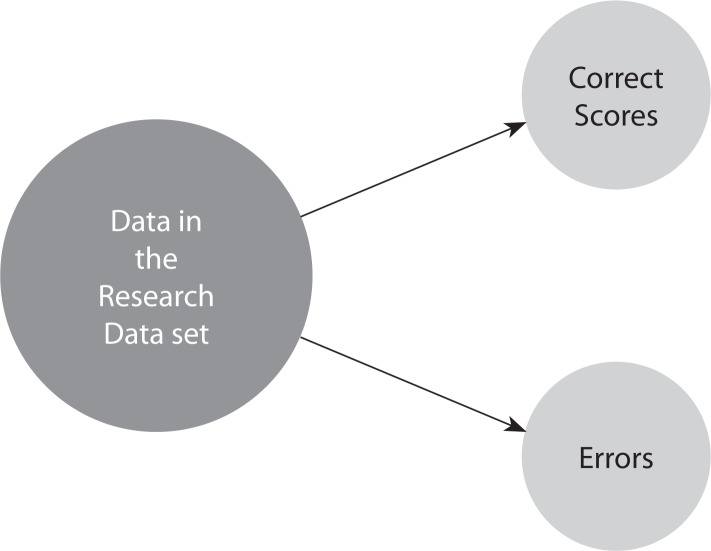
The kappa statistic is frequently used to test interrater reliability. The importance of rater reliability lies in the fact that it represents the extent to which the data collected in the study are correct representations of the variables measured. Measurement of the extent to which data collectors (raters) assign the same score to the same variable is called interrater reliability. While there have been a variety of methods to measure interrater reliability, traditionally it was measured as percent agreement, calculated as the number of agreement scores divided by the total number of scores. In 1960, Jacob Cohen critiqued use of percent agreement due to its inability to account for chance agreement. He introduced the Cohen's kappa, developed to account for the possibility that raters actually guess on at least some variables due to uncertainty. Like most correlation statistics, the kappa can range from -1 to +1. While the kappa is one of the most commonly used statistics to test interrater reliability, it has limitations. Judgments about what level of kappa should be acceptable for health research are questioned. Cohen's suggested interpretation may be too lenient for health related studies because it implies that a score as low as 0.41 might be acceptable. Kappa and percent agreement are compared, and levels for both kappa and percent agreement that should be demanded in healthcare studies are suggested.
Overview
The claims and statistics of this paper haven’t been checked yet.
Free: it reads the open-access text and checks the first 5 claims that cite a source we can check. Create a free account to check every claim.
Integrity signals
Registry
Cites
Statistics
Figures
Verification
Claims the paper makes
The claims and statistics of this paper haven’t been checked yet.
Free: it reads the open-access text and checks the first 5 claims that cite a source we can check. Create a free account to check every claim.
Claims other papers make about this one
Each is checked against this paper’s own text: does it say what the citing paper says it does?
The cited source doesn’t support the claim as written.
In the citing paper
“All raters met the minimum threshold for very good interrater reliability, defined as Cohen’s kappa statistic > 0.75 (McHugh 2012), and percentage agreement with criterion ratings was high (> 80%).”
From Evaluating the quality, safety, and functionality of commonly used smartphone apps for bipolar disorder mood and sleep self-management (2022) · cites this paper as McHugh 2012
Checked by a reasoning model — may be wrong.
Experimental — accuracy not yet measuredThe source backs part of the claim, not all of it — or backs it for a different population, condition or comparison.
In the citing paper
“Codes were compared to determine inter-coder agreement, which was calculated as the percentage of total agreed-upon selected codes compared with the total selected codes. This process was repeated until greater than eighty percent agreement was reached (McHugh, 2012).”
From "It Just Makes It Feel Like You're Not Alone": A Qualitative Study of a Social Support Group for High-Achieving, Low-Income STEM Majors (2024) · cites this paper as McHugh, 2012
Experimental — accuracy not yet measuredThe source backs part of the claim, not all of it — or backs it for a different population, condition or comparison.
In the citing paper
“They then labeled a second batch of 500 tweets, which resulted in an average Cohen’s kappa score of 0.77, indicating substantial interrater agreement (61).”
From Dynamics of cross-platform attention to retracted papers (2022) · cites this paper as [61]
Experimental — accuracy not yet measuredThe source backs part of the claim, not all of it — or backs it for a different population, condition or comparison.
In the citing paper
“The inferred sleep architecture estimates had a fair agreement (κ = 0.37) with the polysomnography ground truth on the internal validation12.”
From Self-supervised learning of accelerometer data provides new insights for sleep and its association with mortality (2024) · cites this paper as [12]
Experimental — accuracy not yet measuredThe source backs part of the claim, not all of it — or backs it for a different population, condition or comparison.
In the citing paper
“The inter-rater agreement for the combined screening process was 83%, indicating strong agreement between the two authors (McHugh, 2012).”
From Unraveling the Complexities of Offender Strategies as Part of Online Sexual Grooming and Technology-Assisted Child Sexual Abuse: A Systematic Review (2026) · cites this paper as McHugh, 2012
Experimental — accuracy not yet measured
35 more claims about this paper
Create a free account to see every claim other papers make about this one.
Self-check
Percentages, sums and reported differences re-computed from the paper’s own numbers.
The self-check needs the paper’s full text.
Citations
Cites
A Coefficient of Agreement for Nominal Scales
Cohen, J. (1960) · Educational and Psychological Measurement · doi:10.1177/001316446002000104 · Cited by 42,398
Stemler, S. E. (2020) · Scholarworks (University of Massachusetts Amherst) · doi:10.7275/96jp-xz07 · Cited by 992
Meta-analysis of Pap Test Accuracy
Fahey, M. T., Irwig, L., & Macaskill, P. (1995) · American Journal of Epidemiology · doi:10.1093/oxfordjournals.aje.a117485 · Cited by 684
Pressure ulcers: prevention, evaluation, and management.
Bluestein, D. A., & Javaheri, A. (2008) · PubMed · Cited by 201
Comparing groups for statistical differences: how to choose the right statistical test?
Marusteri, M., & Bacarea, V. (2010) · Biochemia Medica · doi:10.11613/bm.2010.004 · Cited by 184
Bonnyman, A. M., Webber, C. E., Stratford, P. W., & MacIntyre, N. J. (2012) · Journal of Clinical Densitometry · doi:10.1016/j.jocd.2012.03.005 · Cited by 176
Simundic, A.-M., Nikolac, N., Ivankovic, V., Ferenec-Ruzic, D., Magdic, B., Kvaternik, M., & Topic, E. (2009) · Clinical Chemistry and Laboratory Medicine · doi:10.1515/cclm.2009.306 · Cited by 113
Introductory Statistics for Health and Nursing Using SPSS
Marston, L. (2010) · SAGE Publications Ltd eBooks · doi:10.4135/9781446221570 · Cited by 80
Kottner, J., Halfens, R. J. G., & Dassen, T. W. N. (2009) · International Journal of Nursing Studies · doi:10.1016/j.ijnurstu.2009.03.014 · Cited by 77
de la Morena, E., Martinez, J., Rio, G. D., Latour, J., & Cabrera, P. (1978) · Biochemical Medicine · doi:10.1016/0006-2944(78)90045-5 · Cited by 19
Research works printed but not linked: 2
- [8]8. Marston, L . Introductory Statistics for Health and Nursing Using SPSS . Thousand Oaks, California: Sage Publications, Ltd . 2010 .
- [10]10. Simundic AM . Confidence interval . Biochem Med 2008;18:154-61 .
Cited by
Items 1,001–1,100 of 1,219
Lee, M. H., Siewiorek, D. P., Smailagic, A., Bernardino, A., & Bermúdez i Badia, S. (2020) · Proceedings of the ACM on Human-Computer Interaction · doi:10.1145/3415227 · Cited by 57
Snow, N. J., Wadden, K. P., Chaves, A. R., & Ploughman, M. (2019) · Neural Plasticity · doi:10.1155/2019/6430596 · Cited by 56
Reliability and validity of assigning ultraprocessed food categories to 24-h dietary recall data
Sneed, N. M., Ukwuani, S., Sommer, E. C., Samuels, L. R., Truesdale, K. P., Matheson, D., Noerper, T. E., Barkin, S. L., & Heerman, W. J. (2023) · The American Journal of Clinical Nutrition · doi:10.1016/j.ajcnut.2022.10.016 · Cited by 56
Mei, K., Fereidooni, S., & Caliskan, A. (2023) · 2023 ACM Conference on Fairness Accountability and Transparency · doi:10.1145/3593013.3594109 · Cited by 56
Farsight: Fostering Responsible AI Awareness During AI Application Prototyping
Wang, Z. J., Kulkarni, C., Wilcox, L., Terry, M., & Madaio, M. (2024) · Proceedings of the CHI Conference on Human Factors in Computing Systems · doi:10.1145/3613904.3642335 · Cited by 55
Efficacy of smartphone applications in high-risk pigmented lesions
Ngoo, A., Finnane, A., McMeniman, E., Tan, J., Janda, M., & Soyer, H. P. (2018) · Australasian Journal of Dermatology · doi:10.1111/ajd.12599 · Cited by 55
Ciocanel, O., Power, K., & Eriksen, A. (2019) · Sexual Medicine · doi:10.1016/j.esxm.2019.06.001 · Cited by 55
“Cohen’s Kappa statistic was used to assess inter-rater agreement, with a value <60% suggesting inadequate agreement among raters.(53)”
MethodCOVID-19 news consumption and distress in young people: A systematic review
Strasser, M. A., Sumner, P. J., & Meyer, D. (2022) · Journal of Affective Disorders · doi:10.1016/j.jad.2022.01.007 · Cited by 55
Verify-and-edit: A knowledge-enhanced chain-of-thought framework
Zhao, R., Li, X., Joty, S., Qin, C., & Bing, L. (2023) · Proceedings of the 61st Annual Meeting of the Association for Computational Linguistics (Volume 1: Long Papers) · doi:10.18653/v1/2023.acl-long.320 · Cited by 55
(2024) · Journal of Applied Learning & Teaching · doi:10.37074/jalt.2024.7.1.14 · Cited by 55
Wallace, S. J., Worrall, L., Rose, T., & Le Dorze, G. (2016) · American Journal of Speech-Language Pathology · doi:10.1044/2016_ajslp-15-0150 · Cited by 54
Harrison, C. D., Nguyen, T. A., Seidel, S. B., Escobedo, A. M., Hartman, C., Lam, K., Liang, K. S., Martens, M., Acker, G. N., Akana, S. F., et al. (2019) · CBE—Life Sciences Education · doi:10.1187/cbe.18-10-0215 · Cited by 54
Anti-inflammatory medications for the treatment of mental disorders: A scoping review
Fitton, R., Sweetman, J., Heseltine-Carp, W., & van der Feltz-Cornelis, C. (2022) · Brain, Behavior, & Immunity - Health · doi:10.1016/j.bbih.2022.100518 · Cited by 53
“75) (McHugh, 2012) for the first 10% of references.”
BackgroundXing, H., Lu, J., Yoong, S. Q., Tan, Y. Q., Kusuyama, J., & Wu, X. V. (2022) · Journal of the American Medical Directors Association · doi:10.1016/j.jamda.2022.01.055 · Cited by 53
Nguyen, C. T. T., Sandhi, A., Lee, G. T., Nguyen, L. T. K., & Kuo, S.-Y. (2023) · Journal of Affective Disorders · doi:10.1016/j.jad.2022.11.015 · Cited by 53
The Impact of Yoga on Fatigue in Cancer Survivorship: A Meta-Analysis
Armer, J. S., & Lutgendorf, S. K. (2020) · JNCI Cancer Spectrum · doi:10.1093/jncics/pkz098 · Cited by 54
Graf, B., & Antoni, C. H. (2023) · European Journal of Work and Organizational Psychology · doi:10.1080/1359432x.2022.2118051 · Cited by 52
Kato, S., Schwaederlé, M. C., Fanta, P. T., Okamura, R., Leichman, L., Lippman, S. M., Lanman, R. B., Raymond, V. M., Talasaz, A., & Kurzrock, R. (2019) · JCO Precision Oncology · doi:10.1200/po.18.00158 · Cited by 52
Rhee, C., Brown, S. R., Jones, T. M., O’Brien, C., Pande, A., Hamad, Y., Bulger, A. L., Tobin, K. A., Massaro, A. F., Anderson, D. J., et al. (2018) · Infection Control & Hospital Epidemiology · doi:10.1017/ice.2018.134 · Cited by 51
“We calculated interobserver variability on whether cases passed or failed SEP-1 using the Fleiss κ for 3-abstractor comparisons and the Cohen κ for 2-abstractor comparisons.(6) We considered κ> 0.”
MethodAnimal-assisted Psychotherapy and Trauma: A Meta-analysis
Germain, S. M., Wilkie, K. D., Milbourne, V. M. K., & Theule, J. (2018) · Anthrozoös · doi:10.1080/08927936.2018.1434044 · Cited by 49
“81 or higher are considered to be “almost perfect” agreement (McHugh, 2012).”
InfluentialCipriano, C., Naples, L. H., Eveleigh, A., Cook, A., Funaro, M., Cassidy, C., McCarthy, M. F., & Rappolt-Schlichtmann, G. (2023) · Review of Educational Research · doi:10.3102/00346543221094079 · Cited by 51
Lagan, S., Ramakrishnan, A., Lamont, E., Ramakrishnan, A., Frye, M., & Torous, J. (2020) · International Journal of Bipolar Disorders · doi:10.1186/s40345-020-00202-4 · Cited by 50
Tang, J. S. Y., Chen, N. T. M., Falkmer, M., Bӧlte, S., & Girdler, S. (2019) · Research in Autism Spectrum Disorders · doi:10.1016/j.rasd.2019.101412 · Cited by 49
Carr, P. J., Rippey, J. C. R., Cooke, M. L., Higgins, N. S., Trevenen, M., Foale, A., & Rickard, C. M. (2018) · Infection Control & Hospital Epidemiology · doi:10.1017/ice.2018.190 · Cited by 48
Houlind, M. B., Andersen, A. L., Treldal, C., Jørgensen, L. M., Kannegaard, P. N., Castillo, L. S., Christensen, L. D., Tavenier, J., Rasmussen, L. J. H., Ankarfeldt, M. Z., et al. (2020) · Journal of Clinical Medicine · doi:10.3390/jcm9020348 · Cited by 48
“93 for AOU criteria which is considered as almost perfect agreement [43].”
BackgroundYeshoua, B., Bowman, C., Dullea, J., Ditkowsky, J., Shyu, M., Lam, H., Zhao, W., Shin, J. Y., Dunn, A., Tsega, S., et al. (2023) · BMJ Open Quality · doi:10.1136/bmjoq-2022-002128 · Cited by 46
Large Language Models in Mental Health Care: A Systematic Scoping Review (Preprint)
hua, Y., Liu, F., Yang, K., Li, Z., Sheu, Y.-H., Zhou, P., Moran, L. V., Ananiadou, S., Clifton, D. A., & Beam, A. (2024) · doi:10.2196/preprints.64088 · Cited by 46
Vegetation-based ecosystem service delivery in urban landscapes: A systematic review
Stroud, S., Peacock, J., & Hassall, C. (2022) · Basic and Applied Ecology · doi:10.1016/j.baae.2022.02.007 · Cited by 46
Intarakamhang, U., Macaskill, A., & Prasittichok, P. (2020) · Heliyon · doi:10.1016/j.heliyon.2020.e03834 · Cited by 46
Chung, Y., Bagheri, N., Salinas-Perez, J. A., Smurthwaite, K., Walsh, E., Furst, M., Rosenberg, S., & Salvador-Carulla, L. (2020) · International Journal of Information Management · doi:10.1016/j.ijinfomgt.2019.04.012 · Cited by 46
Almeida-Antunes, N., Crego, A., Carbia, C., Sousa, S. S., Rodrigues, R., Sampaio, A., & López-Caneda, E. (2021) · NeuroImage: Clinical · doi:10.1016/j.nicl.2020.102537 · Cited by 46
Attributions toward artificial agents in a modified Moral Turing Test
Aharoni, E., Fernandes, S., Brady, D. J., Alexander, C., Criner, M., Queen, K., Rando, J., Nahmias, E., & Crespo, V. (2024) · Scientific Reports · doi:10.1038/s41598-024-58087-7 · Cited by 46
Field, S. L., Williams, M. O., Jones, C. R. G., & Fox, J. R. E. (2024) · Autism · doi:10.1177/13623613231223036 · Cited by 45
“Cohen’s kappa was 0.77, representing moderate agreement (McHugh, 2012).”
BackgroundInfluentialLangguth, B., & De Ridder, D. (2023) · Journal of Clinical Medicine · doi:10.3390/jcm12227117 · Cited by 44
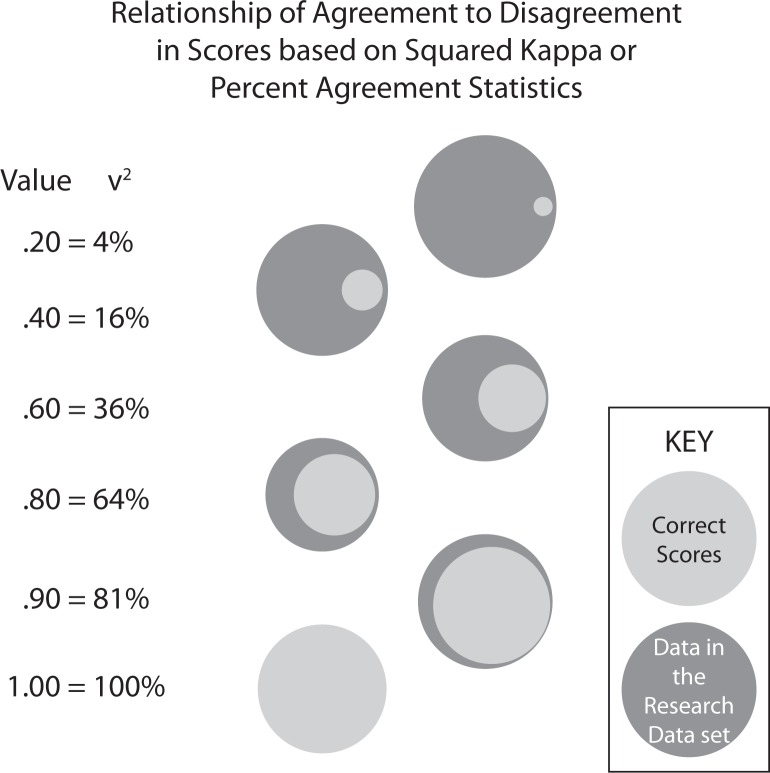
“The inter-rater reliability of NRS test–retest in tinnitus is strong and estimated at 0.8 [39], which means that 64–81% of the data are considered reliable [40].”
InfluentialGabel, C. K., Nguyen, E., Karmouta, R., Liu, K. J., Zhou, G., Alloo, A., Arakaki, R., Balagula, Y., Bridges, A. G., Cowen, E. W., et al. (2021) · Journal of the American Academy of Dermatology · doi:10.1016/j.jaad.2020.04.171 · Cited by 42
“00 239 as almost perfect agreement.(21) We evaluated the a ssociations of the calculated concordance a) 240 and b) with TDs’ years of experience and the report ed photo quality rating, and the associations 241 of the calculated concordance c) with photo quality using the Pearson correlation coefficient.”
MethodFrom the Automated Assessment of Student Essay Content to Highly Informative Feedback: a Case Study
Gombert, S., Fink, A., Giorgashvili, T., Jivet, I., Di Mitri, D., Yau, J., Frey, A., & Drachsler, H. (2024) · International Journal of Artificial Intelligence in Education · doi:10.1007/s40593-023-00387-6 · Cited by 42
Exploring the Capabilities of LLMs for Code-Change-Related Tasks
Fan, L., Liu, J., Liu, Z., Lo, D., Xia, X., & Li, S. (2025) · ACM Transactions on Software Engineering and Methodology · doi:10.1145/3709358 · Cited by 41
“For the models reported with two parameter sizes, we use both of them in our work.”
Poor writing, not specialized concepts, drives processing difficulty in legal language
Martínez, E., Mollica, F., & Gibson, E. (2022) · Cognition · doi:10.1016/j.cognition.2022.105070 · Cited by 39
Landschaft, A., Antweiler, D., Mackay, S., Kugler, S., Rüping, S., Wrobel, S., Höres, T., & Allende-Cid, H. (2024) · International Journal of Medical Informatics · doi:10.1016/j.ijmedinf.2024.105531 · Cited by 41
van Dronkelaar, C., Tieland, M., Cederholm, T., Reijnierse, E. M., Weijs, P. J. M., & Kruizenga, H. (2023) · Nutrients · doi:10.3390/nu15245126 · Cited by 41
“Cohen’s kappa measures the agreement between the two tools and was classified as follows: <0.20 poor, 0.20–0.40 fair, 0.40–0.60 moderate, 0.60–0.80 good, and >0.80 very good [29,30].”
MethodInfluentialRadomski, A. D., Wozney, L., McGrath, P., Huguet, A., Hartling, L., Dyson, M. P., Bennett, K., & Newton, A. S. (2019) · Journal of Medical Internet Research · doi:10.2196/11128 · Cited by 40
“During this stage, we randomly selected 100 citations to assess inter-rater agreement for inclusion or exclusion decisions; Cohen kappa was 0.74 between raters, reflecting substantial agreement [36].”
MethodInfluentialOussi, A., Hamid, K., & Bouvet, C. (2023) · Journal of Behavior Therapy and Experimental Psychiatry · doi:10.1016/j.jbtep.2023.101835 · Cited by 40
Almanea, M. (2026) · Computer Assisted Language Learning · doi:10.1080/09588221.2024.2410158 · Cited by 40
“The Kappa value was 0.8, indicating a high level of agreement (McHugh, 2012).”
InfluentialYuan, H., Plekhanova, T., Walmsley, R., Reynolds, A. C., Maddison, K. J., Bucan, M., Gehrman, P., Rowlands, A., Ray, D. W., Bennett, D., et al. (2024) · npj Digital Medicine · doi:10.1038/s41746-024-01065-0 · Cited by 40
Hwang, Y.-S., Noh, J.-E., Medvedev, O. N., & Singh, N. N. (2019) · Mindfulness · doi:10.1007/s12671-019-01236-1 · Cited by 47
Why Does ChatGPT Fall Short in Providing Truthful Answers?
Zheng, S., Huang, J., & Chang, K. C.-C. (2023) · arXiv · doi:10.48550/arxiv.2304.10513 · Cited by 40
Gupta, K., Balyan, K., Lamba, B., Puri, M., Sengupta, D., & Kumar, M. (2022) · The Journal of Maternal-Fetal & Neonatal Medicine · doi:10.1080/14767058.2021.1887847 · Cited by 39
Peek, K., Carey, M., Mackenzie, L., & Sanson-Fisher, R. (2019) · Physiotherapy Theory and Practice · doi:10.1080/09593985.2018.1474402 · Cited by 38
Detecting Causal Language Use in Science Findings
Yu, B., Li, Y., & Wang, J. (2019) · Proceedings of the 2019 Conference on Empirical Methods in Natural Language Processing and the 9th International Joint Conference on Natural Language Processing (EMNLP-IJCNLP) · doi:10.18653/v1/d19-1473 · Cited by 40
“The overall Cohen’s Kappa agreement (Cohen, 1960) was 0.98, indicating a near-perfect inter-coder agreement (McHugh, 2012).”
BackgroundInfluentialSchneider, L. H., Hadjistavropoulos, H. D., & Faller, Y. N. (2016) · Behavioural and Cognitive Psychotherapy · doi:10.1017/s1352465816000254 · Cited by 38
Influence of a Large Language Model on Diagnostic Reasoning: A Randomized Clinical Vignette Study
Goh, E., Gallo, R., Hom, J., Strong, E., Weng, Y., Kerman, H., Cool, J., Kanjee, Z., Parsons, A. S., Ahuja, N., et al. (2024) · doi:10.1101/2024.03.12.24303785 · Cited by 38
Co-Writing with AI, on Human Terms: Aligning Research with User Demands Across the Writing Process
Reza, M., Thomas-Mitchell, J., Dushniku, P., Laundry, N., Williams, J. J., & Kuzminykh, A. (2025) · Proceedings of the ACM on Human-Computer Interaction · doi:10.1145/3757566 · Cited by 37
“This preliminary assessment was designed to evaluate the concentration of relevant literature across databases.”
Promoting metacognition in an allied health anatomy course
Cale, A. S., Hoffman, L. A., & McNulty, M. A. (2023) · Anatomical Sciences Education · doi:10.1002/ase.2218 · Cited by 35
“To evaluate initial coding reliability, a second author (M.A.M.) reviewed the initial coding, which was calculated with Cohen's Kappa (values ranging from 0.56 to 0.77, meaning moderate to substantial coding agreement) (McHugh, 2012).”
MethodInfluentialOsborne, E. L., Ainsworth, B., Hooper, N., & Atkinson, M. J. (2023) · Journal of Medical Internet Research · doi:10.2196/44220 · Cited by 37
“Multimedia Appendix 7 [25,38,40-46] provides more details on our streamlined approach.”
Mohr, A. E., Basile, A. J., Crawford, M. S., Sweazea, K. L., & Carpenter, K. C. (2020) · Journal of the Academy of Nutrition and Dietetics · doi:10.1016/j.jand.2019.08.018 · Cited by 37
Ho, T. Q. A., Le, L. K.-D., Engel, L., Le, N., Melvin, G., Le, H. N. D., & Mihalopoulos, C. (2025) · European Child & Adolescent Psychiatry · doi:10.1007/s00787-024-02386-x · Cited by 38
Do Language Models Know When They’re Hallucinating References?
Agrawal, A., Suzgun, M., Mackey, L., & Kalai, A. (2024) · Findings of the Association for Computational Linguistics: EACL 2024 · doi:10.18653/v1/2024.findings-eacl.62 · Cited by 37
Schouten, S. E., Kip, H., Dekkers, T., Deenik, J., Beerlage-de Jong, N., Ludden, G. D. S., & Kelders, S. M. (2022) · Design for Health · doi:10.1080/24735132.2022.2145814 · Cited by 37
Klein, S. H. (2025) · Humanities and Social Sciences Communications · doi:10.1057/s41599-025-05618-w · Cited by 36
“Although classi fi ed as moderate according to established criteria (Landis and Koch, 1977; Schaer, 2012), the magnitude of Cohen ’ s Kappa might be seen as insuf fi cient, particularly in more critical areas like medical studies (McHugh, 2012).”
Human-In-The-Loop Software Development Agents
Takerngsaksiri, W., Pasuksmit, J., Thongtanunam, P., Tantithamthavorn, C., Zhang, R., Jiang, F., Li, J., Cook, E., Chen, K., & Wu, M. (2025) · 2025 IEEE/ACM 47th International Conference on Software Engineering: Software Engineering in Practice (ICSE-SEIP) · doi:10.1109/icse-seip66354.2025.00036 · Cited by 36
API Designers in the Field: Design Practices and Challenges for Creating Usable APIs
Murphy, L., Kery, M. B., Alliyu, O., Macvean, A., & Myers, B. A. (2018) · 2018 IEEE Symposium on Visual Languages and Human-Centric Computing (VL/HCC) · doi:10.1109/vlhcc.2018.8506523 · Cited by 38
Szakács, Z., Mátrai, P., Hegyi, P., Szabó, I., Vincze, Á., Balaskó, M., Mosdósi, B., Sarlós, P., Simon, M., Márta, K., et al. (2017) · PLOS ONE · doi:10.1371/journal.pone.0187526 · Cited by 35
PlÖtz, T. (2022) · ACM Computing Surveys · doi:10.1145/3459666 · Cited by 34
“Annotator agreement can be quantized through specific measures, such as kappa statistics (interrater reliability) [50].”
BackgroundCRISPR in the North American popular press
Marcon, A., Master, Z., Ravitsky, V., & Caulfield, T. (2019) · Genetics in Medicine · doi:10.1038/s41436-019-0482-5 · Cited by 34
Large Language Models are not Fair Evaluators
Wang, P., Li, L., Chen, L., Cai, Z., Zhu, D., Lin, B., Cao, Y., Liu, Q., Liu, T., & Sui, Z. (2023) · arXiv · doi:10.48550/arxiv.2305.17926 · Cited by 34
“We use the accuracy and kappa correlation coefficient (McHugh, 2012) with the final majority of human annotation results to measure the performance of different eval-uators and evaluation methods.”
BackgroundMethodItzhaky, L., Davaasambuu, S., Ellis, S. P., Cisneros-Trujillo, S., Hannett, K., Scolaro, K., Stanley, B. H., Mann, J. J., Wainberg, M. L., Oquendo, M. A., et al. (2022) · Journal of Affective Disorders · doi:10.1016/j.jad.2021.12.094 · Cited by 33
McGuinness, L. A., & Sheppard, A. L. (2021) · PLOS ONE · doi:10.1371/journal.pone.0250887 · Cited by 33
Zhuang, D., & Ibrahim, A. K. (2021) · Applied Sciences · doi:10.3390/app11177772 · Cited by 33
Lauder, K., McDowall, A., & Tenenbaum, H. R. (2022) · Frontiers in Psychology · doi:10.3389/fpsyg.2022.893469 · Cited by 36
LIN, G. S. S., CHAN, D. Z. K., LEE, H. Y., LOW, T. T., LAER, T. S., PILLAI, M. P. M., YEW, Y. Q., & WAFA, S. W. W. S. S. T. (2022) · Journal of Evidence-Based Dental Practice · doi:10.1016/j.jebdp.2022.101723 · Cited by 33
ALL-IN-ONE: Multi-Task Learning BERT models for Evaluating Peer Assessments
Jia, Q., Cui, J., Xiao, Y., Liu, C., Rashid, P., & Gehringer, E. F. (2021) · arXiv · doi:10.48550/arxiv.2110.03895 · Cited by 33
Nawar, K., Mohammad, A., Johns, E. J., & Abdulla, M. H. (2022) · Journal of Human Hypertension · doi:10.1038/s41371-022-00658-0 · Cited by 32
“6 threshold which indicates strong inter-rater reliability [14].”
BackgroundMethodUsing narratives in differential diagnosis of neurodegenerative syndromes
Faroqi-Shah, Y., Treanor, A., Ratner, N. B., Ficek, B., Webster, K., & Tsapkini, K. (2020) · Journal of Communication Disorders · doi:10.1016/j.jcomdis.2020.105994 · Cited by 32
Juhász, A. E., Stubnya, M. P., Teutsch, B., Gede, N., Hegyi, P., Nyirády, P., Bánhidy, F., Ács, N., & Juhász, R. (2024) · Reproductive Health · doi:10.1186/s12978-024-01758-5 · Cited by 32
Harris, E., & Samuel, V. (2020) · Journal of Cognitive Psychotherapy · doi:10.1891/jcpsy-d-20-00001 · Cited by 32
Doyle, A. J., Sullivan, C., O'Toole, M., Tjin, A., Simiceva, A., Collins, N., Murphy, P., Anderson, M. J., Mulhall, C., Condron, C., et al. (2024) · Medical Teacher · doi:10.1080/0142159x.2023.2241621 · Cited by 32
Chang, C.-C., & Chen, Y. (2020) · Journal of Science Education and Technology · doi:10.1007/s10956-020-09841-9 · Cited by 32
Store-and-Forward Images in Teledermatology: Narrative Literature Review (Preprint)
(2022) · doi:10.2196/preprints.37517 · Cited by 32
Store-and-Forward Images in Teledermatology: Narrative Literature Review
Jiang, S. W., Flynn, M. S., Kwock, J. T., & Nicholas, M. W. (2022) · JMIR Dermatology · doi:10.2196/37517 · Cited by 32
“Interrater agreement refers to the degree to which the responses of 2 or more raters are similar [10].”
BackgroundHennemann, S., Kuhn, S., Witthöft, M., & Jungmann, S. M. (2022) · JMIR Mental Health · doi:10.2196/32832 · Cited by 31
“For the 3 most prevalent disorder categories in our sample (according to the interview-based diagnoses), we calculated accuracy based on contingency tables as the sum of true positives and true negatives divided by the total number of cases [51], as well as sensitivity and specificity.”
MethodBurford, K. G., Itzkowitz, N. G., Ortega, A. G., Teitler, J. O., & Rundle, A. G. (2024) · JAMA Network Open · doi:10.1001/jamanetworkopen.2024.25981 · Cited by 33
A Simple Guide to Inter-rater, Intra-rater and Test-retest Reliability for Animal Behaviour Studies
Harvey, N. D. (2021) · doi:10.31219/osf.io/8stpy · Cited by 31
Transcriptional profiling of normal, stenotic, and regurgitant human aortic valves
Greene, C. L., Jaatinen, K. J., Wang, H., Koyano, T. K., Bilbao, M. S., & Woo, Y. J. (2020) · Genes · doi:10.3390/genes11070789 · Cited by 30
Sezgin, E., Jackson, D. I., Kocaballi, A. B., Bibart, M., Zupanec, S., Landier, W., Audino, A., Ranalli, M., & Skeens, M. (2025) · Cancer Medicine · doi:10.1002/cam4.70554 · Cited by 30
What works for whom? Multidimensional individualized stuttering therapy (MIST)
Sønsterud, H., Halvorsen, M. S., Feragen, K. B., Kirmess, M., & Ward, D. (2020) · Journal of Communication Disorders · doi:10.1016/j.jcomdis.2020.106052 · Cited by 30
Escobar-Viera, C. G., Melcher, E. M., Miller, R. S., Whitfield, D. L., Jacobson-López, D., Gordon, J. D., Ballard, A. J., Rollman, B. L., & Pagoto, S. (2021) · Internet Interventions · doi:10.1016/j.invent.2021.100428 · Cited by 30
Verma, N., Buch, B., Taralekar, R., & Acharya, S. (2023) · JMIR Formative Research · doi:10.2196/42775 · Cited by 30
Lewis, L., Povey, R., Rose, S., Cowap, L., Semper, H., Carey, A., Bishop, J., & Clark-Carter, D. (2021) · Preventive Medicine Reports · doi:10.1016/j.pmedr.2021.101429 · Cited by 29
Radha Krishnan, R. P., Hung, E. H., Ashford, M., Edillo, C. E., Gardner, C., Hatrick, H. B., Kim, B., Lai, A. W. Y., Li, X., Zhao, Y. X., et al. (2024) · British Journal of Clinical Pharmacology · doi:10.1111/bcp.16275 · Cited by 29
Poli, A., Pozza, A., Orrù, G., Conversano, C., Ciacchini, R., Pugi, D., Angelo, N. L., Angeletti, L. L., Miccoli, M., & Gemignani, A. (2022) · Frontiers in Psychiatry · doi:10.3389/fpsyt.2022.1063116 · Cited by 25
Janik, A., & Ryszko, A. (2025) · Sustainability · doi:10.3390/su18010017 · Cited by 28
Exploring emergent AI-TPACK competencies in a two-week AI literacy module for preservice teachers
Aldemir, T., Bicer, A., Kilinc, S., Moon, J., & Kwok, M. (2025) · Teaching and Teacher Education · doi:10.1016/j.tate.2025.105231 · Cited by 27
“Two authors independently coded a stratified 20 % sample (by data source and week), with 85 % agreement and Cohen ’ s κ = .62 (computed on the primary code per clause), indicating moderate-to-substantial agreement (McHugh, 2012).”
Lechner-Meichsner, F., Mauro, C., Skritskaya, N. A., & Shear, M. K. (2022) · Psychotherapy Research · doi:10.1080/10503307.2021.1909769 · Cited by 27
“Interrater reliability of the CGI (Cohen’s κ= 0.68; Shear et al., 2014) can be considered as substantial (McHugh, 2012).”
BackgroundInfluentialCognitive Impairment in Sexual and Gender Minority Groups: A Scoping Review of the Literature
Romanelli, R. J., Rosenblatt, A. S., Marcum, Z. A., & Flatt, J. D. (2024) · LGBT Health · doi:10.1089/lgbt.2023.0095 · Cited by 27
Rouillard, C. J., Nasser, M. A., Hu, H., & Roblin, D. W. (2022) · Medical Care · doi:10.1097/mlr.0000000000001683 · Cited by 27
“38 We computed sensitivity, speci fi city, and κ at the note-survey level rather than the patient level because social needs for any one patient could change over a multiyear period.”
Method(2020) · Pacific Asia journal of the Association for Information Systems · doi:10.17705/1pais.12201 · Cited by 26
“The level of agreement between the coders, Cohen’s Kappa ( κ ), was found to be 0.86 (> threshold value 0.80), suggesting good reliability (McHugh, 2012).”
BackgroundInfluentialTofuEval: Evaluating Hallucinations of LLMs on Topic-Focused Dialogue Summarization
Tang, L., Shalyminov, I., Wong, A., Burnsky, J., Vincent, J., Yang, Y., Singh, S., Feng, S., Song, H., Su, H., et al. (2024) · Proceedings of the 2024 Conference of the North American Chapter of the Association for Computational Linguistics: Human Language Technologies (Volume 1: Long Papers) · doi:10.18653/v1/2024.naacl-long.251 · Cited by 26
Stressed-Out Oral Immunity: A Gateway From Socioeconomic Adversity to Periodontal Disease
Gomaa, N., Glogauer, M., Nicolau, B., Tenenbaum, H., Siddiqi, A., Fine, N., & Quiñonez, C. (2020) · Psychosomatic Medicine · doi:10.1097/psy.0000000000000774 · Cited by 25
“78, respectively, demonstrating a high degree of examiner reliability and reproducibility (71).”
BackgroundZhou, Y., Sardana, D., Kuroko, S., Haszard, J. J., de Block, M. I., Weng, J., Jefferies, C., & Wheeler, B. J. (2024) · Diabetic Medicine · doi:10.1111/dme.15280 · Cited by 25
Titzler, I., Berking, M., Schlicker, S., Riper, H., & Ebert, D. D. (2020) · JMIR Mental Health · doi:10.2196/18642 · Cited by 25
Metadata
- Authors
- McHugh, M. L.
- Affiliations
- National University (US)
- Corresponding author
- McHugh, Marry L.
- Venue
- Biochemia Medica
- Published
- 2012
- Volume
- 22
- Issue
- 3
- Pages
- 276-282
- ISSN
- 1330-0962 (ISSN-L)
- 1846-7482
- PMC
- PMC3900052
- OpenAlex
- W4294214983
- Semantic Scholar
- bf3a7271860b1667e3ceb84e5bc400d2635ff8b7
- Cited by
- 19,877
- References
- 10
- Citations by year
- 2026: 2370 · 2025: 2905 · 2024: 2853 · 2023: 2576 · 2022: 2417 · 2021: 2359 · 2020: 1703 · 2019: 1050 · 2018: 748 · 2017: 468 · 2016: 228 · 2015: 63 · 2014: 39 · 2013: 8 · 2012: 5
- FWCI
- 41.68
- Type
- journal article
- Language
- en
- Open access
- diamond
- doi.org
- Licence
- cc-by
- Locations
- Biochemia Medica (publishedVersion, cc-by)
- Europe PMC (PubMed Central) (publishedVersion, other-oa)
- PubMed Central (publishedVersion, cc-by-nc)
- PubMed (publishedVersion)
- University of Zagreb University Computing Centre (SRCE) (submittedVersion, other-oa)
- PubMed
- Topics
- Social Sciences › Decision Sciences › Statistics, Probability and Uncertainty › Reliability and Agreement in Measurement
- Physical Sciences › Mathematics › Statistics and Probability › Statistical Methods in Epidemiology
- Social Sciences › Decision Sciences › Statistics, Probability and Uncertainty › Meta-analysis and systematic reviews
- Keywords
- inter-rater reliability, Cohen's kappa, percent agreement, chance-corrected agreement, rater agreement, interobserver variability
- MeSH terms
- Data Interpretation, Statistical, Reproducibility of Results, Observer Variation
About these checks
Registry, retraction, Cites and statistics results are computed, not judged, with one exception: a printed reference that no index lists is read once by a model before it counts as a citation error. Claims are extracted by a model and kept only when their quote appears verbatim in the text; each cited source is then checked, with a model’s help, for whether it says what the claim relies on. Those verdicts can be wrong — read the claim’s quote and the cited source before relying on one.
Statistics and arithmetic are recomputed, not judged.
Confidence bands are shown only for fields calibrated on our annotated test set. None is calibrated yet, so no band is shown.
What counts as a claim ›How we measure confidence ›How we check this ›
Are you an author, or do you see a problem with this page? Request a review
Data sources
Bibliographic data: Semantic Scholar, OpenAlex, Crossref.
Contains information from the Semantic Scholar Academic Graph Datasets, made available under the ODC Attribution License (ODC-BY 1.0).
Semantic Scholar’s data is described in: Kinney, R., et al. (2023). The Semantic Scholar Open Data Platform. arXiv:2301.10140.
