

A high sensitivity assay is more accurate than a classical assay for the measurement of plasma CRP levels in endometriosis
Open accessThe DOI matches its Crossref record; 39 of the 40 references it cites were found in a registry or an index; 4 of the 18 sources its claims cite were checked for support.
Abstract
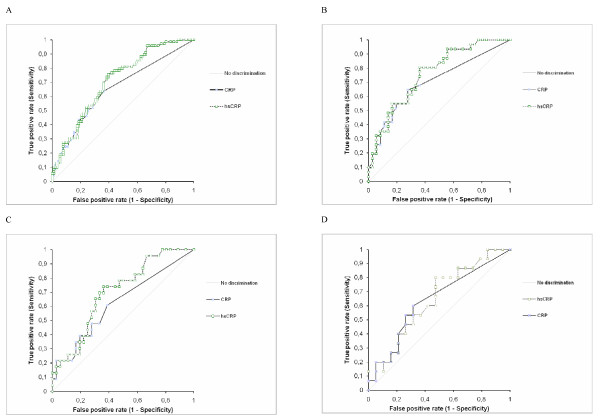
Background: Endometriosis is associated with chronic subclinical inflammation. C-reactive protein (CRP), a marker of inflammation, could serve as a biomarker of endometriosis. We tested the hypothesis that a high sensitivity CRP assay (hsCRP) is more accurate than a classical CRP assay in the detection of subclinical inflammation in plasma of women with endometriosis. Methods: CRP levels were measured by hsCRP and classical CRP assays in plasma of 204 women with endometriosis and 91 women without endometriosis. Both assays were compared with respect to their value for the diagnosis of endometriosis. Results: The number of plasma samples with detectable CRP was significantly higher (100%) using the hsCRP assay when compared to the classical CRP assay (42.7%) (p < 0.0001). Significantly increased CRP plasma levels were found in women with endometriosis when compared with controls when the hsCRP assay was used in samples obtained during the luteal phase (p = 0.008). The highest discriminative ability for the diagnosis of endometriosis was also obtained using the hsCRP assay during the luteal phase, especially for moderate -severe endometriosis. At a cut-off level of hsCRP > 0.71 mg/L, moderate-severe stages were diagnosed with 80.7% sensitivity and 63.9% specificity during the luteal phase. Using a similar cut-off value for CRP analyzed by the classical method, moderate-severe endometriosis was diagnosed with lower sensitivity (67.7%, p = 0.06) and comparable specificity (63.9%). Conclusions: The hsCRP assay was superior to the classical CRP assay for the detection of low CRP levels and for revealing subclinical inflammation in plasma of women with endometriosis.
Overview
CoChat Summary
TL;DR
In women with laparoscopically confirmed endometriosis, a high-sensitivity CRP assay detected plasma CRP in all samples and showed better diagnostic performance than a classical CRP assay, especially for moderate-severe disease during the luteal phase. The hsCRP assay was superior for detecting low CRP levels and subclinical inflammation, but CRP was not useful for diagnosing early-stage endometriosis.
Key findings
- Detectable CRP was found in 295/295 (100%) samples with hsCRP versus 126/295 (42.7%) with classical CRP (p < 0.0001).
- During the luteal phase, hsCRP levels were significantly higher in women with endometriosis than controls (p = 0.008); classical CRP showed no cycle-phase-specific differences.
- For moderate-severe endometriosis in the luteal phase, hsCRP had AUC 0.76; at a cut-off > 0.71 mg/L, sensitivity was 80.7% and specificity 63.9%. Classical CRP at the same cut-off had AUC 0.70, sensitivity 67.7%, and specificity 63.9%; the sensitivity difference was not statistically significant (p = 0.125 two-tail or 0.0625 one-tail).
- Stage I-II endometriosis and controls had comparable CRP/hsCRP levels, with low AUCs (0.50-0.57) and no useful cut-off, indicating CRP is not useful for early-stage diagnosis.
Methods
- Plasma samples from 204 women with laparoscopically confirmed endometriosis (ASRM stage I-II, n = 135; stage III-IV, n = 69) and 91 women with laparoscopically excluded endometriosis; 295 total samples across menstrual (n = 60), luteal (n = 116), and follicular (n = 119) phases.
- Each sample was measured by classical CRP (Roche Tina-quant CRPLX) and hsCRP (Roche HS Tina-quant) on a Roche Modular P; lower detection limits were 0.425 mg/L and 0.03 mg/L, and functional sensitivities were 0.88 mg/L and 0.11 mg/L, respectively.
- Statistical analysis used Mann-Whitney, Kruskal-Wallis with post hoc Dunn, ROC/AUC comparison, McNemar test, Spearman correlation, and Bland-Altman analysis; p < 0.05 was significant.
Limitations
- The paper states no power calculation was done because this was an exploratory study using biobank samples, and most samples had been used in a previous study evaluating six plasma biomarkers including hsCRP but not classical CRP.
- The paper states comparison with other studies is difficult due to differences in patient phenotype, patient number, serum versus plasma, and CRP methodology.
- Evident from the text: this was a single-center study at the Leuven University Fertility Centre, controls were women undergoing laparoscopic surgery for subfertility with or without pain rather than healthy controls, and the higher sensitivity of hsCRP versus classical CRP for moderate-severe luteal-phase endometriosis was not statistically significant.
Model-written summary. Check it against the paper before relying on it.
Integrity signals
Registry
Cites
Statistics
Figures
Verification
Claims the paper makes
2 Valid · 3 Not valid · 7 Not checked · 28 Own results and interpretations
A result the paper reports from its own data — it cites no other source for it, so there is none to check. The quote shows it is in the paper.
In the paper
“The highest discriminative ability for the diagnosis of endometriosis was obtained using the hsCRP assay during the luteal phase, especially for moderate -severe endometriosis (AUC 0.76, Table 3; Figure 1B).”
§ A high sensitivity assay is more accurate than a classical assay for the measurement of plasma CRP levels in endometriosis > Results > Diagnostic performance of hsCRP versus CRP
plainstates an association- Asserted: passes — The authors put it forward as true.
- Checkable: passes — It can be checked against evidence.
- Load-bearing: passes — The paper’s conclusions depend on it.
- Based: passes — The paper gives a reason why it holds.
- Rests on 2 assumptions not shown here.
A result the paper reports from its own data — it cites no other source for it, so there is none to check. The quote shows it is in the paper.
In the paper
“At a cut-off plasma level of hsCRP > 0.71 mg/L, moderate-severe stages of endometriosis were diagnosed with sensitivity of 80.65% and specificity of 63.89% during the luteal phase of the menstrual cycle.”
§ A high sensitivity assay is more accurate than a classical assay for the measurement of plasma CRP levels in endometriosis > Results > Diagnostic performance of hsCRP versus CRP
plainstates an association- Asserted: passes — The authors put it forward as true.
- Checkable: passes — It can be checked against evidence.
- Load-bearing: passes — The paper’s conclusions depend on it.
- Based: passes — The paper gives a reason why it holds.
- Rests on 2 assumptions not shown here.
A result the paper reports from its own data — it cites no other source for it, so there is none to check. The quote shows it is in the paper.
In the paper
“No differences in CRP levels according to cycle phase were observed when the classical CRP assay was used (Table 2).”
§ A high sensitivity assay is more accurate than a classical assay for the measurement of plasma CRP levels in endometriosis > Results > CRP plasma levels: comparison between classical CRP assay and hsCRP assay in women with endometriosis and controls (Table 2)
plain- Asserted: passes — The authors put it forward as true.
- Checkable: passes — It can be checked against evidence.
- Load-bearing: passes — The paper’s conclusions depend on it.
- Based: passes — The paper gives a reason why it holds.
- Rests on 2 assumptions not shown here.
A result the paper reports from its own data — it cites no other source for it, so there is none to check. The quote shows it is in the paper.
In the paper
“Comparable plasma CRP levels between women with endometriosis and controls (Table 2) resulted in a low AUC (0.55, Table 3) demonstrating limited clinical value.”
§ A high sensitivity assay is more accurate than a classical assay for the measurement of plasma CRP levels in endometriosis > Discussion
boosted- Asserted: passes — The authors put it forward as true.
- Checkable: passes — It can be checked against evidence.
- Load-bearing: passes — The paper’s conclusions depend on it.
- Based: passes — The paper gives a reason why it holds.
- Rests on 2 assumptions not shown here.
A result the paper reports from its own data — it cites no other source for it, so there is none to check. The quote shows it is in the paper.
In the paper
“and for the diagnosis of minimal-severe endometriosis during the luteal phase of the cycle only (p = 0.037).”
§ A high sensitivity assay is more accurate than a classical assay for the measurement of plasma CRP levels in endometriosis > Results > Diagnostic performance of hsCRP versus CRP
plainstates an association- Asserted: passes — The authors put it forward as true.
- Checkable: passes — It can be checked against evidence.
- Load-bearing: passes — The paper’s conclusions depend on it.
- Based: passes — The paper gives a reason why it holds.
- Rests on 2 assumptions not shown here.
12 more claims
Create a free account to see all 40 claims and to verify the 2 references still open.
- Probably not a substantial claim. 12
- It may state two separate claims as one. 17
Claims other papers make about this one
Each is checked against this paper’s own text: does it say what the citing paper says it does?
The cited source says what the claim attributes to it.
In the citing paper
“It seems that hs-CRP is more relevant for the diagnostics of endometriosis patients than classical measurement [14].”
From Diagnostic Significance of Selected Serum Inflammatory Markers in Women with Advanced Endometriosis (2021) · cites this paper as [14]
The cited source says what the claim attributes to it.
In the citing paper
“the cut-off points proposed in this and other studies are still within the physiological reference range (<10 mg/L [14])”
From Diagnostic Significance of Selected Serum Inflammatory Markers in Women with Advanced Endometriosis (2021) · cites this paper as [14]
The cited source says what the claim attributes to it.
In the citing paper
“Since endometriosis is considered an inflammatory disease, CRP could be an additional potential non-invasive biomarker of it, however, a non-specific one.”
From Diagnostic Significance of Selected Serum Inflammatory Markers in Women with Advanced Endometriosis (2021) · cites this paper as [14]
In the citing paper
“The inflammatory marker C-reactive protein (CRP) has been shown to be upregulated [23], especially when examined with a high sensitivity assay making it possible to detect subclinical inflammation in women with endometriosis [50].”
From Update on biomarkers for the detection of endometriosis (2015) · cites this paper as [50]
Self-check
Percentages, sums and reported differences re-computed from the paper’s own numbers.
Each contradiction between two passages listed here was confirmed by an independent check.
Rated minor: it would not touch a result — a value no result rests on, a p-value that stays on the same side of the significance level, or a conflict that is clerical, resolved elsewhere in the paper, or outside its own findings.
In the paper
“| 95% Limits of agreement | -1.85 and 1.55 | -2.37 and 2.56 | -0.56 and 1.15 | -1.16 and 0.97 | -2.10 and 1.35 |”
§ A high sensitivity assay is more accurate than a classical assay for the measurement of plasma CRP levels in endometriosis > Results > Determination of CRP in plasma: Comparison of classical CRP and hsCRP assays
Reported -0.06 · recomputed 0.095
Rated minor: it would not touch a result — a value no result rests on, a p-value that stays on the same side of the significance level, or a conflict that is clerical, resolved elsewhere in the paper, or outside its own findings.
In the paper
“| 95% Limits of agreement | -1.85 and 1.55 | -2.37 and 2.56 | -0.56 and 1.15 | -1.16 and 0.97 | -2.10 and 1.35 |”
§ A high sensitivity assay is more accurate than a classical assay for the measurement of plasma CRP levels in endometriosis > Results > Determination of CRP in plasma: Comparison of classical CRP and hsCRP assays
Reported -0.19 · recomputed 0.295
Rated minor: it would not touch a result — a value no result rests on, a p-value that stays on the same side of the significance level, or a conflict that is clerical, resolved elsewhere in the paper, or outside its own findings.
In the paper
§ A high sensitivity assay is more accurate than a classical assay for the measurement of plasma CRP levels in endometriosis > Discussion
“resulting in low AUCs (0.50-0.57, Table 3)”
§ A high sensitivity assay is more accurate than a classical assay for the measurement of plasma CRP levels in endometriosis > Results > Diagnostic performance of hsCRP versus CRP
“| Controls vs Stage I-II | 0.52 | N/A | N/A | 0.59 | > 0.54 | 57/50 |”
Rated minor: it would not touch a result — a value no result rests on, a p-value that stays on the same side of the significance level, or a conflict that is clerical, resolved elsewhere in the paper, or outside its own findings.
In the paper
§ A high sensitivity assay is more accurate than a classical assay for the measurement of plasma CRP levels in endometriosis > Results > Diagnostic performance of hsCRP versus CRP
“it was not possible to develop the optimal cut-off point for the diagnosis of stage I-II endometriosis (Table 3).”
§ A high sensitivity assay is more accurate than a classical assay for the measurement of plasma CRP levels in endometriosis > Results > Diagnostic performance of hsCRP versus CRP
“| Controls vs Stage I-II | 0.52 | N/A | N/A | 0.59 | > 0.54 | 57/50 |”
Rated minor: it would not touch a result — a value no result rests on, a p-value that stays on the same side of the significance level, or a conflict that is clerical, resolved elsewhere in the paper, or outside its own findings.
In the paper
§ A high sensitivity assay is more accurate than a classical assay for the measurement of plasma CRP levels in endometriosis > Results > CRP plasma levels: comparison between classical CRP assay and hsCRP assay in women with endometriosis and controls (Table 2)
“| | (0.425-31.6) | (0.06-37.22) | (0.425-24.9) | (0.12-27.23) | (0.425-13.0) | (0.06-14.22) | (0.425-31.6) | (0.6-37.22) |”
§ A high sensitivity assay is more accurate than a classical assay for the measurement of plasma CRP levels in endometriosis > Results > CRP plasma levels: comparison between classical CRP assay and hsCRP assay in women with endometriosis and controls (Table 2)
“| | (0.425-31.6) | (0.06-37.22) | (0.425-13.1) | (0.12-14.14) | (0.425-5.6) | (0.06-6.6) | (0.425-31.6) | (0.15-37.22) |”
1 more finding
Create a free account to see every finding of this check.
Citations
Cites
DeLong, E. R., DeLong, D. M., & Clarke-Pearson, D. L. (1988) · Biometrics · doi:10.2307/2531595 · Cited by 22,649
Whiting, P., Rutjes, A. W., Reitsma, J. B., Bossuyt, P. M., & Kleijnen, J. (2003) · BMC Medical Research Methodology · doi:10.1186/1471-2288-3-25 · Cited by 3,592
Understanding diagnostic tests 3: receiver operating characteristic curves
Akobeng, A. K. (2007) · Acta Paediatrica · doi:10.1111/j.1651-2227.2006.00178.x · Cited by 1,882 · cited 1×
“In our study the AUC was calculated and evaluated based on previously published guidelines and definitions [20,21].”
MethodBlack, S., Kushner, I., & Samols, D. (2004) · Journal of Biological Chemistry · doi:10.1074/jbc.r400025200 · Cited by 1,844
Ridker, P. M. (2001) · Circulation · doi:10.1161/01.cir.103.13.1813 · Cited by 1,402 · cited 1×
“71 mg/L) was similar to the lowest cut-off point used in the risk assessment algorithm in the primary prevention of Cardiovascular disease [6,32].”
MethodSinger, J. M., & Plotz, C. M. (1956) · The American Journal of Medicine · doi:10.1016/0002-9343(56)90103-6 · Cited by 1,165
Endometriosis: epidemiology and aetiological factors
Viganò, P., Parazzini, F., Somigliana, E., & Vercellini, P. (2004) · Best Practice & Research Clinical Obstetrics & Gynaecology · doi:10.1016/j.bpobgyn.2004.01.007 · Cited by 718 · cited 1×
“Endometriosis can be considered as an inflammatory disease [5].”
BackgroundRoberts, W. L., Moulton, L., Law, T. C., Farrow, G., Cooper-Anderson, M., Savory, J., & Rifai, N. (2001) · Clinical Chemistry · doi:10.1093/clinchem/47.3.418 · Cited by 652 · cited 2×
“Several hsCRP assays have been developed with improved sensitivity and precision at low concentrations of CRP with the aim to detect subclinical inflammation [17].”
BackgroundMethodClinical Efficacy of an Automated High-Sensitivity C-Reactive Protein Assay
Rifai, N., Tracy, R. P., & Ridker, P. M. (1999) · Clinical Chemistry · doi:10.1093/clinchem/45.12.2136 · Cited by 613 · cited 1×
“CRP is widely accepted as a biochemical marker of systemic inflammation [8] and routinely used as a marker of infection, inflammation or tissue damage in clinical practice [6].”
BackgroundPatel, P., Mendall, M. A., Carrington, D., Strachan, D. P., Leatham, E., Molineaux, N., Levy, J., Blakeston, C., Seymour, C. A., Camm, A. J., et al. (1995) · BMJ · doi:10.1136/bmj.311.7007.711 · Cited by 592
Peripheral biomarkers of endometriosis: a systematic review
May, K. E., Conduit-Hulbert, S. A., Villar, J., Kirtley, S., Kennedy, S. H., & Becker, C. M. (2010) · Human Reproduction Update · doi:10.1093/humupd/dmq009 · Cited by 418 · cited 4×
“For instance, such correction was absent in three of the nine reviewed papers investigating IL-6 as a biomarker for endometriosis, despite evidence that levels are known to change throughout the cycle [15,34].”
BackgroundMethodInfluentialEndometriosis and Subfertility: Is the Relationship Resolved?
(2003) · Seminars in Reproductive Medicine · doi:10.1055/s-2003-41330 · Cited by 321 · cited 1×
“Although the pathogenesis of endometriosis is still controversial, growing evidence indicates a significant role for immunological and inflammatory factors in the development of endometriosis [1] as demonstrated by increased concentrations of activated macrophages, cytokines, angiogenic factors, T cells and B cells [2…”
BackgroundSelf-citationPotential involvement of the immune system in the development of endometriosis
Kyama, C. M., Debrock, S., Mwenda, J. M., & D'Hooghe, T. M. (2003) · Reproductive Biology and Endocrinology · doi:10.1186/1477-7827-1-123 · Cited by 244
Self-citationIs Endometriosis Associated with Systemic Subclinical Inflammation?
Agic, A., Xu, H., Finas, D., Banz, C., Diedrich, K., & Hornung, D. (2006) · Gynecologic and Obstetric Investigation · doi:10.1159/000093121 · Cited by 231 · cited 2×
“Published evidence suggested that endometriosis could be viewed as a local disease with systemic subclinical manifestation [7].”
BackgroundHawass, N. E. (1997) · The British Journal of Radiology · doi:10.1259/bjr.70.832.9166071 · Cited by 230
Arabia, S. (1997) · Cited by 171
Non-invasive diagnosis of endometriosis based on a combined analysis of six plasma biomarkers
Mihalyi, A., Gevaert, O., Kyama, C. M., Simsa, P., Pochet, N., De Smet, F., De Moor, B., Meuleman, C., Billen, J., Blanckaert, N., et al. (2010) · Human Reproduction · doi:10.1093/humrep/dep425 · Cited by 161 · cited 3×
“Comparison of our results with those from other studies reporting CRP levels in women with endometriosis is difficult (Table 5) due to differences in patient phenotype, patient number, type of peripheral blood (serum or plasma) and CRP methodology (variety of assays manufactured by a variety of companies) [11-14,36].”
BackgroundMethodResultSelf-citationCYCLIC PLASMA IL-6 LEVELS DURING NORMAL MENSTRUAL CYCLE
Angstwurm, M., Gärtner, R., & Ziegler‐Heitbrock, H. W. L. (1997) · Cytokine · doi:10.1006/cyto.1996.0178 · Cited by 147 · cited 1×
“For instance, such correction was absent in three of the nine reviewed papers investigating IL-6 as a biomarker for endometriosis, despite evidence that levels are known to change throughout the cycle [15,34].”
BackgroundC-reactive protein and atherothrombosis—Beyond a biomarker: an actual partaker of lesion formation
Verma, S., & Yeh, E. T. H. (2003) · American Journal of Physiology-Regulatory, Integrative and Comparative Physiology · doi:10.1152/ajpregu.00170.2003 · Cited by 131 · cited 1×
“Moreover, slightly elevated CRP levels may indicate a low level of chronic inflammatory reaction in patients at risk of developing metabolic syndrome, colon cancer and cardiovascular disease [9,10].”
BackgroundXavier, P., Belo, L., Beires, J., Rebelo, I., Martinez-de-Oliveira, J., Lunet, N., & Barros, H. (2006) · Archives of Gynecology and Obstetrics · doi:10.1007/s00404-005-0080-4 · Cited by 130 · cited 3×
“Comparison of our results with those from other studies reporting CRP levels in women with endometriosis is difficult (Table 5) due to differences in patient phenotype, patient number, type of peripheral blood (serum or plasma) and CRP methodology (variety of assays manufactured by a variety of companies) [11-14,36].”
BackgroundResultBossuyt, X. (2009) · Autoimmunity Reviews · doi:10.1016/j.autrev.2009.01.013 · Cited by 122 · cited 3×
“In our study the AUC was calculated and evaluated based on previously published guidelines and definitions [20,21].”
BackgroundMethodSelf-citationJilma, B., Dirnberger, E., Löscher, I., Rumplmayr, A., Hildebrandt, J., Eichler, H.-G., Kapiotis, S., & Wagner, O. F. (1997) · Journal of Laboratory and Clinical Medicine · doi:10.1016/s0022-2143(97)90060-3 · Cited by 117 · cited 1×
“Thirdly, CRP levels in peripheral blood have been reported to be significantly higher during the midcycle and luteal phase when compared to the follicular phase [35].”
BackgroundThe use of biochemical markers in the diagnosis of pelvic endometriosis
Abrao, M. S., Podgaec, S., Filho, B. M., Ramos, L. O., Pinotti, J. A., & de Oliveira, R. M. (1997) · Human Reproduction · doi:10.1093/humrep/12.11.2523 · Cited by 100 · cited 2×
“Comparison of our results with those from other studies reporting CRP levels in women with endometriosis is difficult (Table 5) due to differences in patient phenotype, patient number, type of peripheral blood (serum or plasma) and CRP methodology (variety of assays manufactured by a variety of companies) [11-14,36].”
BackgroundResultMatalliotakis, I., Goumenou, A. G., Koumantakis, G. E., Neonaki, M., Koumantakis, E., Dionyssopoulou, E., Athanassakis, I., & Vassiliadis, S. (2003) · International Immunopharmacology · doi:10.1016/s1567-5769(02)00216-3 · Cited by 99 · cited 1×
“Although the pathogenesis of endometriosis is still controversial, growing evidence indicates a significant role for immunological and inflammatory factors in the development of endometriosis [1] as demonstrated by increased concentrations of activated macrophages, cytokines, angiogenic factors, T cells and B cells [2…”
BackgroundPoddubnyy, D., Rudwaleit, M., Listing, J., Braun, J., & Sieper, J. (2010) · Annals of the Rheumatic Diseases · doi:10.1136/ard.2009.120139 · Cited by 85 · cited 3×
“Routine CRP assays often do not quantify CRP concentrations below the upper normal limit that may be relevant to detect subclinical inflammation which may occur early during disease development [29].”
BackgroundResultIncreased Leptin Levels in Serum and Peritoneal Fluid of Patients with Pelvic Endometriosis
Matarese, G. (2000) · Journal of Clinical Endocrinology & Metabolism · doi:10.1210/jc.85.7.2483 · Cited by 81
Biology of C-Reactive Protein and the Acute Phase Response
Gewurz, H. (1982) · Hospital Practice · doi:10.1080/21548331.1982.11702332 · Cited by 80 · cited 1×
“The concentrations of CRP levels in healthy adults are normally less than 10 mg/L and serum levels of CRP may increase over 1000-fold following inflammation or infection [6,26,27].”
BackgroundWaaseth, M., Bakken, K., Dumeaux, V., Olsen, K. S., Rylander, C., Figenschau, Y., & Lund, E. (2008) · BMC Women's Health · doi:10.1186/1472-6874-8-1 · Cited by 77 · cited 1×
“The Mc Nemar test for correlated proportions was used to check differences in sensitivity between hsCRP and CRP tests as described before [19,22].”
MethodSinger, J. M., Plotz, C. M., Pader, E., & Elster, S. K. (1957) · American Journal of Clinical Pathology · doi:10.1093/ajcp/28.6.611 · Cited by 71 · cited 1×
“The concentrations of CRP levels in healthy adults are normally less than 10 mg/L and serum levels of CRP may increase over 1000-fold following inflammation or infection [6,26,27].”
BackgroundWhy We Need a Noninvasive Diagnostic Test for Minimal to Mild Endometriosis with a High Sensitivity
D’Hooghe, T. M., Mihalyi, A. M., Simsa, P., Kyama, C. K., Peeraer, K., De Loecker, P., Meeuwis, L., Segal, L., & Meuleman, C. (2006) · Gynecologic and Obstetric Investigation · doi:10.1159/000093120 · Cited by 61 · cited 1×
“A clinically useful, non-invasive diagnostic test would have a groundbreaking impact on the patients’ quality of life, on the efficacy of the available treatments as well as on the financial aspects of the disease [18].”
BackgroundSelf-citationHigh Sensitivity Immunoassays for C-Reactive Protein: Promises and Pitfalls
Ledue, T. B., & Rifai, N. (2001) · Clinical Chemistry and Laboratory Medicine · doi:10.1515/cclm.2001.185 · Cited by 60 · cited 6×
“The concentrations of CRP levels in healthy adults are normally less than 10 mg/L and serum levels of CRP may increase over 1000-fold following inflammation or infection [6,26,27].”
BackgroundMethodInfluentialC-Reactive Protein Production in Term Human Placental Tissue
Malek, A., Bersinger, N. A., Santo, S. D., Mueller, M. D., Sager, R., Schneider, H., Ghezzi, F., Karousou, E. G., Passi, A. G., Luca, G. D., et al. (2005) · Placenta · doi:10.1016/j.placenta.2005.05.009 · Cited by 52 · cited 1×
“Such quantification is possible using high sensitivity CRP assays, based on the principle of particle-enhanced immunological agglutination or enzyme-linked immunosorbent assay [30].”
MethodC-reactive protein: a surrogate risk marker or mediator of atherothrombosis?
Blake, G. J., & Ridker, P. M. (2003) · American Journal of Physiology-Regulatory, Integrative and Comparative Physiology · doi:10.1152/ajpregu.00227.2003 · Cited by 47
Atherosclerosis in women with endometriosis
Pretta, S., Remorgida, V., Abbamonte, L. H., Anserini, P., Ragni, N., Del Sette, M., Gandolfo, C., & Ferrero, S. (2007) · European Journal of Obstetrics & Gynecology and Reproductive Biology · doi:10.1016/j.ejogrb.2006.04.015 · Cited by 44 · cited 1×
“Although both endometriosis and atherosclerosis are associated with oxidative stress [33], at present there is no evidence that women with endometriosis have an increased risk for cardiovascular disease and atherosclerosis.”
BackgroundUse of Highly Sensitive C-Reactive Protein for Followup of Wegener’s Granulomatosis
KÄLSCH, A.-I., CSERNOK, E., MÜNCH, D., BIRCK, R., YARD, B. A., GROSS, W., KÄLSCH, T., & SCHMITT, W. H. (2010) · The Journal of Rheumatology · doi:10.3899/jrheum.100302 · Cited by 44 · cited 3×
“In the mentioned studies, hsCRP levels were more closely associated with disease activity than CRP levels [29,31].”
BackgroundResultLermann, J., Mueller, A., Körber, F., Oppelt, P., Beckmann, M. W., Dittrich, R., & Renner, S. P. (2010) · Fertility and Sterility · doi:10.1016/j.fertnstert.2009.01.072 · Cited by 39 · cited 4×
“Comparison of our results with those from other studies reporting CRP levels in women with endometriosis is difficult (Table 5) due to differences in patient phenotype, patient number, type of peripheral blood (serum or plasma) and CRP methodology (variety of assays manufactured by a variety of companies) [11-14,36].”
BackgroundResultInfluentialWilson, G. A. (1984) · Radiology · doi:10.1148/radiology.151.1.202 · Cited by 28
Mihalyi, A., Mutinda, K. C., Simsa, P., Debrock, S., Mwenda, J. M., & D’Hooghe, T. M. (2005) · Therapy · doi:10.2217/14750708.2.4.623 · Cited by 22
Self-citationFerrero, S. (2003) · International Immunopharmacology · doi:10.1016/j.intimp.2003.10.008 · Cited by 11
Research works printed but not linked: 1
- Glantz AS Primer of Bio-statistics 1992 3 New York: Mc Graw Hill, Inc 32 33
Cited by
Blood biomarkers for the non-invasive diagnosis of endometriosis
Nisenblat, V., Bossuyt, P. M., Shaikh, R., Farquhar, C., Jordan, V., Scheffers, C. S., Mol, B. W. J., Johnson, N., & Hull, M. L. (2016) · Cochrane Database of Systematic Reviews · doi:10.1002/14651858.cd012179 · Cited by 376
Update on biomarkers for the detection of endometriosis
Fassbender, A., Burney, R. O., F. O, D., D’Hooghe, T., & Giudice, L. (2015) · BioMed Research International · doi:10.1155/2015/130854 · Cited by 195
“The inflammatory marker C-reactive protein (CRP) has been shown to be upregulated [23], especially when examined with a high sensitivity assay making it possible to detect subclinical inflammation in women with endometriosis [50].”
Self-citationEvaluation of a panel of 28 biomarkers for the non-invasive diagnosis of endometriosis
Vodolazkaia, A., El-Aalamat, Y., Popovic, D., Mihalyi, A., Bossuyt, X., Kyama, C. M., Fassbender, A., Bokor, A., Schols, D., Huskens, D., et al. (2012) · Human Reproduction · doi:10.1093/humrep/des234 · Cited by 189
“In an additional methodology study (Vodolazkaia et al., 2011) we confirmed that the hsCRP assay was superior to the classical CRP assay for the detection of low CRP levels (indicating subclinical inflammation in the plasma of endometriosis patients) and for the diagnosis of moderate–severe endometriosis.”
MethodSelf-citationEarly Biomarkers of Neurodegenerative and Neurovascular Disorders in Diabetes
Gąsecka, A., Siwik, D., Gajewska, M., Jaguszewski, M. J., Mazurek, T., Filipiak, K. J., Postula, M. A., & Eyileten, C. (2020) · Journal of Clinical Medicine · doi:10.3390/jcm9092807 · Cited by 116
“The recently introduced high sensitivity CRP (hsCRP) assay is more accurate than a classical CRP assay to detect subclinical inflammation [3].”
MethodDiagnostic Significance of Selected Serum Inflammatory Markers in Women with Advanced Endometriosis
Kokot, I., Piwowar, A., Jędryka, M., Sołkiewicz, K., & Kratz, E. M. (2021) · International Journal of Molecular Sciences · doi:10.3390/ijms22052295 · Cited by 76
“[14] demonstrated a cut-off point for plasma CRP concentration > 0.”
BackgroundMethodResultInfluential
Metadata
- Authors
- Vodolazkaia, A., Bossuyt, X., Fassbender, A., Kyama, C. M., Meuleman, C., Peeraer, K., Tomassetti, C., & D'Hooghe, T. M.
- Affiliations
- Universitair Ziekenhuis Leuven (BE)
- ORCID
- Venue
- Reproductive Biology and Endocrinology
- Published
- 2011-08-09
- Volume
- 9
- Issue
- 1
- Pages
- 113-113
- ISSN
- 1477-7827 (ISSN-L)
- PMC
- PMC3169460
- OpenAlex
- W2149205325
- Cited by
- 28
- References
- 40
- Citations by year
- 2026: 1 · 2025: 1 · 2024: 4 · 2023: 3 · 2022: 3 · 2021: 3 · 2020: 1 · 2019: 1 · 2016: 2 · 2015: 2 · 2014: 3 · 2013: 2 · 2012: 2
- FWCI
- 2.51
- Type
- journal article
- Language
- en
- Open access
- gold
- doi.org
- Licence
- cc-by
- Locations
- Reproductive Biology and Endocrinology (publishedVersion, cc-by)
- PubMed Central (publishedVersion, cc-by)
- PubMed (publishedVersion)
- DOAJ (DOAJ: Directory of Open Access Journals) (submittedVersion)
- Lirias (submittedVersion)
- Funders
- Institute for Innovative Science and Technology, Nagasaki Institute of Applied Science
- Vlaamse regering
- Topics
- Health Sciences › Medicine › Reproductive Medicine › Endometriosis Research and Treatment
- Health Sciences › Medicine › Obstetrics and Gynecology › Ectopic Pregnancy Diagnosis and Management
- Health Sciences › Medicine › Critical Care and Intensive Care Medicine › Sepsis Diagnosis and Treatment
- Keywords
- endometriosis, C-reactive protein, subclinical inflammation, inflammatory markers, endometriosis diagnosis, luteal phase, diagnostic accuracy
- MeSH terms
- C-Reactive Protein, Endometriosis, Female, Humans, Luteal Phase, Sensitivity and Specificity, Biomarkers
About these checks
Registry, retraction, Cites and statistics results are computed, not judged, with one exception: a printed reference that no index lists is read once by a model before it counts as a citation error. Claims are extracted by a model and kept only when their quote appears verbatim in the text; each cited source is then checked, with a model’s help, for whether it says what the claim relies on. Those verdicts can be wrong — read the claim’s quote and the cited source before relying on one.
The claim verdicts this report counts are experimental: their accuracy is not yet measured.
A language model drew the claims from the paper on 2026-10-10, under version 3 of the claim definition (model deepseek-v4.1-flash, prompt extract-v3).
A second model labelled each claim on 2026-10-10 (model jev-1.13-20260917, definition revision gold-guideline-v0.2).
Statistics and arithmetic are recomputed, not judged.
Confidence bands are shown only for fields calibrated on our annotated test set. None is calibrated yet, so no band is shown.
What counts as a claim ›How we measure confidence ›How we check this ›
Are you an author, or do you see a problem with this page? Request a review
Data sources
Bibliographic data: Semantic Scholar, OpenAlex, Crossref.
Contains information from the Semantic Scholar Academic Graph Datasets, made available under the ODC Attribution License (ODC-BY 1.0).
Semantic Scholar’s data is described in: Kinney, R., et al. (2023). The Semantic Scholar Open Data Platform. arXiv:2301.10140.
