

Reconstructing the ups and downs of primate brain evolution: implications for adaptive hypotheses and Homo floresiensis
Open accessThe DOI matches its Crossref record; 128 of the 128 references it cites were found in a registry or an index.
Abstract
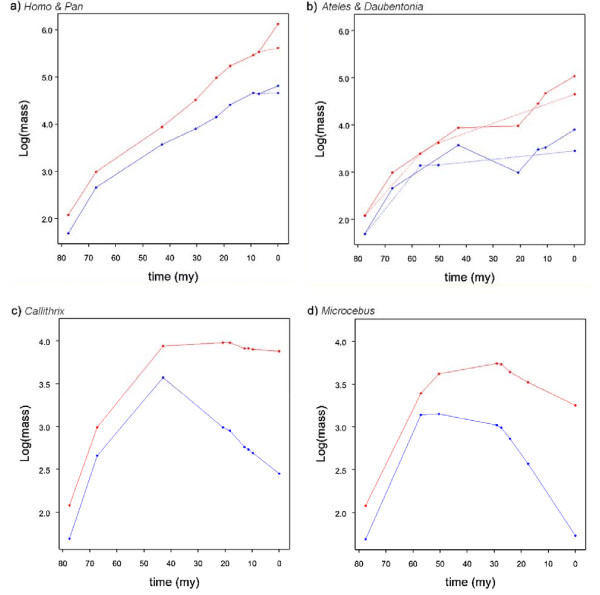
Background: Brain size is a key adaptive trait. It is often assumed that increasing brain size was a general evolutionary trend in primates, yet recent fossil discoveries have documented brain size decreases in some lineages, raising the question of how general a trend there was for brains to increase in mass over evolutionary time. We present the first systematic phylogenetic analysis designed to answer this question. Results: We performed ancestral state reconstructions of three traits (absolute brain mass, absolute body mass, relative brain mass) using 37 extant and 23 extinct primate species and three approaches to ancestral state reconstruction: parsimony, maximum likelihood and Bayesian Markov-chain Monte Carlo. Both absolute and relative brain mass generally increased over evolutionary time, but body mass did not. Nevertheless both absolute and relative brain mass decreased along several branches. Applying these results to the contentious case of Homo floresiensis, we find a number of scenarios under which the proposed evolution of Homo floresiensis'small brain appears to be consistent with patterns observed along other lineages, dependent on body mass and phylogenetic position. Conclusions: Our results confirm that brain expansion began early in primate evolution and show that increases occurred in all major clades. Only in terms of an increase in absolute mass does the human lineage appear particularly striking, with both the rate of proportional change in mass and relative brain size having episodes of greater expansion elsewhere on the primate phylogeny. However, decreases in brain mass also occurred along branches in all major clades, and we conclude that, while selection has acted to enlarge primate brains, in some lineages this trend has been reversed. Further analyses of the phylogenetic position of Homo floresiensis and better body mass estimates are required to confirm the plausibility of the evolution of its small brain mass. We find that for our dataset the Bayesian analysis for ancestral state reconstruction is least affected by inclusion of fossil data suggesting that this approach might be preferable for future studies on other taxa with a poor fossil record.
Overview
The claims and statistics of this paper haven’t been checked yet.
Free: it reads the open-access text and checks the first 5 claims that cite a source we can check. Create a free account to check every claim.
Integrity signals
Registry
Cites
Statistics
Figures

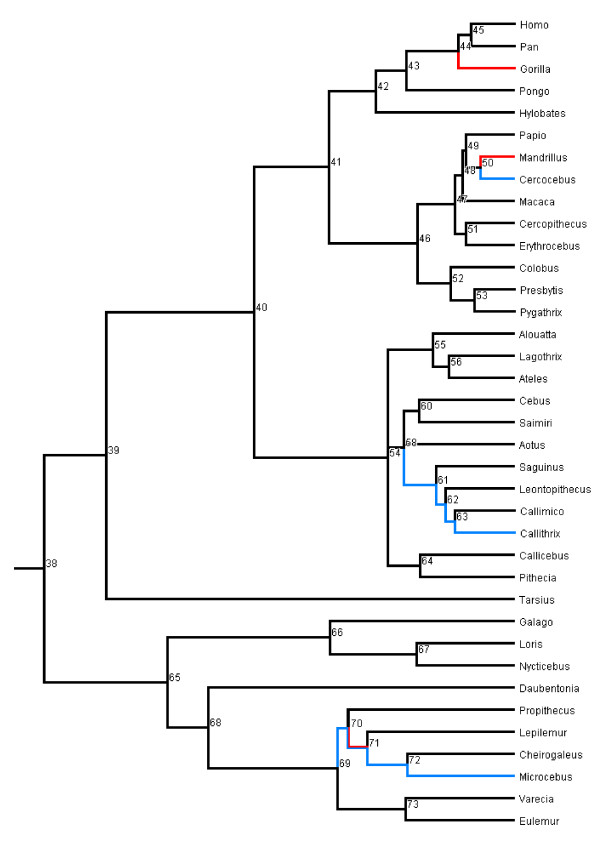
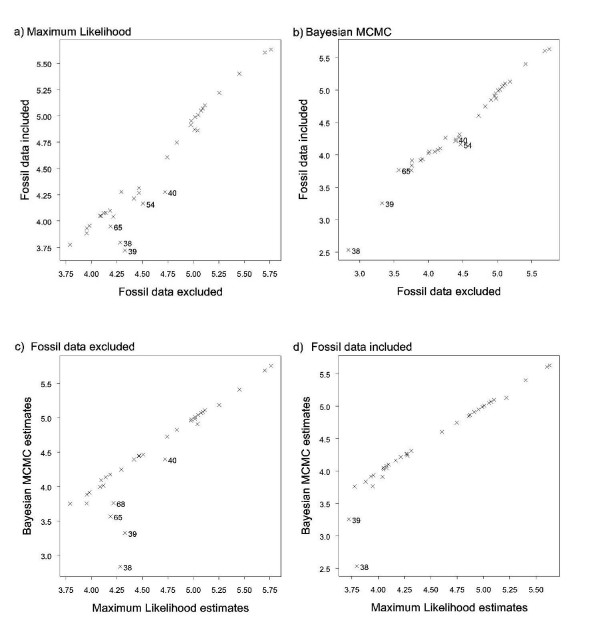
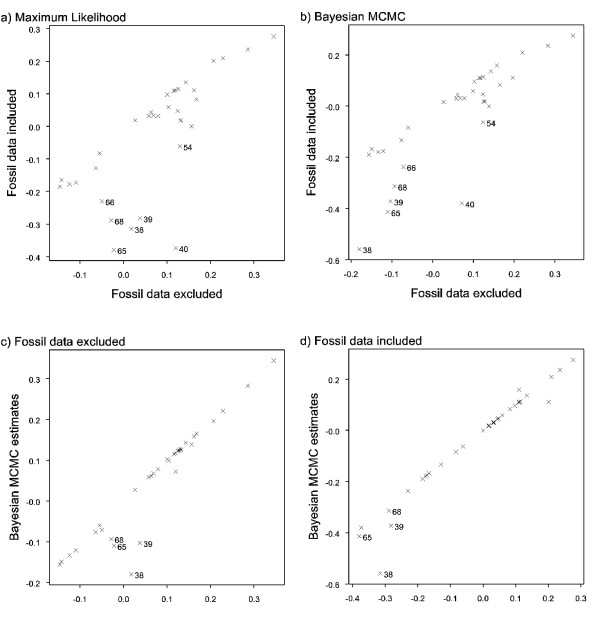
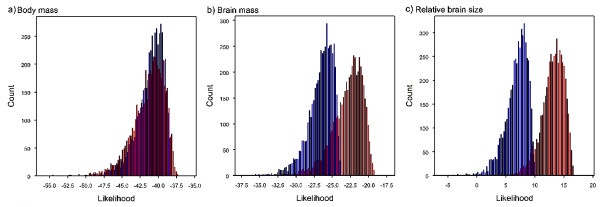

Verification
Claims the paper makes
The claims and statistics of this paper haven’t been checked yet.
Free: it reads the open-access text and checks the first 5 claims that cite a source we can check. Create a free account to check every claim.
Claims other papers make about this one
Each is checked against this paper’s own text: does it say what the citing paper says it does?
The source backs part of the claim, not all of it — or backs it for a different population, condition or comparison.
In the citing paper
“Whereas cetacean brain:body allometry is predominantly altered during three key periods (the origin of crown cetaceans, the origin of odontocetes, and the origin of mysticetes), primate brain and body mass evolved under contrasting selective regimes across longer periods of time resulting in a continuous allometric change and the expansion of relative brain size (Montgomery et al. 2010).”
From THE EVOLUTIONARY HISTORY OF CETACEAN BRAIN AND BODY SIZE: CETACEAN BRAIN EVOLUTION (2013) · cites this paper as Montgomery et al. 2010
Experimental — accuracy not yet measuredThe cited source says what the claim attributes to it.
In the citing paper
“In primates, the evolution of brain size (both in terms of absolute size and relative to body size) shows complex patterns of change involving both increases and decreases along different branches of the primate phylogeny [6,7].”
From Brain reorganization, not relative brain size, primarily characterizes anthropoid brain evolution (2013) · cites this paper as [6]
The cited source says what the claim attributes to it.
In the citing paper
“Including data from extinct taxa may improve such analyses (Finarelli and Flynn 2006;Montgomery et al. 2010;Slater et al. 2012).”
From THE EVOLUTIONARY HISTORY OF CETACEAN BRAIN AND BODY SIZE: CETACEAN BRAIN EVOLUTION (2013) · cites this paper as Montgomery et al. 2010
The cited source says what the claim attributes to it.
In the citing paper
“Primates are one order that shows a strong trend for directional increases in relative brain size (Montgomery et al. 2010).”
From THE EVOLUTIONARY HISTORY OF CETACEAN BRAIN AND BODY SIZE: CETACEAN BRAIN EVOLUTION (2013) · cites this paper as Montgomery et al. 2010
The cited source says what the claim attributes to it.
In the citing paper
“Increases in relative brain size are almost ubiquitous across the primate tree and are produced by directional evolution of increased brain mass in a background of body mass evolution that shows no significant trend to increase through time (Montgomery et al. 2010).”
From THE EVOLUTIONARY HISTORY OF CETACEAN BRAIN AND BODY SIZE: CETACEAN BRAIN EVOLUTION (2013) · cites this paper as Montgomery et al. 2010
2 more claims about this paper
Create a free account to see every claim other papers make about this one.
Self-check
Percentages, sums and reported differences re-computed from the paper’s own numbers.
The self-check needs the paper’s full text.
Citations
Cites
Phylogenies and the Comparative Method
Felsenstein, J. (1985) · The American Naturalist · doi:10.1086/284325 · Cited by 9,793 · cited 1×
“It is important to incorporate both topology and branch length information during reconstruction analyses as species are part of a hierarchically structured phylogeny, therefore not statistically independent, and differences in time since divergence from the common ancestors determines differential potential for evolu…”
BackgroundMarkov Chain Monte Carlo in Practice
(1995) · Chapman & Hall/CRC eBooks · doi:10.1201/b14835 · Cited by 7,757
(2009) · Cited by 6,571
The Ecological Implications of Body Size
Peters, R. H. (1983) · Cambridge University Press eBooks · doi:10.1017/cbo9780511608551 · Cited by 5,649 · cited 2×
“Finally, our analyses add to the growing number of studies that conclude that the evolution of the human brain size has not been anomalous when compared to general primate brain evolution [59,61,91,62-94].”
BackgroundInferring the historical patterns of biological evolution
Pagel, M. (1999) · Nature · doi:10.1038/44766 · Cited by 5,200 · cited 24×
“BayesTraits first identifies the best fitting evolutionary model (see below) to the species data, and then uses such model to infer unknown ancestral states at internal nodes along the tree.”
BackgroundMethodInfluentialThe comparative method in evolutionary biology
(1992) · Choice Reviews Online · doi:10.5860/choice.29-5104 · Cited by 4,931 · cited 1×
“They enable historical evolutionary processes, and the function and evolution of specific traits, to be inferred from patterns of diversity in extant species [1-3].”
BackgroundThe Comparative Method in Evolutionary Biology
Harvey, P. H., & Pagel, M. D. (1991) · doi:10.1093/oso/9780198546412.001.0001 · Cited by 4,337
Scaling: Why is Animal Size so Important?
Schmidt-Nielsen, K. (1984) · doi:10.1017/cbo9781139167826 · Cited by 2,677
Scaling Why is animal size so important?
Schmidt‐Nielsen, K. (1984) · Cited by 2,654
Kass, R. E., & Raftery, A. E. (1995) · Journal of the American Statistical Association · doi:10.2307/2291091 · Cited by 2,312
The expensive-tissue hypothesis: The brain and the digestive system in human and primate evolution
Aiello, L. C., & Wheeler, P. (1995) · Current Anthropology · doi:10.1086/204350 · Cited by 2,291 · cited 2×
“Although many studies have investigated the possible selective advantages and disadvantages of increased brain size in primates [5,17-21], few consider how frequently brain size has reduced.”
BackgroundEVOLUTION OF THE BRAIN AND INTELLIGENCE
Radinsky, L. (1975) · Evolution · doi:10.1111/j.1558-5646.1975.tb00828.x · Cited by 1,969
Dunbar, R. I. M., & Shultz, S. (2007) · Science · doi:10.1126/science.1145463 · Cited by 1,542
OXFORD SURVEYS IN EVOLUTIONARY BIOLOGY
Allendorf, F. W. (1989) · Evolution · doi:10.1111/j.1558-5646.1989.tb02584.x · Cited by 1,449
Markov Chain Monte Carlo in Practice.
Kass, R. E., Gilks, W. R., Richardson, S., & Spiegelhalter, D. J. (1997) · Journal of the American Statistical Association · doi:10.2307/2965438 · Cited by 1,380
Bayesian Estimation of Ancestral Character States on Phylogenies
Pagel, M., Meade, A., & Barker, D. (2004) · Systematic Biology · doi:10.1080/10635150490522232 · Cited by 1,370 · cited 21×
“Ancestral state reconstructions of absolute brain and body mass and relative brain mass at each node of the phylogeny were estimated using three methods: weighted squared-change parsimony in the Mesquite [101], ML in the program ANCML [63], and Bayesian MCMC [97,98], in BayesTraits following Organ et al.’s [55] method…”
MethodInfluential(2005) · Choice Reviews Online · doi:10.5860/choice.42-5260 · Cited by 1,278 · cited 1×
“However, absolute brain mass is of evolutionary relevance too [ 58 ,59]; it may be related to cognitive ability [60] and it is correlated with neuron number [61] which in turn is likely to have important implications for cognitive performance [4].”
BackgroundPrimate adaptation and evolution
(1989) · Choice Reviews Online · doi:10.5860/choice.26-3889 · Cited by 1,246
Social intelligence, innovation, and enhanced brain size in primates
Reader, S. M., & Laland, K. N. (2002) · Proceedings of the National Academy of Sciences · doi:10.1073/pnas.062041299 · Cited by 1,126 · cited 1×
“Although many studies have investigated the possible selective advantages and disadvantages of increased brain size in primates [5,17-21], few consider how frequently brain size has reduced.”
BackgroundInferring evolutionary processes from phylogenies
PAGEL, M. (1997) · Zoologica Scripta · doi:10.1111/j.1463-6409.1997.tb00423.x · Cited by 1,106 · cited 5×
“Finally, our analyses add to the growing number of studies that conclude that the evolution of the human brain size has not been anomalous when compared to general primate brain evolution [59,61,91,62-94].”
BackgroundMethodInfluentialA new small-bodied hominin from the Late Pleistocene of Flores, Indonesia.
Brown, P., Sutikna, T., Morwood, M. J., Soejono, R. P., Jatmiko, Wayhu Saptomo, E., & Awe Due, R. (2004) · Nature · doi:10.1038/nature02999 · Cited by 1,075 · cited 4×
“In this respect we note that Brown et al. [ 26 ] suggested the lower body mass estimates are probably most appropriate, assuming H. floresiensis shared the lean body shape typical of Old World tropical modern humans.”
BackgroundMethodResultInfluentialLIKELIHOOD OF ANCESTOR STATES IN ADAPTIVE RADIATION
Schluter, D., Price, T., Mooers, A. Ø., & Ludwig, D. (1997) · Evolution · doi:10.1111/j.1558-5646.1997.tb05095.x · Cited by 943 · cited 20×
“Ancestral state reconstructions of absolute brain and body mass and relative brain mass at each node of the phylogeny were estimated using three methods: weighted squared-change parsimony in the Mesquite [101], ML in the program ANCML [63], and Bayesian MCMC [97,98], in BayesTraits following Organ et al.’s [55] method…”
MethodInfluentialPagel, M., & Meade, A. (2006) · The American Naturalist · doi:10.1086/503444 · Cited by 920 · cited 16×
“BayesTraits first identifies the best fitting evolutionary model (see below) to the species data, and then uses such model to infer unknown ancestral states at internal nodes along the tree.”
MethodInfluentialEvolution of the brain and intelligence
ROTH, G., & DICKE, U. (2005) · Trends in Cognitive Sciences · doi:10.1016/j.tics.2005.03.005 · Cited by 890 · cited 2×
“However, absolute brain mass is of evolutionary relevance too [58,59]; it may be related to cognitive ability [60] and it is correlated with neuron number [61] which in turn is likely to have important implications for cognitive performance [4].”
BackgroundNew and Revised Data on Volumes of Brain Structures in Insectivores and Primates
Stephan, H., Frahm, H., & Baron, G. (1981) · Folia Primatologica · doi:10.1159/000155963 · Cited by 876 · cited 3×
“Brain and body mass data Data for body and brain mass were obtained from previously published datasets [22, 82 ,95].”
BackgroundMethodResultWood, B., & Collard, M. (1999) · Science · doi:10.1126/science.284.5411.65 · Cited by 714
A composite estimate of primate phylogeny
Purvis, A. (1995) · Philosophical Transactions of the Royal Society of London. Series B: Biological Sciences · doi:10.1098/rstb.1995.0078 · Cited by 702
Evolution of the Brain and Intelligence
Raikow, R. J., & Jerison, H. J. (1974) · Bird-Banding · doi:10.2307/4512058 · Cited by 697
Phylogenetic approaches in comparative physiology
Garland, T., Bennett, A. F., & Rezende, E. L. (2005) · Journal of Experimental Biology · doi:10.1242/jeb.01745 · Cited by 692 · cited 2×
“However, basing conclusions on these methods may be problematic as they fail to provide reliable estimates when there are directional evolutionary changes and can also be adversely affected when ancestral states fall outside the range of extant species [51,52], as is expected to be the case for primate brain evolution…”
BackgroundThe Thinking ApeEvolutionary Origins of Intelligence
Byrne, R. (1995) · Oxford University Press eBooks · doi:10.1093/acprof:oso/9780198522652.001.0001 · Cited by 665
Deaner, R. O., Isler, K., Burkart, J., & van Schaik, C. (2007) · Brain, Behavior and Evolution · doi:10.1159/000102973 · Cited by 549 · cited 1×
“However, absolute brain mass is of evolutionary relevance too [58,59]; it may be related to cognitive ability [ 60 ] and it is correlated with neuron number [61] which in turn is likely to have important implications for cognitive performance [4].”
BackgroundCope's Rule and the Dynamics of Body Mass Evolution in North American Fossil Mammals
Alroy, J. (1998) · Science · doi:10.1126/science.280.5364.731 · Cited by 539 · cited 4×
“Therefore, in agreement with other authors [46,66], we conclude that there is no evidence that Cope’s Rule [67,68], which states body size tends to increase through time, applies to primates.”
ResultInfluentialMartin, R. D. (1989) · Springer eBooks · doi:10.1007/978-94-009-0813-0 · Cited by 534 · cited 11×
“Martin RD: Primate origins and evolution.”
BackgroundMethodResultInfluentialA critique of comparative studies of brain size
Healy, S. D., & Rowe, C. (2007) · Proceedings of the Royal Society B: Biological Sciences · doi:10.1098/rspb.2006.3748 · Cited by 528 · cited 1×
“Given the strong allometric relationship between brain and body mass [5,6], relative brain size is most commonly used in comparative studies [56] that aim to test the evolutionary significance of an increased brain mass above that predicted from a species’ body mass [for example [7,57]].”
BackgroundPrimate Adaptation and Evolution
Dunbar, R., & Fleagle, J. G. (1999) · The Journal of the Royal Anthropological Institute · doi:10.2307/2661176 · Cited by 518
Introducing Markov chain Monte Carlo
(1995) · Markov Chain Monte Carlo in Practice · doi:10.1201/b14835-6 · Cited by 510 · cited 19×
“Ancestral state reconstructions of absolute brain and body mass and relative brain mass at each node of the phylogeny were estimated using three methods: weighted squared-change parsimony in the Mesquite [101], ML in the program ANCML [63], and Bayesian MCMC [97,98], in BayesTraits following Organ et al.’s [55] method…”
BackgroundMethodInfluentialSize and Scaling in Primate Biology
(1985) · Springer eBooks · doi:10.1007/978-1-4899-3647-9 · Cited by 500
Reconstructing ancestral character states: a critical reappraisal
Cunningham, C. W., Omland, K. E., & Oakley, T. H. (1998) · Trends in Ecology & Evolution · doi:10.1016/s0169-5347(98)01382-2 · Cited by 500 · cited 3×
“Like parsimony approaches however, the model assumes a constant rate of evolution and may perform poorly if the trait shows an evolutionary trend [2,51,64] (see below).”
BackgroundHumans and great apes share a large frontal cortex
Semendeferi, K., Lu, A., Schenker, N., & Damasio, H. (2002) · Nature Neuroscience · doi:10.1038/nn814 · Cited by 440
Cellular scaling rules for primate brains.
Herculano-Houzel, S., Collins, C. E., Wong, P., & Kaas, J. H. (2007) · Proceedings of the National Academy of Sciences · doi:10.1073/pnas.0611396104 · Cited by 422 · cited 2×
“Finally, our analyses add to the growing number of studies that conclude that the evolution of the human brain size has not been anomalous when compared to general primate brain evolution [59,61,91,62-94].”
BackgroundWhy do female primates have such long lifespans and so few babies?or Life in the slow lane
Charnov, E. L., & Berrigan, D. (1993) · Evolutionary Anthropology: Issues, News, and Reviews · doi:10.1002/evan.1360010604 · Cited by 419
The Functional and Evolutionary Biology of Primates
(2017) · Routledge eBooks · doi:10.4324/9781315132129 · Cited by 418
Maddison, W. P. (1991) · Systematic Biology · doi:10.1093/sysbio/40.3.304 · Cited by 391 · cited 18×
“Ancestral state reconstructions of absolute brain and body mass and relative brain mass at each node of the phylogeny were estimated using three methods: weighted squared-change parsimony in the Mesquite [101], ML in the program ANCML [63], and Bayesian MCMC [97,98], in BayesTraits following Organ et al.’s [55] method…”
MethodInfluentialLikelihood of Ancestor States in Adaptive Radiation
Schluter, D., Price, T. D., Mooers, A. Ø., et al. (1997) · Evolution · doi:10.2307/2410994 · Cited by 361
A New Skull of Early Homo from Dmanisi, Georgia
Vekua, A., Lordkipanidze, D., Rightmire, G. P., Agusti, J., Ferring, R., Maisuradze, G., Mouskhelishvili, A., Nioradze, M., de Leon, M. P., Tappen, M., et al. (2002) · Science · doi:10.1126/science.1072953 · Cited by 359
Oxford Surveys in Evolutionary Biology
Loxdale, H. D., Harvey, P. H., & Partridge, L. (1991) · The Journal of Animal Ecology · doi:10.2307/5468 · Cited by 359
Evolutionary radiation of visual and olfactory brain systems in primates, bats and insectivores
Barton, R. A., Purvis, A., & Harvey, P. H. (1995) · Philosophical Transactions of the Royal Society of London. Series B: Biological Sciences · doi:10.1098/rstb.1995.0076 · Cited by 352
Self-citationPrimate molecular divergence dates
Steiper, M. E., & Young, N. M. (2006) · Molecular Phylogenetics and Evolution · doi:10.1016/j.ympev.2006.05.021 · Cited by 343 · cited 3×
“with dates of divergence for the deeper primate nodes estimated by Steiper & Young [107].”
MethodInfluentialThe human career: Human biological and cultural origins
Cachel, S. (2000) · Geoarchaeology · doi:10.1002/(sici)1520-6548(200004)15:4<373::aid-gea4>3.0.co;2-4 · Cited by 342
Evolution of increased glia–neuron ratios in the human frontal cortex
Sherwood, C. C., Stimpson, C. D., Raghanti, M. A., Wildman, D. E., Uddin, M., Grossman, L. I., Goodman, M., Redmond, J. C., Bonar, C. J., Erwin, J. M., et al. (2006) · Proceedings of the National Academy of Sciences · doi:10.1073/pnas.0605843103 · Cited by 342 · cited 1×
“Finally, our analyses add to the growing number of studies that conclude that the evolution of the human brain size has not been anomalous when compared to general primate brain evolution [59,61,91,62-94].”
Maddison, W. P. (1991) · Systematic Zoology · doi:10.2307/2992324 · Cited by 339
Virtual cranial reconstruction of Sahelanthropus tchadensis
Zollikofer, C. P. E., Ponce de León, M. S., Lieberman, D. E., Guy, F., Pilbeam, D., Likius, A., Mackaye, H. T., Vignaud, P., & Brunet, M. (2005) · Nature · doi:10.1038/nature03397 · Cited by 327 · cited 2×
“7 million year old Sahelanthropus tchadensis (360 to 370 cm(3);) [79] and the 4.”
BackgroundBody Size and Scaling of Limb Proportions in Primates
Jungers, W. L. (1985) · Size and Scaling in Primate Biology · doi:10.1007/978-1-4899-3647-9_16 · Cited by 324
1. On the Use of Anatomical Features To Infer Foraging Behavior in Extinct Primates
Kay, R. F. (1984) · Adaptations for Foraging in Nonhuman Primates · doi:10.7312/rodm90184-003 · Cited by 324
Arboreal Adaptations and the Origin of the Order Primates
Cartmill, M. (2017) · The Functional and Evolutionary Biology of Primates · doi:10.4324/9781315132129-4 · Cited by 305
Visual specialization and brain evolution in primates
Barton, R. A. (1998) · Proceedings of the Royal Society of London. Series B: Biological Sciences · doi:10.1098/rspb.1998.0523 · Cited by 301 · cited 2×
“This proposed ecology suggests that visual specialisation to meet the demands of a fine-branch, insect grasping niche may have had a significant role in the early expansion of the primate brain [18,23], a hypothesis consistent with recent evidence revealing an association between visual expansion and brain size in fos…”
BackgroundResultSelf-citationMorphological Evolution Is Accelerated among Island Mammals
Millien, V. (2006) · PLoS Biology · doi:10.1371/journal.pbio.0040321 · Cited by 301 · cited 2×
“Finally, our analyses add to the growing number of studies that conclude that the evolution of the human brain size has not been anomalous when compared to general primate brain evolution [59,61,91,62-94].”
BackgroundOrigin of avian genome size and structure in non-avian dinosaurs
Organ, C. L., Shedlock, A. M., Meade, A., Pagel, M., & Edwards, S. V. (2007) · Nature · doi:10.1038/nature05621 · Cited by 289 · cited 37×
“BayesTraits first identifies the best fitting evolutionary model (see below) to the species data, and then uses such model to infer unknown ancestral states at internal nodes along the tree.”
MethodInfluentialThe Brain of LB1, Homo floresiensis
Falk, D., Hildebolt, C., Smith, K., Morwood, M. J., Sutikna, T., Brown, P., Jatmiko, Saptomo, E. W., Brunsden, B., & Prior, F. (2005) · Science · doi:10.1126/science.1109727 · Cited by 280 · cited 3×
“For example, Falk et al. [ 31 ] identified a number of potentially derived features in an endocast of H. floresiensis, and comparative analyses of the brain anatomies of these species might show whether similar structures are modified in independent episodes of brain mass reduction.”
BackgroundMethodResultInfluential(1984) · Columbia University Press eBooks · doi:10.7312/rodm90184 · Cited by 279
New Paleocene skeletons and the relationship of plesiadapiforms to crown-clade primates
Bloch, J. I., Silcox, M. T., Boyer, D. M., & Sargis, E. J. (2007) · Proceedings of the National Academy of Sciences · doi:10.1073/pnas.0610579104 · Cited by 271 · cited 2×
“Finally, our analyses add to the growing number of studies that conclude that the evolution of the human brain size has not been anomalous when compared to general primate brain evolution [59,61,91,62-94].”
BackgroundGyrification in the Cerebral Cortex of Primates
Zilles, K., Armstrong, E., Moser, K. H., Schleicher, A., & Stephan, H. (1989) · Brain, Behavior and Evolution · doi:10.1159/000116500 · Cited by 269 · cited 1×
“Finally, our analyses add to the growing number of studies that conclude that the evolution of the human brain size has not been anomalous when compared to general primate brain evolution [59,61,91,62-94].”
Finarelli, J. A., & Flynn, J. J. (2006) · Systematic Biology · doi:10.1080/10635150500541698 · Cited by 254 · cited 9×
“Finarelli JA, Flynn JJ: Brain-size evolution and sociality in Carnivora.”
BackgroundMethodInfluentialEVIDENCE FOR COEVOLUTION OF SOCIALITY AND RELATIVE BRAIN SIZE IN THREE ORDERS OF MAMMALS
Pérez-Barbería, F. J., Shultz, S., & Dunbar, R. I. M. (2007) · Evolution · doi:10.1111/j.1558-5646.2007.00229.x · Cited by 241 · cited 1×
“A trend towards brain expansion is assumed to have occurred throughout primate evolution [6] and this has been interpreted as an indication of directional selection on cognitive abilities, due, for example, to arms races in social cognition [7,8].”
Background10-GHz Self-Referenced Optical Frequency Comb
Bartels, A., Heinecke, D., & Diddams, S. A. (2009) · Science · doi:10.1126/science.1179112 · Cited by 229
Comparative methods for studying primate adaptation and allometry
Nunn, C. L., & Barton, R. A. (2001) · Evolutionary Anthropology: Issues, News, and Reviews · doi:10.1002/evan.1019 · Cited by 223 · cited 1×
“It is important to incorporate both topology and branch length information during reconstruction analyses as species are part of a hierarchically structured phylogeny, therefore not statistically independent, and differences in time since divergence from the common ancestors determines differential potential for evolu…”
BackgroundSelf-citationHorvath, J. E., Weisrock, D. W., Embry, S. L., Fiorentino, I., Balhoff, J. P., Kappeler, P., Wray, G. A., Willard, H. F., & Yoder, A. D. (2008) · Genome Research · doi:10.1101/gr.7265208 · Cited by 223 · cited 1×
“The topology is taken from Goodman et al. [101] for haplorhine primates and Horvath et al. [ 102 ] for strepsirhines.”
Brain-size evolution and sociality in Carnivora
Finarelli, J. A., & Flynn, J. J. (2009) · Proceedings of the National Academy of Sciences · doi:10.1073/pnas.0901780106 · Cited by 217 · cited 2×
“Finally, our analyses add to the growing number of studies that conclude that the evolution of the human brain size has not been anomalous when compared to general primate brain evolution [59,61,91,62-94].”
ResultThe Primitive Wrist of Homo floresiensis and Its Implications for Hominin Evolution
Tocheri, M. W., Orr, C. M., Larson, S. G., Sutikna, T., Jatmiko, Saptomo, E. W., Due, R. A., Djubiantono, T., Morwood, M. J., & Jungers, W. L. (2007) · Science · doi:10.1126/science.1147143 · Cited by 208 · cited 1×
“Studies describing the endocast and post-cranial features of the type specimen (LB1) have resulted in mixed conclusions [31-38].”
ResultDial, K. P., Greene, E., & Irschick, D. J. (2008) · Trends in Ecology & Evolution · doi:10.1016/j.tree.2008.03.005 · Cited by 207 · cited 2×
“Finally, our analyses add to the growing number of studies that conclude that the evolution of the human brain size has not been anomalous when compared to general primate brain evolution [59,61,91,62-94].”
BackgroundJungers, W. L., Harcourt-Smith, W. E. H., Wunderlich, R. E., Tocheri, M. W., Larson, S. G., Sutikna, T., Due, R. A., & Morwood, M. J. (2009) · Nature · doi:10.1038/nature07989 · Cited by 193 · cited 1×
“Studies describing the endocast and post-cranial features of the type specimen (LB1) have resulted in mixed conclusions [31-38].”
ResultPhylogenetic relationships and divergence times among New World monkeys (Platyrrhini, Primates).
Opazo, J. C., Wildman, D. E., Prychitko, T., Johnson, R. M., & Goodman, M. (2006) · Molecular Phylogenetics and Evolution · doi:10.1016/j.ympev.2005.11.015 · Cited by 181 · cited 1×
“Proportional branch lengths were obtained from recent studies of primate divergence dates [103-106] scaled to agree”
MethodPrimate brain evolution: Integrating comparative, neurophysiological, and ethological data
Barton, R. A. (2006) · Evolutionary Anthropology: Issues, News, and Reviews · doi:10.1002/evan.20105 · Cited by 175 · cited 3×
“Given the strong allometric relationship between brain and body mass [5,6], relative brain size is most commonly used in comparative studies [56] that aim to test the evolutionary significance of an increased brain mass above that predicted from a species’ body mass [for example [7,57]].”
BackgroundSelf-citationJacob, T., Indriati, E., Soejono, R. P., Hsü, K., Frayer, D. W., Eckhardt, R. B., Kuperavage, A. J., Thorne, A., & Henneberg, M. (2006) · Proceedings of the National Academy of Sciences · doi:10.1073/pnas.0605563103 · Cited by 172 · cited 1×
“floresiensis was a distinct species or a pathological example of modern humans [28-30].”
BackgroundCallitrichids as phyletic dwarfs, and the place of the callitrichidae in platyrrhini
Ford, S. M. (1980) · Primates · doi:10.1007/bf02383822 · Cited by 171 · cited 2×
“Finally, our analyses add to the growing number of studies that conclude that the evolution of the human brain size has not been anomalous when compared to general primate brain evolution [59,61,91,62-94].”
BackgroundINDEPENDENT CONTRASTS SUCCEED WHERE ANCESTOR RECONSTRUCTION FAILS IN A KNOWN BACTERIOPHAGE PHYLOGENY
Oakley, T. H., & Cunningham, C. W. (2000) · Evolution · doi:10.1111/j.0014-3820.2000.tb00042.x · Cited by 166
LB1’s virtual endocast, microcephaly, and hominin brain evolution
Falk, D., Hildebolt, C. F., Smith, K., Morwood, M. J., Sutikna, T., Jatmiko, J., Saptomo, E. W., & Prior, F. (2009) · Journal of Human Evolution · doi:10.1016/j.jhevol.2008.10.008 · Cited by 151
Insular dwarfism in hippos and a model for brain size reduction in Homo floresiensis
Weston, E. M., & Lister, A. M. (2009) · Nature · doi:10.1038/nature07922 · Cited by 148 · cited 4×
“floresiensis brain assuming descent from a known hominin by insular dwarfism, a widely cited hypothesis [15,16,39,40].”
BackgroundInfluentialThe Ardipithecus ramidus Skull and Its Implications for Hominid Origins
Suwa, G., Asfaw, B., Kono, R. T., Kubo, D., Lovejoy, C. O., & White, T. D. (2009) · Science · doi:10.1126/science.1175825 · Cited by 148 · cited 3×
“Finally, our analyses add to the growing number of studies that conclude that the evolution of the human brain size has not been anomalous when compared to general primate brain evolution [59,61,91, 62-94 ].”
BackgroundResultInfluentialVariation in brain size and ecology in Pongo
Taylor, A. B., & van Schaik, C. P. (2006) · Journal of Human Evolution · doi:10.1016/j.jhevol.2006.07.010 · Cited by 145
Reduction of Brain and Sense Organs in the Fossil Insular Bovid Myotragus
Köhler, M., & Moyà-Solà, S. (2004) · Brain, Behavior and Evolution · doi:10.1159/000076239 · Cited by 142 · cited 4×
“Decreases in both absolute and relative brain size appear to have occurred in a number of taxa including birds [11], bats [10], bovids [12], elephants [13] and hippopotami [14,15].”
BackgroundInfluentialDescriptions of the upper limb skeleton of Homo floresiensis
Larson, S. G., Jungers, W. L., Tocheri, M. W., Orr, C. M., Morwood, M. J., Sutikna, T., Awe, R. D., & Djubiantono, T. (2008) · Journal of Human Evolution · doi:10.1016/j.jhevol.2008.06.007 · Cited by 141
Testing the accuracy of methods for reconstructing ancestral states of continuous characters
Webster, A. J., & Purvis, A. (2002) · Proceedings of the Royal Society of London. Series B: Biological Sciences · doi:10.1098/rspb.2001.1873 · Cited by 140 · cited 10×
“Following Webster & Purvis [64], we then assessed the reliability of the estimates, by comparing results obtained with and without fossil data using correlations.”
BackgroundMethodInfluentialCallitrichids as Phyletic Dwarfs, and the Place of the Callitrichidae in Platyrrhini
Ford, S. M. (2017) · Primate Evolution and Human Origins · doi:10.4324/9781315127408-21 · Cited by 138
Page, S. L., & Goodman, M. (2001) · Molecular Phylogenetics and Evolution · doi:10.1006/mpev.2000.0895 · Cited by 136 · cited 1×
“Proportional branch lengths were obtained from recent studies of primate divergence dates [103-106] scaled to agree”
MethodThe scaling of frontal cortex in primates and carnivores
Bush, E. C., & Allman, J. M. (2004) · Proceedings of the National Academy of Sciences · doi:10.1073/pnas.0305760101 · Cited by 132
ENCÉPHALISATION ET NIVEAU ÉVOLUTIF CHEZ LES SIMIENS
Bauchot, R., & Stephan, H. (1969) · Mammalia · doi:10.1515/mamm.1969.33.2.225 · Cited by 130 · cited 5×
“Bauchot R, Stephan H: Encéphalisation et niveau evolutif chez les Simiens.”
BackgroundMethodInfluentialRoss, C. (1998) · Evolutionary Anthropology: Issues, News, and Reviews · doi:10.1002/(sici)1520-6505(1998)6:2<54::aid-evan3>3.0.co;2-w · Cited by 129
Homo floresiensis: a cladistic analysis
Argue, D., Morwood, M. J., Sutikna, T., Jatmiko, J., & Saptomo, E. W. (2009) · Journal of Human Evolution · doi:10.1016/j.jhevol.2009.05.002 · Cited by 120 · cited 8×
“floresiensis has recently been proposed and indicates that this species may not have evolved by insular dwarfism of a known Homo species [43].”
BackgroundInfluentialFaunal Extinction in an Island Society: Pygmy Hippopotamus Hunters of Cyprus
Simmons, A. H. (2002) · Interdisciplinary Contributions to Archaeology · doi:10.1007/b109876 · Cited by 111
Primates follow the ‘island rule’: implications for interpreting Homo floresiensis
Bromham, L., & Cardillo, M. (2007) · Biology Letters · doi:10.1098/rsbl.2007.0113 · Cited by 108 · cited 2×
“erectus, fall within the range of size reductions in other island primate species [41,42].”
BackgroundMoving primate genomics beyond the chimpanzee genome
Goodman, M., Grossman, L. I., & Wildman, D. E. (2005) · Trends in Genetics · doi:10.1016/j.tig.2005.06.012 · Cited by 106 · cited 4×
“Ancestral state reconstructions of absolute brain and body mass and relative brain mass at each node of the phylogeny were estimated using three methods: weighted squared-change parsimony in the Mesquite [101], ML in the program ANCML [63], and Bayesian MCMC [97,98], in BayesTraits following Organ et al.”
BackgroundMethodInfluentialAdaptive origins of primates revisited
Soligo, C., & Martin, R. D. (2005) · Journal of Human Evolution · doi:10.1016/j.jhevol.2005.11.001 · Cited by 105 · cited 3×
“Therefore, in agreement with other authors [46,66], we conclude that there is no evidence that Cope’s Rule [67,68], which states body size tends to increase through time, applies to primates.”
MethodResultJenkins, P., & Schwartz, J. H. (1990) · Man · doi:10.2307/2804123 · Cited by 104
Paleontology and the Comparative Method: Ancestral Node Reconstructions versus Observed Node Values
Polly, P. D. (2001) · The American Naturalist · doi:10.1086/320622 · Cited by 104 · cited 3×
“Incorporating data from fossils can improve ancestral reconstruction estimates as they may more completely describe the range and temporal distribution of the character’s history, and thus help improve the estimated nodal values both in the presence of directional trends and when ancestral values are markedly differen…”
BackgroundMethodPoux, C., & Douzery, E. J. P. (2004) · American Journal of Physical Anthropology · doi:10.1002/ajpa.10322 · Cited by 103 · cited 1×
“Proportional branch lengths were obtained from recent studies of primate divergence dates [103-106] scaled to agree”
MethodEVOLUTION OF THE HUMAN BRAIN: IS BIGGER BETTER?
Henneberg, M. (1998) · Clinical and Experimental Pharmacology and Physiology · doi:10.1111/j.1440-1681.1998.tb02289.x · Cited by 102
Bigger is not always better: when brains get smaller
Safi, K., Seid, M. A., & Dechmann, D. K. N. (2005) · Biology Letters · doi:10.1098/rsbl.2005.0333 · Cited by 99 · cited 3×
“For at least some of these cases it is likely that a reduction in brain size has occurred to meet the demands of the species’ changing ecological needs rather than being due to geographical isolation per se [10,11].”
BackgroundSociality, ecology, and relative brain size in lemurs
MacLean, E. L., Barrickman, N. L., Johnson, E. M., & Wall, C. E. (2009) · Journal of Human Evolution · doi:10.1016/j.jhevol.2008.12.005 · Cited by 97
Hershkovitz, I., Kornreich, L., & Laron, Z. (2007) · American Journal of Physical Anthropology · doi:10.1002/ajpa.20655 · Cited by 96 · cited 1×
“floresiensis was a distinct species or a pathological example of modern humans [28-30].”
BackgroundPrimate Adaptation and Evolution, Second Edition
Rodman, P. S. (2000) · Journal of Human Evolution · doi:10.1006/jhev.2000.0411 · Cited by 94
Brain shape in human microcephalics and Homo floresiensis
Falk, D., Hildebolt, C., Smith, K., Morwood, M. J., Sutikna, T., Jatmiko, Saptomo, E. W., Imhof, H., Seidler, H., & Prior, F. (2007) · Proceedings of the National Academy of Sciences · doi:10.1073/pnas.0609185104 · Cited by 93 · cited 1×
“Studies describing the endocast and post-cranial features of the type specimen (LB1) have resulted in mixed conclusions [31-38].”
ResultFlores hominid: New species or microcephalic dwarf?
Martin, R. D., MacLarnon, A. M., Phillips, J. L., & Dobyns, W. B. (2006) · The Anatomical Record Part A: Discoveries in Molecular, Cellular, and Evolutionary Biology · doi:10.1002/ar.a.20389 · Cited by 92
The Homo floresiensis cranium (LB1): Size, scaling, and early Homo affinities
Gordon, A. D., Nevell, L., & Wood, B. (2008) · Proceedings of the National Academy of Sciences · doi:10.1073/pnas.0710041105 · Cited by 91 · cited 2×
“We also include Homo habilis which has not been ruled out as a possible ancestor [36].”
BackgroundResultSilcox, M. T., Dalmyn, C. K., & Bloch, J. I. (2009) · Proceedings of the National Academy of Sciences · doi:10.1073/pnas.0812140106 · Cited by 91
Comment on "The Brain of LB1, Homo floresiensis "
Martin, R. D., MacLarnon, A. M., Phillips, J. L., Dussubieux, L., Williams, P. R., & Dobyns, W. B. (2006) · Science · doi:10.1126/science.1121144 · Cited by 87 · cited 1×
“Studies describing the endocast and post-cranial features of the type specimen (LB1) have resulted in mixed conclusions [31-38].”
ResultRoberts, R. G., Westaway, K., Zhao, J., TURNEY, C. S. M., Bird, M. I., Rink, W. J., & Fifield, L. K. (2009) · Journal of Human Evolution · doi:10.1016/j.jhevol.2009.01.003 · Cited by 83 · cited 2×
“The importance of understanding the evolution of reduced brain size in primates has recently been brought into sharp focus with the discovery of a smallbrained hominin, Homo floresiensis, which overlapped both geographically and temporally with modern humans [26,27].”
BackgroundFaunal extinction in an island society: Pygmy hippopotamus hunters of Cyprus
Grayson, D. K. (2000) · Geoarchaeology · Cited by 66
Comment on "The Brain of LB1, Homo floresiensis "
Weber, J., Czarnetzki, A., & Pusch, C. M. (2005) · Science · doi:10.1126/science.1114789 · Cited by 57
Polly, P. D. (1998) · Science · doi:10.1126/science.282.5386.47f · Cited by 54
Kaufman, J. A., Ahrens, E. T., Laidlaw, D. H., Zhang, S., & Allman, J. M. (2005) · The Anatomical Record Part A: Discoveries in Molecular, Cellular, and Evolutionary Biology · doi:10.1002/ar.a.20264 · Cited by 54 · cited 2×
“Finally, our analyses add to the growing number of studies that conclude that the evolution of the human brain size has not been anomalous when compared to general primate brain evolution [59,61,91,62-94].”
BackgroundBrains, islands and evolution: breaking all the rules
Niven, J. E. (2006) · Trends in Ecology & Evolution · doi:10.1016/j.tree.2006.11.009 · Cited by 53 · cited 2×
“floresiensis brain assuming descent from a known hominin by insular dwarfism, a widely cited hypothesis [15,16,39,40].”
BackgroundHow quickly do brains catch up with bodies? A comparative method for detecting evolutionary lag
Deaner, R. O., & Nunn, C. L. (1999) · Proceedings of the Royal Society of London. Series B: Biological Sciences · doi:10.1098/rspb.1999.0690 · Cited by 52 · cited 2×
“Finally, our analyses add to the growing number of studies that conclude that the evolution of the human brain size has not been anomalous when compared to general primate brain evolution [59,61,91,62-94].”
Distinct evolutionary patterns of brain and body size during adaptive radiation
Gonzalez-Voyer, A., Winberg, S., & Kolm, N. (2009) · Evolution · doi:10.1111/j.1558-5646.2009.00705.x · Cited by 52 · cited 2×
“Finally, our analyses add to the growing number of studies that conclude that the evolution of the human brain size has not been anomalous when compared to general primate brain evolution [59,61,91,62-94].”
ResultTHE EVOLUTION OF ENCEPHALIZATION IN CANIFORM CARNIVORANS
Finarelli, J. A., & Flynn, J. J. (2007) · Evolution · doi:10.1111/j.1558-5646.2007.00131.x · Cited by 51
Pedersen, N., Holyoak, D. T., & Newton, A. E. (2006) · Molecular Phylogenetics and Evolution · doi:10.1016/j.ympev.2006.10.018 · Cited by 45 · cited 1×
“Weighted squared-change parsimony infers ancestral states by minimising the square-change along branches [62,63], but parsimony approaches are not robust to violations of assumptions of constant rate of evolution or equal probability of change in either direction [3,51,64, 111 ].”
BackgroundTesting the island rule: primates as a case study
Welch, J. J. (2009) · Proceedings of the Royal Society B: Biological Sciences · doi:10.1098/rspb.2008.1180 · Cited by 41 · cited 2×
“erectus, fall within the range of size reductions in other island primate species [41,42].”
BackgroundAbsolute brain size: Did we throw the baby out with the bathwater?
Marino, L. (2006) · Proceedings of the National Academy of Sciences · doi:10.1073/pnas.0606337103 · Cited by 41 · cited 2×
“Finally, our analyses add to the growing number of studies that conclude that the evolution of the human brain size has not been anomalous when compared to general primate brain evolution [59,61,91,62-94].”
BackgroundBrain Evolution: Getting Better All the Time?
Niven, J. E. (2005) · Current Biology · doi:10.1016/j.cub.2005.08.007 · Cited by 37
Ali, F., & Meier, R. (2008) · Molecular Biology and Evolution · doi:10.1093/molbev/msn184 · Cited by 35 · cited 1×
“Previous studies have used weighted square change parsimony and maximum likelihood (ML) to reconstruct ancestral character states and infer the adaptive origins of phenotypes [46-49] and to study important genotypephenotype associations [50].”
MethodMasters, J. C., Lovegrove, B. G., & de Wit, M. J. (2006) · Journal of Biogeography · doi:10.1111/j.1365-2699.2006.01569.x · Cited by 34 · cited 1×
“Previous studies have used weighted square change parsimony and maximum likelihood (ML) to reconstruct ancestral character states and infer the adaptive origins of phenotypes [ 46-49 ] and to study important genotypephenotype associations [50].”
MethodCorrelates of body mass evolution in primates
Soligo, C. (2006) · American Journal of Physical Anthropology · doi:10.1002/ajpa.20298 · Cited by 29 · cited 2×
“Therefore, in agreement with other authors [46,66], we conclude that there is no evidence that Cope’s Rule [67,68], which states body size tends to increase through time, applies to primates.”
ResultDwarfism, Where Pericentrin Gains Stature
Delaval, B., & Doxsey, S. (2008) · Science · doi:10.1126/science.1154513 · Cited by 23 · cited 1×
“floresiensis was a distinct species or a pathological example of modern humans [28-30].”
BackgroundNatural selection of mammalian brain components
Brown, W. M. (2001) · Trends in Ecology & Evolution · doi:10.1016/s0169-5347(01)02246-7 · Cited by 22
WHY DO PARASITIC CUCKOOS HAVE SMALL BRAINS? INSIGHTS FROM EVOLUTIONARY SEQUENCE ANALYSES
Boerner, M., & Krüger, O. (2008) · Evolution · doi:10.1111/j.1558-5646.2008.00490.x · Cited by 22 · cited 2×
“For at least some of these cases it is likely that a reduction in brain size has occurred to meet the demands of the species’ changing ecological needs rather than being due to geographical isolation per se [10,11].”
BackgroundWhy do primates have such long lifespans and so few babies
Charnov, E. L., & Berrigan, D. A. (1993) · UNM’s Digital Repository (University of New Mexico) · Cited by 21
Allometry of Food Intake in Free-Ranging Anthropoid Primates
Barton, R. A. (1992) · Folia Primatologica · doi:10.1159/000156608 · Cited by 14 · cited 2×
“Finally, our analyses add to the growing number of studies that conclude that the evolution of the human brain size has not been anomalous when compared to general primate brain evolution [59,61,91,62-94].”
BackgroundSelf-citationDunbar, R. I. M. (1998) · Evolutionary Anthropology: Issues, News, and Reviews · doi:10.1002/(sici)1520-6505(1998)6:5
Research works printed but not linked: 1
- Smuts BB, Cheney DL, Seyfarth RM, Wrangham RW, Struhsaker TT: Primate Societies. 1987, University of Chicago Press
Cited by
The evolution of self-control.
MacLean, E. L., Hare, B., Nunn, C. L., Addessi, E., Amici, F., Anderson, R. C., Aureli, F., Baker, J. M., Bania, A. E., Barnard, A. M., et al. (2014) · Proceedings of the National Academy of Sciences · doi:10.1073/pnas.1323533111 · Cited by 819
“increased over time in primates, whereas body mass has not (187).”
Gomes, N. M. V., Ryder, O. A., Houck, M. L., Charter, S. J., Walker, W., Forsyth, N. R., Austad, S. N., Venditti, C., Pagel, M., Shay, J. W., et al. (2011) · Aging Cell · doi:10.1111/j.1474-9726.2011.00718.x · Cited by 464
“It has been shown to outperform other methods of ancestral state reconstruction as the model of evolution estimated across the whole tree is used to infer the ancestral states (Montgomery et al., 2010).”
Primate brain size is predicted by diet but not sociality
DeCasien, A. R., Williams, S. A., & Higham, J. P. (2017) · Nature Ecology & Evolution · doi:10.1038/s41559-017-0112 · Cited by 475
Rapid evolution of the cerebellum in humans and other great apes
Barton, R. A., & Venditti, C. (2014) · Current Biology · doi:10.1016/j.cub.2014.08.056 · Cited by 291
“We us BayesTraits following the protocol outlined in Organ et al [34] to impute the ancestral sizes as this approach has been show to outperform other methods for reconstruction ancestral states for continuously varying data [35].”
Self-citationWhy are there so many explanations for primate brain evolution?
Dunbar, R. I. M., & Shultz, S. (2017) · Philosophical Transactions of the Royal Society B: Biological Sciences · doi:10.1098/rstb.2016.0244 · Cited by 261
Metadata
- Authors
- Montgomery, S. H., Capellini, I., Barton, R. A., & Mundy, N. I.
- Affiliations
- University of Cambridge (GB)
- Durham University (GB)
- Corresponding author
- Mundy, Nicholas I
- Venue
- BMC Biology
- Published
- 2010-01-27
- Volume
- 8
- Issue
- 1
- Pages
- 9-9
- ISSN
- 1741-7007 (ISSN-L)
- PMC
- PMC2825212
- OpenAlex
- W2103126314
- Cited by
- 98
- References
- 126
- Citations by year
- 2026: 3 · 2025: 5 · 2024: 2 · 2023: 3 · 2022: 4 · 2021: 8 · 2020: 3 · 2019: 8 · 2018: 3 · 2017: 6 · 2016: 9 · 2015: 3 · 2014: 7 · 2013: 15 · 2012: 13
- FWCI
- 14.68
- Type
- journal article
- Language
- en
- Open access
- gold
- doi.org
- Licence
- cc-by
- Locations
- BMC Biology (publishedVersion, cc-by)
- PubMed Central (publishedVersion, cc-by)
- PubMed (publishedVersion)
- Bristol Research (University of Bristol) (publishedVersion)
- Durham Research Online (Durham University) (acceptedVersion, other-oa)
- Durham Research Online (Durham University) (submittedVersion, cc-by)
- Repository@Hull (Worktribe) (University of Hull) (submittedVersion, cc-by)
- DOAJ (DOAJ: Directory of Open Access Journals) (submittedVersion)
- UCL Discovery (University College London) (submittedVersion)
- Research Portal (Queen's University Belfast) (submittedVersion)
- Apollo (University of Cambridge) (submittedVersion, cc-by)
- Funders
- Leverhulme Trust
- Biotechnology and Biological Sciences Research Council (BB/E014593/1)
- Natural Environment Research Council
- Topics
- Life Sciences › Agricultural and Biological Sciences › Ecology, Evolution, Behavior and Systematics › Primate Behavior and Ecology
- Physical Sciences › Earth and Planetary Sciences › Paleontology › Evolution and Paleontology Studies
- Social Sciences › Anthropology › Pleistocene-Era Hominins and Archaeology
- Keywords
- primate brain evolution, brain size, body mass, ancestral state reconstruction, Homo floresiensis, brain size reduction, phylogenetic analysis, human evolution, brain expansion, fossil primates
- MeSH terms
- Animals, Bayes Theorem, Brain, Biological Evolution, Humans, Phylogeny, Primates, Hominidae, Likelihood Functions
About these checks
Registry, retraction, Cites and statistics results are computed, not judged, with one exception: a printed reference that no index lists is read once by a model before it counts as a citation error. Claims are extracted by a model and kept only when their quote appears verbatim in the text; each cited source is then checked, with a model’s help, for whether it says what the claim relies on. Those verdicts can be wrong — read the claim’s quote and the cited source before relying on one.
Statistics and arithmetic are recomputed, not judged.
Confidence bands are shown only for fields calibrated on our annotated test set. None is calibrated yet, so no band is shown.
What counts as a claim ›How we measure confidence ›How we check this ›
Are you an author, or do you see a problem with this page? Request a review
Data sources
Bibliographic data: Semantic Scholar, OpenAlex, Crossref.
Contains information from the Semantic Scholar Academic Graph Datasets, made available under the ODC Attribution License (ODC-BY 1.0).
Semantic Scholar’s data is described in: Kinney, R., et al. (2023). The Semantic Scholar Open Data Platform. arXiv:2301.10140.
