

Collagen reorganization at the tumor-stromal interface facilitates local invasion
Open accessThe DOI matches its Crossref record; 58 of the 58 references it cites were found in a registry or an index.
Abstract
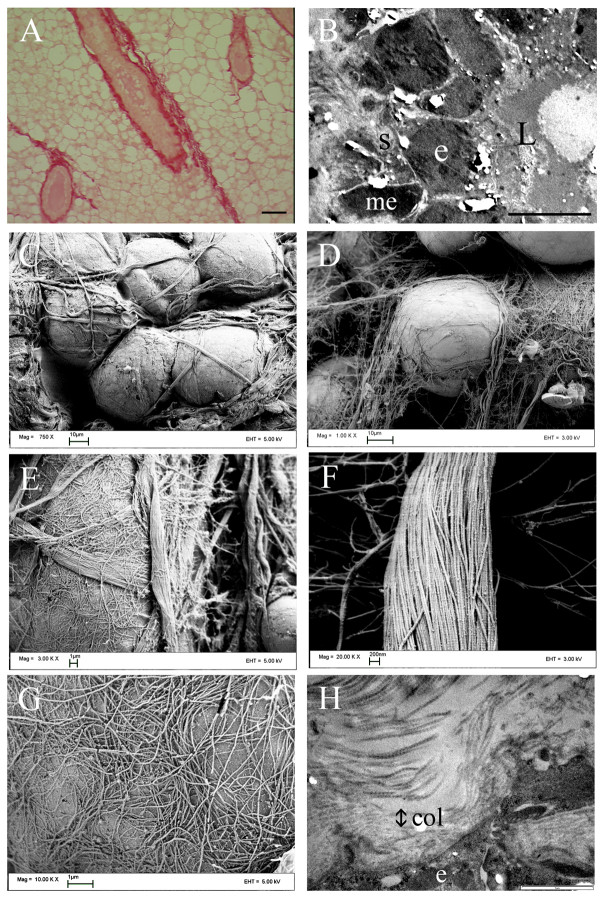
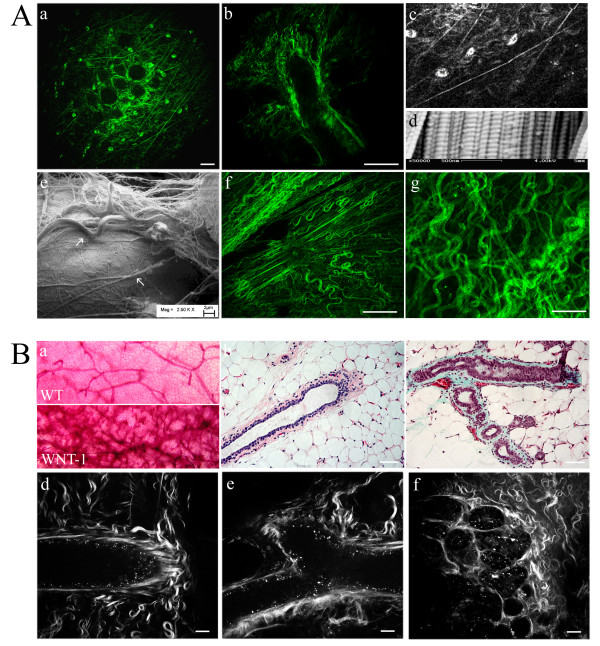
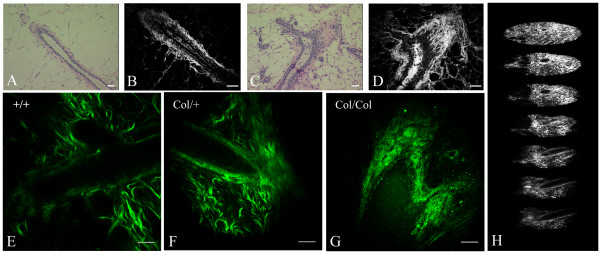
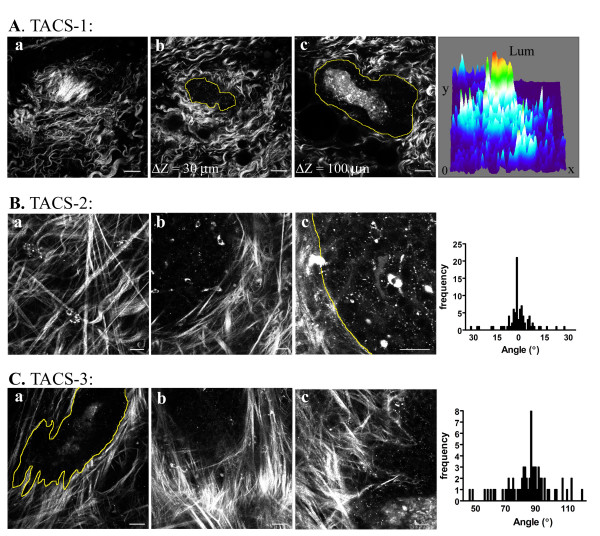
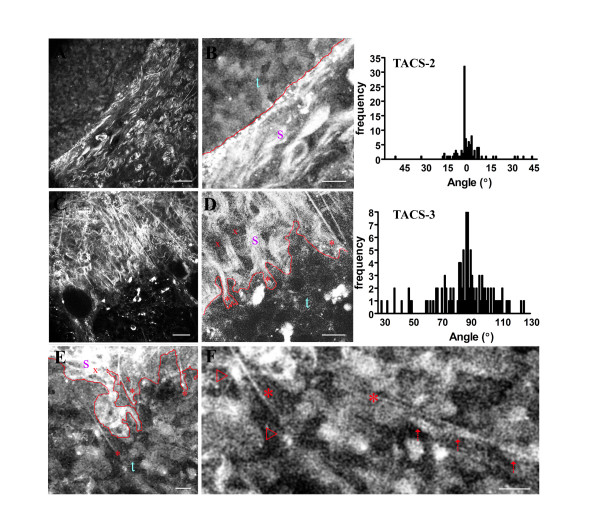
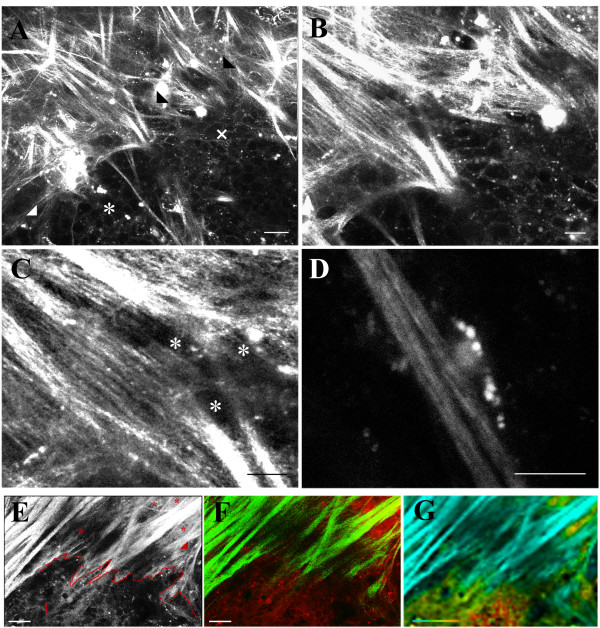
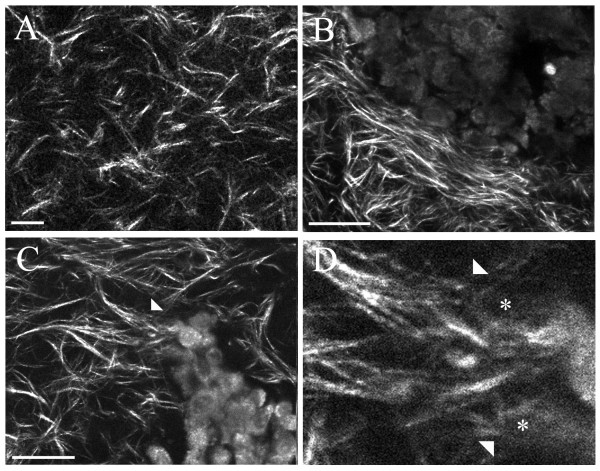
BACKGROUND: Stromal-epithelial interactions are of particular significance in breast tissue as misregulation of these interactions can promote tumorigenesis and invasion. Moreover, collagen-dense breast tissue increases the risk of breast carcinoma, although the relationship between collagen density and tumorigenesis is not well understood. As little is known about epithelial-stromal interactions in vivo, it is necessary to visualize the stroma surrounding normal epithelium and mammary tumors in intact tissues to better understand how matrix organization, density, and composition affect tumor formation and progression. METHODS: Epithelial-stromal interactions in normal mammary glands, mammary tumors, and tumor explants in three-dimensional culture were studied with histology, electron microscopy, and nonlinear optical imaging methodologies. Imaging of the tumor-stromal interface in live tumor tissue ex vivo was performed with multiphoton laser-scanning microscopy (MPLSM) to generate multiphoton excitation (MPE) of endogenous fluorophores and second harmonic generation (SHG) to image stromal collagen. RESULTS: We used both laser-scanning multiphoton and second harmonic generation microscopy to determine the organization of specific collagen structures around ducts and tumors in intact, unfixed and unsectioned mammary glands. Local alterations in collagen density were clearly seen, allowing us to obtain three-dimensional information regarding the organization of the mammary stroma, such as radiating collagen fibers that could not have been obtained using classical histological techniques. Moreover, we observed and defined three tumor-associated collagen signatures (TACS) that provide novel markers to locate and characterize tumors. In particular, local cell invasion was found predominantly to be oriented along certain aligned collagen fibers, suggesting that radial alignment of collagen fibers relative to tumors facilitates invasion. Consistent with this observation, primary tumor explants cultured in a randomly organized collagen matrix realigned the collagen fibers, allowing individual tumor cells to migrate out along radially aligned fibers. CONCLUSION: The presentation of these tumor-associated collagen signatures allowed us to identify pre-palpable tumors and see cells at the tumor-stromal boundary invading into the stroma along radially aligned collagen fibers. As such, TACS should provide indications that a tumor is, or could become, invasive, and may serve as part of a strategy to help identify and characterize breast tumors in animal and human tissues.
Overview
The claims and statistics of this paper haven’t been checked yet.
Free: it reads the open-access text and checks the first 5 claims that cite a source we can check. Create a free account to check every claim.
Integrity signals
Registry
Cites
Statistics
Figures
Verification
Claims the paper makes
The claims and statistics of this paper haven’t been checked yet.
Free: it reads the open-access text and checks the first 5 claims that cite a source we can check. Create a free account to check every claim.
Claims other papers make about this one
Each is checked against this paper’s own text: does it say what the citing paper says it does?
The source backs part of the claim, not all of it — or backs it for a different population, condition or comparison.
In the citing paper
“Also, bi-transgenic tumor model confirmed the role of stromal collagen condensation as indication for mammary tumor initiation and progression.”
From Tumor microenvironment complexity and therapeutic implications at a glance (2020) · cites this paper as [129]
Experimental — accuracy not yet measuredThe source backs part of the claim, not all of it — or backs it for a different population, condition or comparison.
In the citing paper
“The extracellular matrix (ECM), a non-cellular component of the TME, is a highly dynamic and structurally complex scaffold that plays a critical role in regulating tumor progression and therapeutic response [72,73,74].”
From Modeling Tumor Microenvironment Complexity In Vitro: Spheroids as Physiologically Relevant Tumor Models and Strategies for Their Analysis (2025) · cites this paper as [72]
Experimental — accuracy not yet measuredThe source backs part of the claim, not all of it — or backs it for a different population, condition or comparison.
In the citing paper
“As explants utilise similar techniques and equipment as those used in conventional cell culture work, this makes it easy for researchers to adopt tumor tissue explants in their research [36,37].”
From Microfluidic modelling of the tumor microenvironment for anti-cancer drug development (2019) · cites this paper as [37]
Experimental — accuracy not yet measuredThe cited source says what the claim attributes to it.
In the citing paper
“studying epithelial-stromal interactions in normal mammary glands, mammary tumors, and tumor explants in 3D culture revealed the role of collagen reorganization at the tumor-stromal interface to facilitate local invasion [129].”
From Tumor microenvironment complexity and therapeutic implications at a glance (2020) · cites this paper as [129]
Self-check
Percentages, sums and reported differences re-computed from the paper’s own numbers.
The self-check needs the paper’s full text.
Citations
Cites
Abràmoff, M. D., Magalhães, P. J., & Ram, S. J. (2004) · Utrecht University Repository (Utrecht University) · Cited by 15,374
Two-photon laser scanning fluorescence microscopy
Denk, W., Strickler, J. H., & Webb, W. W. (1990) · Science · doi:10.1126/science.2321027 · Cited by 9,488
Nonlinear magic: multiphoton microscopy in the biosciences
Zipfel, W. R., Williams, R. M., & Webb, W. W. (2003) · Nature Biotechnology · doi:10.1038/nbt899 · Cited by 3,893
Tumour-cell invasion and migration: diversity and escape mechanisms
Friedl, P., & Wolf, K. (2003) · Nature Reviews Cancer · doi:10.1038/nrc1075 · Cited by 3,222
Zipfel, W. R., Williams, R. M., Christie, R., Nikitin, A. Y., Hyman, B. T., & Webb, W. W. (2003) · Proceedings of the National Academy of Sciences · doi:10.1073/pnas.0832308100 · Cited by 1,676
Lin, E. Y., Jones, J. G., Li, P., Zhu, L., Whitney, K. D., Muller, W. J., & Pollard, J. W. (2003) · The American Journal of Pathology · doi:10.1016/s0002-9440(10)63568-7 · Cited by 1,107
Practical Methods in Electron Microscopy
Corliss, J. O., & Glauert, A. M. (1973) · Transactions of the American Microscopical Society · doi:10.2307/3224938 · Cited by 1,010
Human breast cancer cells generated by oncogenic transformation of primary mammary epithelial cells
Elenbaas, B., Spirio, L., Koerner, F., Fleming, M. D., Zimonjic, D. B., Donaher, J. L., Popescu, N. C., Hahn, W. C., & Weinberg, R. A. (2001) · Genes & Development · doi:10.1101/gad.828901 · Cited by 878 · cited 2×
“The importance of matrix composition and morphology around the mammary epithelium is illustrated by studies showing that misregulated stromal-epithelial interactions can promote tumorigenesis [6-8] and the fact that breast carcinomas often exhibit desmoplasia (excessive collagen surrounding an invasive tumor [50]).”
BackgroundZoumi, A., Yeh, A., & Tromberg, B. J. (2002) · Proceedings of the National Academy of Sciences · doi:10.1073/pnas.172368799 · Cited by 870
Interpreting Second-Harmonic Generation Images of Collagen I Fibrils
Williams, R. M., Zipfel, W. R., & Webb, W. W. (2005) · Biophysical Journal · doi:10.1529/biophysj.104.047308 · Cited by 840
Research works printed but not linked: 1
- 28. Nazir MZ Eliceiri KW Ahmed A Hashmi A Agarwal V Rao Y Kumar S Lukas T Nasim M Rueden C Gunawan R White JG WiscScan: a software defined laser-scanning microscope Scanning 2006
Cited by
Matrix Crosslinking Forces Tumor Progression by Enhancing Integrin Signaling
Levental, K. R., Yu, H., Kass, L., Lakins, J. N., Egeblad, M., Erler, J. T., Fong, S. F. T., Csiszar, K., Giaccia, A., Weninger, W., et al. (2009) · Cell · doi:10.1016/j.cell.2009.10.027 · Cited by 4,101
The extracellular matrix: A dynamic niche in cancer progression
Lu, P., Weaver, V. M., & Werb, Z. (2012) · Journal of Cell Biology · doi:10.1083/jcb.201102147 · Cited by 3,024
Provenzano, P. P., Cuevas, C., Chang, A. E., Goel, V. K., Von Hoff, D. D., & Hingorani, S. R. (2012) · Cancer Cell · doi:10.1016/j.ccr.2012.01.007 · Cited by 2,195
“…decreased synthesis, while also unraveling its architecture, which itself has been implicated in promoting carcinoma invasion and metastasis (Provenzano et al., 2006; Wang et al., 2002), impeding drug delivery (Eikenes et al., 2004; Netti et al., 2000; Ramanujan et al., 2002), and…”
BackgroundSelf-citationTumor microenvironment as a therapeutic target in cancer
Xiao, Y., & Yu, D. (2021) · Pharmacology & Therapeutics · doi:10.1016/j.pharmthera.2020.107753 · Cited by 1,957
A tense situation: forcing tumour progression
Butcher, D. T., Alliston, T., & Weaver, V. M. (2009) · Nature Reviews Cancer · doi:10.1038/nrc2544 · Cited by 1,940
Tumor microenvironment complexity and therapeutic implications at a glance
Baghban, R., Roshangar, L., Jahanban-Esfahlan, R., Seidi, K., Ebrahimi-Kalan, A., Jaymand, M., Kolahian, S., Javaheri, T., & Zare, P. (2020) · Cell Communication and Signaling · doi:10.1186/s12964-020-0530-4 · Cited by 1,784
“Furthermore, studying epithelial-stromal interactions in normal mammary glands, mammary tumors, and tumor explants in 3D culture revealed the role of collagen reorganization at the tumor-stromal interface to facilitate local invasion [129] .”
BackgroundDeconstructing the third dimension – how 3D culture microenvironments alter cellular cues
Baker, B. M., & Chen, C. S. (2012) · Journal of Cell Science · doi:10.1242/jcs.079509 · Cited by 1,760
Gaggioli, C., Hooper, S., Hidalgo-Carcedo, C., Grosse, R., Marshall, J. F., Harrington, K., & Sahai, E. (2007) · Nature Cell Biology · doi:10.1038/ncb1658 · Cited by 1,589
Cox, T. R., & Erler, J. T. (2011) · Disease Models & Mechanisms · doi:10.1242/dmm.004077 · Cited by 1,569
Hypoxia and the extracellular matrix: drivers of tumour metastasis
Gilkes, D. M., Semenza, G. L., & Wirtz, D. (2014) · Nature Reviews Cancer · doi:10.1038/nrc3726 · Cited by 1,520
Every step of the way: integrins in cancer progression and metastasis
Hamidi, H., & Ivaska, J. (2018) · Nature Reviews Cancer · doi:10.1038/s41568-018-0038-z · Cited by 1,493
Wolf, K., te Lindert, M., Krause, M., Alexander, S., te Riet, J., Willis, A. L., Hoffman, R. M., Figdor, C. G., Weiss, S. J., & Friedl, P. (2013) · Journal of Cell Biology · doi:10.1083/jcb.201210152 · Cited by 1,375
Collagen density promotes mammary tumor initiation and progression
Provenzano, P. P., Inman, D. R., Eliceiri, K. W., Knittel, J. G., Yan, L., Rueden, C. T., White, J. G., & Keely, P. J. (2008) · BMC Medicine · doi:10.1186/1741-7015-6-11 · Cited by 1,361
Self-citationAligned Collagen Is a Prognostic Signature for Survival in Human Breast Carcinoma
Conklin, M. W., Eickhoff, J. C., Riching, K. M., Pehlke, C. A., Eliceiri, K. W., Provenzano, P. P., Friedl, A., & Keely, P. J. (2011) · The American Journal of Pathology · doi:10.1016/j.ajpath.2010.11.076 · Cited by 1,285
Self-citationTumors as Organs: Complex Tissues that Interface with the Entire Organism
Egeblad, M., Nakasone, E. S., & Werb, Z. (2010) · Developmental Cell · doi:10.1016/j.devcel.2010.05.012 · Cited by 1,234
Oxygen Sensing, Hypoxia-Inducible Factors, and Disease Pathophysiology
Semenza, G. L. (2014) · Annual Review of Pathology: Mechanisms of Disease · doi:10.1146/annurev-pathol-012513-104720 · Cited by 1,159
Salmon, H., Franciszkiewicz, K., Damotte, D., Dieu-Nosjean, M.-C., Validire, P., Trautmann, A., Mami-Chouaib, F., & Donnadieu, E. (2012) · Journal of Clinical Investigation · doi:10.1172/jci45817 · Cited by 1,138
Role of Extracellular Matrix in Development and Cancer Progression
Walker, C., Mojares, E., & Del Río Hernández, A. (2018) · International Journal of Molecular Sciences · doi:10.3390/ijms19103028 · Cited by 1,084
Second harmonic generation microscopy for quantitative analysis of collagen fibrillar structure
Chen, X., Nadiarynkh, O., Plotnikov, S., & Campagnola, P. J. (2012) · Nature Protocols · doi:10.1038/nprot.2012.009 · Cited by 985
Cox, T. R. (2021) · Nature Reviews Cancer · doi:10.1038/s41568-020-00329-7 · Cited by 976
Wei, S. C., Fattet, L., Tsai, J. H., Guo, Y., Pai, V. H., Majeski, H. E., Chen, A. C., Sah, R. L., Taylor, S. S., Engler, A. J., et al. (2015) · Nature Cell Biology · doi:10.1038/ncb3157 · Cited by 948
Dynamic interplay between the collagen scaffold and tumor evolution
Egeblad, M., Rasch, M. G., & Weaver, V. M. (2010) · Current Opinion in Cell Biology · doi:10.1016/j.ceb.2010.08.015 · Cited by 896
Mechanisms of 3D cell migration
Yamada, K. M., & Sixt, M. (2019) · Nature Reviews Molecular Cell Biology · doi:10.1038/s41580-019-0172-9 · Cited by 884
Nia, H. T., Munn, L. L., & Jain, R. K. (2020) · Science · doi:10.1126/science.aaz0868 · Cited by 855
Cell–extracellular matrix mechanotransduction in 3D
Saraswathibhatla, A., Indana, D., & Chaudhuri, O. (2023) · Nature Reviews Molecular Cell Biology · doi:10.1038/s41580-023-00583-1 · Cited by 814
Modes of cancer cell invasion and the role of the microenvironment
Clark, A. G., & Vignjevic, D. M. (2015) · Current Opinion in Cell Biology · doi:10.1016/j.ceb.2015.06.004 · Cited by 761
Xiong, G., Deng, L., Zhu, J., Rychahou, P. G., & Xu, R. (2014) · BMC Cancer · doi:10.1186/1471-2407-14-1 · Cited by 753
The role of collagen in cancer: from bench to bedside
Xu, S., Xu, H., Wang, W., Li, S., Li, H., Li, T., Zhang, W., Yu, X., & Liu, L. (2019) · Journal of Translational Medicine · doi:10.1186/s12967-019-2058-1 · Cited by 735
Wiig, H., & Swartz, M. A. (2012) · Physiological Reviews · doi:10.1152/physrev.00037.2011 · Cited by 722
Role of the Microenvironment in the Pathogenesis and Treatment of Hepatocellular Carcinoma
Hernandez–Gea, V., Toffanin, S., Friedman, S. L., & Llovet, J. M. (2013) · Gastroenterology · doi:10.1053/j.gastro.2013.01.002 · Cited by 722
Goetz, J. G., Minguet, S., Navarro-Lérida, I., Lazcano, J. J., Samaniego, R., Calvo, E., Tello, M., Osteso-Ibáñez, T., Pellinen, T., Echarri, A., et al. (2011) · Cell · doi:10.1016/j.cell.2011.05.040 · Cited by 720
Self-citationThree-dimensional organotypic culture: experimental models of mammalian biology and disease
Shamir, E. R., & Ewald, A. J. (2014) · Nature Reviews Molecular Cell Biology · doi:10.1038/nrm3873 · Cited by 719
Physical influences of the extracellular environment on cell migration
Charras, G., & Sahai, E. (2014) · Nature Reviews Molecular Cell Biology · doi:10.1038/nrm3897 · Cited by 702
Fibrosis and cancer: A strained relationship
Piersma, B., Hayward, M.-K., & Weaver, V. M. (2020) · Biochimica et Biophysica Acta (BBA) - Reviews on Cancer · doi:10.1016/j.bbcan.2020.188356 · Cited by 680
Sabeh, F., Shimizu-Hirota, R., & Weiss, S. J. (2009) · Journal of Cell Biology · doi:10.1083/jcb.200807195 · Cited by 658
Cancer cell motility: lessons from migration in confined spaces
Paul, C. D., Mistriotis, P., & Konstantopoulos, K. (2017) · Nature Reviews Cancer · doi:10.1038/nrc.2016.123 · Cited by 648
Tissue Stiffness Dictates Development, Homeostasis, and Disease Progression
Handorf, A. M., Zhou, Y., Halanski, M. A., & Li, W.-J. (2015) · Organogenesis · doi:10.1080/15476278.2015.1019687 · Cited by 645
Collagen-based cell migration models in vitro and in vivo
Wolf, K., Alexander, S., Schacht, V., Coussens, L. M., von Andrian, U. H., van Rheenen, J., Deryugina, E., & Friedl, P. (2009) · Seminars in Cell & Developmental Biology · doi:10.1016/j.semcdb.2009.08.005 · Cited by 637
Impact of the physical microenvironment on tumor progression and metastasis
Spill, F., Reynolds, D. S., Kamm, R. D., & Zaman, M. H. (2016) · Current Opinion in Biotechnology · doi:10.1016/j.copbio.2016.02.007 · Cited by 581
Collagen as a double-edged sword in tumor progression
Fang, M., Yuan, J., Peng, C., & Li, Y. (2014) · Tumor Biology · doi:10.1007/s13277-013-1511-7 · Cited by 580
Matrix nanotopography as a regulator of cell function
Kim, D.-H., Provenzano, P. P., Smith, C. L., & Levchenko, A. (2012) · Journal of Cell Biology · doi:10.1083/jcb.201108062 · Cited by 575
Self-citationIlluminating the metastatic process
Sahai, E. (2007) · Nature Reviews Cancer · doi:10.1038/nrc2229 · Cited by 569
Baker, B. M., Trappmann, B., Wang, W. Y., Sakar, M. S., Kim, I. L., Shenoy, V. B., Burdick, J. A., & Chen, C. S. (2015) · Nature Materials · doi:10.1038/nmat4444 · Cited by 556
Molecular Architecture and Function of Matrix Adhesions
Geiger, B., & Yamada, K. M. (2011) · Cold Spring Harbor Perspectives in Biology · doi:10.1101/cshperspect.a005033 · Cited by 547
3D Cell Culture Systems: Tumor Application, Advantages, and Disadvantages
Habanjar, O., Diab-Assaf, M., Caldefie-Chezet, F., & Delort, L. (2021) · International Journal of Molecular Sciences · doi:10.3390/ijms222212200 · Cited by 547
Lymphatic and interstitial flow in the tumour microenvironment: linking mechanobiology with immunity
Swartz, M. A., & Lund, A. W. (2012) · Nature Reviews Cancer · doi:10.1038/nrc3186 · Cited by 544
“Fibroblasts and tumour cells can also migrate along bundled collagen fibres that radiate outwards from the tumou”
BackgroundThe Extracellular Matrix Modulates the Metastatic Journey
Kai, F., Drain, A. P., & Weaver, V. M. (2019) · Developmental Cell · doi:10.1016/j.devcel.2019.03.026 · Cited by 537
Schedin, P., & Keely, P. J. (2011) · Cold Spring Harbor Perspectives in Biology · doi:10.1101/cshperspect.a003228 · Cited by 524
Self-citationThe extracellular matrix as a multitasking player in disease
Theocharis, A. D., Manou, D., & Karamanos, N. K. (2019) · The FEBS Journal · doi:10.1111/febs.14818 · Cited by 511
Matrix Metalloproteinases Shape the Tumor Microenvironment in Cancer Progression
Niland, S., Riscanevo, A. X., & Eble, J. A. (2021) · International Journal of Molecular Sciences · doi:10.3390/ijms23010146 · Cited by 503
Provenzano, P. P., Inman, D. R., Eliceiri, K. W., Trier, S. M., & Keely, P. J. (2008) · Biophysical Journal · doi:10.1529/biophysj.108.133116 · Cited by 493
Self-citationBreast Tissue Composition and Susceptibility to Breast Cancer
Boyd, N. F., Martin, L. J., Bronskill, M., Yaffe, M. J., Duric, N., & Minkin, S. (2010) · JNCI Journal of the National Cancer Institute · doi:10.1093/jnci/djq239 · Cited by 478
Peltanova, B., Raudenska, M., & Masarik, M. (2019) · Molecular Cancer · doi:10.1186/s12943-019-0983-5 · Cited by 469
Gilkes, D. M., Bajpai, S., Chaturvedi, P., Wirtz, D., & Semenza, G. L. (2013) · Journal of Biological Chemistry · doi:10.1074/jbc.m112.442939 · Cited by 467
RetractedDoyle, A. D., Carvajal, N., Jin, A., Matsumoto, K., & Yamada, K. M. (2015) · Nature Communications · doi:10.1038/ncomms9720 · Cited by 461
Nguyen-Ngoc, K.-V., Cheung, K. J., Brenot, A., Shamir, E. R., Gray, R. S., Hines, W. C., Yaswen, P., Werb, Z., & Ewald, A. J. (2012) · Proceedings of the National Academy of Sciences · doi:10.1073/pnas.1212834109 · Cited by 449
3D collagen alignment limits protrusions to enhance breast cancer cell persistence
Riching, K. M., Cox, B. L., Salick, M. R., Pehlke, C., Riching, A. S., Ponik, S. M., Bass, B. R., Crone, W. C., Jiang, Y., Weaver, A. M., et al. (2014) · Biophysical Journal · doi:10.1016/j.bpj.2014.10.035 · Cited by 446
Self-citationTargeting fibroblast activation protein inhibits tumor stromagenesis and growth in mice
Santos, A. M., Jung, J., Aziz, N., Kissil, J. L., & Puré, E. (2009) · Journal of Clinical Investigation · doi:10.1172/jci38988 · Cited by 428
Matrix mechanical plasticity regulates cancer cell migration through confining microenvironments
Wisdom, K. M., Adebowale, K., Chang, J., Lee, J. Y., Nam, S., Desai, R., Rossen, N. S., Rafat, M., West, R. B., Hodgson, L., et al. (2018) · Nature Communications · doi:10.1038/s41467-018-06641-z · Cited by 426
Engineered nanomedicines with enhanced tumor penetration
Ding, J., Chen, J., Gao, L., Jiang, Z., Zhang, Y., Li, M., Xiao, Q., Lee, S. S., & Chen, X. (2019) · Nano Today · doi:10.1016/j.nantod.2019.100800 · Cited by 420
Kaur, A., Ecker, B. L., Douglass, S. M., Kugel, C. H., Webster, M. R., Almeida, F. V., Somasundaram, R., Hayden, J., Ban, E., Ahmadzadeh, H., et al. (2019) · Cancer Discovery · doi:10.1158/2159-8290.cd-18-0193 · Cited by 418
Bredfeldt, J. S., Liu, Y., Pehlke, C. A., Conklin, M. W., Szulczewski, J. M., Inman, D. R., Keely, P. J., Nowak, R. D., Mackie, T. R., & Eliceiri, K. W. (2014) · Journal of Biomedical Optics · doi:10.1117/1.jbo.19.1.016007 · Cited by 412
Self-citationSecond Harmonic Generation Imaging Microscopy: Applications to Diseases Diagnostics
Campagnola, P. (2011) · Analytical Chemistry · doi:10.1021/ac1032325 · Cited by 410
ROCK and JAK1 Signaling Cooperate to Control Actomyosin Contractility in Tumor Cells and Stroma
Sanz-Moreno, V., Gaggioli, C., Yeo, M., Albrengues, J., Wallberg, F., Viros, A., Hooper, S., Mitter, R., Féral, C. C., Cook, M., et al. (2011) · Cancer Cell · doi:10.1016/j.ccr.2011.06.018 · Cited by 409
Law, J. H., Habibi, G., Hu, K., Masoudi, H., Wang, M. Y. C., Stratford, A. L., Park, E., Gee, J. M. W., Finlay, P., Jones, H. E., et al. (2008) · Cancer Research · doi:10.1158/0008-5472.can-08-2755 · Cited by 401
The Role of Tumor Microenvironment in Chemoresistance: To Survive, Keep Your Enemies Closer
Senthebane, D. A., Rowe, A., Thomford, N. E., Shipanga, H., Munro, D., Mazeedi, M. A. M. A., Almazyadi, H. A. M., Kallmeyer, K., Dandara, C., Pepper, M. S., et al. (2017) · International Journal of Molecular Sciences · doi:10.3390/ijms18071586 · Cited by 399
Zhang, K., Corsa, C. A., Ponik, S. M., Prior, J. L., Piwnica-Worms, D., Eliceiri, K. W., Keely, P. J., & Longmore, G. D. (2013) · Nature Cell Biology · doi:10.1038/ncb2743 · Cited by 393
Self-citationLyons, T. R., O'Brien, J., Borges, V. F., Conklin, M. W., Keely, P. J., Eliceiri, K. W., Marusyk, A., Tan, A.-C., & Schedin, P. (2011) · Nature Medicine · doi:10.1038/nm.2416 · Cited by 380
Self-citationOriented collagen fibers direct tumor cell intravasation
Han, W., Chen, S., Yuan, W., Fan, Q., Tian, J., Wang, X., Chen, L., Zhang, X., Wei, W., Liu, R., et al. (2016) · Proceedings of the National Academy of Sciences · doi:10.1073/pnas.1610347113 · Cited by 376
Cell–cell adhesion and 3D matrix confinement determine jamming transitions in breast cancer invasion
Ilina, O., Gritsenko, P. G., Syga, S., Lippoldt, J., La Porta, C. A. M., Chepizhko, O., Grosser, S., Vullings, M., Bakker, G.-J., Starruß, J., et al. (2020) · Nature Cell Biology · doi:10.1038/s41556-020-0552-6 · Cited by 375
Tumor macrophages are pivotal constructors of tumor collagenous matrix
Afik, R., Zigmond, E., Vugman, M., Klepfish, M., Shimshoni, E., Pasmanik-Chor, M., Shenoy, A., Bassat, E., Halpern, Z., Geiger, T., et al. (2016) · Journal of Experimental Medicine · doi:10.1084/jem.20151193 · Cited by 375
Martin, L. J., & Boyd, N. F. (2008) · Breast Cancer Research · doi:10.1186/bcr1831 · Cited by 373
Fibrous nonlinear elasticity enables positive mechanical feedback between cells and ECMs
Hall, M. S., Alisafaei, F., Ban, E., Feng, X., Hui, C.-Y., Shenoy, V. B., & Wu, M. (2016) · Proceedings of the National Academy of Sciences · doi:10.1073/pnas.1613058113 · Cited by 360
“Recent work has shown that individual cells are capable of stiffening the fibrous collagen matrices in their immediate vicinity through collagen fiber alignment (17, 18), and collagen fiber alignment in the tumor microenvironment has been implicated in metastasis (13).”
BackgroundWeigelin, B., Bakker, G.-J., & Friedl, P. (2012) · IntraVital · doi:10.4161/intv.21223 · Cited by 357
Hydrogel microenvironments for cancer spheroid growth and drug screening
Li, Y., & Kumacheva, E. (2018) · Science Advances · doi:10.1126/sciadv.aas8998 · Cited by 351
Biomechanical and biochemical remodeling of stromal extracellular matrix in cancer
Malik, R., Lelkes, P. I., & Cukierman, E. (2015) · Trends in Biotechnology · doi:10.1016/j.tibtech.2015.01.004 · Cited by 348
The Role of the Extracellular Matrix in Cancer Stemness
Nallanthighal, S., Heiserman, J. P., & Cheon, D.-J. (2019) · Frontiers in Cell and Developmental Biology · doi:10.3389/fcell.2019.00086 · Cited by 344
Cell Motility and Mechanics in Three-Dimensional Collagen Matrices
Grinnell, F., & Petroll, W. M. (2010) · Annual Review of Cell and Developmental Biology · doi:10.1146/annurev.cellbio.042308.113318 · Cited by 338
Cancer-associated fibroblasts lead tumor invasion through integrin-β3–dependent fibronectin assembly
Attieh, Y., Clark, A. G., Grass, C., Richon, S., Pocard, M., Mariani, P., Elkhatib, N., Betz, T., Gurchenkov, B., & Vignjevic, D. M. (2017) · Journal of Cell Biology · doi:10.1083/jcb.201702033 · Cited by 338
Mechanoresponsive metabolism in cancer cell migration and metastasis
Zanotelli, M. R., Zhang, J., & Reinhart-King, C. A. (2021) · Cell Metabolism · doi:10.1016/j.cmet.2021.04.002 · Cited by 338
Mechanisms and impact of altered tumour mechanics
Mohammadi, H., & Sahai, E. (2018) · Nature Cell Biology · doi:10.1038/s41556-018-0131-2 · Cited by 336
Meflin-Positive Cancer-Associated Fibroblasts Inhibit Pancreatic Carcinogenesis
Mizutani, Y., Kobayashi, H., Iida, T., Asai, N., Masamune, A., Hara, A., Esaki, N., Ushida, K., Mii, S., Shiraki, Y., et al. (2019) · Cancer Research · doi:10.1158/0008-5472.can-19-0454 · Cited by 336
Journal of Cellular Biochemistry
(2006) · Journal of Cellular Biochemistry · doi:10.1002/(issn)1097-4644 · Cited by 335
Tumor-Host Interactions: A Far-Reaching Relationship
McAllister, S. S., & Weinberg, R. A. (2010) · Journal of Clinical Oncology · doi:10.1200/jco.2010.28.4257 · Cited by 327
A tumor-derived type III collagen-rich ECM niche regulates tumor cell dormancy
Di Martino, J. S., Nobre, A. R., Mondal, C., Taha, I., Farias, E. F., Fertig, E. J., Naba, A., Aguirre-Ghiso, J. A., & Bravo-Cordero, J. J. (2021) · Nature Cancer · doi:10.1038/s43018-021-00291-9 · Cited by 322
Forcing form and function: biomechanical regulation of tumor evolution
Yu, H., Mouw, J. K., & Weaver, V. M. (2011) · Trends in Cell Biology · doi:10.1016/j.tcb.2010.08.015 · Cited by 321
Role of the tumor microenvironment in tumor progression and the clinical applications (Review)
YUAN, Y., JIANG, Y.-C., SUN, C.-K., & CHEN, Q.-M. (2016) · Oncology Reports · doi:10.3892/or.2016.4660 · Cited by 320
Lee, H.-O., Mullins, S. R., Franco-Barraza, J., Valianou, M., Cukierman, E., & Cheng, J. D. (2011) · BMC Cancer · doi:10.1186/1471-2407-11-245 · Cited by 304
Regulation of the metastatic cell phenotype by sialylated glycans
Schultz, M. J., Swindall, A. F., & Bellis, S. L. (2012) · Cancer and Metastasis Reviews · doi:10.1007/s10555-012-9359-7 · Cited by 303
Cell contraction induces long-ranged stress stiffening in the extracellular matrix
Han, Y. L., Ronceray, P., Xu, G., Malandrino, A., Kamm, R. D., Lenz, M., Broedersz, C. P., & Guo, M. (2018) · Proceedings of the National Academy of Sciences · doi:10.1073/pnas.1722619115 · Cited by 300
RETRACTED: Collagen Prolyl Hydroxylases Are Essential for Breast Cancer Metastasis
Gilkes, D. M., Chaturvedi, P., Bajpai, S., Wong, C. C., Wei, H., Pitcairn, S., Hubbi, M. E., Wirtz, D., & Semenza, G. L. (2013) · Cancer Research · doi:10.1158/0008-5472.can-12-3963 · Cited by 296
RetractedRay, A., Lee, O., Win, Z., Edwards, R. M., Alford, P. W., Kim, D.-H., & Provenzano, P. P. (2017) · Nature Communications · doi:10.1038/ncomms14923 · Cited by 293
Self-citationCancer‐associated fibroblasts in breast cancer: Challenges and opportunities
Hu, D., Li, Z., Zheng, B., Lin, X., Pan, Y., Gong, P., Zhuo, W., Hu, Y., Chen, C., Chen, L., et al. (2022) · Cancer Communications · doi:10.1002/cac2.12291 · Cited by 286
Miller, B. W., Morton, J. P., Pinese, M., Saturno, G., Jamieson, N. B., McGhee, E., Timpson, P., Leach, J., McGarry, L., Shanks, E., et al. (2015) · EMBO Molecular Medicine · doi:10.15252/emmm.201404827 · Cited by 286
The Functional Role of Extracellular Matrix Proteins in Cancer
Popova, N. V., & Jücker, M. (2022) · Cancers · doi:10.3390/cancers14010238 · Cited by 275
Role of hypoxia-inducible factors in breast cancer metastasis
Gilkes, D. M., & Semenza, G. L. (2013) · Future Oncology · doi:10.2217/fon.13.92 · Cited by 274
“Several groups have observed that tumor cells preferentially invade along aligned collagen fibers [61–63].”
BackgroundEngineering and physical sciences in oncology: challenges and opportunities
Mitchell, M. J., Jain, R. K., & Langer, R. (2017) · Nature Reviews Cancer · doi:10.1038/nrc.2017.83 · Cited by 273
Nadiarnykh, O., LaComb, R. B., Brewer, M. A., & Campagnola, P. J. (2010) · BMC Cancer · doi:10.1186/1471-2407-10-94 · Cited by 264
The wound healing, chronic fibrosis, and cancer progression triad
Rybinski, B., Franco-Barraza, J., & Cukierman, E. (2014) · Physiological Genomics · doi:10.1152/physiolgenomics.00158.2013 · Cited by 253
Procollagen lysyl hydroxylase 2 is essential for hypoxia-induced breast cancer metastasis
Gilkes, D. M., Bajpai, S., Wong, C. C., Chaturvedi, P., Hubbi, M. E., Wirtz, D., & Semenza, G. L. (2013) · Molecular Cancer Research · doi:10.1158/1541-7786.mcr-12-0629 · Cited by 252
“During breast cancer progression, collagen fibers increase in density, straighten, bundle, and align (21).”
Retracted
Metadata
- Authors
- Provenzano, P. P., Eliceiri, K. W., Campbell, J. M., Inman, D. R., White, J. G., & Keely, P. J.
- Affiliations
- University of Wisconsin System (US)
- University of Wisconsin–Madison (US)
- Corresponding author
- Provenzano, Paolo P
- Venue
- BMC Medicine
- Published
- 2006-12
- Volume
- 4
- Issue
- 1
- Pages
- 38-38
- ISSN
- 1741-7015 (ISSN-L)
- PMC
- PMC1781458
- OpenAlex
- W2104479723
- Cited by
- 1,804
- References
- 58
- Citations by year
- 2026: 84 · 2025: 109 · 2024: 115 · 2023: 132 · 2022: 126 · 2021: 155 · 2020: 163 · 2019: 135 · 2018: 113 · 2017: 110 · 2016: 107 · 2015: 93 · 2014: 83 · 2013: 80 · 2012: 55
- FWCI
- 8.00
- Type
- journal article
- Language
- en
- Open access
- gold
- doi.org
- Licence
- Locations
- BMC Medicine (publishedVersion, cc-by)
- PubMed Central (publishedVersion, cc-by)
- PubMed (publishedVersion)
- DOAJ (DOAJ: Directory of Open Access Journals) (submittedVersion, cc-by-sa)
- Funders
- U.S. Department of Defense
- National Institutes of Health
- National Cancer Institute (CA 076537, R29CA076537, R01CA076537)
- National Institute of Biomedical Imaging and Bioengineering (R01EB000184)
- Topics
- Life Sciences › Biochemistry, Genetics and Molecular Biology › Cell Biology › Cellular Mechanics and Interactions
- Health Sciences › Medicine › Oncology › Cancer Cells and Metastasis
- Health Sciences › Medicine › Pathology and Forensic Medicine › Breast Lesions and Carcinomas
- Keywords
- collagen reorganization, stromal-epithelial interactions, breast cancer, local invasion, collagen fiber alignment, mammary stroma, mammary tumors, tumor explants, second harmonic generation microscopy, multiphoton excitation, tumor detection
- MeSH terms
- Animals, Collagen, Extracellular Matrix, Female, Mammary Glands, Animal, Mammary Neoplasms, Experimental, Neoplasm Invasiveness, Stromal Cells, Microscopy, Confocal, Microscopy, Electron, Transmission, Mice
About these checks
Registry, retraction, Cites and statistics results are computed, not judged, with one exception: a printed reference that no index lists is read once by a model before it counts as a citation error. Claims are extracted by a model and kept only when their quote appears verbatim in the text; each cited source is then checked, with a model’s help, for whether it says what the claim relies on. Those verdicts can be wrong — read the claim’s quote and the cited source before relying on one.
Statistics and arithmetic are recomputed, not judged.
Confidence bands are shown only for fields calibrated on our annotated test set. None is calibrated yet, so no band is shown.
What counts as a claim ›How we measure confidence ›How we check this ›
Are you an author, or do you see a problem with this page? Request a review
Data sources
Bibliographic data: Semantic Scholar, OpenAlex, Crossref.
Contains information from the Semantic Scholar Academic Graph Datasets, made available under the ODC Attribution License (ODC-BY 1.0).
Semantic Scholar’s data is described in: Kinney, R., et al. (2023). The Semantic Scholar Open Data Platform. arXiv:2301.10140.
