

The DOI matches its Crossref record; 80 of the 82 references it cites were found in a registry or an index; 5 of the 169 sources its claims cite were checked for support.
Are we paying too much attention to cardio-pulmonary nematodes and neglecting old-fashioned worms like Trichuris vulpis?
Open accessAbstract
Trichuris vulpis, the dog whipworm, causes an intestinal parasitosis of relevance in current canine veterinary practice. Its occurrence is well-known in pets, kennelled dogs and stray animals, and its eggs contaminate the ground in urban areas all over the world. Moreover, T. vulpis has been occasionally incriminated, though not convincingly substantiated, as a cause of zoonosis. This nematode is erroneously considered an "old-fashioned" pathogen with a consequent lack of up- to- date knowledge on several aspects of the infection. These, in turn, are still controversial and need to be studied in greater depth. This article reviews current knowledge of T. vulpis, together with a discussion of critical points in epidemiology, zoonotic hazard, diagnosis and treatment of canine trichurosis.
Overview
AI snapshot
Written from the paper’s full text.
TL;DR
This narrative review argues that *Trichuris vulpis*, the canine whipworm, remains an under-recognized and under-studied intestinal parasite despite its global distribution and high prevalence in dogs. It critically examines controversial aspects of epidemiology, zoonotic potential, diagnosis, and treatment, and calls for updated surveys and better integration of whipworm control with emerging cardio-pulmonary nematode prevention.
Key findings
- *T. vulpis* is globally distributed and can reach high infection rates: up to 15–30% in kennelled dogs in the USA, Belgium, and Holland; ~2.6–3% in older companion-dog surveys in Great Britain and Greece versus ~10–30% in more recent studies in Greece, Argentina, and France; and up to 60% in stray dogs.
- Its zoonotic potential is debated: human patent infections have mostly been diagnosed by egg size, but adult worms from presumed *T. vulpis* infections have been re-identified as *T. trichiura* shedding abnormal eggs; the paper concludes *T. vulpis* cannot currently be included among zoonotic canine parasites until unequivocal DNA-based identification in human samples is provided.
- Diagnosis is challenging because prepatency is about 8–12 weeks, egg shedding can be intermittent, and eggs of *T. vulpis* (about 70–90 μm by 30–40 μm) resemble those of *Eucoleus*/*Capillaria* species; repeated faecal examinations and flotation with solutions >1.20–1.35 specific gravity are recommended.
- Treatment requires repeated administration: at least three monthly treatments are advised because larvae take about three months to mature; emodepside plus praziquantel showed nearly 100% efficacy, moxidectin/imidacloprid spot-on ~97–100%, milbemycin oxime ~96–99%, and milbemycin associations 99.6–100%, yet a Swiss survey found a 22% yearly incidence of *T. vulpis* despite quarterly febantel/pyrantel/praziquantel treatment.
Methods
- Narrative review article synthesizing current knowledge on *T. vulpis* epidemiology, zoonotic hazard, diagnosis, and treatment/control.
- Data sources include published literature and Table 1, which compiles surveys from the last decade in different Italian regions on *T. vulpis* eggs in privately owned dogs, kennelled dogs, and environmental samples, alongside unpublished 2009–2010 data from Central Italy.
- Main analysis is a critical discussion of gaps and controversies rather than a systematic review or primary experimental study.
Limitations
- Stated in the paper: no extensive epidemiological studies focusing on canine trichurosis have been undertaken in recent years; available distribution data are markedly heterogeneous; zoonotic potential remains uncertain and not definitively established; diagnostic approaches have limitations.
- Evident from the text: this is a narrative review, not a systematic review, and it relies partly on unpublished data, conference proceedings, and heterogeneous surveys, so prevalence figures are not directly comparable across settings.
- Evident from the text: the article does not present new primary data or a formal meta-analysis, and several treatment and prevalence claims are drawn from cited studies rather than independently re-analyzed.
Model-written summary. Check it against the paper before relying on it.
Integrity signals
Registry
Cites
Statistics
Figures
Verification
Claims the paper makes
72 Not checked yet · 28 No basis given · 19 Own interpretation · 2 Partly supported · accuracy not yet measured
In the paper
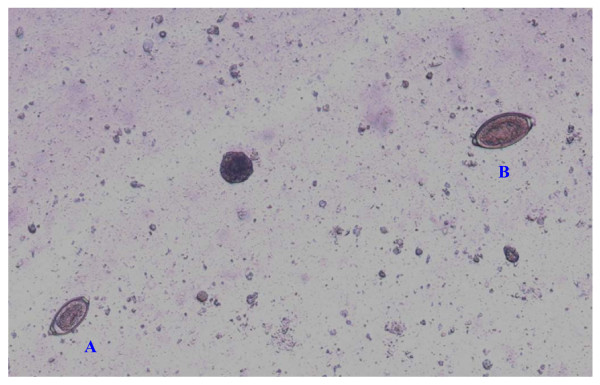
“of particular importance and of diagnostic significance are mixed infections by T. vulpis and E. aerophilus (Figure 4), which may often occur [Traversa, unpublished].”
§ Are we paying too much attention to cardio-pulmonary nematodes and neglecting old-fashioned worms like Trichuris vulpis? > Diagnostic challenges
What the sources say
- Not checked yetcites [Traversa, unpublished]
hedgedcorrelational- Asserted: passes — The authors put it forward as true.
- Checkable: passes — It can be checked against evidence.
- Load-bearing: unclear — It is unclear whether the paper’s conclusions depend on it.
- Based: passes — The paper gives a reason why it holds.
The paper states this without a source or data behind it here, so there is nothing to check it against. The quote shows it is in the paper.
In the paper
“More specifically, T. vulpis eggs may survive from cold winter to hot summer, especially in wet and shady areas.”
§ Are we paying too much attention to cardio-pulmonary nematodes and neglecting old-fashioned worms like Trichuris vulpis? > The parasite
hedgedconditional- Asserted: passes — The authors put it forward as true.
- Checkable: passes — It can be checked against evidence.
- Load-bearing: unclear — It is unclear whether the paper’s conclusions depend on it.
- Based: passes — The paper gives a reason why it holds.
The paper states this without a source or data behind it here, so there is nothing to check it against. The quote shows it is in the paper.
In the paper
“The eggs may remain viable and infective in the environment for years, leading to high infection rates in dogs and consequent difficulties in controlling canine trichurosis.”
§ Are we paying too much attention to cardio-pulmonary nematodes and neglecting old-fashioned worms like Trichuris vulpis? > The parasite
hedged- Asserted: passes — The authors put it forward as true.
- Checkable: passes — It can be checked against evidence.
- Load-bearing: passes — The paper’s conclusions depend on it.
- Based: passes — The paper gives a reason why it holds.
The paper states this without a source or data behind it here, so there is nothing to check it against. The quote shows it is in the paper.
In the paper
“Unless exposed to extreme conditions for long periods, desiccation and sunlight often do not affect egg viability.”
§ Are we paying too much attention to cardio-pulmonary nematodes and neglecting old-fashioned worms like Trichuris vulpis? > The parasite
hedged- Asserted: passes — The authors put it forward as true.
- Checkable: passes — It can be checked against evidence.
- Load-bearing: unclear — It is unclear whether the paper’s conclusions depend on it.
- Based: passes — The paper gives a reason why it holds.
None of the sources cited for this claim have been checked yet.
In the paper
“a possible association between the presence of T. vulpis and of the hookworm Ancylostoma caninum has also been detected in infected dogs [6,9,10].”
§ Are we paying too much attention to cardio-pulmonary nematodes and neglecting old-fashioned worms like Trichuris vulpis? > The parasite
What the sources say
- Not checked yetcites [6] Fontanarrosa MF, Vezzani D, Basabe J, Eiras DF: An epidemiological study of gastrointestinal parasites of dogs from Southern Greater Buenos Aires (Argentina): age, gender, breed, mixed infections, and seasonal and spatial patterns. Vet Parasitol. 2006, 136: 283-295. 10.1016/j.vetpar.2005.11.012. source
- Not checked yetcites [9] Visco RJ, Corwin RM, Selby LA: Effect of age and sex on the prevalence of intestinal parasitism in dogs. J Am Vet Med Assoc. 1977, 170: 835-837.
- Not checked yetcites [10] Nolan TJ, Smith G: Time series analysis of the prevalence of endoparasitic infections in cats and dogs presented to a veterinary teaching hospital. Vet Par. 1995, 59: 87-96. 10.1016/0304-4017(94)00742-U. source
hedgedcorrelational- Asserted: passes — The authors put it forward as true.
- Checkable: passes — It can be checked against evidence.
- Load-bearing: unclear — It is unclear whether the paper’s conclusions depend on it.
- Based: passes — The paper gives a reason why it holds.
A conclusion the paper draws from its own results — it cites no other source for it, so there is none to check. The quote shows it is in the paper.
In the paper
“Until further definitive evidence is provided, possibly by the unequivocal DNA-based identification of canine whipworm in human samples in the presence of compatible symptoms and in the absence of other causes, T. vulpis still cannot be currently included among zoonotic canine parasites.”
§ Are we paying too much attention to cardio-pulmonary nematodes and neglecting old-fashioned worms like Trichuris vulpis? > Zoonotic or not zoonotic, this is the question
plain- Asserted: passes — The authors put it forward as true.
- Checkable: passes — It can be checked against evidence.
- Load-bearing: passes — The paper’s conclusions depend on it.
- Based: passes — The paper gives a reason why it holds.
In the paper
“Interestingly, the same association has also been found between human whipworms and hookworms [11].”
§ Are we paying too much attention to cardio-pulmonary nematodes and neglecting old-fashioned worms like Trichuris vulpis? > The parasite
What the sources say
- Not checked yetcites [11] Singh S, Samantaray JC, Singh N, Das GB, Verma IC: Trichuris vulpis infection in an Indian tribal population. J Parasitol. 1993, 79: 457-458. 10.2307/3283589. source
plaincorrelational- Asserted: passes — The authors put it forward as true.
- Checkable: passes — It can be checked against evidence.
- Load-bearing: unclear — It is unclear whether the paper’s conclusions depend on it.
- Based: passes — The paper gives a reason why it holds.
A conclusion the paper draws from its own results — it cites no other source for it, so there is none to check. The quote shows it is in the paper.
In the paper
“Therefore, these eggs, regardless of whether detected together with the regular-sized and smaller T. trichiura eggs or not, may lead to a wrong diagnosis of human trichurosis caused by T. vulpis.”
§ Are we paying too much attention to cardio-pulmonary nematodes and neglecting old-fashioned worms like Trichuris vulpis? > Zoonotic or not zoonotic, this is the question
hedgedconditional- Asserted: passes — The authors put it forward as true.
- Checkable: passes — It can be checked against evidence.
- Load-bearing: passes — The paper’s conclusions depend on it.
- Based: passes — The paper gives a reason why it holds.
In the paper
“The involvement of T. vulpis in causing these VLM cases was later questioned on various points”
§ Are we paying too much attention to cardio-pulmonary nematodes and neglecting old-fashioned worms like Trichuris vulpis? > Zoonotic or not zoonotic, this is the question
What the sources say
- Not checked yetcites [30] Coulter JB, Jewsbury JM, Beesley WN, Bailey W: Visceral larva migrans and Trichuris vulpis. Arch Dis Child. 1981, 56: 406-10.1136/adc.56.5.406. source
plainn = 3- Asserted: passes — The authors put it forward as true.
- Checkable: passes — It can be checked against evidence.
- Load-bearing: unclear — It is unclear whether the paper’s conclusions depend on it.
- Based: passes — The paper gives a reason why it holds.
In the paper
“A diagnosis of a lung mass due to VLM by dog whipworms was therefore declared [29].”
§ Are we paying too much attention to cardio-pulmonary nematodes and neglecting old-fashioned worms like Trichuris vulpis? > Zoonotic or not zoonotic, this is the question
What the sources say
- Not checked yetcites [29] Masuda Y, Kishimoto T, Ito H, Tsuji M: Visceral larva migrans caused by Trichuris vulpis presenting as a pulmonary mass. Thorax. 1987, 42: 990-991. 10.1136/thx.42.12.990. source
plaindirectSingle case- Asserted: passes — The authors put it forward as true.
- Checkable: passes — It can be checked against evidence.
- Load-bearing: passes — The paper’s conclusions depend on it.
- Based: passes — The paper gives a reason why it holds.
- It may state two separate claims as one. 31
- Probably not a substantial claim. 26
The cited sources support only part of this claim — read each source’s verdict below.
In the paper
“thus the incidence of trichurosis is higher in adult dogs, which also have higher parasitic burdens than younger animals [3,5-8].”
§ Are we paying too much attention to cardio-pulmonary nematodes and neglecting old-fashioned worms like Trichuris vulpis? > The parasite
What the sources say
- Not checked yetcites [3] Taylor MA, Coop RL, Wall RL: Veterinary Parasitology. 2007, Blackwell Publishing, 3
- Could not verifycites [5] Barutzki D, Schaper R: Endoparasites in dogs and cats in Germany 1999-2002. Parasitol Res. 2003, 90 (Suppl 3): S148-150. 10.1007/s00436-003-0922-6. sourceExperimental — accuracy not yet measured
The Abstract reports Trichuris vulpis in infected dogs but gives no results by age. Searches for adult-versus-younger dogs and parasite burden found no passage addressing either comparison, so the claimed age differences cannot be verified from our copy. (LLM, conf=0.73)
- Not checked yetcites [6] Fontanarrosa MF, Vezzani D, Basabe J, Eiras DF: An epidemiological study of gastrointestinal parasites of dogs from Southern Greater Buenos Aires (Argentina): age, gender, breed, mixed infections, and seasonal and spatial patterns. Vet Parasitol. 2006, 136: 283-295. 10.1016/j.vetpar.2005.11.012. source
- Partly supportedcites [7] Ugbomoiko US, Ariza L, Heukelbach J: Parasites of importance for human health in Nigerian dogs: high prevalence and limited knowledge of pet owners. BMC Vet Res. 2008, 4: 49-10.1186/1746-6148-4-49. sourceExperimental — accuracy not yet measured
The Discussion (page unavailable) reports that Trichuris vulpis prevalence increased with dog age, supporting the age-related trichurosis comparison. The study reports prevalence, not incidence, and the passages do not establish that adult dogs had a higher overall parasite burden than younger dogs; T. canis prevalence instead decreased with age. (LLM, conf=0.88)
- Partly supportedcites [8] Itoh N, Kanai K, Hori Y, Hoshi F, Higuchi S: Prevalence of Giardia intestinalis and other zoonotic intestinal parasites in private household dogs of the Hachinohe area in Aomori prefecture, Japan in 1997, 2002 and 2007. J Vet Sci. 2009, 10: 305-308. 10.4142/jvs.2009.10.4.305. sourceExperimental — accuracy not yet measured
The Discussion reports that T. vulpis is mainly detected in older outdoor dogs, and the Results report higher prevalence in its high-detection group. This supports an association with older dogs, but the paper reports prevalence rather than incidence and does not establish that adult dogs carry heavier parasite burdens than younger dogs. (LLM, conf=0.86)
plaincorrelational- Asserted: passes — The authors put it forward as true.
- Checkable: passes — It can be checked against evidence.
- Load-bearing: unclear — It is unclear whether the paper’s conclusions depend on it.
- Based: passes — The paper gives a reason why it holds.
It may state two separate claims as one.
The cited sources support only part of this claim — read each source’s verdict below.
In the paper
“In general the canine whipworm is a ubiquitous parasite, with high rates of infection on kennelled animals, household pets and stray dogs.”
§ Are we paying too much attention to cardio-pulmonary nematodes and neglecting old-fashioned worms like Trichuris vulpis? > Epidemiological impact on animal and public health
What the sources say
- Not checked yetcites [21] Bowman DD: Toxocara canis and Trichuris vulpis - Common dog parasites. Central Veterinary Conference Proceedings. 2009
- Not checked yetcites [31] Vanparijs O, Hermans L, van der Flaes L: Helminth and protozoan parasites in dogs and cats in Belgium. Vet Parasitol. 1991, 38: 67-73. 10.1016/0304-4017(91)90010-S. source
- Partly supportedcites [34] Overgaauw PA, Boersema JH: Nematode infections in dog breeding kennels in The Netherlands, with special reference to Toxocara. Vet Q. 1998, 20: 12-15. sourceExperimental — accuracy not yet measured
The Discussion reports that Trichuris infections were relatively frequent in kennel dogs. It also reports a much lower frequency in Dutch household dogs (0.7%) and does not establish high infection rates in stray dogs or that canine whipworm is ubiquitous. (LLM, conf=0.89)
- Not checked yetcites [44] Turner T, Pegg E: A survey of patent nematode infestations in dogs. Vet Rec. 1977, 100: 284-285. 10.1136/vr.100.14.284. source
- Not checked yetcites [45] Haralabidis ST, Papazachariadou MG, Koutinas HF, Rallis TS: A survey on the prevalence of gastrointestinal parasites of dogs in the area of Thessaloniki, Greece. J Helminthol. 1998, 62: 45-49. 10.1017/S0022149X00011196. source
- Not checked yetcites [46] Papazahariadou M, Founta A, Papadopoulos E, Chliounakis S, Antoniadou-Sotiriadou K, Theodorides Y: Gastrointestinal parasites of shepherd and hunting dogs in the Serres Prefecture, Northern Greece. Vet Parasitol. 2007, 148: 170-173. 10.1016/j.vetpar.2007.05.013. source
- Not checked yetcites [47] Georgieva D, Ivanov A, Prelesov P: Studies on the parasitic fauna in stray dogs in the Stara Zagora region. Bulg J Vet Med. 1999, 2: 121-124.
- Not checked yetcites [48] Fok E, Szatmari V, Busak K, Rozgonyi F: Prevalence of intestinal parasites in dogs in some urban and rural areas of Hungary. Vet Q. 2001, 23: 96-98. source
- Not checked yetcites [49] Kornaś S, Nowosad B, Skalska M: The evaluation of Trichuris vulpis infection of stray dogs in Kraków area. Wiad Parazytol. 2002, 48: 401-406.
- Partly supportedcites [50] Blazius RD, Emerick S, Prophiro JS, Romão PR, Silva OS: Occurrence of protozoa and helminthes in faecal samples of stray dogs from Itapema City, Santa Catarina. Rev Soc Bras Med Trop. 2005, 38: 73-74. 10.1590/S0037-86822005000100018. sourceExperimental — accuracy not yet measured
The prevalence table in our copy (section labeled Abstract; page unavailable) reports Trichuris vulpis in 22 of 158 stray-dog samples from Itapema (13.9%). This supports its occurrence in stray dogs, but the paper does not establish that canine whipworm is ubiquitous or has high infection rates in kennelled animals and household pets. The dogs were placed in individual kennels only for sample collection. (LLM, conf=0.86)
plain- Asserted: passes — The authors put it forward as true.
- Checkable: passes — It can be checked against evidence.
- Load-bearing: unclear — It is unclear whether the paper’s conclusions depend on it.
- Based: passes — The paper gives a reason why it holds.
It may state two separate claims as one.
In the paper
“Unpublished results obtained in 2009-2010 from Central Italy (i.e. Abruzzo and Marche regions) showed a prevalence of trichurosis of 10-15% in privately owned dogs and an infection rate from 30 to 60% in kennelled animals [Traversa, unpublished].”
§ Are we paying too much attention to cardio-pulmonary nematodes and neglecting old-fashioned worms like Trichuris vulpis? > Epidemiological impact on animal and public health
What the sources say
- Not checked yetcites [Traversa, unpublished]
plain- Asserted: passes — The authors put it forward as true.
- Checkable: passes — It can be checked against evidence.
- Load-bearing: unclear — It is unclear whether the paper’s conclusions depend on it.
- Based: passes — The paper gives a reason why it holds.
It may state two separate claims as one.
The paper states this without a source or data behind it here, so there is nothing to check it against. The quote shows it is in the paper.
In the paper
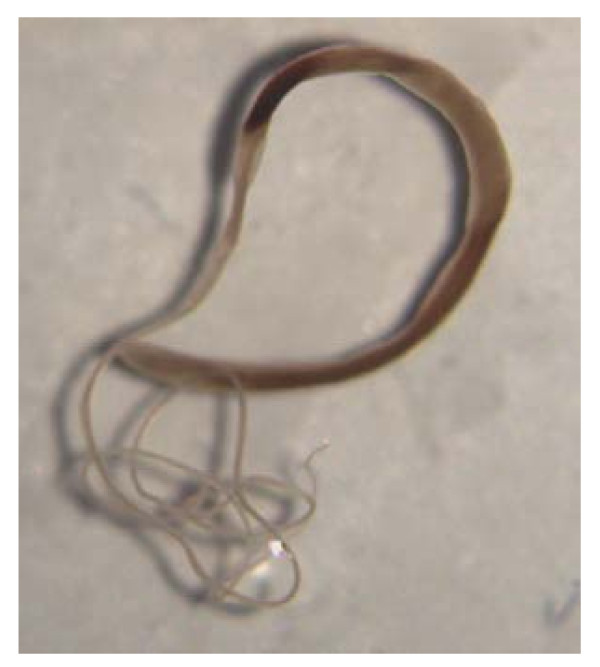
“They are worms a few cm long (~4.5-7.5 cm) in which the thick, broad tail is about one quarter of the total length of the body”
§ Are we paying too much attention to cardio-pulmonary nematodes and neglecting old-fashioned worms like Trichuris vulpis? > The parasite
plain- Asserted: passes — The authors put it forward as true.
- Checkable: passes — It can be checked against evidence.
- Load-bearing: fails — The paper’s conclusions may not depend on it.
- Based: passes — The paper gives a reason why it holds.
Probably not a substantial claim. The paper’s conclusions may not depend on it. It may state two separate claims as one.
A conclusion the paper draws from its own results — it cites no other source for it, so there is none to check. The quote shows it is in the paper.
In the paper
“Trichuris vulpis, the dog whipworm, causes an intestinal parasitosis of relevance in current canine veterinary practice.”
§ Are we paying too much attention to cardio-pulmonary nematodes and neglecting old-fashioned worms like Trichuris vulpis? > Abstract
plaindirect- Asserted: passes — The authors put it forward as true.
- Checkable: passes — It can be checked against evidence.
- Load-bearing: passes — The paper’s conclusions depend on it.
- Based: passes — The paper gives a reason why it holds.
Probably not a substantial claim.
A conclusion the paper draws from its own results — it cites no other source for it, so there is none to check. The quote shows it is in the paper.
In the paper
“T. vulpis has been occasionally incriminated, though not convincingly substantiated, as a cause of zoonosis.”
§ Are we paying too much attention to cardio-pulmonary nematodes and neglecting old-fashioned worms like Trichuris vulpis? > Abstract
hedged- Asserted: passes — The authors put it forward as true.
- Checkable: passes — It can be checked against evidence.
- Load-bearing: fails — The paper’s conclusions may not depend on it.
- Based: fails — The paper may give no reason why it holds.
Probably not a substantial claim. The paper’s conclusions may not depend on it. The paper may give no reason why it holds. It may state two separate claims as one.
None of the sources cited for this claim have been checked yet.
In the paper
“The period of prepatency is about 8-12 weeks [3,4].”
§ Are we paying too much attention to cardio-pulmonary nematodes and neglecting old-fashioned worms like Trichuris vulpis? > The parasite
What the sources say
- Not checked yetcites [3] Taylor MA, Coop RL, Wall RL: Veterinary Parasitology. 2007, Blackwell Publishing, 3
- Not checked yetcites [4] Kirkova Z, Dinev I: Morphological changes in the intestine of dogs experimentally infected with Trichuris vulpis. Bulgarian J Vet Med. 2005, 8: 239-243.
plain- Asserted: passes — The authors put it forward as true.
- Checkable: passes — It can be checked against evidence.
- Load-bearing: fails — The paper’s conclusions may not depend on it.
- Based: passes — The paper gives a reason why it holds.
Probably not a substantial claim. The paper’s conclusions may not depend on it.
The paper states this without a source or data behind it here, so there is nothing to check it against. The quote shows it is in the paper.
In the paper
“Its occurrence is well-known in pets, kennelled dogs and stray animals”
§ Are we paying too much attention to cardio-pulmonary nematodes and neglecting old-fashioned worms like Trichuris vulpis? > Abstract
boosted- Asserted: passes — The authors put it forward as true.
- Checkable: passes — It can be checked against evidence.
- Load-bearing: fails — The paper’s conclusions may not depend on it.
- Based: passes — The paper gives a reason why it holds.
Probably not a substantial claim. The paper’s conclusions may not depend on it.
The paper states this without a source or data behind it here, so there is nothing to check it against. The quote shows it is in the paper.
In the paper
“its eggs contaminate the ground in urban areas all over the world”
§ Are we paying too much attention to cardio-pulmonary nematodes and neglecting old-fashioned worms like Trichuris vulpis? > Abstract
plaindirect- Asserted: passes — The authors put it forward as true.
- Checkable: passes — It can be checked against evidence.
- Load-bearing: fails — The paper’s conclusions may not depend on it.
- Based: fails — The paper may give no reason why it holds.
Probably not a substantial claim. The paper’s conclusions may not depend on it. The paper may give no reason why it holds.
The paper states this without a source or data behind it here, so there is nothing to check it against. The quote shows it is in the paper.
In the paper
“Adult T. vulpis inhabit the large intestine of domestic and wild canids, e.g. dogs and foxes.”
§ Are we paying too much attention to cardio-pulmonary nematodes and neglecting old-fashioned worms like Trichuris vulpis? > The parasite
plain- Asserted: passes — The authors put it forward as true.
- Checkable: passes — It can be checked against evidence.
- Load-bearing: fails — The paper’s conclusions may not depend on it.
- Based: passes — The paper gives a reason why it holds.
Probably not a substantial claim. The paper’s conclusions may not depend on it.
The paper states this without a source or data behind it here, so there is nothing to check it against. The quote shows it is in the paper.
In the paper
“After mating, the females release trichuroid eggs containing a single cell which reach the environment via the faeces and, depending on moisture and temperature conditions, embryonate in the soil over a period of three-eight weeks to form an infectious larva inside the eggs.”
§ Are we paying too much attention to cardio-pulmonary nematodes and neglecting old-fashioned worms like Trichuris vulpis? > The parasite
plaindirect- Asserted: passes — The authors put it forward as true.
- Checkable: passes — It can be checked against evidence.
- Load-bearing: fails — The paper’s conclusions may not depend on it.
- Based: passes — The paper gives a reason why it holds.
Probably not a substantial claim. The paper’s conclusions may not depend on it. It may state two separate claims as one.
None of the sources cited for this claim have been checked yet.
In the paper
“The nematodes live with the long and filamentous cephalic end embedded in the mucosa of the caecum and colon of the infected host, while the posterior extremity lies free in the lumen [2,3].”
§ Are we paying too much attention to cardio-pulmonary nematodes and neglecting old-fashioned worms like Trichuris vulpis? > The parasite
What the sources say
- Not checked yetcites [2] Bowman DD: Georgi's Parasitology for Veterinarians. 2002, Saunders Company, 7
- Not checked yetcites [3] Taylor MA, Coop RL, Wall RL: Veterinary Parasitology. 2007, Blackwell Publishing, 3
plain- Asserted: passes — The authors put it forward as true.
- Checkable: passes — It can be checked against evidence.
- Load-bearing: fails — The paper’s conclusions may not depend on it.
- Based: passes — The paper gives a reason why it holds.
Probably not a substantial claim. The paper’s conclusions may not depend on it.
The paper states this without a source or data behind it here, so there is nothing to check it against. The quote shows it is in the paper.
In the paper
“After the infective eggs have been swallowed by a suitable host, the egg plugs are lysed, the larvae hatch and then penetrate the intestinal glands for up to two weeks where they molt before colonizing the large intestine and reaching adulthood.”
§ Are we paying too much attention to cardio-pulmonary nematodes and neglecting old-fashioned worms like Trichuris vulpis? > The parasite
plaindirect- Asserted: passes — The authors put it forward as true.
- Checkable: passes — It can be checked against evidence.
- Load-bearing: fails — The paper’s conclusions may not depend on it.
- Based: passes — The paper gives a reason why it holds.
Probably not a substantial claim. The paper’s conclusions may not depend on it. It may state two separate claims as one.
The paper states this without a source or data behind it here, so there is nothing to check it against. The quote shows it is in the paper.
In the paper
“The zoonotic potential of T. vulpis is being debated.”
§ Are we paying too much attention to cardio-pulmonary nematodes and neglecting old-fashioned worms like Trichuris vulpis? > Zoonotic or not zoonotic, this is the question
plain- Asserted: passes — The authors put it forward as true.
- Checkable: passes — It can be checked against evidence.
- Load-bearing: fails — The paper’s conclusions may not depend on it.
- Based: passes — The paper gives a reason why it holds.
Probably not a substantial claim. The paper’s conclusions may not depend on it.
None of the sources cited for this claim have been checked yet.
In the paper
“The prevalence rates of intestinal trichurosis in adult dogs may also be due to an absence of a transplacental and/or transmammary transmission in T. vulpis, to its long pre-patent period, and to a likely inability to elicit a protective immune response [3,6].”
§ Are we paying too much attention to cardio-pulmonary nematodes and neglecting old-fashioned worms like Trichuris vulpis? > The parasite
What the sources say
- Not checked yetcites [3] Taylor MA, Coop RL, Wall RL: Veterinary Parasitology. 2007, Blackwell Publishing, 3
- Not checked yetcites [6] Fontanarrosa MF, Vezzani D, Basabe J, Eiras DF: An epidemiological study of gastrointestinal parasites of dogs from Southern Greater Buenos Aires (Argentina): age, gender, breed, mixed infections, and seasonal and spatial patterns. Vet Parasitol. 2006, 136: 283-295. 10.1016/j.vetpar.2005.11.012. source
hedgedconditional- Asserted: passes — The authors put it forward as true.
- Checkable: passes — It can be checked against evidence.
- Load-bearing: unclear — It is unclear whether the paper’s conclusions depend on it.
- Based: passes — The paper gives a reason why it holds.
It may state two separate claims as one.
The paper states this without a source or data behind it here, so there is nothing to check it against. The quote shows it is in the paper.
In the paper
“The majority of diagnosis of T. vulpis infection in humans has relied solely on egg measurements, with no thorough morphological or molecular analysis of adult worms.”
§ Are we paying too much attention to cardio-pulmonary nematodes and neglecting old-fashioned worms like Trichuris vulpis? > Zoonotic or not zoonotic, this is the question
plain- Asserted: passes — The authors put it forward as true.
- Checkable: passes — It can be checked against evidence.
- Load-bearing: passes — The paper’s conclusions depend on it.
- Based: passes — The paper gives a reason why it holds.
It may state two separate claims as one.
In the paper
“Trichuris vulpis is globally distributed with a high prevalence.”
§ Are we paying too much attention to cardio-pulmonary nematodes and neglecting old-fashioned worms like Trichuris vulpis? > Epidemiological impact on animal and public health
What the sources say
- Not checked yetcites [5-8,21,31-59]
plain- Asserted: passes — The authors put it forward as true.
- Checkable: passes — It can be checked against evidence.
- Load-bearing: unclear — It is unclear whether the paper’s conclusions depend on it.
- Based: passes — The paper gives a reason why it holds.
It may state two separate claims as one.
A conclusion the paper draws from its own results — it cites no other source for it, so there is none to check. The quote shows it is in the paper.
In the paper
“Household dogs may become infected through their walks in areas of high risk of infection, e.g. public places, parks and playgrounds.”
§ Are we paying too much attention to cardio-pulmonary nematodes and neglecting old-fashioned worms like Trichuris vulpis? > Epidemiological impact on animal and public health
hedgedconditional- Asserted: passes — The authors put it forward as true.
- Checkable: passes — It can be checked against evidence.
- Load-bearing: fails — The paper’s conclusions may not depend on it.
- Based: passes — The paper gives a reason why it holds.
Probably not a substantial claim. The paper’s conclusions may not depend on it.
The paper states this without a source or data behind it here, so there is nothing to check it against. The quote shows it is in the paper.
In the paper
“the still questioned ability in sucking blood from the host”
§ Are we paying too much attention to cardio-pulmonary nematodes and neglecting old-fashioned worms like Trichuris vulpis? > Clinical significance in veterinary medicine
hedged- Asserted: passes — The authors put it forward as true.
- Checkable: passes — It can be checked against evidence.
- Load-bearing: fails — The paper’s conclusions may not depend on it.
- Based: fails — The paper may give no reason why it holds.
Probably not a substantial claim. The paper’s conclusions may not depend on it. The paper may give no reason why it holds.
A conclusion the paper draws from its own results — it cites no other source for it, so there is none to check. The quote shows it is in the paper.
In the paper
“If one assumes that T. vulpis can infect human beings, the potential public hazard may be concrete in cases of close-contact between humans and companion animals and/or with environmental eggs.”
§ Are we paying too much attention to cardio-pulmonary nematodes and neglecting old-fashioned worms like Trichuris vulpis? > Epidemiological impact on animal and public health
hedgedconditional- Asserted: passes — The authors put it forward as true.
- Checkable: passes — It can be checked against evidence.
- Load-bearing: passes — The paper’s conclusions depend on it.
- Based: fails — The paper may give no reason why it holds.
Probably not a substantial claim. The paper may give no reason why it holds.
- The authors state this as an assumption: T. vulpis can infect human beings.
None of the sources cited for this claim have been checked yet.
In the paper
“Animals may suffer from bloody colitis and/or diphtheritic caecitis and of thickening, ulcerative and necrotic lesions on the mucosa; severe anemia and dehydration may cause jaundice and lead to the death of the animal [1-3,61,62].”
§ Are we paying too much attention to cardio-pulmonary nematodes and neglecting old-fashioned worms like Trichuris vulpis? > Clinical significance in veterinary medicine
What the sources say
- Not checked yetcites [1] Soulsby EJL: Helminths, Arthropods and Protozoa of Domesticated Animals. 1982, Bailliere Tindall, 7
- Not checked yetcites [2] Bowman DD: Georgi's Parasitology for Veterinarians. 2002, Saunders Company, 7
- Not checked yetcites [3] Taylor MA, Coop RL, Wall RL: Veterinary Parasitology. 2007, Blackwell Publishing, 3
- Not checked yetcites [61] Burrows RB, Lillis WG: The whipworm as a blood sucker. J Parasitol. 1964, 50: 675-680. 10.2307/3276127. source
- Not checked yetcites [62] Silva AR, Araújo JV, Braga FR, Alves CD, Frassy LN: In vitro ovicidal activity of the nematophagous fungi Duddingtonia flagrans, Monacrosporium thaumasium and Pochonia chlamydosporia on Trichuris vulpis eggs. Vet Parasitol. 2010, 172: 76-79. 10.1016/j.vetpar.2010.04.034. source
hedgedconditional- Asserted: passes — The authors put it forward as true.
- Checkable: passes — It can be checked against evidence.
- Load-bearing: unclear — It is unclear whether the paper’s conclusions depend on it.
- Based: passes — The paper gives a reason why it holds.
It may state two separate claims as one.
None of the sources cited for this claim have been checked yet.
In the paper
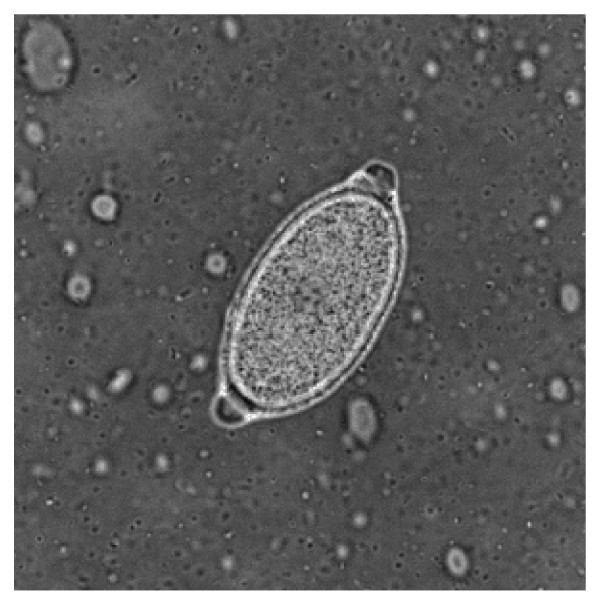
“Eggs of Eucoleus spp. are smaller in both length and width, and have a densely striated wall with a network of anastomosing ridges in E. aerophilus (Figure 3) or of tiny pits in E. boehmi.”
§ Are we paying too much attention to cardio-pulmonary nematodes and neglecting old-fashioned worms like Trichuris vulpis? > Diagnostic challenges
What the sources say
- Not checked yetcites [3] Taylor MA, Coop RL, Wall RL: Veterinary Parasitology. 2007, Blackwell Publishing, 3
- Not checked yetcites [12] Traversa D, Di Cesare A, Conboy G: Canine and feline cardiopulmonary parasitic nematodes in Europe: emerging and underestimated. Parasit Vect. 2010, 3: 62-10.1186/1756-3305-3-62. source
- Not checked yetcites [66] Conboy GA: Helminth parasites of the canine and feline respiratory tract. Vet Clin North Am Small Anim Pract. 2009, 39: 1109-1126. 10.1016/j.cvsm.2009.06.006. source
- Not checked yetcites [67] Sloss MW, Kemp RL, Zajac AM: Veterinary Clinical Parasitology. 1994, Iowa State University Press, Ames, IA
plain- Asserted: passes — The authors put it forward as true.
- Checkable: passes — It can be checked against evidence.
- Load-bearing: passes — The paper’s conclusions depend on it.
- Based: passes — The paper gives a reason why it holds.
It may state two separate claims as one.
None of the sources cited for this claim have been checked yet.
In the paper
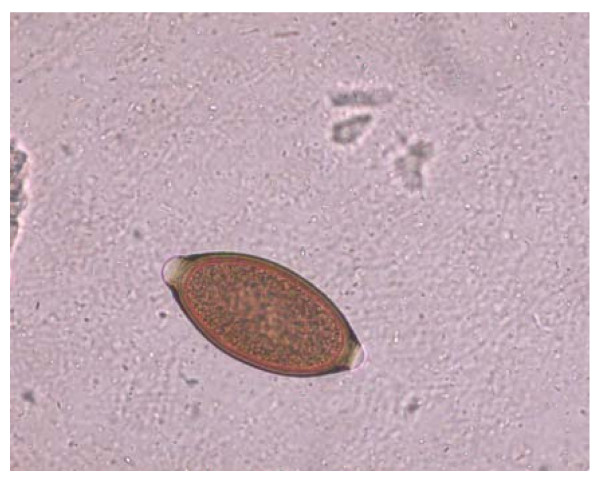
“Eggs of T. vulpis are barrel-shaped, brown-yellowish in color, with a thick and smooth shell and two mucoid polar plugs (Figure 2).”
§ Are we paying too much attention to cardio-pulmonary nematodes and neglecting old-fashioned worms like Trichuris vulpis? > Diagnostic challenges
What the sources say
- Not checked yetcites [3] Taylor MA, Coop RL, Wall RL: Veterinary Parasitology. 2007, Blackwell Publishing, 3
- Not checked yetcites [66] Conboy GA: Helminth parasites of the canine and feline respiratory tract. Vet Clin North Am Small Anim Pract. 2009, 39: 1109-1126. 10.1016/j.cvsm.2009.06.006. source
- Not checked yetcites [67] Sloss MW, Kemp RL, Zajac AM: Veterinary Clinical Parasitology. 1994, Iowa State University Press, Ames, IA
plain- Asserted: passes — The authors put it forward as true.
- Checkable: passes — It can be checked against evidence.
- Load-bearing: unclear — It is unclear whether the paper’s conclusions depend on it.
- Based: passes — The paper gives a reason why it holds.
It may state two separate claims as one.
The paper states this without a source or data behind it here, so there is nothing to check it against. The quote shows it is in the paper.
In the paper
“infected dogs may present immunological alterations, decreased nutritional conversion, and predisposition to secondary pathogens.”
§ Are we paying too much attention to cardio-pulmonary nematodes and neglecting old-fashioned worms like Trichuris vulpis? > Clinical significance in veterinary medicine
hedgedconditional- Asserted: passes — The authors put it forward as true.
- Checkable: passes — It can be checked against evidence.
- Load-bearing: passes — The paper’s conclusions depend on it.
- Based: passes — The paper gives a reason why it holds.
It may state two separate claims as one.
None of the sources cited for this claim have been checked yet.
In the paper
“These whipworms move underneath the epithelium looking for blood and fluids and, in turn, the stylet is introduced into vessels to create blood pools which are ingested [1-3,61].”
§ Are we paying too much attention to cardio-pulmonary nematodes and neglecting old-fashioned worms like Trichuris vulpis? > Clinical significance in veterinary medicine
What the sources say
- Not checked yetcites [1] Soulsby EJL: Helminths, Arthropods and Protozoa of Domesticated Animals. 1982, Bailliere Tindall, 7
- Not checked yetcites [2] Bowman DD: Georgi's Parasitology for Veterinarians. 2002, Saunders Company, 7
- Not checked yetcites [3] Taylor MA, Coop RL, Wall RL: Veterinary Parasitology. 2007, Blackwell Publishing, 3
- Not checked yetcites [61] Burrows RB, Lillis WG: The whipworm as a blood sucker. J Parasitol. 1964, 50: 675-680. 10.2307/3276127. source
plaindirect- Asserted: passes — The authors put it forward as true.
- Checkable: passes — It can be checked against evidence.
- Load-bearing: unclear — It is unclear whether the paper’s conclusions depend on it.
- Based: passes — The paper gives a reason why it holds.
It may state two separate claims as one.
None of the sources cited for this claim have been checked yet.
In the paper
“As whipworm eggs have 1.15 s. gr., then a solution of more than 1.20-1.35 s.gr (e.g. using zinc sulphate) should be selected to allow flotation”
§ Are we paying too much attention to cardio-pulmonary nematodes and neglecting old-fashioned worms like Trichuris vulpis? > Diagnostic challenges
What the sources say
- Not checked yetcites [63] Blagburn B: The elusive whipworm, Trichuris vulpis. Supplement to NAVC Clinician's Brief. 2008, 1-4.
- Not checked yetcites [64] Zajac A, Johnson J, King SE: Evaluation of the importance of centrifugation as a component of zinc sulfate flotation examinations. J Am Anim Hosp Assoc. 2002, 38: 221-224. source
plaindirect- Asserted: passes — The authors put it forward as true.
- Checkable: passes — It can be checked against evidence.
- Load-bearing: fails — The paper’s conclusions may not depend on it.
- Based: passes — The paper gives a reason why it holds.
Probably not a substantial claim. The paper’s conclusions may not depend on it. It may state two separate claims as one.
A conclusion the paper draws from its own results — it cites no other source for it, so there is none to check. The quote shows it is in the paper.
In the paper
“This means that symptoms may occur in the absence of eggs in stool samples examined using copromicroscopic methods, thus leading to a high risk of missed diagnosis.”
§ Are we paying too much attention to cardio-pulmonary nematodes and neglecting old-fashioned worms like Trichuris vulpis? > Diagnostic challenges
hedgeddirect- Asserted: passes — The authors put it forward as true.
- Checkable: passes — It can be checked against evidence.
- Load-bearing: passes — The paper’s conclusions depend on it.
- Based: passes — The paper gives a reason why it holds.
It may state two separate claims as one.
In the paper
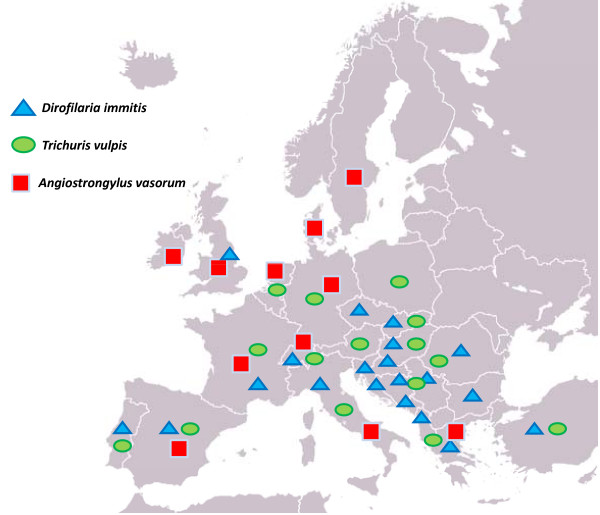
“This is of particular importance if one considers that some areas where T. vulpis is endemic have recently shown a clear spread of D. immitis and A. vasorum [12] and now these nematodes are present in several European countries (Figure 5).”
§ Are we paying too much attention to cardio-pulmonary nematodes and neglecting old-fashioned worms like Trichuris vulpis? > Treatment and control: what can we actually do to tackle whipworms in dogs?
What the sources say
- Not checked yetcites [12] Traversa D, Di Cesare A, Conboy G: Canine and feline cardiopulmonary parasitic nematodes in Europe: emerging and underestimated. Parasit Vect. 2010, 3: 62-10.1186/1756-3305-3-62. source
boostedcorrelational- Asserted: passes — The authors put it forward as true.
- Checkable: passes — It can be checked against evidence.
- Load-bearing: unclear — It is unclear whether the paper’s conclusions depend on it.
- Based: passes — The paper gives a reason why it holds.
It may state two separate claims as one.
In the paper
“While, in general, administration of oral anthelmintics may be difficult in fractious animals or patients that are depressed or moribund [12]”
§ Are we paying too much attention to cardio-pulmonary nematodes and neglecting old-fashioned worms like Trichuris vulpis? > Treatment and control: what can we actually do to tackle whipworms in dogs?
What the sources say
- Not checked yetcites [12] Traversa D, Di Cesare A, Conboy G: Canine and feline cardiopulmonary parasitic nematodes in Europe: emerging and underestimated. Parasit Vect. 2010, 3: 62-10.1186/1756-3305-3-62. source
hedgedconditional- Asserted: passes — The authors put it forward as true.
- Checkable: passes — It can be checked against evidence.
- Load-bearing: fails — The paper’s conclusions may not depend on it.
- Based: passes — The paper gives a reason why it holds.
Probably not a substantial claim. The paper’s conclusions may not depend on it.
A conclusion the paper draws from its own results — it cites no other source for it, so there is none to check. The quote shows it is in the paper.
In the paper
“Given that environmental nematode eggs, including those of T. vulpis, may remain infective even in the coldest months of the year, there is a rationale to use a broad-spectrum parasiticide all year long to achieve a reliable sanitation of dogs against intestinal and heartworms, regardless of the geographic areas in which this approach may be applied.”
§ Are we paying too much attention to cardio-pulmonary nematodes and neglecting old-fashioned worms like Trichuris vulpis? > Treatment and control: what can we actually do to tackle whipworms in dogs?
hedgeddirect- Asserted: passes — The authors put it forward as true.
- Checkable: passes — It can be checked against evidence.
- Load-bearing: passes — The paper’s conclusions depend on it.
- Based: passes — The paper gives a reason why it holds.
Probably not a substantial claim.
- Rests on an assumption: Environmental nematode eggs, including those of T. vulpis, may remain infective even in the coldest months of the year.
A conclusion the paper draws from its own results — it cites no other source for it, so there is none to check. The quote shows it is in the paper.
In the paper
“This suggestion might be applied also to whipworm infection considering some features shared by ascarids and whipworms, e.g. geographical spread of the parasites and clinical importance, and especially the high resistance of their eggs in the environment, which greatly favor re-infections throughout the year.”
§ Are we paying too much attention to cardio-pulmonary nematodes and neglecting old-fashioned worms like Trichuris vulpis? > Treatment and control: what can we actually do to tackle whipworms in dogs?
hedgedconditional- Asserted: passes — The authors put it forward as true.
- Checkable: passes — It can be checked against evidence.
- Load-bearing: passes — The paper’s conclusions depend on it.
- Based: passes — The paper gives a reason why it holds.
Probably not a substantial claim.
- Rests on an assumption: Trichuris vulpis eggs are highly resistant and long-lived, representing a major barrier for controlling trichurosis, especially when they contaminate soil in shady and damp areas.
The paper states this without a source or data behind it here, so there is nothing to check it against. The quote shows it is in the paper.
In the paper
“This molecule is licensed as an oral formulation for treating and controlling whipworms, roundworms and hookworms, reducing the level of infection by A. vasorum, preventing disease by D. immitis and, in some EU countries, controlling some canine mites.”
§ Are we paying too much attention to cardio-pulmonary nematodes and neglecting old-fashioned worms like Trichuris vulpis? > Treatment and control: what can we actually do to tackle whipworms in dogs?
plaindirect- Asserted: passes — The authors put it forward as true.
- Checkable: passes — It can be checked against evidence.
- Load-bearing: unclear — It is unclear whether the paper’s conclusions depend on it.
- Based: passes — The paper gives a reason why it holds.
It may state two separate claims as one.
The paper states this without a source or data behind it here, so there is nothing to check it against. The quote shows it is in the paper.
In the paper
“When associated with the insect growth regulator lufenuron this molecule provides flea prevention and control, as well as treatment and control of intestinal nematodes and prevention of dirofilariosis.”
§ Are we paying too much attention to cardio-pulmonary nematodes and neglecting old-fashioned worms like Trichuris vulpis? > Treatment and control: what can we actually do to tackle whipworms in dogs?
plaindirect- Asserted: passes — The authors put it forward as true.
- Checkable: passes — It can be checked against evidence.
- Load-bearing: unclear — It is unclear whether the paper’s conclusions depend on it.
- Based: passes — The paper gives a reason why it holds.
It may state two separate claims as one.
In the paper
“The prevention and/or control of these emerging nematodes requires the monthly administration of macrocyclic lactones to dogs exposed to mosquito bites for D. immitis and to ingestion of gastropods for A. vasorum (rev. in [12]).”
§ Are we paying too much attention to cardio-pulmonary nematodes and neglecting old-fashioned worms like Trichuris vulpis? > Treatment and control: what can we actually do to tackle whipworms in dogs?
What the sources say
- Not checked yetcites [12] Traversa D, Di Cesare A, Conboy G: Canine and feline cardiopulmonary parasitic nematodes in Europe: emerging and underestimated. Parasit Vect. 2010, 3: 62-10.1186/1756-3305-3-62. source
plaindirect- Asserted: passes — The authors put it forward as true.
- Checkable: passes — It can be checked against evidence.
- Load-bearing: unclear — It is unclear whether the paper’s conclusions depend on it.
- Based: passes — The paper gives a reason why it holds.
It may state two separate claims as one.
None of the sources cited for this claim have been checked yet.
In the paper
“Some broad spectrum macrocyclic lactones (e.g. moxidectin, milbemycin oxime) allow for treatment and, possibly, prevention and/or control, not only of T. vulpis infection and other intestinal helminthes but also of major extra-intestinal nematodes and ectoparasites.”
§ Are we paying too much attention to cardio-pulmonary nematodes and neglecting old-fashioned worms like Trichuris vulpis? > Treatment and control: what can we actually do to tackle whipworms in dogs?
hedgedconditional- Asserted: passes — The authors put it forward as true.
- Checkable: passes — It can be checked against evidence.
- Load-bearing: passes — The paper’s conclusions depend on it.
- Based: passes — The paper gives a reason why it holds.
It may state two separate claims as one.
In the paper
“In this study, as an inappropriate administration or wrong dosage were considered unlikely, the authors hypothesized that the reoccurrence of T. vulpis and other parasite eggs in the faeces of treated animals was probably due to constant re-infections and that the infection risk in privately owned dogs cannot be ruled out despite regular deworming [37].”
§ Are we paying too much attention to cardio-pulmonary nematodes and neglecting old-fashioned worms like Trichuris vulpis? > Treatment and control: what can we actually do to tackle whipworms in dogs?
What the sources say
- Not checked yetcites [37] Sager H, Moret ChS, Grimm F, Deplazes P, Doherr MG, Gottstein B: Coprological study on intestinal helminths in Swiss dogs: temporal aspects of anthelminthic treatment. Parasitol Res. 2006, 98: 333-338. 10.1007/s00436-005-0093-8. source
hedgedconditional- Asserted: passes — The authors put it forward as true.
- Checkable: passes — It can be checked against evidence.
- Load-bearing: passes — The paper’s conclusions depend on it.
- Based: passes — The paper gives a reason why it holds.
Probably not a substantial claim. It may state two separate claims as one.
A conclusion the paper draws from its own results — it cites no other source for it, so there is none to check. The quote shows it is in the paper.
In the paper
“Key points in controlling T. vulpis infection are the long period required by the larvae to reach adulthood and the frequent possibilities of the animals of being re-infected.”
§ Are we paying too much attention to cardio-pulmonary nematodes and neglecting old-fashioned worms like Trichuris vulpis? > Treatment and control: what can we actually do to tackle whipworms in dogs?
plaindirect- Asserted: passes — The authors put it forward as true.
- Checkable: passes — It can be checked against evidence.
- Load-bearing: passes — The paper’s conclusions depend on it.
- Based: fails — The paper may give no reason why it holds.
Probably not a substantial claim. The paper may give no reason why it holds. It may state two separate claims as one.
None of the sources cited for this claim have been checked yet.
In the paper
“The European Scientific Counsel Companion Animal Parasites (ESCCAP) recently advised that annual or twice yearly treatments for Toxocara spp. does not reduce the risk of patent infections, thus a treatment frequency of at least 4 times per year, or even a monthly worm treatment, is a general recommendation [54,76].”
§ Are we paying too much attention to cardio-pulmonary nematodes and neglecting old-fashioned worms like Trichuris vulpis? > Treatment and control: what can we actually do to tackle whipworms in dogs?
What the sources say
- Not checked yetcites [54] Genchi M, Ferroglio T, Traldi G, Passera S, Mezzano G, Genchi C: Fecalizzazione ambientale e rischio parassitario nelle città di Milano e Torino. Professione Veterinaria. 2007, 40: 17-18. (in Italian)
- Not checked yetcites [76] European Scientific Counsel Companion Animal Parasites: Worm Control in Dogs and Cats. ESCCAP Guidelines. 2010, 2
plaindirect- Asserted: passes — The authors put it forward as true.
- Checkable: passes — It can be checked against evidence.
- Load-bearing: fails — The paper’s conclusions may not depend on it.
- Based: passes — The paper gives a reason why it holds.
Probably not a substantial claim. The paper’s conclusions may not depend on it. It may state two separate claims as one.
A conclusion the paper draws from its own results — it cites no other source for it, so there is none to check. The quote shows it is in the paper.
In the paper
“whipworm larvae take about three months to reach adulthood, so patent infections might sometime recur after administration of a single drug dose after the surviving larvae have matured sexually.”
§ Are we paying too much attention to cardio-pulmonary nematodes and neglecting old-fashioned worms like Trichuris vulpis? > Treatment and control: what can we actually do to tackle whipworms in dogs?
hedgedconditional- Asserted: passes — The authors put it forward as true.
- Checkable: passes — It can be checked against evidence.
- Load-bearing: passes — The paper’s conclusions depend on it.
- Based: passes — The paper gives a reason why it holds.
It may state two separate claims as one.
The paper states this without a source or data behind it here, so there is nothing to check it against. The quote shows it is in the paper.
In the paper
“If milbemycin oxime is associated with praziquantel the formulation is licensed for the treatment of intestinal nematodes and tapeworms, as well as the prevention of D. immitis and the reduction of the level of infection by A. vasorum.”
§ Are we paying too much attention to cardio-pulmonary nematodes and neglecting old-fashioned worms like Trichuris vulpis? > Treatment and control: what can we actually do to tackle whipworms in dogs?
plaincorrelational- Asserted: passes — The authors put it forward as true.
- Checkable: passes — It can be checked against evidence.
- Load-bearing: unclear — It is unclear whether the paper’s conclusions depend on it.
- Based: passes — The paper gives a reason why it holds.
It may state two separate claims as one.
The paper states this without a source or data behind it here, so there is nothing to check it against. The quote shows it is in the paper.
In the paper
“This spot-on formulation also provides efficacy against roundworms and hookworms, treatment and prevention of A. vasorum infection, preventative chemoprophylaxis for D. immitis, treatment and prevention of fleas, treatment of lice and control of mites.”
§ Are we paying too much attention to cardio-pulmonary nematodes and neglecting old-fashioned worms like Trichuris vulpis? > Treatment and control: what can we actually do to tackle whipworms in dogs?
plaindirect- Asserted: passes — The authors put it forward as true.
- Checkable: passes — It can be checked against evidence.
- Load-bearing: unclear — It is unclear whether the paper’s conclusions depend on it.
- Based: passes — The paper gives a reason why it holds.
It may state two separate claims as one.
In the paper
“In fact, it cannot be ruled out that the new favorable epidemiological drivers which are influencing the spreading of extra-intestinal parasitic nematodes [12] could favor the occurrence of more common species and, possibly, new associations in different parasitic compositions.”
§ Are we paying too much attention to cardio-pulmonary nematodes and neglecting old-fashioned worms like Trichuris vulpis? > Concluding remarks
What the sources say
- Not checked yetcites [12] Traversa D, Di Cesare A, Conboy G: Canine and feline cardiopulmonary parasitic nematodes in Europe: emerging and underestimated. Parasit Vect. 2010, 3: 62-10.1186/1756-3305-3-62. source
hedgedconditional- Asserted: passes — The authors put it forward as true.
- Checkable: fails — It may be too vague to check against evidence.
- Load-bearing: fails — The paper’s conclusions may not depend on it.
- Based: passes — The paper gives a reason why it holds.
Probably not a substantial claim. It may be too vague to check against evidence. The paper’s conclusions may not depend on it.
A conclusion the paper draws from its own results — it cites no other source for it, so there is none to check. The quote shows it is in the paper.
In the paper
“Other than administrations of an anthelmintic, control of canine trichurosis requires integrated approaches mainly based on hygiene measures.”
§ Are we paying too much attention to cardio-pulmonary nematodes and neglecting old-fashioned worms like Trichuris vulpis? > Treatment and control: what can we actually do to tackle whipworms in dogs?
plaindirect- Asserted: passes — The authors put it forward as true.
- Checkable: passes — It can be checked against evidence.
- Load-bearing: passes — The paper’s conclusions depend on it.
- Based: passes — The paper gives a reason why it holds.
Probably not a substantial claim.
- Rests on an assumption: Trichuris vulpis eggs are highly resistant and long-lived, representing a major barrier for controlling trichurosis, especially when they contaminate soil in shady and damp areas.
In the paper
“even if a recent study has evidenced that T. trichiura and T. suis can be considered to be closely related but genetically different species [91].”
§ Are we paying too much attention to cardio-pulmonary nematodes and neglecting old-fashioned worms like Trichuris vulpis? > Concluding remarks
What the sources say
- Not checked yetcites [91] Cutillas C, Callejón R, de Rojas M, Tewes B, Ubeda JM, Ariza C, Guevara DC: Trichuris suis and Trichuris trichiura are different nematode species. Acta Trop. 2009, 111: 299-307. 10.1016/j.actatropica.2009.05.011. source
plaincorrelational- Asserted: passes — The authors put it forward as true.
- Checkable: passes — It can be checked against evidence.
- Load-bearing: fails — The paper’s conclusions may not depend on it.
- Based: passes — The paper gives a reason why it holds.
Probably not a substantial claim. The paper’s conclusions may not depend on it.
In the paper
“while T. trichiura has been considered as synonymous with Trichuris suis affecting suids [68].”
§ Are we paying too much attention to cardio-pulmonary nematodes and neglecting old-fashioned worms like Trichuris vulpis? > Concluding remarks
What the sources say
- Not checked yetcites [68] Cutillas C, de Rojas M, Ariza C, Ubeda JM, Guevara D: Molecular identification of Trichuris vulpis and Trichuris suis isolated from different hosts. Parasitol Res. 2007, 100: 383-389. 10.1007/s00436-006-0275-z. source
plaincorrelational- Asserted: passes — The authors put it forward as true.
- Checkable: passes — It can be checked against evidence.
- Load-bearing: fails — The paper’s conclusions may not depend on it.
- Based: passes — The paper gives a reason why it holds.
Probably not a substantial claim. The paper’s conclusions may not depend on it.
A conclusion the paper draws from its own results — it cites no other source for it, so there is none to check. The quote shows it is in the paper.
In the paper
“Heterogeneous information on the dissemination of T. vulpis in canine populations in Europe as elsewhere, and the lack of updated epidemiological data in the past decade should prompt further studies.”
§ Are we paying too much attention to cardio-pulmonary nematodes and neglecting old-fashioned worms like Trichuris vulpis? > Concluding remarks
plainconditional- Asserted: passes — The authors put it forward as true.
- Checkable: fails — It may be too vague to check against evidence.
- Load-bearing: passes — The paper’s conclusions depend on it.
- Based: passes — The paper gives a reason why it holds.
Probably not a substantial claim. It may be too vague to check against evidence. It may state two separate claims as one.
In the paper
“Nevertheless, T. suis has proved to infect humans and demonstrated to be a possible new, safe, and efficacious alternative for the management of intestinal diseases in humans.”
§ Are we paying too much attention to cardio-pulmonary nematodes and neglecting old-fashioned worms like Trichuris vulpis? > Concluding remarks
What the sources say
- Not checked yetcites [92] Summers RW, Elliott DE, Urban JF, Thompson R, Weinstock JV: Trichuris suis therapy in Crohn's disease. Gut. 2005, 54: 87-90. 10.1136/gut.2004.041749. source
hedgeddirect- Asserted: passes — The authors put it forward as true.
- Checkable: passes — It can be checked against evidence.
- Load-bearing: unclear — It is unclear whether the paper’s conclusions depend on it.
- Based: passes — The paper gives a reason why it holds.
It may state two separate claims as one.
None of the sources cited for this claim have been checked yet.
In the paper
“Worthy of note is that T. vulpis has been found in urban faecal samples and in kennelled and private dogs from low rates of infection to high values up to 60% [52,57, Traversa unpublished] (Table 1) in central and southern Italian regions where D. immitis and A. vasorum have recently spread [12].”
§ Are we paying too much attention to cardio-pulmonary nematodes and neglecting old-fashioned worms like Trichuris vulpis? > Treatment and control: what can we actually do to tackle whipworms in dogs?
What the sources say
- Not checked yetcites [52,57, Traversa unpublished]
- Not checked yetcites [12] Traversa D, Di Cesare A, Conboy G: Canine and feline cardiopulmonary parasitic nematodes in Europe: emerging and underestimated. Parasit Vect. 2010, 3: 62-10.1186/1756-3305-3-62. source
plaincorrelational- Asserted: passes — The authors put it forward as true.
- Checkable: passes — It can be checked against evidence.
- Load-bearing: unclear — It is unclear whether the paper’s conclusions depend on it.
- Based: passes — The paper gives a reason why it holds.
It may state two separate claims as one.
The authors state this as an assumption.
T. vulpis can infect human beings.
“If one assumes that T. vulpis can infect human beings, the potential public hazard may be concrete in cases of close-contact between humans and companion animals and/or with environmental eggs.”
The paper relies on this without support.
Larval and adult stages of T. vulpis lack susceptibility to some common canine anthelmintics.
“The lack of susceptibility of larval and adult stages of T. vulpis to some common canine anthelmintics makes the choice of the molecule to be used absolutely crucial.”
The paper relies on this without support.
Ivermectin is licensed to prevent canine infection by D. immitis but not angiostrongylosis, and to treat infections with hookworms and ascarids, but not with T. vulpis.
“Ivermectin is licensed to prevent canine infection by D. immitis but not angiostrongylosis, and to treat infections with hookworms and ascarids, but not with T. vulpis.”
The paper relies on this without support.
Trichuris vulpis eggs are highly resistant and long-lived, representing a major barrier for controlling trichurosis, especially when they contaminate soil in shady and damp areas.
“The high resistance and longevity of T. vulpis eggs represent a major barrier for controlling trichurosis, especially when they contaminate soil in shady and damp areas.”
The paper relies on this without support.
Environmental nematode eggs, including those of T. vulpis, may remain infective even in the coldest months of the year.
“environmental nematode eggs, including those of T. vulpis, may remain infective even in the coldest months of the year”
The paper relies on this without support.
Trichuris vulpis has been incriminated as a zoonotic nematode but never ultimately demonstrated to be so.
“Trichuris vulpis has been incriminated as a zoonotic nematode but never ultimately demonstrated to be so”
Claims other papers make about this one
Each is checked against this paper’s own text: does it say what the citing paper says it does?
In the citing paper
“When milbemycin oxime is associated with praziquantel the formulation can be used also for tapeworms, and when associated with lufenuron the combination is effective also against immature fleas [5,6].”
From Fleas infesting pets in the era of emerging extra-intestinal nematodes (2013) · cites this paper as [5]
In the citing paper
“This is particularly true where the risk of heartworm transmission is considered low but pets may be infected with intestinal nematodes (e.g. whipworms, hookworms, roundworms) throughout the year [5,6,149].”
From Fleas infesting pets in the era of emerging extra-intestinal nematodes (2013) · cites this paper as [5]
Citations
Cites
Helminths, Arthropods and Protozoa of Domesticated Animals
Soulsby (1983) · Cited by 2,134
Helminths, Arthropods and Protozoa of Domesticated Animals
Beaver, P. C. (1983) · American Journal of Tropical Medicine and Hygiene · doi:10.4269/ajtmh.1983.32.906 · Cited by 1,448
Veterinary Clinical Parasitology
Benbrook, E. A., & Sloss, M. W. (1955) · Iowa State University Press eBooks · doi:10.31274/isudp.1955.76 · Cited by 1,093
Georgis' Parasitology for Veterinarians
(2021) · Elsevier eBooks · doi:10.1016/c2016-0-02298-2 · Cited by 975
Trichuris suis therapy in Crohn’s disease
Summers, R. W., Elliott, D. E., Urban, J. F., Thompson, R., & Weinstock, J. V. (2005) · Gut · doi:10.1136/gut.2004.041749 · Cited by 762
Bowman, D. D., Hendrix, C. M., Lindsay, D. S., & Barr, S. C. (2002) · doi:10.1002/9780470376805 · Cited by 638
Canine and feline cardiopulmonary parasitic nematodes in Europe: emerging and underestimated
Traversa, D., Di Cesare, A., & Conboy, G. (2010) · Parasites & Vectors · doi:10.1186/1756-3305-3-62 · Cited by 351
Self-citationHeyneman, D., Beaver, P. C., Jung, R. C., & Cupp, E. W. (1984) · Journal of Parasitology · doi:10.2307/3281652 · Cited by 321
(1938) · BMJ · doi:10.1136/bmj.2.4050.407 · Cited by 256
Endoparasites in dogs and cats in Germany 1999 ? 2002
Barutzki, D., & Schaper, R. (2003) · Parasitology Research · doi:10.1007/s00436-003-0922-6 · Cited by 252
Enteric parasitic zoonoses of domesticated dogs and cats
Robertson, I. D., & Thompson, R. C. (2002) · Microbes and Infection · doi:10.1016/s1286-4579(02)01607-6 · Cited by 226
Fontanarrosa, M. F., Vezzani, D., Basabe, J., & Eiras, D. F. (2006) · Veterinary Parasitology · doi:10.1016/j.vetpar.2005.11.012 · Cited by 181
Otranto, D., Capelli, G., & Genchi, C. (2009) · Parasites & Vectors · doi:10.1186/1756-3305-2-s1-s2 · Cited by 177
Helminth Parasites of the Canine and Feline Respiratory Tract
Conboy, G. (2009) · Veterinary Clinics of North America: Small Animal Practice · doi:10.1016/j.cvsm.2009.06.006 · Cited by 166
Preventing Zoonotic Diseases in Immunocompromised Persons: The Role of Physicians and Veterinarians
Grant, S., & Olsen, C. W. (1999) · Emerging Infectious Diseases · doi:10.3201/eid0501.990121 · Cited by 152
Ugbomoiko, U. S., Ariza, L., & Heukelbach, J. (2008) · BMC Veterinary Research · doi:10.1186/1746-6148-4-49 · Cited by 146
Gastrointestinal parasites of shepherd and hunting dogs in the Serres Prefecture, Northern Greece
Papazahariadou, M., Founta, A., Papadopoulos, E., Chliounakis, S., Antoniadou-Sotiriadou, K., & Theodorides, Y. (2007) · Veterinary Parasitology · doi:10.1016/j.vetpar.2007.05.013 · Cited by 146
The population dynamics and epidemiology of intestinal nematode infections
Anderson, R. M. (1986) · Transactions of the Royal Society of Tropical Medicine and Hygiene · doi:10.1016/0035-9203(86)90367-6 · Cited by 142
MacInnis, A. J., Ash, L. R., & Orihel, T. C. (1983) · Journal of Parasitology · doi:10.2307/3281216 · Cited by 120
Sager, H., Moret, C. S., Grimm, F., Deplazes, P., Doherr, M. G., & Gottstein, B. (2006) · Parasitology Research · doi:10.1007/s00436-005-0093-8 · Cited by 116
Helminth and protozoan parasites in dogs and cats in Belgium
Vanparijs, O., Hermans, L., & van der Flaes, L. (1991) · Veterinary Parasitology · doi:10.1016/0304-4017(91)90010-s · Cited by 114
Trichuris vulpis Recovered from a Patient with Chronic Diarrhea and Five Dogs
Dunn, J. J., Columbus, S. T., Aldeen, W. E., Davis, M., & Carroll, K. C. (2002) · Journal of Clinical Microbiology · doi:10.1128/jcm.40.7.2703-2704.2002 · Cited by 112
Trichuris suis and Trichuris trichiura are different nematode species
Cutillas, C., Callejón, R., de Rojas, M., Tewes, B., Ubeda, J. M., Ariza, C., & Guevara, D. C. (2009) · Acta Tropica · doi:10.1016/j.actatropica.2009.05.011 · Cited by 110
Martínez‐Carrasco, C., Berriatua, E., Garijo, M. M., Martínez, J., Alonso, F. D., & de Ybáñez, R. R. (2007) · Zoonoses and Public Health · doi:10.1111/j.1863-2378.2007.01047.x · Cited by 99
Epidemiology: Prevalence of intestinal parasites in dogs in some urban and rural areas of Hungary
Fok, E., Szatmári, V., Busák, K., & Rozgonyi, F. (2001) · Veterinary Quarterly · doi:10.1080/01652176.2001.9695091 · Cited by 98
Zajac, A. M., Johnson, J., & King, S. E. (2002) · Journal of the American Animal Hospital Association · doi:10.5326/0380221 · Cited by 98
Nolan, T. J., & Smith, G. (1995) · Veterinary Parasitology · doi:10.1016/0304-4017(94)00742-u · Cited by 97
Prevalence of canine parasites based on fecal flotation
Blagburn, B. L., Lindsay, D. S., Vaughan, J. L., Rippey, N. S., Wright, J. C., Lynn, R. C., Kelch, W. J., Ritchie, G., & Hepler, D. I. (1996) · Compendium on Continuing Education for The Practicing Veterinarian · Cited by 92
Miró, G., Mateo, M., Montoya, A., Vela, E., & Calonge, R. (2007) · Parasitology Research · doi:10.1007/s00436-006-0258-0 · Cited by 77
Effect of Age and Sex on the Prevalence of Intestinal Parasitism in Dogs
Visco, R. J., Corwin, R. M., & Selby, L. A. (1977) · Journal of the American Veterinary Medical Association · doi:10.2460/javma.1977.170.08.835 · Cited by 76
Canine faecal contamination and parasitic risk in the city of Naples (southern Italy)
Rinaldi, L., Biggeri, A., Carbone, S., Musella, V., Catelan, D., Veneziano, V., & Cringoli, G. (2006) · BMC Veterinary Research · doi:10.1186/1746-6148-2-29 · Cited by 72
Traversa, D., Aste, G., Milillo, P., Capelli, G., Pampurini, F., Tunesi, C., Santori, D., Paoletti, B., & Boari, A. (2010) · Veterinary Parasitology · doi:10.1016/j.vetpar.2009.12.034 · Cited by 71
Self-citationDubin, S., Segall, S., & Martindale, J. (1975) · American Journal of Public Health · doi:10.2105/ajph.65.11.1242 · Cited by 65
Croll, N. A., & Ghadirian, E. (1981) · PubMed · Cited by 63
Blazius, R. D., Emerick, S., Prophiro, J. S., Romão, P. R. T., & Silva, O. S. D. (2005) · Revista da Sociedade Brasileira de Medicina Tropical · doi:10.1590/s0037-86822005000100018 · Cited by 58
A survey on the prevalence of gastrointestinal parasites of dogs in the area of Thessaloniki, Greece
Haralabidis, S. T., Papazachariadou, M. G., Koutinas, A. F., & Rallis, T. S. (1988) · Journal of Helminthology · doi:10.1017/s0022149x00011196 · Cited by 56
Variations in egg size ofTrichuris trichiura
Yoshikawa, H., Yamada, M., Matsumoto, Y., & Yoshida, Y. (1989) · Parasitology Research · doi:10.1007/bf00930964 · Cited by 56
Bianciardi, P., & Otranto, D. (2005) · Veterinary Parasitology · doi:10.1016/j.vetpar.2004.12.020 · Cited by 55
Molecular identification of Trichuris vulpis and Trichuris suis isolated from different hosts
Cutillas, C., de Rojas, M., Ariza, C., Ubeda, J. M., & Guevara, D. (2007) · Parasitology Research · doi:10.1007/s00436-006-0275-z · Cited by 50
The prevalence and intensity of gastrointestinal parasites of dogs in Ile-Ife, Nigeria
Sowemimo, O. A. (2008) · Journal of Helminthology · doi:10.1017/s0022149x08067229 · Cited by 50
Gastrointestinal parasites in dogs from the Island of St. Pierre off the south coast of Newfoundland
Bridger, K. E., & Whitney, H. G. (2009) · Veterinary Parasitology · doi:10.1016/j.vetpar.2009.02.016 · Cited by 41
Itoh, N., Kanai, K., Hori, Y., Hoshi, F., & Higuchi, S. (2009) · Journal of Veterinary Science · doi:10.4142/jvs.2009.10.4.305 · Cited by 41
Parasitas zoonóticos em fezes de cães em praças públicas do município de Itabuna, Bahia, Brasil
Campos Filho, P. C., Barros, L. M., Campos, J. O., Braga, V. B., Cazorla, I. M., Albuquerque, G. R., & Carvalho, S. M. S. (2008) · Revista Brasileira de Parasitologia Veterinária · doi:10.1590/s1984-29612008000400007 · Cited by 39
Visceral larva migrans caused by Trichuris vulpis.
Sakano, T., Hamamoto, K., Kobayashi, Y., Sakata, Y., Tsuji, M., & Usui, T. (1980) · Archives of Disease in Childhood · doi:10.1136/adc.55.8.631 · Cited by 39
Nematode infections in dog breeding kennels in the Netherlands, with special reference to Toxocara
Overgaauw, P. A. M., & Boersema, J. H. (1998) · Veterinary Quarterly · doi:10.1080/01652176.1998.9694827 · Cited by 37
High prevalence of intestinal zoonotic parasites in dogs from Belgrade, Serbia — Short communication
Nikolić, A., Dimitrijević, S., Katić-Radivojević, S., Klun, I., Bobić, B., & Djurković–Djaković, O. (2008) · Acta Veterinaria Hungarica · doi:10.1556/avet.56.2008.3.7 · Cited by 37
Infection of Man with Trichuris Vulpis, the Whipworm of Dogs
Kenney, M., & Yermakov, V. (1980) · American Journal of Tropical Medicine and Hygiene · doi:10.4269/ajtmh.1980.29.1205 · Cited by 36
An Apparent Case of Human Infection with the Whipworm of Dogs, Trichuris vulpis (Froelich, 1789)
Hall, J. E., & Sonnenberg, B. (1956) · Journal of Parasitology · doi:10.2307/3274735 · Cited by 35
Giardia species and other intestinal parasites in dogs in north‐east and central Italy
Capelli, G., Frangipane di Regalbono, A., Iorio, R., Pietrobelli, M., Paoletti, B., & Giangaspero, A. (2006) · Veterinary Record · doi:10.1136/vr.159.13.422 · Cited by 33
Trichuris vulpis Infection in an Indian Tribal Population
Singh, S., Samantaray, J. C., Singh, N., Das, G. B., & Verma, I. C. (1993) · The Journal of Parasitology · doi:10.2307/3283589 · Cited by 33
Visceral larva migrans caused by Trichuris vulpis presenting as a pulmonary mass.
Masuda, Y., Kishimoto, T., Ito, H., & Tsuji, M. (1987) · Thorax · doi:10.1136/thx.42.12.990 · Cited by 32
Altreuther, G., Radeloff, I., LeSueur, C., Schimmel, A., & Krieger, K. J. (2009) · Parasitology Research · doi:10.1007/s00436-009-1492-z · Cited by 27
The Whipworm as a Blood Sucker
Burrows, R. B., & Lillis, W. G. (1964) · The Journal of Parasitology · doi:10.2307/3276127 · Cited by 26
HUMAN CASES OF INFECTION WITH CANINE WHIPWORMS, TRICHURIS VULPIS (FROELICH, 1789), IN JAPAN
KAGEI, N., HAYASHI, S., & Kato, K. (1986) · Japanese Journal of Medical Science and Biology · doi:10.7883/yoken1952.39.177 · Cited by 26
MORPHOLOGICAL CHANGES IN THE INTESTINE OF DOGS, EXPERIMENTALLY INFECTED WITH TRICHURIS VULPIS
Kirkova, Z., & Dinev, I. (2005) · Bulgarian Portal for Open Science · Cited by 25
Silva, A. R., Araújo, J. V., Braga, F. R., Alves, C. D. F., & Frassy, L. N. (2010) · Veterinary Parasitology · doi:10.1016/j.vetpar.2010.04.034 · Cited by 24
Freeman, R. S., Ash, L. R., & Orihel, T. C. (1984) · Journal of Parasitology · doi:10.2307/3281770 · Cited by 24
A survey of patent nematode infestations in dogs
Turner, T., & Pegg, E. (1977) · Veterinary Record · doi:10.1136/vr.100.14.284 · Cited by 23 · cited 1×
“6-3% [44,45] to the more recent data of ~10-30% found in Greece, Argentina, and France [6,33,46].”
BackgroundSeasonal timing of heartworm chemoprophylaxis in the United States.
KNIGHT, D. H., Lok, J. B., & Soll, M. D. (1995) · Cited by 19
[Current prevalence of toxocariasis and other intestinal parasitoses among dogs in Bratislava].
Totková, A., Klobušický, M., Holková, R., & Friedová, L. (2006) · PubMed · Cited by 18
STUDY ON THE PREVALENCE OF TRICHUROSIS IN DIFFERENT CATEGORIES OF DOGS AND WILD CARNIVORES
Kirkova, Z., Georgieva, D., & Raychev, E. (2006) · Bulgarian Portal for Open Science · Cited by 18
Blagburn, B. L., Hendrix, C. M., Lindsay, D. S., Vaughan, J. L., Hepler, D. I., & Wright, J. C. (1992) · American Journal of Veterinary Research · doi:10.2460/ajvr.1991.53.04.513 · Cited by 18
Schnieder, T. (2010) · Journal of Consumer Protection and Food Safety · Cited by 17
Schimmel, A., Altreuther, G., Schroeder, I., Charles, S., Cruthers, L., Kok, D. J., Kraemer, F., & Krieger, K. J. (2009) · Parasitology Research · doi:10.1007/s00436-009-1491-0 · Cited by 16
Infection of Man withTrichuris vulpis,the Whipworm of Dogs
Kenney, M., & Eveland, L. K. (1978) · American Journal of Clinical Pathology · doi:10.1093/ajcp/69.2.199 · Cited by 16
Reconstruction of the genus Trichuris and a short review of its taxonomy and morphology.
Sarwar, M. M. (1959) · Cited by 15
Minvielle, M. C., Pezzani, B. C., & Farjat, J. Á. B. (1995) · PubMed · Cited by 14
Helminth ova in soil from children's playgrounds in Calabar, Nigeria.
Umeche, N. (1989) · PubMed · Cited by 13
Bowman, D. D., Legg, W., & Stansfield, D. (2002) · PubMed · Cited by 12
The transmission period for heartworm in Canada.
Slocombe, J. O. D., Srivastava, B., Surgeoner, G. A., Soll, M. D., & KNIGHT, D. H. (1995) · Cited by 10
[MIXED INFECTION BY TRICHURIS TRICHIURA AND TRICHURIS VULPIS]
Vásquez, T. O., Ignacio Martínez, B., Romero, C. R., Valencia, R., & J, T. Z. (1997) · PubMed · Cited by 10
[The evaluation of soil contamination with geohelminth eggs in the area of Wrocław, Poland].
Perec‐Matysiak, A., Hildebrand, J., Zaleśny, G., Okulewicz, A., & Fatula, A. (2008) · PubMed · Cited by 10
Visceral larva migrans and Trichuris vulpis.
Coulter, J. B., Jewsbury, J. M., Beesley, W. N., & Bailey, W. (1981) · Archives of Disease in Childhood · doi:10.1136/adc.56.5.406 · Cited by 9
Corrêa, L. D. L., Corrêa, M. O. Á., Vaz, J. F., Silva, M. I. P. G. D., Silva, R. M. D., & Yamanaka, M. T. (1980) · Revista do Instituto Adolfo Lutz · doi:10.53393/rial.1980.40.36974 · Cited by 9
Anthelmintic Efficacy of Milbemycin Oxime against Trichuris vulpis in Dogs.
HORII, Y., OTSUKA, Y., TATEISHI, M., MAKIMURA, S., & KUSANO, K. (1998) · Journal of Veterinary Medical Science · doi:10.1292/jvms.60.271 · Cited by 8
Zanzani, S. A., Bonassi, L., Maffi, S., & Manfredi, M. T. (2010) · Cited by 8
Occurrence of large eggs of Trichuris trichiura in human faeces.
Corrêa, L., YAMANAKA, M., Corrêa, M. O. A., da Silva, M. I. P. G., & da Silva, R. M. (1980) · LA Referencia (Red Federada de Repositorios Institucionales de Publicaciones Científicas) · doi:10.53393/rial.1980.40.36970 · Cited by 4
[Prevalence of intestinal nematodes in dogs from Warsaw region].
Turkowicz, M. J., & Cielecka, D. (2002) · PubMed · Cited by 4
Survey of Toxocara canis eggs in canine faeces collected from urban green areas of Florence
Papini, R. A., Campisi, E., Faggi, E., Pini, G. A., Fiaschi, A., & Mancianti, F. (2008) · CINECA IRIS Institutial research information system (University of Pisa) · Cited by 3
[The evaluation of Trichuris vulpis infection of stray dogs in Kraków area].
Kornaś, S. A., Nowosad, B., & Skalska, M. (2002) · PubMed · Cited by 2
Research works printed but not linked: 16
- Bowman DD: Georgi's Parasitology for Veterinarians. 2002, Saunders Company, 7
- Bowman DD: Toxocara canis and Trichuris vulpis - Common dog parasites. Central Veterinary Conference Proceedings. 2009
- Wagner ED: Observations on "large" Trichuris eggs in man. Proc Helminthol Soc Wash. 1979, 46: 155-157.
- Franc M, Cadiergues MC, Marchand A, Bourdoiseau G, Bussieras J: Intestinal parasitism in dogs and cats. Results of an epidemiological survey in France. Rév Méd Vét. 1997, 148: 247-250.
- Crespo M, Rosa F, Morgado M, Ferreirinha D, Cerejo A, Madeira M: Intestinal Parasites in Dogs from the Center-west of Portugal. Proceedings of the11th International Congress of Parasitology (ICOPA XI). 2006, Glasgow, Scotland, 311-314.
- Georgieva D, Ivanov A, Prelesov P: Studies on the parasitic fauna in stray dogs in the Stara Zagora region. Bulg J Vet Med. 1999, 2: 121-124.
- Poglayen G, Giannetto S, Macrì B, Garippa G, Scala A, Cambosu C, Giangaspero A, Paoletti B, Montauti AE, Traldi G, Habluetzel A: Canine zoonosis by enviromental faecalization. Proceedings of the XXI SoIPa Congress. 2000, Padova, Italy, 220-
- Lia R, La Montanara C, Leone N, Pantone A, Llazari A, Puccini V: Canine helminthic fauna and environmental faecalization in the town of Bari. Proceedings of the XXII SoIPa Congress. 2002, Torino, Italy, 92-
- Genchi M, Ferroglio T, Traldi G, Passera S, Mezzano G, Genchi C: Fecalizzazione ambientale e rischio parassitario nelle città di Milano e Torino. Professione Veterinaria. 2007, 40: 17-18. (in Italian)
- Zanzani S, Di Cerbo AR, Musella V, Rinaldi L, Maghenzani C, Mandredi MT: Environmental faecalization in Milan, northern Italy: prevalence of canine intestinal parasites and evaluation of health risk. Proceedings of the XXVI SoIPa Congress. 2010, Perugia, Italy, 342-
- Perrucci S, Glorioso A, Tarantino C: Parassitosi nei canili e nei gattili. Obiettivi e Documenti Veterinari. 2001, 22: 37-40.
- Blagburn B: The elusive whipworm, Trichuris vulpis. Supplement to NAVC Clinician's Brief. 2008, 1-4.
- Bowman DD: Respiratory System Parasites of the Dog and Cat (Part I): Nasal Mucosa and Sinuses, and Respiratory Parenchyma. Companion and Exotic Animal Parasitology, International Veterinary Information Service. 2000
- Anonymous: Evaluation of the Effectiveness of a Combination of Imidacloprid and Moxidectin against Natural Infections with Trichuris vulpis in Dogs. 2006, Freedom of information summary, Advantage Multi for dogs, NADA 141- 251, Federal Drug Administration, 25-27.
- EMEA: Advocate Public Assessment report 2009WC500060915. 2009, 44-45.
- European Scientific Counsel Companion Animal Parasites: Worm Control in Dogs and Cats. ESCCAP Guidelines. 2010, 2
Cited by
Sorted by citations
Pet roundworms and hookworms: A continuing need for global worming
Traversa, D. (2012) · Parasites & Vectors · doi:10.1186/1756-3305-5-91 · Cited by 221
Self-citationEnvironmental contamination by canine geohelminths
Traversa, D., di Regalbono, A. F., Cesare, A. D., Torre, F. L., Drake, J., & Pietrobelli, M. (2014) · Parasites & Vectors · doi:10.1186/1756-3305-7-67 · Cited by 226
Self-citationOtranto, D., Cantacessi, C., Dantas‐Torres, F., Brianti, E., Pfeffer, M., Genchi, C., Gubertì, V., Capelli, G., & Deplazes, P. (2015) · Veterinary Parasitology · doi:10.1016/j.vetpar.2015.04.020 · Cited by 194
Intestinal and lung parasites in owned dogs and cats from central Italy
Riggio, F., Mannella, R., Ariti, G., & Perrucci, S. (2013) · Veterinary Parasitology · doi:10.1016/j.vetpar.2012.11.026 · Cited by 162
Nejsum, P. L., Betson, M., Bendall, R. P., Thamsborg, S. M., & Stothard, J. R. (2012) · Journal of Helminthology · doi:10.1017/s0022149x12000193 · Cited by 140
Metadata
- Authors
- Traversa, D.
- Affiliations
- University of Teramo (IT)
- Corresponding author
- Traversa, Donato
- ORCID
- Traversa, Donato
- Venue
- Parasites & Vectors
- Published
- 2011-03-08
- Volume
- 4
- Issue
- 1
- Pages
- 32-32
- ISSN
- 1756-3305 (ISSN-L)
- PMC
- PMC3063211
- OpenAlex
- W2160934224
- Semantic Scholar
- 6fcb491633d71a17b4f2c8d44429fcebfb492922
- Cited by
- 148
- References
- 82
- Citations by year
- 2026: 10 · 2025: 8 · 2024: 11 · 2023: 12 · 2022: 19 · 2021: 13 · 2020: 6 · 2019: 5 · 2018: 8 · 2017: 9 · 2016: 6 · 2015: 17 · 2014: 8 · 2013: 8 · 2012: 8
- FWCI
- 1.51
- Type
- journal article
- Language
- en
- Open access
- gold
- doi.org
- Licence
- Locations
- Parasites & Vectors (publishedVersion, cc-by)
- PubMed Central (publishedVersion, cc-by)
- PubMed (publishedVersion)
- DOAJ (DOAJ: Directory of Open Access Journals) (submittedVersion, cc-by-sa)
- UniTERAMO Research Catalog (University of Teramo) (submittedVersion)
- Topics
- Life Sciences › Immunology and Microbiology › Parasitology › Helminth infection and control
- Life Sciences › Immunology and Microbiology › Parasitology › Parasitic infections in humans and animals
- Life Sciences › Immunology and Microbiology › Parasitology › Parasites and Host Interactions
- Keywords
- Trichuris vulpis, intestinal nematodes, zoonoses, diagnosis, treatment, stray dogs
- MeSH terms
- Animals, Anthelmintics, Dog Diseases, Dogs, Trichuriasis, Trichuris, Zoonoses
About these checks
Registry, retraction, Cites and statistics results are computed, not judged, with one exception: a printed reference that no index lists is read once by a model before it counts as a citation error. Claims are extracted by a model and kept only when their quote appears verbatim in the text; each cited source is then checked, with a model’s help, for whether it says what the claim relies on. Those verdicts can be wrong — read the claim’s quote and the cited source before relying on one.
A language model drew the claims from the paper on 2026-10-10, under version 3 of the claim definition (model deepseek-v4.1-flash, prompt extract-v3).
A second model labelled each claim on 2026-10-10 (model jev-1.13-20260917, definition revision gold-guideline-v0.2).
Cited sources are checked with a language model’s help (gpt-6-sol).
Statistics and arithmetic are recomputed, not judged.
Confidence bands are shown only for fields calibrated on our annotated test set. None is calibrated yet, so no band is shown.
What counts as a claim ›How we measure confidence ›How we check this ›
Are you an author, or do you see a problem with this page? Request a review
