

Quantifying similarity between motifs
Open accessThe DOI matches its Crossref record; 25 of the 25 references it cites were found in a registry or an index.
Abstract
A common question within the context of de novo motif discovery is whether a newly discovered, putative motif resembles any previously discovered motif in an existing database. To answer this question, we define a statistical measure of motif-motif similarity, and we describe an algorithm, called Tomtom, for searching a database of motifs with a given query motif. Experimental simulations demonstrate the accuracy of Tomtom's E values and its effectiveness in finding similar motifs.
Overview
The claims and statistics of this paper haven’t been checked yet.
Free: it reads the open-access text and checks the first 5 claims that cite a source we can check. Create a free account to check every claim.
Integrity signals
Registry
Cites
Statistics
Figures
Verification
Claims the paper makes
The claims and statistics of this paper haven’t been checked yet.
Free: it reads the open-access text and checks the first 5 claims that cite a source we can check. Create a free account to check every claim.
Claims other papers make about this one
Each is checked against this paper’s own text: does it say what the citing paper says it does?
The cited source says what the claim attributes to it.
In the citing paper
“with four examples shown in Fig. 3B, the first two having a significant match in PlantTFDB (20) [with q-value <0.05 in Tomtom (38)].”
From DNA language models are powerful predictors of genome-wide variant effects (2023) · cites this paper as [38]
The check wasn’t confident either way, so it gives no verdict — never disputed.
In the citing paper
“The shared STAT3 bound regions were annotated with the nearest gene by 'annotatePeaks' from HOMER v4.10 (Gupta et al., 2007), yielding 475 unique genes.”
From CDK8 fine-tunes IL-6 transcriptional activities by limiting STAT3 resident time at the gene loci (2020) · cites this paper as Gupta et al., 2007
Experimental — accuracy not yet measured
Self-check
Percentages, sums and reported differences re-computed from the paper’s own numbers.
The self-check needs the paper’s full text.
Citations
Cites
The meaning and use of the area under a receiver operating characteristic (ROC) curve.
Hanley, J. A., & McNeil, B. J. (1982) · Radiology · doi:10.1148/radiology.143.1.7063747 · Cited by 21,856 · cited 1×
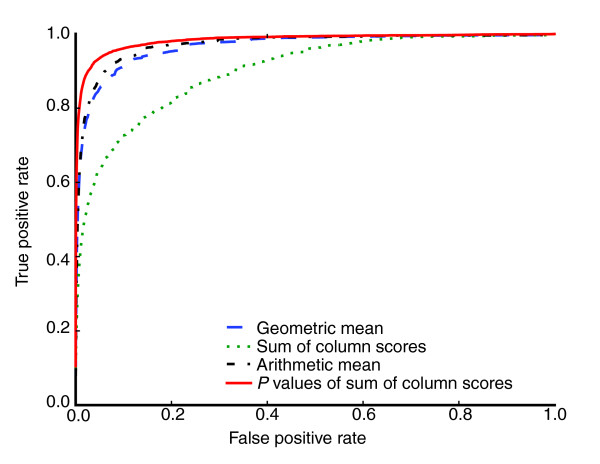
“From this ranked list, we compute a receiver operating characteristic (ROC) curve [23], which plots the percentage of positive pairs as a function of the percentage of negative pairs as we traverse the ranked list.”
WebLogo: A Sequence Logo Generator: Figure 1
Crooks, G. E., Hon, G., Chandonia, J.-M., & Brenner, S. E. (2004) · Genome Research · doi:10.1101/gr.849004 · Cited by 12,386
Fitting a mixture model by expectation maximization to discover motifs in biopolymers.
Bailey, T. L., & Elkan, C. (1994) · PubMed · Cited by 5,806
Self-citationJASPAR: an open-access database for eukaryotic transcription factor binding profiles
Sandelin, A. (2004) · Nucleic Acids Research · doi:10.1093/nar/gkh012 · Cited by 1,790
Regulation of Inducible and Tissue-Specific Gene Expression
Maniatis, T., Goodbourn, S., & Fischer, J. A. (1987) · Science · doi:10.1126/science.3296191 · Cited by 1,554 · cited 1×
“For example, the regulation of transcription requires sequence-specific binding of transcription factors to certain cis-acting motifs, which typically are located upstream of transcriptional start sites [1].”
Assembly of Cell Regulatory Systems Through Protein Interaction Domains
Pawson, T., & Nash, P. (2003) · Science · doi:10.1126/science.1083653 · Cited by 1,422
Assessing computational tools for the discovery of transcription factor binding sites
Tompa, M., Li, N., Bailey, T. L., Church, G. M., De Moor, B., Eskin, E., Favorov, A. V., Frith, M. C., Fu, Y., Kent, W. J., et al. (2005) · Nature Biotechnology · doi:10.1038/nbt1053 · Cited by 1,268 · cited 1×
“A wide variety of statistical methods have been developed to identify sequence motifs in an unsupervised manner from collections of functionally related sequences [3].”
Self-citationTRANSFAC: an integrated system for gene expression regulation
Wingender, E. (2000) · Nucleic Acids Research · doi:10.1093/nar/28.1.316 · Cited by 1,239 · cited 3×
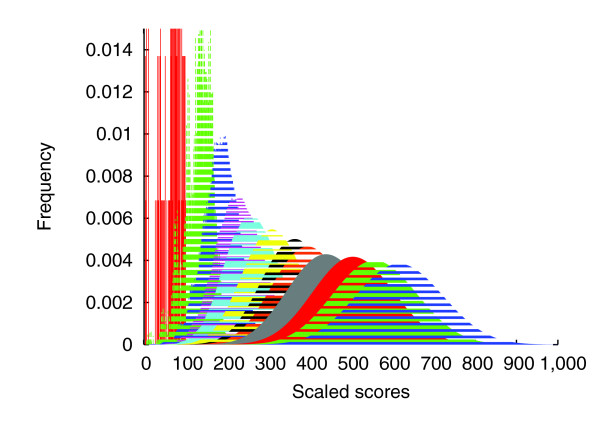
“The figure shows a set of PDFs for a particular query motif of length 12, computed relative to the TRANSFAC database.”
InfluentialA Survey of Exact Inference for Contingency Tables
Agresti, A. (1992) · Statistical Science · doi:10.1214/ss/1177011454 · Cited by 1,097
Hughes, J. D., Estep, P. W., Tavazoie, S., & Church, G. M. (2000) · Journal of Molecular Biology · doi:10.1006/jmbi.2000.3519 · Cited by 1,010
Cited by
Items 1,001–1,013 of 1,013
Vazquez, A. L., Petrolati, L. A., Legris, M., Dessimoz, C., Lampugnani, E. R., Glover, N., & Fankhauser, C. (2023) · The Plant Cell · doi:10.1093/plcell/koad096 · Cited by 14
“To compare motifs C and F and report a statistical measure of motif similarity, we used the Tomtom webserver (https:// meme-suite.org/meme/tools/tomtom) (Gupta et al. 2007).”
MethodPredicting the impact of sequence motifs on gene regulation using single-cell data
Hepkema, J., Lee, N. K., Stewart, B. J., Ruangroengkulrith, S., Charoensawan, V., Clatworthy, M. R., & Hemberg, M. (2023) · Genome biology · doi:10.1186/s13059-023-03021-9 · Cited by 16
“The motifs are aligned to MEME-formatted motif database files from CIS-BP [33] using the Tomtom tool from the MEME suite [64] using the argument - thresh 0.05.”
MethodInfluentialIdentifying Cis-Regulatory Changes Involved in the Evolution of Aerobic Fermentation in Yeasts
Lin, Z., Wang, T., Tsai, B.-S., Wu, F.-T., Yu, F.-J., Tseng, Y.-J., Sung, H., & Li, W. (2013) · Genome Biology and Evolution · doi:10.1093/gbe/evt067 · Cited by 14
“base of known yeast motifs (Gupta et al. 2007), and it is”
BackgroundMethodInfluentialMahmood, K., Højland, D. H., Asp, T., & Kristensen, M. (2016) · PLoS ONE · doi:10.1371/journal.pone.0151434 · Cited by 14
“has been employed on the significant motifs found by MEME to find a known transcription factor [56].”
MethodCholesterol efflux protein, ABCA1, supports anticancer functions of myeloid immune cells
Bendre, S. V., Wang, Y., Hajyousif, B., K C, R., Bhogale, S. G., Pradeep, D., Krawczynska, N., Schane, C. P., Weisser, E., Singh, A., et al. (2026) · Science Advances · doi:10.1126/sciadv.adx5490 · Cited by 11
Langer, B. E., Roscito, J. G., & Hiller, M. (2018) · Molecular Biology and Evolution · doi:10.1093/molbev/msy187 · Cited by 8
“We also tested the robustness of REforge to variation in the sets of input TF motifs by selecting three sets of 15 additional TFs with motifs that are different from the motifs of the five activator TFs (TomTom similarity score cutoff of 0.01, supplementary table 1, Supplementary Material online).”
MethodInfluentialValencia, J. D., & Hendrix, D. A. (2023) · PLOS Computational Biology · doi:10.1371/journal.pcbi.1011526 · Cited by 6
Valencia, J. D., & Hendrix, D. A. (2023) · doi:10.1101/2023.04.03.535488 · Cited by 6
Mukhopadhyay, S., Javed, M. A., Wu, J., & Pérez-López, E. (2024) · doi:10.1101/2024.09.03.609900 · Cited by 6
Mukhopadhyay, S., Javed, M. A., Wu, J., & Perez-Lopez, E. (2025) · eLife · doi:10.7554/elife.105185 · Cited by 5
CDK8 fine-tunes IL-6 transcriptional activities by limiting STAT3 resident time at the gene loci
Martinez-Fabregas, J., Wang, L., Pohler, E., Cozzani, A., Kazemian, M., Mitra, S., & Moraga, I. (2020) · doi:10.1101/2020.03.19.998351 · Cited by 54
A comprehensive evaluation of self-attention for detecting regulatory feature interactions
Jabeen, S., & Ben-Hur, A. (2026) · NAR Genomics and Bioinformatics · doi:10.1093/nargab/lqaf209 · Cited by 1
“The resulting PWMs are then compared against the known motif databases (JASPAR [23] (simulated datasets), Human CISBP [25] (for the human promoters dataset) and Arabidopsis DAP [26]) us-ing the TomTom tool [27], and the top matches are assigned to each filter.”
Bhogale, S., Seward, C., Stubbs, L., & Sinha, S. (2023) · doi:10.1101/2023.11.09.565900 · Cited by 1
“We compared these motifs to experimentally characterized TF motifs in mouse, using the TOMTOM software (42), and noted matching TFs ( Figure 4 ) that were also supported by high expression in the relevant cell types according to our expression data (see Methods).”
Method
Metadata
- Authors
- Gupta, S., Stamatoyannopoulos, J. A., Bailey, T. L., & Noble, W. S.
- Affiliations
- University of Washington (US)
- The University of Queensland (AU)
- Corresponding author
- Noble, William Stafford
- Venue
- Genome Biology
- Published
- 2007-02-26
- Volume
- 8
- Issue
- 2
- Pages
- R24-R24
- ISSN
- 1465-6906 (ISSN-L)
- 1474-760X
- PMC
- PMC1852410
- OpenAlex
- W2103777723
- Cited by
- 2,058
- References
- 25
- Citations by year
- 2026: 153 · 2025: 185 · 2024: 199 · 2023: 152 · 2022: 185 · 2021: 202 · 2020: 150 · 2019: 129 · 2018: 111 · 2017: 98 · 2016: 91 · 2015: 81 · 2014: 94 · 2013: 74 · 2012: 62
- FWCI
- 6.22
- Type
- journal article
- Language
- en
- Open access
- gold
- doi.org
- Licence
- cc-by
- creativecommons.org/licenses/by/2.0/ (tdm)
- creativecommons.org/licenses/by/2.0/ (vor)
- Locations
- Genome biology (publishedVersion, cc-by)
- PubMed Central (publishedVersion, cc-by)
- PubMed (publishedVersion)
- Topics
- Life Sciences › Biochemistry, Genetics and Molecular Biology › Molecular Biology › Genomics and Chromatin Dynamics
- Life Sciences › Biochemistry, Genetics and Molecular Biology › Molecular Biology › Genomics and Phylogenetic Studies
- Physical Sciences › Mathematics › Theoretical Computer Science › Algorithms and Data Compression
- Keywords
- motif similarity, de novo motif discovery, TomTom, statistical significance, E-value, sequence motifs
- MeSH terms
- Algorithms, Software, Sequence Homology, Computational Biology, Amino Acid Motifs, Databases, Genetic
About these checks
Registry, retraction, Cites and statistics results are computed, not judged, with one exception: a printed reference that no index lists is read once by a model before it counts as a citation error. Claims are extracted by a model and kept only when their quote appears verbatim in the text; each cited source is then checked, with a model’s help, for whether it says what the claim relies on. Those verdicts can be wrong — read the claim’s quote and the cited source before relying on one.
Statistics and arithmetic are recomputed, not judged.
Confidence bands are shown only for fields calibrated on our annotated test set. None is calibrated yet, so no band is shown.
What counts as a claim ›How we measure confidence ›How we check this ›
Are you an author, or do you see a problem with this page? Request a review
Data sources
Bibliographic data: Semantic Scholar, OpenAlex, Crossref.
Contains information from the Semantic Scholar Academic Graph Datasets, made available under the ODC Attribution License (ODC-BY 1.0).
Semantic Scholar’s data is described in: Kinney, R., et al. (2023). The Semantic Scholar Open Data Platform. arXiv:2301.10140.
