

Association between time perspective and metacognition among Lebanese adults: the mediating role of mindfulness
Open accessThe DOI matches its Crossref record; 82 of the 82 references it cites were found in a registry or an index; 17 of the 84 sources its claims cite were checked for support.
Abstract
Background: Mindfulness may serve as a component of metacognitive beliefs and can also be viewed as a form of time perspective. The interplay between time perspective and metacognitive beliefs remains understudied. Both aspects, however, display considerable stability over time and significantly influence an individual’s life and well-being. Lebanon, marked by its diverse and complex history, struggles with various political, social, and economic challenges. This study offers a valuable and unprecedented opportunity to examine these connections within a distinct cultural context, shedding light on the unique experiences of the Lebanese population. Therefore, our research aims to investigate the connection between time perspective and metacognition, with a focus on the role of mindfulness as a mediator. Methods: This cross-sectional study was conducted from August to November 2022 and involved participants from various regions of Lebanon. The questionnaire included sociodemographic data and scales such as the Arabic versions of the 15-item Short Form of the Zimbardo Time Perspective Inventory, the Metacognitions Questionnaire, the Freiburg Mindfulness Inventory and the Acceptance and Action Questionnaire (AAQ-2). Results: Our investigation recruited 423 participants. The analysis showed that individuals with a positive stance on their past, a hedonistic present, or a future-oriented outlook exhibited heightened levels of mindfulness. This elevated state of mindfulness, in turn, demonstrated a significant link to augmented cognitive self-consciousness (An increased introspection into one’s own thoughts). We also observed a direct association between a future-focused time perspective and high scores of cognitive self-consciousness. Furthermore, mindfulness emerged as a crucial mediator in the relationships between time perspectives and negative beliefs about the danger of worry. Similarly, individuals with a positive view on their past, a hedonistic present orientation, or a future-focused mindset demonstrated elevated levels of mindfulness, which was correlated with less negative beliefs about the danger of worry. Notably, a positive past perspective was directly associated with less negative views on worry and the subsequent loss of control, whereas higher future focused time perspective scores was significantly and directly associated with more negative beliefs about worry, whereas more future focused time perspective was significantly and directly associated with more negative beliefs about worry. Conclusion: Our findings found several meaningful associations between our variables, but it primarily underscored the significance of considering distinct subcomponents within mindfulness and psychopathological metacognition that may overlap, shedding light on their differential impacts on psychological well-being. We were also able to mirror the dual pathway theory of time perspective suggested in previous studies. These insights carry notable implications for the development and refinement of mindfulness-based and metacognitive interventions, emphasizing the need for tailored approaches that consider varying time perspectives. Continued investigation in this area promises to advance our understanding of these constructs and refine their practical applications in mental health interventions and well-being enhancement strategies. © 2023, The Author(s).
Overview
CoChat Summary
## TL;DR
This cross-sectional survey of 423 Lebanese adults found that time perspective was associated with metacognitive beliefs, and that mindfulness mediated several of these links. The strongest pattern was that past positive, present hedonistic, and future-focused orientations were associated with higher mindfulness, which in turn related to less negative beliefs about worry, while future focus also showed a direct association with more negative worry beliefs.
## Key findings
- The study recruited 423 participants; the sample had a mean age of 29.19 ± 12.54 years and 68.6% females.
- In bivariate analyses, higher past positive (r = −0.12; p = 0.017) and future focused (r = −0.18; p < 0.001) time perspectives were correlated with less lack of cognitive confidence; higher present hedonistic time perspective (r = 0.12; p = 0.016) was correlated with more positive beliefs about worry.
- Higher mindfulness was correlated with less lack of cognitive confidence (r = −0.11; p = 0.020), less negative beliefs about uncontrollability and danger of worry (r = −0.32; p < 0.001), and more cognitive self-consciousness (r = 0.15; p = 0.002).
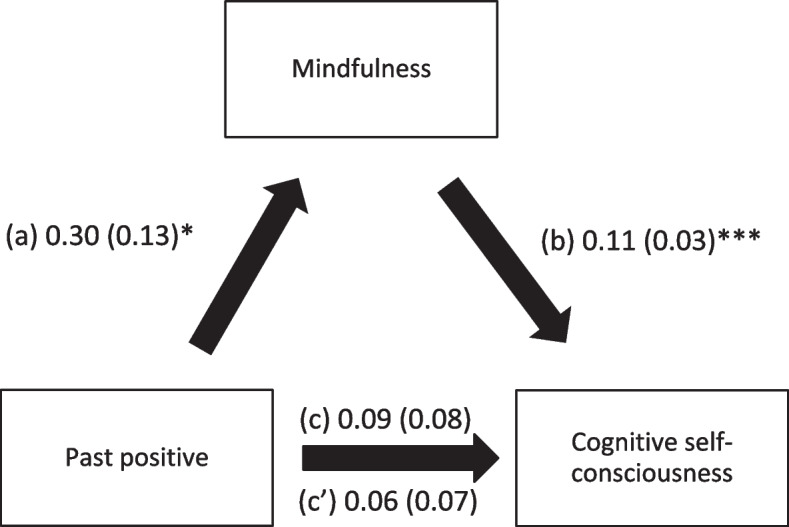
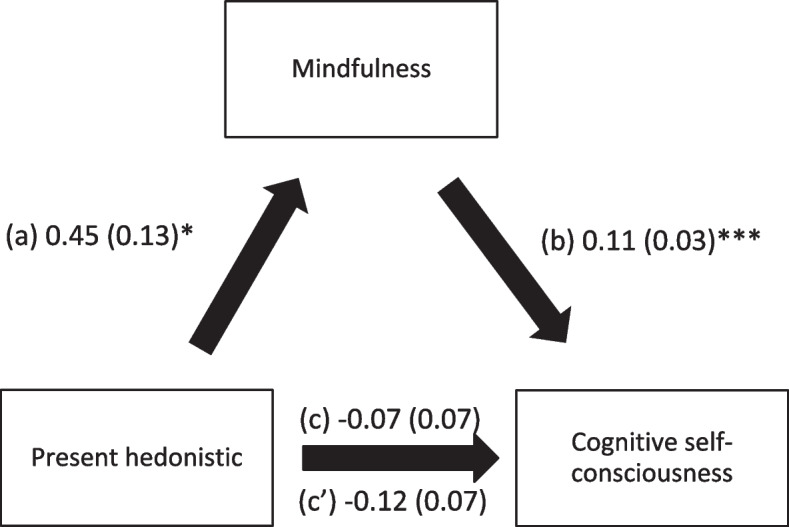
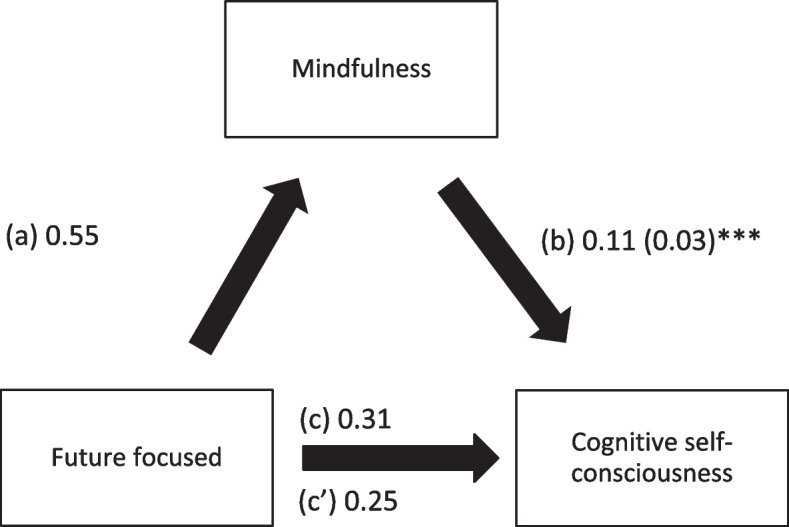
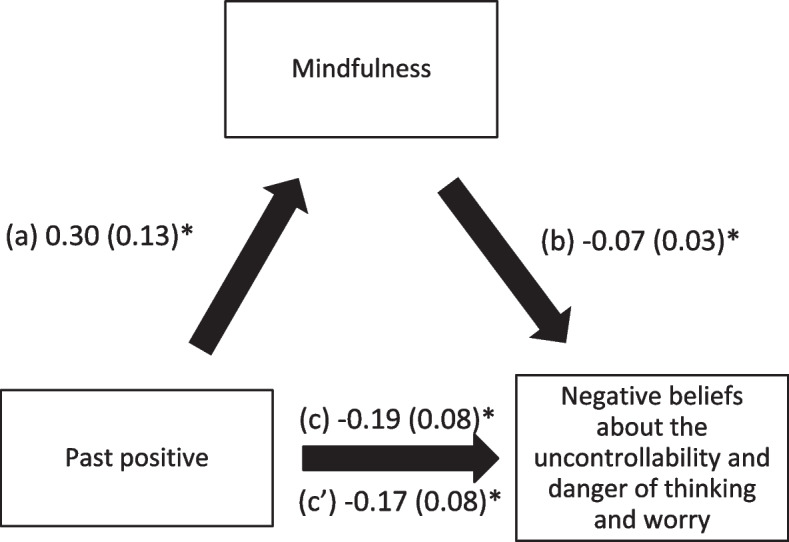
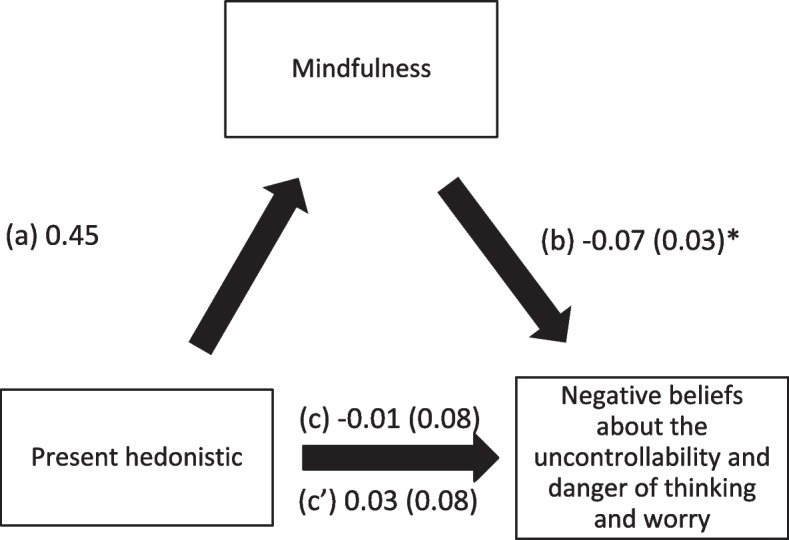
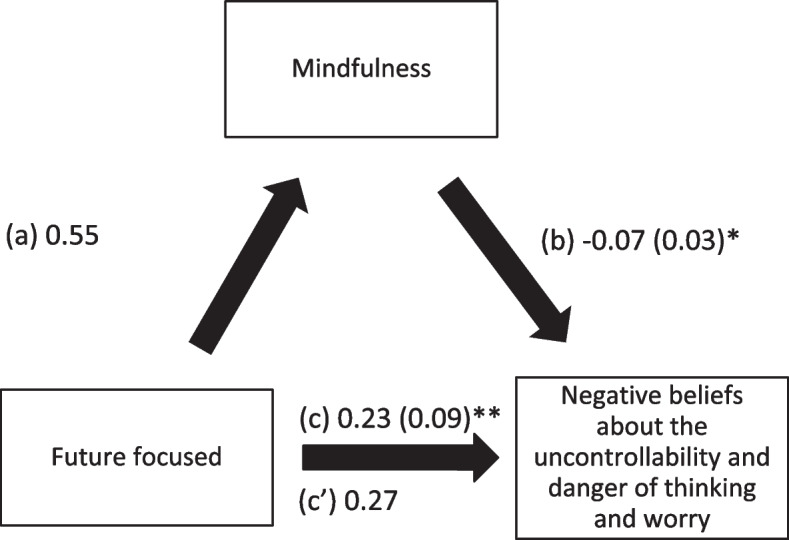
- In mediation analyses, mindfulness mediated the associations between past positive, present hedonistic, and future focused time perspectives and both cognitive self-consciousness and negative beliefs about the uncontrollability and danger of worry; future focused time perspective was the only one with a direct association with higher cognitive self-consciousness, and past positive was directly associated with less negative beliefs about worry while future focused was directly associated with more negative beliefs about worry.
## Methods
- Design: Cross-sectional study conducted August to November 2022 in various regions of Lebanon; participants were recruited online using respondent-driven and snowball sampling.
- Sample/data: 423 Lebanese adults, required to be at least 18 years old and Lebanese citizens; questionnaire included sociodemographics plus Arabic versions of the ZTPI-15, MCQ-30, Freiburg Mindfulness Inventory, and AAQ-2.
- Analysis: Bivariate tests used Student t tests and Pearson correlations; mediation was tested with PROCESS macro v3.4, model 4, adjusting for variables with p < 0.25 in bivariate analysis; p < 0.05 was significant.
## Limitations
- The paper states the sample may not be representative because of potential selection bias, and that the sample was relatively young and overrepresented by women, limiting generalizability.
- The authors state that responses were self-reported, were not evaluated by a health professional, and may be affected by information bias, social desirability bias, and participant recall bias.
- The study’s cross-sectional design does not allow establishment of causality or temporality; the authors also note that using mindfulness as a single mediator may oversimplify the relationship and that some measures may not capture the full range of the constructs.
- The text makes evident that the fatalistic subscale had weak internal consistency (ω = 0.43), so results involving that subscale should be interpreted cautiously.
Model-written summary. Check it against the paper before relying on it.
Integrity signals
Registry
Cites
Statistics
Figures
Verification
Claims the paper makes
8 Valid · 7 Not valid · 34 Not checked · 49 Own results and interpretations
The cited sources that could be checked couldn’t confirm or dispute this claim.
In the paper
“These incongruent findings imply that the Future time orientation, like the Present Hedonistic time perspective, operates on well-being most likely through two different routes described as the “Dual Pathway Theory” [33].”
§ Association between time perspective and metacognition among Lebanese adults: the mediating role of mindfulness > Discussion The primary objective of this study was to investigate the relationship between time perspective, mindfulness, and pathological metacognitive processes, with a specific emphasis on the mediating role of mindfulness in this relationship. The analysis revealed several noteworthy findings, some of which were anticipated while others were surprising. It was observed that individuals who held a positive view of their past, prioritized hedonistic experiences in the present, or had a future-oriented mindset exhibited higher levels of mindfulness. This heightened state of mindfulness, in turn, displayed a significant connection to increased cognitive self-consciousness, indicating a greater introspective understanding of one’s own thoughts. Furthermore, there was a direct link observed between a future-focused perspective and heightened cognitive self-awareness. This finding may seem counterintuitive, as typically mindfulness would not be expected to be associated with a potentially problematic metacognitive process. Additionally, mindfulness emerged as a pivotal factor mediating the relationships between different time perspectives and negative beliefs regarding the dangers of worrying. Likewise, individuals with positive outlooks on their past, a focus on present pleasure, or a forward-looking mindset exhibited elevated levels of mindfulness, which was inversely related to reduced negative beliefs about the dangers and consequences of worrying. Notably, a positive view of the past was directly linked to holding less negative attitudes towards worrying and the subsequent feeling of losing control. Previous studies found a significant correlation between a past positive orientation and mindfulness [17, 18]. Other research has suggested that mindfulness may be related to an increased ability to recall positive memories from the past [53]. Indeed, from a neuroscience perspective, an imbalance between top-down control by the cortex and bottom-up reactivity by subcortical regions, notably weak prefrontal control of the amygdala, may contribute to emotional biases in memory [54]. In response to unpleasant stimuli, there is increased amygdala activity and decreased anterior cingulate and prefrontal cortex activation in people who are depressed or anxious [55, 56]. This deficit in inhibitory regulation by the anterior cingulate and prefrontal results in an overactive amygdala as well as biases in memory towards negative stimuli and away from positive stimuli [57–60]. In fact, mindfulness and meditation practices have been shown to improve the prefrontal cortex’s ability to enhance its inhibitory functions, specifically on the amygdala [61–66], which may lead to an increased ability to recall positive events. It does not come as a surprise that mindfulness and present hedonism are both very connected, as already demonstrated by previous studies. A person who has been taught to relish the moment could have acquired some expertise on how to consciously observe it. A person who has a hedonistic outlook on the present and seeks to enjoy it may also have a lot of attention to their internal processes, which may be related to the capacity for greater mindfulness [67]. Interestingly, a study conducted by Drake et al. in 2008, found that present hedonism has a negative relationship with mindfulness, which shows that there is a little tendency for people with low mindfulness to have a high present hedonistic score. This could be because individuals who score highly on hedonism tend to engage in dangerous endeavors and thrill-seeking behavior, which is thought to be an unmindful conduct [16]. This paradox may be the result of age and cultural differences, as was noted by previous studies [18, 67]. The positive association between a future focus and mindfulness is in harmony with some past studies [17, 18]. On the contrary, previous research by Drake et al. [16] and Vowinckel [67] found that there was no link between being focused on the future and mindfulness. The inconsistent findings in the literature could be accounted for by examining specific aspects of mindfulness, some of which were found to have a positive correlation with a future-oriented perspective while others were found to have a negative correlation. People who score high on a future scale tend to have an attitude that emphasizes achieving goals, completing tasks on time, and being responsible. It appears that this type of “responsible” attitude towards the future is associated with being aware of one’s actions and judging one’s inner experiences [67]. Future focus and present hedonism both have a very particular relationship with mindfulness. According to Seema Riin, and Anna Sircova [17], Present Hedonism and Future Focused are inherently opposite, especially regarding their relationship with mindfulness. In this Estonian study performed on a large sample of adult students, authors discussed that Present Hedonism was found to be inclined as a negative orientation towards time and negative attitudes, whereas Future Focused was inversely mirroring present hedonism. Therefore, it was concluded that “mindful” people have a more positive attitude toward the present and the future than people with a hedonistic approach to life. Additionally, unlike mindfulness, present hedonism is associated with constraining the time perspective to the present in a maladaptive manner. Consequently, it was found that mindfulness corresponds with the Future orientation of a person more than the present. Further studies are needed to understand the relationship between the abovementioned constructs considering possible confounding variables. According to our mediation analysis, the three abovementioned Time Perspectives predict a higher level of mindfulness, which in turn was positively associated with cognitive self-consciousness. This may seem surprising because other research has suggested that cognitive self-consciousness, a dysfunctional metacognition, should be related to problematic symptoms [28], while mindfulness should be decreasing manifestations of psychiatric manifestations [68]. This could be due that an overemphasis or temporal bias towards one time perspective, that could lead to maladaptive strategies and negative outcomes [7]. However, mindfulness and cognitive self-consciousness both involve focusing inward, and these two variables were shown to share a common construct which is “observing”, or paying attention to thoughts, feelings, and behaviors [32]. Therefore, the relationship between these two variables may be due, in part, to this shared characteristic. Solem et al. [32] stipulated that experienced and novice meditators responded differently to stressors with a noticeable variability in how the brain was activated [69]. This underscores how proficiency in mindfulness could influence the connection between the act of “observing” and one’s overall well-being [70, 71]. The current research serves to fortify the idea that mindfulness may exhibit a relationship with the themes of metacognitive beliefs as outlined in the metacognitive theory propounded by Wells and Matthews [21, 22, 32, 72]. It has also been posited that the difficulties associated with deficient mindfulness, which may be correlated with some metacognitive processes, may stem from a lack of self-regulation and an inclination towards rumination, rather than seeking alternative cognitive strategies that enhance the capacity for flexibility and control [73]. As far as we are aware, limited research has explored the connection between dysfunctional metacognition and time perspective. The abovementioned findings imply a mutually reinforcing relationship between time perspective and metacognition, wherein each can potentially serve as an outcome of the other through direct or indirect pathways. It stands to reason that having a focus on the future, present, or past may involve thinking about one’s own thoughts, emotions, and mental activity, which is by definition a metacognitive process. To be more specific, individuals exhibiting high inclination towards a particular time perspective may also possess an elevated capacity for introspection and cognitive self-awareness. For example, people with a focus on their future might engage in introspection by constantly considering how their actions and decisions will impact their plans. On the other hand, hedonists could be cognitively self-aware due to a heightened focus on pleasure and emotions, a constant evaluation and reevaluation of their actions and thoughts, which could lead to a state of hyper-awareness towards their cognitive processes. Excessive self-reflection and self-awareness are integral facets of dysfunctional metacognition [21, 74, 75], thus having a significant focus on a certain time perspective may aid in these processes. As a result, there’s a potential risk that individuals with a future-oriented, past-positive, or present-hedonistic time perspective may have increased cognitive self-consciousness. In harmony with our results, research has shown that people who have higher levels of mindfulness, particularly within the facets of non-judgment, non-reactivity, and act aware, tend to have lower levels of negative beliefs about worry [76]. The findings align with Wells’ theory which suggested that when applied correctly and in line with the metacognitive model, mindfulness may be useful in altering patients’ negative beliefs about worry [77]. Our research showed that when a person places a higher importance on present hedonism, they tend to also have higher mindfulness. In consequence, higher mindfulness was linked to fewer negative beliefs about worry. Plus, when someone has a strong focus on the future, they also tend to have higher levels of mindfulness which in turn is correlated with fewer negative beliefs about the lack of control over danger. But surprisingly enough, a stronger focus on the future was directly linked to more negative beliefs about uncontrollability of danger. Hedonists frequently adopt a live-in-the-moment philosophy and are happier than other people [33], but it’s thought-provoking to say that whether this outlook on the present turns out to be adaptive or maladaptive, specially that they are at higher risk of depression [7]. In comparison, future-oriented people tend to feel a little bit less happy in life than other time perspectives, but they paradoxically suffer less anxiety and depression, are more optimistic, and have both more positive and less negative affect than less future-oriented individuals [78–81]. These incongruent findings imply that the Future time orientation, like the Present Hedonistic time perspective, operates on well-being most likely through two different routes described as the “Dual Pathway Theory” [33]. We could mirror our results to this theory that analyses the ways in which time perspective influences well-being: (1) a direct pathway, where time perspectives have a direct impact on well-being, and (2) an indirect pathway, where time perspectives influence behaviors that in turn could affect an individual’s well-being. This dual pathway study provides a possible explanation to our results, with the authors’ suggestion that the future orientation has the least straightforward relationship with subjective wellbeing, potentially even showing a curvilinear pattern. Our results not only complement the direct pathway, indicating that individuals heavily focused on the future may harbor heightened negative beliefs about worry, but also substantiate the indirect pathway. This is evident in the observed relationship: more future focus leads to increased mindfulness, subsequently influencing beliefs about worry. Consequently, one’s future time perspective shapes behaviors (engaging in mindfulness practices) which in turn impact life circumstances, specifically by lowering negative beliefs about worry. Kazakina’s research on older adults revealed that having a positive perspective on the past is the major predictor in determining life satisfaction and positive affect [82]. This insight can be applied to our current findings, which suggest that past positive experiences have a direct effect on negative beliefs about worry and an indirect effect via mindfulness, while present hedonistic or future focused perceptions require a mediator to reduce negative beliefs about worry. It is important to conduct additional research in order to build on the current findings and provide additional insights into the mechanisms behind these relationships.
What the sources say
- Could not verifycites [33] Cunningham KF, Zhang JW, Howell RT. Time Perspectives and Subjective Well-Being: A Dual-Pathway Framework. In: Stolarski M, Fieulaine N, van Beek W, editors. Time Perspective Theory; Review, Research and Application. Cham: Springer International Publishing; 2015. p. 403–15. Available from: http://link.springer.com/10.1007/978-3-319-07368-2_26. Cited 2023 Feb 12. sourceExperimental — accuracy not yet measured
The Background discusses mindfulness and metacognition, while the Conclusions discuss their relationship with psychological disorder symptoms. Searches for “Dual Pathway Theory,” Future time orientation, and Present Hedonistic time perspective found no passage addressing the claimed two routes to well-being. (LLM, conf=0.78)
hedgedstates a possible cause- Asserted: passes — The authors put it forward as true.
- Checkable: passes — It can be checked against evidence.
- Load-bearing: passes — The paper’s conclusions depend on it.
- Based: passes — The paper gives a reason why it holds.
- Could not verify
Every source the paper cites for this claim was checked and supports it.
In the paper
“Therefore, the relationship between these two variables may be due, in part, to this shared characteristic.”
§ Association between time perspective and metacognition among Lebanese adults: the mediating role of mindfulness > Discussion The primary objective of this study was to investigate the relationship between time perspective, mindfulness, and pathological metacognitive processes, with a specific emphasis on the mediating role of mindfulness in this relationship. The analysis revealed several noteworthy findings, some of which were anticipated while others were surprising. It was observed that individuals who held a positive view of their past, prioritized hedonistic experiences in the present, or had a future-oriented mindset exhibited higher levels of mindfulness. This heightened state of mindfulness, in turn, displayed a significant connection to increased cognitive self-consciousness, indicating a greater introspective understanding of one’s own thoughts. Furthermore, there was a direct link observed between a future-focused perspective and heightened cognitive self-awareness. This finding may seem counterintuitive, as typically mindfulness would not be expected to be associated with a potentially problematic metacognitive process. Additionally, mindfulness emerged as a pivotal factor mediating the relationships between different time perspectives and negative beliefs regarding the dangers of worrying. Likewise, individuals with positive outlooks on their past, a focus on present pleasure, or a forward-looking mindset exhibited elevated levels of mindfulness, which was inversely related to reduced negative beliefs about the dangers and consequences of worrying. Notably, a positive view of the past was directly linked to holding less negative attitudes towards worrying and the subsequent feeling of losing control. Previous studies found a significant correlation between a past positive orientation and mindfulness [17, 18]. Other research has suggested that mindfulness may be related to an increased ability to recall positive memories from the past [53]. Indeed, from a neuroscience perspective, an imbalance between top-down control by the cortex and bottom-up reactivity by subcortical regions, notably weak prefrontal control of the amygdala, may contribute to emotional biases in memory [54]. In response to unpleasant stimuli, there is increased amygdala activity and decreased anterior cingulate and prefrontal cortex activation in people who are depressed or anxious [55, 56]. This deficit in inhibitory regulation by the anterior cingulate and prefrontal results in an overactive amygdala as well as biases in memory towards negative stimuli and away from positive stimuli [57–60]. In fact, mindfulness and meditation practices have been shown to improve the prefrontal cortex’s ability to enhance its inhibitory functions, specifically on the amygdala [61–66], which may lead to an increased ability to recall positive events. It does not come as a surprise that mindfulness and present hedonism are both very connected, as already demonstrated by previous studies. A person who has been taught to relish the moment could have acquired some expertise on how to consciously observe it. A person who has a hedonistic outlook on the present and seeks to enjoy it may also have a lot of attention to their internal processes, which may be related to the capacity for greater mindfulness [67]. Interestingly, a study conducted by Drake et al. in 2008, found that present hedonism has a negative relationship with mindfulness, which shows that there is a little tendency for people with low mindfulness to have a high present hedonistic score. This could be because individuals who score highly on hedonism tend to engage in dangerous endeavors and thrill-seeking behavior, which is thought to be an unmindful conduct [16]. This paradox may be the result of age and cultural differences, as was noted by previous studies [18, 67]. The positive association between a future focus and mindfulness is in harmony with some past studies [17, 18]. On the contrary, previous research by Drake et al. [16] and Vowinckel [67] found that there was no link between being focused on the future and mindfulness. The inconsistent findings in the literature could be accounted for by examining specific aspects of mindfulness, some of which were found to have a positive correlation with a future-oriented perspective while others were found to have a negative correlation. People who score high on a future scale tend to have an attitude that emphasizes achieving goals, completing tasks on time, and being responsible. It appears that this type of “responsible” attitude towards the future is associated with being aware of one’s actions and judging one’s inner experiences [67]. Future focus and present hedonism both have a very particular relationship with mindfulness. According to Seema Riin, and Anna Sircova [17], Present Hedonism and Future Focused are inherently opposite, especially regarding their relationship with mindfulness. In this Estonian study performed on a large sample of adult students, authors discussed that Present Hedonism was found to be inclined as a negative orientation towards time and negative attitudes, whereas Future Focused was inversely mirroring present hedonism. Therefore, it was concluded that “mindful” people have a more positive attitude toward the present and the future than people with a hedonistic approach to life. Additionally, unlike mindfulness, present hedonism is associated with constraining the time perspective to the present in a maladaptive manner. Consequently, it was found that mindfulness corresponds with the Future orientation of a person more than the present. Further studies are needed to understand the relationship between the abovementioned constructs considering possible confounding variables. According to our mediation analysis, the three abovementioned Time Perspectives predict a higher level of mindfulness, which in turn was positively associated with cognitive self-consciousness. This may seem surprising because other research has suggested that cognitive self-consciousness, a dysfunctional metacognition, should be related to problematic symptoms [28], while mindfulness should be decreasing manifestations of psychiatric manifestations [68]. This could be due that an overemphasis or temporal bias towards one time perspective, that could lead to maladaptive strategies and negative outcomes [7]. However, mindfulness and cognitive self-consciousness both involve focusing inward, and these two variables were shown to share a common construct which is “observing”, or paying attention to thoughts, feelings, and behaviors [32]. Therefore, the relationship between these two variables may be due, in part, to this shared characteristic. Solem et al. [32] stipulated that experienced and novice meditators responded differently to stressors with a noticeable variability in how the brain was activated [69]. This underscores how proficiency in mindfulness could influence the connection between the act of “observing” and one’s overall well-being [70, 71]. The current research serves to fortify the idea that mindfulness may exhibit a relationship with the themes of metacognitive beliefs as outlined in the metacognitive theory propounded by Wells and Matthews [21, 22, 32, 72]. It has also been posited that the difficulties associated with deficient mindfulness, which may be correlated with some metacognitive processes, may stem from a lack of self-regulation and an inclination towards rumination, rather than seeking alternative cognitive strategies that enhance the capacity for flexibility and control [73]. As far as we are aware, limited research has explored the connection between dysfunctional metacognition and time perspective. The abovementioned findings imply a mutually reinforcing relationship between time perspective and metacognition, wherein each can potentially serve as an outcome of the other through direct or indirect pathways. It stands to reason that having a focus on the future, present, or past may involve thinking about one’s own thoughts, emotions, and mental activity, which is by definition a metacognitive process. To be more specific, individuals exhibiting high inclination towards a particular time perspective may also possess an elevated capacity for introspection and cognitive self-awareness. For example, people with a focus on their future might engage in introspection by constantly considering how their actions and decisions will impact their plans. On the other hand, hedonists could be cognitively self-aware due to a heightened focus on pleasure and emotions, a constant evaluation and reevaluation of their actions and thoughts, which could lead to a state of hyper-awareness towards their cognitive processes. Excessive self-reflection and self-awareness are integral facets of dysfunctional metacognition [21, 74, 75], thus having a significant focus on a certain time perspective may aid in these processes. As a result, there’s a potential risk that individuals with a future-oriented, past-positive, or present-hedonistic time perspective may have increased cognitive self-consciousness. In harmony with our results, research has shown that people who have higher levels of mindfulness, particularly within the facets of non-judgment, non-reactivity, and act aware, tend to have lower levels of negative beliefs about worry [76]. The findings align with Wells’ theory which suggested that when applied correctly and in line with the metacognitive model, mindfulness may be useful in altering patients’ negative beliefs about worry [77]. Our research showed that when a person places a higher importance on present hedonism, they tend to also have higher mindfulness. In consequence, higher mindfulness was linked to fewer negative beliefs about worry. Plus, when someone has a strong focus on the future, they also tend to have higher levels of mindfulness which in turn is correlated with fewer negative beliefs about the lack of control over danger. But surprisingly enough, a stronger focus on the future was directly linked to more negative beliefs about uncontrollability of danger. Hedonists frequently adopt a live-in-the-moment philosophy and are happier than other people [33], but it’s thought-provoking to say that whether this outlook on the present turns out to be adaptive or maladaptive, specially that they are at higher risk of depression [7]. In comparison, future-oriented people tend to feel a little bit less happy in life than other time perspectives, but they paradoxically suffer less anxiety and depression, are more optimistic, and have both more positive and less negative affect than less future-oriented individuals [78–81]. These incongruent findings imply that the Future time orientation, like the Present Hedonistic time perspective, operates on well-being most likely through two different routes described as the “Dual Pathway Theory” [33]. We could mirror our results to this theory that analyses the ways in which time perspective influences well-being: (1) a direct pathway, where time perspectives have a direct impact on well-being, and (2) an indirect pathway, where time perspectives influence behaviors that in turn could affect an individual’s well-being. This dual pathway study provides a possible explanation to our results, with the authors’ suggestion that the future orientation has the least straightforward relationship with subjective wellbeing, potentially even showing a curvilinear pattern. Our results not only complement the direct pathway, indicating that individuals heavily focused on the future may harbor heightened negative beliefs about worry, but also substantiate the indirect pathway. This is evident in the observed relationship: more future focus leads to increased mindfulness, subsequently influencing beliefs about worry. Consequently, one’s future time perspective shapes behaviors (engaging in mindfulness practices) which in turn impact life circumstances, specifically by lowering negative beliefs about worry. Kazakina’s research on older adults revealed that having a positive perspective on the past is the major predictor in determining life satisfaction and positive affect [82]. This insight can be applied to our current findings, which suggest that past positive experiences have a direct effect on negative beliefs about worry and an indirect effect via mindfulness, while present hedonistic or future focused perceptions require a mediator to reduce negative beliefs about worry. It is important to conduct additional research in order to build on the current findings and provide additional insights into the mechanisms behind these relationships.
What the sources say
- Supportedcites [32] Solem S Thunes SS Hjemdal O Hagen R Wells A A metacognitive perspective on mindfulness: an empirical investigation BMC Psychol 2015 3 1 24 10.1186/s40359-015-0081-4 26175895 PMC4501210 source
The Discussion (p. ~Discussion section) states that cognitive self-consciousness's side-loading on the mindfulness factor 'is the result of shared variance with observing,' because observing 'assesses the tendency to focus on thoughts, feelings and behaviors and therefore overlaps in content with cognitive self-consciousness which is the tendency to focus on thinking processes.' The Background likewise notes that 'the FFMQ construct of observing overlaps with MCQ cognitive self-consciousness as they both relate to an internal focus of attention.' Both passages support the attributed explanation of the mindfulness–cognitive self-consciousness relationship via a shared inward-focus/observing characteristic, and the hedged 'in part' framing matches the source's account of shared variance rather than full equivalence. (LLM, conf=0.90)
hedgedstates a possible cause- Asserted: passes — The authors put it forward as true.
- Checkable: passes — It can be checked against evidence.
- Load-bearing: passes — The paper’s conclusions depend on it.
- Based: passes — The paper gives a reason why it holds.
- Supported
The sources with a verdict support this claim; the rest weren’t checked yet, have no full text we could read, or their verdicts aren’t rated yet.
In the paper
“The current research serves to fortify the idea that mindfulness may exhibit a relationship with the themes of metacognitive beliefs as outlined in the metacognitive theory propounded by Wells and Matthews [21, 22, 32, 72].”
§ Association between time perspective and metacognition among Lebanese adults: the mediating role of mindfulness > Discussion The primary objective of this study was to investigate the relationship between time perspective, mindfulness, and pathological metacognitive processes, with a specific emphasis on the mediating role of mindfulness in this relationship. The analysis revealed several noteworthy findings, some of which were anticipated while others were surprising. It was observed that individuals who held a positive view of their past, prioritized hedonistic experiences in the present, or had a future-oriented mindset exhibited higher levels of mindfulness. This heightened state of mindfulness, in turn, displayed a significant connection to increased cognitive self-consciousness, indicating a greater introspective understanding of one’s own thoughts. Furthermore, there was a direct link observed between a future-focused perspective and heightened cognitive self-awareness. This finding may seem counterintuitive, as typically mindfulness would not be expected to be associated with a potentially problematic metacognitive process. Additionally, mindfulness emerged as a pivotal factor mediating the relationships between different time perspectives and negative beliefs regarding the dangers of worrying. Likewise, individuals with positive outlooks on their past, a focus on present pleasure, or a forward-looking mindset exhibited elevated levels of mindfulness, which was inversely related to reduced negative beliefs about the dangers and consequences of worrying. Notably, a positive view of the past was directly linked to holding less negative attitudes towards worrying and the subsequent feeling of losing control. Previous studies found a significant correlation between a past positive orientation and mindfulness [17, 18]. Other research has suggested that mindfulness may be related to an increased ability to recall positive memories from the past [53]. Indeed, from a neuroscience perspective, an imbalance between top-down control by the cortex and bottom-up reactivity by subcortical regions, notably weak prefrontal control of the amygdala, may contribute to emotional biases in memory [54]. In response to unpleasant stimuli, there is increased amygdala activity and decreased anterior cingulate and prefrontal cortex activation in people who are depressed or anxious [55, 56]. This deficit in inhibitory regulation by the anterior cingulate and prefrontal results in an overactive amygdala as well as biases in memory towards negative stimuli and away from positive stimuli [57–60]. In fact, mindfulness and meditation practices have been shown to improve the prefrontal cortex’s ability to enhance its inhibitory functions, specifically on the amygdala [61–66], which may lead to an increased ability to recall positive events. It does not come as a surprise that mindfulness and present hedonism are both very connected, as already demonstrated by previous studies. A person who has been taught to relish the moment could have acquired some expertise on how to consciously observe it. A person who has a hedonistic outlook on the present and seeks to enjoy it may also have a lot of attention to their internal processes, which may be related to the capacity for greater mindfulness [67]. Interestingly, a study conducted by Drake et al. in 2008, found that present hedonism has a negative relationship with mindfulness, which shows that there is a little tendency for people with low mindfulness to have a high present hedonistic score. This could be because individuals who score highly on hedonism tend to engage in dangerous endeavors and thrill-seeking behavior, which is thought to be an unmindful conduct [16]. This paradox may be the result of age and cultural differences, as was noted by previous studies [18, 67]. The positive association between a future focus and mindfulness is in harmony with some past studies [17, 18]. On the contrary, previous research by Drake et al. [16] and Vowinckel [67] found that there was no link between being focused on the future and mindfulness. The inconsistent findings in the literature could be accounted for by examining specific aspects of mindfulness, some of which were found to have a positive correlation with a future-oriented perspective while others were found to have a negative correlation. People who score high on a future scale tend to have an attitude that emphasizes achieving goals, completing tasks on time, and being responsible. It appears that this type of “responsible” attitude towards the future is associated with being aware of one’s actions and judging one’s inner experiences [67]. Future focus and present hedonism both have a very particular relationship with mindfulness. According to Seema Riin, and Anna Sircova [17], Present Hedonism and Future Focused are inherently opposite, especially regarding their relationship with mindfulness. In this Estonian study performed on a large sample of adult students, authors discussed that Present Hedonism was found to be inclined as a negative orientation towards time and negative attitudes, whereas Future Focused was inversely mirroring present hedonism. Therefore, it was concluded that “mindful” people have a more positive attitude toward the present and the future than people with a hedonistic approach to life. Additionally, unlike mindfulness, present hedonism is associated with constraining the time perspective to the present in a maladaptive manner. Consequently, it was found that mindfulness corresponds with the Future orientation of a person more than the present. Further studies are needed to understand the relationship between the abovementioned constructs considering possible confounding variables. According to our mediation analysis, the three abovementioned Time Perspectives predict a higher level of mindfulness, which in turn was positively associated with cognitive self-consciousness. This may seem surprising because other research has suggested that cognitive self-consciousness, a dysfunctional metacognition, should be related to problematic symptoms [28], while mindfulness should be decreasing manifestations of psychiatric manifestations [68]. This could be due that an overemphasis or temporal bias towards one time perspective, that could lead to maladaptive strategies and negative outcomes [7]. However, mindfulness and cognitive self-consciousness both involve focusing inward, and these two variables were shown to share a common construct which is “observing”, or paying attention to thoughts, feelings, and behaviors [32]. Therefore, the relationship between these two variables may be due, in part, to this shared characteristic. Solem et al. [32] stipulated that experienced and novice meditators responded differently to stressors with a noticeable variability in how the brain was activated [69]. This underscores how proficiency in mindfulness could influence the connection between the act of “observing” and one’s overall well-being [70, 71]. The current research serves to fortify the idea that mindfulness may exhibit a relationship with the themes of metacognitive beliefs as outlined in the metacognitive theory propounded by Wells and Matthews [21, 22, 32, 72]. It has also been posited that the difficulties associated with deficient mindfulness, which may be correlated with some metacognitive processes, may stem from a lack of self-regulation and an inclination towards rumination, rather than seeking alternative cognitive strategies that enhance the capacity for flexibility and control [73]. As far as we are aware, limited research has explored the connection between dysfunctional metacognition and time perspective. The abovementioned findings imply a mutually reinforcing relationship between time perspective and metacognition, wherein each can potentially serve as an outcome of the other through direct or indirect pathways. It stands to reason that having a focus on the future, present, or past may involve thinking about one’s own thoughts, emotions, and mental activity, which is by definition a metacognitive process. To be more specific, individuals exhibiting high inclination towards a particular time perspective may also possess an elevated capacity for introspection and cognitive self-awareness. For example, people with a focus on their future might engage in introspection by constantly considering how their actions and decisions will impact their plans. On the other hand, hedonists could be cognitively self-aware due to a heightened focus on pleasure and emotions, a constant evaluation and reevaluation of their actions and thoughts, which could lead to a state of hyper-awareness towards their cognitive processes. Excessive self-reflection and self-awareness are integral facets of dysfunctional metacognition [21, 74, 75], thus having a significant focus on a certain time perspective may aid in these processes. As a result, there’s a potential risk that individuals with a future-oriented, past-positive, or present-hedonistic time perspective may have increased cognitive self-consciousness. In harmony with our results, research has shown that people who have higher levels of mindfulness, particularly within the facets of non-judgment, non-reactivity, and act aware, tend to have lower levels of negative beliefs about worry [76]. The findings align with Wells’ theory which suggested that when applied correctly and in line with the metacognitive model, mindfulness may be useful in altering patients’ negative beliefs about worry [77]. Our research showed that when a person places a higher importance on present hedonism, they tend to also have higher mindfulness. In consequence, higher mindfulness was linked to fewer negative beliefs about worry. Plus, when someone has a strong focus on the future, they also tend to have higher levels of mindfulness which in turn is correlated with fewer negative beliefs about the lack of control over danger. But surprisingly enough, a stronger focus on the future was directly linked to more negative beliefs about uncontrollability of danger. Hedonists frequently adopt a live-in-the-moment philosophy and are happier than other people [33], but it’s thought-provoking to say that whether this outlook on the present turns out to be adaptive or maladaptive, specially that they are at higher risk of depression [7]. In comparison, future-oriented people tend to feel a little bit less happy in life than other time perspectives, but they paradoxically suffer less anxiety and depression, are more optimistic, and have both more positive and less negative affect than less future-oriented individuals [78–81]. These incongruent findings imply that the Future time orientation, like the Present Hedonistic time perspective, operates on well-being most likely through two different routes described as the “Dual Pathway Theory” [33]. We could mirror our results to this theory that analyses the ways in which time perspective influences well-being: (1) a direct pathway, where time perspectives have a direct impact on well-being, and (2) an indirect pathway, where time perspectives influence behaviors that in turn could affect an individual’s well-being. This dual pathway study provides a possible explanation to our results, with the authors’ suggestion that the future orientation has the least straightforward relationship with subjective wellbeing, potentially even showing a curvilinear pattern. Our results not only complement the direct pathway, indicating that individuals heavily focused on the future may harbor heightened negative beliefs about worry, but also substantiate the indirect pathway. This is evident in the observed relationship: more future focus leads to increased mindfulness, subsequently influencing beliefs about worry. Consequently, one’s future time perspective shapes behaviors (engaging in mindfulness practices) which in turn impact life circumstances, specifically by lowering negative beliefs about worry. Kazakina’s research on older adults revealed that having a positive perspective on the past is the major predictor in determining life satisfaction and positive affect [82]. This insight can be applied to our current findings, which suggest that past positive experiences have a direct effect on negative beliefs about worry and an indirect effect via mindfulness, while present hedonistic or future focused perceptions require a mediator to reduce negative beliefs about worry. It is important to conduct additional research in order to build on the current findings and provide additional insights into the mechanisms behind these relationships.
What the sources say
- Not checked yetcites [21] Wells A Matthews G Modelling cognition in emotional disorder: the S-REF model Behav Res Ther 1996 34 11–12 881 888 10.1016/S0005-7967(96)00050-2 8990539 source
- Not checked — no full text of the sourcecites [22] Matthews G, Wells A, Rumination. Depression, and Metacognition: the S-REF Model. In: Papageorgiou C, Wells A, editors. Depressive Rumination [Internet]. Chichester, UK: John Wiley & Sons Ltd; 2003. p. 125–51. Available from: https://onlinelibrary.wiley.com/doi/10.1002/9780470713853.ch7. Cited 2023 Feb 12. source
- Supportedcites [32] Solem S Thunes SS Hjemdal O Hagen R Wells A A metacognitive perspective on mindfulness: an empirical investigation BMC Psychol 2015 3 1 24 10.1186/s40359-015-0081-4 26175895 PMC4501210 source
The Background (p. 5, passage [5]) states almost verbatim that 'The concept of mindfulness as assessed with the FFMQ ... may be related to the constructs of metacognitive beliefs as specified in metacognitive theory (Wells and Matthews 1994).' The Abstract/Background (passage [1]) frames the study's aim as exploring how metacognition in Wells and Matthews' metacognitive theory of emotional disorder relates to mindfulness, and the Discussion (passage [3]) reports that the link between mindfulness and maladaptation 'largely reflects metacognition', with negative beliefs about uncontrollability/danger of thoughts loading with mindfulness facets. The hedged 'may exhibit a relationship' matches the source's own hedging and empirical findings. (LLM, conf=0.92)
hedgedstates an association- Asserted: passes — The authors put it forward as true.
- Checkable: passes — It can be checked against evidence.
- Load-bearing: passes — The paper’s conclusions depend on it.
- Based: passes — The paper gives a reason why it holds.
A result the paper reports from its own data — it cites no other source for it, so there is none to check. The quote shows it is in the paper.
In the paper
“This elevated state of mindfulness, in turn, demonstrated a significant link to augmented cognitive self-consciousness (An increased introspection into one’s own thoughts).”
§ Association between time perspective and metacognition among Lebanese adults: the mediating role of mindfulness > Abstract > Results
boostedstates an associationn = 423- Asserted: passes — The authors put it forward as true.
- Checkable: passes — It can be checked against evidence.
- Load-bearing: passes — The paper’s conclusions depend on it.
- Based: passes — The paper gives a reason why it holds.
A result the paper reports from its own data — it cites no other source for it, so there is none to check. The quote shows it is in the paper.
In the paper
“Notably, a positive past perspective was directly associated with less negative views on worry and the subsequent loss of control”
§ Association between time perspective and metacognition among Lebanese adults: the mediating role of mindfulness > Abstract > Results
plainstates an associationn = 423- Asserted: passes — The authors put it forward as true.
- Checkable: passes — It can be checked against evidence.
- Load-bearing: passes — The paper’s conclusions depend on it.
- Based: passes — The paper gives a reason why it holds.
28 more claims
Create a free account to see all 98 claims and to verify the 4 references still open.
- It may state two separate claims as one. 32
- Probably not a substantial claim. 51
- Borderline: one of the tests for a substantial claim is unclear. 1
Statistics recomputed
Every reported test result, recomputed from its test statistic and degrees of freedom. A result shows as not adding up only once an independent check has confirmed it.
- Consistentt(421) = 2.2reported p = .028 · recomputed p = .028
“t(421) = 2.20, p = .028”
- Consistentt(421) = 2.32reported p = .021 · recomputed p = .021
“t(421) = 2.32, p = .021”
- Consistentt(421) = 2.45reported p = .015 · recomputed p = .015
“t(421) = 2.45, p = .015”
Self-check
Percentages, sums and reported differences re-computed from the paper’s own numbers.
Self-check results appear here once an independent check has confirmed them.
Citations
Cites
Using Self-Report Assessment Methods to Explore Facets of Mindfulness
Baer, R. A., Smith, G. T., Hopkins, J., Krietemeyer, J., & Toney, L. (2006) · Assessment · doi:10.1177/1073191105283504 · Cited by 7,511 · cited 1×
“This underscores how proficiency in mindfulness could influence the connection between the act of “observing” and one’s overall well-being [70, 71].”
BackgroundRequired sample size to detect the mediated effect
Fritz, M. S., & MacKinnon, D. P. (2007) · Psychological Science · doi:10.1111/j.1467-9280.2007.01882.x · Cited by 4,810
Shapiro, S. L., Carlson, L. E., Astin, J. A., & Freedman, B. (2006) · Journal of Clinical Psychology · doi:10.1002/jclp.20237 · Cited by 4,002 · cited 1×
“There have been numerous attempts to develop a metacognitive model of mindfulness to explain how one affects the other, ranging from a basic mechanism put forth by Shapiro et al. [11] to a more comprehensive theory put out by Jankowski and Holas [19] that provides a more complex layer of knowledge.”
BackgroundBond, F. W., Hayes, S. C., Baer, R. A., Carpenter, K. M., Guenole, N., Orcutt, H. K., Waltz, T., & Zettle, R. D. (2011) · Behavior Therapy · doi:10.1016/j.beth.2011.03.007 · Cited by 3,950 · cited 1×
“This validated scale [50] was previously translated in Arabic [51].”
MethodThe effect of mindfulness based therapy on anxiety and depression: A meta analytic review
Hofmann, S. G., Sawyer, A. T., Witt, A. A., & Oh, D. (2010) · Journal of Consulting and Clinical Psychology · doi:10.1037/a0018555 · Cited by 3,846 · cited 1×
“This may be useful in the management of several mental health conditions such as anxiety and depression [84, 85], and it could be crucial in addressing other issues related to negative metacognitive beliefs, such as OCD [84, 86, 87].”
BackgroundBaer, R. A., Smith, G. T., Lykins, E., Button, D., Krietemeyer, J., Sauer, S., Walsh, E., Duggan, D., & Williams, J. M. G. (2008) · Assessment · doi:10.1177/1073191107313003 · Cited by 2,930 · cited 1×
“This underscores how proficiency in mindfulness could influence the connection between the act of “observing” and one’s overall well-being [70, 71].”
BackgroundPutting time in perspective: A valid, reliable individual-differences metric.
Zimbardo, P. G., & Boyd, J. N. (1999) · Journal of Personality and Social Psychology · doi:10.1037/0022-3514.77.6.1271 · Cited by 2,520
Putting Time in Perspective: A Valid, Reliable Individual-Differences Metric
Zimbardo, P. G., & Boyd, J. N. (2015) · Time Perspective Theory; Review, Research and Application · doi:10.1007/978-3-319-07368-2_2 · Cited by 2,147 · cited 6×
“Hedonists frequently adopt a live-in-the-moment philosophy and are happier than other people [33], but it’s thought-provoking to say that whether this outlook on the present turns out to be adaptive or maladaptive, specially that they are at higher risk of depression [7].”
BackgroundInfluentialCarmody, J., & Baer, R. A. (2008) · Journal of Behavioral Medicine · doi:10.1007/s10865-007-9130-7 · Cited by 1,823 · cited 1×
“This may seem surprising because other research has suggested that cognitive self-consciousness, a dysfunctional metacognition, should be related to problematic symptoms [28], while mindfulness should be decreasing manifestations of psychiatric manifestations [68].”
ResultNeural mechanisms of the cognitive model of depression.
Disner, S. G., Beevers, C. G., Haigh, E. A. P., & Beck, A. T. (2011) · Nature Reviews Neuroscience · doi:10.1038/nrn3027 · Cited by 1,718 · cited 1×
“In response to unpleasant stimuli, there is increased amygdala activity and decreased anterior cingulate and prefrontal cortex activation in people who are depressed or anxious [55, 56].”
BackgroundThe Evolution of the Cognitive Model of Depression and Its Neurobiological Correlates
Beck, A. T. (2008) · American Journal of Psychiatry · doi:10.1176/appi.ajp.2008.08050721 · Cited by 1,537 · cited 1×
“Indeed, from a neuroscience perspective, an imbalance between top-down control by the cortex and bottom-up reactivity by subcortical regions, notably weak prefrontal control of the amygdala, may contribute to emotional biases in memory [54].”
BackgroundMeasuring mindfulness—The Freiburg Mindfulness Inventory (FMI)
Walach, H., Buchheld, N., Buttenmüller, V., Kleinknecht, N., & Schmidt, S. (2006) · Personality and Individual Differences · doi:10.1016/j.paid.2005.11.025 · Cited by 1,475 · cited 1×
“A higher overall score implies a greater experience of mindfulness [48].”
BackgroundA short form of the metacognitions questionnaire: properties of the MCQ-30
Wells, A., & Cartwright-Hatton, S. (2004) · Behaviour Research and Therapy · doi:10.1016/s0005-7967(03)00147-5 · Cited by 1,396 · cited 2×
“Higher scores suggest higher maladaptive metacognitive beliefs [24].”
BackgroundAttending to the present: mindfulness meditation reveals distinct neural modes of self-reference
Farb, N. A. S., Segal, Z. V., Mayberg, H., Bean, J., McKeon, D., Fatima, Z., & Anderson, A. K. (2007) · Social Cognitive and Affective Neuroscience · doi:10.1093/scan/nsm030 · Cited by 1,307
Goldin, P. R., & Gross, J. J. (2010) · Emotion · doi:10.1037/a0018441 · Cited by 1,242
(2002) · Journal of Psychiatric and Mental Health Nursing · doi:10.1046/m.1365-2850.2002.00006.x · Cited by 1,143 · cited 1×
“Excessive self-reflection and self-awareness are integral facets of dysfunctional metacognition [21, 74, 75], thus having a significant focus on a certain time perspective may aid in these processes.”
BackgroundModelling cognition in emotional disorder: the S-REF model
Wells, A., & Matthews, G. (1996) · Behaviour Research and Therapy · doi:10.1016/s0005-7967(96)00050-2 · Cited by 1,067 · cited 3×
“According to this model, dysfunctions in metacognitive control systems may contribute to unregulated thoughts and coping strategies associated with psychological disorders [21–23].”
BackgroundNeural correlates of attentional expertise in long-term meditation practitioners
Brefczynski-Lewis, J. A., Lutz, A., Schaefer, H. S., Levinson, D. B., & Davidson, R. J. (2007) · Proceedings of the National Academy of Sciences · doi:10.1073/pnas.0606552104 · Cited by 983 · cited 1×
“In fact, mindfulness and meditation practices have been shown to improve the prefrontal cortex’s ability to enhance its inhibitory functions, specifically on the amygdala [61–66], which may lead to an increased ability to recall positive events.”
BackgroundBeliefs about Worry and Intrusions: The Meta-Cognitions Questionnaire and its Correlates
Cartwright-Hatton, S., & Wells, A. (1997) · Journal of Anxiety Disorders · doi:10.1016/s0887-6185(97)00011-x · Cited by 977 · cited 1×
““Need to control thoughts” refers to the tendency to try to control or suppress unwanted thoughts and mental processes [24, 25].”
BackgroundLudwig, D. S. (2008) · JAMA · doi:10.1001/jama.300.11.1350 · Cited by 957 · cited 1×
“…as a state of non-elaborative, non-judgmental, present-focused awareness and involves an open, receptive approach to one’s experience, as well as a willingness to attend to and acknowledge one’s thoughts, feelings, and sensations without becoming overly reactive or overwhelmed by them [10–12].”
BackgroundSiegle, G. J., Thompson, W., Carter, C. S., Steinhauer, S. R., & Thase, M. E. (2007) · Biological Psychiatry · doi:10.1016/j.biopsych.2006.05.048 · Cited by 857 · cited 1×
“This deficit in inhibitory regulation by the anterior cingulate and prefrontal results in an overactive amygdala as well as biases in memory towards negative stimuli and away from positive stimuli [57–60].”
BackgroundNeural correlates of dispositional mindfulness during affect labeling
Creswell, J. D., Way, B. M., Eisenberger, N. I., & Lieberman, M. D. (2007) · Psychosomatic Medicine · doi:10.1097/psy.0b013e3180f6171f · Cited by 835
Mindfulness-Based Interventions for Anxiety and Depression
Hofmann, S. G., & Gómez, A. F. (2017) · Psychiatric Clinics of North America · doi:10.1016/j.psc.2017.08.008 · Cited by 756 · cited 1×
“Studies have also found that mindfulness practices may be effective in reducing symptoms of anxiety and depression, and may be helpful for individuals experiencing chronic pain, substance abuse, and other mental and physical health challenges [13–15].”
BackgroundStress reduction correlates with structural changes in the amygdala
Hölzel, B. K., Carmody, J., Evans, K. C., Hoge, E. A., Dusek, J. A., Morgan, L., Pitman, R. K., & Lazar, S. W. (2010) · Social Cognitive and Affective Neuroscience · doi:10.1093/scan/nsp034 · Cited by 603
Sircova, A., van de Vijver, F. J. R., Osin, E., Milfont, T. L., Fieulaine, N., Kislali-Erginbilgic, A., Zimbardo, P. G., 54 members of the International Time Perspective Research Project (presented in alphabetical order by country):, Djarallah, S., Chorfi, M. S., et al. (2014) · Sage Open · doi:10.1177/2158244013515686 · Cited by 556
Fales, C. L., Barch, D. M., Rundle, M. M., Mintun, M. A., Snyder, A. Z., Cohen, J. D., Mathews, J., & Sheline, Y. I. (2008) · Biological Psychiatry · doi:10.1016/j.biopsych.2007.06.012 · Cited by 517
Melki, I. S., Beydoun, H. A., Khogali, M., Tamim, H., & Yunis, K. A. (2004) · Journal of Epidemiology and Community Health · doi:10.1136/jech.2003.012690 · Cited by 387 · cited 1×
“It was determined by dividing the number of inhabitants by the number of rooms in the home (excluding bathrooms and kitchens); a higher HCI score indicates a more crowded home, which is correlated with a lower SES [45].”
BackgroundA question of balance: Time perspective and well-being in British and Russian samples
Boniwell, I., Osin, E., Alex Linley, P., & Ivanchenko, G. V. (2010) · The Journal of Positive Psychology · doi:10.1080/17439760903271181 · Cited by 376 · cited 1×
“In comparison, future-oriented people tend to feel a little bit less happy in life than other time perspectives, but they paradoxically suffer less anxiety and depression, are more optimistic, and have both more positive and less negative affect than less future-oriented individuals [78–81].”
BackgroundMindfulness-based interventions for chronic pain: a systematic review of the evidence
Chiesa, A., & Serretti, A. (2011) · The Journal of Alternative and Complementary Medicine · doi:10.1089/acm.2009.0546 · Cited by 374
Time perspective and correlates of wellbeing
Drake, L., Duncan, E., Sutherland, F., Abernethy, C., & Henry, C. (2008) · Time & Society · doi:10.1177/0961463x07086304 · Cited by 372 · cited 3×
“While Past Negative and both Present orientations would be negatively connected with mindfulness, Past Positive and Future would be favorably correlated with it [16–18].”
BackgroundResultDetached Mindfulness In Cognitive Therapy: A Metacognitive Analysis And Ten Techniques
Wells, A. (2005) · Journal of Rational-Emotive & Cognitive-Behavior Therapy · doi:10.1007/s10942-005-0018-6 · Cited by 291 · cited 1×
“The findings align with Wells’ theory which suggested that when applied correctly and in line with the metacognitive model, mindfulness may be useful in altering patients’ negative beliefs about worry [77].”
ResultPrevalence and treatment of mental disorders in Lebanon: a national epidemiological survey
Karam, E. G., Mneimneh, Z. N., Karam, A. N., Fayyad, J. A., Nasser, S. C., Chatterji, S., & Kessler, R. C. (2006) · The Lancet · doi:10.1016/s0140-6736(06)68427-4 · Cited by 290 · cited 1×
“The accumulation of crises have had a significant impact on the mental and emotional well-being of the Lebanese people [37–41].”
BackgroundThe efficacy of metacognitive therapy: A systematic review and meta-analysis
Normann, N., & Morina, N. (2018) · Frontiers in Psychology · doi:10.3389/fpsyg.2018.02211 · Cited by 289 · cited 2×
“Therefore, we suggest that using Time Perspective Therapy [83] to balance our perspective on time, might increase mindfulness and decrease negative thoughts, plus this process could also be done reversely with Metacognitive Therapy [84].”
BackgroundMethodSpirituality, mindfulness and substance abuse
Leigh, J., Bowen, S., & Marlatt, G. A. (2005) · Addictive Behaviors · doi:10.1016/j.addbeh.2005.01.010 · Cited by 282 · cited 1×
“Studies have also found that mindfulness practices may be effective in reducing symptoms of anxiety and depression, and may be helpful for individuals experiencing chronic pain, substance abuse, and other mental and physical health challenges [13–15].”
BackgroundLifetime Prevalence of Mental Disorders in Lebanon: First Onset, Treatment, and Exposure to War
Karam, E. G., Mneimneh, Z. N., Dimassi, H., Fayyad, J. A., Karam, A. N., Nasser, S. C., Chatterji, S., & Kessler, R. C. (2008) · PLoS Medicine · doi:10.1371/journal.pmed.0050061 · Cited by 282
Metacognitive model of mindfulness
Jankowski, T., & Holas, P. (2014) · Consciousness and Cognition · doi:10.1016/j.concog.2014.06.005 · Cited by 276 · cited 2×
“Jankowski and Holas [19] developed a comprehensive metacognitive model of mindfulness, and their conclusions suggest that both the neuropsychological evidence and theoretical conceptualizations of mindfulness point towards a metacognitive formulation of the phenomenon.”
BackgroundZhang, J. W., Howell, R. T., & Stolarski, M. (2013) · Journal of Happiness Studies · doi:10.1007/s10902-012-9322-x · Cited by 271
Do time perspectives predict unique variance in life satisfaction beyond personality traits?
Zhang, J. W., & Howell, R. T. (2011) · Personality and Individual Differences · doi:10.1016/j.paid.2011.02.021 · Cited by 254 · cited 1×
“In comparison, future-oriented people tend to feel a little bit less happy in life than other time perspectives, but they paradoxically suffer less anxiety and depression, are more optimistic, and have both more positive and less negative affect than less future-oriented individuals [78–81].”
BackgroundBrowning, M., Holmes, E. A., & Harmer, C. J. (2010) · Cognitive, Affective, & Behavioral Neuroscience · doi:10.3758/cabn.10.1.8 · Cited by 247 · cited 1×
“In response to unpleasant stimuli, there is increased amygdala activity and decreased anterior cingulate and prefrontal cortex activation in people who are depressed or anxious [55, 56].”
BackgroundMetacognitive therapy for obsessive–compulsive disorder: A case series
Fisher, P. L., & Wells, A. (2008) · Journal of Behavior Therapy and Experimental Psychiatry · doi:10.1016/j.jbtep.2006.12.001 · Cited by 240 · cited 1×
“This may be useful in the management of several mental health conditions such as anxiety and depression [84, 85], and it could be crucial in addressing other issues related to negative metacognitive beliefs, such as OCD [84, 86, 87].”
BackgroundBalancing Time Perspective in Pursuit of Optimal Functioning
Boniwell, I., & Zimbardo, P. G. (2015) · Positive Psychology in Practice · doi:10.1002/9781118996874.ch13 · Cited by 228 · cited 1×
“Finally, future research could further analyze the relationship between metacognition, mindfulness and “Balanced Time Perspective”, given that the latter is a primary topic of attention and discussion [89].”
BackgroundWay, B. M., Creswell, J. D., Eisenberger, N. I., & Lieberman, M. D. (2010) · Emotion · doi:10.1037/a0018312 · Cited by 211 · cited 1×
“In fact, mindfulness and meditation practices have been shown to improve the prefrontal cortex’s ability to enhance its inhibitory functions, specifically on the amygdala [61–66], which may lead to an increased ability to recall positive events.”
BackgroundGAD, Metacognition, and Mindfulness: An Information Processing Analysis
Wells, A. (2002) · Clinical Psychology: Science and Practice · doi:10.1093/clipsy/9.1.95 · Cited by 150
Koster, E. H. W., De Raedt, R., Leyman, L., & De Lissnyder, E. (2010) · Behaviour Research and Therapy · doi:10.1016/j.brat.2009.11.004 · Cited by 148 · cited 1×
“This deficit in inhibitory regulation by the anterior cingulate and prefrontal results in an overactive amygdala as well as biases in memory towards negative stimuli and away from positive stimuli [57–60].”
BackgroundFroeliger, B. E., Garland, E. L., Modlin, L. A., & McClernon, F. J. (2012) · Frontiers in Integrative Neuroscience · doi:10.3389/fnint.2012.00048 · Cited by 136 · cited 1×
“Solem et al. [32] stipulated that experienced and novice meditators responded differently to stressors with a noticeable variability in how the brain was activated [69].”
BackgroundRumination, Depression, and Metacognition: the S‐REF Model
Matthews, G., & Wells, A. (2003) · Depressive Rumination · doi:10.1002/9780470713853.ch7 · Cited by 117 · cited 1×
“The current research serves to fortify the idea that mindfulness may exhibit a relationship with the themes of metacognitive beliefs as outlined in the metacognitive theory propounded by Wells and Matthews [21, 22, 32, 72].”
BackgroundValidating a brief measure of the Zimbardo Time Perspective Inventory
Zhang, J. W., Howell, R. T., & Bowerman, T. (2013) · Time & Society · doi:10.1177/0961463x12441174 · Cited by 111
Beevers, C. G., Clasen, P., Stice, E., & Schnyer, D. (2010) · Neuroscience · doi:10.1016/j.neuroscience.2010.01.047 · Cited by 108
The role of positive beliefs about worry in generalized anxiety disorder and its treatment.
Borkovec, T. D., Hazlett-Stevens, H., & Diaz, M. L. (1999) · Clinical Psychology & Psychotherapy · doi:10.1002/(sici)1099-0879(199905)6:2<126::aid-cpp193>3.0.co;2-m · Cited by 98
Attention and Emotion (Classic Edition)
Wells, A., & Matthews, G. (2014) · doi:10.4324/9781315747187 · Cited by 98
Oyanadel, C., & Buela‐Casal, G. (2014) · Actas Españolas de Psiquiatría · Cited by 97
Roberts-Wolfe, D., Sacchet, M., Hastings, E., Roth, H., & Britton, W. (2012) · Frontiers in Human Neuroscience · doi:10.3389/fnhum.2012.00015 · Cited by 84 · cited 1×
“Other research has suggested that mindfulness may be related to an increased ability to recall positive memories from the past [53].”
BackgroundPublic and Private Memory of the Lebanese Civil War
Haugbølle, S. (2005) · Comparative Studies of South Asia Africa and the Middle East · doi:10.1215/1089201x-25-1-191 · Cited by 83 · cited 1×
“…golden era that was destroyed by its 15-year long civil war and its current dire state, which could have led to a fragmented perception of time among its population; the memories of the past, the unstable present, and the uncertain future are all intertwined in the nationwide discussion [35, 36].”
BackgroundLefèvre, H., Mirabel-Sarron, C., Docteur, A., Leclerc, V., Laszcz, A., Gorwood, P. A. P. M., & Bungener, C. (2018) · Journal of Affective Disorders · doi:10.1016/j.jad.2018.12.053 · Cited by 81 · cited 1×
“This building fabric of the universe influences our existence on a psychological and physical level, which explains the increased interest in recent years on its effect on behavioral psychology and its correlation with psychiatric occurrences such as depression and anxiety [3, 4].”
BackgroundTime Perspectives and Subjective Well-Being: A Dual-Pathway Framework
Cunningham, K. F., Zhang, J. W., & Howell, R. T. (2015) · Time Perspective Theory; Review, Research and Application · doi:10.1007/978-3-319-07368-2_26 · Cited by 72 · cited 3×
“These incongruent findings imply that the Future time orientation, like the Present Hedonistic time perspective, operates on well-being most likely through two different routes described as the “Dual Pathway Theory” [33].”
BackgroundA Metacognitive Perspective on Mindfulness: An Empirical Investigation
Solem, S., Thunes, S. S., Hjemdal, O., Hagen, R., & Wells, A. (2015) · BMC Psychology · doi:10.1186/s40359-015-0081-4 · Cited by 66 · cited 4×
“However, mindfulness and cognitive self-consciousness both involve focusing inward, and these two variables were shown to share a common construct which is “observing”, or paying attention to thoughts, feelings, and behaviors [32].”
BackgroundInfluentialTime Perspective Therapy: Transforming Zimbardo’s Temporal Theory into Clinical Practice
Sword, R. M., Sword, R. K. M., & Brunskill, S. R. (2014) · Springer eBooks · doi:10.1007/978-3-319-07368-2_31 · Cited by 65 · cited 1×
“Therefore, we suggest that using Time Perspective Therapy [83] to balance our perspective on time, might increase mindfulness and decrease negative thoughts, plus this process could also be done reversely with Metacognitive Therapy [84].”
MethodBatmaz, S., Ulusoy Kaymak, S., Kocbiyik, S., & Turkcapar, M. H. (2014) · Comprehensive Psychiatry · doi:10.1016/j.comppsych.2014.05.016 · Cited by 65
Zouki, C.-J. E., Chahine, A., Mhanna, M., Obeïd, S., & Hallit, S. R. (2022) · BMC Psychiatry · doi:10.1186/s12888-022-04180-y · Cited by 64
Self-citationSolem, S., Hagen, R., Wang, C. E. A., Hjemdal, O., Waterloo, K., Eisemann, M., & Halvorsen, M. (2017) · Clinical Psychology & Psychotherapy · doi:10.1002/cpp.1983 · Cited by 63 · cited 1×
“The current research serves to fortify the idea that mindfulness may exhibit a relationship with the themes of metacognitive beliefs as outlined in the metacognitive theory propounded by Wells and Matthews [21, 22, 32, 72].”
BackgroundBitsko, M. J., Stern, M., Dillon, R., Russell, E. C., & Laver, J. (2008) · Pediatric Blood & Cancer · doi:10.1002/pbc.21337 · Cited by 60 · cited 2×
“Lately, several research showed possible implication of time perspective conceptualization with medical conditions and diseases [5, 6].”
BackgroundFactors associated with depression among the Lebanese population: Results of a cross‐sectional study
Obeid, S., Lahoud, N., Haddad, C., Sacre, H., Akel, M., Fares, K., Salameh, P., & Hallit, S. (2020) · Perspectives in Psychiatric Care · doi:10.1111/ppc.12518 · Cited by 59 · cited 1×
“The accumulation of crises have had a significant impact on the mental and emotional well-being of the Lebanese people [37–41].”
BackgroundSelf-citationMapping time. the calendar and its history
Smillie, K. W. (2000) · IEEE Annals of the History of Computing · doi:10.1109/mahc.2000.815470 · Cited by 51 · cited 1×
“This building fabric of the universe influences our existence on a psychological and physical level, which explains the increased interest in recent years on its effect on behavioral psychology and its correlation with psychiatric occurrences such as depression and anxiety [3, 4].”
BackgroundCourse and stability of cognitive and metacognitive beliefs in depression
Faissner, M., Kriston, L., Moritz, S., & Jelinek, L. (2018) · Depression and Anxiety · doi:10.1002/da.22834 · Cited by 50 · cited 1×
“Additionally, it has been established that both time perspective and metacognitive beliefs exhibit a high degree of stability over time and have a significant impact on an individual’s life and well-being [7, 34].”
BackgroundBroadening the TP Profile: Future Negative Time Perspective
Carelli, M. G., Wiberg, B., & Åström, E. (2015) · Time Perspective Theory; Review, Research and Application · doi:10.1007/978-3-319-07368-2_5 · Cited by 46 · cited 1×
“We also suggest expanding our research’s objective by working on the newly introduced Future Negative and Future Positive subfactors of the Future factor of the Zimbardo Time Perspective Inventory [88].”
MethodCognitive self-consciousness, implicit learning and obsessive–compulsive disorder
Marker, C. D., Calamari, J. E., Woodard, J. L., & Riemann, B. C. (2006) · Journal of Anxiety Disorders · doi:10.1016/j.janxdis.2005.03.003 · Cited by 41 · cited 1×
“This may seem surprising because other research has suggested that cognitive self-consciousness, a dysfunctional metacognition, should be related to problematic symptoms [28], while mindfulness should be decreasing manifestations of psychiatric manifestations [68].”
ResultMuro, A., Feliu-Soler, A., Castellà, J., Deví, J., & Soler, J. (2017) · Mindfulness · doi:10.1007/s12671-016-0644-3 · Cited by 41 · cited 4×
“While Past Negative and both Present orientations would be negatively connected with mindfulness, Past Positive and Future would be favorably correlated with it [16–18].”
BackgroundResultInfluentialMyers, S. G., Solem, S., & Wells, A. (2019) · Frontiers in Psychology · doi:10.3389/fpsyg.2019.01871 · Cited by 32 · cited 1×
“While studies on variables such as metacognition and time perspective have been conducted in other countries [42, 43], there is a lack of research in the Lebanese context.”
BackgroundMetacognition, Mindfulness Attention Awareness, and Their Relationships with Depression and Anxiety
Aldahadha, B. (2021) · Journal of Rational-Emotive & Cognitive-Behavior Therapy · doi:10.1007/s10942-020-00367-y · Cited by 27 · cited 1×
“…associated with deficient mindfulness, which may be correlated with some metacognitive processes, may stem from a lack of self-regulation and an inclination towards rumination, rather than seeking alternative cognitive strategies that enhance the capacity for flexibility and control [73].”
Background(2018) · PubMed · Cited by 25
Wells, A., & Matthews, G. (2016) · doi:10.4324/9781315784991 · Cited by 25
Faija, C. L., Reeves, D., Heal, C., & Wells, A. (2020) · Frontiers in Psychology · doi:10.3389/fpsyg.2020.01064 · Cited by 15 · cited 1×
“Several studies pointed out the impact that those dysfunctional metacognitive beliefs can have on mental health [26–30].”
BackgroundFekih‐Romdhane, F., Azzi, V., Obeïd, S., Gerges, S., Dine, A. S. E., Malaeb, D. N., Soufia, M., & Hallit, S. R. (2023) · BMC Psychiatry · doi:10.1186/s12888-023-05308-4 · Cited by 13 · cited 1×
“We used the Arabic version of this 30-item instrument [47].”
MethodSelf-citationTime perspective of older adults: research and clinical practice
Kazakina, E. (2016) · Imprensa da Universidade de Coimbra eBooks · doi:10.14195/978-989-26-0775-7_7 · Cited by 11 · cited 1×
“Kazakina’s research on older adults revealed that having a positive perspective on the past is the major predictor in determining life satisfaction and positive affect [82].”
BackgroundSherwood, A., Carydias, E., Whelan, C., & Emerson, D. L.-M. (2020) · Personality and Individual Differences · doi:10.1016/j.paid.2020.109933 · Cited by 11 · cited 1×
“In harmony with our results, research has shown that people who have levels of mindfulness, particularly within the facets of non-judgment , non-reactivity , and act aware , tend to have lower levels of negative beliefs about worry [76].”
ResultBitar, Z., Fekih Romdhane, F., Rogoza, R., Ghorab, H. M., Obeid, S., & Hallit, S. (2024) · International Journal of Environmental Health Research · doi:10.1080/09603123.2023.2267483 · Cited by 9 · cited 2×
“The scale was previously translated into Arabic and validated in Lebanon [49].”
MethodInfluentialSelf-citationMetacognitive therapy for obsessive-compulsive disorder: A case report
Melchior, K., Franken, I. H. A., & van der Heiden, C. (2018) · Bulletin of the Menninger Clinic · doi:10.1521/bumc.2018.82.4.375 · Cited by 8 · cited 1×
“This may be useful in the management of several mental health conditions such as anxiety and depression [84, 85], and it could be crucial in addressing other issues related to negative metacognitive beliefs, such as OCD [84, 86, 87].”
BackgroundFekih‐Romdhane, F., Chahine, A., Mhanna, M., Zouki, C.-J. E., Obeïd, S., & Hallit, S. R. (2023) · BMC Psychiatry · doi:10.1186/s12888-023-04815-8 · Cited by 8 · cited 2×
“In the Arabic validation study [46], McDonald’s ω values were as follows: past negative (ω = 0.84), past positive (ω = 0.66), present fatalistic (ω = 0.43), present hedonistic (ω = 0.61) and future focused (ω = 0.71) subscales.”
MethodInfluentialSelf-citationAssociation of War and Other Factors with Substance Use in a Lebanese Male Sample
Yaacoub, H. E., Hallit, S. R., Haddad, C., Zoghbi, M., Dib, T., & Kazour, F. (2018) · Journal of Drug Issues · doi:10.1177/0022042618807765 · Cited by 5
Self-citationBaer, R. A., Caldera, C. A., & Nagy, L. M. (2017) · Springer eBooks · doi:10.1007/978-3-319-28099-8_820-1 · Cited by 2
Broadening the TP Profile: Future Negative Time Perspective
Carelli, M. G., Wiberg, B., & Åström, E. (2015) · doi:10.13140/rg.2.1.4615.4403 · Cited by 1
(2008) · Medical Entomology and Zoology
Research works printed but not linked: 6
- Mindfulness – a Time Perspective? Estonian Study. Baltic Journal of Psychology. R Seema, A Sircova. Baltic J Psychol. 2013;14:4–21.
- Livingston JA. Metacognition: An Overview. Psychology. 2003;13:259–66.
- Abiraad HM. Thesis: Locating stories of time, memory and place in urban activism in Beirut. 2020. Available from: https://cris.brighton.ac.uk/ws/portalfiles/portal/22371919/Abiraad_Thesis_Final_.pdf.
- بوقفة إ. فعاليةالعلاجبالتقبلوالإلتزامفيالتخفيفمنأعراضالوسواسالقهري [Thesis]. UB1; 2020. Available from: http://dspace.univ-batna.dz/xmlui/handle/123456789/1210.[cited 2023 Feb 12].
- Sofián FH El-Astal AJ Cangas N Aguilar-Parra NJM Alsaqqa A Psychometric Properties of the Palestinian Version of the Acceptance and Action Questionnaire-Ii (Aaq-Ii) Applied in The Gaza Strip IJPES. 2017 5 3 52 59
- Wells A Emotional disorders and metacognition: innovative cognitive therapy 2000 New York: John Wiley & Sons Chichester 236
Cited by
Penerapan Teknik Mindfulness dalam Proses Pembelajaran di Sekolah Menengah Atas
Putri, H. A., Hardi, Y., Alghiffari, E. K., & Siswanto, D. H. (2024) · Jurnal Praktik Baik Pembelajaran Sekolah dan Pesantren · doi:10.56741/pbpsp.v3i03.733 · Cited by 5
“Selanjutnya, Chahine et al. [27] menyatakan bahwa konsep ini melibatkan kualitas perhatian tertentu, di mana individu secara bebas dan tanpa penilaian mengamati setiap aspek dari setiap momen.”
Sabra, M. A. A., Abualruz, H., Zoromba, M. A., & El‐Gazar, H. E. (2025) · Journal of Health Psychology · doi:10.1177/13591053251375324 · Cited by 1
“This is because many therapists are unfamiliar with many psychotherapy treatments; there is limited availability of these treatments for patients with rumination disorder in therapeutic settings (Chahine et al., 2023; Joubert et al., 2022; Sabra et al., 2024).”
Türkel, N. N., Karaduran, M. C., Gazey, H., Başaran, A. S., & Ertek, İ. E. (2025) · BMC Psychology · doi:10.1186/s40359-025-03699-5
“Additionally, our perception of temporality is closely linked to mindfulness, as the past is perceived as either positive or negative, and the future is perceived as either positive or negative, in the present moment [19].”
Ding, Q., Ma, G., Deng, C., et al. (2026) · Research Square · doi:10.21203/rs.3.rs-9074945/v1
Metadata
- Authors
- Chahine, A., El Zouki, C.-J., Mhanna, M., Hallit, S., & Obeid, S.
- Affiliations
- Holy Spirit University of Kaslik (LB)
- Applied Science Private University (JO)
- Corresponding author
- Hallit, Souheil
- ORCID
- Hallit, Souheil
- Venue
- BMC Psychiatry
- Published
- 2023-12-05
- Volume
- 23
- Issue
- 1
- Pages
- 906-906
- ISSN
- 1471-244X (ISSN-L)
- PMC
- PMC10696690
- OpenAlex
- W4389337772
- Semantic Scholar
- 4a7358e550a770a6aedcaef8428aebb53342e5f8
- Cited by
- 4
- References
- 81
- Citations by year
- 2026: 1 · 2025: 2 · 2024: 1
- FWCI
- 1.03
- Type
- journal article
- Language
- en
- Open access
- gold
- doi.org
- Licence
- cc-by
- creativecommons.org/licenses/by/4.0 (tdm)
- creativecommons.org/licenses/by/4.0 (vor)
- Locations
- BMC Psychiatry (publishedVersion, cc-by)
- PubMed Central (publishedVersion, cc-by)
- PubMed (publishedVersion)
- DOAJ (DOAJ: Directory of Open Access Journals) (submittedVersion, cc-by-sa)
- Topics
- Social Sciences › Psychology › Experimental and Cognitive Psychology › Psychological and Temporal Perspectives Research
- Social Sciences › Psychology › Clinical Psychology › Mindfulness and Compassion Interventions
- Social Sciences › Linguistics and Language › Language, Metaphor, and Cognition
- Keywords
- time perspective, metacognition, mindfulness, cognitive self-consciousness, worry beliefs, future orientation, Lebanese adults, mediation, psychological well-being, acceptance and action, metacognitive beliefs, cultural context of mental health, mindfulness-based interventions, metacognitive intervention
- MeSH terms
- Metacognition, Adult, Anxiety, Cross-Sectional Studies, Emotions, Humans, Mindfulness
About these checks
Registry, retraction, Cites and statistics results are computed, not judged, with one exception: a printed reference that no index lists is read once by a model before it counts as a citation error. Claims are extracted by a model and kept only when their quote appears verbatim in the text; each cited source is then checked, with a model’s help, for whether it says what the claim relies on. Those verdicts can be wrong — read the claim’s quote and the cited source before relying on one.
The claim verdicts this report counts are experimental: their accuracy is not yet measured.
A language model drew the claims from the paper on 2026-10-11, under version 3 of the claim definition (model deepseek-v4.1-flash, prompt extract-v3).
A second model labelled each claim on 2026-10-11 (model jev-1.13-20260917, definition revision gold-guideline-v0.2).
Cited sources are checked with a language model’s help (gpt-6-sol and qwen3.8-omni-flash).
Statistics and arithmetic are recomputed, not judged.
Confidence bands are shown only for fields calibrated on our annotated test set. None is calibrated yet, so no band is shown.
What counts as a claim ›How we measure confidence ›How we check this ›
Are you an author, or do you see a problem with this page? Request a review
Data sources
Bibliographic data: Semantic Scholar, OpenAlex, Crossref.
Contains information from the Semantic Scholar Academic Graph Datasets, made available under the ODC Attribution License (ODC-BY 1.0).
Semantic Scholar’s data is described in: Kinney, R., et al. (2023). The Semantic Scholar Open Data Platform. arXiv:2301.10140.
