

Chemotherapy and tumor microenvironment of pancreatic cancer
Open accessThe DOI matches its Crossref record; 221 of the 221 references it cites were found in a registry or an index.
Abstract
Pancreatic cancer is an extremely dismal malignance. Chemotherapy has been widely applied to treat this intractable tumor. It has exclusive tumor microenvironment (TME), characterized by dense desmoplasia and profound infiltrations of immunosuppressive cells. Interactions between stromal cells and cancer cells play vital roles to affect the biological behaviors of pancreatic cancer. Targeting the stromal components of pancreatic cancer has shown promising results. In addition to the direct toxic effects of chemotherapeutic drugs on cancer cells, they can also remodel the TME, eventually affecting their efficacy. Herein, we reviewed the following four aspects; (1) clinical landmark advances of chemotherapy in pancreatic cancer, since 2000; (2) interactions and mechanisms between stromal cells and pancreatic cancer cells; (3) remodeling effects and mechanisms of chemotherapy on TME; (4) targeting stromal components in pancreatic cancer.
Overview
The claims and statistics of this paper haven’t been checked yet.
Free: it reads the open-access text and checks the first 5 claims that cite a source we can check. Create a free account to check every claim.
Integrity signals
Registry
Cites
Statistics
Figures
Verification
Claims the paper makes
The claims and statistics of this paper haven’t been checked yet.
Free: it reads the open-access text and checks the first 5 claims that cite a source we can check. Create a free account to check every claim.
Claims other papers make about this one
Each is checked against this paper’s own text: does it say what the citing paper says it does?
The cited source says what the claim attributes to it.
In the citing paper
“The efficacy of drugs currently used to treat PDAC, including GEM, is negatively affected by the dense and desmoplastic PDAC TME [13].”
From Pyrvinium Pamoate Alone and With Gemcitabine Exhibits Anti‐Pancreatic Cancer Activity in 2D and 3D Cell Culture Models (2024) · cites this paper as [13]
Self-check
Percentages, sums and reported differences re-computed from the paper’s own numbers.
The self-check needs the paper’s full text.
Citations
Cites
Microenvironmental regulation of tumor progression and metastasis
Quail, D. F., & Joyce, J. A. (2013) · Nature Medicine · doi:10.1038/nm.3394 · Cited by 7,994 · cited 1×
“Tumor microenvironmentderived CSF-1 is the mast regulator of recruitment and differentiation of circulating monocytes, and knockout of CSF-1R showed depletion of TAMs [50, 51].”
BackgroundFOLFIRINOX versus Gemcitabine for Metastatic Pancreatic Cancer
Conroy, T., Desseigne, F., Ychou, M., Bouché, O., Guimbaud, R., Bécouarn, Y., Adenis, A., Raoul, J.-L., Gourgou-Bourgade, S., de la Fouchardière, C., et al. (2011) · New England Journal of Medicine · doi:10.1056/nejmoa1011923 · Cited by 7,810 · cited 2×
“[5] reported that for the patients with metastatic pancreatic cancer, FOLFIRINOX regimen significantly improved the results compared with gemcitabine alone.”
BackgroundResultMolecular Mechanisms of Stress-Responsive Changes in Collagen and Elastin Networks in Skin
Aziz, J., Shezali, H., Radzi, Z., Yahya, N. A., Abu Kassim, N. H., Czernuszka, J., & Rahman, M. T. (2016) · Skin Pharmacology and Physiology · doi:10.1159/000447017 · Cited by 7,323
Myeloid-derived-suppressor cells as regulators of the immune system
Gabrilovich, D. I., & Nagaraj, S. (2009) · Nature Reviews Immunology · doi:10.1038/nri2506 · Cited by 6,753
Increased Survival in Pancreatic Cancer with nab-Paclitaxel plus Gemcitabine
Von Hoff, D. D., Ervin, T., Arena, F. P., Chiorean, E. G., Infante, J., Moore, M., Seay, T., Tjulandin, S. A., Ma, W. W., Saleh, M. N., et al. (2013) · New England Journal of Medicine · doi:10.1056/nejmoa1304369 · Cited by 6,712 · cited 2×
“In a current phase III clinical trial, the combination of nab-paclitaxel and gemcitabine have shown inspiring results [23].”
BackgroundMacrophage activation and polarization: nomenclature and experimental guidelines
Murray, P. J., Allen, J. E., Biswas, S. K., Fisher, E. A., Gilroy, D. W., Goerdt, S., Gordon, S., Hamilton, J. A., Ivashkiv, L. B., Lawrence, T., et al. (2014) · Immunity · doi:10.1016/j.immuni.2014.06.008 · Cited by 6,337 · cited 1×
“To tackle this issue, an international consensus nomenclature system was proposed in 2014 [64].”
BackgroundCancer treatment and survivorship statistics, 2016
Miller, K. D., Siegel, R. L., Lin, C. C., Mariotto, A. B., Kramer, J. L., Rowland, J. H., Stein, K. D., Alteri, R., & Jemal, A. (2016) · CA: A Cancer Journal for Clinicians · doi:10.3322/caac.21349 · Cited by 6,066 · cited 1×
“7% and its median survival time is about 6 months [1].”
BackgroundFate Mapping Analysis Reveals That Adult Microglia Derive from Primitive Macrophages
Ginhoux, F., Greter, M., Leboeuf, M., Nandi, S., See, P., Gokhan, S., Mehler, M. F., Conway, S. J., Ng, L. G., Stanley, E. R., et al. (2010) · Science · doi:10.1126/science.1194637 · Cited by 5,175 · cited 1×
“However, resident macrophages in gut only originate from circulating monocytes, and the resident macrophages in lung and kidney have dual origins [47, 48].”
BackgroundMacrophage biology in development, homeostasis and disease
Wynn, T. A., Chawla, A., & Pollard, J. W. (2013) · Nature · doi:10.1038/nature12034 · Cited by 4,684 · cited 1×
“In contrast, macrophages involved in pathological responses appear to mainly come from circulating bone marrow derived monocytes [49].”
BackgroundMacrophage plasticity and interaction with lymphocyte subsets: cancer as a paradigm
Biswas, S. K., & Mantovani, A. (2010) · Nature Immunology · doi:10.1038/ni.1937 · Cited by 3,840 · cited 1×
“M2 was further defined into M2a, M2b, M2c for different activation scenarios [63].”
BackgroundImmunogenic Cell Death in Cancer Therapy
Kroemer, G., Galluzzi, L., Kepp, O., & Zitvogel, L. (2013) · Annual Review of Immunology · doi:10.1146/annurev-immunol-032712-100008 · Cited by 3,303 · cited 1×
“Doxorubicin could cause ICD in immunogenic tumor models to activate macrophages and dendritic cells to promote T cell response [174].”
BackgroundM-1/M-2 Macrophages and the Th1/Th2 Paradigm
Mills, C. D., Kincaid, K., Alt, J. M., Heilman, M. J., & Hill, A. M. (2000) · The Journal of Immunology · doi:10.4049/jimmunol.164.12.6166 · Cited by 3,287 · cited 1×
“proposed the terminology M1 for classical activated macrophages, and M2 for alternative activated macrophages in 2000 [62].”
BackgroundFate Mapping Reveals Origins and Dynamics of Monocytes and Tissue Macrophages under Homeostasis
Yona, S., Kim, K.-W., Wolf, Y., Mildner, A., Varol, D., Breker, M., Strauss-Ayali, D., Viukov, S., Guilliams, M., Misharin, A., et al. (2013) · Immunity · doi:10.1016/j.immuni.2012.12.001 · Cited by 3,245 · cited 1×
“However, resident macrophages in gut only originate from circulating monocytes, and the resident macrophages in lung and kidney have dual origins [47, 48].”
BackgroundOlive, K. P., Jacobetz, M. A., Davidson, C. J., Gopinathan, A., McIntyre, D., Honess, D., Madhu, B., Goldgraben, M. A., Caldwell, M. E., Allard, D., et al. (2009) · Science · doi:10.1126/science.1171362 · Cited by 3,170 · cited 1×
“Sonic hedgehog (shh) pathway inhibitor IPI-926 was applied to deplete desmoplastic stroma and CAFs in pancreatic cancer, and the finding resulted in increased vascularization and more effective drug delivery of gemcitabine, with improved overall survival in KPC mouse model [206].”
BackgroundFunctional Polarization of Tumour-Associated Macrophages by Tumour-Derived Lactic Acid
Colegio, O. R., Chu, N.-Q., Szabo, A. L., Chu, T., Rhebergen, A. M., Jairam, V., Cyrus, N., Brokowski, C. E., Eisenbarth, S. C., Phillips, G. M., et al. (2014) · Nature · doi:10.1038/nature13490 · Cited by 3,046 · cited 1×
“, lactic acid) [59, 68], COX-2 [69], cytokines (e.”
A Randomized Trial of Chemoradiotherapy and Chemotherapy after Resection of Pancreatic Cancer
Neoptolemos, J. P., Stocken, D. D., Friess, H., Bassi, C., Dunn, J. A., Hickey, H., Beger, H., Fernandez-Cruz, L., Dervenis, C., Lacaine, F., et al. (2004) · New England Journal of Medicine · doi:10.1056/nejmoa032295 · Cited by 2,716 · cited 1×
“The advances of chemotherapy in pancreatic cancer, since 2000 In respect of adjuvant chemotherapy, in 2001 and 2004, two papers substantially demonstrated that fluorouracil based adjuvant treatment improved overall survival, however chemoradiotherapy showed no survival benefits [2, 19].”
ResultÖzdemir, B. C., Pentcheva-Hoang, T., Carstens, J. L., Zheng, X., Wu, C.-C., Simpson, T. R., Laklai, H., Sugimoto, H., Kahlert, C., Novitskiy, S. V., et al. (2014) · Cancer Cell · doi:10.1016/j.ccr.2014.04.005 · Cited by 2,681
Oettle, H., Post, S., Neuhaus, P., Gellert, K., Langrehr, J., Ridwelski, K., Schramm, H., Fahlke, J., Zuelke, C., Burkart, C., et al. (2007) · JAMA · doi:10.1001/jama.297.3.267 · Cited by 2,419
Provenzano, P. P., Cuevas, C., Chang, A. E., Goel, V. K., Von Hoff, D. D., & Hingorani, S. R. (2012) · Cancer Cell · doi:10.1016/j.ccr.2012.01.007 · Cited by 2,195 · cited 1×
“Better survival was observed in pancreatic cancer bearing mice with a combination of PEPH20 and gemcitabine [217, 218].”
BackgroundFeig, C., Jones, J. O., Kraman, M., Wells, R. J. B., Deonarine, A., Chan, D. S., Connell, C. M., Roberts, E. W., Zhao, Q., Caballero, O. L., et al. (2013) · Proceedings of the National Academy of Sciences · doi:10.1073/pnas.1320318110 · Cited by 2,100
Stromal Elements Act to Restrain, Rather Than Support, Pancreatic Ductal Adenocarcinoma
Rhim, A. D., Oberstein, P. E., Thomas, D. H., Mirek, E. T., Palermo, C. F., Sastra, S. A., Dekleva, E. N., Saunders, T., Becerra, C. P., Tattersall, I. W., et al. (2014) · Cancer Cell · doi:10.1016/j.ccr.2014.04.021 · Cited by 2,085
Stein, M., Keshav, S., Harris, N., & Gordon, S. (1992) · The Journal of experimental medicine · doi:10.1084/jem.176.1.287 · Cited by 1,960 · cited 1×
“The macrophages activated by IL-4 or IL-13 were termed to be “alternative activation,” and the ones activated by IFN-γ and/or LPS were termed to be “classical activation” [61].”
BackgroundNeoptolemos, J. P., Palmer, D. H., Ghaneh, P., Psarelli, E. E., Valle, J. W., Halloran, C. M., Faluyi, O., O'Reilly, D. A., Cunningham, D., Wadsley, J., et al. (2017) · The Lancet · doi:10.1016/s0140-6736(16)32409-6 · Cited by 1,926 · cited 1×
“[22] reported that the combinational use of gemcitabine with capecitabine prolonged the median survival of patients with resected pancreatic cancer.”
BackgroundOettle, H., Neuhaus, P., Hochhaus, A., Hartmann, J. T., Gellert, K., Ridwelski, K., Niedergethmann, M., Zülke, C., Fahlke, J., Arning, M. B., et al. (2013) · JAMA · doi:10.1001/jama.2013.279201 · Cited by 1,794 · cited 1×
“In 2013, adjuvant use of gemcitabine was reported to improve the 5-year overall survival and 10-year overall survival [21].”
BackgroundDeNardo, D. G., Brennan, D. J., Rexhepaj, E., Ruffell, B., Shiao, S. L., Madden, S. F., Gallagher, W. M., Wadhwani, N., Keil, S. D., Junaid, S. A., et al. (2011) · Cancer Discovery · doi:10.1158/2159-8274.cd-10-0028 · Cited by 1,715 · cited 7×
“CXCL1, CXCL2, and CXCL5 have been shown to recruit MDSCs by binding to CXCR2.”
BackgroundInfluentialCD40 Agonists Alter Tumor Stroma and Show Efficacy Against Pancreatic Carcinoma in Mice and Humans
Beatty, G. L., Chiorean, E. G., Fishman, M. P., Saboury, B., Teitelbaum, U. R., Sun, W., Huhn, R. D., Song, W., Li, D., Sharp, L. L., et al. (2011) · Science · doi:10.1126/science.1198443 · Cited by 1,672 · cited 1×
“CD40 agonist showed significant roles to activate the tumor-suppression effects of TAMs to improve the efficacy of gemcitabine in both murine pancreatic cancer model and early clinical trials [202].”
BackgroundSubsets of Myeloid-Derived Suppressor Cells in Tumor-Bearing Mice
Youn, J.-I., Nagaraj, S., Collazo, M., & Gabrilovich, D. I. (2008) · The Journal of Immunology · doi:10.4049/jimmunol.181.8.5791 · Cited by 1,645 · cited 6×
“More than 80% of MDSCs are PMN-MDSCs [75, 76].”
BackgroundInfluentialGillen, S., Schuster, T., Meyer zum Büschenfelde, C., Friess, H., & Kleeff, J. (2010) · PLoS Medicine · doi:10.1371/journal.pmed.1000267 · Cited by 1,552
Erez, N., Truitt, M., Olson, P., & Hanahan, D. (2010) · Cancer Cell · doi:10.1016/j.ccr.2009.12.041 · Cited by 1,515
Macrophages and Therapeutic Resistance in Cancer
Ruffell, B., & Coussens, L. M. (2015) · Cancer Cell · doi:10.1016/j.ccell.2015.02.015 · Cited by 1,474 · cited 1×
“Signal pathways involved in M1 polarization include NF-Kappa B, STAT1, and IRF5, whereas IRF4, STAT6, MYC, PPARγ and KLF4 have been reported to promote M2 polarization [46, 65, 71].”
BackgroundSimpson, T. R., Li, F., Montalvo-Ortiz, W., Sepulveda, M. A., Bergerhoff, K., Arce, F., Roddie, C., Henry, J. Y., Yagita, H., Wolchok, J. D., et al. (2013) · Journal of Experimental Medicine · doi:10.1084/jem.20130579 · Cited by 1,472 · cited 1×
“In murine models, depletion of Treg cells by macrophage-mediated ADCC was an essential component of the effects of anti-CTLA-4 [188].”
BackgroundNeoptolemos, J. P., Stocken, D. D., Bassi, C., Ghaneh, P., Cunningham, D., Goldstein, D., Padbury, R., Moore, M. J., Gallinger, S., Mariette, C., et al. (2010) · JAMA · doi:10.1001/jama.2010.1275 · Cited by 1,397 · cited 2×
“reported adjuvant use of fluorouracil plus folinic acid had comparable results with gemcitabine [3].”
BackgroundResultThe cellular and molecular origin of tumor-associated macrophages
Franklin, R. A., Liao, W., Sarkar, A., Kim, M. V., Bivona, M. R., Liu, K., Pamer, E. G., & Li, M. O. (2014) · Science · doi:10.1126/science.1252510 · Cited by 1,393
Zhu, Y., Knolhoff, B. L., Meyer, M. A., Nywening, T. M., West, B. L., Luo, J., Wang-Gillam, A., Goedegebuure, S. P., Linehan, D. C., & DeNardo, D. G. (2014) · Cancer Research · doi:10.1158/0008-5472.can-13-3723 · Cited by 1,324
Vincent, J., Mignot, G., Chalmin, F., Ladoire, S., Bruchard, M., Chevriaux, A., Martin, F., Apetoh, L., Rébé, C., & Ghiringhelli, F. (2010) · Cancer Research · doi:10.1158/0008-5472.can-09-3690 · Cited by 1,245 · cited 1×
“In murine EL4 lymphoma model, gemcitabine and 5-fluorouracil (5FU) were selectively cytotoxic on MDSCs and the elimination of MDSCs increased the toxicity of CD8(+) cells [177].”
BackgroundMovahedi, K., Guilliams, M., Van den Bossche, J., Van den Bergh, R., Gysemans, C., Beschin, A., De Baetselier, P., & Van Ginderachter, J. A. (2008) · Blood · doi:10.1182/blood-2007-07-099226 · Cited by 1,234 · cited 7×
“More than 80% of MDSCs are PMN-MDSCs [75, 76].”
BackgroundInfluentialWang-Gillam, A., Li, C.-P., Bodoky, G., Dean, A., Shan, Y.-S., Jameson, G., Macarulla, T., Lee, K.-H., Cunningham, D., Blanc, J. F., et al. (2016) · The Lancet · doi:10.1016/s0140-6736(15)00986-1 · Cited by 1,222 · cited 1×
“[25] reported nanoliposomal irinotecan in combination with fluorouracil and folinic acid significantly extended survival in patients with metastatic pancreatic cancer who previously received gemcitabine based therapy.”
BackgroundAltered recognition of antigen is a mechanism of CD8+ T cell tolerance in cancer
Nagaraj, S., Gupta, K., Pisarev, V., Kinarsky, L., Sherman, S., Kang, L., Herber, D. L., Schneck, J., & Gabrilovich, D. I. (2007) · Nature Medicine · doi:10.1038/nm1609 · Cited by 1,174 · cited 1×
“Peroxynitrite (PNT), the production of NO and superoxide, can inhibits T cells by nitrating T cell receptors (TCRs) which reduces their binding to cognate antigen-MHC complexes [92].”
BackgroundSherman, M. H., Yu, R. T., Engle, D. D., Ding, N., Atkins, A. R., Tiriac, H., Collisson, E. A., Connor, F., Van Dyke, T., Kozlov, S., et al. (2014) · Cell · doi:10.1016/j.cell.2014.08.007 · Cited by 1,158 · cited 1×
“Calcipotriol, a analogue of vitamin D, was administered with gemcitabine into KPC mice, resulting in obvious reduction of tumor in most of the mice, with a dramatical increase of intratumoral concentration of gemcitabine by 500% [215].”
BackgroundHistory of myeloid-derived suppressor cells
Talmadge, J. E., & Gabrilovich, D. I. (2013) · Nature Reviews Cancer · doi:10.1038/nrc3581 · Cited by 1,148 · cited 1×
“MDSCs The phenomenon that tumor can induce myelopoiesis has been observed for more than 100 years [72].”
BackgroundYang, L., DeBusk, L. M., Fukuda, K., Fingleton, B., Green-Jarvis, B., Shyr, Y., Matrisian, L. M., Carbone, D. P., & Lin, P. C. (2004) · Cancer Cell · doi:10.1016/j.ccr.2004.08.031 · Cited by 1,140 · cited 1×
“MDSCs have also been suggested to have a role in tumor angiogenesis in some tumors [95, 96].”
BackgroundPancreatic stellate cells support tumour metabolism through autophagic alanine secretion
Sousa, C. M., Biancur, D. E., Wang, X., Halbrook, C. J., Sherman, M. H., Zhang, L., Kremer, D., Hwang, R. F., Witkiewicz, A. K., Ying, H., et al. (2016) · Nature · doi:10.1038/nature19084 · Cited by 1,122
Hyaluronan impairs vascular function and drug delivery in a mouse model of pancreatic cancer
Jacobetz, M. A., Chan, D. S., Neesse, A., Bapiro, T. E., Cook, N., Frese, K. K., Feig, C., Nakagawa, T., Caldwell, M. E., Zecchini, H. I., et al. (2013) · Gut · doi:10.1136/gutjnl-2012-302529 · Cited by 1,120
Uesaka, K., Boku, N., Fukutomi, A., Okamura, Y., Konishi, M., Matsumoto, I., Kaneoka, Y., Shimizu, Y., Nakamori, S., Sakamoto, H., et al. (2016) · The Lancet · doi:10.1016/s0140-6736(16)30583-9 · Cited by 1,115 · cited 1×
“Adjuvant chemotherapy based on gemcitabine or fluorouracil have shown promising effects to improve the overall survival [2, 3]; oral fluorouracil, S-1, has been reported to show better results than gemcitabine [4]; palliative FOLFIRINOX (oxaliplatin, irinotecan, fluorouracil, and leucovorin) regimen was reported to be…”
BackgroundNeoptolemos, J., Dunn, J., Stocken, D., Almond, J., Link, K., Beger, H., Bassi, C., Falconi, M., Pederzoli, P., Dervenis, C., et al. (2001) · The Lancet · doi:10.1016/s0140-6736(01)06651-x · Cited by 1,111 · cited 2×
“Adjuvant chemotherapy based on gemcitabine or fluorouracil have shown promising effects to improve the overall survival [2, 3]; oral fluorouracil, S-1, has been reported to show better results than gemcitabine [4]; palliative FOLFIRINOX (oxaliplatin, irinotecan, fluorouracil, and leucovorin) regimen was reported to be…”
BackgroundResultChao, M. P., Alizadeh, A. A., Tang, C., Myklebust, J. H., Varghese, B., Gill, S., Jan, M., Cha, A. C., Chan, C. K., Tan, B. T., et al. (2010) · Cell · doi:10.1016/j.cell.2010.07.044 · Cited by 1,087 · cited 1×
“Since macrophages can be activated by Fc receptor of immunoglobulin, monoclonal antibody to HER2, CD20 and CD47 have showed to activate TAMs to enhance antitumor activities in murine breast cancer or non-hodgkin’s lymphoma [199, 200].”
BackgroundMyeloid-derived suppressor cells in the tumor microenvironment: expect the unexpected
Marvel, D., & Gabrilovich, D. I. (2015) · Journal of Clinical Investigation · doi:10.1172/jci80005 · Cited by 1,050 · cited 1×
“The first set of these signals are regulated largely by GM-CSF, M-CSF, G-CSF, and other growth factors produced by tumor cells and tumor stromal cells [80, 81].”
BackgroundDynamics of the immune reaction to pancreatic cancer from inception to invasion
Clark, C. E., Hingorani, S. R., Mick, R., Combs, C., Tuveson, D. A., & Vonderheide, R. H. (2007) · Cancer Research · doi:10.1158/0008-5472.can-07-0175 · Cited by 990 · cited 19×
“Pancreatic stellate cells (PSCs) and cancer associated fibroblasts (CAFs) are the main matrix-producing cells in TME of pancreatic cancer [9].”
BackgroundInfluentialBayne, L. J., Beatty, G. L., Jhala, N., Clark, C. E., Rhim, A. D., Stanger, B. Z., & Vonderheide, R. H. (2012) · Cancer Cell · doi:10.1016/j.ccr.2012.04.025 · Cited by 947 · cited 5×
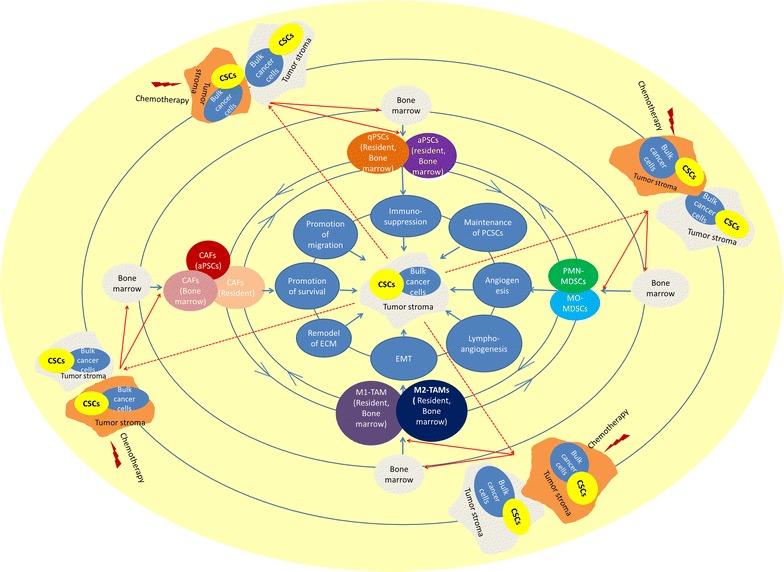
“1 The landscape of tumor microenvironment (TME) of pancreatic cancer: (1) the PSCs, CAFs, MDSCs and TAMs promote the malignant biological behaviors of pancreatic cancer through eight aspects; (2) the phenotypes and functions of PSCs, CAFs, MDSCs and TMAs in TME of pancreatic cancer are dynamically changed and they can…”
BackgroundInfluentialYang, L., Huang, J., Ren, X., Gorska, A. E., Chytil, A., Aakre, M., Carbone, D. P., Matrisian, L. M., Richmond, A., Lin, P. C., et al. (2008) · Cancer Cell · doi:10.1016/j.ccr.2007.12.004 · Cited by 918 · cited 1×
“As well, antagonists of CXCR2 and CXCR4 altered recruitment of MDSC to the tumor to inhibit metastasis of murine breast cancer [196].”
BackgroundOkabe, Y., & Medzhitov, R. (2014) · Cell · doi:10.1016/j.cell.2014.04.016 · Cited by 884
Role of Macrophage Targeting in the Antitumor Activity of Trabectedin
Germano, G., Frapolli, R., Belgiovine, C., Anselmo, A., Pesce, S., Liguori, M., Erba, E., Uboldi, S., Zucchetti, M., Pasqualini, F., et al. (2013) · Cancer Cell · doi:10.1016/j.ccr.2013.01.008 · Cited by 864 · cited 1×
“Trabectedin inhibited the growth of murine fibrosarcomas partially by depletion of TAMs [179].”
BackgroundSelby, M. J., Engelhardt, J. J., Quigley, M., Henning, K. A., Chen, T., Srinivasan, M., & Korman, A. J. (2013) · Cancer Immunology Research · doi:10.1158/2326-6066.cir-13-0013 · Cited by 857 · cited 1×
“Recent evidence suggests that anti-CTLA-4 antibodies act via TAMs [187].”
BackgroundTumor-Induced Tolerance and Immune Suppression Depend on the C/EBPβ Transcription Factor
Marigo, I., Bosio, E., Solito, S., Mesa, C., Fernandez, A., Dolcetti, L., Ugel, S., Sonda, N., Bicciato, S., Falisi, E., et al. (2010) · Immunity · doi:10.1016/j.immuni.2010.05.010 · Cited by 850 · cited 2×
“In a murine GIST model, imatinib caused reduction of TAMs through CSF1R-CSF1 inhibition, however, converted TAMs to be M2 polarized type through C/EBPβ [180].”
BackgroundMolecular mechanisms regulating myeloid-derived suppressor cell differentiation and function
Condamine, T., & Gabrilovich, D. I. (2011) · Trends in Immunology · doi:10.1016/j.it.2010.10.002 · Cited by 845 · cited 1×
“The first set of signals promotes the expansion of MDSCs from bone marrow, and the second set of signals activates MDSCs [79].”
BackgroundKindler, H. L., Niedzwiecki, D., Hollis, D., Sutherland, S., Schrag, D., Hurwitz, H., Innocenti, F., Mulcahy, M. F., O'Reilly, E., Wozniak, T. F., et al. (2010) · Journal of Clinical Oncology · doi:10.1200/jco.2010.28.1386 · Cited by 845 · cited 1×
“Clinical trials of anti-angiogenesis therapies did not show benefit in pancreatic cancer, when combined with gemcitabine [207, 208].”
BackgroundFerrone, C. R., Marchegiani, G., Hong, T. S., Ryan, D. P., Deshpande, V., McDonnell, E. I., Sabbatino, F., Santos, D. D., Allen, J. N., Blaszkowsky, L. S., et al. (2015) · Annals of Surgery · doi:10.1097/sla.0000000000000867 · Cited by 842
The Terminology Issue for Myeloid-Derived Suppressor Cells
Gabrilovich, D. I., Bronte, V., Chen, S.-H., Colombo, M. P., Ochoa, A., Ostrand-Rosenberg, S., & Schreiber, H. (2007) · Cancer Research · doi:10.1158/0008-5472.can-06-3037 · Cited by 835 · cited 1×
“Until 2007, a consensus reached to nominate MDSCs as the term for these cells [74].”
BackgroundBruchard, M., Mignot, G., Derangère, V., Chalmin, F., Chevriaux, A., Végran, F., Boireau, W., Simon, B., Ryffel, B., Connat, J. L., et al. (2013) · Nature Medicine · doi:10.1038/nm.2999 · Cited by 774 · cited 3×
“Gemcitabine and 5-FU could also trigger cathepsin B release in MDSCs to activate the Nlrp3 inflammasome and promote tumor growth [172].”
BackgroundSu, S., Liu, Q., Chen, J., Chen, J., Chen, F., He, C., Huang, D., Wu, W., Lin, L., Huang, W., et al. (2014) · Cancer Cell · doi:10.1016/j.ccr.2014.03.021 · Cited by 772
Self-citationSerafini, P., Meckel, K., Kelso, M., Noonan, K., Califano, J., Koch, W., Dolcetti, L., Bronte, V., & Borrello, I. (2006) · The Journal of Experimental Medicine · doi:10.1084/jem.20061104 · Cited by 766 · cited 1×
“Antibody to IL-6R [192], enzyme inhibitors, such as amino-bisphosphonate [193], PDE5 inhibitors [194], could inhibit proliferation of MDSCs to reduce the progression of breast cancer, colon cancer, fibrosarcoma in mice.”
BackgroundIdentification of fibroblast heterogeneity in the tumor microenvironment
Sugimoto, H., Mundel, T. M., Kieran, M. W., & Kalluri, R. (2006) · Cancer Biology & Therapy · doi:10.4161/cbt.5.12.3354 · Cited by 699
Bv8 regulates myeloid-cell-dependent tumour angiogenesis
Shojaei, F., Wu, X., Zhong, C., Yu, L., Liang, X.-H., Yao, J., Blanchard, D., Bais, C., Peale, F. V., van Bruggen, N., et al. (2007) · Nature · doi:10.1038/nature06348 · Cited by 644 · cited 1×
“Bombina variegata peptide8 (Bv8) can also be induced by STAT3 to promote angiogenesis then enhance lung metastasis [98].”
BackgroundMazzieri, R., Pucci, F., Moi, D., Zonari, E., Ranghetti, A., Berti, A., Politi, L. S., Gentner, B., Brown, J. L., Naldini, L., et al. (2011) · Cancer Cell · doi:10.1016/j.ccr.2011.02.005 · Cited by 639 · cited 1×
“Antiangiogenic therapies based on inhibition of VEGF pathway could induce transient responses of tumors, however destruction of the angiogenesis created a strongly hypoxic microenvironment, which could recruit and activate MDSCs and TAMs and then they produce varieties of proangiogenic factors to stimulate angiogenesi…”
BackgroundMyeloid-derived suppressor cell heterogeneity and subset definition
Peranzoni, E., Zilio, S., Marigo, I., Dolcetti, L., Zanovello, P., Mandruzzato, S., & Bronte, V. (2010) · Current Opinion in Immunology · doi:10.1016/j.coi.2010.01.021 · Cited by 630 · cited 1×
“As well, PMN-MDSCs represent majority of the MDSCs in human cancer patients [77, 78].”
BackgroundThe interaction of anticancer therapies with tumor-associated macrophages
Mantovani, A., & Allavena, P. (2015) · Journal of Experimental Medicine · doi:10.1084/jem.20150295 · Cited by 616 · cited 2×
“Signal pathways involved in M1 polarization include NF-Kappa B, STAT1, and IRF5, whereas IRF4, STAT6, MYC, PPARγ and KLF4 have been reported to promote M2 polarization [46, 65, 71].”
BackgroundEne–Obong, A., Clear, A. J., Watt, J., Wang, J., Fatah, R., Riches, J. C., Marshall, J. F., Chin–Aleong, J., Chelala, C., Gribben, J. G., et al. (2013) · Gastroenterology · doi:10.1053/j.gastro.2013.07.025 · Cited by 579
The therapeutic effect of anti-HER2/neu antibody depends on both innate and adaptive immunity
Park, S., Jiang, Z., Mortenson, E. D., Deng, L., Radkevich-Brown, O., Yang, X., Sattar, H., Wang, Y., Brown, N. K., Greene, M., et al. (2010) · Cancer Cell · doi:10.1016/j.ccr.2010.06.014 · Cited by 577 · cited 1×
“Since macrophages can be activated by Fc receptor of immunoglobulin, monoclonal antibody to HER2, CD20 and CD47 have showed to activate TAMs to enhance antitumor activities in murine breast cancer or non-hodgkin’s lymphoma [199, 200].”
BackgroundGabitass, R. F., Annels, N. E., Stocken, D. D., Pandha, H. A., & Middleton, G. W. (2011) · Cancer Immunology, Immunotherapy · doi:10.1007/s00262-011-1028-0 · Cited by 575 · cited 1×
“In addition, increasing MDSCs in peripheral blood of pancreatic cancer patient was associated with increased risk of death, and it was an independent prognostic factor for survival [101].”
BackgroundStromal biology and therapy in pancreatic cancer: a changing paradigm
Neesse, A., Algül, H., Tuveson, D. A., & Gress, T. M. (2015) · Gut · doi:10.1136/gutjnl-2015-309304 · Cited by 559 · cited 1×
“The TME of pancreatic cancer is characterized by dense desmoplasia and extensive immunosuppression [8].”
BackgroundTumor-associated macrophages: Functional diversity, clinical significance, and open questions
Biswas, S. K., Allavena, P., & Mantovani, A. (2013) · Seminars in Immunopathology · doi:10.1007/s00281-013-0367-7 · Cited by 551 · cited 3×
“Signal pathways involved in M1 polarization include NF-Kappa B, STAT1, and IRF5, whereas IRF4, STAT6, MYC, PPARγ and KLF4 have been reported to promote M2 polarization [46, 65, 71].”
BackgroundAntibody Therapeutics in Cancer
Sliwkowski, M. X., & Mellman, I. (2013) · Science · doi:10.1126/science.1241145 · Cited by 543 · cited 1×
“the other hand, induced ADCC and ADCP and primed CD8(+) T cell responses in breast cancer [186].”
BackgroundMacrophages and cathepsin proteases blunt chemotherapeutic response in breast cancer
Shree, T., Olson, O. C., Elie, B. T., Kester, J. C., Garfall, A. L., Simpson, K., Bell-McGuinn, K. M., Zabor, E. C., Brogi, E., & Joyce, J. A. (2011) · Genes & Development · doi:10.1101/gad.180331.111 · Cited by 541 · cited 1×
“TAMs can limit the effects of chemotherapy or radiotherapy by various mechanisms, such as inhibition of cytotoxic T cells, activation of Th17 cells by inflammasome-IL1β, secreting of cathepsin, protection of cancer stem cells and alter vascular permeability to inhibit intratumoral drug concentration [172, 173].”
BackgroundRegulation of Tumor Metastasis by Myeloid-Derived Suppressor Cells
Condamine, T., Ramachandran, I., Youn, J.-I., & Gabrilovich, D. I. (2015) · Annual Review of Medicine · doi:10.1146/annurev-med-051013-052304 · Cited by 521 · cited 5×
“Many mechanisms of immune suppression induced by MDSCs have been proposed, including production of ARG1, iNOS, IL-10, TGF-β, COX2 and induction of Tregs [90].”
BackgroundInfluentialIL-4-Induced Arginase 1 Suppresses Alloreactive T Cells in Tumor-Bearing Mice
Bronte, V., Serafini, P., De Santo, C., Marigo, I., Tosello, V., Mazzoni, A., Segal, D. M., Staib, C., Lowel, M., Sutter, G., et al. (2003) · The Journal of Immunology · doi:10.4049/jimmunol.170.1.270 · Cited by 513
STAT3 regulates arginase-I in myeloid-derived suppressor cells from cancer patients
Vasquez-Dunddel, D., Pan, F., Zeng, Q., Gorbounov, M., Albesiano, E., Fu, J., Blosser, R. L., Tam, A. J., Bruno, T., Zhang, H., et al. (2013) · Journal of Clinical Investigation · doi:10.1172/jci60083 · Cited by 507
Kodumudi, K. N., Woan, K., Gilvary, D. L., Sahakian, E., Wei, S., & Djeu, J. Y. (2010) · Clinical Cancer Research · doi:10.1158/1078-0432.ccr-10-0733 · Cited by 500 · cited 1×
“Docetaxel could deplete M2 polarized TAMs and activate M1 in 4T1-Neu mammary tumor implants [178].”
BackgroundActivation of fibroblasts in cancer stroma
Räsänen, K., & Vaheri, A. (2010) · Experimental Cell Research · doi:10.1016/j.yexcr.2010.04.032 · Cited by 499 · cited 1×
“After injuries of pancreas, inflammatory cytokines and chemokines from inflammatory cells, endothelial cells, or cancer cells activate resident fibroblasts and they proliferate and differentiate into CAFs [37, 38].”
BackgroundPrima, V., Kaliberova, L. N., Kaliberov, S., Curiel, D. T., & Kusmartsev, S. (2017) · Proceedings of the National Academy of Sciences · doi:10.1073/pnas.1612920114 · Cited by 494 · cited 5×
“, lactic acid) [59, 68], COX-2 [69], cytokines (e.”
InfluentialOettle, H., Riess, H., Stieler, J. M., Heil, G., Schwaner, I., Seraphin, J., Görner, M., Mölle, M., Greten, T. F., Lakner, V., et al. (2014) · Journal of Clinical Oncology · doi:10.1200/jco.2013.53.6995 · Cited by 487 · cited 1×
“In 2014, OFF (oxaliplatin, folinic acid and fluorouracil) was demonstrated to have better results than FF (folinic acid and fluorouracil) alone in patients with advanced gemcitabine refractory pancreatic cancer [24].”
BackgroundNakasone, E. S., Askautrud, H. A., Kees, T., Park, J.-H., Plaks, V., Ewald, A. J., Fein, M., Rasch, M. G., Tan, Y.-X., Qiu, J., et al. (2012) · Cancer Cell · doi:10.1016/j.ccr.2012.02.017 · Cited by 478 · cited 2×
“CXCL1, CXCL2, and CXCL5 have been shown to recruit MDSCs by binding to CXCR2.”
BackgroundShojaei, F., Wu, X., Qu, X., Kowanetz, M., Yu, L., Tan, M., Meng, Y. G., & Ferrara, N. (2009) · Proceedings of the National Academy of Sciences · doi:10.1073/pnas.0902280106 · Cited by 471 · cited 4×
“Antiangiogenic therapies based on inhibition of VEGF pathway could induce transient responses of tumors, however destruction of the angiogenesis created a strongly hypoxic microenvironment, which could recruit and activate MDSCs and TAMs and then they produce varieties of proangiogenic factors to stimulate angiogenesi…”
BackgroundInfluentialLiu, C.-Y., Xu, J.-Y., Shi, X.-Y., Huang, W., Ruan, T.-Y., Xie, P., & Ding, J.-L. (2013) · Laboratory Investigation · doi:10.1038/labinvest.2013.69 · Cited by 465
Autophagy and cellular immune responses
Ma, Y., Galluzzi, L., Zitvogel, L., & Kroemer, G. (2013) · Immunity · doi:10.1016/j.immuni.2013.07.017 · Cited by 447 · cited 1×
“Doxorubicin also stimulated cancer cells to release ATP, which could recruit myeloid cells and induce differentiation into antigen presenting cells, finally resulting in effective antitumor immunities [175].”
BackgroundMacrophage-secreted granulin supports pancreatic cancer metastasis by inducing liver fibrosis
Nielsen, S. R., Quaranta, V., Linford, A., Emeagi, P., Rainer, C., Santos, A., Ireland, L., Sakai, T., Sakai, K., Kim, Y.-S., et al. (2016) · Nature Cell Biology · doi:10.1038/ncb3340 · Cited by 441
Cui, T. X., Kryczek, I., Zhao, L., Zhao, E., Kuick, R., Roh, M. H., Vatan, L., Szeliga, W., Mao, Y., Thomas, D. G., et al. (2013) · Immunity · doi:10.1016/j.immuni.2013.08.025 · Cited by 427 · cited 1×
“MDSCs can induce cancer stem cells of ovarian cancer by upregulation of microRNA-101 to target CtBP2 [99].”
BackgroundFroeling, F. E. M., Feig, C., Chelala, C., Dobson, R., Mein, C. E., Tuveson, D. A., Clevers, H., Hart, I. R., & Kocher, H. M. (2011) · Gastroenterology · doi:10.1053/j.gastro.2011.06.047 · Cited by 418 · cited 1×
“ATRA can also convert activated PSCs to quiescent PSCs to slow tumor progression and migration in mice pancreatic cancer model [216].”
BackgroundMace, T. A., Ameen, Z., Collins, A., Wojcik, S., Mair, M., Young, G. S., Fuchs, J. R., Eubank, T. D., Frankel, W. L., Bekaii-Saab, T., et al. (2013) · Cancer Research · doi:10.1158/0008-5472.can-12-4601 · Cited by 410
Kindler, H. L., Ioka, T., Richel, D. J., Bennouna, J., Létourneau, R., Okusaka, T., Funakoshi, A., Furuse, J., Park, Y. S., Ohkawa, S., et al. (2011) · The Lancet Oncology · doi:10.1016/s1470-2045(11)70004-3 · Cited by 403 · cited 1×
“Clinical trials of anti-angiogenesis therapies did not show benefit in pancreatic cancer, when combined with gemcitabine [207, 208].”
BackgroundMoore, M. J., Hamm, J., Dancey, J., Eisenberg, P. D., Dagenais, M., Fields, A., Hagan, K., Greenberg, B., Colwell, B., Zee, B., et al. (2003) · Journal of Clinical Oncology · doi:10.1200/jco.2003.02.098 · Cited by 396 · cited 1×
“The clinical trials of MMP inhibitors, either alone or in combination with gemcitabine have not shown positive results [211].”
BackgroundMyeloid‐derived suppressor cell heterogeneity in human cancers
Solito, S., Marigo, I., Pinton, L., Damuzzo, V., Mandruzzato, S., & Bronte, V. (2014) · Annals of the New York Academy of Sciences · doi:10.1111/nyas.12469 · Cited by 386 · cited 1×
“As well, PMN-MDSCs represent majority of the MDSCs in human cancer patients [77, 78].”
BackgroundPriceman, S. J., Sung, J. L., Shaposhnik, Z., Burton, J. B., Torres-Collado, A. X., Moughon, D. L., Johnson, M., Lusis, A. J., Cohen, D. A., Iruela-Arispe, M. L., et al. (2010) · Blood · doi:10.1182/blood-2009-08-237412 · Cited by 356 · cited 4×
“Antiangiogenic therapies based on inhibition of VEGF pathway could induce transient responses of tumors, however destruction of the angiogenesis created a strongly hypoxic microenvironment, which could recruit and activate MDSCs and TAMs and then they produce varieties of proangiogenic factors to stimulate angiogenesi…”
BackgroundInfluentialRole of Pancreatic Stellate Cells in Pancreatic Cancer Metastasis
Xu, Z., Vonlaufen, A., Phillips, P. A., Fiala-Beer, E., Zhang, X., Yang, L., Biankin, A. V., Goldstein, D., Pirola, R. C., Wilson, J. S., et al. (2010) · The American Journal of Pathology · doi:10.2353/ajpath.2010.090899 · Cited by 356
Pancreatic stellate cells respond to inflammatory cytokines: potential role in chronic pancreatitis
Mews, P., Phillips, P., Fahmy, R., Korsten, M., Pirola, R., Wilson, J., & Apte, M. (2002) · Gut · doi:10.1136/gut.50.4.535 · Cited by 349 · cited 1×
“, vascular endothelial growth factor, VEGF; platelet-derived growth factor, PDGF; transforming growth factor beta, TGFβ) and tumor necrosis factor alpha (TNFα), have been identified to activate qPSCs [27].”
BackgroundDijkgraaf, E. M., Heusinkveld, M., Tummers, B., Vogelpoel, L. T. C., Goedemans, R., Jha, V., Nortier, J. W. R., Welters, M. J. P., Kroep, J. R., & van der Burg, S. H. (2013) · Cancer Research · doi:10.1158/0008-5472.can-12-3542 · Cited by 346 · cited 2×
“In vitro study, cisplatin and carboplatin increased the expression of IL-6 in 10 gynecologic malignant cancer cell lines to induce M2 polarized TAMs [18].”
BackgroundTargeted depletion of an MDSC subset unmasks pancreatic ductal adenocarcinoma to adaptive immunity
Stromnes, I. M., Brockenbrough, J. S., Izeradjene, K., Carlson, M. A., Cuevas, C., Simmons, R. M., Greenberg, P. D., & Hingorani, S. R. (2014) · Gut · doi:10.1136/gutjnl-2013-306271 · Cited by 331
Melani, C., Sangaletti, S., Barazzetta, F. M., Werb, Z., & Colombo, M. P. (2007) · Cancer Research · doi:10.1158/0008-5472.can-07-1882 · Cited by 329 · cited 1×
“Antibody to IL-6R [192], enzyme inhibitors, such as amino-bisphosphonate [193], PDE5 inhibitors [194], could inhibit proliferation of MDSCs to reduce the progression of breast cancer, colon cancer, fibrosarcoma in mice.”
BackgroundGolcher, H., Brunner, T. B., Witzigmann, H., Marti, L., Bechstein, W.-O., Bruns, C., Jungnickel, H., Schreiber, S., Grabenbauer, G. G., Meyer, T., et al. (2015) · Strahlentherapie und Onkologie · doi:10.1007/s00066-014-0737-7 · Cited by 324 · cited 2×
“For some selected borderline or local unresectable pancreatic cancer, neoadjuvant chemotherapy have also been initially adopted, with the hope to lower down the tumor and regain the radical resection opportunities [6, 7].”
BackgroundPan, P.-Y., Wang, G. X., Yin, B., Ozao, J., Ku, T., Divino, C. M., & Chen, S.-H. (2008) · Blood · doi:10.1182/blood-2007-04-086835 · Cited by 319 · cited 1×
“Blockade of kit also showed abilities to inhibit the expansion of MDSCs and restore the immunity of T cells against tumors [183].”
BackgroundB Cells Regulate Macrophage Phenotype and Response to Chemotherapy in Squamous Carcinomas
Affara, N. I., Ruffell, B., Medler, T. R., Gunderson, A. J., Johansson, M., Bornstein, S., Bergsland, E., Steinhoff, M., Li, Y., Gong, Q., et al. (2014) · Cancer Cell · doi:10.1016/j.ccr.2014.04.026 · Cited by 304 · cited 1×
“In a murine squamous cell carcinogenesis model, repolarization of TAMs was more effective than blocking recruitment or depletion of TAMs, since macrophages are necessary for recruitment and activation of T cells under some circumstances [197].”
BackgroundLee, H.-O., Mullins, S. R., Franco-Barraza, J., Valianou, M., Cukierman, E., & Cheng, J. D. (2011) · BMC Cancer · doi:10.1186/1471-2407-11-245 · Cited by 304
Yang, J., Liao, D., Chen, C., Liu, Y., Chuang, T.-H., Xiang, R., Markowitz, D., Reisfeld, R. A., & Luo, Y. (2013) · Stem Cells · doi:10.1002/stem.1281 · Cited by 301
De Palma, M., Mazzieri, R., Politi, L. S., Pucci, F., Zonari, E., Sitia, G., Mazzoleni, S., Moi, D., Venneri, M. A., Indraccolo, S., et al. (2008) · Cancer Cell · doi:10.1016/j.ccr.2008.09.004 · Cited by 301 · cited 1×
“Genetic modified TAMs expressing IFN-γ could induce antitumor and anti-angiogenic effects in murine tumor models [204].”
BackgroundCritical role of Trib1 in differentiation of tissue-resident M2-like macrophages
Satoh, T., Kidoya, H., Naito, H., Yamamoto, M., Takemura, N., Nakagawa, K., Yoshioka, Y., Morii, E., Takakura, N., Takeuchi, O., et al. (2013) · Nature · doi:10.1038/nature11930 · Cited by 301
Ko, J. S., Rayman, P., Ireland, J., Swaidani, S., Li, G., Bunting, K. D., Rini, B., Finke, J. H., & Cohen, P. A. (2010) · Cancer Research · doi:10.1158/0008-5472.can-09-3278 · Cited by 296
Beatty, G. L., Winograd, R., Evans, R. A., Long, K. B., Luque, S. L., Lee, J. W., Clendenin, C., Gladney, W. L., Knoblock, D. M., Guirnalda, P. D., et al. (2015) · Gastroenterology · doi:10.1053/j.gastro.2015.04.010 · Cited by 293
Colony stimulating factors and myeloid cell biology in health and disease
Hamilton, J. A., & Achuthan, A. (2013) · Trends in Immunology · doi:10.1016/j.it.2012.08.006 · Cited by 285 · cited 1×
“Tumor microenvironmentderived CSF-1 is the mast regulator of recruitment and differentiation of circulating monocytes, and knockout of CSF-1R showed depletion of TAMs [50, 51].”
BackgroundWeizman, N., Krelin, Y., Shabtay-Orbach, A., Amit, M., Binenbaum, Y., Wong, R. J., & Gil, Z. (2014) · Oncogene · doi:10.1038/onc.2013.357 · Cited by 281
Porembka, M. R., Mitchem, J. B., Belt, B. A., Hsieh, C.-S., Lee, H.-M., Herndon, J., Gillanders, W. E., Linehan, D. C., & Goedegebuure, P. (2012) · Cancer Immunology, Immunotherapy · doi:10.1007/s00262-011-1178-0 · Cited by 277
Watkins, S. K., Egilmez, N. K., Suttles, J., & Stout, R. D. (2007) · The Journal of Immunology · doi:10.4049/jimmunol.178.3.1357 · Cited by 273 · cited 1×
“IL-12 treatment could reprogram TAMs from M2 to M1 to increase anti-tumor response and tumor regression in a murine lung cancer model [198].”
BackgroundCC chemokine ligand 2 (CCL2) promotes prostate cancer tumorigenesis and metastasis
Zhang, J., Patel, L., & Pienta, K. J. (2010) · Cytokine & Growth Factor Reviews · doi:10.1016/j.cytogfr.2009.11.009 · Cited by 261 · cited 1×
“Antibody or depletion of CCL2 blocked the recruitment of MDSCs and TAMs in tumor microenvironment and showed effects to inhibit pulmonary metastasis of murine mammary cancer [195].”
BackgroundHelm, O., Held‐Feindt, J., Grage‐Griebenow, E., Reiling, N., Ungefroren, H., Vogel, I., Krüger, U., Becker, T., Ebsen, M., Röcken, C., et al. (2014) · International Journal of Cancer · doi:10.1002/ijc.28736 · Cited by 260
Masamune, A., Kikuta, K., Watanabe, T., Satoh, K., Hirota, M., & Shimosegawa, T. (2008) · American Journal of Physiology-Gastrointestinal and Liver Physiology · doi:10.1152/ajpgi.90356.2008 · Cited by 257
Endo, S., Nakata, K., Ohuchida, K., Takesue, S., Nakayama, H., Abe, T., Koikawa, K., Okumura, T., Sada, M., Horioka, K., et al. (2017) · Gastroenterology · doi:10.1053/j.gastro.2017.01.010 · Cited by 227
Leca, J., Martinez, S., Lac, S., Nigri, J., Secq, V., Rubis, M., Bressy, C., Sergé, A., Lavaut, M.-N., Dusetti, N., et al. (2016) · Journal of Clinical Investigation · doi:10.1172/jci87734 · Cited by 223
Ko, A. H., LoConte, N., Tempero, M. A., Walker, E. J., Kate Kelley, R., Lewis, S., Chang, W.-C., Kantoff, E., Vannier, M. W., Catenacci, D. V., et al. (2016) · Pancreas · doi:10.1097/mpa.0000000000000458 · Cited by 223
Pancreatic stellate cells promote epithelial-mesenchymal transition in pancreatic cancer cells
Kikuta, K., Masamune, A., Watanabe, T., Ariga, H., Itoh, H., Hamada, S., Satoh, K., Egawa, S., Unno, M., & Shimosegawa, T. (2010) · Biochemical and Biophysical Research Communications · doi:10.1016/j.bbrc.2010.11.040 · Cited by 222
Nielsen, M. F. B., Mortensen, M. B., & Detlefsen, S. (2016) · World Journal of Gastroenterology · doi:10.3748/wjg.v22.i9.2678 · Cited by 219 · cited 1×
“The originations of CAFs in pancreatic cancer include resident fibroblast, bone marrow derived cells, and PSCs [36].”
BackgroundZhang, A., Qian, Y., Ye, Z., Chen, H., Xie, H., Zhou, L., Shen, Y., & Zheng, S. (2017) · Cancer Medicine · doi:10.1002/cam4.993 · Cited by 216
Duluc, C., Moatassim‐Billah, S., Chalabi‐Dchar, M., Perraud, A., Samain, R., Breibach, F., Gayral, M., Cordelier, P., Delisle, M., Bousquet‐Dubouch, M., et al. (2015) · EMBO Molecular Medicine · doi:10.15252/emmm.201404346 · Cited by 214
Panni, R. Z., Sanford, D. E., Belt, B. A., Mitchem, J. B., Worley, L. A., Goetz, B. D., Mukherjee, P., Wang-Gillam, A., Link, D. C., DeNardo, D. G., et al. (2014) · Cancer Immunology, Immunotherapy · doi:10.1007/s00262-014-1527-x · Cited by 214
Carcinoma‐associated fibroblasts: Non‐neoplastic tumour‐promoting mesenchymal cells
Polanska, U. M., & Orimo, A. (2013) · Journal of Cellular Physiology · doi:10.1002/jcp.24347 · Cited by 208
Kawase, A., Ishii, G., Nagai, K., Ito, T., Nagano, T., Murata, Y., Hishida, T., Nishimura, M., Yoshida, J., Suzuki, K., et al. (2008) · International Journal of Cancer · doi:10.1002/ijc.23611 · Cited by 208
Pancreatic Stellate Cells Radioprotect Pancreatic Cancer Cells through β1-Integrin Signaling
Mantoni, T. S., Lunardi, S., Al-Assar, O., Masamune, A., & Brunner, T. B. (2011) · Cancer Research · doi:10.1158/0008-5472.can-10-1633 · Cited by 206
Jones, L. E., Humphreys, M. J., Campbell, F., Neoptolemos, J. P., & Boyd, M. T. (2004) · Clinical Cancer Research · doi:10.1158/1078-0432.ccr-1157-03 · Cited by 200 · cited 1×
“However, high expressions of MMP2, MMP7 and MMP11 in pancreatic cancer were found to be associated with a poor prognosis [210].”
BackgroundAngiotensin II Drives the Production of Tumor-Promoting Macrophages
Cortez-Retamozo, V., Etzrodt, M., Newton, A., Ryan, R., Pucci, F., Sio, S. W., Kuswanto, W., Rauch, P. J., Chudnovskiy, A., Iwamoto, Y., et al. (2013) · Immunity · doi:10.1016/j.immuni.2012.10.015 · Cited by 199 · cited 1×
“Angiotensin-II was found to be responsible for the amplification of the self-renewing progenitor cells and hence the production of TAMs [57].”
BackgroundLinde, N., Lederle, W., Depner, S., van Rooijen, N., Gutschalk, C. M., & Mueller, M. M. (2012) · The Journal of Pathology · doi:10.1002/path.3989 · Cited by 195 · cited 1×
“In a xenograft model of skin cancer, VEGFA recruited monocytes to differentiate into TAMs [53].”
BackgroundRadiation Therapy Induces Macrophages to Suppress T-Cell Responses Against Pancreatic Tumors in Mice
Seifert, L., Werba, G., Tiwari, S., Giao Ly, N. N., Nguy, S., Alothman, S., Alqunaibit, D., Avanzi, A., Daley, D., Barilla, R., et al. (2016) · Gastroenterology · doi:10.1053/j.gastro.2016.02.070 · Cited by 190
Pancreatic Cancer Stroma: Friend or Foe?
Gore, J., & Korc, M. (2014) · Cancer Cell · doi:10.1016/j.ccr.2014.05.026 · Cited by 187
Dynamic Mast Cell–Stromal Cell Interactions Promote Growth of Pancreatic Cancer
Ma, Y., Hwang, R. F., Logsdon, C. D., & Ullrich, S. E. (2013) · Cancer Research · doi:10.1158/0008-5472.can-12-4479 · Cited by 186
CD10+ Pancreatic Stellate Cells Enhance the Progression of Pancreatic Cancer
Ikenaga, N., Ohuchida, K., Mizumoto, K., Cui, L., Kayashima, T., Morimatsu, K., Moriyama, T., Nakata, K., Fujita, H., & Tanaka, M. (2010) · Gastroenterology · doi:10.1053/j.gastro.2010.05.084 · Cited by 186
Cavel, O., Shomron, O., Shabtay, A., Vital, J., Trejo-Leider, L., Weizman, N., Krelin, Y., Fong, Y., Wong, R. J., Amit, M., et al. (2012) · Cancer Research · doi:10.1158/0008-5472.can-12-0764 · Cited by 183
Lonardo, E., Frias-Aldeguer, J., Hermann, P. C., & Heeschen, C. (2012) · Cell Cycle · doi:10.4161/cc.19679 · Cited by 181
Sensitizing Protective Tumor Microenvironments to Antibody-Mediated Therapy
Pallasch, C. P., Leskov, I., Braun, C. J., Vorholt, D., Drake, A., Soto-Feliciano, Y. M., Bent, E. H., Schwamb, J., Iliopoulou, B., Kutsch, N., et al. (2014) · Cell · doi:10.1016/j.cell.2013.12.041 · Cited by 179 · cited 1×
“After cyclophosphamide treatment, leukemic cells released CCL4, CXCL8 and VEGF to recruit and active monocytes and enhance their phagocytic activity [176].”
BackgroundKitamura, T., Fujishita, T., Loetscher, P., Revesz, L., Hashida, H., Kizaka-Kondoh, S., Aoki, M., & Taketo, M. M. (2010) · Proceedings of the National Academy of Sciences · doi:10.1073/pnas.1002372107 · Cited by 178
The stromal compartments in pancreatic cancer: Are there any therapeutic targets?
Lunardi, S., Muschel, R. J., & Brunner, T. B. (2014) · Cancer Letters · doi:10.1016/j.canlet.2013.09.039 · Cited by 176
Wikberg, M. L., Edin, S., Lundberg, I. V., Van Guelpen, B., Dahlin, A. M., Rutegård, J., Stenling, R., Öberg, Å., & Palmqvist, R. (2013) · Tumor Biology · doi:10.1007/s13277-012-0638-2 · Cited by 171
Guo, X., Xue, H., Shao, Q., Wang, J., Guo, X., Chen, X., Zhang, J., Xu, S., Li, T., Zhang, P., et al. (2016) · Oncotarget · doi:10.18632/oncotarget.11825 · Cited by 170 · cited 1×
“Activation of TAMs from tumor microenvironment of various tumors include hypoxia [66, 67], metabolic products of cancer cells (e.”
BackgroundSelf-citationSprinzl, M. F., Reisinger, F., Puschnik, A., Ringelhan, M., Ackermann, K., Hartmann, D., Schiemann, M., Weinmann, A., Galle, P. R., Schuchmann, M., et al. (2013) · Hepatology · doi:10.1002/hep.26328 · Cited by 169 · cited 1×
“However, in another murine model of HCC, sorafinib was found to induce M1 polarized TAMs and to promote their stimulatory activities on NK cells [182].”
BackgroundTang, D., Yuan, Z., Xue, X., Lu, Z., Zhang, Y., Wang, H., Chen, M., An, Y., Wei, J., Zhu, Y., et al. (2012) · International Journal of Cancer · doi:10.1002/ijc.26290 · Cited by 162
Pancreatic stellate cells enhance stem cell-like phenotypes in pancreatic cancer cells
Hamada, S., Masamune, A., Takikawa, T., Suzuki, N., Kikuta, K., Hirota, M., Hamada, H., Kobune, M., Satoh, K., & Shimosegawa, T. (2012) · Biochemical and Biophysical Research Communications · doi:10.1016/j.bbrc.2012.04.014 · Cited by 160
Chen, M.-F., Kuan, F.-C., Yen, T.-C., Lu, M.-S., Lin, P.-Y., Chung, Y.-H., Chen, W.-C., & Lee, K.-D. (2014) · Oncotarget · doi:10.18632/oncotarget.2368 · Cited by 155
Hoshino, A., Ishii, G., Ito, T., Aoyagi, K., Ohtaki, Y., Nagai, K., Sasaki, H., & Ochiai, A. (2011) · Cancer Research · doi:10.1158/0008-5472.can-10-3228 · Cited by 155
Ino, Y., Yamazaki-Itoh, R., Oguro, S., Shimada, K., Kosuge, T., Zavada, J., Kanai, Y., & Hiraoka, N. (2013) · PLoS ONE · doi:10.1371/journal.pone.0055146 · Cited by 153
Guan, J., Zhang, H., Wen, Z., Gu, Y., Cheng, Y., Sun, Y., Zhang, T., Jia, C., Lu, Z., & Chen, J. (2013) · Cancer Letters · doi:10.1016/j.canlet.2013.12.006 · Cited by 152
Lee, C.-R., Kwak, Y., Yang, T., Han, J. H., Park, S.-H., Ye, M. B., Lee, W., Sim, K.-Y., Kang, J.-A., Kim, Y.-C., et al. (2016) · Cell Reports · doi:10.1016/j.celrep.2016.11.062 · Cited by 141
Srivastava, K., Hu, J., Korn, C., Savant, S., Teichert, M., Kapel, S. S., Jugold, M., Besemfelder, E., Thomas, M., Pasparakis, M., et al. (2014) · Cancer Cell · doi:10.1016/j.ccell.2014.11.005 · Cited by 140 · cited 1×
“In preclinical study, depletion of TAMs, either by clodronate-loaded liposomes or CSF-1R inhibition, increased the antitumor effects of VEGF-targeted therapies and as well combination antiangiopoietin-2 with low-dose metronomic chemotherapy successfully inhibited the repopulation of myeloid cells and achieved synergic…”
BackgroundTakeuchi, S., Baghdadi, M., Tsuchikawa, T., Wada, H., Nakamura, T., Abe, H., Nakanishi, S., Usui, Y., Higuchi, K., Takahashi, M., et al. (2015) · Cancer Research · doi:10.1158/0008-5472.can-14-2921 · Cited by 138 · cited 1×
“After gemcitabine treatment, pancreatic cancer secreted more GM-CSF, recruiting MDSCs to diminish the efficacy [17].”
BackgroundWu, Y. S., Chung, I., Wong, W. F., Masamune, A., Sim, M. S., & Looi, C. Y. (2016) · Biochimica et Biophysica Acta (BBA) - General Subjects · doi:10.1016/j.bbagen.2016.10.006 · Cited by 138
KIT oncogene inhibition drives intratumoral macrophage M2 polarization
Cavnar, M. J., Zeng, S., Kim, T. S., Sorenson, E. C., Ocuin, L. M., Balachandran, V. P., Seifert, A. M., Greer, J. B., Popow, R., Crawley, M. H., et al. (2013) · Journal of Experimental Medicine · doi:10.1084/jem.20130875 · Cited by 133 · cited 2×
“In a murine GIST model, imatinib caused reduction of TAMs through CSF1R-CSF1 inhibition, however, converted TAMs to be M2 polarized type through C/EBPβ [180].”
BackgroundPancreatic stellate cell: physiologic role, role in fibrosis and cancer
Apte, M., Pirola, R. C., & Wilson, J. S. (2015) · Current Opinion in Gastroenterology · doi:10.1097/mog.0000000000000196 · Cited by 131 · cited 2×
“Pancreatic stellate cells (PSCs) and cancer associated fibroblasts (CAFs) are the main matrix-producing cells in TME of pancreatic cancer [9].”
BackgroundGriesmann, H., Drexel, C., Milosevic, N., Sipos, B., Rosendahl, J., Gress, T. M., & Michl, P. (2017) · Gut · doi:10.1136/gutjnl-2015-310049 · Cited by 129
Gao, Z., Wang, X., Wu, K., Zhao, Y., & Hu, G. (2010) · Pancreatology · doi:10.1159/000236012 · Cited by 127
Self-citationSumida, K., Wakita, D., Narita, Y., Masuko, K., Terada, S., Watanabe, K., Satoh, T., Kitamura, H., & Nishimura, T. (2012) · European Journal of Immunology · doi:10.1002/eji.201142335 · Cited by 126 · cited 1×
“Antibody to IL-6R [192], enzyme inhibitors, such as amino-bisphosphonate [193], PDE5 inhibitors [194], could inhibit proliferation of MDSCs to reduce the progression of breast cancer, colon cancer, fibrosarcoma in mice.”
BackgroundNeyen, C. D., Plüddemann, A., Mukhopadhyay, S., Maniati, E., Bossard, M., Gordon, S., & Hagemann, T. (2013) · The Journal of Immunology · doi:10.4049/jimmunol.1203194 · Cited by 126
Zhao, F., Obermann, S., Von Wasielewski, R., Haile, L., Manns, M. P., Korangy, F., & Greten, T. F. (2009) · Immunology · doi:10.1111/j.1365-2567.2009.03105.x · Cited by 125
Tang, D., Wang, D., Yuan, Z., Xue, X., Zhang, Y., An, Y., Chen, J., Tu, M., Lu, Z., Wei, J., et al. (2012) · International Journal of Cancer · doi:10.1002/ijc.27715 · Cited by 121
Epidemiology, risk factors, and the promotion of pancreatic cancer: Role of the stellate cell
Pandol, S., Gukovskaya, A., Edderkoui, M., Dawson, D., Eibl, G., & Lugea, A. (2012) · Journal of Gastroenterology and Hepatology · doi:10.1111/j.1440-1746.2011.07013.x · Cited by 119 · cited 1×
“[29] reported that a distinct stromal reaction and aPSCs around pancreatic intraductal neoplasia (PanIN) lesions which led to pancreatic cancer in a pancreatic cancer murine model overexpression KrasG12D.”
BackgroundArnold, S. A., Rivera, L. B., Miller, A. F., Carbon, J. G., Dineen, S. P., Xie, Y., Castrillon, D. H., Sage, E. H., Puolakkainen, P., Bradshaw, A. D., et al. (2010) · Disease Models & Mechanisms · doi:10.1242/dmm.003228 · Cited by 118
Mediavilla-Varela, M., Boateng, K., Noyes, D., & Antonia, S. J. (2016) · BMC Cancer · doi:10.1186/s12885-016-2162-z · Cited by 118 · cited 1×
“In addition to the aspects of ECM, CAFs can also sequester T cells by expression of CXCL 12, and AMD3100, an inhibitor of CXCR4, could block the effects of CXCL12 of CAFs and enhanced the effects of antagonist of PDL1 in KPC mice [220].”
BackgroundXiao, Q., Zhou, D., Rucki, A. A., Williams, J., Zhou, J., Mo, G., Murphy, A., Fujiwara, K., Kleponis, J., Salman, B., et al. (2016) · Cancer Research · doi:10.1158/0008-5472.can-15-3264 · Cited by 117
Nagathihalli, N. S., Castellanos, J. A., VanSaun, M. N., Dai, X., Ambrose, M., Guo, Q., Xiong, Y., & Merchant, N. B. (2016) · Oncotarget · doi:10.18632/oncotarget.11786 · Cited by 116
Laoui, D., Overmeire, E. V., Movahedi, K., den Bossche, J. V., Schouppe, E., Mommer, C., Nikolaou, A., Morias, Y., BAETSELIER, P. D., & Ginderachter, J. A. V. (2011) · Immunobiology · doi:10.1016/j.imbio.2011.06.007 · Cited by 114
Takikawa, T., Masamune, A., Yoshida, N., Hamada, S., Kogure, T., & Shimosegawa, T. (2016) · Pancreas · doi:10.1097/mpa.0000000000000722 · Cited by 113
Kawase, T., Yasui, Y., Nishina, S., Hara, Y., Yanatori, I., Tomiyama, Y., Nakashima, Y., Yoshida, K., Kishi, F., Nakamura, M., et al. (2015) · BMC Gastroenterology · doi:10.1186/s12876-015-0340-0 · Cited by 111
Cancer Stem Cells and Macrophages: Implications in Tumor Biology and Therapeutic Strategies
Sainz, B., Carron, E., Vallespinós, M., & Machado, H. L. (2016) · Mediators of Inflammation · doi:10.1155/2016/9012369 · Cited by 110
Sorrentino, C., Miele, L., Porta, A., Pinto, A., & Morello, S. (2015) · Oncotarget · doi:10.18632/oncotarget.4393 · Cited by 107
Leblond, M. M., Gérault, A. N., Corroyer-Dulmont, A., MacKenzie, E. T., Petit, E., Bernaudin, M., & Valable, S. (2016) · OncoImmunology · doi:10.1080/2162402x.2015.1056442 · Cited by 106 · cited 1×
“Activation of TAMs from tumor microenvironment of various tumors include hypoxia [66, 67], metabolic products of cancer cells (e.”
BackgroundMuthana, M., Rodrigues, S., Chen, Y.-Y., Welford, A., Hughes, R., Tazzyman, S., Essand, M., Morrow, F., & Lewis, C. E. (2013) · Cancer Research · doi:10.1158/0008-5472.can-12-3056 · Cited by 104 · cited 1×
“TAM delivery of oncolytic virus showed to limit tumor re-growth following chemotherapy in a human prostate cancer xenograft model [205].”
BackgroundSada, M., Ohuchida, K., Horioka, K., Okumura, T., Moriyama, T., Miyasaka, Y., Ohtsuka, T., Mizumoto, K., Oda, Y., & Nakamura, M. (2016) · Cancer Letters · doi:10.1016/j.canlet.2016.01.016 · Cited by 102
Activation of Tumor-Promoting Type 2 Macrophages by EGFR-Targeting Antibody Cetuximab
Pander, J., Heusinkveld, M., van der Straaten, T., Jordanova, E. S., Baak-Pablo, R., Gelderblom, H., Morreau, H., van der Burg, S. H., Guchelaar, H.-J., & van Hall, T. (2011) · Clinical Cancer Research · doi:10.1158/1078-0432.ccr-11-0239 · Cited by 101 · cited 1×
“However, it have been also reported that cetuximab, a moAb against EGFR was shown to enhance the immunosuppressive, proangiogenic, and protumoral functions of TAMs both in experimental tumor models and human cancers [189].”
BackgroundLi, D., Qu, C., Ning, Z., Wang, H., Zang, K., Zhuang, L., Chen, L., Wang, P., & Meng, Z. (2016) · PubMed Central · Cited by 101
Flaberg, E., Markasz, L., Petranyi, G., Stuber, G., Dicső, F., Alchihabi, N., Oláh, È., Csízy, I., Józsa, T., Andrén, O., et al. (2011) · International Journal of Cancer · doi:10.1002/ijc.25612 · Cited by 101 · cited 1×
“[43] reported that CAFs inhibited proliferation of cancer cell lines in vitro.”
BackgroundFang, Z., Li, J., Yu, X., Zhang, D., Ren, G., Shi, B., Wang, C., Kosinska, A. D., Wang, S., Zhou, X., et al. (2015) · The Journal of Immunology · doi:10.4049/jimmunol.1501362 · Cited by 99
Galectin-1 Is a Novel Functional Receptor for Tissue Plasminogen Activator in Pancreatic Cancer
Roda, O., Zapater, E. O., Martínez‐Bosch, N., Gallego, R. G., Vila‐Perelló, M., Ampurdanés, C., Gabius, H., André, S., Andreu, D., Real, F. X., et al. (2008) · Gastroenterology · doi:10.1053/j.gastro.2008.12.039 · Cited by 94
Li, N., Li, Y., Li, Z., Huang, C., Yang, Y., Lang, M., Cao, J., Jiang, W., Xu, Y., Dong, J., et al. (2016) · International Journal of Molecular Sciences · doi:10.3390/ijms17060799 · Cited by 93
Periostin deposition in the stroma of invasive and intraductal neoplasms of the pancreas
Fukushima, N., Kikuchi, Y., Nishiyama, T., Kudō, A., & Fukayama, M. (2008) · Modern Pathology · doi:10.1038/modpathol.2008.77 · Cited by 92 · cited 1×
“Cocultured with PanIN cells isolated from KrasG12D mice significantly increased proliferation, activation and ECM production of PSCs [30].”
BackgroundCXCL12 Chemokine Expression Suppresses Human Pancreatic Cancer Growth and Metastasis
Roy, I., Zimmerman, N. P., Mackinnon, A. C., Tsai, S., Evans, D. B., & Dwinell, M. B. (2014) · PLoS ONE · doi:10.1371/journal.pone.0090400 · Cited by 92
Ali, S. S., Suresh, R., Banerjee, S., Bao, B., Xu, Z., Wilson, J. S., Philip, P. A., Apte, M. V., & Sarkar, F. H. (2015) · PubMed Central · Cited by 89
Zhang, C. C., Yan, Z., Zhang, Q., Kuszpit, K. K., Zasadny, K. R., Qiu, M., Painter, C. L., Wong, A., Kraynov, E. A., Arango, M. E., et al. (2010) · Clinical Cancer Research · doi:10.1158/1078-0432.ccr-10-1343 · Cited by 89 · cited 1×
“In HCC xenograft murine model, sorafenib induced infiltration of TAMs via CXCL12, and depletion of TAMs potentiated the effects of sorafenib on angiogenesis, growth and metastasis of the tumor [181].”
BackgroundTang, Y., Katuri, V., Srinivasan, R., Fogt, F., Redman, R., Anand, G., Said, A., Fishbein, T., Zasloff, M., Reddy, E. P., et al. (2005) · Cancer Research · doi:10.1158/0008-5472.can-04-4585 · Cited by 87 · cited 1×
“In early stage of colon cancer, secretion of TGF-β by CAFs suppressed tumor initiation, however, TGF-β promoted cancer development in the advanced stage [42].”
BackgroundPatel, M. B., Pothula, S. P., Xu, Z., Lee, A. K., Goldstein, D., Pirola, R. C., Apte, M. V., & Wilson, J. S. (2014) · Carcinogenesis · doi:10.1093/carcin/bgu122 · Cited by 87
Kang, X., Zhang, X., Liu, Z., Xu, H., Wang, T. A., He, L., & Zhao, A. (2016) · Molecular Human Reproduction · doi:10.1093/molehr/gaw026 · Cited by 87 · cited 4×
“Depletion of l-arginine and cysteine by ARG-1 caused by MDSCs resulted in decreased CD3ζ chain expression, leading to reduction of IL-2 and IFN-γ to inhibit T lymphocyte proliferation.”
ResultInfluentialHMGB1 enhances the protumoral activities of M2 macrophages by a RAGE-dependent mechanism
Rojas, A., Delgado‐López, F., Pérez-Castro, R., González, I., Romero, J. A., Rojas, I., Araya, P., Añazco, C. C., Morales, E., & Jorge Llanos, L. (2015) · Tumor Biology · doi:10.1007/s13277-015-3940-y · Cited by 85 · cited 1×
“, TGF-β, CSF-1, GM-CSF), interleukins (IL-4, IL-10, IL-13) and plasma cells and immune complexes, damage associated molecular patterns (DAMPs), such as highmobility group box1 protein (HMGB1), extracellular ATP, and degraded extracellular matrix components produced by cancer cells or stromal cells [70].”
BackgroundTumor‐promoting phenotype of CD90hi prostate cancer‐associated fibroblasts
Zhao, H., & Peehl, D. M. (2009) · The Prostate · doi:10.1002/pros.20946 · Cited by 82
Macrophage Polarization in Pancreatic Carcinoma: Role of Heparanase Enzyme
Hermano, E., Meirovitz, A., Meir, K., Nussbaum, G., Appelbaum, L., Peretz, T., & Elkin, M. (2014) · JNCI: Journal of the National Cancer Institute · doi:10.1093/jnci/dju332 · Cited by 81
Shi, C., Washington, M. K., Chaturvedi, R., Drosos, Y., Revetta, F. L., Weaver, C. J., Buzhardt, E., Yull, F. E., Blackwell, T. S., Sosa-Pineda, B., et al. (2014) · Laboratory Investigation · doi:10.1038/labinvest.2014.10 · Cited by 79
National Cancer Institute (2020) · Definitions · doi:10.32388/una1kd · Cited by 77
Liu, Q., Liao, Q., & Zhao, Y. (2015) · Medical Hypotheses · doi:10.1016/j.mehy.2015.12.007 · Cited by 76 · cited 1×
“MDSCs have potential to direct interact with CTCs to form cell-cluster to promote metastasis [100].”
BackgroundSelf-citationMace, T. A., Bloomston, M., & Lesinski, G. B. (2013) · OncoImmunology · doi:10.4161/onci.24891 · Cited by 68
Wang, J., Su, X., Yang, L., Qiao, F., Fang, Y., Yu, L., Yang, Q., Wang, Y., Yin, Y., Chen, R., et al. (2016) · International Journal of Cancer · doi:10.1002/ijc.29998 · Cited by 67 · cited 1×
“Hypoxia can promote MDSC migration into tumor site via HIF1α-induced production of chemokines and the recruited MDSCs will secret VEGF, basic fibroblast growth factor (bFGF) through activation of STAT3 to promote angiogenesis [97].”
BackgroundLü, J., Zhou, S., Siech, M., Habisch, H., Seufferlein, T. T. W., & Bachem, M. G. (2013) · British Journal of Cancer · doi:10.1038/bjc.2013.706 · Cited by 67
Liu, Q., Li, Y., Niu, Z., Zong, Y., Wang, M., Yao, L., Lu, Z., Liao, Q., & Zhao, Y. (2016) · Journal of Experimental & Clinical Cancer Research · doi:10.1186/s13046-016-0304-4 · Cited by 66 · cited 5×
“TAMs were one of the prevalent inflammatory cells in the TME [10, 45].”
BackgroundInfluentialSelf-citationTang, D., Gao, J., Wang, S., Yuan, Z., Ye, N., Chong, Y., Xu, C., Jiang, X., Li, B., Yin, W., et al. (2015) · Tumor Biology · doi:10.1007/s13277-015-3233-5 · Cited by 64
Kindlin-2 in pancreatic stellate cells promotes the progression of pancreatic cancer
Yoshida, N., Masamune, A., Hamada, S., Kikuta, K., Takikawa, T., Motoi, F., Unno, M., & Shimosegawa, T. (2017) · Cancer Letters · doi:10.1016/j.canlet.2017.01.008 · Cited by 62
Reg3β Deficiency Impairs Pancreatic Tumor Growth by Skewing Macrophage Polarization
Gironella, M., Calvo, C., Fernández, A., Closa, D., Iovanna, J. L., Rosello-Catafau, J., & Folch-Puy, E. (2013) · Cancer Research · doi:10.1158/0008-5472.can-12-3057 · Cited by 59
Drifka, C. R., Loeffler, A. G., Esquibel, C. R., Weber, S. M., Eliceiri, K. W., & Kao, W. J. (2016) · Biomedical Microdevices · doi:10.1007/s10544-016-0128-1 · Cited by 55
Hirakawa, T., Yashiro, M., Doi, Y., Kinoshita, H., Morisaki, T., Fukuoka, T., Hasegawa, T., Kimura, K., Amano, R., & Hirakawa, K. (2016) · PLoS ONE · doi:10.1371/journal.pone.0159912 · Cited by 55
CD146 attenuation in cancer‐associated fibroblasts promotes pancreatic cancer progression
Zheng, B., Ohuchida, K., Chijiiwa, Y., Zhao, M., Mizuuchi, Y., Cui, L., Horioka, K., Ohtsuka, T., Mizumoto, K., Oda, Y., et al. (2015) · Molecular Carcinogenesis · doi:10.1002/mc.22409 · Cited by 51
Cancer-Associated Fibroblasts in Pancreatic Adenocarcinoma
Pan, B., Liao, Q., Niu, Z., Zhou, L., & Zhao, Y. (2015) · Future Oncology · doi:10.2217/fon.15.176 · Cited by 51
Self-citation
Research works printed but not linked: 2
- Liu QF Li Y Niu ZY Atorvastatin (Lipitor) attenuates the effects of aspirin on pancreatic cancerogenesis and the chemotherapeutic efficacy of gemcitabine on pancreatic cancer by promoting M2 polarized tumor associated macrophages J Exp Clin Cancer Res 2016 35 33 10.1186/s13046-016-0304-4 26879926 PMC4754966 · DOI
- Youn JI Nagaraj S Collazo M Gabrilovich DI Subsets of myeloid-derived suppressor cells in tumor-bearing mice J Immunol 2008 181 8 5791 5802 10.4049/jimmunol.181.8.5791 18832739 PMC2575748 · DOI · Paper page
Cited by
Looi, C.-K., Chung, F. F.-L., Leong, C.-O., Wong, S.-F., Rosli, R., & Mai, C.-W. (2019) · Journal of Experimental & Clinical Cancer Research · doi:10.1186/s13046-019-1153-8 · Cited by 202
“Depletion of Arg results in decreased expression of the CD3ζ chain, leading to the reduction of IL-2 and IFN-γ, and, consequently, inhibition of the proliferation of T cells and induction of T cell tolerance [23].”
Orhan, A., Vogelsang, R. P., Andersen, M. B., Madsen, M. T., Hölmich, E. R., Raskov, H., & Gögenur, I. (2020) · European Journal of Cancer · doi:10.1016/j.ejca.2020.03.013 · Cited by 173
Udayasuryan, B., Ahmad, R. N., Nguyen, T. T. D., Umaña, A., Monét Roberts, L., Sobol, P., Jones, S. D., Munson, J. M., Slade, D. J., & Verbridge, S. S. (2022) · Science Signaling · doi:10.1126/scisignal.abn4948 · Cited by 141
“Characterized by extensive stromal remodeling and desmoplasia, the PDAC TME has limited vascularization and poor immune infiltration, which makes it highly intractable to chemotherapy (5, 6).”
BackgroundFu, Y., Liu, S., Zeng, S., & Shen, H. (2018) · Molecular Cancer · doi:10.1186/s12943-018-0815-z · Cited by 138
“At the same time, CXCL12/ SDF-1 bound to PDA cells can inhibit T cell access to immune responses [148].”
BackgroundRole of the complement system in the tumor microenvironment
Zhang, R., Liu, Q., Li, T., Liao, Q., & Zhao, Y. (2019) · Cancer Cell International · doi:10.1186/s12935-019-1027-3 · Cited by 145
Self-citation
Metadata
- Authors
- Liu, Q., Liao, Q., & Zhao, Y.
- Affiliations
- Chinese Academy of Medical Sciences & Peking Union Medical College (CN)
- Corresponding author
- Liao, Quan
- Zhao, Yupei
- Venue
- Cancer Cell International
- Published
- 2017-07-05
- Volume
- 17
- Issue
- 1
- Pages
- 68-68
- ISSN
- 1475-2867 (ISSN-L)
- PMC
- PMC5498917
- OpenAlex
- W2726692902
- Cited by
- 120
- References
- 221
- Citations by year
- 2026: 6 · 2025: 4 · 2024: 13 · 2023: 18 · 2022: 17 · 2021: 20 · 2020: 17 · 2019: 11 · 2018: 13 · 2017: 1
- FWCI
- 1.20
- Type
- journal article
- Language
- en
- Open access
- gold
- doi.org
- Licence
- cc-by
- Locations
- Cancer Cell International (publishedVersion, cc-by)
- Europe PMC (PubMed Central) (publishedVersion, cc-by)
- PubMed Central (publishedVersion, cc-by)
- PubMed (publishedVersion)
- DOAJ (DOAJ: Directory of Open Access Journals) (submittedVersion, cc-by-sa)
- Funders
- National Natural Science Foundation of China (81502068, 81272573, 81673023)
- Beijing Natural Science Foundation of China (7172177)
- Topics
- Health Sciences › Medicine › Oncology › Pancreatic and Hepatic Oncology Research
- Health Sciences › Medicine › Surgery › Pancreatitis Pathology and Treatment
- Health Sciences › Medicine › Oncology › Cancer Cells and Metastasis
- Keywords
- pancreatic cancer, chemotherapy, tumor microenvironment, desmoplasia, immunosuppressive cells, stromal targeting, chemotherapy toxicity
About these checks
Registry, retraction, Cites and statistics results are computed, not judged, with one exception: a printed reference that no index lists is read once by a model before it counts as a citation error. Claims are extracted by a model and kept only when their quote appears verbatim in the text; each cited source is then checked, with a model’s help, for whether it says what the claim relies on. Those verdicts can be wrong — read the claim’s quote and the cited source before relying on one.
Statistics and arithmetic are recomputed, not judged.
Confidence bands are shown only for fields calibrated on our annotated test set. None is calibrated yet, so no band is shown.
What counts as a claim ›How we measure confidence ›How we check this ›
Are you an author, or do you see a problem with this page? Request a review
Data sources
Bibliographic data: Semantic Scholar, OpenAlex, Crossref.
Contains information from the Semantic Scholar Academic Graph Datasets, made available under the ODC Attribution License (ODC-BY 1.0).
Semantic Scholar’s data is described in: Kinney, R., et al. (2023). The Semantic Scholar Open Data Platform. arXiv:2301.10140.
