

Chronic stress-induced depression requires the recruitment of peripheral Th17 cells into the brain
Open accessThe DOI matches its Crossref record; 71 of the 71 references it cites were found in a registry or an index; 46 of the 68 sources its claims cite were checked for support.
Abstract
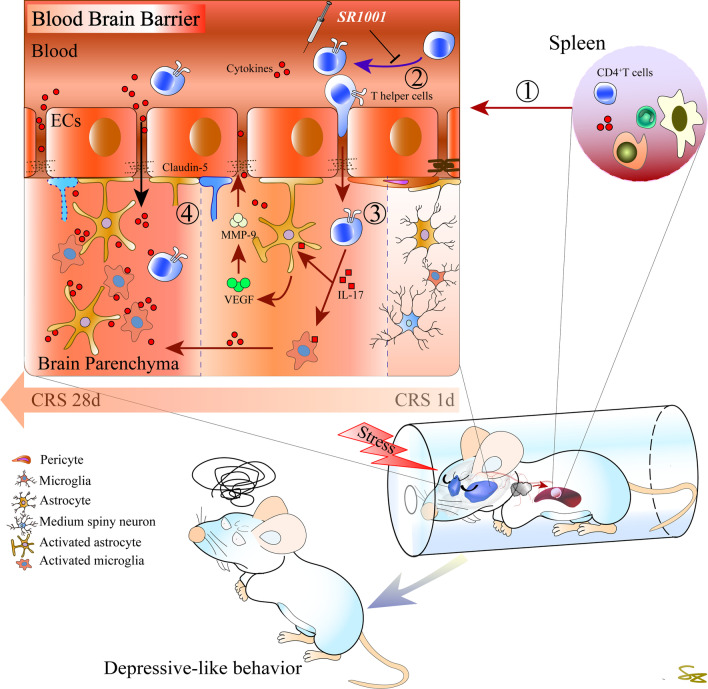
Background: Depression is a recurrent and devastating mental disease that is highly prevalent worldwide. Prolonged exposure to stressful events or a stressful environment is detrimental to mental health. In recent years, an inflammatory hypothesis has been implicated in the pathogenesis of stress-induced depression. However, less attention has been given to the initial phases, when a series of stress reactions and immune responses are initiated. Peripheral CD4 + T cells have been reported as the major contributors to the occurrence of mental disorders. Chronic stress exposure-evoked release of cytokines can promote the differentiation of peripheral CD4 + cells into various phenotypes. Among them, Th17 cells have attracted much attention due to their high pathogenic potential in central nervous system (CNS) diseases. Thus, we intended to determine the crucial role of CD4 + Th17 cells in the development of specific subtypes of depression and unravel the underpinnings of their pathogenetic effect. Methods: In the present research, a daily 6-h restraint stress paradigm was employed in rats for 28 successive days to mimic the repeated mild and predictable, but inevitable environmental stress in our daily lives. Then, depressive-like symptoms, brain–blood barrier (BBB) permeability, neuroinflammation, and the differentiation and functional changes of CD4 + cells were investigated. Results: We noticed that restrained rats showed significant depressive-like symptoms, concomitant BBB disruption and neuroinflammation in the dorsal striatum (DS). We further observed a time-dependent increase in thymus- and spleen-derived naïve CD4 + T cells, as well as the aggregation of inflammatory Th17 cells in the DS during the period of chronic restraint stress (CRS) exposure. Moreover, increased Th17-derived cytokines in the brain can further impair the BBB integrity, thus allowing more immune cells and cytokines to gain easy access to the CNS. Our findings suggested that, through a complex cascade of events, peripheral immune responses were propagated to the CNS, and gradually exacerbated depressive-like symptoms. Furthermore, inhibiting the differentiation and function of CD4 + T cells with SR1001 in the early stages of CRS exposure ameliorated CRS-induced depressive-like behaviour and the inflammatory response. Conclusions: Our data demonstrated that inflammatory Th17 cells were pivotal in accelerating the onset and exacerbation of depressive symptoms in CRS-exposed rats. This subtype of CD4 + T cells may be a promising therapeutic target for the early treatment of stress-induced depression.
Overview
CoChat Summary
TL;DR
Chronic restraint stress in rats produced depressive-like behavior, blood–brain barrier disruption, and neuroinflammation in the dorsal striatum, with peripheral CD4+ Th17 cells recruited into the brain during early stress exposure. Inhibiting Th17 differentiation/function with SR1001 ameliorated depressive-like behavior and inflammatory responses, suggesting Th17 cells as an early therapeutic target.
Key findings
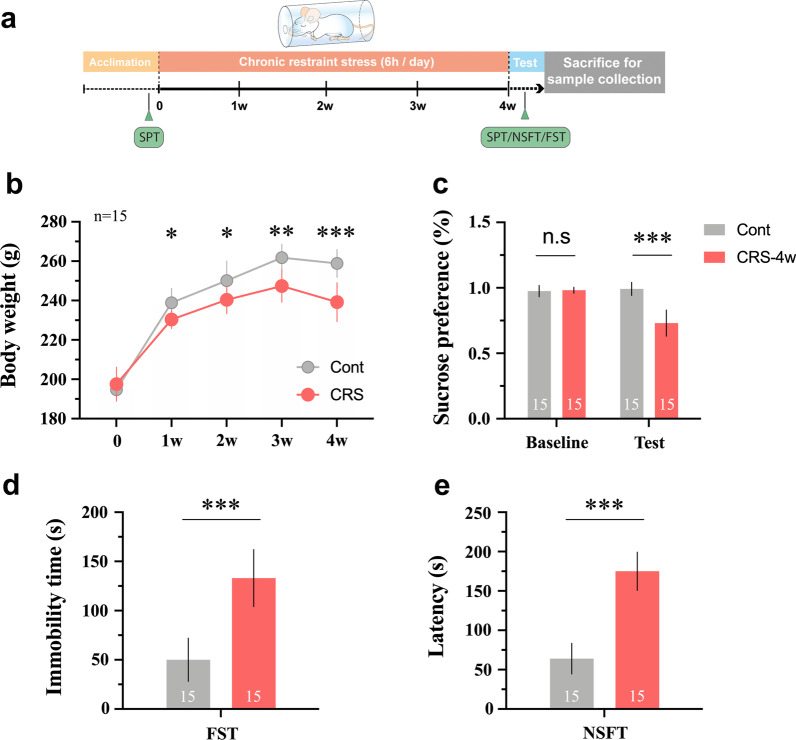
- CRS-exposed rats showed depressive-like symptoms: inhibited body-weight gain (1 w, p < 0.05; 2 w, p < 0.05; 3 w, p < 0.01; 4 w, p < 0.001), decreased sucrose preference (p < 0.01), increased forced-swim immobility (p < 0.001), and longer novelty-suppressed feeding latency (p < 0.001).
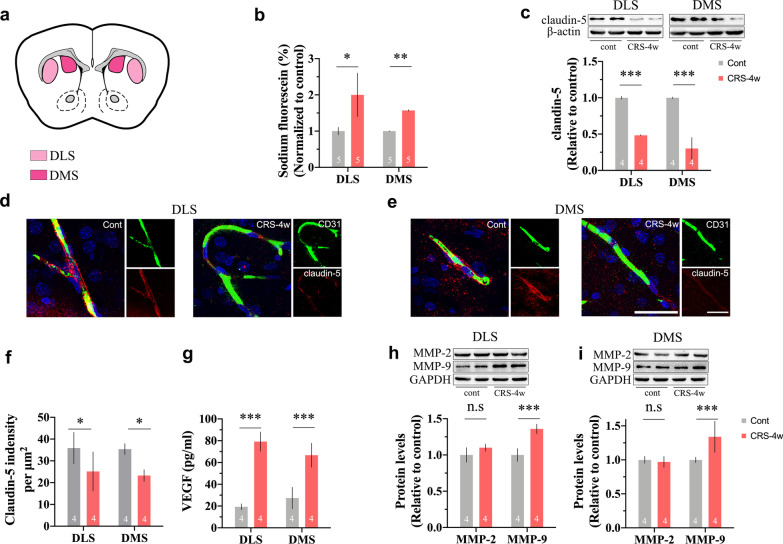
- CRS caused BBB disruption in the dorsolateral and dorsomedial striatum: increased fluorescein sodium leakage (both p < 0.05), reduced claudin-5 (both p < 0.001), increased VEGF (both p < 0.001), and increased MMP-9 in DLS (p < 0.001) and DMS (p < 0.05), but not MMP-2.
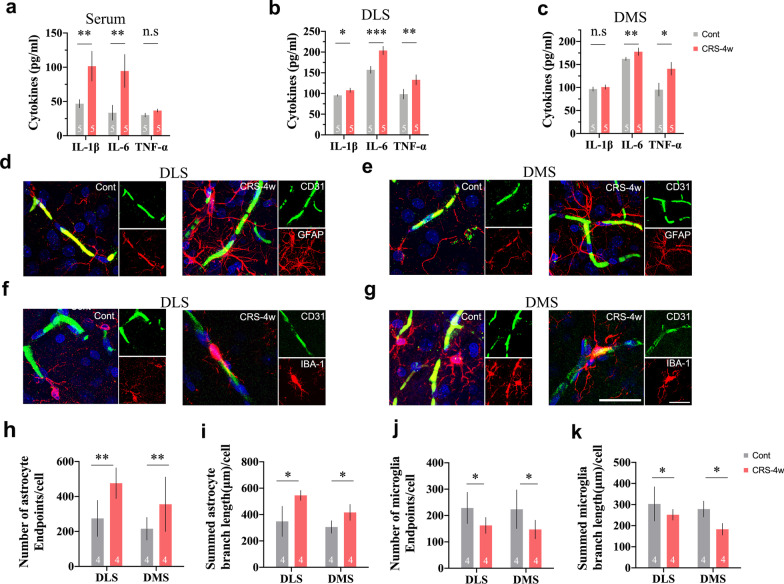
- Neuroinflammation was elevated: serum IL-1β and IL-6 (both p < 0.01); DLS IL-1β (p < 0.05), IL-6 (p < 0.001), TNF-α (p < 0.01); DMS IL-6 (p < 0.05), TNF-α (p < 0.01), with reactive astrogliosis and deramified microglia.
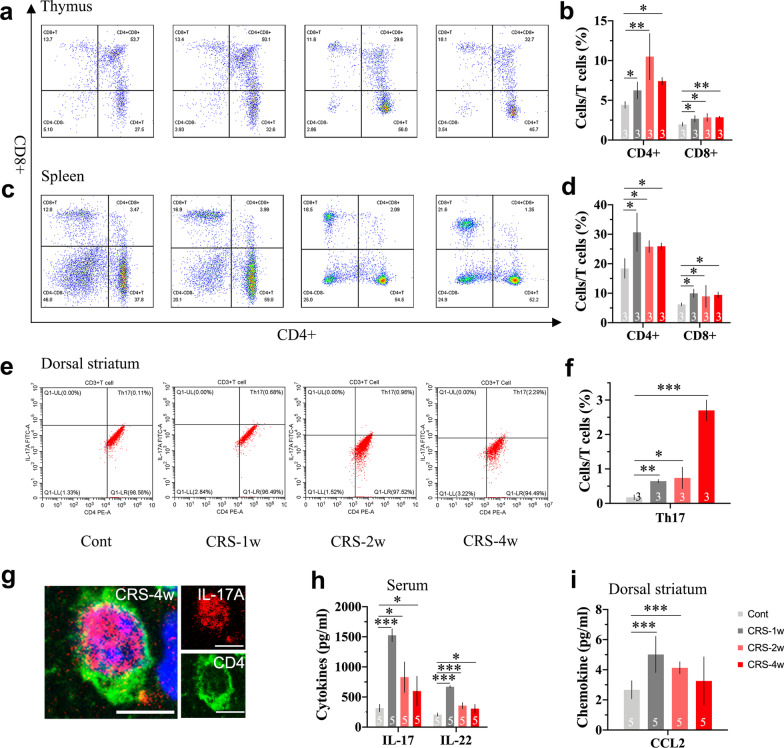
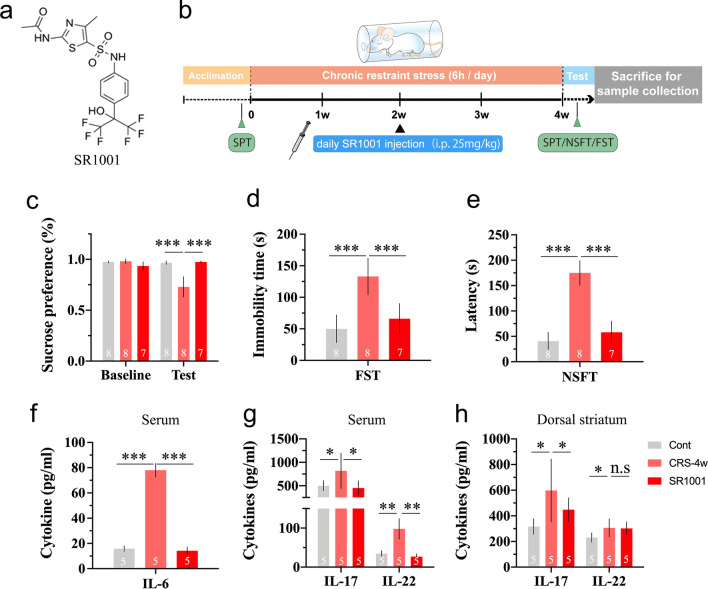
- Peripheral CD4+ Th17 cells increased in the brain: naïve CD4+ cells peaked in spleen at week 1 (p < 0.05) and thymus at week 2 (p < 0.01); Th17 cells in dorsal striatum increased throughout CRS; SR1001 improved SPT, FST, and NSFT (all p < 0.001) and reduced serum IL-6 (p < 0.001), IL-17 (p < 0.05), and IL-22 (p < 0.01), with dorsal striatum IL-17 moderately decreased (p < 0.05) and IL-22 unchanged.
Methods
- Male Wistar rats (6–8 weeks, 180–200 g; total n = 96) were assigned to sham, CRS, or CRS + SR1001; CRS consisted of 6 h/day restraint stress for 28 successive days, and SR1001 was given daily intraperitoneally at 25 mg/kg.
- Behavioral tests included sucrose preference, forced swim, and novelty-suppressed feeding; BBB permeability was measured with fluorescein sodium, and brain tissue was analyzed by immunofluorescence, Western blotting, ELISA, and flow cytometry.
- Data were analyzed with t-tests or one-way ANOVA followed by LSD post hoc comparisons; p < 0.05 was significant, and all experiments were replicated twice.
Limitations
- The paper states that further studies using cell-type-specific manipulation are required to clarify the precise role of effector Th17 cells, because SR1001 only partially reversed brain IL-17 and did not change IL-22, and other CNS cells such as meningeal γδ17 T cells can also produce IL-17.
- Evident from the text: only male rats were studied, so sex differences are not addressed; group sizes are not specified despite a total n = 96; and the Methods describe restraint for “7, 14 and 24 successive days,” which conflicts with the 28-day CRS protocol described elsewhere.
Model-written summary. Check it against the paper before relying on it.
Integrity signals
Registry
Cites
Statistics
Figures
Verification
Claims the paper makes
25 Valid · 3 Not valid · 8 Not checked · 87 Own results and interpretations
Some cited sources support this claim and some don’t — read each source’s verdict below.
In the paper
“Abundant experimental evidence suggests that the BBB is compromised after repeated stress exposure [11, 38, 39].”
§ Chronic stress-induced depression requires the recruitment of peripheral Th17 cells into the brain > Discussion
What the sources say
- Supportedcites [11] Menard C Pfau ML Hodes GE Kana V Wang VX Bouchard S Takahashi A Flanigan ME Aleyasin H LeClair KB Social stress induces neurovascular pathology promoting depression Nat Neurosci 2017 20 1752 1760 29184215 PMC5726568 source
The Results report BBB leakiness after 10 days of chronic social defeat stress in stress-susceptible mice, but not resilient mice. The Discussion states that chronic social stress can loosen the BBB; this supports the citing sentence’s hedged claim about repeated stress exposure. (LLM, conf=0.90)
- Supportedcites [38] Santha P Veszelka S Hoyk Z Meszaros M Walter FR Toth AE Kiss L Kincses A Olah Z Seprenyi G Restraint stress-induced morphological changes at the blood–brain barrier in adult rats Front Mol Neurosci 2015 8 88 26834555 PMC4712270 source
The Introduction describes repeated restraint-stress exposure in adult rats, including a 21-day group. The Discussion reports endothelial changes in all stressed groups and says tight-junction disruption and other alterations suggest BBB dysfunction. The study did not directly measure BBB permeability, but the citing sentence likewise frames compromise as a suggestion. (LLM, conf=0.88)
- Disputedcites [39] Weber MD Godbout JP Sheridan JF Repeated social defeat, neuroinflammation, and behavior: monocytes carry the signal Neuropsychopharmacology 2017 42 46 61 27319971 PMC5143478 sourceExperimental — accuracy not yet measured
In the section on RSD-induced monocyte trafficking (page unavailable), the review reports that BBB permeability was unaffected after repeated social defeat, even though monocytes entered stress-responsive brain regions. It attributes a potentially leaky BBB in an earlier experiment to irradiation-induced bone-marrow transplantation, not to stress exposure. (LLM, conf=0.88)
Checked by a reasoning model — may be wrong.
hedgedstates a cause- Asserted: passes — The authors put it forward as true.
- Checkable: passes — It can be checked against evidence.
- Load-bearing: passes — The paper’s conclusions depend on it.
- Based: passes — The paper gives a reason why it holds.
- Supported
Every source the paper cites for this claim was checked and supports it.
In the paper
“Additionally, mice receiving Th17-cell administration display obvious depressive-like behaviours [16, 20].”
§ Chronic stress-induced depression requires the recruitment of peripheral Th17 cells into the brain > Introduction
What the sources say
- Supportedcites [16] Beurel E Lowell JA Jope RS Distinct characteristics of hippocampal pathogenic TH17 cells in a mouse model of depression Brain Behav Immun 2018 73 180 191 29698707 PMC6287768 source
The Results section (‘TH17 cells but not TH1 cells promote depressive-like behaviors’) reports that administering TH17 cells significantly increased susceptibility to learned helplessness in male Rag2−/− mice. The paper treats learned helplessness as a depressive-like behavior, supporting the citing sentence. (LLM, conf=0.91)
- Supportedcites [20] Beurel E Harrington LE Jope RS Inflammatory T helper 17 cells promote depression-like behavior in mice Biol Psychiatry 2013 73 622 630 23174342 PMC3582833 source
The Results report that 89% of Th17-recipient mice met the learned-helplessness criterion under conditions where controls did not. They also report impaired novelty-suppressed feeding and social interaction after Th17-cell administration. These are the depression-like behaviours attributed to the source; the paper does not establish clinical depression in mice. (LLM, conf=0.94)
plainstates a cause- Asserted: passes — The authors put it forward as true.
- Checkable: passes — It can be checked against evidence.
- Load-bearing: passes — The paper’s conclusions depend on it.
- Based: passes — The paper gives a reason why it holds.
- Supported
Every source the paper cites for this claim was checked and supports it.
In the paper
“Th17 cells are increased in mice exhibiting learned helplessness.”
§ Chronic stress-induced depression requires the recruitment of peripheral Th17 cells into the brain > Introduction
What the sources say
- Supportedcites [16] Beurel E Lowell JA Jope RS Distinct characteristics of hippocampal pathogenic TH17 cells in a mouse model of depression Brain Behav Immun 2018 73 180 191 29698707 PMC6287768 source
The Results section, “TH17 cells accumulate in the hippocampus and the prefrontal cortex,” reports a significant increase in hippocampal TH17 cells in mice exhibiting learned helplessness and accumulation in the prefrontal cortex. This supports the claim that TH17 cells are increased in those mice. (LLM, conf=0.93)
- Supportedcites [20] Beurel E Harrington LE Jope RS Inflammatory T helper 17 cells promote depression-like behavior in mice Biol Psychiatry 2013 73 622 630 23174342 PMC3582833 source
The Results report that brain Th17 cells were 78% higher in mice exhibiting learned helplessness than in mice that escaped, although both groups underwent the same foot-shock protocol. This directly supports the claim. (LLM, conf=0.94)
plainstates an association- Asserted: passes — The authors put it forward as true.
- Checkable: passes — It can be checked against evidence.
- Load-bearing: passes — The paper’s conclusions depend on it.
- Based: passes — The paper gives a reason why it holds.
- Supported
The cited sources support only part of this claim — read each source’s verdict below.
In the paper
“SR1001 is a high-affinity synthetic ligand that specifically binds to the ligand-binding domains of both RORα and RORγt [69].”
§ Chronic stress-induced depression requires the recruitment of peripheral Th17 cells into the brain > Discussion
What the sources say
- Partly supportedcites [69] Solt LA Kumar N Nuhant P Wang Y Lauer JL Liu J Istrate MA Kamenecka TM Roush WR Vidovic D Suppression of TH17 differentiation and autoimmunity by a synthetic ROR ligand Nature 2011 472 491 494 21499262 PMC3148894 sourceExperimental — accuracy not yet measured
The binding-assay passage (section labeled Abstract; no page given) reports selective, nanomolar-affinity binding of SR1001 to RORα and RORγ. The HDX passage examines binding to the RORγ ligand-binding domain. Our copy does not explicitly demonstrate binding to RORγt specifically or localize RORα binding to its ligand-binding domain. (LLM, conf=0.84)
plain- Asserted: passes — The authors put it forward as true.
- Checkable: passes — It can be checked against evidence.
- Load-bearing: passes — The paper’s conclusions depend on it.
- Based: passes — The paper gives a reason why it holds.
- Partly supported
Every source the paper cites for this claim was checked and supports it.
In the paper
“The nuclear receptors retinoic acid receptor-related orphan receptors (RORs) α and γt play indispensable roles in the differentiation of naïve CD4+ T cells into effector Th17 cells.”
§ Chronic stress-induced depression requires the recruitment of peripheral Th17 cells into the brain > Discussion
What the sources say
- Supportedcites [69] Solt LA Kumar N Nuhant P Wang Y Lauer JL Liu J Istrate MA Kamenecka TM Roush WR Vidovic D Suppression of TH17 differentiation and autoimmunity by a synthetic ROR ligand Nature 2011 472 491 494 21499262 PMC3148894 source
The Abstract says RORα and RORγt have indispensable roles in TH17-cell development. Another passage in the same section states that both are required for full differentiation of naïve CD4+ T cells into TH17 cells. (LLM, conf=0.94)
plainstates a cause- Asserted: passes — The authors put it forward as true.
- Checkable: passes — It can be checked against evidence.
- Load-bearing: passes — The paper’s conclusions depend on it.
- Based: passes — The paper gives a reason why it holds.
- Supported
75 more claims · 3 with their cited sources checked
Create a free account to see all 123 claims and every source verdict.
- Probably not a substantial claim. 31
- It may state two separate claims as one. 17
Claims other papers make about this one
Each is checked against this paper’s own text: does it say what the citing paper says it does?
The cited source says what the claim attributes to it.
In the citing paper
“Research in rats conducted by Peng et al. showed a time-dependent increase in thymus-derived and spleen-derived naïve CD4+ T cells, along with aggregation of inflammatory Th17 cells in the dorsal striatum during exposure to stress.”
From The Role of Cortisol in Chronic Stress, Neurodegenerative Diseases, and Psychological Disorders (2023) · cites this paper as [117]
The cited source says what the claim attributes to it.
In the citing paper
“This prevention resulted in lower levels of expressed proinflammatory cytokines IL-6, IL-17, and IL-22.”
From The Role of Cortisol in Chronic Stress, Neurodegenerative Diseases, and Psychological Disorders (2023) · cites this paper as [117]
The cited source says what the claim attributes to it.
In the citing paper
“Furthermore, reactive astrogliosis was noted in the dorsolateral and dorsomedial striatum of rats exposed to chronic stress [117].”
From The Role of Cortisol in Chronic Stress, Neurodegenerative Diseases, and Psychological Disorders (2023) · cites this paper as [117]
The cited source says what the claim attributes to it.
In the citing paper
“Stressed rats exhibited significant symptoms of depression, blood–brain barrier disruption, and neuroinflammation in the dorsal striatum [117].”
From The Role of Cortisol in Chronic Stress, Neurodegenerative Diseases, and Psychological Disorders (2023) · cites this paper as [117]
The cited source says what the claim attributes to it.
In the citing paper
“Recruitment of activated Th17 cells into the CNS and the increased production of IL-17 and IL-22 may be crucial for the development of symptoms of depression [117].”
From The Role of Cortisol in Chronic Stress, Neurodegenerative Diseases, and Psychological Disorders (2023) · cites this paper as [117]
4 more claims about this paper
Create a free account to see every claim other papers make about this one.
Self-check
Percentages, sums and reported differences re-computed from the paper’s own numbers.
Each contradiction between two passages listed here was confirmed by an independent check.
Rated minor: it would not touch a result — a value no result rests on, a p-value that stays on the same side of the significance level, or a conflict that is clerical, resolved elsewhere in the paper, or outside its own findings.
In the paper
§ Chronic stress-induced depression requires the recruitment of peripheral Th17 cells into the brain > Materials and methods > Chronic restraint stress
“Rats in the CRS groups received behavioural restraint 6 h per day (from 10:00 to 16:00) for 7, 14 and 24 successive days.”
§ Chronic stress-induced depression requires the recruitment of peripheral Th17 cells into the brain > Results > CRS results in obvious depressive-like symptoms in rats
“Rats were subjected to a 28 days of restraint stress.”
Rated minor: it would not touch a result — a value no result rests on, a p-value that stays on the same side of the significance level, or a conflict that is clerical, resolved elsewhere in the paper, or outside its own findings.
In the paper
§ Chronic stress-induced depression requires the recruitment of peripheral Th17 cells into the brain > Results > Inhibiting CD4+ T-cell differentiation into pathogenic Th17 cells is effective in ameliorating CRS-induced depressive-like behaviour
“the expression levels of IL-6 in serum (f); IL-17 and IL-22 in serum (g) and dorsal striatum (h) were fully or partially reversed after SR1001 treatment.”
§ Chronic stress-induced depression requires the recruitment of peripheral Th17 cells into the brain > Discussion
“It is noteworthy that, in the DS, the expression level of IL-17 was moderately decreased, whereas that of IL-22 was unchanged.”
Rated minor: it would not touch a result — a value no result rests on, a p-value that stays on the same side of the significance level, or a conflict that is clerical, resolved elsewhere in the paper, or outside its own findings.
In the paper
§ Chronic stress-induced depression requires the recruitment of peripheral Th17 cells into the brain > Materials and methods > Statistical analysis
“Data are expressed as the means ± SEM.”
§ Chronic stress-induced depression requires the recruitment of peripheral Th17 cells into the brain > Results > CRS results in obvious depressive-like symptoms in rats
“Data are expressed as mean ± SD, Student’s t-test, *p < 0.05, **p < 0.01, ***p < 0.001, compared with control”
Citations
Cites
Physiology and neurobiology of stress and adaptation: central role of the brain
McEwen, B. S. (2007) · Physiological Reviews · doi:10.1152/physrev.00041.2006 · Cited by 5,429 · cited 1×
“Discussion Prolonged exposure to stressful events or a stressful environment is detrimental to mental health [25].”
BackgroundStructure and function of the blood–brain barrier
Abbott, N. J., Patabendige, A. A. K., Dolman, D. E. M., Yusof, S. R., & Begley, D. J. (2010) · Neurobiology of Disease · doi:10.1016/j.nbd.2009.07.030 · Cited by 5,185 · cited 1×
“The breakdown of the BBB is mainly due to the disruption of TJs, such as claudin-5 [42, 43].”
BackgroundKorn, T., Bettelli, E., Oukka, M., & Kuchroo, V. K. (2009) · Annual Review of Immunology · doi:10.1146/annurev.immunol.021908.132710 · Cited by 4,873 · cited 2×
“IL-17 and IL-22 are major Th17-produced cytokines that generate tissue inflammation [18].”
BackgroundThe role of inflammation in depression: from evolutionary imperative to modern treatment target
Miller, A. H., & Raison, C. L. (2016) · Nature Reviews Immunology · doi:10.1038/nri.2015.5 · Cited by 3,942 · cited 1×
“Recently, immune dysfunction in the CNS has been implicated in the pathogenesis of major depression [8, 9].”
BackgroundStress and disorders of the stress system
Chrousos, G. P. (2009) · Nature Reviews Endocrinology · doi:10.1038/nrendo.2009.106 · Cited by 3,215 · cited 1×
“Prolonged exposure to stress increases vulnerability to mood disorders, including depression [2, 3].”
BackgroundPsychological Stress and Disease
Cohen, S., Janicki-Deverts, D., & Miller, G. E. (2007) · JAMA · doi:10.1001/jama.298.14.1685 · Cited by 3,168 · cited 1×
“Although moderate stress is helpful for learning and memory, persistent or chronic stress exposure can precipitate or exacerbate mental disorders [6, 27].”
BackgroundThe molecular neurobiology of depression
Krishnan, V., & Nestler, E. J. (2008) · Nature · doi:10.1038/nature07455 · Cited by 2,889
Development, maintenance and disruption of the blood-brain barrier
Obermeier, B., Daneman, R., & Ransohoff, R. M. (2013) · Nature Medicine · doi:10.1038/nm.3407 · Cited by 2,452 · cited 1×
“The breakdown of the BBB is mainly due to the disruption of TJs, such as claudin-5 [42, 43].”
BackgroundStress-induced immune dysfunction: implications for health
Glaser, R., & Kiecolt-Glaser, J. K. (2005) · Nature Reviews Immunology · doi:10.1038/nri1571 · Cited by 2,190 · cited 1×
“In addition to the neuroendocrine system, the peripheral immune system is most vulnerable to stimuli in the early phases of stress exposure [60].”
THE EFFECTS OF STRESSFUL LIFE EVENTS ON DEPRESSION
Kessler, R. C. (1997) · Annual Review of Psychology · doi:10.1146/annurev.psych.48.1.191 · Cited by 2,111
Kebir, H., Kreymborg, K., Ifergan, I., Dodelet-Devillers, A., Cayrol, R., Bernard, M., Giuliani, F., Arbour, N., Becher, B., & Prat, A. (2007) · Nature Medicine · doi:10.1038/nm1651 · Cited by 1,759 · cited 1×
“In turn, IL-17 further impairs BBB integrity, thus allowing more immune cells and cytokines to gain easy access to the CNS [65, 66].”
BackgroundCity living and urban upbringing affect neural social stress processing in humans
Lederbogen, F., Kirsch, P., Haddad, L., Streit, F., Tost, H., Schuch, P., Wüst, S., Pruessner, J. C., Rietschel, M., Deuschle, M., et al. (2011) · Nature · doi:10.1038/nature10190 · Cited by 1,584
So depression is an inflammatory disease, but where does the inflammation come from?
Berk, M., Williams, L. J., Jacka, F. N., O’Neil, A., Pasco, J. A., Moylan, S., Allen, N. B., Stuart, A. L., Hayley, A. C., Byrne, M. L., et al. (2013) · BMC Medicine · doi:10.1186/1741-7015-11-200 · Cited by 1,423 · cited 1×
“Nonetheless, the sources of inflammatory factors are diverse [37].”
BackgroundStructure and function of the immune system in the spleen
Lewis, S. M., Williams, A., & Eisenbarth, S. C. (2019) · Science Immunology · doi:10.1126/sciimmunol.aau6085 · Cited by 1,301 · cited 1×
“The spleen is a peripheral immune organ where adaptive immunity is initiated [62].”
BackgroundVEGF enhances angiogenesis and promotes blood–brain barrier leakage in the ischemic brain
Zhang, Z. G., Zhang, L., Jiang, Q., Zhang, R., Davies, K., Powers, C., Bruggen, N. V., & Chopp, M. (2000) · Journal of Clinical Investigation · doi:10.1172/jci9369 · Cited by 1,296 · cited 1×
“As a pleiotropic growth factor, VEGF is responsible for multiple important physiological functions, particularly BBB permeability [44, 50, 51].”
BackgroundPizzagalli, D. A., Holmes, A. J., Dillon, D. G., Goetz, E. L., Birk, J. L., Bogdan, R., Dougherty, D. D., Iosifescu, D. V., Rauch, S. L., & Fava, M. (2009) · American Journal of Psychiatry · doi:10.1176/appi.ajp.2008.08081201 · Cited by 1,232
Brain on stress: how the social environment gets under the skin
McEwen, B. S. (2012) · Proceedings of the National Academy of Sciences · doi:10.1073/pnas.1121254109 · Cited by 1,200
Social stress induces neurovascular pathology promoting depression
Menard, C., Pfau, M. L., Hodes, G. E., Kana, V., Wang, V. X., Bouchard, S., Takahashi, A., Flanigan, M. E., Aleyasin, H., LeClair, K. B., et al. (2017) · Nature Neuroscience · doi:10.1038/s41593-017-0010-3 · Cited by 1,028 · cited 1×
“Abundant experimental evidence suggests that the BBB is compromised after repeated stress exposure [11, 38, 39].”
BackgroundAstrocyte-derived VEGF-A drives blood-brain barrier disruption in CNS inflammatory disease
Argaw, A. T., Asp, L., Zhang, J., Navrazhina, K., Pham, T., Mariani, J. N., Mahase, S., Dutta, D. J., Seto, J., Kramer, E. G., et al. (2012) · Journal of Clinical Investigation · doi:10.1172/jci60842 · Cited by 733 · cited 1×
“As a pleiotropic growth factor, VEGF is responsible for multiple important physiological functions, particularly BBB permeability [44, 50, 51].”
BackgroundVEGF-mediated disruption of endothelial CLN-5 promotes blood-brain barrier breakdown
Argaw, A. T., Gurfein, B. T., Zhang, Y., Zameer, A., & John, G. R. (2009) · Proceedings of the National Academy of Sciences · doi:10.1073/pnas.0808698106 · Cited by 666
The multifaceted role of CD4+ T cells in CD8+ T cell memory
Laidlaw, B. J., Craft, J. E., & Kaech, S. M. (2016) · Nature Reviews Immunology · doi:10.1038/nri.2015.10 · Cited by 657
Felger, J. C., Li, Z., Haroon, E., Woolwine, B. J., Jung, M. Y., Hu, X., & Miller, A. H. (2016) · Molecular Psychiatry · doi:10.1038/mp.2015.168 · Cited by 620
Striatal circuits for reward learning and decision-making
Cox, J., & Witten, I. B. (2019) · Nature Reviews Neuroscience · doi:10.1038/s41583-019-0189-2 · Cited by 568
Cellular mechanisms of IL-17-induced blood-brain barrier disruption
Huppert, J., Closhen, D., Croxford, A., White, R., Kulig, P., Pietrowski, E., Bechmann, I., Becher, B., Luhmann, H. J., Waisman, A., et al. (2010) · The FASEB Journal · doi:10.1096/fj.09-141978 · Cited by 529 · cited 1×
“In turn, IL-17 further impairs BBB integrity, thus allowing more immune cells and cytokines to gain easy access to the CNS [65, 66].”
BackgroundSuppression of TH17 differentiation and autoimmunity by a synthetic ROR ligand
Solt, L. A., Kumar, N., Nuhant, P., Wang, Y., Lauer, J. L., Liu, J., Istrate, M. A., Kamenecka, T. M., Roush, W. R., Vidović, D., et al. (2011) · Nature · doi:10.1038/nature10075 · Cited by 508
Morrison, H. W., & Filosa, J. A. (2013) · Journal of Neuroinflammation · doi:10.1186/1742-2094-10-4 · Cited by 506 · cited 1×
“Immunofluorescence quantification was performed as previously described [24] and detailed in the Additional file 1.”
MethodRestraint stress in biobehavioral research: Recent developments
Buynitsky, T., & Mostofsky, D. I. (2009) · Neuroscience & Biobehavioral Reviews · doi:10.1016/j.neubiorev.2009.05.004 · Cited by 426 · cited 1×
“The CRS model ideally mimics the key features of this type of stressor and has been used as a major experimental model of depression [28, 29].”
MethodThe ins and outs of the striatum: Role in drug addiction
Yager, L. M., Garcia, A. F., Wunsch, A. M., & Ferguson, S. M. (2015) · Neuroscience · doi:10.1016/j.neuroscience.2015.06.033 · Cited by 417
Meningeal γδ T cells regulate anxiety-like behavior via IL-17a signaling in neurons
Alves de Lima, K., Rustenhoven, J., Da Mesquita, S., Wall, M., Salvador, A. F., Smirnov, I., Martelossi Cebinelli, G., Mamuladze, T., Baker, W., Papadopoulos, Z., et al. (2020) · Nature Immunology · doi:10.1038/s41590-020-0776-4 · Cited by 416
Szklarczyk, A., Lapinska, J., Rylski, M., McKay, R. D. G., & Kaczmarek, L. (2002) · The Journal of Neuroscience · doi:10.1523/jneurosci.22-03-00920.2002 · Cited by 392
Meningeal γδ T cell-derived IL-17 controls synaptic plasticity and short-term memory
Ribeiro, M., Brigas, H. C., Temido-Ferreira, M., Pousinha, P. A., Regen, T., Santa, C., Coelho, J. E., Marques-Morgado, I., Valente, C. A., Omenetti, S., et al. (2019) · Science Immunology · doi:10.1126/sciimmunol.aay5199 · Cited by 335
Stress-Induced Metabolic Disorder in Peripheral CD4+ T Cells Leads to Anxiety-like Behavior
Fan, K.-Q., Li, Y.-Y., Wang, H.-L., Mao, X.-T., Guo, J.-X., Wang, F., Huang, L.-J., Li, Y.-N., Ma, X.-Y., Gao, Z.-J., et al. (2019) · Cell · doi:10.1016/j.cell.2019.10.001 · Cited by 312
Kang, Z., Altuntas, C. Z., Gulen, M. F., Liu, C., Giltiay, N., Qin, H., Liu, L., Qian, W., Ransohoff, R. M., Bergmann, C., et al. (2010) · Immunity · doi:10.1016/j.immuni.2010.03.004 · Cited by 297 · cited 1×
“It has been suggested that astrocytes can respond to IL-17 by releasing mediators that promote tissue damage [67].”
BackgroundTNFα disrupts blood brain barrier integrity to maintain prolonged depressive-like behavior in mice
Cheng, Y., Desse, S., Martinez, A., Worthen, R. J., Jope, R. S., & Beurel, E. (2018) · Brain, Behavior, and Immunity · doi:10.1016/j.bbi.2018.02.003 · Cited by 292
Repeated Social Defeat, Neuroinflammation, and Behavior: Monocytes Carry the Signal
Weber, M. D., Godbout, J. P., & Sheridan, J. F. (2017) · Neuropsychopharmacology · doi:10.1038/npp.2016.102 · Cited by 283
The future of rodent models in depression research
Gururajan, A., Reif, A., Cryan, J. F., & Slattery, D. A. (2019) · Nature Reviews Neuroscience · doi:10.1038/s41583-019-0221-6 · Cited by 269 · cited 1×
“The CRS model ideally mimics the key features of this type of stressor and has been used as a major experimental model of depression [28, 29].”
MethodMichinaga, S., & Koyama, Y. (2019) · International Journal of Molecular Sciences · doi:10.3390/ijms20030571 · Cited by 263
The Phenomenology of Major Depression and the Representativeness and Nature of DSM Criteria.
Kendler, K. S. (2016) · American Journal of Psychiatry · doi:10.1176/appi.ajp.2016.15121509 · Cited by 255 · cited 1×
“Introduction Depression is a recurrent and devastating mental disease that is highly prevalent worldwide [1].”
BackgroundInflammatory T helper 17 cells promote depression-like behavior in mice
Beurel, E., Harrington, L. E., & Jope, R. S. (2013) · Biological Psychiatry · doi:10.1016/j.biopsych.2012.09.021 · Cited by 254 · cited 2×
“Additionally, Th17 cells have been associated with depression in several experimental and clinical studies [16, 20, 68].”
BackgroundNajjar, S., Pearlman, D. M., Devinsky, O., Najjar, A., & Zagzag, D. (2013) · Journal of Neuroinflammation · doi:10.1186/1742-2094-10-142 · Cited by 248 · cited 1×
“Dysregulated neuroinflammation leads to the occurrence of depression [41].”
BackgroundFrom ventral-medial to dorsal-lateral striatum: neural correlates of reward-guided decision-making
Burton, A. C., Nakamura, K., & Roesch, M. R. (2015) · Neurobiology of Learning and Memory · doi:10.1016/j.nlm.2014.05.003 · Cited by 238
Cellular and molecular basis for stress-induced depression
Seo, J.-S., Wei, J., Qin, L., Kim, Y., Yan, Z., & Greengard, P. (2017) · Molecular Psychiatry · doi:10.1038/mp.2016.118 · Cited by 235 · cited 1×
“Prolonged exposure to stress increases vulnerability to mood disorders, including depression [2, 3].”
BackgroundChen, Y., Jiang, T., Chen, P., Ouyang, J., Xu, G., Zeng, Z., & Sun, Y. (2011) · Psychiatry Research · doi:10.1016/j.psychres.2010.10.029 · Cited by 209 · cited 1×
“Additionally, Th17 cells have been associated with depression in several experimental and clinical studies [16, 20, 68].”
BackgroundBeurel, E., & Lowell, J. A. (2018) · Brain, Behavior, and Immunity · doi:10.1016/j.bbi.2017.08.001 · Cited by 187 · cited 1×
“Among them, Th17 cells have attracted much attention due to their high pathogenic potential in CNS diseases [18, 19].”
BackgroundPeripheral Blood Cell–Stratified Subgroups of Inflamed Depression
Lynall, M.-E., Turner, L., Bhatti, J., Cavanagh, J., de Boer, P., Mondelli, V., Jones, D., Drevets, W. C., Cowen, P., Harrison, N. A., et al. (2020) · Biological Psychiatry · doi:10.1016/j.biopsych.2019.11.017 · Cited by 187
Yang, Y., Thompson, J. F., Taheri, S., Salayandia, V. M., McAvoy, T. A., Hill, J. W., Yang, Y., Estrada, E. Y., & Rosenberg, G. A. (2013) · Journal of Cerebral Blood Flow & Metabolism · doi:10.1038/jcbfm.2013.56 · Cited by 147
van der Kooij, M. A., Fantin, M., Rejmak, E., Grosse, J., Zanoletti, O., Fournier, C., Ganguly, K., Kalita, K., Kaczmarek, L., & Sandi, C. (2014) · Nature Communications · doi:10.1038/ncomms5995 · Cited by 140 · cited 1×
“Stress is the leading cause of MMP-9 secretion in either patients or experimental animals [57, 58].”
BackgroundCCR2 defines in vivo development and homing of IL-23-driven GM-CSF-producing Th17 cells
Kara, E. E., McKenzie, D. R., Bastow, C. R., Gregor, C. E., Fenix, K. A., Ogunniyi, A. D., Paton, J. C., Mack, M., Pombal, D. R., Seillet, C., et al. (2015) · Nature Communications · doi:10.1038/ncomms9644 · Cited by 136 · cited 4×
“It is plausible that during initial phases, CCR2/CCL2 drives peripherally activated Th17 cells to penetrate the brain.”
InfluentialRestraint stress-induced morphological changes at the blood-brain barrier in adult rats
Sántha, P., Veszelka, S., Hoyk, Z., Mészáros, M., Walter, F. R., Tóth, A. E., Kiss, L., Kincses, A., Oláh, Z., Seprényi, G., et al. (2016) · Frontiers in Molecular Neuroscience · doi:10.3389/fnmol.2015.00088 · Cited by 136 · cited 1×
“Abundant experimental evidence suggests that the BBB is compromised after repeated stress exposure [11, 38, 39].”
BackgroundDepression and suicidality: A link to premature T helper cell aging and increased Th17 cells
Schiweck, C., Valles-Colomer, M., Arolt, V., Müller, N., Raes, J., Wijkhuijs, A., Claes, S., Drexhage, H., & Vrieze, E. (2020) · Brain, Behavior, and Immunity · doi:10.1016/j.bbi.2020.02.005 · Cited by 114
Zhang, H.-T., Zhang, P., Gao, Y., Li, C.-L., Wang, H.-J., Chen, L.-C., Feng, Y., Li, R.-Y., Li, Y.-L., & Jiang, C.-L. (2017) · Molecular Medicine Reports · doi:10.3892/mmr.2016.5974 · Cited by 101
Spampinato, S. F., Merlo, S., Sano, Y., Kanda, T., & Sortino, M. A. (2017) · Journal of Neurochemistry · doi:10.1111/jnc.14068 · Cited by 90
Min, H., Hong, J., Cho, I.-H., Jang, Y. H., Lee, H., Kim, D., Yu, S.-W., Lee, S., & Lee, S. J. (2015) · Molecular Brain · doi:10.1186/s13041-015-0116-z · Cited by 76
Specific functional connectivity alterations of the dorsal striatum in young people with depression
Kerestes, R., Harrison, B. J., Dandash, O., Stephanou, K., Whittle, S., Pujol, J., & Davey, C. G. (2015) · NeuroImage: Clinical · doi:10.1016/j.nicl.2014.12.017 · Cited by 75
Tseng, P., Cheng, Y., Chen, Y., Wu, C.-K., & Lin, P. (2015) · European Neuropsychopharmacology · doi:10.1016/j.euroneuro.2015.06.001 · Cited by 66
Distinct characteristics of hippocampal pathogenic th17 cells in a mouse model of depression
Beurel, E., Lowell, J. A., & Jope, R. S. (2018) · Brain, Behavior, and Immunity · doi:10.1016/j.bbi.2018.04.012 · Cited by 65 · cited 3×
“Additionally, Th17 cells have been associated with depression in several experimental and clinical studies [16, 20, 68].”
BackgroundThe role of the dorsal striatum in choice impulsivity
Kim, B. S., & Im, H. (2018) · Annals of the New York Academy of Sciences · doi:10.1111/nyas.13961 · Cited by 65
Shi, Z., Ren, H., Huang, Z., Peng, Y., He, B., Yao, X., Yuan, T.-F., & Su, H. (2017) · Molecular Neurobiology · doi:10.1007/s12035-016-0212-9 · Cited by 62
Self-citationEffects of the chronic restraint stress induced depression on reward-related learning in rats.
Xu, P., Wang, K., Lu, C., Dong, L., Chen, Y., Wang, Q., Shi, Z., Yang, Y., Chen, S., & Liu, X. (2017) · Behavioural Brain Research · doi:10.1016/j.bbr.2016.12.045 · Cited by 61
Self-citationHe, M.-C., Shi, Z., Sha, N.-N., Chen, N., Peng, S.-Y., Liao, D.-F., Wong, M.-S., Dong, X.-L., Wang, Y.-J., Yuan, T.-F., et al. (2019) · Biochemical Pharmacology · doi:10.1016/j.bcp.2019.01.021 · Cited by 54
Self-citationSocial Defeat Modulates T Helper Cell Percentages in Stress Susceptible and Resilient Mice
Ambrée, O., Ruland, C., Zwanzger, P., Klotz, L., Baune, B. T., Arolt, V., Scheu, S., & Alferink, J. (2019) · International Journal of Molecular Sciences · doi:10.3390/ijms20143512 · Cited by 54 · cited 1×
“It has been suggested that chronic social defeat can lead to enhanced Th17 differentiation in the spleen [63].”
BackgroundVascular growth factors in neuropsychiatry
Newton, S. S., Fournier, N. M., & Duman, R. S. (2013) · Cellular and Molecular Life Sciences · doi:10.1007/s00018-013-1281-9 · Cited by 48 · cited 1×
“As a pleiotropic growth factor, VEGF is responsible for multiple important physiological functions, particularly BBB permeability [44, 50, 51].”
BackgroundKowalczyk, M., Szemraj, J., Bliźniewska, K., Maes, M., Berk, M., Su, K.-P., & Gałecki, P. (2019) · Pharmacological Reports · doi:10.1016/j.pharep.2019.05.022 · Cited by 38 · cited 1×
“Chronic stress exposure-evoked release of cytokines can promote the differentiation of peripheral CD4+ cells into various phenotypes [17].”
BackgroundAstrocyte-derived VEGF increases cerebral microvascular permeability under high salt conditions
Deng, Z., Zhou, L., Wang, Y., Liao, S., Huang, Y., Shan, Y., Tan, S., Zeng, Q., Peng, L., Huang, H., et al. (2020) · Aging · doi:10.18632/aging.103348 · Cited by 34
Shi, Z., Chen, L., Li, S., Chen, S., Sun, X., Sun, L., Li, Y., Zeng, J., He, Y., & Liu, X. (2013) · Psychopharmacology · doi:10.1007/s00213-013-3149-y · Cited by 32
Self-citationShi, Z., Chen, Y., Lu, C., Dong, L.-M., Lv, J.-W., Tuo, Q.-H., Qin, L., Cheng, S.-W., Bu, L.-L., Lin, N., et al. (2018) · Pharmacological Research · doi:10.1016/j.phrs.2018.09.002 · Cited by 32
Self-citationStressful Events as Teaching Signals for the Brain
Trapp, S., O’Doherty, J. P., & Schwabe, L. (2018) · Trends in Cognitive Sciences · doi:10.1016/j.tics.2018.03.007 · Cited by 25
Lundberg, A. K., Jönsson, S., Stenmark, J., Kristenson, M., & Jonasson, L. (2016) · Psychoneuroendocrinology · doi:10.1016/j.psyneuen.2016.07.219 · Cited by 24
Expression and interaction of TNF-α and VEGF in chronic stress-induced depressive rats
Li, B., Wang, B., Chen, M., Li, G., Fang, M., & Zhai, J. (2015) · Experimental and Therapeutic Medicine · doi:10.3892/etm.2015.2641 · Cited by 20
Fish oil treatment reduces chronic alcohol exposure induced synaptic changes
Shi, Z., Xie, Y., Ren, H., He, B., Wang, M., Wan, J., Yuan, T., Yao, X., & Su, H. (2018) · Addiction Biology · doi:10.1111/adb.12623 · Cited by 19
Self-citationTargeting neuroinflammation: The therapeutic potential of ω-3 PUFAs in substance abuse
Peng, S., Peng, Z., Qin, M., Huang, L., Zhao, B., Wei, L., Ning, J., Tuo, Q.-H., Yuan, T.-F., Shi, Z., et al. (2021) · Nutrition · doi:10.1016/j.nut.2020.111058 · Cited by 18 · cited 1×
“Activated astrocytes and microglia respond rapidly to pathological stimuli with morphological and functional changes, thereby exacerbating neuroinflammation [40, 59].”
BackgroundSelf-citation
Cited by
The Role of Cortisol in Chronic Stress, Neurodegenerative Diseases, and Psychological Disorders
Knezevic, E., Nenic, K., Milanovic, V., & Knezevic, N. N. (2023) · Cells · doi:10.3390/cells12232726 · Cited by 564
“Recruitment of activated Th17 cells into the CNS and the increased production of IL-17 and IL-22 may be crucial for the development of symptoms of depression [117].”
BackgroundInfluentialCheng, J., Hu, H., Ju, Y., Liu, J., Wang, M., Liu, B., & Zhang, Y. (2024) · General Psychiatry · doi:10.1136/gpsych-2023-101374 · Cited by 196
“…Th17 cells, which are probably released from the lamina propria of the small intestine, can directly infiltrate the brain parenchyma through the BBB leakage induced by Th17-derived cytokines, 98 or they may originate from CD4 + T cells in the brain when stimulated by pro-inflammatory cytokines.”
BackgroundRole of stress in skin diseases: A neuroendocrine-immune interaction view
Zhang, H., Wang, M., Zhao, X., Wang, Y., Chen, X., & Su, J. (2023) · Brain Behavior and Immunity · doi:10.1016/j.bbi.2023.12.005 · Cited by 213
Neuroinflammation—A Crucial Factor in the Pathophysiology of Depression—A Comprehensive Review
Sălcudean, A., Bodo, C.-R., Popovici, R. A., Lica, M. M., Păcurar, M., Crăciun, R.-E., Crișan, A., ENĂTESCU, V. R., Marinescu, I. P., Cîmpian, D. M., et al. (2025) · Biomolecules · doi:10.3390/biom15040502 · Cited by 202
Jiao, W., Lin, J., Deng, Y., Ji, Y., Liang, C., Wei, S., Xi, J., & Yan, F. (2025) · Journal of Neuroinflammation · doi:10.1186/s12974-024-03312-3 · Cited by 144
Metadata
- Authors
- Peng, Z., Peng, S., Lin, K., Zhao, B., Wei, L., Tuo, Q., Liao, D., Yuan, T., & Shi, Z.
- Affiliations
- Hunan University of Traditional Chinese Medicine (CN)
- University of Health and Rehabilitation Sciences (CN)
- Henan Medical University (CN)
- Tongji University (CN)
- Corresponding author
- Yuan, Tifei
- Shi, Zhe
- Venue
- Journal of Neuroinflammation
- Published
- 2022-07-14
- Volume
- 19
- Issue
- 1
- Pages
- 186-186
- ISSN
- 1742-2094 (ISSN-L)
- PMC
- PMC9281140
- OpenAlex
- W4285387121
- Semantic Scholar
- 68e491d76082691575be56495cc4e1bfec4aa704
- Cited by
- 95
- References
- 71
- Citations by year
- 2026: 14 · 2025: 30 · 2024: 23 · 2023: 26 · 2022: 2
- FWCI
- 7.04
- Type
- journal article
- Language
- en
- Open access
- gold
- doi.org
- Licence
- cc-by
- creativecommons.org/licenses/by/4.0 (tdm)
- creativecommons.org/licenses/by/4.0 (vor)
- Locations
- Journal of Neuroinflammation (publishedVersion, cc-by)
- PubMed Central (publishedVersion, cc-by)
- PubMed (publishedVersion)
- DOAJ (DOAJ: Directory of Open Access Journals) (submittedVersion, cc-by-sa)
- Funders
- Natural Science Foundation of Hunan Province (2021JJ30504)
- Scientific Research Foundation of Hunan Provincial Education Department (19B422)
- National Natural Science Foundation of China (82171493)
- Topics
- Life Sciences › Neuroscience › Biological Psychiatry › Tryptophan and brain disorders
- Life Sciences › Neuroscience › Behavioral Neuroscience › Stress Responses and Cortisol
- Life Sciences › Neuroscience › Neurology › Neuroinflammation and Neurodegeneration Mechanisms
- Keywords
- stress-induced depression, Th17 cells, chronic restraint stress, neuroinflammation, dorsal striatum, CD4+ T cells, peripheral immune cells, cytokines, depression-like behavior
- MeSH terms
- Animals, Brain, Depression, Humans, Restraint, Physical, Cytokines, Th1 Cells, Rats, Th17 Cells
About these checks
Registry, retraction, Cites and statistics results are computed, not judged, with one exception: a printed reference that no index lists is read once by a model before it counts as a citation error. Claims are extracted by a model and kept only when their quote appears verbatim in the text; each cited source is then checked, with a model’s help, for whether it says what the claim relies on. Those verdicts can be wrong — read the claim’s quote and the cited source before relying on one.
The claim verdicts this report counts are experimental: their accuracy is not yet measured.
A language model drew the claims from the paper on 2026-10-09, under version 3 of the claim definition (model deepseek-v4.1-flash, prompt extract-v3).
A second model labelled each claim on 2026-10-09 (model jev-1.13-20260917, definition revision gold-guideline-v0.2).
Cited sources are checked with a language model’s help (gpt-6-sol).
Statistics and arithmetic are recomputed, not judged.
Confidence bands are shown only for fields calibrated on our annotated test set. None is calibrated yet, so no band is shown.
What counts as a claim ›How we measure confidence ›How we check this ›
Are you an author, or do you see a problem with this page? Request a review
Data sources
Bibliographic data: Semantic Scholar, OpenAlex, Crossref.
Contains information from the Semantic Scholar Academic Graph Datasets, made available under the ODC Attribution License (ODC-BY 1.0).
Semantic Scholar’s data is described in: Kinney, R., et al. (2023). The Semantic Scholar Open Data Platform. arXiv:2301.10140.
