

Barriers and facilitators to implementation of evidence-based task-sharing mental health interventions in low- and middle-income countries: a systematic review using implementation science frameworks
Open accessThe DOI matches its Crossref record; 108 of the 108 references it cites were found in a registry or an index; 54 of the 78 sources its claims cite were checked for support.
Abstract
Systematic review of barriers and facilitators affecting task-shared mental-health interventions in LMICs.
Overview
CoChat Summary
TL;DR
This systematic review identified barriers and facilitators to implementing evidence-based task-sharing mental health interventions in LMICs and organized them into a new eight-domain implementation framework, BeFITS-MH. Across 28 unique intervention studies from 37 articles, facilitators clustered most strongly around intervention and provider characteristics, while major barriers were more often client-, societal-, organizational-, mental health system-, and stigma-related.
Key findings
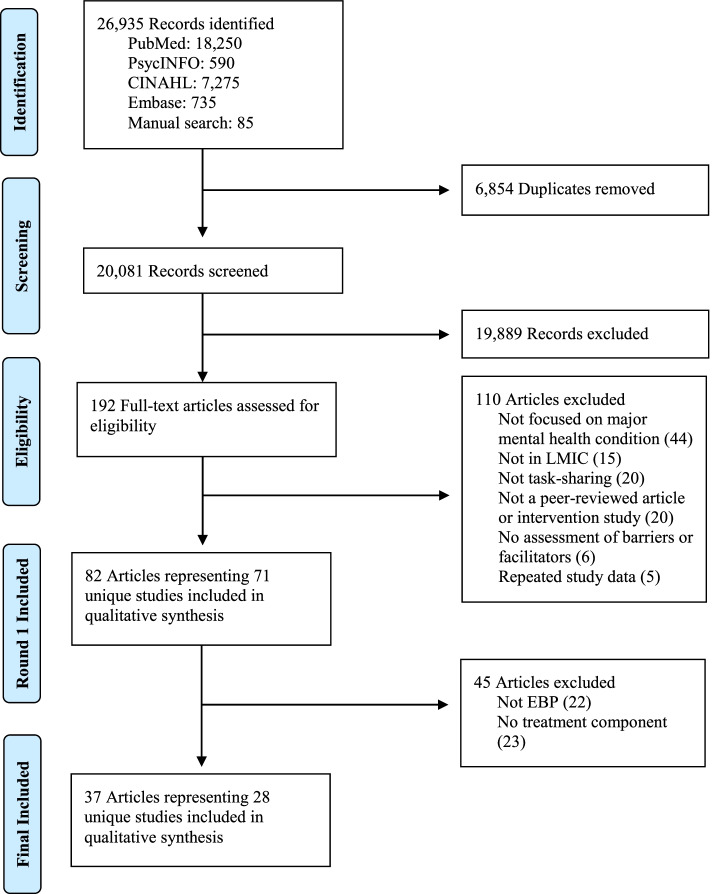
- The review screened 26,935 title/abstract records, reviewed 192 full texts, and included 37 articles representing 28 unique intervention studies.
- Included studies were published between 2008 and 2019 and conducted in 18 LMICs; the large majority focused on common mental disorders, with very few on serious mental illnesses.
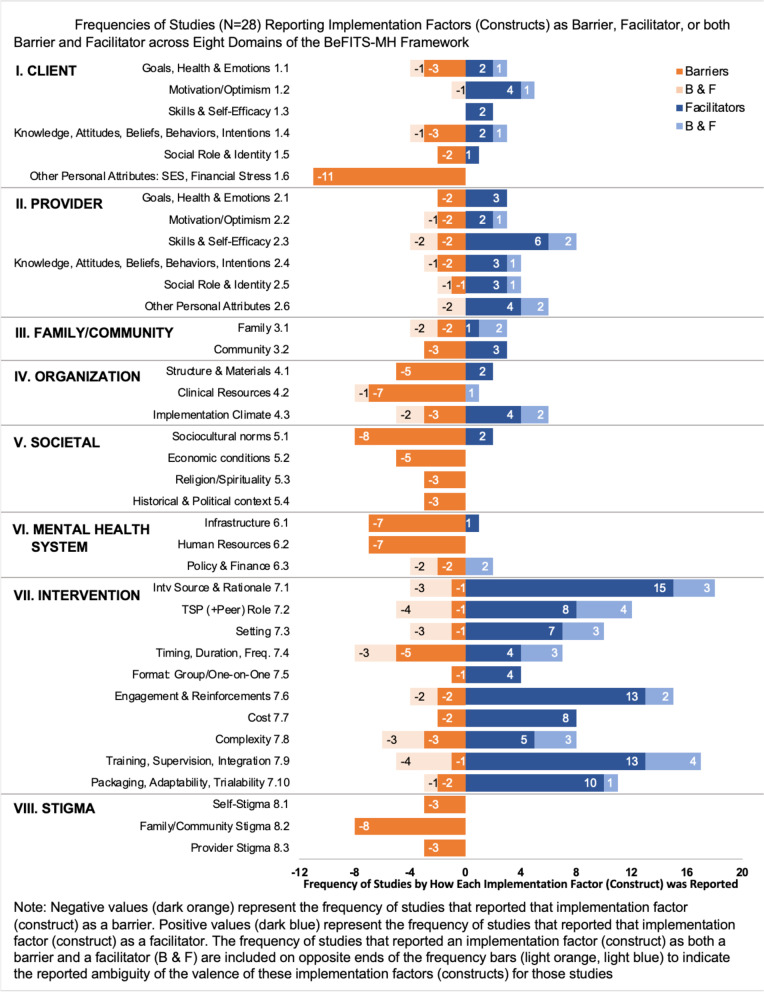
- The six most frequently reported facilitators were all in the intervention characteristics domain: intervention source and rationale; training, supervision, and integration; engagement and reinforcement mechanisms; packaging/adaptability/trialability; task-sharing provider’s role; and cost.
- The five most frequently reported barriers came from five different domains: client other personal attributes, sociocultural norms, family/community stigma, clinical resources in the organization, and mental health infrastructure and human resources; stigma constructs acted exclusively as barriers.
Methods
- Systematic review using PubMed, PsychINFO, CINAHL, and Embase for English-language, peer-reviewed studies published up to July 1, 2019; protocol registered in PROSPERO (CRD42020161357) and reporting followed PRISMA.
- Included studies had to focus on a mental health condition, involve a task-sharing intervention in an LMIC, and include direct assessment or data-supported analysis of barriers and facilitators; the final set was limited to interventions using or based on evidence-based practices.
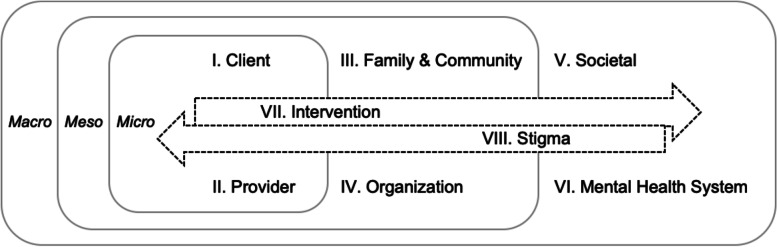
- The authors developed and iteratively refined the BeFITS-MH framework by combining constructs from CFIR, TDF, and Chaudoir et al., then coded included articles as barriers, facilitators, or both across 37 constructs in eight domains.
Limitations
- The paper states that it included only peer-reviewed English-language articles and did not use grey literature, which may introduce publication bias and miss local-language studies.
- The authors note the review relied on post-hoc analyses of the included studies, so findings depend on the rigor and bias of the primary studies; they also suggest barriers/facilitators may be underreported because of limited measurement tools.
- Evident from the text: the review’s scope excludes non-English, non-peer-reviewed, and non-EBP task-sharing interventions, so its findings may not generalize to all task-sharing mental health programs.
Model-written summary. Check it against the paper before relying on it.
Integrity signals
Registry
Cites
Statistics
Figures
Verification
Claims the paper makes
35 Valid · 2 Not valid · 19 Not checked · 112 Own results and interpretations
The cited sources support only part of this claim — read each source’s verdict below.
In the paper
“we situate our intervention domain at the nexus of all the domains because intervention characteristics can both influence and be influenced by the other factors—a position also supported by the CFIR [32, 35].”
§ Barriers and facilitators to implementation of evidence-based task-sharing mental health interventions in low- and middle-income countries: a systematic review using implementation science frameworks > Methods > Development of conceptual model and codebook
What the sources say
- Supportedcites [32] Damschroder LJ Aron DC Keith RE Kirsh SR Alexander JA Lowery JC Fostering implementation of health services research findings into practice: a consolidated framework for advancing implementation science Implement Sci 2009 4 50 19664226 PMC2736161 source
The Results, Overview of the CFIR, says its five domains interact in complex ways. It also describes intervention components and the setting being modified in a co-evolving, co-adaptive way. This supports the citing authors’ rationale for placing their intervention domain at the nexus; the placement itself is their own choice, not one attributed to the CFIR. (LLM, conf=0.88)
- Partly supportedcites [35] Chaudoir SR Dugan AG Barr CH Measuring factors affecting implementation of health innovations: a systematic review of structural, organizational, provider, patient, and innovation level measures Implement Sci 2013 8 22 23414420 PMC3598720 sourceExperimental — accuracy not yet measured
The Background section, “A multi-level framework guiding implementation science research” (page unavailable), says the CFIR includes innovation-level factors alongside structural, organizational, and provider factors. It does not say the intervention domain sits at the nexus of those domains or that intervention characteristics both influence and are influenced by the other factors. (LLM, conf=0.78)
plainstates a cause- Asserted: passes — The authors put it forward as true.
- Checkable: passes — It can be checked against evidence.
- Load-bearing: passes — The paper’s conclusions depend on it.
- Based: passes — The paper gives a reason why it holds.
- Supported
The cited sources support only part of this claim — read each source’s verdict below.
In the paper
“it became apparent in our framework refinement process that, particularly in mental health, stigma (e.g. self-stigma, family/community stigma, provider stigma, organizational or institutional-level stigma) is a force that can exert powerful influences on perceptions of mental health issues and treatments across all social actors and processes—including those in the intervention domain [39–42].”
§ Barriers and facilitators to implementation of evidence-based task-sharing mental health interventions in low- and middle-income countries: a systematic review using implementation science frameworks > Methods > Development of conceptual model and codebook
What the sources say
- Not checked — no full text of the sourcecites [39] Corrigan PW Mental health stigma as social attribution: implications for research methods and attitude change Clin Psychol Sci Pract 2000 7 48 67 source
- Not checked — no full text of the sourcecites [40] Link BG Struening EL Neese-Todd S Asmussen S Phelan JC Stigma as a barrier to recovery: the consequences of stigma for the self-esteem of people with mental illnesses Psychiatr Serv 2001 52 1621 1626 11726753 source
- Not checked — no full text of the sourcecites [41] Keusch GT Wilentz J Kleinman A Stigma and global health: developing a research agenda Lancet 2006 367 525 527 16473128 source
- Partly supportedcites [42] Wainberg ML Scorza P Shultz JM Helpman L Mootz JJ Johnson KA Challenges and opportunities in global mental health: a research-to-practice perspective Curr Psychiatry Rep 2017 19 28 28425023 PMC5553319 sourceExperimental — accuracy not yet measured
In “Reducing Mental Illness Stigma” (page unavailable), the paper says stigma discourages care-seeking, perpetuates misconceptions about whether mental illness can be cured, and may affect the standing of mental health professions. Its “Stigma” section also links prejudice and discrimination to delayed or prevented treatment. These passages support a powerful influence on perceptions and treatment uptake, but do not establish an influence across all social actors and processes, including every part of the intervention domain. (LLM, conf=0.82)
plainstates a cause- Asserted: passes — The authors put it forward as true.
- Checkable: passes — It can be checked against evidence.
- Load-bearing: passes — The paper’s conclusions depend on it.
- Based: passes — The paper gives a reason why it holds.
The cited sources support only part of this claim — read each source’s verdict below.
In the paper
“Additionally, these and other reviews (for example, see [23]) have not been explicitly situated in an implementation science framework, limiting the applicability of the results to other task-sharing interventions, models, or settings.”
§ Barriers and facilitators to implementation of evidence-based task-sharing mental health interventions in low- and middle-income countries: a systematic review using implementation science frameworks > Introduction
What the sources say
- Partly supportedcites [23] Javadi D Feldhaus I Mancuso A Ghaffar A Applying systems thinking to task shifting for mental health using lay providers: a review of the evidence Glob Ment Health 2017 4 e14 PMC5719475 29230310 sourceExperimental — accuracy not yet measured
The Methods (Data extraction and analysis) situate the review in a systems-thinking approach and the WHO health-system building-blocks framework, rather than an explicitly named implementation science framework. The Discussion (Implications for future research) cautions that its conclusions may be difficult to apply to unique mental health conditions, but attributes that limitation to the variety of interventions, populations, and outcomes—not to the absence of an implementation science framework or to applicability across other task-sharing models and settings. (LLM, conf=0.83)
plainstates a cause- Asserted: passes — The authors put it forward as true.
- Checkable: passes — It can be checked against evidence.
- Load-bearing: passes — The paper’s conclusions depend on it.
- Based: passes — The paper gives a reason why it holds.
- Partly supported
The cited sources support only part of this claim — read each source’s verdict below.
In the paper
“Community factors such as community support were sometimes reported as facilitators, especially when interventions were held in small, tight-knit communities where collaboration with community members (e.g., community leaders, traditional healers) allowed for implementers to safely identify and engage potential clients, and ensure the community acceptability of the intervention [60, 67].”
§ Barriers and facilitators to implementation of evidence-based task-sharing mental health interventions in low- and middle-income countries: a systematic review using implementation science frameworks > Results > Barriers and facilitators reported
What the sources say
- Partly supportedcites [60] Woods-Jaeger BA Kava CM Akiba CF Lucid L Dorsey S The art and skill of delivering culturally responsive trauma-focused cognitive behavioral therapy in Tanzania and Kenya Psychol Trauma 2017 9 230 238 27414470 PMC5237406 sourceExperimental — accuracy not yet measured
Split into 2 atoms — 0 confirmed, 2 partially supported, 0 disputed, 0 misattributed, 0 unverifiable. Expand the claim to see per-atom verdicts.
- Not checked — no full text of the sourcecites [67] Petersen I Baillie K Bhana A Understanding the benefits and challenges of community engagement in the development of community mental health services for common mental disorders: lessons from a case study in a rural South African subdistrict site Transcult Psychiatry 2012 49 418 437 23008351 source
hedgedstates an association- Asserted: passes — The authors put it forward as true.
- Checkable: passes — It can be checked against evidence.
- Load-bearing: unclear — It is unclear whether the paper’s conclusions depend on it.
- Based: passes — The paper gives a reason why it holds.
- Partly supported
The cited sources support only part of this claim — read each source’s verdict below.
In the paper
“For instance, existing networks between providers facilitated referrals from task-sharing workers to specialists and other care providers [68]”
§ Barriers and facilitators to implementation of evidence-based task-sharing mental health interventions in low- and middle-income countries: a systematic review using implementation science frameworks > Results > Barriers and facilitators reported
What the sources say
- Partly supportedcites [68] Tomlinson M Rotheram-Borus MJ Harwood J le Roux IM O’Connor M Worthman C Community health workers can improve child growth of antenatally-depressed, South African mothers: a cluster randomized controlled trial BMC Psychiatry 2015 15 225 26400691 PMC4581418 sourceExperimental — accuracy not yet measured
The Discussion says Philani had longstanding relationships with Department of Health staff and clinics, supporting the existence of provider connections. It does not say those relationships facilitated referrals by community health workers to specialists or other care providers. The referrals mentioned under Methods > Intervention conditions concern standard clinic care, not referrals through Philani’s network. (LLM, conf=0.79)
plainstates a cause- Asserted: passes — The authors put it forward as true.
- Checkable: passes — It can be checked against evidence.
- Load-bearing: unclear — It is unclear whether the paper’s conclusions depend on it.
- Based: passes — The paper gives a reason why it holds.
- Partly supported
74 more claims · 16 with their cited sources checked
Create a free account to see all 168 claims and to verify the 3 references still open.
- Probably not a substantial claim. 44
- It may state two separate claims as one. 58
Self-check
Percentages, sums and reported differences re-computed from the paper’s own numbers.
Each contradiction between two passages listed here was confirmed by an independent check.
Rated minor: it would not touch a result — a value no result rests on, a p-value that stays on the same side of the significance level, or a conflict that is clerical, resolved elsewhere in the paper, or outside its own findings.
In the paper
§ Barriers and facilitators to implementation of evidence-based task-sharing mental health interventions in low- and middle-income countries: a systematic review using implementation science frameworks > Abstract > Results
“Of the 26,935 articles screened (title and abstract), 192 articles underwent full-text review”
§ Barriers and facilitators to implementation of evidence-based task-sharing mental health interventions in low- and middle-income countries: a systematic review using implementation science frameworks > Results > Included studies
“A total of 20,081 unique abstracts were identified through database and manual reference searches and underwent title and abstract screening.”
Citations
Cites
Preferred Reporting Items for Systematic Reviews and Meta-Analyses: the PRISMA statement
Moher, D., Liberati, A., Tetzlaff, J., Altman, D. G., & for the PRISMA Group (2009) · BMJ · doi:10.1136/bmj.b2535 · Cited by 83,823
Preferred Reporting Items for Systematic Reviews and Meta-Analyses: The PRISMA Statement
Moher, D., Liberati, A., Tetzlaff, J., Altman, D. G., & The PRISMA Group (2009) · PLoS Medicine · doi:10.1371/journal.pmed.1000097 · Cited by 64,042 · cited 1×
“This systematic review was conducted using the Preferred Reporting Items for Systematic Review (PRISMA) guidelines [24], and the PRISMA checklist is provided in Additional file 1A: PRISMA Checklist.”
Wang, G., Ma, R., Qiao, G., Wada, K., Aizawa, Y., & Satoh, T. (2015) · Integrative Medicine International · doi:10.1159/000368408 · Cited by 18,657
Damschroder, L. J., Aron, D. C., Keith, R. E., Kirsh, S. R., Alexander, J. A., & Lowery, J. C. (2009) · Implementation Science · doi:10.1186/1748-5908-4-50 · Cited by 14,496 · cited 9×
“Birken SA, Powell BJ, Presseau J, Kirk MA, Lorencatto F, Gould NJ, et al. Combined use of the Consolidated Framework for Implementation Research (CFIR) and the Theoretical Domains Framework (TDF): a systematic review.”
BackgroundMethodInfluentialProctor, E., Silmere, H., Raghavan, R., Hovmand, P., Aarons, G., Bunger, A., Griffey, R., & Hensley, M. (2011) · Administration and Policy in Mental Health and Mental Health Services Research · doi:10.1007/s10488-010-0319-7 · Cited by 8,721 · cited 1×
“adjustments to implementation strategies that can optimize the intervention effects [18, 19].”
BackgroundLippa, N. C., & Sanderson, S. C. (2013) · Human Heredity · doi:10.1159/000353712 · Cited by 6,078
Powell, B. J., Waltz, T. J., Chinman, M. J., Damschroder, L. J., Smith, J. L., Matthieu, M. M., Proctor, E. K., & Kirchner, J. E. (2015) · Implementation Science · doi:10.1186/s13012-015-0209-1 · Cited by 4,963 · cited 1×
“adjustments to implementation strategies that can optimize the intervention effects [18, 19].”
BackgroundJBI Manual for Evidence Synthesis
(2020) · JBI eBooks · doi:10.46658/jbimes-20-01 · Cited by 4,165
Atkins, L., Francis, J., Islam, R., O’Connor, D., Patey, A., Ivers, N., Foy, R., Duncan, E. M., Colquhoun, H., Grimshaw, J. M., et al. (2017) · Implementation Science · doi:10.1186/s13012-017-0605-9 · Cited by 3,819 · cited 1×
“Our preliminary conceptual model integrated the domains and constructs specified in the Consolidated Framework for Implementation Research (CFIR; [32]) and the Theoretical Domains Framework (TDF; [33]).”
MethodThe Lancet Commission on global mental health and sustainable development
Patel, V., Saxena, S., Lund, C., Thornicroft, G., Baingana, F., Bolton, P., Chisholm, D., Collins, P. Y., Cooper, J. L., Eaton, J., et al. (2018) · The Lancet · doi:10.1016/s0140-6736(18)31612-x · Cited by 3,692
Advancing a Conceptual Model of Evidence-Based Practice Implementation in Public Service Sectors
Aarons, G. A., Hurlburt, M., & Horwitz, S. M. (2011) · Administration and Policy in Mental Health and Mental Health Services Research · doi:10.1007/s10488-010-0327-7 · Cited by 3,240 · cited 1×
“, exploration, preparation, implementation, and sustainment, [43]); (7) how the barriers and facilitators were assessed or derived―i.”
BackgroundLockwood, C., Munn, Z., & Porritt, K. (2015) · International Journal of Evidence-Based Healthcare · doi:10.1097/xeb.0000000000000062 · Cited by 2,456 · cited 1×
“Quality assessment All included studies were critically appraised for quality and rigor using the Joanna Briggs Institute’s (JBI’s) critical appraisal tool corresponding to each article’s study type or research design [44, 45].”
MethodGrand challenges in global mental health
Collins, P. Y., Patel, V., Joestl, S. S., March, D., Insel, T. R., Daar, A. S., Bordin, I. A., Costello, E. J., Durkin, M., Fairburn, C., et al. (2011) · Nature · doi:10.1038/475027a · Cited by 2,043 · cited 1×
“In LMICs, as in much of the world, mental health is consistently relegated to a secondary or even tertiary concern [1, 100, 101], and governmental-level forces and policies that perpetuate this lack of parity have exerted pervasive negative impact on resources allotted to mental healthcare and the individual lives of…”
BackgroundThe Impact of Mental Illness Stigma on Seeking and Participating in Mental Health Care
Corrigan, P. W., Druss, B. G., & Perlick, D. A. (2014) · Psychological Science in the Public Interest · doi:10.1177/1529100614531398 · Cited by 1,642
Link, B. G., Struening, E. L., Neese-Todd, S., Asmussen, S., & Phelan, J. C. (2001) · Psychiatric Services · doi:10.1176/appi.ps.52.12.1621 · Cited by 1,254
Barriers to improvement of mental health services in low-income and middle-income countries
Saraceno, B., van Ommeren, M., Batniji, R., Cohen, A., Gureje, O., Mahoney, J., Sridhar, D., & Underhill, C. (2007) · The Lancet · doi:10.1016/s0140-6736(07)61263-x · Cited by 1,088 · cited 1×
“In LMICs, as in much of the world, mental health is consistently relegated to a secondary or even tertiary concern [1, 100, 101], and governmental-level forces and policies that perpetuate this lack of parity have exerted pervasive negative impact on resources allotted to mental healthcare and the individual lives of…”
BackgroundRahman, A., Malik, A., Sikander, S., Roberts, C., & Creed, F. (2008) · The Lancet · doi:10.1016/s0140-6736(08)61400-2 · Cited by 993
Methods to Improve the Selection and Tailoring of Implementation Strategies
Powell, B. J., Beidas, R. S., Lewis, C. C., Aarons, G. A., McMillen, J. C., Proctor, E. K., & Mandell, D. S. (2017) · The Journal of Behavioral Health Services & Research · doi:10.1007/s11414-015-9475-6 · Cited by 967 · cited 1×
“Although recent implementation research has contributed to the development of guidelines for the selection and tailoring [104] as well as a comprehensive classification [105] of implementation strategies, this is rarely done [106].”
MethodMental health stigma as social attribution: Implications for research methods and attitude change.
Corrigan, P. W. (2000) · Clinical Psychology: Science and Practice · doi:10.1093/clipsy.7.1.48 · Cited by 954
Challenges and opportunities in global mental health: a research-to-practice perspective
Wainberg, M. L., Scorza, P., Shultz, J. M., Helpman, L., Mootz, J. J., Johnson, K. A., Neria, Y., Bradford, J.-M. E., Oquendo, M. A., & Arbuckle, M. R. (2017) · Current Psychiatry Reports · doi:10.1007/s11920-017-0780-z · Cited by 875
Structural stigma: Research evidence and implications for psychological science.
Hatzenbuehler, M. L. (2016) · American Psychologist · doi:10.1037/amp0000068 · Cited by 839
Chaudoir, S. R., Dugan, A. G., & Barr, C. H. (2013) · Implementation Science · doi:10.1186/1748-5908-8-22 · Cited by 800 · cited 12×
“Birken SA, Powell BJ, Presseau J, Kirk MA, Lorencatto F, Gould NJ, et al. Combined use of the Consolidated Framework for Implementation Research (CFIR) and the Theoretical Domains Framework (TDF): a systematic review.”
BackgroundInfluentialEnhancing the Impact of Implementation Strategies in Healthcare: A Research Agenda
Powell, B. J., Fernandez, M. E., Williams, N. J., Aarons, G. A., Beidas, R. S., Lewis, C. C., McHugh, S. M., & Weiner, B. J. (2019) · Frontiers in Public Health · doi:10.3389/fpubh.2019.00003 · Cited by 775 · cited 2×
“Although recent implementation research has contributed to the development of guidelines for the selection and tailoring [104] as well as a comprehensive classification [105] of implementation strategies, this is rarely done [106].”
BackgroundMethodStructural Levels of Mental Illness Stigma and Discrimination
Corrigan, P. W., Markowitz, F. E., & Watson, A. C. (2004) · Schizophrenia Bulletin · doi:10.1093/oxfordjournals.schbul.a007096 · Cited by 756
Patel, V., Weiss, H. A., Chowdhary, N., Naik, S., Pednekar, S., Chatterjee, S., De Silva, M. J., Bhat, B., Araya, R., King, M., et al. (2010) · The Lancet · doi:10.1016/s0140-6736(10)61508-5 · Cited by 752 · cited 1×
“Models of task-sharing mental health interventions are varied, such as utilizing primary care providers to detect or provide care for mental health concerns within a broader healthcare system [6–8]; training and supervising community/lay health workers to administer psychotherapy for common mental disorders [6, 9]; an…”
BackgroundProduct review: Covidence (systematic review software)
Babineau, J. (2014) · Journal of the Canadian Health Libraries Association / Journal de l'Association des bibliothèques de la santé du Canada · doi:10.5596/c14-016 · Cited by 721 · cited 3×
“We used the software Covidence [28, 29] to manage the screening and review processes.”
BackgroundMethodHoeft, T. J., Fortney, J. C., Patel, V., & Unützer, J. (2018) · The Journal of Rural Health · doi:10.1111/jrh.12229 · Cited by 619 · cited 1×
“, rural areas in highincome countries, [20]), specific mental health conditions (e.”
BackgroundLewis, C. C., Klasnja, P., Powell, B. J., Lyon, A. R., Tuzzio, L., Jones, S., Walsh-Bailey, C., & Weiner, B. (2018) · Frontiers in Public Health · doi:10.3389/fpubh.2018.00136 · Cited by 588 · cited 2×
“Barriers and facilitators (also, “determinants”) are often situated as key factors that lead to implementation outcomes [14, 35].”
Backgroundvan Ginneken, N., Tharyan, P., Lewin, S., Rao, G. N., Meera, S., Pian, J., Chandrashekar, S., & Patel, V. (2013) · Cochrane Database of Systematic Reviews · doi:10.1002/14651858.cd009149.pub2 · Cited by 575
Leeman, J., Birken, S. A., Powell, B. J., Rohweder, C., & Shea, C. M. (2017) · Implementation Science · doi:10.1186/s13012-017-0657-x · Cited by 544 · cited 1×
“Although recent implementation research has contributed to the development of guidelines for the selection and tailoring [104] as well as a comprehensive classification [105] of implementation strategies, this is rarely done [106].”
MethodPeer Support in Mental Health: Literature Review
Shalaby, R. A. H., & Agyapong, V. I. O. (2020) · JMIR Mental Health · doi:10.2196/15572 · Cited by 522 · cited 1×
“, peer support services) is increasingly recognized as a potentially powerful task-sharing strategy to both increase the acceptability of the intervention for clients and help them navigate and resist sources and drivers of stigma [92, 93].”
BackgroundLewis, C. C., Fischer, S., Weiner, B. J., Stanick, C., Kim, M., & Martinez, R. G. (2015) · Implementation Science · doi:10.1186/s13012-015-0342-x · Cited by 430
Health, T. L. G. (2020) · The Lancet Global Health · doi:10.1016/s2214-109x(20)30432-0 · Cited by 417
Murray, L. K., Dorsey, S., Haroz, E., Lee, C., Alsiary, M. M., Haydary, A., Weiss, W. M., & Bolton, P. (2014) · Cognitive and Behavioral Practice · doi:10.1016/j.cbpra.2013.06.005 · Cited by 403
Birken, S. A., Powell, B. J., Presseau, J., Kirk, M. A., Lorencatto, F., Gould, N. J., Shea, C. M., Weiner, B. J., Francis, J. J., Yu, Y., et al. (2017) · Implementation Science · doi:10.1186/s13012-016-0534-z · Cited by 385
Community mental health care worldwide: current status and further developments
Thornicroft, G., Deb, T., & Henderson, C. (2016) · World Psychiatry · doi:10.1002/wps.20349 · Cited by 374 · cited 1×
“Alignment of these provider characteristics with the community in which they work can improve the acceptability of task-sharing interventions [28, 89, 90].”
BackgroundKohrt, B. A., Jordans, M. J. D., Rai, S., Shrestha, P., Luitel, N. P., Ramaiya, M. K., Singla, D. R., & Patel, V. (2015) · Behaviour Research and Therapy · doi:10.1016/j.brat.2015.03.009 · Cited by 370 · cited 1×
“These efforts include tools such as ENACT, which can be used to monitor therapist competence [85], and recent initiatives such as the WHO’s EQUIP: Ensuring Quality in Psychosocial Support, which seeks to develop and compile comprehensive sets of quality resources for psychological and psychosocial support intervention…”
MethodGrand challenges: integrating mental health services into priority health care platforms
Patel, V., Belkin, G. S., Chockalingam, A., Cooper, J., Saxena, S., & Unützer, J. (2013) · PLoS Medicine · doi:10.1371/journal.pmed.1001448 · Cited by 356 · cited 1×
“Alignment of these provider characteristics with the community in which they work can improve the acceptability of task-sharing interventions [28, 89, 90].”
BackgroundMendenhall, E., De Silva, M. J., Hanlon, C., Petersen, I., Shidhaye, R., Jordans, M., Luitel, N., Ssebunnya, J., Fekadu, A., Patel, V., et al. (2014) · Social Science & Medicine · doi:10.1016/j.socscimed.2014.07.057 · Cited by 355
Hanlon, C., Luitel, N. P., Kathree, T., Murhar, V., Shrivasta, S., Medhin, G., Ssebunnya, J., Fekadu, A., Shidhaye, R., Petersen, I., et al. (2014) · PLoS ONE · doi:10.1371/journal.pone.0088437 · Cited by 339
A systematic review of multi-level stigma interventions: state of the science and future directions
Rao, D., Elshafei, A., Nguyen, M., Hatzenbuehler, M. L., Frey, S., & Go, V. F. (2019) · BMC Medicine · doi:10.1186/s12916-018-1244-y · Cited by 331 · cited 1×
“Additionally, multi-level stigma interventions are rare [96], and this review suggests that they are both necessary to mitigate stigma as a barrier to task-sharing mental health interventions and may have to incorporate specific components that are responsive to the unique characteristics, barriers, and facilitators o…”
BackgroundChibanda, D., Mesu, P., Kajawu, L., Cowan, F., Araya, R., & Abas, M. A. (2011) · BMC Public Health · doi:10.1186/1471-2458-11-828 · Cited by 319
Patel, V., Weiss, H. A., Chowdhary, N., Naik, S., Pednekar, S., Chatterjee, S., Bhat, B., Araya, R., King, M., Simon, G., et al. (2011) · British Journal of Psychiatry · doi:10.1192/bjp.bp.111.092155 · Cited by 291
Padmanathan, P., & De Silva, M. J. (2013) · Social Science & Medicine · doi:10.1016/j.socscimed.2013.08.004 · Cited by 278
Raviola, G., Naslund, J. A., Smith, S. L., & Patel, V. (2019) · Current Psychiatry Reports · doi:10.1007/s11920-019-1028-x · Cited by 258 · cited 2×
“Task-sharing mental health interventions have been primarily implemented and evaluated in low- and middle-income countries (LMICs) [4], where the mental health treatment gap is most severe.”
BackgroundPetersen, I., Marais, D., Abdulmalik, J., Ahuja, S., Alem, A., Chisholm, D., Egbe, C., Gureje, O., Hanlon, C., Lund, C., et al. (2017) · Health Policy and Planning · doi:10.1093/heapol/czx014 · Cited by 256 · cited 1×
“In LMICs, as in much of the world, mental health is consistently relegated to a secondary or even tertiary concern [1, 100, 101], and governmental-level forces and policies that perpetuate this lack of parity have exerted pervasive negative impact on resources allotted to mental healthcare and the individual lives of…”
BackgroundSikander, S., Ahmad, I., Atif, N., Zaidi, A., Vanobberghen, F., Weiss, H. A., Nisar, A., Tabana, H., Ain, Q. U., Bibi, A., et al. (2019) · The Lancet Psychiatry · doi:10.1016/s2215-0366(18)30467-x · Cited by 256 · cited 4×
“For example, researchers are examining whether implementation determinants can help explain why the peer-delivered Thinking Healthy Programme demonstrated modest benefits on perinatal depression in India, but no significant impacts in Pakistan [15, 16].”
BackgroundInfluentialInnovations in the systematic review of text and opinion
McArthur, A., Klugárová, J., Yan, H., & Florescu, S. (2015) · International Journal of Evidence-Based Healthcare · doi:10.1097/xeb.0000000000000060 · Cited by 254 · cited 1×
“, “Is the source of the opinion clearly identified?”; “Is the stated position the result of an analytical process, and is there logic in the opinion expressed?”; and “Is any incongruence with the literature/ sources logically defended?”) [46].”
BackgroundThe mechanisms underpinning peer support: a literature review
Watson, E. (2019) · Journal of Mental Health · doi:10.1080/09638237.2017.1417559 · Cited by 233 · cited 1×
“Yet, little is currently known about how to mitigate these stigmatizing attitudes, especially those relating to peer providers’ “liminal positions” as both service users and providers (see [95]).”
BackgroundWakida, E. K., Talib, Z. M., Akena, D., Okello, E. S., Kinengyere, A., Mindra, A., & Obua, C. (2018) · Systematic Reviews · doi:10.1186/s13643-018-0882-7 · Cited by 219 · cited 1×
“, integration into primary care, [22]).”
Stigma and global health: developing a research agenda
Keusch, G. T., Wilentz, J., & Kleinman, A. (2006) · The Lancet · doi:10.1016/s0140-6736(06)68183-x · Cited by 201
Gureje, O., Abdulmalik, J., Kola, L., Musa, E., Yasamy, M. T., & Adebayo, K. (2015) · BMC Health Services Research · doi:10.1186/s12913-015-0911-3 · Cited by 188 · cited 3×
“One way of ensuring that provider roles are congruent with both their context and their competencies is ensuring highquality training and consistent supervision [80].”
BackgroundInfluentialChowdhary, N., Sikander, S., Atif, N., Singh, N., Ahmad, I., Fuhr, D. C., Rahman, A., & Patel, V. (2014) · Best Practice & Research Clinical Obstetrics & Gynaecology · doi:10.1016/j.bpobgyn.2013.08.013 · Cited by 183 · cited 1×
“, perinatal depression, [12]), populations (e.”
Fuhr, D. C., Weobong, B., Lazarus, A., Vanobberghen, F., Weiss, H. A., Singla, D. R., Tabana, H., Afonso, E., De Sa, A., D'Souza, E., et al. (2019) · The Lancet Psychiatry · doi:10.1016/s2215-0366(18)30466-8 · Cited by 181 · cited 4×
“For example, researchers are examining whether implementation determinants can help explain why the peer-delivered Thinking Healthy Programme demonstrated modest benefits on perinatal depression in India, but no significant impacts in Pakistan [15, 16].”
BackgroundInfluentialKohrt, B. A., Turner, E. L., Rai, S., Bhardwaj, A., Sikkema, K. J., Adelekun, A., Dhakal, M., Luitel, N. P., Lund, C., Patel, V., et al. (2020) · Social Science & Medicine · doi:10.1016/j.socscimed.2020.112852 · Cited by 177 · cited 3×
“, peer support services) is increasingly recognized as a potentially powerful task-sharing strategy to both increase the acceptability of the intervention for clients and help them navigate and resist sources and drivers of stigma [92, 93].”
BackgroundChowdhary, N., Anand, A., Dimidjian, S., Shinde, S., Weobong, B., Balaji, M., Hollon, S. D., Rahman, A., Wilson, G. T., Verdeli, H., et al. (2016) · British Journal of Psychiatry · doi:10.1192/bjp.bp.114.161075 · Cited by 167
Balaji, M., Chatterjee, S., Koschorke, M., Rangaswamy, T., Chavan, A., Dabholkar, H., Dakshin, L., Kumar, P., John, S., Thornicroft, G., et al. (2012) · BMC Health Services Research · doi:10.1186/1472-6963-12-42 · Cited by 156
Javadi, D., Feldhaus, I., Mancuso, A., & Ghaffar, A. (2017) · Global Mental Health · doi:10.1017/gmh.2017.15 · Cited by 144 · cited 2×
“Additionally, these and other reviews (for example, see [23]) have not been explicitly situated in an implementation science framework, limiting the applicability of the results to other task-sharing interventions, models, or settings.”
BackgroundPetersen, I., Bhana, A., & Baillie, K. (2011) · Community Mental Health Journal · doi:10.1007/s10597-011-9429-2 · Cited by 143
Global research challenges and opportunities for mental health and substance-use disorders
Baingana, F., al'Absi, M., Becker, A. E., & Pringle, B. (2015) · Nature · doi:10.1038/nature16032 · Cited by 138 · cited 1×
“Furthermore, the lack of valid and pragmatic assessments for implementation-related factors and outcomes has been noted in the health services and implementation science literature [110, 111] and has been echoed by researchers across health-related interventions [112].”
BackgroundEnsuring Quality in Psychological Support (WHO EQUIP): developing a competent global workforce
Kohrt, B. A., Schafer, A., Willhoite, A., van't Hof, E., Pedersen, G. A., Watts, S., Ottman, K., Carswell, K., & van Ommeren, M. (2020) · World Psychiatry · doi:10.1002/wps.20704 · Cited by 130 · cited 1×
“These efforts include tools such as ENACT, which can be used to monitor therapist competence [85], and recent initiatives such as the WHO’s EQUIP: Ensuring Quality in Psychosocial Support, which seeks to develop and compile comprehensive sets of quality resources for psychological and psychosocial support intervention…”
MethodMaulik, P. K., Kallakuri, S., Devarapalli, S., Vadlamani, V. K., Jha, V., & Patel, A. (2017) · Journal of Global Health · doi:10.7189/jogh.07.010408 · Cited by 125
Abas, M., Bowers, T., Manda, E., Cooper, S., Machando, D., Verhey, R., Lamech, N., Araya, R., & Chibanda, D. (2016) · International Journal of Mental Health Systems · doi:10.1186/s13033-016-0071-9 · Cited by 114 · cited 1×
“One example of this culturally responsive practice is the use of familial terms between clients and task-sharing providers, which helped establish older adult task-sharing providers as trusted confidants with whom community members could discuss their mental health concerns [57].”
BackgroundPetersen, I., van Rensburg, A., Kigozi, F., Semrau, M., Hanlon, C., Abdulmalik, J., Kola, L., Fekadu, A., Gureje, O., Gurung, D., et al. (2019) · BJPsych Open · doi:10.1192/bjo.2019.7 · Cited by 111
Bonilla-Escobar, F. J., Fandiño-Losada, A., Martínez-Buitrago, D. M., Santaella-Tenorio, J., Tobón-García, D., Muñoz-Morales, E. J., Escobar-Roldán, I. D., Babcock, L., Duarte-Davidson, E., Bass, J. K., et al. (2018) · PLOS ONE · doi:10.1371/journal.pone.0208483 · Cited by 108 · cited 1×
“Similarly, a research team in Colombia is exploring what type of implementation factors can explain some of the variance in effect sizes across project sites in a trial of a transdiagnostic cognitive behavioral intervention provided by lay health providers [17].”
BackgroundSelf-citationCaulfield, A., Vatansever, D., Lambert, G., & Van Bortel, T. (2019) · BMJ Open · doi:10.1136/bmjopen-2018-024059 · Cited by 107
Wakida, E. K., Akena, D., Okello, E. S., Kinengyere, A., Kamoga, R., Mindra, A., Obua, C., & Talib, Z. M. (2017) · Systematic Reviews · doi:10.1186/s13643-017-0561-0 · Cited by 105
CHATTERJEE, S., CHOWDHARY, N., PEDNEKAR, S., COHEN, A., ANDREW, G., ANDREW, G., ARAYA, R., SIMON, G., KING, M., TELLES, S., et al. (2008) · World Psychiatry · doi:10.1002/j.2051-5545.2008.tb00151.x · Cited by 103
O'Donnell, K., Dorsey, S., Gong, W., Ostermann, J., Whetten, R., Cohen, J. A., Itemba, D., Manongi, R., & Whetten, K. (2014) · Journal of Traumatic Stress · doi:10.1002/jts.21970 · Cited by 100
Atif, N., Lovell, K., Husain, N., Sikander, S., Patel, V., & Rahman, A. (2016) · International Journal of Mental Health Systems · doi:10.1186/s13033-016-0055-9 · Cited by 96 · cited 1×
“Interventions s are often enhanced by having task-sharing providers with strong existing community ties and credibility, shared lived experience, and non-stigmatizing attitudes [91, 92].”
BackgroundKemp, C. G., Petersen, I., Bhana, A., & Rao, D. (2019) · Global Health: Science and Practice · doi:10.9745/ghsp-d-18-00337 · Cited by 93
Zafar, S., Sikander, S., Haq, Z. U., Hill, Z. E., Lingam, R., Skordis, J., Hafeez, A., Kirkwood, B. R., & Rahman, A. (2014) · Annals of the New York Academy of Sciences · doi:10.1111/nyas.12339 · Cited by 93
Measurement resources for dissemination and implementation research in health
Rabin, B. A., Lewis, C. C., Norton, W. E., Neta, G., Chambers, D., Tobin, J. N., Brownson, R. C., & Glasgow, R. E. (2015) · Implementation Science · doi:10.1186/s13012-016-0401-y · Cited by 92 · cited 1×
“Furthermore, the lack of valid and pragmatic assessments for implementation-related factors and outcomes has been noted in the health services and implementation science literature [110, 111] and has been echoed by researchers across health-related interventions [112].”
BackgroundTomlinson, M., Rotheram-Borus, M. J., Harwood, J., le Roux, I. M., O’Connor, M., & Worthman, C. (2015) · BMC Psychiatry · doi:10.1186/s12888-015-0606-7 · Cited by 80 · cited 1×
“For instance, existing networks between providers facilitated referrals from task-sharing workers to specialists and other care providers [68], but a relative lack of these types of networks made implementation more difficult [78].”
BackgroundNadkarni, A., Weiss, H. A., Weobong, B., McDaid, D., Singla, D. R., Park, A.-L., Bhat, B., Katti, B., McCambridge, J., Murthy, P., et al. (2017) · PLOS Medicine · doi:10.1371/journal.pmed.1002386 · Cited by 80
Chibanda, D., Cowan, F. M., Verhey, R., Machando, D., Abas, M., & Lund, C. (2016) · Community Mental Health Journal · doi:10.1007/s10597-016-0018-2 · Cited by 77
Sibeko, G., Milligan, P. D., Roelofse, M., Molefe, L., Jonker, D., Ipser, J., Lund, C., & Stein, D. J. (2018) · BMC Psychiatry · doi:10.1186/s12888-018-1772-1 · Cited by 72 · cited 3×
“Additionally, providers with higher education were perceived as being more receptive to training [55].”
BackgroundMusyimi, C. W., Mutiso, V. N., Ndetei, D. M., Unanue, I., Desai, D., Patel, S. G., Musau, A. M., Henderson, D. C., Nandoya, E. S., & Bunders, J. (2017) · International Journal of Mental Health Systems · doi:10.1186/s13033-017-0152-4 · Cited by 69 · cited 1×
“Models of task-sharing mental health interventions are varied, such as utilizing primary care providers to detect or provide care for mental health concerns within a broader healthcare system [6–8]; training and supervising community/lay health workers to administer psychotherapy for common mental disorders [6, 9]; an…”
BackgroundLange, K. W. (2021) · Global Health Journal · doi:10.1016/j.glohj.2021.07.001 · Cited by 68 · cited 1×
“, high-income countries [109]), and potentially to other intervention models besides task-sharing.”
BackgroundPeer delivered services in mental health care in 2018: infancy or adolescence?
Farkas, M. D., & Boevink, W. (2018) · World Psychiatry · doi:10.1002/wps.20530 · Cited by 67
Tewari, A., Kallakuri, S., Devarapalli, S., Jha, V., Patel, A., & Maulik, P. K. (2017) · BMC Psychiatry · doi:10.1186/s12888-017-1525-6 · Cited by 65 · cited 1×
“, difficulty or an inability to travel to intervention locations [53], an unavailability to participate due to a necessity to generate income or childcare obligations [47, 48], an unwillingness to participate due to lack of monetary incentive, or an inability in understanding program materials).”
BackgroundPetersen, I., Baillie, K., Bhana, A., & Mental Health and Poverty Research Programme Consortium (2012) · Transcultural Psychiatry · doi:10.1177/1363461512448375 · Cited by 64 · cited 1×
“, community leaders, traditional healers) allowed for implementers to safely identify and engage potential clients, and ensure the community acceptability of the intervention [60, 67].”
BackgroundFriis-Healy, E. A., Kaiser, B. N., & Puffer, E. S. (2018) · Families Systems & Health · doi:10.1037/fsh0000334 · Cited by 60 · cited 1×
“, youth mental health, [21]), or task-sharing models (e.”
BackgroundUdedi, M., Stockton, M. A., Kulisewa, K., Hosseinipour, M. C., Gaynes, B. N., Mphonda, S. M., Mwagomba, B. M., Mazenga, A. C., & Pence, B. W. (2018) · BMC Health Services Research · doi:10.1186/s12913-018-3388-z · Cited by 57
Munodawafa, M., Mall, S., Lund, C., & Schneider, M. (2018) · BMC Health Services Research · doi:10.1186/s12913-018-3030-0 · Cited by 57 · cited 1×
“” “Mental health” and “task-sharing” used search terms from previously published systematic reviews of task-sharing mental health interventions [23, 25, 26] and were edited based on our manual search of key articles in the field.”
BackgroundPereira, B., Andrew, G., Pednekar, S., Kirkwood, B. R., & Patel, V. (2011) · International Journal of Mental Health Systems · doi:10.1186/1752-4458-5-26 · Cited by 57
Hanlon, C. (2017) · Epidemiology and Psychiatric Sciences · doi:10.1017/s2045796016001013 · Cited by 57 · cited 1×
“Our focus included serious mental health conditions as well as common mental health conditions due to the noted need to expand the evidence base for task-sharing for serious mental health conditions [30].”
BackgroundJordans, M. J. D., Komproe, I. H., Tol, W. A., Susanty, D., Vallipuram, A., Ntamatumba, P., Lasuba, A. C., & De Jong, J. T. V. M. (2011) · Community Mental Health Journal · doi:10.1007/s10597-010-9301-9 · Cited by 53
Nyatsanza, M., Schneider, M., Davies, T., & Lund, C. (2016) · BMC Psychiatry · doi:10.1186/s12888-016-0873-y · Cited by 49
Woods-Jaeger, B. A., Kava, C. M., Akiba, C. F., Lucid, L., & Dorsey, S. (2017) · Psychological Trauma: Theory, Research, Practice, and Policy · doi:10.1037/tra0000170 · Cited by 44 · cited 1×
“, community leaders, traditional healers) allowed for implementers to safely identify and engage potential clients, and ensure the community acceptability of the intervention [60, 67].”
BackgroundDawson, K. S., Schafer, A., Anjuri, D., Ndogoni, L., Musyoki, C., Sijbrandij, M., van Ommeren, M., & Bryant, R. A. (2016) · BMC Psychiatry · doi:10.1186/s12888-016-1117-x · Cited by 43
Matsuzaka, C. T., Wainberg, M., Norcini Pala, A., Hoffmann, E. V., Coimbra, B. M., Braga, R. F., Sweetland, A. C., & Mello, M. F. (2017) · BMC Psychiatry · doi:10.1186/s12888-017-1379-y · Cited by 41
Shields, L., Chauhan, A., Bakre, R., Hamlai, M., Lynch, D., & Bunders, J. (2016) · Transcultural Psychiatry · doi:10.1177/1363461516649835 · Cited by 41
A mobile clinic approach to the delivery of community-based mental health services in rural Haiti
Fils-Aimé, J. R., Grelotti, D. J., Thérosmé, T., Kaiser, B. N., Raviola, G., Alcindor, Y., Severe, J., Affricot, E., Boyd, K., Legha, R., et al. (2018) · PLOS ONE · doi:10.1371/journal.pone.0199313 · Cited by 40
Jordans, M. J. D., Aldridge, L., Luitel, N. P., Baingana, F., & Kohrt, B. A. (2017) · International Journal of Mental Health Systems · doi:10.1186/s13033-017-0177-8 · Cited by 38
Impact of simple conventional and Telehealth solutions on improving mental health in Afghanistan
Khoja, S., Scott, R. E., Husyin, N., Durrani, H., Arif, M., Faqiri, F., Hedayat, E., & Yousufzai, W. (2016) · Journal of Telemedicine and Telecare · doi:10.1177/1357633x16674631 · Cited by 37
Shinde, S., Andrew, G., Bangash, O., Cohen, A., Kirkwood, B., & Patel, V. (2013) · Social Science & Medicine · doi:10.1016/j.socscimed.2013.04.002 · Cited by 37
Munodawafa, M., Lund, C., & Schneider, M. (2017) · BMC Psychiatry · doi:10.1186/s12888-017-1397-9 · Cited by 35
Naved, R. T., Rimi, N. A., Jahan, S., & Lindmark, G. (2009) · Journal of Health, Population and Nutrition · doi:10.3329/jhpn.v27i4.3391 · Cited by 32
Murphy, J., Corbett, K. K., Dang, L., Oanh, P. T. K., & Nguyen, V. C. (2018) · BMC Health Services Research · doi:10.1186/s12913-018-3416-z · Cited by 27
Indu, P. S., Anilkumar, T. V., Vijayakumar, K., Kumar, K. A., Sarma, P. S., Remadevi, S., & Andrade, C. (2018) · Asian Journal of Psychiatry · doi:10.1016/j.ajp.2018.04.022 · Cited by 27
Pacichana-Quinayáz, S. G., Osorio-Cuéllar, G. V., Bonilla-Escobar, F. J., Fandiño-Losada, A., & Gutiérrez-Martínez, M. I. (2016) · Ciência & Saúde Coletiva · doi:10.1590/1413-81232015216.07062015 · Cited by 25 · cited 2×
“Within communities where gang violence was prevalent, clients feared for their safety traveling to and from intervention sessions and requested that their identities remain anonymous with providers [47].”
BackgroundSelohilwe, O., Bhana, A., Garman, E. C., & Petersen, I. (2019) · International Journal of Mental Health Systems · doi:10.1186/s13033-019-0299-2 · Cited by 24
Reflections on the next ten years of research, policy and implementation in global mental health
Lund, C. (2020) · Epidemiology and Psychiatric Sciences · doi:10.1017/s204579601900074x · Cited by 23 · cited 1×
“In LMICs, as in much of the world, mental health is consistently relegated to a secondary or even tertiary concern [1, 100, 101], and governmental-level forces and policies that perpetuate this lack of parity have exerted pervasive negative impact on resources allotted to mental healthcare and the individual lives of…”
BackgroundEveritt-Penhale, B., Kagee, A., Magidson, J. F., Joska, J., Safren, S. A., O’Cleirigh, C., Witten, J., Lee, J. S., & Andersen, L. S. (2019) · Psychology, Health & Medicine · doi:10.1080/13548506.2019.1566624 · Cited by 21 · cited 1×
“, nurse interventionists), generally led to better intervention outcomes, with such providers possessing increased self-efficacy, more successful in establishing trust with clients, and impacting meaningful change [50, 71].”
BackgroundSpagnolo, J., Champagne, F., Leduc, N., Melki, W., Piat, M., Laporta, M., Bram, N., Guesmi, I., & Charfi, F. (2018) · BMC Public Health · doi:10.1186/s12889-018-6261-4 · Cited by 19 · cited 2×
“In some instances, official diagnoses of mental health illness resulted in decreased community perceptions of trustworthiness [51].”
BackgroundAdewuya, A. O., Adewumi, T., Ola, B., Abosede, O., Oyeneyin, A., Fasawe, A., & Idris, O. (2017) · General Hospital Psychiatry · doi:10.1016/j.genhosppsych.2017.04.002 · Cited by 17 · cited 1×
“Additionally, in contexts where faith healing is commonplace, mental health systems may struggle to collaborate with preexisting systems of healing, potentially hindering the ability to reduce the mental health treatment gaps [54, 66].”
BackgroundPetersen, I. (2021) · Journal of Health Services Research & Policy · doi:10.1177/13558196211013847 · Cited by 6
Research works printed but not linked: 5
- Veritas Health Innovation. Covidence systematic review software. Melbourne: Veritas Health Innovation. 2021.
- World Health Organization mhGAP intervention guide for mental, neurological and substance use disorders in non-specialized health settings: Mental Health Gap Action Programme (mhGAP): Version 2.0 2016 Geneva World Health Organization 27786430
- UNESCO Office Bangkok, Regional Bureau for Education in Asia and the Pacific Training guide and training techniques 2004 Bangkok UNESCO Asia and Pacific Regional Bureau for Education
- Guiterrez Kapheim M Campbell J Best practice guidelines for implementing and evaluating community health worker programs in health care settings 2014 Chicago Sinai Urban Health Institute
- Society for Implementation Research Collaboration. The SIRC instrument review project. https://societyforimplementationresearchcollaboration.org/sirc-instrument-project/. Accessed 10 Aug 2020.
Cited by
Castaldelli-Maia, J. M., & Bhugra, D. (2022) · International Review of Psychiatry · doi:10.1080/09540261.2022.2040450 · Cited by 187
The Lancet Psychiatry Commission: transforming mental health implementation research
McGinty, E. E., Alegria, M. M., Beidas, R. S., Braithwaite, J., Kola, L., LESLIE, D. L., Moise, N., Mueller, B., Pincus, H. A., Shidhaye, R. R., et al. (2024) · The Lancet Psychiatry · doi:10.1016/s2215-0366(24)00040-3 · Cited by 148
Okunade, B. A., Adediran, F. E., Maduka, C. P., & Adegoke, A. A. (2023) · International Medical Science Research Journal · doi:10.51594/imsrj.v3i3.621 · Cited by 117
Pettman, D., O’Mahen, H., Blomberg, O., Svanberg, A. S., von Essén, L., & Woodford, J. (2023) · BMC Psychiatry · doi:10.1186/s12888-023-04547-9 · Cited by 127
Yankam, B. M., Adeagbo, O., Amu, H., Dowou, R. K., Nyamen, B. G. M., Ubechu, S. C., Felix, P., Nkfusai, N. C., Badru, O. A., & Bain, L. E. (2023) · Pan African Medical Journal · doi:10.11604/pamj.2023.46.11.40984 · Cited by 96
“Moreover, physical space limitations in health clinics presented a major obstacle to task-sharing intervention, making it difficult to achieve privacy for private counselling sessions with clients [1].”
BackgroundInfluential
Metadata
- Authors
- Le, P. D., Eschliman, E. L., Grivel, M. M., Tang, J., Cho, Y. G., Yang, X., Tay, C., Li, T., Bass, J., & Yang, L. H.
- Affiliations
- New York University (US)
- Johns Hopkins University (US)
- New York State Psychiatric Institute (US)
- Columbia University (US)
- Corresponding author
- Le, PhuongThao D.
- ORCID
- Venue
- Implementation Science
- Published
- 2022-01-12
- Volume
- 17
- Issue
- 1
- Pages
- 4-4
- ISSN
- 1748-5908 (ISSN-L)
- PMC
- PMC8756725
- OpenAlex
- W4205229797
- Cited by
- 233
- References
- 108
- Citations by year
- 2026: 52 · 2025: 30 · 2024: 74 · 2023: 58 · 2022: 19
- FWCI
- 8.78
- Type
- journal article
- Language
- en
- Open access
- gold
- doi.org
- Licence
- cc-by
- creativecommons.org/licenses/by/4.0 (tdm)
- creativecommons.org/licenses/by/4.0 (vor)
- Locations
- Implementation Science (publishedVersion, cc-by)
- PubMed Central (publishedVersion, cc-by)
- PubMed (publishedVersion)
- DOAJ (DOAJ: Directory of Open Access Journals) (submittedVersion, cc-by-sa)
- Funders
- National Institute of Mental Health (T32MH103210, R01MH122851)
- Topics
- Health Sciences › Health Professions › General Health Professions › Health Policy Implementation Science
- Health Sciences › Medicine › Psychiatry and Mental health › Mental Health Treatment and Access
- Social Sciences › Psychology › Clinical Psychology › Psychiatric care and mental health services
- Keywords
- task sharing, mental health interventions, implementation barriers, implementation facilitators, low- and middle-income countries, Consolidated Framework for Implementation Research, Theoretical Domains Framework, mental health stigma, organizational factors, family and community factors, provider characteristics, client characteristics, mental illness, mental health professionals, resource-limited settings, implementation framework
- MeSH terms
- Implementation Science, Developing Countries, Humans, Mental Health, Poverty, Social Stigma
About these checks
Registry, retraction, Cites and statistics results are computed, not judged, with one exception: a printed reference that no index lists is read once by a model before it counts as a citation error. Claims are extracted by a model and kept only when their quote appears verbatim in the text; each cited source is then checked, with a model’s help, for whether it says what the claim relies on. Those verdicts can be wrong — read the claim’s quote and the cited source before relying on one.
The claim verdicts this report counts are experimental: their accuracy is not yet measured.
A language model drew the claims from the paper on 2026-10-06, under version 3 of the claim definition (model deepseek-v4.1-flash, prompt extract-v3).
A second model labelled each claim on 2026-10-06 (model jev-1.13-20260917, definition revision gold-guideline-v0.2).
Cited sources are checked with a language model’s help (gpt-6-sol).
Statistics and arithmetic are recomputed, not judged.
Confidence bands are shown only for fields calibrated on our annotated test set. None is calibrated yet, so no band is shown.
What counts as a claim ›How we measure confidence ›How we check this ›
Are you an author, or do you see a problem with this page? Request a review
Data sources
Bibliographic data: Semantic Scholar, OpenAlex, Crossref.
Contains information from the Semantic Scholar Academic Graph Datasets, made available under the ODC Attribution License (ODC-BY 1.0).
Semantic Scholar’s data is described in: Kinney, R., et al. (2023). The Semantic Scholar Open Data Platform. arXiv:2301.10140.
