

The DOI matches its Crossref record; 369 of the 369 references it cites were found in a registry or an index.
Microbial-derived metabolites as a risk factor of age-related cognitive decline and dementia
Open accessAbstract
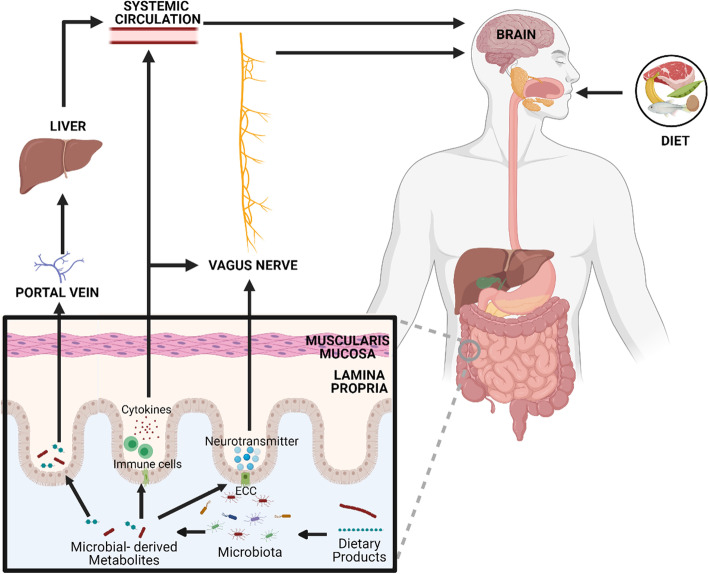
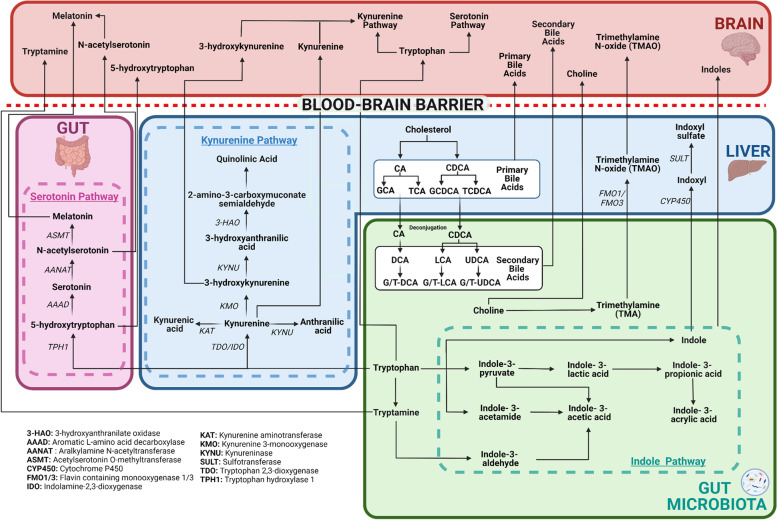
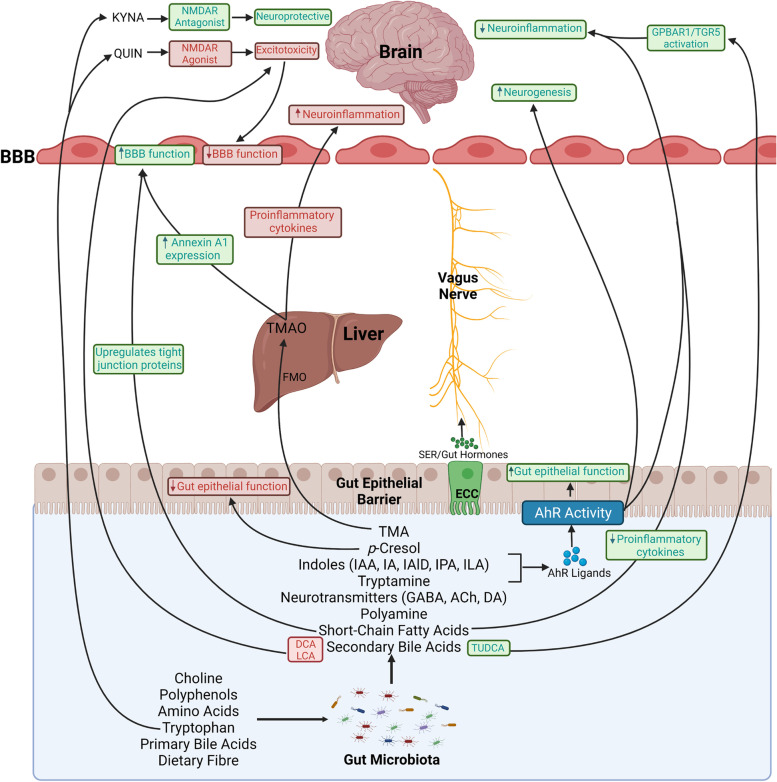
A consequence of our progressively ageing global population is the increasing prevalence of worldwide age-related cognitive decline and dementia. In the absence of effective therapeutic interventions, identifying risk factors associated with cognitive decline becomes increasingly vital. Novel perspectives suggest that a dynamic bidirectional communication system between the gut, its microbiome, and the central nervous system, commonly referred to as the microbiota-gut-brain axis, may be a contributing factor for cognitive health and disease. However, the exact mechanisms remain undefined. Microbial-derived metabolites produced in the gut can cross the intestinal epithelial barrier, enter systemic circulation and trigger physiological responses both directly and indirectly affecting the central nervous system and its functions. Dysregulation of this system (i.e., dysbiosis) can modulate cytotoxic metabolite production, promote neuroinflammation and negatively impact cognition. In this review, we explore critical connections between microbial-derived metabolites (secondary bile acids, trimethylamine-N-oxide (TMAO), tryptophan derivatives and others) and their influence upon cognitive function and neurodegenerative disorders, with a particular interest in their less-explored role as risk factors of cognitive decline.
Overview
The claims and statistics of this paper haven’t been checked yet.
Run the check — free, no account needed. It reads the open-access text and checks the sources it cites.
Integrity signals
Registry
Cites
Statistics
Figures
Verification
Claims the paper makes
The claims and statistics of this paper haven’t been checked yet.
Run the check — free, no account needed. It reads the open-access text and checks the sources it cites.
Claims other papers make about this one
Each is checked against this paper’s own text: does it say what the citing paper says it does?
In the citing paper
“Studies in animals have demonstrated the effect that the GM has on neural development and neurochemistry in the host, influencing the stress system, behavior, and cognition (42–47).”
From Signalling cognition: The gut microbiota and hypothalamic-pituitary-adrenal axis (2023) · cites this paper as [47]
Self-check
Percentages, sums and reported differences re-computed from the paper’s own numbers.
The self-check needs the paper’s full text.
Citations
Cites
1 retracted
Items 201–369 of 369
The role of gut microbiota in pathogenesis of Alzheimer's disease
Bostancıklıoğlu, M. (2019) · Journal of Applied Microbiology · doi:10.1111/jam.14264 · Cited by 210
Spermidine and spermine delay brain aging by inducing autophagy in SAMP8 mice
Xu, T., Li, H., Dai, Z., Lau, G. K., Li, B., Zhu, W., Liu, X.-Q., Liu, H.-F., Cai, W.-W., Huang, S., et al. (2020) · Aging · doi:10.18632/aging.103035 · Cited by 210
Alterations in metabolic pathways and networks in Alzheimer’s disease
Kaddurah‐Daouk, R., Zhu, H., Sharma, S., Bogdanov, M. B., Rozen, S., Matson, W. R., Oki, N. O., Motsinger‐Reif, A. A., Churchill, E., Lei, Z., et al. (2013) · Translational Psychiatry · doi:10.1038/tp.2013.18 · Cited by 206
Evolutional study on acetylcholine expression
Horiuchi, Y., Kimura, R., Kato, N., Fujii, T., Seki, M., Endō, T., Kato, T., & Kawashima, K. (2003) · Life Sciences · doi:10.1016/s0024-3205(02)02478-5 · Cited by 205
The Influence of Nicotinamide on Health and Disease in the Central Nervous System
Fricker, R. A., Green, E. L., Jenkins, S. I., & Griffin, S. M. (2018) · International Journal of Tryptophan Research · doi:10.1177/1178646918776658 · Cited by 205
Yamawaki, Y., Yoshioka, N., Nozaki, K., Ito, H., Oda, K., Harada, K., Shirawachi, S., Asano, S., Aizawa, H., Yamawaki, S., et al. (2018) · Brain Research · doi:10.1016/j.brainres.2017.12.004 · Cited by 204
A gut feeling about GABA: focus on GABAB receptors.
Hyland, N. P., & Cryan, J. F. (2010) · Frontiers in Pharmacology · doi:10.3389/fphar.2010.00124 · Cited by 199
Nagpal, R., Neth, B. J., Wang, S., Mishra, S. P., Craft, S., & Yadav, H. (2020) · EBioMedicine · doi:10.1016/j.ebiom.2020.102950 · Cited by 197
Brunt, V. E., LaRocca, T. J., Bazzoni, A. E., Sapinsley, Z. J., Miyamoto-Ditmon, J., Gioscia-Ryan, R. A., Neilson, A. P., Link, C. D., & Seals, D. R. (2021) · GeroScience · doi:10.1007/s11357-020-00257-2 · Cited by 197
Nunes, A. F., Amaral, J. D., Lo, A. C., Fonseca, M. B., Viana, R. J. S., Callaerts-Vegh, Z., D’Hooge, R., & Rodrigues, C. M. P. (2012) · Molecular Neurobiology · doi:10.1007/s12035-012-8256-y · Cited by 192
Effects of bile acids on neurological function and disease
McMillin, M., & DeMorrow, S. (2016) · The FASEB Journal · doi:10.1096/fj.201600275r · Cited by 192
Luan, H., Wang, X., & Cai, Z. (2017) · Mass Spectrometry Reviews · doi:10.1002/mas.21553 · Cited by 192
Mithaiwala, M. N., Santana-Coelho, D., Porter, G. A., & O’Connor, J. C. (2021) · Cells · doi:10.3390/cells10061548 · Cited by 190 · cited 1×
“Microglia and astrocytes, which contain all of the enzymes necessary for the KP, are the primary effectors of neuroinflammation in AD [214].”
BackgroundMicrobiota-gut-brain axis and cognitive function
Gareau, M. G. (2014) · Advances in Experimental Medicine and Biology · doi:10.1007/978-1-4939-0897-4_16 · Cited by 189
Fujigaki, H., Yamamoto, Y., & Saito, K. (2016) · Neuropharmacology · doi:10.1016/j.neuropharm.2016.01.011 · Cited by 189
Vernetti, L. A., Gough, A., Baetz, N. W., Blutt, S. E., Broughman, J. R., Brown, J. A., Foulke-Abel, J. D., Hasan, N. M., In, J., Kelly, E. J., et al. (2017) · Scientific Reports · doi:10.1038/srep44517 · Cited by 189
Cognitive dysfunction with aging and the role of inflammation
Simen, A. A., Bordner, K. A., Martin, M. P., Moy, L. A., & Barry, L. C. (2011) · Therapeutic Advances in Chronic Disease · doi:10.1177/2040622311399145 · Cited by 186
Wei, Y. B., Melas, P. A., Wegener, G., Mathe, A. A., & Lavebratt, C. (2015) · International Journal of Neuropsychopharmacology · doi:10.1093/ijnp/pyu032 · Cited by 186
Role of gut microbiota via the gut-liver-brain axis in digestive diseases
Ding, J., Jin, Z., Yang, X., Lou, J., Shan, W., Hu, Y., Du, Q., Liao, Q., Xie, R., & Xu, J. (2020) · World Journal of Gastroenterology · doi:10.3748/wjg.v26.i40.6141 · Cited by 183
Li, Y., Hao, Y., Zhu, J., & Owyang, C. (2000) · Gastroenterology · doi:10.1016/s0016-5085(00)70373-8 · Cited by 180
Towards understanding brain-gut-microbiome connections in Alzheimer’s disease
Xu, R., & Wang, Q. (2016) · BMC Systems Biology · doi:10.1186/s12918-016-0307-y · Cited by 175
The Gut Microbial Metabolite Trimethylamine-N-Oxide Is Present in Human Cerebrospinal Fluid
Del Rio, D., Zimetti, F., Caffarra, P., Tassotti, M., Bernini, F., Brighenti, F., Zini, A., & Zanotti, I. (2017) · Nutrients · doi:10.3390/nu9101053 · Cited by 172 · cited 1×
“TMAO and the brain In vivo studies have identified TMAO in the CSF of both mice and humans, implying that circulating TMAO can influence the CNS [147, 150].”
BackgroundTISSUE DISTRIBUTION AND ONTOGENY OF MOUSE ORGANIC ANION TRANSPORTING POLYPEPTIDES (OATPS)
Cheng, X., Maher, J. M., Chen, C., & Klaassen, C. D. (2005) · Drug Metabolism and Disposition · doi:10.1124/dmd.105.003640 · Cited by 167
Ting, K. K., Brew, B. J., & Guillemin, G. J. (2009) · Journal of Neuroinflammation · doi:10.1186/1742-2094-6-36 · Cited by 166
Šarenac, T., & Mikov, M. (2018) · Frontiers in Pharmacology · doi:10.3389/fphar.2018.00939 · Cited by 166
Koh, A., Mannerås-Holm, L., Yunn, N.-O., Nilsson, P. M., Ryu, S. H., Molinaro, A., Perkins, R., Smith, J. G., & Bäckhed, F. (2020) · Cell Metabolism · doi:10.1016/j.cmet.2020.07.012 · Cited by 165
Schwarz, C., Stekovic, S., Wirth, M., Benson, G. S., Royer, P., Sigrist, S. J., Pieber, T. R., Dammbrueck, C., Magnes, C., Eisenberg, T., et al. (2018) · Aging · doi:10.18632/aging.101354 · Cited by 164
Serotonin – Kynurenine Hypothesis of Depression: Historical Overview and Recent Developments
Oxenkrug, G. F. (2013) · Current Drug Targets · doi:10.2174/1389450111314050002 · Cited by 163
Wirth, M., Benson, G. S., Schwarz, C., Köbe, T., Grittner, U., Schmitz, D., Sigrist, S. J., Bohlken, J., Stekovic, S., Madeo, F., et al. (2018) · Cortex · doi:10.1016/j.cortex.2018.09.014 · Cited by 163
Altered brain white matter integrity in healthy carriers of the APOE ε4 allele
Persson, J., Lind, J., Larsson, A., Ingvar, M., Cruts, M., Broeckhoven, C. V., Adolfsson, R., Nilsson, L. G., & Nyberg, L. H. (2006) · Neurology · doi:10.1212/01.wnl.0000204180.25361.48 · Cited by 161
Casanova, R., Varma, S., Simpson, B. N., Kim, M. G., An, Y., Saldana, S. J., Riveros, C., Moscato, P., Griswold, M. E., Sonntag, D., et al. (2016) · Alzheimer s & Dementia · doi:10.1016/j.jalz.2015.12.008 · Cited by 161
Marksteiner, J., Blasko, I., Kemmler, G., Koal, T., & Humpel, C. (2017) · Metabolomics · doi:10.1007/s11306-017-1297-5 · Cited by 161
Saji, N., Murotani, K., Hisada, T., Tsuduki, T., Sugimoto, T., Kimura, A., Niida, S., Toba, K., & Sakurai, T. (2019) · Scientific Reports · doi:10.1038/s41598-019-55851-y · Cited by 161
Neuroprotection by a Bile Acid in an Acute Stroke Model in the Rat
Rodrigues, C. M. P., Spellman, S. R., Solá, S., Grande, A. W., Linehan-Stieers, C., Low, W. C., & Steer, C. J. (2002) · Journal of Cerebral Blood Flow & Metabolism · doi:10.1097/00004647-200204000-00010 · Cited by 160
Mitochondrial Reactive Oxygen Species Are Required for Hypothalamic Glucose Sensing
Leloup, C., Magnan, C., Benani, A., Bonnet, E., Alquier, T., Offer, G., Carriere, A., Périquet, A., Fernandez, Y., Ktorza, A., et al. (2006) · Diabetes · doi:10.2337/db06-0086 · Cited by 160
Role of Gut Dysbiosis in Liver Diseases: What Have We Learned So Far?
Fukui, H. (2019) · Diseases · doi:10.3390/diseases7040058 · Cited by 159
Metabolic profiling of Alzheimer's disease brains
Inoue, K., Tsutsui, H., Akatsu, H., Hashizume, Y., Matsukawa, N., Yamamoto, T., & Toyo’oka, T. (2013) · Scientific Reports · doi:10.1038/srep02364 · Cited by 153
Metabolomic Profiling of Bile Acids in Clinical and Experimental Samples of Alzheimer’s Disease
Pan, X., Elliott, C. T., McGuinness, B., Passmore, P., Kehoe, P. G., Hölscher, C., McClean, P. L., Graham, S. F., & Green, B. D. (2017) · Metabolites · doi:10.3390/metabo7020028 · Cited by 153
Small‐intestinal bacterial overgrowth in cirrhosis is related to the severity of liver disease
PANDE, C., KUMAR, A., & SARIN, S. K. (2009) · Alimentary Pharmacology & Therapeutics · doi:10.1111/j.1365-2036.2009.03994.x · Cited by 152
The APOE ɛ4 allele modulates brain white matter integrity in healthy adults
Heise, V, Filippini, N., Ebmeier, K. P., & Mackay, C. E. (2011) · Molecular Psychiatry · doi:10.1038/mp.2010.90 · Cited by 152
Li, H., Sun, J., Wang, F., Ding, G., Chen, W., Fang, R., Yao, Y., Pang, M., Lu, Z.-Q., & Liu, J. (2016) · Brain Research · doi:10.1016/j.brainres.2016.03.031 · Cited by 152
Azpiroz, F., Dubray, C., Bernalier‐Donadille, A., Cardot, J. ‐., Accarino, A. M., Serra, J., Wagner, A., Respondek, F., & Dapoigny, M. C. (2016) · Neurogastroenterology & Motility · doi:10.1111/nmo.12911 · Cited by 149
QUANTITATIVE ANALYSIS OF FMO GENE mRNA LEVELS IN HUMAN TISSUES
Zhang, J., & Cashman, J. R. (2006) · Drug Metabolism and Disposition · doi:10.1124/dmd.105.006171 · Cited by 144
Histone deacetylase inhibitors reverse CpG methylation by regulating DNMT1 through ERK signaling.
Sarkar, S., Abujamra, A. L., Loew, J. E., Forman, L. W., Perrine, S. P., & Faller, D. V. (2011) · PubMed · Cited by 143
Soontornmalai, A., Vlaming, M. L. H., & Fritschy, J. (2005) · Neuroscience · doi:10.1016/j.neuroscience.2005.11.011 · Cited by 141
Barrasa, J. I., Olmo, N., Pérez-Ramos, P., Santiago-Gómez, A., Lecona, E., Turnay, J., & Lizarbe, M. A. (2011) · APOPTOSIS · doi:10.1007/s10495-011-0633-x · Cited by 139
Brain endogenous liver X receptor ligands selectively promote midbrain neurogenesis
Theofilopoulos, S., Wang, Y., Kitambi, S. S., Sacchetti, P., Sousa, K. M., Bodin, K., Kirk, J. M., Saltó, C., Gustafsson, M., Toledo, E. M., et al. (2012) · Nature Chemical Biology · doi:10.1038/nchembio.1156 · Cited by 139
Bile acid inhibition of intestinal anaerobic organisms
Binder, H., Filburn, B., & Floch, M. H. (1975) · American Journal of Clinical Nutrition · doi:10.1093/ajcn/28.2.119 · Cited by 135
Wang, Q., Shen, Y., Wang, X., Fu, S., Zhang, X., Zhang, Y., & Wang, R. (2020) · Aging · doi:10.18632/aging.102645 · Cited by 135
Jena, P. K., Sheng, L., Di Lucente, J., Jin, L., Maezawa, I., & Wan, Y. Y. (2018) · The FASEB Journal · doi:10.1096/fj.201700984rr · Cited by 134
Healthy Aging and Dementia: Two Roads Diverging in Midlife?
Irwin, K. E., Sexton, C. E., Daniel, T., LAWLOR, B. A., & Naçi, L. (2018) · Frontiers in Aging Neuroscience · doi:10.3389/fnagi.2018.00275 · Cited by 132
Dionísio, P. A., Amaral, J. D., Ribeiro, M. F., Lo, A. C., D'Hooge, R., & Rodrigues, C. M. P. (2015) · Neurobiology of Aging · doi:10.1016/j.neurobiolaging.2014.08.034 · Cited by 127
Spichak, S., Bastiaanssen, T. F. S., Berding, K., Vlckova, K., Clarke, G., Dinan, T. G., & Cryan, J. F. (2021) · Neuroscience & Biobehavioral Reviews · doi:10.1016/j.neubiorev.2021.02.044 · Cited by 127
Mechanism of acute tryptophan depletion: is it only serotonin?
van Donkelaar, E. L., Blokland, A., Ferrington, L., Kelly, P. A. T., Steinbusch, H. W. M., & Prickaerts, J. (2011) · Molecular Psychiatry · doi:10.1038/mp.2011.9 · Cited by 125
Cowen, P. J., & Sherwood, A. C. (2013) · Journal of Psychopharmacology · doi:10.1177/0269881113482531 · Cited by 125
Presence of protein-bound unconjugated bile acids in the cytoplasmic fraction of rat brain
Mano, N., Goto, T., Uchida, M., Nishimura, K., Ando, M., Kobayashi, N., & Goto, J. (2004) · Journal of Lipid Research · doi:10.1194/jlr.m300369-jlr200 · Cited by 125
Liebisch, G., Ecker, J., Roth, S., Schweizer, S., Öttl, V., Schött, H.-F., Yoon, H., Haller, D., Holler, E., Burkhardt, R., et al. (2019) · Biomolecules · doi:10.3390/biom9040121 · Cited by 124
Aryl Hydrocarbon Receptor Activity of Tryptophan Metabolites in Young Adult Mouse Colonocytes
Cheng, Y., Jin, U.-H., Allred, C. D., Jayaraman, A., Chapkin, R. S., & Safe, S. H. (2015) · Drug Metabolism and Disposition · doi:10.1124/dmd.115.063677 · Cited by 121
Jia, S., Zheng, L., Gao, Z., An, J., Wu, X., Li, X., Dai, X., Zheng, Q., & Sun, Y. (2015) · International Journal of Biological Macromolecules · doi:10.1016/j.ijbiomac.2015.11.011 · Cited by 121
A Blood-Based, 7-Metabolite Signature for the Early Diagnosis of Alzheimer's Disease
Olazarán, J., Gil‐de‐Gómez, L., Rodríguez‐Martín, A., Valentí, M., Payo, B. F., Marín-Muñoz, J., Antúnez, C., Frank, A., Acedo, C., Gracia, L. M., et al. (2015) · Journal of Alzheimer s Disease · doi:10.3233/jad-142925 · Cited by 120
Flanagan, E. C., Müller, M. M., Hornberger, M., & Vauzour, D. (2018) · Current Nutrition Reports · doi:10.1007/s13668-018-0226-1 · Cited by 119
Gao, Q., Wang, Y., Wang, X., Fu, S., Zhang, X., Wang, R., & Zhang, X. (2019) · Aging · doi:10.18632/aging.102352 · Cited by 119
Zhang, X., Wang, Y., Liu, W., Wang, T., Wang, L., Hao, L., Ju, M., & Xiao, R. (2021) · American Journal of Clinical Nutrition · doi:10.1093/ajcn/nqab078 · Cited by 119
Gut Metabolite TMAO Induces Synaptic Plasticity Deficits by Promoting Endoplasmic Reticulum Stress
Govindarajulu, M., Pinky, P. D., Steinke, I., Bloemer, J., Ramesh, S., Kariharan, T., Rella, R. T., Bhattacharya, S., Dhanasekaran, M., Suppiramaniam, V., et al. (2020) · Frontiers in Molecular Neuroscience · doi:10.3389/fnmol.2020.00138 · Cited by 113
Tryptophan depletion in depressed patients occurs independent of kynurenine pathway activation
Hughes, M. M., Carballedo, A., McLoughlin, D. M., Amico, F., Harkin, A., Frodl, T., & Connor, T. J. (2012) · Brain Behavior and Immunity · doi:10.1016/j.bbi.2012.05.010 · Cited by 107
Plasma 24-metabolite Panel Predicts Preclinical Transition to Clinical Stages of Alzheimer’s Disease
Fiandaca, M. S., Zhong, X., Cheema, A. K., Orquiza, M. H., Chidambaram, S., Tan, M. T., Gresenz, C. R., Fitzgerald, K. T., Nalls, M. A., Singleton, A., et al. (2015) · Frontiers in Neurology · doi:10.3389/fneur.2015.00237 · Cited by 107
Soliman, M. L., Smith, M. D., Houdek, H. M., & Rosenberger, T. A. (2012) · Journal of Neuroinflammation · doi:10.1186/1742-2094-9-51 · Cited by 105
Wirth, M., Schwarz, C., Benson, G. S., Horn, N., Buchert, R., Lange, C., Köbe, T., Hetzer, S., Maglione, M., Michael, E., et al. (2019) · Alzheimer s Research & Therapy · doi:10.1186/s13195-019-0484-1 · Cited by 105
Sankowski, B., Księżarczyk, K., Raćkowska, E., Szlufik, S., Koziorowski, D., & Giebułtowicz, J. (2020) · Clinica Chimica Acta · doi:10.1016/j.cca.2019.10.038 · Cited by 105
Blood‐based metabolic signatures in Alzheimer's disease
de Leeuw, F. A., Peeters, C. F. W., Kester, M. I., Harms, A. C., Struys, E. A., Hankemeier, T., van Vlijmen, H. W. T., van der Lee, S. J., van Duijn, C. M., Scheltens, P., et al. (2017) · Alzheimer s & Dementia Diagnosis Assessment & Disease Monitoring · doi:10.1016/j.dadm.2017.07.006 · Cited by 104
Modulation of learning and memory by natural polyamines
Guerra, G. P., Rubin, M. A., & Mello, C. F. (2016) · Pharmacological Research · doi:10.1016/j.phrs.2016.03.023 · Cited by 103
Lukić, I., Getselter, D., Koren, O., & Elliott, E. (2019) · Frontiers in Behavioral Neuroscience · doi:10.3389/fnbeh.2019.00123 · Cited by 102
Sun, C., Li, J., Wang, Y., Lin, S., Ou, Y., Lin, C., Wang, J., Liao, S., & Chen, C. (2020) · International Journal of Molecular Sciences · doi:10.3390/ijms21186687 · Cited by 100
Going with the grain: Fiber, cognition, and the microbiota-gut-brain-axis
Berding, K., Carbia, C., & Cryan, J. F. (2021) · Experimental Biology and Medicine · doi:10.1177/1535370221995785 · Cited by 100
P-cresol, a uremic retention solute, alters the endothelial barrier function in vitro
Dou, L., Anfosso, F. J., Sabatier, F., Moal, V., Glorieux, G., Smet, R. D., Vanholder, R., Dignat‐George, F., Sampol, J., Berland, Y., et al. (2004) · Thrombosis and Haemostasis · doi:10.1160/th03-07-0491 · Cited by 99
Higashi, T., Watanabe, S., Tomaru, K., Yamazaki, W., Yoshizawa, K., Ogawa, S., Nagao, H., Minato, K., Maekawa, M., & Mano, N. (2017) · Steroids · doi:10.1016/j.steroids.2017.07.001 · Cited by 99
The Relationships Between Vitamin K and Cognition: A Review of Current Evidence
Alisi, L., Cao, R., Angelis, C. D., Cafolla, A., Caramia, F., Cartocci, G., Librando, A., & Fiorelli, M. (2019) · Frontiers in Neurology · doi:10.3389/fneur.2019.00239 · Cited by 99
Wang, P., Zhang, Y., Gong, Y., Yang, R., Chen, Z., Hu, W., Wu, Y., Gao, M., Xu, X., Qin, Y., et al. (2018) · Neurobiology of Disease · doi:10.1016/j.nbd.2017.12.006 · Cited by 97
P-cresol Alters Brain Dopamine Metabolism and Exacerbates Autism-Like Behaviors in the BTBR Mouse
Pascucci, T., Colamartino, M., Fiori, E., Sacco, R., Coviello, A., Ventura, R., Puglisi‐Allegra, S., Turriziani, L., & Persico, A. M. (2020) · Brain Sciences · doi:10.3390/brainsci10040233 · Cited by 96
Gray matter network associated with risk for Alzheimer's disease in young to middle-aged adults
Alexander, G. E., Bergfield, K. L., Chen, K., Reiman, E. M., Hanson, K. D., Lin, L., Bandy, D. J., Caselli, R. J., & Moeller, J. R. (2012) · Neurobiology of Aging · doi:10.1016/j.neurobiolaging.2012.01.014 · Cited by 91
Frolinger, T., Sims, S. L., Smith, C., Wang, J., Cheng, H. M., Faith, J. J., Ho, L., Hao, K., & Pasinetti, G. M. (2019) · Scientific Reports · doi:10.1038/s41598-019-39994-6 · Cited by 90
Cognitive Deficit Induced by Acute Tryptophan Depletion in Patients With Alzheimer’s Disease
Porter, R., Lunn, B. S., Walker, L. L. M., Gray, J. M., Ballard, C. G., & O'Brien, J. T. (2000) · American Journal of Psychiatry · doi:10.1176/appi.ajp.157.4.638 · Cited by 89
The IDO Inhibitor Coptisine Ameliorates Cognitive Impairment in a Mouse Model of Alzheimer's Disease
Yu, D., Tao, B.-B., Yang, Y.-Y., Du, L., Yang, S.-S., He, X.-J., Zhu, Y., Yan, J., & Yang, Q. (2014) · Journal of Alzheimer's Disease · doi:10.3233/jad-140414 · Cited by 88
Marx, W., Scholey, A., Firth, J., D’Cunha, N. M., Lane, M., Hockey, M., Ashton, M. M., Cryan, J. F., O’Neil, A., Naumovski, N., et al. (2020) · Neuroscience & Biobehavioral Reviews · doi:10.1016/j.neubiorev.2020.07.036 · Cited by 87
Wu, M., Yang, X., Li, X., Duan, W., & Du, J. (2021) · Behavioural Brain Research · doi:10.1016/j.bbr.2021.113125 · Cited by 86
Adluru, N., Destiche, D. J., Lu, S. Y.-F., Doran, S. T., Birdsill, A. C., Melah, K. E., Okonkwo, O. C., Alexander, A. L., Dowling, N. M., Johnson, S. C., et al. (2014) · NeuroImage: Clinical · doi:10.1016/j.nicl.2014.04.008 · Cited by 85
Ramalho, R. M., Ribeiro, P. S., Solá, S., Castro, R. E., Steer, C. J., & Rodrigues, C. M. P. (2004) · Journal of Neurochemistry · doi:10.1111/j.1471-4159.2004.02517.x · Cited by 84
Soliman, M. L., Combs, C. K., & Rosenberger, T. A. (2013) · Journal of Neuroimmune Pharmacology · doi:10.1007/s11481-012-9426-4 · Cited by 84
Epigenetic mechanisms related to cognitive decline during aging
Harman, M. F., & Martín, M. G. (2019) · Journal of Neuroscience Research · doi:10.1002/jnr.24436 · Cited by 83
ALLISON, A. C. (2001) · Medical Hypotheses · doi:10.1054/mehy.2001.1307 · Cited by 82
Edamatsu, T., Fujieda, A., & Itoh, Y. (2018) · PLoS ONE · doi:10.1371/journal.pone.0193342 · Cited by 81
Hole, K. L., & Williams, R. J. (2020) · Brain Plasticity · doi:10.3233/bpl-200098 · Cited by 81
Heyes, M. P., & Morrison, P. F. (1997) · Journal of Neurochemistry · doi:10.1046/j.1471-4159.1997.68010280.x · Cited by 79
Liebau, C., Baltzer, A. W. A., Schmidt, S., Roesel, C., Karreman, C., Prisack, J. B., Bojar, H., & Merk, H. R. (2002) · PubMed · Cited by 78
Solvang, S.-E. H., Nordrehaug, J. E., Tell, G. S., Nygard, O. K., McCann, A., Ueland, P. M., Midttun, Ø., Meyer, K., Vedeler, C. A., Aarsland, D., et al. (2018) · Brain Behavior and Immunity · doi:10.1016/j.bbi.2018.10.003 · Cited by 78
Gut-brain axis serotonergic responses to acute stress exposure are microbiome-dependent
Lyte, J. M., Gheorghe, C. E., Goodson, M. S., Kelley‐Loughnane, N., Dinan, T. G., Cryan, J. F., & Clarke, G. (2020) · Neurogastroenterology & Motility · doi:10.1111/nmo.13881 · Cited by 77
Tseng, H.-C., & Graves, D. J. (1998) · Biochemical and Biophysical Research Communications · doi:10.1006/bbrc.1998.9382 · Cited by 73
Converging evidence for central 5-HT effects in acute tryptophan depletion
Crockett, M. J., Clark, L., Roiser, J. P., Robinson, O. J., Cools, R., Chase, H. W., den Ouden, H. E. M., Apergis-Schoute, A. M., Campbell-Meiklejohn, D. K., Seymour, B., et al. (2011) · Molecular Psychiatry · doi:10.1038/mp.2011.106 · Cited by 73
Carecho, R., Carregosa, D., & dos Santos, C. N. (2020) · Brain Plasticity · doi:10.3233/bpl-200099 · Cited by 70
Baj, G., Carlino, D., Gardossi, L., & Tongiorgi, E. (2013) · Frontiers in Neuroscience · doi:10.3389/fnins.2013.00188 · Cited by 69
Haider, S., Khaliq, S., & Haleem, D. J. (2007) · PubMed · Cited by 68
Farhangi, M. A., Javid, A. Z., Sarmadi, B., Karimi, P., & Dehghan, P. (2018) · Clinical Nutrition · doi:10.1016/j.clnu.2017.06.005 · Cited by 68
Costabile, G., Vetrani, C., Bozzetto, L., Giacco, R., Bresciani, L., Rio, D. D., Vitale, M., Pepa, G. D., Brighenti, F., Riccardi, G., et al. (2021) · American Journal of Clinical Nutrition · doi:10.1093/ajcn/nqab188 · Cited by 68
Polyamines in Human Brain: Regional Distribution and Influence of Aging
Morrison, L. D., Becker, L. E., Ang, L. C., & Kish, S. J. (1995) · Journal of Neurochemistry · doi:10.1046/j.1471-4159.1995.65020636.x · Cited by 66
Zhu, C., Li, G., Lv, Z., Li, J., Wang, X., Kang, J., & Zhan, C. (2019) · Neurological Sciences · doi:10.1007/s10072-019-04040-w · Cited by 65
Faùndes, V., Jennings, M. D., Crilly, S., Legraie, S., Withers, S. E., Cuvertino, S., Davies, S. J., Douglas, A. G. L., Fry, A. E., Harrison, V., et al. (2021) · Nature Communications · doi:10.1038/s41467-021-21053-2 · Cited by 63
Goldstein, F. C., Ashley, A. V., Endeshaw, Y. W., Hanfelt, J., Lah, J. J., & Levey, A. I. (2008) · Alzheimer Disease & Associated Disorders · doi:10.1097/wad.0b013e318188e80d · Cited by 62
Protein-bound uremic toxins impaired mitochondrial dynamics and functions
Sun, C., Cheng, M., Pan, H., Lee, J.-H., & Lee, C. (2017) · Oncotarget · doi:10.18632/oncotarget.20773 · Cited by 62
Solá, S., Amaral, J. D., Borralho, P. M., Ramalho, R. M., Castro, R. E., Aranha, M. M., Steer, C. J., & Rodrigues, C. M. P. (2006) · Molecular Endocrinology · doi:10.1210/me.2006-0063 · Cited by 61
Lee, Y. C. (2012) · International Journal of Oncology · doi:10.3892/ijo.2012.1327 · Cited by 60
Ramos-García, N. A., Orozco‐Ibarra, M., Estudillo, E., Elizondo, G., Apo, E. G., Macías‐García, L., Sosa, A. L., & Torres-Ramos, M. (2020) · International Journal of Molecular Sciences · doi:10.3390/ijms21061983 · Cited by 60
Soutif-Veillon, A., Ferland, G., Rolland, Y., Presse, N., Boucher, K., Féart, C., & Annweiler, C. (2016) · Maturitas · doi:10.1016/j.maturitas.2016.02.004 · Cited by 59
de Azevedo, M. L. V., Bonan, N. B., Dias, G. F., Pinhatti, F. D. A. B., Steiner, T. M., de Souza, W. M., Stinghen, A. E. M., Barreto, F. C., Elífio-Esposito, S., Pecoits‐Filho, R., et al. (2016) · Toxicology Letters · doi:10.1016/j.toxlet.2016.10.006 · Cited by 59
DiNicolantonio, J. J., McCarty, M. F., & O’Keefe, J. H. (2019) · Open Heart · doi:10.1136/openhrt-2018-000890 · Cited by 59
Yamada, A., Akimoto, H., Kagawa, S., Guillemin, G. J., & Takikawa, O. (2009) · Journal of Neurochemistry · doi:10.1111/j.1471-4159.2009.06175.x · Cited by 58
Spermidine protects from age-related synaptic alterations at hippocampal mossy fiber-CA3 synapses
Maglione, M., Kochlamazashvili, G., Eisenberg, T., Rácz, B., Michael, E., Toppe, D., Stumpf, A., Wirth, A., Zeug, A., Müller, F. E., et al. (2019) · Scientific Reports · doi:10.1038/s41598-019-56133-3 · Cited by 58
Verdu, E. F., Bercik, P., Huang, X. X., Lu, J., Al-Mutawaly, N., Sakai, H., Tompkins, T. A., Croitoru, K., Tsuchida, E., Perdue, M., et al. (2008) · American Journal of Physiology-Gastrointestinal and Liver Physiology · doi:10.1152/ajpgi.90316.2008 · Cited by 57
Nizamutdinov, D., DeMorrow, S., McMillin, M., Kain, J., Mukherjee, S., Zeitouni, S., Frampton, G. A., Bricker, P. C. S., Hurst, J., & Shapiro, L. A. (2017) · Scientific Reports · doi:10.1038/srep40112 · Cited by 57
Pekar, T., Bruckner, K., Pauschenwein-Frantsich, S., Gschaider, A., Oppliger, M., Willesberger, J., Ungersbäck, P., Wendzel, A., Kremer, A., Flak, W., et al. (2021) · Wiener klinische Wochenschrift · doi:10.1007/s00508-020-01758-y · Cited by 57
Bose, S., & Cho, J. (2016) · Ageing Research Reviews · doi:10.1016/j.arr.2016.09.004 · Cited by 56
Developmental Signatures of Microbiota-Derived Metabolites in the Mouse Brain
Swann, J. R., Spitzer, S. O., & Heijtz, R. D. (2020) · Metabolites · doi:10.3390/metabo10050172 · Cited by 56
Stremmel, W., Schmidt, K. V., Schuhmann, V., Kratzer, F., Garbade, S. F., Langhans, C., Fricker, G., & Okun, J. G. (2017) · PLoS ONE · doi:10.1371/journal.pone.0170742 · Cited by 55
Tamadon‐Nejad, S., Ouliass, B., Rochford, J. M., & Ferland, G. (2018) · Frontiers in Aging Neuroscience · doi:10.3389/fnagi.2018.00213 · Cited by 54
Spermidine intake is associated with cortical thickness and hippocampal volume in older adults
Schwarz, C., Horn, N., Benson, G. S., Calzado, I. W., Wurdack, K., Pechlaner, R., Grittner, U., Wirth, M., & Flöel, A. (2020) · NeuroImage · doi:10.1016/j.neuroimage.2020.117132 · Cited by 54
Mechanisms by which autophagy regulates memory capacity in ageing
Risi, M. D., Torromino, G., Tufano, M., Moriceau, S., Pignataro, A., Rivagorda, M., Carrano, N., Middei, S., Settembre, C., Ammassari‐Teule, M., et al. (2020) · Aging Cell · doi:10.1111/acel.13189 · Cited by 54
Miller, M. I., Ratnanather, J. T., Tward, D. J., Brown, T., Lee, D. S., Ketcha, M. D., Mori, K., Wang, M., Mori, S., Albert, M., et al. (2015) · Frontiers in Bioengineering and Biotechnology · doi:10.3389/fbioe.2015.00054 · Cited by 53
Phase II Clinical Trial of Nicotinamide for the Treatment of Mild to Moderate Alzheimer's Disease
Phelan, M. J. (2017) · Journal of Geriatric Medicine and Gerontology · doi:10.23937/2469-5858/1510021 · Cited by 52
He, W., Luo, Y., Liu, J., Sun, N. L., Guo, D., Cui, L.-L., Zheng, P., Yao, S.-M., Yang, J.-F., & Wang, H. (2020) · Clinical Interventions in Aging · doi:10.2147/cia.s270887 · Cited by 52
Flavonoid transport across blood-brain barrier: Implication for their direct neuroprotective actions
Faria, A., Mateus, N. F. D. C. B., & Calhau, C. (2012) · Nutrition and Aging · doi:10.3233/nua-2012-0005 · Cited by 51
Vitamin K status and inflammation are associated with cognition in older Irish adults
Kiely, A.-M., Ferland, G., Ouliass, B., O’Toole, P. W., Purtill, H., & O’Connor, E. M. (2018) · Nutritional Neuroscience · doi:10.1080/1028415x.2018.1536411 · Cited by 51
Can Natural Products Exert Neuroprotection without Crossing the Blood–Brain Barrier?
Leclerc, M., Dudonné, S., & Calon, F. (2021) · International Journal of Molecular Sciences · doi:10.3390/ijms22073356 · Cited by 50
Smith, M. J., Crowther, R. A., & Goedert, M. (2000) · FEBS Letters · doi:10.1016/s0014-5793(00)02169-4 · Cited by 49
Bron, B., Waldram, R., Silk, D. B. A., & Williams, R. L. (1977) · Gut · doi:10.1136/gut.18.9.692 · Cited by 49
Zhuang, Z., Gao, M., Yang, R., Liu, Z., Cao, W., & Huang, T. (2020) · Neurobiology of Aging · doi:10.1016/j.neurobiolaging.2020.10.022 · Cited by 49
Tran, C. D., Grice, D. M., Wade, B., Kerr, C. A., Bauer, D. C., Li, D., & Hannan, G. N. (2015) · Future Microbiology · doi:10.2217/fmb.15.54 · Cited by 48
Phosphorylated tau can promote tubulin assembly
Tseng, H.-C., Lu, Q., Henderson, E., & Graves, D. J. (1999) · Proceedings of the National Academy of Sciences · doi:10.1073/pnas.96.17.9503 · Cited by 48
Benedetti, A., Sario, A. D., Marucci, L., Svegliati‐Baroni, G., Schteingart, C. D., Ton-Nu, H.-T., & Hofmann, A. F. (1997) · American Journal of Physiology-Gastrointestinal and Liver Physiology · doi:10.1152/ajpgi.1997.272.6.g1416 · Cited by 48
Neuronal Mitophagy: Friend or Foe?
Doxaki, C., & Palikaras, K. (2021) · Frontiers in Cell and Developmental Biology · doi:10.3389/fcell.2020.611938 · Cited by 48
Zhao, L., Zhang, C., Cao, G., Dong, X., Li, D., & Jiang, L. (2019) · Neurochemical Research · doi:10.1007/s11064-019-02868-4 · Cited by 47
Gruendler, R., Hippe, B., Jengić, V. Š., Peterlin, B., & Haslberger, A. G. (2020) · Molecules · doi:10.3390/molecules25246018 · Cited by 47
Tian, Y., Wang, W., Xu, L., Li, H., Wei, Y., Wu, Q., & Jia, J. (2018) · Journal of Neuroscience Research · doi:10.1002/jnr.24357 · Cited by 46
Alzheimer’s disease, neural stem cells and neurogenesis: cellular phase at single-cell level
Kızıl, Ç., Coşacak, M. İ., & Bhattarai, P. (2019) · Neural Regeneration Research · doi:10.4103/1673-5374.268896 · Cited by 46
Ramos-Chávez, L. A., Roldán-Roldán, G., García-Juárez, B., González‐Esquivel, D. F., de la Cruz, G. P., Pineda, B., Ortega, D. R., Muñoz, I. G., Herrera, B. J., Rı́os, C., et al. (2018) · Oxidative Medicine and Cellular Longevity · doi:10.1155/2018/8604718 · Cited by 45
Gut Microbiota and Microbiota-Related Metabolites as Possible Biomarkers of Cognitive Aging
Ticinesi, A., Nouvenne, A., Tana, C., Prati, B., & Meschi, T. (2019) · Advances in experimental medicine and biology · doi:10.1007/978-3-030-25650-0_8 · Cited by 45
Soares, R., Ribeiro, F. F., Xapelli, S., Genebra, T., Ribeiro, M. F., Sebastião, A. M., Rodrigues, C. M. P., & Solá, S. (2017) · Molecular Neurobiology · doi:10.1007/s12035-017-0592-5 · Cited by 44
Urinary metabolic phenotyping for Alzheimer’s disease
Kurbatova, N., Garg, M., Whiley, L., Chekmeneva, E., Jiménez, B., Gómez-Romero, M., Pearce, J., Kimhofer, T., D’Hondt, E., Soininen, H., et al. (2020) · Scientific Reports · doi:10.1038/s41598-020-78031-9 · Cited by 44
Mortamet, B., Zeng, D., Gerig, G., Prastawa, M. W., & Bullitt, E. (2005) · Lecture notes in computer science · doi:10.1007/11566465_48 · Cited by 43
Exploratory analysis of covariation of microbiota-derived vitamin K and cognition in older adults
McCann, A., Jeffery, I. B., Ouliass, B., Ferland, G., Fu, X., Booth, S. L., Tran, T. T. T., O’Toole, P. W., & O’Connor, E. M. (2019) · American Journal of Clinical Nutrition · doi:10.1093/ajcn/nqz220 · Cited by 41
Pekar, T., Wendzel, A., Flak, W., Kremer, A., Pauschenwein-Frantsich, S., Gschaider, A., Wantke, F., & Jarisch, R. (2019) · Wiener klinische Wochenschrift · doi:10.1007/s00508-019-01588-7 · Cited by 41
Untargeted Stable Isotope Probing of the Gut Microbiota Metabolome Using 13C-Labeled Dietary Fibers
Deng, P., Valentino, T. R., Flythe, M. D. D., Moseley, H., Leachman, J. R., Morris, A. J., & Hennig, B. (2021) · Journal of Proteome Research · doi:10.1021/acs.jproteome.1c00124 · Cited by 41
Vascular Cognitive Impairment and the Gut Microbiota
Li, S., Shao, Y., Li, K., HuangFu, C., Wang, W., Liu, Z., Cai, Z., & Zhao, B. (2018) · Journal of Alzheimer s Disease · doi:10.3233/jad-171103 · Cited by 40
Koussoulas, K., Swaminathan, M., Fung, C., Bornstein, J. C., & Foong, J. P. P. (2018) · Frontiers in Physiology · doi:10.3389/fphys.2018.00097 · Cited by 39
Esteban‐Fernández, A., Rendeiro, C., Spencer, J. P. E., del Coso, D. G., de Llano, D. G., Bartolomé, B., & Moreno-Arribas, M. V. (2017) · Frontiers in Nutrition · doi:10.3389/fnut.2017.00003 · Cited by 37
Measuring histone deacetylase inhibition in the brain
Reddy, D. S., Wu, X., Golub, V. M., Dashwood, W. M., & Dashwood, R. H. (2018) · Current Protocols in Pharmacology · doi:10.1002/cpph.41 · Cited by 33
Cultivable butyrate-producing bacteria of elderly Japanese diagnosed with Alzheimer’s disease
Nguyen, T. T. T., Fujimura, Y., Mimura, I., Fujii, Y., Nguyen, N. L., Arakawa, K., & Morita, H. (2018) · The Journal of Microbiology · doi:10.1007/s12275-018-8297-7 · Cited by 32
Hankes, L. V., Coenen, H. H., Rota, E., Langen, K., Herzog, H. R., Wutz, W., Stoecklin, G., & Feinendegen, L. E. (1991) · Advances in experimental medicine and biology · doi:10.1007/978-1-4684-5952-4_91 · Cited by 27
Chemical and Biological Liberation of Trimethylamine from Foods
Mitchell, S. C., Zhang, A. Q., & Smith, R. L. (2002) · Journal of Food Composition and Analysis · doi:10.1006/jfca.2002.1068 · Cited by 27
Nutaitis, A. C., Tharwani, S. D., Serra, M. C., Goldstein, F. C., Zhao, L., Sher, S., Verble, D. D., & Wharton, W. (2019) · The Journal of Prevention of Alzheimer s Disease · doi:10.14283/jpad.2018.44 · Cited by 24
Effect of 5-hydroxytryptophane on behavior and hippocampal physiology in young and old rats
Levkovitz, Y., Richter‐Levin, G., & Segal, M. (1994) · Neurobiology of Aging · doi:10.1016/0197-4580(94)00058-1 · Cited by 23
Liu, Y., Li, N., Zhou, L., Li, Q., & Li, W. (2015) · Central Nervous System Agents in Medicinal Chemistry · doi:10.2174/1871524915666141216161246 · Cited by 22
The immune marker CD68 correlates with cognitive impairment in normally aged rats
Farso, M. C., Ménard, C., Colby-Milley, J., & Quirion, R. (2013) · Neurobiology of Aging · doi:10.1016/j.neurobiolaging.2013.02.008 · Cited by 21
Protein-bounded uremic toxin p-cresylsulfate induces vascular permeability alternations
Tang, W.-H., Wang, C.-P., Yu, T., Tai, P.-Y., Liang, S., Hung, W., Wu, C., Huang, S., Lee, Y., & Chen, S. (2018) · Histochemistry and Cell Biology · doi:10.1007/s00418-018-1662-0 · Cited by 19
Joaquim, H. P. G., Costa, A. C., Forlenza, O. V., Gattaz, W. F., & Talib, L. L. (2019) · Archives of Clinical Psychiatry (São Paulo) · doi:10.1590/0101-60830000000209 · Cited by 18
Kuang, L., Zhou, W. L., & Jiang, Y. (2021) · PLoS ONE · doi:10.1371/journal.pone.0260479 · Cited by 14
Huang, Y., Zheng, H., Tan, K., Sun, X., Ye, J., & Zhang, Y. (2020) · Therapeutic Advances in Neurological Disorders · doi:10.1177/1756286420947973 · Cited by 11
Results from a pilot study: The effects of nicotinamide riboside on mild cognitive impairment
Orr, M. E., Kotkowski, E., Bair‐Kelps, D., Romo, T. Q., Espinoza, S. E., Musi, N., & Powers, B. (2020) · Alzheimer s & Dementia · doi:10.1002/alz.044746 · Cited by 11
Tryptophan Metabolism and the Microbiome-Gut-Brain Axis
Clarke, G. A., Villalobos-Manríquez, F., & Marin, D. C. (2021) · Oxford University Press eBooks · doi:10.1093/oxfordhb/9780190931544.013.13 · Cited by 7
Freitag, K., Sterczyk, N., Schulz, J., Houtman, J., Fleck, L., Sigrist, S. J., Heppner, F. L., & Jendrach, M. (2020) · bioRxiv (Cold Spring Harbor Laboratory) · doi:10.1101/2020.12.27.424477 · Cited by 4
Effects of gut-derived trimethylamines on the blood–brain barrier
McArthur, S., Carvalho, A., Fonseca, S., Snelling, T., Nicholson, J. L., Glen, R. C., Carding, S. R., & Hoyles, L. (2018) · Spiral (Imperial College London) · Cited by 1
Research works printed but not linked: 7
- Donaldson GP, Lee SM, Mazmanian SK. Gut biogeography of the bacterial microbiota. Nat Rev Microbiol Nature Publishing Group. 2016;14:20–32. · DOI · Paper page
- Bercik P, Denou E, Collins J, Jackson W, Lu J, Jury J, et al. The intestinal microbiota affect central levels of brain-derived neurotropic factor and behavior in mice. Gastroenterology. 2011;141(599–609):609.e1-3.
- Diaz Heijtz R, Wang S, Anuar F, Qian Y, Björkholm B, Samuelsson A, et al. Normal gut microbiota modulates brain development and behavior. Proc Natl Acad Sci U S A. 2011;108:3047–52. · DOI · Paper page
- Hubbard T, Murray I, Bisson W, Lahoti T, Gowda K, Amin S, et al. Adaptation of the human aryl hydrocarbon receptor to sense microbiota-derived indoles. Scientific Reports. 2015;5:12689. · DOI · Paper page
- Kim L-J, Chalmers TJ, Smith GC, Das A, Poon EWK, Wang J, et al. Nicotinamide mononucleotide (NMN) deamidation by the gut microbiome and evidence for indirect upregulation of the NAD+ metabolome. bioRxiv. Cold Spring Harbor Laboratory; 2020;289561:1–85.
- Soda K, Kawakami M. Mediterranean diet and polyamine intake: possible contribution of increased polyamine intake to inhibition of age-associated disease. Nutr Diet Suppl. 2010;3:1.
- Bray N. The microbiota–gut–brain axis. Nature Research: Nature Publishing Group; 2019.
Cited by
Sorted by citations
Microbiota–gut–brain axis and its therapeutic applications in neurodegenerative diseases
Loh, J. S., Mak, W. Q., Tan, L. K. S., Ng, C. X., Chan, H. H., Yeow, S. H., Foo, J. B., Ong, Y. S., How, C. W., & Khaw, K. Y. (2024) · Signal Transduction and Targeted Therapy · doi:10.1038/s41392-024-01743-1 · Cited by 1,193
Signalling cognition: The gut microbiota and hypothalamic-pituitary-adrenal axis
Rusch, J. A., Layden, B. T., & Dugas, L. R. (2023) · Frontiers in Endocrinology · doi:10.3389/fendo.2023.1130689 · Cited by 415
Microbiota from Alzheimer’s patients induce deficits in cognition and hippocampal neurogenesis
Grabrucker, S., Marizzoni, M., Silajdžić, E., Lopizzo, N., Mombelli, E., Nicolas, S., Dohm-Hansen, S., Scassellati, C., Moretti, D. V., Rosa, M., et al. (2023) · Brain · doi:10.1093/brain/awad303 · Cited by 236
Current understanding of the Alzheimer’s disease-associated microbiome and therapeutic strategies
Seo, D.-O., & Holtzman, D. M. (2024) · Experimental & Molecular Medicine · doi:10.1038/s12276-023-01146-2 · Cited by 259
The changing metabolic landscape of bile acids – keys to metabolism and immune regulation
Mohanty, I., Allaband, C., Mannochio-Russo, H., Abiead, Y. E., Hagey, L. R., Knight, R. D., & Dorrestein, P. C. (2024) · Nature Reviews Gastroenterology & Hepatology · doi:10.1038/s41575-024-00914-3 · Cited by 236
Metadata
- Authors
- Connell, E., Le Gall, G., Pontifex, M. G., Sami, S., Cryan, J. F., Clarke, G., Müller, M., & Vauzour, D.
- Affiliations
- University of East Anglia (GB)
- University College Cork (IE)
- Corresponding author
- Vauzour, David
- ORCID
- Venue
- Molecular Neurodegeneration
- Published
- 2022-06-17
- Volume
- 17
- Issue
- 1
- Pages
- 43-43
- ISSN
- 1750-1326 (ISSN-L)
- PMC
- PMC9204954
- OpenAlex
- W4283020259
- Cited by
- 208
- References
- 369
- Citations by year
- 2026: 41 · 2025: 60 · 2024: 57 · 2023: 38 · 2022: 12
- FWCI
- 4.39
- Type
- journal article
- Language
- en
- Open access
- gold
- doi.org
- Locations
- Molecular Neurodegeneration (publishedVersion, cc-by)
- PubMed Central (publishedVersion, cc-by)
- PubMed (publishedVersion)
- UEA Digital Repository (University of East Anglia) (acceptedVersion, other-oa)
- DOAJ (DOAJ: Directory of Open Access Journals) (submittedVersion)
- Lenus, The Irish Health Repository (Dr Steevens Hospital Library) (submittedVersion)
- Topics
- Life Sciences › Biochemistry, Genetics and Molecular Biology › Molecular Biology › Gut microbiota and health
- Health Sciences › Medicine › Psychiatry and Mental health › Dementia and Cognitive Impairment Research
- Life Sciences › Neuroscience › Biological Psychiatry › Tryptophan and brain disorders
- Keywords
- age-related cognitive decline, dementia, microbiota-gut-brain axis, dysbiosis, secondary bile acids, trimethylamine N-oxide, tryptophan derivatives, neuroinflammation, neurodegenerative diseases, gut microbiota, risk factors
- MeSH terms
- Gastrointestinal Microbiome, Aging, Dementia, Humans, Risk Factors, Cognitive Dysfunction
About these checks
Registry, retraction, Cites and statistics results are computed, not judged, with one exception: a printed reference that no index lists is read once by a model before it counts as a citation error. Claims are extracted by a model and kept only when their quote appears verbatim in the text; each cited source is then checked, with a model’s help, for whether it says what the claim relies on. Those verdicts can be wrong — read the claim’s quote and the cited source before relying on one.
Statistics and arithmetic are recomputed, not judged.
Confidence bands are shown only for fields calibrated on our annotated test set. None is calibrated yet, so no band is shown.
What counts as a claim ›How we measure confidence ›How we check this ›
Are you an author, or do you see a problem with this page? Request a review
