

The DOI matches its Crossref record; 93 of the 95 references it cites were found in a registry or an index; 7 of the 74 sources its claims cite were checked for support.
Population structure of human gut bacteria in a diverse cohort from rural Tanzania and Botswana
Open accessAbstract
BACKGROUND: Gut microbiota from individuals in rural, non-industrialized societies differ from those in individuals from industrialized societies. Here, we use 16S rRNA sequencing to survey the gut bacteria of seven non-industrialized populations from Tanzania and Botswana. These include populations practicing traditional hunter-gatherer, pastoralist, and agropastoralist subsistence lifestyles and a comparative urban cohort from the greater Philadelphia region. RESULTS: We find that bacterial diversity per individual and within-population phylogenetic dissimilarity differs between Botswanan and Tanzanian populations, with Tanzania generally having higher diversity per individual and lower dissimilarity between individuals. Among subsistence groups, the gut bacteria of hunter-gatherers are phylogenetically distinct from both agropastoralists and pastoralists, but that of agropastoralists and pastoralists were not significantly different from each other. Nearly half of the Bantu-speaking agropastoralists from Botswana have gut bacteria that are very similar to the Philadelphian cohort. Based on imputed metagenomic content, US samples have a relative enrichment of genes found in pathways for degradation of several common industrial pollutants. Within two African populations, we find evidence that bacterial composition correlates with the genetic relatedness between individuals. CONCLUSIONS: Across the cohort, similarity in bacterial presence/absence compositions between people increases with both geographic proximity and genetic relatedness, while abundance weighted bacterial composition varies more significantly with geographic proximity than with genetic relatedness.
Overview
AI snapshot
Written from the paper’s full text.
TL;DR
In a 16S rRNA survey of gut bacteria from 126 people in rural Tanzania, rural Botswana, and Philadelphia, bacterial diversity and composition differed more by country/region than by subsistence practice, and a subset of Botswanan Bantu agropastoralists had microbiota similar to the US cohort. Similarity in bacterial presence/absence increased with geographic proximity and host genetic relatedness, while abundance-weighted composition tracked geography more than relatedness.
Key findings
- Tanzanian populations generally had higher within-individual bacterial diversity and lower within-population phylogenetic dissimilarity than Botswanan populations; the Sandawe had the highest Shannon diversity and the US cohort the lowest. Hunter-gatherers were phylogenetically distinct from both agropastoralists and pastoralists, while agropastoralists and pastoralists were not significantly different from each other.
- Prevotellaceae was the most abundant bacterial family in 70.2% of Africans, whereas Bacteroidaceae was most abundant in 50% of US samples. Twenty-three Africans had Prevotellaceae abundances within one standard deviation of the US mean (12.4%); 19 were from Botswana and 12 were Bantu. Nearly half of Bantu-speaking agropastoralists from Botswana had gut bacteria very similar to the Philadelphia cohort, and 12 low-Prevotellaceae Bantu were not statistically different from US samples by weighted UniFrac (PERMANOVA p = 0.12).
- Imputed metagenomes showed 146 KEGG pathways significantly differentially enriched between US and African cohorts and 148 between Botswana and Tanzania; US samples had relative enrichment of pathways for degradation of industrial pollutants, and DDT degradation was enriched in Botswanan but not Tanzanian or US samples.
- Within-population bacterial composition correlated with host genetic relatedness in the Hadza (both unweighted and weighted UniFrac) and Maasai (unweighted UniFrac). Across the cohort, unweighted UniFrac similarity increased with both geographic proximity and genetic relatedness, while weighted UniFrac varied significantly only with geographic separation.
Methods
- Stool samples from 126 participants were analyzed by 16S rRNA V1–V2 sequencing: 60 from Tanzania, 54 from Botswana, and 12 from Philadelphia; 114 African adults were recruited, and US samples came from prior studies. Samples were processed with the same laboratory and computational pipelines.
- Reads were clustered into operational taxonomic units at 97% identity using QIIME/Swarm, taxonomically assigned with Greengenes, and analyzed with UniFrac, PERMANOVA (50,000 permutations), PCoA, ANCOM, and PICRUSt. qPCR quantified 16S rRNA gene copies and screened for *Entamoeba histolytica*.
- A subset of 97 African individuals was genotyped on the Illumina Omni5M Exome array; genetic relatedness was estimated using identity-by-descent and a genetic relationship matrix, and linear models tested UniFrac distances as functions of geographic distance and host relatedness.
Limitations
- The paper states that individual- and population-level dietary information was not available; PICRUSt imputation may not capture gene content in diverged strains, so shotgun sequencing is needed to verify functional differences; the US cohort is the only urban/industrialized population; larger sample sizes are needed to identify factors causing sex differences; and the BMI–diversity correlation cannot be separated from other environmental or cultural covariates.
- The paper also notes that cross-study microbiome comparisons are difficult because of different amplicons, protocols, reagents, and primers, and that seasonal variation may affect taxa such as Prevotellaceae.
- Evident from the text: 16S V1–V2 amplicon data limit taxonomic resolution, with 1,044 unassigned OTUs removed and African samples having more unassigned OTUs; several populations are small (e.g., Herero n = 8, US n = 12), and the design is cross-sectional, limiting causal inference.
Model-written summary. Check it against the paper before relying on it.
Integrity signals
Registry
Cites
Statistics
Figures
Verification
Claims the paper makes
42 Own result · 35 Not checked yet · 23 Own interpretation · 10 No basis given · 7 Own method · 1 Partly supported · accuracy not yet measured
A result the paper reports from its own data — it cites no other source for it, so there is none to check. The quote shows it is in the paper.
In the paper
“Within two African populations, we find evidence that bacterial composition correlates with the genetic relatedness between individuals.”
§ Population structure of human gut bacteria in a diverse cohort from rural Tanzania and Botswana > Abstract > Results
hedgedcorrelational- Asserted: passes — The authors put it forward as true.
- Checkable: passes — It can be checked against evidence.
- Load-bearing: passes — The paper’s conclusions depend on it.
- Based: passes — The paper gives a reason why it holds.
A result the paper reports from its own data — it cites no other source for it, so there is none to check. The quote shows it is in the paper.
In the paper
“Among subsistence groups, the gut bacteria of hunter-gatherers are phylogenetically distinct from both agropastoralists and pastoralists, but that of agropastoralists and pastoralists were not significantly different from each other.”
§ Population structure of human gut bacteria in a diverse cohort from rural Tanzania and Botswana > Abstract > Results
plain- Asserted: passes — The authors put it forward as true.
- Checkable: passes — It can be checked against evidence.
- Load-bearing: passes — The paper’s conclusions depend on it.
- Based: passes — The paper gives a reason why it holds.
A result the paper reports from its own data — it cites no other source for it, so there is none to check. The quote shows it is in the paper.
In the paper
“We find that bacterial diversity per individual and within-population phylogenetic dissimilarity differs between Botswanan and Tanzanian populations, with Tanzania generally having higher diversity per individual and lower dissimilarity between individuals.”
§ Population structure of human gut bacteria in a diverse cohort from rural Tanzania and Botswana > Abstract > Results
plaincorrelational- Asserted: passes — The authors put it forward as true.
- Checkable: passes — It can be checked against evidence.
- Load-bearing: passes — The paper’s conclusions depend on it.
- Based: passes — The paper gives a reason why it holds.
A result the paper reports from its own data — it cites no other source for it, so there is none to check. The quote shows it is in the paper.
In the paper
“Nearly half of the Bantu-speaking agropastoralists from Botswana have gut bacteria that are very similar to the Philadelphian cohort.”
§ Population structure of human gut bacteria in a diverse cohort from rural Tanzania and Botswana > Abstract > Results
plaincorrelational- Asserted: passes — The authors put it forward as true.
- Checkable: passes — It can be checked against evidence.
- Load-bearing: unclear — It is unclear whether the paper’s conclusions depend on it.
- Based: passes — The paper gives a reason why it holds.
A result the paper reports from its own data — it cites no other source for it, so there is none to check. The quote shows it is in the paper.
In the paper
“Based on imputed metagenomic content, US samples have a relative enrichment of genes found in pathways for degradation of several common industrial pollutants.”
§ Population structure of human gut bacteria in a diverse cohort from rural Tanzania and Botswana > Abstract > Results
plaincorrelational- Asserted: passes — The authors put it forward as true.
- Checkable: passes — It can be checked against evidence.
- Load-bearing: unclear — It is unclear whether the paper’s conclusions depend on it.
- Based: passes — The paper gives a reason why it holds.
- Rests on an assumption: PICRUSt imputation accurately estimates metagenomic content.
In the paper
“The bacterial community diversity we observe between rural African populations is comparable to that observed by Gomez et al. [27] between two groups from the Central African Republic, the BaAka hunter-gatherers and a neighboring group of Bantu-speaking agriculturalists.”
§ Population structure of human gut bacteria in a diverse cohort from rural Tanzania and Botswana > Discussion
What the sources say
- Not checked yetcites [27] Gomez A, Petrzelkova KJ, Burns MB, Yeoman CJ, Amato KR, Vlckova K, et al. Gut microbiome of coexisting BaAka pygmies and Bantu reflects gradients of traditional subsistence patterns. Cell Rep. 2016;14:2142–53. source
plain- Asserted: passes — The authors put it forward as true.
- Checkable: passes — It can be checked against evidence.
- Load-bearing: unclear — It is unclear whether the paper’s conclusions depend on it.
- Based: passes — The paper gives a reason why it holds.
In the paper
“which is nearly tenfold higher than the 8% relative abundance of Prevotellaceae found in the Hadza by Schnorr and colleagues [24]”
§ Population structure of human gut bacteria in a diverse cohort from rural Tanzania and Botswana > Discussion
What the sources say
- Not checked yetcites [24] Schnorr SL, Candela M, Rampelli S, Centanni M, Consolandi C, Basaglia G, et al. Gut microbiome of the Hadza hunter-gatherers. Nat Commun. 2014;5:3654. source
plain- Asserted: passes — The authors put it forward as true.
- Checkable: passes — It can be checked against evidence.
- Load-bearing: unclear — It is unclear whether the paper’s conclusions depend on it.
- Based: passes — The paper gives a reason why it holds.
A result the paper reports from its own data — it cites no other source for it, so there is none to check. The quote shows it is in the paper.
In the paper
“and the abundances of specific taxa.”
§ Population structure of human gut bacteria in a diverse cohort from rural Tanzania and Botswana > Discussion
plaincorrelational- Asserted: passes — The authors put it forward as true.
- Checkable: passes — It can be checked against evidence.
- Load-bearing: passes — The paper’s conclusions depend on it.
- Based: passes — The paper gives a reason why it holds.
A result the paper reports from its own data — it cites no other source for it, so there is none to check. The quote shows it is in the paper.
In the paper
“We also found correlations between host BMI and both overall microbial diversity (less diverse microbiota were correlated with higher BMI)”
§ Population structure of human gut bacteria in a diverse cohort from rural Tanzania and Botswana > Discussion
plaincorrelational- Asserted: passes — The authors put it forward as true.
- Checkable: passes — It can be checked against evidence.
- Load-bearing: passes — The paper’s conclusions depend on it.
- Based: passes — The paper gives a reason why it holds.
A result the paper reports from its own data — it cites no other source for it, so there is none to check. The quote shows it is in the paper.
In the paper
“The relative abundance of Prevotellaceae in the Hadza from our study was ~ 58%”
§ Population structure of human gut bacteria in a diverse cohort from rural Tanzania and Botswana > Discussion
plain- Asserted: passes — The authors put it forward as true.
- Checkable: passes — It can be checked against evidence.
- Load-bearing: passes — The paper’s conclusions depend on it.
- Based: passes — The paper gives a reason why it holds.
- Probably not a substantial claim. 28
- It may state two separate claims as one. 34
The cited sources support only part of this claim — read each source’s verdict below.
In the paper
“Bacteroides has been used to distinguish between developing (low Bacteroides abundance) and industrialized (high Bacteroides abundance) populations [22–28, 30]”
§ Population structure of human gut bacteria in a diverse cohort from rural Tanzania and Botswana > Discussion
What the sources say
- Not checked yetcites [22] De Filippo C, Cavalieri D, Di Paola M, Ramazzotti M, Poullet JB, Massart S, et al. Impact of diet in shaping gut microbiota revealed by a comparative study in children from Europe and rural Africa. Proc Natl Acad Sci U S A. 2010;107:14691–6. source
- Partly supportedcites [23] Yatsunenko T, Rey FE, Manary MJ, Trehan I, Dominguez-Bello MG, Contreras M, et al. Human gut microbiome viewed across age and geography. Nature. 2012;486:222–7. sourceExperimental — accuracy not yet measured
The taxonomic-composition section (pp. 4–5) reports distinct Western and non-Western adult microbiomes, with Prevotella overrepresented in non-USA adults and variation driven by a Prevotella/Bacteroides trade-off. It does not establish the claimed low-versus-high Bacteroides abundance across developing and industrialized populations generally. (LLM, conf=0.78)
- Partly supportedcites [24] Schnorr SL, Candela M, Rampelli S, Centanni M, Consolandi C, Basaglia G, et al. Gut microbiome of the Hadza hunter-gatherers. Nat Commun. 2014;5:3654. sourceExperimental — accuracy not yet measured
The Results section (“Detailed comparison with Italian controls”; page not provided) reports lower Bacteroides abundance in the Hadza than in Italians, supporting the stated direction of the difference. The paper does not establish Bacteroides abundance as a general way to distinguish developing from industrialized populations; its broader comparison identifies other microbial groups as characteristic of African and Western populations. (LLM, conf=0.83)
- Supportedcites [25] Obregon-Tito AJ, Tito RY, Metcalf J, Sankaranarayanan K, Clemente JC, Ursell LK, et al. Subsistence strategies in traditional societies distinguish gut microbiomes. Nat Commun. 2015;6:6505. source
The Results section, “Taxonomic characterization” (page not provided), reports higher levels of Bacteroides in urban-industrial gut microbiomes than in traditional gut microbiomes. This supports the cited distinction, although the paper calls the comparison populations “traditional” rather than “developing.” (LLM, conf=0.91)
- Partly supportedcites [26] Clemente JC, Ursell LK, Parfrey LW, Knight R. The impact of the gut microbiota on human health: an integrative view. Cell. 2012;148:1258–70. sourceExperimental — accuracy not yet measured
The Temporal Dynamics section associates a Bacteroides-dominated enterotype with diets high in animal fat and a Prevotella-dominated enterotype with carbohydrate-rich diets. But Characterizing the Global Microbiota does not report low Bacteroides abundance in developing populations and high abundance in industrialized populations, or say that the genus has been used to distinguish them. Its Africa–Europe comparison concerns Bacteroidetes, a broader taxonomic group, not Bacteroides. (LLM, conf=0.80)
- Supportedcites [27] Gomez A, Petrzelkova KJ, Burns MB, Yeoman CJ, Amato KR, Vlckova K, et al. Gut microbiome of coexisting BaAka pygmies and Bantu reflects gradients of traditional subsistence patterns. Cell Rep. 2016;14:2142–53. source
In “Comparison of the BaAka and Bantu Gut Microbiome with that of Western Populations” (page not provided), the paper reports that both African groups were largely depleted of Bacteroides relative to US Americans. It describes this as a discriminatory pattern between western and traditional societies. (LLM, conf=0.91)
- Supportedcites [28] Martínez I, Stegen JC, Maldonado-Gómez MX, Eren AM, Siba PM, Greenhill AR, et al. The gut microbiota of rural Papua New Guineans: composition, diversity patterns, and ecological processes. Cell Rep. 2015;11:527–38. source
The Abundance Profiles section (p. 5) reports significantly higher Bacteroides proportions in US participants than in rural Papua New Guineans. The Discussion (p. 8) also states that westernization consistently increases Bacteroides proportions across comparisons of westernized and non-industrialized societies. Together, these passages support using its relative abundance to distinguish the populations. (LLM, conf=0.91)
- Supportedcites [30] Morton ER, Lynch J, Froment A, Lafosse S, Heyer E, Przeworski M, et al. Variation in rural African gut microbiota is strongly correlated with colonization by Entamoeba and subsistence. PLoS Genet. 2015;11:e1005658. source
The Discussion section, under “Influence of geography and industrialized lifestyle,” says that high Bacteroides abundance has been shown to be a signature of microbiomes in industrialized countries, in contrast to the Prevotella signature reported for developing countries. This supports the cited distinction, although the paper says differences among its own study populations were not statistically significant. (LLM, conf=0.91)
plaincorrelational- Asserted: passes — The authors put it forward as true.
- Checkable: passes — It can be checked against evidence.
- Load-bearing: passes — The paper’s conclusions depend on it.
- Based: passes — The paper gives a reason why it holds.
Probably not a substantial claim.
A result the paper reports from its own data — it cites no other source for it, so there is none to check. The quote shows it is in the paper.
In the paper
“We find that bacterial diversity per individual and within-population phylogenetic dissimilarity differs between Botswanan and Tanzanian populations, with Tanzania generally having higher diversity per individual and lower dissimilarity between individuals.”
§ Population structure of human gut bacteria in a diverse cohort from rural Tanzania and Botswana > Abstract > Results
plaincorrelational- Asserted: passes — The authors put it forward as true.
- Checkable: passes — It can be checked against evidence.
- Load-bearing: passes — The paper’s conclusions depend on it.
- Based: passes — The paper gives a reason why it holds.
It may state two separate claims as one.
A result the paper reports from its own data — it cites no other source for it, so there is none to check. The quote shows it is in the paper.
In the paper
“Among subsistence groups, the gut bacteria of hunter-gatherers are phylogenetically distinct from both agropastoralists and pastoralists, but that of agropastoralists and pastoralists were not significantly different from each other.”
§ Population structure of human gut bacteria in a diverse cohort from rural Tanzania and Botswana > Abstract > Results
plain- Asserted: passes — The authors put it forward as true.
- Checkable: passes — It can be checked against evidence.
- Load-bearing: passes — The paper’s conclusions depend on it.
- Based: passes — The paper gives a reason why it holds.
It may state two separate claims as one.
In the paper
“The Hadza in our study were sampled mid-October through early November, which is the late dry season and the beginning of the wet season, when there is an average rainfall of 57 mm [50].”
§ Population structure of human gut bacteria in a diverse cohort from rural Tanzania and Botswana > Discussion
What the sources say
- Not checked yetcites [50] The World Bank Group. Climate Change Knowledge Portal. [cited 2018 Apr 12]. Available from: http://sdwebx.worldbank.org/climateportal/index.cfm?page=country_historical_climate&ThisCCode=TZA .
plain- Asserted: passes — The authors put it forward as true.
- Checkable: passes — It can be checked against evidence.
- Load-bearing: passes — The paper’s conclusions depend on it.
- Based: passes — The paper gives a reason why it holds.
It may state two separate claims as one.
A result the paper reports from its own data — it cites no other source for it, so there is none to check. The quote shows it is in the paper.
In the paper
“For unweighted UniFrac bacterial distances, the best fit coefficients of Dij and G’ij are both significantly non-zero (T test p values < 0.002, Additional file 2: Table S1U)”
§ Population structure of human gut bacteria in a diverse cohort from rural Tanzania and Botswana > Results > Bacterial compositional similarity increases with geographic proximity and inter-individual relatedness
plaincorrelational- Asserted: passes — The authors put it forward as true.
- Checkable: passes — It can be checked against evidence.
- Load-bearing: passes — The paper’s conclusions depend on it.
- Based: passes — The paper gives a reason why it holds.
It may state two separate claims as one.
A result the paper reports from its own data — it cites no other source for it, so there is none to check. The quote shows it is in the paper.
In the paper
“The African populations in our cohort are slightly more phylogenetically diverse based on unweighted UniFrac distances (83% of distance between USA and Africa) and are comparable in terms of weighted UniFrac distances (68% of distance between USA and Africa).”
§ Population structure of human gut bacteria in a diverse cohort from rural Tanzania and Botswana > Discussion
plain- Asserted: passes — The authors put it forward as true.
- Checkable: passes — It can be checked against evidence.
- Load-bearing: unclear — It is unclear whether the paper’s conclusions depend on it.
- Based: passes — The paper gives a reason why it holds.
It may state two separate claims as one.
A result the paper reports from its own data — it cites no other source for it, so there is none to check. The quote shows it is in the paper.
In the paper
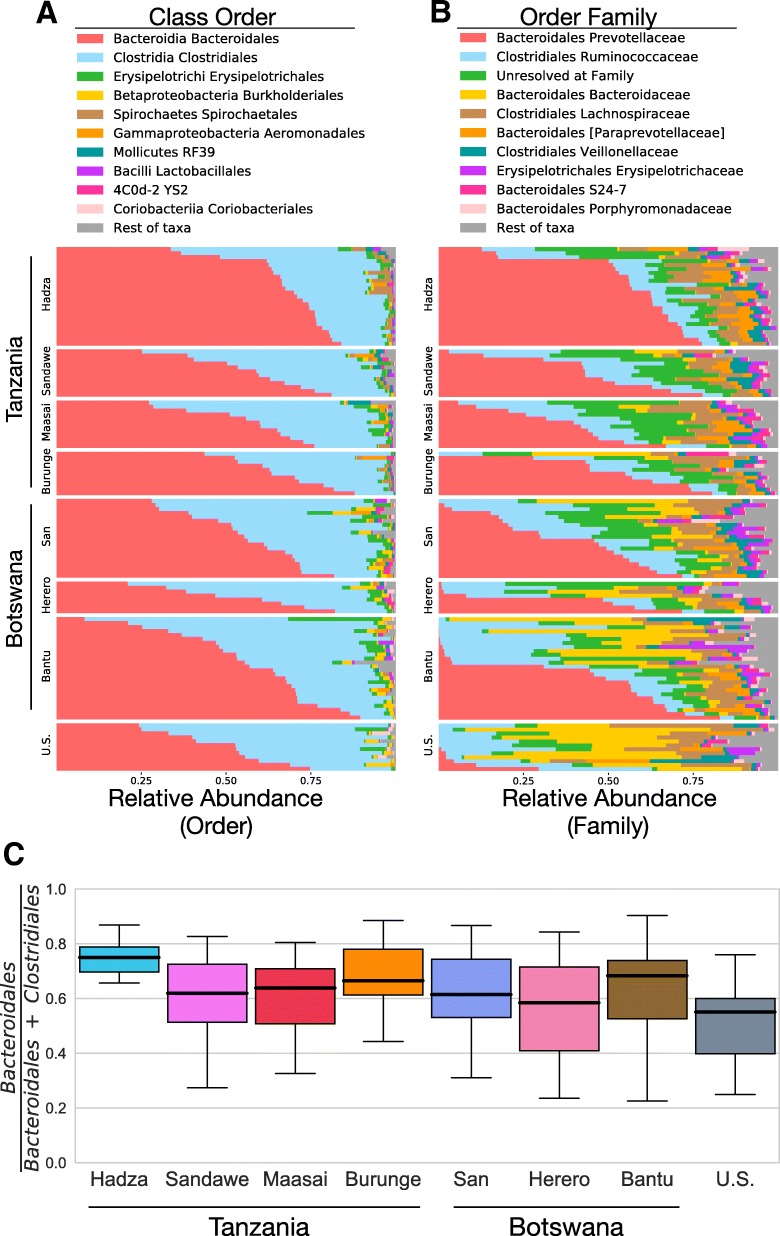
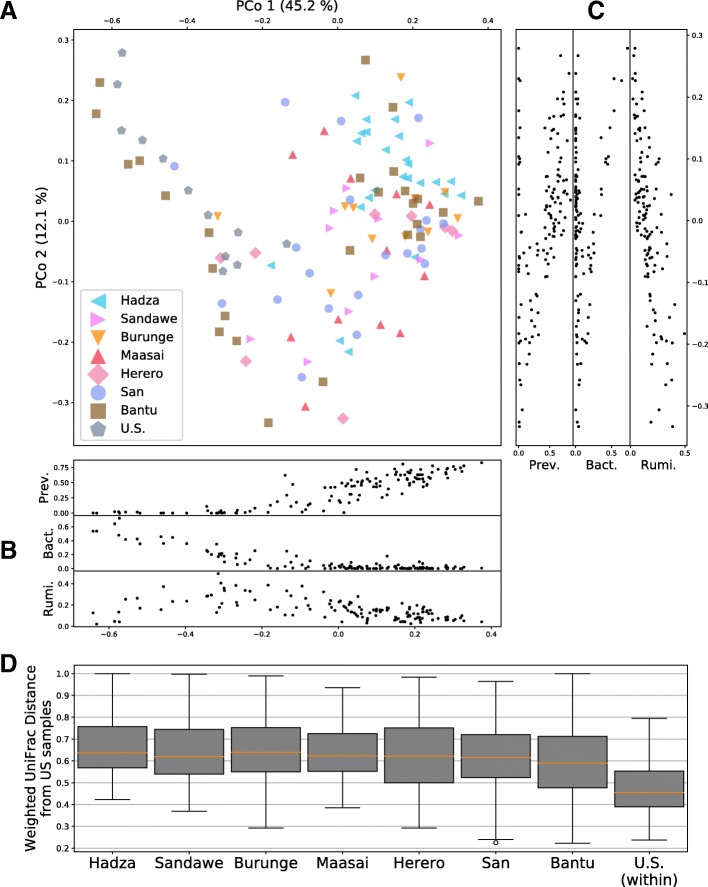
“It is clear from Fig. 2 that there is heterogeneity in bacterial abundance profiles within the Bantu, where roughly half the population has gut bacteria similar to the other African groups, and the other half has gut bacteria more similar to the US cohort.”
§ Population structure of human gut bacteria in a diverse cohort from rural Tanzania and Botswana > Discussion
boostedcorrelational- Asserted: passes — The authors put it forward as true.
- Checkable: passes — It can be checked against evidence.
- Load-bearing: passes — The paper’s conclusions depend on it.
- Based: passes — The paper gives a reason why it holds.
It may state two separate claims as one.
A result the paper reports from its own data — it cites no other source for it, so there is none to check. The quote shows it is in the paper.
In the paper
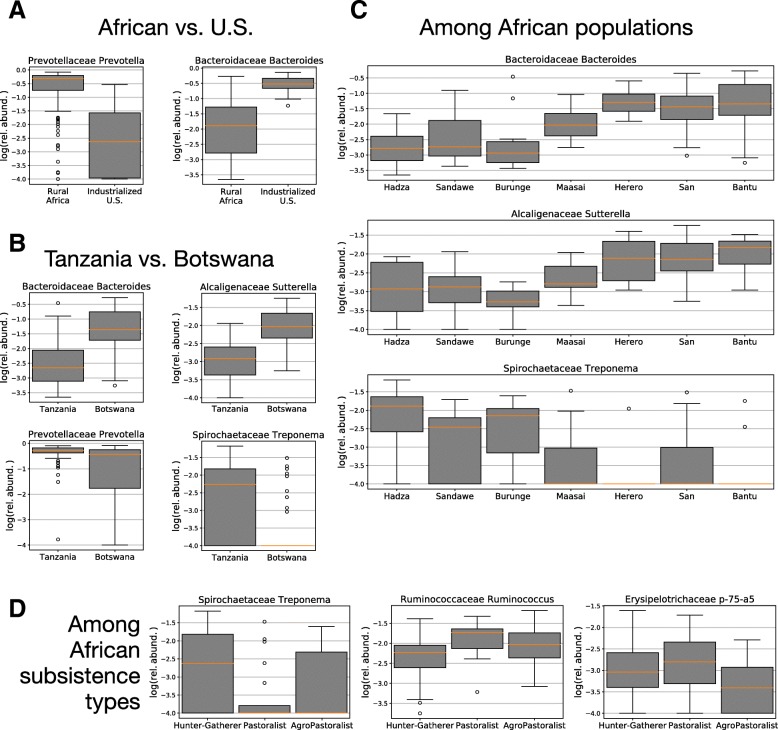
“and is significantly variable across the African populations, with generally higher abundances in Botswanans than in Tanzanians.”
§ Population structure of human gut bacteria in a diverse cohort from rural Tanzania and Botswana > Discussion
plaincorrelational- Asserted: passes — The authors put it forward as true.
- Checkable: passes — It can be checked against evidence.
- Load-bearing: passes — The paper’s conclusions depend on it.
- Based: passes — The paper gives a reason why it holds.
It may state two separate claims as one.
A result the paper reports from its own data — it cites no other source for it, so there is none to check. The quote shows it is in the paper.
In the paper
“None of the populations in our study live in an urban setting; sites are ~ 60 km or more walking distance from the nearest town”
§ Population structure of human gut bacteria in a diverse cohort from rural Tanzania and Botswana > Discussion
plain- Asserted: passes — The authors put it forward as true.
- Checkable: passes — It can be checked against evidence.
- Load-bearing: passes — The paper’s conclusions depend on it.
- Based: passes — The paper gives a reason why it holds.
It may state two separate claims as one.
A result the paper reports from its own data — it cites no other source for it, so there is none to check. The quote shows it is in the paper.
In the paper
“the Hadza are outliers in unweighted UniFrac PCoA, indicating that their bacteria, in terms of presence/absence, are phylogenetically the most dissimilar to other African populations”
§ Population structure of human gut bacteria in a diverse cohort from rural Tanzania and Botswana > Discussion
hedgedcorrelational- Asserted: passes — The authors put it forward as true.
- Checkable: passes — It can be checked against evidence.
- Load-bearing: passes — The paper’s conclusions depend on it.
- Based: passes — The paper gives a reason why it holds.
It may state two separate claims as one.
A result the paper reports from its own data — it cites no other source for it, so there is none to check. The quote shows it is in the paper.
In the paper
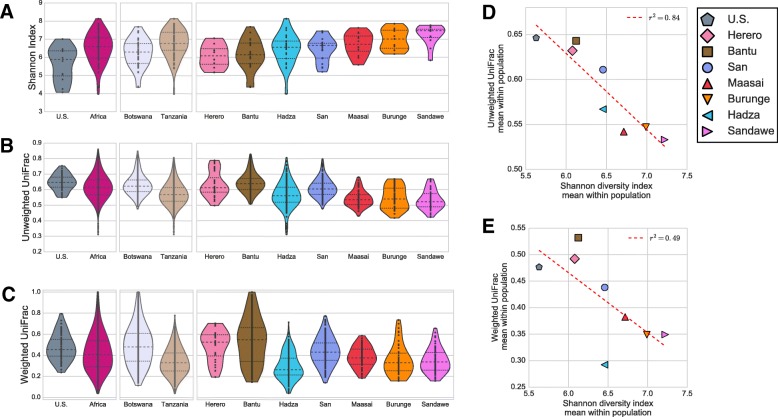
“The US and Botswana Bantu agropastoralists also have the two lowest measures of taxonomic diversity within hosts and two of the highest measures of inter-individual diversity in this cohort.”
§ Population structure of human gut bacteria in a diverse cohort from rural Tanzania and Botswana > Discussion
plaincorrelational- Asserted: passes — The authors put it forward as true.
- Checkable: passes — It can be checked against evidence.
- Load-bearing: unclear — It is unclear whether the paper’s conclusions depend on it.
- Based: passes — The paper gives a reason why it holds.
It may state two separate claims as one.
None of the sources cited for this claim have been checked yet.
In the paper
“The gut bacteria of urban-industrialized populations often have high abundances of Bacteroides, while the gut bacteria from traditional hunter-gatherer or agropastoral societies have higher abundances of Prevotella [22–28].”
§ Population structure of human gut bacteria in a diverse cohort from rural Tanzania and Botswana > Background
What the sources say
- Not checked yetcites [22] De Filippo C, Cavalieri D, Di Paola M, Ramazzotti M, Poullet JB, Massart S, et al. Impact of diet in shaping gut microbiota revealed by a comparative study in children from Europe and rural Africa. Proc Natl Acad Sci U S A. 2010;107:14691–6. source
- Not checked yetcites [23] Yatsunenko T, Rey FE, Manary MJ, Trehan I, Dominguez-Bello MG, Contreras M, et al. Human gut microbiome viewed across age and geography. Nature. 2012;486:222–7. source
- Not checked yetcites [24] Schnorr SL, Candela M, Rampelli S, Centanni M, Consolandi C, Basaglia G, et al. Gut microbiome of the Hadza hunter-gatherers. Nat Commun. 2014;5:3654. source
- Not checked yetcites [25] Obregon-Tito AJ, Tito RY, Metcalf J, Sankaranarayanan K, Clemente JC, Ursell LK, et al. Subsistence strategies in traditional societies distinguish gut microbiomes. Nat Commun. 2015;6:6505. source
- Not checked yetcites [26] Clemente JC, Ursell LK, Parfrey LW, Knight R. The impact of the gut microbiota on human health: an integrative view. Cell. 2012;148:1258–70. source
- Not checked yetcites [27] Gomez A, Petrzelkova KJ, Burns MB, Yeoman CJ, Amato KR, Vlckova K, et al. Gut microbiome of coexisting BaAka pygmies and Bantu reflects gradients of traditional subsistence patterns. Cell Rep. 2016;14:2142–53. source
- Not checked yetcites [28] Martínez I, Stegen JC, Maldonado-Gómez MX, Eren AM, Siba PM, Greenhill AR, et al. The gut microbiota of rural Papua New Guineans: composition, diversity patterns, and ecological processes. Cell Rep. 2015;11:527–38. source
hedgedcorrelational- Asserted: passes — The authors put it forward as true.
- Checkable: passes — It can be checked against evidence.
- Load-bearing: passes — The paper’s conclusions depend on it.
- Based: passes — The paper gives a reason why it holds.
Probably not a substantial claim. It may state two separate claims as one.
A conclusion the paper draws from its own results — it cites no other source for it, so there is none to check. The quote shows it is in the paper.
In the paper
“Across the cohort, similarity in bacterial presence/absence compositions between people increases with both geographic proximity and genetic relatedness, while abundance weighted bacterial composition varies more significantly with geographic proximity than with genetic relatedness.”
§ Population structure of human gut bacteria in a diverse cohort from rural Tanzania and Botswana > Abstract > Conclusions
plaindirect- Asserted: passes — The authors put it forward as true.
- Checkable: passes — It can be checked against evidence.
- Load-bearing: passes — The paper’s conclusions depend on it.
- Based: passes — The paper gives a reason why it holds.
It may state two separate claims as one.
In the paper
“The unweighted UniFrac distances between the BaAka and the neighboring Bantu is nearly 74% of the mean distance between the US and the African cohort, while for weighted UniFrac this ratio is nearly 70%.”
§ Population structure of human gut bacteria in a diverse cohort from rural Tanzania and Botswana > Discussion
What the sources say
- Not checked yetcites [27] Gomez A, Petrzelkova KJ, Burns MB, Yeoman CJ, Amato KR, Vlckova K, et al. Gut microbiome of coexisting BaAka pygmies and Bantu reflects gradients of traditional subsistence patterns. Cell Rep. 2016;14:2142–53. source
plain- Asserted: passes — The authors put it forward as true.
- Checkable: passes — It can be checked against evidence.
- Load-bearing: unclear — It is unclear whether the paper’s conclusions depend on it.
- Based: passes — The paper gives a reason why it holds.
It may state two separate claims as one.
None of the sources cited for this claim have been checked yet.
In the paper
“Prior studies of the Hadza (Smits et al. 2017) [31] and the Hutterites from the USA [49] indicate that seasonally volatile gut bacterial taxa correlate with seasonally available food.”
§ Population structure of human gut bacteria in a diverse cohort from rural Tanzania and Botswana > Discussion
What the sources say
- Not checked yetcites [31] Smits SA, Leach J, Sonnenburg ED, Gonzalez CG, Lichtman JS, Reid G, et al. Seasonal cycling in the gut microbiome of the Hadza hunter-gatherers of Tanzania. Science. 2017;357:802–6. source
- Not checked yetcites [49] Davenport ER, Mizrahi-Man O, Michelini K, Barreiro LB, Ober C, Gilad Y. Seasonal Variation in Human Gut Microbiome Composition. PLOS ONE. 2014;9:e90731. source
hedgedcorrelational- Asserted: passes — The authors put it forward as true.
- Checkable: passes — It can be checked against evidence.
- Load-bearing: passes — The paper’s conclusions depend on it.
- Based: passes — The paper gives a reason why it holds.
Probably not a substantial claim.
A conclusion the paper draws from its own results — it cites no other source for it, so there is none to check. The quote shows it is in the paper.
In the paper
“Given the dissimilarity of food types between industrialized and traditional populations, the compositional similarity between the Bantu and US is noteworthy and may be reflective of individual nutritive changes in the Bantu from Botswana and a shift from traditional to industrialized diets.”
§ Population structure of human gut bacteria in a diverse cohort from rural Tanzania and Botswana > Discussion
hedgedconditional- Asserted: passes — The authors put it forward as true.
- Checkable: passes — It can be checked against evidence.
- Load-bearing: unclear — It is unclear whether the paper’s conclusions depend on it.
- Based: passes — The paper gives a reason why it holds.
It may state two separate claims as one.
In the paper
“which identified four bacterial families and one bacterial phylum that primarily associate with traditional (Prevotellaceae, Spirochaetaceae, Succinivibrionaceae) or industrialized (Bacteroidaceae, Verrucomicrobia) populations”
§ Population structure of human gut bacteria in a diverse cohort from rural Tanzania and Botswana > Discussion
What the sources say
- Not checked yetcites Smits et al. (2017) source
plaincorrelational- Asserted: passes — The authors put it forward as true.
- Checkable: passes — It can be checked against evidence.
- Load-bearing: passes — The paper’s conclusions depend on it.
- Based: passes — The paper gives a reason why it holds.
Probably not a substantial claim.
In the paper
“Additionally, three of these five taxa (Succinivirbionaceae, Spirochaetaceae, and Prevotellaceae) were highly variable with season.”
§ Population structure of human gut bacteria in a diverse cohort from rural Tanzania and Botswana > Discussion
What the sources say
- Not checked yetcites Smits et al. (2017) source
plaincorrelational- Asserted: passes — The authors put it forward as true.
- Checkable: passes — It can be checked against evidence.
- Load-bearing: fails — The paper’s conclusions may not depend on it.
- Based: passes — The paper gives a reason why it holds.
Probably not a substantial claim. The paper’s conclusions may not depend on it.
A conclusion the paper draws from its own results — it cites no other source for it, so there is none to check. The quote shows it is in the paper.
In the paper
“indicating that bacterial similarity is greater with closer geographic proximity and closer relatedness”
§ Population structure of human gut bacteria in a diverse cohort from rural Tanzania and Botswana > Results > Bacterial compositional similarity increases with geographic proximity and inter-individual relatedness
hedgeddirect- Asserted: passes — The authors put it forward as true.
- Checkable: passes — It can be checked against evidence.
- Load-bearing: passes — The paper’s conclusions depend on it.
- Based: passes — The paper gives a reason why it holds.
It may state two separate claims as one.
None of the sources cited for this claim have been checked yet.
In the paper
“with studies finding evidence for heritability of relative bacterial abundances or specific taxa [15, 63–68]”
§ Population structure of human gut bacteria in a diverse cohort from rural Tanzania and Botswana > Discussion
What the sources say
- Not checked yetcites [15] Wang J, Thingholm LB, Skiecevičienė J, Rausch P, Kummen M, Hov JR, et al. Genome-wide association analysis identifies variation in vitamin D receptor and other host factors influencing the gut microbiota. Nat Genet. 2016;48:1396–406. source
- Not checked yetcites [63] Etienne RS. A new sampling formula for neutral biodiversity. Ecol Lett. 2005;8:253–60. source
- Not checked yetcites [64] Goodrich JK, Waters JL, Poole AC, Sutter JL, Koren O, Blekhman R, et al. Human genetics shape the gut microbiome. Cell. 2014;159:789–99. source
- Not checked yetcites [65] Goodrich JK, Davenport ER, Beaumont M, Jackson MA, Knight R, Ober C, et al. Genetic determinants of the gut microbiome in UK twins. Cell Host Microbe. 2016;19:731–43. source
- Not checked yetcites [66] Xie H, Guo R, Zhong H, Feng Q, Lan Z, Qin B, et al. Shotgun Metagenomics of 250 Adult Twins Reveals Genetic and Environmental Impacts on the Gut Microbiome. Cell Syst. 2016;3:572–584.e3. source
- Not checked yetcites [67] Bonder MJ, Kurilshikov A, Tigchelaar EF, Mujagic Z, Imhann F, Vila AV, et al. The effect of host genetics on the gut microbiome. Nat Genet. 2016;48:1407–12. source
- Not checked yetcites [68] Turpin W, Espin-Garcia O, Xu W, Silverberg MS, Kevans D, Smith MI, et al. Association of host genome with intestinal microbial composition in a large healthy cohort. Nat Genet. 2016;48:1413–7. source
plaincorrelational- Asserted: passes — The authors put it forward as true.
- Checkable: passes — It can be checked against evidence.
- Load-bearing: fails — The paper’s conclusions may not depend on it.
- Based: passes — The paper gives a reason why it holds.
Probably not a substantial claim. The paper’s conclusions may not depend on it.
None of the sources cited for this claim have been checked yet.
In the paper
“in particular, the genus Treponema within family Spirochetaceae, which is a common constituent of hunter-gatherer gut microbiomes [24–27, 30] and a catabolizer of fibrous plant materials (cellulose and xylans) that form a large component of Hadza diets [24]”
§ Population structure of human gut bacteria in a diverse cohort from rural Tanzania and Botswana > Discussion
What the sources say
- Not checked yetcites [24] Schnorr SL, Candela M, Rampelli S, Centanni M, Consolandi C, Basaglia G, et al. Gut microbiome of the Hadza hunter-gatherers. Nat Commun. 2014;5:3654. source
- Not checked yetcites [25] Obregon-Tito AJ, Tito RY, Metcalf J, Sankaranarayanan K, Clemente JC, Ursell LK, et al. Subsistence strategies in traditional societies distinguish gut microbiomes. Nat Commun. 2015;6:6505. source
- Not checked yetcites [26] Clemente JC, Ursell LK, Parfrey LW, Knight R. The impact of the gut microbiota on human health: an integrative view. Cell. 2012;148:1258–70. source
- Not checked yetcites [27] Gomez A, Petrzelkova KJ, Burns MB, Yeoman CJ, Amato KR, Vlckova K, et al. Gut microbiome of coexisting BaAka pygmies and Bantu reflects gradients of traditional subsistence patterns. Cell Rep. 2016;14:2142–53. source
- Not checked yetcites [30] Morton ER, Lynch J, Froment A, Lafosse S, Heyer E, Przeworski M, et al. Variation in rural African gut microbiota is strongly correlated with colonization by Entamoeba and subsistence. PLoS Genet. 2015;11:e1005658. source
plaindirect- Asserted: passes — The authors put it forward as true.
- Checkable: passes — It can be checked against evidence.
- Load-bearing: unclear — It is unclear whether the paper’s conclusions depend on it.
- Based: passes — The paper gives a reason why it holds.
It may state two separate claims as one.
In the paper
“The Sandawe settled into villages and adopted small-scale agropastoral practices in the mid-1800s [54].”
§ Population structure of human gut bacteria in a diverse cohort from rural Tanzania and Botswana > Discussion
What the sources say
- Not checked yetcites [54] Newman JL. The Ecological Basis for Subsistence Change among the Sandawe of Tanzania. Washington D.C.: National Academy of Sciences; 1970.
plain- Asserted: passes — The authors put it forward as true.
- Checkable: passes — It can be checked against evidence.
- Load-bearing: fails — The paper’s conclusions may not depend on it.
- Based: passes — The paper gives a reason why it holds.
Probably not a substantial claim. The paper’s conclusions may not depend on it. It may state two separate claims as one.
None of the sources cited for this claim have been checked yet.
In the paper
“Botswana is more economically developed than Tanzania, reflected in higher yearly per capita gross national income ($15.5 k in Botswana to $1.75 k in Tanzania), and a higher percentage of Botswanans (57%) than Tanzanians (30%) live in urban areas [52, 53].”
§ Population structure of human gut bacteria in a diverse cohort from rural Tanzania and Botswana > Discussion
What the sources say
- Not checked yetcites [52] Regional Office for Africa, Africa Health Organization, World Health Organization. United Republic of Tanzania: Factsheets of Health Statistics 2016. 2016. Available from: http://www.aho.afro.who.int/profiles_information/images/c/c8/Tanzania-Statistical_Factsheet.pdf
- Not checked yetcites [53] Regional Office for Africa, Africa Health Organization, World Health Organization. Botswana: Factsheets of Health Statistics 2016. 2016. Available from: http://www.aho.afro.who.int/profiles_information/images/0/05/Botswana-Statistical_Factsheet.pdf
plaincorrelational- Asserted: passes — The authors put it forward as true.
- Checkable: passes — It can be checked against evidence.
- Load-bearing: fails — The paper’s conclusions may not depend on it.
- Based: passes — The paper gives a reason why it holds.
Probably not a substantial claim. The paper’s conclusions may not depend on it. It may state two separate claims as one.
None of the sources cited for this claim have been checked yet.
In the paper
“The high Shannon diversity values in the Sandawe are consistent with the “Intermediate Disturbance Hypothesis” which proposes diversity of bacteria is maximized under conditions of fluctuating environments (e.g., diet in this case) [55, 56].”
§ Population structure of human gut bacteria in a diverse cohort from rural Tanzania and Botswana > Discussion
What the sources say
- Not checked yetcites [55] Kadmon R, Benjamini Y. Effects of productivity and disturbance on species richness: a neutral model. Am Nat. 2006;167:939–46. source
- Not checked yetcites [56] Jiang L, Patel SN. Community assembly in the presence of disturbance: a microcosm experiment. Ecology. 2008;89:1931–40. source
plaincorrelational- Asserted: passes — The authors put it forward as true.
- Checkable: passes — It can be checked against evidence.
- Load-bearing: unclear — It is unclear whether the paper’s conclusions depend on it.
- Based: passes — The paper gives a reason why it holds.
It may state two separate claims as one.
In the paper
“and alternately, estimating that host genetics explain only a minor percentage of microbiome variation [69].”
§ Population structure of human gut bacteria in a diverse cohort from rural Tanzania and Botswana > Discussion
What the sources say
- Not checked yetcites [69] Rothschild D, Weissbrod O, Barkan E, Kurilshikov A, Korem T, Zeevi D, et al. Environment dominates over host genetics in shaping human gut microbiota. Nature. 2018;555:210–5. source
hedged- Asserted: passes — The authors put it forward as true.
- Checkable: passes — It can be checked against evidence.
- Load-bearing: fails — The paper’s conclusions may not depend on it.
- Based: passes — The paper gives a reason why it holds.
Probably not a substantial claim. The paper’s conclusions may not depend on it.
A conclusion the paper draws from its own results — it cites no other source for it, so there is none to check. The quote shows it is in the paper.
In the paper
“first, the negative correlation between α and β-diversity exists among a set of non-Western populations practicing largely traditional subsistence lifestyles, demonstrating that the correlation is not entirely a Western versus non-Western phenomenon”
§ Population structure of human gut bacteria in a diverse cohort from rural Tanzania and Botswana > Discussion
boostedcorrelational- Asserted: passes — The authors put it forward as true.
- Checkable: passes — It can be checked against evidence.
- Load-bearing: passes — The paper’s conclusions depend on it.
- Based: passes — The paper gives a reason why it holds.
It may state two separate claims as one.
What the paper did — it cites no source for this, so there is none to check. The quote shows it is in the paper.
In the paper
“All fecal and blood samples were extracted, sequenced, and analyzed using the same laboratory and computational pipelines, thereby reducing the impact of batch effects in the cross-population comparisons.”
§ Population structure of human gut bacteria in a diverse cohort from rural Tanzania and Botswana > Methods > Sampled populations
plaindirect- Asserted: passes — The authors put it forward as true.
- Checkable: passes — It can be checked against evidence.
- Load-bearing: passes — The paper’s conclusions depend on it.
- Based: passes — The paper gives a reason why it holds.
Probably not a substantial claim. It may state two separate claims as one.
In the paper
“Maasai diets primarily consist of meat, milk, and blood, which are lactose rich and high in fat and cholesterol, though they supplement that diet with maize traded from neighboring groups [75].”
§ Population structure of human gut bacteria in a diverse cohort from rural Tanzania and Botswana > Methods > Sampled populations
What the sources say
- Not checked yetcites [75] Århem K. Maasai Food Symbolism: The Cultural Connotations of Milk, Meat, and Blood in the Pastoral Maasai Diet. Anthropos. 1989;84:1–23.
plain- Asserted: passes — The authors put it forward as true.
- Checkable: passes — It can be checked against evidence.
- Load-bearing: fails — The paper’s conclusions may not depend on it.
- Based: passes — The paper gives a reason why it holds.
Probably not a substantial claim. The paper’s conclusions may not depend on it. It may state two separate claims as one.
None of the sources cited for this claim have been checked yet.
In the paper
“Interestingly, Botswana, but not Tanzania, is one of nine countries worldwide that uses indoor residence spraying of traditional structures for control of malaria-carrying mosquitos [70, 71].”
§ Population structure of human gut bacteria in a diverse cohort from rural Tanzania and Botswana > Discussion
What the sources say
- Not checked yetcites [70] Chihanga S, Haque U, Chanda E, Mosweunyane T, Moakofhi K, Jibril HB, et al. Malaria elimination in Botswana, 2012–2014: achievements and challenges. Parasit Vectors. 2016;9:99. source
- Not checked yetcites [71] World Health Organization, Global Malaria Programme. World malaria report 2017. 2017. source
plain- Asserted: passes — The authors put it forward as true.
- Checkable: passes — It can be checked against evidence.
- Load-bearing: passes — The paper’s conclusions depend on it.
- Based: passes — The paper gives a reason why it holds.
It may state two separate claims as one.
A conclusion the paper draws from its own results — it cites no other source for it, so there is none to check. The quote shows it is in the paper.
In the paper
“The factors causing a shift towards western microbiome compositions remain unknown but appear to have a regional component that is not entirely due to differences in agricultural, pastoral, or hunting-gathering subsistence modes.”
§ Population structure of human gut bacteria in a diverse cohort from rural Tanzania and Botswana > Conclusions
hedgedconditional- Asserted: passes — The authors put it forward as true.
- Checkable: passes — It can be checked against evidence.
- Load-bearing: passes — The paper’s conclusions depend on it.
- Based: passes — The paper gives a reason why it holds.
It may state two separate claims as one.
None of the sources cited for this claim have been checked yet.
In the paper
“The traditional diet of San hunter-gatherers is composed of foraged meat, vegetables, fruits, and nuts, the latter of which contributed the largest percentage of dietary protein and calories [76–80].”
§ Population structure of human gut bacteria in a diverse cohort from rural Tanzania and Botswana > Methods > Sampled populations
What the sources say
- Not checked yetcites [76] Silberbauer G. Report to the government of Bechuanaland on the bushmen survey. Gaborone: Bechuanaland Government Printer; 1965.
- Not checked yetcites [77] Silberbauer G. The G/wi Bushmen. In: Bicchieri M, editor. Hunt Gatherers Today. New York: Holt, Rinehart and Winston; 1972. p. 271–326.
- Not checked yetcites [78] Lee R. The !Kung san: men, women, and work in a foraging society. New York: Cambridge University Press; 1979.
- Not checked yetcites [79] Tanaka J. The san, hunter-gatherers of the Kalahari. Tokyo: University of Tokyo Press; 1980.
- Not checked yetcites [80] Valiente-Noailles C. The Kua: life and soul of the central Kalahari bushmen. A.A. Balkema: Rotterdam; 1993.
plain- Asserted: passes — The authors put it forward as true.
- Checkable: passes — It can be checked against evidence.
- Load-bearing: fails — The paper’s conclusions may not depend on it.
- Based: passes — The paper gives a reason why it holds.
Probably not a substantial claim. The paper’s conclusions may not depend on it. It may state two separate claims as one.
What the paper did — it cites no source for this, so there is none to check. The quote shows it is in the paper.
In the paper
“Written informed consent was obtained from all participants, and ethics/research approval and permits were obtained from the following institutions prior to the start of sample collection”
§ Population structure of human gut bacteria in a diverse cohort from rural Tanzania and Botswana > Methods > Sampled populations
plain- Asserted: passes — The authors put it forward as true.
- Checkable: passes — It can be checked against evidence.
- Load-bearing: fails — The paper’s conclusions may not depend on it.
- Based: passes — The paper gives a reason why it holds.
Probably not a substantial claim. The paper’s conclusions may not depend on it. It may state two separate claims as one.
A conclusion the paper draws from its own results — it cites no other source for it, so there is none to check. The quote shows it is in the paper.
In the paper
“which we may reasonably expect to contain more industrial pollutants in the general environment than in the environment of any of the populations we sampled in Africa.”
§ Population structure of human gut bacteria in a diverse cohort from rural Tanzania and Botswana > Discussion
hedged- Asserted: passes — The authors put it forward as true.
- Checkable: passes — It can be checked against evidence.
- Load-bearing: passes — The paper’s conclusions depend on it.
- Based: passes — The paper gives a reason why it holds.
Probably not a substantial claim.
In the paper
“The Sandawe have admixed with neighboring populations of diverse ancestries who migrated into Tanzania within the past 5000 years [73].”
§ Population structure of human gut bacteria in a diverse cohort from rural Tanzania and Botswana > Methods > Sampled populations
What the sources say
- Not checked yetcites [73] Tishkoff SA, Reed FA, Friedlaender FR, Ehret C, Ranciaro A, Froment A, et al. The genetic structure and history of Africans and African Americans. Science. 2009;324:1035–44. source
plaindirect- Asserted: passes — The authors put it forward as true.
- Checkable: passes — It can be checked against evidence.
- Load-bearing: fails — The paper’s conclusions may not depend on it.
- Based: passes — The paper gives a reason why it holds.
Probably not a substantial claim. The paper’s conclusions may not depend on it.
A conclusion the paper draws from its own results — it cites no other source for it, so there is none to check. The quote shows it is in the paper.
In the paper
“The sampled African populations live far from industrial centers and arguably have less contact with plastics and industrial by-products compared to the US individuals”
§ Population structure of human gut bacteria in a diverse cohort from rural Tanzania and Botswana > Discussion
hedged- Asserted: passes — The authors put it forward as true.
- Checkable: passes — It can be checked against evidence.
- Load-bearing: passes — The paper’s conclusions depend on it.
- Based: fails — The paper may give no reason why it holds.
Probably not a substantial claim. The paper may give no reason why it holds. It may state two separate claims as one.
None of the sources cited for this claim have been checked yet.
In the paper
“The Sandawe also adopted the agropastoral subsistence practices of neighboring Bantu-speaking Turu, which comprises the bulk of their caloric intake, though they continue to supplement a small portion of their diet with hunting and gathering [54, 74].”
§ Population structure of human gut bacteria in a diverse cohort from rural Tanzania and Botswana > Methods > Sampled populations
What the sources say
- Not checked yetcites [54] Newman JL. The Ecological Basis for Subsistence Change among the Sandawe of Tanzania. Washington D.C.: National Academy of Sciences; 1970.
- Not checked yetcites [74] Yatsuka H. Hunter-gatherers and their neighbors in Asia, Africa, and South America. Senri Ethnol Stud. 2016;94:81–105.
plain- Asserted: passes — The authors put it forward as true.
- Checkable: passes — It can be checked against evidence.
- Load-bearing: fails — The paper’s conclusions may not depend on it.
- Based: passes — The paper gives a reason why it holds.
Probably not a substantial claim. The paper’s conclusions may not depend on it. It may state two separate claims as one.
A conclusion the paper draws from its own results — it cites no other source for it, so there is none to check. The quote shows it is in the paper.
In the paper
“These results suggest potential metagenomic adaptation to increased exposure to industrial compounds in western populations, and to DDT in Botswanans.”
§ Population structure of human gut bacteria in a diverse cohort from rural Tanzania and Botswana > Discussion
hedgedconditional- Asserted: passes — The authors put it forward as true.
- Checkable: passes — It can be checked against evidence.
- Load-bearing: passes — The paper’s conclusions depend on it.
- Based: passes — The paper gives a reason why it holds.
It may state two separate claims as one.
What the paper did — it cites no source for this, so there is none to check. The quote shows it is in the paper.
In the paper
“During the quality-filtering process, reads were removed from the analysis if they did not match Golay error-corrected barcode with less than two mismatches, if the read pairs could not be joined with an overlapping sequence of less than 35 bp, if they had a homopolymer sequence (repeated base call) greater than 6 bp, and if they had more than two ambiguous base calls (N’s).”
§ Population structure of human gut bacteria in a diverse cohort from rural Tanzania and Botswana > Methods > Biological sample processing and quantification
plain- Asserted: passes — The authors put it forward as true.
- Checkable: passes — It can be checked against evidence.
- Load-bearing: passes — The paper’s conclusions depend on it.
- Based: passes — The paper gives a reason why it holds.
Probably not a substantial claim. It may state two separate claims as one.
What the paper did — it cites no source for this, so there is none to check. The quote shows it is in the paper.
In the paper
“All of the individuals in our study have BMI measurements, which allowed testing for correlations between α-diversity and BMI.”
§ Population structure of human gut bacteria in a diverse cohort from rural Tanzania and Botswana > Methods > Statistical methods
plaincorrelational- Asserted: passes — The authors put it forward as true.
- Checkable: passes — It can be checked against evidence.
- Load-bearing: unclear — It is unclear whether the paper’s conclusions depend on it.
- Based: passes — The paper gives a reason why it holds.
It may state two separate claims as one.
In the paper
“As an additional quality control step, all OTUs were tested for correlations between the proportional abundance of the OTU and the post-PCR amplicon concentration of a sample using the method developed by Jervis-Brady et al. [90] as implemented in the contam_test program for R (https://github.com/eclarke/eclectic).”
- Also stated in: § Biological sample processing and quantification · plain
“Correlation significance is assessed using Pearson’s rho, and OTUs with a significant negative correlation are considered contaminants and removed.”
§ Population structure of human gut bacteria in a diverse cohort from rural Tanzania and Botswana > Methods > Biological sample processing and quantification
What the sources say
- Not checked yetcites [90] Jervis-Bardy J, Leong LEX, Marri S, Smith RJ, Choo JM, Smith-Vaughan HC, et al. Deriving accurate microbiota profiles from human samples with low bacterial content through post-sequencing processing of Illumina MiSeq data. Microbiome. 2015;3:19. source
plaincorrelational- Asserted: passes — The authors put it forward as true.
- Checkable: passes — It can be checked against evidence.
- Load-bearing: fails — The paper’s conclusions may not depend on it.
- Based: passes — The paper gives a reason why it holds.
Probably not a substantial claim. The paper’s conclusions may not depend on it. It may state two separate claims as one.
- Also stated in: § Biological sample processing and quantification · plain
What the paper did — it cites no source for this, so there is none to check. The quote shows it is in the paper.
In the paper
“97 of the 114 African individuals were genotyped on the Illumina Omni5M Exome array that includes a small number of indels and ~ 4.5 million SNPs (see Additional file 2: Table S1A).”
§ Population structure of human gut bacteria in a diverse cohort from rural Tanzania and Botswana > Methods > Biological sample processing and quantification
plainn = 97- Asserted: passes — The authors put it forward as true.
- Checkable: passes — It can be checked against evidence.
- Load-bearing: fails — The paper’s conclusions may not depend on it.
- Based: passes — The paper gives a reason why it holds.
Probably not a substantial claim. The paper’s conclusions may not depend on it.
In the paper
“Herero pastoralists have diets based on beef, milk, and milk products with supplements of goats, chickens, garden produce, foraged plants and animals, and bulk grains (especially ground corn) [82].”
§ Population structure of human gut bacteria in a diverse cohort from rural Tanzania and Botswana > Methods > Sampled populations
What the sources say
- Not checked yetcites [82] Pennington RL. Economic stratification and health among the Herero of Botswana. In: Leonard WR, Crawford MH, editors. Hum Biol Pastor Popul. Cambridge: Cambridge University Press; 2002.
plain- Asserted: passes — The authors put it forward as true.
- Checkable: passes — It can be checked against evidence.
- Load-bearing: fails — The paper’s conclusions may not depend on it.
- Based: passes — The paper gives a reason why it holds.
Probably not a substantial claim. The paper’s conclusions may not depend on it.
What the paper did — it cites no source for this, so there is none to check. The quote shows it is in the paper.
In the paper
“OTUs mapping to chloroplast or mitochondrial sequences were removed.”
§ Population structure of human gut bacteria in a diverse cohort from rural Tanzania and Botswana > Methods > Biological sample processing and quantification
plain- Asserted: passes — The authors put it forward as true.
- Checkable: passes — It can be checked against evidence.
- Load-bearing: fails — The paper’s conclusions may not depend on it.
- Based: passes — The paper gives a reason why it holds.
Probably not a substantial claim. The paper’s conclusions may not depend on it.
What the paper did — it cites no source for this, so there is none to check. The quote shows it is in the paper.
In the paper
“The Nearest Sequenced Taxon Index (NSTI), which measures the phylogenetic distance between observed OTU sequences and the reference, has a mean and standard deviation of 0.140 and 0.037 across all samples, with 10th and 90th percentiles 0.095 and 0.186 (Additional file 2: Table S1AB).”
§ Population structure of human gut bacteria in a diverse cohort from rural Tanzania and Botswana > Methods > Statistical methods
plain- Asserted: passes — The authors put it forward as true.
- Checkable: passes — It can be checked against evidence.
- Load-bearing: fails — The paper’s conclusions may not depend on it.
- Based: passes — The paper gives a reason why it holds.
Probably not a substantial claim. The paper’s conclusions may not depend on it. It may state two separate claims as one.
In the paper
“The ANCOM method accounts for the simplex nature of compositional data, and so does not suffer from spurious negative correlations imposed by the fact that (relative) abundances across all bacteria must sum to one within a given bacterial community.”
§ Population structure of human gut bacteria in a diverse cohort from rural Tanzania and Botswana > Methods > Statistical methods
What the sources say
- Not checked yetcites [40] Mandal S, Van Treuren W, White RA, Eggesbø M, Knight R, Peddada SD. Analysis of composition of microbiomes: a novel method for studying microbial composition. Microb Ecol Health Dis. 2015;26:27663. source
plaindirect- Asserted: passes — The authors put it forward as true.
- Checkable: passes — It can be checked against evidence.
- Load-bearing: passes — The paper’s conclusions depend on it.
- Based: passes — The paper gives a reason why it holds.
Probably not a substantial claim.
In the paper
“Primers, probes, and protocols for the qPCR, including methods for generating a recombinant plasmid containing target E. histolytica sequence to make a standard curve, were taken from Mejia et al. (2013) [95].”
§ Population structure of human gut bacteria in a diverse cohort from rural Tanzania and Botswana > Methods > Biological sample processing and quantification
What the sources say
- Not checked yetcites [95] Mejia R, Vicuña Y, Broncano N, Sandoval C, Vaca M, Chico M, et al. A novel, multi-parallel, real-time polymerase chain reaction approach for eight gastrointestinal parasites provides improved diagnostic capabilities to resource-limited at-risk populations. Am J Trop Med Hyg. 2013;88:1041–7. source
plain- Asserted: passes — The authors put it forward as true.
- Checkable: passes — It can be checked against evidence.
- Load-bearing: fails — The paper’s conclusions may not depend on it.
- Based: passes — The paper gives a reason why it holds.
Probably not a substantial claim. The paper’s conclusions may not depend on it.
In the paper
“As such, this is a sensitive test for taxa that vary significantly and in an unusual way compared to the other taxa.”
§ Population structure of human gut bacteria in a diverse cohort from rural Tanzania and Botswana > Methods > Statistical methods
What the sources say
- Not checked yetcites [40] Mandal S, Van Treuren W, White RA, Eggesbø M, Knight R, Peddada SD. Analysis of composition of microbiomes: a novel method for studying microbial composition. Microb Ecol Health Dis. 2015;26:27663. source
plain- Asserted: passes — The authors put it forward as true.
- Checkable: passes — It can be checked against evidence.
- Load-bearing: fails — The paper’s conclusions may not depend on it.
- Based: passes — The paper gives a reason why it holds.
Probably not a substantial claim. The paper’s conclusions may not depend on it.
In the paper
“We retained the segregating autosomal biallelic single nucleotide polymorphisms (SNPs) over the 97 individuals, and variants were pruned to be in approximate linkage equilibrium, r2LD < 0.1, using plink [93](plink --indep-pairwise 200 kb 20 0.1), leaving 158,891 SNPs for genetic relatedness estimation.”
§ Population structure of human gut bacteria in a diverse cohort from rural Tanzania and Botswana > Methods > Biological sample processing and quantification
What the sources say
- Not checked yetcites [93] Chang CC, Chow CC, Tellier LC, Vattikuti S, Purcell SM, Lee JJ. Second-generation PLINK: rising to the challenge of larger and richer datasets. Gigascience. 2015;4:7. source
plainn = 97- Asserted: passes — The authors put it forward as true.
- Checkable: passes — It can be checked against evidence.
- Load-bearing: passes — The paper’s conclusions depend on it.
- Based: passes — The paper gives a reason why it holds.
Probably not a substantial claim.
A conclusion the paper draws from its own results — it cites no other source for it, so there is none to check. The quote shows it is in the paper.
In the paper
“The above correlation could only be explained by OTU annotation biases that (A) happen to impact certain pathways more than others and (B) have the same mapping biases between Tanzania and Botswana as between the USA and Africa.”
§ Population structure of human gut bacteria in a diverse cohort from rural Tanzania and Botswana > Methods > Statistical methods
hedgeddirect- Asserted: fails — The authors may not put it forward as true.
- Checkable: passes — It can be checked against evidence.
- Load-bearing: fails — The paper’s conclusions may not depend on it.
- Based: passes — The paper gives a reason why it holds.
Probably not a substantial claim. The authors may not put it forward as true. The paper’s conclusions may not depend on it. It may state two separate claims as one.
- The authors state this as an assumption: The bacterial strains in each sample have the same gene content as the database strains used for PICRUSt analysis.
The paper relies on this without support.
The range of gut microbiome compositions among African populations with diverse subsistence practices remains largely unknown.
“Although there have been several studies of microbiome diversity within African populations [22–24, 27, 29–31], the range of gut microbiome compositions among African populations with diverse subsistence practices remains largely unknown.”
The paper relies on this without support.
PICRUSt imputation accurately estimates metagenomic content.
“We infer that the regional differences in bacterial abundances may lead to regional differences in functional pathway abundances, depending upon the accuracy of gene content imputation.”
The authors state this as an assumption.
Estimation of the identity-by-descent fraction assumes a panmictic population.
“Estimation of the identity-by-descent fraction assumes a panmictic population and is, therefore, reasonably suited for use as a within-population relatedness metric.”
The authors state this as an assumption.
The bacterial strains in each sample have the same gene content as the database strains used for PICRUSt analysis.
“PICRUSt relies on the assumption that the bacterial strains in each sample have the same gene content as database strains used for the analysis, which can be inaccurate when strains vary substantially in gene content.”
Claims other papers make about this one
Each is checked against this paper’s own text: does it say what the citing paper says it does?
The source backs part of the claim, not all of it — or backs it for a different population, condition or comparison.
In the citing paper
“This characteristic is consistent with the higher biodiversity observed in non-Westernized settings, where more heterogeneous dietary and environmental exposures may allow a broader range of accessory gene content to persist than is usually observed in genomes from industrialized populations [73-75] .”
From Genome-scale insights into the metabolic landscape and evolutionary development of Bifidobacterium bifidum (2026) · cites this paper as [74]
Experimental — accuracy not yet measured
Self-check
Percentages, sums and reported differences re-computed from the paper’s own numbers.
Each contradiction between two passages listed here was confirmed by an independent check.
Rated minor: it would not touch a result — a value no result rests on, a p-value that stays on the same side of the significance level, or a conflict that is clerical, resolved elsewhere in the paper, or outside its own findings.
In the paper
§ Population structure of human gut bacteria in a diverse cohort from rural Tanzania and Botswana > Results > Abundance of Prevotellaceae varies within and between African populations
“Fifty-two Africans were tested by quantitative PCR for absolute 16S rRNA copy numbers per gram of stool, including eight Bantu from Botswana.”
§ Population structure of human gut bacteria in a diverse cohort from rural Tanzania and Botswana > Methods > Biological sample processing and quantification
“Eight samples from each population were included save for the Herero, where only three were available, and the Bantu, where nine were available.”
Rated minor: it would not touch a result — a value no result rests on, a p-value that stays on the same side of the significance level, or a conflict that is clerical, resolved elsewhere in the paper, or outside its own findings.
In the paper
“The relative abundance of Prevotellaceae in the Hadza from our study was ~ 58%, which is nearly tenfold higher than the 8% relative abundance of Prevotellaceae found in the Hadza by Schnorr and colleagues [24]”
§ Population structure of human gut bacteria in a diverse cohort from rural Tanzania and Botswana > Discussion
Reported 10 · recomputed 7.25
Rated minor: it would not touch a result — a value no result rests on, a p-value that stays on the same side of the significance level, or a conflict that is clerical, resolved elsewhere in the paper, or outside its own findings.
In the paper
§ Population structure of human gut bacteria in a diverse cohort from rural Tanzania and Botswana > Background
“| Botswana | | Subtotals | 54 | 41 | 13 | 40.9 | 18 | 92 |”
§ Population structure of human gut bacteria in a diverse cohort from rural Tanzania and Botswana > Background
“| | | Totals | 126 | 81 | 45 | 41.2 | 18 | 90 |”
Citations
Cites
QIIME allows analysis of high-throughput community sequencing data
Caporaso, J. G., Kuczynski, J., Stombaugh, J., Bittinger, K., Bushman, F. D., Costello, E. K., Fierer, N., Peña, A. G., Goodrich, J. K., Gordon, J. I., et al. (2010) · Nature Methods · doi:10.1038/nmeth.f.303 · Cited by 34,887
Self-citationA new method for non-parametric multivariate analysis of variance
Anderson, M. J. (2001) · Austral Ecology · doi:10.1111/j.1442-9993.2001.01070.pp.x · Cited by 13,828
Second-generation PLINK: rising to the challenge of larger and richer datasets
Chang, C. C., Chow, C. C., Tellier, L. C., Vattikuti, S., Purcell, S. M., & Lee, J. J. (2015) · Gigascience · doi:10.1186/s13742-015-0047-8 · Cited by 12,709
An obesity-associated gut microbiome with increased capacity for energy harvest
Turnbaugh, P. J., Ley, R. E., Mahowald, M. A., Magrini, V., Mardis, E. R., & Gordon, J. I. (2006) · Nature · doi:10.1038/nature05414 · Cited by 12,444
Structure, function and diversity of the healthy human microbiome
The Human Microbiome Project Consortium (2012) · Nature · doi:10.1038/nature11234 · Cited by 11,726
Greengenes, a Chimera-Checked 16S rRNA Gene Database and Workbench Compatible with ARB
DeSantis, T. Z., Hugenholtz, P., Larsen, N., Rojas, M., Brodie, E. L., Keller, K., Huber, T., Dalevi, D., Hu, P., & Andersen, G. L. (2006) · Applied and Environmental Microbiology · doi:10.1128/aem.03006-05 · Cited by 10,891
Diet rapidly and reproducibly alters the human gut microbiome
David, L. A., Maurice, C. F., Carmody, R. N., Gootenberg, D. B., Button, J. E., Wolfe, B. E., Ling, A. V., Devlin, A. S., Varma, Y., Fischbach, M. A., et al. (2014) · Nature · doi:10.1038/nature12820 · Cited by 10,100
Nucleic acid techniques in bacterial systematics
Stackebrandt, E. S., & Goodfellow, M. (1991) · Wiley eBooks · Cited by 9,460
Predictive functional profiling of microbial communities using 16S rRNA marker gene sequences
Langille, M. G. I., Zaneveld, J., Caporaso, J. G., McDonald, D., Knights, D., Reyes, J. A., Clemente, J. C., Burkepile, D. E., Vega Thurber, R. L., Knight, R., et al. (2013) · Nature Biotechnology · doi:10.1038/nbt.2676 · Cited by 9,116
GCTA: a tool for genome-wide complex trait analysis
Yang, J., Lee, S. H., Goddard, M. E., & Visscher, P. M. (2011) · The American Journal of Human Genetics · doi:10.1016/j.ajhg.2010.11.011 · Cited by 8,279
UniFrac: a New Phylogenetic Method for Comparing Microbial Communities
Lozupone, C., & Knight, R. (2005) · Applied and Environmental Microbiology · doi:10.1128/aem.71.12.8228-8235.2005 · Cited by 8,227
Lane, D. (1991) · Medical Entomology and Zoology · Cited by 8,190
Diversity of the Human Intestinal Microbial Flora
Eckburg, P. B., Bik, E. M., Bernstein, C. N., Purdom, E., Dethlefsen, L., Sargent, M., Gill, S. R., Nelson, K. E., & Relman, D. A. (2005) · Science · doi:10.1126/science.1110591 · Cited by 7,913
A core gut microbiome in obese and lean twins
Turnbaugh, P. J., Hamady, M., Yatsunenko, T., Cantarel, B. L., Duncan, A., Ley, R. E., Sogin, M. L., Jones, W. J., Roe, B. A., Affourtit, J. P., et al. (2009) · Nature · doi:10.1038/nature07540 · Cited by 7,823
Human gut microbiome viewed across age and geography
Yatsunenko, T., Rey, F. E., Manary, M. J., Trehan, I., Dominguez-Bello, M. G., Contreras, M., Magris, M., Hidalgo, G., Baldassano, R. N., Anokhin, A. P., et al. (2012) · Nature · doi:10.1038/nature11053 · Cited by 7,815
Enterotypes of the human gut microbiome
MetaHIT Consortium (additional members), Arumugam, M., Raes, J., Pelletier, E., Le Paslier, D., Yamada, T., Mende, D. R., Fernandes, G. R., Tap, J., Bruls, T., et al. (2011) · Nature · doi:10.1038/nature09944 · Cited by 7,548
Linking long-term dietary patterns with gut microbial enterotypes
Wu, G. D., Chen, J., Hoffmann, C., Bittinger, K., Chen, Y.-Y., Keilbaugh, S. A., Bewtra, M., Knights, D., Walters, W. A., Knight, R., et al. (2011) · Science · doi:10.1126/science.1208344 · Cited by 6,513
Self-citationFastTree: Computing Large Minimum Evolution Trees with Profiles instead of a Distance Matrix
Price, M. N., Dehal, P. S., & Arkin, A. P. (2009) · Molecular Biology and Evolution · doi:10.1093/molbev/msp077 · Cited by 5,602
De Filippo, C., Cavalieri, D., Di Paola, M., Ramazzotti, M., Poullet, J. B., Massart, S., Collini, S., Pieraccini, G., & Lionetti, P. (2010) · Proceedings of the National Academy of Sciences · doi:10.1073/pnas.1005963107 · Cited by 5,579
Diversity, stability and resilience of the human gut microbiota
Lozupone, C. A., Stombaugh, J. I., Gordon, J. I., Jansson, J. K., & Knight, R. (2012) · Nature · doi:10.1038/nature11550 · Cited by 5,533
McDonald, D. T., Price, M. N., Goodrich, J. K., Nawrocki, E. P., DeSantis, T. Z., Probst, A. J., Andersen, G. L., Knight, R. D., & Hugenholtz, P. (2011) · The ISME Journal · doi:10.1038/ismej.2011.139 · Cited by 5,144
Metagenomic Analysis of the Human Distal Gut Microbiome
Gill, S. R., Pop, M., DeBoy, R. T., Eckburg, P. B., Turnbaugh, P. J., Samuel, B. S., Gordon, J. I., Relman, D. A., Fraser-Liggett, C. M., & Nelson, K. E. (2006) · Science · doi:10.1126/science.1124234 · Cited by 4,699
Common SNPs explain a large proportion of the heritability for human height
Yang, J., Benyamin, B., McEvoy, B. P., Gordon, S., Henders, A. K., Nyholt, D. R., Madden, P. A., Heath, A. C., Martin, N. G., Montgomery, G. W., et al. (2010) · Nature Genetics · doi:10.1038/ng.608 · Cited by 4,446
The impact of the gut microbiota on human health: an integrative view
Clemente, J. C., Ursell, L. K., Parfrey, L. W., & Knight, R. (2012) · Cell · doi:10.1016/j.cell.2012.01.035 · Cited by 3,710
PyNAST: a flexible tool for aligning sequences to a template alignment
Caporaso, J. G., Bittinger, K. L., Bushman, F. D., DeSantis, T. Z., Andersen, G. L., & Knight, R. D. (2009) · Bioinformatics · doi:10.1093/bioinformatics/btp636 · Cited by 3,449
Self-citationHuman Genetics Shape the Gut Microbiome
Goodrich, J. K., Waters, J. L., Poole, A. C., Sutter, J. L., Koren, O., Blekhman, R., Beaumont, M., Van Treuren, W., Knight, R., Bell, J. T., et al. (2014) · Cell · doi:10.1016/j.cell.2014.09.053 · Cited by 3,164
The Effect of Diet on the Human Gut Microbiome: A Metagenomic Analysis in Humanized Gnotobiotic Mice
Turnbaugh, P. J., Ridaura, V. K., Faith, J. J., Rey, F. E., Knight, R., & Gordon, J. I. (2009) · Science Translational Medicine · doi:10.1126/scitranslmed.3000322 · Cited by 3,058
Turnbaugh, P. J., Bäckhed, F., Fulton, L., & Gordon, J. I. (2008) · Cell Host & Microbe · doi:10.1016/j.chom.2008.02.015 · Cited by 2,915
Environment dominates over host genetics in shaping human gut microbiota
Rothschild, D., Weissbrod, O., Barkan, E., Kurilshikov, A., Korem, T., Zeevi, D., Costea, P. I., Godneva, A., Kalka, I. N., Bar, N., et al. (2018) · Nature · doi:10.1038/nature25973 · Cited by 2,859
Lozupone, C., Hamady, M., Kelley, S. T., & Knight, R. D. (2007) · Applied and Environmental Microbiology · doi:10.1128/aem.01996-06 · Cited by 2,717
Population-level analysis of gut microbiome variation
Falony, G., Joossens, M., Vieira-Silva, S., Wang, J., Darzi, Y., Faust, K., Kurilshikov, A., Bonder, M. J., Valles-Colomer, M., Vandeputte, D., et al. (2016) · Science · doi:10.1126/science.aad3503 · Cited by 2,400
Diet Drives Convergence in Gut Microbiome Functions Across Mammalian Phylogeny and Within Humans
Muegge, B. D., Kuczynski, J., Knights, D., Clemente, J. C., González, A., Fontana, L., Henrissat, B., Knight, R., & Gordon, J. I. (2011) · Science · doi:10.1126/science.1198719 · Cited by 1,988
Analysis of composition of microbiomes: a novel method for studying microbial composition
Mandal, S., Van Treuren, W., White, R. A., Eggesbø, M., Knight, R., & Peddada, S. D. (2015) · Microbial Ecology in Health & Disease · doi:10.3402/mehd.v26.27663 · Cited by 1,942
Population-based metagenomics analysis reveals markers for gut microbiome composition and diversity
Zhernakova, A., Kurilshikov, A., Bonder, M. J., Tigchelaar, E. F., Schirmer, M., Vatanen, T., Mujagic, Z., Vila, A. V., Falony, G., Vieira-Silva, S., et al. (2016) · Science · doi:10.1126/science.aad3369 · Cited by 1,914
Kirk, M. D., Pires, S. M., Black, R. E., Caipo, M., Crump, J. A., Devleesschauwer, B., Döpfer, D., Fazil, A., Fischer-Walker, C. L., Hald, T., et al. (2015) · PLoS Medicine · doi:10.1371/journal.pmed.1001921 · Cited by 1,625 · cited 1×
“by the globally endemic gastrointestinal parasite Entamoeba in central African rainforest hunter-gatherers [30, 38].”
BackgroundThe Genetic Structure and History of Africans and African Americans
Tishkoff, S. A., Reed, F. A., Friedlaender, F. R., Ehret, C., Ranciaro, A., Froment, A., Hirbo, J. B., Awomoyi, A. A., Bodo, J.-M., Doumbo, O., et al. (2009) · Science · doi:10.1126/science.1172257 · Cited by 1,573
Self-citationThe !Kung San: Men, Women and Work in a Foraging Society.
Ingold, T., & Lee, R. B. (1981) · Man · doi:10.2307/2801993 · Cited by 1,401
Gut microbiome of the Hadza hunter-gatherers
Schnorr, S. L., Candela, M., Rampelli, S., Centanni, M., Consolandi, C., Basaglia, G., Turroni, S., Biagi, E., Peano, C., Severgnini, M., et al. (2014) · Nature Communications · doi:10.1038/ncomms4654 · Cited by 1,317
Associating microbiome composition with environmental covariates using generalized UniFrac distances
Chen, J., Bittinger, K. L., Charlson, E. S., Hoffmann, C., Lewis, J. D., Wu, G. D., Collman, R. G., Bushman, F. D., & Li, H. (2012) · Bioinformatics · doi:10.1093/bioinformatics/bts342 · Cited by 1,160
Self-citationCohabiting family members share microbiota with one another and with their dogs
Song, S. J., Lauber, C. L., Costello, E. K., Lozupone, C., Humphrey, G., Berg-Lyons, D., Caporaso, J. G., Knights, D., Clemente, J. C., Nakielny, S., et al. (2013) · eLife · doi:10.7554/elife.00458 · Cited by 1,120
Swarm: robust and fast clustering method for amplicon-based studies
Mahé, F., Rognes, T., Quince, C., de Vargas, C., & Dunthorn, M. (2014) · PeerJ · doi:10.7717/peerj.593 · Cited by 1,049
Genetic determinants of the gut microbiome in UK twins
Goodrich, J. K., Davenport, E. R., Beaumont, M., Jackson, M. A., Knight, R., Ober, C., Spector, T. D., Bell, J. T., Clark, A. G., & Ley, R. E. (2016) · Cell Host & Microbe · doi:10.1016/j.chom.2016.04.017 · Cited by 1,048
Factors That Alter Rumen Microbial Ecology
Russell, J. B., & Rychlik, J. L. (2001) · Science · doi:10.1126/science.1058830 · Cited by 954
Seasonal cycling in the gut microbiome of the Hadza hunter-gatherers of Tanzania
Smits, S. A., Leach, J., Sonnenburg, E. D., Gonzalez, C. G., Lichtman, J. S., Reid, G., Knight, R., Manjurano, A., Changalucha, J., Elias, J. E., et al. (2017) · Science · doi:10.1126/science.aan4834 · Cited by 886
The effect of host genetics on the gut microbiome
Bonder, M. J., Kurilshikov, A., Tigchelaar, E. F., Mujagic, Z., Imhann, F., Vila, A. V., Deelen, P., Vatanen, T., Schirmer, M., Smeekens, S. P., et al. (2016) · Nature Genetics · doi:10.1038/ng.3663 · Cited by 819
Archaea and fungi of the human gut microbiome: correlations with diet and bacterial residents
Hoffmann, C., Dollive, S., Grunberg, S., Chen, J., Li, H., Wu, G. D., Lewis, J. D., & Bushman, F. D. (2013) · PLoS ONE · doi:10.1371/journal.pone.0066019 · Cited by 808
Self-citationIntestinal Microbiota Is Influenced by Gender and Body Mass Index
Haro, C., Rangel-Zúñiga, O. A., Alcalá-Díaz, J. F., Gómez-Delgado, F., Pérez-Martínez, P., Delgado-Lista, J., Quintana-Navarro, G. M., Landa, B. B., Navas-Cortés, J. A., Tena-Sempere, M., et al. (2016) · PLOS ONE · doi:10.1371/journal.pone.0154090 · Cited by 671 · cited 1×
“Previous research in humans and mice has observed correlations between lower α-diversity and prevalence of obesity [11, 45, 46].”
BackgroundThe !Kung San: Men, Women, and Work in a Foraging Society
Cashdan, E., & Lee, R. B. (1982) · Ethnohistory · doi:10.2307/481016 · Cited by 645
Wang, J., Thingholm, L. B., Skiecevičienė, J., Rausch, P., Kummen, M., Hov, J. R., Degenhardt, F., Heinsen, F.-A., Rühlemann, M. C., Szymczak, S., et al. (2016) · Nature Genetics · doi:10.1038/ng.3695 · Cited by 625
Salonen, A., Nikkilä, J., Jalanka, J., Immonen, O., Rajilić-Stojanović, M. D., Kekkonen, R. A., Palva, A., & de Vos, W. M. (2010) · Journal of Microbiological Methods · doi:10.1016/j.mimet.2010.02.007 · Cited by 606
Rapid evolution of the human gut virome
Minot, S. S., Bryson, A. L., Chehoud, C., Wu, G. D., Lewis, J. D., & Bushman, F. D. (2013) · Proceedings of the National Academy of Sciences · doi:10.1073/pnas.1300833110 · Cited by 594
Self-citationSubsistence strategies in traditional societies distinguish gut microbiomes
Obregon-Tito, A. J., Tito, R. Y., Metcalf, J., Sankaranarayanan, K., Clemente, J. C., Ursell, L. K., Zech Xu, Z., Van Treuren, W., Knight, R., Gaffney, P. M., et al. (2015) · Nature Communications · doi:10.1038/ncomms7505 · Cited by 587
Martínez, I., Stegen, J. C., Maldonado-Gómez, M. X., Eren, A. M., Siba, P. M., Greenhill, A. R., & Walter, J. (2015) · Cell Reports · doi:10.1016/j.celrep.2015.03.049 · Cited by 576
The Hadza: hunter-gatherers of Tanzania
(2011) · Choice Reviews Online · doi:10.5860/choice.48-2768 · Cited by 560
Lauder, A. P., Roche, A. M., Sherrill-Mix, S., Bailey, A., Laughlin, A. L., Bittinger, K., Leite, R., Elovitz, M. A., Parry, S., & Bushman, F. D. (2016) · Microbiome · doi:10.1186/s40168-016-0172-3 · Cited by 539
Self-citationKoren, O., Knights, D., Gonzalez, A., Waldron, L., Segata, N., Knight, R., Huttenhower, C., & Ley, R. E. (2013) · PLoS Computational Biology · doi:10.1371/journal.pcbi.1002863 · Cited by 508
Association of host genome with intestinal microbial composition in a large healthy cohort
GEM Project Research Consortium, Turpin, W., Espin-Garcia, O., Xu, W., Silverberg, M. S., Kevans, D., Smith, M. I., Guttman, D. S., Griffiths, A., Panaccione, R., et al. (2016) · Nature Genetics · doi:10.1038/ng.3693 · Cited by 460
Metagenome Sequencing of the Hadza Hunter-Gatherer Gut Microbiota
Rampelli, S., Schnorr, S. L., Consolandi, C., Turroni, S., Severgnini, M., Peano, C., Brigidi, P., Crittenden, A. N., Henry, A. G., & Candela, M. (2015) · Current Biology · doi:10.1016/j.cub.2015.04.055 · Cited by 399
Hunter-gatherer energetics and human obesity
Pontzer, H., Raichlen, D. A., Wood, B. M., Mabulla, A. Z. P., Racette, S. B., & Marlowe, F. W. (2012) · PLoS ONE · doi:10.1371/journal.pone.0040503 · Cited by 349 · cited 1×
“Hadza men and women have different activity patterns, where men are highly mobile foragers with access to honey and game meat, while Hadza women forage for local materials and may engage in more frequent “snacking” on fiber-enriched foods than men [58, 59].”
BackgroundXie, H., Guo, R., Zhong, H., Feng, Q., Lan, Z., Qin, B., Ward, K. J., Jackson, M. A., Xia, Y., Chen, X., et al. (2016) · Cell Systems · doi:10.1016/j.cels.2016.10.004 · Cited by 341
The Hadza: Hunter-Gatherers of Tanzania
Marlowe, F. (2019) · doi:10.1525/9780520945449 · Cited by 324
Azad, M. B., Konya, T., Maughan, H., Guttman, D. S., Field, C. J., Sears, M. R., Becker, A. B., Scott, J. A., Kozyrskyj, A. L., & CHILD Study Investigators (2013) · Allergy Asthma and Clinical Immunology · doi:10.1186/1710-1492-9-15 · Cited by 323
Loci associated with skin pigmentation identified in African populations
Crawford, N. G., Kelly, D. E., Hansen, M. E. B., Beltrame, M. H., Fan, S., Bowman, S. L., Jewett, E., Ranciaro, A., Thompson, S., Lo, Y., et al. (2017) · Science · doi:10.1126/science.aan8433 · Cited by 321
Self-citationRelatedness in the post-genomic era: is it still useful?
Speed, D., & Balding, D. J. (2015) · Nature Reviews Genetics · doi:10.1038/nrg3821 · Cited by 316
Lin, A., Bik, E. M., Costello, E. K., Dethlefsen, L., Haque, R., Relman, D. A., & Singh, U. (2013) · PLoS ONE · doi:10.1371/journal.pone.0053838 · Cited by 314
Seasonal Variation in Human Gut Microbiome Composition
Davenport, E. R., Mizrahi-Man, O., Michelini, K., Barreiro, L. B., Ober, C., & Gilad, Y. (2014) · PLoS ONE · doi:10.1371/journal.pone.0090731 · Cited by 314
Mejia, R., Vicuña, Y., Broncano, N., Sandoval, C., Vaca, M., Chico, M., Cooper, P. J., & Nutman, T. B. (2013) · The American Society of Tropical Medicine and Hygiene · doi:10.4269/ajtmh.12-0726 · Cited by 273
A new sampling formula for neutral biodiversity
Etienne, R. S. (2005) · Ecology Letters · doi:10.1111/j.1461-0248.2004.00717.x · Cited by 263
Gomez, A., Petrzelkova, K. J., Burns, M. B., Yeoman, C. J., Amato, K. R., Vlckova, K., Modry, D., Todd, A., Jost Robinson, C. A., Remis, M. J., et al. (2016) · Cell Reports · doi:10.1016/j.celrep.2016.02.013 · Cited by 248 · cited 2×
“[27] between two groups from the Central African Republic, the BaAka huntergatherers and a neighboring group of Bantu-speaking agriculturalists.”
BackgroundMalmuthuge, N., Griebel, P. J., & Guan, L. L. (2014) · Applied and Environmental Microbiology · doi:10.1128/aem.03864-13 · Cited by 238
Morton, E. R., Lynch, J., Froment, A., Lafosse, S., Heyer, E., Przeworski, M., Blekhman, R., & Ségurel, L. (2015) · PLOS Genetics · doi:10.1371/journal.pgen.1005658 · Cited by 231
A role for bacterial urease in gut dysbiosis and Crohn’s disease
Ni, J., Shen, T. D., Chen, E. Z., Bittinger, K. L., Bailey, A., Roggiani, M., Sirota‐Madi, A., Friedman, E. S., Chau, L., Lin, A. C., et al. (2017) · Science Translational Medicine · doi:10.1126/scitranslmed.aah6888 · Cited by 216
Self-citationWorld Trade Report 2017: Trade, Technology and Jobs
World Trade Organization (2017) · World Trade Report · doi:10.30875/50d27d62-en · Cited by 212
The microbiome explored: recent insights and future challenges
Blaser, M. J., Bork, P., Fraser, C. M., Knight, R. D., & Wang, J. (2013) · Nature Reviews Microbiology · doi:10.1038/nrmicro2973 · Cited by 209
Jervis-Bardy, J., Leong, L. E. X., Marri, S., Smith, R. J., Choo, J. M., Smith-Vaughan, H. C., Nosworthy, E., Morris, P. S., O’Leary, S., Rogers, G. B., et al. (2015) · Microbiome · doi:10.1186/s40168-015-0083-8 · Cited by 192 · cited 1×
“[90] as implemented in the contam_test program for R (https://github.”
MethodBekure, S., de Leeuw, P. N., Grandin, B. E., & Neate, P. J. H. (1991) · CGSPace A Repository of Agricultural Research Outputs (Consultative Group for International Agricultural Research) · Cited by 184
Tubers as fallback foods and their impact on Hadza hunter-gatherers.
Marlowe, F. W., & Berbesque, J. C. (2009) · American Journal of Physical Anthropology · doi:10.1002/ajpa.21040 · Cited by 149
COMMUNITY ASSEMBLY IN THE PRESENCE OF DISTURBANCE: A MICROCOSM EXPERIMENT
Jiang, L., & Patel, S. N. (2008) · Ecology · doi:10.1890/07-1263.1 · Cited by 131
The Neolithic revolution of bacterial genomes
Mira, Á., Pushker, R., & Rodríguez‐Valera, F. (2006) · Trends in Microbiology · doi:10.1016/j.tim.2006.03.001 · Cited by 123
'We are the First People': Land, Natural Resources and Identity in the Central Kalahari, Botswana
Hitchcock, R. K. (2002) · Journal of Southern African Studies · doi:10.1080/0305707022000043520 · Cited by 95
Effects of Productivity and Disturbance on Species Richness: A Neutral Model
Kadmon, R., & Benjamini, Y. (2006) · The American Naturalist · doi:10.1086/504602 · Cited by 83
Chong, C. W., Ahmad, A. F., Lim, Y. A. L., Teh, C. S. J., Yap, I. K. S., Lee, S. C., Chin, Y. T., Loke, P., & Chua, K. H. (2015) · Scientific Reports · doi:10.1038/srep13338 · Cited by 83
How poverty affects diet to shape the microbiota and chronic disease
Harrison, C. A., & TAREN, D. L. (2017) · Nature reviews. Immunology · doi:10.1038/nri.2017.121 · Cited by 65
Grivetti, L. E. (1978) · The American Journal of Clinical Nutrition · doi:10.1093/ajcn/31.7.1204 · Cited by 55
Cardiorespiratory fitness and physical activity in Luo, Kamba, and Maasai of rural Kenya
Christensen, D. L., Faurholt‐Jepsen, D., Boit, M. K., Mwaniki, D. L., Kilonzo, B., Tetens, I., Kiplamai, F. K., Cheruiyot, S., Friis, H., Borch‐Johnsen, K., et al. (2012) · American Journal of Human Biology · doi:10.1002/ajhb.22303 · Cited by 48
Sex differences in Hadza eating frequency by food type
Berbesque, J. C., Marlowe, F. W., & Crittenden, A. N. (2011) · American Journal of Human Biology · doi:10.1002/ajhb.21139 · Cited by 46
Malaria elimination in Botswana, 2012–2014: achievements and challenges
Chihanga, S., Haque, U., Chanda, E., Mosweunyane, T., Moakofhi, K., Jibril, H. B., Motlaleng, M., Zhang, W., & Glass, G. E. (2016) · Parasites & Vectors · doi:10.1186/s13071-016-1382-z · Cited by 44
The Kua: Life and Soul of the Central Kalahari Bushmen
Widlok, T. (1994) · African Affairs · doi:10.1093/oxfordjournals.afraf.a098733 · Cited by 44
The Ecological Basis for Subsistence Change among the Sandawe of Tanzania
Gabel, C., & Newman, J. L. (1971) · African Historical Studies · doi:10.2307/216547 · Cited by 42
Arhem, K. (1989) · Cited by 37
The Kua: Life and Soul of the Central Kalahari Bushmen.
Barnard, A., & Valiente-Noailles, C. (1994) · Man · doi:10.2307/2803586 · Cited by 33
Nutrition of Maasai women and children in relation to subsistence food production.
Nestel, P. (1985) · OpenGrey (Institut de l'Information Scientifique et Technique) · Cited by 19
Some Changes among the San under the Influence of Relocation Plan in Botswana
Ikeya, K. (2001) · Institutional Repositories DataBase (IRDB) · doi:10.15021/00002793 · Cited by 15
Research works printed but not linked: 7
- Yatsuka H. Hunter-gatherers and their neighbors in Asia, Africa, and South America. Senri Ethnol Stud. 2016;94:81–105.
- Silberbauer G. Report to the government of Bechuanaland on the bushmen survey. Gaborone: Bechuanaland Government Printer; 1965.
- Silberbauer G. The G/wi Bushmen. In: Bicchieri M, editor. Hunt Gatherers Today. New York: Holt, Rinehart and Winston; 1972. p. 271–326.
- Tanaka J. The san, hunter-gatherers of the Kalahari. Tokyo: University of Tokyo Press; 1980.
- Pennington RL. Economic stratification and health among the Herero of Botswana. In: Leonard WR, Crawford MH, editors. Hum Biol Pastor Popul. Cambridge: Cambridge University Press; 2002.
- Hansen MEB, Rubel MA, Bailey AG, Ranciaro A, Thompson SR, Campbell MC, Beggs W, Dave JR, Mokone GG, Mpoloka SW, Nyambo T, Abnet C, Chanock SJ, Bushman FD, Tishkoff SA. Population structure of human gut bacteria in a diverse cohort from rural Tanzania and Botswana. Bioproject, Accession PRJNA395034. 2017. https://www.ncbi.nlm.nih.gov/bioproject/395034 .
- Tishkoff SA. Genetics of pigmentation in Eastern and Southern African populations study. dbGAP, Accession phs001396.v1.p1. 2017. https://www.ncbi.nlm.nih.gov/projects/gap/cgi-bin/study.cgi?study_id=phs001396.v1.p1 .
Cited by
Sorted by citations
Prevotella Diversity, Niches and Interactions with the Human Host
Tett, A., Pasolli, E., Masetti, G., Ercolini, D., & Segata, N. (2021) · Nature Reviews Microbiology · doi:10.1038/s41579-021-00559-y · Cited by 748
The interplay between diet and the gut microbiome: implications for health and disease
Ross, F. C., Patangia, D. V., Grimaud, G. M., Lavelle, A., Dempsey, E. M., Ross, R. P., & Stanton, C. (2024) · Nature Reviews Microbiology · doi:10.1038/s41579-024-01068-4 · Cited by 762
Tett, A., Huang, K. D., Asnicar, F., Fehlner-Peach, H., Pasolli, E., Karcher, N., Armanini, F., Manghi, P., Bonham, K., Zolfo, M., et al. (2019) · Cell Host & Microbe · doi:10.1016/j.chom.2019.08.018 · Cited by 476
Elevated rates of horizontal gene transfer in the industrialized human microbiome
Groussin, M., Poyet, M., Sistiaga, A., Kearney, S. M., Moniz, K., Noel, M., Hooker, J., Gibbons, S. M., Ségurel, L., Froment, A., et al. (2021) · Cell · doi:10.1016/j.cell.2021.02.052 · Cited by 342
ABO genotype alters the gut microbiota by regulating GalNAc levels in pigs
Yang, H., Wu, J., Huang, X., Zhou, Y., Zhang, Y., Liu, M., Liu, Q., Ke, S., He, M., Fu, H., et al. (2022) · Nature · doi:10.1038/s41586-022-04769-z · Cited by 201
Metadata
- Authors
- Hansen, M. E. B., Rubel, M. A., Bailey, A. G., Ranciaro, A., Thompson, S. R., Campbell, M. C., Beggs, W., Dave, J. R., Mokone, G. G., Mpoloka, S. W., Nyambo, T., Abnet, C., Chanock, S. J., Bushman, F. D., & Tishkoff, S. A.
- Affiliations
- University of Pennsylvania (US)
- Queen Mary University of London (GB)
- Howard University (US)
- Geisinger College of Health Sciences (US)
- University of Botswana (BW)
- Muhimbili University of Health and Allied Sciences (TZ)
- National Cancer Institute (US)
- Corresponding author
- Tishkoff, Sarah A.
- ORCID
- Venue
- Genome Biology
- Published
- 2019-01-22
- Volume
- 20
- Issue
- 1
- Pages
- 16-16
- ISSN
- 1465-6906 (ISSN-L)
- 1474-760X
- PMC
- PMC6341659
- OpenAlex
- W2917203974
- Semantic Scholar
- 5d2e60e7e34252019e85b7940dcd5cff9db85af4
- Cited by
- 110
- References
- 95
- Citations by year
- 2026: 7 · 2025: 11 · 2024: 14 · 2023: 8 · 2022: 12 · 2021: 34 · 2020: 16 · 2019: 8
- FWCI
- 5.79
- Type
- journal article
- Language
- en
- Open access
- gold
- doi.org
- Locations
- Genome biology (publishedVersion, cc-by)
- Europe PMC (PubMed Central) (publishedVersion, other-oa)
- PubMed Central (publishedVersion, cc-by)
- PubMed (publishedVersion)
- DOAJ (DOAJ: Directory of Open Access Journals) (submittedVersion)
- IRIS Research product catalog (Sapienza University of Rome) (submittedVersion)
- Funders
- Lewis and Clark Fund
- University of Pennsylvania
- National Institutes of Health (5T32AI007532-18, DP1 ES022577-04, 1R01DK104339-01, 1R01GM113657-01, T32ES019851-02)
- National Science Foundation (BCS-1540432, BCS-1317217)
- Center of Excellence in Environmental Toxicology
- Wenner-Gren Foundation (9299)
- Leakey Foundation
- Topics
- Life Sciences › Biochemistry, Genetics and Molecular Biology › Molecular Biology › Gut microbiota and health
- Physical Sciences › Environmental Science › Ecology › Microbial Community Ecology and Physiology
- Health Sciences › Dentistry › Periodontics › Oral microbiology and periodontitis research
- Keywords
- gut microbiota, population structure, hunter-gatherers, pastoralists, agro-pastoralists, subsistence lifestyle, rural population, bacterial diversity, phylogenetic dissimilarity, Bantu peoples, industrial pollutants, genetic relatedness, geographic proximity, urban comparison, Tanzania, Botswana
- MeSH terms
- Eubacteriales, Clostridiales, Gastrointestinal Microbiome, Adolescent, Adult, Aged, Aged, 80 and over, Agriculture, Animals, Bacteroidaceae, Botswana, Cattle, Female, Humans, Male, Middle Aged, Rural Population, Tanzania, Philadelphia, Cohort Studies, Population Groups, Metagenome, Young Adult, Diet, Paleolithic
About these checks
Registry, retraction, Cites and statistics results are computed, not judged, with one exception: a printed reference that no index lists is read once by a model before it counts as a citation error. Claims are extracted by a model and kept only when their quote appears verbatim in the text; each cited source is then checked, with a model’s help, for whether it says what the claim relies on. Those verdicts can be wrong — read the claim’s quote and the cited source before relying on one.
A language model drew the claims from the paper on 2026-10-09, under version 3 of the claim definition (model deepseek-v4.1-flash, prompt extract-v3).
A second model labelled each claim on 2026-10-09 (model jev-1.13-20260917, definition revision gold-guideline-v0.2).
Cited sources are checked with a language model’s help (gpt-6-sol).
Statistics and arithmetic are recomputed, not judged.
Confidence bands are shown only for fields calibrated on our annotated test set. None is calibrated yet, so no band is shown.
What counts as a claim ›How we measure confidence ›How we check this ›
Are you an author, or do you see a problem with this page? Request a review
