

The DOI matches its Crossref record; 128 of the 128 references it cites were found in a registry or an index.
Is Sleep Essential?
Open accessAbstract
No current hypothesis can explain why animals need to sleep. Yet, sleep is universal, tightly regulated, and cannot be deprived without deleterious consequences. This suggests that searching for a core function of sleep, particularly at the cellular level, is still a worthwhile exercise.
Overview
The claims and statistics of this paper haven’t been checked yet.
Free: it reads the open-access text and checks the first 5 claims that cite a source we can check. Create a free account to check every claim.
Integrity signals
Registry
Cites
Statistics
Figures

Verification
Claims the paper makes
The claims and statistics of this paper haven’t been checked yet.
Free: it reads the open-access text and checks the first 5 claims that cite a source we can check. Create a free account to check every claim.
Claims other papers make about this one
Each is checked against this paper’s own text: does it say what the citing paper says it does?
The source backs part of the claim, not all of it — or backs it for a different population, condition or comparison.
In the citing paper
“From a behavioral standpoint, sleep is characterized by a reduced responsiveness to environmental stimuli, usually associated with immobility and stereotyped postures3.”
From Consciousness and sleep (2024) · cites this paper as [3]
Experimental — accuracy not yet measuredThe source backs part of the claim, not all of it — or backs it for a different population, condition or comparison.
In the citing paper
“This reduced responsiveness is rapidly reversible: behavioral arousability distinguishes sleep from both anesthesia and coma (see Box 1: Sleep and arousability).”
From Consciousness and sleep (2024) · cites this paper as [3]
Experimental — accuracy not yet measuredThe source backs part of the claim, not all of it — or backs it for a different population, condition or comparison.
In the citing paper
“Disconnection is sleep’s defining feature and, given its inherent dangerousness, it is likely essential to its function3.”
From Consciousness and sleep (2024) · cites this paper as [3]
Experimental — accuracy not yet measuredThe cited source says what the claim attributes to it.
In the citing paper
“In parallel to, or possibly related to, volatile anesthetic action on all branches of life is the growing identification of sleep’s phylogenetic ubiquity [19, 20].”
From The Biology of General Anesthesia from Paramecium to Primate (2019) · cites this paper as [20]
The cited source says what the claim attributes to it.
In the citing paper
“Sleep probably occurs in all vertebrates, including birds, fishes, and reptiles, and sleeplike states are similarly observed in invertebrates like flies, bees, and cockroaches (209).”
From About Sleep's Role in Memory (2013) · cites this paper as [209]
1 more claim about this paper
Create a free account to see every claim other papers make about this one.
Self-check
Percentages, sums and reported differences re-computed from the paper’s own numbers.
The self-check needs the paper’s full text.
Citations
Cites
An Energy Budget for Signaling in the Grey Matter of the Brain
Attwell, D., & Laughlin, S. B. (2001) · Journal of Cerebral Blood Flow & Metabolism · doi:10.1097/00004647-200110000-00001 · Cited by 3,543 · cited 1×
“of synaptic strength at the end of a waking day would result in higher energy consumption [92,93], larger”
BackgroundVan Dongen, H. P. A., Maislin, G., Mullington, J. M., & Dinges, D. F. (2003) · Sleep · doi:10.1093/sleep/26.2.117 · Cited by 3,173
Reactivation of hippocampal ensemble memories during sleep
Wilson, M. A., & McNaughton, B. L. (1994) · Science · doi:10.1126/science.8036517 · Cited by 3,118
Sleep function and synaptic homeostasis
Tononi, G., & Cirelli, C. (2006) · Sleep Medicine Reviews · doi:10.1016/j.smrv.2005.05.002 · Cited by 2,151 · cited 2×
“environment and need to learn, there is a net increase in synaptic strength in many brain areas, in which case sleep would be needed to renormalize such changes [90,91].”
BackgroundSelf-citationCoordinated memory replay in the visual cortex and hippocampus during sleep
Ji, D., & Wilson, M. A. (2007) · Nature Neuroscience · doi:10.1038/nn1825 · Cited by 1,669
Belenky, G., Wesensten, N. J., Thorne, D. R., Thomas, M. L., Sing, H. C., Redmond, D. P., Russo, M. B., & Balkin, T. J. (2003) · Journal of Sleep Research · doi:10.1046/j.1365-2869.2003.00337.x · Cited by 1,436 · cited 1×
“Partial sleep restriction also impairs cognitive performance, although subjects may not realize that they are impaired [57,58].”
BackgroundThe metabolic consequences of sleep deprivation
Knutson, K. L., Spiegel, K., Penev, P., & Van Cauter, E. (2007) · Sleep Medicine Reviews · doi:10.1016/j.smrv.2007.01.002 · Cited by 1,365 · cited 1×
“Although the entire body benefits from sleep [71], the most immediate, unavoidable”
BackgroundNatural waking and sleep states: a view from inside neocortical neurons
Steriade, M., Timofeev, I., & Grenier, F. (2001) · Journal of Neurophysiology · doi:10.1152/jn.2001.85.5.1969 · Cited by 1,296 · cited 1×
“In the best known example, brain activity in NREM sleep and REM sleep is remarkably different: the EEG of NREM sleep is distinctive, with slow waves and spindles, and the EEG of REM is similar to that of wakefulness [68].”
ResultCorrelates of Sleep and Waking in Drosophila melanogaster
Shaw, P. J., Cirelli, C., Greenspan, R. J., & Tononi, G. (2000) · Science · doi:10.1126/science.287.5459.1834 · Cited by 1,295
Self-citationRegional cerebral blood flow throughout the sleep-wake cycle. An H2(15)O PET study
Braun, A. (1997) · Brain · doi:10.1093/brain/120.7.1173 · Cited by 1,268
Sleep and synaptic homeostasis: a hypothesis
Tononi, G., & Cirelli, C. (2003) · Brain Research Bulletin · doi:10.1016/j.brainresbull.2003.09.004 · Cited by 1,217 · cited 2×
“environment and need to learn, there is a net increase in synaptic strength in many brain areas, in which case sleep would be needed to renormalize such changes [90,91].”
BackgroundSelf-citationRest in Drosophila is a sleep-like state
Hendricks, J. C., Finn, S. M., Panckeri, K. A., Chavkin, J., Williams, J. A., Sehgal, A., & Pack, A. I. (2000) · Neuron · doi:10.1016/s0896-6273(00)80877-6 · Cited by 1,050
Replay and Time Compression of Recurring Spike Sequences in the Hippocampus
Nádasdy, Z., Hirase, H., Czurkó, A., Csicsvari, J., & Buzsáki, G. (1999) · The Journal of Neuroscience · doi:10.1523/jneurosci.19-21-09497.1999 · Cited by 932
Animal sleep: A review of sleep duration across phylogeny
Campbell, S. S., & Tobler, I. (1984) · Neuroscience & Biobehavioral Reviews · doi:10.1016/0149-7634(84)90054-x · Cited by 829
Restoration of brain energy metabolism as the function of sleep
Benington, J. H., & Craig Heller, H. (1995) · Progress in Neurobiology · doi:10.1016/0301-0082(94)00057-o · Cited by 825
Are spatial memories strengthened in the human hippocampus during slow wave sleep?
Peigneux, P., Laureys, S., Fuchs, S., Collette, F., Perrin, F., Reggers, J., Phillips, C., Degueldre, C., Del Fiore, G., Aerts, J., et al. (2004) · Neuron · doi:10.1016/j.neuron.2004.10.007 · Cited by 766
Extensive and divergent effects of sleep and wakefulness on brain gene expression
Cirelli, C., Gutierrez, C. M., & Tononi, G. (2004) · Neuron · doi:10.1016/s0896-6273(03)00814-6 · Cited by 627
Self-citationFast-Forward Playback of Recent Memory Sequences in Prefrontal Cortex During Sleep
Euston, D. R., Tatsuno, M., & McNaughton, B. L. (2007) · Science · doi:10.1126/science.1148979 · Cited by 586
Functional neuroimaging of normal human sleep by positron emission tomography
Maquet (2000) · Journal of Sleep Research · doi:10.1046/j.1365-2869.2000.00214.x · Cited by 581
From waking to sleeping: neuronal and chemical substrates
Jones, B. E. (2005) · Trends in Pharmacological Sciences · doi:10.1016/j.tips.2005.09.009 · Cited by 575 · cited 1×
“forebrain [62], even though we may not have been awake for long and presumably do not need extra sleep.”
BackgroundBehavioral, neurophysiological and evolutionary perspectives on unihemispheric sleep
Rattenborg, N. C., Amlaner, C. J., & Lima, S. L. (2000) · Neuroscience & Biobehavioral Reviews · doi:10.1016/s0149-7634(00)00039-7 · Cited by 562 · cited 1×
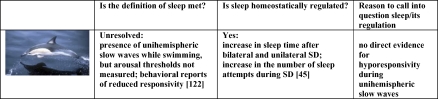
“Dolphins and a few other species have developed unihemispheric (one-sided) sleep, a remarkable specialization strongly suggesting that sleep must have some essential function and cannot be eliminated [”
BackgroundBorn, J., Rasch, B., & Gais, S. (2006) · The Neuroscientist · doi:10.1177/1073858406292647 · Cited by 557
Lethargus is a Caenorhabditis elegans sleep-like state
Raizen, D. M., Zimmerman, J. E., Maycock, M. H., Ta, U. D., You, Y.-J., Sundaram, M. V., & Pack, A. I. (2008) · Nature · doi:10.1038/nature06535 · Cited by 536 · cited 1×
“shows a sleep-like state at a certain stage of development [”
BackgroundSleep-dependent memory consolidation and reconsolidation
Stickgold, R., & Walker, M. P. (2007) · Sleep Medicine · doi:10.1016/j.sleep.2007.03.011 · Cited by 530
Functional Neuroanatomy of Human Slow Wave Sleep
Maquet, P., Degueldre, C., Delfiore, G., Aerts, J., Péters, J.-M., Luxen, A., & Franck, G. (1997) · The Journal of Neuroscience · doi:10.1523/jneurosci.17-08-02807.1997 · Cited by 514
Hypocretin/orexin overexpression induces an insomnia-like phenotype in zebrafish
Prober, D. A., Rihel, J., Onah, A. A., Sung, R.-J., & Schier, A. F. (2006) · The Journal of Neuroscience · doi:10.1523/jneurosci.4332-06.2006 · Cited by 508
Functional neuroimaging of normal human sleep by positron emission tomography
Aquet, P. I. M. (2000) · Cited by 496
Wiring Optimization in Cortical Circuits
Chklovskii, D. B., Schikorski, T., & Stevens, C. F. (2002) · Neuron · doi:10.1016/s0896-6273(02)00679-7 · Cited by 494 · cited 1×
“synapses that take up precious space [94], and saturation of the capacity to learn.”
BackgroundWhy do we sleep?11Published on the World Wide Web on 7 November 2000.
Sejnowski, T. J., & Destexhe, A. (2000) · Brain Research · doi:10.1016/s0006-8993(00)03007-9 · Cited by 489
Stress response genes protect against lethal effects of sleep deprivation in Drosophila
Shaw, P. J., Tononi, G., Greenspan, R. J., & Robinson, D. F. (2002) · Nature · doi:10.1038/417287a · Cited by 488 · cited 1×
“Prolonged sleep deprivation is also fatal in flies [37], cockroaches [38], and humans with fatal familial insomnia, who die after developing a syndrome not unlike that seen in sleep-deprived rats [39].”
BackgroundSelf-citationMelatonin promotes sleep-like state in zebrafish
Zhdanova, I. V., Wang, S. Y., Leclair, O. U., & Danilova, N. P. (2001) · Brain Research · doi:10.1016/s0006-8993(01)02444-1 · Cited by 418
Siegel, J. M. (2008) · Trends in Neurosciences · doi:10.1016/j.tins.2008.02.001 · Cited by 403 · cited 5×
“It has been argued [7] that even if present, this unihemispheric sleep could not be restorative, because it is interrupted every 30–60 s by breathing.”
BackgroundResultInfluentialCharacterization of Sleep in Zebrafish and Insomnia in Hypocretin Receptor Mutants
Yokogawa, T., Marin, W., Faraco, J., Pézeron, G., Appelbaum, L., Zhang, J., Rosa, F., Mourrain, P., & Mignot, E. (2007) · PLoS Biology · doi:10.1371/journal.pbio.0050277 · Cited by 401 · cited 2×
“The mechanisms of sleep can also vary considerably: the hypocretin–orexin system has an arousing action in mammals but may have a hypnogenic effect in zebrafish [21].”
BackgroundSleep deprivation in rats: effects on EEG power spectra, vigilance states, and cortical temperature
Franken, P., Dijk, D. J., Tobler, I., & Borbely, A. A. (1991) · American Journal of Physiology-Regulatory, Integrative and Comparative Physiology · doi:10.1152/ajpregu.1991.261.1.r198 · Cited by 400
Neuronal activity during the sleep-waking cycle
Steriade, M., & Hobson, J. A. (1976) · Progress in Neurobiology · doi:10.1016/0301-0082(76)90013-7 · Cited by 386
The sequential hypothesis of the function of sleep
Giuditta, A., Ambrosini, M. V., Montagnese, P., Mandile, P., Cotugno, M., Zucconi, G. G., & Vescia, S. (1995) · Behavioural Brain Research · doi:10.1016/0166-4328(95)00012-i · Cited by 382 · cited 1×
“It may also be an excellent way of maintaining old memories by keeping them “exercised,” or of weakening nonadaptive memory traces while strengthening the adaptive ones [99].”
BackgroundMacromolecule biosynthesis: a key function of sleep
Mackiewicz, M., Shockley, K. R., Romer, M. A., Galante, R. J., Zimmerman, J. E., Naidoo, N., Baldwin, D. A., Jensen, S. T., Churchill, G. A., & Pack, A. I. (2007) · Physiological Genomics · doi:10.1152/physiolgenomics.00275.2006 · Cited by 377 · cited 1×
“synaptic depression and depotentiation, in the synthesis/maintenance of membranes, and in lipid metabolism [80,87].”
BackgroundCOMPETITION FOR SHELTER SPACE CAUSES DENSITY-DEPENDENT PREDATION MORTALITY IN DAMSELFISHES
Holbrook, S. J., & Schmitt, R. J. (2002) · Ecology · doi:10.1890/0012-9658(2002)083[2855:cfsscd]2.0.co;2 · Cited by 377
Homer1a is a core brain molecular correlate of sleep loss
Maret, S., Dorsaz, S., Gurcel, L., Pradervand, S., Petit, B., Pfister, C., Hagenbuchle, O., O'Hara, B. F., Franken, P., & Tafti, M. (2007) · Proceedings of the National Academy of Sciences · doi:10.1073/pnas.0710131104 · Cited by 368
Cirelli, C., & Tononi, G. (2000) · Brain Research · doi:10.1016/s0006-8993(00)03008-0 · Cited by 364
Self-citationThe restorative effect of naps on perceptual deterioration
Mednick, S. C., Nakayama, K., Cantero, J. L., Atienza, M., Levin, A. A., Pathak, N., & Stickgold, R. (2002) · Nature Neuroscience · doi:10.1038/nn864 · Cited by 360 · cited 1×
“value of quiet wakefulness and sleep for either the brain or any other organ [48,72].”
BackgroundMathematical models of sleep regulation
Achermann, P. (2003) · Frontiers in Bioscience · doi:10.2741/1064 · Cited by 358 · cited 1×
“Considered one of the best markers of sleep intensity, SWA is a measure of the number and amplitude of slow waves during NREM sleep [35].”
BackgroundSleep Deprivation in the Rat: An Update of the 1989 Paper
Rechtschaffen, A., & Bergmann, B. M. (2002) · Sleep · doi:10.1093/sleep/25.1.18 · Cited by 352 · cited 1×
“Rats kept awake using the disk-over-water method develop a peripheral syndrome characterized by increased metabolic rate and decreased body weight, which culminates in death after 2–4 wk [36].”
MethodCajochen, C., Khalsa, S. B. S., Wyatt, J. K., Czeisler, C. A., & Dijk, D.-J. (1999) · American Journal of Physiology-Regulatory, Integrative and Comparative Physiology · doi:10.1152/ajpregu.1999.277.3.r640 · Cited by 349 · cited 2×
“several studies show an increase in power in the theta frequency bands with prolonged wakefulness and sleep deprivation [50,51].”
BackgroundRothman, D. L., Behar, K. L., Hyder, F., & Shulman, R. G. (2003) · Annual Review of Physiology · doi:10.1146/annurev.physiol.65.092101.142131 · Cited by 337
Coherent oscillations and short-term plasticity in corticothalamic networks
Steriade, M. (1999) · Trends in Neurosciences · doi:10.1016/s0166-2236(99)01407-1 · Cited by 322
A neuronal group theory of sleep function
KRUEGER, J. M., & OBÄL, F. (1993) · Journal of Sleep Research · doi:10.1111/j.1365-2869.1993.tb00064.x · Cited by 313
Waking Experience Affects Sleep Need in Drosophila
Ganguly-Fitzgerald, I., Donlea, J., & Shaw, P. J. (2006) · Science · doi:10.1126/science.1130408 · Cited by 310 · cited 1×
“Cognitive impairment is easier to study in humans than in animals, but there is now evidence that both acute sleep loss and sleep restriction affect cognitive function in flies [59], birds [60], and rodents (e.”
BackgroundWESENSTEN, N. J., KILLGORE, W. D. S., & BALKIN, T. J. (2005) · Journal of Sleep Research · doi:10.1111/j.1365-2869.2005.00468.x · Cited by 306 · cited 1×
“This may be the case, for instance, when we try to prolong wakefulness using amphetamines or other arousalpromoting drugs: though we are alert, certain aspects of performance seem to deteriorate [63].”
BackgroundInterhemispheric asymmetry of the electroencephalographic sleep patterns in dolphins
Mukhametov, L. M., Supin, A. Y., & Polyakova, I. G. (1977) · Brain Research · doi:10.1016/0006-8993(77)90835-6 · Cited by 301
Current Perspectives on the Function of Sleep
Rechtschaffen, A. (1998) · Perspectives in Biology and Medicine · doi:10.1353/pbm.1998.0051 · Cited by 297 · cited 1×
“The three corollaries of the null hypothesis do not seem to square well with the available evidence: there is no convincing case of a species that does not sleep, no clear instance of an animal that forgoes sleep without some compensatory mechanism, and no indication that one can truly go without sleep without paying…”
BackgroundHuman regional cerebral glucose metabolism during non-rapid eye movement sleep in relation to waking
Nofzinger, E. A., Buysse, D. J., Miewald, J. M., Meltzer, C. C., Price, J. C., Sembrat, R. C., Ombao, H., Reynolds, C. F., Monk, T. H., Hall, M., et al. (2002) · Brain · doi:10.1093/brain/awf103 · Cited by 295
Mammalian Sleep, Longevity, and Energy Metabolism; pp. 425–446
Zepelin, H., & Rechtschaffen, A. (2008) · Brain, Behavior and Evolution · doi:10.1159/000124330 · Cited by 293
A functional role for REM sleep in brain maturation
Marks, G. A., Shaffery, J. P., Oksenberg, A., Speciale, S. G., & Roffwarg, H. P. (1995) · Behavioural Brain Research · doi:10.1016/0166-4328(95)00018-o · Cited by 286 · cited 1×
“line activation of neural circuits may be especially important during development [100], perhaps to rehearse innate behavioral patterns [101].”
BackgroundGenetic Determinants of Sleep Regulation in Inbred Mice
(1999) · Sleep · doi:10.1093/sleep/22.2.155 · Cited by 284 · cited 1×
“, flies [15], zebrafish [21], mice [41], rats [42], rabbits [43], hamsters [44], and”
BackgroundElectrophysiological Correlates of Rest and Activity in Drosophila melanogaster
Nitz, D. A., van Swinderen, B., Tononi, G., & Greenspan, R. J. (2002) · Current Biology · doi:10.1016/s0960-9822(02)01300-3 · Cited by 275 · cited 2×
“Finally, the fly brain undergoes changes in gene expression between sleep and wakefulness similar to those observed in mammals [16,17], and shows changes in brain electrical activity [18].”
BackgroundSelf-citationWhy We Sleep: The Temporal Organization of Recovery
Mignot, E. (2008) · PLoS Biology · doi:10.1371/journal.pbio.0060106 · Cited by 258 · cited 1×
“What many concluded long ago still seems to hold: the case is strong for sleep serving one or more essential functions [9,10].”
BackgroundThe free radical flux theory of sleep
Reimund, E. (1994) · Medical Hypotheses · doi:10.1016/0306-9877(94)90071-x · Cited by 253 · cited 1×
“It has also been proposed that sleep may allow the removal of toxic free radicals accumulated in the brain during wakefulness [76,77].”
BackgroundMigratory sleeplessness in the white-crowned sparrow (Zonotrichia leucophrys gambelii)
Rattenborg, N. C., Mandt, B. H., Obermeyer, W. H., Winsauer, P. J., Huber, R., Wikelski, M., & Benca, R. M. (2004) · PLoS Biology · doi:10.1371/journal.pbio.0020212 · Cited by 244
Neuronal correlates of sleep, wakefulness and arousal in a diurnal insect
Kaiser, W., & Steiner-Kaiser, J. (1983) · Nature · doi:10.1038/301707a0 · Cited by 222
Sleep deprivation induces the unfolded protein response in mouse cerebral cortex
Naidoo, N., Giang, W., Galante, R. J., & Pack, A. I. (2005) · Journal of Neurochemistry · doi:10.1111/j.1471-4159.2004.02952.x · Cited by 219 · cited 1×
“This result suggests that the cellular stress response induced during wakefulness may be sufficient to avoid longterm negative effects [80,81].”
BackgroundSleep Deprivation and Cellular Responses to Oxidative Stress
Gopalakrishnan, A., Ji, L. L., & Cirelli, C. (2004) · Sleep · doi:10.1093/sleep/27.1.27 · Cited by 209
Self-citationTrait interindividual differences in the sleep physiology of healthy young adults
TUCKER, A. M., DINGES, D. F., & VAN DONGEN, H. P. A. (2007) · Journal of Sleep Research · doi:10.1111/j.1365-2869.2007.00594.x · Cited by 207 · cited 1×
“Intriguingly, there is great inter-individual variability in the susceptibility of humans to the effects of sleep deprivation, and subjects whose performance is little impaired by one task may show great impairment in another task [55,56].”
BackgroundTartar, J. L., Ward, C. P., McKenna, J. T., Thakkar, M., Arrigoni, E., McCarley, R. W., Brown, R. E., & Strecker, R. E. (2006) · European Journal of Neuroscience · doi:10.1111/j.1460-9568.2006.04808.x · Cited by 206
Changes in brain gene expression after long‐term sleep deprivation
Cirelli, C., Faraguna, U., & Tononi, G. (2006) · Journal of Neurochemistry · doi:10.1111/j.1471-4159.2006.04058.x · Cited by 197
Self-citationAntioxidant defense responses to sleep loss and sleep recovery
Everson, C. A., Laatsch, C. D., & Hogg, N. (2005) · American Journal of Physiology-Regulatory, Integrative and Comparative Physiology · doi:10.1152/ajpregu.00565.2004 · Cited by 192
Separation of circadian and wake duration-dependent modulation of EEG activation during wakefulness
Cajochen, C., Wyatt, J. K., Czeisler, C. A., & Dijk, D. J. (2002) · Neuroscience · doi:10.1016/s0306-4522(02)00209-9 · Cited by 191
PHYLOGENETIC ANALYSIS OF THE ECOLOGY AND EVOLUTION OF MAMMALIAN SLEEP
Capellini, I., Barton, R. A., McNamara, P., Preston, B. T., & Nunn, C. L. (2008) · Evolution · doi:10.1111/j.1558-5646.2008.00392.x · Cited by 184
Is sleep fundamentally different between mammalian species?
Tobler, I. (1995) · Behavioural Brain Research · doi:10.1016/0166-4328(95)00025-o · Cited by 183 · cited 1×
“However, it is well known that sleep has both a quantitative (duration) and a qualitative (intensity) dimension [32,33].”
BackgroundContinuous activity in cetaceans after birth
Lyamin, O., Pryaslova, J., Lance, V., & Siegel, J. (2005) · Nature · doi:10.1038/4351177a · Cited by 172 · cited 1×
“(2) Another argument was raised by a report describing continuous activity in newborn dolphins (and whales) and their mothers for the first postpartum month [”
BackgroundLocal functional state differences between rat cortical columns
Rector, D. M., Topchiy, I. A., Carter, K. M., & Rojas, M. J. (2005) · Brain Research · doi:10.1016/j.brainres.2005.04.002 · Cited by 162 · cited 1×
“oscillating between up- and downstates (asleep, [53]), or to abnormal cellular activity that is neither wake”
BackgroundTobler, I. (2011) · Principles and Practice of Sleep Medicine · doi:10.1016/b978-1-4160-6645-3.00009-8 · Cited by 160
Sleep as neuronal detoxification and restitution
Inoué, S., Honda, K., & Komoda, Y. (1995) · Behavioural Brain Research · doi:10.1016/0166-4328(95)00014-k · Cited by 156 · cited 1×
“It has also been proposed that sleep may allow the removal of toxic free radicals accumulated in the brain during wakefulness [76,77].”
BackgroundSleep and wakefulness modulate gene expression in Drosophila
Cirelli, C., LaVaute, T. M., & Tononi, G. (2005) · Journal of Neurochemistry · doi:10.1111/j.1471-4159.2005.03291.x · Cited by 155 · cited 1×
“Finally, the fly brain undergoes changes in gene expression between sleep and wakefulness similar to those observed in mammals [16,17], and shows changes in brain electrical activity [18].”
BackgroundSelf-citationParmeggiani, P. L. (2003) · Frontiers in Bioscience · doi:10.2741/1054 · Cited by 153 · cited 1×
“Thermoregulation is preserved in NREM sleep but not in REM sleep [70].”
BackgroundMeddis, R. (1975) · Animal Behaviour · doi:10.1016/0003-3472(75)90144-x · Cited by 149
Terao, A., Steininger, T. L., Hyder, K., Apte-Deshpande, A. D., Ding, J., Rishipathak, D., Davis, R. W., Heller, H. C., & Kilduff, T. S. (2003) · Neuroscience · doi:10.1016/s0306-4522(02)00695-4 · Cited by 149
Sleep waking and neurobehavioural performance
Rogers, N. L., Dorrian, J., & Dinges, D. F. (2003) · Frontiers in bioscience · doi:10.2741/1174 · Cited by 146 · cited 1×
“value of quiet wakefulness and sleep for either the brain or any other organ [48,72].”
BackgroundTerao, A., Wisor, J. P., Peyron, C., Apte-Deshpande, A. D., Wurts, S. W., Edgar, D. M., & Kilduff, T. S. (2005) · Neuroscience · doi:10.1016/j.neuroscience.2005.08.059 · Cited by 144
Busy bees need rest, too: Behavioural and electromyographical sleep signs in honeybees
Kaiser, W. (1988) · Journal of Comparative Physiology A · doi:10.1007/bf00603841 · Cited by 140
Effects of Sleep Deprivation on Sleepiness, Sleep Intensity, and Subsequent Sleep in the Rat
Friedman, L., Bergmann, B. M., & Rechtschaffen, A. (1978) · SLEEP · doi:10.1093/sleep/1.4.369 · Cited by 132
Memory, sleep and the evolution of mechanisms of synaptic efficacy maintenance
Kavanau, J. L. (1997) · Neuroscience · doi:10.1016/s0306-4522(96)00610-0 · Cited by 127
Evidence for asynchronous development of sleep in cortical areas
Pigarev, I. N., Nothdurft, H., & Kästner, S. (1997) · Neuroreport · doi:10.1097/00001756-199707280-00027 · Cited by 125 · cited 1×
“asleep whereas others are awake [52], to “salt and pepper” sleep-wake, in which within the same brain regions individual neurons may be awake (depolarized) and others may be”
BackgroundUnihemispheric sleep deprivation in bottlenose dolphins
Oleksenko, A. I., Mukhametov, L. M., POLYAKOVA, I. G., Supin, A. Y., & Kovalzon, V. M. (1992) · Journal of Sleep Research · doi:10.1111/j.1365-2869.1992.tb00007.x · Cited by 125 · cited 1×
“(3) Regarding sleep homeostasis, there is only one publication [”
BackgroundSleep function, with particular reference to sleep deprivation.
Horne, J. A. (1985) · PubMed · Cited by 122
Effect of forced locomotion on the rest-activity cycle of the cockroach
Tobler, I. (1983) · Behavioural Brain Research · doi:10.1016/0166-4328(83)90180-8 · Cited by 120
Brain Networks Affected by Synchronized Sleep Visualized by Positron Emission Tomography
Andersson, J., Onoe, H., Hetta, J. E., Lidström, K., Valind, S., Lilja, A., Sundin, A., Fasth, K., Westerberg, G., Broman, J., et al. (1998) · Journal of Cerebral Blood Flow & Metabolism · doi:10.1097/00004647-199807000-00001 · Cited by 120
Unihemispheric slow wave sleep and the state of the eyes in a white whale
Lyamin, O. I., Mukhametov, L. M., Siegel, J. M., Nazarenko, E. A., Polyakova, I. G., & Shpak, O. V. (2002) · Behavioural Brain Research · doi:10.1016/s0166-4328(01)00346-1 · Cited by 118
Paradoxical sleep as a programming system
Jouvet, M. (1998) · Journal of Sleep Research · doi:10.1046/j.1365-2869.7.s1.1.x · Cited by 117 · cited 1×
“line activation of neural circuits may be especially important during development [100], perhaps to rehearse innate behavioral patterns [101].”
BackgroundMultiple mechanisms limit the duration of wakefulness in Drosophila brain
Zimmerman, J. E., Rizzo, W., Shockley, K. R., Raizen, D. M., Naidoo, N. N., Mackiewicz, M., Churchill, G. A., & Pack, A. I. (2006) · Physiological Genomics · doi:10.1152/physiolgenomics.00030.2006 · Cited by 116 · cited 1×
“Finally, the fly brain undergoes changes in gene expression between sleep and wakefulness similar to those observed in mammals [16,17], and shows changes in brain electrical activity [18].”
BackgroundUnihemispheric slow-wave sleep in the Amazonian dolphin, Inia geoffrensis
Mukhametov, L. M. (1987) · Neuroscience Letters · doi:10.1016/0304-3940(87)90684-7 · Cited by 115
Krueger, J. M., & Obal, F. (2003) · Frontiers in bioscience · doi:10.2741/1031 · Cited by 115
Montagna, P., & Lugaresi, E. (2002) · Clinical Neurophysiology · doi:10.1016/s1388-2457(02)00022-6 · Cited by 111 · cited 1×
“Prolonged sleep deprivation is also fatal in flies [37], cockroaches [38], and humans with fatal familial insomnia, who die after developing a syndrome not unlike that seen in sleep-deprived rats [39].”
BackgroundAeration of corals by sleep‐swimming fish
Goldshmid, R., Holzman, R., Weihs, D., & Genin, A. (2004) · Limnology and Oceanography · doi:10.4319/lo.2004.49.5.1832 · Cited by 110 · cited 2×
“Yet, the fish at night loses the ability to respond to predators [25], and mortality due to predators’ attacks is much higher at”
BackgroundPhylogenetics and the correlates of mammalian sleep: A reappraisal
Lesku, J. A., Roth, T. C., Rattenborg, N. C., Amlaner, C. J., & Lima, S. L. (2008) · Sleep Medicine Reviews · doi:10.1016/j.smrv.2007.10.003 · Cited by 99
The dynamics of sleep-like behaviour in honey bees
Sauer, S., Kinkelin, M., Herrmann, E. M., & Kaiser, W. (2003) · Journal of Comparative Physiology A · doi:10.1007/s00359-003-0436-9 · Cited by 99
Molecular correlates of sleep and wakefulness in the brain of the white‐crowned sparrow
Jones, S., Pfister‐Genskow, M., Benca, R. M., & Cirelli, C. (2007) · Journal of Neurochemistry · doi:10.1111/j.1471-4159.2007.05089.x · Cited by 97
Self-citationTerao, A., Greco, M. A., Davis, R. W., Heller, H. C., & Kilduff, T. S. (2003) · Neuroscience · doi:10.1016/s0306-4522(03)00395-6 · Cited by 93
Psychiatric and EEG Observations on a Case of Prolonged (264 Hours) Wakefulness
Gulevich, G. (1966) · Archives of General Psychiatry · doi:10.1001/archpsyc.1966.01730130031005 · Cited by 91 · cited 2×
“Especially motivated subjects can be kept awake for up to several days (for 11 d in the famous case of Randy Gardner [47]) by keeping busy with”
Background24‐h variation of vigilance in the cockroach Blaberus giganteus
Tobler, I., & Neuner‐Jehle, M. (1992) · Journal of Sleep Research · doi:10.1111/j.1365-2869.1992.tb00044.x · Cited by 87
Rial, R. V., Nicolau, M. C., Gamundí, A., Akaârir, M., Aparicio, S., Garau, C., Tejada, S., Roca, C., Gené, L., Moranta, D., et al. (2007) · Sleep Medicine Reviews · doi:10.1016/j.smrv.2007.03.001 · Cited by 81
Ridgway, S. H. (2002) · Brain Behavior and Evolution · doi:10.1159/000067192 · Cited by 80
Drosophila melanogaster: An Insect Model for Fundamental Studies of Sleep
Ho, K. S., & Sehgal, A. (2005) · Methods in enzymology on CD-ROM/Methods in enzymology · doi:10.1016/s0076-6879(05)93041-3 · Cited by 78 · cited 1×
“, flies [15], zebrafish [21], mice [41], rats [42], rabbits [43], hamsters [44], and”
BackgroundHomeostatic regulation of sleep in the white-crowned sparrow (Zonotrichia leucophrys gambelii)
Jones, S., Vyazovskiy, V. V., Cirelli, C., Tononi, G., & Benca, R. M. (2008) · BMC Neuroscience · doi:10.1186/1471-2202-9-47 · Cited by 78
Self-citationTobler, I. (2005) · Elsevier eBooks · doi:10.1016/b0-72-160797-7/50014-8 · Cited by 76
Sleep improves the variability of motor performance
Hill, S., Tononi, G., & Ghilardi, M. F. (2008) · Brain Research Bulletin · doi:10.1016/j.brainresbull.2008.02.024 · Cited by 74 · cited 1×
“Another possibility is that signal-tonoise ratios may increase through the generalized downscaling of synapses, as synapses mediating firing patterns predictive of postsynaptic activation would “survive” better than random ones [90,91,112].”
BackgroundSelf-citationSleep deprivation in honey bees1
Sauer, S., Herrmann, E. M., & Kaiser, W. (2004) · Journal of Sleep Research · doi:10.1111/j.1365-2869.2004.00393.x · Cited by 73
Functional imaging of dolphin brain metabolism and blood flow
Ridgway, S. H., Houser, D. S., Finneran, J. J., Carder, D. A., Keogh, M. J., Bonn, W. G. V., Smith, C. R., Scadeng, M., Dubowitz, D. J., Mattrey, R. F., et al. (2006) · Journal of Experimental Biology · doi:10.1242/jeb.02348 · Cited by 73 · cited 1×
“]. In fact, the presence of slow waves in one hemisphere is associated with unilateral slow waves in the thalamus, and unilateral decrease in brain metabolism, including in the ipsilateral locus coeruleus, an arousal-promoting system [”
BackgroundChanges in brain glycogen after sleep deprivation vary with genotype
Franken, P., Gip, P., Hagiwara, G., Ruby, N. F., & Heller, H. C. (2003) · American Journal of Physiology-Regulatory, Integrative and Comparative Physiology · doi:10.1152/ajpregu.00668.2002 · Cited by 72 · cited 1×
“In mice, sleep may favor the replenishment of glycogen in glial stores [73], but this may be the case in only a few brain regions, and not in all mouse strains [74,75].”
Background(2001) · PubMed · Cited by 68
Self-citationElectrographic correlates of behavior in the frog with special reference to sleep
Hobson, J. A. (1967) · Electroencephalography and Clinical Neurophysiology · doi:10.1016/0013-4694(67)90150-2 · Cited by 67 · cited 2×
“Also, the underlying assumption in that study was that shocks delivered late at night (presumably in the middle of sleep) should elicit less respiratory response than those given early in the night (when sleep had just started); however, the opposite was found [23].”
BackgroundSearching for sleep mutants of Drosophila melanogaster
Cirelli, C. (2003) · BioEssays · doi:10.1002/bies.10333 · Cited by 66
Self-citationDolphin continuous auditory vigilance for five days
Ridgway, S. H., Carder, D. A., Finneran, J. J., Keogh, M. J., Kamolnick, T., Todd, M. A., & Goldblatt, A. (2006) · Journal of Experimental Biology · doi:10.1242/jeb.02405 · Cited by 63
Awakening to the Behavioral Analysis of Sleep in Drosophila
Shaw, P. J. (2003) · Journal of Biological Rhythms · doi:10.1177/0748730402239672 · Cited by 53
Cirelli, C., & Tononi, G. (2004) · CRC Press eBooks · doi:10.1201/b14428-8 · Cited by 53
Self-citationEffect of rest deprivation on motor activity of fish
Tobler, I., & Borb�ly, A. A. (1985) · Journal of Comparative Physiology A · doi:10.1007/bf01350078 · Cited by 52
Sleep in continuously active dolphins
Sekiguchi, Y., Arai, K., & Kohshima, S. (2006) · Nature · doi:10.1038/nature04898 · Cited by 52
Berger, R. J., & Phillips, N. H. (1994) · American Journal of Physiology-Regulatory, Integrative and Comparative Physiology · doi:10.1152/ajpregu.1994.267.4.r945 · Cited by 51
Homeostatic regulation of sleep in arrhythmic Siberian hamsters
Larkin, J. E., Yokogawa, T., Heller, H. C., Franken, P., & Ruby, N. F. (2004) · American Journal of Physiology-Regulatory, Integrative and Comparative Physiology · doi:10.1152/ajpregu.00676.2003 · Cited by 50 · cited 1×
“, flies [15], zebrafish [21], mice [41], rats [42], rabbits [43], hamsters [44], and”
BackgroundStephenson, R., Chu, K. M., & Lee, J. D. (2007) · Journal of Experimental Biology · doi:10.1242/jeb.005322 · Cited by 49
Sleep deprivation in the pigeon using the Disk-Over-Water method
Newman, S. M., Paletz, E. M., Rattenborg, N. C., Obermeyer, W. H., & Benca, R. M. (2007) · Physiology & Behavior · doi:10.1016/j.physbeh.2007.07.012 · Cited by 47
Sleep in a schooling fish, Tilapia mossambica
Shapiro, C. M., & Hepburn, H. R. (1976) · Physiology & Behavior · doi:10.1016/0031-9384(76)90222-5 · Cited by 47
Sleep and EEG spectra in the rabbit under baseline conditions and following sleep deprivation
Tobler, I., Franken, P., & Scherschlicht, R. (1990) · Physiology & Behavior · doi:10.1016/0031-9384(90)90272-6 · Cited by 46 · cited 1×
“, flies [15], zebrafish [21], mice [41], rats [42], rabbits [43], hamsters [44], and”
BackgroundElectroencephalographic activity after prolonged sleep loss
Naitoh, P., Kales, A., Kollar, E. J., Smith, J. C., & Jacobson, A. (1969) · Electroencephalography and Clinical Neurophysiology · doi:10.1016/0013-4694(69)90103-5 · Cited by 41 · cited 1×
“) People may seem superficially awake (moving and with eyes open) even though the EEG slows down or exhibits microsleeps [49,50].”
BackgroundSleep and wakefulness in the southern sea lion
Lyamin, O. I., Mukhametov, L. M., Chetyrbok, I. S., & Vassiliev, A. V. (2002) · Behavioural Brain Research · doi:10.1016/s0166-4328(01)00317-5 · Cited by 39
Glycogen content in the cerebral cortex increases with sleep loss in C57BL/6J mice
Franken, P., Gip, P., Hagiwara, G., Ruby, N. F., & Heller, H. C. (2006) · Neuroscience Letters · doi:10.1016/j.neulet.2006.03.072 · Cited by 33
Activity and sleep in dolphins
Gnone, G., Moriconi, T., & Gambini, G. (2006) · Nature · doi:10.1038/nature04899 · Cited by 32 · cited 1×
“]. However, based on 2 additional recent studies that assessed eye closure under water [”
Background
Research works printed but not linked: 127
- Zepelin, 1974, Brain Behav Evol, 10, 425
- Campbell, 1984, Neurosci Biobehav Rev, 8, 269
- Lesku, 2008, Sleep Med Rev, 12, 229
- Capellini, 2008, Evolution
- Meddis, 1975, Anim Behav, 23, 676
- Rial, 2007, Sleep Med Rev, 11, 311
- Siegel, 2008, Trends Neurosci, 31, 208
- Horne, 1985, Ann CLin Res, 17, 199
- Rechtschaffen, 1998, Perspect Biol Med, 41, 359
- Mignot, 2008, PLoS Biol, 6, e106
- Hendricks, 2000, Neuron, 25, 129
- Shaw, 2000, Science, 287, 1834
- Cirelli, 2003, Bioessays, 25, 940
- Shaw, 2003, J Biol Rhythms, 18, 4
- Ho, 2005, Methods Enzymol, 393, 772
- Cirelli, 2005, J Neurochem, 94, 1411
- Zimmerman, 2006, Physiol Genomics, 27, 337
- Nitz, 2002, Curr Biol, 12, 1934
- Zhdanova, 2001, Brain Res, 903, 263
- Prober, 2006, J Neurosci, 26, 13400
- Yokogawa, 2007, PLoS Biol, 5, e277
- Raizen, 2008, Nature, 451, 569
- Hobson, 1967, Electroencephalogr Clin Neurophysiol, 22, 113
- Tauber, 1969, Commun Behav Biol, 3, 131
- Goldshmid, 2004, Limnol Oceanogr, 49, 1832
- Holbrook, 2002, Ecology, 83, 2855
- Mukhametov, 1977, Brain Res, 134, 581
- Mukhametov, 1987, Neurosci Lett, 79, 128
- Ridgway, 2002, Brain Behav Evol, 60, 265
- Lyamin, 2002, Behav Brain Res, 128, 129
- Lyamin, 2002, Behav Brain Res, 129, 125
- Tobler, 1995, Behav Brain Res, 69, 35
- Berger, 1994, Am J Physiol, 267, R945
- Achermann, 2003, Front Biosci, 8, S683
- Rechtschaffen, 2002, Sleep, 25, 18
- Shaw, 2002, Nature, 417, 287
- Stephenson, 2007, J Exp Biol, 210, 2540
- Montagna, 2002, Clin Neurophysiol, 113, 552
- Newman, 2008, Physiol Behav, 93, 50
- Franken, 1999, Sleep, 22, 155
- Franken, 1991, Am J Physiol, 261, R198
- Tobler, 1990, Physiol Behav, 48, 121
- Larkin, 2004, Am J Physiol Regul Integr Comp Physiol, 287, R104
- Oleksenko, 1992, J Sleep Res, 1, 40
- Friedman, 1979, Sleep, 1, 369
- Gulevich, 1966, Arch Gen Psychiatry, 15, 29
- Rogers, 2003, Front Biosci, 8, s1056
- Naitoh, 1969, Electroencephalogr Clin Neurophysiol, 27, 2
- Cajochen, 1999, Am J Physiol, 277, R640
- Cajochen, 2002, Neuroscience, 114, 1047
- Pigarev, 1997, Neuroreport, 8, 2557
- Rector, 2005, Brain Res, 1047, 45
- Cirelli, 2005, Sleep deprivation: basic science, physiology, and behavior, 63
- Van Dongen, 2004, Sleep, 27, 423
- Tucker, 2007, J Sleep Res, 16, 170
- Van Dongen, 2003, Sleep, 26, 117
- Belenky, 2003, J Sleep Res, 12, 1
- Ganguly-Fitzgerald, 2006, Science, 313, 1775
- Rattenborg, 2004, PLoS Biol, 2, e212
- Tartar, 2006, Eur J Neurosci, 23, 2739
- Jones, 2005, Trends Pharmacol Sci, 26, 578
- Wesensten, 2005, J Sleep Res, 14, 255
- Braun, 1997, Brain, 120, 1173
- Maquet, 1997, J Neurosci, 17, 2807
- Andersson, 1998, J Cereb Blood Flow Metab, 18, 701
- Nofzinger, 2002, Brain, 125, 1105
- Steriade, 2001, J Neurophysiol, 85, 1969
- Maquet, 2000, J Sleep Res, 9, 207
- Parmeggiani, 2003, Front Biosci, 8, s557
- Knutson, 2007, Sleep Med Rev, 11, 163
- Mednick, 2002, Nat Neurosci, 5, 677
- Benington, 1995, Prog Neurobiol, 45, 347
- Franken, 2003, Am J Physiol Regul Integr Comp Physiol, 285, R413
- Franken, 2006, Neurosci Lett, 402, 176
- Reimund, 1994, Med Hypotheses, 43, 231
- Inoue, 1995, Behav Brain Res, 69, 91
- Gopalakrishnan, 2004, Sleep, 27, 27
- Everson, 2005, Am J Physiol Regul Integr Comp Physiol, 288, R374
- Cirelli, 2004, Neuron, 41, 35
- Naidoo, 2005, J Neurochem, 92, 1150
- Cirelli, 2000, Brain Res, 885, 303
- Cirelli, 2006, J Neurochem, 98, 1632
- Terao, 2003, Neuroscience, 120, 1115
- Terao, 2003, Neuroscience, 116, 187
- Terao, 2006, Neuroscience, 137, 593
- Mackiewicz, 2007, Physiol Genomics, 31, 441
- Maret, 2007, Proc Natl Acad Sci U S A, 104, 20090
- Jones, 2008, J Neurochem, 105, 46
- Tononi, 2003, Brain Res Bull, 62, 143
- Tononi, 2006, Sleep Med Rev, 10, 49
- Attwell, 2001, J Cereb Blood Flow Metab, 21, 1133
- Rothman, 2003, Annu Rev Physiol, 65, 401
- Chklovskii, 2002, Neuron, 34, 341
- Steriade, 1976, Prog Neurobiol, 6, 155
- Kavanau, 1997, Neuroscience, 79, 7
- Krueger, 1993, J Sleep Res, 2, 63
- Krueger, 2003, Front Biosci, 8, d511
- Giuditta, 1995, Behav Brain Res, 69, 157
- Marks, 1995, Behav Brain Res, 69, 1
- Jouvet, 1998, J Sleep Res, 7, 1
- Tononi, 2001, Arch Ital Biol, 139, 221
- Born, 2006, Neuroscientist, 12, 410
- Stickgold, 2007, Sleep Med, 8, 331
- Steriade, 1999, Trends Neurosci, 22, 337
- Sejnowski, 2000, Brain Res, 886, 208
- Wilson, 1994, Science, 265, 676
- Peigneux, 2004, Neuron, 44, 535
- Nadasdy, 1999, J Neurosci, 19, 9497
- Ji, 2007, Nat Neurosci, 10, 100
- Euston, 2007, Science, 318, 1147
- Hill, 2008, Brain Res Bull, 76, 605
- Tobler, 1992, J Sleep Res, 1, 231
- Tobler, 1983, Behav Brain Res, 8, 351
- Kaiser, 1983, Nature, 301, 707
- Kaiser, 1988, J Comp Physiol A, 163, 565
- Sauer, 2003, J Comp Physiol A Neuroethol Sens Neural Behav Physiol, 189, 599
- Sauer, 2004, J Sleep Res, 13, 145
- Tobler, 1985, J Comp Physiol [A], 157, 817
- Shapiro, 1976, Physiol Behav, 16, 613
- Jones, 2008, BMC Neurosci, 9, 47
- Flanigan, 1974, Sleep Res, 3, 84
- Rattenborg, 2000, Neurosci Biobehav Rev, 24, 817
- Ridgway, 2006, J Exp Biol, 209, 2902
- Ridgway, 2006, J Exp Biol, 209, 3621
- Lyamin, 2005, Nature, 435, 1177
- Gnone, 2006, Nature, 441, E10
- Sekiguchi, 2006, Nature, 441, E9
Cited by
Rasch, B., & Born, J. (2013) · Physiological Reviews · doi:10.1152/physrev.00032.2012 · Cited by 2,783
“, deprivation of sleep leads to subsequent longer sleep periods) (209).”
BackgroundVyazovskiy, V. V., Olcese, U., Hanlon, E. C., Nir, Y., Cirelli, C., & Tononi, G. (2011) · Nature · doi:10.1038/nature10009 · Cited by 865
Self-citationIntegrated Brain Circuits: Astrocytic Networks Modulate Neuronal Activity and Behavior
Halassa, M. M., & Haydon, P. G. (2010) · Annual Review of Physiology · doi:10.1146/annurev-physiol-021909-135843 · Cited by 763
Cortical firing and sleep homeostasis
Vyazovskiy, V. V., Olcese, U., Lazimy, Y. M., Faraguna, U., Esser, S. K., Williams, J. C., Cirelli, C., & Tononi, G. (2009) · Neuron · doi:10.1016/j.neuron.2009.08.024 · Cited by 740
“This homeostatic regulation is a main reason to think that sleep may serve an essential function for brain cells (Cirelli and Tononi, 2008).”
BackgroundSelf-citationNeuromodulation of Brain States
Lee, S.-H., & Dan, Y. (2012) · Neuron · doi:10.1016/j.neuron.2012.09.012 · Cited by 675
“In particular, why is sleep so universal in the animal kingdom (Cirelli and Tononi, 2008), given that the loss of responsiveness to environmental stimuli makes the animal more vulnerable to predator attacks?”
Metadata
- Authors
- Cirelli, C., & Tononi, G.
- Affiliations
- University of Wisconsin–Madison (US)
- Corresponding author
- Cirelli, Chiara
- Venue
- PLoS Biology
- Publisher
- Public Library of Science (PLoS)
- Published
- 2008-08-26
- Volume
- 6
- Issue
- 8
- Pages
- e216
- ISSN
- 1544-9173 (ISSN-L)
- 1545-7885
- PMC
- PMC2525690
- OpenAlex
- W2024515932
- Cited by
- 646
- References
- 128
- Citations by year
- 2026: 31 · 2025: 32 · 2024: 43 · 2023: 28 · 2022: 49 · 2021: 39 · 2020: 48 · 2019: 44 · 2018: 38 · 2017: 46 · 2016: 38 · 2015: 32 · 2014: 35 · 2013: 35 · 2012: 34
- FWCI
- 12.41
- Type
- journal article
- Language
- en
- Open access
- gold
- doi.org
- Locations
- PLoS Biology (publishedVersion, cc-by)
- PubMed Central (publishedVersion, cc-by)
- PubMed (publishedVersion)
- DOAJ (DOAJ: Directory of Open Access Journals) (submittedVersion, cc-by-sa)
- Funders
- National Institutes of Health (5p20mh077967-04, R01GM, DP1OD000579, R01 NS)
- National Institute of Mental Health (P20MH-077967, MH 077967)
- National Institute of General Medical Sciences (R01GM075315)
- National Institute of Neurological Disorders and Stroke (R01NS055185)
- Topics
- Life Sciences › Neuroscience › Cognitive Neuroscience › Sleep and Wakefulness Research
- Life Sciences › Neuroscience › Endocrine and Autonomic Systems › Circadian rhythm and melatonin
- Life Sciences › Neuroscience › Endocrine and Autonomic Systems › Neuroscience of respiration and sleep
- Keywords
- sleep, sleep deprivation, sleep regulation
- MeSH terms
- Animals, Behavior, Animal, Sleep, Species Specificity
About these checks
Registry, retraction, Cites and statistics results are computed, not judged, with one exception: a printed reference that no index lists is read once by a model before it counts as a citation error. Claims are extracted by a model and kept only when their quote appears verbatim in the text; each cited source is then checked, with a model’s help, for whether it says what the claim relies on. Those verdicts can be wrong — read the claim’s quote and the cited source before relying on one.
Statistics and arithmetic are recomputed, not judged.
Confidence bands are shown only for fields calibrated on our annotated test set. None is calibrated yet, so no band is shown.
What counts as a claim ›How we measure confidence ›How we check this ›
Are you an author, or do you see a problem with this page? Request a review
Data sources
Bibliographic data: Semantic Scholar, OpenAlex, Crossref.
Contains information from the Semantic Scholar Academic Graph Datasets, made available under the ODC Attribution License (ODC-BY 1.0).
Semantic Scholar’s data is described in: Kinney, R., et al. (2023). The Semantic Scholar Open Data Platform. arXiv:2301.10140.
