

World Health Organization Estimates of the Global and Regional Disease Burden of 22 Foodborne Bacterial, Protozoal, and Viral Diseases, 2010: A Data Synthesis.
Open accessThe DOI matches its Crossref record; 57 of the 58 references it cites were found in a registry or an index; 3 of the 9 sources its claims cite were checked for support.
Abstract
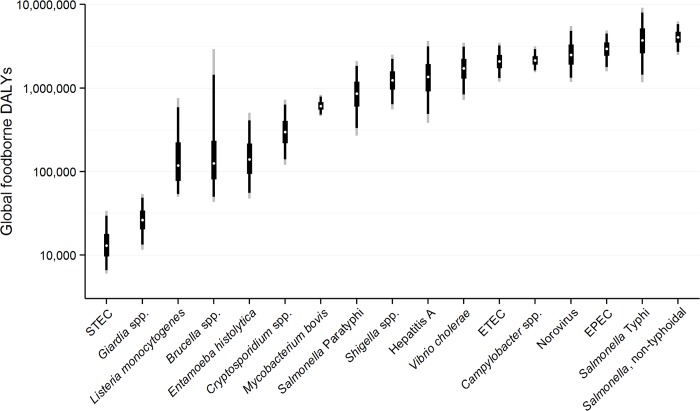
We estimate that the 22 diseases included in our study resulted in two billion cases, over one million deaths, and 78.7 million DALYs in 2010.
Overview
CoChat Summary
## TL;DR
This paper provides the first WHO-led global and regional estimates of the burden of 22 foodborne bacterial, protozoal, and viral diseases in 2010. It estimates 2.0 billion illnesses, 1.09 million deaths, 78.7 million DALYs, and 582 million foodborne cases, with a large share of burden in children under 5.
## Key findings
- The 22 diseases caused an estimated 2.0 billion illnesses (95% UI 1.5–3.0 billion) in 2010; 39% (95% UI 26–53%) were in children <5 years.
- They caused 1.09 million deaths (95% UI 0.89–1.37 million); 34% (95% UI 29–38%) were in children <5 years.
- They caused 78.7 million DALYs (95% UI 65.0–97.7 million); 43% (95% UI 38–48%) were in children <5 years.
- The authors estimate 29% (95% UI 23–36%) of all cases were transmitted by contaminated food, equal to 582 million foodborne cases (95% UI 401–922 million) and 25.2 million foodborne DALYs (95% UI 17.5–37.0 million).
- Norovirus was the leading cause of foodborne illness, with 125 million (95% UI 70–251 million) foodborne cases; Campylobacter spp. caused 96 million (95% UI 52–177 million).
- Of foodborne DALYs, the largest burden came from nontyphoidal S. enterica if iNTS was included: 4.07 million DALYs (95% UI 2.49–6.27 million).
- Foodborne disease mortality and DALY rates were reported as highest in the African region, followed by the South East Asian region.
## Methods
- The study synthesized global and regional burden estimates for 22 foodborne diseases using the WHO FERG Enteric Diseases Task Force framework, combining literature reviews, systematic reviews, cohort studies, surveillance studies, expert consultation, and existing burden-of-disease assessments.
- The team estimated cases, sequelae, deaths, and DALYs for 2010, using pathogen-specific approaches: national estimates where available, a modified CHERG approach for diarrheal diseases in many countries, GBD 2010/IHME data for typhoid, paratyphoid, and hepatitis A, and expert elicitation to estimate the proportion transmitted by food.
- Uncertainty was propagated with Monte Carlo simulations using 10,000 draws per input parameter to generate 95% uncertainty intervals.
## Limitations
- The paper states that a major limitation was data gaps, especially in middle- and high-mortality countries, and that for many regions and pathogens the available data were sparse.
- It also states that only a few sequelae were included, with post-infectious sequelae such as reactive arthritis and irritable bowel syndrome excluded; stillbirths were excluded as well.
- The authors note that they could not fully account for age-specific effects for sequelae and could not separate some effects from comorbidities such as HIV infection.
- The text also makes evident, by its own description, that many estimates relied on expert elicitation for foodborne attribution and on assumptions/substitution where direct data were absent; this increases uncertainty and is part of the paper’s stated limitation.
Model-written summary. Check it against the paper before relying on it.
Integrity signals
Registry
Cites
Statistics
Figures
Verification
Claims the paper makes
3 Valid · 0 Not valid · 4 Not checked · 29 Own results and interpretations
The cited sources support only part of this claim — read each source’s verdict below.
In the paper
“Furthermore, global and regional estimates of the burden of foodborne diseases have not been available [1,2].”
§ World Health Organization Estimates of the Global and Regional Disease Burden of 22 Foodborne Bacterial, Protozoal, and Viral Diseases, 2010: A Data Synthesis > Introduction
What the sources say
- Partly supportedcites [1] Stein C, Kuchenmuller T, Hendrickx S, Prüss-Űstün A, Wolfson L, Engels D, et al The Global Burden of Disease assessments—WHO is responsible? PLoS Negl Trop Dis. 2007; 1: e161 10.1371/journal.pntd.0000161 18160984 PMC2154395 sourceExperimental — accuracy not yet measured
The Foodborne diseases section says that the full extent of the burden is unknown and that no precise, consistent global information existed at the time. It does not specifically address regional estimates, and its wording is narrower than saying no global estimates were available at all. No page number is provided in our copy. (LLM, conf=0.84)
- Not checked — no full text of the sourcecites [2] Tauxe RV, Doyle MP, Kuchenmuller T, Schlundt J, Stein CE. Evolving public health approaches to the global challenge of foodborne infections. Int J Food Microbiol. 2010; 139 Suppl 1: S16– 28. 10.1016/j.ijfoodmicro.2009.10.014 19931203 source
plain- Asserted: passes — The authors put it forward as true.
- Checkable: passes — It can be checked against evidence.
- Load-bearing: passes — The paper’s conclusions depend on it.
- Based: passes — The paper gives a reason why it holds.
- Partly supported
A result the paper reports from its own data — it cites no other source for it, so there is none to check. The quote shows it is in the paper.
In the paper
“Overall, 29% (95% UI 23–36%) of all 22 diseases were estimated to be transmitted by contaminated food equating to 582 million (95% UI 400–922 million) foodborne cases in 2010; 38% (95% UI 24–53%) in children <5 years of age.”
§ World Health Organization Estimates of the Global and Regional Disease Burden of 22 Foodborne Bacterial, Protozoal, and Viral Diseases, 2010: A Data Synthesis > Results > Cases
hedged- Asserted: passes — The authors put it forward as true.
- Checkable: passes — It can be checked against evidence.
- Load-bearing: passes — The paper’s conclusions depend on it.
- Based: passes — The paper gives a reason why it holds.
- Rests on an assumption not shown here.
A result the paper reports from its own data — it cites no other source for it, so there is none to check. The quote shows it is in the paper.
In the paper
“Among the 11 diarrheal diseases, the rate ratio of foodborne cases occurring among children <5 years of age compared to those ≥5 years of age was 6.44 (95%UI 3.15–12.46).”
§ World Health Organization Estimates of the Global and Regional Disease Burden of 22 Foodborne Bacterial, Protozoal, and Viral Diseases, 2010: A Data Synthesis > Results > Cases
plainstates an association- Asserted: passes — The authors put it forward as true.
- Checkable: passes — It can be checked against evidence.
- Load-bearing: unclear — It is unclear whether the paper’s conclusions depend on it.
- Based: passes — The paper gives a reason why it holds.
- Rests on 2 assumptions not shown here.
A result the paper reports from its own data — it cites no other source for it, so there is none to check. The quote shows it is in the paper.
In the paper
“Norovirus was the leading cause of foodborne illness causing 125 million (95% UI 70–251 million) cases, while Campylobacter spp. caused 96 million (95% UI 52–177 million) foodborne illnesses.”
§ World Health Organization Estimates of the Global and Regional Disease Burden of 22 Foodborne Bacterial, Protozoal, and Viral Diseases, 2010: A Data Synthesis > Abstract > Methods and Findings
plainstates a cause- Asserted: passes — The authors put it forward as true.
- Checkable: passes — It can be checked against evidence.
- Load-bearing: unclear — It is unclear whether the paper’s conclusions depend on it.
- Based: passes — The paper gives a reason why it holds.
In the paper
“The FERG estimate for DALYs for nontyphoidal S. enterica combining diarrheal and invasive infections was 4 times greater than GBD 2010 [54].”
§ World Health Organization Estimates of the Global and Regional Disease Burden of 22 Foodborne Bacterial, Protozoal, and Viral Diseases, 2010: A Data Synthesis > Discussion
What the sources say
- Not checked — no full text of the sourcecites [54] Murray CJ, Vos T, Lozano R, Naghavi M, Flaxman AD, Michaud C, et al Disability-adjusted life years (DALYs) for 291 diseases and injuries in 21 regions, 1990–2010: a systematic analysis for the Global Burden of Disease Study 2010. Lancet. 2012; 380: 2197– 2223. 10.1016/S0140-6736(12)61689-4 23245608 source
plain- Asserted: passes — The authors put it forward as true.
- Checkable: passes — It can be checked against evidence.
- Load-bearing: unclear — It is unclear whether the paper’s conclusions depend on it.
- Based: passes — The paper gives a reason why it holds.
16 more claims
Create a free account to see all 36 claims and to verify the 1 reference still open.
- Probably not a substantial claim. 11
- It may state two separate claims as one. 5
Claims other papers make about this one
Each is checked against this paper’s own text: does it say what the citing paper says it does?
The source backs part of the claim, not all of it — or backs it for a different population, condition or comparison.
In the citing paper
“Animal-based foods, like cow milk, can pose a risk for zoonotic enteric pathogen transmission42 although pasteurisation is an effective means for making milk safer.”
From Environmental and behavioural exposure pathways associated with diarrhoea and enteric pathogen detection in 5-month-old, periurban Kenyan infants: a cross-sectional study (2022) · cites this paper as [42]
Experimental — accuracy not yet measured
Citations
Cites
Lozano, R., Naghavi, M., Foreman, K., Lim, S., Shibuya, K., Aboyans, V., Abraham, J., Adair, T., Aggarwal, R., Ahn, S. Y., et al. (2012) · The Lancet · doi:10.1016/s0140-6736(12)61728-0 · Cited by 14,070 · cited 3×
“Twelve of the diseases included in our study were also included in the GBD 2010 study [25,26,54].”
Murray, C. J. L., Vos, T., Lozano, R., Naghavi, M., Flaxman, A. D., Michaud, C., Ezzati, M., Shibuya, K., Salomon, J. A., Abdalla, S., et al. (2012) · The Lancet · doi:10.1016/s0140-6736(12)61689-4 · Cited by 8,888
Foodborne illness acquired in the United States—Major pathogens
Scallan, E., Hoekstra, R. M., Angulo, F. J., Tauxe, R. V., Widdowson, M.-A., Roy, S. L., Jones, J. L., & Griffin, P. M. (2011) · Emerging Infectious Diseases · doi:10.3201/eid1701.p11101 · Cited by 7,657 · cited 1×
“Many different diseases, including those due to bacteria, viruses, parasites, chemicals, and prions, may be transmitted to humans by contaminated food [3].”
Self-citationSelected major risk factors and global and regional burden of disease
Ezzati, M., Lopez, A. D., Rodgers, A., Vander Hoorn, S., & Murray, C. J. (2002) · The Lancet · doi:10.1016/s0140-6736(02)11403-6 · Cited by 3,594
Kotloff, K. L., Nataro, J. P., Blackwelder, W. C., Nasrin, D., Farag, T. H., Panchalingam, S., Wu, Y., Sow, S. O., Sur, D., Breiman, R. F., et al. (2013) · The Lancet · doi:10.1016/s0140-6736(13)60844-2 · Cited by 3,560 · cited 1×
“This approach was facilitated by the availability of estimates of the envelope of diarrheal deaths, along with recent advances in diarrheal disease diagnosis, such as widespread application of polymerase chain reaction (PCR) for norovirus detection [20,49].”
The Global Burden of Nontyphoidal Salmonella Gastroenteritis
Majowicz, S. E., Musto, J., Scallan, E., Angulo, F. J., Kirk, M., O’Brien, S. J., Jones, T. F., Fazil, A., & Hoekstra, R. M. (2010) · Clinical Infectious Diseases · doi:10.1086/650733 · Cited by 2,442
Self-citationGlobal burden of childhood pneumonia and diarrhoea
Walker, C. L. F., Rudan, I., Liu, L., Nair, H., Theodoratou, E., Bhutta, Z. A., O'Brien, K. L., Campbell, H., & Black, R. E. (2013) · The Lancet · doi:10.1016/s0140-6736(13)60222-6 · Cited by 2,356 · cited 2×
“, “envelope” of diarrheal incidence) for 2010 by combining estimates of diarrheal incidence for children<5 years of age and persons 5 years of age [13,36].”
Self-citationThe global burden of typhoid fever.
Crump, J., Luby, S., & Mintz, E. (2004) · Bulletin of the World Health Organization · doi:10.1590/s0042-96862004000500008 · Cited by 2,172
Self-citationThe global burden of typhoid fever.
(2004) · Europe PMC (PubMed Central) · Cited by 1,965
Self-citationSalomon, J. A., Vos, T., Hogan, D. R., Gagnon, M., Naghavi, M., Mokdad, A., Begum, N., Shah, R., Karyana, M., Kosen, S., et al. (2012) · The Lancet · doi:10.1016/s0140-6736(12)61680-8 · Cited by 1,322 · cited 1×
“Disability weights for each clinical outcome for the enteric diseases were taken from the GBD 2010 study [47].”
Cited by
Items 1,101–1,200 of 1,631
Prygiel, M., Mosiej, E., Wdowiak, K., & Zasada, A. A. (2024) · Biomedicines · doi:10.3390/biomedicines12122920 · Cited by 8
“Approximately 15% of all cases result in death, while the majority of the remaining cases lead to disability [39].”
Phu, D. H., Wongtawan, T., Nam, T. T., Truong, D. B., Suttidate, N., Carrique-Mas, J. J., Chansiripornchai, N., Turni, C., Blackall, P. J., & Thomrongsuwannakij, T. (2025) · One Health · doi:10.1016/j.onehlt.2025.100965 · Cited by 7
Du, J., Wu, Z., Zhu, C., Yang, H., Zhao, F., & Fang, B. (2025) · Frontiers in Microbiology · doi:10.3389/fmicb.2025.1527480 · Cited by 6
A systematic survey of type I secretion systems and their substrate proteins in Salmonella
Yu, M., Chen, Y., Cao, X., Chen, Z., Su, S., Wu, J., Sun, L., Lu, Q., Zhang, C., Deng, Z., et al. (2025) · Virulence · doi:10.1080/21505594.2025.2533414 · Cited by 5
“Salmonella is an important pathogen that causes numerous infections in human and other organisms [7].”
Rahimirad, N., Kavoosi, S., Shirzad, H., & Sadeghizadeh, M. (2019) · PubMed Central · doi:10.22037/ijpr.2019.1100687 · Cited by 3
Castañeda‐Ruelas, G. M., Burgeño-Román, A., & Jiménez‐Edeza, M. (2020) · Infection Genetics and Evolution · doi:10.1016/j.meegid.2020.104326 · Cited by 4
He, W., Kirk, M., Sintchenko, V., Hall, J. J., & Liu, B. C. (2020) · Microbial Drug Resistance · doi:10.1089/mdr.2020.0017 · Cited by 4
Self-citationNon-Typhoidal Salmonellosis: A Major Concern for Poultry Industry
Pandey, M., & Goud, E. S. K. (2021) · IntechOpen eBooks · doi:10.5772/intechopen.96400 · Cited by 5
“Generally condition becomes severe in children, geriatric and immunocompromised individuals [2].”
BackgroundDegiuseppe, J. I., Roitman, K. L., Rivero, K. A., et al. (2021) · Journal of Infection and Public Health · doi:10.1016/j.jiph.2021.05.016 · Cited by 4
Generation of Nucleic Acid Aptamer Candidates against a Novel Calicivirus Protein Target
Faircloth, J., Moore, M. D., Stoufer, S., Kim, M., & Jaykus, L. (2021) · Viruses · doi:10.3390/v13091716 · Cited by 4
“Human noroviruses are the leading cause of foodborne illness globally [1].”
BackgroundFood safety knowledge among cadets of Military Academy in Republic of Serbia
Šmigić, N., Jovanovic, S., Djekic, I. V., & Nikolić, S. (2021) · Acta periodica technologica · doi:10.2298/apt2152159s · Cited by 4
Donaldson, A. L., Harris, J. P., Vivancos, R., et al. (2022) · JMIR Research Protocols · doi:10.2196/30078 · Cited by 4
“Norovirus is the leading cause of IID, with Campylobacter the most common bacterial cause [1-3].”
BackgroundApproach to the Patient With Diarrhea
Weil, A. A., Harris, J. B., & LaRocque, R. C. (2020) · Elsevier eBooks · doi:10.1016/b978-0-323-55512-8.00022-3 · Cited by 6
Gebregiorgis, T. O., Saleh, H. A., Mael, T. B., Tesfamichael, G. B., & Habtemariam, H. L. (2022) · International Journal of Oral and Dental Health · doi:10.23937/2469-5734/1510143 · Cited by 7
Holistic Framework to Contextualize Dietary Quality Assessment: A Critical Review
Phelan, J. M., Rosenkranz, R. R., Phelan, C. J., & Rosenkranz, S. K. (2023) · International Journal of Environmental Research and Public Health · doi:10.3390/ijerph20053986 · Cited by 4
“Without important regulations, foodborne illnesses and diseases run rampant, resulting in sickness, disabilities, and often early mortality [45].”
InfluentialGu, Y., Kuang, X., Sajid, A., Wang, Y., Zhang, Z., Xu, Z., Cheng, G., Shabbir, A. B., Yuan, Z., & Hao, H. (2023) · LWT · doi:10.1016/j.lwt.2023.114906 · Cited by 4
Detection of Salmonella DNA and drug-resistance mutation by PCR-based CRISPR-lbCas12a system
Wang, S., Wang, S., Hao, T., et al. (2023) · AMB Express · doi:10.1186/s13568-023-01588-x · Cited by 4
“Lots of Salmonella infection cases have been recorded worldwide (Kirk et al. 2015).”
BackgroundGenotyping and traceability analysis of norovirus in Yantai between 2017 and 2019
Sun, Z., Niu, P., Jin, M., Zhang, R., Gao, Q., Wang, H., Ma, X., & Wang, J. (2023) · Journal of Medical Virology · doi:10.1002/jmv.29220 · Cited by 5
Yu, J., Xie, D.-J., Li, J.-H., Koroma, M. M., Wang, L., Wang, Y., Jing, D., Xu, J., Yu, J.-X., Du, H., et al. (2023) · Frontiers in Cellular and Infection Microbiology · doi:10.3389/fcimb.2023.1258550 · Cited by 5
Ahmed, W. I., Mohammed, A. N., & Sleim, A. (2024) · Scientific Reports · doi:10.1038/s41598-024-59280-4 · Cited by 4
“These conditions include hemorrhagic colitis, blood poisoning diarrhea, urinary tract infections, and abdominal sepsis 5,6 .”
BackgroundHu, L., & Wai, T. T. (2017) · Asian Pacific Journal of Tropical Biomedicine · doi:10.1016/j.apjtb.2017.09.004 · Cited by 4
“more than 2 million deaths per year worldwide [3].”
BackgroundImportant Emerging and Reemerging Tropical Food-Borne Diseases
Wiwanitkit, V. (2018) · Elsevier eBooks · doi:10.1016/b978-0-12-811444-5.00003-8 · Cited by 4
Pathogenic members of Escherichia coli & Shigella spp. Shigellosis
García‐Aljaro, C., Momba, M. N. B., & Muniesa, M. (2018) · Michigan State University eBooks · doi:10.14321/waterpathogens.24 · Cited by 8
de Araújo, M. P., Burger, E., Novaes, R. D., et al. (2019) · BioMed Research International · doi:10.1155/2019/8319465 · Cited by 4
Novel Insights Into the Spread of Enteric Pathogens Using Genomics
Domman, D., Ruis, C., Dorman, M. J., Shakya, M., & Chain, P. S. G. (2019) · The Journal of Infectious Diseases · doi:10.1093/infdis/jiz220 · Cited by 4
Seyedalizadeh, N., Alesheikh, A. A., & Ahmadkhani, M. (2019) · The international archives of the photogrammetry, remote sensing and spatial information sciences/International archives of the photogrammetry, remote sensing and spatial information sciences · doi:10.5194/isprs-archives-xlii-4-w18-969-2019 · Cited by 4
“Due to the physical and mental complications of patients, the costs of disease, abortion in livestock, reduced milk production and animal infertility have put a heavy cost and pressure on many countries (Dean et al., 2012; Kirk et al., 2015; Pappas et al., 2006).”
BackgroundHuang, H., Raymond, P., Grenier, C., & Fahey, J. (2020) · Methods in microbiology · doi:10.1016/bs.mim.2019.11.005 · Cited by 5
Campylobacter- Review on its Significance as a Foodborne Pathogen
Asmat, T. M., & Khan, A. (2020) · Pak-Euro Journal of Medical and Life Sciences · doi:10.31580/pjmls.v3i3.1621 · Cited by 11
“in general and especially the food borne (3, 39).”
BackgroundInfluentialFood safety concerns of biofilm-forming zoonotic bacterial pathogens
Bhunia, A. K. (2021) · Indian Journal of Animal Health · doi:10.36062/ijah.2021.spl.02521 · Cited by 5
An ultra-fast, one-step RNA amplification method for the detection of Salmonella in seafood
Zhao, X., Zhang, J., Duan, Y., Wan, Q., Zhang, X., Chen, J., Shi, C., Gao, Y., & Ma, C. (2022) · Analytical Methods · doi:10.1039/d1ay02056k · Cited by 4
Cryptosporidium in rivers of the world: the GloWPa-Crypto model
Vermeulen, L. C. (2018) · doi:10.18174/426782 · Cited by 4
“The WHO has estimated median (with 95% uncertainty interval) foodborne disease burden from cryptosporidiosis to be 13 (3-37) DALYs per 100,000 people for Africa, 0.6 (0.2-2) for the Americas, and 4 (0.4-20) for the Eastern Mediterranean region (Kirk et al., 2015).”
BackgroundInfluentialThe epidemiology of Brucellosis in sheep, goats and humans in the Iraqi Kurdistan Region
Alshwany, E. A. A. (2019) · Murdoch University Research Portal · Cited by 9
Argüello-García, R., Carrero, J. C., & Ortega‐Pierres, G. (2020) · Elsevier eBooks · doi:10.1016/b978-0-12-818731-9.00023-9 · Cited by 5
Prevalence and antimicrobial resistance of Salmonella isolated from broilers in Shandong, ChinaPreprint
Zhao, X., Hu, M., Zhang, Q., Zhao, C., Zhang, Y., Li, L., Qi, J., Luo, Y., Zhou, D., & Liu, Y. (2020) · doi:10.21203/rs.3.rs-17378/v1 · Cited by 4
“Background Salmonella is a notorious human pathogen that can lead to an estimated 153 million enteric infections and 56,969 diarrheal deaths each year worldwide [1].”
BackgroundJemilehin, F. O., Ogunleye, A. O., & Ajuwape, A. T. P. (2023) · International Journal of Environmental Studies · doi:10.1080/00207233.2023.2192619 · Cited by 3
“The World Health Organization (WHO) has ranked Salmonella as one of the prevalent bacteria causing food-borne illnesses and diarrhoea in human beings and animals especially in developing countries [4].”
Yeh, H. (2025) · BMC Veterinary Research · doi:10.1186/s12917-025-04479-4 · Cited by 3
“Non-typhoidal Salmonella is a leading bacterial pathogen that causes human foodborne illnesses around the globe [14, 23, 39, 67, 35].”
Mycophenolic acid treatment drives the emergence of novel SARS-CoV-2 variants
Meister, T. L., Nocke, M. K., Heinen, N., Burkard, T. L., Brüggemann, Y., Westhoven, S., Trüeb, B. S., Ebert, N., Thomann, L., Lubieniecki, K. P., et al. (2025) · Proceedings of the National Academy of Sciences · doi:10.1073/pnas.2500276122 · Cited by 8
“A large number of deaths are attributed to infections with viral pathogens globally ( 1 , 2 ).”
Juárez, A., Krüger, A., & Lucchesi, P. M. A. (2025) · Microbiology and Molecular Biology Reviews · doi:10.1128/mmbr.00244-25 · Cited by 4
“Worldwide incidence of STEC was estimated to be 2.5 million cases in 2010, which included 3,330 HUS cases (49).”
InfluentialSénéchal, C. L., Fautras, Y., Tokarski, C., & Vilain, S. (2025) · Hygiene · doi:10.3390/hygiene5030041 · Cited by 3
Li, H., Gao, R., Hu, X., et al. (2025) · Foods · doi:10.3390/foods14173108 · Cited by 3
“The World Health Organization (WHO) reports that nearly 600 million people worldwide fall ill annually from consuming food contaminated with chemical and biological pollutants, resulting in about 420,000 deaths [1]. with acute infections, toxin-mediated diseases, and occasional outbreaks [2,3].”
Fuchs, L., Dieterich, C. L., Ros, E. M., Keller, P., Sintsova, A., Laganenka, L., Scott, T. A., Schubert, C., Sunagawa, S., Vorholt, J. A., et al. (2025) · Molecular Microbiology · doi:10.1111/mmi.70027 · Cited by 5
“Tm), a gram-negative enteric pathogen, is a common cause of foodborne diarrhea (Kirk et al. 2015; Pires et al. 2015).”
Zheng, G., Chen, L., Dong, G., Ye, K., Liu, Z., & Wang, L. (2026) · Frontiers in Microbiology · doi:10.3389/fmicb.2026.1809070 · Cited by 8
“…(NTS) and thermotolerant Campylobacter species, primarily Campylobacter jejuni and Campylobacter coli , stand out as 10.3389/fmicb.2026.1809070 Frontiers in Microbiology 02 frontiersin.org preeminent causes of bacterial zoonotic gastroenteritis worldwide (Havelaar et al., 2015; Kirk et al., 2015).”
InfluentialSalmonella - Perspectives for Low-Cost Prevention, Control and Treatment
Huang, H., & Naushad, S. (2022) · IntechOpen eBooks · doi:10.5772/intechopen.102150 · Cited by 9
Blockchain in Food Supply Chain: Benefits, Challenges and Review
Sali, N., Biwalkar, S., Swamy, A., Khadilkar, N., & Sahu, S. (2023) · International Journal for Research in Applied Science and Engineering Technology · doi:10.22214/ijraset.2023.50661 · Cited by 6
Xu, X., Rothrock, M. J., Kumar, G. D., & Mishra, A. (2023) · Foods · doi:10.3390/foods12132559 · Cited by 4
“Conversely, in developing countries, Campylobacter infections are often endemic and more frequently affect children under the age of five [3].”
BackgroundWhole genome enrichment approach for genomic surveillance of Toxoplasma gondii
Sundararaman, B., Shapiro, K., Packham, A. E., Camp, L. E., Meyer, R. S., Shapiro, B., & Green, R. E. (2023) · Food Microbiology · doi:10.1016/j.fm.2023.104403 · Cited by 3
Lehri, B., Navoly, G., Corser, A., Nasher, F., Willcocks, S., Pham, T. N. M., Wren, B. W., Luu, Q. H., & Stabler, R. A. (2024) · Frontiers in Industrial Microbiology · doi:10.3389/finmi.2024.1355079 · Cited by 3
Rhouma, M., Gaucher, M., Souhail, B., Békal, S., & Sandérs, P. (2024) · Agriculture & Food Security · doi:10.1186/s40066-024-00476-2 · Cited by 7
“For instance, in the African region, the burden of FBDs has been estimated by the WHO to be the highest in the world [13].”
BackgroundMansour, N. M., Madboli, A. E.-N. A., Mansour, H. M., Saleh, A. M., Bahr, M. M. A., Zakaria, M. K., & Connerton, I. F. (2024) · Food Bioscience · doi:10.1016/j.fbio.2024.104383 · Cited by 3
Jaitham, U., Kawichai, S., Yadoung, S., Tongchai, P., Jeeno, P., Yana, P., Chuttong, B., Danmek, K., & Hongsibsong, S. (2024) · Chemical and Biological Technologies in Agriculture · doi:10.1186/s40538-024-00595-9 · Cited by 3
“Recognizing this, the World Health Organization (WHO) considers food safety a crucial public health concern [8].”
BackgroundKajal, Pandey, A., & Mishra, S. (2024) · 3 Biotech · doi:10.1007/s13205-024-04075-7 · Cited by 3
“Numerous modeling studies indicate that the yearly global disease burden ranges from 12 to 21 million illnesses, with 129,000–145,000 fatalities (Mogasale et al. 2014; Antillón et al. 2017; Kirk et al. 2015).”
Pech-Santiago, E. O., Argüello-García, R., Arce-Cruz, G., Ángeles, E., & Ortega‐Pierres, M. G. (2024) · Free Radical Biology and Medicine · doi:10.1016/j.freeradbiomed.2024.12.020 · Cited by 3
Bosma, J. S., Latyshev, E., Ma, O. X., et al. (2025) · Archives of Virology · doi:10.1007/s00705-025-06236-2 · Cited by 3
Malkiely, Y., Endeshaw, G., Maler, I., & Elnekave, E. (2025) · Preventive Veterinary Medicine · doi:10.1016/j.prevetmed.2025.106508 · Cited by 3
Cao, H., Shen, Y., Ma, K., Zheng, D., Xu, Y., & Qiao, X. (2025) · Frontiers in Microbiology · doi:10.3389/fmicb.2025.1587421 · Cited by 6
Integrating Enzyme‐DNA Complex and CRISPR/Cas12a for Robust Norovirus Detection
Wu, J., Yan, Q., Qiu, H., et al. (2025) · Journal of Medical Virology · doi:10.1002/jmv.70426 · Cited by 3
“NoV is a highly contagious virus, responsible for over 600 million cases of viral gastroenteritis worldwide each year [29 – 31].”
Haas, K., Overesch, G., & Kuhnert, P. (2017) · Journal of Food Protection · doi:10.4315/0362-028x.jfp-16-395 · Cited by 3
Belaia, O., Yudina, Y. V., Volchkova, E. V., et al. (2017) · Terapevticheskii arkhiv · doi:10.17116/terarkh2017891155-59 · Cited by 3
Tesson, V., de Rougemont, A., Capowiez, L., et al. (2018) · European Journal of Soil Science · doi:10.1111/ejss.12719 · Cited by 3
Citterio, B., Mangiaterra, G., Meli, M. A., Cedraro, N., Roselli, C., Vignaroli, C., Rocchi, M., & Biavasco, F. (2019) · Food Control · doi:10.1016/j.foodcont.2019.107033 · Cited by 4
Ouali, B. E. F., Chiou, T.-H., Chen, J., Lin, I.-C., Liu, H., Chiang, Y., Ho, T., & Wang, H. (2021) · Pathogens · doi:10.3390/pathogens10010074 · Cited by 3
“with 180 million diarrheal cases, and Africa and South East Asia were identified as the largest exposed regions [4,5].”
BackgroundA Novel Evidence of Immunological and Molecular Detection of Brucella Species in Camels
Manivannan, K., Ramasamy, M., & Ahmed, H. (2021) · Journal of Pharmaceutical Research International · doi:10.9734/jpri/2020/v32i4531095 · Cited by 3
“the world, especially in the Middle East countries and central Asian regions [1,2].”
BackgroundEukaryotic Microorganisms are Part of Holobionts
ROSENBERG, E. B. (2021) · The microbiomes of humans, animals, plants, and the environment · doi:10.1007/978-3-030-65317-0_6 · Cited by 3
Non-Neoplastic Pathology of the Gastrointestinal Tract: A Practical Guide to Biopsy Diagnosis
(2020) · Cambridge University Press eBooks · doi:10.1017/9781316823026 · Cited by 4
Antimicrobials From Plants - Food Preservation and Shelf Life Extension
Lin, H., & Tsao, R. (2019) · Elsevier eBooks · doi:10.1016/b978-0-444-64046-8.00249-4 · Cited by 7
Profiling of Secreted Type 3 Secretion System Substrates by Salmonella enterica
Shem-Tov, R., & Gal‐Mor, O. (2022) · Methods in molecular biology · doi:10.1007/978-1-0716-1971-1_5 · Cited by 3
Risk aversion impacts on need for transparency and traceability pre- and post-pandemic
Simmers, C. S., Rast, R., Schaefer, A. D., & Hammons, D. (2022) · Supply Chain Forum an International Journal · doi:10.1080/16258312.2022.2099759 · Cited by 4
“In 2015, the World Health Organization (WHO) reported that an estimated 600 million – almost 1 in 10 people in the world – are sickened every year after eating tainted food, resulting in 420,000 deaths annually (Kirk et al. 2015).”
BackgroundHanna, J. N., Ndip, R. A., Ngemenya, M. N., et al. (2022) · Scientific African · doi:10.1016/j.sciaf.2022.e01302 · Cited by 3
Incidence of Food Poisoning Outbreaks in Pahang, Malaysia, for Six-Year, from 2013 to 2018
Zakaria, Z. F., Wong, X. C., Wei, L., Hon, Y. K., Tiong, L. L., Sapian, R. A., Musa, N. S. E., Lee, Y. F., & Rosli, N. (2022) · Pertanika journal of tropical agricultural science · doi:10.47836/pjtas.45.3.17 · Cited by 6
Wang, Y., He, Z., Ablimit, P., Ji, S., & Jin, D. (2022) · Frontiers in Cellular and Infection Microbiology · doi:10.3389/fcimb.2022.1012105 · Cited by 3
Hagenimana, T. (2022) · Journal of Regulatory Science · doi:10.21423/jrs-v10i1hagenimana · Cited by 5
Zhang, H., Zhao, C., Zhang, X., et al. (2023) · Parasites & Vectors · doi:10.1186/s13071-023-05787-0 · Cited by 3
Njobdi, S. Y., Akogun, O., & Ja’afaru, M. I. (2023) · Zoonoses · doi:10.15212/zoonoses-2022-0051 · Cited by 3
Taghipour, A., Pirestani, M., Hamidi-Farahani, R., & Barati, M. (2023) · Journal of Tropical Medicine · doi:10.1155/2023/5359823 · Cited by 3
Small Molecule Inhibitors against the Bacterial Pathogen Brucella
Wu, Y., Guo, Y., Ma, Y., Yu, H., & Wang, Z. (2023) · Current Medicinal Chemistry · doi:10.2174/0929867331666230915153910 · Cited by 4
Alig, B. N., Anderson, K. E., Malheiros, R. D., Lowery, J. H., & Walker, L. L. (2023) · Poultry · doi:10.3390/poultry2030031 · Cited by 5
Habrun, C., Birhane, M. G., Watkins, L. F., Benedict, K. M., Bottichio, L., Nemechek, K., Tolar, B., Schroeder, M. N., Chen, J. C., Caidi, H., et al. (2024) · Epidemiology and Infection · doi:10.1017/s0950268823002017 · Cited by 3
“Each year, approximately 154 million nontyphoidal Salmonella and 2.5 million STEC infections are reported globally [7].”
BackgroundInfluentialMARCKS Inhibition Alters Bovine Neutrophil Responses to Salmonella Typhimurium
Conley, H. E., Brown, C. F., Westerman, T. L., Elfenbein, J. R., & Sheats, M. K. (2024) · Biomedicines · doi:10.3390/biomedicines12020442 · Cited by 3
Rapid Self-Disinfection Nanofiber Film Based on AgPd Hollow Nanospheres
Pi, S., Zhan, M., Liu, B., Liu, C., Guo, W., Zhang, S., Wang, Z., & Zhao, J. (2024) · ACS Applied Nano Materials · doi:10.1021/acsanm.4c00112 · Cited by 3
Guan, B., Hong, H., Kim, M., Lu, J., & Moore, M. D. (2024) · ACS Omega · doi:10.1021/acsomega.3c08396 · Cited by 4
VP1 of human and murine noroviruses recognizes glycolipid sulfatide via the P domain
Tsukamoto, B., Kurebayashi, Y., Takahashi, T., Abe, Y., Ota, R., Wakabayashi, Y., Nishiie, A., Minami, A., Suzuki, T., & Takeuchi, H. (2024) · The Journal of Biochemistry · doi:10.1093/jb/mvae051 · Cited by 4
Burden and Cost of Campylobacter Risk Factors in Australia
Cribb, D. M., Glass, K., Lancsar, E., Stafford, R. J., Wallace, R. L., Kirk, M., & McLure, A. (2024) · Foodborne Pathogens and Disease · doi:10.1089/fpd.2024.0022 · Cited by 4
“T he World Health Organization (WHO) estimates that Campylobacter causes 166 million infections globally each year, making it a leading cause of bacterial gastroenteritis worldwide (Kirk et al., 2015).”
Self-citationGutiérrez, L., Vielot, N. A., Herrera, R., Reyes, Y. I., Toval-Ruíz, C., Blandón, P., Rubinstein, R., Mora, J., Bartelt, L. A., Bucardo, F., et al. (2024) · PLoS neglected tropical diseases · doi:10.1371/journal.pntd.0012230 · Cited by 5
Identification of inhibitors of the Salmonella F ra B deglycase, a drug target
Law, J. D., Gao, Y., Kovvali, S., Thirugnanasambantham, P., Wysocki, V. H., Ahmer, B. M. M., & Gopalan, V. (2025) · FEBS Open Bio · doi:10.1002/2211-5463.70001 · Cited by 4
Tan, S.-A. S. W., Agarwal, T., Kar, S., Borrelli, M. R., Maiti, T. K., & Makvandi, P. (2021) · Elsevier eBooks · doi:10.1016/b978-0-12-819239-9.00017-8 · Cited by 3
Probiotics in the prevention and control of foodborne diseases in humans
Hassan, A. A., Sayed-ElAhl, R. M. H., Hamaky, A. M. E., Oraby, N. H., & Barakat, M. H. (2021) · Elsevier eBooks · doi:10.1016/b978-0-12-823733-5.00008-8 · Cited by 5
Okoli, M. F., Ugwu, M. C., Ezejiegu, K. C., et al. (2021) · Clinical Immunology & Research · doi:10.33425/2639-8494.1036 · Cited by 3
“Shigella infection in humans is projected to be responsible for at least 80 million cases of bloody diarrhea and annually and are detected in the stools of 5%–18% of patients with travelers’ diarrhea [2-5].”
BackgroundENVIRONMENTAL RISK FACTORS OF DIARRHOEA AMONG VULNERABLE POPULATION: A NARRATIVE REVIEW
Mahmud, M. H., & Isa, Z. M. (2022) · Malaysian Journal of Public Health Medicine · doi:10.37268/mjphm/vol.22/no.2/art.1372 · Cited by 5
Research on major water and foodborne pathogens in South America: advancements and gaps
Adell, A. D., Rivera, D., Díaz, C., et al. (2018) · Current Opinion in Food Science · doi:10.1016/j.cofs.2018.03.001 · Cited by 3
Paudyal, N., Pan, H., Li, X., Fang, W., & Yue, M. (2018) · Foodborne Pathogens and Disease · doi:10.1089/fpd.2017.2402 · Cited by 3
“N ontyphoidal Salmonella enterica infections account for the highest burden of foodborne diseases globally (Havelaar et al. , 2015; Kirk et al. , 2015).”
RetractedManageable risks and the demand for food products: the case of oyster
Sakai, Y., Wakamatsu, H., & Miyata, T. (2018) · Aquaculture Economics & Management · doi:10.1080/13657305.2018.1466934 · Cited by 3
“Norovirus is a leading cause of food-borne illness, causing 125 million cases in 2010 worldwide (Kirk et al., 2015).”
BackgroundControl of Brucella melitensis in endemic settings: A simulation study in the Nile Delta, Egypt
Hegazy, Y. M., Schley, D., Ridler, A., et al. (2020) · Transboundary and Emerging Diseases · doi:10.1111/tbed.13897 · Cited by 3
Seafood associated human pathogenic non-enveloped viruses
Tokur, B., & Korkmaz, K. (2021) · Ege Journal of Fisheries and Aquatic Sciences · doi:10.12714/egejfas.38.2.16 · Cited by 3
“Viral pathogens from water environment have also been reported which include norovirus (NoVs), hepatitis E virus (HEV) and hepatitis A (HAV), human adenovirus, rotavirus A and sapovirus (Bosch et al., 2005; Joshi et al., 2019; WHO, 2006).”
BackgroundInfluentialSouod, N., Kargar, M., Hosseini, M. H., & Jafarinia, M. (2021) · Microbial Pathogenesis · doi:10.1016/j.micpath.2021.104978 · Cited by 7
Immunodominant B-Cell Linear Epitope on the VP1 P Domain of a Feline Norovirus Cat Model
Takano, T., Ryu, M., Doki, T., & Kusuhara, H. (2022) · Pathogens · doi:10.3390/pathogens11070731 · Cited by 3
Zhang, Y., Xie, Y., Luo, Y., Xiang, S., Zhong, W., Wu, N., Chen, M., Zhou, X., Peng, S., & Chen, Q. (2023) · European Journal of Clinical Microbiology & Infectious Diseases · doi:10.1007/s10096-023-04567-z · Cited by 3
Guarner, J., Slavik, T., & Velez-Hoyos, A. (2024) · American Registry of PathologyArlington, Virginia eBooks · doi:10.55418/9781933477435-13 · Cited by 3
Barbosa, F. M., de Souza, C. V. S., Ribeiro, E. S. S., de Azevedo, P. R. M., Damasceno, K. S. F. D. S. C., & Seabra, L. M. J. (2020) · Journal of Food Safety · doi:10.1111/jfs.12869 · Cited by 3
Gastrointestinal Tract Infections: Viruses
Esona, M. D., Gautam, R., Chhabra, P., Vinjé, J., Bowen, M. D., & Burke, R. M. (2021) · Elsevier eBooks · doi:10.1016/b978-0-12-818731-9.00217-2 · Cited by 4
Detection and Enumeration of Foodborne Pathogens and Bacterial Toxins in Food
Haddad, N. (2022) · Wiley eBooks · doi:10.1002/9781119986980.ch2 · Cited by 4
Metadata
- Authors
- Kirk, M. D., Pires, S. M., Black, R. E., Caipo, M., Crump, J. A., Devleesschauwer, B., Döpfer, D., Fazil, A., Fischer-Walker, C. L., Hald, T., Hall, A. J., Keddy, K. H., Lake, R. J., Lanata, C. F., Torgerson, P. R., Havelaar, A. H., & Angulo, F. J.
- Affiliations
- Australian National University (AU)
- Technical University of Denmark (DK)
- Johns Hopkins University (US)
- Food and Agriculture Organization of the United Nations (IT)
- University of Otago (NZ)
- Ghent University (BE)
- University of Wisconsin–Madison (US)
- Public Health Agency of Canada (CA)
- Centers for Disease Control and Prevention (US)
- University of the Witwatersrand (ZA)
- New Zealand Institute for Public Health and Forensic Science (NZ)
- Instituto de Investigación Nutricional (PE)
- University of Zurich (CH)
- Utrecht University (NL)
- Corresponding author
- Kirk, Martyn D.
- ORCID
- Venue
- PLoS Medicine
- Publisher
- Public Library of Science (PLoS)
- Published
- 2015-12-03
- Volume
- 12
- Issue
- 12
- Pages
- e1001921
- ISSN
- 1549-1277 (ISSN-L)
- 1549-1676
- PMC
- PMC4668831
- OpenAlex
- W2184405267
- Cited by
- 1,625
- References
- 58
- Citations by year
- 2026: 76 · 2025: 120 · 2024: 172 · 2023: 189 · 2022: 168 · 2021: 202 · 2020: 237 · 2019: 158 · 2018: 130 · 2017: 107 · 2016: 60 · 2015: 5
- FWCI
- 12.61
- Type
- journal article
- Language
- en
- Update notices
- correction (2015-12-23)
- Open access
- gold
- doi.org
- Licence
- Locations
- PLoS Medicine (publishedVersion, cc-by)
- Europe PMC (PubMed Central) (publishedVersion, cc-by)
- PubMed Central (publishedVersion, cc-by)
- PubMed (publishedVersion)
- IHI Repository (acceptedVersion)
- Zurich Open Repository and Archive (University of Zurich) (acceptedVersion, cc-by)
- Ghent University Academic Bibliography (Ghent University) (submittedVersion, other-oa)
- DOAJ (DOAJ: Directory of Open Access Journals) (submittedVersion, cc-by-sa)
- Utrecht University Repository (Utrecht University) (submittedVersion, other-oa)
- Figshare (submittedVersion, cc-by)
- ANU Open Research (Australian National University) (submittedVersion)
- Technical University of Denmark, DTU Orbit (Technical University of Denmark, DTU) (submittedVersion, other-oa)
- Rivm (National Institute for Public Health and the Environment) (submittedVersion)
- Zurich Open Repository and Archive (University of Zurich) (submittedVersion, cc-by)
- Zurich Open Repository and Archive (University of Zurich)
- Funders
- Bill and Melinda Gates Foundation
- World Health Organization
- Institute for Health Metrics and Evaluation
- Topics
- Life Sciences › Agricultural and Biological Sciences › Food Science › Salmonella and Campylobacter epidemiology
- Life Sciences › Agricultural and Biological Sciences › Food Science › Food Safety and Hygiene
- Health Sciences › Medicine › Infectious Diseases › Viral gastroenteritis research and epidemiology
- Keywords
- food poisoning, disease burden, disability-adjusted life years, norovirus, Campylobacter, Salmonella, Escherichia coli, Vibrio cholerae, Mycobacterium bovis, invasive non-typhoidal Salmonella, food contamination, diarrheal disease, foodborne parasitic infection
- MeSH terms
- Foodborne Diseases, Humans, Global Health, World Health Organization, Incidence, Prevalence, Cost of Illness, Quality-Adjusted Life Years
About these checks
Registry, retraction, Cites and statistics results are computed, not judged, with one exception: a printed reference that no index lists is read once by a model before it counts as a citation error. Claims are extracted by a model and kept only when their quote appears verbatim in the text; each cited source is then checked, with a model’s help, for whether it says what the claim relies on. Those verdicts can be wrong — read the claim’s quote and the cited source before relying on one.
The claim verdicts this report counts are experimental: their accuracy is not yet measured.
A language model drew the claims from the paper on 2026-10-10, under version 3 of the claim definition (model deepseek-v4.1-flash, prompt extract-v3).
A second model labelled each claim on 2026-10-10 (model jev-1.13-20260917, definition revision gold-guideline-v0.2).
Cited sources are checked with a language model’s help (gpt-6-sol).
Statistics and arithmetic are recomputed, not judged.
Confidence bands are shown only for fields calibrated on our annotated test set. None is calibrated yet, so no band is shown.
What counts as a claim ›How we measure confidence ›How we check this ›
Are you an author, or do you see a problem with this page? Request a review
Data sources
Bibliographic data: Semantic Scholar, OpenAlex, Crossref.
Contains information from the Semantic Scholar Academic Graph Datasets, made available under the ODC Attribution License (ODC-BY 1.0).
Semantic Scholar’s data is described in: Kinney, R., et al. (2023). The Semantic Scholar Open Data Platform. arXiv:2301.10140.
