

World Health Organization Estimates of the Global and Regional Disease Burden of 22 Foodborne Bacterial, Protozoal, and Viral Diseases, 2010: A Data Synthesis.
Open accessThe DOI matches its Crossref record; 57 of the 58 references it cites were found in a registry or an index; 3 of the 9 sources its claims cite were checked for support.
Abstract
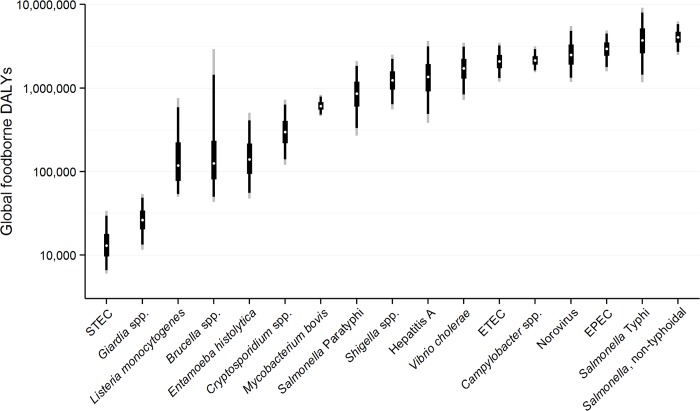
We estimate that the 22 diseases included in our study resulted in two billion cases, over one million deaths, and 78.7 million DALYs in 2010.
Overview
CoChat Summary
## TL;DR
This paper provides the first WHO-led global and regional estimates of the burden of 22 foodborne bacterial, protozoal, and viral diseases in 2010. It estimates 2.0 billion illnesses, 1.09 million deaths, 78.7 million DALYs, and 582 million foodborne cases, with a large share of burden in children under 5.
## Key findings
- The 22 diseases caused an estimated 2.0 billion illnesses (95% UI 1.5–3.0 billion) in 2010; 39% (95% UI 26–53%) were in children <5 years.
- They caused 1.09 million deaths (95% UI 0.89–1.37 million); 34% (95% UI 29–38%) were in children <5 years.
- They caused 78.7 million DALYs (95% UI 65.0–97.7 million); 43% (95% UI 38–48%) were in children <5 years.
- The authors estimate 29% (95% UI 23–36%) of all cases were transmitted by contaminated food, equal to 582 million foodborne cases (95% UI 401–922 million) and 25.2 million foodborne DALYs (95% UI 17.5–37.0 million).
- Norovirus was the leading cause of foodborne illness, with 125 million (95% UI 70–251 million) foodborne cases; Campylobacter spp. caused 96 million (95% UI 52–177 million).
- Of foodborne DALYs, the largest burden came from nontyphoidal S. enterica if iNTS was included: 4.07 million DALYs (95% UI 2.49–6.27 million).
- Foodborne disease mortality and DALY rates were reported as highest in the African region, followed by the South East Asian region.
## Methods
- The study synthesized global and regional burden estimates for 22 foodborne diseases using the WHO FERG Enteric Diseases Task Force framework, combining literature reviews, systematic reviews, cohort studies, surveillance studies, expert consultation, and existing burden-of-disease assessments.
- The team estimated cases, sequelae, deaths, and DALYs for 2010, using pathogen-specific approaches: national estimates where available, a modified CHERG approach for diarrheal diseases in many countries, GBD 2010/IHME data for typhoid, paratyphoid, and hepatitis A, and expert elicitation to estimate the proportion transmitted by food.
- Uncertainty was propagated with Monte Carlo simulations using 10,000 draws per input parameter to generate 95% uncertainty intervals.
## Limitations
- The paper states that a major limitation was data gaps, especially in middle- and high-mortality countries, and that for many regions and pathogens the available data were sparse.
- It also states that only a few sequelae were included, with post-infectious sequelae such as reactive arthritis and irritable bowel syndrome excluded; stillbirths were excluded as well.
- The authors note that they could not fully account for age-specific effects for sequelae and could not separate some effects from comorbidities such as HIV infection.
- The text also makes evident, by its own description, that many estimates relied on expert elicitation for foodborne attribution and on assumptions/substitution where direct data were absent; this increases uncertainty and is part of the paper’s stated limitation.
Model-written summary. Check it against the paper before relying on it.
Integrity signals
Registry
Cites
Statistics
Figures
Verification
Claims the paper makes
3 Valid · 0 Not valid · 4 Not checked · 29 Own results and interpretations
The cited sources support only part of this claim — read each source’s verdict below.
In the paper
“Furthermore, global and regional estimates of the burden of foodborne diseases have not been available [1,2].”
§ World Health Organization Estimates of the Global and Regional Disease Burden of 22 Foodborne Bacterial, Protozoal, and Viral Diseases, 2010: A Data Synthesis > Introduction
What the sources say
- Partly supportedcites [1] Stein C, Kuchenmuller T, Hendrickx S, Prüss-Űstün A, Wolfson L, Engels D, et al The Global Burden of Disease assessments—WHO is responsible? PLoS Negl Trop Dis. 2007; 1: e161 10.1371/journal.pntd.0000161 18160984 PMC2154395 sourceExperimental — accuracy not yet measured
The Foodborne diseases section says that the full extent of the burden is unknown and that no precise, consistent global information existed at the time. It does not specifically address regional estimates, and its wording is narrower than saying no global estimates were available at all. No page number is provided in our copy. (LLM, conf=0.84)
- Not checked — no full text of the sourcecites [2] Tauxe RV, Doyle MP, Kuchenmuller T, Schlundt J, Stein CE. Evolving public health approaches to the global challenge of foodborne infections. Int J Food Microbiol. 2010; 139 Suppl 1: S16– 28. 10.1016/j.ijfoodmicro.2009.10.014 19931203 source
plain- Asserted: passes — The authors put it forward as true.
- Checkable: passes — It can be checked against evidence.
- Load-bearing: passes — The paper’s conclusions depend on it.
- Based: passes — The paper gives a reason why it holds.
- Partly supported
A result the paper reports from its own data — it cites no other source for it, so there is none to check. The quote shows it is in the paper.
In the paper
“Overall, 29% (95% UI 23–36%) of all 22 diseases were estimated to be transmitted by contaminated food equating to 582 million (95% UI 400–922 million) foodborne cases in 2010; 38% (95% UI 24–53%) in children <5 years of age.”
§ World Health Organization Estimates of the Global and Regional Disease Burden of 22 Foodborne Bacterial, Protozoal, and Viral Diseases, 2010: A Data Synthesis > Results > Cases
hedged- Asserted: passes — The authors put it forward as true.
- Checkable: passes — It can be checked against evidence.
- Load-bearing: passes — The paper’s conclusions depend on it.
- Based: passes — The paper gives a reason why it holds.
- Rests on an assumption not shown here.
A result the paper reports from its own data — it cites no other source for it, so there is none to check. The quote shows it is in the paper.
In the paper
“Among the 11 diarrheal diseases, the rate ratio of foodborne cases occurring among children <5 years of age compared to those ≥5 years of age was 6.44 (95%UI 3.15–12.46).”
§ World Health Organization Estimates of the Global and Regional Disease Burden of 22 Foodborne Bacterial, Protozoal, and Viral Diseases, 2010: A Data Synthesis > Results > Cases
plainstates an association- Asserted: passes — The authors put it forward as true.
- Checkable: passes — It can be checked against evidence.
- Load-bearing: unclear — It is unclear whether the paper’s conclusions depend on it.
- Based: passes — The paper gives a reason why it holds.
- Rests on 2 assumptions not shown here.
A result the paper reports from its own data — it cites no other source for it, so there is none to check. The quote shows it is in the paper.
In the paper
“Norovirus was the leading cause of foodborne illness causing 125 million (95% UI 70–251 million) cases, while Campylobacter spp. caused 96 million (95% UI 52–177 million) foodborne illnesses.”
§ World Health Organization Estimates of the Global and Regional Disease Burden of 22 Foodborne Bacterial, Protozoal, and Viral Diseases, 2010: A Data Synthesis > Abstract > Methods and Findings
plainstates a cause- Asserted: passes — The authors put it forward as true.
- Checkable: passes — It can be checked against evidence.
- Load-bearing: unclear — It is unclear whether the paper’s conclusions depend on it.
- Based: passes — The paper gives a reason why it holds.
In the paper
“The FERG estimate for DALYs for nontyphoidal S. enterica combining diarrheal and invasive infections was 4 times greater than GBD 2010 [54].”
§ World Health Organization Estimates of the Global and Regional Disease Burden of 22 Foodborne Bacterial, Protozoal, and Viral Diseases, 2010: A Data Synthesis > Discussion
What the sources say
- Not checked — no full text of the sourcecites [54] Murray CJ, Vos T, Lozano R, Naghavi M, Flaxman AD, Michaud C, et al Disability-adjusted life years (DALYs) for 291 diseases and injuries in 21 regions, 1990–2010: a systematic analysis for the Global Burden of Disease Study 2010. Lancet. 2012; 380: 2197– 2223. 10.1016/S0140-6736(12)61689-4 23245608 source
plain- Asserted: passes — The authors put it forward as true.
- Checkable: passes — It can be checked against evidence.
- Load-bearing: unclear — It is unclear whether the paper’s conclusions depend on it.
- Based: passes — The paper gives a reason why it holds.
16 more claims
Create a free account to see all 36 claims and to verify the 1 reference still open.
- Probably not a substantial claim. 11
- It may state two separate claims as one. 5
Claims other papers make about this one
Each is checked against this paper’s own text: does it say what the citing paper says it does?
The source backs part of the claim, not all of it — or backs it for a different population, condition or comparison.
In the citing paper
“Animal-based foods, like cow milk, can pose a risk for zoonotic enteric pathogen transmission42 although pasteurisation is an effective means for making milk safer.”
From Environmental and behavioural exposure pathways associated with diarrhoea and enteric pathogen detection in 5-month-old, periurban Kenyan infants: a cross-sectional study (2022) · cites this paper as [42]
Experimental — accuracy not yet measured
Citations
Cites
Lozano, R., Naghavi, M., Foreman, K., Lim, S., Shibuya, K., Aboyans, V., Abraham, J., Adair, T., Aggarwal, R., Ahn, S. Y., et al. (2012) · The Lancet · doi:10.1016/s0140-6736(12)61728-0 · Cited by 14,070 · cited 3×
“Twelve of the diseases included in our study were also included in the GBD 2010 study [25,26,54].”
Murray, C. J. L., Vos, T., Lozano, R., Naghavi, M., Flaxman, A. D., Michaud, C., Ezzati, M., Shibuya, K., Salomon, J. A., Abdalla, S., et al. (2012) · The Lancet · doi:10.1016/s0140-6736(12)61689-4 · Cited by 8,888
Foodborne illness acquired in the United States—Major pathogens
Scallan, E., Hoekstra, R. M., Angulo, F. J., Tauxe, R. V., Widdowson, M.-A., Roy, S. L., Jones, J. L., & Griffin, P. M. (2011) · Emerging Infectious Diseases · doi:10.3201/eid1701.p11101 · Cited by 7,657 · cited 1×
“Many different diseases, including those due to bacteria, viruses, parasites, chemicals, and prions, may be transmitted to humans by contaminated food [3].”
Self-citationSelected major risk factors and global and regional burden of disease
Ezzati, M., Lopez, A. D., Rodgers, A., Vander Hoorn, S., & Murray, C. J. (2002) · The Lancet · doi:10.1016/s0140-6736(02)11403-6 · Cited by 3,594
Kotloff, K. L., Nataro, J. P., Blackwelder, W. C., Nasrin, D., Farag, T. H., Panchalingam, S., Wu, Y., Sow, S. O., Sur, D., Breiman, R. F., et al. (2013) · The Lancet · doi:10.1016/s0140-6736(13)60844-2 · Cited by 3,560 · cited 1×
“This approach was facilitated by the availability of estimates of the envelope of diarrheal deaths, along with recent advances in diarrheal disease diagnosis, such as widespread application of polymerase chain reaction (PCR) for norovirus detection [20,49].”
The Global Burden of Nontyphoidal Salmonella Gastroenteritis
Majowicz, S. E., Musto, J., Scallan, E., Angulo, F. J., Kirk, M., O’Brien, S. J., Jones, T. F., Fazil, A., & Hoekstra, R. M. (2010) · Clinical Infectious Diseases · doi:10.1086/650733 · Cited by 2,442
Self-citationGlobal burden of childhood pneumonia and diarrhoea
Walker, C. L. F., Rudan, I., Liu, L., Nair, H., Theodoratou, E., Bhutta, Z. A., O'Brien, K. L., Campbell, H., & Black, R. E. (2013) · The Lancet · doi:10.1016/s0140-6736(13)60222-6 · Cited by 2,356 · cited 2×
“, “envelope” of diarrheal incidence) for 2010 by combining estimates of diarrheal incidence for children<5 years of age and persons 5 years of age [13,36].”
Self-citationThe global burden of typhoid fever.
Crump, J., Luby, S., & Mintz, E. (2004) · Bulletin of the World Health Organization · doi:10.1590/s0042-96862004000500008 · Cited by 2,172
Self-citationThe global burden of typhoid fever.
(2004) · Europe PMC (PubMed Central) · Cited by 1,965
Self-citationSalomon, J. A., Vos, T., Hogan, D. R., Gagnon, M., Naghavi, M., Mokdad, A., Begum, N., Shah, R., Karyana, M., Kosen, S., et al. (2012) · The Lancet · doi:10.1016/s0140-6736(12)61680-8 · Cited by 1,322 · cited 1×
“Disability weights for each clinical outcome for the enteric diseases were taken from the GBD 2010 study [47].”
Cited by
Items 1,001–1,100 of 1,631
Yamawaki, R. A., Rubio, M. D. S., Alves, L. B. R., et al. (2021) · Vaccine · doi:10.1016/j.vaccine.2021.03.050 · Cited by 6
Pooled analysis of LAMP assay for the diagnosis of norovirus infection
Qian, X., Duan, A., Huang, R., Li, N., Li, Y., & Guo, X. (2021) · Journal of Clinical Laboratory Analysis · doi:10.1002/jcla.23919 · Cited by 6
Determination of Heavy Metals in Locally Available Chocolates in Lahore Region
Amjad, M. N., Hussain, S., Baloch, Z. U. R., et al. (2021) · Turkish Journal of Agriculture - Food Science and Technology · doi:10.24925/turjaf.v9i6.1144-1153.4262 · Cited by 6
Fagan-Garcia, K., Denich, L., Tataryn, J. R., Janicki, R., Osch, O. V., Kearney, A. K., Misfeldt, C., Nadon, C. A., Gaulin, C., Mah, V., et al. (2022) · Canada Communicable Disease Report · doi:10.14745/ccdr.v48i06a06 · Cited by 8
Hankel, J., Gibson, T. D., Skov, J., et al. (2022) · Scientific Reports · doi:10.1038/s41598-022-15863-7 · Cited by 6
Isolation and Identification of Campylobacter spp. from Food and Food-Related Environment
Huang, H., & Garcia, M. M. (2022) · IntechOpen eBooks · doi:10.5772/intechopen.103114 · Cited by 9
Park, S., Jung, B., Kim, E., Yoon, H., & Hahn, T. (2022) · Vaccines · doi:10.3390/vaccines10091413 · Cited by 6
“Salmonellosis caused by non-typhoidal Salmonella (NTS) is a major foodborne gastrointestinal disease worldwide [1,2].”
BackgroundObande, D. (2022) · The Atrium (University of Guelph) · doi:10.1016/j.foodcont.2022.109455 · Cited by 6
Travel-Associated Infections & Diseases
Nemhauser, J. B. (2023) · Oxford University Press eBooks · doi:10.1093/oso/9780197570944.003.0005 · Cited by 7
Global Disease Burden of Foodborne Illnesses Associated With Norovirus
Shah, M. P., & Hall, A. J. (2017) · Elsevier eBooks · doi:10.1016/b978-0-12-804177-2.00001-4 · Cited by 11
Self-citationClostridium botulinum and the Most Poisonous Poison
Johnson, E. A. (2017) · Springer eBooks · doi:10.1007/978-3-319-56836-2_20 · Cited by 7
Mitigation of Foodborne Illnesses by Probiotics
Ryan, V., & Bhunia, A. K. (2017) · Springer eBooks · doi:10.1007/978-3-319-56836-2_21 · Cited by 7
Design of Two Multiplex PCR Assays for Serotyping Shigella flexneri
van der Ploeg, C. A., Rogé, A., Bordagorría, X. L., et al. (2017) · Foodborne Pathogens and Disease · doi:10.1089/fpd.2017.2328 · Cited by 6
“Approximately 190 million shigellosis cases have been estimated per year around the globe by the World Health Organization with the majority involving children less than 5 years of age (Kirk et al. , 2015).”
Norovirus and other Caliciviruses
Katayama, H., & Vinjé, J. (2019) · Michigan State University eBooks · doi:10.14321/waterpathogens.14 · Cited by 9
Park, C. J., Li, J., Zhang, X., Gao, F., Benton, C. S., & Andam, C. P. (2020) · Journal of Clinical Microbiology · doi:10.1128/jcm.02070-19 · Cited by 6
Navarro, A., Licona-Moreno, D., Monsalvo-Reyes, A. C., Hernández‐Chiñas, U., & Eslava-Campos, C. A. (2020) · Microorganisms · doi:10.3390/microorganisms8050780 · Cited by 6
“coli O157 and Salmonella are bacteria that have greater clinical and epidemiologic impacts and are responsible for diarrhea outbreaks caused by consumption of contaminated food [33].”
BackgroundDistribution of CRISPR Types in Fluoroquinolone-Resistant Campylobacter jejuni Isolates
Adıgüzel, M. C., Goulart, D. B., Wu, Z., Pang, J., Cengiz, S., Zhang, Q., & Şahin, O. (2021) · Pathogens · doi:10.3390/pathogens10030345 · Cited by 6
Jubinville, É., Girard, M., Trudel-Ferland, M., et al. (2021) · Food and Environmental Virology · doi:10.1007/s12560-021-09493-x · Cited by 6
Yeh, H., Awad, A., & Rothrock, M. J. (2021) · Veterinary Medicine and Science · doi:10.1002/vms3.622 · Cited by 5
“Campylobacter jejuni, a Gram-negative bacterium (Ryan et al., 2004; Ursing et al., 1994), is the leading foodborne pathogen worldwide (Kirk et al., 2015; Tack et al., 2019).”
BackgroundCheng, R. A., Orsi, R. H., & Wiedmann, M. (2022) · mSystems · doi:10.1128/msystems.00115-22 · Cited by 8
“S almonella enterica is a leading cause of bacterial foodborne illness in the United States (1) and remains an important cause of diarrheal illness worldwide (2, 3).”
BackgroundArnold, K., Lim, S., Rakler, T., Rovira, A., Satuchne, C., Yechezkel, E., Wiseman, A., Pima, Y., Yakunin, E., Rokney, A., et al. (2022) · Poultry Science · doi:10.1016/j.psj.2022.102181 · Cited by 6
Costigan, R., Stoakes, E., Floto, R. A., Parkhill, J., & Grant, A. J. (2022) · BMC Microbiology · doi:10.1186/s12866-022-02645-4 · Cited by 7
Chin, P. S., Yu, C. Y., Ang, G. Y., et al. (2017) · Journal of Global Antimicrobial Resistance · doi:10.1016/j.jgar.2016.12.017 · Cited by 6
Kuan, N., & Yeh, K. (2019) · MicrobiologyOpen · doi:10.1002/mbo3.846 · Cited by 5
Lin, C. S., Chan, A., Vermeulen, J., Brockerman, J., Soni, A. S., Tanner, M. E., Gaynor, E. C., McIntosh, L. P., Simorre, J., & Murphy, M. E. P. (2021) · Journal of Biological Chemistry · doi:10.1016/j.jbc.2021.100528 · Cited by 7
“Campylobacter jejuni is a Gram-negative, highly motile and helical-shaped bacterium that is a leading cause of bacterial foodborne gastroenteritis worldwide (1).”
BackgroundLiu, F., Wang, X., Li, W., Jiang, G., & Kong, C. (2021) · Environmental Science and Pollution Research · doi:10.1007/s11356-021-14691-y · Cited by 7
Saleki, K., Razi, S., & Rezaei, N. (2023) · Elsevier eBooks · doi:10.1016/b978-0-12-818006-8.00007-4 · Cited by 7
Structure-based inhibitor design for reshaping bacterial morphology
Choi, Y., Park, J. S., Kim, J., Min, K.-J., Mahasenan, K. V., Kim, C. K., Yoon, H., Lim, S., Cheon, D. H., Lee, Y., et al. (2022) · Communications Biology · doi:10.1038/s42003-022-03355-3 · Cited by 5
Albert, V., Ramamurthy, T., Das, M., Das, S., Ojha, A. K., Sarmah, P., Gogoi, D., Dolma, K. G., Majumdar, T., Sarangthem, I., et al. (2024) · JMIR Research Protocols · doi:10.2196/56469 · Cited by 7
“Moreover, the WHO has reported a high burden of diarrheal and invasive enteric diseases in the Indian region, which is nearly double the global average and 20 times higher than that in Europe [5].”
BackgroundStévenin, V., Coipan, C. E., Duijster, J. W., van Elsland, D. M., Voogd, L., Bigey, L., van Hoek, A. H. A. M., Wijnands, L. M., Janssen, L., Akkermans, J. J. L. L., et al. (2024) · Cell Reports · doi:10.1016/j.celrep.2024.114931 · Cited by 6
Ge, J., Li, X., Lu, Q., Li, S., Liu, J., Deng, X., Liu, H., & Qiu, J. (2025) · Virulence · doi:10.1080/21505594.2025.2548621 · Cited by 5
“The annual mortality rate attributed to Salmonella infection-induced food poisoning has exhibited an upward trend in global incidents of foodborne illnesses [2,3].”
Pan, Y., Liu, S., Ma, W., et al. (2025) · Microchemical Journal · doi:10.1016/j.microc.2025.115237 · Cited by 5
Bajwa, H. U. R., Bhowmick, S., & Varga, C. (2025) · Annals of Epidemiology · doi:10.1016/j.annepidem.2025.10.008 · Cited by 5
Burden of campylobacteriosis in Bangladesh: challenges and opportunities
Islam, S. S., Hoque, N., Akhter, A. T., et al. (2023) · Asian Journal of Medical and Biological Research · doi:10.3329/ajmbr.v9i2.66775 · Cited by 5
“Campylobacter comprises a different group of Gram-negative bacteria which cause foodborne diseases in humans throughout the world (Kirk et al., 2015; Tack et al., 2019).”
BackgroundInfluentialPayne, M., Hu, D., Wang, Q., et al. (2024) · Bioinformatics · doi:10.1093/bioinformatics/btae427 · Cited by 5
“Foodborne pathogens are a major cause of morbidity globally with 550 million infections reported in 2010 (Kirk et al. 2015).”
BackgroundDolma, K. G., Das, M., Saravanabhavan, S. S., et al. (2024) · Cureus · doi:10.7759/cureus.64050 · Cited by 5
“Among them, the top-listed pathogens included Salmonella, hepatitis A virus, Taenia solium , etc. [3].”
BackgroundKim, E., Nealon, N. J., Murray, K. A., Jardine, C., Magnuson, R. J., & Rao, S. (2024) · Animals · doi:10.3390/ani14233483 · Cited by 5
Fokas, R., Anastopoulou, Z., Koukouvini, K.-A., et al. (2025) · Pathogens · doi:10.3390/pathogens14020135 · Cited by 5
“An estimated 125 million cases of foodborne illness and 35,000 deaths globally have been attributed to norovirus [29].”
Conserved antigens for enteric vaccines
Walker, R. I. (2025) · Vaccine · doi:10.1016/j.vaccine.2025.126828 · Cited by 8
“Campylobacter may be responsible for more than 160 million cases of gastroenteritis each year [82] and is linked to growth stunting of infants living under conditions of poor sanitation and hygiene [83].”
Assessing the Contamination Risk of Salmonella enterica subsp. in Green Leafy Vegetables
Kumar, R., Kamboj, N., Kumar, V., Kumar, S., Kumar, N., & Gautam, P. (2025) · Journal of Pure and Applied Microbiology · doi:10.22207/jpam.19.1.36 · Cited by 5
Olaleye, A. M., Nwoke, S. U., Okongwu, D. J., Amaraegbulam, N., Ezeh, C. C., & Ucheana, I. A. (2025) · Journal of Trace Elements and Minerals · doi:10.1016/j.jtemin.2025.100247 · Cited by 6
Wu, K., Yang, J., Zhang, T., et al. (2025) · Veterinary Microbiology · doi:10.1016/j.vetmic.2025.110593 · Cited by 5
Mekuria, Z. H., Deblais, L., Ojeda, A. E., Mummed, B., Singh, N., Gebreyes, W. A., Havelaar, A. H., & Rajashekara, G. (2025) · Microbiome · doi:10.1186/s40168-025-02203-w · Cited by 5
“The World Health Organization (WHO) estimates that contaminated food leads to 600 million illnesses and more than 400,000 deaths annually [3, 4], with nearly one-third affecting children’s in LMIC, contributing to malnutrition, stunting, and long-term cognitive deficits [3, 5, 6].”
Self-citationNaz, Y., Sajjad, S., Leghari, S. A. K., et al. (2019) · Materials Research Express · doi:10.1088/2053-1591/ab6088 · Cited by 5
Isolation and characterization of bacteria from fermented cooked-rice
Rahman, M. S., Rana, M. S., Hosen, M. B., Habib, M. A., Nur, A., Kaly, M. K., Matin, M. N., Nasirujjaman, K., & Rahman, M. M. (2021) · Biologia · doi:10.1007/s11756-021-00753-6 · Cited by 7
Zhuang, L., Gong, J., Shen, Q., et al. (2022) · Analytical Sciences · doi:10.1007/s44211-022-00213-4 · Cited by 5
Costa, L. R. M., Buiatte, A. B. G., Dias, S. D. C., Garcia, L. N. H., Cossi, M. V. C., Yamatogi, R. S., Nero, L. A., & Pereira, J. G. (2023) · Food Control · doi:10.1016/j.foodcont.2023.110155 · Cited by 10
Şahin, O., Pang, J., Pavlovic, N., Tang, Y., Adıgüzel, M. C., Wang, C., & Zhang, Q. (2023) · Avian Diseases · doi:10.1637/aviandiseases-d-23-00004 · Cited by 6
Song, S. H., Bae, M., & Oh, J. K. (2024) · Polymers · doi:10.3390/polym16020292 · Cited by 5
“Harmful bacteria associated with foods, including Escherichia coli , Staphylococcus aureus , Salmonella enterica , Listeria monocytogenes , and Bacillus cereus , are recognized as major contributors to severe foodborne illnesses [35].”
BackgroundA promoted MALDI-TOF-MS platform towards rapid and accurate identifications of bacteria
Zhao, N., Wang, H., Li, J., Lin, X., Guo, L., & Guo, X. (2024) · Microchemical Journal · doi:10.1016/j.microc.2024.110356 · Cited by 5
Food Safety and Food Hygiene Knowledge of Hungarian University Students
Keczeli, V., Kóró, M., Tóth, V., Csákvári, T., Tisza, B. B., Szántóri, P., Asztalos, Á. C., Verzár, Z., & Kisbenedek, A. G. (2024) · International Journal of Environmental Research and Public Health · doi:10.3390/ijerph21111410 · Cited by 9
Mou, R., Cui, X.-Y., Luo, Y.-S., Cheng, Y., Luo, Q.-Y., Zhang, Z., Wu, W., Li, J.-F., & Zhang, K. (2025) · Parasites & Vectors · doi:10.1186/s13071-025-06719-w · Cited by 6
“To complete their life cycle, these intestinal worms traverse host tissues, causing severe damage, which imposes a significant burden on global health systems [1].”
Sasías, S., Martínez-Sanguiné, A., Betancor, L., Martínez, A., D’Alessandro, B., Iriarte, A., Chabalgoity, J. A., & Yim, L. (2017) · Infection and Immunity · doi:10.1128/iai.00517-17 · Cited by 7
Aguayo-Patrón, S., Castillo-Fimbres, R. S., Quihui‐Cota, L., & de la Barca, A. M. C. (2017) · The Journal of Infection in Developing Countries · doi:10.3855/jidc.9350 · Cited by 5
“histolytica infection caused more than 103 million cases of diarrhea, the complications of which led to around 5,450 deaths worldwide [1].”
BackgroundFlood and Infectious Disease Risk Assessment
Ashbolt, N. (2018) · Health in Ecological Perspectives in the Anthropocene · doi:10.1007/978-981-13-2526-7_12 · Cited by 2
Makhunga, S., Mashamba-Thompson, T. P., & Hlongwana, K. W. (2019) · Systematic Reviews · doi:10.1186/s13643-018-0907-2 · Cited by 5
Carlos, C. A. J., Pauline, M. D., Dah-Nouvlessounon, D., et al. (2019) · African Journal of Microbiology Research · doi:10.5897/ajmr2019.9062 · Cited by 5
“%) considering the illnesses cases, deaths and DALYs respectively (Kirk et al., 2015).”
BackgroundPopulation-Level Human Secretor Status Is Associated With Genogroup 2 Type 4 Norovirus Predominance
Arrouzet, C., Ellis, K., Kambhampati, A. K., Chen, Y., Steele, M. K., & Lopman, B. A. (2020) · The Journal of Infectious Diseases · doi:10.1093/infdis/jiz693 · Cited by 6
“Several studies have demonstrated an association between secretor status and genotype-specific susceptibility, suggesting an interaction between human and viral genetic diversity [14, applyparastyle “fig//caption/p[1]” parastyle “FigCapt””
BackgroundRotheram, S., Cooper, J., Ronzi, S., Barr, B., & Whitehead, M. M. (2020) · PLoS ONE · doi:10.1371/journal.pone.0227630 · Cited by 5
“2 million Disability Adjusted Life Years (DALYs) [4].”
BackgroundChen, Y., Wang, X., Zhang, X., Xu, D., Zhang, W., Qiu, J., Liu, Q., & Dong, Q. (2020) · Journal of Food Safety · doi:10.1111/jfs.12811 · Cited by 6
Evaluation of Copper Alloy Surfaces for Inactivation of Tulane Virus and Human Noroviruses
Recker, J., & Li, X. (2020) · Journal of Food Protection · doi:10.4315/0362-028x.jfp-19-410 · Cited by 5
Inferring evolutionary pathways and directed genotype networks of foodborne pathogens
Cliff, O. M., McLean, N., Sintchenko, V., Fair, K. M., Sorrell, T. C., Kauffman, S. A., & Prokopenko, M. (2020) · PLoS Computational Biology · doi:10.1371/journal.pcbi.1008401 · Cited by 5
“Even so, the notified and confirmed cases are only the “tip of the iceberg”, with about 9% of cases notified to public health authorities [6].”
BackgroundMurray, R., Cruz‐Cano, R., Nasko, D. J., Blythe, D., Ryan, P., Boyle, M., Wilson, S., & Sapkota, A. R. (2021) · The Science of The Total Environment · doi:10.1016/j.scitotenv.2021.147682 · Cited by 8
Lee, J.-S., Mogasale, V., Marks, F., & Kim, J. H. (2021) · BMC Infectious Diseases · doi:10.1186/s12879-021-06198-1 · Cited by 6
“also updated the global burden of iNTS by calculating disability-adjusted life years (DALYs) [5, 6].”
BackgroundPrevalence of SEA and SEB producing Staphylococcus aureus isolated from foodborne- outbreaks in Iran
Mehrnaz, M., Mohammad, M. S. D., Ramin, M. N. F., et al. (2021) · African Journal of Microbiology Research · doi:10.5897/ajmr2021.9525 · Cited by 5
“Author(s) agree that this article remain permanently open access under the terms of the Creative Commons Attribution License 4.0 International License show the same symptoms of an illness after consuming a common food or drink source‖ (World Health Organization (WHO), 2008; Kirk et al., 2015).”
InfluentialRapid measurement of waterborne bacterial viability based on difunctional gold nanoprobe
Wen, J., Liu, J., Wu, S., & He, D. (2022) · RSC Advances · doi:10.1039/d1ra07287k · Cited by 5
Food Safety, Standards and Norms Against Bioterrorism: Food Safety and Hazards
Krivohlavek, A. (2018) · NATO science for peace and security series. A, Chemistry and biology · doi:10.1007/978-94-024-1263-5_17 · Cited by 5
Sireswar, S., Ghosh, I., Dey, K., Behera, L., Reza, M., Das, S. S., & Dey, G. (2019) · Journal of Food Protection · doi:10.4315/0362-028x.jfp-18-492 · Cited by 5
Crabb, H. K., Allen, J. L., Devlin, J. M., Firestone, S. M., Stevenson, M. A., Wilks, C. R., & Gilkerson, J. R. (2019) · Food Microbiology · doi:10.1016/j.fm.2019.06.001 · Cited by 6
Nagar, V., Godambe, L. P., & Shashidhar, R. (2016) · International Journal of Food Science & Technology · doi:10.1111/ijfs.13277 · Cited by 5
“Food-borne pathogens are considered as an important public health issue globally as they cause significant morbidity, mortality and economic loss (Kirk et al., 2015).”
BackgroundGriffin, T. J., Thanawastien, A., Cartee, R. T., et al. (2019) · Human Vaccines & Immunotherapeutics · doi:10.1080/21645515.2019.1599674 · Cited by 5
“These vaccines range in protective efficacy from 55% to 95%.(1,4,5,7) Typhim Vi®, Typherix®, and Typbar® are singledose, intramuscularly administered vaccines approved for use in adults and children >2 y of age that confer protection for 2–3 y.”
BackgroundConsumer Knowledge, Attitude and Behavior Toward Food Safety
Bai, L., & Gong, S. (2017) · Wiley eBooks · doi:10.1002/9781119238102.ch20 · Cited by 7
Lek, K. (2020) · Utrecht University Repository (Utrecht University) · doi:10.33540/96 · Cited by 13
Tarr, G. A. M., Chui, L., Stanford, K., Bumunang, E. W., Zaheer, R., Li, V., Freedman, S. B., Laing, C., & McAllister, T. A. (2024) · eLife · doi:10.7554/elife.97643 · Cited by 5
Probing the zooarchaeological record across time and space for ancient pathogensPreprint
Runge, A. K. W., Light-Maka, I. C., Massy, K., Keller, M., Trixl, S., Kabral, H., Kirkpatrick, C. L., Bos, K. I., Eger, J., Ernée, M., et al. (2025) · bioRxiv (Cold Spring Harbor Laboratory) · doi:10.1101/2025.02.12.637901 · Cited by 5
Knowledge, Attitude, and Practices of Food Hygiene among Mothers from Rural Communities in Malawi
Batch, V., Kress, M., Luhanga, E., Monjerezi, M., Pfaff, D., Phiri, H., Gama, A. P., Chomanika, K., Schmidt, A., Duelken, B., et al. (2024) · Hygiene · doi:10.3390/hygiene4030028 · Cited by 4
Yates, C. R., Weller, D. L., Ponder, M. A., Liao, J., Holloman, K., & Cheng, R. A. (2025) · Journal of Food Protection · doi:10.1016/j.jfp.2025.100548 · Cited by 3
Ma, M., He, Z., Yang, X., et al. (2025) · Food Bioscience · doi:10.1016/j.fbio.2025.107052 · Cited by 4
Sun, X., Xiao, J., Wei, H., et al. (2025) · Scientific Reports · doi:10.1038/s41598-025-17272-y · Cited by 4
Huang, X., Yang, S., Zhao, J., Yang, J., Jiang, H., Li, S., Wang, C., & Liu, G. (2024) · Vaccine · doi:10.1016/j.vaccine.2024.126262 · Cited by 4
Zhang, K., Schang, C., Henry, R., & McCarthy, D. (2024) · PLoS ONE · doi:10.1371/journal.pone.0307572 · Cited by 8
“Antibacterial and cytotoxic efficacy of Ag–MnO₂/ PIn nanocomposites derived from battery waste”
Bharti, C., Singh, A., Nandan, K., et al. (2024) · Materials Chemistry and Physics · doi:10.1016/j.matchemphys.2024.130305 · Cited by 4
Taddese, D., Abdurahaman, M., Debelo, M., Shumi, E., Ayana, G. U., Kefyalew, D., Melaku, M., Kebeta, T., & Abafaji, G. (2025) · Discover Food · doi:10.1007/s44187-025-00300-1 · Cited by 8
Vayena, E., Fuchs, L., MohammadiPeyhani, H., Lagoda, K., Nguyen, B. D., Hardt, W., & Vassily Hatzimanikatis, A. (2025) · PLoS Computational Biology · doi:10.1371/journal.pcbi.1012869 · Cited by 3
“Non-typhoid S. enterica (NTS) infections like those caused by S. enterica subspecies 1 serovar Typhimurium range among the most common causes of diarrhea and inflict a substantial burden on global health [2].”
Robertson, L. J. (2025) · Food and Waterborne Parasitology · doi:10.1016/j.fawpar.2025.e00258 · Cited by 4
Paper-based analytical devices for smart foodborne pathogen detection
Bedair, H. M., Emara, M. M., Samir, T. M., et al. (2025) · Talanta Open · doi:10.1016/j.talo.2025.100511 · Cited by 4
Structural basis for Salmonella infection by two Microviridae phages
Hu, W., Liu, Z., Wei, Y., Bian, Q., Lan, W., Fan, C., Song, J., Sun, Q., Zhang, X., Liu, Y., et al. (2025) · Communications Biology · doi:10.1038/s42003-025-08595-7 · Cited by 4
Mwangi, A. W., Kunyanga, C. N., Sogin, J. H., Ngala, S., Aliwa, B. O., Onsaŕe, R., & Ndiritu, A. K. (2025) · Critical Reviews in Food Science and Nutrition · doi:10.1080/10408398.2025.2539402 · Cited by 4
“In 2010, the WHO Global Burden of Disease (2015) estimated 166 million cases of food-borne illnesses, 37,604 deaths, and 3,733,822 DALYs attributable to Campylobacter globally (Kirk et al. 2015; Fravalo et al. 2021).”
Bacterial and viral zoonotic infections: bugging the world
Sheykhsaran, E., Hemmat, N., Leylabadlo, H. E., & Baghi, H. B. (2021) · Reviews in Medical Microbiology · doi:10.1097/mrm.0000000000000273 · Cited by 6
Chassaing, M., Bastin, G., Robin, M., Majou, D., Belliot, G., de Rougemont, A., Boudaud, N., & Gantzer, C. (2021) · Frontiers in Microbiology · doi:10.3389/fmicb.2021.662764 · Cited by 4
Gill, G. (2021) · Journal of microbiology epidemiology immunobiology · doi:10.36233/0372-9311-167 · Cited by 4
Multiplex PCR for the detection of Salmonella spp. in Indonesian traditional shrimp paste (Terasi)
Gaffar, A., Jatmiko, Y. D., & Prihanto, A. A. (2022) · Berkala Penelitian Hayati · doi:10.23869/bphjbr.27.2.20227 · Cited by 4
Keddy, K. H., & Smith, A. M. (2019) · Elsevier eBooks · doi:10.1016/b978-0-323-54843-4.00012-x · Cited by 6
Self-citationLing, C., Liang, S., Li, Y., Cao, Q., Ye, H., Zhang, C., Dong, Z., Feng, D., Wang, W., & Zuo, J. (2023) · International Journal of Molecular Sciences · doi:10.3390/ijms24098170 · Cited by 4
Amory, H., Cesarini, C., Maré, L. D., Loublier, C., Moula, N., Detilleux, J. C., Saulmont, M., Garigliany, M., & Lecoq, L. (2023) · Microorganisms · doi:10.3390/microorganisms11081950 · Cited by 4
“Globally, in 2010, the WHO estimated the number of salmonellosis cases worldwide at 157 million, of which 56,969 had a fatal outcome and almost half were foodborne [6].”
BackgroundGrove, B. E., de Thurah, A. L., Ivarsen, P., Kvisgaard, A. K., Hjøllund, N. H., Grytnes, R., & Schougaard, L. M. V. (2024) · JMIR Formative Research · doi:10.2196/48173 · Cited by 9
Genomoviruses in Liver Samples of Molossus molossus Bats
Couto, R. D. S., Abreu, W. U., Rodrigues, L. R. R., Marinho, L. F., Morais, V. D. S., Villanova, F., Pandey, R. P., Deng, X., Delwart, E., da Costa, A. C., et al. (2024) · Microorganisms · doi:10.3390/microorganisms12040688 · Cited by 4
“They are responsible for many cases of human infectious diseases annually in the world [21,22,54].”
BackgroundBaillou, A., Tomal, F., Chaumeil, T., Barc, C., Vern, Y. L., Sausset, A., Pézier, T., Schulthess, J., Peltier, P., Laurent, F., et al. (2024) · Frontiers in Immunology · doi:10.3389/fimmu.2024.1379798 · Cited by 5
Bruno, C. M. W. B. C. M. W., Álvarez, J., Torre‐Fuentes, L., Crespo-Lopez, O. I., Calfucura, P., Ugarte‐Ruiz, M., Toledo, V., Lurz, P. W. W., & Retamal, P. (2024) · Transboundary and Emerging Diseases · doi:10.1155/2024/1949535 · Cited by 4
Prevalence and genomic characteristics of becAB-carrying Clostridium perfringens strains
Fang, M., Yuan, Y., Fox, E. M., Wu, K., Tian, X., Zhang, L., Feng, H., Li, R., Bai, L., Wang, X., et al. (2024) · Food Microbiology · doi:10.1016/j.fm.2024.104640 · Cited by 4
Metadata
- Authors
- Kirk, M. D., Pires, S. M., Black, R. E., Caipo, M., Crump, J. A., Devleesschauwer, B., Döpfer, D., Fazil, A., Fischer-Walker, C. L., Hald, T., Hall, A. J., Keddy, K. H., Lake, R. J., Lanata, C. F., Torgerson, P. R., Havelaar, A. H., & Angulo, F. J.
- Affiliations
- Australian National University (AU)
- Technical University of Denmark (DK)
- Johns Hopkins University (US)
- Food and Agriculture Organization of the United Nations (IT)
- University of Otago (NZ)
- Ghent University (BE)
- University of Wisconsin–Madison (US)
- Public Health Agency of Canada (CA)
- Centers for Disease Control and Prevention (US)
- University of the Witwatersrand (ZA)
- New Zealand Institute for Public Health and Forensic Science (NZ)
- Instituto de Investigación Nutricional (PE)
- University of Zurich (CH)
- Utrecht University (NL)
- Corresponding author
- Kirk, Martyn D.
- ORCID
- Venue
- PLoS Medicine
- Publisher
- Public Library of Science (PLoS)
- Published
- 2015-12-03
- Volume
- 12
- Issue
- 12
- Pages
- e1001921
- ISSN
- 1549-1277 (ISSN-L)
- 1549-1676
- PMC
- PMC4668831
- OpenAlex
- W2184405267
- Cited by
- 1,625
- References
- 58
- Citations by year
- 2026: 76 · 2025: 120 · 2024: 172 · 2023: 189 · 2022: 168 · 2021: 202 · 2020: 237 · 2019: 158 · 2018: 130 · 2017: 107 · 2016: 60 · 2015: 5
- FWCI
- 12.61
- Type
- journal article
- Language
- en
- Update notices
- correction (2015-12-23)
- Open access
- gold
- doi.org
- Licence
- Locations
- PLoS Medicine (publishedVersion, cc-by)
- Europe PMC (PubMed Central) (publishedVersion, cc-by)
- PubMed Central (publishedVersion, cc-by)
- PubMed (publishedVersion)
- IHI Repository (acceptedVersion)
- Zurich Open Repository and Archive (University of Zurich) (acceptedVersion, cc-by)
- Ghent University Academic Bibliography (Ghent University) (submittedVersion, other-oa)
- DOAJ (DOAJ: Directory of Open Access Journals) (submittedVersion, cc-by-sa)
- Utrecht University Repository (Utrecht University) (submittedVersion, other-oa)
- Figshare (submittedVersion, cc-by)
- ANU Open Research (Australian National University) (submittedVersion)
- Technical University of Denmark, DTU Orbit (Technical University of Denmark, DTU) (submittedVersion, other-oa)
- Rivm (National Institute for Public Health and the Environment) (submittedVersion)
- Zurich Open Repository and Archive (University of Zurich) (submittedVersion, cc-by)
- Zurich Open Repository and Archive (University of Zurich)
- Funders
- Bill and Melinda Gates Foundation
- World Health Organization
- Institute for Health Metrics and Evaluation
- Topics
- Life Sciences › Agricultural and Biological Sciences › Food Science › Salmonella and Campylobacter epidemiology
- Life Sciences › Agricultural and Biological Sciences › Food Science › Food Safety and Hygiene
- Health Sciences › Medicine › Infectious Diseases › Viral gastroenteritis research and epidemiology
- Keywords
- food poisoning, disease burden, disability-adjusted life years, norovirus, Campylobacter, Salmonella, Escherichia coli, Vibrio cholerae, Mycobacterium bovis, invasive non-typhoidal Salmonella, food contamination, diarrheal disease, foodborne parasitic infection
- MeSH terms
- Foodborne Diseases, Humans, Global Health, World Health Organization, Incidence, Prevalence, Cost of Illness, Quality-Adjusted Life Years
About these checks
Registry, retraction, Cites and statistics results are computed, not judged, with one exception: a printed reference that no index lists is read once by a model before it counts as a citation error. Claims are extracted by a model and kept only when their quote appears verbatim in the text; each cited source is then checked, with a model’s help, for whether it says what the claim relies on. Those verdicts can be wrong — read the claim’s quote and the cited source before relying on one.
The claim verdicts this report counts are experimental: their accuracy is not yet measured.
A language model drew the claims from the paper on 2026-10-10, under version 3 of the claim definition (model deepseek-v4.1-flash, prompt extract-v3).
A second model labelled each claim on 2026-10-10 (model jev-1.13-20260917, definition revision gold-guideline-v0.2).
Cited sources are checked with a language model’s help (gpt-6-sol).
Statistics and arithmetic are recomputed, not judged.
Confidence bands are shown only for fields calibrated on our annotated test set. None is calibrated yet, so no band is shown.
What counts as a claim ›How we measure confidence ›How we check this ›
Are you an author, or do you see a problem with this page? Request a review
Data sources
Bibliographic data: Semantic Scholar, OpenAlex, Crossref.
Contains information from the Semantic Scholar Academic Graph Datasets, made available under the ODC Attribution License (ODC-BY 1.0).
Semantic Scholar’s data is described in: Kinney, R., et al. (2023). The Semantic Scholar Open Data Platform. arXiv:2301.10140.
