

World Health Organization Estimates of the Global and Regional Disease Burden of 22 Foodborne Bacterial, Protozoal, and Viral Diseases, 2010: A Data Synthesis.
Open accessThe DOI matches its Crossref record; 57 of the 58 references it cites were found in a registry or an index; 3 of the 9 sources its claims cite were checked for support.
Abstract
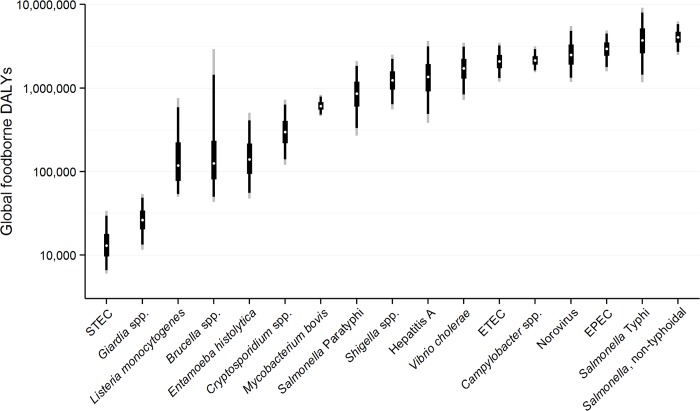
We estimate that the 22 diseases included in our study resulted in two billion cases, over one million deaths, and 78.7 million DALYs in 2010.
Overview
CoChat Summary
## TL;DR
This paper provides the first WHO-led global and regional estimates of the burden of 22 foodborne bacterial, protozoal, and viral diseases in 2010. It estimates 2.0 billion illnesses, 1.09 million deaths, 78.7 million DALYs, and 582 million foodborne cases, with a large share of burden in children under 5.
## Key findings
- The 22 diseases caused an estimated 2.0 billion illnesses (95% UI 1.5–3.0 billion) in 2010; 39% (95% UI 26–53%) were in children <5 years.
- They caused 1.09 million deaths (95% UI 0.89–1.37 million); 34% (95% UI 29–38%) were in children <5 years.
- They caused 78.7 million DALYs (95% UI 65.0–97.7 million); 43% (95% UI 38–48%) were in children <5 years.
- The authors estimate 29% (95% UI 23–36%) of all cases were transmitted by contaminated food, equal to 582 million foodborne cases (95% UI 401–922 million) and 25.2 million foodborne DALYs (95% UI 17.5–37.0 million).
- Norovirus was the leading cause of foodborne illness, with 125 million (95% UI 70–251 million) foodborne cases; Campylobacter spp. caused 96 million (95% UI 52–177 million).
- Of foodborne DALYs, the largest burden came from nontyphoidal S. enterica if iNTS was included: 4.07 million DALYs (95% UI 2.49–6.27 million).
- Foodborne disease mortality and DALY rates were reported as highest in the African region, followed by the South East Asian region.
## Methods
- The study synthesized global and regional burden estimates for 22 foodborne diseases using the WHO FERG Enteric Diseases Task Force framework, combining literature reviews, systematic reviews, cohort studies, surveillance studies, expert consultation, and existing burden-of-disease assessments.
- The team estimated cases, sequelae, deaths, and DALYs for 2010, using pathogen-specific approaches: national estimates where available, a modified CHERG approach for diarrheal diseases in many countries, GBD 2010/IHME data for typhoid, paratyphoid, and hepatitis A, and expert elicitation to estimate the proportion transmitted by food.
- Uncertainty was propagated with Monte Carlo simulations using 10,000 draws per input parameter to generate 95% uncertainty intervals.
## Limitations
- The paper states that a major limitation was data gaps, especially in middle- and high-mortality countries, and that for many regions and pathogens the available data were sparse.
- It also states that only a few sequelae were included, with post-infectious sequelae such as reactive arthritis and irritable bowel syndrome excluded; stillbirths were excluded as well.
- The authors note that they could not fully account for age-specific effects for sequelae and could not separate some effects from comorbidities such as HIV infection.
- The text also makes evident, by its own description, that many estimates relied on expert elicitation for foodborne attribution and on assumptions/substitution where direct data were absent; this increases uncertainty and is part of the paper’s stated limitation.
Model-written summary. Check it against the paper before relying on it.
Integrity signals
Registry
Cites
Statistics
Figures
Verification
Claims the paper makes
3 Valid · 0 Not valid · 4 Not checked · 29 Own results and interpretations
The cited sources support only part of this claim — read each source’s verdict below.
In the paper
“Furthermore, global and regional estimates of the burden of foodborne diseases have not been available [1,2].”
§ World Health Organization Estimates of the Global and Regional Disease Burden of 22 Foodborne Bacterial, Protozoal, and Viral Diseases, 2010: A Data Synthesis > Introduction
What the sources say
- Partly supportedcites [1] Stein C, Kuchenmuller T, Hendrickx S, Prüss-Űstün A, Wolfson L, Engels D, et al The Global Burden of Disease assessments—WHO is responsible? PLoS Negl Trop Dis. 2007; 1: e161 10.1371/journal.pntd.0000161 18160984 PMC2154395 sourceExperimental — accuracy not yet measured
The Foodborne diseases section says that the full extent of the burden is unknown and that no precise, consistent global information existed at the time. It does not specifically address regional estimates, and its wording is narrower than saying no global estimates were available at all. No page number is provided in our copy. (LLM, conf=0.84)
- Not checked — no full text of the sourcecites [2] Tauxe RV, Doyle MP, Kuchenmuller T, Schlundt J, Stein CE. Evolving public health approaches to the global challenge of foodborne infections. Int J Food Microbiol. 2010; 139 Suppl 1: S16– 28. 10.1016/j.ijfoodmicro.2009.10.014 19931203 source
plain- Asserted: passes — The authors put it forward as true.
- Checkable: passes — It can be checked against evidence.
- Load-bearing: passes — The paper’s conclusions depend on it.
- Based: passes — The paper gives a reason why it holds.
- Partly supported
A result the paper reports from its own data — it cites no other source for it, so there is none to check. The quote shows it is in the paper.
In the paper
“Overall, 29% (95% UI 23–36%) of all 22 diseases were estimated to be transmitted by contaminated food equating to 582 million (95% UI 400–922 million) foodborne cases in 2010; 38% (95% UI 24–53%) in children <5 years of age.”
§ World Health Organization Estimates of the Global and Regional Disease Burden of 22 Foodborne Bacterial, Protozoal, and Viral Diseases, 2010: A Data Synthesis > Results > Cases
hedged- Asserted: passes — The authors put it forward as true.
- Checkable: passes — It can be checked against evidence.
- Load-bearing: passes — The paper’s conclusions depend on it.
- Based: passes — The paper gives a reason why it holds.
- Rests on an assumption not shown here.
A result the paper reports from its own data — it cites no other source for it, so there is none to check. The quote shows it is in the paper.
In the paper
“Among the 11 diarrheal diseases, the rate ratio of foodborne cases occurring among children <5 years of age compared to those ≥5 years of age was 6.44 (95%UI 3.15–12.46).”
§ World Health Organization Estimates of the Global and Regional Disease Burden of 22 Foodborne Bacterial, Protozoal, and Viral Diseases, 2010: A Data Synthesis > Results > Cases
plainstates an association- Asserted: passes — The authors put it forward as true.
- Checkable: passes — It can be checked against evidence.
- Load-bearing: unclear — It is unclear whether the paper’s conclusions depend on it.
- Based: passes — The paper gives a reason why it holds.
- Rests on 2 assumptions not shown here.
A result the paper reports from its own data — it cites no other source for it, so there is none to check. The quote shows it is in the paper.
In the paper
“Norovirus was the leading cause of foodborne illness causing 125 million (95% UI 70–251 million) cases, while Campylobacter spp. caused 96 million (95% UI 52–177 million) foodborne illnesses.”
§ World Health Organization Estimates of the Global and Regional Disease Burden of 22 Foodborne Bacterial, Protozoal, and Viral Diseases, 2010: A Data Synthesis > Abstract > Methods and Findings
plainstates a cause- Asserted: passes — The authors put it forward as true.
- Checkable: passes — It can be checked against evidence.
- Load-bearing: unclear — It is unclear whether the paper’s conclusions depend on it.
- Based: passes — The paper gives a reason why it holds.
In the paper
“The FERG estimate for DALYs for nontyphoidal S. enterica combining diarrheal and invasive infections was 4 times greater than GBD 2010 [54].”
§ World Health Organization Estimates of the Global and Regional Disease Burden of 22 Foodborne Bacterial, Protozoal, and Viral Diseases, 2010: A Data Synthesis > Discussion
What the sources say
- Not checked — no full text of the sourcecites [54] Murray CJ, Vos T, Lozano R, Naghavi M, Flaxman AD, Michaud C, et al Disability-adjusted life years (DALYs) for 291 diseases and injuries in 21 regions, 1990–2010: a systematic analysis for the Global Burden of Disease Study 2010. Lancet. 2012; 380: 2197– 2223. 10.1016/S0140-6736(12)61689-4 23245608 source
plain- Asserted: passes — The authors put it forward as true.
- Checkable: passes — It can be checked against evidence.
- Load-bearing: unclear — It is unclear whether the paper’s conclusions depend on it.
- Based: passes — The paper gives a reason why it holds.
16 more claims
Create a free account to see all 36 claims and to verify the 1 reference still open.
- Probably not a substantial claim. 11
- It may state two separate claims as one. 5
Claims other papers make about this one
Each is checked against this paper’s own text: does it say what the citing paper says it does?
The source backs part of the claim, not all of it — or backs it for a different population, condition or comparison.
In the citing paper
“Animal-based foods, like cow milk, can pose a risk for zoonotic enteric pathogen transmission42 although pasteurisation is an effective means for making milk safer.”
From Environmental and behavioural exposure pathways associated with diarrhoea and enteric pathogen detection in 5-month-old, periurban Kenyan infants: a cross-sectional study (2022) · cites this paper as [42]
Experimental — accuracy not yet measured
Citations
Cites
Lozano, R., Naghavi, M., Foreman, K., Lim, S., Shibuya, K., Aboyans, V., Abraham, J., Adair, T., Aggarwal, R., Ahn, S. Y., et al. (2012) · The Lancet · doi:10.1016/s0140-6736(12)61728-0 · Cited by 14,070 · cited 3×
“Twelve of the diseases included in our study were also included in the GBD 2010 study [25,26,54].”
Murray, C. J. L., Vos, T., Lozano, R., Naghavi, M., Flaxman, A. D., Michaud, C., Ezzati, M., Shibuya, K., Salomon, J. A., Abdalla, S., et al. (2012) · The Lancet · doi:10.1016/s0140-6736(12)61689-4 · Cited by 8,888
Foodborne illness acquired in the United States—Major pathogens
Scallan, E., Hoekstra, R. M., Angulo, F. J., Tauxe, R. V., Widdowson, M.-A., Roy, S. L., Jones, J. L., & Griffin, P. M. (2011) · Emerging Infectious Diseases · doi:10.3201/eid1701.p11101 · Cited by 7,657 · cited 1×
“Many different diseases, including those due to bacteria, viruses, parasites, chemicals, and prions, may be transmitted to humans by contaminated food [3].”
Self-citationSelected major risk factors and global and regional burden of disease
Ezzati, M., Lopez, A. D., Rodgers, A., Vander Hoorn, S., & Murray, C. J. (2002) · The Lancet · doi:10.1016/s0140-6736(02)11403-6 · Cited by 3,594
Kotloff, K. L., Nataro, J. P., Blackwelder, W. C., Nasrin, D., Farag, T. H., Panchalingam, S., Wu, Y., Sow, S. O., Sur, D., Breiman, R. F., et al. (2013) · The Lancet · doi:10.1016/s0140-6736(13)60844-2 · Cited by 3,560 · cited 1×
“This approach was facilitated by the availability of estimates of the envelope of diarrheal deaths, along with recent advances in diarrheal disease diagnosis, such as widespread application of polymerase chain reaction (PCR) for norovirus detection [20,49].”
The Global Burden of Nontyphoidal Salmonella Gastroenteritis
Majowicz, S. E., Musto, J., Scallan, E., Angulo, F. J., Kirk, M., O’Brien, S. J., Jones, T. F., Fazil, A., & Hoekstra, R. M. (2010) · Clinical Infectious Diseases · doi:10.1086/650733 · Cited by 2,442
Self-citationGlobal burden of childhood pneumonia and diarrhoea
Walker, C. L. F., Rudan, I., Liu, L., Nair, H., Theodoratou, E., Bhutta, Z. A., O'Brien, K. L., Campbell, H., & Black, R. E. (2013) · The Lancet · doi:10.1016/s0140-6736(13)60222-6 · Cited by 2,356 · cited 2×
“, “envelope” of diarrheal incidence) for 2010 by combining estimates of diarrheal incidence for children<5 years of age and persons 5 years of age [13,36].”
Self-citationThe global burden of typhoid fever.
Crump, J., Luby, S., & Mintz, E. (2004) · Bulletin of the World Health Organization · doi:10.1590/s0042-96862004000500008 · Cited by 2,172
Self-citationThe global burden of typhoid fever.
(2004) · Europe PMC (PubMed Central) · Cited by 1,965
Self-citationSalomon, J. A., Vos, T., Hogan, D. R., Gagnon, M., Naghavi, M., Mokdad, A., Begum, N., Shah, R., Karyana, M., Kosen, S., et al. (2012) · The Lancet · doi:10.1016/s0140-6736(12)61680-8 · Cited by 1,322 · cited 1×
“Disability weights for each clinical outcome for the enteric diseases were taken from the GBD 2010 study [47].”
Cited by
Items 601–700 of 1,631
Enteric Tuft Cells in Host-Parasite Interactions
Rajeev, S., Sosnowski, O., Li, S., Allain, T., Buret, A. G., & McKay, D. M. (2021) · Pathogens · doi:10.3390/pathogens10091163 · Cited by 20
“Human protozoan parasites such as Cryptosporidium species, Entamoeba histolytica and Giardia lamblia are major causes for food and waterborne human diarrhea globally of [1].”
BackgroundMalahlela, M. N., Cenci-Goga, B. T., Marufu, M. C., Fonkui, T. Y., Grispoldi, L., Etter, É., Kalake, A., & Karama, M. (2022) · Toxins · doi:10.3390/toxins14050353 · Cited by 25
“2 million may have been foodborne, with 3330 HUS cases and 269 deaths, which corresponded to 27,000 disability-adjusted life years (DALYs) in 2010 [1].”
BackgroundElbehiry, A., Aldubaib, M., Rugaie, O. A., Marzouk, E., Moussa, I. M., El-Husseiny, M. H., Ibrahem, M. D., Abalkhail, A., & Rawway, M. (2022) · PLoS ONE · doi:10.1371/journal.pone.0269963 · Cited by 20
“Mammalian brucellosis is expected to affect approximately one million people each year, with 40% of cases progressing to chronic illness [6, 7].”
Li, Y., Huang, Y., Ji-jun, Y., Liu, Z., Li, Y., Yao, X., Wei, B., Tang, Z., Chen, S.-D., Liu, D., et al. (2018) · BMC Public Health · doi:10.1186/s12889-018-5429-2 · Cited by 20
Beresford-Jones, B. S., Suyama, S., Clare, S., Soderholm, A. T., Xia, W., Sardar, P., Lee, J., Harcourt, K., Lawley, T. D., & Pedicord, V. A. (2025) · Microbiome · doi:10.1186/s40168-025-02050-9 · Cited by 24
Introduction to Foodborne Pathogens
Bhunia, A. K. (2018) · Food science text series · doi:10.1007/978-1-4939-7349-1_1 · Cited by 23
Leite, F., Vasquez, E., Gebhart, C. J., & Isaacson, R. E. (2019) · Veterinary Microbiology · doi:10.1016/j.vetmic.2019.02.036 · Cited by 18
Zhu, Z., Huang, Q., Xu, H. Y., Chen, X., Lu, Y., Chen, Z., Wang, C., Meng, X., Xu, Q., & Li, S. (2019) · Journal of Applied Microbiology · doi:10.1111/jam.14515 · Cited by 17
“…of Applied Microbiology 128, 875--883 © 2019 The Society for Applied Microbiology 875 route of Salmonella infection, which was estimated by the World Health Organization, accounting for 6 43 million disability-adjusted life years (DALY) through food contamination alone (Kirk et al. 2015).”
BackgroundMeyer, J., Röös, E., Combescure, C., Buchs, N. C., Frossard, J., Ris, F., Toso, C., & Schrenzel, J. (2020) · Scandinavian Journal of Gastroenterology · doi:10.1080/00365521.2020.1839128 · Cited by 18
Li, L., Olsen, R. H., Song, A., et al. (2021) · Frontiers in Microbiology · doi:10.3389/fmicb.2021.646101 · Cited by 17
A retrospective and regional approach assessing the genomic diversity ofSalmonellaDublin
Violante, M. D. S., Podeur, G., Michel, V., et al. (2022) · NAR Genomics and Bioinformatics · doi:10.1093/nargab/lqac047 · Cited by 17
“Salmonella is one of the most common bacterial pathogens worldwide in human and animal infection (1).”
BackgroundFang, L., Lin, G., Li, Y., Lin, Q., Lou, H., Lin, M., Hu, Y., Xie, A., Zhang, Q., Zhou, J., et al. (2022) · Frontiers in Microbiology · doi:10.3389/fmicb.2022.961739 · Cited by 21
“Non-typhoidal Salmonellae are zoonotic pathogens those inflict a significant burden on public health in both developing and industrialized countries and cause more than 90 million cases of acute gastroenteritis every year, accounting for ∼155,000 deaths worldwide (Kirk et al., 2015; WHO, 2015).”
BackgroundEstimates of disease burden caused by foodborne pathogens in contaminated dairy products in Rwanda
Sapp, A. C., Nane, G. F., Amaya, M. P., Niyonzima, E., Hategekimana, J. P., VanSickle, J. J., Gordon, R. M., & Havelaar, A. H. (2023) · BMC Public Health · doi:10.1186/s12889-023-15204-x · Cited by 18
“Finally, the proportion of tuberculosis cases and deaths that was attributable to Mycobacterium bovis was estimated [14].”
BackgroundSelf-citationGraphene oxide assisting the visual detection of Salmonella by CRISPR/Cas12a
Wang, L., Bai, L., Wang, H., He, K., Wang, R., Wang, Q., Zhang, F., & Xu, X. (2023) · Microchemical Journal · doi:10.1016/j.microc.2023.108870 · Cited by 20
Campylobacter vaccination reduces diarrheal disease and infant growth stunting among rhesus macaques
Hendrickson, S. M., Thomas, A., Raué, H.-P., Prongay, K., Haertel, A. J., Rhoades, N. S., Slifka, J. F., Gao, L., Quintel, B. K., Amanna, I. J., et al. (2023) · Nature Communications · doi:10.1038/s41467-023-39433-1 · Cited by 20
Kim, J., Han, X., Bae, J., et al. (2016) · Journal of Antimicrobial Chemotherapy · doi:10.1093/jac/dkw232 · Cited by 17
Brucella abortus is Prevalent in Both Humans and Animals in Bangladesh
Rahman, A. K. M. A., Saegerman, C., Berkvens, D. L., Melzer, F., Neubauer, H., Frétin, D., Abatih, E. N., Dhand, N. K., & Ward, M. P. (2017) · Zoonoses and Public Health · doi:10.1111/zph.12344 · Cited by 18
Wu, Y., Wang, M., Ouyang, H. X., He, Y. Q., Zhao, X., & Fu, Z. (2018) · Microchimica Acta · doi:10.1007/s00604-018-2921-4 · Cited by 17
Evivie, S. E., Ogwu, M. C., Abdelazez, A., Bian, X., Liu, F., Li, B., & Huo, G. (2020) · Food & Function · doi:10.1039/d0fo01218a · Cited by 17
Parsons, C. T., Brown, P., & Kathariou, S. (2021) · Antibiotics · doi:10.3390/antibiotics10030308 · Cited by 20
“monocytogenes, as it is one of the leading causes of death due to foodborne disease in the United States and other industrialized nations [6,17].”
BackgroundFiorino, F., Pettini, E., Koeberling, O., Ciabattini, A., Pozzi, G., Martin, L. B., & Medaglini, D. (2021) · Vaccines · doi:10.3390/vaccines9050495 · Cited by 18
Inhibition of viral RNA-dependent RNA polymerases with clinically relevant nucleotide analogs
Maheden, K., Todd, B., Gordon, C. J., Tchesnokov, E. P., & Götte, M. (2021) · The Enzymes · doi:10.1016/bs.enz.2021.07.002 · Cited by 20
High-Throughput Flow-Through Direct Immunoassays for Targeted Bacteria Detection
Chorti, P., Kazi, A. P., Wiederoder, M. S., et al. (2021) · Analytical Chemistry · doi:10.1021/acs.analchem.1c02867 · Cited by 17
Efficacy and Mechanisms of Copper Ion-Catalyzed Inactivation of Human Norovirus
Mertens, B. S., Moore, M. D., Jaykus, L., & Velev, O. D. (2022) · ACS Infectious Diseases · doi:10.1021/acsinfecdis.1c00609 · Cited by 17
Kang, X., Huang, T., Shen, H., Meng, C., Jiao, X., & Pan, Z. (2022) · Pathogens · doi:10.3390/pathogens11040443 · Cited by 18
“Salmonellosis is considered the most important zoonotic and foodborne illness worldwide [4].”
BackgroundCharacterization of Campylobacter spp. Strains Isolated From Wild Birds in Turkey
Kürekçi, C., Sakın, F., Epping, L., Knüver, M.-T., Semmler, T., & Stingl, K. (2021) · Frontiers in Microbiology · doi:10.3389/fmicb.2021.712106 · Cited by 19
Ahmedo, B. U., Abraha, B., Alemu, S., Mummed, B., Hiko, A., & Abdurehman, A. (2022) · BMC Veterinary Research · doi:10.1186/s12917-021-03135-x · Cited by 24
“enterica from the year 1990 to 2012 [6].”
BackgroundWang, Z., Zhang, Y., Xu, H., Chu, C., Wang, J., Jiao, X., & Li, Q. (2022) · Food Research International · doi:10.1016/j.foodres.2022.111007 · Cited by 19
Laidlow, T. A., Stafford, R. J., Jennison, A. V., et al. (2022) · Zoonoses and Public Health · doi:10.1111/zph.12973 · Cited by 16
“Management practices at poultry production systems may influence the transmission and persistence of salmonellae and potentially contaminate end of line products (Liljebjelke et al., 2005).”
BackgroundComorbidities involving parasitic diseases: A look at the benefits and complications
Oliveira, F. M. S., Cruz, R. E., Pinheiro, G. R. G., & Caliari, M. V. (2022) · Experimental Biology and Medicine · doi:10.1177/15353702221108387 · Cited by 24
Complications Associated with Foodborne Listeriosis: A Scoping Review
Pogreba-Brown, K., Boyd, K., Schaefer, K., Austhof, E., Armstrong, A., Owusu-Dommey, A., Zapata, L. V., Arora, M., McClelland, J. D., & Hoffman, S. (2022) · Foodborne Pathogens and Disease · doi:10.1089/fpd.2022.0012 · Cited by 17
Sexual Transmission of Viral Hepatitis
Lloyd, A. R., & Franco, R. (2023) · Infectious Disease Clinics of North America · doi:10.1016/j.idc.2023.02.010 · Cited by 25
Abdo, A. I., McWhorter, A. R., Hasse, D., Schmitt‐John, T., & Richter, K. (2023) · Antibiotics · doi:10.3390/antibiotics12091371 · Cited by 20
Buddhasiri, S., Sukjoi, C., Tantibhadrasapa, A., Mongkolkarvin, P., Boonpan, P., Pattanadecha, T., Onton, N., Laisiriroengrai, T., Coratat, S., Khantawa, B., et al. (2023) · Microorganisms · doi:10.3390/microorganisms11102425 · Cited by 20
Prevalence and serotype of poultry salmonellosis in Africa: a systematic review and meta-analysis
Kabeta, T., Tolosa, T., Duchateau, L., Immerseel, F. V., & Antonissen, G. (2024) · Avian Pathology · doi:10.1080/03079457.2024.2344549 · Cited by 24
“S almonella contamination of poultry and poultry products, such as poultry meat and eggs, frequently occurs and can be transmitted to humans through the consumption of undercooked poultry meat and eggs (Kimura et al. , 2004; Crump & Heyder-man, 2015; Kirk et al. , 2015).”
Yasmeen, R., Ahmed, S., Bhat, A. R., Bajju, G. D., & Sheikh, H. N. (2024) · Inorganica Chimica Acta · doi:10.1016/j.ica.2024.122155 · Cited by 17
Mahmoud, G. A., Rashed, N. M., El‐Ganainy, S. M., & Salem, S. H. (2024) · Plants · doi:10.3390/plants13182669 · Cited by 32
“Pathogenic bacteria in food result in about one million deaths annually all over the world [2].”
BackgroundRomero, C., Tinoco, Y. O., Loli, S., et al. (2017) · Clinical Infectious Diseases · doi:10.1093/cid/cix423 · Cited by 16
Samad, A., Abbas, F., Ahmad, Z., Tanveer, Z., Ahmad, I., Patching, S. G., Nawaz, N., Asmat, T. M., Raziq, A., Asadullah, et al. (2018) · Journal of Food Safety · doi:10.1111/jfs.12540 · Cited by 18
Álvarez, J., López, G., Muellner, P., de Frutos, C., Ahlstrom, C. A., Serrano, T., Moreno, M. Á., Durán, M. E. M., Sáez, J. L., Domínguez, L., et al. (2019) · Transboundary and Emerging Diseases · doi:10.1111/tbed.13346 · Cited by 17
“Salmonellosis due to non‐Typhoidal Salmonella (NTS) is one of the leading causes of foodborne illness, with a global estimate of 129 million cases every year, of which 100,000 to 1 million result in death (mostly in immunocompromised patients) (Kirk et al., 2015).”
BackgroundKingsbury, J. M., Thom, K., & Soboleva, T. K. (2019) · Journal of Food Protection · doi:10.4315/0362-028x.jfp-19-251 · Cited by 16
Microfluidic droplet application for bacterial surveillance in fresh-cut produce wash waters
Harmon, J. B., Gray, H. K., Young, C. C., & Schwab, K. J. (2020) · PLoS ONE · doi:10.1371/journal.pone.0233239 · Cited by 16
“The World Health Organization estimated there were approximately two billion cases and over one million deaths associated with foodborne illness in 2010 [2].”
BackgroundChassaing, M., Boudaud, N., Belliot, G., Estienney, M., Majou, D., de Rougemont, A., & Gantzer, C. (2020) · Food Microbiology · doi:10.1016/j.fm.2020.103594 · Cited by 18
Sarichai, P., Buddhasiri, S., Walters, G. E., Khantawa, B., Kaewsakhorn, T., Chantarasakha, K., Tepaamorndech, S., & Thiennimitr, P. (2020) · Microbiology and Immunology · doi:10.1111/1348-0421.12837 · Cited by 19
“The global rise in the incidence of MDR STM, including its prevalence in Thailand, dictates an urgent necessity for new approaches to tackle this important human foodborne pathogen.(2,9) STM ST313 is a major cause of pandemic/invasive NTS in HIV‐infected adults, patients with malaria, and malnourished children in the…”
BackgroundDoes the university curriculum impact the level of students' food safety knowledge?
Šmigić, N., Lazarov, T., & Djekic, I. V. (2020) · British Food Journal · doi:10.1108/bfj-06-2020-0485 · Cited by 18
Seribelli, A. A., da Silva, P., da Cruz, M. F., Almeida, F., Frazão, M. R., Medeiros, M. I. C., Rodrigues, D. D. P., Kich, J. D., Benevides, L. D. J., Soares, S. D. C., et al. (2021) · Gut Pathogens · doi:10.1186/s13099-021-00423-7 · Cited by 19
“According to Kirk and collaborators [2], it was estimated that 153 million infections and 56,969 deaths occurred around the globe due to salmonellosis in 2010.”
BackgroundImpact of Campylobacter spp. on the Integrity of the Porcine Gut
Rath, A., Rautenschlein, S., Rzeznitzeck, J., Breves, G., Hewicker‐Trautwein, M., Waldmann, K.-H., & von Altrock, A. (2021) · Animals · doi:10.3390/ani11092742 · Cited by 16
“) has replaced Salmonella as the most common human diarroheal pathogen in all developing and non-developing countries [1,2].”
BackgroundAlarjani, K. M., El‐Khadragy, M. F., AL-MASOUD, A. H., & Yehia, H. M. (2021) · Bioscience Reports · doi:10.1042/bsr20211790 · Cited by 19
Contribution of Asparagine Catabolism to Salmonella Virulence
McLaughlin, P. A., McClelland, M., Yang, H., Porwollik, S., Bogomolnaya, L. M., Chen, J., Andrews‐Polymenis, H. L., & van der Velden, A. W. M. (2016) · Infection and Immunity · doi:10.1128/iai.00740-16 · Cited by 16
Virulence and Antimicrobial Resistance inCampylobacterspp. from a Peruvian Pediatric Cohort
Lluque, Á., Riveros, M., Prada, A., et al. (2017) · Scientifica · doi:10.1155/2017/7848926 · Cited by 16
Park, S., Won, G., Kim, J., et al. (2018) · Veterinary Research · doi:10.1186/s13567-018-0552-8 · Cited by 16
Old and new challenges related to global burden of diarrhoea
Keddy, K. H. (2018) · The Lancet Infectious Diseases · doi:10.1016/s1473-3099(18)30424-9 · Cited by 16
Self-citationEmergence and divergence of major lineages of Shiga-toxin-producing Escherichia coli in Australia
Ingle, D. J., da Silva, A. G., Valcanis, M., et al. (2019) · Microbial Genomics · doi:10.1099/mgen.0.000268 · Cited by 16
“48 million cases globally in 2010 [1].”
Self-citationSengupta, A., Wu, J., Seffernick, J. T., Sabag-Daigle, A., Thomsen, N., Chen, T., Capua, A. D., Bell, C. E., Ahmer, B. M. M., Lindert, S., et al. (2019) · Journal of Molecular Biology · doi:10.1016/j.jmb.2019.08.017 · Cited by 17
“that cause an estimated 93 million human enteric infections and 155,000 cases of human diarrheal deaths each year [1-3].”
BackgroundMeza-Segura, M., Birtley, J. R., Maldonado-Contreras, A., Mueller, C., Simin, K. J., Stern, L. J., & McCormick, B. A. (2021) · mBio · doi:10.1128/mbio.02833-21 · Cited by 17
“600,000 deaths per year (2, 3), constituting the second leading cause of death due to diarrheal”
BackgroundEl-Wahab, E. W. A., Hegazy, Y. M., El‐Tras, W. F., et al. (2019) · bioRxiv (Cold Spring Harbor Laboratory) · doi:10.1101/607655 · Cited by 16
Gene-level analysis of core carbohydrate metabolism across the Enterobacteriaceae pan-genome
Näpflin, N. C., Schubert, C., Malfertheiner, L., Hardt, W., & von Mering, C. (2025) · Communications Biology · doi:10.1038/s42003-025-08640-5 · Cited by 23
Pragasam, A. K., Anandan, S., John, J., Neeravi, A., Narasimman, V., Sethuvel, D. P. M., Elangovan, D., & Veeraraghavan, B. (2019) · Indian Journal of Medical Microbiology · doi:10.4103/ijmm.ijmm_19_300 · Cited by 18
“CR-NTS isolates have been reported worldwide, including Europe, Asia and the United States.”
BackgroundCritical Analysis of Pork QMRA Focusing on Slaughterhouses: Lessons from the Past and Future Trends
Hdaifeh, A., Khalid, T., Boué, G., Cummins, E., Guillou, S., Fédérighi, M., & Tesson, V. (2020) · Foods · doi:10.3390/foods9111704 · Cited by 21
Li, S., Chan, K. K.-W., Hua, M. Z., Gölz, G., & Lu, X. (2022) · Frontiers in Microbiology · doi:10.3389/fmicb.2021.811506 · Cited by 21
“Hexanoic acid (> 98% purity), octanoic acid (> 98% purity), and decanoic acid (> 99% purity) were purchased from Alfa Aesar (Ward Hill, MA, United States).”
BackgroundInfluentialHepatitis A in the Eastern Mediterranean Region: a comprehensive review
Badur, S., Öztürk, S., AbdelGhany, M., Khalaf, M., Lagoubi, Y., Ozudogru, O., Hanif, K., & Saha, D. (2022) · Human Vaccines & Immunotherapeutics · doi:10.1080/21645515.2022.2073146 · Cited by 15
“Nearly 30,000 of those deaths could be due to foodborne transmission of HAV.(150) The risk is elevated when food products are imported from high and intermediate HAV endemic countries or from countries with poor food processing practices.”
BackgroundInfluentialZoonoses from animal meat and milk
Pradhan, A. K., & Karanth, S. (2022) · Elsevier eBooks · doi:10.1016/b978-0-12-819470-6.00029-9 · Cited by 17
Shalaby, A., Ismail, M. M., & El-Sharkawy, H. (2022) · Journal of Tropical Medicine · doi:10.1155/2022/6065831 · Cited by 20
“During the second half of the twentieth century, there were two signifcant breakthroughs in the epidemiology of nontyphoidal salmonellosis throughout the world [18].”
BackgroundGudkov, S. V., Li, R., Serov, D. A., Burmistrov, D. E., Baimler, I. V., Baryshev, A. S., Simakin, A. V., Уваров, О. В., Astashev, M. E., Nefedova, N. B., et al. (2023) · International Journal of Molecular Sciences · doi:10.3390/ijms24010869 · Cited by 16
“In total, in worldwide in 1990–2012, approximately 2 billion cases of foodborne infections were registered and caused over 1,000,000 deaths [5].”
BackgroundAssoua, J. E., Bomdzele, É. J., Omosehin, O. O., Binuomote, S. O., Osabuohien, E. S. C., Enwa, S., & Okunade, S. (2024) · World Food Policy · doi:10.1002/wfp2.12068 · Cited by 21
Comparison of european surveillance and control programs for Salmonella in broiler and Turkey chains
Cota, J. B., Langkabel, N., Barco, L., Olsen, A., Bonardi, S., Vieira‐Pinto, M., Roasto, M., Huneau‐Salaün, A., Sandberg, M., Alvseike, O. A., et al. (2024) · Food Control · doi:10.1016/j.foodcont.2024.110656 · Cited by 19
Systematic risk ranking of microbiological hazards in infant foods
Yeak, K. Y. C., Garre, A., Membré, J., Zwietering, M. H., & den Besten, H. M. W. (2024) · Food Research International · doi:10.1016/j.foodres.2024.114788 · Cited by 16
Yu, F., Shen, Y., Pang, Y., Fan, H., Liu, M., & Liu, X. (2024) · World Journal of Microbiology and Biotechnology · doi:10.1007/s11274-024-04088-7 · Cited by 17
“Further research by Huang et al. established the minimum inhibitory concentration (MIC) of surfactin at 31.25 µg/mL for Bacillus cereus and 15.625 µg/ mL for Escherichia coli (Huang et al. 2012).”
InfluentialFrench, N. P., Thomas, K. M., Amani, N. B., Benschop, J., Bigogo, G., Cleaveland, S., Ahmed, F., Hugho, E. A., Karimuribo, E. D., Kasagama, E., et al. (2024) · Emerging infectious diseases · doi:10.3201/eid3010.231399 · Cited by 23
Self-citationDíaz, D., Vazquez-Polanco, A. M., Argueta, J., Stephens, C. R., Jiménez-Trejo, F. J., Ceballos‐Liceaga, S. E., & Mantilla-Beniers, N. B. (2018) · BioMed Research International · doi:10.1155/2018/2893012 · Cited by 15
Machado, V., Pardo, L., Cuello, D., Giudice, G., Luna, P. C., Varela, G., Camou, T., & Schelotto, F. (2020) · Revista do Instituto de Medicina Tropical de São Paulo · doi:10.1590/s1678-9946202062005 · Cited by 21
Vaughn, E. L., Vo, Q., Vostok, J., Stiles, T., Lang, A. S., Brown, C., Klevens, R. M., & Madoff, L. C. (2020) · Emerging infectious diseases · doi:10.3201/eid2607.200048 · Cited by 18
“N salmonellae are among the most ubiquitous pathogens associated with foodborne illness worldwide (1).”
BackgroundDuong, V. T., Tu, L. T. P., Tuyen, H. T., Nhi, L. T. Q., Campbell, J. I., Minh, P. V., Phuc, H. L., Chau, T. T. H., Ngọc, N. M., Vi, L. L., et al. (2020) · BMC Microbiology · doi:10.1186/s12866-020-01878-5 · Cited by 20
“Background Diarrhoeal illness remains the second-highest cause of mortality and morbidity worldwide [1–3]; the main burden of this disease occurs in children in South Asia, Southeast Asia, and Africa [3].”
BackgroundStraková, N., Shagieva, E., Ovesná, P., Kořená, K., Míchová, H., Demnerová, K., Koláčková, I., & Karpíšková, R. (2021) · Journal of Applied Microbiology · doi:10.1111/jam.15197 · Cited by 17
“Campylobacteriosis accounts for an 160 million human cases around the world per year (Kirk et al., 2015).”
BackgroundGut, A. M., Vasiljevic, T., Yeager, T. R., & Donkor, O. N. (2021) · International Dairy Journal · doi:10.1016/j.idairyj.2021.105180 · Cited by 20
Fidalgo, B. I., Rubio-García, E., Pastor, V., et al. (2021) · Journal of Medical Microbiology · doi:10.1099/jmm.0.001367 · Cited by 15
Phage Biocontrol Applications in Food Production and Processing
Vikram, A., Woolston, J., & Sulakvelidze, A. (2020) · Caister Academic Press eBooks · doi:10.21775/9781913652517.08 · Cited by 15
Ayechu-Muruzabal, V., Poelmann, B., Berends, A. J., Kettelarij, N., Garssen, J., Land, B. V., & Willemsen, L. E. M. (2022) · International Journal of Molecular Sciences · doi:10.3390/ijms231810958 · Cited by 16
“Enteric viral infections are one of the most common infectious diseases in humans [1] among which rotavirus (RV) infections are recognized as the leading cause of severe dehydrating diarrhea and mortality in children [2].”
BackgroundA norovirus detection architecture based on isothermal amplification and expanded genetic systems
Yaren, O., Bradley, K. M., Moussatche, P., Hoshika, S., Yang, Z., Zhu, S., Karst, S. M., & Benner, S. A. (2016) · Journal of Virological Methods · doi:10.1016/j.jviromet.2016.08.012 · Cited by 15
Tamang, M. D., Sunwoo, H. H., & Jeon, B. (2017) · Animal Health Research Reviews · doi:10.1017/s1466252317000147 · Cited by 18
Disease burden of methylmercury in the German birth cohort 2014
Lackner, J., Weiß, M., Müller‐Graf, C., & Greiner, M. (2018) · PLoS ONE · doi:10.1371/journal.pone.0190409 · Cited by 16
Tran, B. X., Do, H., Nguyen, L. T., Boggiano, V. L., Le, H. T., Le, X. T. T., Trinh, N. B., Khánh, Đ. N., Nguyen, C. T., Nguyễn, T. T., et al. (2018) · Journal of Food Protection · doi:10.4315/0362-028x.jfp-17-161 · Cited by 15
Gut Microbiota in Health and Disease
Ishiguro, E. E., Haskey, N., & Campbell, K. (2018) · Elsevier eBooks · doi:10.1016/b978-0-12-810541-2.00004-x · Cited by 20
An outbreak of Norovirus infections associated with recreational lake water in Western Finland, 2014
Polkowska, A., Räsänen, S., Al‐Hello, H., Bojang, M., Lyytikäinen, O., Nuorti, J. P., & Jalava, K. (2018) · Epidemiology and Infection · doi:10.1017/s0950268818000328 · Cited by 18
Gupta, S. K., Tutu, R. A., Boateng, J. K., Busingye, J. D., & Elavarthi, S. (2018) · Tropical Medicine and Health · doi:10.1186/s41182-018-0097-6 · Cited by 16
Christopher, A., Sarkar, D., & Shetty, K. (2021) · Antibiotics · doi:10.3390/antibiotics10020109 · Cited by 16
“that accounted for 120 million and 96 million annual cases respectively in the year 2010 [9,10].”
BackgroundSarker, B. R., Ghosh, S., Chowdhury, S., Dutta, A., Deb, L. C., Sarker, B. K., Sultana, T., & Hossain, K. M. M. (2021) · Veterinary Medicine and Science · doi:10.1002/vms3.440 · Cited by 18
“Salmonella is an important food- borne pathogen causing an estimated 153 million enteric infections and approximately 57,000 diarrhoeal deaths worldwide every year (Kirk et al., 2015).”
BackgroundMeteorological and social conditions contribute to infectious diarrhea in China
Xiang, Y., Xiong, W., Huang, T., & He, J. (2021) · Scientific Reports · doi:10.1038/s41598-021-00932-0 · Cited by 23
Estimating Disability-Adjusted Life Years (DALYs) in Community Cases of Norovirus in England
Harris, J. P., Iturriza‐Gómara, M., & O’Brien, S. J. (2019) · Viruses · doi:10.3390/v11020184 · Cited by 14
“Studies have estimated the number of DALYs for diarrheal diseases [3–5] and one international study of the burden of disease showed that norovirus led to the highest number of foodborne illnesses [6].”
McWhorter, A. R., Weerasooriya, G., Willson, N.-L., & Chousalkar, K. K. (2022) · Food Microbiology · doi:10.1016/j.fm.2022.104035 · Cited by 19
Wei, S., Wang, X., Wang, F., Hao, X., Li, H., Su, Z., Guo, Y., Shi, X., Liu, X., Li, J., et al. (2022) · Analytical and Bioanalytical Chemistry · doi:10.1007/s00216-022-04166-5 · Cited by 15
“Food safety is one of the most important public health issues worldwide [1].”
BackgroundManipis, K., Mulhern, B. J., Haywood, P., Viney, R. C., & Goodall, S. (2022) · The European Journal of Health Economics · doi:10.1007/s10198-022-01512-3 · Cited by 17
“Foodborne illnesses (FBIs) are very common, with an estimated two billion cases per year worldwide [1].”
BackgroundHurst, M., Nesbitt, A., Kadykalo, S. V., et al. (2023) · Food Control · doi:10.1016/j.foodcont.2023.109636 · Cited by 14
Gao, Y., Chen, K., Lin, R., Xu, X., Xu, F., Lin, Q., Hu, Y., Zhang, H., Zhang, J., Liao, M., et al. (2023) · Microorganisms · doi:10.3390/microorganisms11082005 · Cited by 15
“typhimurium) is one of the most prevalent and widely distributed in China, with numerous hosts [1].”
BackgroundSun, Y., Zhang, W., Zhang, H., et al. (2024) · Environment International · doi:10.1016/j.envint.2024.109195 · Cited by 14
Smith, J. C., Ross, K., & Whiley, H. (2016) · International Journal of Environmental Research and Public Health · doi:10.3390/ijerph13121218 · Cited by 15
“Worldwide, foodborne illness is a major public health issue [1,2].”
BackgroundEvaluation of Staphylococcus spp. in food and kitchen premises of Campinas, Brazil
Chaves, R. D., Pradella, F. M., Turatti, M. A., Amaro, E. C., da Silva, A. R., Farias, A. S., Pereira, J. L. R., & Khaneghah, A. M. (2017) · Food Control · doi:10.1016/j.foodcont.2017.09.001 · Cited by 16
Hodges, L. M., Carrillo, C. D., Upham, J. P., Borza, A., Eisebraun, M., Kenwell, R., Mutschall, S. K., Haldane, D. J. M., Schleihauf, E., & Taboada, E. N. (2019) · PLoS ONE · doi:10.1371/journal.pone.0215928 · Cited by 14
International Laws and Food-Borne Illness
Bhalla, T. C., Monika, Sheetal, S., & Savitri (2019) · Elsevier eBooks · doi:10.1016/b978-0-12-816333-7.00012-6 · Cited by 21
“Most of the outbreaks in India remained unreported and unrecognized until a major health and economic disaster took place (Kohli and Garg, 2015).”
BackgroundZakharzhevskii, M. A., Drozdov, A. S., Kolchanov, D. S., Shkodenko, L. A., & Vinogradov, V. V. (2020) · Nanomaterials · doi:10.3390/nano10020313 · Cited by 14
“Another important issue is a high cost of bacteria tests, as the majority of bacterial diseases are found in the third world countries [2,3].”
Metadata
- Authors
- Kirk, M. D., Pires, S. M., Black, R. E., Caipo, M., Crump, J. A., Devleesschauwer, B., Döpfer, D., Fazil, A., Fischer-Walker, C. L., Hald, T., Hall, A. J., Keddy, K. H., Lake, R. J., Lanata, C. F., Torgerson, P. R., Havelaar, A. H., & Angulo, F. J.
- Affiliations
- Australian National University (AU)
- Technical University of Denmark (DK)
- Johns Hopkins University (US)
- Food and Agriculture Organization of the United Nations (IT)
- University of Otago (NZ)
- Ghent University (BE)
- University of Wisconsin–Madison (US)
- Public Health Agency of Canada (CA)
- Centers for Disease Control and Prevention (US)
- University of the Witwatersrand (ZA)
- New Zealand Institute for Public Health and Forensic Science (NZ)
- Instituto de Investigación Nutricional (PE)
- University of Zurich (CH)
- Utrecht University (NL)
- Corresponding author
- Kirk, Martyn D.
- ORCID
- Venue
- PLoS Medicine
- Publisher
- Public Library of Science (PLoS)
- Published
- 2015-12-03
- Volume
- 12
- Issue
- 12
- Pages
- e1001921
- ISSN
- 1549-1277 (ISSN-L)
- 1549-1676
- PMC
- PMC4668831
- OpenAlex
- W2184405267
- Cited by
- 1,625
- References
- 58
- Citations by year
- 2026: 76 · 2025: 120 · 2024: 172 · 2023: 189 · 2022: 168 · 2021: 202 · 2020: 237 · 2019: 158 · 2018: 130 · 2017: 107 · 2016: 60 · 2015: 5
- FWCI
- 12.61
- Type
- journal article
- Language
- en
- Update notices
- correction (2015-12-23)
- Open access
- gold
- doi.org
- Licence
- Locations
- PLoS Medicine (publishedVersion, cc-by)
- Europe PMC (PubMed Central) (publishedVersion, cc-by)
- PubMed Central (publishedVersion, cc-by)
- PubMed (publishedVersion)
- IHI Repository (acceptedVersion)
- Zurich Open Repository and Archive (University of Zurich) (acceptedVersion, cc-by)
- Ghent University Academic Bibliography (Ghent University) (submittedVersion, other-oa)
- DOAJ (DOAJ: Directory of Open Access Journals) (submittedVersion, cc-by-sa)
- Utrecht University Repository (Utrecht University) (submittedVersion, other-oa)
- Figshare (submittedVersion, cc-by)
- ANU Open Research (Australian National University) (submittedVersion)
- Technical University of Denmark, DTU Orbit (Technical University of Denmark, DTU) (submittedVersion, other-oa)
- Rivm (National Institute for Public Health and the Environment) (submittedVersion)
- Zurich Open Repository and Archive (University of Zurich) (submittedVersion, cc-by)
- Zurich Open Repository and Archive (University of Zurich)
- Funders
- Bill and Melinda Gates Foundation
- World Health Organization
- Institute for Health Metrics and Evaluation
- Topics
- Life Sciences › Agricultural and Biological Sciences › Food Science › Salmonella and Campylobacter epidemiology
- Life Sciences › Agricultural and Biological Sciences › Food Science › Food Safety and Hygiene
- Health Sciences › Medicine › Infectious Diseases › Viral gastroenteritis research and epidemiology
- Keywords
- food poisoning, disease burden, disability-adjusted life years, norovirus, Campylobacter, Salmonella, Escherichia coli, Vibrio cholerae, Mycobacterium bovis, invasive non-typhoidal Salmonella, food contamination, diarrheal disease, foodborne parasitic infection
- MeSH terms
- Foodborne Diseases, Humans, Global Health, World Health Organization, Incidence, Prevalence, Cost of Illness, Quality-Adjusted Life Years
About these checks
Registry, retraction, Cites and statistics results are computed, not judged, with one exception: a printed reference that no index lists is read once by a model before it counts as a citation error. Claims are extracted by a model and kept only when their quote appears verbatim in the text; each cited source is then checked, with a model’s help, for whether it says what the claim relies on. Those verdicts can be wrong — read the claim’s quote and the cited source before relying on one.
The claim verdicts this report counts are experimental: their accuracy is not yet measured.
A language model drew the claims from the paper on 2026-10-10, under version 3 of the claim definition (model deepseek-v4.1-flash, prompt extract-v3).
A second model labelled each claim on 2026-10-10 (model jev-1.13-20260917, definition revision gold-guideline-v0.2).
Cited sources are checked with a language model’s help (gpt-6-sol).
Statistics and arithmetic are recomputed, not judged.
Confidence bands are shown only for fields calibrated on our annotated test set. None is calibrated yet, so no band is shown.
What counts as a claim ›How we measure confidence ›How we check this ›
Are you an author, or do you see a problem with this page? Request a review
Data sources
Bibliographic data: Semantic Scholar, OpenAlex, Crossref.
Contains information from the Semantic Scholar Academic Graph Datasets, made available under the ODC Attribution License (ODC-BY 1.0).
Semantic Scholar’s data is described in: Kinney, R., et al. (2023). The Semantic Scholar Open Data Platform. arXiv:2301.10140.
