

World Health Organization Estimates of the Global and Regional Disease Burden of 22 Foodborne Bacterial, Protozoal, and Viral Diseases, 2010: A Data Synthesis.
Open accessThe DOI matches its Crossref record; 57 of the 58 references it cites were found in a registry or an index; 3 of the 9 sources its claims cite were checked for support.
Abstract
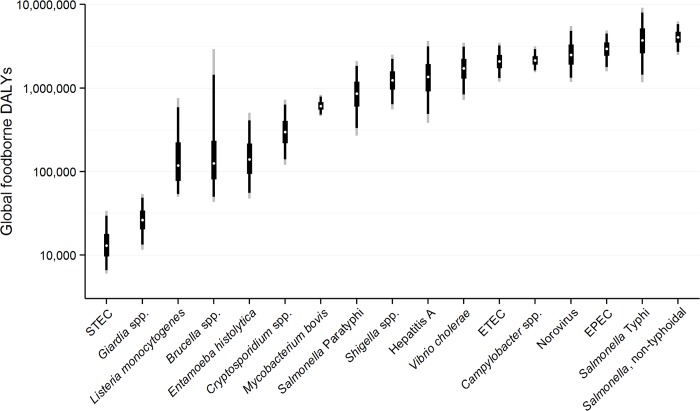
We estimate that the 22 diseases included in our study resulted in two billion cases, over one million deaths, and 78.7 million DALYs in 2010.
Overview
CoChat Summary
## TL;DR
This paper provides the first WHO-led global and regional estimates of the burden of 22 foodborne bacterial, protozoal, and viral diseases in 2010. It estimates 2.0 billion illnesses, 1.09 million deaths, 78.7 million DALYs, and 582 million foodborne cases, with a large share of burden in children under 5.
## Key findings
- The 22 diseases caused an estimated 2.0 billion illnesses (95% UI 1.5–3.0 billion) in 2010; 39% (95% UI 26–53%) were in children <5 years.
- They caused 1.09 million deaths (95% UI 0.89–1.37 million); 34% (95% UI 29–38%) were in children <5 years.
- They caused 78.7 million DALYs (95% UI 65.0–97.7 million); 43% (95% UI 38–48%) were in children <5 years.
- The authors estimate 29% (95% UI 23–36%) of all cases were transmitted by contaminated food, equal to 582 million foodborne cases (95% UI 401–922 million) and 25.2 million foodborne DALYs (95% UI 17.5–37.0 million).
- Norovirus was the leading cause of foodborne illness, with 125 million (95% UI 70–251 million) foodborne cases; Campylobacter spp. caused 96 million (95% UI 52–177 million).
- Of foodborne DALYs, the largest burden came from nontyphoidal S. enterica if iNTS was included: 4.07 million DALYs (95% UI 2.49–6.27 million).
- Foodborne disease mortality and DALY rates were reported as highest in the African region, followed by the South East Asian region.
## Methods
- The study synthesized global and regional burden estimates for 22 foodborne diseases using the WHO FERG Enteric Diseases Task Force framework, combining literature reviews, systematic reviews, cohort studies, surveillance studies, expert consultation, and existing burden-of-disease assessments.
- The team estimated cases, sequelae, deaths, and DALYs for 2010, using pathogen-specific approaches: national estimates where available, a modified CHERG approach for diarrheal diseases in many countries, GBD 2010/IHME data for typhoid, paratyphoid, and hepatitis A, and expert elicitation to estimate the proportion transmitted by food.
- Uncertainty was propagated with Monte Carlo simulations using 10,000 draws per input parameter to generate 95% uncertainty intervals.
## Limitations
- The paper states that a major limitation was data gaps, especially in middle- and high-mortality countries, and that for many regions and pathogens the available data were sparse.
- It also states that only a few sequelae were included, with post-infectious sequelae such as reactive arthritis and irritable bowel syndrome excluded; stillbirths were excluded as well.
- The authors note that they could not fully account for age-specific effects for sequelae and could not separate some effects from comorbidities such as HIV infection.
- The text also makes evident, by its own description, that many estimates relied on expert elicitation for foodborne attribution and on assumptions/substitution where direct data were absent; this increases uncertainty and is part of the paper’s stated limitation.
Model-written summary. Check it against the paper before relying on it.
Integrity signals
Registry
Cites
Statistics
Figures
Verification
Claims the paper makes
3 Valid · 0 Not valid · 4 Not checked · 29 Own results and interpretations
The cited sources support only part of this claim — read each source’s verdict below.
In the paper
“Furthermore, global and regional estimates of the burden of foodborne diseases have not been available [1,2].”
§ World Health Organization Estimates of the Global and Regional Disease Burden of 22 Foodborne Bacterial, Protozoal, and Viral Diseases, 2010: A Data Synthesis > Introduction
What the sources say
- Partly supportedcites [1] Stein C, Kuchenmuller T, Hendrickx S, Prüss-Űstün A, Wolfson L, Engels D, et al The Global Burden of Disease assessments—WHO is responsible? PLoS Negl Trop Dis. 2007; 1: e161 10.1371/journal.pntd.0000161 18160984 PMC2154395 sourceExperimental — accuracy not yet measured
The Foodborne diseases section says that the full extent of the burden is unknown and that no precise, consistent global information existed at the time. It does not specifically address regional estimates, and its wording is narrower than saying no global estimates were available at all. No page number is provided in our copy. (LLM, conf=0.84)
- Not checked — no full text of the sourcecites [2] Tauxe RV, Doyle MP, Kuchenmuller T, Schlundt J, Stein CE. Evolving public health approaches to the global challenge of foodborne infections. Int J Food Microbiol. 2010; 139 Suppl 1: S16– 28. 10.1016/j.ijfoodmicro.2009.10.014 19931203 source
plain- Asserted: passes — The authors put it forward as true.
- Checkable: passes — It can be checked against evidence.
- Load-bearing: passes — The paper’s conclusions depend on it.
- Based: passes — The paper gives a reason why it holds.
- Partly supported
A result the paper reports from its own data — it cites no other source for it, so there is none to check. The quote shows it is in the paper.
In the paper
“Overall, 29% (95% UI 23–36%) of all 22 diseases were estimated to be transmitted by contaminated food equating to 582 million (95% UI 400–922 million) foodborne cases in 2010; 38% (95% UI 24–53%) in children <5 years of age.”
§ World Health Organization Estimates of the Global and Regional Disease Burden of 22 Foodborne Bacterial, Protozoal, and Viral Diseases, 2010: A Data Synthesis > Results > Cases
hedged- Asserted: passes — The authors put it forward as true.
- Checkable: passes — It can be checked against evidence.
- Load-bearing: passes — The paper’s conclusions depend on it.
- Based: passes — The paper gives a reason why it holds.
- Rests on an assumption not shown here.
A result the paper reports from its own data — it cites no other source for it, so there is none to check. The quote shows it is in the paper.
In the paper
“Among the 11 diarrheal diseases, the rate ratio of foodborne cases occurring among children <5 years of age compared to those ≥5 years of age was 6.44 (95%UI 3.15–12.46).”
§ World Health Organization Estimates of the Global and Regional Disease Burden of 22 Foodborne Bacterial, Protozoal, and Viral Diseases, 2010: A Data Synthesis > Results > Cases
plainstates an association- Asserted: passes — The authors put it forward as true.
- Checkable: passes — It can be checked against evidence.
- Load-bearing: unclear — It is unclear whether the paper’s conclusions depend on it.
- Based: passes — The paper gives a reason why it holds.
- Rests on 2 assumptions not shown here.
A result the paper reports from its own data — it cites no other source for it, so there is none to check. The quote shows it is in the paper.
In the paper
“Norovirus was the leading cause of foodborne illness causing 125 million (95% UI 70–251 million) cases, while Campylobacter spp. caused 96 million (95% UI 52–177 million) foodborne illnesses.”
§ World Health Organization Estimates of the Global and Regional Disease Burden of 22 Foodborne Bacterial, Protozoal, and Viral Diseases, 2010: A Data Synthesis > Abstract > Methods and Findings
plainstates a cause- Asserted: passes — The authors put it forward as true.
- Checkable: passes — It can be checked against evidence.
- Load-bearing: unclear — It is unclear whether the paper’s conclusions depend on it.
- Based: passes — The paper gives a reason why it holds.
In the paper
“The FERG estimate for DALYs for nontyphoidal S. enterica combining diarrheal and invasive infections was 4 times greater than GBD 2010 [54].”
§ World Health Organization Estimates of the Global and Regional Disease Burden of 22 Foodborne Bacterial, Protozoal, and Viral Diseases, 2010: A Data Synthesis > Discussion
What the sources say
- Not checked — no full text of the sourcecites [54] Murray CJ, Vos T, Lozano R, Naghavi M, Flaxman AD, Michaud C, et al Disability-adjusted life years (DALYs) for 291 diseases and injuries in 21 regions, 1990–2010: a systematic analysis for the Global Burden of Disease Study 2010. Lancet. 2012; 380: 2197– 2223. 10.1016/S0140-6736(12)61689-4 23245608 source
plain- Asserted: passes — The authors put it forward as true.
- Checkable: passes — It can be checked against evidence.
- Load-bearing: unclear — It is unclear whether the paper’s conclusions depend on it.
- Based: passes — The paper gives a reason why it holds.
16 more claims
Create a free account to see all 36 claims and to verify the 1 reference still open.
- Probably not a substantial claim. 11
- It may state two separate claims as one. 5
Claims other papers make about this one
Each is checked against this paper’s own text: does it say what the citing paper says it does?
The source backs part of the claim, not all of it — or backs it for a different population, condition or comparison.
In the citing paper
“Animal-based foods, like cow milk, can pose a risk for zoonotic enteric pathogen transmission42 although pasteurisation is an effective means for making milk safer.”
From Environmental and behavioural exposure pathways associated with diarrhoea and enteric pathogen detection in 5-month-old, periurban Kenyan infants: a cross-sectional study (2022) · cites this paper as [42]
Experimental — accuracy not yet measured
Citations
Cites
Lozano, R., Naghavi, M., Foreman, K., Lim, S., Shibuya, K., Aboyans, V., Abraham, J., Adair, T., Aggarwal, R., Ahn, S. Y., et al. (2012) · The Lancet · doi:10.1016/s0140-6736(12)61728-0 · Cited by 14,070 · cited 3×
“Twelve of the diseases included in our study were also included in the GBD 2010 study [25,26,54].”
Murray, C. J. L., Vos, T., Lozano, R., Naghavi, M., Flaxman, A. D., Michaud, C., Ezzati, M., Shibuya, K., Salomon, J. A., Abdalla, S., et al. (2012) · The Lancet · doi:10.1016/s0140-6736(12)61689-4 · Cited by 8,888
Foodborne illness acquired in the United States—Major pathogens
Scallan, E., Hoekstra, R. M., Angulo, F. J., Tauxe, R. V., Widdowson, M.-A., Roy, S. L., Jones, J. L., & Griffin, P. M. (2011) · Emerging Infectious Diseases · doi:10.3201/eid1701.p11101 · Cited by 7,657 · cited 1×
“Many different diseases, including those due to bacteria, viruses, parasites, chemicals, and prions, may be transmitted to humans by contaminated food [3].”
Self-citationSelected major risk factors and global and regional burden of disease
Ezzati, M., Lopez, A. D., Rodgers, A., Vander Hoorn, S., & Murray, C. J. (2002) · The Lancet · doi:10.1016/s0140-6736(02)11403-6 · Cited by 3,594
Kotloff, K. L., Nataro, J. P., Blackwelder, W. C., Nasrin, D., Farag, T. H., Panchalingam, S., Wu, Y., Sow, S. O., Sur, D., Breiman, R. F., et al. (2013) · The Lancet · doi:10.1016/s0140-6736(13)60844-2 · Cited by 3,560 · cited 1×
“This approach was facilitated by the availability of estimates of the envelope of diarrheal deaths, along with recent advances in diarrheal disease diagnosis, such as widespread application of polymerase chain reaction (PCR) for norovirus detection [20,49].”
The Global Burden of Nontyphoidal Salmonella Gastroenteritis
Majowicz, S. E., Musto, J., Scallan, E., Angulo, F. J., Kirk, M., O’Brien, S. J., Jones, T. F., Fazil, A., & Hoekstra, R. M. (2010) · Clinical Infectious Diseases · doi:10.1086/650733 · Cited by 2,442
Self-citationGlobal burden of childhood pneumonia and diarrhoea
Walker, C. L. F., Rudan, I., Liu, L., Nair, H., Theodoratou, E., Bhutta, Z. A., O'Brien, K. L., Campbell, H., & Black, R. E. (2013) · The Lancet · doi:10.1016/s0140-6736(13)60222-6 · Cited by 2,356 · cited 2×
“, “envelope” of diarrheal incidence) for 2010 by combining estimates of diarrheal incidence for children<5 years of age and persons 5 years of age [13,36].”
Self-citationThe global burden of typhoid fever.
Crump, J., Luby, S., & Mintz, E. (2004) · Bulletin of the World Health Organization · doi:10.1590/s0042-96862004000500008 · Cited by 2,172
Self-citationThe global burden of typhoid fever.
(2004) · Europe PMC (PubMed Central) · Cited by 1,965
Self-citationSalomon, J. A., Vos, T., Hogan, D. R., Gagnon, M., Naghavi, M., Mokdad, A., Begum, N., Shah, R., Karyana, M., Kosen, S., et al. (2012) · The Lancet · doi:10.1016/s0140-6736(12)61680-8 · Cited by 1,322 · cited 1×
“Disability weights for each clinical outcome for the enteric diseases were taken from the GBD 2010 study [47].”
Cited by
Items 401–500 of 1,631
Givanoudi, S., Cornelis, P., Rasschaert, G., et al. (2021) · Sensors and Actuators B Chemical · doi:10.1016/j.snb.2021.129484 · Cited by 30
Nayak, A., & Dutta, D. (2023) · Sustainable Food Technology · doi:10.1039/d3fb00059a · Cited by 43
Nyarkoh, R., Odoom, A., & Donkor, E. S. (2024) · BMC Infectious Diseases · doi:10.1186/s12879-024-09945-2 · Cited by 37
“Shigellosis, an infectious disease resulting from Shigella bacteria, is a major contributor to global diarrheal-related mortality and morbidity, with an estimated 125 million cases of diarrhoea each year, resulting in roughly 160,000 fatalities[1].”
BackgroundAmarasiri, M., Hashiba, S., Miura, T., Nakagomi, T., Nakagomi, O., Ishii, S., Okabe, S., & Sano, D. (2016) · Water Research · doi:10.1016/j.watres.2016.04.018 · Cited by 32
“Human noroviruses (HuNoVs) are responsible for more than 90% of non-bacterial epidemic gastroenteritis cases and attributable to 18% of acute gastroenteritis patients worldwide with 15.1 million disability-adjusted life years (DALYs) (Ahmed et al., 2014; Kirk et al., 2015; Patel et al., 2008).”
InfluentialGenomic Epidemiology of Campylobacter jejuni Transmission in Israel
Rokney, A., Valinsky, L., Moran‐Gilad, J., et al. (2018) · Frontiers in Microbiology · doi:10.3389/fmicb.2018.02432 · Cited by 29
“were rated second (after Norovirus) among the causes of foodborne infections, responsible for 96 million cases globally (Kirk et al., 2015).”
BackgroundTen years of molecular epidemiology surveillance of Listeria monocytogenes in Chile 2008–2017.
Paduro, C. A., Montero, D. A., Chamorro, N., et al. (2019) · Food Microbiology · doi:10.1016/j.fm.2019.103280 · Cited by 29
Shanawany, E. E. E., Fouad, E. A., Keshta, H. G., Hassan, S. E., Hegazi, A. G., & Abdel-Rahman, E. H. (2019) · Journal of Parasitic Diseases · doi:10.1007/s12639-019-01130-6 · Cited by 29
Tan, M., & Jiang, X. (2019) · Pharmaceutics · doi:10.3390/pharmaceutics11090472 · Cited by 33
Gyawali, P., & Hewitt, J. (2020) · Current Opinion in Environmental Science & Health · doi:10.1016/j.coesh.2020.02.005 · Cited by 30
Wang, W., Liang, J., Shi, M., et al. (2020) · Veterinary Microbiology · doi:10.1016/j.vetmic.2020.108723 · Cited by 29
Rab32 restriction of intracellular bacterial pathogens
Solano-Collado, V., Rofe, A. P., & Spanò, S. (2016) · Small GTPases · doi:10.1080/21541248.2016.1219207 · Cited by 28
de Medeiros, P. H. Q. S., Lima, A. Â. M., Guedes, M. M., Havt, A., Bona, M. D., Rey, L. C., Soares, A. M., Guerrant, R. L., Weigl, B. H., & Lima, I. F. N. (2017) · Diagnostic Microbiology and Infectious Disease · doi:10.1016/j.diagmicrobio.2017.11.002 · Cited by 29
Sekar, V., Santhanam, A., & Arunkumar, P. (2024) · Journal of Water Process Engineering · doi:10.1016/j.jwpe.2024.105102 · Cited by 29
Fei, X., He, X., Guo, R., Yin, C., Geng, H., Wu, K., Yin, K., Geng, S., Pan, Z., Li, Q., et al. (2017) · Food Control · doi:10.1016/j.foodcont.2017.01.023 · Cited by 31
Tamber, S. (2017) · Applied and Environmental Microbiology · doi:10.1128/aem.01673-17 · Cited by 28
“Salmonella enterica is an important foodborne pathogen (21).”
BackgroundSyed, I., & Sarkar, P. (2018) · Chemical Papers · doi:10.1007/s11696-018-0501-z · Cited by 29
Introduction to Tropical Medicine
Rupali, P. (2019) · Infectious Disease Clinics of North America · doi:10.1016/j.idc.2018.10.011 · Cited by 28
“2 million DALYs (Disease adjusted life years).(4,5) Norovirus is a leading cause of foodborne illness (125 million) followed by Campylobacter spp with 96 million cases.”
BackgroundHumoral and Mucosal Immune Responses to Human Norovirus in the Elderly
Costantini, V., Cooper, E. M., Hardaker, H. L., et al. (2020) · The Journal of Infectious Diseases · doi:10.1093/infdis/jiaa021 · Cited by 28
Self-citationFood Safety Implications of Transitions Toward Sustainable Healthy Diets
Pires, S. M., Thomsen, S. T., Nauta, M. J., Poulsen, M., & Jakobsen, L. S. (2020) · Food and Nutrition Bulletin · doi:10.1177/0379572120953047 · Cited by 31
“However, the top agents varied substantially between regions, with Campylobacter, NT Salmonella, and Toxoplasma gondii causing a large proportion of the burden in high-income regions, while EPEC, ETEC, and T solium were more important in lower income subregions (Figure 2).(3,6,7) The burden due to the 3 considered che…”
BackgroundSelf-citationCalicivirus Non-structural Proteins: Potential Functions in Replication and Host Cell Manipulation
Smertina, E., Hall, R. N., Urakova, N., Strive, T., & Frese, M. (2021) · Frontiers in Microbiology · doi:10.3389/fmicb.2021.712710 · Cited by 33
Pendyala, B., Patras, A., Gopisetty, V. V. S., Vashisht, P., & Ravi, R. (2022) · Food Research International · doi:10.1016/j.foodres.2022.111652 · Cited by 25
Yang, H., Zhou, Y., Luo, Q., Zhu, C., & Fang, B. (2023) · Frontiers in Microbiology · doi:10.3389/fmicb.2023.1186841 · Cited by 34
A novel in vitro image-based assay identifies new drug leads for giardiasis
Hart, C. J. S., Munro, T., Andrews, K. T., Ryan, J. H., Riches, A. G., & Skinner‐Adams, T. S. (2017) · International Journal for Parasitology Drugs and Drug Resistance · doi:10.1016/j.ijpddr.2017.01.005 · Cited by 32
“Giardiasis causes significant worldwide morbidity with an estimated 184 million symptomatic cases annually (Pires et al., 2015) and an associated 171,100 disability-adjusted life years (DALYs) (Kirk et al., 2015).”
BackgroundPCR-Based Method for Shigella flexneri Serotyping: International Multicenter Validation
Brengi, S. P., Sun, Q., Bolaños, H., Duarte-Martínez, F., Jenkins, C., Pichel, M. G., Shahnaij, M., Sowers, E. G., Strockbine, N., Talukder, K. A., et al. (2019) · Journal of Clinical Microbiology · doi:10.1128/jcm.01592-18 · Cited by 29
“are a leading cause of human diarrheal disease worldwide, affecting about 190 million individuals and causing about 65,000 deaths each year, mainly in children under 5 years old (1).”
BackgroundMethodPseudomonas Phage ZCPS1 Endolysin as a Potential Therapeutic Agent
Abdelrahman, F. I., Gangakhedkar, R., Nair, G. A., El–Didamony, G., Askora, A., Jain, V. P., & El‐Shibiny, A. (2023) · Viruses · doi:10.3390/v15020520 · Cited by 32
“Despite significant advances in food sanitation procedures and pathogen tracking, foodborne diseases remain among the leading causes of hospitalization and death globally [40].”
BackgroundThibodeau, A., Letellier, A., Yergeau, É., Larivière-Gauthier, G., & Fravalo, P. (2017) · Frontiers in Microbiology · doi:10.3389/fmicb.2017.00451 · Cited by 27
“Campylobacter jejuni is the most common bacterial foodborne pathogen worldwide (Kirk et al., 2015).”
BackgroundHofstra, N., Vermeulen, L. C., Derx, J., Flörke, M., Mateo‐Sagasta, J., Rose, J. B., & Medema, G. J. (2018) · Current Opinion in Environmental Sustainability · doi:10.1016/j.cosust.2018.10.002 · Cited by 30
Xu, L., Cai, J., Gao, T., & Ma, A. (2021) · Critical Reviews in Food Science and Nutrition · doi:10.1080/10408398.2021.1878098 · Cited by 29
Mei, X., Ma, B., Zhai, X., Zhang, A., Lei, C., Zuo, L., Yang, X., Zhou, C., & Wang, H. (2021) · Applied and Environmental Microbiology · doi:10.1128/aem.01681-21 · Cited by 29
Nordhagen, S., Lee, J., Onuigbo-Chatta, N., Okoruwa, A., Monterrosa, E. C., Lambertini, E., & Pelto, G. H. (2022) · Foods · doi:10.3390/foods11020201 · Cited by 33
“Foodborne illness is estimated to be responsible for a disease burden comparable to malaria, contributing to about half a million deaths annually [1], particularly in low- and middle-income countries (LMICs) [2,3].”
BackgroundZhang, X., Payne, M., Nguyen, T., Kaur, S., & Lan, R. (2021) · Microbial Genomics · doi:10.1099/mgen.0.000704 · Cited by 40
The diversity, evolution and ecology of Salmonella in venomous snakes
Pulford, C. V., Wenner, N., Redway, M., Rodwell, E. V., Webster, H. J., Escudero, R., Kröger, C., Canals, R., Rowe, W. P. M., López, J., et al. (2019) · PLoS neglected tropical diseases · doi:10.1371/journal.pntd.0007169 · Cited by 30
Sanchez‐Garrido, J., Slater, S. L., Clements, A., Shenoy, A. R., & Frankel, G. M. (2020) · Cellular Microbiology · doi:10.1111/cmi.13184 · Cited by 25
“The most common causes of bacterial intestinal infections include the Gram-negative pathogens Salmonella enterica, Shigella sp., Escherichia coli and Yersinia and the Gram-positive pathogen Listeria monocytogenes (Kirk et al., 2015; Shane et al., 2017).”
BackgroundChandran, S., & Gibson, K. E. (2024) · Viruses · doi:10.3390/v16050776 · Cited by 32
“According to the World Health Organization’s assessment of all reviewed cases of foodborne illness, HuNoV was the leading cause of both foodborne illness and foodborne deaths [7].”
He, Y., Jia, Q., Cai, K., Xu, S., Li, H., Xie, Q., Qiu, Y., Zhang, L., & Jiao, X. (2025) · PLoS neglected tropical diseases · doi:10.1371/journal.pntd.0012960 · Cited by 33
“By estimating the iNTS disease burden in 2010 and 2017, previous studies revealed that iNTS disease occurred with the highest incidence in sub-Saharan Africa[1,10].”
Allen, D. J., Trainor, E., Callaghan, A. W., O’Brien, S. J., Cunliffe, N. A., & Iturriza‐Gómara, M. (2016) · PLoS ONE · doi:10.1371/journal.pone.0146972 · Cited by 26
Watson, V. E., Jacob, M. E., Bruno-Bárcena, J. M., Amirsultan, S., Stauffer, S. H., Ortín-Piqueras, V., Frías, R., & Gookin, J. L. (2019) · Veterinary Microbiology · doi:10.1016/j.vetmic.2019.03.020 · Cited by 34
“Diarrhea in most of these children is caused by a mere handful of infectious agents (Kirk et al., 2015; Kotloff et al., 2013).”
Norovirus Activity and Genotypes in Sporadic Acute Diarrhea in Children in Shanghai During 2014–2018
Wang, X., Wei, Z., Guo, J., Cai, J., Chang, H., Ge, Y., & Zeng, M. (2019) · The Pediatric Infectious Disease Journal · doi:10.1097/inf.0000000000002456 · Cited by 28
Degeling, C., Carter, S. M., van Oijen, A. M., McAnulty, J., Sintchenko, V., Braunack‐Mayer, A., Yarwood, T., Johnson, J., & Gilbert, G. L. (2020) · BMC Medical Ethics · doi:10.1186/s12910-020-00474-6 · Cited by 40
de Souza, V. V. M. A., Crippa, B. L., de Almeida, J. M., Iacuzio, R., Setzer, W. N., Sharifi‐Rad, J., & Silva, N. C. C. (2020) · Cellular and Molecular Biology · doi:10.14715/cmb/2020.66.4.26 · Cited by 30
Hoque, N., Islam, S. S., Uddin, M. N., Arif, M., Haque, A. K. M. Z., Neogi, S. B., Hossain, M. S., Yamasaki, S., & Kabir, S. M. L. (2021) · Pathogens · doi:10.3390/pathogens10030313 · Cited by 26
Food Safety Strategies: The One Health Approach to Global Challenges and China’s Actions
Wu, D., Elliott, C. T., & Wu, Y. (2021) · China CDC Weekly · doi:10.46234/ccdcw2021.131 · Cited by 32
Mao, F., Bao, Y., Wong, N.-K., Huang, M., Liu, K., Zhang, X., Yang, Z. H., Yi, W., Shu, X., Xiang, Z., et al. (2021) · Marine Drugs · doi:10.3390/md19080420 · Cited by 31
“Indeed, major bacterial pathogens that cause foodborne infections include Staphylococcus aureus, Escherichia coli, Vibrio cholera, among others [38].”
BackgroundHugho, E. A., Kumburu, H. H., Amani, N. B., Mseche, B., Maro, A., Ngowi, L. E., Kyara, Y., Kinabo, G. D., Thomas, K. M., Houpt, E. R., et al. (2023) · Pathogens · doi:10.3390/pathogens12040618 · Cited by 29
“These pathogens are commonly spread through consuming contaminated water, food or objects contaminated with fecal matter [5,6].”
BackgroundSelf-citationNanomaterials enabled photoelectrocatalysis for removing pollutants in the environment and food
Zeng, J., Xu, R., El‐Kady, A. A., et al. (2023) · TrAC Trends in Analytical Chemistry · doi:10.1016/j.trac.2023.117187 · Cited by 26
Jiao, Y., Zhang, Z., Wang, K., Zhang, H., & Gao, J. (2023) · Food Chemistry X · doi:10.1016/j.fochx.2023.100798 · Cited by 23
Ghotekar, S. K., Ravikumar, C. R., Chauhan, A., Hikku, G. S. O., Lin, K. A., Rahdar, A., Louis, H., Jabir, M. S., Marzban, A., & Oza, R. (2024) · Journal of Sol-Gel Science and Technology · doi:10.1007/s10971-024-06352-6 · Cited by 29
“The World Health Organization (WHO) reports that illnesses caused by bacteria that are resistant to drugs have a higher mortality rate [41].”
de Vries, S. P. W., Linn, A., Macleod, K., MacCallum, A. J., Hardy, S. P., Douce, G. R., Watson, E. D., Dagleish, M. P., Thompson, H., Stevenson, A., et al. (2017) · Scientific Reports · doi:10.1038/srep44283 · Cited by 29
A systematic review and meta-analysis on the incubation period of Campylobacteriosis
Awofisayo-Okuyelu, A., Hall, I., Adak, G. K., Hawker, J. I., Abbott, S., & McCarthy, N. D. (2017) · Epidemiology and Infection · doi:10.1017/s0950268817001303 · Cited by 26
“caused 96 million cases of foodborne illness worldwide in 2010 [5].”
BackgroundAmino-modified graphene oxide nanoplatelets for photo-thermal and anti-bacterial capability
Cheng, Y., Wang, S.-H., Liu, C.-M., Chien, M.-Y., Hsu, C.-C., & Liu, T. (2020) · Surface and Coatings Technology · doi:10.1016/j.surfcoat.2020.125441 · Cited by 30
Food safety knowledge, attitude, and practice among elementary schoolchildren in southern Taiwan
Kuo, S.-C., & Weng, Y. (2020) · Food Control · doi:10.1016/j.foodcont.2020.107818 · Cited by 29
Roles of the Hcp family proteins in the pathogenicity of Salmonella typhimurium 14028s
Wang, P., Dong, J.-F., Li, R.-Q., Li, L., & Zou, Q.-H. (2020) · Virulence · doi:10.1080/21505594.2020.1854538 · Cited by 26
“Typhimurium is a common pathogen of foodborne diseases worldwide [8,9].”
BackgroundSuja, E., & Gummadi, S. N. (2023) · Critical Reviews in Microbiology · doi:10.1080/1040841x.2023.2271098 · Cited by 27
“Shiga toxigenic E. coli (Stec) is a significant foodborne pathogen causing 2.5 million cases of infections, 27,000 disability-adjusted life years, and 269 deaths globally every year (Kirk et al. 2015). the primary sources of foodborne Stec cases are meat, vegetables, and milk products (wHO 2019).”
InfluentialQuantifying national burdens of foodborne disease—Four imperatives for global impact
Keddy, K. H., Hoffmann, S., Founou, L. L., Estrada‐García, T., Gobena, T., Havelaar, A. H., Jakobsen, L. S., Kubota, K., Law, C., Lake, R., et al. (2025) · PLOS Global Public Health · doi:10.1371/journal.pgph.0004309 · Cited by 49
“%) and contributes to a greater proportion of DALYs in HICs [24].”
InfluentialSelf-citationNorovirus genetic diversity and evolution: implications for antiviral therapy
Rocha‐Pereira, J., Dycke, J. V., & Neyts, J. H. (2016) · Current Opinion in Virology · doi:10.1016/j.coviro.2016.09.009 · Cited by 30
Ranjbar, R., Ahmadi, M., & Memariani, M. (2016) · Microbial Pathogenesis · doi:10.1016/j.micpath.2016.10.012 · Cited by 25
Hausmann, A., & Hardt, W. (2019) · Microbiology Spectrum · doi:10.1128/microbiolspec.bai-0004-2019 · Cited by 28
Matsushima, Y., Mizukoshi, F., Sakon, N., Doan, Y. H., Ueki, Y., Ogawa, Y., Motoya, T., Tsukagoshi, H., Nakamura, N., Shigemoto, N., et al. (2019) · Frontiers in Microbiology · doi:10.3389/fmicb.2019.02189 · Cited by 24
Amicizia, D., Micale, R. T., Pennati, B. M., Zangrillo, F., Iovine, M., Lecini, E., Marchini, F., Lai, P. L., & Panatto, D. (2019) · Journal of preventive medicine and hygiene · doi:10.15167/2421-4248/jpmh2019.60.4.1333 · Cited by 45
Aik, J., Turner, R. M., Kirk, M., Heywood, A. E., & Newall, A. T. (2020) · Food Control · doi:10.1016/j.foodcont.2020.107324 · Cited by 28
“The global public health impact is disproportionate, with approximately 217 million episodes occurring in children under 5-years of age (Kirk, Angulo, Havelaar, & Black, 2017) and the African and South East Asian regions bearing the highest burden (Kirk et al., 2015).”
Self-citationRopero-Vega, J. L., Redondo-Ortega, J. F., Galvis-Curubo, Y. J., Rondón-Villarreal, P., & Flórez-Castillo, J. M. (2021) · Molecules · doi:10.3390/molecules26092559 · Cited by 28
“This represents a tremendous public health problem [1,2].”
BackgroundMaina, J., Ndung’u, P., Muigai, A. W. T., & Kiiru, J. (2021) · Access Microbiology · doi:10.1099/acmi.0.000236 · Cited by 28
“Although food contamination includes chemical substances, parasites, and viruses, bacterial contaminants and their toxins are responsible for most foodborne illnesses [4].”
BackgroundSamper-Cativiela, C., Diéguez-Roda, B., da Roza, F. T., Ugarte‐Ruiz, M., Elnekave, E., Lim, S., Hernández, M., Abad, D., Collado, S., Sáez, J. L., et al. (2022) · Microbial Genomics · doi:10.1099/mgen.0.000773 · Cited by 29
“Besides its direct impact on human health, this pathogen causes considerable economic losses due to the need for healthcare measures and treatment implementation [2, 3].”
Krämer, A., Arvand, M., Christiansen, B., Dancer, S. J., Eggers, M., Exner, M., Müller, D., Mutters, N. T., Schwebke, I., & Pittet, D. (2022) · Antimicrobial Resistance and Infection Control · doi:10.1186/s13756-022-01134-7 · Cited by 37
Health and Economic Burden of Seven Foodborne Diseases in Denmark, 2019
Pires, S. M., Jensen, J. D., Jakobsen, L. S., Ethelberg, S., & Christensen, T. (2022) · Foodborne Pathogens and Disease · doi:10.1089/fpd.2022.0031 · Cited by 27
Self-citationPham, T. H. M., Xue, Y., Brewer, S. M., Bernstein, K. E., Quake, S. R., & Monack, D. M. (2023) · Science Advances · doi:10.1126/sciadv.add4333 · Cited by 28
“Intracellular bacteria such as Salmonella enterica ( S. enterica ), Bru-cella melitensis , and Mycobacterium tuberculosis ( Mtb ) infect hundreds of millions of people and cause millions of deaths annually ( 1 , 2 ).”
Advances in detection methods for viable Salmonella spp.: current applications and challenges
Zhuang, L., Gong, J., Shen, Q., Yang, J., Song, C., Liu, Q., Zhao, B., Zhang, Y., & Zhu, M. (2023) · Analytical Sciences · doi:10.1007/s44211-023-00384-8 · Cited by 25
Moffatt, C. R. M., Glass, K., Stafford, R. J., D’Este, C. A., & Kirk, M. (2016) · Epidemiology and Infection · doi:10.1017/s0950268816002909 · Cited by 25
Self-citationNorovirus Disease in Older Adults Living in Long-Term Care Facilities: Strategies for Management
Chen, Y., Hall, A. J., & Kirk, M. (2017) · Current Geriatrics Reports · doi:10.1007/s13670-017-0195-z · Cited by 24
“• Exclusion of ill food handlers until ≥48 h after symptoms resolve Curr Geri Rep (2017) 6:26–33 29”
BackgroundInfluentialSelf-citationHigh relative humidity pre-harvest reduces post-harvest proliferation of Salmonella in tomatoes
Devleesschauwer, B., Marvasi, M., Giurcanu, M. C., Hochmuth, G. J., Speybroeck, N., Havelaar, A. H., & Teplitski, M. (2017) · Food Microbiology · doi:10.1016/j.fm.2017.04.003 · Cited by 28
Self-citationIsolation and Characterization of Escherichia coli from Animals, Humans, and Environment
Lupindu, A. M. (2017) · InTech eBooks · doi:10.5772/67390 · Cited by 70
“02% of global mortalities due to food poisoning [2].”
BackgroundThe ADP-Ribosylating Toxins of Salmonella
Cheng, R. A., & Wiedmann, M. (2019) · Toxins · doi:10.3390/toxins11070416 · Cited by 32
“The burden of salmonellosis varies by geographical region [7], as do the specific serovars that are associated with human clinical disease in those regions [8,9].”
BackgroundGao, Y., Wen, J., Wang, S., Xu, X., Zhan, Z., Chen, Q., Bai, J., Qu, X., Zhang, H., Zhang, J., et al. (2020) · Infection and Drug Resistance · doi:10.2147/idr.s249357 · Cited by 27
“The emergence and spread of multidrug resistance (MDR) have occurred in Salmonella enterica serovar Typhimurium strains, which has had a significant impact on the effectiveness of current strategies to control and manage diseases associated with foodborne infections.(1,2) The trend of MDR in Salmonella has increased e…”
BackgroundAn accessible, efficient and global approach for the large-scale sequencing of bacterial genomesPreprint
Perez-Sepulveda, B. M., Heavens, D., Pulford, C. V., Predeus, A. V., Low, R. S., Webster, H. J., Schudoma, C., Rowe, W. P. M., Lipscombe, J., Watkins, C. B., et al. (2020) · bioRxiv (Cold Spring Harbor Laboratory) · doi:10.1101/2020.07.22.200840 · Cited by 25
The importance of estimating the burden of disease from foodborne transmission of Trypanosoma cruzi
Robertson, L. J., Havelaar, A. H., Keddy, K. H., Devleesschauwer, B., Sripa, B., & Torgerson, P. R. (2024) · PLoS neglected tropical diseases · doi:10.1371/journal.pntd.0011898 · Cited by 27
Self-citationService temperature preservation approach for food safety: Microbiological evaluation of ready meals
Ricci, A., Martelli, F., Razzano, R., Cassi, D., Lazzi, C., Neviani, E., & Bernini, V. (2020) · Food Control · doi:10.1016/j.foodcont.2020.107297 · Cited by 28
Carroll, L. M., & Wiedmann, M. (2020) · mBio · doi:10.1128/mbio.01263-20 · Cited by 27
“were estimated to be responsible 46 for more than 256,000 foodborne intoxications worldwide in 2010 (2), although this is likely an 47 underestimate due to the mild symptoms frequently associated with this illness (1).”
Carroll, L. M., Pierneef, R., Mathole, M., & Matle, I. (2021) · Frontiers in Microbiology · doi:10.3389/fmicb.2021.748611 · Cited by 25
Stolzer, I., Schickedanz, L., Chiriac, M. T., López-Posadas, R., Graßl, G. A., Mattner, J., Wirtz, S. J., Winner, B., Neurath, M. F., & Günther, C. (2021) · Mucosal Immunology · doi:10.1038/s41385-021-00450-2 · Cited by 38
Refrigeration of eggs influences the virulence of Salmonella Typhimurium
Khan, S., McWhorter, A. R., Moyle, T. S., & Chousalkar, K. K. (2021) · Scientific Reports · doi:10.1038/s41598-021-97135-4 · Cited by 24
Wan, T., Aleem, A. R., Huang, S., et al. (2022) · Materials Today Advances · doi:10.1016/j.mtadv.2022.100326 · Cited by 24
Ashrafudoulla, M., Kim, H. J., Her, E., et al. (2023) · Food Control · doi:10.1016/j.foodcont.2023.110008 · Cited by 24
Jung, S.-J., Park, S. Y., & Ha, S. (2018) · Food Research International · doi:10.1016/j.foodres.2018.02.063 · Cited by 25
Li, J., Gulbronson, C. J., Bogacz, M., et al. (2018) · Microbiology · doi:10.1099/mic.0.000704 · Cited by 24
Westerman, T. L., Bogomolnaya, L. M., Andrews‐Polymenis, H. L., Sheats, M. K., & Elfenbein, J. R. (2018) · PLoS ONE · doi:10.1371/journal.pone.0203698 · Cited by 24
Hankel, J., Popp, J., Meemken, D., et al. (2018) · PLoS ONE · doi:10.1371/journal.pone.0204483 · Cited by 24
Occurrence, genetic diversity, and control of Salmonella enterica in native Brazilian farmed fish
dos Santos, R. R., Xavier, R. G. C., de Oliveira, T. F., Leite, R. C., Figueiredo, H. C. P., & Leal, C. A. G. (2018) · Aquaculture · doi:10.1016/j.aquaculture.2018.11.034 · Cited by 29
Khalili‐Mahani, N., & Schutter, B. D. (2019) · JMIR Serious Games · doi:10.2196/13303 · Cited by 27
A multifaceted risk model of brucellosis at the human–animal interface in Egypt
El-Wahab, E. W. A., Hegazy, Y. M., El‐Tras, W. F., et al. (2019) · Transboundary and Emerging Diseases · doi:10.1111/tbed.13295 · Cited by 24
“The median number of foodborne illnesses, deaths, and Disability Adjusted Life Years (DALYs) were reported by the WHO in 2010 to be 832,633 (95% CI=337,929–19,560,440); 4,145 (95% CI=1,557–95,894); 264,073 (95% CI=100,540–6,187,148) (Kirk et al., 2015).”
BackgroundRamesh, A. K., Parreño, V. G., Schmidt, P. J., Lei, S., Zhong, W., Jiang, X., Emelko, M. B., & Yuan, L. (2020) · Viruses · doi:10.3390/v12090955 · Cited by 24
“They are the most common etiological agents of epidemic and sporadic acute gastroenteritis in people of all age groups [1–3] and are responsible for around 125 million cases of foodborne illnesses worldwide each year [4].”
BackgroundSyahrul, F., Wahyuni, C. U., Notobroto, H. B., Wasito, E. B., Adi, A. C., & Dwirahmadi, F. (2020) · International Journal of Environmental Research and Public Health · doi:10.3390/ijerph17218227 · Cited by 26
Qiu, J., Zhong, Y., Shao, Y., Zhang, G., Yang, J., Li, Z., & Cheng, Y. (2024) · Chemical Engineering Journal · doi:10.1016/j.cej.2024.155987 · Cited by 23
Scallan, E., Griffin, P. M., McLean, H. Q., & Mahon, B. E. (2018) · Epidemiology and Infection · doi:10.1017/s0950268818000882 · Cited by 25
“Campylobacter, Salmonella and Escherichia coli O157 are common causes of bacterial foodborne illness [2].”
BackgroundGómez‐Baltazar, A., Vázquez‐Garcidueñas, M. S., Larsen, J., Kuk-Soberanis, M. E., & Vázquez‐Marrufo, G. (2019) · Food Microbiology · doi:10.1016/j.fm.2019.03.010 · Cited by 26
Aw, J. Y. H., Clarke, N. E., McCarthy, J. S., Traub, R. J., Amaral, S., Huque, M. H., Andrews, R. M., Gray, D. J., Clements, A., & Nery, S. V. (2019) · Parasites & Vectors · doi:10.1186/s13071-019-3752-9 · Cited by 26
Bacillus cereus: public health burden associated with ready-to-eat foods in Himachal Pradesh, India
Rana, N., Panda, A. K., Pathak, N., et al. (2020) · Journal of Food Science and Technology · doi:10.1007/s13197-020-04267-y · Cited by 23
Khan, A. U., Melzer, F., Hendam, A., et al. (2020) · Frontiers in Veterinary Science · doi:10.3389/fvets.2020.594498 · Cited by 23
Barnes, A. N., Davaasuren, A., Baasandavga, U., Lantos, P. M., Gonchigoo, B., & Gray, G. C. (2021) · PLoS neglected tropical diseases · doi:10.1371/journal.pntd.0009543 · Cited by 26
Sharafutdinov, I., Tegtmeyer, N., Müsken, M., & Backert, S. (2022) · Biomolecules · doi:10.3390/biom12040521 · Cited by 23
“) jejuni is a leading zoonotic disease-causing agent and the primary cause of bacterial gastroenteritis transmitted through food worldwide, with more than 96 million cases every year [1].”
BackgroundLive-Attenuated Oral Vaccines to Reduce Campylobacter Colonization in Poultry
Jeon, B., Saisom, T., Sasipreeyajan, J., & Luangtongkum, T. (2022) · Vaccines · doi:10.3390/vaccines10050685 · Cited by 23
“Campylobacter is a leading bacterial cause of foodborne illnesses worldwide [1].”
Background
Metadata
- Authors
- Kirk, M. D., Pires, S. M., Black, R. E., Caipo, M., Crump, J. A., Devleesschauwer, B., Döpfer, D., Fazil, A., Fischer-Walker, C. L., Hald, T., Hall, A. J., Keddy, K. H., Lake, R. J., Lanata, C. F., Torgerson, P. R., Havelaar, A. H., & Angulo, F. J.
- Affiliations
- Australian National University (AU)
- Technical University of Denmark (DK)
- Johns Hopkins University (US)
- Food and Agriculture Organization of the United Nations (IT)
- University of Otago (NZ)
- Ghent University (BE)
- University of Wisconsin–Madison (US)
- Public Health Agency of Canada (CA)
- Centers for Disease Control and Prevention (US)
- University of the Witwatersrand (ZA)
- New Zealand Institute for Public Health and Forensic Science (NZ)
- Instituto de Investigación Nutricional (PE)
- University of Zurich (CH)
- Utrecht University (NL)
- Corresponding author
- Kirk, Martyn D.
- ORCID
- Venue
- PLoS Medicine
- Publisher
- Public Library of Science (PLoS)
- Published
- 2015-12-03
- Volume
- 12
- Issue
- 12
- Pages
- e1001921
- ISSN
- 1549-1277 (ISSN-L)
- 1549-1676
- PMC
- PMC4668831
- OpenAlex
- W2184405267
- Cited by
- 1,625
- References
- 58
- Citations by year
- 2026: 76 · 2025: 120 · 2024: 172 · 2023: 189 · 2022: 168 · 2021: 202 · 2020: 237 · 2019: 158 · 2018: 130 · 2017: 107 · 2016: 60 · 2015: 5
- FWCI
- 12.61
- Type
- journal article
- Language
- en
- Update notices
- correction (2015-12-23)
- Open access
- gold
- doi.org
- Licence
- Locations
- PLoS Medicine (publishedVersion, cc-by)
- Europe PMC (PubMed Central) (publishedVersion, cc-by)
- PubMed Central (publishedVersion, cc-by)
- PubMed (publishedVersion)
- IHI Repository (acceptedVersion)
- Zurich Open Repository and Archive (University of Zurich) (acceptedVersion, cc-by)
- Ghent University Academic Bibliography (Ghent University) (submittedVersion, other-oa)
- DOAJ (DOAJ: Directory of Open Access Journals) (submittedVersion, cc-by-sa)
- Utrecht University Repository (Utrecht University) (submittedVersion, other-oa)
- Figshare (submittedVersion, cc-by)
- ANU Open Research (Australian National University) (submittedVersion)
- Technical University of Denmark, DTU Orbit (Technical University of Denmark, DTU) (submittedVersion, other-oa)
- Rivm (National Institute for Public Health and the Environment) (submittedVersion)
- Zurich Open Repository and Archive (University of Zurich) (submittedVersion, cc-by)
- Zurich Open Repository and Archive (University of Zurich)
- Funders
- Bill and Melinda Gates Foundation
- World Health Organization
- Institute for Health Metrics and Evaluation
- Topics
- Life Sciences › Agricultural and Biological Sciences › Food Science › Salmonella and Campylobacter epidemiology
- Life Sciences › Agricultural and Biological Sciences › Food Science › Food Safety and Hygiene
- Health Sciences › Medicine › Infectious Diseases › Viral gastroenteritis research and epidemiology
- Keywords
- food poisoning, disease burden, disability-adjusted life years, norovirus, Campylobacter, Salmonella, Escherichia coli, Vibrio cholerae, Mycobacterium bovis, invasive non-typhoidal Salmonella, food contamination, diarrheal disease, foodborne parasitic infection
- MeSH terms
- Foodborne Diseases, Humans, Global Health, World Health Organization, Incidence, Prevalence, Cost of Illness, Quality-Adjusted Life Years
About these checks
Registry, retraction, Cites and statistics results are computed, not judged, with one exception: a printed reference that no index lists is read once by a model before it counts as a citation error. Claims are extracted by a model and kept only when their quote appears verbatim in the text; each cited source is then checked, with a model’s help, for whether it says what the claim relies on. Those verdicts can be wrong — read the claim’s quote and the cited source before relying on one.
The claim verdicts this report counts are experimental: their accuracy is not yet measured.
A language model drew the claims from the paper on 2026-10-10, under version 3 of the claim definition (model deepseek-v4.1-flash, prompt extract-v3).
A second model labelled each claim on 2026-10-10 (model jev-1.13-20260917, definition revision gold-guideline-v0.2).
Cited sources are checked with a language model’s help (gpt-6-sol).
Statistics and arithmetic are recomputed, not judged.
Confidence bands are shown only for fields calibrated on our annotated test set. None is calibrated yet, so no band is shown.
What counts as a claim ›How we measure confidence ›How we check this ›
Are you an author, or do you see a problem with this page? Request a review
Data sources
Bibliographic data: Semantic Scholar, OpenAlex, Crossref.
Contains information from the Semantic Scholar Academic Graph Datasets, made available under the ODC Attribution License (ODC-BY 1.0).
Semantic Scholar’s data is described in: Kinney, R., et al. (2023). The Semantic Scholar Open Data Platform. arXiv:2301.10140.
