

The DOI matches its Crossref record; 74 of the 75 references it cites were found in a registry or an index; 30 of the 77 sources its claims cite were checked for support.
Gestational Exposure to Low Dose Bisphenol A Alters Social Behavior in Juvenile Mice
Open accessAbstract
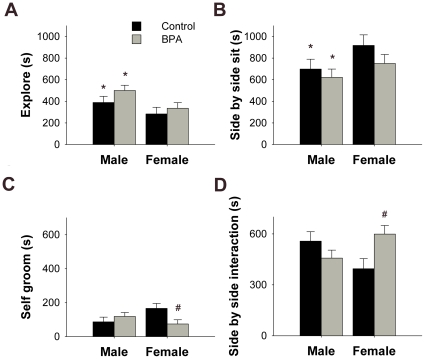
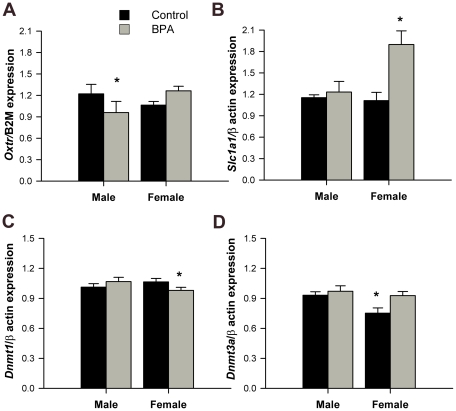
Bisphenol A (BPA) is a man-made compound used to make polycarbonate plastics and epoxy resins; public health concerns have been fueled by findings that BPA exposure can reduce sex differences in brain and some behaviors. We asked if a low BPA dose, within the range measured in humans, ingested during pregnancy, would affect social behaviors in prepubertal mice. We noted sex differences in social interactions whereby females spent more time sitting side-by-side, while males engaged in more exploring and sitting alone. In addition BPA increased display of nose-to-nose contacts, play solicitations and approaches in both sexes. Interactions between sex and diet were found for self grooming, social interactions while sitting side-by-side and following the other mouse. In all these cases interactions were produced by differences between control and BPA females. We examined brains from embryos during late gestation to determine if gene expression differences might be correlated with some of the sexually dimorphic or BPA affected behaviors we observed. Because BPA treatments ended at birth we took the brains during embryogenesis to increase the probability of discovering BPA mediated effects. We also selected this embryonic age (E18.5) because it coincides with the onset of sexual differentiation of the brain. Interestingly, mRNA for the glutamate transporter, Slc1a1, was enhanced by exposure to BPA in female brains. Also we noted that BPA changed the expression of two of the three DNA methyltransferase genes, Dnmt1 and Dnmt3a. We propose that BPA affects DNA methylation of Sc1a1 during neural development. Sex differences in juvenile social interactions are affected by BPA and in particular this compound modifies behavior in females.
Overview
AI snapshot
Written from the paper’s full text.
TL;DR
Gestational low-dose BPA exposure in mice altered juvenile social behavior, especially increasing social interactions in females, and changed embryonic brain expression of Slc1a1 and Dnmt genes. At this dose, BPA did not affect juvenile social preference or anxiety-like behavior.
Key findings
- Sex differences were present: males spent more time exploring the cage and sitting alone, while females spent more time sitting side-by-side (F1,63 = 6.8, 4.91, and 3.92, respectively; p<0.05 at least).
- BPA increased nose-to-nose contacts and approaches in both sexes (F1,63 = 3.99 and 3.82; p<0.05). Diet × sex interactions occurred for side-by-side non-grooming interactions (F1,63 = 8.13, p<0.006), following (F1,63 = 5.01, p<0.03), and self-grooming (F1,63 = 5.51, p<0.02); all were driven by BPA versus control females, with BPA females more interactive and self-grooming less.
- At embryonic day 18.5, Slc1a1 was sexually dimorphic (F1,18 = 4.58, p<0.05) and showed a diet × sex interaction (F1,18 = 5.84, p<0.04), with BPA females highest. Dnmt3a was increased by BPA (F1,18 = 5.13, p<0.04) and sexually dimorphic (F1,18 = 5.49, p<0.04; males > females). Dnmt1 showed a trend interaction (F1,18 = 3.68, p<0.07), lowest in BPA females, and Oxtr showed a trend interaction (F1,18 = 4.14, p = 0.06), with BPA males lower.
- BPA did not alter social preference or elevated plus maze behavior; social preference was sexually dimorphic (F1,66 = 4.43, p<0.05). Serum BPA was 0.099±0.014 ng/ml in control dams (n = 3) and 0.43±0.002 ng/ml in BPA-fed dams (n = 2), within the reported human maternal range of 0.3–18.9 ng/ml.
Methods
- Pregnant C57BL/6J dams received phytoestrogen-free chow (n = 11) or chow supplemented with 1.25 mg BPA/kg diet (n = 12). Embryonic brains were collected at E18.5 from 10 litters (BPA n = 5, control n = 5), sexed by PCR, and restricted to embryos positioned next to at least one male littermate. qPCR measured Esr1, Esr2, Gper, Oxtr, Dnmt1/3a/3b, Gria1, Grin2a/b, and Slc1a1, normalized to B2M or β-actin using delta-delta Ct.
- Behavior: pups were fostered at birth to control dams; BPA offspring n = 39 (18 females, 21 males), control n = 28 (13 females, 15 males). On PN21, mice underwent a 30-minute same-sex, same-age, same-treatment dyadic social interaction test; PN22 elevated plus maze; PN24 three-chamber social preference test with an adult male stimulus. Scoring was blind to sex and treatment.
- Statistics: two-way ANOVA with sex and diet as factors, followed by Fisher post hoc tests with corrections for multiple comparisons; BPA serum was measured by HPLC.
Limitations
- Stated: fostering introduces new issues, though all animals were fostered to control dams to control for maternal care differences; the authors cannot exclude fostering effects on sex differences. Whole-brain qPCR may miss regional BPA-induced changes, such as in ERα. Treatment ended at birth, and embryonic gene expression was sampled at E18.5.
- Evident: only one BPA dose was tested, so no dose-response can be assessed. The BPA serum assay had very small sample sizes (control n = 3; BPA n = 2 in the results), and gene expression used n = 5–6 per group.
- Evident: DNA methylation was not directly measured; the proposed methylation mechanism is based on Dnmt mRNA changes and is speculative.
Model-written summary. Check it against the paper before relying on it.
Integrity signals
Registry
Cites
Statistics
Figures
Verification
Claims the paper makes
52 Own result · 22 No full text of the sources · 12 Supported · 9 Partly supported · 9 Own method · 8 Own interpretation · 3 Supported so far · 2 Couldn’t confirm · 1 Not supported · 1 Not checked yet · 1 No basis given · accuracy not yet measured
At least one cited source doesn’t support this claim or points to a different paper, and none confirmed it — see the verdicts below.
In the paper
“However a 40-fold higher BPA dose decreased male social preference in the identical task [16].”
§ Gestational Exposure to Low Dose Bisphenol A Alters Social Behavior in Juvenile Mice > Discussion
What the sources say
- Disputedcites [16] K Cox, 2010, Gestational exposure to bisphenol A and cross-fostering affect behaviors in juvenile mice., Horm Behav sourceExperimental — accuracy not yet measured
The Results (Social Novelty; page unavailable) report a diet-by-sex interaction in foster-reared juveniles, but identify increased investigation by BPA-exposed females rather than a decrease in male social preference. The Discussion (BPA Exposure Counteracts Sex Differences in Juvenile Social Behavior; page unavailable) describes BPA-exposed males as intermediate, not as showing a demonstrated decrease from control males. The Methods confirm a social-novelty task and a BPA dose, but the paper alone cannot establish the claimed 40-fold comparison. (LLM, conf=0.85)
Checked by a reasoning model — may be wrong.
plaindirect- Asserted: passes — The authors put it forward as true.
- Checkable: passes — It can be checked against evidence.
- Load-bearing: passes — The paper’s conclusions depend on it.
- Based: passes — The paper gives a reason why it holds.
- Disputed
Every source the paper cites for this claim was checked and supports it.
In the paper
“In humans, a positive association between gestational levels of BPA in mothers and externalizing (hyperactivity and aggression) behaviors in 2 year old girls has been reported [19].”
§ Gestational Exposure to Low Dose Bisphenol A Alters Social Behavior in Juvenile Mice > Introduction
What the sources say
- Supportedcites [19] JM Braun, 2009, Prenatal bisphenol A exposure and early childhood behavior., Environ Health Perspect source
The Discussion reports an association between prenatal maternal urinary BPA concentrations and externalizing behaviors in 2-year-old girls. The Results specify a positive association among females, particularly for BPA measured at 16 weeks of gestation. (LLM, conf=0.94)
plaincorrelational- Asserted: passes — The authors put it forward as true.
- Checkable: passes — It can be checked against evidence.
- Load-bearing: unclear — It is unclear whether the paper’s conclusions depend on it.
- Based: passes — The paper gives a reason why it holds.
- Supported
The cited sources support only part of this claim — read each source’s verdict below.
In the paper
“In male mice, exposed to low doses of BPA that are probably comparable to ours, mRNA for ERβ and several of the NMDA receptors were decreased in hippocampus at day 21 and 56 [33].”
§ Gestational Exposure to Low Dose Bisphenol A Alters Social Behavior in Juvenile Mice > Discussion
What the sources say
- Partly supportedcites [33] XH Xu, 2010, Perinatal exposure to bisphenol-A changes N-methyl-D-aspartate receptor expression in the hippocampus of male rat offspring., Environ Toxicol Chem sourceExperimental — accuracy not yet measured
The Abstract and Results ('Expressions of NR subunits' and 'Expressions of ERb and P450arom'; page numbers unavailable) report reduced hippocampal NMDA-receptor subunit and ERβ expression after perinatal BPA exposure. But the offspring were male rats, not mice, and Western blots measured protein, not mRNA. The Results also report significant ERβ reduction at all postnatal time points for the highest dose, not for low doses at both days 21 and 56. (LLM, conf=0.93)
hedgeddirect- Asserted: passes — The authors put it forward as true.
- Checkable: passes — It can be checked against evidence.
- Load-bearing: unclear — It is unclear whether the paper’s conclusions depend on it.
- Based: passes — The paper gives a reason why it holds.
- Partly supported
Every source the paper cites for this claim was checked and supports it.
In the paper
“We did this to limit offspring exposure to BPA to the gestational period and because differences in maternal behavior caused by BPA might affect behavior [16], [39].”
§ Gestational Exposure to Low Dose Bisphenol A Alters Social Behavior in Juvenile Mice > Methods > Animals
What the sources say
- Supportedcites [16] K Cox, 2010, Gestational exposure to bisphenol A and cross-fostering affect behaviors in juvenile mice., Horm Behav source
The Breeding and BPA Treatment section says pups were fostered at birth to dams on a control diet, while BPA-consuming biological dams were switched to a control diet. The Discussion explains that pups left with biological dams might still have been exposed to residual BPA after birth, supporting the purpose of limiting exposure to gestation through fostering. (LLM, conf=0.92)
- Supportedcites [39] PL Palanza, 2002, Exposure to a low dose of bisphenol A during fetal life or in adulthood alters maternal behavior in mice., Environ Health Perspect source
The Discussion reports that BPA exposure altered dams’ nursing behavior and raises the possibility that altered maternal care could affect offspring behavior. In the citing sentence, the fostering procedure is the citing authors’ own method; this source supports their stated concern about maternal behavior, not a claim that Palanza et al. fostered pups to control dams. (LLM, conf=0.87)
plainn = 20- Asserted: passes — The authors put it forward as true.
- Checkable: passes — It can be checked against evidence.
- Load-bearing: passes — The paper’s conclusions depend on it.
- Based: passes — The paper gives a reason why it holds.
- Rests on an assumption: Fostering pups to a control dam successfully limits offspring BPA exposure to the gestational period.
- Supported
The cited sources that could be checked couldn’t confirm or dispute this claim.
In the paper
“Phytoestrogens in chow can enhance sex differences in the brain and in behavior [51], [52], [53], [54], [55].”
§ Gestational Exposure to Low Dose Bisphenol A Alters Social Behavior in Juvenile Mice > Discussion
What the sources say
- Could not verifycites [51] RL Ruhlen, 2008, Low phytoestrogen levels in feed increase fetal serum estradiol resulting in the “fetal estrogenization syndrome” and obesity in CD-1 mice., Environ Health Perspect sourceExperimental — accuracy not yet measured
The Objectives and Results compare reproductive and metabolic outcomes in male and female mice on different feeds, but do not report sex differences in the brain or behavior. Searches for brain, behavior, and sexual dimorphism found no passage supporting the attributed claim. (LLM, conf=0.72)
- Not checked — no full text of the sourcecites [52] R Ruhlen, 2011, Choice of animal feed can alter fetal steroid levels and mask developmental effects of endocrine disrupting chemicals., Journal of Developmental Origins of Health and Disease source
- Not checked — no full text of the sourcecites [53] KM Flynn, 2000, Effects of genistein exposure on sexually dimorphic behaviors in rats., Toxicol Sci source
plaindirect- Asserted: passes — The authors put it forward as true.
- Checkable: passes — It can be checked against evidence.
- Load-bearing: unclear — It is unclear whether the paper’s conclusions depend on it.
- Based: passes — The paper gives a reason why it holds.
- Could not verify
Every source the paper cites for this claim was checked and supports it.
In the paper
“Furthermore, in its inactivate conjugated form, BPA, can be unconjugated and re-activated in the fetus [47].”
§ Gestational Exposure to Low Dose Bisphenol A Alters Social Behavior in Juvenile Mice > Discussion
What the sources say
- Supportedcites [47] M Nishikawa, 2010, Placental transfer of conjugated bisphenol A and subsequent reactivation in the rat fetus., Environ Health Perspect source
The Discussion states that inactive BPA-GA crosses the placenta and is deconjugated—reactivated—to BPA in the fetus. The study establishes this in rats, which is the scope of the evidence. (LLM, conf=0.94)
plaindirect- Asserted: passes — The authors put it forward as true.
- Checkable: passes — It can be checked against evidence.
- Load-bearing: passes — The paper’s conclusions depend on it.
- Based: passes — The paper gives a reason why it holds.
- Supported
Every source the paper cites for this claim was checked and supports it.
In the paper
“Another mode of BPA action is via direct changes DNA methylation [29].”
§ Gestational Exposure to Low Dose Bisphenol A Alters Social Behavior in Juvenile Mice > Discussion
What the sources say
- Supportedcites [29] DC Dolinoy, 2007, Maternal nutrient supplementation counteracts bisphenol A-induced DNA hypomethylation in early development., Proc Natl Acad Sci U S A source
The Results (page not provided) report significantly lower DNA methylation at the Aᵛʸ locus in offspring exposed to maternal dietary BPA and hypomethylation at a second locus. The Discussion identifies altered methylation as part of BPA’s effect on the offspring epigenome. (LLM, conf=0.91)
plaindirect- Asserted: passes — The authors put it forward as true.
- Checkable: passes — It can be checked against evidence.
- Load-bearing: passes — The paper’s conclusions depend on it.
- Based: passes — The paper gives a reason why it holds.
- Supported
Every source the paper cites for this claim was checked and supports it.
In the paper
“Sex differences have been reported in normal C57BL/6J juvenile mice tested in the same manner reported here [41].”
§ Gestational Exposure to Low Dose Bisphenol A Alters Social Behavior in Juvenile Mice > Discussion
What the sources say
- Supportedcites [41] KH Cox, 2011, Sex differences in juvenile mouse social behavior are influenced by sex chromosomes and social context. source
The Introduction reports that Experiment 1 observed sex differences in C57BL/6J (B6) mice. The Discussion describes those differences in juvenile same-sex dyadic interactions, and the Methods describe testing the mice at postnatal day 21 using that procedure. The cited paper therefore supports the attributed finding and testing approach. (LLM, conf=0.92)
plaincorrelational- Asserted: passes — The authors put it forward as true.
- Checkable: passes — It can be checked against evidence.
- Load-bearing: unclear — It is unclear whether the paper’s conclusions depend on it.
- Based: passes — The paper gives a reason why it holds.
- Supported
The cited sources support only part of this claim — read each source’s verdict below.
In the paper
“In humans single nucleotide polymorphisms (SNPs) within this gene have been associated with repetitive behaviors and anxiety in children with ASD [67], mental retardation [68] and obsessive compulsive disorder [69], [70], [71], [72].”
§ Gestational Exposure to Low Dose Bisphenol A Alters Social Behavior in Juvenile Mice > Discussion
What the sources say
- Partly supportedcites [67] KD Gadow, 2010, Glutamate transporter gene (SLC1A1) single nucleotide polymorphism (rs301430) and repetitive behaviors and anxiety in children with autism spectrum disorder., J Autism Dev Disord sourceExperimental — accuracy not yet measured
The Abstract reports an association between SLC1A1 rs301430 and anxiety severity in children with ASD, but says the repetitive-behavior analyses were not significant and calls the anxiety finding tentative. This verdict concerns the ASD clause attached to citation [67]; the other conditions have separate citations. Page numbers are not available in our copy. (LLM, conf=0.92)
- Not checked — no full text of the sourcecites [68] CG Bailey, 2010, Loss-of-function mutations in the glutamate transporter SLC1A1 cause human dicarboxylic aminoaciduria., J Clin Invest source
- Not checked — no full text of the sourcecites [69] PD Arnold, 2006, Glutamate transporter gene SLC1A1 associated with obsessive-compulsive disorder., Arch Gen Psychiatry source
plaincorrelational- Asserted: passes — The authors put it forward as true.
- Checkable: passes — It can be checked against evidence.
- Load-bearing: unclear — It is unclear whether the paper’s conclusions depend on it.
- Based: passes — The paper gives a reason why it holds.
- Partly supported
A result the paper reports from its own data — it cites no other source for it, so there is none to check. The quote shows it is in the paper.
In the paper
“Anxiety, assessed in the elevated plus maze, did not differ between the groups.”
§ Gestational Exposure to Low Dose Bisphenol A Alters Social Behavior in Juvenile Mice > Results > BPA did not affect social preferences or anxiety in juveniles
plain- Asserted: passes — The authors put it forward as true.
- Checkable: passes — It can be checked against evidence.
- Load-bearing: passes — The paper’s conclusions depend on it.
- Based: passes — The paper gives a reason why it holds.
- It may state two separate claims as one. 31
- Probably not a substantial claim. 26
The cited sources support only part of this claim — read each source’s verdict below.
In the paper
“Neonatal treatment with BPA in general reduces sex differences in the brain and can modify neurite and dendrite formation [3], [8], [9], [10], [11].”
§ Gestational Exposure to Low Dose Bisphenol A Alters Social Behavior in Juvenile Mice > Introduction
What the sources say
- Not checked — no full text of the sourcecites [3] HB Patisaul, 2006, Neonatal genistein or bisphenol-A exposure alters sexual differentiation of the AVPV., Neurotoxicol Teratol source
- Partly supportedcites [8] T Hajszan, 2010, Bisphenol A interferes with synaptic remodeling., Front Neuroendocrinol sourceExperimental — accuracy not yet measured
The section on testosterone-induced synaptogenesis (page unavailable) reports that BPA reduced spine synapses in adult male rats, supporting a narrower claim about altered brain structure. The perinatal-exposure section discusses developmental effects but says data on BPA’s interference with synapse development were lacking. The copy does not establish that neonatal BPA treatment generally reduces brain sex differences or modifies neurite and dendrite formation in rodents. (LLM, conf=0.82)
- Not checked — no full text of the sourcecites [9] HB Patisaul, 2008, Influence of endocrine active compounds on the developing rodent brain., Brain Res Rev source
plaindirect- Asserted: passes — The authors put it forward as true.
- Checkable: passes — It can be checked against evidence.
- Load-bearing: unclear — It is unclear whether the paper’s conclusions depend on it.
- Based: passes — The paper gives a reason why it holds.
It may state two separate claims as one.
The sources with a verdict support this claim; the rest weren’t checked yet, have no full text we could read, or their verdicts aren’t rated yet.
In the paper
“BPA can also influence social interactions and anxiety in rodents [7], [15], [16], [17].”
§ Gestational Exposure to Low Dose Bisphenol A Alters Social Behavior in Juvenile Mice > Introduction
What the sources say
- Not checked — no full text of the sourcecites [7] BC Ryan, 2006, Developmental exposure to environmental estrogens alters anxiety and spatial memory in female mice., Horm Behav source
- Not checked — no full text of the sourcecites [15] F Dessi-Fulgheri, 2002, Effects of perinatal exposure to bisphenol A on play behavior of female and male juvenile rats., Environ Health Perspect source
- Supportedcites [16] K Cox, 2010, Gestational exposure to bisphenol A and cross-fostering affect behaviors in juvenile mice., Horm Behav source
The Discussion section, “Rearing Dam Modifies Effects of BPA Exposure on Anxiety,” reports that BPA exposure interacted with rearing conditions to affect juvenile social responses and anxiety in mice. This supports the claim that BPA can influence both behaviors in rodents. (LLM, conf=0.92)
plainconditional- Asserted: passes — The authors put it forward as true.
- Checkable: passes — It can be checked against evidence.
- Load-bearing: passes — The paper’s conclusions depend on it.
- Based: passes — The paper gives a reason why it holds.
It may state two separate claims as one.
Every source the paper cites for this claim was checked and supports it.
In the paper
“In addition to steroid-related effects, BPA may have even more global actions as it can act to alter DNA methylation [29].”
§ Gestational Exposure to Low Dose Bisphenol A Alters Social Behavior in Juvenile Mice > Introduction
What the sources say
- Supportedcites [29] DC Dolinoy, 2007, Maternal nutrient supplementation counteracts bisphenol A-induced DNA hypomethylation in early development., Proc Natl Acad Sci U S A source
The Results (page not provided) report significantly lower DNA methylation at the Agouti locus in BPA-exposed mouse offspring than in controls. They also report hypomethylation at a second locus, supporting the claim that BPA can alter DNA methylation. (LLM, conf=0.94)
hedgedconditional- Asserted: passes — The authors put it forward as true.
- Checkable: passes — It can be checked against evidence.
- Load-bearing: fails — The paper’s conclusions may not depend on it.
- Based: passes — The paper gives a reason why it holds.
Probably not a substantial claim. The paper’s conclusions may not depend on it.
- Supported
The cited sources support only part of this claim — read each source’s verdict below.
In the paper
“Dysregulation of DNA methylation during these critical developmental windows could disrupt the normal progression of brain and endocrine system development causing robust changes in the developing embryo that can persist into adulthood or even beyond if effects extend to germ cells [30].”
§ Gestational Exposure to Low Dose Bisphenol A Alters Social Behavior in Juvenile Mice > Introduction
What the sources say
- Partly supportedcites [30] JT Wolstenholme, 2011, The role of Bisphenol A in shaping the brain, epigenome and behavior., Horm Behav sourceExperimental — accuracy not yet measured
Split into 2 atoms — 1 confirmed, 1 partially supported, 0 disputed, 0 misattributed, 0 unverifiable. Expand the claim to see per-atom verdicts.
hedgedconditional- Asserted: passes — The authors put it forward as true.
- Checkable: passes — It can be checked against evidence.
- Load-bearing: passes — The paper’s conclusions depend on it.
- Based: passes — The paper gives a reason why it holds.
Probably not a substantial claim.
- Partly supported
The cited sources support only part of this claim — read each source’s verdict below.
In the paper
“Exposure to this chemical is fairly ubiquitous; as it has been detected in urine in 90% of all humans sampled [1].”
§ Gestational Exposure to Low Dose Bisphenol A Alters Social Behavior in Juvenile Mice > Introduction
What the sources say
- Partly supportedcites [1] AM Calafat, 2005, Urinary concentrations of bisphenol A and 4-nonylphenol in a human reference population., Environmental health perspectives sourceExperimental — accuracy not yet measured
The Results report detectable BPA in 95% of 394 urine samples and describe exposure as widespread. The claim gives 90% instead and extends the finding to “all humans sampled,” whereas the Discussion says this sample was relatively small and not representative of the U.S. population. (LLM, conf=0.90)
plain- Asserted: passes — The authors put it forward as true.
- Checkable: passes — It can be checked against evidence.
- Load-bearing: fails — The paper’s conclusions may not depend on it.
- Based: passes — The paper gives a reason why it holds.
Probably not a substantial claim. The paper’s conclusions may not depend on it.
- Partly supported
The sources with a verdict support this claim; the rest weren’t checked yet, have no full text we could read, or their verdicts aren’t rated yet.
In the paper
“Steroid hormones organize sex differences in the brain during neonatal development [20], [21].”
§ Gestational Exposure to Low Dose Bisphenol A Alters Social Behavior in Juvenile Mice > Introduction
What the sources say
- Supportedcites [20] AP Arnold, 2009, The organizational-activational hypothesis as the foundation for a unified theory of sexual differentiation of all mammalian tissues., Hormones and behavior source
The “Mating behavior and beyond” section says neonatal manipulation of gonadal hormones can cause at least partial sex reversal of neural phenotypes. The discussion of the organizational–activational framework also describes lasting effects when steroid hormones act as the brain develops. The claim does not say hormones account for every brain sex difference. (LLM, conf=0.90)
- Not checked — no full text of the sourcecites [21] P Negri-Cesi, 2004, Sexual differentiation of the brain: role of testosterone and its active metabolites., J Endocrinol Invest
plaindirect- Asserted: passes — The authors put it forward as true.
- Checkable: passes — It can be checked against evidence.
- Load-bearing: passes — The paper’s conclusions depend on it.
- Based: passes — The paper gives a reason why it holds.
Probably not a substantial claim.
- Supported
The cited sources support only part of this claim — read each source’s verdict below.
In the paper
“In neonatal cortex, estradiol hypermethylates ERα [61] and perhaps the same thing occurs here, but, given that we assayed mRNA in whole brain and ERα expression is not global we may have missed BPA induced changes in expression.”
§ Gestational Exposure to Low Dose Bisphenol A Alters Social Behavior in Juvenile Mice > Discussion
What the sources say
- Partly supportedcites [61] ME Wilson, 2010, Estrogen receptor-alpha gene expression in the cortex: Sex differences during development and in adulthood., Horm Behav sourceExperimental — accuracy not yet measured
The Introduction’s developmental-regulation section describes ERα expression in specific brain regions, supporting the premise that its expression is not uniform. It does not say that a whole-brain assay missed BPA-induced changes; that is the citing authors’ own possibility, while the citation in the printed sentence is attached to the earlier methylation clause. No page number is available in our copy. (LLM, conf=0.78)
hedgedconditional- Asserted: passes — The authors put it forward as true.
- Checkable: passes — It can be checked against evidence.
- Load-bearing: fails — The paper’s conclusions may not depend on it.
- Based: passes — The paper gives a reason why it holds.
Probably not a substantial claim. The paper’s conclusions may not depend on it. It may state two separate claims as one.
- Partly supported
Every source the paper cites for this claim was checked and supports it.
In the paper
“In that study, males engaged in more social interactions, and females performed more play soliciting.”
§ Gestational Exposure to Low Dose Bisphenol A Alters Social Behavior in Juvenile Mice > Discussion
What the sources say
- Supportedcites [41] KH Cox, 2011, Sex differences in juvenile mouse social behavior are influenced by sex chromosomes and social context. source
The Results (Experiment 1: Males are more interactive than females; page not provided) report that males engaged in more social interactions and females solicited more play. The study examined juvenile C57BL/6J mice. (LLM, conf=0.95)
plain- Asserted: passes — The authors put it forward as true.
- Checkable: passes — It can be checked against evidence.
- Load-bearing: fails — The paper’s conclusions may not depend on it.
- Based: passes — The paper gives a reason why it holds.
Probably not a substantial claim. The paper’s conclusions may not depend on it. It may state two separate claims as one.
- Supported
Every source the paper cites for this claim was checked and supports it.
In the paper
“We did this to limit offspring exposure to BPA to the gestational period and because differences in maternal behavior caused by BPA might affect behavior [16], [39].”
§ Gestational Exposure to Low Dose Bisphenol A Alters Social Behavior in Juvenile Mice > Methods > Animals
What the sources say
- Supportedcites [16] K Cox, 2010, Gestational exposure to bisphenol A and cross-fostering affect behaviors in juvenile mice., Horm Behav source
The Introduction says the authors tested offspring reared by biological or foster dams because BPA can affect maternal behavior, and maternal care can have lasting effects on offspring behavior. Materials and Methods specifies that foster dams were on a control diet. The study fostered some pups, not all pups. (LLM, conf=0.93)
- Supportedcites [39] PL Palanza, 2002, Exposure to a low dose of bisphenol A during fetal life or in adulthood alters maternal behavior in mice., Environ Health Perspect source
The Discussion reports that BPA-exposed dams showed altered nursing and nest behavior. It also identifies the potential consequences of altered maternal care for offspring behavior as a critical issue. The citing paper's decision to foster pups to control dams is its own procedure, not a procedure attributed to this source. (LLM, conf=0.92)
hedgedconditionaln = 20- Asserted: passes — The authors put it forward as true.
- Checkable: passes — It can be checked against evidence.
- Load-bearing: passes — The paper’s conclusions depend on it.
- Based: passes — The paper gives a reason why it holds.
Probably not a substantial claim.
- Supported
Every source the paper cites for this claim was checked and supports it.
In the paper
“Dnmt3a has been implicated in rewarding behavior and neuronal plasticity in the adult mouse accumbens [62].”
§ Gestational Exposure to Low Dose Bisphenol A Alters Social Behavior in Juvenile Mice > Discussion
What the sources say
- Supportedcites [62] Q LaPlant, 2010, Dnmt3a regulates emotional behavior and spine plasticity in the nucleus accumbens., Nat Neurosci source
The Abstract reports that manipulating Dnmt3a in the mouse nucleus accumbens changes cocaine reward and that DNA methylation mediates changes in dendritic spines. The Results section, “DNA methylation regulates dendritic spine density in NAc,” further reports that Dnmt3a overexpression increased spine density in mice. (LLM, conf=0.93)
plaincorrelational- Asserted: passes — The authors put it forward as true.
- Checkable: passes — It can be checked against evidence.
- Load-bearing: fails — The paper’s conclusions may not depend on it.
- Based: passes — The paper gives a reason why it holds.
Probably not a substantial claim. The paper’s conclusions may not depend on it.
- Supported
The cited sources support only part of this claim — read each source’s verdict below.
In the paper
“Yet again, exposure to the 40-fold higher BPA dose decreased time in the middle, increased time in the closed arm, and tended to decrease time in the outer most portion of the open arm [16], indicating that BPA at this high dose increased anxiety-related behaviors in the plus maze.”
§ Gestational Exposure to Low Dose Bisphenol A Alters Social Behavior in Juvenile Mice > Discussion
What the sources say
- Partly supportedcites [16] K Cox, 2010, Gestational exposure to bisphenol A and cross-fostering affect behaviors in juvenile mice., Horm Behav sourceExperimental — accuracy not yet measured
The Results (Elevated Plus Maze; page unavailable) report that BPA-exposed juveniles spent less time in the middle and more time in the closed arms. They also report less time in the distal open arm, particularly among males. The Methods and Results give the administered dose but do not establish the claimed 40-fold comparison; the plus-maze effects also varied by sex and rearing condition. (LLM, conf=0.86)
hedgeddirect- Asserted: passes — The authors put it forward as true.
- Checkable: passes — It can be checked against evidence.
- Load-bearing: unclear — It is unclear whether the paper’s conclusions depend on it.
- Based: passes — The paper gives a reason why it holds.
It may state two separate claims as one.
- Partly supported
The sources with a verdict support this claim; the rest weren’t checked yet, have no full text we could read, or their verdicts aren’t rated yet.
In the paper
“Slc1a1 is found throughout the cortex, hippocampus and basal ganglia [64] and functions to buffer local glutamate at excitatory synaptic connections [65].”
§ Gestational Exposure to Low Dose Bisphenol A Alters Social Behavior in Juvenile Mice > Discussion
What the sources say
- Not checked — no full text of the sourcecites [64] JD Rothstein, 1995, Selective loss of glial glutamate transporter GLT-1 in amyotrophic lateral sclerosis., Ann Neurol source
- Supportedcites [65] A Scimemi, 2009, Neuronal transporters regulate glutamate clearance, NMDA receptor activation, and synaptic plasticity in the hippocampus., J Neurosci source
The citation to this paper [65] supports the functional part of the sentence. The Discussion states that EAAC1 buffers glutamate released from active synapses in hippocampal CA1. The distribution across cortex, hippocampus, and basal ganglia is attached to a different citation [64] and is not assessed here. (LLM, conf=0.94)
plain- Asserted: passes — The authors put it forward as true.
- Checkable: passes — It can be checked against evidence.
- Load-bearing: fails — The paper’s conclusions may not depend on it.
- Based: passes — The paper gives a reason why it holds.
Probably not a substantial claim. The paper’s conclusions may not depend on it. It may state two separate claims as one.
The cited sources support only part of this claim — read each source’s verdict below.
In the paper
“BPA readily crosses the placenta [46], [47], exposing fetal tissues to concentrations close to those in maternal placenta [48].”
§ Gestational Exposure to Low Dose Bisphenol A Alters Social Behavior in Juvenile Mice > Discussion
What the sources say
- Not checked — no full text of the sourcecites [46] B Balakrishnan, 2010, Transfer of bisphenol A across the human placenta., Am J Obstet Gynecol source
- Partly supportedcites [47] M Nishikawa, 2010, Placental transfer of conjugated bisphenol A and subsequent reactivation in the rat fetus., Environ Health Perspect sourceExperimental — accuracy not yet measured
The Results and Discussion (page unavailable) report that BPA-glucuronide crossed the placenta in pregnant rats and that small amounts of it and deconjugated BPA were detected in fetal tissues. They do not report fetal-tissue concentrations close to those in the maternal placenta; the Discussion instead describes the transfer as small. Thus, the source supports fetal exposure but not the concentration comparison attached to [48]. (LLM, conf=0.84)
- Not checked — no full text of the sourcecites [48] J Zhang, 2011, GC-MS analysis of bisphenol A in human placental and fetal liver samples., J Chromatogr B Analyt Technol Biomed Life Sci source
plaindirect- Asserted: passes — The authors put it forward as true.
- Checkable: passes — It can be checked against evidence.
- Load-bearing: passes — The paper’s conclusions depend on it.
- Based: passes — The paper gives a reason why it holds.
It may state two separate claims as one.
Every source the paper cites for this claim was checked and supports it.
In the paper
“The few studies directly assessing the effects of fostering on maternal rearing behavior have conflicting results [56], [57] but raise the possibility that C57BL/6J dams may lick and/or groom the fostered pups more than their biological pups.”
§ Gestational Exposure to Low Dose Bisphenol A Alters Social Behavior in Juvenile Mice > Discussion
What the sources say
- Supportedcites [56] JP Curley, 2010, Developmental shifts in the behavioral phenotypes of inbred mice: the role of postnatal and juvenile social experiences., Behav Genet source
The Discussion (Interaction between maternal strain and pup characteristics; page not supplied) reports that B6 dams showed elevated licking/grooming toward fostered B6 pups compared with biological B6 pups. The Results report higher licking/grooming for fostered B6 pups, while the Discussion describes differing fostering effects across strains and studies, consistent with the citing sentence's qualified framing. (LLM, conf=0.92)
- Supportedcites [57] R van der Veen, 2008, Impact of intra- and interstrain cross-fostering on mouse maternal care., Genes Brain Behav source
The ‘Impact of intrastrain cross-fostering on maternal behavior’ section reports increased pup licking by C57 foster dams compared with biological mothers. The Subjects section identifies the mice as C57BL/6JOlaHsd, a more specific designation than the citing sentence’s C57BL/6J. The paper therefore supports the stated possibility; the broader characterization of studies as conflicting is not needed to establish this paper’s finding. (LLM, conf=0.90)
hedgedconditional- Asserted: passes — The authors put it forward as true.
- Checkable: passes — It can be checked against evidence.
- Load-bearing: fails — The paper’s conclusions may not depend on it.
- Based: passes — The paper gives a reason why it holds.
Probably not a substantial claim. The paper’s conclusions may not depend on it. It may state two separate claims as one.
- Supported
The cited sources that could be checked couldn’t confirm or dispute this claim.
In the paper
“Another possibility is that genes on sex chromosomes may interact with BPA [58].”
§ Gestational Exposure to Low Dose Bisphenol A Alters Social Behavior in Juvenile Mice > Discussion
What the sources say
- Could not verifycites [58] AP Arnold, 2009, What does the “four core genotypes” mouse model tell us about sex differences in the brain and other tissues?, Front Neuroendocrinol sourceExperimental — accuracy not yet measured
The Introduction discusses direct effects of X and Y genes, and section 7.2 discusses their possible effects on the brain and other tissues. Neither passage addresses an interaction with BPA; searches for “BPA” and “bisphenol” found no relevant passage in our copy. (LLM, conf=0.76)
hedgedconditional- Asserted: passes — The authors put it forward as true.
- Checkable: passes — It can be checked against evidence.
- Load-bearing: fails — The paper’s conclusions may not depend on it.
- Based: passes — The paper gives a reason why it holds.
Probably not a substantial claim. The paper’s conclusions may not depend on it.
- Could not verify
Every source the paper cites for this claim was checked and supports it.
In the paper
“The last candidate gene we examined, the oxytocin receptor, has long been associated with the display of social behavior in rodents [34].”
§ Gestational Exposure to Low Dose Bisphenol A Alters Social Behavior in Juvenile Mice > Discussion
What the sources say
- Supportedcites [34] TR Insel, 2010, The challenge of translation in social neuroscience: a review of oxytocin, vasopressin, and affiliative behavior., Neuron source
The “AVP and Affiliation” section reports that overexpressing the oxytocin receptor in female prairie voles facilitates partner preference formation. The “OT and Maternal Behavior” section also links oxytocin receptors in rats to the emergence of maternal behavior. Together, these passages support the longstanding association of the receptor with social behavior in rodents; page numbers were not supplied. (LLM, conf=0.92)
plaincorrelational- Asserted: passes — The authors put it forward as true.
- Checkable: passes — It can be checked against evidence.
- Load-bearing: fails — The paper’s conclusions may not depend on it.
- Based: passes — The paper gives a reason why it holds.
Probably not a substantial claim. The paper’s conclusions may not depend on it.
- Supported
Every source the paper cites for this claim was checked and supports it.
In the paper
“A polymorphic region of the oxytocin receptor (OXTR) in humans has been associated with empathy and stress reactivity [73].”
§ Gestational Exposure to Low Dose Bisphenol A Alters Social Behavior in Juvenile Mice > Discussion
What the sources say
- Supportedcites [73] SM Rodrigues, 2009, Oxytocin receptor genetic variation relates to empathy and stress reactivity in humans., Proc Natl Acad Sci U S A source
The Abstract identifies the human OXTR polymorphism rs53576 and reports its association with both empathy and stress reactivity. The Discussion likewise describes a link between OXTR variation and differences in empathy and stress-related profiles. (LLM, conf=0.95)
plaincorrelational- Asserted: passes — The authors put it forward as true.
- Checkable: passes — It can be checked against evidence.
- Load-bearing: fails — The paper’s conclusions may not depend on it.
- Based: passes — The paper gives a reason why it holds.
Probably not a substantial claim. The paper’s conclusions may not depend on it.
- Supported
The cited sources support only part of this claim — read each source’s verdict below.
In the paper
“Two genome wide association studies in autistics patients show linkage associations to chromosomal region 3p25.3, which contains OXTR [74], [75].”
§ Gestational Exposure to Low Dose Bisphenol A Alters Social Behavior in Juvenile Mice > Discussion
What the sources say
- Not checked — no full text of the sourcecites [74] MB Lauritsen, 2006, A genome-wide search for alleles and haplotypes associated with autism and related pervasive developmental disorders on the Faroe Islands., Mol Psychiatry source
- Partly supportedcites [75] JL McCauley, 2005, Genome-wide and Ordered-Subset linkage analyses provide support for autism loci on 17q and 19p with evidence of phenotypic and interlocus genetic correlates., BMC Med Genet sourceExperimental — accuracy not yet measured
The Results report suggestive autism linkage at 3p25, and the Discussion says at least two other groups reported linkage at 3p. The paper describes a genome-wide linkage screen, not two genome-wide association studies; the cited passages do not establish the narrower 3p25.3 location or identify OXTR there (page numbers unavailable). (LLM, conf=0.88)
plaincorrelational- Asserted: passes — The authors put it forward as true.
- Checkable: passes — It can be checked against evidence.
- Load-bearing: fails — The paper’s conclusions may not depend on it.
- Based: passes — The paper gives a reason why it holds.
Probably not a substantial claim. The paper’s conclusions may not depend on it.
A result the paper reports from its own data — it cites no other source for it, so there is none to check. The quote shows it is in the paper.
In the paper
“no activity differences were detected as the number of times that mice crossed between the three sections of the test box did not vary by group (Table 3).”
§ Gestational Exposure to Low Dose Bisphenol A Alters Social Behavior in Juvenile Mice > Results > BPA did not affect social preferences or anxiety in juveniles
plain- Asserted: passes — The authors put it forward as true.
- Checkable: passes — It can be checked against evidence.
- Load-bearing: passes — The paper’s conclusions depend on it.
- Based: passes — The paper gives a reason why it holds.
It may state two separate claims as one.
A result the paper reports from its own data — it cites no other source for it, so there is none to check. The quote shows it is in the paper.
In the paper
“BPA exposure increased expression of Dnmt3a as main effects of diet were observed (F1,18 = 5.13, p<0.04).”
§ Gestational Exposure to Low Dose Bisphenol A Alters Social Behavior in Juvenile Mice > Results > BPA exposure affects gene expression
plaindirect- Asserted: passes — The authors put it forward as true.
- Checkable: passes — It can be checked against evidence.
- Load-bearing: unclear — It is unclear whether the paper’s conclusions depend on it.
- Based: passes — The paper gives a reason why it holds.
It may state two separate claims as one.
- Rests on an assumption: The endogenous control genes B2M and β-actin are stably expressed across sex and BPA treatment.
A result the paper reports from its own data — it cites no other source for it, so there is none to check. The quote shows it is in the paper.
In the paper
“The time spent in the open arms, closed arms and the number of crosses between arms were similar in all groups (Table 4).”
§ Gestational Exposure to Low Dose Bisphenol A Alters Social Behavior in Juvenile Mice > Results > BPA did not affect social preferences or anxiety in juveniles
plain- Asserted: passes — The authors put it forward as true.
- Checkable: passes — It can be checked against evidence.
- Load-bearing: passes — The paper’s conclusions depend on it.
- Based: passes — The paper gives a reason why it holds.
It may state two separate claims as one.
A result the paper reports from its own data — it cites no other source for it, so there is none to check. The quote shows it is in the paper.
In the paper
“Likewise we did not find any effects of sex or BPA on elevated plus maze behavior in the current study.”
§ Gestational Exposure to Low Dose Bisphenol A Alters Social Behavior in Juvenile Mice > Discussion
plain- Asserted: passes — The authors put it forward as true.
- Checkable: passes — It can be checked against evidence.
- Load-bearing: unclear — It is unclear whether the paper’s conclusions depend on it.
- Based: passes — The paper gives a reason why it holds.
It may state two separate claims as one.
A result the paper reports from its own data — it cites no other source for it, so there is none to check. The quote shows it is in the paper.
In the paper
“Despite the lack of change in NMDA and AMPA receptors, the largest gene expression effect was noted for Slc1a1, one of the glutamate transporter genes, and interestingly its expression was elevated in brains of females exposed to BPA.”
§ Gestational Exposure to Low Dose Bisphenol A Alters Social Behavior in Juvenile Mice > Discussion
plaindirect- Asserted: passes — The authors put it forward as true.
- Checkable: passes — It can be checked against evidence.
- Load-bearing: unclear — It is unclear whether the paper’s conclusions depend on it.
- Based: passes — The paper gives a reason why it holds.
It may state two separate claims as one.
A result the paper reports from its own data — it cites no other source for it, so there is none to check. The quote shows it is in the paper.
In the paper
“Dnmt3a, a gene responsible for de novo methylation, was altered by BPA exposure wherein the sex difference in control animals (male>females) was not present in BPA exposed brains because BPA increased Dnmt3a expression in females.”
§ Gestational Exposure to Low Dose Bisphenol A Alters Social Behavior in Juvenile Mice > Discussion
plaindirect- Asserted: passes — The authors put it forward as true.
- Checkable: passes — It can be checked against evidence.
- Load-bearing: passes — The paper’s conclusions depend on it.
- Based: passes — The paper gives a reason why it holds.
It may state two separate claims as one.
A result the paper reports from its own data — it cites no other source for it, so there is none to check. The quote shows it is in the paper.
In the paper
“Using a dose well below the LOAEL, given only during gestation, we detected several effects of BPA in diet on juvenile social behaviors as well as embryonic gene expression in whole brain, which may underlie the observed behavioral effects.”
§ Gestational Exposure to Low Dose Bisphenol A Alters Social Behavior in Juvenile Mice > Discussion
hedgeddirect- Asserted: passes — The authors put it forward as true.
- Checkable: passes — It can be checked against evidence.
- Load-bearing: passes — The paper’s conclusions depend on it.
- Based: passes — The paper gives a reason why it holds.
It may state two separate claims as one.
In the paper
“In addition, these two mechanisms may act synergistically, as DNA methyltransferases have been shown to have a number of interactions with estrogen receptors, particularly with ER ß [31].”
§ Gestational Exposure to Low Dose Bisphenol A Alters Social Behavior in Juvenile Mice > Introduction
What the sources say
- Not checked — no full text of the sourcecites [31] S Pathak, 2010, Potential role of estrogen in regulation of the insulin-like growth factor2-H19 locus in the rat testis., Mol Cell Endocrinol source
plaincorrelational- Asserted: passes — The authors put it forward as true.
- Checkable: passes — It can be checked against evidence.
- Load-bearing: fails — The paper’s conclusions may not depend on it.
- Based: passes — The paper gives a reason why it holds.
Probably not a substantial claim. The paper’s conclusions may not depend on it.
A conclusion the paper draws from its own results — it cites no other source for it, so there is none to check. The quote shows it is in the paper.
In the paper
“Sex differences in juvenile social interactions are affected by BPA and in particular this compound modifies behavior in females.”
§ Gestational Exposure to Low Dose Bisphenol A Alters Social Behavior in Juvenile Mice > Abstract
plaindirect- Asserted: passes — The authors put it forward as true.
- Checkable: passes — It can be checked against evidence.
- Load-bearing: passes — The paper’s conclusions depend on it.
- Based: passes — The paper gives a reason why it holds.
It may state two separate claims as one.
- Rests on an assumption: Fostering pups to a control dam successfully limits offspring BPA exposure to the gestational period.
A conclusion the paper draws from its own results — it cites no other source for it, so there is none to check. The quote shows it is in the paper.
In the paper
“This convergence of data demonstrates that BPA exposure during gestation affects the brain and a number of behaviors in several mammalian species.”
§ Gestational Exposure to Low Dose Bisphenol A Alters Social Behavior in Juvenile Mice > Introduction
boosteddirect- Asserted: passes — The authors put it forward as true.
- Checkable: passes — It can be checked against evidence.
- Load-bearing: passes — The paper’s conclusions depend on it.
- Based: passes — The paper gives a reason why it holds.
It may state two separate claims as one.
A claim is checked only against the cited paper’s full text, never its abstract, and none is available for its sources.
In the paper
“It also binds the estrogen membrane receptor (GPER) with high affinity [23] as well as androgen and thyroid receptors [24], [25], [26], [27].”
§ Gestational Exposure to Low Dose Bisphenol A Alters Social Behavior in Juvenile Mice > Introduction
What the sources say
- Not checked — no full text of the sourcecites [24] P Sohoni, 1998, Several environmental oestrogens are also anti-androgens., J Endocrinol source
- Not checked — no full text of the sourcecites [25] K Moriyama, 2002, Thyroid hormone action is disrupted by bisphenol A as an antagonist., The Journal of clinical endocrinology and metabolism source
- Not checked — no full text of the sourcecites [26] LC Xu, 2005, Evaluation of androgen receptor transcriptional activities of bisphenol A, octylphenol and nonylphenol in vitro., Toxicology source
plaindirect- Asserted: passes — The authors put it forward as true.
- Checkable: passes — It can be checked against evidence.
- Load-bearing: passes — The paper’s conclusions depend on it.
- Based: passes — The paper gives a reason why it holds.
It may state two separate claims as one.
In the paper
“BPA is detectable in maternal and fetal plasma in ranges from 0.3 to 18.9 and 0 to 9.2 ng/ml respectively [2].”
§ Gestational Exposure to Low Dose Bisphenol A Alters Social Behavior in Juvenile Mice > Introduction
What the sources say
- Not checked — no full text of the sourcecites [2] G Schonfelder, 2002, Parent bisphenol A accumulation in the human maternal-fetal-placental unit., Environ Health Perspect source
plain- Asserted: passes — The authors put it forward as true.
- Checkable: passes — It can be checked against evidence.
- Load-bearing: fails — The paper’s conclusions may not depend on it.
- Based: passes — The paper gives a reason why it holds.
Probably not a substantial claim. The paper’s conclusions may not depend on it. It may state two separate claims as one.
In the paper
“In cynomolgus monkeys, prenatal BPA exposure in male offspring is correlated with increased outward looking and exploration, and it affects behavior of the mothers [18].”
§ Gestational Exposure to Low Dose Bisphenol A Alters Social Behavior in Juvenile Mice > Introduction
What the sources say
- Not checked — no full text of the sourcecites [18] A Nakagami, 2009, Alterations in male infant behaviors towards its mother by prenatal exposure to bisphenol A in cynomolgus monkeys (Macaca fascicularis) during early suckling period., Psychoneuroendocrinology source
plaincorrelational- Asserted: passes — The authors put it forward as true.
- Checkable: passes — It can be checked against evidence.
- Load-bearing: fails — The paper’s conclusions may not depend on it.
- Based: passes — The paper gives a reason why it holds.
Probably not a substantial claim. The paper’s conclusions may not depend on it. It may state two separate claims as one.
What the paper did — it cites no source for this, so there is none to check. The quote shows it is in the paper.
In the paper
“Adult female C57BL/6J (B6) mice were randomly assigned to one of two groups and placed on either a phytoestrogen-free chow (n = 11; Harlan Teklad, TD95092) or the same chow supplemented with 1.25 mg BPA per kg diet (n = 12; Harlan Teklad, TD09710).”
§ Gestational Exposure to Low Dose Bisphenol A Alters Social Behavior in Juvenile Mice > Methods > Animals
plain- Asserted: passes — The authors put it forward as true.
- Checkable: passes — It can be checked against evidence.
- Load-bearing: passes — The paper’s conclusions depend on it.
- Based: passes — The paper gives a reason why it holds.
Probably not a substantial claim.
What the paper did — it cites no source for this, so there is none to check. The quote shows it is in the paper.
In the paper
“Behaviors were recorded and later scored by an observer blind to sex and treatment group.”
§ Gestational Exposure to Low Dose Bisphenol A Alters Social Behavior in Juvenile Mice > Methods > Behavior Tests
plain- Asserted: passes — The authors put it forward as true.
- Checkable: passes — It can be checked against evidence.
- Load-bearing: passes — The paper’s conclusions depend on it.
- Based: passes — The paper gives a reason why it holds.
Probably not a substantial claim.
A claim is checked only against the cited paper’s full text, never its abstract, and none is available for its sources.
In the paper
“BPA has steroid-like properties and binds to both estrogen receptors (ERα, ERβ) with low affinity [22], [23].”
§ Gestational Exposure to Low Dose Bisphenol A Alters Social Behavior in Juvenile Mice > Introduction
What the sources say
- Not checked — no full text of the sourcecites [22] GG Kuiper, 1998, Interaction of estrogenic chemicals and phytoestrogens with estrogen receptor beta., Endocrinology source
- Not checked — no full text of the sourcecites [23] YB Wetherill, 2007, In vitro molecular mechanisms of bisphenol A action., Reprod Toxicol source
plain- Asserted: passes — The authors put it forward as true.
- Checkable: passes — It can be checked against evidence.
- Load-bearing: passes — The paper’s conclusions depend on it.
- Based: passes — The paper gives a reason why it holds.
It may state two separate claims as one.
A claim is checked only against the cited paper’s full text, never its abstract, and none is available for its sources.
In the paper
“Pre- and/or peri-natal exposure to BPA in rodents is associated with cognitive impairments and decreased exploration in a novel environment [12], [13], [14].”
§ Gestational Exposure to Low Dose Bisphenol A Alters Social Behavior in Juvenile Mice > Introduction
What the sources say
- Not checked — no full text of the sourcecites [12] YH Tian, 2010, Prenatal and postnatal exposure to bisphenol a induces anxiolytic behaviors and cognitive deficits in mice., Synapse source
- Not checked — no full text of the sourcecites [13] XH Xu, 2010, Perinatal exposure to bisphenol-A impairs learning-memory by concomitant down-regulation of N-methyl-D-aspartate receptors of hippocampus in male offspring mice., Hormones and behavior source
- Not checked — no full text of the sourcecites [14] A Poimenova, 2010, Corticosterone-regulated actions in the rat brain are affected by perinatal exposure to low dose of bisphenol A., Neuroscience source
plaincorrelational- Asserted: passes — The authors put it forward as true.
- Checkable: passes — It can be checked against evidence.
- Load-bearing: passes — The paper’s conclusions depend on it.
- Based: passes — The paper gives a reason why it holds.
It may state two separate claims as one.
In the paper
“For example, BPA exposure decreased the number of tyrosine hydroxylase (TH) positive cells in females, eliminating the sexual dimorphism in the anteroventral periventricular region of the hypothalamus [11].”
§ Gestational Exposure to Low Dose Bisphenol A Alters Social Behavior in Juvenile Mice > Discussion
What the sources say
- Not checked — no full text of the sourcecites [11] BS Rubin, 2006, Evidence of altered brain sexual differentiation in mice exposed perinatally to low, environmentally relevant levels of bisphenol A., Endocrinology source
plaindirect- Asserted: passes — The authors put it forward as true.
- Checkable: passes — It can be checked against evidence.
- Load-bearing: unclear — It is unclear whether the paper’s conclusions depend on it.
- Based: passes — The paper gives a reason why it holds.
It may state two separate claims as one.
In the paper
“In a study comparing male and female rat juvenile social behavior, BPA reduced social interest in both sexes but a lower dose exposure increased social approach and interactions in females [17].”
§ Gestational Exposure to Low Dose Bisphenol A Alters Social Behavior in Juvenile Mice > Discussion
What the sources say
- Not checked — no full text of the sourcecites [17] S Porrini, 2005, Early exposure to a low dose of bisphenol A affects socio-sexual behavior of juvenile female rats., Brain Res Bull source
plaindirect- Asserted: passes — The authors put it forward as true.
- Checkable: passes — It can be checked against evidence.
- Load-bearing: unclear — It is unclear whether the paper’s conclusions depend on it.
- Based: passes — The paper gives a reason why it holds.
It may state two separate claims as one.
What the paper did — it cites no source for this, so there is none to check. The quote shows it is in the paper.
In the paper
“Second, mice in the present study were fostered at birth and we cannot exclude the possibility that fostering may have as yet unidentified effects which alter the display of sex differences.”
§ Gestational Exposure to Low Dose Bisphenol A Alters Social Behavior in Juvenile Mice > Discussion
hedgedconditional- Asserted: passes — The authors put it forward as true.
- Checkable: passes — It can be checked against evidence.
- Load-bearing: fails — The paper’s conclusions may not depend on it.
- Based: passes — The paper gives a reason why it holds.
Probably not a substantial claim. The paper’s conclusions may not depend on it. It may state two separate claims as one.
In the paper
“Females exposed to BPA during the period of brain sexual differentiation were less reactive and explored a novel environment less than control females [49].”
§ Gestational Exposure to Low Dose Bisphenol A Alters Social Behavior in Juvenile Mice > Discussion
What the sources say
- Not checked — no full text of the sourcecites [49] L Gioiosa, 2007, Developmental exposure to low-dose estrogenic endocrine disruptors alters sex differences in exploration and emotional responses in mice., Horm Behav source
plaindirect- Asserted: passes — The authors put it forward as true.
- Checkable: passes — It can be checked against evidence.
- Load-bearing: unclear — It is unclear whether the paper’s conclusions depend on it.
- Based: passes — The paper gives a reason why it holds.
It may state two separate claims as one.
A conclusion the paper draws from its own results — it cites no other source for it, so there is none to check. The quote shows it is in the paper.
In the paper
“Thus endogenous estrogens may out-compete BPA, for example, for estrogen receptor binding sites in males but not in neonatal females that are not experiencing an endogenous hormone surge.”
§ Gestational Exposure to Low Dose Bisphenol A Alters Social Behavior in Juvenile Mice > Discussion
hedgedconditional- Asserted: passes — The authors put it forward as true.
- Checkable: passes — It can be checked against evidence.
- Load-bearing: passes — The paper’s conclusions depend on it.
- Based: passes — The paper gives a reason why it holds.
It may state two separate claims as one.
In the paper
“Embryos were sexed by PCR [37] and we limited our use to embryos positioned in utero next to at least one male littermate to reduce any potential variation caused by intrauterine position [38].”
§ Gestational Exposure to Low Dose Bisphenol A Alters Social Behavior in Juvenile Mice > Methods > Animals
What the sources say
- Not checked — no full text of the sourcecites [38] R Gandelman, 1977, Contiguity to male foetuses affects morphology and behaviour of female mice., Nature source
plaindirect- Asserted: passes — The authors put it forward as true.
- Checkable: passes — It can be checked against evidence.
- Load-bearing: passes — The paper’s conclusions depend on it.
- Based: passes — The paper gives a reason why it holds.
Probably not a substantial claim.
What the paper did — it cites no source for this, so there is none to check. The quote shows it is in the paper.
In the paper
“Use of plastic in the assay was limited to pipet tips (previously established not to leach BPA).”
§ Gestational Exposure to Low Dose Bisphenol A Alters Social Behavior in Juvenile Mice > Methods > BPA assay
plain- Asserted: passes — The authors put it forward as true.
- Checkable: passes — It can be checked against evidence.
- Load-bearing: passes — The paper’s conclusions depend on it.
- Based: fails — The paper may give no reason why it holds.
Probably not a substantial claim. The paper may give no reason why it holds.
What the paper did — it cites no source for this, so there is none to check. The quote shows it is in the paper.
In the paper
“extraction efficiency was assessed from recovery of the internal standard, which averaged over 95%.”
§ Gestational Exposure to Low Dose Bisphenol A Alters Social Behavior in Juvenile Mice > Methods > BPA assay
plain- Asserted: passes — The authors put it forward as true.
- Checkable: passes — It can be checked against evidence.
- Load-bearing: fails — The paper’s conclusions may not depend on it.
- Based: passes — The paper gives a reason why it holds.
Probably not a substantial claim. The paper’s conclusions may not depend on it.
A claim is checked only against the cited paper’s full text, never its abstract, and none is available for its sources.
In the paper
“In fact it is likely that BPA did influence ERα since the oxytocin receptor is an ERα target gene and we noted changes in Oxtr mRNA [59], [60].”
§ Gestational Exposure to Low Dose Bisphenol A Alters Social Behavior in Juvenile Mice > Discussion
What the sources say
- Not checked — no full text of the sourcecites [59] Y Kubota, 1996, Structure and expression of the mouse oxytocin receptor gene., Mol Cell Endocrinol source
- Not checked — no full text of the sourcecites [60] LJ Young, 1998, Estrogen receptor alpha is essential for induction of oxytocin receptor by estrogen., Neuroreport source
hedgedconditional- Asserted: passes — The authors put it forward as true.
- Checkable: passes — It can be checked against evidence.
- Load-bearing: passes — The paper’s conclusions depend on it.
- Based: passes — The paper gives a reason why it holds.
It may state two separate claims as one.
In the paper
“In juvenile females, BPA increased both non-social and social investigation [15].”
§ Gestational Exposure to Low Dose Bisphenol A Alters Social Behavior in Juvenile Mice > Discussion
What the sources say
- Not checked — no full text of the sourcecites [15] F Dessi-Fulgheri, 2002, Effects of perinatal exposure to bisphenol A on play behavior of female and male juvenile rats., Environ Health Perspect source
plaindirect- Asserted: passes — The authors put it forward as true.
- Checkable: passes — It can be checked against evidence.
- Load-bearing: fails — The paper’s conclusions may not depend on it.
- Based: passes — The paper gives a reason why it holds.
Probably not a substantial claim. The paper’s conclusions may not depend on it. It may state two separate claims as one.
In the paper
“Amphetamine-induced conditioned place preference is also disrupted in female mice exposed to BPA during gestation while males displayed no change in place preference [50].”
§ Gestational Exposure to Low Dose Bisphenol A Alters Social Behavior in Juvenile Mice > Discussion
What the sources say
- Not checked — no full text of the sourcecites [50] G Laviola, 2005, D-amphetamine-related reinforcing effects are reduced in mice exposed prenatally to estrogenic endocrine disruptors., Brain Res Bull source
plaindirect- Asserted: passes — The authors put it forward as true.
- Checkable: passes — It can be checked against evidence.
- Load-bearing: unclear — It is unclear whether the paper’s conclusions depend on it.
- Based: passes — The paper gives a reason why it holds.
It may state two separate claims as one.
What the paper did — it cites no source for this, so there is none to check. The quote shows it is in the paper.
In the paper
“The limit of detection (LOD) for BPA in serum by these methods was 0.5 ng/ml based on extraction of 0.5 ml of serum”
§ Gestational Exposure to Low Dose Bisphenol A Alters Social Behavior in Juvenile Mice > Methods > BPA assay
plain- Asserted: passes — The authors put it forward as true.
- Checkable: passes — It can be checked against evidence.
- Load-bearing: fails — The paper’s conclusions may not depend on it.
- Based: passes — The paper gives a reason why it holds.
Probably not a substantial claim. The paper’s conclusions may not depend on it.
In the paper
“Behavioral characterization of the Slc1a1 null mouse is not extensive but with age these animals appear to have impairments in self-grooming and spatial learning [66].”
§ Gestational Exposure to Low Dose Bisphenol A Alters Social Behavior in Juvenile Mice > Discussion
What the sources say
- Not checked — no full text of the sourcecites [66] K Aoyama, 2006, Neuronal glutathione deficiency and age-dependent neurodegeneration in the EAAC1 deficient mouse., Nat Neurosci source
hedgedcorrelational- Asserted: passes — The authors put it forward as true.
- Checkable: passes — It can be checked against evidence.
- Load-bearing: fails — The paper’s conclusions may not depend on it.
- Based: passes — The paper gives a reason why it holds.
Probably not a substantial claim. The paper’s conclusions may not depend on it. It may state two separate claims as one.
The paper relies on this without support.
Fostering pups to a control dam successfully limits offspring BPA exposure to the gestational period.
“We did this to limit offspring exposure to BPA to the gestational period and because differences in maternal behavior caused by BPA might affect behavior [16], [39].”
The paper relies on this without support.
The endogenous control genes B2M and β-actin are stably expressed across sex and BPA treatment.
“normalized to B2M for TaqMan assays and ß-actin for SYBR Green assays as endogenous controls.”
The authors state this as an assumption.
BPA levels achieved in mouse dams were also achieved in embryos.
“Incorporating BPA in chow we produced tonic levels in mouse dams comparable to humans and we assume these were also achieved in the embryos.”
Claims other papers make about this one
Each is checked against this paper’s own text: does it say what the citing paper says it does?
The source backs part of the claim, not all of it — or backs it for a different population, condition or comparison.
In the citing paper
“Altered AVP and OT neuron numbers and innervation of sexually dimorphic regions associated with social and aggressive behaviors in multiple species; anxiogenic in multiple species”
From Endocrine Disruption of Vasopressin Systems and Related Behaviors (2017) · cites this paper as [64]
Experimental — accuracy not yet measuredThe source backs part of the claim, not all of it — or backs it for a different population, condition or comparison.
In the citing paper
“Mice reared on a diet delivering approximately 170 µg/kg bw BPA (to the dams) during gestation displayed social deficits, particularly in females, that coincided with a decrease in AVP mRNA expression levels in whole embryonic brains obtained from their ED18.5 siblings (both sexes).”
From Endocrine Disruption of Vasopressin Systems and Related Behaviors (2017) · cites this paper as [64]
Experimental — accuracy not yet measuredThe source backs part of the claim, not all of it — or backs it for a different population, condition or comparison.
In the citing paper
“Reduced OT mRNA expression was observed in the F4 males.”
From Endocrine Disruption of Vasopressin Systems and Related Behaviors (2017) · cites this paper as [64]
Experimental — accuracy not yet measuredThe cited source says what the claim attributes to it.
In the citing paper
“as well as female-specific alteration of one-on-one social interactions in juvenile mice (Wolstenholme, 2011) and prairie voles (Sullivan et al., 2014).”
From The effects of prenatal PCBs on adult social behavior in rats (2015) · cites this paper as Wolstenholme, 2011
The cited source says what the claim attributes to it.
In the citing paper
“However, in none of those three studies was the litter statistically controlled.”
From Developmental Treatment with Ethinyl Estradiol, but Not Bisphenol A, Causes Alterations in Sexually Dimorphic Behaviors in Male and Female Sprague Dawley Rats (2014) · cites this paper as Wolstenholme et al., 2011
The check wasn’t confident either way, so it gives no verdict — never disputed.
In the citing paper
“AVP levels were also decreased in the F4 embryos of both sexes albeit to a lesser degree (64, 65).”
From Endocrine Disruption of Vasopressin Systems and Related Behaviors (2017) · cites this paper as [64]
Experimental — accuracy not yet measuredIn the citing paper
“Wolstenholme et al . [ 48 ] | BPA | Mice; gestational | Selectively decreases Dnmt1 abundance in the GD18 female mouse brain while male levels are unaltered.”
From DNA methylation: a mechanism linking environmental chemical exposures to risk of autism spectrum disorders? (2016) · cites this paper as [48]
In the citing paper
“and it is associated with cognitive and social impairments in rodents [ 48 , 133–135 ].”
From DNA methylation: a mechanism linking environmental chemical exposures to risk of autism spectrum disorders? (2016) · cites this paper as [48]
In the citing paper
“Importantly, this exposure produced blood BPA levels within the range detected in humans.”
From DNA methylation: a mechanism linking environmental chemical exposures to risk of autism spectrum disorders? (2016) · cites this paper as [48]
In the citing paper
“However, under this experimental paradigm, BPA exposure increased expression of the glutamate transporter Scl1a1 in female but not male brain at GD18 [ 48 ].”
From DNA methylation: a mechanism linking environmental chemical exposures to risk of autism spectrum disorders? (2016) · cites this paper as [48]
In the citing paper
“In mouse models, gestational BPA exposure (1.25 mg/kg in the maternal diet; resulting in 5 micrograms of BPA ingested daily) selectively decreased Dnmt1 abundance in the GD18 female mouse brain while male levels were unaltered [ 48 ].”
From DNA methylation: a mechanism linking environmental chemical exposures to risk of autism spectrum disorders? (2016) · cites this paper as [48]
In the citing paper
“Gestational exposure to BPA also increased sex-dependent changes in social interaction, uniquely increasing social interaction among juvenile female mice [ 48 ].”
From DNA methylation: a mechanism linking environmental chemical exposures to risk of autism spectrum disorders? (2016) · cites this paper as [48]
In the citing paper
“An interesting observation in this study is that BPA uniquely impacted Dnmt3a expression in female but not male mouse brain, but unlike its effects on Dnmt1 , BPA prevented female-specific reduction in Dnmt3a expression [ 48 ].”
From DNA methylation: a mechanism linking environmental chemical exposures to risk of autism spectrum disorders? (2016) · cites this paper as [48]
Self-check
Percentages, sums and reported differences re-computed from the paper’s own numbers.
Each contradiction between two passages listed here was confirmed by an independent check.
Rated minor: it would not touch a result — a value no result rests on, a p-value that stays on the same side of the significance level, or a conflict that is clerical, resolved elsewhere in the paper, or outside its own findings.
In the paper
§ Gestational Exposure to Low Dose Bisphenol A Alters Social Behavior in Juvenile Mice > Results > BPA did not affect social preferences or anxiety in juveniles
“| BPA Female n = 18 | -0.8±30.8 | 212.1±21.9 | 213.0±20.2 | 177.2±30.8 |”
§ Gestational Exposure to Low Dose Bisphenol A Alters Social Behavior in Juvenile Mice > Methods > Behavior Tests
“The doors were opened to allow mice to explore all three chambers and data were collected for 10 minutes.”
Rated minor: it would not touch a result — a value no result rests on, a p-value that stays on the same side of the significance level, or a conflict that is clerical, resolved elsewhere in the paper, or outside its own findings.
In the paper
§ Gestational Exposure to Low Dose Bisphenol A Alters Social Behavior in Juvenile Mice > Discussion
“none of the three genes”
§ Gestational Exposure to Low Dose Bisphenol A Alters Social Behavior in Juvenile Mice > Discussion
“(Gria1, Grin2a, Grin2b and Esr2)”
Rated minor: it would not touch a result — a value no result rests on, a p-value that stays on the same side of the significance level, or a conflict that is clerical, resolved elsewhere in the paper, or outside its own findings.
In the paper
§ Gestational Exposure to Low Dose Bisphenol A Alters Social Behavior in Juvenile Mice > Methods > Animals
“our dose is 680 times lower than the LOAEL.”
§ Gestational Exposure to Low Dose Bisphenol A Alters Social Behavior in Juvenile Mice > Methods > Animals
“At this dose of BPA we calculate intake to be roughly 5 µg of BPA daily. The US EPA lowest observed adverse effect level (LOAEL) for humans is 50 mg/kg/day [36]. To determine the maximum concentration believed to be safe, even for daily exposure, the EPA divides this dose by a 1,000-fold safety factor (50 µg/kg/day). Thus, a 150 pound (68 kg) pregnant woman could “safely” consume 3.4 mg BPA per day”
Rated minor: it would not touch a result — a value no result rests on, a p-value that stays on the same side of the significance level, or a conflict that is clerical, resolved elsewhere in the paper, or outside its own findings.
In the paper
§ Gestational Exposure to Low Dose Bisphenol A Alters Social Behavior in Juvenile Mice > Results > BPA did not affect social preferences or anxiety in juveniles
“Investigation of an adult C57BL/6J male was greater in males as compared with females (F1,66 = 4.43, p<0.05)”
§ Gestational Exposure to Low Dose Bisphenol A Alters Social Behavior in Juvenile Mice > Results > BPA did not affect social preferences or anxiety in juveniles
“| Control Male n = 15 | 140.5±40.7 * | 321.0±26.5 * | 180.5±18.2 | 98.4±20.3 | | BPA Male n = 21 | 51.6±44.0 * | 252.2±28.5 * | 200.6±19.0 | 143.7±20.8 | | Control Female n = 13 | 15.2±55.1 | 245.4±29.3 | 230.2±29.9 | 124.3±21.3 | | BPA Female n = 18 | -0.8±30.8 | 212.1±21.9 | 213.0±20.2 | 177.2±30.8 |”
Citations
Cites
Analysis of Relative Gene Expression Data Using Real-Time Quantitative PCR and the 2−ΔΔCT Method
Livak, K. J., & Schmittgen, T. D. (2001) · Methods · doi:10.1006/meth.2001.1262 · Cited by 180,860 · cited 1×
“For gene expression data, normalized gene expression was calculated using the delta-delta Ct method [45].”
MethodInteraction of Estrogenic Chemicals and Phytoestrogens with Estrogen Receptor β
Kuiper, G. G. J. M., Lemmen, J. G., Carlsson, B., Corton, J. C., Safe, S. H., van der Saag, P. T., van der Burg, B., & Gustafsson, J.-Å. (1998) · Endocrinology · doi:10.1210/endo.139.10.6216 · Cited by 4,203 · cited 1×
“BPA has steroid-like properties and binds to both estrogen receptors (ERa, ERb) with low affinity [22,23].”
BackgroundEpidemiology of Pervasive Developmental Disorders
Fombonne, E. (2009) · Pediatric Research · doi:10.1203/pdr.0b013e31819e7203 · Cited by 1,971 · cited 1×
“Moreover, many such disorders are skewed in their expression toward males, one well known example is Autism Spectrum Disorder (ASD) which is four times more prevalent in boys than in girls [32].”
BackgroundMoy, S. S., Nadler, J. J., Perez, A., Barbaro, R. P., Johns, J. M., Magnuson, T. R., Piven, J., & Crawley, J. N. (2004) · Genes, Brain and Behavior · doi:10.1111/j.1601-1848.2004.00076.x · Cited by 1,522 · cited 1×
“On PN24, mice were habituated to a testing room for one hour then placed into the center section of a three-chambered Plexiglas box (76.2 cm × 26.67 cm × 17.78 cm), divided by black Plexiglas walls and backed by black Plexiglas so that the center section was darkened on 3 sides with 2 openings leading to the outer cha…”
MethodInfluentialSelective loss of glial glutamate transporter GLT‐1 in amyotrophic lateral sclerosis
Rothstein, J. D., Van Kammen, M., Levey, A. I., Martin, L. J., & Kuncl, R. W. (1995) · Annals of Neurology · doi:10.1002/ana.410380114 · Cited by 1,471 · cited 1×
“Slc1a1 is found throughout the cortex, hippocampus and basal ganglia [64] and functions to buffer local glutamate at excitatory synaptic connections [65].”
BackgroundDolinoy, D. C., Huang, D., & Jirtle, R. L. (2007) · Proceedings of the National Academy of Sciences · doi:10.1073/pnas.0703739104 · Cited by 1,369 · cited 2×
“Another mode of BPA action is via direct changes DNA methylation [29].”
BackgroundInsel, T. R. (2010) · Neuron · doi:10.1016/j.neuron.2010.03.005 · Cited by 1,044 · cited 2×
“Finally we examined mRNA for the oxytocin receptor because it has been implicated in a variety of social behaviors [34,35].”
BackgroundUrinary Concentrations of Bisphenol A and 4-Nonylphenol in a Human Reference Population
Calafat, A. M., Kuklenyik, Z., Reidy, J. A., Caudill, S. P., Ekong, J., & Needham, L. L. (2005) · Environmental Health Perspectives · doi:10.1289/ehp.7534 · Cited by 1,031 · cited 1×
“Exposure to this chemical is fairly ubiquitous; as it has been detected in urine in 90% of all humans sampled [1].”
BackgroundIn vitro molecular mechanisms of bisphenol A action.
Wetherill, Y. B., Akingbemi, B. T., Kanno, J., McLachlan, J. A., Nadal, A., Sonnenschein, C., Watson, C. S., Zoeller, R. T., & Belcher, S. M. (2007) · Reproductive Toxicology · doi:10.1016/j.reprotox.2007.05.010 · Cited by 920 · cited 2×
“BPA has steroid-like properties and binds to both estrogen receptors (ERa, ERb) with low affinity [22,23].”
BackgroundOxytocin and the Neural Mechanisms Regulating Social Cognition and Affiliative Behavior
Ross, H. E., & Young, L. J. (2009) · Frontiers in Neuroendocrinology · doi:10.1016/j.yfrne.2009.05.004 · Cited by 856 · cited 1×
“Finally we examined mRNA for the oxytocin receptor because it has been implicated in a variety of social behaviors [34,35].”
BackgroundSeveral environmental oestrogens are also anti-androgens
Sohoni, P., & Sumpter, J. (1998) · Journal of Endocrinology · doi:10.1677/joe.0.1580327 · Cited by 856
Autism‐like behavioral phenotypes in BTBR T+tf/J mice
McFarlane, H. G., Kusek, G. K., Yang, M., Phoenix, J. L., Bolivar, V. J., & Crawley, J. N. (2008) · Genes, Brain and Behavior · doi:10.1111/j.1601-183x.2007.00330.x · Cited by 812 · cited 2×
“This is an ‘‘openended’’ task used to identify social, non-social, play-soliciting and investigative behaviors between pairs of mice of the same sex and age [40,41].”
BackgroundMethodOxytocin receptor genetic variation relates to empathy and stress reactivity in humans
Rodrigues, S. M., Saslow, L. R., Garcia, N., John, O. P., & Keltner, D. (2009) · Proceedings of the National Academy of Sciences · doi:10.1073/pnas.0909579106 · Cited by 812 · cited 1×
“A polymorphic region of the oxytocin receptor (OXTR) in humans has been associated with empathy and stress reactivity [73].”
BackgroundThyroid Hormone Action Is Disrupted by Bisphenol A as an Antagonist
Moriyama, K., Tagami, T., Akamizu, T., Usui, T., Saijo, M., Kanamoto, N., Hataya, Y., Shimatsu, A., Kuzuya, H., & Nakao, K. (2002) · The Journal of Clinical Endocrinology & Metabolism · doi:10.1210/jc.2002-020209 · Cited by 812
Saal, F. S. V., Akingbemi, B. T., Belcher, S. M., Birnbaum, L. S., Crain, D. A., Eriksen, M., Farabollini, F., Guillette, L. J., Hauser, R. B., Heindel, J. J., et al. (2007) · Reproductive Toxicology · doi:10.1016/j.reprotox.2007.07.005 · Cited by 728 · cited 1×
“Many authors have suggested that BPA exposure disrupts sexually dimorphic brain development and behaviors via its actions on the steroid receptors [9,11,28].”
BackgroundParent bisphenol A accumulation in the human maternal-fetal-placental unit.
Schönfelder, G., Wittfoht, W., Hopp, H., Talsness, C. E., Paul, M., & Chahoud, I. (2002) · Environmental Health Perspectives · doi:10.1289/ehp.021100703 · Cited by 668 · cited 2×
“9 ng/ml [2].”
Arnold, A. P. (2009) · Hormones and Behavior · doi:10.1016/j.yhbeh.2009.03.011 · Cited by 625 · cited 1×
“Steroid hormones organize sex differences in the brain during neonatal development [20,21].”
BackgroundDnmt3a regulates emotional behavior and spine plasticity in the nucleus accumbens
LaPlant, Q., Vialou, V., Covington, H. E., Dumitriu, D., Feng, J., Warren, B. L., Maze, I., Dietz, D. M., Watts, E. L., Iñiguez, S. D., et al. (2010) · Nature Neuroscience · doi:10.1038/nn.2619 · Cited by 612 · cited 1×
“Dnmt3a has been implicated in rewarding behavior and neuronal plasticity in the adult mouse accumbens [62].”
BackgroundArnold, A. P., & Chen, X. (2009) · Frontiers in Neuroendocrinology · doi:10.1016/j.yfrne.2008.11.001 · Cited by 587 · cited 1×
“Another possibility is that genes on sex chromosomes may interact with BPA [58].”
BackgroundBonefeld‐Jørgensen, E. C., Long, M., Hofmeister, M. V., & Vinggaard, A. M. (2007) · Environmental Health Perspectives · doi:10.1289/ehp.9368 · Cited by 504
Neuronal glutathione deficiency and age-dependent neurodegeneration in the EAAC1 deficient mouse
Aoyama, K., Suh, S. W., Hamby, A. M., Liu, J., Chan, W. Y., Chen, Y., & Swanson, R. A. (2006) · Nature Neuroscience · doi:10.1038/nn1609 · Cited by 484 · cited 1×
“Behavioral characterization of the Slc1a1 null mouse is not extensive but with age these animals appear to have impairments in self-grooming and spatial learning [66].”
Prenatal bisphenol A exposure and early childhood behavior.
Braun, J. M., Yolton, K., Dietrich, K. N., Hornung, R., Ye, X., Calafat, A. M., & Lanphear, B. P. (2009) · Environmental Health Perspectives · doi:10.1289/ehp.0900979 · Cited by 481 · cited 1×
“In humans, a positive association between gestational levels of BPA in mothers and externalizing (hyperactivity and aggression) behaviors in 2 year old girls has been reported [19].”
BackgroundTimms, B. G., Howdeshell, K. L., Barton, L., Bradley, S., Richter, C. A., & vom Saal, F. S. (2005) · Proceedings of the National Academy of Sciences · doi:10.1073/pnas.0502544102 · Cited by 394 · cited 1×
“Several countries have banned BPA in production of new products based on findings from animal studies that suggest BPA can affect the development of prostate, brain and behavior [3,4,5,6,7].”
BackgroundGlutamate transporter gene SLC1A1 associated with obsessive-compulsive disorder
Arnold, P. D., Sicard, T., Burroughs, E., Richter, M. A., & Kennedy, J. L. (2006) · Archives of General Psychiatry · doi:10.1001/archpsyc.63.7.769 · Cited by 357 · cited 1×
“In humans single nucleotide polymorphisms (SNPs) within this gene have been associated with repetitive behaviors and anxiety in children with ASD [67], mental retardation [68] and obsessive compulsive disorder [69,70,71,72].”
BackgroundRubin, B. S., Lenkowski, J. R., Schaeberle, C. M., Vandenberg, L. N., Ronsheim, P. M., & Soto, A. M. (2006) · Endocrinology · doi:10.1210/en.2006-0189 · Cited by 311
The role of bisphenol A in shaping the brain, epigenome and behavior
Wolstenholme, J. T., Rissman, E. F., & Connelly, J. J. (2011) · Hormones and Behavior · doi:10.1016/j.yhbeh.2010.10.001 · Cited by 309 · cited 1×
“Dysregulation of DNA methylation during these critical developmental windows could disrupt the normal progression of brain and endocrine system development causing robust changes in the developing embryo that can persist into adulthood or even beyond if effects extend to germ cells [30].”
BackgroundSelf-citationTransfer of bisphenol A across the human placenta
Balakrishnan, B., Henare, K., Thorstensen, E. B., Ponnampalam, A. P., & Mitchell, M. D. (2010) · American Journal of Obstetrics and Gynecology · doi:10.1016/j.ajog.2010.01.025 · Cited by 304 · cited 1×
“BPA readily crosses the placenta [46,47], exposing fetal tissues to concentrations close to those in”
BackgroundDickel, D. E., Veenstra-VanderWeele, J., Cox, N. J., Wu, X., Fischer, D. J., Van Etten-Lee, M., Himle, J. A., Leventhal, B. L., Cook, E. H., & Hanna, G. L. (2006) · Archives of General Psychiatry · doi:10.1001/archpsyc.63.7.778 · Cited by 274 · cited 1×
“In humans single nucleotide polymorphisms (SNPs) within this gene have been associated with repetitive behaviors and anxiety in children with ASD [67], mental retardation [68] and obsessive compulsive disorder [69,70,71,72].”
BackgroundPalanza, P. L., Howdeshell, K. L., Parmigiani, S., & vom Saal, F. S. (2002) · Environmental Health Perspectives · doi:10.1289/ehp.02110s3415 · Cited by 268 · cited 2×
“We did so not only to limit the exposure time but also to remove the complicating effects that BPA may have on maternal behavior [16,39].”
BackgroundSex Chromosome Complement and Gonadal Sex Influence Aggressive and Parental Behaviors in Mice
Gatewood, J. D., Wills, A., Shetty, S. R. J., Xu, J., Arnold, A. P., Burgoyne, P. S., & Rissman, E. F. (2006) · Journal of Neuroscience · doi:10.1523/jneurosci.3743-05.2006 · Cited by 253 · cited 5×
“Real time PCR was performed using the iCycler iQTM System (Bio-Rad) according to the manufacturer’s instructions for TaqMan and SYBR Green based detection.”
MethodInfluentialSelf-citationSocial approach in genetically engineered mouse lines relevant to autism
Moy, S. S., Nadler, J. J., Young, N. B., Nonneman, R. J., Grossman, A. W., Murphy, D. L., D’Ercole, A. J., Crawley, J. N., Magnuson, T. R., & Lauder, J. M. (2009) · Genes, Brain and Behavior · doi:10.1111/j.1601-183x.2008.00452.x · Cited by 246 · cited 2×
“The use of an adult male is based on work by others in the field [43,44].”
BackgroundMethodLeranth, C., Hajszán, T., Szigeti‐Buck, K., Bober, J., & MacLusky, N. J. (2008) · Proceedings of the National Academy of Sciences · doi:10.1073/pnas.0806139105 · Cited by 232 · cited 1×
“Neonatal treatment with BPA in general reduces sex differences in the brain and can modify neurite and dendrite formation [3,8,9,10,11].”
BackgroundPlacental transfer of conjugated bisphenol A and subsequent reactivation in the rat fetus.
Nishikawa, M., Iwano, H., Yanagisawa, R., Koike, N., Inoue, H., & Yokota, H. (2010) · Environmental Health Perspectives · doi:10.1289/ehp.0901575 · Cited by 229 · cited 2×
“BPA readily crosses the placenta [46,47], exposing fetal tissues to concentrations close to those in”
BackgroundImwalle, D. B., Gustafsson, J.-Α., & Rissman, E. F. (2004) · Physiology & Behavior · doi:10.1016/j.physbeh.2004.11.002 · Cited by 225
Self-citationXu, X.-H., Zhang, J., Wang, Y.-M., Ye, Y.-P., & Luo, Q.-Q. (2010) · Hormones and Behavior · doi:10.1016/j.yhbeh.2010.02.012 · Cited by 211
Xu, L.-C., Sun, H., Chen, J.-F., Bian, Q., Qian, J., Song, L., & Wang, X.-R. (2005) · Toxicology · doi:10.1016/j.tox.2005.08.006 · Cited by 210 · cited 1×
“It also binds the estrogen membrane receptor (GPER) with high affinity [23] as well as androgen and thyroid receptors [24,25,26,27].”
BackgroundEffects of perinatal exposure to bisphenol A on sociosexual behavior of female and male rats.
Farabollini, F., Porrini, S., Seta, D. D., Bianchi-Jassir, F., & Dessì‐Fulgheri, F. (2002) · Environmental Health Perspectives · doi:10.1289/ehp.02110s3409 · Cited by 204 · cited 1×
“Several countries have banned BPA in production of new products based on findings from animal studies that suggest BPA can affect the development of prostate, brain and behavior [3,4,5,6,7].”
BackgroundEstrogen receptor α is essential for induction of oxytocin receptor by estrogen
Young, L. J., Wang, Z., Donaldson, R., & Rissman, E. F. (1998) · Neuroreport · doi:10.1097/00001756-199803300-00031 · Cited by 198 · cited 1×
“In fact it is likely that BPA did influence ERa since the oxytocin receptor is an ERa target gene and we noted changes in Oxtr mRNA [59,60].”
BackgroundSelf-citationTian, Y., Baek, J., Lee, S., & Jang, C. (2010) · Synapse · doi:10.1002/syn.20746 · Cited by 197 · cited 1×
“Pre- and/or peri-natal exposure to BPA in rodents is associated with cognitive impairments and decreased exploration in a novel environment [12,13,14].”
BackgroundNeonatal genistein or bisphenol-A exposure alters sexual differentiation of the AVPV
Patisaul, H. B., Fortino, A. E., & Polston, E. K. (2006) · Neurotoxicology and Teratology · doi:10.1016/j.ntt.2005.11.004 · Cited by 195 · cited 2×
“Several countries have banned BPA in production of new products based on findings from animal studies that suggest BPA can affect the development of prostate, brain and behavior [3,4,5,6,7].”
BackgroundAssociation of the SLC1A1 glutamate transporter gene and obsessive‐compulsive disorder
Stewart, S. E., Fagerness, J. A., Platko, J., Smoller, J. W., Scharf, J. M., Illmann, C., Jenike, E., Chabane, N., Leboyer, M., Delorme, R., et al. (2007) · American Journal of Medical Genetics Part B: Neuropsychiatric Genetics · doi:10.1002/ajmg.b.30533 · Cited by 182 · cited 1×
“In humans single nucleotide polymorphisms (SNPs) within this gene have been associated with repetitive behaviors and anxiety in children with ASD [67], mental retardation [68] and obsessive compulsive disorder [69,70,71,72].”
BackgroundDevelopmental exposure to environmental estrogens alters anxiety and spatial memory in female mice
Ryan, B. C., & Vandenbergh, J. G. (2006) · Hormones and Behavior · doi:10.1016/j.yhbeh.2006.01.007 · Cited by 180 · cited 2×
“BPA can also influence social interactions and anxiety in rodents [7,15,16,17].”
BackgroundPoimenova, A., Markaki, E., Rahiotis, C., & Kitraki, E. (2010) · Neuroscience · doi:10.1016/j.neuroscience.2010.02.051 · Cited by 174 · cited 1×
“Pre- and/or peri-natal exposure to BPA in rodents is associated with cognitive impairments and decreased exploration in a novel environment [12,13,14].”
BackgroundScimemi, A., Tian, H., & Diamond, J. S. (2009) · The Journal of Neuroscience · doi:10.1523/jneurosci.4845-09.2009 · Cited by 169 · cited 1×
“Slc1a1 is found throughout the cortex, hippocampus and basal ganglia [64] and functions to buffer local glutamate at excitatory synaptic connections [65].”
BackgroundMcCauley, J. L., Li, C., Jiang, L., Olson, L. M., Crockett, G., Gainer, K., Folstein, S. E., Haines, J. L., & Sutcliffe, J. S. (2005) · BMC Medical Genetics · doi:10.1186/1471-2350-6-1 · Cited by 168 · cited 1×
“3, which contains OXTR [74,75].”
Bailey, C. G., Ryan, R. M., Thoeng, A. D., Ng, C., King, K., Vanslambrouck, J. M., Auray-Blais, C., Vandenberg, R. J., Bröer, S., & Rasko, J. E. J. (2011) · Journal of Clinical Investigation · doi:10.1172/jci44474 · Cited by 162 · cited 1×
“In humans single nucleotide polymorphisms (SNPs) within this gene have been associated with repetitive behaviors and anxiety in children with ASD [67], mental retardation [68] and obsessive compulsive disorder [69,70,71,72].”
BackgroundGioiosa, L., Fissore, E., Ghirardelli, G., Parmigiani, S., & Palanza, P. (2007) · Hormones and Behavior · doi:10.1016/j.yhbeh.2007.05.006 · Cited by 160 · cited 2×
“the sex differences observed in controls [49].”
BackgroundContiguity to male foetuses affects morphology and behaviour of female mice
GANDELMAN, R., VOM SAAL, F. S., & REINISCH, J. M. (1977) · Nature · doi:10.1038/266722a0 · Cited by 156 · cited 1×
“Embryos were sexed by PCR [37] and we limited our use to embryos positioned in utero next to at least one male littermate to reduce any potential variation caused by intrauterine position [38].”
MethodEffects of Perinatal Exposure to Bisphenol A on Play Behavior of Female and Male Juvenile Rats
Dessì-Fulgheri, F., Porrini, S., & Farabollini, F. (2002) · Environmental Health Perspectives · doi:10.1289/ehp.02110s3403 · Cited by 146 · cited 2×
“In juvenile females, BPA increased both non-social and social investigation [15].”
BackgroundGestational exposure to bisphenol A and cross-fostering affect behaviors in juvenile mice.
Cox, K. H., Gatewood, J. D., Howeth, C., & Rissman, E. F. (2010) · Hormones and Behavior · doi:10.1016/j.yhbeh.2010.07.008 · Cited by 127 · cited 7×
“Yet again, exposure to the 40fold higher BPA dose decreased time in the middle, increased time in the closed arm, and tended to decrease time in the outer most portion of the open arm [16], indicating that BPA at this high dose increased anxiety-related behaviors in the plus maze.”
BackgroundMethodInfluentialSelf-citationMurine neocortical histogenesis is perturbed by prenatal exposure to low doses of bisphenol A
Nakamura, K., Itoh, K., Yaoi, T., Fujiwara, Y., Sugimoto, T., & Fushiki, S. (2006) · Journal of Neuroscience Research · doi:10.1002/jnr.21020 · Cited by 125 · cited 1×
“Several countries have banned BPA in production of new products based on findings from animal studies that suggest BPA can affect the development of prostate, brain and behavior [3,4,5,6,7].”
BackgroundEarly exposure to a low dose of bisphenol A affects socio-sexual behavior of juvenile female rats
Porrini, S., Belloni, V., Seta, D. D., Farabollini, F., Giannelli, G., & Dessì-Fulgheri, F. (2005) · Brain Research Bulletin · doi:10.1016/j.brainresbull.2004.11.014 · Cited by 114 · cited 2×
“BPA can also influence social interactions and anxiety in rodents [7,15,16,17].”
BackgroundKwon, J. S., Joo, Y. H., Nam, H. J., Lim, M., Cho, E.-Y., Jung, M. H., Choi, J., Kim, B., Kang, D., Oh, S., et al. (2009) · Archives of General Psychiatry · doi:10.1001/archgenpsychiatry.2009.155 · Cited by 104 · cited 1×
“In humans single nucleotide polymorphisms (SNPs) within this gene have been associated with repetitive behaviors and anxiety in children with ASD [67], mental retardation [68] and obsessive compulsive disorder [69,70,71,72].”
BackgroundRuhlen, R. L., Howdeshell, K. L., Mao, J., Taylor, J. A., Bronson, F. H., Newbold, R. R., Welshons, W. V., & vom Saal, F. S. (2008) · Environmental Health Perspectives · doi:10.1289/ehp.10448 · Cited by 102 · cited 1×
“Phytoestrogens in chow can enhance sex differences in the brain and in behavior [51,52,53,54,55].”
BackgroundSelf-citationBisphenol A interferes with synaptic remodeling
Hajszan, T., & Leranth, C. (2010) · Frontiers in Neuroendocrinology · doi:10.1016/j.yfrne.2010.06.004 · Cited by 101 · cited 1×
“Neonatal treatment with BPA in general reduces sex differences in the brain and can modify neurite and dendrite formation [3,8,9,10,11].”
BackgroundCox, K. H., & Rissman, E. F. (2011) · Genes, Brain and Behavior · doi:10.1111/j.1601-183x.2011.00688.x · Cited by 97 · cited 3×
“This is an ‘‘openended’’ task used to identify social, non-social, play-soliciting and investigative behaviors between pairs of mice of the same sex and age [40,41].”
BackgroundMethodSelf-citationGC–MS analysis of bisphenol A in human placental and fetal liver samples
Zhang, J., Cooke, G. M., Curran, I. H. A., Goodyer, C. G., & Cao, X.-L. (2011) · Journal of Chromatography B · doi:10.1016/j.jchromb.2010.11.031 · Cited by 96 · cited 1×
“maternal placenta [48].”
Structure and expression of the mouse oxytocin receptor gene
Kubota, Y., Kimura, T., Hashimoto, K., Tokugawa, Y., Nobunaga, K., Azuma, C., Saji, F., & Murata, Y. (1996) · Molecular and Cellular Endocrinology · doi:10.1016/s0303-7207(96)03923-8 · Cited by 93 · cited 1×
“In fact it is likely that BPA did influence ERa since the oxytocin receptor is an ERa target gene and we noted changes in Oxtr mRNA [59,60].”
Background(2004) · PubMed · Cited by 92
Effects of genistein exposure on sexually dimorphic behaviors in rats.
Flynn, K. M. (2000) · Toxicological Sciences · doi:10.1093/toxsci/55.2.311 · Cited by 92 · cited 1×
“Phytoestrogens in chow can enhance sex differences in the brain and in behavior [51,52,53,54,55].”
BackgroundWilson, M. E., Westberry, J. M., & Trout, A. L. (2011) · Hormones and Behavior · doi:10.1016/j.yhbeh.2010.08.004 · Cited by 85 · cited 3×
“BPA has steroid-like properties and binds to both estrogen receptors (ERa, ERb) with low affinity [22,23].”
BackgroundLauritsen, M. B., Als, T. D., Dahl, H. A., Flint, T. J., Wang, A. G., Vang, M., Kruse, T. A., Ewald, H., & Mors, O. (2006) · Molecular Psychiatry · doi:10.1038/sj.mp.4001754 · Cited by 82
Influence of endocrine active compounds on the developing rodent brain
Patisaul, H. B., & Polston, E. K. (2008) · Brain Research Reviews · doi:10.1016/j.brainresrev.2007.06.008 · Cited by 81 · cited 2×
“Many authors have suggested that BPA exposure disrupts sexually dimorphic brain development and behaviors via its actions on the steroid receptors [9,11,28].”
BackgroundNakagami, A., Negishi, T., Kawasaki, K., Imai, N., Nishida, Y., Ihara, T., Kuroda, Y., Yoshikawa, Y., & Koyama, T. (2009) · Psychoneuroendocrinology · doi:10.1016/j.psyneuen.2009.03.005 · Cited by 63 · cited 1×
“In cynomolgus monkeys, prenatal BPA exposure in male offspring is correlated with increased outward looking and exploration, and it affects behavior of the mothers [18].”
BackgroundLaviola, G., Gioiosa, L., Adriani, W., & Palanza, P. (2005) · Brain Research Bulletin · doi:10.1016/j.brainresbull.2004.11.015 · Cited by 54 · cited 1×
“Amphetamine-induced conditioned place preference is also disrupted in female mice exposed to BPA during gestation while males displayed no change in place preference [50].”
BackgroundImpact of intra‐ and interstrain cross‐fostering on mouse maternal care
Van Der Veen, R., Abrous, D. N., Ronald de Kloet, E., Piazza, P. V., & Koehl, M. (2008) · Genes, Brain and Behavior · doi:10.1111/j.1601-183x.2007.00337.x · Cited by 54
Xu, X.-H., Wang, Y.-M., Zhang, J., Luo, Q.-Q., Ye, Y.-P., & Ruan, Q. (2010) · Environmental Toxicology and Chemistry · doi:10.1002/etc.18 · Cited by 53 · cited 2×
“In male mice, exposed to low doses of BPA that are probably comparable to ours, mRNA for ERb and several of the NMDA receptors were decreased in hippocampus at day 21 and 56 [33].”
BackgroundMethodZhou, R., Zhang, Z., Zhu, Y., Chen, L., Sokabe, M., & Chen, L. (2009) · Neuroscience · doi:10.1016/j.neuroscience.2008.12.028 · Cited by 48 · cited 1×
“In addition in male rats, LTD and LTP were disrupted by a dose of BPA higher than ours [63].”
BackgroundCurley, J. P., Rock, V., Moynihan, A. M., Bateson, P., Keverne, E. B., & Champagne, F. A. (2010) · Behavior Genetics · doi:10.1007/s10519-010-9334-4 · Cited by 46 · cited 1×
“The few studies directly assessing the effects of fostering on maternal rearing behavior have conflicting results [56,57] but raise the possibility that C57BL/6J dams may lick and/or groom the fostered pups more than their biological pups.”
ResultGadow, K. D., Roohi, J., DeVincent, C. J., Kirsch, S., & Hatchwell, E. (2010) · Journal of Autism and Developmental Disorders · doi:10.1007/s10803-010-0961-7 · Cited by 40 · cited 1×
“In humans single nucleotide polymorphisms (SNPs) within this gene have been associated with repetitive behaviors and anxiety in children with ASD [67], mental retardation [68] and obsessive compulsive disorder [69,70,71,72].”
BackgroundPathak, S., D'Souza, R., Ankolkar, M., Gaonkar, R., & Balasinor, N. H. (2010) · Molecular and Cellular Endocrinology · doi:10.1016/j.mce.2009.08.005 · Cited by 40 · cited 1×
“In addition, these two mechanisms may act synergistically, as DNA methyltransferases have been shown to have a number of interactions with estrogen receptors, particularly with ER ß [31].”
BackgroundRuhlen, R. L., Taylor, J. A., Mao, J., Kirkpatrick, J., Welshons, W. V., & vom Saal, F. S. (2011) · Journal of Developmental Origins of Health and Disease · doi:10.1017/s2040174410000711 · Cited by 37 · cited 3×
“Phytoestrogens in chow can enhance sex differences in the brain and in behavior [51,52,53,54,55].”
BackgroundSelf-citationDietary phytoestrogens dampen female sexual behavior in mice with a disrupted aromatase enzyme gene.
Kudwa, A. E., Boon, W. C., Simpson, E. R., Handa, R. J., & Rissman, E. F. (2007) · Behavioral Neuroscience · doi:10.1037/0735-7044.121.2.356 · Cited by 26 · cited 1×
“Phytoestrogens in chow can enhance sex differences in the brain and in behavior [51,52,53,54,55].”
BackgroundSelf-citationRegulation of progestin receptors in medial amygdala: Estradiol, phytoestrogens and sex
Kudwa, A. E., Harada, N., Honda, S., & Rissman, E. F. (2009) · Physiology & Behavior · doi:10.1016/j.physbeh.2009.02.023 · Cited by 24 · cited 1×
“Phytoestrogens in chow can enhance sex differences in the brain and in behavior [51,52,53,54,55].”
BackgroundSelf-citation
Cited by
Sorted by citations
EDC-2: the endocrine society's second scientific statement on endocrine-disrupting chemicals
Gore, A. C., Chappell, V. A., Fenton, S. E., Flaws, J. A., Nadal, A., Prins, G. S., Toppari, J., & Zoeller, R. T. (2015) · Endocrine Reviews · doi:10.1210/er.2015-1010 · Cited by 2,407
EFSA Panel on Food Contact Materials, E. (2015) · EFSA Journal · doi:10.2903/j.efsa.2015.3978 · Cited by 1,075
The adverse health effects of bisphenol A and related toxicity mechanisms
Ya, M., Liu, H., Wu, J., Yuan, L., Wang, Y., Du, X., Wang, R., Marwa, P. W., Petlulu, P., Chen, X., et al. (2019) · Environmental Research · doi:10.1016/j.envres.2019.108575 · Cited by 855
Kundakovic, M., Gudsnuk, K., Franks, B., Madrid, J., Miller, R. L., Perera, F. P., & Champagne, F. A. (2013) · Proceedings of the National Academy of Sciences · doi:10.1073/pnas.1214056110 · Cited by 490
“Similar to our findings, previous studies have shown that some aspects of social behavior are affected by BPA in a sexspecific way (46) whereas other domains are affected similarly in both sexes (47).”
ResultWolstenholme, J. T., Edwards, M., Shetty, S. R. J., Gatewood, J. D., Taylor, J. A., Rissman, E. F., & Connelly, J. J. (2012) · Endocrinology · doi:10.1210/en.2012-1195 · Cited by 319
Self-citation
Metadata
- Authors
- Wolstenholme, J. T., Taylor, J. A., Shetty, S. R. J., Edwards, M., Connelly, J. J., & Rissman, E. F.
- Affiliations
- University of Virginia (US)
- University of Missouri (US)
- Corresponding author
- Rissman, Emilie F.
- Venue
- PLoS ONE
- Publisher
- Public Library of Science (PLoS)
- Published
- 2011-09-28
- Volume
- 6
- Issue
- 9
- Pages
- e25448
- ISSN
- 1932-6203 (ISSN-L)
- PMC
- PMC3182223
- OpenAlex
- W2013138247
- Cited by
- 169
- References
- 75
- Citations by year
- 2026: 3 · 2025: 3 · 2024: 8 · 2023: 2 · 2022: 10 · 2021: 11 · 2020: 9 · 2019: 12 · 2018: 22 · 2017: 14 · 2016: 15 · 2015: 21 · 2014: 17 · 2013: 10 · 2012: 12
- FWCI
- 8.16
- Type
- journal article
- Language
- en
- Open access
- gold
- doi.org
- Locations
- PLoS ONE (publishedVersion, cc-by)
- Europe PMC (PubMed Central) (publishedVersion, cc-by)
- PubMed Central (publishedVersion, cc-by)
- PubMed (publishedVersion)
- DOAJ (DOAJ: Directory of Open Access Journals) (submittedVersion, cc-by-sa)
- Funders
- Autism Speaks (AS4802)
- National Institute of Mental Health (R01MH086711)
- National Institute of Diabetes and Digestive and Kidney Diseases (T32DK007646)
- National Institute of Environmental Health Sciences (F32ES01940, F32ES019404)
- Topics
- Physical Sciences › Environmental Science › Health, Toxicology and Mutagenesis › Effects and risks of endocrine disrupting chemicals
- Health Sciences › Medicine › Endocrinology, Diabetes and Metabolism › Sexual Differentiation and Disorders
- Life Sciences › Biochemistry, Genetics and Molecular Biology › Molecular Biology › Epigenetics and DNA Methylation
- Keywords
- bisphenol A, prenatal exposure, social behavior, sex differences, juvenile mice, social interaction, DNA methylation, DNMT1, DNMT3A, SLC1A1, glutamate transporters, embryonic brain development, sexual differentiation of the brain, self-grooming
- MeSH terms
- Bisphenol A Compounds, Animals, Animal Feed, Benzhydryl Compounds, Brain, Dose-Response Relationship, Drug, Female, Gene Expression Regulation, Humans, Male, Phenols, Pregnancy, Prenatal Exposure Delayed Effects, Receptors, Estrogen, RNA, Messenger, Sex Characteristics, Social Behavior, Receptors, Oxytocin, Mice
About these checks
Registry, retraction, Cites and statistics results are computed, not judged, with one exception: a printed reference that no index lists is read once by a model before it counts as a citation error. Claims are extracted by a model and kept only when their quote appears verbatim in the text; each cited source is then checked, with a model’s help, for whether it says what the claim relies on. Those verdicts can be wrong — read the claim’s quote and the cited source before relying on one.
A language model drew the claims from the paper on 2026-10-12, under version 3 of the claim definition (model deepseek-v4.1-flash, prompt extract-v3).
A second model labelled each claim on 2026-10-12 (model jev-1.13-20260917, definition revision gold-guideline-v0.2).
Cited sources are checked with a language model’s help (gpt-6-sol).
Statistics and arithmetic are recomputed, not judged.
Confidence bands are shown only for fields calibrated on our annotated test set. None is calibrated yet, so no band is shown.
What counts as a claim ›How we measure confidence ›How we check this ›
Are you an author, or do you see a problem with this page? Request a review
