

The DOI matches its Crossref record; 77 of the 77 references it cites were found in a registry or an index; 76 of the 104 sources its claims cite were checked for support.
Predictive coding and neurocomputational psychiatry: a mechanistic framework for understanding mental disorders
Open accessAbstract
Predictive coding offers a powerful computational framework for understanding brain function and psychiatric disorders at a mechanistic level. This perspective synthesizes advances in computational psychiatry, proposing that mental disorders can be conceptualized as specific alterations in the brain's predictive inference machinery. We first outline the theoretical foundations of predictive coding, including Bayesian inference, free-energy minimization, and neural population dynamics, illustrating how these abstract computational principles map onto specific neural circuits and biophysical mechanisms. We then argue that diverse psychiatric conditions can be understood within this unified framework. Taken together, these links between theory, generative models and empirical data suggest a route by which predictive coding might be rendered a testable, modifiable, falsifiable construct within biological psychiatry. Beyond offering conceptual clarity, this framework has significant clinical implications, including the development of mechanistic biomarkers, personalized treatment approaches based on computational phenotypes, and novel therapeutic interventions targeting specific inferential abnormalities. By grounding psychiatric symptoms in aberrant predictive processes implemented in neural circuitry, this approach promises a more mechanistic understanding of mental disorders and a path toward more targeted, effective interventions.
Overview
CoChat Summary
## TL;DR
This review argues that predictive coding provides a mechanistic framework for psychiatry by linking symptoms to abnormalities in Bayesian inference, precision-weighting, and circuit-level prediction error processing. It presents schizophrenia, autism, depression, OCD, anxiety, and bipolar disorder as different patterns of inferential dysfunction and suggests implications for biomarkers, personalized treatment, and novel interventions.
## Key findings
- Predictive coding is framed as a brain-inference model in which top-down predictions and bottom-up prediction errors are updated to minimize surprise/free energy; the paper links this to neural circuitry, mean-field models, and biophysical models such as Hodgkin–Huxley.
- The paper proposes disorder-specific computational interpretations:
- schizophrenia: aberrant precision-weighting of priors and prediction errors, with evidence including reduced mismatch negativity and diminished feedback connectivity in DCM studies;
- autism: weak priors / low-precision priors leading to sensory overweighting and hypersensitivity;
- depression: maladaptive attractor states and failure to update from positive evidence;
- OCD: overactive error signals and excessive precision on prediction errors;
- anxiety disorders: exaggerated uncertainty and threat predictions;
- bipolar disorder: instability of precision and network dynamics across manic and depressive states.
- For schizophrenia, the paper reports a DCM study in which patients had “markedly reduced backward connectivity from frontal cortex to visual cortex” and failed to increase this top-down connectivity when stimuli became predictable.
- The paper argues that predictive coding may support mechanistic biomarkers, personalized treatment selection, and interventions such as DBS, closed-loop stimulation, biofeedback, exposure therapy, cognitive restructuring, and pharmacological re-tuning of neuromodulatory gain.
## Methods
- Not an empirical study; this is a theoretical/review paper synthesizing predictive coding, Bayesian inference, free-energy minimization, and computational psychiatry.
- The paper draws on prior empirical literature, including M/EEG, fMRI, DCM, and neurochemical findings, but it does not report a new sample or new data collection.
- The main analysis is conceptual and integrative: it maps predictive-coding quantities (predictions, prediction errors, precision) onto psychiatric symptoms and cited circuit-level evidence.
## Limitations
- The paper states that several limitations remain: integrating computational insights into clinical taxonomies is difficult, comorbidity complicates diagnosis, and current biomarkers grounded in predictive coding (e.g. mismatch negativity) have not yet shown sufficient specificity or reliability for clinical translation.
- It also states that many predictive-coding quantities overlap with other frameworks such as reinforcement learning, Bayesian decision theory, and control-theoretic models, limiting the discriminative power of predictive coding unless it makes distinct empirical predictions.
- Evident from the text: the paper is largely a conceptual synthesis rather than a direct test of its claims, so many disorder mappings are presented as hypotheses or interpretations rather than newly demonstrated findings.
Model-written summary. Check it against the paper before relying on it.
Integrity signals
Registry
Cites
Statistics
Figures

Verification
Claims the paper makes
54 Valid · 17 Not valid · 22 Not checked · 116 Own results and interpretations
At least one cited source doesn’t support this claim or points to a different paper, and none confirmed it — see the verdicts below.
In the paper
“depressed individuals show blunted neural responses to unexpected rewards (a kind of reduced reward prediction error signalling) (52).”
§ Predictive coding and neurocomputational psychiatry: a mechanistic framework for understanding mental disorders > Predictive coding and psychiatric disorders > Depression: maladaptive attractor states and failure to update
What the sources say
- Disputedcites [52] Rutledge, 2017, Association of neural and emotional impacts of reward prediction errors with major depression, JAMA Psychiatry sourceExperimental — accuracy not yet measured
The Results (Probabilistic Reward Task) report intact reward prediction error signals in depressed participants, with no significant difference from controls. The Discussion likewise says the study found no evidence of impaired reward-related neural processes in its nonlearning task. Although the Introduction notes earlier reports of reduced responses to rewards, this paper's own findings contradict the attributed claim about reduced prediction error signalling. (LLM, conf=0.93)
Checked by a reasoning model — may be wrong.
plainstates an association- Asserted: passes — The authors put it forward as true.
- Checkable: passes — It can be checked against evidence.
- Load-bearing: passes — The paper’s conclusions depend on it.
- Based: passes — The paper gives a reason why it holds.
- Disputed
The cited sources support only part of this claim — read each source’s verdict below.
In the paper
“Among various modelling approaches, predictive coding has emerged as a compelling unifying theory for brain function (7, 8).”
§ Predictive coding and neurocomputational psychiatry: a mechanistic framework for understanding mental disorders > Introduction Traditional psychiatry has long relied on symptom-based classifications of mental illness, with limited insight into underlying brain mechanisms. Computational psychiatry offers a new paradigm (1–5): by integrating mathematical models with neurobiology, it seeks to explain psychiatric phenomena in terms of aberrant brain computations (6). Among various modelling approaches, predictive coding has emerged as a compelling unifying theory for brain function (7, 8). In essence, predictive coding treats the brain as an inference machine that continually generates and updates predictions about sensory inputs via hierarchical message passing. Closely related, but conceptually distinct (9), is the Free Energy Principle and its formulation in terms of active inference, which extend predictive coding from perceptual inference to action and policy selection (10). In this article we focus primarily on predictive coding as an algorithmic and neurobiological account of hierarchical inference, while drawing on active inference where it clarifies the role of behaviour, policy selection, and intervention. This family of frameworks provides a normative (Bayesian) account of perception and action, in which the brain seeks to minimise surprise or “free energy” by aligning its internal model with the outside world (11). Crucially, this perspective offers a plausible account of neuronal computation in cortical circuits: hierarchical networks of neurons are thought to exchange top-down predictions and bottom-up prediction errors to achieve efficient information processing. At the same time, predictive coding provides a principled way to think about mental illness. Many psychiatric symptoms can be interpreted as errors of inference - that is, failures in the predictive coding machinery (12). For example, hallucinations and delusions in psychosis may result from placing too much weight on prior beliefs (or not enough on sensory evidence) - a computationally precise deficit that could serve as a quantitative biomarker for psychosis subtypes. Conversely, autistic perception may stem from overly weak prior expectations leading to sensory overload, representing a fundamentally different computational phenotype. This review will examine how major psychiatric conditions can be framed in terms of aberrant predictive coding, linking computational deviations to clinical phenomena. Finally, predictive coding is especially attractive because it maps onto neural circuits. The abstract variables of predictive models (predictions, prediction errors, precision weights) can be associated with specific neuron populations and connections in cortical microcircuits. These concrete mappings mean that predictive coding hypotheses are testable with neurobiological data (11). Using neural mass models and Dynamic Causal Modelling (DCM), researchers can design generative models of brain activity and compare them to recordings (M/EEG, fMRI) to quantify these computational parameters in individual patients, moving toward personalized computational phenotyping in psychiatry. Since DCM was first introduced in 2003 (13), the models themselves are being refined, expanded and tested.
What the sources say
- Partly supportedcites [7] Friston, 2005, A theory of cortical responses, Philos Trans R Soc B sourceExperimental — accuracy not yet measured
The paper’s “Predictive coding and Bayes” section calls predictive coding a strategy with compelling Bayesian underpinnings. Its account brings together cortical architecture, perceptual learning, and several physiological responses, but it does not establish predictive coding as a unifying theory for brain function generally; its scope is cortical responses and perceptual inference. (LLM, conf=0.82)
- Supportedcites [8] Clark, 2013, Whatever next? predictive brains, situated agents, and the future of cognitive science, Behav Brain Sci source
Clark describes hierarchical predictive processing as an “attractive, unifying perspective” on brain capacities (section 1.1, p. 3). He also calls its unifying principles for neural function its “greatest value” (section 5.1, p. 20), supporting the citing sentence’s characterization. (LLM, conf=0.91)
boosted- Asserted: passes — The authors put it forward as true.
- Checkable: unclear — It is unclear whether it could be checked against evidence.
- Load-bearing: passes — The paper’s conclusions depend on it.
- Based: passes — The paper gives a reason why it holds.
- Partly supported
Every source the paper cites for this claim was checked and supports it.
In the paper
“These concrete mappings mean that predictive coding hypotheses are testable with neurobiological data (11).”
§ Predictive coding and neurocomputational psychiatry: a mechanistic framework for understanding mental disorders > Introduction Traditional psychiatry has long relied on symptom-based classifications of mental illness, with limited insight into underlying brain mechanisms. Computational psychiatry offers a new paradigm (1–5): by integrating mathematical models with neurobiology, it seeks to explain psychiatric phenomena in terms of aberrant brain computations (6). Among various modelling approaches, predictive coding has emerged as a compelling unifying theory for brain function (7, 8). In essence, predictive coding treats the brain as an inference machine that continually generates and updates predictions about sensory inputs via hierarchical message passing. Closely related, but conceptually distinct (9), is the Free Energy Principle and its formulation in terms of active inference, which extend predictive coding from perceptual inference to action and policy selection (10). In this article we focus primarily on predictive coding as an algorithmic and neurobiological account of hierarchical inference, while drawing on active inference where it clarifies the role of behaviour, policy selection, and intervention. This family of frameworks provides a normative (Bayesian) account of perception and action, in which the brain seeks to minimise surprise or “free energy” by aligning its internal model with the outside world (11). Crucially, this perspective offers a plausible account of neuronal computation in cortical circuits: hierarchical networks of neurons are thought to exchange top-down predictions and bottom-up prediction errors to achieve efficient information processing. At the same time, predictive coding provides a principled way to think about mental illness. Many psychiatric symptoms can be interpreted as errors of inference - that is, failures in the predictive coding machinery (12). For example, hallucinations and delusions in psychosis may result from placing too much weight on prior beliefs (or not enough on sensory evidence) - a computationally precise deficit that could serve as a quantitative biomarker for psychosis subtypes. Conversely, autistic perception may stem from overly weak prior expectations leading to sensory overload, representing a fundamentally different computational phenotype. This review will examine how major psychiatric conditions can be framed in terms of aberrant predictive coding, linking computational deviations to clinical phenomena. Finally, predictive coding is especially attractive because it maps onto neural circuits. The abstract variables of predictive models (predictions, prediction errors, precision weights) can be associated with specific neuron populations and connections in cortical microcircuits. These concrete mappings mean that predictive coding hypotheses are testable with neurobiological data (11). Using neural mass models and Dynamic Causal Modelling (DCM), researchers can design generative models of brain activity and compare them to recordings (M/EEG, fMRI) to quantify these computational parameters in individual patients, moving toward personalized computational phenotyping in psychiatry. Since DCM was first introduced in 2003 (13), the models themselves are being refined, expanded and tested.
What the sources say
- Supportedcites [11] Friston, 2007, Free-energy and the brain, Synthese source
In “Long-latency evoked responses” (page not provided), the paper says a prediction from predictive coding can be tested with functional MRI data and describes a study that did so. “Hierarchical dynamic models in the brain” also links predicted neural activity to EEG signals measurable non-invasively. (LLM, conf=0.93)
plainstates an association- Asserted: passes — The authors put it forward as true.
- Checkable: passes — It can be checked against evidence.
- Load-bearing: passes — The paper’s conclusions depend on it.
- Based: passes — The paper gives a reason why it holds.
- Supported
Every source the paper cites for this claim was checked and supports it.
In the paper
“hierarchical networks of neurons are thought to exchange top-down predictions and bottom-up prediction errors to achieve efficient information processing.”
§ Predictive coding and neurocomputational psychiatry: a mechanistic framework for understanding mental disorders > Introduction Traditional psychiatry has long relied on symptom-based classifications of mental illness, with limited insight into underlying brain mechanisms. Computational psychiatry offers a new paradigm (1–5): by integrating mathematical models with neurobiology, it seeks to explain psychiatric phenomena in terms of aberrant brain computations (6). Among various modelling approaches, predictive coding has emerged as a compelling unifying theory for brain function (7, 8). In essence, predictive coding treats the brain as an inference machine that continually generates and updates predictions about sensory inputs via hierarchical message passing. Closely related, but conceptually distinct (9), is the Free Energy Principle and its formulation in terms of active inference, which extend predictive coding from perceptual inference to action and policy selection (10). In this article we focus primarily on predictive coding as an algorithmic and neurobiological account of hierarchical inference, while drawing on active inference where it clarifies the role of behaviour, policy selection, and intervention. This family of frameworks provides a normative (Bayesian) account of perception and action, in which the brain seeks to minimise surprise or “free energy” by aligning its internal model with the outside world (11). Crucially, this perspective offers a plausible account of neuronal computation in cortical circuits: hierarchical networks of neurons are thought to exchange top-down predictions and bottom-up prediction errors to achieve efficient information processing. At the same time, predictive coding provides a principled way to think about mental illness. Many psychiatric symptoms can be interpreted as errors of inference - that is, failures in the predictive coding machinery (12). For example, hallucinations and delusions in psychosis may result from placing too much weight on prior beliefs (or not enough on sensory evidence) - a computationally precise deficit that could serve as a quantitative biomarker for psychosis subtypes. Conversely, autistic perception may stem from overly weak prior expectations leading to sensory overload, representing a fundamentally different computational phenotype. This review will examine how major psychiatric conditions can be framed in terms of aberrant predictive coding, linking computational deviations to clinical phenomena. Finally, predictive coding is especially attractive because it maps onto neural circuits. The abstract variables of predictive models (predictions, prediction errors, precision weights) can be associated with specific neuron populations and connections in cortical microcircuits. These concrete mappings mean that predictive coding hypotheses are testable with neurobiological data (11). Using neural mass models and Dynamic Causal Modelling (DCM), researchers can design generative models of brain activity and compare them to recordings (M/EEG, fMRI) to quantify these computational parameters in individual patients, moving toward personalized computational phenotyping in psychiatry. Since DCM was first introduced in 2003 (13), the models themselves are being refined, expanded and tested.
What the sources say
- Supportedcites [11] Friston, 2007, Free-energy and the brain, Synthese source
In “Hierarchical dynamic models in the brain,” the paper describes top-down predictions conveyed by backward connections and bottom-up prediction errors conveyed forward. It says these recurrent interactions suppress prediction error and minimise free energy throughout the hierarchy, supporting the claim’s description of efficient information processing. (LLM, conf=0.91)
hedgedstates a cause- Asserted: passes — The authors put it forward as true.
- Checkable: passes — It can be checked against evidence.
- Load-bearing: passes — The paper’s conclusions depend on it.
- Based: passes — The paper gives a reason why it holds.
- Supported
The cited sources support only part of this claim — read each source’s verdict below.
In the paper
“Many psychiatric symptoms can be interpreted as errors of inference - that is, failures in the predictive coding machinery (12).”
§ Predictive coding and neurocomputational psychiatry: a mechanistic framework for understanding mental disorders > Introduction Traditional psychiatry has long relied on symptom-based classifications of mental illness, with limited insight into underlying brain mechanisms. Computational psychiatry offers a new paradigm (1–5): by integrating mathematical models with neurobiology, it seeks to explain psychiatric phenomena in terms of aberrant brain computations (6). Among various modelling approaches, predictive coding has emerged as a compelling unifying theory for brain function (7, 8). In essence, predictive coding treats the brain as an inference machine that continually generates and updates predictions about sensory inputs via hierarchical message passing. Closely related, but conceptually distinct (9), is the Free Energy Principle and its formulation in terms of active inference, which extend predictive coding from perceptual inference to action and policy selection (10). In this article we focus primarily on predictive coding as an algorithmic and neurobiological account of hierarchical inference, while drawing on active inference where it clarifies the role of behaviour, policy selection, and intervention. This family of frameworks provides a normative (Bayesian) account of perception and action, in which the brain seeks to minimise surprise or “free energy” by aligning its internal model with the outside world (11). Crucially, this perspective offers a plausible account of neuronal computation in cortical circuits: hierarchical networks of neurons are thought to exchange top-down predictions and bottom-up prediction errors to achieve efficient information processing. At the same time, predictive coding provides a principled way to think about mental illness. Many psychiatric symptoms can be interpreted as errors of inference - that is, failures in the predictive coding machinery (12). For example, hallucinations and delusions in psychosis may result from placing too much weight on prior beliefs (or not enough on sensory evidence) - a computationally precise deficit that could serve as a quantitative biomarker for psychosis subtypes. Conversely, autistic perception may stem from overly weak prior expectations leading to sensory overload, representing a fundamentally different computational phenotype. This review will examine how major psychiatric conditions can be framed in terms of aberrant predictive coding, linking computational deviations to clinical phenomena. Finally, predictive coding is especially attractive because it maps onto neural circuits. The abstract variables of predictive models (predictions, prediction errors, precision weights) can be associated with specific neuron populations and connections in cortical microcircuits. These concrete mappings mean that predictive coding hypotheses are testable with neurobiological data (11). Using neural mass models and Dynamic Causal Modelling (DCM), researchers can design generative models of brain activity and compare them to recordings (M/EEG, fMRI) to quantify these computational parameters in individual patients, moving toward personalized computational phenotyping in psychiatry. Since DCM was first introduced in 2003 (13), the models themselves are being refined, expanded and tested.
What the sources say
- Partly supportedcites [12] Sterzer, 2018, The predictive coding account of psychosis, Biol Psychiatry sourceExperimental — accuracy not yet measured
In “A Predictive Coding Account of Psychosis,” the paper presents predictive coding as a plausible explanation for multiple psychotic symptoms, including delusions, hallucinations, and passivity phenomena. Its abstract links psychosis to maladaptive inference. The claim broadens this account to psychiatric symptoms generally, which these passages do not support. (LLM, conf=0.86)
plainstates a possible cause- Asserted: passes — The authors put it forward as true.
- Checkable: passes — It can be checked against evidence.
- Load-bearing: passes — The paper’s conclusions depend on it.
- Based: passes — The paper gives a reason why it holds.
- Partly supported
105 more claims · 40 with their cited sources checked
Create a free account to see all 209 claims and to verify the 1 reference still open.
- It may state two separate claims as one. 58
- Probably not a substantial claim. 49
Self-check
Percentages, sums and reported differences re-computed from the paper’s own numbers.
Each contradiction between two passages listed here was confirmed by an independent check.
Rated minor: it would not touch a result — a value no result rests on, a p-value that stays on the same side of the significance level, or a conflict that is clerical, resolved elsewhere in the paper, or outside its own findings.
In the paper
§ Predictive coding and neurocomputational psychiatry: a mechanistic framework for understanding mental disorders > Predictive coding and psychiatric disorders > Depression: maladaptive attractor states and failure to update
“Unlike the positive symptoms of schizophrenia (with its overweighted priors) or autism (with its under-weighted priors), depression may represent a different type of predictive coding dysfunction-one characterized by normal weighting but impaired updating dynamics.”
§ Predictive coding and neurocomputational psychiatry: a mechanistic framework for understanding mental disorders > Predictive coding and psychiatric disorders > Depression: maladaptive attractor states and failure to update
“At the cognitive level, the negative schema described in cognitive therapy can be recast as a prior with excessive precision that resists updating.”
Rated minor: it would not touch a result — a value no result rests on, a p-value that stays on the same side of the significance level, or a conflict that is clerical, resolved elsewhere in the paper, or outside its own findings.
In the paper
§ Predictive coding and neurocomputational psychiatry: a mechanistic framework for understanding mental disorders > Predictive coding and psychiatric disorders > Schizophrenia: aberrant precision-weighting of priors
“In schizophrenia, this balance appears to be disrupted: individuals may place too much weight on internally generated predictions (priors) and not enough on external sensory input (2).”
§ Predictive coding and neurocomputational psychiatry: a mechanistic framework for understanding mental disorders > Predictive coding and psychiatric disorders > Schizophrenia: aberrant precision-weighting of priors
“In computational simulations, reducing the “precision of priors relative to sensory evidence” indeed produces hallucination-like phenomena.”
Citations
Cites
Hodgkin, A. L., & Huxley, A. F. (1952) · The Journal of Physiology · doi:10.1113/jphysiol.1952.sp004764 · Cited by 23,191
The free-energy principle: a unified brain theory?
Friston, K. (2010) · Nature Reviews Neuroscience · doi:10.1038/nrn2787 · Cited by 8,120
Whatever next? Predictive brains, situated agents, and the future of cognitive science
Clark, A. (2013) · Behavioral and Brain Sciences · doi:10.1017/s0140525x12000477 · Cited by 5,924 · cited 12×
“Equation 7 describes how internal beliefs m ) are updated based on prediction errors ( e = y − ^ y ) and the sensitivity of predicted input ^ y to those beliefs.”
InfluentialRao, R. P. N., & Ballard, D. H. (1999) · Nature Neuroscience · doi:10.1038/4580 · Cited by 5,483
Friston, K. J., Harrison, L., & Penny, W. (2003) · NeuroImage · doi:10.1016/s1053-8119(03)00202-7 · Cited by 4,583 · cited 3×
“M/EEG), we can infer which physiological parameters ( P ) are altered in illness (for example, synaptic gain or connectivity) and thereby gain mechanistic insight (13).”
InfluentialA theory of cortical responses.
Friston, K. (2005) · Philosophical Transactions of the Royal Society B: Biological Sciences · doi:10.1098/rstb.2005.1622 · Cited by 4,578
Etkin, A., & Wager, T. D. (2007) · American Journal of Psychiatry · doi:10.1176/appi.ajp.2007.07030504 · Cited by 3,391
The weak coherence account: detail-focused cognitive style in autism spectrum disorders
Happé, F., & Frith, U. (2006) · Journal of Autism and Developmental Disorders · doi:10.1007/s10803-005-0039-0 · Cited by 2,884
Model of autism: increased ratio of excitation/inhibition in key neural systems
Rubenstein, J. L. R., & Merzenich, M. M. (2003) · Genes, Brain and Behavior · doi:10.1034/j.1601-183x.2003.00037.x · Cited by 2,768
The Bayesian brain: The role of uncertainty in neural coding and computation
Knill, D. C., & Pouget, A. (2004) · Trends in Neurosciences · doi:10.1016/j.tins.2004.10.007 · Cited by 2,588 · cited 1×
“A central premise of predictive coding (and related theories like the Bayesian brain hypothesis) is that the brain performs some form of Bayesian inference (14).”
Canonical Microcircuits for Predictive Coding
Bastos, A. M., Usrey, W. M., Adams, R. A., Mangun, G. R., Fries, P., & Friston, K. J. (2012) · Neuron · doi:10.1016/j.neuron.2012.10.038 · Cited by 2,421 · cited 4×
“Importantly, the hierarchical organisation – populations organised in layers and areas – naturally lends itself to the hierarchical Bayesian structure of predictive coding (20).”
InfluentialUncertainty and anticipation in anxiety: an integrated neurobiological and psychological perspective
Grupe, D. W., & Nitschke, J. B. (2013) · Nature Reviews Neuroscience · doi:10.1038/nrn3524 · Cited by 2,007 · cited 1×
“The amygdala, a key region for threat processing, shows heightened activation to uncertain or ambiguous cues in anxious individuals (64).”
Hohwy, J. (2013) · doi:10.1093/acprof:oso/9780199682737.001.0001 · Cited by 1,914 · cited 1×
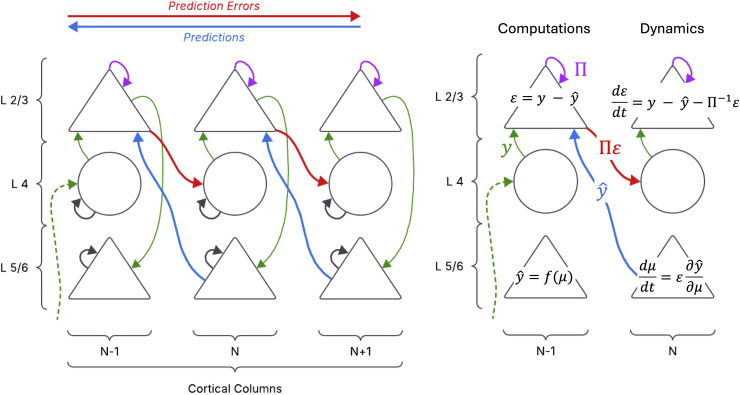
“Predictive coding extends the above by positing a speci fi c computational strategy for the brain: minimise the error between expected and actual inputs (15, 16).”
Lai, M.-C., Kassee, C., Besney, R., Bonato, S., Hull, L., Mandy, W., Szatmari, P., & Ameis, S. H. (2019) · The Lancet Psychiatry · doi:10.1016/s2215-0366(19)30289-5 · Cited by 1,892
Dynamic models of large-scale brain activity
Breakspear, M. (2017) · Nature Neuroscience · doi:10.1038/nn.4497 · Cited by 1,239 · cited 1×
“Such population models are integral to implementations of predictive coding in the cortex: they allow one to treat an entire cortical column or region as a unit that sends and receives prediction/error signals (19).”
Jansen, B. H., & Rit, V. G. (1995) · Biological Cybernetics · doi:10.1007/bf00199471 · Cited by 1,159 · cited 1×
“By adjusting a few key parameters (like the gain of neuronal populations that carry error signals), these models can simulate how precision (con fi dence) is encoded and modulated in the brain (21, 22).”
When the world becomes ‘too real’: a Bayesian explanation of autistic perception
Pellicano, E., & Burr, D. (2012) · Trends in Cognitive Sciences · doi:10.1016/j.tics.2012.08.009 · Cited by 1,156
Active inference: a process theory
Friston, K., FitzGerald, T., Rigoli, F., Schwartenbeck, P., & Pezzulo, G. (2017) · Neural Computation · doi:10.1162/neco_a_00912 · Cited by 1,156
Dysconnection in schizophrenia: from abnormal synaptic plasticity to failures of self-monitoring
Stephan, K. E., Friston, K. J., & Frith, C. D. (2009) · Schizophrenia Bulletin · doi:10.1093/schbul/sbn176 · Cited by 1,134 · cited 1×
“Computational psychiatry studies have done exactly this – for instance, using conductance-based neural mass models to infer synaptic changes in disorders like schizophrenia from M/EEG recordings (25, 26).”
The dynamic brain: from spiking neurons to neural masses and cortical fields
Deco, G., Jirsa, V. K., Robinson, P. A., Breakspear, M., & Friston, K. (2008) · PLoS Computational Biology · doi:10.1371/journal.pcbi.1000092 · Cited by 1,084
Behavioral activation treatment for depression: returning to contextual roots
Jacobson, N. S., Martell, C. R., & Dimidjian, S. (2001) · Clinical Psychology: Science and Practice · doi:10.1093/clipsy.8.3.255 · Cited by 1,011
Computational psychiatry as a bridge from neuroscience to clinical applications
Huys, Q. J. M., Maia, T. V., & Frank, M. J. (2016) · Nature Neuroscience · doi:10.1038/nn.4238 · Cited by 1,002
Sohal, V. S., & Rubenstein, J. L. R. (2019) · Molecular Psychiatry · doi:10.1038/s41380-019-0426-0 · Cited by 988 · cited 1×
“Neurophysiologically, researchers have noted an excitation/ inhibition imbalance in ASD cortical circuits (44, 45).”
Active interoceptive inference and the emotional brain
Seth, A. K., & Friston, K. J. (2016) · Philosophical Transactions of the Royal Society B: Biological Sciences · doi:10.1098/rstb.2016.0007 · Cited by 945 · cited 1×
“Autism Spectrum Disorder (ASD) offers a contrasting case to schizophrenia within predictive coding accounts of cognition (39).”
The Predictive Coding Account of Psychosis
Sterzer, P., Adams, R. A., Fletcher, P., Frith, C., Lawrie, S. M., Muckli, L., Petrovic, P., Uhlhaas, P., Voss, M., & Corlett, P. R. (2018) · Biological Psychiatry · doi:10.1016/j.biopsych.2018.05.015 · Cited by 941
Precise minds in uncertain worlds: Predictive coding in autism.
Van de Cruys, S., Evers, K., Van der Hallen, R., Van Eylen, L., Boets, B., de-Wit, L., & Wagemans, J. (2014) · Psychological Review · doi:10.1037/a0037665 · Cited by 885
The Computational Anatomy of Psychosis
Adams, R. A., Stephan, K. E., Brown, H. R., Frith, C. D., & Friston, K. J. (2013) · Frontiers in Psychiatry · doi:10.3389/fpsyt.2013.00047 · Cited by 850 · cited 2×
“Dysfunctions in thalamo-cortical loops are indeed implicated in disorders like schizophrenia and OCD, consistent with predictive coding abnormalities (e.g. thalamic fi lter failure leading to sensory overload or intrusive errors) (2).”
Montague, P. R., Dolan, R. J., Friston, K. J., & Dayan, P. (2012) · Trends in Cognitive Sciences · doi:10.1016/j.tics.2011.11.018 · Cited by 809 · cited 2×
“Computational psychiatry offers a new paradigm (1 – 5): by integrating mathematical models with neurobiology, it seeks to explain psychiatric phenomena in terms of aberrant brain computations (6).”
Anatomy of hierarchy: Feedforward and feedback pathways in macaque visual cortex
Markov, N. T., Vezoli, J., Chameau, P., Falchier, A., Quilodran, R., Huissoud, C., Lamy, C., Misery, P., Giroud, P., Ullman, S., et al. (2014) · Journal of Comparative Neurology · doi:10.1002/cne.23458 · Cited by 759 · cited 1×
“For example, feed-forward projections originate mainly from super fi cial layers (L2/3) and target middle-layer (L4) neurons in the next cortical area, whereas feedback projections originate from deep layers (L5/6) and target super fi cial layer neurons in the preceding area (28).”
Mismatch negativity in schizophrenia: a meta-analysis
Umbricht, D., & Krljes, S. (2005) · Schizophrenia Research · doi:10.1016/j.schres.2004.12.002 · Cited by 742 · cited 1×
“Individuals with schizophrenia often show reduced mismatch negativity responses, consistent with improper error signalling (37).”
Pavlovian conditioning-induced hallucinations result from overweighting of perceptual priors
Powers, A. R., Mathys, C., & Corlett, P. R. (2017) · Science · doi:10.1126/science.aan3458 · Cited by 684
Friston, K. J., & Stephan, K. E. (2007) · Synthese · doi:10.1007/s11229-007-9237-y · Cited by 673 · cited 2×
“These concrete mappings mean that predictive coding hypotheses are testable with neurobiological data (11).”
Active Inference: The Free Energy Principle in Mind, Brain, and Behavior
Parr, T., Pezzulo, G., & Friston, K. J. (2022) · doi:10.7551/mitpress/12441.001.0001 · Cited by 651
An aberrant precision account of autism
Lawson, R. P., Rees, G., & Friston, K. J. (2014) · Frontiers in Human Neuroscience · doi:10.3389/fnhum.2014.00302 · Cited by 641
Precision psychiatry: a neural circuit taxonomy for depression and anxiety
Williams, L. M. (2016) · The Lancet Psychiatry · doi:10.1016/s2215-0366(15)00579-9 · Cited by 641
Phillips, M. L., & Swartz, H. A. (2014) · American Journal of Psychiatry · doi:10.1176/appi.ajp.2014.13081008 · Cited by 636 · cited 2×
“In depression (the other pole), the precision might crash for positive priors, leading to the state described earlier of hypo-learning and negativity (68, 69).”
Hallucinations and strong priors
Corlett, P. R., Horga, G., Fletcher, P. C., Alderson-Day, B., Schmack, K., & Powers, A. R. (2019) · Trends in Cognitive Sciences · doi:10.1016/j.tics.2018.12.001 · Cited by 534 · cited 1×
“In each case, symptoms are linked to particular disturbances in how predictions, prediction errors, or their precision weights are handled in the brain (32).”
Computational psychiatry: the brain as a phantastic organ
Friston, K. J., Stephan, K. E., Montague, R., & Dolan, R. J. (2014) · The Lancet Psychiatry · doi:10.1016/s2215-0366(14)70275-5 · Cited by 531 · cited 2×
“Using the predictive coding lens, we can reinterpret several major psychiatric conditions as speci fi c forms of inference gone awry (31).”
Anxious individuals have difficulty learning the causal statistics of aversive environments
Browning, M., Behrens, T. E., Jocham, G., O'Reilly, J. X., & Bishop, S. J. (2015) · Nature Neuroscience · doi:10.1038/nn.3961 · Cited by 476
Cerebral hierarchies: predictive processing, precision and the pulvinar
Kanai, R., Komura, Y., Shipp, S., & Friston, K. (2015) · Philosophical Transactions of the Royal Society B: Biological Sciences · doi:10.1098/rstb.2014.0169 · Cited by 432 · cited 1×
“Additionally, predictive coding accounts of autism highlight differences in precision modulation by neuromodulators like serotonin or acetylcholine, which may underlie the diminished in fl uence of priors (46).”
Goal-directed learning and obsessive-compulsive disorder
Gillan, C. M., & Robbins, T. W. (2014) · Philosophical Transactions of the Royal Society B: Biological Sciences · doi:10.1098/rstb.2013.0475 · Cited by 348 · cited 1×
“Neurobiologically, OCD has been strongly linked to hyperactivity in speci fi c circuits like the cortico-striatal-thalamo-cortical (CSTC) loop, particularly involving the orbitofrontal cortex (OFC) and anterior cingulate cortex (ACC) (60, 61).”
Emotion and decision-making: affect-driven belief systems in anxiety and depression
Paulus, M. P., & Yu, A. J. (2012) · Trends in Cognitive Sciences · doi:10.1016/j.tics.2012.07.009 · Cited by 287 · cited 1×
“In predictive processing terms, there may be an over-precision (49, 62, 63) of negative predictions about the future, coupled with an inability to down-regulate error signals related to ambiguous stimuli.”
Computational psychiatry: towards a mathematically informed understanding of mental illness
Adams, R. A., Huys, Q. J. M., & Roiser, J. P. (2015) · Journal of Neurology, Neurosurgery & Psychiatry · doi:10.1136/jnnp-2015-310737 · Cited by 285 · cited 2×
“Computational psychiatry offers a new paradigm (1 – 5): by integrating mathematical models with neurobiology, it seeks to explain psychiatric phenomena in terms of aberrant brain computations (6).”
Dynamic causal modelling revisited
Friston, K. J., Preller, K. H., Mathys, C., Cagnan, H., Heinzle, J., Razi, A., & Zeidman, P. (2019) · NeuroImage · doi:10.1016/j.neuroimage.2017.02.045 · Cited by 271
Serotonin, inhibition, and negative mood
Dayan, P., & Huys, Q. J. M. (2008) · PLoS Computational Biology · doi:10.1371/journal.pcbi.0040004 · Cited by 263 · cited 3×
“On the circuit level, depression has been associated with impaired top-down connectivity and reduced neuromodulatory drive (e.g. serotonin), which could both contribute to a sluggish predictive coding system that does not revise its priors promptly (53).”
Computational approaches to psychiatry
Stephan, K. E., & Mathys, C. (2014) · Current Opinion in Neurobiology · doi:10.1016/j.conb.2013.12.007 · Cited by 260 · cited 1×
“Crucially, because of the mapping between predictive coding and cortical wiring, proposed changes in predictive coding represent testable hypotheses of pathophysiology with biologically meaningful parameters (12, 33).”
Metacognition and Confidence: A Review and Synthesis
Fleming, S. M. (2024) · Annual Review of Psychology · doi:10.1146/annurev-psych-022423-032425 · Cited by 256
Neural masses and fields in dynamic causal modeling
Moran, R., Pinotsis, D. A., & Friston, K. (2013) · Frontiers in Computational Neuroscience · doi:10.3389/fncom.2013.00057 · Cited by 255
Active inference and agency: optimal control without cost functions
Friston, K., Samothrakis, S., & Montague, R. (2012) · Biological Cybernetics · doi:10.1007/s00422-012-0512-8 · Cited by 241 · cited 3×
“Another avenue is training paradigms or biofeedback: patients could be given tasks that implicitly re-balance their predictive coding (58).”
Depression: a decision-theoretic analysis
Huys, Q. J. M., Daw, N. D., & Dayan, P. (2015) · Annual Review of Neuroscience · doi:10.1146/annurev-neuro-071714-033928 · Cited by 221
Association of neural and emotional impacts of reward prediction errors with major depression
Rutledge, R. B., Moutoussis, M., Smittenaar, P., Zeidman, P., Taylor, T., Hrynkiewicz, L., Lam, J., Skandali, N., Siegel, J. Z., Ousdal, O. T., et al. (2017) · JAMA Psychiatry · doi:10.1001/jamapsychiatry.2017.1713 · Cited by 209 · cited 1×
“For instance, depressed individuals show blunted neural responses to unexpected rewards (a kind of reduced reward prediction error signalling) (52).”
The depressed brain: an evolutionary systems theory
Badcock, P. B., Davey, C. G., Whittle, S., Allen, N. B., & Friston, K. J. (2017) · Trends in Cognitive Sciences · doi:10.1016/j.tics.2017.01.005 · Cited by 190 · cited 1×
“Some formulations highlight the role of interpersonal expectations and social threat sensitivity, in which depressive states can emerge from an evolutionarily conserved “ better-safe-than-sorry ” strategy that becomes maladaptive when overly precise or resistant to updating (50).”
Petzschner, F. H., Weber, L. A. E., Gard, T., & Stephan, K. E. (2017) · Biological Psychiatry · doi:10.1016/j.biopsych.2017.05.012 · Cited by 181
Smith, R., Badcock, P., & Friston, K. J. (2021) · Psychiatry and Clinical Neurosciences · doi:10.1111/pcn.13138 · Cited by 174
Translational perspectives for computational neuroimaging
Stephan, K. E., Iglesias, S., Heinzle, J., & Diaconescu, A. O. (2015) · Neuron · doi:10.1016/j.neuron.2015.07.008 · Cited by 169 · cited 1×
“Embracing computational models opens the door to identifying biomarkers based on circuit function rather than just phenomenology (71 – 73).”
The Misestimation of Uncertainty in Affective Disorders
Pulcu, E., & Browning, M. (2019) · Trends in Cognitive Sciences · doi:10.1016/j.tics.2019.07.007 · Cited by 156 · cited 3×
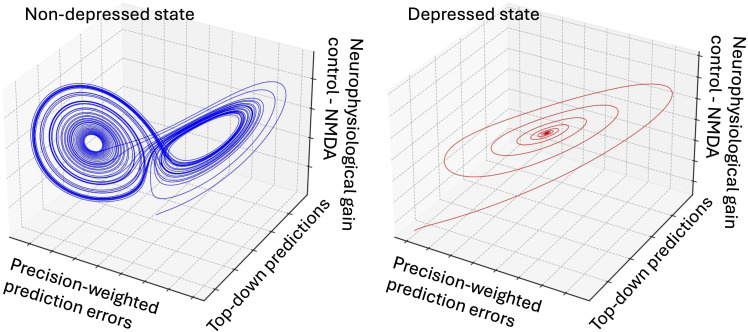
“We present this attractor-based formulation as a conceptual synthesis of existing computational accounts (47 – 49), rather than as a claim that a speci fi c low-dimensional dynamical system has been empirically identi fi ed in neural data.”
Compulsivity reveals a novel dissociation between action and confidence
Vaghi, M. M., Luyckx, F., Sule, A., Fineberg, N. A., Robbins, T. W., & De Martino, B. (2017) · Neuron · doi:10.1016/j.neuron.2017.09.006 · Cited by 145
Prediction error, ketamine and psychosis: An updated model
Corlett, P. R., Honey, G. D., & Fletcher, P. C. (2016) · Journal of Psychopharmacology · doi:10.1177/0269881116650087 · Cited by 142 · cited 1×
“Hallucinations, likewise, could result from internally generated representations (predictions from higher cortex) intruding on perception because the brain is overly biased toward expecting its own hypothesis rather than the actual input (34).”
Disturbed resting state eeg synchronization in bipolar disorder: A graph-theoretic analysis
Kim, D.-J., Bolbecker, A. R., Howell, J., Rass, O., Sporns, O., Hetrick, W. P., Breier, A., & O'Donnell, B. F. (2013) · NeuroImage Clinical · doi:10.1016/j.nicl.2013.03.007 · Cited by 141
Functional Connections of Cortical Areas: A New View from the Thalamus
Sherman, S. M., & Guillery, R. W. (2013) · doi:10.7551/mitpress/9780262019309.001.0001 · Cited by 137
Nguyen, T. T., Kovacevic, S., Dev, S. I., Lu, K., Liu, T. T., & Eyler, L. T. (2017) · Neuropsychology · doi:10.1037/neu0000317 · Cited by 109
Tang, W., Zhu, Q., Gong, X., Zhu, C., Wang, Y., & Chen, S. (2016) · Behavioural Brain Research · doi:10.1016/j.bbr.2016.07.004 · Cited by 90 · cited 4×
“For example, if OCD is conceptualised as a hyperactive error signal in ACC, treatments like deep brain stimulation (DBS) could be guided to speci fi cally down-regulate that error unit activity.”
InfluentialFradkin, I., Adams, R. A., Parr, T., Roiser, J. P., & Huppert, J. D. (2020) · Psychological Review · doi:10.1037/rev0000188 · Cited by 89 · cited 2×
“Computational models suggest that increasing the precision of certain prediction errors can produce OCD-like repetitive checking behaviour as the system tries to resolve an endless stream of perceived mismatches (56, 58).”
Anhedonia in depression and bipolar disorder
Whitton, A. E., & Pizzagalli, D. A. (2022) · Current topics in behavioral neurosciences · doi:10.1007/7854_2022_323 · Cited by 80 · cited 1×
“Anhedonia experienced in bipolar disorder has been found to have partially distinct neurophysiology to that in unipolar depression (77).”
Consistent spectral predictors for dynamic causal models of steady-state responses
Moran, R. J., Stephan, K. E., Dolan, R. J., & Friston, K. J. (2011) · NeuroImage · doi:10.1016/j.neuroimage.2011.01.012 · Cited by 75 · cited 7×
“Z-axis: Neuromodulatory gain control (in fl uence of neurotransmitters like NMDA on precision).”
InfluentialKwisthout, J., Bekkering, H., & van Rooij, I. (2017) · Brain and Cognition · doi:10.1016/j.bandc.2016.02.008 · Cited by 73
The empirical status of predictive coding and active inference
Hodson, R., Mehta, M., & Smith, R. (2024) · Neuroscience & Biobehavioral Reviews · doi:10.1016/j.neubiorev.2023.105473 · Cited by 69 · cited 1×
“Closely related, but conceptually distinct (9), is the Free Energy Principle and its formulation in terms of active inference, which extend predictive coding from perceptual inference to action and policy selection (10).”
Biased belief updating in depression
Kube, T. (2023) · Clinical Psychology Review · doi:10.1016/j.cpr.2023.102298 · Cited by 61 · cited 1×
“From a dynamical systems perspective, this corresponds to a pathological attractor state in neural activity (47, 48).”
Shaw, A. D., Knight, L., Freeman, T. C. A., Williams, G. M., Moran, R. J., Friston, K. J., Walters, J. T. R., & Singh, K. D. (2019) · Schizophrenia Bulletin · doi:10.1093/schbul/sbz066 · Cited by 54
Nair, A., Rutledge, R. B., & Mason, L. (2020) · Frontiers in Psychiatry · doi:10.3389/fpsyt.2020.00140 · Cited by 37 · cited 1×
“Treatments like exposure therapy can be seen as attempts to recalibrate these prediction weights – by repeated safe exposures, the patient ’ s brain is encouraged to assign greater weight to the “ I am safe ” prediction relative to the “ something bad will happen ” prediction error (66).”
Ketamine improves short-term plasticity in depression by enhancing sensitivity to prediction errors
Sumner, R. L., McMillan, R., Spriggs, M. J., Campbell, D., Malpas, G., Maxwell, E., Deng, C., Hay, J., Ponton, R., Sundram, F., et al. (2020) · European Neuropsychopharmacology · doi:10.1016/j.euroneuro.2020.07.009 · Cited by 32
Predictive coding in neuropsychiatric disorders: a systematic transdiagnostic review.
Qela, B., Damiani, S., De Santis, S., Groppi, F., Pichiecchio, A., Asteggiano, C., Brondino, N., Monteleone, A. M., Grassi, L., Politi, P., et al. (2025) · Neuroscience & Biobehavioral Reviews · doi:10.1016/j.neubiorev.2025.106020 · Cited by 26 · cited 1×
“Computational psychiatry offers a new paradigm (1 – 5): by integrating mathematical models with neurobiology, it seeks to explain psychiatric phenomena in terms of aberrant brain computations (6).”
Les trois cultures de la psychiatrie computationnelle
Gauld, C., Dumas, G., Fakra, É., Mattout, J., & Micoulaud-Franchi, J.-A. (2021) · Annales Médico-psychologiques, revue psychiatrique · doi:10.1016/j.amp.2020.11.011 · Cited by 14
Evidence accumulation and neural correlates of uncertainty in obsessive-compulsive disorder
Zhao, Y.-J., Zhang, Y., Wang, Q., Manssuer, L., Cui, H., Ding, Q., Sun, B., Liu, W., & Voon, V. (2023) · Biological Psychiatry: Cognitive Neuroscience and Neuroimaging · doi:10.1016/j.bpsc.2023.05.011 · Cited by 8
Addressing altered anticipation as a transdiagnostic target through computational psychiatry
Sepúlveda, P., Aitsahalia, I., Kumar, K., Atkin, T., & Iigaya, K. (2025) · Biological Psychiatry Cognitive Neuroscience and Neuroimaging · doi:10.1016/j.bpsc.2025.02.014 · Cited by 3
Berndt, L. C. S., Singh, K. D., & Shaw, A. D. (2026) · Schizophrenia Bulletin · doi:10.1093/schbul/sbaf149 · Cited by 3
Self-citationGenerative models as computational assays for psychiatry
Frässle, S. (2023) · European Psychiatry · doi:10.1192/j.eurpsy.2023.182
Research works printed but not linked: 2
- Beck, 1979, Cognitive therapy and the emotional disorders
- 2022, Diagnostic and statistical manual of mental disorders
Cited by
Corozo, J. P. M., Salazar, D. E. M., & Cevallos, I. P. V. (2026) · VitalyScience Revista Científica Multidisciplinaria · doi:10.56519/pjmetd63
Digital Biomarkers and Computational Inference in Smart Neuropsychiatric Healthcare
Mou, D. (2025) · Journal of Disease and Public Health · doi:10.71052/jdph/msho1980
Mazur, M., & Krukow, P. (2026) · Current Problems of Psychiatry · doi:10.12923/2353-8627/2025-0022
Current themes of AI in mental health: Actionable evidence and guardrails for mood and anxiety care
Paulus, M. P. (2026) · Journal of Mood and Anxiety Disorders · doi:10.1016/j.xjmad.2026.100181 · Cited by 1
“A chatbot can increase engagement without improving symptoms, a predictive model can explain variance without changing outcomes, and a mechanistic hypothesis can be conceptually attractive without being clinically validated [8 – 20].”
InfluentialZhong, J., Ci, B., & Zhang, S. (2026) · Frontiers in Psychology · doi:10.3389/fpsyg.2026.1887948
“…allostatic errors (energy) must be addressed through action-oriented predictions (efficacy); if unresolved, they compel revisions of conceptual values (meaning), interpersonal strategies (relational), and ultimately the global self-model (existential) (Barrett, 2017a,b; Shaw et al., 2026).”
Influential
Metadata
- Authors
- Shaw, A. D., Sumner, R. L., & Berndt, L. C. S.
- Affiliations
- University of Exeter (GB)
- Auckland University of Technology (NZ)
- Corresponding author
- Berndt, Lioba C. S.
- Venue
- Frontiers in Psychiatry
- Publisher
- Frontiers Media SA
- Published
- 2026-01-07
- Volume
- 16
- Pages
- 1713833-1713833
- ISSN
- 1664-0640 (ISSN-L)
- PMC
- PMC12819327
- OpenAlex
- W7118698301
- Cited by
- 9
- References
- 77
- Citations by year
- 2026: 8
- FWCI
- 33.05
- Type
- journal article
- Language
- en
- Open access
- gold
- doi.org
- Licence
- Locations
- Frontiers in Psychiatry (publishedVersion, cc-by)
- PubMed (publishedVersion)
- PubMed Central (publishedVersion, cc-by)
- Explore Bristol Research (publishedVersion, cc-by)
- Tuwhera (Auckland University of Technology) (submittedVersion, cc-by)
- Bristol Research (University of Bristol) (submittedVersion, cc-by)
- Funders
- Wellcome
- Topics
- Life Sciences › Neuroscience › Cognitive Neuroscience › Embodied and Extended Cognition
- Social Sciences › Arts and Humanities › Philosophy › Mental Health and Psychiatry
- Life Sciences › Neuroscience › Cognitive Neuroscience › Neural and Behavioral Psychology Studies
- Keywords
- predictive coding, computational psychiatry, Bayesian inference, free energy principle, neural population dynamics, mental illness, mechanistic biomarkers, computational phenotypes, personalized treatment, therapeutic interventions, neural circuits
About these checks
Registry, retraction, Cites and statistics results are computed, not judged, with one exception: a printed reference that no index lists is read once by a model before it counts as a citation error. Claims are extracted by a model and kept only when their quote appears verbatim in the text; each cited source is then checked, with a model’s help, for whether it says what the claim relies on. Those verdicts can be wrong — read the claim’s quote and the cited source before relying on one.
The claim verdicts this report counts are experimental: their accuracy is not yet measured.
A language model drew the claims from the paper on 2026-10-11, under version 3 of the claim definition (model deepseek-v4.1-flash, prompt extract-v3).
A second model labelled each claim on 2026-10-11 (model jev-1.13-20260917, definition revision gold-guideline-v0.2).
Cited sources are checked with a language model’s help (gpt-6-sol).
Statistics and arithmetic are recomputed, not judged.
Confidence bands are shown only for fields calibrated on our annotated test set. None is calibrated yet, so no band is shown.
What counts as a claim ›How we measure confidence ›How we check this ›
Are you an author, or do you see a problem with this page? Request a review
Data sources
Bibliographic data: Semantic Scholar, OpenAlex, Crossref.
Contains information from the Semantic Scholar Academic Graph Datasets, made available under the ODC Attribution License (ODC-BY 1.0).
Semantic Scholar’s data is described in: Kinney, R., et al. (2023). The Semantic Scholar Open Data Platform. arXiv:2301.10140.
