

Immediate Psychological Responses and Associated Factors during the Initial Stage of the 2019 Coronavirus Disease (COVID-19) Epidemic among the General Population in China
Open accessThe DOI matches its Crossref record; 37 of the 38 references it cites were found in a registry or an index.
Abstract
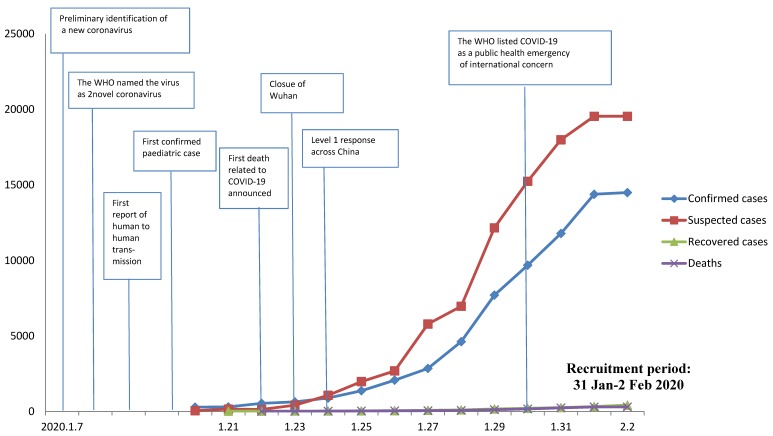
Background: The 2019 coronavirus disease (COVID-19) epidemic is a public health emergency of international concern and poses a challenge to psychological resilience. Research data are needed to develop evidence-driven strategies to reduce adverse psychological impacts and psychiatric symptoms during the epidemic. The aim of this study was to survey the general public in China to better understand their levels of psychological impact, anxiety, depression, and stress during the initial stage of the COVID-19 outbreak. The data will be used for future reference. Methods: From 31 January to 2 February 2020, we conducted an online survey using snowball sampling techniques. The online survey collected information on demographic data, physical symptoms in the past 14 days, contact history with COVID-19, knowledge and concerns about COVID-19, precautionary measures against COVID-19, and additional information required with respect to COVID-19. Psychological impact was assessed by the Impact of Event Scale-Revised (IES-R), and mental health status was assessed by the Depression, Anxiety and Stress Scale (DASS-21). Results: This study included 1210 respondents from 194 cities in China. In total, 53.8% of respondents rated the psychological impact of the outbreak as moderate or severe; 16.5% reported moderate to severe depressive symptoms; 28.8% reported moderate to severe anxiety symptoms; and 8.1% reported moderate to severe stress levels. Most respondents spent 20–24 h per day at home (84.7%); were worried about their family members contracting COVID-19 (75.2%); and were satisfied with the amount of health information available (75.1%). Female gender, student status, specific physical symptoms (e.g., myalgia, dizziness, coryza), and poor self-rated health status were significantly associated with a greater psychological impact of the outbreak and higher levels of stress, anxiety, and depression (p < 0.05). Specific up-to-date and accurate health information (e.g., treatment, local outbreak situation) and particular precautionary measures (e.g., hand hygiene, wearing a mask) were associated with a lower psychological impact of the outbreak and lower levels of stress, anxiety, and depression (p < 0.05). Conclusions: During the initial phase of the COVID-19 outbreak in China, more than half of the respondents rated the psychological impact as moderate-to-severe, and about one-third reported moderate-to-severe anxiety. Our findings identify factors associated with a lower level of psychological impact and better mental health status that can be used to formulate psychological interventions to improve the mental health of vulnerable groups during the COVID-19 epidemic.
Overview
The claims and statistics of this paper haven’t been checked yet.
Free: it reads the open-access text and checks the first 5 claims that cite a source we can check. Create a free account to check every claim.
Integrity signals
Registry
Cites
Statistics
Figures
Verification
Claims the paper makes
The claims and statistics of this paper haven’t been checked yet.
Free: it reads the open-access text and checks the first 5 claims that cite a source we can check. Create a free account to check every claim.
Claims other papers make about this one
Each is checked against this paper’s own text: does it say what the citing paper says it does?
The cited source doesn’t support the claim as written.
In the citing paper
“However, there was some indication that younger people (aged 12–21 years) perceived the impact of COVID-19 to be greater than older adults (aged 50–59 years).”
From Risk and protective factors for prospective changes in adolescent mental health during the COVID-19 pandemic (2021) · cites this paper as Wang et al. 2020
Checked by a reasoning model — may be wrong.
Experimental — accuracy not yet measuredThe cited source doesn’t support the claim as written.
In the citing paper
“One study surveyed 1738 Chinese participants at two time points following the commencement of the pandemic and found no significant changes across time in depression, anxiety and stress over the study period (Wang et al. 2020).”
From Risk and protective factors for prospective changes in adolescent mental health during the COVID-19 pandemic (2021) · cites this paper as Wang et al. 2020
Checked by a reasoning model — may be wrong.
Experimental — accuracy not yet measuredThe cited source doesn’t support the claim as written.
In the citing paper
“Studies also reported that female adolescents showed higher depression and anxiety levels during COVID‑19 than male adolescents did [23,24,25,32,33].”
From Mental Health of Children and Adolescents Amidst COVID-19 and Past Pandemics: A Rapid Systematic Review (2021) · cites this paper as [32]
Checked by a reasoning model — may be wrong.
Experimental — accuracy not yet measuredThe source backs part of the claim, not all of it — or backs it for a different population, condition or comparison.
In the citing paper
“Individuals with pre-existing mental disorders may be at especially high risk of experiencing deterioration of their mental well-being during the time of the pandemic [13].”
From The impact of the COVID-19 pandemic on help-seeking behaviors in individuals suffering from eating disorders and their caregivers (2020) · cites this paper as [13]
Experimental — accuracy not yet measuredThe source backs part of the claim, not all of it — or backs it for a different population, condition or comparison.
In the citing paper
“Immediately following the onset of COVID-19, many studies noted steep increases in the experience of anxiety, depressive, and eating pathology symptoms (Qiu et al., 2021, Taylor et al., 2020a; Wang et al., 2020).”
From Prevalence rates of anxiety, depressive, and eating pathology symptoms between the pre- and peri-COVID-19 eras: A meta-analysis (2022) · cites this paper as Wang et al., 2020
Experimental — accuracy not yet measured
32 more claims about this paper
Create a free account to see every claim other papers make about this one.
Self-check
Percentages, sums and reported differences re-computed from the paper’s own numbers.
The self-check needs the paper’s full text.
Citations
Cites
Clinical features of patients infected with 2019 novel coronavirus in Wuhan, China
Huang, C., Wang, Y., Li, X., Ren, L., Zhao, J., Hu, Y., Zhang, L., Fan, G., Xu, J., Gu, X., et al. (2020) · The Lancet · doi:10.1016/s0140-6736(20)30183-5 · Cited by 48,884
Chen, N., Zhou, M., Dong, X., Qu, J., Gong, F., Han, Y., Qiu, Y., Wang, J., Liu, Y., Wei, Y., et al. (2020) · The Lancet · doi:10.1016/s0140-6736(20)30211-7 · Cited by 21,415 · cited 8×
“For the anxiety subscale, 770 (63.6%) were considered to have a normal score (score: 0-6); 91 (7.5%) were considered to suffer from mild anxiety (score: 7-9); 247 (20.4%) were considered to suffer from moderate anxiety (score: [10] [11] [12] [13] [14] ; and 102 (8.4%) were considered to suffer from severe and extremel…”
BackgroundInfluentialEarly transmission dynamics in Wuhan, China, of novel coronavirus-infected pneumonia
Li, Q., Guan, X., Wu, P., Wang, X., Zhou, L., Tong, Y., Ren, R., Leung, K. S. M., Lau, E. H. Y., Wong, J. Y., et al. (2020) · New England Journal of Medicine · doi:10.1056/nejmoa2001316 · Cited by 16,575 · cited 2×
“The average incubation period is estimated to be 5.2 days, with significant variation among patients [9] , and it may be capable of asymptomatic spread [10, 11] .”
BackgroundInfluentialLu, R., Zhao, X., Li, J., Niu, P., Yang, B., Wu, H., Wang, W., Song, H., Huang, B., Zhu, N., et al. (2020) · The Lancet · doi:10.1016/s0140-6736(20)30251-8 · Cited by 11,907 · cited 5×
“Linear regression analysis showed that avoiding the sharing of utensils (e.g., chopsticks) during meals was significantly associated with lower scores in the IES-R [20] [21] [22] [23] [24] 1025 (84.7) Reference Reference Reference Reference * p < 0.05; ** p < 0.01; *** p < 0.001.”
BackgroundInfluentialA novel coronavirus outbreak of global health concern
Wang, C., Horby, P. W., Hayden, F. G., & Gao, G. F. (2020) · The Lancet · doi:10.1016/s0140-6736(20)30185-9 · Cited by 7,700 · cited 1×
“The 2019 coronavirus disease (COVID-19) epidemic in China is a global health threat [1] , and is by far the largest outbreak of atypical pneumonia since the severe acute respiratory syndrome (SARS) outbreak in 2003.”
BackgroundSelf-citationFirst case of 2019 novel coronavirus in the United States
Holshue, M. L., DeBolt, C., Lindquist, S., Lofy, K. H., Wiesman, J., Bruce, H., Spitters, C., Ericson, K., Wilkerson, S., Tural, A., et al. (2020) · New England Journal of Medicine · doi:10.1056/nejmoa2001191 · Cited by 6,030 · cited 6×
“For the anxiety subscale, 770 (63.6%) were considered to have a normal score (score: 0-6); 91 (7.5%) were considered to suffer from mild anxiety (score: 7-9); 247 (20.4%) were considered to suffer from moderate anxiety (score: [10] [11] [12] [13] [14] ; and 102 (8.4%) were considered to suffer from severe and extremel…”
BackgroundInfluentialTransmission of 2019-nCoV Infection from an Asymptomatic Contact in Germany
Rothe, C., Schunk, M., Sothmann, P., Bretzel, G., Froeschl, G., Wallrauch, C., Zimmer, T., Thiel, V., Janke, C., Guggemos, W., et al. (2020) · New England Journal of Medicine · doi:10.1056/nejmc2001468 · Cited by 4,144 · cited 4×
“The average incubation period is estimated to be 5.2 days, with significant variation among patients [9] , and it may be capable of asymptomatic spread [10, 11] .”
BackgroundInfluentialTimely mental health care for the 2019 novel coronavirus outbreak is urgently needed
Xiang, Y.-T., Yang, Y., Li, W., Zhang, L., Zhang, Q., Cheung, T., & Ng, C. H. (2020) · The Lancet Psychiatry · doi:10.1016/s2215-0366(20)30046-8 · Cited by 3,598 · cited 5×
“The ongoing COVID-19 epidemic is inducing fear, and a timely understanding of mental health status is urgently needed for society [16] .”
BackgroundInfluentialCoronavirus Infections—More Than Just the Common Cold
Paules, C. I., Marston, H. D., & Fauci, A. S. (2020) · JAMA · doi:10.1001/jama.2020.0757 · Cited by 2,136 · cited 1×
“COVID-19, similarly to SARS, is a beta-coronavirus that can be spread to humans through intermediate hosts such as bats [5], though the actual route of transmission is still debatable.”
BackgroundPsychometric properties of the Impact of Event Scale—Revised
Creamer, M., Bell, R., & Failla, S. (2003) · Behaviour Research and Therapy · doi:10.1016/j.brat.2003.07.010 · Cited by 1,947
Cited by
Items 201–300 of 1,126
Alemanno, F., Houdayer, E., Parma, A., Spina, A., Del Forno, A., Scatolini, A., Angelone, S., Brugliera, L., Tettamanti, A., Beretta, L., et al. (2021) · PLOS ONE · doi:10.1371/journal.pone.0246590 · Cited by 275
“of these communications reported issues related to anxiety, depression, and post-traumatic stress syndrome [14, 15].”
BackgroundFaisal, R. A., Jobe, M. C., Ahmed, O., & Sharker, T. (2022) · International Journal of Mental Health and Addiction · doi:10.1007/s11469-020-00458-y · Cited by 275
“…have adverse effects on mental health among students, like in the last SARS outbreak (Akan et al. 2010; Petrosillo et al. 2020); such impacts have also been found between the COVID-19 and SARS outbreaks demonstrating similar significant associations (Petrosillo et al. 2020; Wang et al. 2020).”
BackgroundResultInfluentialChang, J.-J., Ji, Y., Li, Y.-H., Pan, H.-F., & Su, P.-Y. (2021) · Journal of Affective Disorders · doi:10.1016/j.jad.2021.05.109 · Cited by 275
Song, S., Yao, X., & Wen, N. (2021) · Information Processing & Management · doi:10.1016/j.ipm.2020.102407 · Cited by 272
“Many classic information science theories posit that people spend considerable effort seeking information to gain knowledge, resolve uncertainty, and achieve optimal decision making (Belkin, 1980; Kuhlthau, 1993; Wilson, 1999; Zhang, 2016).”
BackgroundUrban Parks as Green Buffers During the COVID-19 Pandemic
Xie, J., Luo, S., Furuya, K., & Sun, D. (2020) · Sustainability · doi:10.3390/su12176751 · Cited by 272
Emociones, preocupaciones y reflexiones frente a la pandemia del COVID-19 en Argentina
Johnson, M. C., Saletti-Cuesta, L., & Tumas, N. (2020) · Ciência & Saúde Coletiva · doi:10.1590/1413-81232020256.1.10472020 · Cited by 269
Lin, C.-Y., Broström, A., Griffiths, M. D., & Pakpour, A. H. (2020) · Internet Interventions · doi:10.1016/j.invent.2020.100345 · Cited by 269
“More specifically, problematic social media use, fear of COVID19, COVID-19 misunderstanding, psychological distress, and insomnia are all relevant areas where information should be collected and investigated.”
BackgroundInfluentialSaddik, B., Hussein, A., Sharif-Askari, F. S., Kheder, W., Temsah, M.-H., Koutaich, R. A., Haddad, E. S., Al-Roub, N. M., Marhoon, F. A., Hamid, Q., et al. (2020) · Risk Management and Healthcare Policy · doi:10.2147/rmhp.s273333 · Cited by 268
“The results from the current study confirm that anxiety levels due to COVID-19 among university students are high, ranging from mild to severe, especially amongst females, which is consistent with previous research.(5,6,17,41) The majority of students in our study were females, which reflects the gender imbalance in h…”
ResultGallagher, M. W., Zvolensky, M. J., Long, L. J., Rogers, A. H., & Garey, L. (2020) · Cognitive Therapy and Research · doi:10.1007/s10608-020-10143-y · Cited by 262
Wang, C., Wen, W., Zhang, H., Ni, J., Jiang, J., Cheng, Y., Zhou, M., Ye, L., Feng, Z., Ge, Z., et al. (2023) · Journal of American College Health · doi:10.1080/07448481.2021.1960849 · Cited by 267
“5,45 Correspondingly, different groups of people have been disseminating different information, 5 which is conducive to better transparency of the anti-epidemic process, thereby helping people to establish positive emotions, and reducing the incidence of psychological problems.”
BackgroundSelf-citationSuryavanshi, N., Kadam, A., Dhumal, G., Nimkar, S., Mave, V., Gupta, A., Cox, S. R., & Gupte, N. (2020) · Brain and Behavior · doi:10.1002/brb3.1837 · Cited by 267
“This pandemic has caused high levels of anxiety, stress, and depression in the general population (Wang et al., 2020), and HCPs may be disproportionately affected due to fear of infection, workplace stress, social isolation, and discrimination (https://www.livem int.com; 2020; Zhang & Ma, 2020).”
BackgroundHawke, L. D., Barbic, S. P., Voineskos, A., Szatmari, P., Cleverley, K., Hayes, E., Relihan, J., Daley, M., Courtney, D., Cheung, A., et al. (2020) · The Canadian Journal of Psychiatry · doi:10.1177/0706743720940562 · Cited by 267
Perceived stress in different countries at the beginning of the coronavirus pandemic
Gamonal-Limcaoco, S., Montero-Mateos, E., Lozano-López, M. T., Maciá-Casas, A., Matías-Fernández, J., & Roncero, C. (2022) · The International Journal of Psychiatry in Medicine · doi:10.1177/00912174211033710 · Cited by 266
“We anticipated that the outbreak of COVID-19 would cause stress, producing an increase of anxiety and psychological distress, just like it is suggested by the first studies of this pandemic in China.1,2 Taylor et al. describe high levels of reliance to explain others’ support to get through tough times.3 For example,…”
ResultInfluentialHaghani, M., Bliemer, M. C. J., Goerlandt, F., & Li, J. (2020) · Safety Science · doi:10.1016/j.ssci.2020.104806 · Cited by 265
Flesia, L., Monaro, M., Mazza, C., Fietta, V., Colicino, E., Segatto, B., & Roma, P. (2020) · Journal of Clinical Medicine · doi:10.3390/jcm9103350 · Cited by 291
“, coryza, cough, sore throat, headache), and a low reported level of health [10,24,35].”
BackgroundMethodResultInfluentialShahnazi, H., Ahmadi-Livani, M., Pahlavanzadeh, B., Rajabi, A., Hamrah, M. S., & Charkazi, A. (2020) · Infectious Diseases of Poverty · doi:10.1186/s40249-020-00776-2 · Cited by 262
Kunzler, A. M., Röthke, N., Günthner, L., Stoffers-Winterling, J., Tüscher, O., Coenen, M., Rehfuess, E., Schwarzer, G., Binder, H., Schmucker, C., et al. (2021) · Globalization and Health · doi:10.1186/s12992-021-00670-y · Cited by 262
“Anxiety, worries, fear 24 (18 GP, [45, 47, 49, 50, 52, 57, 63, 66, 68, 69, 71, 77, 93](1) [73, 84, 87](1,2) 6 M [132, 140, 145](1) [134, 139, 144](1,2)) 0.”
InfluentialOzamiz-Etxebarria, N., Idoiaga Mondragon, N., Dosil Santamaría, M., & Picaza Gorrotxategi, M. (2020) · Frontiers in Psychology · doi:10.3389/fpsyg.2020.01491 · Cited by 246
Umucu, E., & Lee, B. (2020) · Rehabilitation Psychology · doi:10.1037/rep0000328 · Cited by 260
Burnout among Portuguese healthcare workers during the COVID-19 pandemic
Duarte, I., Teixeira, A., Castro, L., Marina, S., Ribeiro, C., Jácome, C., Martins, V., Ribeiro-Vaz, I., Pinheiro, H. C., Silva, A. R., et al. (2020) · BMC Public Health · doi:10.1186/s12889-020-09980-z · Cited by 259
COVID-19 severity, self-efficacy, knowledge, preventive behaviors, and mental health in Turkey
Yıldırım, M., & Güler, A. (2022) · Death Studies · doi:10.1080/07481187.2020.1793434 · Cited by 258
“Literature also suggests that mental health is related with information present about COVID-19 as false information can increase mental health problems (Wang et al., 2020).”
BackgroundImpact of COVID-19 in the Mental Health in Elderly: Psychological and Biological Updates
Grolli, R. E., Mingoti, M. E. D., Bertollo, A. G., Luzardo, A. R., Quevedo, J., Réus, G. Z., & Ignácio, Z. M. (2021) · Molecular Neurobiology · doi:10.1007/s12035-020-02249-x · Cited by 258
“Researches conducted during the initial phase of COVID-19 indicate that the impact on mental health was already moderate to severe, and many people had manifestations of anxiety and depression [97].”
BackgroundCOVID-19 and mental health in Brazil: Psychiatric symptoms in the general population
Goularte, J. F., Serafim, S. D., Colombo, R., Hogg, B., Caldieraro, M. A., & Rosa, A. R. (2021) · Journal of Psychiatric Research · doi:10.1016/j.jpsychires.2020.09.021 · Cited by 255
“However, most of the studies in this field have been conducted in China (Lu et al., 2020; Shi et al., 2020; Z. Zhu et al., 2020) and Italy (Rossi et al., 2020), and there is no research data assessing the psychological impact of the COVID-19 outbreak in Brazil (Xiong et al., 2020).”
InfluentialExploring perceived stress among students in Turkey during the COVID-19 pandemic
Aslan, I., Ochnik, D., & Çınar, O. (2020) · International Journal of Environmental Research and Public Health · doi:10.3390/ijerph17238961 · Cited by 255
“A survey carried out during the self-isolation, lockdown, and social distancing periods revealed that female gender, younger age, lower annual income, smoking, and multiple physical morbidities were found to be correlated with a higher risk of mental health problems [28] and lower satisfaction with life [27,29,30].”
BackgroundAlzueta, E., Perrin, P., Baker, F. C., Caffarra, S., Ramos‐Usuga, D., Yuksel, D., & Arango‐Lasprilla, J. C. (2021) · Journal of Clinical Psychology · doi:10.1002/jclp.23082 · Cited by 255
Crowe, S., Howard, A. F., Vanderspank-Wright, B., Gillis, P., McLeod, F., Penner, C., & Haljan, G. (2021) · Intensive and Critical Care Nursing · doi:10.1016/j.iccn.2020.102999 · Cited by 254
Cheikh Ismail, L., Osaili, T. M., Mohamad, M. N., Al Marzouqi, A., Jarrar, A. H., Abu Jamous, D. O., Magriplis, E., Ali, H. I., Al Sabbah, H., Hasan, H., et al. (2020) · Nutrients · doi:10.3390/nu12113314 · Cited by 254
Lozano-Vargas, A. (2020) · Revista de Neuro-Psiquiatría · doi:10.20453/rnp.v83i1.3687 · Cited by 251
“Cuiyan Wang y colaboradores realizaron un estudio para evaluar el impacto psicológico inicial en China durante el brote del COVID 19 (8), ellos realizaron un estudio descriptivo de corte transversal en las primeras dos semanas del brote del COVID 19 y aplicaron una encuesta de salud mental desde el 31 enero al 2 de fe…”
BackgroundJackson, S. B., Stevenson, K. T., Larson, L. R., Peterson, M. N., & Seekamp, E. (2021) · International Journal of Environmental Research and Public Health · doi:10.3390/ijerph18052506 · Cited by 251
Razu, S. R., Yasmin, T., Arif, T. B., Islam, M. S., Islam, S. M. S., Gesesew, H. A., & Ward, P. (2021) · Frontiers in Public Health · doi:10.3389/fpubh.2021.647315 · Cited by 252
“This finding is consistent with some of the existing literature (30, 31).”
ResultArora, A., Jha, A. K., Alat, P., & Das, S. S. (2020) · Asian Journal of Psychiatry · doi:10.1016/j.ajp.2020.102384 · Cited by 264
Banna, M. H. A., Sayeed, A., Kundu, S., Christopher, E., Hasan, M. T., Begum, M. R., Kormoker, T., Dola, S. T. I., Hassan, M. M., Chowdhury, S., et al. (2022) · International Journal of Environmental Health Research · doi:10.1080/09603123.2020.1802409 · Cited by 252
“Previous studies have reported prevalence rates of depressive symptoms among the general population at 16.5% in China (Wang et al. 2020a, 2020b) and 11.4% in Japan (Ueda et al. 2020).”
BackgroundMethodResultInfluentialGiallonardo, V., Sampogna, G., Del Vecchio, V., Luciano, M., Albert, U., Carmassi, C., Carrà, G., Cirulli, F., Dell’Osso, B., Nanni, M. G., et al. (2020) · Frontiers in Psychiatry · doi:10.3389/fpsyt.2020.00533 · Cited by 250
“This choice is due to the fact that this assessment measure has already been used in a large population study carried out in China, thus giving us the opportunity to compare the Italian situation with the Chinese one (45).”
ResultBoserup, B., McKenney, M., & Elkbuli, A. (2020) · The American Journal of Emergency Medicine · doi:10.1016/j.ajem.2020.06.007 · Cited by 249
“2% of respondents were afraid of being infected by COVID-19 [3,4].”
BackgroundResultPatsali, M. E., Mousa, D.-P. V., Papadopoulou, E. V. K., Papadopoulou, K. K. K., Kaparounaki, C. K., Diakogiannis, I., & Fountoulakis, K. N. (2020) · Psychiatry Research · doi:10.1016/j.psychres.2020.113298 · Cited by 249
“Again in China, moderate-to-severe stress, anxiety and depression were noted in 6.5–8.1%, 28.8% and 16.5%, respectively (Wang et al., 2020a), while there were no significant longitudinal reductions (Wang et al., 2020b).”
InfluentialCai, Q., Feng, H., Huang, J., Wang, M., Wang, Q., Lu, X., Xie, Y., Wang, X., Liu, Z., Hou, B., et al. (2020) · Journal of Affective Disorders · doi:10.1016/j.jad.2020.06.031 · Cited by 248
Intolerance of Uncertainty and Loneliness in Older Adults During the COVID-19 Pandemic
Parlapani, E., Holeva, V., Nikopoulou, V. A., Sereslis, K., Athanasiadou, M., Godosidis, A., Stephanou, T., & Diakogiannis, I. (2020) · Frontiers in Psychiatry · doi:10.3389/fpsyt.2020.00842 · Cited by 248
“Although a study of a Chinese population reported that adults over the age of 60 displayed the highest COVID-19 peritraumatic distress index (80), other studies of different Chinese populations showed that the prevalence of posttraumatic stress symptoms (81) and the severity of depressive and anxiety symptoms (6) were…”
Background[Comment] COVID-19 pandemic and its impact on mental health of healthcare professionals
Tsamakis, K., Rizos, E., Manolis, A., Chaidou, S., Kympouropoulos, S., Spartalis, E., Spandidos, D., Tsiptsios, D., & Triantafyllis, A. (2020) · Experimental and Therapeutic Medicine · doi:10.3892/etm.2020.8646 · Cited by 246
“A very recent general public survey during the initial phase of the COVID-19 outbreak in China, where the epidemic began, showed that about one-third of the participants reported moderate-to-severe anxiety, whilst more than half rated the psychological impact as moderate-to-severe (5).”
Germani, A., Buratta, L., Delvecchio, E., & Mazzeschi, C. (2020) · International Journal of Environmental Research and Public Health · doi:10.3390/ijerph17103497 · Cited by 247
“Moreover, as a recent study during the COVID-19 pandemic found, female gender and student status were significantly associated with higher levels of stress and anxiety [46].”
BackgroundAssessing Coronavirus Fear in Indian Population Using the Fear of COVID-19 Scale
Doshi, D., Karunakar, P., Sukhabogi, J. R., Prasanna, J. S., & Mahajan, S. V. (2021) · International Journal of Mental Health and Addiction · doi:10.1007/s11469-020-00332-x · Cited by 246
Villani, L., Pastorino, R., Molinari, E., Anelli, F., Ricciardi, W., Graffigna, G., & Boccia, S. (2021) · Globalization and Health · doi:10.1186/s12992-021-00680-w · Cited by 245
“Among non-European Union countries, analyzing student populations, a Chinese study observed slightly lower values of anxiety (about 25%) [17], although these values were still higher than those found in the general population [26].”
BackgroundResultMeasuring anxiety related to COVID-19: A Turkish validation study of the Coronavirus Anxiety Scale
Evren, C., Evren, B., Dalbudak, E., Topcu, M., & Kutlu, N. (2022) · Death Studies · doi:10.1080/07481187.2020.1774969 · Cited by 245
“Studies conducted in China demonstrate this, reporting that between 50% (Wang et al., 2020) and 70% (Tian et al., 2020) of the participants showed moderate to high psychological symptoms (Tian et al., 2020; Wang et al., 2020).”
BackgroundResultCOVID-19 Confinement and Health Risk Behaviors in Spain
López-Bueno, R., Calatayud, J., Casaña, J., Casajús, J. A., Smith, L., Tully, M. A., Andersen, L. L., & López-Sánchez, G. F. (2020) · Frontiers in Psychology · doi:10.3389/fpsyg.2020.01426 · Cited by 245
“As the COVID-19 epidemic has been found to increase population levels of perceived stress in China, it would be expected that citizens from other COVID-19-afflicted countries would experience a similar increase (Wang et al., 2020).”
BackgroundNing, L., Niu, J., Bi, X., Yang, C., Liu, Z., Wu, Q., Ning, N., Liang, L., Liu, A., Hao, Y., et al. (2020) · BMC Public Health · doi:10.1186/s12889-020-09892-y · Cited by 245
Psychological responses during the COVID-19 outbreak among university students in Bangladesh
Islam, M. S., Sujan, M. S. H., Tasnim, R., Sikder, M. T., Potenza, M. N., & van Os, J. (2020) · PLOS ONE · doi:10.1371/journal.pone.0245083 · Cited by 245
“Although a similar mental health study was conducted in China [13, 44], the focus was on the general population.”
BackgroundRomero, E., López-Romero, L., Domínguez-Álvarez, B., Villar, P., & Gómez-Fraguela, J. A. (2020) · International Journal of Environmental Research and Public Health · doi:10.3390/ijerph17196975 · Cited by 244
“, conduct problems, emotional problems, hyperactivity) as compared to the pre-confinement situation, raising the importance of addressing the specific effects of confinement in children [7].”
BackgroundInfluentialSafe but Lonely? Loneliness, Anxiety, and Depression Symptoms and COVID-19
Okruszek, Ł., Aniszewska-Stańczuk, A., Piejka, A., Wiśniewska, M., & Żurek, K. (2020) · Frontiers in Psychology · doi:10.3389/fpsyg.2020.579181 · Cited by 244
“Wang et al. (2020) showed that access to reliable information and engaging in preventive measures were associated with less adverse psychological outcomes.”
BackgroundBenefits of pulmonary rehabilitation in COVID-19: a prospective observational cohort study
Gloeckl, R., Leitl, D., Jarosch, I., Schneeberger, T., Nell, C., Stenzel, N., Vogelmeier, C. F., Kenn, K., & Koczulla, A. R. (2021) · ERJ Open Research · doi:10.1183/23120541.00108-2021 · Cited by 242
“GAD-7, points 4 [2-8] 5 [1-7] 1 [0-2] 0.”
BackgroundLuijten, M. A. J., van Muilekom, M. M., Teela, L., Polderman, T. J. C., Terwee, C. B., Zijlmans, J., Klaufus, L., Popma, A., Oostrom, K. J., van Oers, H. A., et al. (2021) · Quality of Life Research · doi:10.1007/s11136-021-02861-x · Cited by 243
Westrupp, E. M., Bennett, C., Berkowitz, T., Youssef, G. J., Toumbourou, J. W., Tucker, R., Andrews, F. J., Evans, S., Teague, S. J., Karantzas, G. C., et al. (2023) · European Child & Adolescent Psychiatry · doi:10.1007/s00787-021-01861-z · Cited by 244
“Pre-existing individual factors, such as poorer physical health, a history of chronic illness, or pre-existing mental health problems, have been associated with higher rates of anxiety and depression during COVID-19 [18, 30].”
BackgroundChtourou, H., Trabelsi, K., H'mida, C., Boukhris, O., Glenn, J. M., Brach, M., Bentlage, E., Bott, N., Shephard, R. J., Ammar, A., et al. (2020) · Frontiers in Psychology · doi:10.3389/fpsyg.2020.01708 · Cited by 243
“For example, participation of men was lower than that of women in six studies (González-Sanguino et al., 2020; Lei et al., 2020; Mazza et al., 2020; Ozamiz-Etxebarria et al., 2020; Satici et al., 2020; Wang et al., 2020).”
BackgroundResultInfluentialCOVID-19 pandemic and psychological fatigue in Turkey
Morgul, E., Bener, A., Atak, M., Akyel, S., Aktaş, S., Bhugra, D., Ventriglio, A., & Jordan, T. R. (2021) · International Journal of Social Psychiatry · doi:10.1177/0020764020941889 · Cited by 241
“In a cross-sectional study, Wang et al. (2020) assessed levels of depression, stress and anxiety at the beginning of the COVID-19 outbreak, and found that 53.8% of participants showed the evidence of severe psychological impacts of the outbreak.”
BackgroundInfluentialPositivity explains how COVID-19 perceived risk increases death distress and reduces happiness.
Yıldırım, M., & Güler, A. (2021) · Personality and Individual Differences · doi:10.1016/j.paid.2020.110347 · Cited by 241
“In another study with over 1200 general population in China, researchers reported that more than half of participants suffered from psychological distress, anxiety, depression, and stress at moderate to severe levels (Wang et al., 2020).”
Mamun, M. A., Sakib, N., Gozal, D., Bhuiyan, A. I., Hossain, S., Bodrud-Doza, M., Al Mamun, F., Hosen, I., Safiq, M. B., Abdullah, A. H., et al. (2021) · Journal of Affective Disorders · doi:10.1016/j.jad.2020.10.036 · Cited by 241
“Females have also been found to have a generally higher risk of developing psychological problems during both COVID-19 pandemic period (Wang et al., 2020) and other non-COVID-19 (Tolin and Foa, 2006) pandemic periods.”
Kumar, P., Kumar, N., Aggarwal, P., & Yeap, J. A. L. (2021) · Current Psychology · doi:10.1007/s12144-021-01567-0 · Cited by 237
Young, K. P., Kolcz, D. L., O’Sullivan, D. M., Ferrand, J., Fried, J., & Robinson, K. (2021) · Psychiatric Services · doi:10.1176/appi.ps.202000424 · Cited by 239
Coping styles and mental health in response to societal changes during the COVID-19 pandemic
Gurvich, C., Thomas, N., Thomas, E. H., Hudaib, A.-R., Sood, L., Fabiatos, K., Sutton, K., Isaacs, A., Arunogiri, S., Sharp, G., et al. (2021) · International Journal of Social Psychiatry · doi:10.1177/0020764020961790 · Cited by 238
“The DASS has been previously used in research related to infectious disease outbreaks, including SARS (McAlonan et al., 2007) and early studies in China in relation to COVID-19 (Wang et al., 2020a).”
BackgroundMethodResultInfluentialCai, X., Hu, X., Ekumi, I. O., Wang, J., An, Y., Li, Z., & Yuan, B. (2020) · The American Journal of Geriatric Psychiatry · doi:10.1016/j.jagp.2020.07.003 · Cited by 238
Age Differences in Risk and Resilience Factors in COVID-19-Related Stress
Pearman, A., Hughes, M. L., Smith, E. L., & Neupert, S. D. (2021) · The Journals of Gerontology: Series B · doi:10.1093/geronb/gbaa120 · Cited by 238
Jacob, L., Tully, M. A., Barnett, Y., Lopez-Sanchez, G. F., Butler, L., Schuch, F., López-Bueno, R., McDermott, D., Firth, J., Grabovac, I., et al. (2020) · Mental Health and Physical Activity · doi:10.1016/j.mhpa.2020.100345 · Cited by 237
Yan, L., Gan, Y., Ding, X., Wu, J., & Duan, H. (2021) · Journal of Anxiety Disorders · doi:10.1016/j.janxdis.2020.102328 · Cited by 236
Lopes, A. R., & Nihei, O. K. (2021) · PLOS ONE · doi:10.1371/journal.pone.0258493 · Cited by 233
“During the pandemic, this variable was associated with symptoms of depression, anxiety and stress in several studies in students [24, 26, 27, 29] and in populations in Brazil [7–10] and other countries [5, 67, 68].”
BackgroundHolingue, C., Badillo-Goicoechea, E., Riehm, K. E., Veldhuis, C. B., Thrul, J., Johnson, R. M., Fallin, M. D., Kreuter, F., Stuart, E. A., & Kalb, L. G. (2020) · Preventive Medicine · doi:10.1016/j.ypmed.2020.106231 · Cited by 235
Boyraz, G., & Legros, D. N. (2020) · Journal of Loss and Trauma · doi:10.1080/15325024.2020.1763556 · Cited by 234
Neuroticism and emotional risk during the COVID-19 pandemic
Kroencke, L., Geukes, K., Utesch, T., Kuper, N., & Back, M. D. (2020) · Journal of Research in Personality · doi:10.1016/j.jrp.2020.104038 · Cited by 232
Ahorsu, D. K., Imani, V., Lin, C.-Y., Timpka, T., Broström, A., Updegraff, J. A., Årestedt, K., Griffiths, M. D., & Pakpour, A. H. (2022) · International Journal of Mental Health and Addiction · doi:10.1007/s11469-020-00340-x · Cited by 228
The psychiatric sequelae of the COVID‐19 pandemic in adolescents, adults, and health care workers
Murata, S., Rezeppa, T., Thoma, B., Marengo, L., Krancevich, K., Chiyka, E., Hayes, B., Goodfriend, E., Deal, M., Zhong, Y., et al. (2021) · Depression and Anxiety · doi:10.1002/da.23120 · Cited by 231
“Early studies from China on the psychological impact of COVID‐19 reported 35%–53.8% of adults experienced moderate or severe psychological symptoms (Qiu et al., 2020; Wang et al., 2020).”
BackgroundInfluentialDa, B. L., Im, G. Y., & Schiano, T. D. (2020) · Hepatology · doi:10.1002/hep.31307 · Cited by 228
“showed that over half of the population they surveyed in China reported depression, anxiety, and/or stress.(27) These are common triggers for increased alcohol consumption as a form of self-medication, which are likely to heavily impact patients with AUD and ALD who are already at high risk for unemployment and social…”
BackgroundGuo, J., Feng, X. L., Wang, X. H., & van IJzendoorn, M. H. (2020) · International Journal of Environmental Research and Public Health · doi:10.3390/ijerph17113857 · Cited by 227
“Predictably, suffering from COVID-19 symptoms was associated with more depressive feelings and anxiety [6].”
BackgroundMental health consequences of the COVID-19 pandemic associated with social isolation
Ramírez-Ortiz, J., Castro-Quintero, D., Lerma-Córdoba, C., Yela-Ceballos, F., & Escobar-Córdoba, F. (2020) · Colombian journal of anesthesiology · doi:10.5554/22562087.e930 · Cited by 227
Alemany-Arrebola, I., Rojas-Ruiz, G., Granda-Vera, J., & Mingorance-Estrada, Á. C. (2020) · Frontiers in Psychology · doi:10.3389/fpsyg.2020.570017 · Cited by 227
Determining depression and related factors in a society affected by COVID-19 pandemic
Ustun, G. (2021) · International Journal of Social Psychiatry · doi:10.1177/0020764020938807 · Cited by 225
“3% had severe- or extreme-level depression (Wang et al., 2020).”
InfluentialQualitative study of the psychological experience of COVID-19 patients during hospitalization
Sun, N., Wei, L., Wang, H., Wang, X., Gao, M., Hu, X., & Shi, S. (2021) · Journal of Affective Disorders · doi:10.1016/j.jad.2020.08.040 · Cited by 225
Mental health implications of COVID-19 pandemic and its response in India
Roy, A., Singh, A. K., Mishra, S., Chinnadurai, A., Mitra, A., & Bakshi, O. (2021) · International Journal of Social Psychiatry · doi:10.1177/0020764020950769 · Cited by 224
“A recent study done in China reported 16.5% moderate to severe depressive symptoms; 28.8% moderate to severe anxiety symptoms; 8.1% moderate to severe stress due to COVID -19 (Wang et al., 2020).”
BackgroundInfluentialBranquinho, C., Kelly, C., Arevalo, L. C., Santos, A., & Gaspar de Matos, M. (2020) · Journal of Community Psychology · doi:10.1002/jcop.22453 · Cited by 224
“A study focused on psychological responses and associated factors during the initial stage of the pandemic in China, found that being female, a student, having specific physical symptoms, such as muscle tension or dizziness, and self ‐ rating poor health was significantly associated with a higher psychological impact…”
InfluentialPsycho-social factors associated with mental resilience in the Corona lockdown
Veer, I. M., Riepenhausen, A., Zerban, M., Wackerhagen, C., Puhlmann, L. M. C., Engen, H., Köber, G., Bögemann, S. A., Weermeijer, J., Uściłko, A., et al. (2021) · Translational Psychiatry · doi:10.1038/s41398-020-01150-4 · Cited by 223
The COVID-19 pandemic, personal reflections on editorial responsibility
Tandon, R. (2020) · Asian Journal of Psychiatry · doi:10.1016/j.ajp.2020.102100 · Cited by 222
“When I discuss the mental health effects of any epidemic on the general population with specific reference to COVID-19 (Wang et al., 2020), and specific mental health challenges faced by the above healthcare professionals (Chen et al.”
Mappa, I., Distefano, F. A., & Rizzo, G. (2020) · Journal of Perinatal Medicine · doi:10.1515/jpm-2020-0182 · Cited by 223
“Recent studies from China have reported an increase in the general population of anxiety score of 28% [16] which is lower than those found in this study but confirm previous data during previous pandemic (H1N1 pandemic 10–30%) [17].”
ResultBerdejo‐Espinola, V., Suárez‐Castro, A. F., Amano, T., Fielding, K. S., Oh, R. R. Y., & Fuller, R. A. (2021) · People and Nature · doi:10.1002/pan3.10218 · Cited by 222
Ma, Y.-F., Li, W., Deng, H.-B., Wang, L., Wang, Y., Wang, P.-H., Bo, H.-X., Cao, J., Wang, Y., Zhu, L.-Y., et al. (2020) · Journal of Affective Disorders · doi:10.1016/j.jad.2020.06.033 · Cited by 222
Ausín, B., González-Sanguino, C., Castellanos, M. Á., & Muñoz, M. (2021) · Journal of Gender Studies · doi:10.1080/09589236.2020.1799768 · Cited by 222
“…levels of stress and anxiety, insomnia and irritability and loneliness (Balluerka et al. 2020; Brooks, et al., 2020; Bu, Steptoe, & Fancourt, 2020; González-Sanguino et al., 2020; Ko et al. 2020; Li et al., 2020; Lima et al., 2020; Wang et al. 2020a; Romero et al. 2020; Shelef & Zalsman, 2020).”
BackgroundTowards a model of uncertainty distress in the context of Coronavirus (COVID-19)
Freeston, M., Tiplady, A., Mawn, L., Bottesi, G., & Thwaites, S. (2020) · The Cognitive Behaviour Therapist · doi:10.1017/s1754470x2000029x · Cited by 221
Salehi, L., Rahimzadeh, M., Molaei, E., Zaheri, H., & Esmaelzadeh‐Saeieh, S. (2020) · Brain and Behavior · doi:10.1002/brb3.1835 · Cited by 221
“A study showed that fast-moving global health crises like COVID-19 could increase fear and anxiety (Wang et al., 2020).”
BackgroundThe Impact of the COVID-19 Pandemic on Social, Health, and Economy
Clemente-Suárez, V. J., Navarro-Jiménez, E., Moreno-Luna, L., Saavedra-Serrano, M. C., Jimenez, M., Simón, J. A., & Tornero-Aguilera, J. F. (2021) · Sustainability · doi:10.3390/su13116314 · Cited by 220
“Under the WHO ACT-Accelerator framework, worldwide, countries will be receiving doses for 3%, then 20% of the population, ultimately scaling up to full coverage [36].”
MethodOchnik, D., Rogowska, A. M., Kuśnierz, C., Jakubiak, M., Schütz, A., Held, M. J., Arzenšek, A., Benatov, J., Berger, R., Korchagina, E. V., et al. (2021) · Scientific Reports · doi:10.1038/s41598-021-97697-3 · Cited by 220
Wang, C., Chudzicka-Czupała, A., Tee, M. L., Núñez, M. I. L., Tripp, C., Fardin, M. A., Habib, H. A., Tran, B. X., Adamus, K., Anlacan, J., et al. (2021) · Scientific Reports · doi:10.1038/s41598-021-85943-7 · Cited by 219
Self-citationPrevalence and Factors Associated with Depression and Anxiety of Hospitalized Patients with COVID-19
Kong, X., Zheng, K., Tang, M., Kong, F., Zhou, J., Diao, L., Wu, S., Jiao, P., Su, T., & Dong, Y. (2020) · doi:10.1101/2020.03.24.20043075 · Cited by 218
“However, recently-published researches on psychological impact of COVID-19 are mainly focus on the healthcare workers 6, 7 and general public 8 , who were worried about the risks of infection and protective measures, resulting in psychological distress.”
BackgroundSalman, M., Asif, N., Mustafa, Z. U., Khan, T. M., Shehzadi, N., Tahir, H., Raza, M. H., Khan, M. T., Hussain, K., Khan, Y. H., et al. (2022) · Disaster Medicine and Public Health Preparedness · doi:10.1017/dmp.2020.397 · Cited by 217
Analysis of urban green space accessibility and distribution inequity in the City of Chicago
Liu, D., Kwan, M.-P., & Kan, Z. (2021) · Urban Forestry & Urban Greening · doi:10.1016/j.ufug.2021.127029 · Cited by 214
Internet Addiction Increases in the General Population During COVID‐19: Evidence From China
Li, Y., Sun, Y., Meng, S., Bao, Y., Cheng, J., Chang, X., Ran, M., Sun, Y., Kosten, T., Strang, J., et al. (2021) · The American Journal on Addictions · doi:10.1111/ajad.13156 · Cited by 217
Al Dhaheri, A. S., Bataineh, M. F., Mohamad, M. N., Ajab, A., Al Marzouqi, A., Jarrar, A. H., Habib-Mourad, C., Abu Jamous, D. O., Ali, H. I., Al Sabbah, H., et al. (2021) · PLOS ONE · doi:10.1371/journal.pone.0249107 · Cited by 217
“While the WHO and worldwide health authorities are actively working on containing the outbreak, such a period of health crisis has significant repercussions on human health and welling, accompanied by psychological distress and related symptoms such as stress, panic and anxiety in the general population [5].”
BackgroundResultQin, F., Song, Y., Nassis, G. P., Zhao, L., Dong, Y., Zhao, C., Feng, Y., & Zhao, J. (2020) · International Journal of Environmental Research and Public Health · doi:10.3390/ijerph17145170 · Cited by 213
“Thus, people were more likely to experience insufficient physical activity, increased screen time, and greater anxiety, which may carry considerable risks to health and well-being [7,8].”
BackgroundInfluentialPoor Sleep Quality and Its Consequences on Mental Health During the COVID-19 Lockdown in Italy
Franceschini, C., Musetti, A., Zenesini, C., Palagini, L., Scarpelli, S., Quattropani, M. C., Lenzo, V., Freda, M. F., Lemmo, D., Vegni, E., et al. (2020) · Frontiers in Psychology · doi:10.3389/fpsyg.2020.574475 · Cited by 215
“%) compared not only to the other professions but also to the Chinese sample, since our survey was voluntary and did not involve direct administration (Pappa et al., 2020; Xiao et al., 2020; Xue et al., 2020; Zhang et al., 2020) in the front line (hospitals), where these workers were active.”
BackgroundSelf-reported changes in anxiety, depression and suicidality during the COVID-19 lockdown in Greece
Fountoulakis, K. N., Apostolidou, M. K., Atsiova, M. B., Filippidou, A. K., Florou, A. K., Gousiou, D. S., Katsara, A. R., Mantzari, S. N., Padouva-Markoulaki, M., Papatriantafyllou, E. I., et al. (2021) · Journal of Affective Disorders · doi:10.1016/j.jad.2020.10.061 · Cited by 213
López-Moreno, M., López, M. T. I., Miguel, M., & Garcés-Rimón, M. (2020) · Nutrients · doi:10.3390/nu12113445 · Cited by 210
“observed an increase of depression, anxiety, and stress in the Chinese population during lockdown [49,55].”
BackgroundCollege Students Mental Health Challenges: Concerns and Considerations in the COVID-19 Pandemic
Salimi, N., Gere, B., Talley, W., & Irioogbe, B. (2023) · Journal of College Student Psychotherapy · doi:10.1080/87568225.2021.1890298 · Cited by 207
Danet Danet, A. (2021) · Medicina Clínica (English Edition) · doi:10.1016/j.medcle.2020.11.003 · Cited by 210
Immediate psychological effects of the COVID-19 quarantine in youth from Italy and Spain
Orgilés, M., Morales, A., Delvecchio, E., Mazzeschi, C., & Espada, J. P. (2020) · doi:10.31234/osf.io/5bpfz · Cited by 204
Cooper, M., Reilly, E. E., Siegel, J. A., Coniglio, K., Sadeh-Sharvit, S., Pisetsky, E. M., & Anderson, L. M. (2022) · Eating Disorders · doi:10.1080/10640266.2020.1790271 · Cited by 209
Ogunleye, O. O., Basu, D., Mueller, D., Sneddon, J., Seaton, R. A., Yinka-Ogunleye, A. F., Wamboga, J., Miljković, N., Mwita, J. C., Rwegerera, G. M., et al. (2020) · Frontiers in Pharmacology · doi:10.3389/fphar.2020.01205 · Cited by 208
Metadata
- Authors
- Wang, C., Pan, R., Wan, X., Tan, Y., Xu, L., Ho, C. S., & Ho, R. C.
- Affiliations
- Huaibei Normal University (CN)
- National University of Singapore (SG)
- Corresponding author
- Ho, Roger C.
- Venue
- International Journal of Environmental Research and Public Health
- Publisher
- MDPI AG
- Published
- 2020-03-06
- Volume
- 17
- Issue
- 5
- Pages
- 1729
- ISSN
- 1660-4601 (ISSN-L)
- PMC
- PMC7084952
- OpenAlex
- W3009506062
- Semantic Scholar
- cb2f7b692a3a6fde784aca19531e5df97d25fbfd
- Cited by
- 9,923
- References
- 38
- Citations by year
- 2026: 115 · 2025: 284 · 2024: 664 · 2023: 1307 · 2022: 2216 · 2021: 3268 · 2020: 2048
- FWCI
- 883.33
- Type
- journal article
- Language
- en
- Open access
- gold
- dx.doi.org
- Licence
- Locations
- International Journal of Environmental Research and Public Health (publishedVersion, cc-by)
- Europe PMC (PubMed Central) (publishedVersion, cc-by)
- PubMed Central (publishedVersion, cc-by)
- PubMed (publishedVersion)
- Rare & Special e-Zone (The Hong Kong University of Science and Technology) (submittedVersion)
- National University of Singapore (submittedVersion, cc-by)
- RePEc: Research Papers in Economics (submittedVersion)
- DOAJ (DOAJ: Directory of Open Access Journals) (submittedVersion)
- Informationszentrum Lebenswissenschaften (ZB MED) (submittedVersion, cc-by)
- Topics
- Social Sciences › Psychology › Clinical Psychology › COVID-19 and Mental Health
- Health Sciences › Medicine › Public Health, Environmental and Occupational Health › Maternal Mental Health During Pregnancy and Postpartum
- Health Sciences › Medicine › Psychiatry and Mental health › Mental Health Treatment and Access
- Keywords
- COVID-19 pandemic, psychological impact, anxiety, depression, stress, mental health, general population, Impact of Event Scale-Revised, DASS-21, health information, precautionary measures, somatic symptoms, gender differences, self-rated health, home confinement, China, 2020 outbreak, hand hygiene, masking
- MeSH terms
- Betacoronavirus, COVID-19, SARS-CoV-2, Adolescent, Adult, Aged, Anxiety, Anxiety Disorders, Child, China, Cross-Sectional Studies, Depression, Disease Outbreaks, Female, Health Status, Humans, Male, Mental Health, Middle Aged, Pneumonia, Viral, Surveys and Questionnaires, Coronavirus, Coronavirus Infections, Resilience, Psychological, Young Adult, Epidemics
About these checks
Registry, retraction, Cites and statistics results are computed, not judged, with one exception: a printed reference that no index lists is read once by a model before it counts as a citation error. Claims are extracted by a model and kept only when their quote appears verbatim in the text; each cited source is then checked, with a model’s help, for whether it says what the claim relies on. Those verdicts can be wrong — read the claim’s quote and the cited source before relying on one.
Statistics and arithmetic are recomputed, not judged.
Confidence bands are shown only for fields calibrated on our annotated test set. None is calibrated yet, so no band is shown.
What counts as a claim ›How we measure confidence ›How we check this ›
Are you an author, or do you see a problem with this page? Request a review
Data sources
Bibliographic data: Semantic Scholar, OpenAlex, Crossref.
Contains information from the Semantic Scholar Academic Graph Datasets, made available under the ODC Attribution License (ODC-BY 1.0).
Semantic Scholar’s data is described in: Kinney, R., et al. (2023). The Semantic Scholar Open Data Platform. arXiv:2301.10140.
