

Ecology and Evolution in the RNA World Dynamics and Stability of Prebiotic Replicator Systems
Open accessThe DOI matches its Crossref record; 120 of the 123 references it cites were found in a registry or an index; 17 of the 140 sources its claims cite were checked for support.
Abstract
As of today, the most credible scientific paradigm pertaining to the origin of life on Earth is undoubtedly the RNA World scenario. It is built on the assumption that catalytically active replicators (most probably RNA-like macromolecules) may have been responsible for booting up life almost four billion years ago. The many different incarnations of nucleotide sequence (string) replicator models proposed recently are all attempts to explain on this basis how the genetic information transfer and the functional diversity of prebiotic replicator systems may have emerged, persisted and evolved into the first living cell. We have postulated three necessary conditions for an RNA World model system to be a dynamically feasible representation of prebiotic chemical evolution: (1) it must maintain and transfer a sufficient diversity of information reliably and indefinitely, (2) it must be ecologically stable and (3) it must be evolutionarily stable. In this review, we discuss the best-known prebiotic scenarios and the corresponding models of string-replicator dynamics and assess them against these criteria. We suggest that the most popular of prebiotic replicator systems, the hypercycle, is probably the worst performer in almost all of these respects, whereas a few other model concepts (parabolic replicator, open chaotic flows, stochastic corrector, metabolically coupled replicator system) are promising candidates for development into coherent models that may become experimentally accessible in the future.
Overview
CoChat Summary
TL;DR
This review argues that prebiotic replicator models should be judged by three criteria: maintaining diversity, ecological stability, and evolutionary stability. On that basis, it concludes that the hypercycle performs poorly, while the stochastic corrector model, parabolic replicator/open chaotic flow models, and metabolically coupled replicator system are the most promising.
Key findings
- The paper defines three necessary conditions for an RNA World model: it must maintain and transfer sufficient diversity, be ecologically stable, and be evolutionarily stable.
- The hypercycle is described as unable to solve prebiotic information integration in a robust way: for non-spatial hypercycles, systems with more than 4 members are unstable, and the paper states that “the hypercycle does not work; it is evolutionarily unstable.”
- Parabolic replication can maintain coexistence of many replicators, with the paper giving the equilibrium ratio for two replicators as \((x_1/x_2)\to r_1^2/r_2^2\), but it also says this model does not permit Darwinian selection in its basic form.
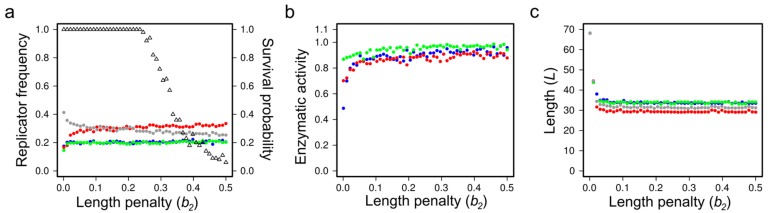
- The review says the MCRS model is ecologically robust and parasite-resistant; sequence-explicit simulations starting from random sequences converged to a stationary distribution with “highly similar densities, lengths and enzymatic activities,” but the number of sustainable replicator species is still limited.
Methods
- Narrative review of major prebiotic replicator models, comparing them against the paper’s three criteria: diversity maintenance, ecological stability, and evolutionary stability.
- The paper discusses multiple model classes, including the quasispecies model, hypercycle, parabolic replicators, stochastic corrector model, open chaotic flows, metabolically coupled replicator systems, and trait group models.
- Analysis is theoretical and model-based, using published equations, prior simulations, and reported analytical results; no new empirical dataset is presented.
Limitations
- The paper states that proving any specific origin-of-life scenario is “almost impossible” because fossil evidence is lacking, and laboratory verification remains a remote possibility.
- It also notes that several claims are based on models whose chemically explicit versions are still incomplete or untested; this is stated in the paper.
- Evident from the text: the review is comparative and largely conceptual, so its conclusions depend on assumptions embedded in the cited models rather than on direct experimental validation.
Model-written summary. Check it against the paper before relying on it.
Integrity signals
Registry
Cites
Statistics
Figures
Verification
Claims the paper makes
15 Valid · 13 Not valid · 78 Not checked · 108 Own results and interpretations
At least one cited source doesn’t support this claim or points to a different paper, and none confirmed it — see the verdicts below.
In the paper
“The MCRS models have shown robust ecological stability against changing the replicator degradation rates (which correspond to environmental perturbations), by applying both sequence-length-dependent and -independent decay rates [33,36].”
§ Ecology and Evolution in the RNA World Dynamics and Stability of Prebiotic Replicator Systems > 4. Discussion The origin of life on Earth is one of the ancient enigmatic questions that humankind has always been asking. Besides the multitude of metaphysical and philosophical answers provided by different forms of civilization in our history we have not, until quite recently, seriously attempted to answer the question of the origin making use of the scientific methodology. There are a few strong reasons for this conspicuous delay in the scientific response to such a fundamental and ancient challenge. Life as we know it is a unique phenomenon, confined to our planet according to our present knowledge. We have no “independent experiments” pertaining to the origins of different forms of life from different points of the Universe at our disposal for comparison. For essentially the same reason it seems impossible to come up with a proper definition of what life is: any such definition attempt suffers from being built upon “ad hoc” assumptions. Yet another reason is the complete lack of fossil record that could channel our speculations on what actually happened almost four billion years ago in the prebiotic ocean. All we can count on is our conviction that the laws of physics and chemistry are time invariant and, therefore, we may be able to invent prebiotic scenarios that are in agreement with those eternal laws and thus, hopefully, their feasibility can be verified or falsified experimentally in the laboratory. This conviction governs our search for prebiotic system models satisfying the three conditions of diversity maintenance, ecological stability and evolutionary stability, which are feasible to apply to each model candidate in the following order. The main criterion that has to be met is the ability of the model to maintain diversity. A system compliant with the diversity criterion can be ecologically stable or unstable. Provided that the model is ecologically stable, the next relevant question pertains to its evolutionary stability. An ecologically stable system that is also evolvable and stable against its characteristic parasites, i.e., one that meets all three criteria, may be a hopeful candidate for representing a possible prebiotic scenario. With at least one pillar missing (including evolvability, which is a prerequisite of evolutionary stability), the model cannot be considered as the basis of a realistic scenario.
What the sources say
- Not checked — no full text of the sourcecites [33] Czárán T. Szathmáry E. Coexistence of replicators in prebiotic evolution The Geometry of Ecological Interactions Dieckmann U. Law R. Metz J.A.J. Cambridge University Press Cambridge, UK 2000 116 134 source
- Disputedcites [36] Könnyű B. Czárán T. Spatial aspects of prebiotic replicator coexistence and community stability in a surface-bound rna world model BMC Evolut. Biol. 2013 13 204 10.1186/1471-2148-13-204 24053177 PMC3848897 sourceExperimental — accuracy not yet measured
The Results (page not available) state that the study varied spatial parameters while keeping other parameters constant, including the decay rate at d = 0.2. The Methods describe decay probability as constant. The reported robustness concerns persistence across repeated runs, not stability under changing degradation rates or a comparison of sequence-length-dependent and -independent decay. (LLM, conf=0.88)
Checked by a reasoning model — may be wrong.
boostedstates a cause- Asserted: passes — The authors put it forward as true.
- Checkable: passes — It can be checked against evidence.
- Load-bearing: passes — The paper’s conclusions depend on it.
- Based: passes — The paper gives a reason why it holds.
- Rests on 6 assumptions not shown here.
Every source the paper cites for this claim was checked and supports it.
In the paper
“Consequently, four different nucleotides can maintain the coexistence of four complementary pairs of strands [16].”
§ Ecology and Evolution in the RNA World Dynamics and Stability of Prebiotic Replicator Systems > 3. Models of Prebiotic Systems > 3.1. Models Assuming no Structure
What the sources say
- Supportedcites [16] Szilágyi A. Zachar I. Szathmáry E. Gause’s principle and the effect of resource partitioning on the dynamical coexistence of replicating templates PLoS Comput. Biol. 2013 9 e1003193 10.1371/journal.pcbi.1003193 23990769 PMC3749944 source
The Results section on complementary replication states that, with four different monomers, a maximum of four complementary sequence pairs could coexist. The Discussion likewise says that up to four replicator pairs can stably coexist in the same environment. The claim expresses this possibility, not a guarantee for every set of strands. (LLM, conf=0.93)
plainstates a cause- Asserted: passes — The authors put it forward as true.
- Checkable: passes — It can be checked against evidence.
- Load-bearing: passes — The paper’s conclusions depend on it.
- Based: passes — The paper gives a reason why it holds.
- Supported
Every source the paper cites for this claim was checked and supports it.
In the paper
“Note that in the “standard”, resource-regulated dynamics of template replication with a detailed chemical kinetics (per base elongation of sequences) a complementary pair of sequences counts as a single replicator, not the solitary strands.”
§ Ecology and Evolution in the RNA World Dynamics and Stability of Prebiotic Replicator Systems > 3. Models of Prebiotic Systems > 3.1. Models Assuming no Structure
What the sources say
- Supportedcites [16] Szilágyi A. Zachar I. Szathmáry E. Gause’s principle and the effect of resource partitioning on the dynamical coexistence of replicating templates PLoS Comput. Biol. 2013 9 e1003193 10.1371/journal.pcbi.1003193 23990769 PMC3749944 source
The Discussion explicitly states that template and copy (plus and minus strands) count as one replicator because they are stoichiometrically coupled. The Results describe a model with shared monomer resources and monomer-specific elongation rates, matching the claim’s resource-regulated replication context. (LLM, conf=0.94)
plain- Asserted: passes — The authors put it forward as true.
- Checkable: passes — It can be checked against evidence.
- Load-bearing: passes — The paper’s conclusions depend on it.
- Based: passes — The paper gives a reason why it holds.
- Supported
Every source the paper cites for this claim was checked and supports it.
In the paper
“This result is in line with that of Szostak et al. [112], whose model predicts parasite invasion in a replicase ribozyme population but without the parasites destroying the system.”
§ Ecology and Evolution in the RNA World Dynamics and Stability of Prebiotic Replicator Systems > 3. Models of Prebiotic Systems > 3.2 Models Assuming Structure
What the sources say
- Supportedcites Szostak et al. [112] Szostak N. Synak J. Borowski M. Wasik S. Blazewicz J. Simulating the origins of life: The dual role of rna replicases as an obstacle to evolution PLoS ONE 2017 12 e0180827 10.1371/journal.pone.0180827 28700697 PMC5507279 source
The Discussion (§4.1) says parasites can arise through imperfect replication and remain present after long simulation runs. It also reports stable coexistence of replicases and parasites, assuming the parasites are mild, which supports the claim that invasion need not destroy the system. (LLM, conf=0.92)
plainstates a cause- Asserted: passes — The authors put it forward as true.
- Checkable: passes — It can be checked against evidence.
- Load-bearing: unclear — It is unclear whether the paper’s conclusions depend on it.
- Based: passes — The paper gives a reason why it holds.
- Supported
The cited sources support only part of this claim — read each source’s verdict below.
In the paper
“The necessary level of wobbling may indeed be provided by the thermodynamics of RNA folding, as it has been demonstrated in the latest versions of MCRS [38], in which the purely phenotypic, sequence-implicit approach has been relaxed with the assignment of actual nucleotide sequences and the corresponding secondary structures (the latter calculated by the ViennaRNA algorithm [119] on the basis of”
§ Ecology and Evolution in the RNA World Dynamics and Stability of Prebiotic Replicator Systems > 3. Models of Prebiotic Systems > 3.2 Models Assuming Structure
What the sources say
- Not matchedcites [38] Könnyű B. Szilágyi A. Czárán T. In silico ribozyme evolution in a metabolically coupled rna population Biol. Direct 2015 10 1 17 10.1186/s13062-015-0049-6 26014147 PMC4445502
We searched by its title and found no matching paper.
- Supportedcites [119] Lorenz R. Bernhart S. Honer zu Siederdissen C. Tafer H. Flamm C. Stadler P. Hofacker I. Viennarna package 2.0 Algorithms Mol. Biol. 2011 6 26 10.1186/1748-7188-6-26 22115189 PMC3319429 source
The citation to this source is attached to the statement that secondary structures were calculated using ViennaRNA, not to the claim about wobbling in MCRS. The Folding section identifies RNAfold as ViennaRNA's main secondary-structure prediction tool and says it computes and outputs a predicted structure. (LLM, conf=0.93)
boostedstates a possible cause- Asserted: passes — The authors put it forward as true.
- Checkable: passes — It can be checked against evidence.
- Load-bearing: passes — The paper’s conclusions depend on it.
- Based: passes — The paper gives a reason why it holds.
- Not matched
116 more claims · 7 with their cited sources checked
Create a free account to see all 214 claims and to verify the 22 references still open.
- It may state two separate claims as one. 79
- Probably not a substantial claim. 19
- The quote only partly states this claim. 2
Citations
Cites
The genetical evolution of social behaviour. I
Hamilton, W. D. (1964) · Journal of Theoretical Biology · doi:10.1016/0022-5193(64)90038-4 · Cited by 15,725
Evolution and the Theory of Games
Smith, J. M. (1988) · Did Darwin Get It Right? · doi:10.1007/978-1-4684-7862-4_22 · Cited by 7,906 · cited 1×
“If there are mutants that corrupt the system or reduce the number of coexisting species (thus decreasing the sustainable amount of information), the system is considered evolutionarily unstable, for detailed analysis, see [21].”
BackgroundEvolution and the Theory of Games
Smith, J. M. (1982) · Cambridge University Press eBooks · doi:10.1017/cbo9780511806292 · Cited by 6,922
Lorenz, R., Bernhart, S. H., Höner zu Siederdissen, C., Tafer, H., Flamm, C., Stadler, P. F., & Hofacker, I. L. (2011) · Algorithms for Molecular Biology · doi:10.1186/1748-7188-6-26 · Cited by 5,098
Darwin, C. (1859) · J. Murray eBooks · doi:10.5962/bhl.title.68064 · Cited by 4,601
Selforganization of matter and the evolution of biological macromolecules
Eigen, M. (1971) · Die Naturwissenschaften · doi:10.1007/bf00623322 · Cited by 3,788 · cited 3×
“The hypercycle was proposed by Eigen and Schuster [22,41–43] as a solution to the error threshold [1], a severe limit to the information content of primordial biological sequences.”
BackgroundDrake, J. W., Charlesworth, B., Charlesworth, D., & Crow, J. F. (1998) · Genetics · doi:10.1093/genetics/148.4.1667 · Cited by 1,932
The Hypercycle: A principle of natural self-organization
Eigen, M., & Schuster, P. M. (1979) · Cited by 1,906
A principle of natural self-organization: Part A: Emergence of the hypercycle
Eigen, M., & Schuster, P. (1977) · Naturwissenschaften · doi:10.1007/bf00450633 · Cited by 1,752 · cited 2×
“• The Quasispecies model (QS) [1,22] • The Hypercycle (HC), spatial hypercycle (SHC) [23–26], compartmentalized hypercycle (CHC) [27] models • The Parabolic replicators (PR) model [17] • The Stochastic Corrector model (SCM) [27–30] • The Open chaotic flow (OCF) model [31,32] • The Metabolically Coupled Replicator Syst…”
BackgroundCellular Automata Machines: A New Environment for Modeling
Toffoli, T., & Margolus, N. (1987) · The MIT Press eBooks · doi:10.7551/mitpress/1763.001.0001 · Cited by 1,425
Wilson, D. S. (1975) · Proceedings of the National Academy of Sciences · doi:10.1073/pnas.72.1.143 · Cited by 1,259 · cited 6×
“Specifically, our analysis includes the following models: • The Quasispecies model (QS) [1,22] • The Hypercycle (HC), spatial hypercycle (SHC) [23–26], compartmentalized hypercycle (CHC) [27] models • The Parabolic replicators (PR) model [17] • The Stochastic Corrector model (SCM) [27–30] • The Open chaotic flow (OCF)…”
BackgroundInfluentialThe antiquity of RNA-based evolution.
Joyce, G. F. (2002) · Nature · doi:10.1038/418214a · Cited by 1,070 · cited 6×
“The most promising such prebiotic evolutionary scenario is that of the RNA World [48,98,123], which has many different incarnations as regards their assumptions of the actual physical-chemical habitats of the ancient RNA populations, as well as the abstract structures of the dynamical models these assumptions imply.”
BackgroundInfluentialEigen, M., & Schuster, P. (1979) · doi:10.1007/978-3-642-67247-7 · Cited by 949
Prebiotic Systems Chemistry: New Perspectives for the Origins of Life
Ruiz-Mirazo, K., Briones, C., & de la Escosura, A. (2014) · Chemical Reviews · doi:10.1021/cr2004844 · Cited by 930 · cited 2×
“Given that abiotic monomer production must have been very slow (if it occurred at all) without enzymes under prebiotic circumstances [109,111], we must assume that metabolism was also catalysed and the necessary catalytic help for monomer production came from within the random pool of RNA sequences as well.”
BackgroundAutocatalytic sets of proteins
Kauffman, S. A. (1986) · Journal of Theoretical Biology · doi:10.1016/s0022-5193(86)80047-9 · Cited by 741
Multispecies Competition in Variable Environments
Chesson, P. (1994) · Theoretical Population Biology · doi:10.1006/tpbi.1994.1013 · Cited by 726
The Hypercycle: A principle of natural self-organization Part B: The abstract hypercycle
Eigen, M., & Schuster, P. (1978) · Naturwissenschaften · doi:10.1007/bf00420631 · Cited by 702
An extracellular Darwinian experiment with a self-duplicating nucleic acid molecule.
Mills, D. R., Peterson, R. L., & Spiegelman, S. (1967) · Proceedings of the National Academy of Sciences · doi:10.1073/pnas.58.1.217 · Cited by 648 · cited 2×
“Functional sequences are usually long and their shorter mutants replicate faster, as demonstrated in Spiegelman’s experiment [72,73], in which the Qβ phage genome was replicated without selection for function.”
BackgroundA Self‐Replicating Hexadeoxynucleotide
von Kiedrowski, G. (1986) · Angewandte Chemie International Edition in English · doi:10.1002/anie.198609322 · Cited by 583 · cited 2×
“In this case the selection-free regime exists only above a critical total concentration [17,75].”
BackgroundDetermination of the Core of a Minimal Bacterial Gene Set
Gil, R., Silva, F. J., Peretó, J., & Moya, A. (2004) · Microbiology and Molecular Biology Reviews · doi:10.1128/mmbr.68.3.518-537.2004 · Cited by 573
Orgel, L. E. (1992) · Nature · doi:10.1038/358203a0 · Cited by 535 · cited 2×
“Assuming that the per nucleotide mutation rate is 1% [45] (which is a realistic assumption for replications unaided by efficient enzymes) and that the wild type has better replication rate than any mutant at least conforming to the ln(AW/Am) = 1 relationship, we find that a wild type sequence of length 100 but not mor…”
BackgroundGanti, T. (2003) · doi:10.1093/acprof:oso/9780198507260.001.0001 · Cited by 490
The Hypercycle: A principle of natural self-organization Part C: The realistic hypercycle
Eigen, M., & Schuster, P. (1978) · The Science of Nature · doi:10.1007/bf00439699 · Cited by 487
Coexistence in a Variable Environment
Levins, R. (1979) · The American Naturalist · doi:10.1086/283527 · Cited by 465
Toward major evolutionary transitions theory 2.0
Szathmáry, E. (2015) · Proceedings of the National Academy of Sciences · doi:10.1073/pnas.1421398112 · Cited by 415 · cited 1×
“The SCM also realizes multilevel selection properly, hence it is modelling the result of a major evolutionary transition in which competing elements of a lower level of selection are successfully integrated at a higher level [2,104].”
BackgroundGroup selection of early replicators and the origin of life
Szathmáry, E., & Demeter, L. (1987) · Journal of Theoretical Biology · doi:10.1016/s0022-5193(87)80191-1 · Cited by 407 · cited 5×
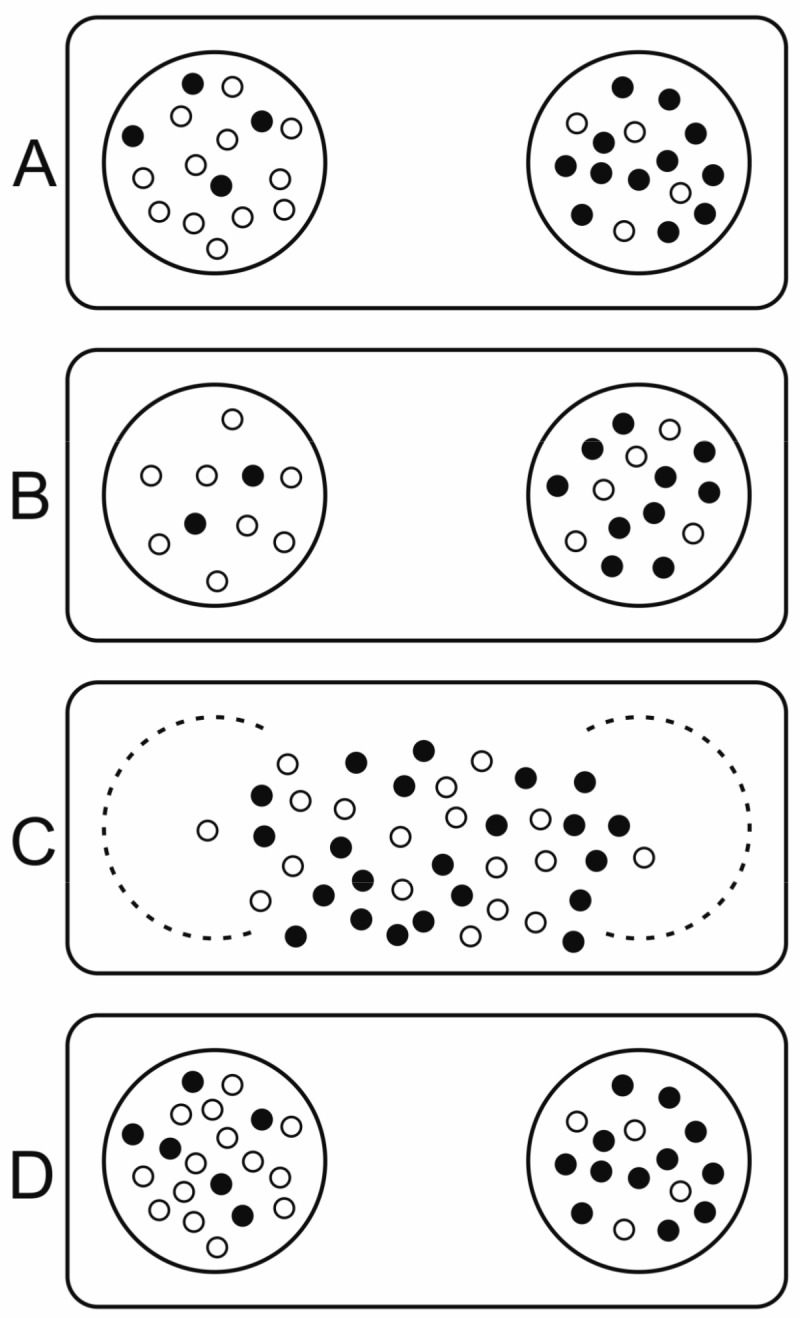
“It can be shown that internal dynamics and compartment splitting lead to a dominant equilibrium quasispecies [22] in which all compartment types coexist (and thus no replicator is lost; [28,29]).”
BackgroundMethodInfluentialRibozyme-catalyzed transcription of an active ribozyme
Wochner, A., Attwater, J., Coulson, A., & Holliger, P. (2011) · Science · doi:10.1126/science.1200752 · Cited by 399
Compositional genomes: Prebiotic information transfer in mutually catalytic noncovalent assemblies
Segré, D., Ben-Eli, D., & Lancet, D. (2000) · Proceedings of the National Academy of Sciences · doi:10.1073/pnas.97.8.4112 · Cited by 398
Group Selection Group Selection in Predator-Prey Communities. M. E. Gilpin
Smith, J. M. (1976) · The Quarterly Review of Biology · doi:10.1086/409311 · Cited by 397
Spiral wave structure in pre-biotic evolution: Hypercycles stable against parasites
Boerlijst, M. C., & Hogeweg, P. (1991) · Physica D: Nonlinear Phenomena · doi:10.1016/0167-2789(91)90049-f · Cited by 376 · cited 2×
“Boerlijst and Hogeweg were the first to analyse a spatial version of the hypercycle [25,26].”
BackgroundStructured Demes and the Evolution of Group-Advantageous Traits
Wilson, D. S. (1977) · The American Naturalist · doi:10.1086/283146 · Cited by 363 · cited 1×
“Wilson constructed his trait group model (TGM, structured deme model) [39,90] to demonstrate that group selection at the supraindividual level can lead to the coexistence of altruistic individuals with inferior fitness compared to more selfish, opportunistic ones.”
BackgroundWatson, R. A., & Szathmáry, E. (2016) · Trends in Ecology & Evolution · doi:10.1016/j.tree.2015.11.009 · Cited by 324 · cited 1×
“For replicators to be the units of open-ended [2] evolutionary change, they have to be capable of unlimited heredity [3], self-referentialism and evolution of evolvability [4], etc.”
BackgroundCompetitive exclusion and limiting similarity: A unified theory
Meszéna, G., Gyllenberg, M., Pásztor, L., & Metz, J. A. J. (2006) · Theoretical Population Biology · doi:10.1016/j.tpb.2005.07.001 · Cited by 298
Asphalt, Water, and the Prebiotic Synthesis of Ribose, Ribonucleosides, and RNA
Benner, S. A., Kim, H.-J., & Carrigan, M. A. (2012) · Accounts of Chemical Research · doi:10.1021/ar200332w · Cited by 281 · cited 1×
“Given that abiotic monomer production must have been very slow (if it occurred at all) without enzymes under prebiotic circumstances [109,111], we must assume that metabolism was also catalysed and the necessary catalytic help for monomer production came from within the random pool of RNA sequences as well.”
BackgroundIn-ice evolution of RNA polymerase ribozyme activity
Attwater, J., Wochner, A., & Holliger, P. (2013) · Nature Chemistry · doi:10.1038/nchem.1781 · Cited by 279
Amplification of RNA by an RNA polymerase ribozyme
Horning, D. P., & Joyce, G. F. (2016) · Proceedings of the National Academy of Sciences · doi:10.1073/pnas.1610103113 · Cited by 261
Protocells: Bridging Nonliving and Living Matter
(2008) · The MIT Press eBooks · doi:10.7551/mitpress/9780262182683.001.0001 · Cited by 244
Hypercycles and the origin of life
Smith, J. M. (1979) · Nature · doi:10.1038/280445a0 · Cited by 240 · cited 2×
“The problem with the TGM is precisely what Maynard Smith recognized: a trait group, due to global mixing, does not form a true unit of selection but simply realizes kin selection (for example, by locally reproducing organisms forming a kin).”
BackgroundMinimal Replicator Theory I: Parabolic Versus Exponential Growth
von Kiedrowski, G. (1993) · Bioorganic Chemistry Frontiers · doi:10.1007/978-3-642-78110-0_4 · Cited by 212 · cited 1×
“As von Kiedrowski first pointed out in 1986 [75], chemically embodied artificial replicators (modified hexanucleotides) behave according to this type of kinetics (see [76] for a detailed analysis of dynamics and [77] for an overview of artificial self-replicators.”
BackgroundChemical and biological activity in open flows: A dynamical system approach
Tél, T., de Moura, A., Grebogi, C., & Károlyi, G. (2005) · Physics Reports · doi:10.1016/j.physrep.2005.01.005 · Cited by 208 · cited 1×
“However, this condition is easily satisfied for example in the wakes of oceanic islands where particles may be trapped for months or even for years [117].”
BackgroundVasas, V., Szathmáry, E., & Santos, M. (2010) · Proceedings of the National Academy of Sciences · doi:10.1073/pnas.0912628107 · Cited by 196 · cited 1×
“We will confine our focus on models of linear polymer replicators (string replicators) and will not survey models dealing only with higher-level (compositional) dynamics such as the GARD model [7–9] or the models of autocatalytic sets [10–12], as those models can be understood as special cases of others discussed in t…”
MethodSub-exponential growth and coexistence of non-enzymatically replicating templates
Szathmáry, E., & Gladkih, I. (1989) · Journal of Theoretical Biology · doi:10.1016/s0022-5193(89)80177-8 · Cited by 165
Transient compartmentalization of RNA replicators prevents extinction due to parasites
Matsumura, S., Kun, Á., Ryckelynck, M., Coldren, F., Szilágyi, A., Jossinet, F., Rick, C., Nghe, P., Szathmáry, E., & Griffiths, A. D. (2016) · Science · doi:10.1126/science.aag1582 · Cited by 162 · cited 7×
“In vitro realizations prove that (transient) compartmentalization is effective in maintaining a functional diversity of replicators within vesicles [40].”
BackgroundInfluentialSelf-citationA general cooperation theorem for hypercycles
Hofbauer, J. (1981) · Monatshefte f�r Mathematik · doi:10.1007/bf01301790 · Cited by 160 · cited 1×
“In the inhomogeneous hypercycle (Ai > 0) the members are also in competition and if the Ai values are too large compared to the Ki values, then one or more of the sequences can be lost [54].”
BackgroundReal ribozymes suggest a relaxed error threshold
Kun, Á., Santos, M., & Szathmáry, E. (2005) · Nature Genetics · doi:10.1038/ng1621 · Cited by 151
Self-citationOn the founder effect and the evolution of altruistic traits
Cohen, D., & Eshel, I. (1976) · Theoretical Population Biology · doi:10.1016/0040-5809(76)90020-4 · Cited by 147
Chaotic flow: The physics of species coexistence
Károlyi, G., Péntek, Á., Scheuring, I., Tél, T., & Toroczkai, Z. (2000) · Proceedings of the National Academy of Sciences · doi:10.1073/pnas.240242797 · Cited by 142 · cited 2×
“• The Quasispecies model (QS) [1,22] • The Hypercycle (HC), spatial hypercycle (SHC) [23–26], compartmentalized hypercycle (CHC) [27] models • The Parabolic replicators (PR) model [17] • The Stochastic Corrector model (SCM) [27–30] • The Open chaotic flow (OCF) model [31,32] • The Metabolically Coupled Replicator Syst…”
BackgroundSelf-citationSegrè, D., Lancet, D., Kedem, O., & Pilpel, Y. (1998) · Origins of Life and Evolution of Biospheres · doi:10.1023/a:1006583712886 · Cited by 138
Schuster, P., Sigmund, K., & Wolff, R. (1979) · Journal of Differential Equations · doi:10.1016/0022-0396(79)90039-1 · Cited by 129 · cited 1×
“Assuming that all catalytic rates are the same, the dynamics leads to a stable fixed point for two-, three- and four-membered hypercycles [51,52].”
BackgroundSmith, J. M. (1983) · Proceedings of the Royal Society of London. Series B. Biological Sciences · doi:10.1098/rspb.1983.0076 · Cited by 124 · cited 2×
“The hypercycle was devised to overcome Eigen’s Paradox.”
BackgroundHypercycles, parasites and packages
Bresch, C., Niesert, U., & Harnasch, D. (1980) · Journal of Theoretical Biology · doi:10.1016/0022-5193(80)90314-8 · Cited by 116 · cited 1×
“Niesert and co-workers [70] and Maynard Smith [71] pointed out a series of even more severe problems of the hypercycle that arise if mutations are allowed.”
BackgroundPrebiotic network evolution: six key parameters
Nghe, P., Hordijk, W., Kauffman, S. A., Walker, S. I., Schmidt, F. J., Kemble, H., Yeates, J. A. M., & Lehman, N. (2015) · Molecular BioSystems · doi:10.1039/c5mb00593k · Cited by 113
Takeuchi, N., & Hogeweg, P. (2009) · PLoS Computational Biology · doi:10.1371/journal.pcbi.1000542 · Cited by 104 · cited 1×
“The coexistence of a replicase ribozyme and its parasitic quasispecies in a multilevel selection regime has also been demonstrated in [113].”
BackgroundAdvection of active particles in open chaotic flows
Toroczkai, Z., Károlyi, G., Péntek, Á., Tél, T., & Grebogi, C. (1998) · Physical Review Letters · doi:10.1103/physrevlett.80.500 · Cited by 102 · cited 2×
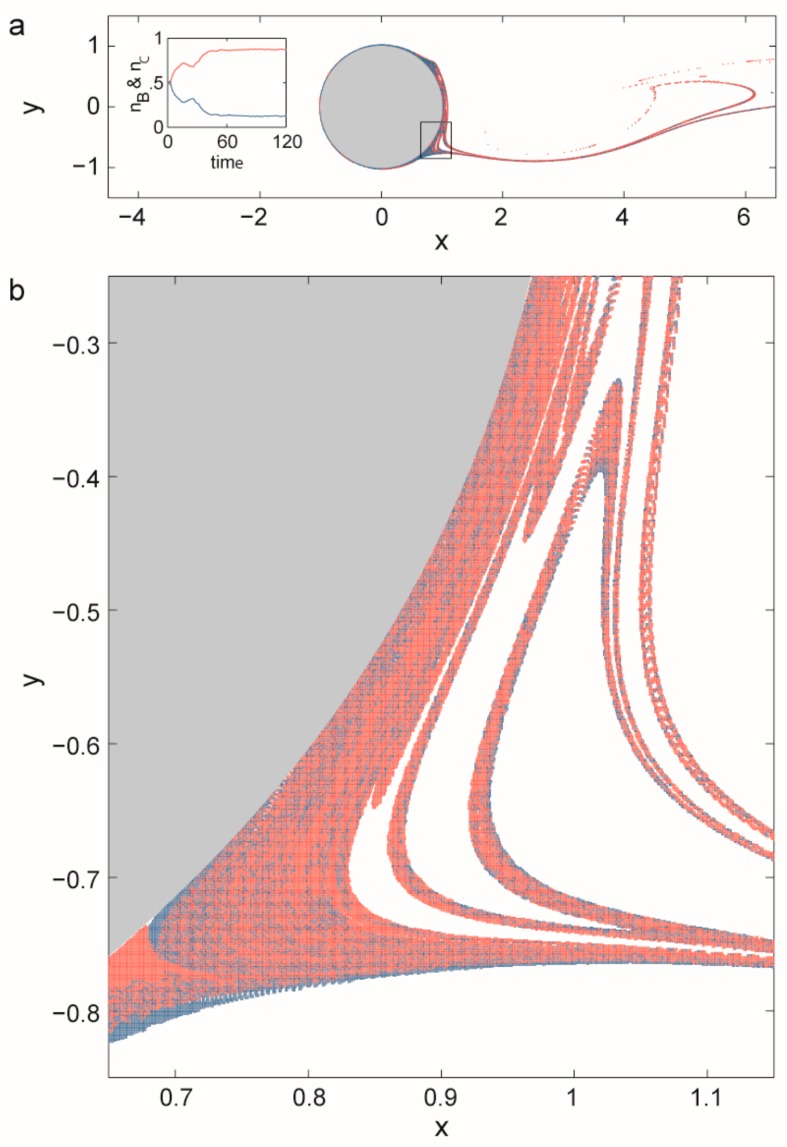
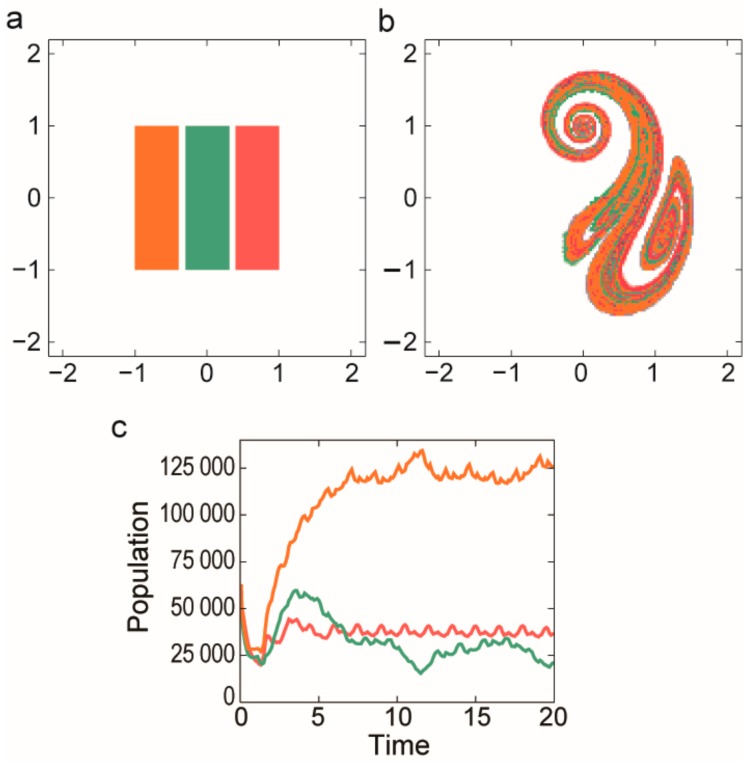
“How do populations of replicators living and multiplying in an open chaotic flow behave? The dynamics of autocatalytic replicators in two-dimensional open chaotic flows has been derived by [87] as”
BackgroundA re-exam ination of the stochastic corrector model
(1995) · Proceedings of the Royal Society of London. Series B: Biological Sciences · doi:10.1098/rspb.1995.0172 · Cited by 79 · cited 2×
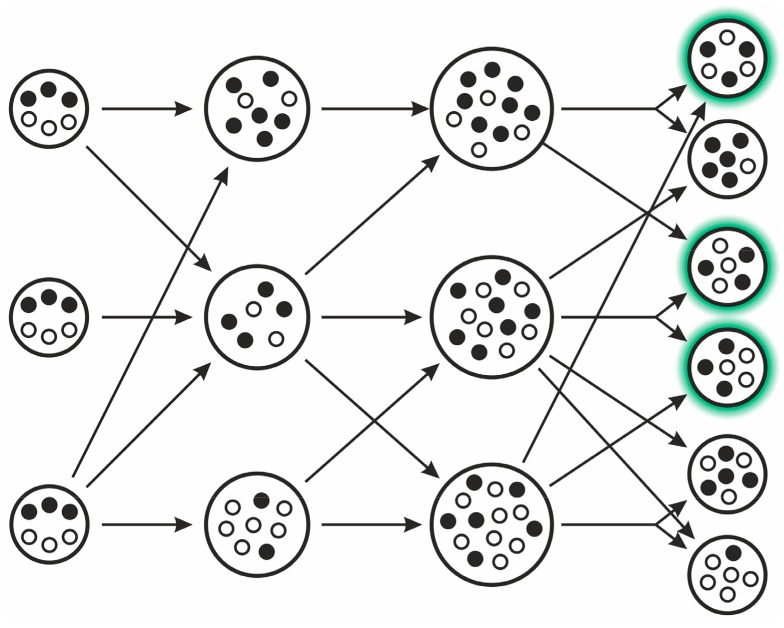
“Compartments with green highlight (after division) contain the optimal composition of replicators (after [29]).”
BackgroundDynamical Systems Under Constant Organization II: Homogeneous Growth Functions of Degree $p = 2$
Hofbauer, J., Schuster, P., Sigmund, K., & Wolff, R. (1980) · SIAM Journal on Applied Mathematics · doi:10.1137/0138025 · Cited by 77
Natural selection and dynamical coexistence of defective and complementing virus segments
Szathmáry, E. (1992) · Journal of Theoretical Biology · doi:10.1016/s0022-5193(05)80617-4 · Cited by 76
Simple growth laws and selection consequences
Szathmáry, E. (1991) · Trends in Ecology & Evolution · doi:10.1016/0169-5347(91)90228-p · Cited by 75 · cited 1×
“The hypercycle as a whole system exhibits hyperbolic growth and entities initially having a higher population size have an advantage in such a growth regime [67].”
Background“Living” under the challenge of information decay: the stochastic corrector model vs. hypercycles
ZINTZARAS, E., SANTOS, M., & SZATHMÁRY, E. (2002) · Journal of Theoretical Biology · doi:10.1006/jtbi.2002.3026 · Cited by 69
Gánti, T. (2003) · Mathematical and Computational Chemistry · doi:10.1007/978-1-4419-8903-1 · Cited by 69
Rapid and simple ribozymic aminoacylation using three conserved nucleotides
Chumachenko, N. V., Novikov, Y., & Yarus, M. (2009) · Journal of the American Chemical Society · doi:10.1021/ja809419f · Cited by 68 · cited 1×
“Since ligation does not require a long ribozyme sequence [108], it is template binding and daughter-strand separation that necessitate the help of more complex and longer RNA polymerase ribozymes.”
BackgroundChaotic advection, diffusion, and reactions in open flows
Tél, T., Károlyi, G., Péntek, Á., Scheuring, I., Toroczkai, Z., Grebogi, C., & Kadtke, J. (2000) · Chaos: An Interdisciplinary Journal of Nonlinear Science · doi:10.1063/1.166478 · Cited by 67
Self-citationThe dynamics of the RNA world: insights and challenges
Kun, Á., Szilágyi, A., Könnyű, B., Boza, G., Zachar, I., & Szathmáry, E. (2015) · Annals of the New York Academy of Sciences · doi:10.1111/nyas.12700 · Cited by 65 · cited 4×
“Metabolically Coupled Replicator System (MCRS) The Concept of a Metabolically Coupled RNA World All the RNA-based models of prebiotic evolution are built on the assumption—which, at the time of writing, remains empirically unproven—that the template replication of the first RNA replicators was possible in the RNA Worl…”
BackgroundInfluentialSelf-citationKönnyű, B., Czárán, T., & Szathmáry, E. (2008) · BMC Evolutionary Biology · doi:10.1186/1471-2148-8-267 · Cited by 58 · cited 1×
“, parallel or alternative enzyme activities of the same replicator) [35], the explicit assignment of the replicase function to an additional replicator species [34] or allowing for phenotype-genotype separation in the complementary strands of the replicators [115] did not change the general conclusion regarding the vi…”
BackgroundSelf-citationSCHUSTER, P., SIGMUND, K., & WOLFF, R. (1978) · Bulletin of Mathematical Biology · doi:10.1016/s0092-8240(78)80007-x · Cited by 58
Spatial Models of Prebiotic Evolution: Soup Before Pizza?
Scheuring, I., Czárán, T., Szabó, P., Károlyi, G., & Toroczkai, Z. (2003) · Origins of life and evolution of the biosphere · doi:10.1023/a:1025742505324 · Cited by 53 · cited 2×
“Similar to parabolic replication, there is no selection in this habitat, so we have to assume other regions providing intense turbulent mixing where exponential dynamics still maintain selection [89].”
BackgroundSelf-citationLevisohn, R., & Spiegelman, S. (1969) · Proceedings of the National Academy of Sciences · doi:10.1073/pnas.63.3.805 · Cited by 53
Origin of self-replicating biopolymers: autocatalytic feedback can jump-start the RNA world
Wu, M., & Higgs, P. G. (2009) · Journal of Molecular Evolution · doi:10.1007/s00239-009-9276-8 · Cited by 52 · cited 1×
“Wu and Higgs [110] suggest a simple model for a self-inducing evolutionary mechanism capable of producing replicase ribozymes with relatively high catalytic activity, starting from a very inefficient “primordial” replicase.”
BackgroundA Model of Prebiotic Replication: Survival of the Fittest versus Extinction of the Unfittest
Lifson, S., & Lifson, H. (1999) · Journal of Theoretical Biology · doi:10.1006/jtbi.1999.0969 · Cited by 52 · cited 1×
“The selection-free regime switches to selective upon assuming the (naturally present) exponential decay of single-strands [80].”
BackgroundCompetition and cooperation in catalytic selfreplication
Hofbauer, J., Schuster, P., & Sigmund, K. (1981) · Journal of Mathematical Biology · doi:10.1007/bf00275439 · Cited by 50
Life from an RNA world: the ancestor within
(2010) · Choice Reviews Online · doi:10.5860/choice.48-0253 · Cited by 49 · cited 4×
“Metabolically Coupled Replicator System (MCRS) The Concept of a Metabolically Coupled RNA World All the RNA-based models of prebiotic evolution are built on the assumption—which, at the time of writing, remains empirically unproven—that the template replication of the first RNA replicators was possible in the RNA Worl…”
BackgroundInfluentialThe integration of the earliest genetic information
Szathmáry, E. (1989) · Trends in Ecology & Evolution · doi:10.1016/0169-5347(89)90073-6 · Cited by 48 · cited 1×
“The SCM was designed [28,95] to remedy both the trait group model’s fuzzy compartmentation and lack of proper higher-level unit of selection and the hypercycle’s frailty against mutants [28,96,97].”
MethodSurvival of Replicators with Parabolic Growth Tendency and Exponential Decay
SCHEURING, I., & SZATHMÁRY, E. (2001) · Journal of Theoretical Biology · doi:10.1006/jtbi.2001.2360 · Cited by 48 · cited 1×
“The behaviour of the system may change if both single- and double-strand forms can exponentially decay (even if the decay rate of the double-strand is much smaller than that of the single-strands), as it is shown in [81] for two competing replicators.”
BackgroundSelf-citationAutocatalytic Sets: From the Origin of Life to the Economy
(2013) · BioScience · doi:10.1525/bio.2013.63.11.6 · Cited by 48
The origin of a primordial genome through spontaneous symmetry breaking
Takeuchi, N., Hogeweg, P., & Kaneko, K. (2017) · Nature Communications · doi:10.1038/s41467-017-00243-x · Cited by 48
de Vladar, H. P., Santos, M., & Szathmáry, E. (2017) · Trends in Ecology & Evolution · doi:10.1016/j.tree.2017.01.008 · Cited by 48
Spatial gradients enhance persistence of hypercycles
Boerlijst, M. C., & Hogeweg, P. (1995) · Physica D Nonlinear Phenomena · doi:10.1016/0167-2789(95)00178-7 · Cited by 45
Hypercycles versus Parasites in a Two Dimensional Partial Differential Equations Model
Cronhjort, M. B., & Blomberg, C. (1994) · Journal of Theoretical Biology · doi:10.1006/jtbi.1994.1128 · Cited by 43 · cited 1×
“The partial differential equation model of the same system exhibit less spiral formation and it is prone to parasites that kill the spirals [23,24].”
BackgroundCompeting populations in flows with chaotic mixing
Scheuring, I., Károlyi, G., Toroczkai, Z., Tél, T., & Péntek, Á. (2003) · Theoretical Population Biology · doi:10.1016/s0040-5809(02)00035-7 · Cited by 43
Self-citationThe origin of life is a spatially localized stochastic transition
Wu, M., & Higgs, P. G. (2012) · Biology Direct · doi:10.1186/1745-6150-7-42 · Cited by 42
Stable periodic solutions for the hypercycle system
Hofbauer, J., Mallet-Paret, J., & Smith, H. L. (1991) · Journal of Dynamics and Differential Equations · doi:10.1007/bf01049740 · Cited by 41 · cited 1×
“Again, hypercycles with n ≤ 3 members converge to a stable fixed point [51] and ones with five or more members exhibit oscillatory behaviour (stable limit cycles [57,58].”
BackgroundCzárán, T., Könnyű, B., & Szathmáry, E. (2015) · Journal of Theoretical Biology · doi:10.1016/j.jtbi.2015.06.002 · Cited by 37 · cited 1×
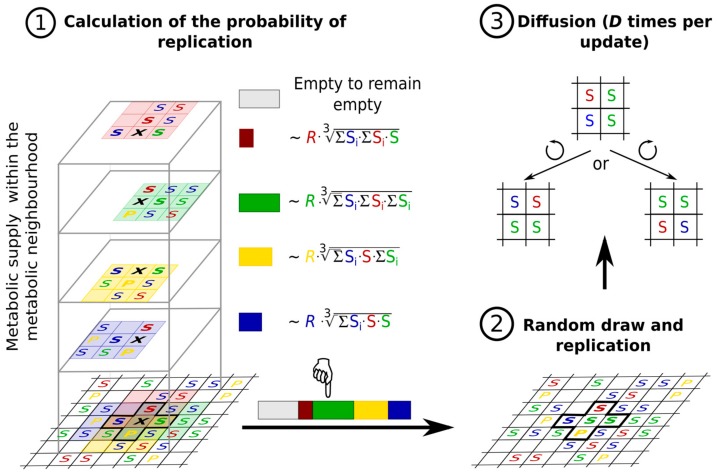
“Unlike the mean-field version, the stochastic (lattice) implementation of the spatially explicit MCRS model keeps all the metabolic replicators coexistent and shows robust ecological stability (Figure 9) [33,36,37].”
BackgroundSelf-citationSzostak, N., Wasik, S., & Blazewicz, J. (2016) · PLOS Computational Biology · doi:10.1371/journal.pcbi.1004853 · Cited by 37
Coexistence in a fluctuating environment by the effect of relative nonlinearity: A minimal model
Szilágyi, A., & Meszéna, G. (2010) · Journal of Theoretical Biology · doi:10.1016/j.jtbi.2010.09.020 · Cited by 36
Self-citationA New Replicator: A theoretical framework for analysing replication
Zachar, I., & Szathmáry, E. (2010) · BMC Biology · doi:10.1186/1741-7007-8-21 · Cited by 34 · cited 1×
“We will use the term “replicator” for any kind of biological or chemical entity that is capable of replication in the broadest sense (see [6]), i.”
MethodSelf-citationOn the propagation of a conceptual error concerning hypercycles and cooperation
Szathmáry, E. (2013) · Journal of Systems Chemistry · doi:10.1186/1759-2208-4-1 · Cited by 33 · cited 1×
“There is a lingering misconception in the literature [50] which results in the cyclic (first order) production of certain molecules being called a hypercycle, which it is not.”
BackgroundSelection versus Coexistence of Parabolic Replicators Spreading on Surfaces
von Kiedrowski, G., & Szathmáry, E. (2001) · Selection · doi:10.1556/select.1.2000.1-3.17 · Cited by 32 · cited 1×
“In an attempt to extend the investigations beyond the spatially homogenous case described by Equation (10), template-directed replication was assumed to occur on a surface [82].”
BackgroundAn extremum principle for parabolic competition
Varga, Z., & Szathmáry, E. (1997) · Bulletin of Mathematical Biology · doi:10.1007/bf02460105 · Cited by 27
The Evolution of Enzyme Specificity in the Metabolic Replicator Model of Prebiotic Evolution
Könnyű, B., & Czárán, T. (2011) · PLoS ONE · doi:10.1371/journal.pone.0020931 · Cited by 26 · cited 3×
“, parallel or alternative enzyme activities of the same replicator) [35], the explicit assignment of the replicase function to an additional replicator species [34] or allowing for phenotype-genotype separation in the complementary strands of the replicators [115] did not change the general conclusion regarding the vi…”
BackgroundSelf-citationError propagation in the hypercycle
Campos, P., Fontanari, J., & Stadler, P. (2000) · Physical Review E · doi:10.1103/physreve.61.2996 · Cited by 25 · cited 1×
“On the other hand, differences in replication and catalytic rates can ensure that information in many pieces can be maintained whereas a long chromosome cannot [66].”
BackgroundPrimordial evolvability: Impasses and challenges
Vasas, V., Fernando, C., Szilágyi, A., Zachár, I., Santos, M., & Szathmáry, E. (2015) · Journal of Theoretical Biology · doi:10.1016/j.jtbi.2015.06.047 · Cited by 25 · cited 1×
“We will confine our focus on models of linear polymer replicators (string replicators) and will not survey models dealing only with higher-level (compositional) dynamics such as the GARD model [7–9] or the models of autocatalytic sets [10–12], as those models can be understood as special cases of others discussed in t…”
MethodSelf-citationKönnyű, B., & Czárán, T. (2013) · BMC Evolutionary Biology · doi:10.1186/1471-2148-13-204 · Cited by 25 · cited 7×
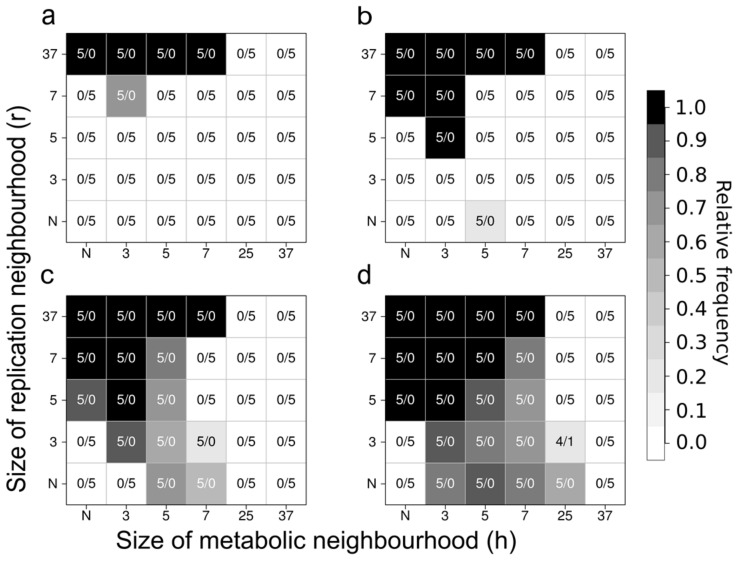
“The ecological stability and the parasite resistance of the MCRS is spectacular at a substantial range of its parameter space but the number s of metabolically essential replicator species sustainable by its simple diffuse group selection mechanism is always limited [36].”
BackgroundMethodInfluentialSelf-citationA model of an autocatalytic network formed by error-prone self-replicative species
Nuño, J. C., Andrade, M. A., Morán, F., & Montero, F. (1993) · Bulletin of Mathematical Biology · doi:10.1007/bf02460889 · Cited by 25 · cited 1×
“Stability is further affected by differences in the catalytic aid members give to each other [60].”
BackgroundSantos, M., Zintzaras, E., & Szathmáry, E. (2003) · Origins of Life and Evolution of Biospheres · doi:10.1023/a:1025759024888 · Cited by 24 · cited 1×
“Whether fusion of compartments increases diversity and stabilizes the system in general is not clear yet, though some theoretical results indicate positive effects [99].”
ResultSpatio-temporal dynamics in the origin of genetic information
Kim, P.-J., & Jeong, H. (2005) · Physica D: Nonlinear Phenomena · doi:10.1016/j.physd.2005.03.004 · Cited by 24 · cited 1×
“Shortcut mutants, however, still outcompete longer sequences [85].”
BackgroundA Difference Equation Model for the Hypercycle
Hofbauer, J. (1984) · SIAM Journal on Applied Mathematics · doi:10.1137/0144054 · Cited by 22 · cited 2×
“Again, hypercycles with n ≤ 3 members converge to a stable fixed point [51] and ones with five or more members exhibit oscillatory behaviour (stable limit cycles [57,58].”
BackgroundMetabolic network dynamics in open chaotic flow
Károlyi, G., Scheuring, I., & Czárán, T. (2002) · Chaos: An Interdisciplinary Journal of Nonlinear Science · doi:10.1063/1.1457468 · Cited by 22 · cited 3×
“The potential that an empty site remains empty was Ce = 2 (Based on [32]).”
BackgroundSelf-citationAttractors and spatial patterns in hypercycles with negative interactions
Boerlijst, M. C., & Hogeweg, P. (1995) · Journal of Theoretical Biology · doi:10.1006/jtbi.1995.0191 · Cited by 22 · cited 1×
“But even-membered cycles outcompete odd-membered cycles and thus the hypercycle generally breaks down under strong suppression [69].”
The information capacity of hypercycles
Silvestre, D. A. M. M., & Fontanari, J. F. (2008) · Journal of Theoretical Biology · doi:10.1016/j.jtbi.2008.07.023 · Cited by 19 · cited 1×
“Silvestre and Fontanari [65] have cast some further doubt on the information integration capability of hypercycles.”
BackgroundAn extremum principle for parabolic competition
Varga, Z. (1997) · Bulletin of Mathematical Biology · doi:10.1016/s0092-8240(97)00048-7 · Cited by 19 · cited 2×
“Szathmáry and Demeter have applied the quasispecies model to the various compartments rather than to individual molecules (assuming a finite number of compartment types; [98])—emphasizing that in this case, compartmentalized groups of replicators follow their own internal dynamics depending on their internal states.”
ResultThe Importance of Stochastic Transitions for the Origin of Life
Higgs, P. G., & Wu, M. (2012) · Origins of Life and Evolution of Biospheres · doi:10.1007/s11084-012-9307-0 · Cited by 18
Priye, A., Yu, Y., Hassan, Y. A., & Ugaz, V. M. (2017) · Proceedings of the National Academy of Sciences · doi:10.1073/pnas.1612924114 · Cited by 18 · cited 1×
“Recently [118] have shown numerically and experimentally that chaotic advection indeed accelerates surface reaction kinetics in the porous mineral substrates characteristic of sites near hydrothermal vents.”
BackgroundHypercycles versus parasites in the origin of life: model dependence in spatial hypercycle systems
Cronhjort, M. B. (1995) · Origins of Life and Evolution of the Biosphere · doi:10.1007/bf01581586 · Cited by 17 · cited 1×
“The partial differential equation model of the same system exhibit less spiral formation and it is prone to parasites that kill the spirals [23,24].”
BackgroundSzilágyi, A., Zachar, I., & Szathmáry, E. (2013) · PLoS Computational Biology · doi:10.1371/journal.pcbi.1003193 · Cited by 17 · cited 2×
“) Furthermore, the determination of coexisting species (and hence their number) may be also complicated (as is the case for replicating nucleotide sequences, where a complementary pair of strands counts as a single replicator instead of two [16].”
BackgroundSelf-citationInfluence of the hypercycle on the error threshold: A stochastic approach
García-Tejedor, A., Sanz-Nuño, J. C., Olarrea, J., de la Rubia, F. J., & Montero, F. (1988) · Journal of Theoretical Biology · doi:10.1016/s0022-5193(88)80049-3 · Cited by 16 · cited 1×
“Analysing the dynamics of hypercycles and the mutants of the master sequences uncovered a new threshold [63,64].”
BackgroundStable coevolutionary regimes for genetic parasites and their hosts: you must differ to coevolve
Berezovskaya, F., Karev, G. P., Katsnelson, M. I., Wolf, Y. I., & Koonin, E. V. (2018) · Biology Direct · doi:10.1186/s13062-018-0230-9 · Cited by 16
Influence of the hypercyclic organization on the error threshold
García-Tejedor, A., Morán, F., & Montero, F. (1987) · Journal of Theoretical Biology · doi:10.1016/s0022-5193(87)80137-6 · Cited by 15 · cited 1×
“Analysing the dynamics of hypercycles and the mutants of the master sequences uncovered a new threshold [63,64].”
BackgroundError threshold ghosts in a simple hypercycle with error prone self-replication
Sardanyés, J. (2008) · Chaos, Solitons & Fractals · doi:10.1016/j.chaos.2006.05.020 · Cited by 14 · cited 1×
“In conclusion, we may say that the hypercycle can show rich dynamics [61,62], although its ability to maintain the coexistence of even a moderate number of different replicators is limited.”
BackgroundBifurcations analysis of oscillating hypercycles
Guillamon, A., Fontich, E., & Sardanyés, J. (2015) · Journal of Theoretical Biology · doi:10.1016/j.jtbi.2015.09.018 · Cited by 14 · cited 1×
“Again, hypercycles with n ≤ 3 members converge to a stable fixed point [51] and ones with five or more members exhibit oscillatory behaviour (stable limit cycles [57,58].”
BackgroundZachar, I., Fedor, A., & Szathmáry, E. (2011) · PLoS ONE · doi:10.1371/journal.pone.0021380 · Cited by 13 · cited 1×
“A stochastic implementation of the chemoton model (approximating the SCM) proves that two different competing template replicators can coexist in a protocell [103].”
Self-citationMaximal gene number maintainable by stochastic correction – The second error threshold
Hubai, A. G., & Kun, Á. (2016) · Journal of Theoretical Biology · doi:10.1016/j.jtbi.2016.02.007 · Cited by 12 · cited 2×
“Hubai and Kun, under more realistic assumptions, concluded that ~100 different genes could have survived in a simple protocell [30].”
BackgroundSelf-citationThe influence of mutation on autocatalytic reaction networks
Stadler, P. F., & Nuño, J. C. (1994) · Mathematical Biosciences · doi:10.1016/0025-5564(94)90055-8 · Cited by 12
Simulating the origins of life: The dual role of RNA replicases as an obstacle to evolution
Szostak, N., Synak, J., Borowski, M., Wasik, S., & Blazewicz, J. (2017) · PLOS ONE · doi:10.1371/journal.pone.0180827 · Cited by 12 · cited 1×
“[112], whose model predicts parasite invasion in a replicase ribozyme population but without the parasites destroying the system.”
BackgroundLocal Neutral Networks Help Maintain Inaccurately Replicating Ribozymes
Szilágyi, A., Kun, Á., & Szathmáry, E. (2014) · PLoS ONE · doi:10.1371/journal.pone.0109987 · Cited by 11
Self-citationIn silico ribozyme evolution in a metabolically coupled RNA population
Könnyű, B., Szilágyi, A., & Czárán, T. (2015) · Biology Direct · doi:10.1186/s13062-015-0049-6 · Cited by 11 · cited 3×
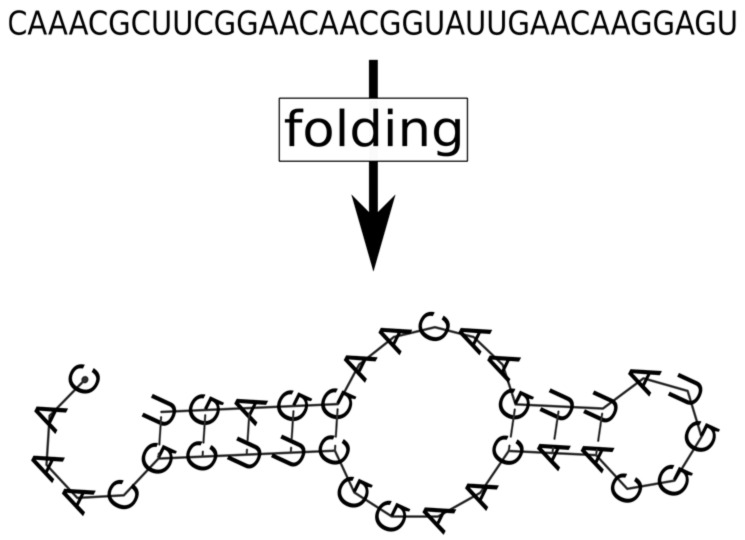
“The necessary level of wobbling may indeed be provided by the thermodynamics of RNA folding, as it has been demonstrated in the latest versions of MCRS [38], in which the purely phenotypic, sequence-implicit approach has been relaxed with the assignment of actual nucleotide sequences and the corresponding secondary st…”
BackgroundSelf-citationCompetitive Exclusion of Disjoint Hypercycles
Hofbauer, J. (2002) · Zeitschrift für Physikalische Chemie · doi:10.1524/zpch.2002.216.1.035 · Cited by 8 · cited 1×
“Even if we start from the same concentration, no coexistence of competing hypercycles is possible [68].”
BackgroundKönnyű, B., & Czárán, T. (2014) · BMC Evolutionary Biology · doi:10.1186/s12862-014-0234-8 · Cited by 7 · cited 1×
“, parallel or alternative enzyme activities of the same replicator) [35], the explicit assignment of the replicase function to an additional replicator species [34] or allowing for phenotype-genotype separation in the complementary strands of the replicators [115] did not change the general conclusion regarding the vi…”
BackgroundSelf-citationThe effect of inhibitory connections in a hypercycle: A study of the spatio-temporal evolution
Vespalcová, Z., Holden, A. V., & Brindley, J. (1995) · Physics Letters A · doi:10.1016/0375-9601(94)00897-x · Cited by 6 · cited 1×
“” Inhibitory effects [83] and a gradient in the decay rate of molecules [84] can further fortify the spirals against parasites.”
BackgroundTopological entropy of catalytic sets: Hypercycles revisited
Sardanyés, J., Duarte, J., Januário, C., & Martins, N. (2012) · Communications in Nonlinear Science and Numerical Simulation · doi:10.1016/j.cnsns.2011.06.020 · Cited by 2 · cited 1×
“In conclusion, we may say that the hypercycle can show rich dynamics [61,62], although its ability to maintain the coexistence of even a moderate number of different replicators is limited.”
Background
Research works printed but not linked: 7
- Maynard Smith J. Szathmáry E. The Major Transition in Evolution W.H. Freeman Oxford, UK 1995
- Szathmáry E. Maynard Smith J. The origin of genetic system Abstr. Bot. 1993 17 10
- Boerlijst M.C. Hogeweg P. Selfstructuring and selection: Spiral waves as a substrate for evolution Artificial Life Langton C.G. Taylor C. Farmer J.D. Rasmussen S. Addison-Wesley Redwood City, CA, USA 1991 Volume 2 255 276
- Tél T. Transient chaos Directions in Chaos World Scientific Singapore 1990 Volume 3 149 211
- Maynard Smith J. Group selection Quart. Rev. Biol. 1976 51 277 283
- Szathmáry E. The eukaryotic cell as an information integrator Endocytobiosis Cell Res. 1986 3 113 132
- Szathmáry E. The emergence, maintenance, and transitions of the earliest evolutionary units Oxf. Surv. Evol. Biol. 1989 6 169 205
Cited by
From self-replication to replicator systems en route to de novo life
Adamski, P., Eleveld, M., Sood, A., Kun, Á., Szilágyi, A., Czárán, T., Szathmáry, E., & Otto, S. (2020) · Nature Reviews Chemistry · doi:10.1038/s41570-020-0196-x · Cited by 200
Self-citationCamprubí, E., de Leeuw, J. W., House, C. H., Raulin, F., Russell, M. J., Spang, A., Tirumalai, M. R., & Westall, F. (2019) · Space Science Reviews · doi:10.1007/s11214-019-0624-8 · Cited by 84
Mathematical modeling reveals spontaneous emergence of self-replication in chemical reaction systems
Liu, Y., & Sumpter, D. J. T. (2018) · Journal of Biological Chemistry · doi:10.1074/jbc.ra118.003795 · Cited by 38
“The metabolically coupled replicator system is another type of model in this direction (24, 25).”
Multilevel selection as Bayesian inference, major transitions in individuality as structure learning
Czégel, D., Zachar, I., & Szathmáry, E. (2019) · Royal Society Open Science · doi:10.1098/rsos.190202 · Cited by 31
Self-citationFurubayashi, T., & Ichihashi, N. (2018) · Life · doi:10.3390/life8010003 · Cited by 22
Metadata
- Authors
- Szilágyi, A., Zachar, I., Scheuring, I., Kun, Á., Könnyű, B., & Czárán, T.
- Affiliations
- Eötvös Loránd University (HU)
- Corresponding author
- Czárán, Tamás
- Venue
- Life
- Publisher
- MDPI AG
- Published
- 2017-11-27
- Volume
- 7
- Issue
- 4
- Pages
- 48
- ISSN
- 2075-1729 (ISSN-L)
- PMC
- PMC5745561
- OpenAlex
- W2769357715
- Cited by
- 44
- References
- 123
- Citations by year
- 2026: 4 · 2025: 3 · 2024: 6 · 2023: 2 · 2022: 3 · 2021: 4 · 2020: 7 · 2019: 7 · 2018: 8
- FWCI
- 0.61
- Type
- journal article
- Language
- en
- Open access
- gold
- doi.org
- Licence
- Locations
- Life (publishedVersion, cc-by)
- PubMed Central (publishedVersion, cc-by)
- PubMed (publishedVersion)
- Research at the University of Copenhagen (University of Copenhagen) (publishedVersion, cc-by-nc-nd)
- Repository of the Academy's Library (Library of the Hungarian Academy of Sciences) (acceptedVersion)
- DOAJ (DOAJ: Directory of Open Access Journals) (submittedVersion, cc-by-sa)
- ELTE Digital Institutional Repository (EDIT) (Eötvös Loránd University) (submittedVersion, other-oa)
- Funders
- Hungarian Scientific Research Fund (GINOP-2.3.2-15-2016-00057)
- Nemzeti Kutatási Fejlesztési és Innovációs Hivatal (GINOP 2.3.2.-15-2016-00057, GINOP-2, K119347, GINOP-2.3.2, GINOP-2.3.2-15)
- National Research, Development and Innovation Office (GINOP 2.3.2-15-2016-00057, K119347)
- Topics
- Physical Sciences › Physics and Astronomy › Astronomy and Astrophysics › Origins and Evolution of Life
- Life Sciences › Biochemistry, Genetics and Molecular Biology › Genetics › Evolution and Genetic Dynamics
- Life Sciences › Biochemistry, Genetics and Molecular Biology › Molecular Biology › RNA and protein synthesis mechanisms
- Keywords
- RNA world, origin of life, hypercycles, replicator dynamics, ecosystem stability, evolutionary stability, information transmission, chemical evolution
About these checks
Registry, retraction, Cites and statistics results are computed, not judged, with one exception: a printed reference that no index lists is read once by a model before it counts as a citation error. Claims are extracted by a model and kept only when their quote appears verbatim in the text; each cited source is then checked, with a model’s help, for whether it says what the claim relies on. Those verdicts can be wrong — read the claim’s quote and the cited source before relying on one.
The claim verdicts this report counts are experimental: their accuracy is not yet measured.
A language model drew the claims from the paper on 2026-10-10, under version 3 of the claim definition (model deepseek-v4.1-flash, prompt extract-v3).
A second model labelled each claim on 2026-10-10 (model jev-1.13-20260917, definition revision gold-guideline-v0.2).
Cited sources are checked with a language model’s help (gpt-6-sol).
Statistics and arithmetic are recomputed, not judged.
Confidence bands are shown only for fields calibrated on our annotated test set. None is calibrated yet, so no band is shown.
What counts as a claim ›How we measure confidence ›How we check this ›
Are you an author, or do you see a problem with this page? Request a review
Data sources
Bibliographic data: Semantic Scholar, OpenAlex, Crossref.
Contains information from the Semantic Scholar Academic Graph Datasets, made available under the ODC Attribution License (ODC-BY 1.0).
Semantic Scholar’s data is described in: Kinney, R., et al. (2023). The Semantic Scholar Open Data Platform. arXiv:2301.10140.
