

The DOI matches its Crossref record; 94 of the 96 references it cites were found in a registry or an index, and 2 are not checked yet; 61 of the 177 sources its claims cite were checked for support.
Potential of Soil Stabilization Using Ground Granulated Blast Furnace Slag (GGBFS) and Fly Ash via Geopolymerization Method: A Review
Open accessAbstract
Geopolymers, or also known as alkali-activated binders, have recently emerged as a viable alternative to conventional binders (cement) for soil stabilization. Geopolymers employ alkaline activation of industrial waste to create cementitious products inside treated soils, increasing the clayey soils’ mechanical and physical qualities. This paper aims to review the utilization of fly ash and ground granulated blast furnace slag (GGBFS)-based geopolymers for soil stabilization by enhancing strength. Previous research only used one type of precursor: fly ash or GGBFS, but the strength value obtained did not meet the ASTM D 4609 (<0.8 Mpa) standard required for soil-stabilizing criteria of road construction applications. This current research focused on the combination of two types of precursors, which are fly ash and GGBFS. The findings of an unconfined compressive strength (UCS) test on stabilized soil samples were discussed. Finally, the paper concludes that GGBFS and fly-ash-based geo-polymers for soil stabilization techniques can be successfully used as a binder for soil stabilization. However, additional research is required to meet the requirement of ASTM D 4609 standard in road construction applications, particularly in subgrade layers.
Verified 2026-10-31 · 2 references not checked yet
Overview
AI snapshot
Written from the paper’s full text.
TL;DR
This review concludes that fly ash and ground granulated blast furnace slag (GGBFS)-based geopolymers can be used as binders for soil stabilization, but further research is needed to meet ASTM D 4609 (>0.8 MPa) for road construction, especially subgrade layers. It synthesizes prior unconfined compressive strength (UCS) results and identifies solid-to-liquid ratio, NaOH molarity, and Na2SiO3/NaOH ratio as key factors affecting geopolymer properties.
Key findings
- The paper concludes that GGBFS and fly-ash-based geopolymers for soil stabilization can be successfully used as a binder, but additional research is required to meet the ASTM D 4609 standard (>0.8 MPa) in road construction applications, particularly subgrade layers.
- Prior studies using one precursor or conventional fly ash/GGBFS often fell short: Sharma et al. used 70% fly ash and 30% GGBFS and reached 0.45 MPa after 28 days; Oormila et al. found 20% GGBFS optimum and increased clayey soil strength by about 73.79%; Mujtaba et al. found 30% GGBFS increased 28-day remolded strength by approximately 35% and met ASTM D 4609 but required long curing.
- Geopolymer studies showed mixed compliance: Abdullah et al. obtained maximum strength with fly ash/alkaline activator ratio 2.5 and Na2SiO3/NaOH ratio 2.0 after 28 days; Shihab et al. found 12 M NaOH optimum; Phummiphan et al. selected 20% GGBFS and 30% fly ash as optimum, but many results still did not meet ASTM D 4609 or needed long curing.
- Key factors affecting geopolymer properties are solid-to-liquid (S/L) ratio, sodium hydroxide molarity, and sodium silicate/sodium hydroxide ratio; most fly ash Class C and GGBFS assessments used S/L between 1 and 3, 10 M NaOH was found suitable for Class F and Class C fly ash, and Na2SiO3/NaOH ratio 2.0 showed best performance in fly-ash-based soil stabilization.
Methods
- Narrative review of soil stabilization using fly ash and GGBFS via geopolymerization, focused on unconfined compressive strength (UCS) test results from prior studies.
- Data are previous studies summarized in Tables 1 and 2; no new experimental tests are reported.
- Analysis covers conventional stabilization, geopolymerization mechanism, raw material sources, alkali activators, and factors affecting geopolymer properties.
Limitations
- The paper states it only discusses performance of geopolymer technology in soil stabilization based on compressive strength in road construction, especially subgrade layers; swell behavior, flexural strength, and abrasion resistance of GGBFS and fly ash Class C geopolymer in road construction have not been investigated.
- The paper states that if soil stabilization only uses geopolymers, it does not produce CO2, so the CO2 emission reduction ratio of soil-based geopolymers cannot be evaluated and discussed.
- As evident from the text, this is a review with no original experimental data; its conclusions depend on cited studies, and many cited studies did not meet ASTM D 4609 or required long curing times.
Model-written summary. Check it against the paper before relying on it.
Integrity signals
Registry
Cites
Statistics
Figures
Verification
Claims the paper makes
22 Not checked yet · 19 Partly supported · 13 No full text of the sources · 12 No basis given · 8 Own interpretation · 4 Supported · 4 Couldn’t confirm · 2 Supported so far · 1 Not supported · 1 Own result · accuracy not yet measured
At least one cited source doesn’t support this claim or points to a different paper, and none confirmed it — see the verdicts below.
In the paper
“However, the strength value still does not comply with the ASTM D 4609 standard [76], which requires a value greater than 0.8 MPa.”
§ Potential of Soil Stabilization Using Ground Granulated Blast Furnace Slag (GGBFS) and Fly Ash via Geopolymerization Method: A Review > 3. Geopolymer > 3.3. Strength of Soil after Stabilization with Fly Ash and Ground Granulated Blast Furnace Slag (GGBFS) Geopolymer
What the sources say
- Disputedcites [72] Tigue, 2018, Synthesis of a one-part geopolymer system for soil stabilizer using fly ash and volcanic ash, Minerals sourceExperimental — accuracy not yet measured
Section 3.2 (Unconfined compressive strength; page not provided) reports a maximum strength of 971 kPa, or 0.971 MPa—above the claimed 0.8 MPa threshold. Other tested formulations were below 0.8 MPa, but the paper does not say that all its strength values fail that threshold; it instead discusses a 75 kPa requirement from the National Structural Code of the Philippines, not ASTM D 4609. (LLM, conf=0.87)
Checked by a reasoning model — may be wrong.
- Not checked yetcites [76] 4609 AD (2017). Standard Guide for Evaluating Effectiveness of Admixtures for Soil Stabilization, ASTM International.
plain- Asserted: passes — The authors put it forward as true.
- Checkable: passes — It can be checked against evidence.
- Load-bearing: passes — The paper’s conclusions depend on it.
- Based: passes — The paper gives a reason why it holds.
- Disputed
The cited sources support only part of this claim — read each source’s verdict below.
In the paper
“In order to produce geopolymer, the sources of alumina and silica (fly ash and GGBFS) act as precursors that are easily dissolved in alkaline solutions resulted from alkaline activation, making geopolymerization possible [47,49,57,58,60,61,62,63,64,65,66,67,68].”
§ Potential of Soil Stabilization Using Ground Granulated Blast Furnace Slag (GGBFS) and Fly Ash via Geopolymerization Method: A Review > 1. Introduction
What the sources say
- Not checked — no full text of the sourcecites [47] Hamzah, 2015, Review of soil stabilization techniques: Geopolymerization method one of the new technique, Key Eng. Mater. source
- Partly supportedcites [49] Hanegbi, N., and Katra, I. (2020). A clay-based geopolymer in loess soil stabilization. Appl. Sci., 10. sourceExperimental — accuracy not yet measured
The Introduction (page not provided) says geopolymers can be synthesized from calcined kaolin and a strongly alkaline solution, and mentions fly ash among materials used in loess stabilization. It does not identify GGBFS as a precursor or explain dissolution of alumina and silica as the mechanism of geopolymerization. (LLM, conf=0.82)
- Not checked — no full text of the sourcecites [57] Javdanian, 2017, The effect of geopolymerization on the unconfined compressive strength of stabilized fine-grained soils, Int. J. Eng. Trans. B Appl. source
- Not checked — no full text of the sourcecites [58] Sukprasert, 2021, Fly ash-based geopolymer stabilization of silty clay/blast furnace slag for subgrade applications, Road Mater. Pavement Des. source
- Not checked — no full text of the sourcecites [60] Samuel, 2021, Improvement of Strength and Volume-Change Properties of Expansive Clays with Geopolymer Treatment, Transp. Res. Rec. J. Transp. Res. Board source
- Not checked yetcites [61] Ravi, 2019, Effect of Ground Granulated Blast Furnace Slag and Metakaolin on Geotechnical Properties of Clayey Soil, ICSWMD
- Not checked — no full text of the sourcecites [62] Abdullah, 2020, Systematic approach to assessing the applicability of fly-ash-based geopolymer for clay stabilization, Can. Geotech. J. source
- Not checked — no full text of the sourcecites [63] Alam, 2019, Strength and durability characteristic of alkali activated GGBS stabilized red mud as geo-material, Constr. Build. Mater. source
- Not checked yetcites [64] Toryila, 2016, Expansive Soil Stabilization Using Industrial Solid Wastes an Expansive Soil Stabilization Using Industrial Solid Wastes a Review, Int. J. Adv. Technol. Eng. Sci.
- Not checked yetcites [65] Dayalan, 2016, Comparative Study on Stabilization of Soil with Ground Granulated Blast Furnace Slag (GGBS) and Fly Ash, Int. Res. J. Eng. Technol.
plaindirect- Asserted: passes — The authors put it forward as true.
- Checkable: passes — It can be checked against evidence.
- Load-bearing: passes — The paper’s conclusions depend on it.
- Based: passes — The paper gives a reason why it holds.
None of the sources cited for this claim have been checked yet.
In the paper
“However, the unconfined compressive strength value does not fulfill the ASTM D 4609 standard [76], which must be more than 0.8 MPa.”
§ Potential of Soil Stabilization Using Ground Granulated Blast Furnace Slag (GGBFS) and Fly Ash via Geopolymerization Method: A Review > 2. Soil Stabilization by Conventional Method > 2.3. Strength of Soils after Stabilization with Fly Ash and Ground Granulated Blast Furnace Slag (GGBFS)
What the sources say
- Could not verifycites [67] Sharma, 2016, Ground granulated blast furnace slag amended fly ash as an expansive soil stabilizer, Soils Found. sourceExperimental — accuracy not yet measured
The Testing methodology (§2.2; page unavailable) describes UCS testing under IS:4332 and ASTM D2166, while the strength discussion (§3.3; page unavailable) describes trends without numerical UCS values. Searches for 0.8 MPa and ASTM D4609 found no passage establishing the claimed threshold or showing that Sharma et al.’s results fell below it. (LLM, conf=0.72)
- Not checked yetcites [76] 4609 AD (2017). Standard Guide for Evaluating Effectiveness of Admixtures for Soil Stabilization, ASTM International.
plain- Asserted: passes — The authors put it forward as true.
- Checkable: passes — It can be checked against evidence.
- Load-bearing: passes — The paper’s conclusions depend on it.
- Based: passes — The paper gives a reason why it holds.
- Could not verify
The cited sources support only part of this claim — read each source’s verdict below.
In the paper
“It is possible to alter the compressive strength, swelling potential, and volume change properties of soil through chemical stabilization processes such as mixing with ground granulated blast furnace slag (GGBFS) and fly ash by-products, as well as mixes of any of these materials [39,40,41,42,43].”
§ Potential of Soil Stabilization Using Ground Granulated Blast Furnace Slag (GGBFS) and Fly Ash via Geopolymerization Method: A Review > 1. Introduction
What the sources say
- Not checked yetcites [39] Neeladharan, 2019, Stabilization of soil using Fly ash with ground granulated blast furnace slag (GGBS) as binder, Suraj Punj. J.
- Not checked — no full text of the sourcecites [40] Amulya, 2020, Stabilization of lithomargic clay using alkali activated fly ash and ground granulated blast furnace slag, Int. J. Pavement Eng. source
- Not checked — no full text of the sourcecites [41] Sihag, 2021, Estimation of UCS-FT of Dispersive Soil Stabilized with Fly Ash, Cement Clinker and GGBS by Artificial Intelligence, Iran. J. Sci. Technol. Trans. Civ. Eng. source
- Partly supportedcites [42] Ghaffoori, 2019, Effects of Fly Ash and Granulated Ground Blast Furnace Slag on Stabilization of Crude Oil Contamination Sandy Soil, Polytech. J. sourceExperimental — accuracy not yet measured
The Abstract (page not available) reports that GGBFS and fly ash affect the direct shear strength and compaction properties of clean and crude-oil-contaminated sandy soil. It does not report compressive strength, swelling potential, or volume change as such, so those specific properties are not supported by this source. (LLM, conf=0.86)
- Partly supportedcites [43] Miraki, H., Shariatmadari, N., Ghadir, P., Jahandari, S., Tao, Z., and Siddique, R. (2021). Clayey soil stabilization using alkali-activated volcanic ash and slag. J. Rock Mech. Geotech. Eng. sourceExperimental — accuracy not yet measured
The study description (p. 3) says the authors tested compressive strength in clayey soil stabilized with alkali-activated volcanic ash and GGBS. The Introduction (p. 2) also reports strength findings for fly-ash and slag binders. The cited paper does not establish the claimed effects on swelling potential or soil volume change, and its own mixtures used volcanic ash rather than fly ash. (LLM, conf=0.86)
hedgedconditional- Asserted: passes — The authors put it forward as true.
- Checkable: passes — It can be checked against evidence.
- Load-bearing: passes — The paper’s conclusions depend on it.
- Based: passes — The paper gives a reason why it holds.
The cited sources support only part of this claim — read each source’s verdict below.
In the paper
“Furthermore, a longer curing time is required to reach the optimum strength.”
§ Potential of Soil Stabilization Using Ground Granulated Blast Furnace Slag (GGBFS) and Fly Ash via Geopolymerization Method: A Review > 3. Geopolymer > 3.3. Strength of Soil after Stabilization with Fly Ash and Ground Granulated Blast Furnace Slag (GGBFS) Geopolymer
What the sources say
- Partly supportedcites [72] Tigue, 2018, Synthesis of a one-part geopolymer system for soil stabilizer using fly ash and volcanic ash, Minerals sourceExperimental — accuracy not yet measured
Section 3.3, Sulfuric acid resistance (page not provided), reports higher strength after 28 days of acid immersion and suggests that the additional time may have allowed further curing. It does not establish that longer curing is required to reach an optimum strength; the proposed effect of curing time is hedged. (LLM, conf=0.86)
plaindirect- Asserted: passes — The authors put it forward as true.
- Checkable: passes — It can be checked against evidence.
- Load-bearing: unclear — It is unclear whether the paper’s conclusions depend on it.
- Based: passes — The paper gives a reason why it holds.
- Partly supported
Every source the paper cites for this claim was checked and supports it.
In the paper
“By increasing the fly ash content in the samples and the curing time, the compressive strength value for fly ash increased.”
§ Potential of Soil Stabilization Using Ground Granulated Blast Furnace Slag (GGBFS) and Fly Ash via Geopolymerization Method: A Review > 2. Soil Stabilization by Conventional Method > 2.3. Strength of Soils after Stabilization with Fly Ash and Ground Granulated Blast Furnace Slag (GGBFS)
What the sources say
- Supportedcites [68] Simatupang, M., Mangalla, L.K., Edwin, R.S., Putra, A.A., Azikin, M.T., Aswad, N.H., and Mustika, W. (2020). The mechanical properties of fly-ash-stabilized sands. Geosciences, 10. source
Section 3.2.2 reports that unconfined compressive strength tended to increase as fly ash content increased across the tested sands. Section 3.2.3 reports higher compressive strength with longer curing time. The paper tested 5–30% fly ash, which includes the claim’s 5–25% range. (LLM, conf=0.91)
plaindirect- Asserted: passes — The authors put it forward as true.
- Checkable: passes — It can be checked against evidence.
- Load-bearing: unclear — It is unclear whether the paper’s conclusions depend on it.
- Based: passes — The paper gives a reason why it holds.
- Supported
Every source the paper cites for this claim was checked and supports it.
In the paper
“However, a long curing time is required to reach the optimum strength.”
§ Potential of Soil Stabilization Using Ground Granulated Blast Furnace Slag (GGBFS) and Fly Ash via Geopolymerization Method: A Review > 2. Soil Stabilization by Conventional Method > 2.3. Strength of Soils after Stabilization with Fly Ash and Ground Granulated Blast Furnace Slag (GGBFS)
What the sources say
- Supportedcites [68] Simatupang, M., Mangalla, L.K., Edwin, R.S., Putra, A.A., Azikin, M.T., Aswad, N.H., and Mustika, W. (2020). The mechanical properties of fly-ash-stabilized sands. Geosciences, 10. source
The Abstract states that fly-ash-stabilized sands required more than a month to attain optimum performance in binding sand particles. Section 3.2.3 likewise says the specimens appeared to need longer than a month to reach maximum strength, while noting that further study is needed to determine the precise optimum curing time. (LLM, conf=0.92)
plaindirect- Asserted: passes — The authors put it forward as true.
- Checkable: passes — It can be checked against evidence.
- Load-bearing: passes — The paper’s conclusions depend on it.
- Based: passes — The paper gives a reason why it holds.
- Supported
The cited sources that could be checked couldn’t confirm or dispute this claim.
In the paper
“The manufacturing of conventional soil stabilizers such as cement and lime results in considerable CO2 and energy emissions [47,48,49].”
§ Potential of Soil Stabilization Using Ground Granulated Blast Furnace Slag (GGBFS) and Fly Ash via Geopolymerization Method: A Review > 1. Introduction
What the sources say
- Not checked — no full text of the sourcecites [47] Hamzah, 2015, Review of soil stabilization techniques: Geopolymerization method one of the new technique, Key Eng. Mater. source
- Not checked — no full text of the sourcecites [48] Singhi, 2016, Investigation on Soil–Geopolymer with Slag, Fly Ash and Their Blending, Arab. J. Sci. Eng. source
- Could not verifycites [49] Hanegbi, N., and Katra, I. (2020). A clay-based geopolymer in loess soil stabilization. Appl. Sci., 10. sourceExperimental — accuracy not yet measured
The Introduction discusses the environmental footprint of dust-control products but says it is unclear; it does not address emissions from manufacturing cement or lime. The Conclusions mention production costs for geopolymer ingredients, not CO2 emissions or energy use. Searches for cement and lime manufacturing, CO2, and energy emissions found no passage establishing the claim. (LLM, conf=0.73)
plaindirect- Asserted: passes — The authors put it forward as true.
- Checkable: passes — It can be checked against evidence.
- Load-bearing: passes — The paper’s conclusions depend on it.
- Based: passes — The paper gives a reason why it holds.
Every source the paper cites for this claim was checked and supports it.
In the paper
“The maximum strength was attained with a fly ash/alkaline activator ratio of 2.5 and a Na2SiO3/NaOH ratio of 2.0 after 28 days of curing period.”
§ Potential of Soil Stabilization Using Ground Granulated Blast Furnace Slag (GGBFS) and Fly Ash via Geopolymerization Method: A Review > 3. Geopolymer > 3.3. Strength of Soil after Stabilization with Fly Ash and Ground Granulated Blast Furnace Slag (GGBFS) Geopolymer
What the sources say
- Supportedcites [51] Abdullah, 2017, Effect of Alkaline Activator to Fly Ash Ratio for Geopolymer Stabilized Soil, MATEC Web Conf. source
The Conclusions state that the highest strength occurred at a fly ash/alkaline activator ratio of 2.5 and a Na2SiO3/NaOH ratio of 2.0, with the highest strength at 28 days of curing. The uniaxial compressive strength results report the same ratios. (LLM, conf=0.95)
plaindirect- Asserted: passes — The authors put it forward as true.
- Checkable: passes — It can be checked against evidence.
- Load-bearing: unclear — It is unclear whether the paper’s conclusions depend on it.
- Based: passes — The paper gives a reason why it holds.
- Supported
The cited sources support only part of this claim — read each source’s verdict below.
In the paper
“The researcher found that 10 M NaOH solution is suitable for Class F and Class C fly-ash-based geopolymer, respectively [51,74,101,107,108].”
§ Potential of Soil Stabilization Using Ground Granulated Blast Furnace Slag (GGBFS) and Fly Ash via Geopolymerization Method: A Review > 4. Factors Affecting the Geopolymer Properties > 4.2. Effect of Sodium Hydroxide Molarity on Geopolymer
What the sources say
- Partly supportedcites [51] Abdullah, 2017, Effect of Alkaline Activator to Fly Ash Ratio for Geopolymer Stabilized Soil, MATEC Web Conf. sourceExperimental — accuracy not yet measured
Material selection reports using 10 M NaOH, and Chemical composition of fly ash identifies the tested ash as Class F. The study reports strength results for that mixture, but it does not test Class C fly ash or establish that 10 M NaOH is suitable for Class C geopolymers. (LLM, conf=0.87)
- Partly supportedcites [74] Abdila, S.R., Mustafa, M., Bakri, A., Ahmad, R., Zamree, S., Rahim, A., Rychta, M., Wnuk, I., Nabiałek, M., and Muskalski, K. (2021). Evaluation on the Mechanical Properties of Ground Granulated Blast Slag (GGBS) and Fly Ash Stabilized Soil via. Materials, 14. sourceExperimental — accuracy not yet measured
The Method section (2.3; page unavailable) says the study used 10 M NaOH in an activator blended with sodium silicate, and Raw Materials Characterization (3.1.2; page unavailable) identifies its fly ash as Class C. This supports use of 10 M NaOH with Class C fly ash in the tested soil-stabilization mixture, but the paper does not establish its suitability for Class F fly ash or as a NaOH solution used alone. (LLM, conf=0.87)
- Partly supportedcites [101] Dheyab, 2019, Soil Stabilization with Geopolymers for Low Cost and Environmentally Friendly Construction, Int. J. GEOMATE sourceExperimental — accuracy not yet measured
The Conclusions (p. 8) report strength gains using 10 M NaOH, but the binder studied was olivine in a silty-clay soil mixture. The paper does not establish that 10 M NaOH is suitable for Class F or Class C fly-ash-based geopolymers. (LLM, conf=0.88)
- Partly supportedcites [107] Vizureanu, 2019, Synthesis and characteristics of local fly ash-based geopolymers mixed with natural aggregates, Rev. Chim. sourceExperimental — accuracy not yet measured
The Fly ash section (p. 1264) identifies the material studied as Class F, and Sample preparation reports using 10 M NaOH with sodium silicate. The Mechanical properties section reports strengths for the resulting samples, supporting its use for this Class F mixture. The paper does not establish that 10 M NaOH is suitable for Class C fly ash. (LLM, conf=0.87)
- Partly supportedcites [108] Burduhos Nergis, D.D., Vizureanu, P., Ardelean, I., Sandu, A.V., Corbu, O.C., and Matei, E. (2020). Revealing the Influence of Microparticles on Geopolymers’ Synthesis and Porosity. Materials, 13. sourceExperimental — accuracy not yet measured
Materials and Methods §2.1 says the study used 10 M NaOH together with sodium silicate to activate its coal ash; Results and Discussion identifies that ash as Class F. The paper does not establish suitability for Class C fly ash or for 10 M NaOH used alone. (LLM, conf=0.88)
plain- Asserted: passes — The authors put it forward as true.
- Checkable: passes — It can be checked against evidence.
- Load-bearing: unclear — It is unclear whether the paper’s conclusions depend on it.
- Based: passes — The paper gives a reason why it holds.
- Partly supported
- It may state two separate claims as one. 19
- The quote only partly states this claim. 4
- Probably not a substantial claim. 13
The cited sources support only part of this claim — read each source’s verdict below.
In the paper
“The addition of fly ash is one of the methods to stabilize soil because fly ash is a pozzolan, in which it can bind to minerals in soil and make the soil stable”
§ Potential of Soil Stabilization Using Ground Granulated Blast Furnace Slag (GGBFS) and Fly Ash via Geopolymerization Method: A Review > 2. Soil Stabilization by Conventional Method > 2.1. Soil Stabilization Using Fly Ash
What the sources say
- Not checked — no full text of the sourcecites [41] Sihag, 2021, Estimation of UCS-FT of Dispersive Soil Stabilized with Fly Ash, Cement Clinker and GGBS by Artificial Intelligence, Iran. J. Sci. Technol. Trans. Civ. Eng. source
- Partly supportedcites [42] Ghaffoori, 2019, Effects of Fly Ash and Granulated Ground Blast Furnace Slag on Stabilization of Crude Oil Contamination Sandy Soil, Polytech. J. sourceExperimental — accuracy not yet measured
The Abstract (page not specified in our copy) describes fly ash as a material used to stabilize sandy soil and improve its strength and stability. It does not say that fly ash is a pozzolan or that it stabilizes soil by binding to soil minerals; that proposed mechanism is unsupported by the passages found. (LLM, conf=0.84)
- Not checked — no full text of the sourcecites [44] Kumar, 2020, Stabilization of expansive subgrade soil by using fly ash, Materials source
- Partly supportedcites [46] Prasad, 2021, Experimental Investigation of Soil Behaviour Using Industrial Fly Ash, Am. J. Eng. Technol. Manag. sourceExperimental — accuracy not yet measured
The Introduction and Conclusion say that adding fly ash can stabilize soil, including the black cotton soil tested. Our copy does not say that fly ash is a pozzolan or that binding to soil minerals is the reason for the stabilization. (LLM, conf=0.88)
- Not checked yetcites [54] Mandal, 2016, Stabilization of Soil using Ground Granulated Blast Furnace Slag and Fly Ash, IJIRSET
- Not checked — no full text of the sourcecites [69] Tyagi, A., and Soni, D.K. (2019). Effects of Granulated Ground Blast Furnace Slag and Fly Ash on Stabilization of Soil, Springer. source
- Not checked — no full text of the sourcecites [70] Mujtaba, 2018, Improvement in Engineering Properties of Expansive Soils using Ground Granulated Blast Furnace Slag, J. Geol. Soc. India source
- Partly supportedcites [71] Tigue, A.A.S., Malenab, R.A.J., Dungca, J.R., Yu, D.E.C., and Promentilla, M.A.B. (2018). Chemical stability and leaching behavior of one-part geopolymer from soil and coal fly ash mixtures. Minerals, 8. sourceExperimental — accuracy not yet measured
The Abstract and Introduction describe a soil stabilizer made with fly ash, supporting the general point that fly ash can be used in soil stabilization. But the studied binder also requires solid alkali activators, and the paper does not explain stabilization as fly ash acting as a pozzolan that binds to soil minerals. (LLM, conf=0.86)
- Partly supportedcites [72] Tigue, 2018, Synthesis of a one-part geopolymer system for soil stabilizer using fly ash and volcanic ash, Minerals sourceExperimental — accuracy not yet measured
The Introduction describes fly ash as naturally pozzolanic, and §3.2 reports that increasing its proportion in an alkali-activated geopolymer mixture increased the compressive strength of stabilized soil. The paper does not establish the claim’s specific mechanism that fly ash binds to minerals in soil; the tested stabilizer also contained volcanic ash and alkali activators. Page numbers are not available for these passages. (LLM, conf=0.86)
- Not checked — no full text of the sourcecites [73] Thomas, 2018, A Laboratory Investigation of Soil Stabilization Using Enzyme and Alkali-Activated Ground Granulated Blast-Furnace Slag, Arab. J. Sci. Eng. source
plaindirect- Asserted: passes — The authors put it forward as true.
- Checkable: passes — It can be checked against evidence.
- Load-bearing: passes — The paper’s conclusions depend on it.
- Based: passes — The paper gives a reason why it holds.
It may state two separate claims as one.
The cited sources support only part of this claim — read each source’s verdict below.
In the paper
“so as to reduce the swell shrinkage of the soil and improve soil strength [41,42,44,46,54,69,70,71,72,73].”
§ Potential of Soil Stabilization Using Ground Granulated Blast Furnace Slag (GGBFS) and Fly Ash via Geopolymerization Method: A Review > 2. Soil Stabilization by Conventional Method > 2.1. Soil Stabilization Using Fly Ash
What the sources say
- Not checked — no full text of the sourcecites [41] Sihag, 2021, Estimation of UCS-FT of Dispersive Soil Stabilized with Fly Ash, Cement Clinker and GGBS by Artificial Intelligence, Iran. J. Sci. Technol. Trans. Civ. Eng. source
- Partly supportedcites [42] Ghaffoori, 2019, Effects of Fly Ash and Granulated Ground Blast Furnace Slag on Stabilization of Crude Oil Contamination Sandy Soil, Polytech. J. sourceExperimental — accuracy not yet measured
The Abstract (page not provided) says fly ash was used to stabilize sandy soil and identifies increasing soil strength as a study goal. It does not report reduced soil swell–shrinkage; the shrinkage mention in the References concerns concrete, not this study's soil. (LLM, conf=0.86)
- Not checked — no full text of the sourcecites [44] Kumar, 2020, Stabilization of expansive subgrade soil by using fly ash, Materials source
- Supportedcites [46] Prasad, 2021, Experimental Investigation of Soil Behaviour Using Industrial Fly Ash, Am. J. Eng. Technol. Manag. source
The Introduction says fly ash stabilization reduces soil volume changes and discusses swell-shrinkage. The paper also reports increased soil strength when fly ash is added (section 1, findings). (LLM, conf=0.91)
- Not checked yetcites [54] Mandal, 2016, Stabilization of Soil using Ground Granulated Blast Furnace Slag and Fly Ash, IJIRSET
- Not checked — no full text of the sourcecites [69] Tyagi, A., and Soni, D.K. (2019). Effects of Granulated Ground Blast Furnace Slag and Fly Ash on Stabilization of Soil, Springer. source
- Not checked — no full text of the sourcecites [70] Mujtaba, 2018, Improvement in Engineering Properties of Expansive Soils using Ground Granulated Blast Furnace Slag, J. Geol. Soc. India source
- Partly supportedcites [71] Tigue, A.A.S., Malenab, R.A.J., Dungca, J.R., Yu, D.E.C., and Promentilla, M.A.B. (2018). Chemical stability and leaching behavior of one-part geopolymer from soil and coal fly ash mixtures. Minerals, 8. sourceExperimental — accuracy not yet measured
The Conclusions report compressive strength for a soil–fly ash geopolymer cement, with strength increasing after acid exposure. They do not report reduced soil swell–shrinkage or compare soil with and without fly ash to show that adding fly ash improved its strength. (LLM, conf=0.78)
- Partly supportedcites [72] Tigue, 2018, Synthesis of a one-part geopolymer system for soil stabilizer using fly ash and volcanic ash, Minerals sourceExperimental — accuracy not yet measured
Section 3.2 (Unconfined compressive strength) reports that increasing fly ash increased the compressive strength of geopolymer-stabilized soil. The paper does not report a reduction in soil swelling or shrinkage; its soil characterization in Section 3.1.1 describes the soil as non-plastic silty sand. (LLM, conf=0.88)
- Not checked — no full text of the sourcecites [73] Thomas, 2018, A Laboratory Investigation of Soil Stabilization Using Enzyme and Alkali-Activated Ground Granulated Blast-Furnace Slag, Arab. J. Sci. Eng. source
plaindirect- Asserted: passes — The authors put it forward as true.
- Checkable: passes — It can be checked against evidence.
- Load-bearing: passes — The paper’s conclusions depend on it.
- Based: passes — The paper gives a reason why it holds.
It may state two separate claims as one.
The cited sources support only part of this claim — read each source’s verdict below.
In the paper
“Mixing GGBFS with soil improves compressive strength, permeability, and durability [39,54,65,66,67,68,69].”
§ Potential of Soil Stabilization Using Ground Granulated Blast Furnace Slag (GGBFS) and Fly Ash via Geopolymerization Method: A Review > 2. Soil Stabilization by Conventional Method > 2.2. Soil Stabilization Using Ground Granulated Blast Furnace Slag (GGBFS)
What the sources say
- Not checked yetcites [39] Neeladharan, 2019, Stabilization of soil using Fly ash with ground granulated blast furnace slag (GGBS) as binder, Suraj Punj. J.
- Not checked yetcites [54] Mandal, 2016, Stabilization of Soil using Ground Granulated Blast Furnace Slag and Fly Ash, IJIRSET
- Not checked yetcites [65] Dayalan, 2016, Comparative Study on Stabilization of Soil with Ground Granulated Blast Furnace Slag (GGBS) and Fly Ash, Int. Res. J. Eng. Technol.
- Not checked — no full text of the sourcecites [66] Oormila, 2014, Effect of Stabilization Using Flyash and GGBS in Soil Characteristics, Int. J. Eng. Trends Technol. source
- Partly supportedcites [67] Sharma, 2016, Ground granulated blast furnace slag amended fly ash as an expansive soil stabilizer, Soils Found. sourceExperimental — accuracy not yet measured
The Conclusions report increased unconfined compressive strength in artificially mixed expansive soil treated with a fly ash–GGBS binder. The Testing methodology says the study focused on physical properties, compaction, and strength; it does not report improved permeability or durability. The result also concerns a fly ash–GGBS mixture, not GGBS mixed with soil alone. (LLM, conf=0.88)
- Could not verifycites [68] Simatupang, M., Mangalla, L.K., Edwin, R.S., Putra, A.A., Azikin, M.T., Aswad, N.H., and Mustika, W. (2020). The mechanical properties of fly-ash-stabilized sands. Geosciences, 10. sourceExperimental — accuracy not yet measured
The Introduction and Abstract discuss fly ash mixed with soil and report increased strength, including unconfined compressive strength; they do not address GGBFS. Searches for GGBFS, slag, permeability, and durability found no passage in our copy establishing the claimed effects of GGBFS. (LLM, conf=0.76)
- Not checked — no full text of the sourcecites [69] Tyagi, A., and Soni, D.K. (2019). Effects of Granulated Ground Blast Furnace Slag and Fly Ash on Stabilization of Soil, Springer. source
plaindirect- Asserted: passes — The authors put it forward as true.
- Checkable: passes — It can be checked against evidence.
- Load-bearing: passes — The paper’s conclusions depend on it.
- Based: passes — The paper gives a reason why it holds.
It may state two separate claims as one.
The cited sources support only part of this claim — read each source’s verdict below.
In the paper
“Based on the strength result, the strongest soil was achieved after 28 days of curing time, with a compressive strength value of 0.45 MPa.”
§ Potential of Soil Stabilization Using Ground Granulated Blast Furnace Slag (GGBFS) and Fly Ash via Geopolymerization Method: A Review > 2. Soil Stabilization by Conventional Method > 2.3. Strength of Soils after Stabilization with Fly Ash and Ground Granulated Blast Furnace Slag (GGBFS)
What the sources say
- Partly supportedcites [67] Sharma, 2016, Ground granulated blast furnace slag amended fly ash as an expansive soil stabilizer, Soils Found. sourceExperimental — accuracy not yet measured
Section 2.1 identifies a 70:30 fly ash–GGBS binder, and Section 3.3 reports that strength increased with curing time across the 7-, 14-, and 28-day tests. Our copy does not state that the strongest soil had a compressive strength of 0.45 MPa; searches for that value and 450 kPa found no matching result. (LLM, conf=0.88)
plaindirect- Asserted: passes — The authors put it forward as true.
- Checkable: passes — It can be checked against evidence.
- Load-bearing: unclear — It is unclear whether the paper’s conclusions depend on it.
- Based: passes — The paper gives a reason why it holds.
It may state two separate claims as one. The quote only partly states this claim.
- Partly supported
The cited sources that could be checked couldn’t confirm or dispute this claim.
In the paper
“Geopolymers have outstanding engineering properties, such as increased strength and improved soil adhesion [36,40,56].”
§ Potential of Soil Stabilization Using Ground Granulated Blast Furnace Slag (GGBFS) and Fly Ash via Geopolymerization Method: A Review > 1. Introduction
What the sources say
- Could not verifycites [36] Firoozi, 2017, Fundamentals of soil stabilization, Int. J. Geo Eng. sourceExperimental — accuracy not yet measured
The sections on cement stabilization and fiber reinforcement discuss strength gains from those materials, not from geopolymers. Searches of the full-text copy for “geopolymer” and for geopolymer strength and soil adhesion found no passage addressing the claimed properties. (LLM, conf=0.75)
- Not checked — no full text of the sourcecites [40] Amulya, 2020, Stabilization of lithomargic clay using alkali activated fly ash and ground granulated blast furnace slag, Int. J. Pavement Eng. source
- Not checked — no full text of the sourcecites [56] Duxson, 2007, Geopolymer technology: The current state of the art, J. Mater. Sci. source
plaindirect- Asserted: passes — The authors put it forward as true.
- Checkable: passes — It can be checked against evidence.
- Load-bearing: passes — The paper’s conclusions depend on it.
- Based: passes — The paper gives a reason why it holds.
It may state two separate claims as one.
- Could not verify
The cited sources that could be checked couldn’t confirm or dispute this claim.
In the paper
“Additionally, the mixture of fly ash geopolymers contributed to filling the large surface area of the voids between the clay particles and controlling the moisture content of the clay.”
§ Potential of Soil Stabilization Using Ground Granulated Blast Furnace Slag (GGBFS) and Fly Ash via Geopolymerization Method: A Review > 3. Geopolymer > 3.3. Strength of Soil after Stabilization with Fly Ash and Ground Granulated Blast Furnace Slag (GGBFS) Geopolymer
What the sources say
- Could not verifycites [51] Abdullah, 2017, Effect of Alkaline Activator to Fly Ash Ratio for Geopolymer Stabilized Soil, MATEC Web Conf. sourceExperimental — accuracy not yet measured
The paper studies geopolymer-stabilized coarse sand, not clay (sections 2.1 and 3.1). Its standard compaction test measures optimum moisture content (section 3.3), but our copy does not say that fly ash geopolymers fill voids between clay particles or control clay moisture. Searches for those mechanisms found no supporting passage. (LLM, conf=0.77)
plaindirect- Asserted: passes — The authors put it forward as true.
- Checkable: passes — It can be checked against evidence.
- Load-bearing: passes — The paper’s conclusions depend on it.
- Based: passes — The paper gives a reason why it holds.
It may state two separate claims as one.
- Could not verify
Every source the paper cites for this claim was checked and supports it.
In the paper
“According to the findings, strength increased as the amount of fly ash increased.”
§ Potential of Soil Stabilization Using Ground Granulated Blast Furnace Slag (GGBFS) and Fly Ash via Geopolymerization Method: A Review > 3. Geopolymer > 3.3. Strength of Soil after Stabilization with Fly Ash and Ground Granulated Blast Furnace Slag (GGBFS) Geopolymer
What the sources say
- Supportedcites [72] Tigue, 2018, Synthesis of a one-part geopolymer system for soil stabilizer using fly ash and volcanic ash, Minerals source
Section 3.2 states that higher fly-ash levels increase compressive strength. Its measured results show higher unconfined compressive strength at 25% fly ash than at 15% for each of the three alkali-activator ratios tested. (LLM, conf=0.94)
plaindirect- Asserted: passes — The authors put it forward as true.
- Checkable: passes — It can be checked against evidence.
- Load-bearing: unclear — It is unclear whether the paper’s conclusions depend on it.
- Based: passes — The paper gives a reason why it holds.
The quote only partly states this claim.
- Supported
The cited sources support only part of this claim — read each source’s verdict below.
In the paper
“However, the results are not in accordance with the ASTM D 4609 [76] soil stabilization criteria for road construction applications. The strength of the soil should be greater than 0.8 MPa [76,91].”
§ Potential of Soil Stabilization Using Ground Granulated Blast Furnace Slag (GGBFS) and Fly Ash via Geopolymerization Method: A Review > 3. Geopolymer > 3.3. Strength of Soil after Stabilization with Fly Ash and Ground Granulated Blast Furnace Slag (GGBFS) Geopolymer
What the sources say
- Partly supportedcites [51] Abdullah, 2017, Effect of Alkaline Activator to Fly Ash Ratio for Geopolymer Stabilized Soil, MATEC Web Conf. sourceExperimental — accuracy not yet measured
Split into 2 atoms — 0 confirmed, 1 partially supported, 0 disputed, 0 misattributed, 1 unverifiable. Expand the claim to see per-atom verdicts.
- Not checked yetcites [76] 4609 AD (2017). Standard Guide for Evaluating Effectiveness of Admixtures for Soil Stabilization, ASTM International.
- Could not verifycites [91] Provis, 2018, Alkali-activated materials, Cem. Concr. Res. sourceExperimental — accuracy not yet measured
Split into 2 atoms — 0 confirmed, 0 partially supported, 0 disputed, 0 misattributed, 2 unverifiable. Expand the claim to see per-atom verdicts.
plain- Asserted: passes — The authors put it forward as true.
- Checkable: passes — It can be checked against evidence.
- Load-bearing: passes — The paper’s conclusions depend on it.
- Based: passes — The paper gives a reason why it holds.
It may state two separate claims as one.
- Partly supported
The cited sources support only part of this claim — read each source’s verdict below.
In the paper
“However, higher sodium silicate (Na2SiO3)/sodium hydroxide (NaOH) ratios are encouraged to be studied for geopolymer systems due to commercial and marketing interest, lowering the workability and strength of the mixture [51,74,78,102,103,109,110].”
§ Potential of Soil Stabilization Using Ground Granulated Blast Furnace Slag (GGBFS) and Fly Ash via Geopolymerization Method: A Review > 4. Factors Affecting the Geopolymer Properties > 4.3. Effect of Sodium Silicate to Sodium Hydroxide Ratio on Geopolymer
What the sources say
- Partly supportedcites [51] Abdullah, 2017, Effect of Alkaline Activator to Fly Ash Ratio for Geopolymer Stabilized Soil, MATEC Web Conf. sourceExperimental — accuracy not yet measured
The Uniaxial compressive strength test section (page not provided) reports the highest strength at a Na₂SiO₃/NaOH ratio of 2.0, supporting lower strength at the higher ratios tested. The paper does not report that higher ratios lower workability, so that part of the claim is unsupported. (LLM, conf=0.86)
- Could not verifycites [74] Abdila, S.R., Mustafa, M., Bakri, A., Ahmad, R., Zamree, S., Rahim, A., Rychta, M., Wnuk, I., Nabiałek, M., and Muskalski, K. (2021). Evaluation on the Mechanical Properties of Ground Granulated Blast Slag (GGBS) and Fly Ash Stabilized Soil via. Materials, 14. sourceExperimental — accuracy not yet measured
The Method section says the NaOH-to-Na2SiO3 ratio was fixed, so the study does not establish how changing that ratio affects workability or strength. The Results section reports lower workability and strength at higher solid-to-liquid (S/L) ratios, which is a different ratio. The Conclusions call for further study of the Na2SiO3/NaOH ratio rather than stating the claimed effect; the provided copy gives no page numbers. (LLM, conf=0.76)
- Not checked — no full text of the sourcecites [78] Aziz, 2019, Behaviour changes of ground granulated blast furnace slag geopolymers at high temperature, Adv. Cem. Res. source
- Not checked yetcites [102] Trinh, 2018, Influencing of Clay, and Binder Content on Compression Strength of Soft Soil Stabilized by Geopolymer Based Fly Ash, Int. J. Appl. Eng. Res.
- Not checked yetcites [103] Ghugal, 2013, Effect of Fineness of Fly Ash on Flow and Compressive Strength of Geopolymer Concrete Effect of fly ash fineness on workability and compressive strength of geopolymer concrete, Indian Concr. J.
- Partly supportedcites [109] Kwek, S.Y. (2021). Influence of Liquid-to-Solid and Alkaline Activator (Sodium Silicate to Sodium Hydroxide) Ratios on Fresh and Hardened. Materials, 14. sourceExperimental — accuracy not yet measured
Section 3.2 (page unavailable) reports that flow decreased as the Na2SiO3/NaOH ratio increased, supporting the workability claim. It also reports that compressive strength increased up to a ratio of 2.5 and declined marginally at 3.0. Thus, higher ratios do not generally lower strength; that finding applies only beyond the study’s optimum. (LLM, conf=0.88)
- Not checked yetcites [110] Zaliha, 2013, Review on Soil Stabilization Techniques Review on Soil Stabilization Techniques, Aust. J. Basic Appl. Sci.
plaindirect- Asserted: passes — The authors put it forward as true.
- Checkable: passes — It can be checked against evidence.
- Load-bearing: unclear — It is unclear whether the paper’s conclusions depend on it.
- Based: passes — The paper gives a reason why it holds.
It may state two separate claims as one.
- Partly supported
The cited sources support only part of this claim — read each source’s verdict below.
In the paper
“Abdullah et al. [51] also analyzed the influence of solid-to-liquid (2.0, 2.5, and 3.0) ratio to soil stabilization using fly-ash-based geopolymer, observing a lower extent of binder formation, which resulted in a soil and fly-ash-based geopolymer sample with a solid-to-liquid ratio higher than 2.5.”
§ Potential of Soil Stabilization Using Ground Granulated Blast Furnace Slag (GGBFS) and Fly Ash via Geopolymerization Method: A Review > 4. Factors Affecting the Geopolymer Properties > 4.1. Effect of Solid to Liquid Ratio on Geopolymer
What the sources say
- Partly supportedcites [51] Abdullah, 2017, Effect of Alkaline Activator to Fly Ash Ratio for Geopolymer Stabilized Soil, MATEC Web Conf. sourceExperimental — accuracy not yet measured
Table 1 lists fly-ash-to-activator ratios of 2.0, 2.5, and 3.0, and the Conclusions report the highest strength at 2.5. The paper measures compressive strength, however; it does not report observing less binder formation in samples above 2.5. Page numbers are unavailable in our copy. (LLM, conf=0.88)
plaindirect- Asserted: passes — The authors put it forward as true.
- Checkable: passes — It can be checked against evidence.
- Load-bearing: unclear — It is unclear whether the paper’s conclusions depend on it.
- Based: passes — The paper gives a reason why it holds.
It may state two separate claims as one.
- Partly supported
The paper states this without a source or data behind it here, so there is nothing to check it against. The quote shows it is in the paper.
In the paper
“The majority of assessments of fly ash Class C and GGBFS utilized an S/L ratio between 1 and 3.”
§ Potential of Soil Stabilization Using Ground Granulated Blast Furnace Slag (GGBFS) and Fly Ash via Geopolymerization Method: A Review > 5. Summary and Future Works
plain- Asserted: passes — The authors put it forward as true.
- Checkable: passes — It can be checked against evidence.
- Load-bearing: fails — The paper’s conclusions may not depend on it.
- Based: fails — The paper may give no reason why it holds.
Probably not a substantial claim. The paper’s conclusions may not depend on it. The paper may give no reason why it holds.
The paper states this without a source or data behind it here, so there is nothing to check it against. The quote shows it is in the paper.
In the paper
“Previous research only used one type of precursor: fly ash or GGBFS”
§ Potential of Soil Stabilization Using Ground Granulated Blast Furnace Slag (GGBFS) and Fly Ash via Geopolymerization Method: A Review > Abstract
plain- Asserted: passes — The authors put it forward as true.
- Checkable: passes — It can be checked against evidence.
- Load-bearing: passes — The paper’s conclusions depend on it.
- Based: fails — The paper may give no reason why it holds.
Probably not a substantial claim. The paper may give no reason why it holds.
In the paper
“Based on unconfined compressive strength (UCS) result, the optimum dosage can be selected as 20% for GGBFS and 30% for fly ash.”
§ Potential of Soil Stabilization Using Ground Granulated Blast Furnace Slag (GGBFS) and Fly Ash via Geopolymerization Method: A Review > 3. Geopolymer > 3.3. Strength of Soil after Stabilization with Fly Ash and Ground Granulated Blast Furnace Slag (GGBFS) Geopolymer
What the sources say
- Not checked — no full text of the sourcecites [88] Phummiphan, 2017, Revised manuscript HAZMAT-D-17-00478R2 High Calcium Fly Ash Geopolymer Stabilized Lateritic Soil and Granulated Blast Furnace Slag Blends as a Pavement Base Material, J. Hazard. Mater. source
plain- Asserted: passes — The authors put it forward as true.
- Checkable: passes — It can be checked against evidence.
- Load-bearing: passes — The paper’s conclusions depend on it.
- Based: passes — The paper gives a reason why it holds.
Probably not a substantial claim.
None of the sources cited for this claim have been checked yet.
In the paper
“Although, the compressive strength of the soil fulfils the ASTM D 4609 [76] standard, it requires a long curing time to get the optimum strength value.”
§ Potential of Soil Stabilization Using Ground Granulated Blast Furnace Slag (GGBFS) and Fly Ash via Geopolymerization Method: A Review > 2. Soil Stabilization by Conventional Method > 2.3. Strength of Soils after Stabilization with Fly Ash and Ground Granulated Blast Furnace Slag (GGBFS)
What the sources say
- Not checked — no full text of the sourcecites [70] Mujtaba, 2018, Improvement in Engineering Properties of Expansive Soils using Ground Granulated Blast Furnace Slag, J. Geol. Soc. India source
- Not checked yetcites [76] 4609 AD (2017). Standard Guide for Evaluating Effectiveness of Admixtures for Soil Stabilization, ASTM International.
plaindirect- Asserted: passes — The authors put it forward as true.
- Checkable: passes — It can be checked against evidence.
- Load-bearing: passes — The paper’s conclusions depend on it.
- Based: passes — The paper gives a reason why it holds.
It may state two separate claims as one.
In the paper
“Furthermore, a long curing time is required to reach optimum strength.”
§ Potential of Soil Stabilization Using Ground Granulated Blast Furnace Slag (GGBFS) and Fly Ash via Geopolymerization Method: A Review > 2. Soil Stabilization by Conventional Method > 2.3. Strength of Soils after Stabilization with Fly Ash and Ground Granulated Blast Furnace Slag (GGBFS)
What the sources say
- Not checked — no full text of the sourcecites [88] Phummiphan, 2017, Revised manuscript HAZMAT-D-17-00478R2 High Calcium Fly Ash Geopolymer Stabilized Lateritic Soil and Granulated Blast Furnace Slag Blends as a Pavement Base Material, J. Hazard. Mater. source
plaindirect- Asserted: passes — The authors put it forward as true.
- Checkable: passes — It can be checked against evidence.
- Load-bearing: fails — The paper’s conclusions may not depend on it.
- Based: fails — The paper may give no reason why it holds.
Probably not a substantial claim. The paper’s conclusions may not depend on it. The paper may give no reason why it holds. The quote only partly states this claim.
In the paper
“According to the results of the unconfined compressive strength test, a binder percentage of 20% is recommended as the optimal.”
§ Potential of Soil Stabilization Using Ground Granulated Blast Furnace Slag (GGBFS) and Fly Ash via Geopolymerization Method: A Review > 2. Soil Stabilization by Conventional Method > 2.3. Strength of Soils after Stabilization with Fly Ash and Ground Granulated Blast Furnace Slag (GGBFS)
What the sources say
- Not checked yetcites [39] Neeladharan, 2019, Stabilization of soil using Fly ash with ground granulated blast furnace slag (GGBS) as binder, Suraj Punj. J.
plain- Asserted: passes — The authors put it forward as true.
- Checkable: passes — It can be checked against evidence.
- Load-bearing: fails — The paper’s conclusions may not depend on it.
- Based: passes — The paper gives a reason why it holds.
Probably not a substantial claim. The paper’s conclusions may not depend on it. The quote only partly states this claim.
A conclusion the paper draws from its own results — it cites no other source for it, so there is none to check. The quote shows it is in the paper.
In the paper
“This can cause the clay to become stable and compact and increase the compressive strength of the clay.”
§ Potential of Soil Stabilization Using Ground Granulated Blast Furnace Slag (GGBFS) and Fly Ash via Geopolymerization Method: A Review > 3. Geopolymer > 3.3. Strength of Soil after Stabilization with Fly Ash and Ground Granulated Blast Furnace Slag (GGBFS) Geopolymer
plaindirect- Asserted: passes — The authors put it forward as true.
- Checkable: passes — It can be checked against evidence.
- Load-bearing: passes — The paper’s conclusions depend on it.
- Based: passes — The paper gives a reason why it holds.
It may state two separate claims as one.
None of the sources cited for this claim have been checked yet.
In the paper
“Although the compressive strength of the soil fulfils the ASTM D 4609 [76] standard, it required a long curing time to obtain the optimum strength value.”
§ Potential of Soil Stabilization Using Ground Granulated Blast Furnace Slag (GGBFS) and Fly Ash via Geopolymerization Method: A Review > 3. Geopolymer > 3.3. Strength of Soil after Stabilization with Fly Ash and Ground Granulated Blast Furnace Slag (GGBFS) Geopolymer
What the sources say
- Not checked — no full text of the sourcecites [81] Leong, 2018, Strength Development of Soil–Fly Ash Geopolymer: Assessment of Soil, Fly Ash, Alkali Activators, and Water, J. Mater. Civ. Eng. source
- Not checked yetcites [76] 4609 AD (2017). Standard Guide for Evaluating Effectiveness of Admixtures for Soil Stabilization, ASTM International.
plain- Asserted: passes — The authors put it forward as true.
- Checkable: passes — It can be checked against evidence.
- Load-bearing: unclear — It is unclear whether the paper’s conclusions depend on it.
- Based: passes — The paper gives a reason why it holds.
It may state two separate claims as one.
None of the sources cited for this claim have been checked yet.
In the paper
“Although the compressive strength of the soil fulfils the ASTM D 4609 [76] standard, it requires a high molarity to obtain the optimum compressive strength value.”
§ Potential of Soil Stabilization Using Ground Granulated Blast Furnace Slag (GGBFS) and Fly Ash via Geopolymerization Method: A Review > 3. Geopolymer > 3.3. Strength of Soil after Stabilization with Fly Ash and Ground Granulated Blast Furnace Slag (GGBFS) Geopolymer
What the sources say
- Not checked yetcites [80] Ibrahim, 2018, Effect of NaOH molar concentration to soft clayey soil stabilized by fly ash-based geopolymer mechanical strength subjected to initial heating, Int. J. Eng. Res. Sci. Technol.
- Not checked yetcites [76] 4609 AD (2017). Standard Guide for Evaluating Effectiveness of Admixtures for Soil Stabilization, ASTM International.
plaindirect- Asserted: passes — The authors put it forward as true.
- Checkable: passes — It can be checked against evidence.
- Load-bearing: unclear — It is unclear whether the paper’s conclusions depend on it.
- Based: passes — The paper gives a reason why it holds.
It may state two separate claims as one.
In the paper
“The 10 molal samples have a greater three- and seven-day strength than the 12.5 and 15 molar samples, which make them more cost effective than the 12.5 and 15 molal samples.”
§ Potential of Soil Stabilization Using Ground Granulated Blast Furnace Slag (GGBFS) and Fly Ash via Geopolymerization Method: A Review > 3. Geopolymer > 3.3. Strength of Soil after Stabilization with Fly Ash and Ground Granulated Blast Furnace Slag (GGBFS) Geopolymer
What the sources say
- Not checked — no full text of the sourcecites [75] Parhi, 2018, Stabilization of an Expansive Soil Using Alkali Activated Fly ash based Geopolymer, Sustain. Civ. Infrastruct. source
plaindirect- Asserted: passes — The authors put it forward as true.
- Checkable: passes — It can be checked against evidence.
- Load-bearing: unclear — It is unclear whether the paper’s conclusions depend on it.
- Based: passes — The paper gives a reason why it holds.
It may state two separate claims as one.
In the paper
“The result indicates that the use of GGBFS increased the strength characteristics of the soil. Based on compressive strength, the optimum amount of GGBFS was 20%, as it increased the strength by about 73.79% of clayey soil.”
§ Potential of Soil Stabilization Using Ground Granulated Blast Furnace Slag (GGBFS) and Fly Ash via Geopolymerization Method: A Review > 2. Soil Stabilization by Conventional Method > 2.3. Strength of Soils after Stabilization with Fly Ash and Ground Granulated Blast Furnace Slag (GGBFS)
What the sources say
- Not checked — no full text of the sourcecites [66] Oormila, 2014, Effect of Stabilization Using Flyash and GGBS in Soil Characteristics, Int. J. Eng. Trends Technol. source
hedgeddirect- Asserted: passes — The authors put it forward as true.
- Checkable: passes — It can be checked against evidence.
- Load-bearing: unclear — It is unclear whether the paper’s conclusions depend on it.
- Based: passes — The paper gives a reason why it holds.
It may state two separate claims as one.
The paper states this without a source or data behind it here, so there is nothing to check it against. The quote shows it is in the paper.
In the paper
“Previous research has demonstrated that soil stabilization based on geopolymers using fly ash Class C and GGBFS as raw materials can increase the compressive strength of clayey soil.”
§ Potential of Soil Stabilization Using Ground Granulated Blast Furnace Slag (GGBFS) and Fly Ash via Geopolymerization Method: A Review > 5. Summary and Future Works
boosteddirect- Asserted: passes — The authors put it forward as true.
- Checkable: passes — It can be checked against evidence.
- Load-bearing: passes — The paper’s conclusions depend on it.
- Based: fails — The paper may give no reason why it holds.
Probably not a substantial claim. The paper may give no reason why it holds.
The paper states this without a source or data behind it here, so there is nothing to check it against. The quote shows it is in the paper.
In the paper
“The mix design of soil stabilization-based geopolymer is critical in defining the mechanical and physical properties of soil stabilization-based geopolymer.”
§ Potential of Soil Stabilization Using Ground Granulated Blast Furnace Slag (GGBFS) and Fly Ash via Geopolymerization Method: A Review > 5. Summary and Future Works
plaindirect- Asserted: passes — The authors put it forward as true.
- Checkable: passes — It can be checked against evidence.
- Load-bearing: passes — The paper’s conclusions depend on it.
- Based: fails — The paper may give no reason why it holds.
Probably not a substantial claim. The paper may give no reason why it holds.
In the paper
“Based on a previous study by Alonso et al. [97], it is said that the initial solid content highly influences the rate of geopolymer formation; it was evident that a large number of precipitates was observed with an increasing solid-to-liquid ratio.”
§ Potential of Soil Stabilization Using Ground Granulated Blast Furnace Slag (GGBFS) and Fly Ash via Geopolymerization Method: A Review > 4. Factors Affecting the Geopolymer Properties > 4.1. Effect of Solid to Liquid Ratio on Geopolymer
What the sources say
- Not checked — no full text of the sourcecites [97] Alonso, 2001, Calorimetric study of alkaline activation of calcium hydroxide-metakaolin solid mixtures, Cem. Concr. Res. source
plaindirect- Asserted: passes — The authors put it forward as true.
- Checkable: passes — It can be checked against evidence.
- Load-bearing: unclear — It is unclear whether the paper’s conclusions depend on it.
- Based: passes — The paper gives a reason why it holds.
It may state two separate claims as one.
The paper states this without a source or data behind it here, so there is nothing to check it against. The quote shows it is in the paper.
In the paper
“In other words, the soil, fly ash, and GGBFS act as the source materials for polymerization, producing soil-based geopolymers.”
§ Potential of Soil Stabilization Using Ground Granulated Blast Furnace Slag (GGBFS) and Fly Ash via Geopolymerization Method: A Review > 4. Factors Affecting the Geopolymer Properties > 4.3. Effect of Sodium Silicate to Sodium Hydroxide Ratio on Geopolymer
plaindirect- Asserted: passes — The authors put it forward as true.
- Checkable: passes — It can be checked against evidence.
- Load-bearing: passes — The paper’s conclusions depend on it.
- Based: passes — The paper gives a reason why it holds.
Probably not a substantial claim.
The paper states this without a source or data behind it here, so there is nothing to check it against. The quote shows it is in the paper.
In the paper
“The S/L ratios vary according to the materials utilized.”
§ Potential of Soil Stabilization Using Ground Granulated Blast Furnace Slag (GGBFS) and Fly Ash via Geopolymerization Method: A Review > 5. Summary and Future Works
plaincorrelational- Asserted: passes — The authors put it forward as true.
- Checkable: passes — It can be checked against evidence.
- Load-bearing: fails — The paper’s conclusions may not depend on it.
- Based: passes — The paper gives a reason why it holds.
Probably not a substantial claim. The paper’s conclusions may not depend on it.
A conclusion the paper draws from its own results — it cites no other source for it, so there is none to check. The quote shows it is in the paper.
In the paper
“This paper presents the clayey soil or problematic soil that can be stabilized and the strength improved by using a fly ash Class C and GGBFS-based geopolymerization process.”
§ Potential of Soil Stabilization Using Ground Granulated Blast Furnace Slag (GGBFS) and Fly Ash via Geopolymerization Method: A Review > 5. Summary and Future Works
plaindirect- Asserted: passes — The authors put it forward as true.
- Checkable: passes — It can be checked against evidence.
- Load-bearing: passes — The paper’s conclusions depend on it.
- Based: passes — The paper gives a reason why it holds.
It may state two separate claims as one.
A conclusion the paper draws from its own results — it cites no other source for it, so there is none to check. The quote shows it is in the paper.
In the paper
“of GGBFS-FA geo-polymer are seen in soil stabilization operation with deep injection techniques, slope stabilization techniques, and in situ stabilization techniques.”
§ Potential of Soil Stabilization Using Ground Granulated Blast Furnace Slag (GGBFS) and Fly Ash via Geopolymerization Method: A Review > 5. Summary and Future Works
plain- Asserted: passes — The authors put it forward as true.
- Checkable: passes — It can be checked against evidence.
- Load-bearing: fails — The paper’s conclusions may not depend on it.
- Based: fails — The paper may give no reason why it holds.
Probably not a substantial claim. The paper’s conclusions may not depend on it. The paper may give no reason why it holds. It may state two separate claims as one.
The paper states this without a source or data behind it here, so there is nothing to check it against. The quote shows it is in the paper.
In the paper
“Additionally, if the soil stabilization only uses geopolymers, it does not produce CO2.”
§ Potential of Soil Stabilization Using Ground Granulated Blast Furnace Slag (GGBFS) and Fly Ash via Geopolymerization Method: A Review > 5. Summary and Future Works
plaindirect- Asserted: passes — The authors put it forward as true.
- Checkable: passes — It can be checked against evidence.
- Load-bearing: passes — The paper’s conclusions depend on it.
- Based: fails — The paper may give no reason why it holds.
Probably not a substantial claim. The paper may give no reason why it holds.
The paper states this without a source or data behind it here, so there is nothing to check it against. The quote shows it is in the paper.
In the paper
“For instance, increasing the amount of fly ash Class C and GGBFS used will improve the calcium content.”
§ Potential of Soil Stabilization Using Ground Granulated Blast Furnace Slag (GGBFS) and Fly Ash via Geopolymerization Method: A Review > 5. Summary and Future Works
plaindirect- Asserted: passes — The authors put it forward as true.
- Checkable: passes — It can be checked against evidence.
- Load-bearing: fails — The paper’s conclusions may not depend on it.
- Based: fails — The paper may give no reason why it holds.
Probably not a substantial claim. The paper’s conclusions may not depend on it. The paper may give no reason why it holds.
A conclusion the paper draws from its own results — it cites no other source for it, so there is none to check. The quote shows it is in the paper.
In the paper
“Geopolymerization process is a relatively new approach for soil stabilization that has the potential to outperform previous treatments (conventional method).”
§ Potential of Soil Stabilization Using Ground Granulated Blast Furnace Slag (GGBFS) and Fly Ash via Geopolymerization Method: A Review > 5. Summary and Future Works
hedgedconditional- Asserted: passes — The authors put it forward as true.
- Checkable: passes — It can be checked against evidence.
- Load-bearing: passes — The paper’s conclusions depend on it.
- Based: fails — The paper may give no reason why it holds.
Probably not a substantial claim. The paper may give no reason why it holds. It may state two separate claims as one.
The authors state this as an assumption.
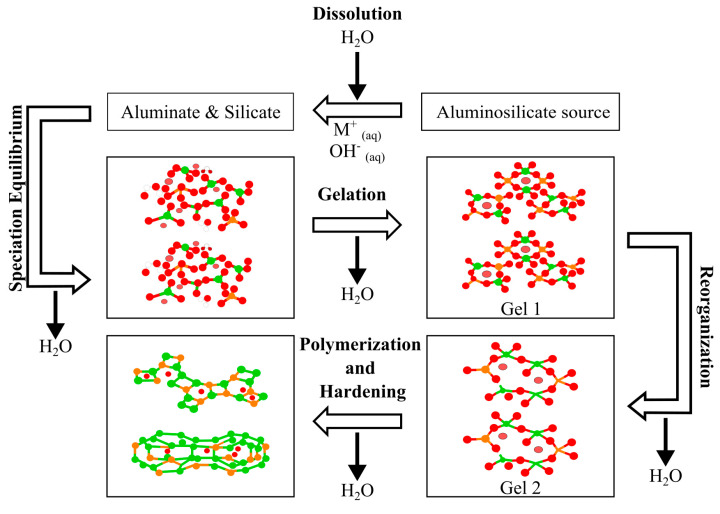
Geopolymerization starts with the dissolution of the source materials by the alkali solution, which causes the breaking of the aluminosilicate bond and releases silica and alumina, mainly in the source materials.
“This model assumes that geopolymerization starts with the dissolution of the source materials by the alkali solution, which causes the breaking of the aluminosilicate bond and releases silica and alumina, mainly in the source materials [78,79].”
The paper relies on this without support.
Only a few scholars investigated the use of geopolymer for soil stabilization application.
“Much attention has been given to the utilization of stabilization materials for soil stabilization, but only a few scholars investigated the use of geopolymer for soil stabilization application.”
The paper relies on this without support.
A wealth of literature is available on using fly ash Class C and GGBFS-based geopolymers, but they nearly always refer to their use in building materials.
“While a wealth of literature is available on using fly ash Class C and GGBFS-based geopolymers, they nearly always refer to their use in building materials.”
The paper relies on this without support.
Several researchers reported on the use of geopolymers for soil stabilization but did not discuss their applicability in road construction, particularly in the subgrade layer.
“Several researchers reported on the use of geopolymers for soil stabilization but did not discuss their applicability in road construction, particularly in the subgrade layer.”
The paper relies on this without support.
One ton of cement manufactured accounts for approximately one ton of greenhouse gas CO2 released into the atmosphere as a result of lime decarbonization in the kiln during cement manufacture.
“However, if soil stabilization involves the use of materials such as cement, it is possible to evaluate and discuss the CO2 emission because one ton of cement is manufactured, accounting for approximately one ton of greenhouse gas CO2 released into the atmosphere as a result of lime decarbonization in the kiln during cement manufacture.”
The paper relies on this without support.
The swell behavior, flexural strength, or abrasion resistance of soil stabilization-based geopolymer using GGBFS and fly ash Class C in road construction, particularly in the subgrade layer of the soil, have not been investigated.
“Moreover, the swell behavior, flexural strength, or abrasion resistance of soil stabilization-based geopolymer using GGBFS and fly ash Class C in road construction, particularly in the subgrade layer of the soil, have not been investigated.”
Self-check
Percentages, sums and reported differences re-computed from the paper’s own numbers.
Each contradiction between two passages listed here was confirmed by an independent check.
Rated major: it would touch a result — a value a result rests on, reported and recomputed p-values on opposite sides of the significance level, two passages that conflict with no sign which is right, or a cited work retracted before this paper was published.
In the paper
§ Potential of Soil Stabilization Using Ground Granulated Blast Furnace Slag (GGBFS) and Fly Ash via Geopolymerization Method: A Review > Abstract
“the strength value obtained did not meet the ASTM D 4609 (<0.8 Mpa) standard required for soil-stabilizing criteria of road construction applications”
§ Potential of Soil Stabilization Using Ground Granulated Blast Furnace Slag (GGBFS) and Fly Ash via Geopolymerization Method: A Review > 3. Geopolymer > 3.3. Strength of Soil after Stabilization with Fly Ash and Ground Granulated Blast Furnace Slag (GGBFS) Geopolymer
“Although the compressive strength of the soil fulfils the ASTM D 4609 [76] standard, it requires a high molarity to obtain the optimum compressive strength value.”
Rated minor: it would not touch a result — a value no result rests on, a p-value that stays on the same side of the significance level, or a conflict that is clerical, resolved elsewhere in the paper, or outside its own findings.
In the paper
§ Potential of Soil Stabilization Using Ground Granulated Blast Furnace Slag (GGBFS) and Fly Ash via Geopolymerization Method: A Review > 1. Introduction
“According to ASTM D 2487 [14]”
§ Potential of Soil Stabilization Using Ground Granulated Blast Furnace Slag (GGBFS) and Fly Ash via Geopolymerization Method: A Review > References
“14. ASTM D 4287 Standard Practice for Classification of Soils for Engineering Purposes (Unified Soil Classification System) ASTM International West Conshohocken, PA, USA 2017”
Rated minor: it would not touch a result — a value no result rests on, a p-value that stays on the same side of the significance level, or a conflict that is clerical, resolved elsewhere in the paper, or outside its own findings.
In the paper
§ Potential of Soil Stabilization Using Ground Granulated Blast Furnace Slag (GGBFS) and Fly Ash via Geopolymerization Method: A Review > 2. Soil Stabilization by Conventional Method > 2.3. Strength of Soils after Stabilization with Fly Ash and Ground Granulated Blast Furnace Slag (GGBFS)
“Fly ash and GGBFS were utilized in amounts of 0%, 5%, 10%, 15%, 20%, 25%, and 30%, respectively, by weight of the soil sample.”
§ Potential of Soil Stabilization Using Ground Granulated Blast Furnace Slag (GGBFS) and Fly Ash via Geopolymerization Method: A Review > 2. Soil Stabilization by Conventional Method > 2.3. Strength of Soils after Stabilization with Fly Ash and Ground Granulated Blast Furnace Slag (GGBFS)
“The strength value increases as the amounts of fly ash and GGBFS reach their maximum values of 18% and 30%, respectively.”
Rated minor: it would not touch a result — a value no result rests on, a p-value that stays on the same side of the significance level, or a conflict that is clerical, resolved elsewhere in the paper, or outside its own findings.
In the paper
§ Potential of Soil Stabilization Using Ground Granulated Blast Furnace Slag (GGBFS) and Fly Ash via Geopolymerization Method: A Review > Abstract
“Previous research only used one type of precursor: fly ash or GGBFS”
§ Potential of Soil Stabilization Using Ground Granulated Blast Furnace Slag (GGBFS) and Fly Ash via Geopolymerization Method: A Review > 3. Geopolymer > 3.3. Strength of Soil after Stabilization with Fly Ash and Ground Granulated Blast Furnace Slag (GGBFS) Geopolymer
“Another research performed by Phummiphan et al. [88] examined the use of geopolymer stabilized soil, fly ash, and GGBFS blends as a pavement base material.”
Citations
Cites
Geopolymer technology: The current state of the art
Duxson, P., Fernández-Jiménez, A., Provis, J. L., Lukey, G. C., Palomo, A., & van Deventer, J. S. J. (2007) · Journal of Materials Science · doi:10.1007/s10853-006-0637-z · Cited by 4,742
Provis, J. L. (2018) · Cement and Concrete Research · doi:10.1016/j.cemconres.2017.02.009 · Cited by 2,272
Effects of soil water content on soil respiration in forests and cattle pastures of eastern Amazonia
Davidson, E. A., Verchot, L. V., Cattãnio, J. H., Ackerman, I. L., & Carvalho, J. E. M. (2000) · Biogeochemistry · doi:10.1023/a:1006204113917 · Cited by 837
Fundamentals of soil stabilization
Firoozi, A. A., Guney Olgun, C., Firoozi, A. A., & Baghini, M. S. (2017) · International Journal of Geo-Engineering · doi:10.1186/s40703-017-0064-9 · Cited by 678
Experimental feasibility study of geopolymer as the next-generation soil stabilizer
Zhang, M., Guo, H., El-Korchi, T., Zhang, G., & Tao, M. (2013) · Construction and Building Materials · doi:10.1016/j.conbuildmat.2013.06.017 · Cited by 560
Clayey soil stabilization using geopolymer and Portland cement
Ghadir, P., & Ranjbar, N. (2018) · Construction and Building Materials · doi:10.1016/j.conbuildmat.2018.07.207 · Cited by 434
Ground granulated blast furnace slag amended fly ash as an expansive soil stabilizer
Sharma, A. K., & Sivapullaiah, P. V. (2016) · Soils and Foundations · doi:10.1016/j.sandf.2016.02.004 · Cited by 400
Phetchuay, C., Horpibulsuk, S., Arulrajah, A., Suksiripattanapong, C., & Udomchai, A. (2016) · Applied Clay Science · doi:10.1016/j.clay.2016.04.005 · Cited by 374
30-Year Mortality After Venous Thromboembolism
Søgaard, K. K., Schmidt, M., Pedersen, L., et al. (2014) · Circulation · doi:10.1161/circulationaha.114.009107 · Cited by 345
Calorimetric study of alkaline activation of calcium hydroxide-metakaolin solid mixtures
Alonso, S., & Palomo, A. (2001) · Cement and Concrete Research · doi:10.1016/s0008-8846(00)00435-x · Cited by 341
Research works printed but not linked: 15
- Pandey, 2017, Soil stabilization using cement, Int. J. Civ. Eng. Technol., 8, 316
- Lakhanpal, 2018, A Brief Review on Various Methods and Materials Used for, Int. Res. J. Eng. Technol., 5, 682
- Utami, 2014, Clayey soil stabilization with lime effect the value CBR and swelling, ARPN J. Eng. Appl. Sci., 9, 1744
- Mokhtar, 2016, An experimental study on dust shell as an admixture in soft soil stabilization, ARPN J. Eng. Appl. Sci., 11, 7254
- Neeladharan, 2019, Stabilization of soil using Fly ash with ground granulated blast furnace slag (GGBS) as binder, Suraj Punj. J., 9, 23
- Pathak, 2014, Soil Stabilization Using Ground Granulated Blast Furnace Slag, J. Eng. Res. Appl., 4, 164
- Mandal, 2016, Stabilization of Soil using Ground Granulated Blast Furnace Slag and Fly Ash, IJIRSET, 5, 21121
- Dayalan, 2016, Comparative Study on Stabilization of Soil with Ground Granulated Blast Furnace Slag (GGBS) and Fly Ash, Int. Res. J. Eng. Technol., 3, 2198
- Ibrahim, 2018, Effect of NaOH molar concentration to soft clayey soil stabilized by fly ash-based geopolymer mechanical strength subjected to initial heating, Int. J. Eng. Res. Sci. Technol., 7, 1
- Zaliha, 2015, The Influence of Geopolymerization Process on Liquid and Plastic Limits of The Influence of Geopolymerization Process on Liquid and Plastic Limits of Soils, Appl. Mech. Mater., 754, 886
- Ayyappan, 2017, Influence of Geopolymers in the Stabilization of Clayey soil, Int. J. Emerg. Technol. Eng. Res., 5, 108
- Trinh, 2018, Influencing of Clay, and Binder Content on Compression Strength of Soft Soil Stabilized by Geopolymer Based Fly Ash, Int. J. Appl. Eng. Res., 13, 7954
- Ghugal, 2013, Effect of Fineness of Fly Ash on Flow and Compressive Strength of Geopolymer Concrete Effect of fly ash fineness on workability and compressive strength of geopolymer concrete, Indian Concr. J., 1, 57
- Zaliha, 2013, Review on Soil Stabilization Techniques Review on Soil Stabilization Techniques, Aust. J. Basic Appl. Sci., 7, 258
- Tempest, B., Sanusi, O., Gergely, J., Ogunro, V., and Weggel, D. (2009, January 4–7). Compressive Strength and Embodied Energy Optimization of Fly Ash-Based Geopolymer Concrete. Proceedings of the 3rd World Coal Ash, WOCA Conference, Lexington, KY, USA.
Cited by
Sorted by citations
Zhao, Q., Ma, C., Huang, B., & Lu, X. (2022) · Journal of Cleaner Production · doi:10.1016/j.jclepro.2022.135547 · Cited by 139
Random Forest Algorithm for the Strength Prediction of Geopolymer Stabilized Clayey Soil
Zeini, H. A., Al-Jeznawi, D., Imran, H., Bernardo, L. F. A., Al-Khafaji, Z. S., & Ostrowski, K. A. (2023) · Sustainability · doi:10.3390/su15021408 · Cited by 111
An overview of geopolymer composites for stabilization of soft soils
Ayub, F., & Khan, S. A. (2023) · Construction and Building Materials · doi:10.1016/j.conbuildmat.2023.133195 · Cited by 102
Abdullah, G. M. S., Ahmad, M., Babur, M., Badshah, M. U., Al-Mansob, R. A., Gamil, Y., & Fawad, M. (2024) · Scientific Reports · doi:10.1038/s41598-024-52825-7 · Cited by 75
Amaludin, A. E., Asrah, H. B., Mohamad, H. M., Amaludin, H., & Amaludin, N. A. (2023) · HighTech and Innovation Journal · doi:10.28991/hij-2023-04-02-07 · Cited by 74
Metadata
- Authors
- Abdila, S. R., Abdullah, M. M. A. B., Ahmad, R., Burduhos Nergis, D. D., Rahim, S. Z. A., Omar, M. F., Sandu, A. V., Vizureanu, P., & Syafwandi
- Affiliations
- Universiti Malaysia Perlis (MY)
- Faculty of Materials Science and Engineering, Gheorghe Asachi Technical University of Iaşi, Boulevard D. Mangeron, No. 51, 700050 Iasi, Romania
- Gheorghe Asachi Technical University of Iași (RO)
- Mercu Buana University (ID)
- Corresponding author
- Abdila, Syafiadi Rizki
- Abdullah, Mohd Mustafa Al Bakri
- ORCID
- Venue
- Materials
- Publisher
- MDPI AG
- Published
- 2022-01-05
- Volume
- 15
- Issue
- 1
- Pages
- 375
- ISSN
- 1996-1944 (ISSN-L)
- PMC
- PMC8746325
- OpenAlex
- W4205454475
- Cited by
- 140
- References
- 90
- Citations by year
- 2026: 43 · 2025: 32 · 2024: 28 · 2023: 28 · 2022: 9
- FWCI
- 2.13
- Type
- journal article
- Language
- en
- Open access
- gold
- doi.org
- Licence
- Locations
- Materials (publishedVersion, cc-by)
- PubMed Central (publishedVersion, cc-by)
- PubMed (publishedVersion)
- DOAJ (DOAJ: Directory of Open Access Journals) (submittedVersion, cc-by-sa)
- Funders
- University Malaysia Perlis, University MercuBuana and Center of Excellence Geopolymer & Green Concrete Technology (CEGeoTech) (UniMap)
- CNFIS Romania (CNFIS-FDI-2021-0354)
- Topics
- Physical Sciences › Engineering › Civil and Structural Engineering › Geotechnical Engineering and Soil Stabilization
- Physical Sciences › Engineering › Civil and Structural Engineering › Concrete and Cement Materials Research
- Physical Sciences › Engineering › Civil and Structural Engineering › Geotechnical and construction materials studies
- Keywords
- soil stabilization, geopolymer, alkali-activated binders, ground granulated blast furnace slag, fly ash, unconfined compressive strength, clay soil, road subgrade, industrial waste utilization
About these checks
Registry, retraction, Cites and statistics results are computed, not judged, with one exception: a printed reference that no index lists is read once by a model before it counts as a citation error. Claims are extracted by a model and kept only when their quote appears verbatim in the text; each cited source is then checked, with a model’s help, for whether it says what the claim relies on. Those verdicts can be wrong — read the claim’s quote and the cited source before relying on one.
A language model drew the claims from the paper on 2026-10-31, under version 3 of the claim definition (model deepseek-v4.1-flash, prompt extract-v3).
A second model labelled each claim on 2026-10-31 (model jev-1.13-20260917, definition revision gold-guideline-v0.2).
Cited sources are checked with a language model’s help (gpt-6-sol).
Statistics and arithmetic are recomputed, not judged.
Confidence bands are shown only for fields calibrated on our annotated test set. None is calibrated yet, so no band is shown.
What counts as a claim ›How we measure confidence ›How we check this ›
Are you an author, or do you see a problem with this page? Request a review
