

The DOI matches its Crossref record; 181 of the 182 references it cites were found in a registry or an index; none of the 122 sources its claims cite is checked for support yet.
Sleep, Nutrition, and Injury Risk in Adolescent Athletes: A Narrative Review
Open accessAbstract
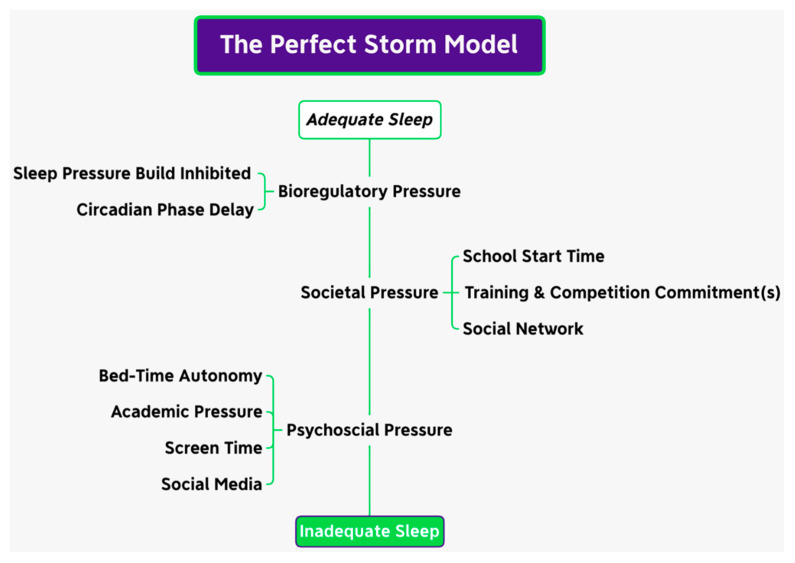
This narrative review explores the impact of sleep and nutrition on injury risk in adolescent athletes. Sleep is viewed as essential to the recuperation process and is distinguished as an active participant in recovery through its involvement in growth, repair, regeneration, and immunity. Furthermore, the literature has shown that the sleep of athletes impacts elements of athletic performance including both physical and cognitive performance, recovery, injury risk, and mental well-being. For sleep to have a restorative effect on the body, it must meet an individual’s sleep needs whilst also lasting for an adequate duration and being of adequate quality, which is age-dependent. The literature has suggested that athletes have increased sleep needs compared to those of the general population and thus the standard recommendations may not be sufficient for athletic populations. Therefore, a more individualised approach accounting for overall sleep health may be more appropriate for addressing sleep needs in individuals including athletes. The literature has demonstrated that adolescent athletes achieve, on average, ~6.3 h of sleep, demonstrating a discrepancy between sleep recommendations (8–10 h) and actual sleep achieved. Sleep–wake cycles undergo development during adolescence whereby adaptation occurs in sleep regulation during this phase. These adaptations increase sleep pressure tolerance and are driven by the maturation of physiological, psychological, and cognitive functioning along with delays in circadian rhythmicity, thus creating an environment for inadequate sleep during adolescence. As such, the adolescent period is a phase of rapid growth and maturation that presents multiple challenges to both sleep and nutrition; consequently, this places a significant burden on an adolescent athletes’ ability to recover, thus increasing the likelihood of injury. Therefore, this article aims to provide a comprehensive review of the available literature on the importance of sleep and nutrition interactions in injury risk in adolescent athletes. Furthermore, it provides foundations for informing further investigations exploring the relation of sleep and nutrition interactions to recovery during adolescence.
Overview
CoChat Summary
TL;DR
This narrative review examines how sleep and nutrition interact with recovery and injury risk in adolescent athletes, noting injury rates of ~1.4–6.4 per 1000 h during training and ~22.4 per 1000 h during competition. It concludes that poor sleep and inadequate diet are associated with higher injury risk, but evidence in adolescent athletes remains limited and largely subjective.
Key findings
- Adolescent athletes achieve, on average, ~6.3 h of sleep, below the 8–10 h recommendation; elite athletes may need ~8.3 h to feel rested.
- Sleep loss is associated with injury: adolescent athletes with <8 h sleep per night were 1.7 times more likely to sustain injury (95% CI 1.0–3.0; p = 0.04); decreasing sleep during high-volume intense training produced a 2.25-fold increase (95% CI 1.46–3.45; p < 0.001); and <8 h specifically gave a 1.31-fold increase (95% CI 0.97–1.78; p = 0.080). Actigraphy found wake after sleep onset predicted previous injury (OR = 1.144), time spent awake predicted injury occurrence (OR = 0.974), and increasing time spent awake by at least 1 min reduced future injury likelihood [F(2.36) = 6.512; p = 0.004].
- In 340 elite adolescent Swedish athletes, meeting recommended nutrition intake decreased injury risk by 64% (OR 0.36; 95% CI 0.14–0.91), and sleeping >8 h per weeknight decreased injury risk by 61% (OR 0.39; 95% CI 0.16–0.99).
- Nutrition knowledge is low in adolescent athletes, with mean scores ranging from 43.8 ± 11.4% to 48.85 ± 12.7%, lower than adult athletes (40.2 ± 12.4% to 70 ± 9%; overall NK% = 55.1 ± 10.7%); a weak positive relationship (r = >0.26) exists between nutrition knowledge and energy balance/dietary quality.
Methods
- Narrative review design, synthesizing available literature on sleep, nutrition, and injury risk in adolescent athletes.
- Data/sample: literature involving adolescent athletes, adult athletes, and general adolescent populations; cited studies include subjective questionnaires, actigraphy, and multiple nutrition knowledge assessment tools, with one analysis involving 340 elite adolescent Swedish athletes.
- Main analysis: narrative synthesis; no primary data collection or meta-analysis is reported, and the text does not describe a systematic search strategy, inclusion/exclusion criteria, or quality appraisal.
Limitations
- Stated limitations: limited research investigates the impact of both sleep and nutrition on injury risk in adolescent athletes; consensus is mainly informed by adult athletes and/or general adolescent populations; objective sleep measures such as actigraphy or polysomnography are scarce in adolescent athletes, so conclusions are inferred from subjective questionnaires and sleep diaries; many studies involve limited sample sizes, case studies, or cross-sectional investigations, limiting conclusions; future longitudinal research using objective sleep measures is warranted.
- Evident limitations: as a narrative review, it lacks a reported systematic search and quality appraisal, so selection and synthesis bias cannot be assessed; the paper also notes that nutrition knowledge research is difficult to infer because of multiple assessment tools.
Model-written summary. Check it against the paper before relying on it.
Integrity signals
Registry
Cites
Statistics
Figures
Verification
Claims the paper makes
0 Valid · 0 Not valid · 32 Not checked · 4 Own results and interpretations
In the paper
“Moreover, solely accounting for a decreased sleep volume resulted in a 1.46-fold (95% CI; 1.10–1.94; p < 0.01) increased risk”
§ Sleep, Nutrition, and Injury Risk in Adolescent Athletes: A Narrative Review > 9. Relationship between Sleep, Nutrition, and Injury Risk in Adolescent Athletes
What the sources say
- Not checked yetcites [163] Frohm, 2017, Multiple Factors Explain Injury Risk in Adolescent Elite Athletes: Applying a Biopsychosocial Perspective, Scand. J. Med. Sci. Sports source
plainstates a cause- Asserted: passes — The authors put it forward as true.
- Checkable: passes — It can be checked against evidence.
- Load-bearing: passes — The paper’s conclusions depend on it.
- Based: passes — The paper gives a reason why it holds.
In the paper
“while adolescent athletes who specifically reported that obtaining < 8 h of sleep resulted in a 1.31-fold (95% CI; 0.97–1.78; p = 0.080) increased injury risk [163].”
§ Sleep, Nutrition, and Injury Risk in Adolescent Athletes: A Narrative Review > 9. Relationship between Sleep, Nutrition, and Injury Risk in Adolescent Athletes
What the sources say
- Not checked yetcites [163] Frohm, 2017, Multiple Factors Explain Injury Risk in Adolescent Elite Athletes: Applying a Biopsychosocial Perspective, Scand. J. Med. Sci. Sports source
plainstates a cause- Asserted: passes — The authors put it forward as true.
- Checkable: passes — It can be checked against evidence.
- Load-bearing: unclear — It is unclear whether the paper’s conclusions depend on it.
- Based: passes — The paper gives a reason why it holds.
In the paper
“Furthermore, the researchers found that athletes who increased TA by at least 1 min reduced their likelihood of sustaining future injury ([F(2.36) = 6.512; p = 0.004]) [186].”
§ Sleep, Nutrition, and Injury Risk in Adolescent Athletes: A Narrative Review > 9. Relationship between Sleep, Nutrition, and Injury Risk in Adolescent Athletes
What the sources say
- Not checked yetcites [186] Viegas, 2022, The Sleep as a Predictor of Musculoskeletal Injuries in Adolescent Athletes, Sleep Sci. source
plainstates a cause- Asserted: passes — The authors put it forward as true.
- Checkable: passes — It can be checked against evidence.
- Load-bearing: unclear — It is unclear whether the paper’s conclusions depend on it.
- Based: passes — The paper gives a reason why it holds.
In the paper
“Furthermore, it was reported that athletes who slept for more than 8 h per weeknight decreased their injury risk by 61% (OR, 0.39; 95% CI, 0.16–0.99) [162].”
§ Sleep, Nutrition, and Injury Risk in Adolescent Athletes: A Narrative Review > 9. Relationship between Sleep, Nutrition, and Injury Risk in Adolescent Athletes
What the sources say
- Not checked yetcites [162] Frohm, 2017, Too Little Sleep and an Unhealthy Diet Could Increase the Risk of Sustaining a New Injury in Adolescent Elite Athletes, Scand. J. Med. Sci. Sports source
plainstates a cause- Asserted: passes — The authors put it forward as true.
- Checkable: passes — It can be checked against evidence.
- Load-bearing: unclear — It is unclear whether the paper’s conclusions depend on it.
- Based: passes — The paper gives a reason why it holds.
In the paper
“Research using subjective questionnaires have purported that adolescent athletes who experience < 8 h of sleep per night are 1.7 times (95% CI; 1.0–3.0; p = 0.04) more likely to sustain an injury [45].”
§ Sleep, Nutrition, and Injury Risk in Adolescent Athletes: A Narrative Review > 9. Relationship between Sleep, Nutrition, and Injury Risk in Adolescent Athletes
What the sources say
- Not checked yetcites [45] Milewski, 2014, Chronic Lack of Sleep Is Associated with Increased Sports Injuries in Adolescent Athletes, J. Pediatr. Orthop. source
hedgedstates an association- Asserted: passes — The authors put it forward as true.
- Checkable: passes — It can be checked against evidence.
- Load-bearing: unclear — It is unclear whether the paper’s conclusions depend on it.
- Based: passes — The paper gives a reason why it holds.
14 more claims
Create a free account to see all 36 claims and to verify the 122 references still open.
- It may state two separate claims as one. 17
- Probably not a substantial claim. 1
Claims other papers make about this one
Each is checked against this paper’s own text: does it say what the citing paper says it does?
In the citing paper
“Several factors may increase the risk of injury in youth and adolescent athletes, including early sports specialisation; high volume training loads; and inadequate dietary intake to support growth, development, sports performance, and recovery [6,7,8].”
From Youth and Adolescent Athlete Musculoskeletal Health: Dietary and Nutritional Strategies to Optimise Injury Prevention and Support Recovery (2024) · cites this paper as [7]
Self-check
Percentages, sums and reported differences re-computed from the paper’s own numbers.
Each contradiction between two passages listed here was confirmed by an independent check.
Rated major: it would touch a result — a value a result rests on, reported and recomputed p-values on opposite sides of the significance level, two passages that conflict with no sign which is right, or a cited work retracted before this paper was published.
In the paper
§ Sleep, Nutrition, and Injury Risk in Adolescent Athletes: A Narrative Review > 11. Conclusions
“compromised sleep (OR, 0.39; 95% CI, 0.16–0.99) and an inadequate diet (OR, 0.36; 95% CI, 0.14–0.91) may increase the likelihood of injury occurrence”
§ Sleep, Nutrition, and Injury Risk in Adolescent Athletes: A Narrative Review > 9. Relationship between Sleep, Nutrition, and Injury Risk in Adolescent Athletes
“athletes who slept for more than 8 h per weeknight decreased their injury risk by 61% (OR, 0.39; 95% CI, 0.16–0.99)”
Rated minor: it would not touch a result — a value no result rests on, a p-value that stays on the same side of the significance level, or a conflict that is clerical, resolved elsewhere in the paper, or outside its own findings.
In the paper
§ Sleep, Nutrition, and Injury Risk in Adolescent Athletes: A Narrative Review > 11. Conclusions
“compromised sleep (OR, 0.39; 95% CI, 0.16–0.99) and an inadequate diet (OR, 0.36; 95% CI, 0.14–0.91) may increase the likelihood of injury occurrence”
§ Sleep, Nutrition, and Injury Risk in Adolescent Athletes: A Narrative Review > 9. Relationship between Sleep, Nutrition, and Injury Risk in Adolescent Athletes
“athletes who reached the recommended nutrition intake decreased their injury risk by 64% (OR, 0.36; 95% CI, 0.14–0.91)”
Citations
Cites
National Sleep Foundation's sleep time duration recommendations: methodology and results summary.
Hirshkowitz, M., Whiton, K., Albert, S. M., Alessi, C., Bruni, O., DonCarlos, L., Hazen, N., Herman, J., Katz, E. S., Kheirandish-Gozal, L., et al. (2015) · Sleep Health · doi:10.1016/j.sleh.2014.12.010 · Cited by 4,404 · cited 3×
“…sleep durations, which includes recommendations The literature has suggested that athletes have increased sleep needs, and thus the general recommendations may not be sufficient for athletic populations [23,63]. for the following: adolescents (8–10 h), adults (7–9 h), and older adults (7–8 h) [46].”
BackgroundTwo-Process Model of Sleep Regulation
(2009) · Encyclopedia of Neuroscience · doi:10.1007/978-3-540-29678-2_6166 · Cited by 3,899
Impact of sleep debt on metabolic and endocrine function
Spiegel, K., Leproult, R., & Van Cauter, E. (1999) · The Lancet · doi:10.1016/s0140-6736(99)01376-8 · Cited by 3,668
Ohayon, M. M., Carskadon, M. A., Guilleminault, C., & Vitiello, M. V. (2004) · Sleep · doi:10.1093/sleep/27.7.1255 · Cited by 3,349
Growth, Maturation, and Physical Activity
Malina, R. M., Bouchard, C., & Bar-Or, O. (2004) · Human Kinetics eBooks · doi:10.5040/9781492596837 · Cited by 3,277
Adolescence: A foundation for future health
Sawyer, S. M., Afifi, R. A., Bearinger, L. H., Blakemore, S.-J., Dick, B., Ezeh, A. C., & Patton, G. C. (2012) · The Lancet · doi:10.1016/s0140-6736(12)60072-5 · Cited by 2,635
Sleep Health: Can We Define It? Does It Matter?
Buysse, D. J. (2014) · Sleep · doi:10.5665/sleep.3298 · Cited by 2,536
Spiegel, K., Tasali, E., Penev, P., & Cauter, E. V. (2004) · Annals of Internal Medicine · doi:10.7326/0003-4819-141-11-200412070-00008 · Cited by 2,459
Adverse metabolic and cardiovascular consequences of circadian misalignment
Scheer, F. A. J. L., Hilton, M. F., Mantzoros, C. S., & Shea, S. A. (2009) · Proceedings of the National Academy of Sciences · doi:10.1073/pnas.0808180106 · Cited by 2,351
Sleep-dependent memory consolidation
Stickgold, R. (2005) · Nature · doi:10.1038/nature04286 · Cited by 1,857 · cited 1×
“REM sleep facilitates neurological regeneration, learning, memory, and emotional regulation [27,29,30].”
BackgroundThe two‐process model of sleep regulation: a reappraisal
Borbély, A. A., Daan, S., Wirz‐Justice, A., & Deboer, T. (2016) · Journal of Sleep Research · doi:10.1111/jsr.12371 · Cited by 1,577
Paruthi, S., Brooks, L. J., D’Ambrosio, C., Hall, W. A., Kotagal, S., Lloyd, R. M., Malow, B. A., Maski, K., Nichols, C., Quan, S. F., et al. (2016) · Journal of Clinical Sleep Medicine · doi:10.5664/jcsm.5866 · Cited by 1,562
Muscle fatigue: what, why and how it influences muscle function
Enoka, R. M., & Duchateau, J. (2008) · The Journal of Physiology · doi:10.1113/jphysiol.2007.139477 · Cited by 1,484
Nutrition and Athletic Performance
(2016) · Medicine & Science in Sports & Exercise · doi:10.1249/mss.0000000000000852 · Cited by 1,305 · cited 2×
“…factors of their internal environment, such as achieving sufficient sleep and energy balance, along with the nature of the sport [152,156–159], thus highlighting the importance of both sleep and nutrition in facilitating recovery to minimise an individual’s risk of injury [32,45,102,160–164].”
BackgroundUnderstanding injury mechanisms: a key component of preventing injuries in sport
Bahr, R., & Krosshaug, T. (2005) · British Journal of Sports Medicine · doi:10.1136/bjsm.2005.018341 · Cited by 1,255
Association between Puberty and Delayed Phase Preference
Carskadon, M. A., Vieira, C., & Acebo, C. (1993) · Sleep · doi:10.1093/sleep/16.3.258 · Cited by 1,167
Sleep in Adolescents: The Perfect Storm
Carskadon, M. A. (2011) · Pediatric Clinics of North America · doi:10.1016/j.pcl.2011.03.003 · Cited by 1,122
Soligard, T., Schwellnus, M., Alonso, J.-M., Bahr, R., Clarsen, B., Dijkstra, H. P., Gabbett, T., Gleeson, M., Hägglund, M., Hutchinson, M. R., et al. (2016) · British Journal of Sports Medicine · doi:10.1136/bjsports-2016-096581 · Cited by 1,041
Clues to the functions of mammalian sleep
Siegel, J. M. (2005) · Nature · doi:10.1038/nature04285 · Cited by 1,040
Internal and External Training Load: 15 Years On
Impellizzeri, F. M., Marcora, S. M., & Coutts, A. J. (2019) · International Journal of Sports Physiology and Performance · doi:10.1123/ijspp.2018-0935 · Cited by 972
Translating Fatigue to Human Performance
ENOKA, R. M., & DUCHATEAU, J. (2016) · Medicine & Science in Sports & Exercise · doi:10.1249/mss.0000000000000929 · Cited by 948
Nutrition knowledge and food intake
Wardle, J., Parmenter, K., & Waller, J. (2000) · Appetite · doi:10.1006/appe.1999.0311 · Cited by 935
Fullagar, H. H. K., Skorski, S., Duffield, R., Hammes, D., Coutts, A. J., & Meyer, T. (2015) · Sports Medicine · doi:10.1007/s40279-014-0260-0 · Cited by 911
Risk factors for sports injuries — a methodological approach
Bahr, R., & Holme, I. (2003) · British Journal of Sports Medicine · doi:10.1136/bjsm.37.5.384 · Cited by 902
IOC consensus statement on relative energy deficiency in sport (RED-S): 2018 update
Mountjoy, M., Sundgot-Borgen, J. K., Burke, L. M., Ackerman, K. E., Blauwet, C., Constantini, N., Lebrun, C., Lundy, B., Melin, A. K., Meyer, N. L., et al. (2018) · British Journal of Sports Medicine · doi:10.1136/bjsports-2018-099193 · Cited by 883
International Olympic Committee consensus statement on youth athletic development
Bergeron, M. F., Mountjoy, M., Armstrong, N., Chia, M., Côté, J., Emery, C. A., Faigenbaum, A., Hall, G., Kriemler, S., Léglise, M., et al. (2015) · British Journal of Sports Medicine · doi:10.1136/bjsports-2015-094962 · Cited by 881
Relationship between nutrition knowledge and dietary intake
Spronk, I., Kullen, C., Burdon, C., & O'Connor, H. (2014) · British Journal of Nutrition · doi:10.1017/s0007114514000087 · Cited by 839
Schwellnus, M., Soligard, T., Alonso, J.-M., Bahr, R., Clarsen, B., Dijkstra, H. P., Gabbett, T. J., Gleeson, M., Hägglund, M., Hutchinson, M. R., et al. (2016) · British Journal of Sports Medicine · doi:10.1136/bjsports-2016-096572 · Cited by 836
DiFiori, J. P., Benjamin, H. J., Brenner, J. S., Gregory, A., Jayanthi, N., Landry, G. L., & Luke, A. (2014) · British Journal of Sports Medicine · doi:10.1136/bjsports-2013-093299 · Cited by 816
Biological maturation of youth athletes: assessment and implications
Malina, R. M., Rogol, A. D., Cumming, S. P., Coelho e Silva, M. J., & Figueiredo, A. J. (2015) · British Journal of Sports Medicine · doi:10.1136/bjsports-2015-094623 · Cited by 733
An update on adolescent sleep: New evidence informing the perfect storm model ☆
Crowley, S. J., Wolfson, A. R., Tarokh, L., & Carskadon, M. A. (2018) · Journal of Adolescence · doi:10.1016/j.adolescence.2018.06.001 · Cited by 684 · cited 5×
“During adolescence, the psychosocial and societal pressures experienced may result in adverse sleep health and reduced recovery capacity [41,42].”
BackgroundInfluentialBone mineral accrual from 8 to 30 years of age: An estimation of peak bone mass
Baxter-Jones, A. D., Faulkner, R. A., Forwood, M. R., Mirwald, R. L., & Bailey, D. A. (2011) · Journal of Bone and Mineral Research · doi:10.1002/jbmr.412 · Cited by 683
Sleep health: Reciprocal regulation of sleep and innate immunity
Irwin, M. R., & Opp, M. R. (2017) · Neuropsychopharmacology · doi:10.1038/npp.2016.148 · Cited by 624 · cited 2×
“Non-REM and REM sleep are distinct in nature and are characterised by brainwave activity, eye movement, cardiac rhythm, muscle tone, breath rate, and arousal thresholds [27,28].”
BackgroundDaily energy expenditure through the human life course
Pontzer, H., Yamada, Y., Sagayama, H., Ainslie, P. N., Andersen, L. F., Anderson, L. J., Arab, L., Baddou, I., Bedu-Addo, K., Blaak, E. E., et al. (2021) · Science · doi:10.1126/science.abe5017 · Cited by 583
Sleep and the athlete: narrative review and 2021 expert consensus recommendations
Walsh, N. P., Halson, S. L., Sargent, C., Roach, G. D., Nédélec, M., Gupta, L., Leeder, J., Fullagar, H. H., Coutts, A. J., Edwards, B. J., et al. (2021) · British Journal of Sports Medicine · doi:10.1136/bjsports-2020-102025 · Cited by 571
Sleep in adolescence: Physiology, cognition and mental health
Tarokh, L., Saletin, J. M., & Carskadon, M. A. (2016) · Neuroscience & Biobehavioral Reviews · doi:10.1016/j.neubiorev.2016.08.008 · Cited by 552
Pubertal Changes in Daytime Sleepiness
Mary, A. C., Harvey, K., Duke, P., Thomas, F. A., Iris, F. L., & William, C. D. (1980) · Sleep · doi:10.1093/sleep/2.4.453 · Cited by 545
Neural Contributions to Muscle Fatigue: From the Brain to the Muscle and Back Again
TAYLOR, J. L., AMANN, M., DUCHATEAU, J., MEEUSEN, R., & RICE, C. L. (2016) · Medicine & Science in Sports & Exercise · doi:10.1249/mss.0000000000000923 · Cited by 543
Drew, M. K., & Finch, C. F. (2016) · Sports Medicine · doi:10.1007/s40279-015-0459-8 · Cited by 538
Neurobiology of REM and NREM sleep
McCarley, R. W. (2007) · Sleep Medicine · doi:10.1016/j.sleep.2007.03.005 · Cited by 536
A Framework for Understanding the Training Process Leading to Elite Performance
Smith, D. J. (2003) · Sports Medicine · doi:10.2165/00007256-200333150-00003 · Cited by 526
Nutrition in adolescent growth and development
Norris, S. A., Frongillo, E. A., Black, M. M., Dong, Y., Fall, C., Lampl, M., Liese, A. D., Naguib, M., Prentice, A., Rochat, T., et al. (2022) · The Lancet · doi:10.1016/s0140-6736(21)01590-7 · Cited by 518
Does Overtraining Exist?: An Analysis of Overreaching and Overtraining Research
Halson, S. L., & Jeukendrup, A. E. (2004) · Sports Medicine · doi:10.2165/00007256-200434140-00003 · Cited by 513
Energy availability in athletes
Loucks, A. B., Kiens, B., & Wright, H. H. (2011) · Journal of Sports Sciences · doi:10.1080/02640414.2011.588958 · Cited by 513
Chronotypes in the US–influence of age and sex
Fischer, D., Lombardi, D. A., Marucci-Wellman, H., & Roenneberg, T. (2017) · PLOS ONE · doi:10.1371/journal.pone.0178782 · Cited by 502
Sleep in elite athletes and nutritional interventions to enhance sleep
Halson, S. L. (2014) · Sports Medicine · doi:10.1007/s40279-014-0147-0 · Cited by 502
Astrup, A., Dyerberg, J., Elwood, P., Hermansen, K., Hu, F. B., Jakobsen, M. U., Kok, F. J., Krauss, R. M., Lecerf, J. M., LeGrand, P., et al. (2011) · The American Journal of Clinical Nutrition · doi:10.3945/ajcn.110.004622 · Cited by 487
Homeostatic sleep regulation in adolescents
Jenni, O. G., Achermann, P., & Carskadon, M. A. (2005) · Sleep · doi:10.1093/sleep/28.11.1446 · Cited by 469
Chronic lack of sleep is associated with increased sports injuries in adolescent athletes
Milewski, M. D., Skaggs, D. L., Bishop, G. A., Pace, J. L., Ibrahim, D. A., Wren, T. A. L., & Barzdukas, A. (2014) · Journal of Pediatric Orthopaedics · doi:10.1097/bpo.0000000000000151 · Cited by 453
Sleep is of the brain, by the brain and for the brain
Hobson, J. A. (2005) · Nature · doi:10.1038/nature04283 · Cited by 440
Early Sport Specialization: Roots, Effectiveness, Risks
Malina, R. M. (2010) · Current Sports Medicine Reports · doi:10.1249/jsr.0b013e3181fe3166 · Cited by 419
Human Growth Hormone Release: Relation to Slow-Wave Sleep and Sleep-Waking Cycles
Sassin, J. F., Parker, D. C., Mace, J. W., Gotlin, R. W., Johnson, L. C., & Rossman, L. G. (1969) · Science · doi:10.1126/science.165.3892.513 · Cited by 413
Sleeping hours: what is the ideal number and how does age impact this?
Chaput, J.-P., Dutil, C., & Sampasa-Kanyinga, H. (2018) · Nature and Science of Sleep · doi:10.2147/nss.s163071 · Cited by 405
Age-related changes in sleep/wake patterns among Korean teenagers
Yang, C.-K., Kim, J. K., Patel, S. R., & Lee, J.-H. (2005) · PEDIATRICS · doi:10.1542/peds.2004-0815g · Cited by 385
Cumming, S. P., Lloyd, R. S., Oliver, J. L., Eisenmann, J. C., & Malina, R. M. (2017) · Strength & Conditioning Journal · doi:10.1519/ssc.0000000000000281 · Cited by 384
Mann, T. N., Lamberts, R. P., & Lambert, M. I. (2014) · Sports Medicine · doi:10.1007/s40279-014-0197-3 · Cited by 379
Muscle Metabolism and Enzyme Activities after Training in Boys 11–13 Years Old
Eriksson, B. O., Gollnick, P. D., & Saltin, B. (1973) · Acta Physiologica Scandinavica · doi:10.1111/j.1748-1716.1973.tb05415.x · Cited by 326
Nutrition Knowledge in Athletes: A Systematic Review
Heaney, S., O’Connor, H., Michael, S., Gifford, J., & Naughton, G. (2011) · International Journal of Sport Nutrition and Exercise Metabolism · doi:10.1123/ijsnem.21.3.248 · Cited by 321
Communicating clocks shape circadian homeostasis
Koronowski, K. B., & Sassone-Corsi, P. (2021) · Science · doi:10.1126/science.abd0951 · Cited by 301
Kraemer, W. J., Ratamess, N. A., Hymer, W. C., Nindl, B. C., & Fragala, M. S. (2020) · Frontiers in Endocrinology · doi:10.3389/fendo.2020.00033 · Cited by 300
Periodized Nutrition for Athletes
Jeukendrup, A. E. (2017) · Sports Medicine · doi:10.1007/s40279-017-0694-2 · Cited by 299
Unearthing the phylogenetic roots of sleep
Allada, R., & Siegel, J. M. (2008) · Current Biology · doi:10.1016/j.cub.2008.06.033 · Cited by 280
Crowley, S. J., Van Reen, E., LeBourgeois, M. K., Acebo, C., Tarokh, L., Seifer, R., Barker, D. H., & Carskadon, M. A. (2014) · PLoS ONE · doi:10.1371/journal.pone.0112199 · Cited by 273 · cited 2×
“Sleep–wake cycles also undergo development These adaptations to sleep regulation increase sleep pressure tolerance (reduced adenosine accumulation) [70–72] and are driven by the maturation of physiological, psychological, and cognitive functioning along with delays in circadian rhythmicity [73],…”
BackgroundChronotype, Physical Activity, and Sport Performance: A Systematic Review
Vitale, J. A., & Weydahl, A. (2017) · Sports Medicine · doi:10.1007/s40279-017-0741-z · Cited by 267
Adolescent psychosocial development: A review of longitudinal models and research.
Meeus, W. (2016) · Developmental Psychology · doi:10.1037/dev0000243 · Cited by 264
Sleep and Athletic Performance
Charest, J., & Grandner, M. A. (2020) · Sleep Medicine Clinics · doi:10.1016/j.jsmc.2019.11.005 · Cited by 264
Epidemiology of overuse and acute injuries among competitive collegiate athletes
Yang, J., Tibbetts, A. S., Covassin, T., Cheng, G., Nayar, S., & Heiden, E. (2012) · Journal of Athletic Training · doi:10.4085/1062-6050-47.2.198 · Cited by 263
Sleep, Recovery, and Performance: The New Frontier in High-Performance Athletics
Samuels, C. (2008) · Neurologic Clinics · doi:10.1016/j.ncl.2007.11.012 · Cited by 257
Paediatric Exercise Science and Medicine
(2008) · doi:10.1093/med/9780199232482.001.0001 · Cited by 243
Towlson, C., Salter, J., Ade, J., Enright, K. J., Harper, L. D., Page, R. M., & Malone, J. J. (2020) · Journal of sport and health science/Journal of Sport and Health Science · doi:10.1016/j.jshs.2020.09.003 · Cited by 224
New strategies in sport nutrition to increase exercise performance
Close, G. L., Hamilton, D. L., Philp, A., Burke, L. M., & Morton, J. P. (2016) · Free Radical Biology and Medicine · doi:10.1016/j.freeradbiomed.2016.01.016 · Cited by 221
Deboer, T. (2018) · Neurobiology of Sleep and Circadian Rhythms · doi:10.1016/j.nbscr.2018.02.003 · Cited by 220
Raysmith, B. P., & Drew, M. K. (2016) · Journal of Science and Medicine in Sport · doi:10.1016/j.jsams.2015.12.515 · Cited by 207
Samuels, C., James, L., Lawson, D., & Meeuwisse, W. (2016) · British Journal of Sports Medicine · doi:10.1136/bjsports-2014-094332 · Cited by 202
Sleep and Nutrition Interactions: Implications for Athletes
Doherty, R., Madigan, S., Warrington, G., & Ellis, J. (2019) · Nutrients · doi:10.3390/nu11040822 · Cited by 186 · cited 6×
“Both sleep and nutrition are viewed as modifiable facilitators for recovery in athletes [22,38,45,65,162–164, 168,”
BackgroundInfluentialSelf-citationEliakim, E., Morgulev, E., Lidor, R., & Meckel, Y. (2020) · BMJ Open Sport & Exercise Medicine · doi:10.1136/bmjsem-2019-000675 · Cited by 186
Prieto-González, P., Martínez-Castillo, J. L., Fernández-Galván, L. M., Casado, A., Soporki, S., & Sánchez-Infante, J. (2021) · International Journal of Environmental Research and Public Health · doi:10.3390/ijerph18094857 · Cited by 173
Training Load and Injury: Causal Pathways and Future Directions
Kalkhoven, J. T., Watsford, M. L., Coutts, A. J., Edwards, W. B., & Impellizzeri, F. M. (2021) · Sports Medicine · doi:10.1007/s40279-020-01413-6 · Cited by 172
Rethinking the sleep-health link
Matricciani, L., Bin, Y. S., Lallukka, T. M., Kronholm, E., Wake, M. A., Paquet, C., Dumuid, D., & Olds, T. (2018) · Sleep Health · doi:10.1016/j.sleh.2018.05.004 · Cited by 169
Skeldon, A. C., Derks, G., & Dijk, D.-J. (2016) · Sleep Medicine Reviews · doi:10.1016/j.smrv.2015.05.011 · Cited by 165
Halson, S. L. (2008) · European Journal of Sport Science · doi:10.1080/17461390801954794 · Cited by 165
Exercise, sleep and cytokines: Is there a relation?
dos Santos, R. V. T., Tufik, S., & de Mello, M. T. (2007) · Sleep Medicine Reviews · doi:10.1016/j.smrv.2007.03.003 · Cited by 164
Youth Athlete Development and Nutrition
Desbrow, B. (2021) · Sports Medicine · doi:10.1007/s40279-021-01534-6 · Cited by 159
Energy requirements of children and adolescents
Torun, B. (2005) · Public Health Nutrition · doi:10.1079/phn2005791 · Cited by 157
Jayanthi, N. A., Schley, S., Cumming, S. P., Myer, G. D., Saffel, H. L., Hartwig, T. B., & Gabbett, T. J. (2021) · Sports Health A Multidisciplinary Approach · doi:10.1177/19417381211056088 · Cited by 150
Relationship Between General Nutrition Knowledge and Dietary Quality in Elite Athletes
Spronk, I., Heaney, S. E., Prvan, T., & O’Connor, H. T. (2015) · International Journal of Sport Nutrition and Exercise Metabolism · doi:10.1123/ijsnem.2014-0034 · Cited by 146
Sleep Monitoring in Athletes: Motivation, Methods, Miscalculations and Why It Matters
Halson, S. L. (2019) · Sports Medicine · doi:10.1007/s40279-019-01119-4 · Cited by 145
Muscle metabolism during exercise in boys aged 11 to 16 years compared to adults.
Eriksson, O., & Saltin, B. (1974) · PubMed · Cited by 144
The neuroendocrine control of the circadian system: Adolescent chronotype
Hagenauer, M. H., & Lee, T. M. (2012) · Frontiers in Neuroendocrinology · doi:10.1016/j.yfrne.2012.04.003 · Cited by 143
The Role of Sleep in Memory Consolidation and Brain Plasticity: Dream or Reality?
Frank, M. G., & Benington, J. H. (2006) · The Neuroscientist · doi:10.1177/1073858406293552 · Cited by 143
von Rosen, P., Frohm, A., Kottorp, A., Fridén, C., & Heijne, A. (2017) · Scandinavian Journal of Medicine & Science in Sports · doi:10.1111/sms.12735 · Cited by 142
Genomics and Genetics in the Biology of Adaptation to Exercise
Bouchard, C., Rankinen, T., & Timmons, J. A. (2011) · Comprehensive Physiology · doi:10.1002/cphy.c100059 · Cited by 136
Injuries, risk factors and prevention initiatives in youth sport
Frisch, A., Croisier, J., Urhausen, A. J. P., Seil, R., & Theisen, D. (2009) · British Medical Bulletin · doi:10.1093/bmb/ldp034 · Cited by 133
Wheaton, A. G., Olsen, E. O., Miller, G. F., & Croft, J. B. (2016) · MMWR. Morbidity and Mortality Weekly Report · doi:10.15585/mmwr.mm6513a1 · Cited by 132
How Much Sleep Does an Elite Athlete Need?
Sargent, C., Lastella, M., Halson, S. L., & Roach, G. D. (2021) · International Journal of Sports Physiology and Performance · doi:10.1123/ijspp.2020-0896 · Cited by 124
von Rosen, P., Frohm, A., Kottorp, A., Fridén, C., & Heijne, A. (2017) · Scandinavian Journal of Medicine & Science in Sports · doi:10.1111/sms.12855 · Cited by 123
Hierarchy of nutritional knowledge that relates to the consumption of a functional food
Wansink, B. C., Westgren, R. E., & Cheney, M. M. (2005) · Nutrition · doi:10.1016/j.nut.2004.06.022 · Cited by 122
More data needed on injury risk among young elite athletes
Steffen, K., & Engebretsen, L. (2010) · British Journal of Sports Medicine · doi:10.1136/bjsm.2010.073833 · Cited by 120
Effects of sleep deprivation and exercise on glucose tolerance.
VanHelder, T., Symons, J. D., & Radomski, M. W. (1993) · PubMed · Cited by 119
Sleep, circadian biology and skeletal muscle interactions: Implications for metabolic health
Morrison, M., Halson, S. L., Weakley, J., & Hawley, J. A. (2022) · Sleep Medicine Reviews · doi:10.1016/j.smrv.2022.101700 · Cited by 118
Oxidation rate of exogenous carbohydrate during exercise is higher in boys than in men
Timmons, B. W., Bar‐Or, O., & Riddell, M. C. (2003) · Journal of Applied Physiology · doi:10.1152/japplphysiol.00140.2002 · Cited by 113
Strategies to Prevent Injury in Adolescent Sport: A Systematic Review
Abernethy, L., & Bleakley, C. (2007) · British Journal of Sports Medicine · doi:10.1136/bjsm.2007.035691 · Cited by 113
Oxford Textbook of Children's Sport and Exercise Medicine
(2017) · doi:10.1093/med/9780198757672.001.0001 · Cited by 113
Two Percent Dehydration Impairs and Six Percent Carbohydrate Drink Improves Boys Basketball Skills
DOUGHERTY, K. A., BAKER, L. B., CHOW, M., & KENNEY, W. L. (2006) · Medicine & Science in Sports & Exercise · doi:10.1249/01.mss.0000227640.60736.8e · Cited by 106
Sleep and cardiovascular regulation
Trinder, J. C., Waloszek, J. M., Woods, M. J., & Jordan, A. S. (2011) · Pflügers Archiv - European Journal of Physiology · doi:10.1007/s00424-011-1041-3 · Cited by 105
Halson, S. L., & Juliff, L. E. (2017) · Progress in brain research · doi:10.1016/bs.pbr.2017.06.006 · Cited by 105
Changes in Plasma Lipids during Exposure to Total Sleep Deprivation
Chua, E. C.-P., Shui, G., Cazenave‐Gassiot, A., Wenk, M. R., & Gooley, J. J. (2015) · SLEEP · doi:10.5665/sleep.5142 · Cited by 104
The effect of 60-h sleep deprivation on cardiovascular regulation and body temperature
Vaara, J. P., Kyröläinen, H., Koivu, M., Tulppo, M. P., & Finni, T. J. (2008) · European Journal of Applied Physiology · doi:10.1007/s00421-008-0921-5 · Cited by 104
The Impact of Sleep Interventions on Athletic Performance: A Systematic Review
Cunha, L. A., Costa, J. A., Marques, E. A., Brito, J., Lastella, M., & Figueiredo, P. (2023) · Sports Medicine - Open · doi:10.1186/s40798-023-00599-z · Cited by 103
Benardot, D. (2005) · Human Kinetics eBooks · doi:10.5040/9781718220973 · Cited by 99
Skein, M., Duffield, R., Minett, G. M., Snape, A., & Murphy, A. (2013) · International Journal of Sports Physiology and Performance · doi:10.1123/ijspp.8.5.556 · Cited by 96
Wik, E. H., Martínez‐Silván, D., Farooq, A., Cardinale, M., Johnson, A., & Bahr, R. (2020) · Scandinavian Journal of Medicine and Science in Sports · doi:10.1111/sms.13635 · Cited by 91
Sleep–Wake Timings in Adolescence: Chronotype Development and Associations with Adjustment
Karan, M., Bai, S., Almeida, D. M., Irwin, M. R., McCreath, H. E., & Fuligni, A. J. (2021) · Journal of Youth and Adolescence · doi:10.1007/s10964-021-01407-1 · Cited by 91
Sleep and Performance in Professional Athletes
Cook, J. D., & Charest, J. (2023) · Current Sleep Medicine Reports · doi:10.1007/s40675-022-00243-4 · Cited by 91
High Injury Burden in Elite Adolescent Athletes: A 52-Week Prospective Study
von Rosen, P., Heijne, A., Frohm, A., Fridén, C., & Kottorp, A. (2018) · Journal of Athletic Training · doi:10.4085/1062-6050-251-16 · Cited by 90
A systematic review update of athletes’ nutrition knowledge and association with dietary intake
Janiczak, A., Devlin, B. L., Forsyth, A., & Trakman, G. L. (2022) · British Journal of Nutrition · doi:10.1017/s0007114521004311 · Cited by 83
Benitez, I. D., Roure, N., Pinilla, L., Sapiña-Beltrán, E., Buysse, D. J., Barbé, F., & de Batlle, J. (2020) · Annals of the American Thoracic Society · doi:10.1513/annalsats.201908-628oc · Cited by 80
Sleep, Recovery, and Performance in Sports
Malhotra, R. K. (2017) · Neurologic Clinics · doi:10.1016/j.ncl.2017.03.002 · Cited by 79
Boccia, G., Moisè, P., Franceschi, A., Trova, F., Panero, D., Torre, A. L., Rainoldi, A., Schena, F. F., & Cardinale, M. (2017) · PLoS ONE · doi:10.1371/journal.pone.0170744 · Cited by 78
Hannon, M. P., Coleman, N. M., Parker, L. J. F., McKeown, J., Unnithan, V. B., Close, G. L., Drust, B., & Morton, J. P. (2021) · Journal of Sports Sciences · doi:10.1080/02640414.2021.1899610 · Cited by 78
The Sleep and Recovery Practices of Athletes
Doherty, R., Madigan, S. M., Nevill, A., Warrington, G., & Ellis, J. G. (2021) · Nutrients · doi:10.3390/nu13041330 · Cited by 78
Self-citationThe Adolescent Athlete: A Developmental Approach to Injury Risk
McKay, D., Broderick, C. R., & Steinbeck, K. S. (2016) · Pediatric Exercise Science · doi:10.1123/pes.2016-0021 · Cited by 75
The influence of exposure, growth and maturation on injury risk in male academy football players
Johnson, D. M., Cumming, S. P., Bradley, B., & Williams, S. (2022) · Journal of Sports Sciences · doi:10.1080/02640414.2022.2051380 · Cited by 70
Timmons, B. W., Bar‐Or, O., & Riddell, M. C. (2007) · Applied Physiology, Nutrition, and Metabolism · doi:10.1139/h07-004 · Cited by 69
The Value of Sleep on Athletic Performance, Injury, and Recovery in the Young Athlete
Copenhaver, E. A., & Diamond, A. B. (2017) · Pediatric Annals · doi:10.3928/19382359-20170221-01 · Cited by 69
Vázquez-Espino, K., Rodas-Font, G., & Farran-Codina, A. (2022) · Nutrients · doi:10.3390/nu14071345 · Cited by 67
Sleep deprivation and energy metabolism: to sleep, perchance to eat?
Penev, P. D. (2007) · Current Opinion in Endocrinology Diabetes and Obesity · doi:10.1097/med.0b013e3282be9093 · Cited by 66
MacDOUGALL, J. D., Roche, P., Bar-Or, O., & Moroz, J. S. (1983) · International Journal of Sports Medicine · doi:10.1055/s-2008-1026034 · Cited by 65
Promotion of Healthy Weight-Control Practices in Young Athletes
Carl, R. L., Johnson, M. D., Martin, T. J., COUNCIL ON SPORTS MEDICINE AND FITNESS, LaBella, C. R., Brooks, M. A., Diamond, A., Hennrikus, W., LaBotz, M., Logan, K., et al. (2017) · Pediatrics · doi:10.1542/peds.2017-1871 · Cited by 64
Development of Late Circadian Preference: Sleep Timing From Childhood to Late Adolescence
Kuula, L., Pesonen, A., Merikanto, I., Gradisar, M., Lahti, J. M. T., Heinonen, K., Kajantie, E., & Räikkönen, K. (2017) · The Journal of Pediatrics · doi:10.1016/j.jpeds.2017.10.068 · Cited by 64
Sleepiness/alertness among healthy evening and morning type individuals
Rosenthal, L. D., Day, R. C., Gerhardstein, R. R., Meixner, R., Roth, T. G., Guido, P. S., & Fortier, J. (2001) · Sleep Medicine · doi:10.1016/s1389-9457(00)00047-2 · Cited by 63
Sleep-Related Issues for Recovery and Performance in Athletes
Kölling, S., Duffield, R., Erlacher, D., Venter, R., & Halson, S. L. (2019) · International Journal of Sports Physiology and Performance · doi:10.1123/ijspp.2017-0746 · Cited by 63
Timmons, B. W., Bar‐Or, O., & Riddell, M. C. (2007) · Journal of Applied Physiology · doi:10.1152/japplphysiol.00018.2007 · Cited by 62
Prediction: The Modern-Day Sport-Science and Sports-Medicine “Quest for the Holy Grail”
McCall, A., Fanchini, M., & Coutts, A. J. (2017) · International Journal of Sports Physiology and Performance · doi:10.1123/ijspp.2017-0137 · Cited by 62
Lack of Sleep and Sports Injuries in Adolescents: A Systematic Review and Meta-Analysis
Gao, B., Dwivedi, S., Milewski, M. D., & Cruz, A. I. (2019) · Journal of Pediatric Orthopaedics · doi:10.1097/bpo.0000000000001306 · Cited by 61
The Influence of Biological Maturation on Fat and Carbohydrate Metabolism during Exercise in Males
Stephens, B. R., Cole, A. S., & Mahon, A. D. (2006) · International Journal of Sport Nutrition and Exercise Metabolism · doi:10.1123/ijsnem.16.2.166 · Cited by 60
Determinants of eating patterns and nutrient intake among adolescent athletes: a systematic review
Noll, M., de Mendonça, C. R., de Souza Rosa, L. P., & Silveira, E. A. (2017) · Nutrition Journal · doi:10.1186/s12937-017-0267-0 · Cited by 60
Training Management of the Elite Adolescent Soccer Player throughout Maturation
McBurnie, A. J., Dos’Santos, T., Johnson, D. M., & Leng, E. (2021) · Sports · doi:10.3390/sports9120170 · Cited by 57
Synchronizing education to adolescent biology: ‘let teens sleep, start school later.’
Kelley, P., Lockley, S. W., Foster, R. G., & Kelley, J. (2015) · Learning, Media and Technology · doi:10.1080/17439884.2014.942666 · Cited by 56
Nutritional Considerations for Performance in Young Athletes
Smith, J. W., Holmes, M. E., & McAllister, M. J. (2015) · Journal of Sports Medicine · doi:10.1155/2015/734649 · Cited by 55
Ryan, S., Kempton, T., Impellizzeri, F. M., & Coutts, A. J. (2019) · Science and Medicine in Football · doi:10.1080/24733938.2019.1641212 · Cited by 51
Silva, A. M., Santos, D. A., Matias, C. N., Minderico, C. S., Schoeller, D. A., & Sardinha, L. B. (2013) · Journal of Strength and Conditioning Research · doi:10.1519/jsc.0b013e31827361eb · Cited by 49
Räisänen, A. M., Kokko, S., Pasanen, K., Leppänen, M., Rimpelä, A., Villberg, J., & Parkkari, J. (2018) · BMC Musculoskeletal Disorders · doi:10.1186/s12891-018-1969-y · Cited by 49
Vellers, H. L., Kleeberger, S. R., & Lightfoot, J. T. (2018) · Mammalian Genome · doi:10.1007/s00335-017-9732-5 · Cited by 48
Sleep and Circadian Rhythms in Adolescence
Tarokh, L., Short, M., Crowley, S. J., Fontanellaz-Castiglione, C. E. G., & Carskadon, M. A. (2019) · Current Sleep Medicine Reports · doi:10.1007/s40675-019-00155-w · Cited by 47
Sport training and the growth and pubertal maturation of young athletes.
Matina, R. M., & Rogol, A. D. (2011) · PubMed · Cited by 42
Energy requirements of Male academy soccer players from the English premier league
HANNON, M. P., PARKER, L. J. F., CARNEY, D. J., MCKEOWN, J., SPEAKMAN, J. R., HAMBLY, C., DRUST, B., UNNITHAN, V. B., CLOSE, G. L., & MORTON, J. P. (2021) · Medicine & Science in Sports & Exercise · doi:10.1249/mss.0000000000002443 · Cited by 42
Long Term Sport Involvement and Sport Injury Rate in Elite Young Athletes
Maffulli, N. (2005) · Archives of Disease in Childhood · doi:10.1136/adc.2004.057653 · Cited by 41
The Importance of Sleep for Athletic Performance
Marshall, G. J. G., & Turner, A. N. (2016) · Strength and conditioning journal · doi:10.1519/ssc.0000000000000189 · Cited by 41
Foo, W. L., Faghy, M. A., Sparks, A., Newbury, J. W., & Gough, L. A. (2021) · Nutrients · doi:10.3390/nu13082713 · Cited by 41
Sriraam, N., Shri, T. K. P., & Maheshwari, U. (2016) · Australasian Physical & Engineering Sciences in Medicine · doi:10.1007/s13246-016-0472-8 · Cited by 37
Recent Developments in the Assessment of Nutrition Knowledge in Athletes
Tam, R., Gifford, J. A., & Beck, K. L. (2022) · Current Nutrition Reports · doi:10.1007/s13668-022-00397-1 · Cited by 36
Nutritional knowledge of youth academy athletes
Bird, S. P., & Rushton, B. D. (2020) · BMC Nutrition · doi:10.1186/s40795-020-00360-9 · Cited by 34
EEG Changes Accompanying Successive Cycles of Sleep Restriction With and Without Naps in Adolescents
Ong, J. L., Lo, J. C.-Y., Gooley, J. J., & Chee, M. W. L. (2017) · SLEEP · doi:10.1093/sleep/zsx030 · Cited by 33
Hannon, M. P., Carney, D. J., Floyd, S., Parker, L. J. F., McKeown, J., Drust, B., Unnithan, V. B., Close, G. L., & Morton, J. P. (2020) · Journal of Sports Sciences · doi:10.1080/02640414.2020.1717286 · Cited by 33
Energy and Macronutrient Considerations for Young Athletes
Hannon, M. P., Close, G. L., & Morton, J. P. (2020) · Strength & Conditioning Journal · doi:10.1519/ssc.0000000000000570 · Cited by 33
Shapiro, C. M. (1981) · British Journal of Sports Medicine · doi:10.1136/bjsm.15.1.51 · Cited by 32
Energy and macronutrient intake in adolescent sprint athletes: A follow-up study
Aerenhouts, D., Deriemaeker, P., Hebbelinck, M., & Clarys, P. (2011) · Journal of Sports Sciences · doi:10.1080/02640414.2010.521946 · Cited by 29
Skin microvascular reactivity in trained adolescents
Roche, D. M., Rowland, T. W., Garrard, M., Marwood, S., & Unnithan, V. B. (2010) · European Journal of Applied Physiology · doi:10.1007/s00421-009-1328-7 · Cited by 28
Performance Nutrition for the Adolescent Athlete: A Realistic Approach
Berg, E. K. (2019) · Clinical Journal of Sport Medicine · doi:10.1097/jsm.0000000000000744 · Cited by 25
Validation of a General and Sports Nutrition Knowledge Questionnaire in Italian Early Adolescents
Rosi, A., Ferraris, C., Guglielmetti, M., Meroni, E., Charron, M., Menta, R., Manini, F., Di Gioia, V., Martini, D., & Erba, D. (2020) · Nutrients · doi:10.3390/nu12103121 · Cited by 25
Coel, R. A., Pujalte, G. G. A., Applewhite, A. I., Zaslow, T., Cooper, G., Ton, A. N., & Benjamin, H. J. (2023) · Sports Health: A Multidisciplinary Approach · doi:10.1177/19417381221108732 · Cited by 24
Sleep Is for Tissue Restoration
Adam, K., & Oswald, I. (1977) · Journal of the Royal College of Physicians of London · doi:10.1016/s0035-8819(25)02990-3 · Cited by 21
The cost of players’ injuries to professional sports leagues and other sports organizations
Walia, B., & Boudreaux, C. J. (2020) · Managerial Finance · doi:10.1108/mf-06-2020-0301 · Cited by 19
Thermoregulatory responses of pre-, mid-, and late-pubertal boys to exercise in dry heat
FALK, B., BAR-OR, O., & MACDOUGALL, J. D. (1992) · Medicine & Science in Sports & Exercise · doi:10.1249/00005768-199206000-00011 · Cited by 19
Carskadon, M. A. (2005) · Clinics in Sports Medicine · doi:10.1016/j.csm.2004.12.001 · Cited by 18
Patel, A. R., Hsu, A., Perez, I. A., Wren, T. A. L., & Edison, B. R. (2020) · Research in Sports Medicine · doi:10.1080/15438627.2020.1716229 · Cited by 18
Stables, R. G., Hannon, M. P., Costello, N. B., McHaffie, S. J., Sodhi, J. S., Close, G. L., & Morton, J. P. (2024) · Science and Medicine in Football · doi:10.1080/24733938.2022.2146178 · Cited by 18
von Rosen, P., Olofsson, O., Väsbom, S., & Heijne, A. (2019) · European Journal of Sport Science · doi:10.1080/17461391.2018.1552721 · Cited by 17
Determination of nutrition knowledge of adolescents engaged in sports
Kudret Saribay, A., & Kirbaş, Ş. (2019) · Universal Journal of Educational Research · doi:10.13189/ujer.2019.070106 · Cited by 16
Stables, R. G., Hannon, M. P., Jacob, A. D., Topping, O., Costello, N. B., Boddy, L. M., Hambly, C., Speakman, J. R., Sodhi, J. S., Close, G. L., et al. (2023) · Journal of Sports Sciences · doi:10.1080/02640414.2023.2263707 · Cited by 15
Caputo, J. L., Keefer, D. J., Craig, I. S., Griffith, K. B., Akins, M. B., Griffith, G. E., Krahenbuhl, G. S., Martin, P. E., Morgan, D. W., & Tseh, W. (2004) · European Journal of Applied Physiology · doi:10.1007/s00421-003-0945-9 · Cited by 14
Fridén, C., Ekenros, L., & von Rosen, P. (2023) · BMJ Open Sport & Exercise Medicine · doi:10.1136/bmjsem-2022-001485 · Cited by 14
The Sleep as a Predictor of Musculoskeletal Injuries in Adolescent Athletes
Viegas, F., Ocarino, J. M., Freitas, L. D. S., Pinto, M. C., Facundo, L. A., Amaral, A. S., Silva, S., Mello, M. T. D., & Silva, A. (2022) · Sleep Science · doi:10.5935/1984-0063.20220055 · Cited by 10
Rodríguez‐Negro, J., Llodio, I., Castillo, D., Romaratezabala, E., & Yanci, J. (2021) · International Journal of Sports Science & Coaching · doi:10.1177/17479541211006676 · Cited by 6
Factors Affecting Sleep Quality among Adolescent Athletes
Man Lo, H., Yee Leung, J. H., Yin Chau, G. K., HS Lam, M., Lee, K. Y., & Ho, A. (2017) · Sports Nutrition and Therapy · doi:10.4172/2473-6449.1000123 · Cited by 4
Genomic imprinting and the control of sleep in mammals
Lassi, G., & Tucci, V. (2018) · Current Opinion in Behavioral Sciences · doi:10.1016/j.cobeha.2018.05.011 · Cited by 4
The Genetic Regulation of Human Sleep-Wake Rhythms and Patterns
Kurien, P. A., Ptáček, L. J., & Fu, Y. (2019) · Handbook of behavioral neuroscience · doi:10.1016/b978-0-12-813743-7.00011-6 · Cited by 1
(2012) · SUNScholar (Stellenbosch University)
(2013)
Research works printed but not linked: 6
- Kryger, M.H., Roth, T., and Dement, W.C. (2005). Principles and Practice of Sleep Medicine, W.B. Saunders. [4th ed.].
- Kryger, M.H., Roth, T., and Dement, W.C. (2017). Principles and Practice of Sleep Medicine, Elsevier. [6th ed.].
- Hannon, M.P., Unnithan, V., Morton, J.P., and Close, G.L. (2019). Strength and Conditioning for Young Athletes, Routledge.
- Coutts, A., Crowcroft, S., and Kempton, T. (2017). Sport, Recovery and Performance: Interdisciplinary Insights, Routledge.
- Selye, H. (1956). The Stress of Life, McGraw-Hill.
- Read, M., Rietveld, R., Deigan, D., Birnie, M., Mason, L., and Centofanti, A. (2022). Peak Performance for Soccer, Routledge.
Cited by
Alcock, R., Hislop, M., Vidgen, H. A., & Desbrow, B. (2024) · Journal of Functional Morphology and Kinesiology · doi:10.3390/jfmk9040221 · Cited by 33
Real-Time Athlete Fatigue Monitoring Using Fuzzy Decision Support Systems
Li, A. (2025) · International Journal of Computational Intelligence Systems · doi:10.1007/s44196-025-00732-8 · Cited by 22
The Sleep, Recovery, and Nutrition Characteristics of Elite Adolescent Athletes
Mason, L., Connolly, J., Devenney, L. E., Lacey, K., O’Donovan, J., Faulkner, M., & Doherty, R. (2025) · Sports · doi:10.3390/sports13020050 · Cited by 17
Self-citationMechanism of Action and Beneficial Effects of Probiotics in Amateur and Professional Athletes
Nami, Y., Barghi, A., Shahgolzari, M., Salehian, M., & Haghshenas, B. (2024) · Food Science & Nutrition · doi:10.1002/fsn3.4658 · Cited by 16
Xu, Z., Sun, W., Qian, H., & Yao, M. (2025) · BMC Medical Informatics and Decision Making · doi:10.1186/s12911-025-03331-x · Cited by 14
Metadata
- Authors
- Mason, L., Connolly, J., Devenney, L. E., Lacey, K., O’Donovan, J., & Doherty, R.
- Affiliations
- Atlantic Technological University (IE)
- The Open University (GB)
- Dublin City University (IE)
- Corresponding author
- Mason, Lorcán
- Venue
- Nutrients
- Publisher
- MDPI AG
- Published
- 2023-12-13
- Volume
- 15
- Issue
- 24
- Pages
- 5101
- ISSN
- 2072-6643 (ISSN-L)
- PMC
- PMC10745648
- OpenAlex
- W4389670054
- Cited by
- 50
- References
- 182
- Citations by year
- 2026: 25 · 2025: 18 · 2024: 7
- FWCI
- 2.29
- Type
- journal article
- Language
- en
- Open access
- gold
- doi.org
- Licence
- Locations
- Nutrients (publishedVersion, cc-by)
- PubMed Central (publishedVersion, cc-by)
- PubMed (publishedVersion)
- Ulster University Research Portal (Ulster University) (publishedVersion, cc-by)
- Open Research Online (The Open University) (acceptedVersion)
- Funders
- the Atlantic Technological University of Donegal President’s Research Bursary
- Topics
- Health Sciences › Medicine › Orthopedics and Sports Medicine › Sports injuries and prevention
- Social Sciences › Psychology › Experimental and Cognitive Psychology › Sleep and related disorders
- Health Sciences › Medicine › Orthopedics and Sports Medicine › Sports Performance and Training
- Keywords
- sleep, nutrition, injury risk, youth athletes, sleep need, circadian rhythm, sleep regulation, recovery, athletic performance, psychological well-being
- MeSH terms
- Adolescent, Circadian Rhythm, Humans, Nutritional Status, Sleep, Athletic Performance, Athletes
About these checks
Registry, retraction, Cites and statistics results are computed, not judged, with one exception: a printed reference that no index lists is read once by a model before it counts as a citation error. Claims are extracted by a model and kept only when their quote appears verbatim in the text; each cited source is then checked, with a model’s help, for whether it says what the claim relies on. Those verdicts can be wrong — read the claim’s quote and the cited source before relying on one.
A language model drew the claims from the paper on 2026-11-14, under version 3 of the claim definition (model deepseek-v4.1-flash, prompt extract-v3).
A second model labelled each claim on 2026-11-14 (model jev-1.13-20260917, definition revision gold-guideline-v0.2).
Statistics and arithmetic are recomputed, not judged.
Confidence bands are shown only for fields calibrated on our annotated test set. None is calibrated yet, so no band is shown.
What counts as a claim ›How we measure confidence ›How we check this ›
Are you an author, or do you see a problem with this page? Request a review
Data sources
Bibliographic data: Semantic Scholar, OpenAlex, Crossref.
Contains information from the Semantic Scholar Academic Graph Datasets, made available under the ODC Attribution License (ODC-BY 1.0).
Semantic Scholar’s data is described in: Kinney, R., et al. (2023). The Semantic Scholar Open Data Platform. arXiv:2301.10140.
