

Cognitive Architecture and Instructional Design: 20 Years Later
Open accessThe DOI matches its Crossref record; 127 of the 129 references it cites were found in a registry or an index, and 1 are not checked yet; 22 of the 116 sources its claims cite were checked for support.
Abstract
Cognitive load theory was introduced in the 1980s as an instructional design theory based on several uncontroversial aspects of human cognitive architecture. Our knowledge of many of the characteristics of working memory, long-term memory and the relations between them had been well-established for many decades prior to the introduction of the theory. Curiously, this knowledge had had a limited impact on the field of instructional design with most instructional design recommendations proceeding as though working memory and long-term memory did not exist. In contrast, cognitive load theory emphasised that all novel information first is processed by a capacity and duration limited working memory and then stored in an unlimited long-term memory for later use. Once information is stored in long-term memory, the capacity and duration limits of working memory disappear transforming our ability to function. By the late 1990s, sufficient data had been collected using the theory to warrant an extended analysis resulting in the publication of Sweller et al. (Educational Psychology Review, 10, 251–296, 1998). Extensive further theoretical and empirical work have been carried out since that time and this paper is an attempt to summarise the last 20 years of cognitive load theory and to sketch directions for future research.
Verified 2026-11-25 · 1 reference not checked yet
Overview
CoChat Summary
TL;DR
This review argues that cognitive load theory (CLT) has substantially advanced since its 1998 summary, with new theoretical grounding, new instructional effects, and improved measurement approaches. It also frames future work around working-memory resource depletion, self-regulated learning, emotions/stress/uncertainty, and human movement.
Key findings
- The paper states that the 1998 article reported 7 cognitive load effects, and that 8 new effects were added in the 1998–2018 period, including compound effects.
- It says CLT’s theoretical basis was strengthened by grounding human cognitive architecture in evolutionary psychology, especially Geary’s distinction between biologically primary and biologically secondary knowledge.
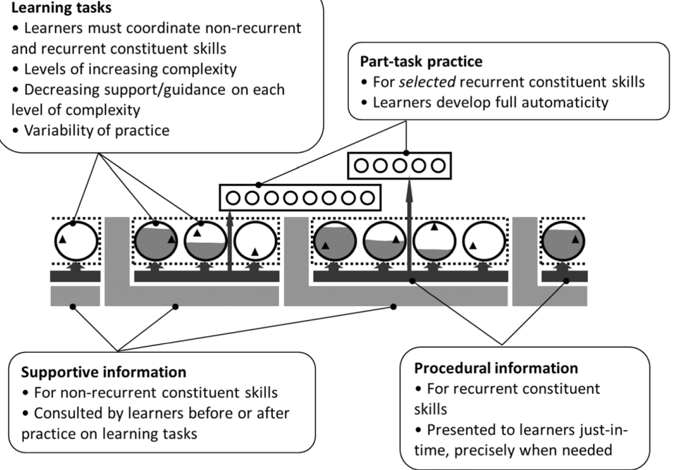
- The paper highlights 4C/ID as an extension of CLT for longer instructional programs and curricula, organized around 4 components: learning tasks, supportive information, procedural information, and part-task practice.
- It reports progress in measuring cognitive load, including a 10-item psychometric instrument that supported distinguishing intrinsic from extraneous load, and objective measures such as EEG, eye tracking, and secondary-task methods.
Methods
- This is a review article that retrospectively synthesizes CLT developments from 1998 to 2018, using the 1998 paper as a baseline and organizing the discussion into history, developments, future directions, and conclusions.
- The authors draw on prior theoretical and empirical studies and reviews cited throughout the paper; no new dataset or sample is reported in the text provided.
- Main analysis is a narrative synthesis of theoretical developments, instructional effects, and measurement approaches in CLT.
Limitations
- The paper explicitly says it is an attempt to summarise the last 20 years of CLT and sketch directions for future research, so it is a synthesis rather than a new empirical test.
- It repeatedly notes that more research is needed on cognitive-load measurement, including the optimal use of subjective rating scales, differentiating load types, and validating objective techniques.
- Evident from the text: several claims about future directions (e.g., resource depletion, self-regulated learning, emotions/stress/uncertainty, human movement) are presented as promising but not yet settled in the paper itself.
Model-written summary. Check it against the paper before relying on it.
Integrity signals
Registry
Cites
Statistics
Figures
Verification
Claims the paper makes
21 Valid · 23 Not valid · 90 Not checked · 158 Own results and interpretations
The sources with a verdict support this claim; the rest weren’t checked yet, have no full text we could read, or their verdicts aren’t rated yet.
In the paper
“Its basic premise is that human cognitive processing is heavily constrained by our limited working memory which can only process a limited number of information elements at a time.”
§ The Author(s) 2019 > Introduction
What the sources say
- Supportedcites Miller (1956) matched to “The magical number seven, plus or minus two: Some limits on our capacity for processing information.” (1956) source
The Summary says that immediate memory imposes severe limits on the information people can receive, process, and remember. The discussion of immediate memory (p. 93) specifies that its limit is the number of chunks, supporting the claim's broad paraphrase of a limited number of information elements at a time. (LLM, conf=0.91)
- Not checked — no full text of the sourcecites Peterson and Peterson (1959) matched to “Short-term retention of individual verbal items.” (1959) source
plainstates a cause- Asserted: passes — The authors put it forward as true.
- Checkable: passes — It can be checked against evidence.
- Load-bearing: passes — The paper’s conclusions depend on it.
- Based: passes — The paper gives a reason why it holds.
- Supported
The cited sources support only part of this claim — read each source’s verdict below.
In the paper
“The capacity and duration limits of working memory have been known at least since Miller (1956) and Peterson and Peterson (1959), although the fact that these limits effectively applied only to novel, not familiar information, seemed more implicit rather than explicit in most treatments.”
§ The Author(s) 2019 > Human Cognitive Architecture Used in 1998
What the sources say
- Partly supportedcites Miller (1956) matched to “The magical number seven, plus or minus two: Some limits on our capacity for processing information.” (1956) sourceExperimental — accuracy not yet measured
In the discussion of immediate memory (p. 93), Miller says its span is limited by the number of chunks and that familiar units allow more information to be packed into each chunk. That supports a distinction between novel material and familiar, recoded material, but not the claim that capacity limits apply only to novel information: the chunk limit remains. The paper also does not establish a duration limit that applies only to novel information. (LLM, conf=0.86)
- Not checked — no full text of the sourcecites Peterson and Peterson (1959) matched to “Short-term retention of individual verbal items.” (1959) source
hedged- Asserted: passes — The authors put it forward as true.
- Checkable: passes — It can be checked against evidence.
- Load-bearing: passes — The paper’s conclusions depend on it.
- Based: passes — The paper gives a reason why it holds.
- Partly supported
Every source the paper cites for this claim was checked and supports it.
In the paper
“The data summarised by Sala and Gobet (2017) provide a major justification for the post 1998 inclusion of evolutionary psychology into cognitive load theory.”
§ The Author(s) 2019 > Human Cognitive Architecture Seen Through the Prism of Evolutionary Psychology
What the sources say
- Supportedcites Sala and Gobet (2017) matched to “Does Far Transfer Exist? Negative Evidence From Chess, Music, and Working Memory Training” (2017) source
The Theoretical and Practical Implications section (page unavailable) summarises the paper’s evidence that chess, music and working-memory training do not reliably produce far transfer. The claim that these data justify a development in cognitive load theory is the citing authors’ interpretation, not a finding attributed to Sala and Gobet. (LLM, conf=0.86)
boostedstates a cause- Asserted: passes — The authors put it forward as true.
- Checkable: passes — It can be checked against evidence.
- Load-bearing: passes — The paper’s conclusions depend on it.
- Based: passes — The paper gives a reason why it holds.
- Supported
Every source the paper cites for this claim was checked and supports it.
In the paper
“The expertise reversal effect is, in essence, a variant of the more general element interactivity effect (Chen et al. 2017).”
§ The Author(s) 2019 > Instructional Effects Described After 1998
What the sources say
- Supportedcites Chen et al. 2017 matched to “The Expertise Reversal Effect is a Variant of the More General Element Interactivity Effect” (2017) source
The indexed copy lists the cited paper under the exact title “The Expertise Reversal Effect is a Variant of the More General Element Interactivity Effect.” Its title directly states the proposition attributed to it; no page number is available in the indexed passage. (LLM, conf=0.90)
plainstates a cause- Asserted: passes — The authors put it forward as true.
- Checkable: passes — It can be checked against evidence.
- Load-bearing: unclear — It is unclear whether the paper’s conclusions depend on it.
- Based: passes — The paper gives a reason why it holds.
- Supported
Every source the paper cites for this claim was checked and supports it.
In the paper
“When subsequently presented the fully integrated information, they only needed to learn how to integrate the individual elements and so more readily assimilated the entire, high element interactivity information.”
§ The Author(s) 2019 > Instructional Effects Described After 1998
What the sources say
- Supportedcites Pollock et al. 2002 matched to “Assimilating complex information” (2002) source
Split into 2 atoms — 2 confirmed, 0 partially supported, 0 disputed, 0 misattributed, 0 unverifiable. Expand the claim to see per-atom verdicts.
plainstates a cause- Asserted: passes — The authors put it forward as true.
- Checkable: passes — It can be checked against evidence.
- Load-bearing: passes — The paper’s conclusions depend on it.
- Based: passes — The paper gives a reason why it holds.
- Supported
132 more claims · 6 with their cited sources checked
Create a free account to see all 292 claims and to verify the 3 references still open.
- It may state two separate claims as one. 88
- Probably not a substantial claim. 95
Claims other papers make about this one
Each is checked against this paper’s own text: does it say what the citing paper says it does?
The source backs part of the claim, not all of it — or backs it for a different population, condition or comparison.
In the citing paper
“Another possible explanation is that the pre-training effect tends to be most effective for learners with minimal prior knowledge (Sweller et al., 2019)”
From Rethinking pre-training: cognitive load implications for learners with varying prior knowledge (2025) · cites this paper as Sweller et al., 2019
Experimental — accuracy not yet measuredThe cited source says what the claim attributes to it.
In the citing paper
“If the cognitive load imposed by a learning task is too high, it might interfere with the learner’s ability to effectively acquire and retain the skill [13, 25].”
From Teaching a single manual therapy technique at a time reduces cognitive load in physiotherapy students: a randomized controlled educational study (2025) · cites this paper as [13]
The cited source says what the claim attributes to it.
In the citing paper
“While cognitive load is often discussed in the context of instructional efficiency, it is important to note that cognitive load is not inherently detrimental. Rather, it is a natural component of learning that engages working memory resources for schema construction and automation [13].”
From Teaching a single manual therapy technique at a time reduces cognitive load in physiotherapy students: a randomized controlled educational study (2025) · cites this paper as [13]
The cited source says what the claim attributes to it.
In the citing paper
“Thus, an increased germane load is no longer believed to lead to cognitive overload and can thus no longer be assumed to be detrimental to learning performance.”
From Understanding Cognitive Load in Digital and Online Learning: a New Perspective on Extraneous Cognitive Load (2022) · cites this paper as Sweller et al., 2019
The cited source says what the claim attributes to it.
In the citing paper
“The major change from the 1998 model is that Sweller et al. (2019) have removed germane load from the additive equation of total load, but rather a dimension now called ' germane processing. '”
From Understanding Cognitive Load in Digital and Online Learning: a New Perspective on Extraneous Cognitive Load (2022) · cites this paper as Sweller et al., 2019
17 more claims about this paper
Create a free account to see every claim other papers make about this one.
Citations
Cites
The magical number seven, plus or minus two: Some limits on our capacity for processing information.
Miller, G. A. (1956) · Psychological Review · doi:10.1037/h0043158 · Cited by 17,812 · cited 1×
“The capacity and duration limits of working memory have been known at least since Miller (1956) and Peterson and Peterson (1959), although the fact that these limits effectively applied only to novel, not familiar information, seemed more implicit rather than explicit in most treatments.”
BackgroundThe magical number seven, plus or minus two: Some limits on our capacity for processing information.
Miller, G. A. (1994) · Psychological Review · doi:10.1037/0033-295x.101.2.343 · Cited by 17,161
Cognitive Load During Problem Solving: Effects on Learning
Sweller, J. (1988) · Cognitive Science · doi:10.1016/0364-0213(88)90023-7 · Cited by 11,048 · cited 4×
“Learning tasks (indicated by the big circles in Fig.”
BackgroundMethodInfluentialSelf-citationKirschner, P. A., Sweller, J., & Clark, R. E. (2006) · Educational Psychologist · doi:10.1207/s15326985ep4102_1 · Cited by 7,776
Self-citationRizzolatti, G., & Craighero, L. (2004) · Annual Review of Neuroscience · doi:10.1146/annurev.neuro.27.070203.144230 · Cited by 7,433
Cognitive Architecture and Instructional Design
Sweller, J., van Merrienboer, J. J. G., & Paas, F. G. W. C. (1998) · Educational Psychology Review · doi:10.1023/a:1022193728205 · Cited by 6,023
Self-citationCognitive load theory, learning difficulty, and instructional design
Sweller, J. (1994) · Learning and Instruction · doi:10.1016/0959-4752(94)90003-5 · Cited by 5,426 · cited 1×
“Element Interactivity Effect This effect was already known in 1998 but as a compound effect, it was not classed as a cognitive load effect (see Sweller 1994).”
BackgroundSelf-citationBaddeley, A. (1992) · Science · doi:10.1126/science.1736359 · Cited by 5,258
Ericsson, K. A., & Kintsch, W. (1995) · Psychological Review · doi:10.1037/0033-295x.102.2.211 · Cited by 3,498
Short-term retention of individual verbal items.
Peterson, L., & Peterson, M. J. (1959) · Journal of Experimental Psychology · doi:10.1037/h0049234 · Cited by 2,939 · cited 1×
“The capacity and duration limits of working memory have been known at least since Miller (1956) and Peterson and Peterson (1959), although the fact that these limits effectively applied only to novel, not familiar information, seemed more implicit rather than explicit in most treatments.”
Background
Research works printed but not linked: 4
- Centre for Education Statistics and Evaluation. (2017). Cognitive load theory: research that teachers really need to understand . Sydney: NSW Department of Education.
- Centre for Education Statistics and Evaluation. (2018). Cognitive load theory in practice . Sydney: NSW Department of Education.
- Clark, R. C. (2014). Evidence-based training methods: a guide for training professionals (2nd ed.). Alexandria: ATD Press.
- Miller, W. (1937). The picture crutch in reading. Elementary English Review, 14 , 263 -264.
Cited by
Items 1,201–1,300 of 2,268
Berssanette, J. H., & de Francisco, A. C. (2022) · Anais do Workshop sobre Educação em Computação (WEI) · doi:10.5753/wei.2022.222993 · Cited by 2
“Tem como premissa básica que o processamento cognitivo humano é fortemente limitado pela memória de trabalho, que só pode processar um número restrito de elementos de informação ao mesmo tempo [Sweller et al. 2019].”
BackgroundStudent Extraneous Load Analysis in Online-Based Plant Tissue Structure Learning
Ermayanti, E., Susanti, R., Santoso, L. M., Huzaifah, S., & Deluciana, C. N. (2023) · Jurnal Penelitian Pendidikan IPA · doi:10.29303/jppipa.v9i5.2400 · Cited by 2
Improving e-learning websites: the role of menu depth and metacognitive support
Beege, M., Scherer, D., & Weiß, E. (2023) · Frontiers in Education · doi:10.3389/feduc.2023.1161460 · Cited by 4
Informationsmenge als Indikator psychischer Belastung
Ferreira, Y., Aygün, M., Vogt, J., & Zweck, B. M. (2023) · Zeitschrift für Arbeitswissenschaft · doi:10.1007/s41449-023-00362-w · Cited by 2
“Eine vergleichsweise neue Theorie zur Verarbeitungs-und Lernkapazität ist die Cognitive Load Theory (Sweller 2003; Sweller et al. 2019).”
BackgroundKessel, K. V., Ashburner, M., & Risko, E. F. (2023) · Quarterly Journal of Experimental Psychology · doi:10.1177/17470218231186609 · Cited by 4
“For example, participants might recall actively inhibiting engaging in secondary tasks (e.g., media-multitasking, Ralph et al., 2020; mind wandering, Risko et al., 2012) and/or actively engaging in cognitive activities associated with deeper learning (e.g., germane processing, Sweller et al., 2019).”
BackgroundReimagining Education - The Role of E-Learning, Creativity, and Technology in the Post-Pandemic Era
Mistretta, S. (2023) · IntechOpen eBooks · doi:10.5772/intechopen.110350 · Cited by 17
He, X., & Loewen, S. (2023) · Studies in Second Language Acquisition · doi:10.1017/s0272263123000335 · Cited by 3
“To advance understanding of cognitive processing within the CLT context, researchers have advocated exploring affective factors — namely, how learners perceive or feel during the instructional experience (Ayres & Paas, 2012; Plass & Kalyuga, 2019).”
BackgroundResultInfluentialMaulina, D., Irwanda, D. Y., Audinia, S., Nandini, S. P., & Indirasari, D. T. (2023) · Traffic Injury Prevention · doi:10.1080/15389588.2023.2250494 · Cited by 2
Two-part onboarding for game-based learning environments
Vidaković, M., Lara, M., Duchi, L., Whitcomb, A., & PAAS, F. G. W. C. (2023) · Frontiers in Education · doi:10.3389/feduc.2023.980881 · Cited by 7
Self-citationCognitive Load Theory: Mathematical Resilience in a Variable Examples-Based Learning
Yohanes, B., & Mutimmah, D. (2023) · Jurnal Pendidikan MIPA · doi:10.23960/jpmipa/v24i2.pp493-504 · Cited by 1
The Effect of Incremental Scaffolds in Experimentation on Cognitive Load
Hülsmann, M., Stiller, C., & Wilde, M. (2024) · Science Journal of Education · doi:10.11648/j.sjedu.20241201.11 · Cited by 5
Intercultural education through an online field course during the COVID-19 pandemic
Divon, S. A., & Ghosal, S. (2024) · Intercultural Education · doi:10.1080/14675986.2024.2348409 · Cited by 2
“The course is thus designed to access information in the LTM of individual students while also tapping on the diversity of backgrounds of students to enrich the learning outcomes.”
BackgroundMethodInfluentialMuddle, L., O’Malley, C. J., & Stupans, I. (2024) · International journal of osteopathic medicine · doi:10.1016/j.ijosm.2024.100727 · Cited by 1
Nückles, M. (2024) · Unterrichtswissenschaft · doi:10.1007/s42010-024-00213-5 · Cited by 1
Markovnikova, A. I., Likhanov, M. V., & Kurushkin, M. (2024) · Perspectives of science and education · doi:10.32744/pse.2024.3.37 · Cited by 3
Effects of Visualization Format and Time of Day on Immediate Recall of Tactical Behaviors
Rekik, G., Belkhir, Y., Jouira, G., Jarraya, M., Kuo, C., & Chen, Y. (2024) · Journal of Motor Learning and Development · doi:10.1123/jmld.2024-0008 · Cited by 2
Udvardi-Lakos, N., Weirich, M., Asbrand, J., & Renkl, A. (2024) · Frontiers in Psychology · doi:10.3389/fpsyg.2024.1387095 · Cited by 4
“…that a relevant exemplifying domain will lead to higher element interactivity than a domain perceived as irrelevant, as the declarative knowledge contents are a part of the learning task and need to be processed in relation to the skill being shown (Endres et al., 2022; Sweller et al., 2019).”
BackgroundInfluentialHyland, T., Seery, N., & Buckley, J. (2024) · European Journal of Engineering Education · doi:10.1080/03043797.2024.2405860 · Cited by 3
“While a theory relating predominantly to instructional design (Sweller, van Merriënboer, and Paas 2019), research pertaining to cognitive load theory has taken two distinct routes.”
InfluentialThe role of modelling during instruction in collaborative creativity
Southam, A., & Costley, J. (2024) · Thinking Skills and Creativity · doi:10.1016/j.tsc.2024.101660 · Cited by 2
Who Learns from Reading Texts in General Chemistry?
Buell, R. W., & Pazicni, S. (2024) · Education Sciences · doi:10.3390/educsci14121287 · Cited by 1
Are Engineering Students Motivated by Interacting With Simulations They Program? A Controlled Study
Bacher, J. T., Price, T., Skripchuk, J., Wang, W., Shi, Y., & Tran, K. (2024) · ACM Virtual Global Computing Education Conference (SIGCSE Virtual) · doi:10.1145/3649165.3690121 · Cited by 1
“Ger-mane load is the type of cognitive load associated with learning as germane load is the excess cognitive load that is allocated for intrinsic cognitive load, not extraneous cognitive load [39].”
InfluentialKormos, J., Eberharter, K., Guggenbichler, E., Baumgartinger, S., Ebner, V., & Kremmel, B. (2024) · Language Assessment Quarterly · doi:10.1080/15434303.2024.2435811 · Cited by 4
“Self-pacing might be a potentially beneficial universal design feature because it reduces the intrinsic cognitive load associated with the transient nature of the information presented in a listening task and the need to maintain information active in working memory (Sweller et al., 2019).”
Alnasraween, M. S., Alkaramneh, M. S., & Alsoudi, S. (2025) · Journal of Educational and Social Research · doi:10.36941/jesr-2025-0007 · Cited by 3
Wang, W., Xiong, M., Guo, B., Huang, R., Li, M., Li, M., Feng, X., Qin, T., & Wei, Z. (2025) · Mind Brain and Education · doi:10.1111/mbe.12437 · Cited by 2
Markus, A., Baumann, M., Pfister, J., Carolus, A., Hotho, A., & Wienrich, C. (2025) · Computers and Education Artificial Intelligence · doi:10.1016/j.caeai.2025.100372 · Cited by 2
Interlinear Translations Reduce Cognitive Load on EFL Vocabulary Acquisition
del Quindío, U., & Carvajal, C. A. B. (2025) · Íkala Revista de Lenguaje y Cultura · doi:10.17533/udea.ikala.356253 · Cited by 3
Rekik, G. (2025) · Perceptual and Motor Skills · doi:10.1177/00315125251320682 · Cited by 2
“This is because schematic diagrams present information in a fi xed/permanent fashion, while animations convey transient information ( the transient information effect ; Sweller et al., 2019).”
Dilek, H. (2025) · Uluslararası Türk Eğitim Bilimleri Dergisi · doi:10.46778/goputeb.1627316 · Cited by 3
Characterizing Efficacy of Alternative Media for Requirements Expression
Kolligs, J. W., & Thomas, L. (2025) · Syst. · doi:10.3390/systems13050314 · Cited by 1
Chatzidaki, P., Eriksson, U., Zoechling, S. M., Schmeling, S., & Fredlund, T. (2025) · Physical Review Physics Education Research · doi:10.1103/physrevphyseducres.21.010143 · Cited by 5
“Extraneous cognitive load is imposed by the presentation format of the learning material [48].”
Russell, M. A., Morgan, H., Lau, A., et al. (2025) · Pacific Journal of Technology Enhanced Learning · doi:10.24135/pjtel.v7i2.231 · Cited by 1
Beege, M., Scheller, N., & Rey, G. D. (2025) · Current Psychology · doi:10.1007/s12144-025-07940-7 · Cited by 5
“Combining research regarding MFM and CLT, MFM should particularly enhance germane processes (GCL) since posi - tive effects regarding attention allocation and concentration were reported (Ricarte et al., 2015; Tarrasch, 2018 ).”
InfluentialStudy Habits, Learning Environment and Mathematics Performance of Grade 11 STEM Students
Pahilan, L., & Comahig, A. G. (2025) · Psychology and Education A Multidisciplinary Journal · doi:10.70838/pemj.390208 · Cited by 7
Ülker, O., & Bodemer, D. (2025) · Computer-supported collaborative learning/The Computer-Supported Collaborative Learning Conference · doi:10.22318/cscl2025.479268 · Cited by 2
Multimedia learning: current themes, trends and future directions
Polat, H., Taş, N., & Yıldırım, Ö. (2025) · New Review of Hypermedia and Multimedia · doi:10.1080/13614568.2025.2522104 · Cited by 5
“As a matter of fact, it is emphasised that to improve learning outcomes in multiple learning environments, instructional design should be made by considering the cognitive architecture of learners (Mayer, 2003; Sweller et al., 2019).”
InfluentialKoca, Y. B. (2025) · Mühendislik Bilimleri ve Tasarım Dergisi · doi:10.21923/jesd.1669626 · Cited by 3
Influences of Arduino and Algodoo Based Mechanics Teaching on Achievement
Çoban, A., & Erol, M. (2025) · Necatibey Eğitim Fakültesi Elektronik Fen ve Matematik Eğitimi Dergisi · doi:10.17522/balikesirnef.1559865 · Cited by 2
Beyond PEMDAS: A Cognitive Theory of Sequential Mathematical Processing
Ouanhlee, T. (2025) · Advances in Sciences and Humanities · doi:10.11648/j.ash.20251103.11 · Cited by 1
Modifications Made to CLT to Date
Kalyuga, S., & Plass, J. L. (2025) · Oxford University Press eBooks · doi:10.1093/9780190078539.003.0003 · Cited by 1
Mitigating the seductive details effect by topic and irrelevance signals
Wesenberg, L., Krieglstein, F., Jansen, S., Schneider, S., & Rey, G. D. (2025) · British Journal of Educational Psychology · doi:10.1111/bjep.70022 · Cited by 3
“…seductive details, signalling, text comprehension, topic signals theory differentiates between the cognitive load that is essential (intrinsic cognitive load) and that which is irrelevant (extraneous cognitive load) for understanding the learning topic (Kalyuga, 2011; Sweller et al., 2019).”
Cheng, K. (2025) · Educational Technology Research and Development · doi:10.1007/s11423-025-10554-2 · Cited by 4
Rohor, P. E. M., Frizera, A., Zimerer, C., Franchine, M. E., Loureiro, M., Machado, F. S. V., de Mello, R. C., & Carletti, L. (2025) · Journal of Bodywork and Movement Therapies · doi:10.1016/j.jbmt.2025.08.028 · Cited by 3
Kalyva, M., Kavvadia, K., Louca, L. Τ., Televantou, I., & Michaelides, M. P. (2025) · International Endodontic Journal · doi:10.1111/iej.70022 · Cited by 1
“Recent research suggests germane load is not an independent source but rather the residual capacity available after minimising extraneous load (Sweller et al. 2019).”
Leveraging AI to Democratize the Hidden Curriculum in Medical Education: An Implementation Framework
Martin, J. K., & Byrd, M. (2025) · Medical Science Educator · doi:10.1007/s40670-025-02497-3 · Cited by 3
“CLT distinguishes between intrinsic load (inherent complexity of learning material), extraneous load (cognitive burden unrelated to learning objectives), and germane load (productive cognitive effort leading to schema development) [17].”
Sim, Y., & Jung, E.-C. (2025) · International Journal of Technology and Design Education · doi:10.1007/s10798-025-10023-0 · Cited by 1
Hu, L., Lin, L., & Wang, M. (2025) · Educational Psychology · doi:10.1080/01443410.2025.2561031 · Cited by 3
“The involvement of the human movement (i.e. the use of biologically primary knowledge) can lead to enhanced learning outcomes (i.e. biologically secondary knowledge), which is the human movement effect (Paas & Sweller, 2012; Sweller et al., 2019).”
The Effect of Growth Mindset Interventions on Students’ Self-Regulated Use of Retrieval Practice
Xiao, J., Baars, M., Xu, M. K., & PAAS, F. G. W. C. (2025) · Education Sciences · doi:10.3390/educsci15101267 · Cited by 3
Self-citationExamining the Voice-Image Matching for Pedagogical Agents Presented in Instructional Videos
Jing, B., Wu, C., Pi, Z., Zhou, Y., & Ma, H. (2025) · The Journal of Experimental Education · doi:10.1080/00220973.2025.2565179 · Cited by 1
3D Object-Based Card-Sorting: A Method for Eliciting Multimodal Reasoning in Chemistry
Morgenstern, R., Pazicni, S., Swineheart, S. A., & Popova, M. (2025) · Journal of Chemical Education · doi:10.1021/acs.jchemed.5c00638 · Cited by 1
The role of virtual laboratories in advancing student learning on acid–base equilibrium
Hagos, T. (2025) · Chemistry Teacher International · doi:10.1515/cti-2025-0060 · Cited by 7
“30,50 These fi ndings resonate with contemporary cognitive engagement theories emphasizing learner activity and self-regulation as pathways to achieving learning objectives.”
Doğan, N., & Aksoy, M. (2025) · Nurse Education Today · doi:10.1016/j.nedt.2025.106886 · Cited by 1
Oikawa, G., Sugawara, M., & Uchihara, T. (2025) · International Journal of Applied Linguistics · doi:10.1111/ijal.70017 · Cited by 3
Chernobay, E., Stremilova, E. K., & Biryukova, E. A. (2025) · Journal of Modern Foreign Psychology · doi:10.17759/jmfp.2025140311 · Cited by 1
Hong, Z., Liang, C., & Liu, M. (2025) · Journal of Computer Assisted Learning · doi:10.1111/jcal.70133 · Cited by 2
Exploring multimedia principles and learning from errors in augmented reality and video
Candido, V., Cattaneo, A., & Petko, D. (2025) · Learning and Instruction · doi:10.1016/j.learninstruc.2025.102244 · Cited by 7
Flores, M., Gerstenblüth, M., & Suarez, L. (2025) · Research in Higher Education · doi:10.1007/s11162-025-09862-6 · Cited by 1
“This aligns with theories of cognitive load (Sweller, 1988; Sweller et al., 2019), which propose that unstructured learning environments can increase extraneous cognitive load, diverting cognitive resources from learning and comprehension to managing the learning process itself.”
Writing or speaking? The role of the production medium in the effectiveness of learning journals
Luft, F., Miyamoto, A., & Nückles, M. (2025) · Learning and Instruction · doi:10.1016/j.learninstruc.2025.102250 · Cited by 1
Impact of Augmented Reality Gamified Math Task Design on Middle School Students' Self-Regulation
Xu, B. (2025) · Advances in computational intelligence and robotics book series · doi:10.4018/979-8-3373-7508-3.ch004 · Cited by 1
Productive Failure to Promote Deeper Self-Directed Learning in Coding and Robotics Education
van Zyl, S., Havenga, M., & Avrakotos-King, F. (2025) · Education Sciences · doi:10.3390/educsci15111427 · Cited by 3
Song, K., Liu, Y., & Xu, P. (2025) · Brain and Behavior · doi:10.1002/brb3.70934 · Cited by 1
“This finding aligns with the expectations of cognitive load theory, which posits that FC reduces cognitive load in the classroom through pre-class self-directed learning, thereby freeing up more working memory resources for deep semantic integration (Sweller et al. 2019; Skulmowski and Xu 2022).”
Tlili, S., Mahfoudh, H. B., & Zoudji, B. (2025) · Perceptual and Motor Skills · doi:10.1177/00315125251391658 · Cited by 1
“In this study, as the coach primarily focused on drawing without engaging in other expressive nonverbal communication, his mere embodiment may have introduced extraneous cognitive load rather than facilitating deeper processing of the instructional content (Mayer, 2014; Sweller et al., 2019).”
Neural Network-Driven Personalization in Online English Language Instruction
Chen, Q. (2025) · International Journal of Information and Communication Technology Education · doi:10.4018/ijicte.392903 · Cited by 2
Shangguan, R., & Zha, Z. (2025) · Frontiers in Psychology · doi:10.3389/fpsyg.2025.1573070 · Cited by 4
“This finding strongly supports Cognitive Load Theory (Sweller et al., 2019): temporal constraints increase intrinsic and extraneous load, compress working-memory capacity, and push athletes toward familiar, lower-risk strategies.”
Written instruction that significantly promotes science learning
Wei, Y. (2025) · Physical Review Physics Education Research · doi:10.1103/lhjv-rq13 · Cited by 2
Lee, J., Soh, J., & Kim, E. (2025) · Journal of Current Issues & Research in Advertising · doi:10.1080/10641734.2025.2568874 · Cited by 2
“This effect is particularly pronounced in time-sensitive or dynamic formats such as spoken word, animation, or ephemeral media, which place higher demands on working memory and reduce opportunities for rehearsal or review (Sweller, van Merriënboer, and Paas 2019).”
Lim, J. J., Valter, K., & Estaphan, S. (2025) · AJP Advances in Physiology Education · doi:10.1152/advan.00031.2025 · Cited by 2
ANALISIS KESULITAN BELAJAR MATEMATIKA SISWA DENGAN COGNITIVE LOAD THEORY
Auliah, I. N., Irmawati, I., Asriani, A., Nursia, N., Selviana, S., & Demmanambo, A. (2025) · Pedagogy Jurnal Pendidikan Matematika · doi:10.30605/pedagogy.v10i4.7152 · Cited by 3
“Temuan ini sejalan dengan proposisi CLT bahwa materi dengan element interactivity tinggi menghasilkan intrinsic load yang besar (Sweller et al., 2019).”
When more isn’t better: evidence for an instructional equivalence hypothesis in multimedia design
Schmidt, K. J., Dukewich, K. R., Symonds, C. I., & Thrasher, A. V. (2025) · Frontiers in Psychology · doi:10.3389/fpsyg.2025.1718397 · Cited by 2
Lebert, A., & Vilarroya, Ó. (2025) · npj Science of Learning · doi:10.1038/s41539-025-00380-9 · Cited by 2
“…richness of SBL. Inrelationto thispoint, afurtherlimitationisthatwedid notexplicitly frame our study within cognitive load theory (CLT) 48 – 50 , which is a framework often used to explain how different types of learning tasks place demands on learners ’ working memory and, in turn, affect…”
Azher, S., Grewal, K., Matin, N., Cervantes, A., Marchionni, C., Marchand, H., & Harley, J. M. (2025) · Simulation & Gaming · doi:10.1177/10468781251401059 · Cited by 3
“Notably, an elevated cognitive load is not inherently detrimental as complex, authentic learning tasks naturally require higher cognitive processing demands (Leppink et al., 2013; Sweller et al., 2019).”
Duarte-Romero, M. E., Lino-Moreira, S. E., Rodríguez-Ramírez, J. M., Cajape-Alcivar, M. C., & Mariana, D.-D.-L.-A. L. (2025) · Revista Científica Ciencia y Método · doi:10.55813/gaea/rcym/v3/n4/113 · Cited by 4
Abood, M. H., Ghbari, T. A., & Abuhmaid, A. M. (2025) · Innovations in Education and Teaching International · doi:10.1080/14703297.2025.2598582 · Cited by 3
MICROLEARNING FOR EDUCATIONAL EQUITY: BRIDGING LEARNING GAPS FOR LEARNERS IN REMOTE AREAS
Khota, T., Prueprang, T., Phisngam, P., Ritthidech, M., & Kota, N. (2025) · วารสารสังคมศึกษาปริทรรศน์ · doi:10.64186/jsp2785 · Cited by 1
“When learners are presented with large or complex amounts of content, cognitive overload occurs, hindering understanding and knowledge transfer to long-term memory (Sweller et al., 2019).”
Jafari, M., Koberstein‐Schwarz, M., Priert, C., Böttcher, F., Leubecher, R., Menthe, J., & Meisert, A. (2025) · Research in Science Education · doi:10.1007/s11165-025-10304-7 · Cited by 2
“To support students in dealing with the complexity of SSIs the design of the target-mat applies principles of multimedia learning (Mayer, 2020 ) and cognitive load theory (Sweller et al., 2019 ).”
Masoumzadeh, S., Yu, R., Gu, N., Zhang, F., Bornkessel‐Schlesewsky, I., & Cao, Z. (2025) · Design Science · doi:10.1017/dsj.2025.10041 · Cited by 3
Rexigel, E., Qerimi, L., Bley, J., Malone, S., Küchemann, S., & Kuhn, J. (2026) · Physical Review Physics Education Research · doi:10.1103/b18l-zn9q · Cited by 3
Gorbunova, A., Adamovich, K. A., Savelyev, A., & Costley, J. (2025) · The Internet and Higher Education · doi:10.1016/j.iheduc.2025.101073 · Cited by 3
Leidl, D. M., Kleib, M., Li, H., & Wilson, J. R. (2025) · Clinical Simulation in Nursing · doi:10.1016/j.ecns.2025.101834 · Cited by 2
Reduced Information Anxiety through Academic Library Data Literacy Education
Liu, Q. Y., Owen, H. C., & Qin, J. (2025) · Proceedings of the Association for Information Science and Technology · doi:10.1002/pra2.1467 · Cited by 3
“These conditions are well-documented in literature on human memory limitations to process information (Sweller et al., 2019), information-seeking efficiency (Bawden & Robinson, 2009), informative multitasking pressure (Kirsh, 2000), and technostress in library use (West, 2007).”
Rajic, A., Olanka, S. K., Generelli, M., Davidson, J., Lin, Y., Kang, R., Kim, K., Rebours, P.-L., Ibrahim, M., Duncan, D., et al. (2026) · JMIR Human Factors · doi:10.2196/78736 · Cited by 3
Bridging Educational Theories of Cognitive Load to Visualization Design and Evaluation
Cabouat, A.-F., Ciccione, L., Huron, S., Isenberg, T., & Isenberg, P. (2025) · IEEE VIS Workshop on Visualization Education, Literacy, and Activities (EduVis) · doi:10.1109/eduvis69391.2025.00009 · Cited by 3
“…from extraneous activities to relevant information processing activities; in this view, segmentation would not affect the overall cognitive load, but would allow the learner to re-allocate resources from extraneous processing towards intrinsic load [82], thus improving the quality of learning.”
Dusanek, V., & Kollar, I. (2025) · Psychology Learning & Teaching · doi:10.1177/14757257251407698 · Cited by 5
“The content focused on the explanation and practical application of CLT, CTML, and Mayer ’ s 12 principles of Multimedia Learning.”
InfluentialWu, C.-H., & Hou, H. (2026) · Research in Science & Technological Education · doi:10.1080/02635143.2025.2611963 · Cited by 1
Chen, P. (2026) · BMC Nursing · doi:10.1186/s12912-025-04126-1 · Cited by 4
“Additionally, Cognitive Load Theory [26] informed the instructional design by emphasising the reduction of extraneous cognitive demands and the sequencing of learning tasks to promote meaningful schema construction.”
InfluentialRole of the Instructor’s Social Cues in Instructional Videos
Pi, Z., Huang, X., Mayer, R. E., Zhao, X., & Li, X. (2026) · Education Sciences · doi:10.3390/educsci16010082 · Cited by 2
“This leads to a split in students’ attention between them and the instructional slides (Polat et al., 2025; Sweller et al., 2019; M. Wang et al., 2022).”
Knowledge contribution on enterprise social media and employee well-being
Charki, M. H., Boukef, N., Benitez, J., You, S., Mehra, A., & Robert, L. (2026) · Information & Management · doi:10.1016/j.im.2026.104302 · Cited by 4
Managing learning demands through mobile AI: A cognitive load perspective on ChatGPT use in Nepal
Sharma, S., & Khadka, A. (2026) · Mobile Media & Communication · doi:10.1177/20501579251407518 · Cited by 2
Taştan, H., Heyik, M. A., & Er, İ. E. (2026) · Virtual Reality · doi:10.1007/s10055-025-01311-0 · Cited by 3
“Under CLT, AGM and contextual-change hypotheses suggest different outcomes for prospective and retrospec - tive estimations.”
InfluentialWhen actively self-generating graphic organisers hinders undergraduates’ learning
Colliot, T., & Jamet, É. (2026) · European Journal of Psychology of Education · doi:10.1007/s10212-025-01057-y · Cited by 4
“Examining specific types of load—such as extraneous load, induced by the design of the document, and germane load, reflecting the cognitive resources that students devote to processing information (Sweller et al., 2019)—might have produced different results.”
Zhang, S., Cho, S., Duan, F., Feng, H., Zhang, Q., & Ma, M. (2026) · Frontiers in Human Neuroscience · doi:10.3389/fnhum.2025.1712662 · Cited by 6
“The integration of cognitive load theory with adaptive algorithms enables dynamic adjustment of instructional parameters to maintain optimal challenge levels (Sweller et al., 2019; Hawthorne et al., 2019).”
Sanders, A. L., Walia, G., Cordova, L. P., & Mendoza, T. (2025) · IEEE Frontiers in Education Conference (FIE) · doi:10.1109/fie63693.2025.11328325 · Cited by 1
“The learning theories that ground and motivate our approach are Sweller’s Cognitive Load Theory [23] and Vygotsky’s Zone of Proximal Development [24].”
Liu, J., & Chen, Y. (2026) · Frontiers in Psychology · doi:10.3389/fpsyg.2025.1690989 · Cited by 8
Microlearning Moments: The Science of Knowledge Retention in Bite-Sized Educational Experiences
D, A. T. (2025) · International Journal of Education and Pedagogy (IJEP) · doi:10.63090/ijep/3108.1800.0017 · Cited by 4
Adaptive Realities: Human-in-the-Loop AI for Trustworthy XR Training in Safety-Critical Domains
Pretolesi, D., Regal, G., Schrom-Feiertag, H., & Tscheligi, M. (2026) · Multimodal Technologies and Interaction · doi:10.3390/mti10010011 · Cited by 3
“Cognitive Load Theory and multimedia learning research therefore motivate concise, well-paced interventions that respect limited attentional resources [36,37,37].”
ChatGPT as Cognitive Mediator: Tracing Pausing, Revision, and Efficiency in L2 Digital Writing
Garcés-Manzanera, A., & McBride, S. (2026) · English Teaching & Learning · doi:10.1007/s42321-025-00219-x · Cited by 4
“This definition builds on previous work connecting efficiency to the regulation of cognitive load under time pressure (Leijten & Van Waes, 2013; Sweller et al., 2019).”
Etherington, S. J., Callan, N., Koh, S. H., Maker, G. L., Bennett, R. J., & Warburton, N. M. (2026) · Education Sciences · doi:10.3390/educsci16020203 · Cited by 2
Tippayanate, N., Phonkanya, P., Nuangkantee, K., et al. (2026) · International Journal of Emergency Medicine · doi:10.1186/s12245-026-01128-x · Cited by 1
Li, H., Pan, W., & Bu, L. (2026) · Behaviour and Information Technology · doi:10.1080/0144929x.2026.2614040 · Cited by 2
“The judgment was based on how users described smooth task comprehension and barrier-free execution, indicative of ‘reduced extraneous load’ under cognitive load theory (Sweller et al. 2019).”
Uwalaka, C., Akinboye, D., Olorunnisola, A. A., & Nwankwo, N. V. (2026) · International Journal of Public Health and Pharmacology · doi:10.52589/ijphp-nfa8s2sd · Cited by 2
The Impact of AI Tutoring Systems on Cognitive Engagement
Singh, A., & Pegadraju, S. (2026) · Advances in computational intelligence and robotics book series · doi:10.4018/979-8-3373-9195-3.ch010 · Cited by 2
Metadata
- Authors
- Sweller, J., van Merriënboer, J. J. G., & Paas, F.
- Affiliations
- UNSW Sydney (AU)
- University of Wollongong (AU)
- Corresponding author
- Sweller, John
- Venue
- Educational Psychology Review
- Published
- 2019-01-22
- Volume
- 31
- Issue
- 2
- Pages
- 261-292
- ISSN
- 1040-726X (ISSN-L)
- 1573-336X
- OpenAlex
- W2913144876
- Semantic Scholar
- e28d73214751d51c3f46a867920be41c49c45130
- Cited by
- 2,337
- References
- 129
- Citations by year
- 2026: 713 · 2025: 466 · 2024: 331 · 2023: 268 · 2022: 212 · 2021: 190 · 2020: 114 · 2019: 37
- FWCI
- 162.54
- Type
- journal article
- Language
- en
- Open access
- hybrid
- doi.org
- Licence
- cc-by
- creativecommons.org/licenses/by/4.0 (tdm)
- Locations
- Educational Psychology Review (publishedVersion, cc-by)
- EUR Research Repository (Erasmus University Rotterdam) (publishedVersion, other-oa)
- Research Online (University of Wollongong) (submittedVersion)
- EUR Research Repository (Erasmus University Rotterdam) (submittedVersion)
- Research Publications (Maastricht University) (submittedVersion, cc-by)
- Figshare (submittedVersion, cc-by)
- Research Publications (Maastricht University) (submittedVersion, other-oa)
- Topics
- Social Sciences › Psychology › Experimental and Cognitive Psychology › Visual and Cognitive Learning Processes
- Social Sciences › Psychology › Developmental and Educational Psychology › Innovative Teaching and Learning Methods
- Life Sciences › Neuroscience › Cognitive Neuroscience › Neuroscience, Education and Cognitive Function
- Keywords
- cognitive load theory, cognitive architecture, working memory, long-term memory, instructional design
About these checks
Registry, retraction, Cites and statistics results are computed, not judged, with one exception: a printed reference that no index lists is read once by a model before it counts as a citation error. Claims are extracted by a model and kept only when their quote appears verbatim in the text; each cited source is then checked, with a model’s help, for whether it says what the claim relies on. Those verdicts can be wrong — read the claim’s quote and the cited source before relying on one.
The claim verdicts this report counts are experimental: their accuracy is not yet measured.
A language model drew the claims from the paper on 2026-10-10, under version 3 of the claim definition (model deepseek-v4.1-flash, prompt extract-v3).
A second model labelled each claim on 2026-10-10 (model jev-1.13-20260917, definition revision gold-guideline-v0.2).
Cited sources are checked with a language model’s help (gpt-6-sol).
Statistics and arithmetic are recomputed, not judged.
Confidence bands are shown only for fields calibrated on our annotated test set. None is calibrated yet, so no band is shown.
What counts as a claim ›How we measure confidence ›How we check this ›
Are you an author, or do you see a problem with this page? Request a review
Data sources
Bibliographic data: Semantic Scholar, OpenAlex, Crossref.
Contains information from the Semantic Scholar Academic Graph Datasets, made available under the ODC Attribution License (ODC-BY 1.0).
Semantic Scholar’s data is described in: Kinney, R., et al. (2023). The Semantic Scholar Open Data Platform. arXiv:2301.10140.
