

The DOI matches its Crossref record; 150 of the 156 references it cites were found in a registry or an index.
How Local and Global Metacognition Shape Mental Health
Open accessAbstract
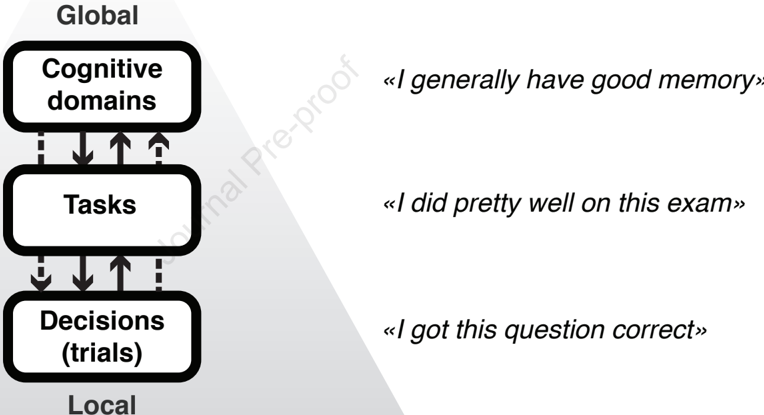
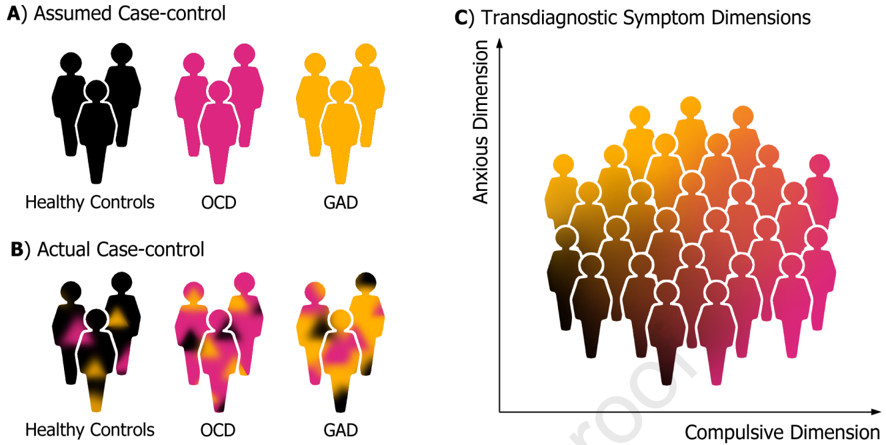
Metacognition is the ability to reflect on our own cognition and mental states. It is a critical aspect of human subjective experience and operates across many hierarchical levels of abstraction-encompassing local confidence in isolated decisions and global self-beliefs about our abilities and skills. Alterations in metacognition are considered foundational to neurologic and psychiatric disorders, but research has mostly focused on local metacognitive computations, missing out on the role of global aspects of metacognition. Here, we first review current behavioral and neural metrics of local metacognition that lay the foundation for this research. We then address the neurocognitive underpinnings of global metacognition uncovered by recent studies. Finally, we outline a theoretical framework in which higher hierarchical levels of metacognition may help identify the role of maladaptive metacognitive evaluation in mental health conditions, particularly when combined with transdiagnostic methods.
Overview
The claims and statistics of this paper haven’t been checked yet.
Run the check — free, no account needed. It reads the open-access text and checks the sources it cites.
Integrity signals
Registry
Cites
Statistics
Figures

Verification
Claims the paper makes
The claims and statistics of this paper haven’t been checked yet.
Run the check — free, no account needed. It reads the open-access text and checks the sources it cites.
Claims other papers make about this one
Each is checked against this paper’s own text: does it say what the citing paper says it does?
The source backs part of the claim, not all of it — or backs it for a different population, condition or comparison.
In the citing paper
“A number of studies have linked local and global metacognitive biases to individual differences in transdiagnostic mental health symptoms, including anxiety, depression, self-esteem, and compulsivity (Hoven et al. 2019, Seow et al. 2021).”
From Metacognition and Confidence: A Review and Synthesis (2024) · cites this paper as Seow et al. 2021
Experimental — accuracy not yet measuredThe source backs part of the claim, not all of it — or backs it for a different population, condition or comparison.
In the citing paper
“При многих психиатрических расстройствах нарушаются только глобальные метакогнитивные способности”
From Когнитивные механизмы дисфункционального принятия решений при психических расстройствах (2025) · cites this paper as Seow et al., 2021
Experimental — accuracy not yet measuredThe source backs part of the claim, not all of it — or backs it for a different population, condition or comparison.
In the citing paper
“при третьих -то и другое вместе.”
From Когнитивные механизмы дисфункционального принятия решений при психических расстройствах (2025) · cites this paper as Seow et al., 2021
Experimental — accuracy not yet measuredThe source backs part of the claim, not all of it — or backs it for a different population, condition or comparison.
In the citing paper
“при других -только локальные”
From Когнитивные механизмы дисфункционального принятия решений при психических расстройствах (2025) · cites this paper as Seow et al., 2021
Experimental — accuracy not yet measured
Self-check
Percentages, sums and reported differences re-computed from the paper’s own numbers.
The self-check needs the paper’s full text.
Citations
Cites
Self-efficacy: Toward a unifying theory of behavioral change
Bandura, A. (1977) · Psychological Review · doi:10.1037/0033-295x.84.2.191 · Cited by 43,925
Metacognition and cognitive monitoring: A new area of cognitive–developmental inquiry
Flavell, J. H. (1979) · American Psychologist · doi:10.1037/0003-066x.34.10.906 · Cited by 11,282 · cited 1×
“Metacognition, the ability to reflect on and evaluate our own thoughts and actions, is a crucial component of human behavior and subjective experience (1).”
BackgroundEncyclopedia of human behavior
(1994) · Choice Reviews Online · doi:10.5860/choice.32-0638 · Cited by 3,250
The role of the medial frontal cortex in cognitive control
Ridderinkhof, K. R., Ullsperger, M., Crone, E. A., & Nieuwenhuis, S. (2004) · Science · doi:10.1126/science.1100301 · Cited by 2,974
The epidemiology of obsessive-compulsive disorder in the National Comorbidity Survey Replication
Ruscio, A. M., Stein, D. J., Chiu, W. T., & Kessler, R. C. (2010) · Molecular Psychiatry · doi:10.1038/mp.2008.94 · Cited by 2,771
Does low self-esteem predict depression and anxiety? A meta-analysis of longitudinal studies.
Sowislo, J. F., & Orth, U. (2013) · Psychological Bulletin · doi:10.1037/a0028931 · Cited by 2,123 · cited 2×
“This explanation is supported by observations that anxiety and depression symptoms are strongly linked to low self-esteem (72,73), while compulsivity is associated with difficulties in developing and using models to solve decision-making tasks”
BackgroundNeural mechanisms of the cognitive model of depression.
Disner, S. G., Beevers, C. G., Haigh, E. A. P., & Beck, A. T. (2011) · Nature Reviews Neuroscience · doi:10.1038/nrn3027 · Cited by 1,718
Risko, E. F., & Gilbert, S. J. (2016) · Trends in Cognitive Sciences · doi:10.1016/j.tics.2016.07.002 · Cited by 1,502
Fleming, S. M., & Lau, H. C. (2014) · Frontiers in Human Neuroscience · doi:10.3389/fnhum.2014.00443 · Cited by 1,408 · cited 1×
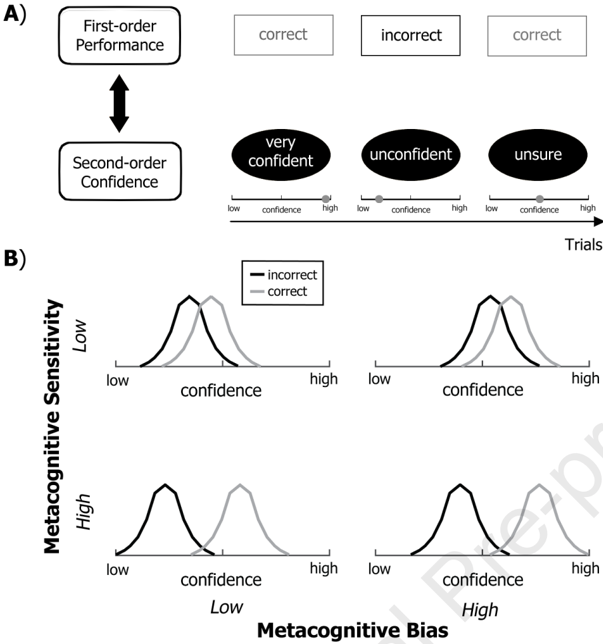
“Two independent aspects of local metacognition can be distinguished: metacognitive bias and sensitivity (15) (Figure 1B).”
BackgroundSelf-citationMetacognitive therapy for anxiety and depression
Veeraraghavan, V. (2009) · Anxiety, Stress & Coping · doi:10.1080/10615800902833770 · Cited by 1,165
Representation of Confidence Associated with a Decision by Neurons in the Parietal Cortex
Kiani, R., & Shadlen, M. N. (2009) · Science · doi:10.1126/science.1169405 · Cited by 1,027
(2008) · Research Explorer (The University of Manchester) · Cited by 988
Handbook of personality development
(2007) · Choice Reviews Online · doi:10.5860/choice.44-2967 · Cited by 933
Transdiagnostic approaches to mental health problems: Current status and future directions.
Dalgleish, T., Black, M., Johnston, D., & Bevan, A. (2020) · Journal of Consulting and Clinical Psychology · doi:10.1037/ccp0000482 · Cited by 883
Maniscalco, B., & Lau, H. (2012) · Consciousness and Cognition · doi:10.1016/j.concog.2011.09.021 · Cited by 883
(2010) · Cited by 874
Relating Introspective Accuracy to Individual Differences in Brain Structure
Fleming, S. M., Weil, R. S., Nagy, Z., Dolan, R. J., & Rees, G. (2010) · Science · doi:10.1126/science.1191883 · Cited by 809
Self-citationUnderstanding heterogeneity in clinical cohorts using normative models: Beyond case-control studies
Marquand, A. F., Rezek, I., Buitelaar, J., & Beckmann, C. F. (2016) · Biological Psychiatry · doi:10.1016/j.biopsych.2015.12.023 · Cited by 683
Metacognition in human decision-making: confidence and error monitoring
Yeung, N., & Summerfield, C. (2012) · Philosophical Transactions of the Royal Society B: Biological Sciences · doi:10.1098/rstb.2011.0416 · Cited by 667
Neurophysiology of performance monitoring and adaptive behavior
Ullsperger, M., Danielmeier, C., & Jocham, G. (2014) · Physiological Reviews · doi:10.1152/physrev.00041.2012 · Cited by 634
The error-related negativity (ERN) and psychopathology: Toward an endophenotype
Olvet, D. M., & Hajcak, G. (2008) · Clinical Psychology Review · doi:10.1016/j.cpr.2008.07.003 · Cited by 607
Characterizing a psychiatric symptom dimension related to deficits in goal-directed control
Gillan, C. M., Kosinski, M., Whelan, R., Phelps, E. A., & Daw, N. D. (2016) · eLife · doi:10.7554/elife.11305 · Cited by 586
Self-citationConfidence and certainty: Distinct probabilistic quantities for different goals
Pouget, A., Drugowitsch, J., & Kepecs, A. (2016) · Nature Neuroscience · doi:10.1038/nn.4240 · Cited by 528
Moritz, S., & Woodward, T. S. (2007) · Current Opinion in Psychiatry · doi:10.1097/yco.0b013e3282f0b8ed · Cited by 525
Can neuroscience be integrated into the DSM-V?
Hyman, S. E. (2007) · Nature Reviews Neuroscience · doi:10.1038/nrn2218 · Cited by 516
Scheffers, M. K., & Coles, M. G. H. (2000) · Journal of Experimental Psychology: Human Perception and Performance · doi:10.1037/0096-1523.26.1.141 · Cited by 493
Appraisal of the self-schema construct in cognitive models of depression.
Segal, Z. (1988) · Psychological bulletin · doi:10.1037/0033-2909.103.2.147 · Cited by 483
Choice Certainty Is Informed by Both Evidence and Decision Time
Kiani, R., Corthell, L., & Shadlen, M. N. (2014) · Neuron · doi:10.1016/j.neuron.2014.12.015 · Cited by 470
Transdiagnostic psychiatry: a systematic review
Fusar‐Poli, P., Solmi, M., Brondino, N., Davies, C., Chae, C., Politi, P., Borgwardt, S., Lawrie, S. M., Parnas, J., & McGuire, P. (2019) · World Psychiatry · doi:10.1002/wps.20631 · Cited by 409
Foundations of human reasoning in the prefrontal cortex
Donoso, M., Collins, A. G. E., & Koechlin, É. (2014) · Science · doi:10.1126/science.1252254 · Cited by 407
Sakiris, N., & Berle, D. (2019) · Clinical Psychology Review · doi:10.1016/j.cpr.2019.101751 · Cited by 369
Neural Systems for Error Monitoring: Recent Findings and Theoretical Perspectives
Taylor, S. F., Stern, E. R., & Gehring, W. J. (2007) · The Neuroscientist · doi:10.1177/1073858406298184 · Cited by 368
Henson, R. N. A., Rugg, M., Shallice, T., & Dolan, R. J. (2000) · Journal of Cognitive Neuroscience · doi:10.1162/08989290051137468 · Cited by 365
Rouault, M., Seow, T. X. F., Gillan, C. M., & Fleming, S. M. (2018) · Biological Psychiatry · doi:10.1016/j.biopsych.2017.12.017 · Cited by 349
Self-citationHMeta-d: hierarchical Bayesian estimation of metacognitive efficiency from confidence ratings
Fleming, S. M. (2017) · Neuroscience of Consciousness · doi:10.1093/nc/nix007 · Cited by 337
Self-citationKorn, C. W., Sharot, T., Walter, H., Heekeren, H. R., & Dolan, R. J. (2014) · Psychological Medicine · doi:10.1017/s0033291713001074 · Cited by 334
Domain-specific impairment in metacognitive accuracy following anterior prefrontal lesions
Fleming, S. M., Ryu, J., Golfinos, J. G., & Blackmon, K. (2014) · Brain · doi:10.1093/brain/awu221 · Cited by 331
Self-citationBaird, B., Smallwood, J., Gorgolewski, K. J., & Margulies, D. S. (2013) · The Journal of Neuroscience · doi:10.1523/jneurosci.0786-13.2013 · Cited by 315
In search of the powerful self-fulfilling prophecy
Madon, S., Jussim, L., & Eccles, J. (1997) · Journal of Personality and Social Psychology · doi:10.1037/0022-3514.72.4.791 · Cited by 304 · cited 1×
“In turn, these self-beliefs may affect future decisions on longer time scales (66,67), such as promoting the initiation of behavioral sequences toward achieving a goal.”
BackgroundAnatomical coupling between distinct metacognitive systems for memory and visual perception
McCurdy, L. Y., Maniscalco, B., Metcalfe, J., Liu, K. Y., de Lange, F. P., & Lau, H. (2013) · The Journal of Neuroscience · doi:10.1523/jneurosci.1890-12.2013 · Cited by 299
Subjective Confidence Predicts Information Seeking in Decision Making
Desender, K., Boldt, A., & Yeung, N. (2018) · Psychological Science · doi:10.1177/0956797617744771 · Cited by 296
Impaired Error Awareness and Anterior Cingulate Cortex Hypoactivity in Chronic Cannabis Users
Hester, R., Nestor, L. J., & Garavan, H. (2009) · Neuropsychopharmacology · doi:10.1038/npp.2009.67 · Cited by 294
Shared neural markers of decision confidence and error detection
Boldt, A., & Yeung, N. (2015) · The Journal of Neuroscience · doi:10.1523/jneurosci.0797-14.2015 · Cited by 274
Morales, J., Lau, H., & Fleming, S. M. (2018) · The Journal of Neuroscience · doi:10.1523/jneurosci.2360-17.2018 · Cited by 274
Self-citationDysfunctional metacognition across psychopathologies: a meta-analytic review
Sun, X., Zhu, C., & So, S. H. W. (2017) · European Psychiatry · doi:10.1016/j.eurpsy.2017.05.029 · Cited by 267
THE EFFICACY OF METACOGNITIVE THERAPY FOR ANXIETY AND DEPRESSION: A META-ANALYTIC REVIEW
Normann, N., van Emmerik, A., & Nexhmedin Morina, B. (2014) · Depression and Anxiety · doi:10.1002/da.22273 · Cited by 266
Automatic integration of confidence in the brain valuation signal
Lebreton, M., Abitbol, R., Daunizeau, J., & Pessiglione, M. (2015) · Nature Neuroscience · doi:10.1038/nn.4064 · Cited by 265
Why not try harder? Computational approach to motivation deficits in neuro-psychiatric diseases
Pessiglione, M., Vinckier, F., Bouret, S., Jean Daunizeau, A., & Bouc, R. L. (2017) · Brain · doi:10.1093/brain/awx278 · Cited by 255
Memory and memory confidence in obsessive–compulsive disorder
Tolin, D. F., Abramowitz, J. S., Brigidi, B. D., Amir, N., Street, G. P., & Foa, E. B. (2001) · Behaviour Research and Therapy · doi:10.1016/s0005-7967(00)00064-4 · Cited by 245
Bornovalova, M. A., Choate, A. M., Fatimah, H., Petersen, K. J., & Wiernik, B. M. (2020) · Biological Psychiatry · doi:10.1016/j.biopsych.2020.01.013 · Cited by 235
Eichner, C., & Berna, F. (2016) · Schizophrenia Bulletin · doi:10.1093/schbul/sbv225 · Cited by 218
Vaccaro, A. G., & Fleming, S. M. (2018) · Brain and Neuroscience Advances · doi:10.1177/2398212818810591 · Cited by 218
Self-citationOrth, U., Robins, R. W., Meier, L. L., & Conger, R. D. (2016) · Journal of Personality and Social Psychology · doi:10.1037/pspp0000038 · Cited by 214
Clinical Advances in Cognitive Psychotherapy: Theory and Application
Leahy, R. L., & Dowd, E. T. (2002) · Cited by 203
Functional cognitive disorder: dementia’s blind spot
Ball, H. A., McWhirter, L., Ballard, C., Bhome, R., Blackburn, D. J., Edwards, M. J., Fleming, S. M., Fox, N. C., Howard, R., Huntley, J., et al. (2020) · Brain · doi:10.1093/brain/awaa224 · Cited by 203
Self-citationHuman Metacognition Across Domains: Insights from Individual Differences and Neuroimaging
Rouault, M., McWilliams, A., Allen, M. G., & Fleming, S. M. (2018) · Personality Neuroscience · doi:10.1017/pen.2018.16 · Cited by 176
Self-citationDomain-general enhancements of metacognitive ability through adaptive training.
Carpenter, J., Sherman, M. T., Kievit, R. A., Seth, A. K., Lau, H., & Fleming, S. M. (2019) · Journal of Experimental Psychology: General · doi:10.1037/xge0000505 · Cited by 174
Self-citationIndividual consistency in the accuracy and distribution of confidence judgments
Ais, J., Zylberberg, A., Barttfeld, P., & Sigman, M. (2016) · Cognition · doi:10.1016/j.cognition.2015.10.006 · Cited by 174
Chua, E. F., Schacter, D. L., Rand-Giovannetti, E., & Sperling, R. A. (2006) · NeuroImage · doi:10.1016/j.neuroimage.2005.09.058 · Cited by 174
Abnormalities of confidence in psychiatry: an overview and future perspectives
Hoven, M., Lebreton, M., Engelmann, J. B., Denys, D., Luigjes, J., & van Holst, R. J. (2019) · Translational Psychiatry · doi:10.1038/s41398-019-0602-7 · Cited by 171
Reality monitoring in obsessive-compulsive disorder
McNally, R. J., & Kohlbeck, P. A. (1993) · Behaviour Research and Therapy · doi:10.1016/0005-7967(93)90023-n · Cited by 171
Self-Other Mergence in the Frontal Cortex during Cooperation and Competition
Wittmann, M. K., Kolling, N., Faber, N. S., Scholl, J., Nelissen, N., & Rushworth, M. F. S. (2016) · Neuron · doi:10.1016/j.neuron.2016.06.022 · Cited by 168
Kim, H., & Cabeza, R. (2007) · The Journal of Neuroscience · doi:10.1523/jneurosci.3408-07.2007 · Cited by 165
Source monitoring and memory confidence in schizophrenia
Moritz, S., Woodward, T. S., & Ruff, C. C. (2002) · Psychological Medicine · doi:10.1017/s0033291702006852 · Cited by 160
Relating inter-individual differences in metacognitive performance on different perceptual tasks
Song, C., Kanai, R., Fleming, S. M., Weil, R. S., Schwarzkopf, D. S., & Rees, G. (2011) · Consciousness and Cognition · doi:10.1016/j.concog.2010.12.011 · Cited by 158
Self-citationIndicators of medication compliance in first-episode psychosis
Kampman, O., Laippala, P. J., Väänänen, J., Koivisto, E., Kiviniemi, P., Kilkku, N., & Lehtinen, K. (2002) · Psychiatry Research · doi:10.1016/s0165-1781(02)00030-6 · Cited by 158
A trans-diagnostic perspective on obsessive-compulsive disorder
Gillan, C. M., Fineberg, N. A., & Robbins, T. W. (2017) · Psychological Medicine · doi:10.1017/s0033291716002786 · Cited by 158
Self-citationMultivoxel neurofeedback selectively modulates confidence without changing perceptual performance
Cortese, A., Amano, K., Koizumi, A., Kawato, M., & Lau, H. (2016) · Nature Communications · doi:10.1038/ncomms13669 · Cited by 157 · cited 1×
“Gaining an understanding of the factors promoting generalization will be critical for devising tools for improving metacognition (136,137,139) and modifying self-beliefs through psychotherapy (70,140).”
MethodRiskier Tests of the Validity of the Bifactor Model of Psychopathology
Watts, A. L., Poore, H. E., & Waldman, I. D. (2019) · Clinical Psychological Science · doi:10.1177/2167702619855035 · Cited by 157
Aghotor, J., Pfueller, U., Moritz, S., Weisbrod, M., & Roesch-Ely, D. (2010) · Journal of Behavior Therapy and Experimental Psychiatry · doi:10.1016/j.jbtep.2010.01.004 · Cited by 156
Distinguishing the Roles of Dorsolateral and Anterior PFC in Visual Metacognition
Shekhar, M., & Rahnev, D. (2018) · The Journal of Neuroscience · doi:10.1523/jneurosci.3484-17.2018 · Cited by 154
Clare, L., Marková, I. S., Roth, I., & Morris, R. G. (2011) · Aging & Mental Health · doi:10.1080/13607863.2011.583630 · Cited by 152
Optimal use of reminders: Metacognition, effort, and cognitive offloading.
Gilbert, S. J., Bird, A., Carpenter, J. M., Fleming, S. M., Sachdeva, C., & Tsai, P.-C. (2020) · Journal of Experimental Psychology: General · doi:10.1037/xge0000652 · Cited by 150
Self-citationMacDonald, P. A., Antony, M. M., MacLeod, C. M., & Richter, M. A. (1997) · Behaviour Research and Therapy · doi:10.1016/s0005-7967(97)00013-2 · Cited by 147
Neural and computational processes underlying dynamic changes in self-esteem
Will, G., Rutledge, R. B., Moutoussis, M., & Dolan, R. J. (2017) · eLife · doi:10.7554/elife.28098 · Cited by 147
Metacognitive therapy in treatment-resistant depression: A platform trial
Wells, A., Fisher, P., Myers, S., Wheatley, J., Patel, T., & Brewin, C. R. (2012) · Behaviour Research and Therapy · doi:10.1016/j.brat.2012.02.004 · Cited by 145
Compulsivity reveals a novel dissociation between action and confidence
Vaghi, M. M., Luyckx, F., Sule, A., Fineberg, N. A., Robbins, T. W., & De Martino, B. (2017) · Neuron · doi:10.1016/j.neuron.2017.09.006 · Cited by 145
Self-fulfilling Prophecies: Social, Psychological, and Physiological Effects of Expectancies
Jones, R. (1977) · Medical Entomology and Zoology · Cited by 141
Fisher, P. L., & Wells, A. (2005) · Behaviour Research and Therapy · doi:10.1016/j.brat.2004.09.002 · Cited by 140
Forming global estimates of self-performance from local confidence
Rouault, M., Dayan, P., & Fleming, S. M. (2019) · Nature Communications · doi:10.1038/s41467-019-09075-3 · Cited by 134 · cited 6×
“Local subjective confidence ratings were found to predict global self-beliefs over and above objective performance (80).”
BackgroundInfluentialSelf-citationDelusions Are Associated With Poor Cognitive Insight in Schizophrenia
Engh, J. A., Friis, S., Birkenaes, A. B., Jónsdóttir, H., Klungsøyr, O., Ringen, P. A., Simonsen, C., Vaskinn, A., Opjordsmoen, S., & Andreassen, O. A. (2009) · Schizophrenia Bulletin · doi:10.1093/schbul/sbn193 · Cited by 127
The neural system of metacognition accompanying decision-making in the prefrontal cortex
Qiu, L., Su, J., Ni, Y., Bai, Y., Zhang, X., Li, X., & Wan, X. (2018) · PLOS Biology · doi:10.1371/journal.pbio.2004037 · Cited by 125
Moritz, S., Woodward, T. S., & Rodriguez‐Raecke, R. (2006) · Psychological Medicine · doi:10.1017/s0033291706007252 · Cited by 122
Objective Metamemory Testing Captures Awareness of Deficit in Alzheimer's Disease
Cosentino, S., Metcalfe, J., Butterfield, B., & Stern, Y. (2007) · Cortex · doi:10.1016/s0010-9452(08)70697-x · Cited by 118
Implicit and explicit memory in obsessive-compulsive disorder
Foa, E. B., Amir, N., Gershuny, B. S., Molnar, C., & Kozak, M. J. (1997) · Journal of Anxiety Disorders · doi:10.1016/s0887-6185(97)00001-7 · Cited by 117
Transdiagnostic Phenotyping Reveals a Host of Metacognitive Deficits Implicated in Compulsivity
Seow, T. X. F., & Gillan, C. M. (2020) · Scientific Reports · doi:10.1038/s41598-020-59646-4 · Cited by 117
Self-citationWise, T., & Dolan, R. J. (2020) · Nature Communications · doi:10.1038/s41467-020-17977-w · Cited by 117
Causal Evidence for Mnemonic Metacognition in Human Precuneus
Ye, Q., Zou, F., Lau, H. C., Hu, Y., & Kwok, S. C. (2018) · Journal of Neuroscience · doi:10.1523/jneurosci.0660-18.2018 · Cited by 109
Confidence in Errors as a Possible Basis for Delusions in Schizophrenia
Moritz, S., Woodward, T. S., Whitman, J. C., & Cuttler, C. (2005) · The Journal of Nervous and Mental Disease · doi:10.1097/01.nmd.0000149213.10692.00 · Cited by 108
Pasion, R., & Barbosa, F. (2019) · Neuroscience & Biobehavioral Reviews · doi:10.1016/j.neubiorev.2019.06.013 · Cited by 107
A Roadmap for the Development of Applied Computational Psychiatry
Paulus, M. P., Huys, Q. J. M., & Maia, T. V. (2016) · Biological Psychiatry Cognitive Neuroscience and Neuroimaging · doi:10.1016/j.bpsc.2016.05.001 · Cited by 106
Yokoyama, O., Miura, N., Watanabe, J., Takemoto, A., Uchida, S., Sugiura, M., Horie, K., Sato, S., Kawashima, R., & Nakamura, K. (2010) · Neuroscience Research · doi:10.1016/j.neures.2010.07.2041 · Cited by 105
Fineberg, N. A., Hengartner, M. P., Bergbaum, C., Gale, T. M., Wulf Rössler, A., & Angst, J. (2013) · International Journal of Psychiatry in Clinical Practice · doi:10.3109/13651501.2013.777745 · Cited by 104
Neural correlates of memory confidence
Moritz, S., Gläscher, J. P., Sommer, T., Büchel, C., & Braus, D. F. (2006) · NeuroImage · doi:10.1016/j.neuroimage.2006.08.003 · Cited by 103
Gillan, C. M., Kalanthroff, E., Evans, M., Weingarden, H. M., Jacoby, R. J., Gershkovich, M., Snorrason, Í., Campeas, R. B., Cervoni, C., Crimarco, N., et al. (2019) · JAMA Psychiatry · doi:10.1001/jamapsychiatry.2019.2998 · Cited by 94
Self-citationMetacognitive impairments extend perceptual decision making weaknesses in compulsivity
Hauser, T. U., Allen, M., Bullmore, E. T., Goodyer, I. M., Fonagy, P., Jones, P. B., Fearon, P. R. M., Prabhu, G., Moutoussis, M., Clair, M. S., et al. (2017) · Scientific Reports · doi:10.1038/s41598-017-06116-z · Cited by 89
Multimodal frontostriatal connectivity underlies individual differences in self-esteem
Chavez, R. S., & Heatherton, T. F. (2014) · Social Cognitive and Affective Neuroscience · doi:10.1093/scan/nsu063 · Cited by 88
Apathy in first episode psychosis patients: A ten year longitudinal follow-up study
Evensen, J. H., Røssberg, J. I., Barder, H. E., Haahr, U., Hegelstad, W. T. V., Joa, I., Johannessen, J. O., Larsen, T. K., Melle, I. S., Opjordsmoen, S., et al. (2012) · Schizophrenia Research · doi:10.1016/j.schres.2011.12.019 · Cited by 86
Metacognitive ability correlates with hippocampal and prefrontal microstructure
Allen, M., Glen, J. C., Müllensiefen, D., Schwarzkopf, D. S., Fardo, F., Frank, D., Callaghan, M. F., & Rees, G. (2017) · NeuroImage · doi:10.1016/j.neuroimage.2017.02.008 · Cited by 85
Browning, M., Kingslake, J., Dourish, C. T., Goodwin, G. M., Harmer, C. J., & Dawson, G. R. (2019) · European Neuropsychopharmacology · doi:10.1016/j.euroneuro.2018.11.1102 · Cited by 83
MEMORY CONFIDENCE AND FALSE MEMORIES IN SCHIZOPHRENIA
Moritz, S., & Woodward, T. S. (2002) · The Journal of Nervous and Mental Disease · doi:10.1097/00005053-200209000-00012 · Cited by 81
How experimental procedures influence estimates of metacognitive ability
Rahnev, D., & Fleming, S. M. (2019) · Neuroscience of Consciousness · doi:10.1093/nc/niz009 · Cited by 80
Self-citationOverconfidence in incorrect perceptual judgments in patients with schizophrenia
Moritz, S., Ramdani, N., Klass, H., Andreou, C., Jungclaussen, D., Eifler, S., Englisch, S., Schirmbeck, F. N., & Zink, M. (2014) · Schizophrenia Research Cognition · doi:10.1016/j.scog.2014.09.003 · Cited by 77
Formation of global self-beliefs in the human brain
Rouault, M., & Fleming, S. M. (2020) · Proceedings of the National Academy of Sciences · doi:10.1073/pnas.2003094117 · Cited by 76
Self-citationSure I'm Sure: Prefrontal Oscillations Support Metacognitive Monitoring of Decision Making
Wokke, M. E., Axel Cleeremans, B., & Ridderinkhof, K. R. (2016) · Journal of Neuroscience · doi:10.1523/jneurosci.1612-16.2016 · Cited by 75
Memory for Actions in Obsessive-Compulsive Disorder
Ecker, W., & Engelkamp, J. (1995) · Behavioural and Cognitive Psychotherapy · doi:10.1017/s1352465800016477 · Cited by 74
The transdiagnostic structure of mental effort avoidance
Patzelt, E. H., Kool, W., Millner, A. J., & Gershman, S. J. (2019) · Scientific Reports · doi:10.1038/s41598-018-37802-1 · Cited by 72
Perception of memory ability and confidence in recollections in obsessive-compulsive checking.
Cougle, J., Salkovskis, P., & Wahl, K. (2007) · Journal of Anxiety Disorders · doi:10.1016/j.janxdis.2006.03.015 · Cited by 71
Dynamic expressions of confidence within an evidence accumulation framework
Desender, K., Donner, T. H., & Verguts, T. (2020) · Cognition · doi:10.1016/j.cognition.2020.104522 · Cited by 70
Measuring metacognitive performance: type 1 performance dependence and test-retest reliability
Guggenmos, M. (2021) · Neuroscience of Consciousness · doi:10.1093/nc/niab040 · Cited by 66
Moritz, S., Kloss, M., von Eckstaedt, F. V., & Jelinek, L. (2009) · Psychiatry Research · doi:10.1016/j.psychres.2008.02.006 · Cited by 64
Cosentino, S., Metcalfe, J., Cary, M. S., Leon, J. D., & Karlawish, J. H. (2011) · International Journal of Alzheimer s Disease · doi:10.4061/2011/483897 · Cited by 62
Focus on “Cognition” in Cognitive Behavior Therapy for OCD: Is it Really Necessary?
Clark, D. A. (2005) · Cognitive Behaviour Therapy · doi:10.1080/16506070510041194 · Cited by 62
Heritability of Overconfidence
Cesarini, D. A., Johannesson, M., Lichtenstein, P., & Wallace, B. (2009) · Journal of the European Economic Association · doi:10.1162/jeea.2009.7.2-3.617 · Cited by 60
You’d Better Think Twice: Post-Decision Perceptual Confidence
Hirtz, R., Weiß, T., & Witte, O. W. (2014) · NeuroImage · doi:10.1016/j.neuroimage.2014.05.049 · Cited by 59
Rouy, M., Saliou, P., Nalborczyk, L., Pereira, M., Roux, P., & Faivre, N. (2021) · Neuroscience & Biobehavioral Reviews · doi:10.1016/j.neubiorev.2021.03.017 · Cited by 59
False memory in schizophrenia patients with and without delusions
Bhatt, R., Laws, K. R., & McKenna, P. J. (2010) · Psychiatry Research · doi:10.1016/j.psychres.2009.02.006 · Cited by 58
Impaired discrimination between imagined and performed actions in schizophrenia
Gawęda, Ł., Moritz, S., & Kokoszka, A. (2011) · Psychiatry Research · doi:10.1016/j.psychres.2011.07.035 · Cited by 58
Moeller, S. J., Fleming, S. M., Gan, G., Zilverstand, A., Malaker, P., Uquillas, F. D., Schneider, K. E., Preston‐Campbell, R. N., Parvaz, M. A., Maloney, T., et al. (2016) · European Neuropsychopharmacology · doi:10.1016/j.euroneuro.2016.02.009 · Cited by 58
Self-citationThe relationship between insight into psychosis and compliance with medications
McEvoy, J. P. (2004) · Oxford University Press eBooks · doi:10.1093/med/9780198525684.003.0015 · Cited by 58
Ren, Y., Nguyen, V. T., Sonkusare, S., Lv, J., Pang, T., Guo, L., Eickhoff, S. B., Breakspear, M. J., & Guo, C. C. (2018) · Nature Communications · doi:10.1038/s41467-018-07325-4 · Cited by 56
Desender, K., Filip Van Opstal, A., Hughes, G., & den Bussche, E. V. (2016) · Neuropsychologia · doi:10.1016/j.neuropsychologia.2016.01.003 · Cited by 55
Callesen, P., Reeves, D., Heal, C., & Wells, A. (2020) · Scientific Reports · doi:10.1038/s41598-020-64577-1 · Cited by 55
The effect of metacognitive training on confidence and strategic reminder setting
Engeler, N. C., & Gilbert, S. J. (2020) · PLoS ONE · doi:10.1371/journal.pone.0240858 · Cited by 52
Seow, T. X. F., Benoit, E., Dempsey, C., Jennings, M., Maxwell, A., O’Connell, R. G., & Gillan, C. M. (2021) · Journal of Neuroscience · doi:10.1523/jneurosci.0031-21.2021 · Cited by 52
Self-citationMoritz, S., Ruhe, C., Jelinek, L., & Naber, D. (2009) · Behaviour Research and Therapy · doi:10.1016/j.brat.2009.01.004 · Cited by 49
Metacognition in functional cognitive disorder- a potential mechanism and treatment target
Bhome, R., McWilliams, A., Huntley, J. D., Fleming, S. M., & Howard, R. J. (2019) · Cognitive Neuropsychiatry · doi:10.1080/13546805.2019.1651708 · Cited by 48 · cited 1×
“Similar to anosognosia, functional cognitive disorder, a condition characterized by the experience of persistent and distressing subjective cognitive difficulties in the absence of detectable objective cognitive deficit and underlying neurologic disease (98,99), is thought to be explained by changes in metacognitive a…”
BackgroundSelf-citationMetacognition and Reflexivity in Patients with Schizophrenia
Kircher, T. T. J., Koch, K., Stottmeister, F., & Durst, V. (2007) · Psychopathology · doi:10.1159/000101730 · Cited by 46
Metacognition and self-awareness in Multiple Sclerosis
Mazancieux, A., Souchay, C., Casez, O., & Moulin, C. J. A. (2018) · Cortex · doi:10.1016/j.cortex.2018.11.012 · Cited by 45
Sinanaj, I., Cojan, Y., & Vuilleumier, P. O. (2015) · Consciousness and Cognition · doi:10.1016/j.concog.2015.07.012 · Cited by 44
A check on the memory deficit hypothesis of obsessive–compulsive checking
Moritz, S., Jacobsen, D., Willenborg, B., Jelinek, L., & Fricke, S. (2005) · European Archives of Psychiatry and Clinical Neuroscience · doi:10.1007/s00406-005-0605-7 · Cited by 43
A dimensional investigation of error-related negativity (ERN) and self-reported psychiatric symptoms
Seow, T. X. F., Benoit, E., Dempsey, C., Jennings, M., Maxwell, A., McDonough, M., & Gillan, C. M. (2020) · International Journal of Psychophysiology · doi:10.1016/j.ijpsycho.2020.09.019 · Cited by 43
Self-citationBrain Structural Correlates of Metacognition in First-Episode Psychosis
Alkan, E., Davies, G., Greenwood, K., & Evans, S. (2019) · Schizophrenia Bulletin · doi:10.1093/schbul/sbz116 · Cited by 36
Metamemory Monitoring and Parkinson's Disease
Souchay, C., Isingrini, M. L., & Gil, R. (2006) · Journal of Clinical and Experimental Neuropsychology · doi:10.1080/13803390590935453 · Cited by 35
Kwok, S. C., Xu, X., Duan, W., Wang, X., Tang, Y., Allé, M. C., & Berna, F. (2021) · Clinical Psychology Review · doi:10.1016/j.cpr.2020.101956 · Cited by 35
Metacognition of visuomotor decisions in conversion disorder
Bègue, I., Blakemore, R. L., Klug, J., Cojan, Y., Galli, S., Berney, A., Aybek, S., & Vuilleumier, P. O. (2018) · Neuropsychologia · doi:10.1016/j.neuropsychologia.2018.04.018 · Cited by 33
Development of self-esteem across the lifespan
Orth, U., & Robins, R. W. (n.d.) · Bern Open Repository and Information System (University of Bern) · doi:10.7892/boris.129676 · Cited by 33
Jia, W., Zhu, H., Ni, Y., Su, J., Xu, R., Jia, H., & Wan, X. (2019) · Human Brain Mapping · doi:10.1002/hbm.24887 · Cited by 31
Disrupted state transition learning as a computational marker of compulsivity
Sharp, P. B., Dolan, R. J., & Eldar, E. (2021) · Psychological Medicine · doi:10.1017/s0033291721003846 · Cited by 30
Carving Out New Transdiagnostic Dimensions for Research in Mental Health
Gillan, C. M., & Seow, T. X. F. (2020) · Biological Psychiatry: Cognitive Neuroscience and Neuroimaging · doi:10.1016/j.bpsc.2020.04.013 · Cited by 28
Self-citationMemory and metamemory for semantic information in obsessive–compulsive disorder
Tekcan, A. Í., Topçuoğlu, V., & Kızılöz, B. K. (2006) · Behaviour Research and Therapy · doi:10.1016/j.brat.2006.10.002 · Cited by 25
When decisions talk: computational phenotyping of motivation disorders
Pessiglione, M., Bouc, R. L., & Vinckier, F. (2018) · Current Opinion in Behavioral Sciences · doi:10.1016/j.cobeha.2017.12.014 · Cited by 23
The effect of self-efficacy on visual discrimination sensitivity
Zacharopoulos, G., Binetti, N., Walsh, V., & Kanai, R. (2014) · PLoS ONE · doi:10.1371/journal.pone.0109392 · Cited by 22
Cross domain self-monitoring in anosognosia for memory loss in Alzheimer's disease
Chapman, S., Colvin, L. E., Vuorre, M., Cocchini, G., Metcalfe, J., Huey, E. D., & Cosentino, S. (2018) · Cortex · doi:10.1016/j.cortex.2018.01.019 · Cited by 22
The Metacognitive Training for obsessive-compulsive disorder: A pilot study
Miegel, F., Demiralay, C., Sure, A., Moritz, S., Hottenrott, B., Cludius, B., & Jelinek, L. (2022) · Current Psychology · doi:10.1007/s12144-020-01158-5 · Cited by 15
Boettcher, H., Correa, J., Cassiello-Robbins, C., Ametaj, A., Rosellini, A. J., Brown, T. A., Kennedy, K., Farchione, T. J., & Barlow, D. H. (2020) · Cognitive and Behavioral Practice · doi:10.1016/j.cbpra.2019.11.001 · Cited by 13
Anosognosia and Metacognition in Alzheimer’s Disease
Ernst, A., Moulin, C. J. A., Souchay, C., Mograbi, D. C., & Morris, R. G. (2015) · Oxford University Press eBooks · doi:10.1093/oxfordhb/9780199336746.013.12 · Cited by 13
Neurobiological Mechanisms of Metacognitive Therapy – An Experimental Paradigm
Winter, L., Alam, M., Heissler, H. E., Saryyeva, A., Milakara, D., Jin, X., Heitland, I., Schwabe, K., Krauss, J. K., & Kahl, K. G. (2019) · Frontiers in Psychology · doi:10.3389/fpsyg.2019.00660 · Cited by 13
Haddara, N., & Rahnev, D. (2020) · doi:10.31234/osf.io/p8zyw · Cited by 9
Training attenuates the influence of sensory uncertainty on confidence estimation
Hall, M. G., & Dux, P. E. (2020) · Attention Perception & Psychophysics · doi:10.3758/s13414-020-01972-w · Cited by 3
Research works printed but not linked: 2
- Guggenmos, 2021, Validity and reliability of metacognitive performance measures, PsyArXiv
- Lee, 2021, Global visual confidence [published online ahead of print Mar 25], Psychon Bull Rev
Cited by
Sorted by citations
Metacognition and Confidence: A Review and Synthesis
Fleming, S. M. (2024) · Annual Review of Psychology · doi:10.1146/annurev-psych-022423-032425 · Cited by 256
“A number of studies have linked local and global metacognitive biases to individual differences in transdiagnostic mental health symptoms, including anxiety, depression, self-esteem and compulsivity (Hoven et al., 2019, Seow et al., 2021).”
Self-citationIdentifying Transdiagnostic Mechanisms in Mental Health Using Computational Factor Modeling
Wise, T., Robinson, O. J., & Gillan, C. M. (2023) · Biological Psychiatry · doi:10.1016/j.biopsych.2022.09.034 · Cited by 108
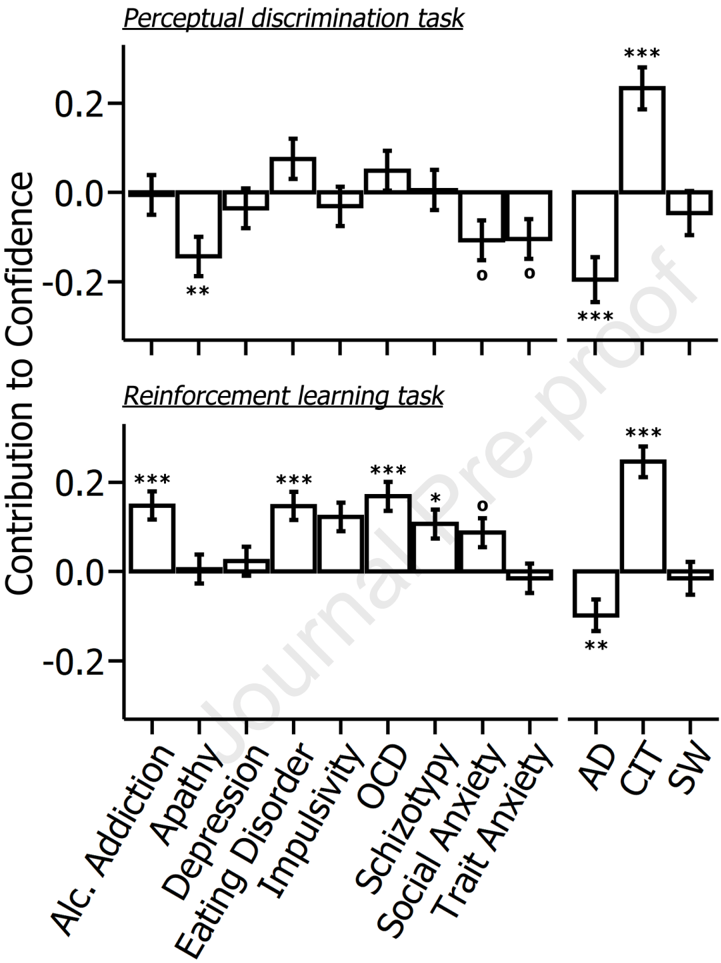
“Seow et al. (38) suggested that this is evidence of dissociable mechanisms underlying the con fi dence biases in compulsivity and AD; reduced con fi - dence in depression may stem from a lower setpoint of con fi dence relating to global self-beliefs [e.g., low self-esteem (39)], while overcon fi dence in CIT may be caused…”
Self-citationHow do confidence and self-beliefs relate in psychopathology: a transdiagnostic approach
Hoven, M., Luigjes, J., Denys, D. A. J. P., Rouault, M., & van Holst, R. J. (2023) · Nature Mental Health · doi:10.1038/s44220-023-00062-8 · Cited by 82
Self-citationThe future of metacognition research: Balancing construct breadth with measurement rigor
Katyal, S., & Fleming, S. M. (2024) · Cortex · doi:10.1016/j.cortex.2023.11.002 · Cited by 63
Self-citationBenwell, C., Mohr, G., Wallberg, J., Kouadio, A., & Ince, R. A. A. (2022) · npj Mental Health Research · doi:10.1038/s44184-022-00009-4 · Cited by 65
Metadata
- Authors
- Seow, T. X. F., Rouault, M., Gillan, C. M., & Fleming, S. M.
- Affiliations
- Wellcome Centre for Human Neuroimaging (GB)
- Université Paris Sciences et Lettres (FR)
- Trinity College Dublin (IE)
- Corresponding author
- Seow, Tricia X.F.
- Rouault, Marion
- Venue
- Biological Psychiatry
- Publisher
- Elsevier BV
- Published
- 2021-10
- Volume
- 90
- Issue
- 7
- Pages
- 436-446
- ISSN
- 0006-3223 (ISSN-L)
- OpenAlex
- W3164959546
- Cited by
- 159
- References
- 156
- Citations by year
- 2026: 37 · 2025: 22 · 2024: 27 · 2023: 48 · 2022: 21 · 2021: 3
- FWCI
- 3.66
- Type
- journal article
- Language
- en
- Open access
- green
- hal.science
- Locations
- Biological Psychiatry (publishedVersion)
- PubMed (publishedVersion)
- HAL (submittedVersion, cc-by)
- UCL Discovery (University College London) (submittedVersion, cc-by)
- Funders
- Agence Nationale de la Recherche (ANR-10-IDEX-0001-02 PSL, MQ16IP13)
- Wellcome Trust (203147/Z/16/Z, 206648/Z/17/Z)
- AXA Research Fund
- MQ Transforming Mental Health
- Max-Planck-Gesellschaft
- Royal Society
- Science Foundation Ireland (19/FFP/6418)
- University College London
- Topics
- Life Sciences › Neuroscience › Cognitive Neuroscience › Neural and Behavioral Psychology Studies
- Social Sciences › Psychology › Experimental and Cognitive Psychology › Anxiety, Depression, Psychometrics, Treatment, Cognitive Processes
- Life Sciences › Neuroscience › Cognitive Neuroscience › Memory Processes and Influences
- Keywords
- metacognition, mental health, metacognitive confidence, self-belief, transdiagnostic approach, mental illness, neurocognitive mechanisms
- MeSH terms
- Metacognition, Mental Disorders, Cognition, Humans, Mental Health
About these checks
Registry, retraction, Cites and statistics results are computed, not judged, with one exception: a printed reference that no index lists is read once by a model before it counts as a citation error. Claims are extracted by a model and kept only when their quote appears verbatim in the text; each cited source is then checked, with a model’s help, for whether it says what the claim relies on. Those verdicts can be wrong — read the claim’s quote and the cited source before relying on one.
Statistics and arithmetic are recomputed, not judged.
Confidence bands are shown only for fields calibrated on our annotated test set. None is calibrated yet, so no band is shown.
What counts as a claim ›How we measure confidence ›How we check this ›
Are you an author, or do you see a problem with this page? Request a review
