

Can epigenetics shine a light on the biological pathways underlying major mental disorders?
Open accessThe DOI matches its Crossref record; 186 of the 186 references it cites were found in a registry or an index; 97 of the 167 sources its claims cite were checked for support.
Abstract
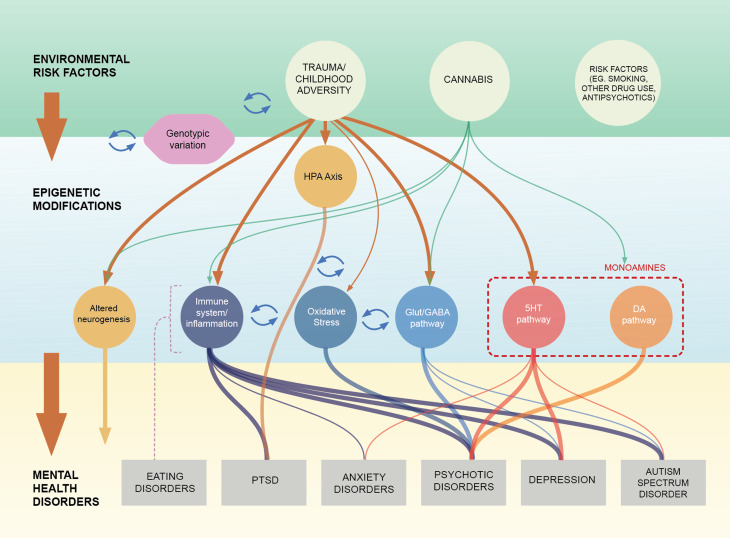
A significant proportion of the global burden of disease can be attributed to mental illness. Despite important advances in identifying risk factors for mental health conditions, the biological processing underlying causal pathways to disease onset remain poorly understood. This represents a limitation to implement effective prevention and the development of novel pharmacological treatments. Epigenetic mechanisms have emerged as mediators of environmental and genetic risk factors which might play a role in disease onset, including childhood adversity (CA) and cannabis use (CU). Particularly, human research exploring DNA methylation has provided new and promising insights into the role of biological pathways implicated in the aetio-pathogenesis of psychiatric conditions, including: monoaminergic (Serotonin and Dopamine), GABAergic, glutamatergic, neurogenesis, inflammatory and immune response and oxidative stress. While these epigenetic changes have been often studied as disease-specific, similarly to the investigation of environmental risk factors, they are often transdiagnostic. Therefore, we aim to review the existing literature on DNA methylation from human studies of psychiatric diseases (i) to identify epigenetic modifications mapping onto biological pathways either transdiagnostically or specifically related to psychiatric diseases such as Eating Disorders, Post-traumatic Stress Disorder, Bipolar and Psychotic Disorder, Depression, Autism Spectrum Disorder and Anxiety Disorder, and (ii) to investigate a convergence between some of these epigenetic modifications and the exposure to known risk factors for psychiatric disorders such as CA and CU, as well as to other epigenetic confounders in psychiatry research.
Overview
CoChat Summary
TL;DR
This narrative review synthesizes human DNA methylation evidence across major psychiatric disorders and argues that several epigenetic signatures map onto transdiagnostic biological pathways, while others are more disorder-specific. It further proposes that childhood adversity and cannabis use may converge on some of these pathways, but causal mediation remains largely untested.
Key findings
- DNA methylation changes in serotoninergic, inflammatory/immune, and neurogenesis/synaptic plasticity pathways appear transdiagnostic; dopaminergic changes are linked mainly to schizophrenia/psychosis, and glutamatergic/GABAergic changes are shared between schizophrenia and autism spectrum disorder. The review notes twin concordance estimates of 41–65% for schizophrenia, ~60% for bipolar disorder, and ~40% for major depression, and that EWAS platforms have moved from ~12,000 CpG sites to >850,000 sites.
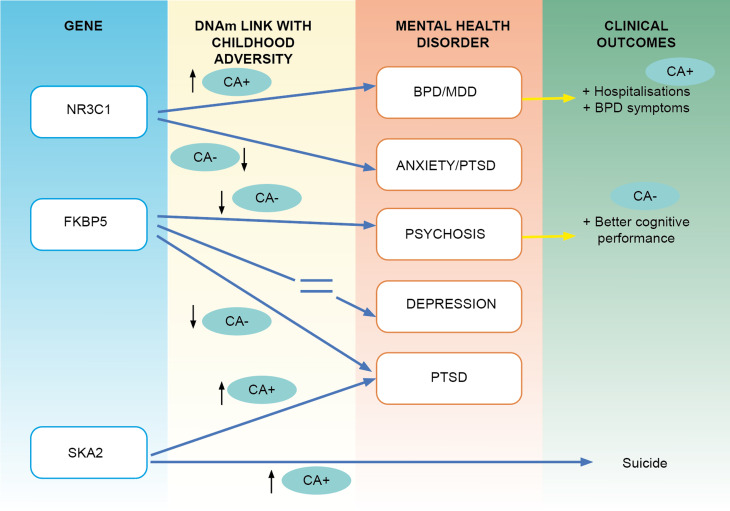
- Childhood adversity is associated with DNA methylation changes in HPA-axis genes: NR3C1 methylation is positively correlated with childhood adversity in borderline personality disorder and major depression but negatively correlated with anxiety and PTSD; lower FKBP5 methylation is associated with childhood adversity in psychosis and PTSD; SKA2 interacts with adversity scores in predicting lifetime suicide attempt and mediates associations with reduced cortical thickness and PTSD.
- Cannabis use shows preliminary DNA methylation associations: the largest case–control study reported an epigenome-wide significant differentially methylated CpG in CEMIP; other studies report MARC2, CUX1, CLMN, and SENP7, with cannabis-plus-tobacco analyses identifying AHRR and F2RL3.
- Tobacco, alcohol, and psychiatric medication are important confounders: smoking-associated genes include AHRR, F2RL3, GFI1, and MYO1G; lithium, carbamazepine, and quetiapine are associated with decreased SLC6A4 methylation, contrasting with SLC6A4 hypermethylation reported in bipolar disorder. The review also cites 115 differentially methylated regions in a depression EWAS and 39 DMRs in a monozygotic discordant twin study of major depression.
Methods
- Design: narrative review of existing human DNA methylation studies in psychiatry, covering candidate-gene and epigenome-wide association studies (EWAS), with a focus on transdiagnostic and disorder-specific biological pathways.
- Data: studies of eating disorders, PTSD, bipolar disorder, psychotic disorder, depression, autism spectrum disorder, and anxiety disorders, using tissues including blood, saliva, and post-mortem brain; childhood adversity and cannabis use are reviewed as environmental exposures, with supplementary tables summarizing study characteristics.
- Analysis: narrative synthesis with tables and figures summarizing direction of associations and mediation analyses; no new primary data or formal meta-analysis are reported.
Limitations
- The paper states technical limitations including blood–brain inconsistencies, tissue-type specificity, and the candidate-gene versus EWAS issue; it also notes that most included studies are small and underpowered, except some exceptions such as Hannon et al. (2021).
- The paper states that EWAS-level evidence formally testing mediating pathways between childhood adversity and main clinical conditions is non-existent in humans, and that studies often use broad composite adversity measures, heterogeneous diagnostic categories, and lack information on timing of trauma or cannabis initiation.
- The paper states that genotype, gene expression, and environmental confounders such as tobacco, alcohol, and psychiatric medication are often unaccounted for; evident from the text, as a narrative review it does not describe a systematic search strategy or formal quality appraisal.
Model-written summary. Check it against the paper before relying on it.
Integrity signals
Registry
Cites
Statistics
Figures
Verification
Claims the paper makes
62 Valid · 7 Not valid · 25 Not checked · 31 Own results and interpretations
Some cited sources support this claim and some don’t — read each source’s verdict below.
In the paper
“Further, EWAS studies have identified differential DNAm in HTR2A (Numata, Ye, Herman, & Lipska, 2014), HTR5A and HTR1E (Nishioka et al., 2013; Pidsley et al., 2014) genes in those with psychosis.”
§ Can epigenetics shine a light on the biological pathways underlying major mental disorders? > Evidence of epigenetic processes in major transdiagnostic pathways > The serotoninergic pathway
What the sources say
- Disputedcites Numata, Ye, Herman, & Lipska, 2014 matched to “DNA methylation changes in the postmortem dorsolateral prefrontal cortex of patients with schizophrenia” (2014) sourceExperimental — accuracy not yet measured
The Numata et al. citation is attached to HTR2A, not HTR5A or HTR1E. The Discussion (page unavailable) explicitly says the authors did not find methylation changes in HTR2A in their schizophrenia samples. The Results report an association between an HTR2A risk allele and methylation, but not differential HTR2A methylation between patients and controls. (LLM, conf=0.88)
Checked by a reasoning model — may be wrong.
- Not checked — no full text of the sourcecites Nishioka et al., 2013 matched to “Comprehensive DNA methylation analysis of peripheral blood cells derived from patients with first-episode schizophrenia” (2013) source
- Partly supportedcites Pidsley et al., 2014 matched to “Methylomic profiling of human brain tissue supports a neurodevelopmental origin for schizophrenia” (2014) sourceExperimental — accuracy not yet measured
In Results and discussion, under identification of differentially methylated positions in the prefrontal cortex (page unavailable), the paper reports significantly different DNA methylation at HTR5A in schizophrenia patients versus controls. The cited Pidsley paper does not report an HTR1E finding in the passages retrieved for that gene. HTR2A is separately attributed to Numata et al. in the citing sentence, so it is not assessed against Pidsley. (LLM, conf=0.88)
plainstates an association- Asserted: passes — The authors put it forward as true.
- Checkable: passes — It can be checked against evidence.
- Load-bearing: passes — The paper’s conclusions depend on it.
- Based: passes — The paper gives a reason why it holds.
- Disputed
The cited sources support only part of this claim — read each source’s verdict below.
In the paper
“Abundant evidence supports the role of neuroinflammation and altered immune processes in the aetiopathogeneses of various mental conditions (Mazza, Lucchi, Rossetti, & Clerici, 2020; Pariante, 2017).”
§ Can epigenetics shine a light on the biological pathways underlying major mental disorders? > Evidence of epigenetic processes in major transdiagnostic pathways > Immune system and inflammation
What the sources say
- Not checked — no full text of the sourcecites Mazza, Lucchi, Rossetti, & Clerici, 2020 matched to “Neutrophil-lymphocyte ratio, monocyte-lymphocyte ratio and platelet-lymphocyte ratio in non-affective psychosis: A meta-analysis and systematic review” (2020) source
- Partly supportedcites Pariante, 2017 matched to “Why are depressed patients inflamed? A reflection on 20 years of research on depression, glucocorticoid resistance and inflammation” (2017) sourceExperimental — accuracy not yet measured
Section 5 links inflammation and altered immune responses to risk of depression, particularly in a subgroup of patients. Section 6 says an activated inflammatory system is relevant to psychotic disorders such as schizophrenia, but discusses effects on health, brain structure and outcomes rather than establishing a role in their aetiopathogenesis. The paper therefore supports the claim for depression, but not its broader implication about the origins of various mental conditions or neuroinflammation specifically. (LLM, conf=0.83)
boostedstates a cause- Asserted: passes — The authors put it forward as true.
- Checkable: passes — It can be checked against evidence.
- Load-bearing: passes — The paper’s conclusions depend on it.
- Based: passes — The paper gives a reason why it holds.
The cited sources support only part of this claim — read each source’s verdict below.
In the paper
“Moreover, MAOA DNAm was negatively correlated to life events in a sample of Panic Disorder (Domschke et al., 2012).”
§ Can epigenetics shine a light on the biological pathways underlying major mental disorders? > The epigenetic signature of childhood adversity and cannabis use > Serotoninergic, dopaminergic and glutamatergic/GABAergic pathways
What the sources say
- Partly supportedcites Domschke et al., 2012 matched to “Monoamine oxidase A gene DNA hypomethylation - A risk factor for panic disorder?” (2012) sourceExperimental — accuracy not yet measured
The “Mediating effect of life events on MAOA methylation” section reports that, among female patients with panic disorder, a higher percentage of negative life events was associated with lower methylation at one CpG site. The claim omits those qualifications: the paper does not report a negative correlation for life events generally or for average MAOA methylation across all sites. (LLM, conf=0.86)
plainstates an association- Asserted: passes — The authors put it forward as true.
- Checkable: passes — It can be checked against evidence.
- Load-bearing: unclear — It is unclear whether the paper’s conclusions depend on it.
- Based: passes — The paper gives a reason why it holds.
- Partly supported
The cited sources support only part of this claim — read each source’s verdict below.
In the paper
“Moreover, hypermethylation in the 5-HT3A-R gene appeared to mediate the link between exposure to adversity and higher severity of disease parameters in a mixed sample of BD and Borderline PD (Perroud et al., 2016).”
§ Can epigenetics shine a light on the biological pathways underlying major mental disorders? > The epigenetic signature of childhood adversity and cannabis use > Serotoninergic, dopaminergic and glutamatergic/GABAergic pathways
What the sources say
- Partly supportedcites Perroud et al., 2016 matched to “METHYLATION OF SEROTONIN RECEPTOR 3A IN ADHD, BORDERLINE PERSONALITY, AND BIPOLAR DISORDERS: LINK WITH SEVERITY OF THE DISORDERS AND CHILDHOOD MALTREATMENT: Research Article: Epigenetics of 5HT 3A R in Psychiatric Disorders” (2016) sourceExperimental — accuracy not yet measured
The Mediation Analysis reports that methylation at two 5-HT3A-R CpG sites mediated associations between childhood physical abuse and selected severity outcomes. But the sample included ADHD as well as bipolar disorder and borderline personality disorder, and the methylation–severity associations were not uniformly in the direction of hypermethylation (5HT3A-R Methylation Status According to Severity of Disorder). Page numbers are unavailable in our copy. (LLM, conf=0.88)
hedgedstates a possible cause- Asserted: passes — The authors put it forward as true.
- Checkable: passes — It can be checked against evidence.
- Load-bearing: unclear — It is unclear whether the paper’s conclusions depend on it.
- Based: passes — The paper gives a reason why it holds.
- Partly supported
Every source the paper cites for this claim was checked and supports it.
In the paper
“Furthermore, an EWAS study from patients suffering from Panic Disorder found enrichment in genes involved in the regulation of lymphocytes (Shimada-Sugimoto et al., 2017).”
§ Can epigenetics shine a light on the biological pathways underlying major mental disorders? > Evidence of epigenetic processes in major transdiagnostic pathways > Immune system and inflammation
What the sources say
- Supportedcites Shimada-Sugimoto et al., 2017 matched to “Epigenome-wide association study of DNA methylation in panic disorder” (2017) source
The Results (Pathway analysis; page unavailable) report that genes annotated to CpG sites associated with panic disorder were analyzed for pathway enrichment. The significantly associated gene sets included “positive regulation of lymphocyte activation,” matching the citing sentence. (LLM, conf=0.94)
plainstates an association- Asserted: passes — The authors put it forward as true.
- Checkable: passes — It can be checked against evidence.
- Load-bearing: passes — The paper’s conclusions depend on it.
- Based: passes — The paper gives a reason why it holds.
- Supported
67 more claims · 30 with their cited sources checked
Create a free account to see all 125 claims and to verify the 13 references still open.
- It may state two separate claims as one. 50
- The quote only partly states this claim. 1
- Probably not a substantial claim. 4
Self-check
Percentages, sums and reported differences re-computed from the paper’s own numbers.
Each contradiction between two passages listed here was confirmed by an independent check.
Rated major: it would touch a result — a value a result rests on, reported and recomputed p-values on opposite sides of the significance level, two passages that conflict with no sign which is right, or a cited work retracted before this paper was published.
In the paper
§ Can epigenetics shine a light on the biological pathways underlying major mental disorders? > Evidence of epigenetic processes in major transdiagnostic pathways > The dopaminergic pathway
“with decreased DNAm in DRD3 (Dai et al., 2014) and DRD4 (Cheng et al., 2014)”
§ Can epigenetics shine a light on the biological pathways underlying major mental disorders? > Evidence of epigenetic processes in major transdiagnostic pathways
“| ↑Cheng et al. (2014) | Candidate gene | Blood | SCZ | |”
Rated major: it would touch a result — a value a result rests on, reported and recomputed p-values on opposite sides of the significance level, two passages that conflict with no sign which is right, or a cited work retracted before this paper was published.
In the paper
§ Can epigenetics shine a light on the biological pathways underlying major mental disorders? > Evidence of epigenetic processes in major transdiagnostic pathways > The dopaminergic pathway
“with decreased DNAm in DRD3 (Dai et al., 2014) and DRD4 (Cheng et al., 2014)”
§ Can epigenetics shine a light on the biological pathways underlying major mental disorders? > Evidence of epigenetic processes in major transdiagnostic pathways
“| ↑Dai et al. (2014) | Candidate gene | Blood | SCZ | |”
Rated minor: it would not touch a result — a value no result rests on, a p-value that stays on the same side of the significance level, or a conflict that is clerical, resolved elsewhere in the paper, or outside its own findings.
In the paper
§ Can epigenetics shine a light on the biological pathways underlying major mental disorders? > The epigenetic signature of childhood adversity and cannabis use > Inflammation, oxidative stress, synaptic plasticity and neurogenesis
“Candidate genes studies have linked CA with DNAm changes in BDNF (Moser et al., 2015; Thaler et al., 2014; Weder et al., 2014)”
§ Can epigenetics shine a light on the biological pathways underlying major mental disorders? > Evidence of epigenetic processes in major transdiagnostic pathways
“| Moser et al. (2015) | EWAS | Saliva | PTSD | CA → ↑BDNF meth / ↑BDNF meth-> maternal anxiety |”
Rated minor: it would not touch a result — a value no result rests on, a p-value that stays on the same side of the significance level, or a conflict that is clerical, resolved elsewhere in the paper, or outside its own findings.
In the paper
§ Can epigenetics shine a light on the biological pathways underlying major mental disorders? > Evidence of epigenetic processes in major transdiagnostic pathways > The serotoninergic pathway
“and obsessive compulsive disorder (OCD) (Domschke et al., 2012).”
§ Can epigenetics shine a light on the biological pathways underlying major mental disorders? > Evidence of epigenetic processes in major transdiagnostic pathways
“| ↓Domschke et al. (2012) | Candidate gene | Blood | Panic disorder | CA → ↓A (MAOA) |”
Rated minor: it would not touch a result — a value no result rests on, a p-value that stays on the same side of the significance level, or a conflict that is clerical, resolved elsewhere in the paper, or outside its own findings.
In the paper
§ Can epigenetics shine a light on the biological pathways underlying major mental disorders? > Evidence of epigenetic processes in major transdiagnostic pathways > Oxidative stress
“an EWAS study in Borderline PD found differences in methylation in GCT6, which is important in glutathione metabolism (Arranz et al., 2021).”
§ Can epigenetics shine a light on the biological pathways underlying major mental disorders? > Evidence of epigenetic processes in major transdiagnostic pathways
“| GGT6 | GGT6 | GGT6 | GGT6 | GGT6 | | Arranz et al. (2021) | EWAS | Blood | Borderline PD | |”
2 more findings
Create a free account to see every finding of this check.
Citations
Cites
Biological insights from 108 schizophrenia-associated genetic loci
Schizophrenia Working Group of the Psychiatric Genomics Consortium (2014) · Nature · doi:10.1038/nature13595 · Cited by 7,577
Jaenisch, R., & Bird, A. (2003) · Nature Genetics · doi:10.1038/ng1089 · Cited by 6,325 · cited 1×
“Epigenetic modifications refer to functional changes in DNA structural packaging or associated proteins without structural alteration of the DNA sequence itself (Jaenisch & Bird, 2003).”
BackgroundAssociations of depression with C-reactive protein, IL-1, and IL-6: a meta-analysis.
Howren, M. B., Lamkin, D. M., & Suls, J. (2009) · Psychosomatic Medicine · doi:10.1097/psy.0b013e3181907c1b · Cited by 2,766
Varese, F., Smeets, F., Drukker, M., Lieverse, R., Lataster, T., Viechtbauer, W., Read, J., van Os, J., & Bentall, R. P. (2012) · Schizophrenia Bulletin · doi:10.1093/schbul/sbs050 · Cited by 2,436 · cited 2×
“Thirdly, we will explore if the existing findings from studies on DNAm changes associated with CA and CU, two of the environmental exposures most consistently associated with psychiatric disorders (Lindert et al., 2014; Mandelli, Petrelli, & Serretti, 2015; Marconi, Di Forti, Lewis, Murray, & Vassos, 2016; Sideli, Qui…”
BackgroundThe environment and schizophrenia
van Os, J., Kenis, G., & Rutten, B. P. F. (2010) · Nature · doi:10.1038/nature09563 · Cited by 1,572
Allele-specific FKBP5 DNA demethylation mediates gene–childhood trauma interactions
Klengel, T., Mehta, D., Anacker, C., Rex-Haffner, M., Pruessner, J. C., Pariante, C. M., Pace, T. W. W., Mercer, K. B., Mayberg, H. S., Bradley, B., et al. (2013) · Nature Neuroscience · doi:10.1038/nn.3275 · Cited by 1,447
A mega-analysis of genome-wide association studies for major depressive disorder
Major Depressive Disorder Working Group of the Psychiatric GWAS Consortium, Ripke, S., Wray, N. R., Lewis, C. M., Hamilton, S. P., Weissman, M. M., Breen, G., Byrne, E. M., Blackwood, D. H. R., Boomsma, D. I., et al. (2013) · Molecular Psychiatry · doi:10.1038/mp.2012.21 · Cited by 1,120
Meta-analysis of the Association Between the Level of Cannabis Use and Risk of Psychosis
Marconi, A., Di Forti, M., Lewis, C. M., Murray, R. M., & Vassos, E. (2016) · Schizophrenia Bulletin · doi:10.1093/schbul/sbw003 · Cited by 899 · cited 2×
“Cannabis use CU and in particular heavy use (Marconi et al., 2016) has been consistently associated with increased risk for PD, but to a lesser degree for other psychiatric conditions (Sideli, Trotta, Spinazzola, La Cascia, & Di Forti, 2020b).”
BackgroundNew insights into symptoms and neurocircuit function of anorexia nervosa
Kaye, W. H., Fudge, J. L., & Paulus, M. (2009) · Nature Reviews Neuroscience · doi:10.1038/nrn2682 · Cited by 843
Tobacco smoking leads to extensive genome-wide changes in DNA methylation
Zeilinger, S., Kühnel, B., Klopp, N., Baurecht, H., Kleinschmidt, A., Gieger, C., Weidinger, S., Lattka, E., Adamski, J., Peters, A., et al. (2013) · PLoS ONE · doi:10.1371/journal.pone.0063812 · Cited by 824 · cited 2×
“A number of publications have identified robust associations between tobacco smoking and DNAm (Elliott et al., 2014; Shenker et al., 2013; Tsaprouni et al., 2014; Zeilinger et al., 2013), with a number of genes (e.”
BackgroundPsychological investigation of the structure of paranoia in a non-clinical population
Freeman, D., Garety, P. A., Bebbington, P. E., Smith, B., Rollinson, R., Fowler, D., Kuipers, E., Ray, K., & Dunn, G. (2005) · British Journal of Psychiatry · doi:10.1192/bjp.186.5.427 · Cited by 786 · cited 1×
“Evidence is showing that there are some levels of specificity between adversity subtypes and symptoms domains, for example, abuse is more related to positive symptoms while neglect is not (Alameda et al., 2021) and that CU is associated with paranoia (Freeman et al., 2005).”
BackgroundEpigenomic Profiling Reveals DNA-Methylation Changes Associated with Major Psychosis
Mill, J., Tang, T., Kaminsky, Z., Khare, T., Yazdanpanah, S., Bouchard, L., Jia, P., Assadzadeh, A., Flanagan, J., Schumacher, A., et al. (2008) · The American Journal of Human Genetics · doi:10.1016/j.ajhg.2008.01.008 · Cited by 773 · cited 3×
“This is based on the rational that chromatin conformation and transcriptional regulation are influenced by a set of methylated or unmethylated cytosines across a region, rather than specific CpG sites in isolation (Mill et al., 2008) Different biological pathways have been implicated in the aetio-pathogenesis across m…”
BackgroundMethodResultInfluentialvan Os, J., Rutten, B. P., & Poulton, R. (2008) · Schizophrenia Bulletin · doi:10.1093/schbul/sbn117 · Cited by 713
Dopamine and glutamate in schizophrenia: biology, symptoms and treatment
McCutcheon, R. A., Krystal, J. H., & Howes, O. D. (2020) · World Psychiatry · doi:10.1002/wps.20693 · Cited by 612 · cited 3×
“It is widely accepted that dopaminergic dysregulation stands as one of the most supported hypotheses for the pathogenesis of SCZ and psychosis as a whole (Jauhar et al., 2018; McCutcheon et al., 2020).”
BackgroundLindert, J., von Ehrenstein, O. S., Grashow, R., Gal, G., Braehler, E., & Weisskopf, M. G. (2014) · International Journal of Public Health · doi:10.1007/s00038-013-0519-5 · Cited by 590 · cited 1×
“Thirdly, we will explore if the existing findings from studies on DNAm changes associated with CA and CU, two of the environmental exposures most consistently associated with psychiatric disorders (Lindert et al., 2014; Mandelli, Petrelli, & Serretti, 2015; Marconi, Di Forti, Lewis, Murray, & Vassos, 2016; Sideli, Qui…”
BackgroundMeyer, J. H., Ginovart, N., Boovariwala, A., Sagrati, S., Hussey, D., Garcia, A., Young, T., Praschak-Rieder, N., Wilson, A. A., & Houle, S. (2006) · Archives of General Psychiatry · doi:10.1001/archpsyc.63.11.1209 · Cited by 585 · cited 1×
“Another well-explored gene of interest in the serotoninergic pathway is MAO-A (Shih & Thompson, 1999) which is involved in monoamine degradation and it has established linked with depression (Meyer et al., 2006).”
BackgroundThe genetics of schizophrenia and bipolar disorder: dissecting psychosis
Craddock, N., O’Donovan, M. C., & Owen, M. J. (2005) · Journal of Medical Genetics · doi:10.1136/jmg.2005.030718 · Cited by 574
Mandelli, L., Petrelli, C., & Serretti, A. (2015) · European Psychiatry · doi:10.1016/j.eurpsy.2015.04.007 · Cited by 549
Epigenetic and immune function profiles associated with posttraumatic stress disorder
Uddin, M., Aiello, A. E., Wildman, D. E., Koenen, K. C., Pawelec, G., de los Santos, R., Goldmann, E., & Galea, S. (2010) · Proceedings of the National Academy of Sciences · doi:10.1073/pnas.0910794107 · Cited by 518 · cited 22×
“Other evidence suggests a negative correlation between DNAm in genes enriched for immune pathways (such as TLR1 and TLR3) and CA in PTSD subjects (Uddin et al., 2010); while the TNFRSF13C gene was differently methylated between Borderline PD participants with and without CA (Arranz et al., 2021)…”
BackgroundInfluentialPerroud, N., Paoloni-Giacobino, A., Prada, P., Olié, E., Salzmann, A., Nicastro, R., Guillaume, S., Mouthon, D., Stouder, C., Dieben, K., et al. (2011) · Translational Psychiatry · doi:10.1038/tp.2011.60 · Cited by 516 · cited 2×
“…on a positive correlation between CA and DNAm in Borderline PD and MDD and some clinical outcomes (Farrell et al., 2018; Martin-Blanco et al., 2014; Perroud et al., 2011; Radtke et al., 2015), and a negative correlation with anxiety and PTSD (Labonte, Azoulay, Yerko, Turecki, & Brunet, 2014;…”
BackgroundHyaluronan, a Crucial Regulator of Inflammation
Petrey, A. C., & de la Motte, C. A. (2014) · Frontiers in Immunology · doi:10.3389/fimmu.2014.00101 · Cited by 514 · cited 1×
“The CEMIP gene, involved in hyaluronic catabolism, which has been shown to have an important role in inflammation, immune processes as well as associated with BD and SCZ previously (Petrey & de la Motte, 2014).”
BackgroundRahman, I., Marwick, J., & Kirkham, P. (2004) · Biochemical Pharmacology · doi:10.1016/j.bcp.2004.05.042 · Cited by 507
Genomic and phenotypic insights from an atlas of genetic effects on DNA methylation
Min, J. L., Hemani, G., Hannon, E., Dekkers, K. F., Castillo-Fernandez, J., Luijk, R., Carnero-Montoro, E., Lawson, D. J., Burrows, K., Suderman, M., et al. (2021) · Nature Genetics · doi:10.1038/s41588-021-00923-x · Cited by 506 · cited 2×
“…some studies presented in this review have found evidence that some genotypic variation in some risk alleles can influence DNAm (Klengel et al., 2013; Melas et al., 2013; Perroud et al., 2016), EWAS addressing the joint effect of genotype and environment are still in its infancy (Min et al., 2021).”
BackgroundHypomethylation of MB-COMT promoter is a major risk factor for schizophrenia and bipolar disorder
Abdolmaleky, H. M., Cheng, K.-H., Faraone, S. V., Wilcox, M., Glatt, S. J., Gao, F., Smith, C. L., Shafa, R., Aeali, B., Carnevale, J., et al. (2006) · Human Molecular Genetics · doi:10.1093/hmg/ddl253 · Cited by 462 · cited 7×
“Gene (hyper ↑ or ↓ hypo DNAm) and citation Candidate gene or EWAS Tissue Condition/sample Clinical/biological outcome ↓Nohesara et al. (2011) Candidate gene Saliva SCZ/BD Walton et al. (2014) Candidate gene Blood SCZ ↑ MB-COMT ->better neural activity in left DLPFC ↓Nour El Huda et al. (2018) Candidate gene Blood SCZ…”
BackgroundInfluentialA DNA methylation biomarker of alcohol consumption
Liu, C., Marioni, R. E., Hedman, Å. K., Pfeiffer, L., Tsai, P.-C., Reynolds, L. M., Just, A. C., Duan, Q., Boer, C. G., Tanaka, T., et al. (2018) · Molecular Psychiatry · doi:10.1038/mp.2016.192 · Cited by 402 · cited 1×
“There is some initial evidence to suggest that alcohol use is associated with DNAm changes (Liu et al., 2016; Wang, Xu, Zhao, Gelernter, & Zhang, 2016; Weng, Wu, Lee, Hsu, & Cheng, 2015).”
BackgroundShenker, N. S., Polidoro, S., van Veldhoven, K., Sacerdote, C., Ricceri, F., Birrell, M. A., Belvisi, M. G., Brown, R., Vineis, P., & Flanagan, J. M. (2013) · Human Molecular Genetics · doi:10.1093/hmg/dds488 · Cited by 396
Pariante, C. M. (2017) · European Neuropsychopharmacology · doi:10.1016/j.euroneuro.2017.04.001 · Cited by 382 · cited 2×
“It is important to take into account that some of these processes participate in disease pathogenesis in a parallel manner, such as via the redox system and through the glutamatergic/GABAergic imbalance (Hardingham & Do, 2016); or the immune system and the stress response (Pariante, 2017).”
BackgroundProfiling genome-wide DNA methylation
Yong, W.-S., Hsu, F.-M., & Chen, P.-Y. (2016) · Epigenetics & Chromatin · doi:10.1186/s13072-016-0075-3 · Cited by 374 · cited 1×
“, 2008) to more advanced techniques such as Infinium MethylationEPIC BeadChip, that covers more than 850 000 CpG methylation sites (Yong et al., 2016).”
MethodHannon, E., Dempster, E., Viana, J., Burrage, J., Smith, A. R., Macdonald, R., St Clair, D., Mustard, C., Breen, G., Therman, S., et al. (2016) · Genome Biology · doi:10.1186/s13059-016-1041-x · Cited by 349 · cited 2×
“The confounding effect of smoking is clearly evidenced in an EWAS study on peripheral blood of SCZ patients (Hannon et al., 2016).”
BackgroundSelf-citationPalma-Gudiel, H., Córdova-Palomera, A., Leza, J. C., & Fañanás, L. (2015) · Neuroscience & Biobehavioral Reviews · doi:10.1016/j.neubiorev.2015.05.016 · Cited by 347
Weder, N., Zhang, H., Jensen, K., Yang, B. Z., Simen, A., Jackowski, A., Lipschitz, D., Douglas-Palumberi, H., Ge, M., Perepletchikova, F., et al. (2014) · Journal of the American Academy of Child & Adolescent Psychiatry · doi:10.1016/j.jaac.2013.12.025 · Cited by 324 · cited 5×
“…OCD ↑Thaler et al. (2014) Candidate gene Blood Bulimia nervosa CA + Borderline PD →↑BDNF meth Moser et al. (2015) EWAS Saliva PTSD CA → ↑BDNF meth / ↑BDNF meth-> maternal anxiety Weder et al. (2014) EWAS Saliva/ blood Trauma/non-trauma children Differently methylated between CA + and…”
BackgroundInfluentialOxidative Stress in Autism Spectrum Disorder
Bjørklund, G., Meguid, N. A., El-Bana, M. A., Tinkov, A. A., Saad, K., Dadar, M., Hemimi, M., Skalny, A. V., Hosnedlová, B., Kizek, R., et al. (2020) · Molecular Neurobiology · doi:10.1007/s12035-019-01742-2 · Cited by 323 · cited 14×
“In ASD, preliminary evidence indicated higher HTR2A promoter DNAm in leucocytes of those carrying the high-risk genotype in the HTR2A (Hranilovic, Blazevic, Stefulj, & Zill, 2016).”
BackgroundInfluentialTsaprouni, L. G., Yang, T.-P., Bell, J., Dick, K. J., Kanoni, S., Nisbet, J., Viñuela, A., Grundberg, E., Nelson, C. P., Meduri, E., et al. (2014) · Epigenetics · doi:10.4161/15592294.2014.969637 · Cited by 319 · cited 2×
“A number of publications have identified robust associations between tobacco smoking and DNAm (Elliott et al., 2014; Shenker et al., 2013; Tsaprouni et al., 2014; Zeilinger et al., 2013), with a number of genes (e.”
BackgroundLinking early-life NMDAR hypofunction and oxidative stress in schizophrenia pathogenesis
Hardingham, G. E., & Do, K. Q. (2016) · Nature Reviews Neuroscience · doi:10.1038/nrn.2015.19 · Cited by 304 · cited 1×
“It is important to take into account that some of these processes participate in disease pathogenesis in a parallel manner, such as via the redox system and through the glutamatergic/GABAergic imbalance (Hardingham & Do, 2016); or the immune system and the stress response (Pariante, 2017).”
BackgroundAstrocytic abnormalities and global DNA methylation patterns in depression and suicide
Nagy, C., Suderman, M., Yang, J., Szyf, M., Mechawar, N., Ernst, C., & Turecki, G. (2015) · Molecular Psychiatry · doi:10.1038/mp.2014.21 · Cited by 301 · cited 1×
“Lastly, a Depression EWAS (Nagy et al., 2015) of post-mortem brains of suicide victims and controls found 115 differentially methylated regions (DMRs), which included regions related to GRIK2.”
BackgroundDoes tobacco use cause psychosis? Systematic review and meta-analysis
Gurillo, P., Jauhar, S., Murray, R. M., & MacCabe, J. H. (2015) · The Lancet Psychiatry · doi:10.1016/s2215-0366(15)00152-2 · Cited by 300 · cited 1×
“…associated with tobacco exposure could also mediate the already reported link between tobacco use and increased risk of psychosis, it is an important question yet to be determined (Gurillo et al., 2015), and tobacco smoking should be accounted for in the future epigenetic studies in psychiatry.”
Philibert, R. A., Sandhu, H., Hollenbeck, N., Gunter, T., Adams, W., & Madan, A. (2008) · American Journal of Medical Genetics Part B: Neuropsychiatric Genetics · doi:10.1002/ajmg.b.30657 · Cited by 300 · cited 3×
“…al. (2013) Candidate gene Blood Depression CA → ↑SLC6A4 → clinical severity Olsson et al. (2010) Candidate gene Buccal Depression ↑SLC6A4 → ↑ Depressive symptoms ↑Philibert et al. (2008) Candidate gene Blood Depression ↑SLC6A4 → ↑ history MDD ↑Zhao et al. (2013) Candidate gene Blood Twin male…”
BackgroundYehuda, R., Flory, J. D., Bierer, L. M., Henn-Haase, C., Lehrner, A., Desarnaud, F., Makotkine, I., Daskalakis, N. P., Marmar, C. R., & Meaney, M. J. (2015) · Biological Psychiatry · doi:10.1016/j.biopsych.2014.02.006 · Cited by 293 · cited 2×
“…PD and MDD and some clinical outcomes (Farrell et al., 2018; Martin-Blanco et al., 2014; Perroud et al., 2011; Radtke et al., 2015), and a negative correlation with anxiety and PTSD (Labonte, Azoulay, Yerko, Turecki, & Brunet, 2014; Schechter et al., 2015; Wang et al., 2017; Yehuda et al., 2015).”
BackgroundThe 40-Hz Auditory Steady-State Response in Patients With Schizophrenia: A Meta-analysis
Thuné, H., Recasens, M., & Uhlhaas, P. J. (2016) · JAMA Psychiatry · doi:10.1001/jamapsychiatry.2016.2619 · Cited by 292
Maj, M., van Os, J., De Hert, M., Gaebel, W., Galderisi, S., Green, M. F., Guloksuz, S., Harvey, P. D., Jones, P. B., Malaspina, D., et al. (2021) · World Psychiatry · doi:10.1002/wps.20809 · Cited by 285 · cited 1×
“Moreover, the outcomes are often considered as SCZ, or MDD or even major psychoses (combining SCZ & BD), which are extremely heterogeneous entities, involving microphenotypes (Maj et al., 2021), and which accordingly may have very different biological underpinnings.”
BackgroundDifferences in smoking associated DNA methylation patterns in south asians and europeans
Elliott, H. R., Tillin, T., McArdle, W. L., Ho, K., Duggirala, A., Frayling, T. M., Davey Smith, G., Hughes, A. D., Chaturvedi, N., & Relton, C. L. (2014) · Clinical Epigenetics · doi:10.1186/1868-7083-6-4 · Cited by 282 · cited 1×
“A number of publications have identified robust associations between tobacco smoking and DNAm (Elliott et al., 2014; Shenker et al., 2013; Tsaprouni et al., 2014; Zeilinger et al., 2013), with a number of genes (e.g. AHRR, F2RL3, GFI1 and MYO1G) replicated across studies.”
Marotta, R., Risoleo, M. C., Messina, G., Parisi, L., Carotenuto, M., Vetri, L., & Roccella, M. (2020) · Brain Sciences · doi:10.3390/brainsci10030163 · Cited by 279 · cited 15×
“In ASD, preliminary evidence indicated higher HTR2A promoter DNAm in leucocytes of those carrying the high-risk genotype in the HTR2A (Hranilovic, Blazevic, Stefulj, & Zill, 2016).”
BackgroundInfluentialSteullet, P., Cabungcal, J. H., Monin, A., Dwir, D., O'Donnell, P., Cuenod, M., & Do, K. Q. (2016) · Schizophrenia Research · doi:10.1016/j.schres.2014.06.021 · Cited by 262 · cited 2×
“…processes (McCutcheon, Krystal, & Howes, 2020); while others pathways involve inflammation (Cullen et al., 2019), oxidative stress (Steullet et al., 2016), synaptic plasticity and neurogenesis (Claudino, Gonçalves, Schuch, Martins, & Rocha, 2020), or the stress response system…”
BackgroundSelf-citationAssociation of SLC6A4 methylation with early adversity, characteristics and outcomes in depression
Kang, H.-J., Kim, J.-M., Stewart, R., Kim, S.-Y., Bae, K.-Y., Kim, S.-W., Shin, I.-S., Shin, M.-G., & Yoon, J.-S. (2013) · Progress in Neuro-Psychopharmacology and Biological Psychiatry · doi:10.1016/j.pnpbp.2013.01.006 · Cited by 254 · cited 15×
“Another EWAS on post-mortem brain of people with late-MDD (Hüls et al., 2020), found altered DNAm in the YOD1 locus, which is dysregulated in depression (Howren, Lamkin, & Suls, 2009) and its implicated in the regulation of inflammatory processes (Schimmack et al., 2017).”
BackgroundInfluentialRelton, C. L., & Davey Smith, G. (2010) · PLoS Medicine · doi:10.1371/journal.pmed.1000356 · Cited by 254
Monoamine Oxidase in Neuropsychiatry and Behavior
Shih, J. C., & Thompson, R. F. (1999) · The American Journal of Human Genetics · doi:10.1086/302562 · Cited by 248 · cited 2×
“Moreover, increased MAO-A DNAm has been suggested as a potential useful marker of better response to psychotherapy in anxiety disorders (Schiele et al., 2020; Ziegler et al., 2016).”
BackgroundAberg, K. A., McClay, J. L., Nerella, S., Clark, S., Kumar, G., Chen, W., Khachane, A. N., Xie, L., Hudson, A., Gao, G., et al. (2014) · JAMA Psychiatry · doi:10.1001/jamapsychiatry.2013.3730 · Cited by 248 · cited 5×
“Gene (hyper ↑ or ↓ hypo DNAm) and citation Candidate gene or EWAS Tissue Condition/sample Clinical/biological outcome CLMN*, SENP7* Clark et al. (2021) EWAS Blood Adolescents Differently methylated in CU users Immune system and inflammation ZC3H12D ↓Montano et al. (2016) EWAS Blood SCZ TCF3 ↑Montano et al. (2016) EWAS…”
BackgroundInfluentialSelvaraj, S., Arnone, D., Cappai, A., & Howes, O. (2014) · Neuroscience & Biobehavioral Reviews · doi:10.1016/j.neubiorev.2014.06.005 · Cited by 223
Genetic and epigenetic associations of MAOA and NR3C1 with depression and childhood adversities
Melas, P. A., Wei, Y., Wong, C. C. Y., Sjöholm, L. K., Åberg, E., Mill, J., Schalling, M., Forsell, Y., & Lavebratt, C. (2013) · International Journal of Neuropsychopharmacology · doi:10.1017/s1461145713000102 · Cited by 220 · cited 4×
“While studies in depression have found inconsistent DNAm changes (Domschke et al., 2015; Melas & Forsell, 2015; Melas et al., 2013); in candidate gene studies in anxiety disorders, the evidence points at a pattern of hypomethylation (Ziegler et al.”
BackgroundInfluentialSelf-citationLutz, P.-E., Tanti, A., Gasecka, A., Barnett-Burns, S., Kim, J. J., Zhou, Y., Chen, G. G., Wakid, M., Shaw, M., Almeida, D., et al. (2017) · American Journal of Psychiatry · doi:10.1176/appi.ajp.2017.16111286 · Cited by 203 · cited 3×
“…children Differently methylated between CA + and CA- POU6F2 Comes et al. (2020) EWAS Blood BD ↑CA-> ↓POU6F2 POU5F1 Arranz et al. (2021) EWAS Blood Borderline PD ↑CA-> ↓POU5F1 POU3F1 Lutz et al. (2017) EWAS PMB Depression ↑CA-> ↓POU3F1 CUX1* Osborne et al. (2020) EWAS Blood General population…”
BackgroundGenome-wide, integrative analysis implicates microRNA dysregulation in autism spectrum disorder
Wu, Y. E., Parikshak, N. N., Belgard, T. G., & Geschwind, D. H. (2016) · Nature Neuroscience · doi:10.1038/nn.4373 · Cited by 195
Epigenetic dysregulation of HTR2A in the brain of patients with schizophrenia and bipolar disorder
Abdolmaleky, H. M., Yaqubi, S., Papageorgis, P., Lambert, A. W., Ozturk, S., Sivaraman, V., & Thiagalingam, S. (2011) · Schizophrenia Research · doi:10.1016/j.schres.2011.04.007 · Cited by 192 · cited 2×
“…et al. (2019) Candidate gene Blood Panic disorder ↑SLC6A4→ Comorbid depression 5-HTR 1A ↑Carrard et al. (2011) Candidate gene Blood SCZ/BD 5-HTR 2A ↑Cheah et al. (2017) Candidate gene PMB SCZ ↑Abdolmaleky et al. (2011) Candidate gene PMB SCZ/BD ↑Hranilovic et al. (2016) Candidate gene Blood…”
BackgroundMazza, M. G., Lucchi, S., Rossetti, A., & Clerici, M. (2020) · The World Journal of Biological Psychiatry · doi:10.1080/15622975.2019.1583371 · Cited by 191
Melas, P. A., Rogdaki, M., Ösby, U., Schalling, M., Lavebratt, C., & Ekström, T. J. (2012) · The FASEB Journal · doi:10.1096/fj.11-202069 · Cited by 186 · cited 3×
“…have investigated the effect of antipsychotic medication, have shown, on the one hand, that Haloperidol affects DNAm in leucocytes of SCZ patients (Melas et al., 2012), while on the other hand, a recent EWAS study showed that Clozapine exposure leads to DNAm differences in patients with…”
BackgroundResultInfluentialZiegler, C., Richter, J., Mahr, M., Gajewska, A., Schiele, M. A., Gehrmann, A., Schmidt, B., Lesch, K.-P., Lang, T., Helbig-Lang, S., et al. (2016) · Translational Psychiatry · doi:10.1038/tp.2016.41 · Cited by 183 · cited 5×
“, 2013); in candidate gene studies in anxiety disorders, the evidence points at a pattern of hypomethylation (Ziegler et al., 2016) as shown in acrophobia (Schiele et al.”
BackgroundInfluentialAssociation of DNA methylation differences with schizophrenia in an Epigenome-Wide association study
Montano, C., Taub, M. A., Jaffe, A., Briem, E., Feinberg, J. I., Trygvadottir, R., Idrizi, A., Runarsson, A., Berndsen, B., Gur, R. C., et al. (2016) · JAMA Psychiatry · doi:10.1001/jamapsychiatry.2016.0144 · Cited by 180 · cited 8×
“An EWAS by Montano et al. (Montano et al. 2016) found differences in DNAm in genes involved in T-cell development in the blood of SCZ patients (ZC3H12D, TCF3, and IKZF4); other EWAS have also reported an enrichment in the immune system pathway by differently methylated genes (FR2B, PIK3R3, INPP5D,…”
BackgroundInfluentialKoenen, K. C., Uddin, M., Chang, S.-C., Aiello, A. E., Wildman, D. E., Goldmann, E., & Galea, S. (2011) · Depression and Anxiety · doi:10.1002/da.20825 · Cited by 174 · cited 16×
“The SKA2 interacts with adversity scores in predicting lifetime suicide attempt (Kaminsky et al., 2015), and mediated the association between reduced cortical thickness and PTSD (Sadeh et al., 2016a) and suicide phenotypes (Sadeh et al., 2016b).”
BackgroundInfluentialA review of DNA methylation in depression
Chen, D., Meng, L., Pei, F., Zheng, Y., & Leng, J. (2017) · Journal of Clinical Neuroscience · doi:10.1016/j.jocn.2017.05.022 · Cited by 172
Nohesara, S., Ghadirivasfi, M., Mostafavi, S., Eskandari, M.-R., Ahmadkhaniha, H., Thiagalingam, S., & Abdolmaleky, H. M. (2011) · Journal of Psychiatric Research · doi:10.1016/j.jpsychires.2011.06.013 · Cited by 168 · cited 3×
“Gene (hyper ↑ or ↓ hypo DNAm) and citation Candidate gene or EWAS Tissue Condition/sample Clinical/biological outcome ↓Nohesara et al. (2011) Candidate gene Saliva SCZ/BD Walton et al. (2014) Candidate gene Blood SCZ ↑ MB-COMT ->better neural activity in left DLPFC ↓Nour El Huda et al. (2018)…”
BackgroundMarzi, S. J., Sugden, K., Arseneault, L., Belsky, D. W., Burrage, J., Corcoran, D. L., Danese, A., Fisher, H. L., Hannon, E., Moffitt, T. E., et al. (2018) · American Journal of Psychiatry · doi:10.1176/appi.ajp.2017.17060693 · Cited by 163 · cited 1×
“A similar study examining the impact of CA on the epigenome in a general population found that tobacco consumption was an important confounding when examining the signature of CA (Marzi et al., 2018).”
BackgroundSelf-citationEpigenetic dysregulation of dopaminergic genes in eating disorders
Frieling, H., Römer, K. D., Scholz, S., Mittelbach, F., Wilhelm, J., De Zwaan, M., Jacoby, G. E., Kornhuber, J., Hillemacher, T., & Bleich, S. (2010) · International Journal of Eating Disorders · doi:10.1002/eat.20745 · Cited by 162
Epigenetic modulation of glucocorticoid receptors in posttraumatic stress disorder
Labonté, B., Azoulay, N., Yerko, V, Turecki, G., & Brunet, A. (2014) · Translational Psychiatry · doi:10.1038/tp.2014.3 · Cited by 162 · cited 1×
“…et al. (2011) Candidate gene Blood Borderline PD /MDD CA→ ↑ NR3C1 DNAm Radtke et al. (2015) Candidate gene Blood General population CA + ↑ NR3C1 DNAm → Borderline PD symptoms Labonte et al. (2014) Candidate gene Blood PTSD PTSD +→ ↓ NR3C1 DNAm Schechter et al. (2015) Candidate gene…”
BackgroundMethylomic profiling of human brain tissue supports a neurodevelopmental origin for schizophrenia
Pidsley, R., Viana, J., Hannon, E., Spiers, H., Troakes, C., Al-Saraj, S., Mechawar, N., Turecki, G., Schalkwyk, L. C., Bray, N. J., et al. (2014) · Genome biology · doi:10.1186/s13059-014-0483-2 · Cited by 157 · cited 1×
“Further, EWAS studies have identified differential DNAm in HTR2A (Numata, Ye, Herman, & Lipska, 2014), HTR5A and HTR1E (Nishioka et al., 2013; Pidsley et al., 2014) genes in those with psychosis.”
BackgroundAssociations Between Non-neurological Autoimmune Disorders and Psychosis: A Meta-analysis
Cullen, A. E., Holmes, S., Pollak, T. A., Blackman, G., Joyce, D. W., Kempton, M. J., Murray, R. M., McGuire, P., & Mondelli, V. (2019) · Biological Psychiatry · doi:10.1016/j.biopsych.2018.06.016 · Cited by 157 · cited 1×
“…& Montirosso, 2016), dopamine or GABA/glutamatergic processes (McCutcheon, Krystal, & Howes, 2020); while others pathways involve inflammation (Cullen et al., 2019), oxidative stress (Steullet et al., 2016), synaptic plasticity and neurogenesis (Claudino, Gonçalves, Schuch, Martins, & Rocha,…”
BackgroundLaw, A. J., Wang, Y., Sei, Y., O’Donnell, P., Piantadosi, P., Papaleo, F., Straub, R. E., Huang, W., Thomas, C. J., Vakkalanka, R., et al. (2012) · Proceedings of the National Academy of Sciences · doi:10.1073/pnas.1206118109 · Cited by 147 · cited 2×
“, 2019), an enzyme that is involved in cellular growth, proliferation and differentiation, and which has been previously been associated with SCZ (Law et al., 2012).”
BackgroundTozzi, L., Farrell, C., Booij, L., Doolin, K., Nemoda, Z., Szyf, M., Pomares, F. B., Chiarella, J., O'Keane, V., & Frodl, T. (2018) · Neuropsychopharmacology · doi:10.1038/npp.2017.290 · Cited by 146
Farrell, C., Doolin, K., O’ Leary, N., Jairaj, C., Roddy, D., Tozzi, L., Morris, D., Harkin, A., Frodl, T., Nemoda, Z., et al. (2018) · Psychiatry Research · doi:10.1016/j.psychres.2018.04.064 · Cited by 144 · cited 7×
“Gene (hyper ↑ or ↓ hypo DNAm) and citation Candidate gene or EWAS Tissue Condition/sample Clinical/biological outcome CLMN*, SENP7* Clark et al. (2021) EWAS Blood Adolescents Differently methylated in CU users Immune system and inflammation ZC3H12D ↓Montano et al. (2016) EWAS Blood SCZ TCF3 ↑Montano et al. (2016) EWAS…”
BackgroundResultInfluentialBrain-derived neurotrophic factor and mental disorders
Lin, C.-C., & Huang, T.-L. (2020) · Biomedical Journal · doi:10.1016/j.bj.2020.01.001 · Cited by 143 · cited 2×
“Synaptic plasticity anomalies are associated with psychiatric conditions and may account for various symptoms, such as cognitive deficits (Claudino et al., 2020; Di Carlo, Punzi, & Ursini, 2019; Lin & Huang, 2020).”
BackgroundProvenzi, L., Giorda, R., Beri, S., & Montirosso, R. (2016) · Neuroscience & Biobehavioral Reviews · doi:10.1016/j.neubiorev.2016.08.021 · Cited by 139
Martín-Blanco, A., Ferrer, M., Soler, J., Salazar, J., Vega, D., Andión, O., Sanchez-Mora, C., Arranz, M. J., Ribases, M., Feliu-Soler, A., et al. (2014) · Journal of Psychiatric Research · doi:10.1016/j.jpsychires.2014.06.011 · Cited by 138 · cited 7×
“…is consistent evidence on a positive correlation between CA and DNAm in Borderline PD and MDD and some clinical outcomes (Farrell et al., 2018; Martin-Blanco et al., 2014; Perroud et al., 2011; Radtke et al., 2015), and a negative correlation with anxiety and PTSD (Labonte, Azoulay, Yerko,…”
BackgroundInfluentialCarrard, A., Salzmann, A., Malafosse, A., & Karege, F. (2011) · Journal of Affective Disorders · doi:10.1016/j.jad.2011.03.018 · Cited by 138 · cited 1×
“…et al. (2018) Candidate gene Blood General population CA → ↑SLC6A4 → depressive symptoms Schiele et al. (2019) Candidate gene Blood Panic disorder ↑SLC6A4→ Comorbid depression 5-HTR 1A ↑Carrard et al. (2011) Candidate gene Blood SCZ/BD 5-HTR 2A ↑Cheah et al. (2017) Candidate gene PMB…”
BackgroundOlsson, C. A., Foley, D. L., Parkinson-Bates, M., Byrnes, G., McKenzie, M., Patton, G. C., Morley, R., Anney, R. J. L., Craig, J. M., & Saffery, R. (2010) · Biological Psychology · doi:10.1016/j.biopsycho.2009.12.003 · Cited by 137 · cited 2×
“…pathway SLC6A4 ↑Abdolmaleky et al. (2014) Candidate gene PMB/ saliva SCZ Kang et al. (2013) Candidate gene Blood Depression CA → ↑SLC6A4 → clinical severity Olsson et al. (2010) Candidate gene Buccal Depression ↑SLC6A4 → ↑ Depressive symptoms ↑Philibert et al. (2008) Candidate gene Blood…”
BackgroundHing, B., Sathyaputri, L., & Potash, J. B. (2018) · American Journal of Medical Genetics Part B: Neuropsychiatric Genetics · doi:10.1002/ajmg.b.32616 · Cited by 137
Cannabis Use and the Risk for Psychosis and Affective Disorders
Sideli, L., Quigley, H., La Cascia, C., & Murray, R. M. (2020) · Journal of Dual Diagnosis · doi:10.1080/15504263.2019.1674991 · Cited by 136
Self-citationMethylation Patterns in Whole Blood Correlate With Symptoms in Schizophrenia Patients
Liu, J., Chen, J., Ehrlich, S., Walton, E., White, T., Perrone-Bizzozero, N., Bustillo, J., Turner, J. A., & Calhoun, V. D. (2014) · Schizophrenia Bulletin · doi:10.1093/schbul/sbt080 · Cited by 134 · cited 3×
“Gene (hyper ↑ or ↓ hypo DNAm) and citation Candidate gene or EWAS Tissue Condition/sample Clinical/biological outcome CLMN*, SENP7* Clark et al. (2021) EWAS Blood Adolescents Differently methylated in CU users Immune system and inflammation ZC3H12D ↓Montano et al. (2016) EWAS Blood SCZ TCF3 ↑Montano et al. (2016) EWAS…”
BackgroundMonoamine oxidase A gene DNA hypomethylation - A risk factor for panic disorder?
Domschke, K., Tidow, N., Kuithan, H., Schwarte, K., Klauke, B., Ambrée, O., Reif, A., Schmidt, H., Arolt, V., Kersting, A., et al. (2012) · The International Journal of Neuropsychopharmacology · doi:10.1017/s146114571200020x · Cited by 132 · cited 7×
“While studies in depression have found inconsistent DNAm changes (Domschke et al., 2015; Melas & Forsell, 2015; Melas et al., 2013); in candidate gene studies in anxiety disorders, the evidence points at a pattern of hypomethylation (Ziegler et al., 2016) as shown in acrophobia (Schiele et al., 2018) and obsessive com…”
BackgroundInfluentialHannon, E., Dempster, E. L., Mansell, G., Burrage, J., Bass, N., Bohlken, M. M., Corvin, A., Curtis, C. J., Dempster, D., Di Forti, M., et al. (2021) · eLife · doi:10.7554/elife.58430 · Cited by 132
Self-citationGenomewide Association Study of Movement-Related Adverse Antipsychotic Effects
Åberg, K., Adkins, D. E., Bukszár, J., Webb, B. T., Caroff, S. N., Miller, D. D., Sebat, J., Stroup, S., Fanous, A. H., Vladimirov, V. I., et al. (2010) · Biological Psychiatry · doi:10.1016/j.biopsych.2009.08.036 · Cited by 130 · cited 1×
“The latter previously linked to adverse effects to antipsychotics in schizophrenia (Åberg et al., 2010) and within the CUX1 gene which is involved in neuronal development (Platzer et al., 2018).”
BackgroundRadtke, K. M., Schauer, M., Gunter, H. M., Ruf-Leuschner, M., Sill, J., Meyer, A., & Elbert, T. (2015) · Translational Psychiatry · doi:10.1038/tp.2015.63 · Cited by 128 · cited 4×
“…between CA and DNAm in Borderline PD and MDD and some clinical outcomes (Farrell et al., 2018; Martin-Blanco et al., 2014; Perroud et al., 2011; Radtke et al., 2015), and a negative correlation with anxiety and PTSD (Labonte, Azoulay, Yerko, Turecki, & Brunet, 2014; Schechter et al., 2015;…”
BackgroundInfluentialKaminsky, Z., Wilcox, H. C., Eaton, W. W., Van Eck, K., Kilaru, V, Jovanovic, T., Klengel, T., Bradley, B., Binder, E. B., Ressler, K. J., et al. (2015) · Translational Psychiatry · doi:10.1038/tp.2015.105 · Cited by 128 · cited 7×
“The SKA2 interacts with adversity scores in predicting lifetime suicide attempt (Kaminsky et al., 2015), and mediated the association between reduced cortical thickness and PTSD (Sadeh et al., 2016a) and suicide phenotypes (Sadeh et al., 2016b).”
BackgroundInfluentialEpigenetic Research in Neuropsychiatric Disorders: the “Tissue Issue”
Bakulski, K. M., Halladay, A., Hu, V. W., Mill, J., & Fallin, M. D. (2016) · Current Behavioral Neuroscience Reports · doi:10.1007/s40473-016-0083-4 · Cited by 127
REELIN and Schizophrenia:: A Disease at the Interface of the Genome and the Epigenome
Costa, E. (2002) · Molecular Interventions · doi:10.1124/mi.2.1.47 · Cited by 126
Zhao, J., Goldberg, J., Bremner, J. D., & Vaccarino, V. (2013) · Psychosomatic Medicine · doi:10.1097/psy.0b013e3182924cf4 · Cited by 122 · cited 1×
“…et al. (2010) Candidate gene Buccal Depression ↑SLC6A4 → ↑ Depressive symptoms ↑Philibert et al. (2008) Candidate gene Blood Depression ↑SLC6A4 → ↑ history MDD ↑Zhao et al. (2013) Candidate gene Blood Twin male veterans ↑SLC6A4 → ↑ Depressive symptoms Perez-Cornago et al. (2014)…”
Liu, Z., Shen, J., Barfield, R., Schwartz, J. D., Baccarelli, A., & Lin, X. (2021) · Journal of the American Statistical Association · doi:10.1080/01621459.2021.1914634 · Cited by 122
Epigenetic aberration of the human REELIN gene in psychiatric disorders
Tamura, Y., Kunugi, H., Ohashi, J., & Hohjoh, H. (2007) · Molecular Psychiatry · doi:10.1038/sj.mp.4001965 · Cited by 121 · cited 1×
“…PMB SCZ/BD GRIK2 Nagy et al. (2015) EWAS PMB Depression SLC6A12 ↑Hannon et al. (2021) EWAS Blood Psychosis and SCZ Synaptic plasticity and neurogenesis RELN Tamura et al. (2007) Candidate gene PMB SCZ/BD ↓DNAm → poor cognition Alfimova et al. (2018) Candidate gene Blood SCZ Fikri et al. (2017)…”
BackgroundSugawara, H., Iwamoto, K., Bundo, M., Ueda, J., Miyauchi, T., Komori, A., Kazuno, A., Adati, N., Kusumi, I., Okazaki, Y., et al. (2011) · Translational Psychiatry · doi:10.1038/tp.2011.26 · Cited by 121 · cited 1×
“…suggesting an increased in methylation in depression (Kang et al., 2013; Philibert et al., 2008; Zhao, Goldberg, Bremner, & Vaccarino, 2013), BD (Sugawara et al., 2011) and reporting a positive association with symptoms severity (Olsson et al., 2010), comorbid depression in those with panic…”
BackgroundPerroud, N., Zewdie, S., Stenz, L., Adouan, W., Bavamian, S., Prada, P., Nicastro, R., Hasler, R., Nallet, A., Piguet, C., et al. (2016) · Depression and Anxiety · doi:10.1002/da.22406 · Cited by 120
Thaler, L., Gauvin, L., Joober, R., Groleau, P., de Guzman, R., Ambalavanan, A., Israel, M., Wilson, S., & Steiger, H. (2014) · Progress in Neuro-Psychopharmacology and Biological Psychiatry · doi:10.1016/j.pnpbp.2014.04.010 · Cited by 117 · cited 3×
“Candidate genes studies have linked CA with DNAm changes in BDNF (Moser et al., 2015; Thaler et al., 2014; Weder et al., 2014), consistently with EWAS data reporting DNAm changes affecting genes involved in neurogenesis (Prados et al., 2015; Uddin et al., 2010).”
BackgroundRole of glutathione in the regulation of epigenetic mechanisms in disease
García-Giménez, J. L., Romá-Mateo, C., Pérez-Machado, G., Peiró-Chova, L., & Pallardó, F. V. (2017) · Free Radical Biology and Medicine · doi:10.1016/j.freeradbiomed.2017.07.008 · Cited by 116
Wesarg, C., van den Akker, A. L., Oei, N. Y. L., Hoeve, M., & Wiers, R. W. H. J. (2020) · European Journal of Developmental Psychology · doi:10.1080/17405629.2020.1748594 · Cited by 115
Jauhar, S., McCutcheon, R., Borgan, F., Veronese, M., Nour, M., Pepper, F., Rogdaki, M., Stone, J., Egerton, A., Turkheimer, F., et al. (2018) · The Lancet Psychiatry · doi:10.1016/s2215-0366(18)30268-2 · Cited by 114
Ramaswami, G., Won, H., Gandal, M. J., Haney, J., Wang, J. C., Wong, C. C. Y., Sun, W., Prabhakar, S., Mill, J., & Geschwind, D. H. (2020) · Nature Communications · doi:10.1038/s41467-020-18526-1 · Cited by 113 · cited 15×
“In ASD, preliminary evidence indicated higher HTR2A promoter DNAm in leucocytes of those carrying the high-risk genotype in the HTR2A (Hranilovic, Blazevic, Stefulj, & Zill, 2016).”
BackgroundInfluentialSelf-citationDell׳Osso, B., D׳Addario, C., Carlotta Palazzo, M., Benatti, B., Camuri, G., Galimberti, D., Fenoglio, C., Scarpini, E., Di Francesco, A., Maccarrone, M., et al. (2014) · Journal of Affective Disorders · doi:10.1016/j.jad.2014.05.020 · Cited by 112
Borderline personality disorder and childhood maltreatment: A genome-wide methylation analysis
Prados, J., Stenz, L., Courtet, P., Prada, P., Nicastro, R., Adouan, W., Guillaume, S., Olié, E., Aubry, J. ‐., Dayer, A., et al. (2015) · Genes, Brain and Behavior · doi:10.1111/gbb.12197 · Cited by 112 · cited 5×
“Gene (hyper ↑ or ↓ hypo DNAm) and citation Candidate gene or EWAS Tissue Condition/sample Clinical/biological outcome CLMN*, SENP7* Clark et al. (2021) EWAS Blood Adolescents Differently methylated in CU users Immune system and inflammation ZC3H12D ↓Montano et al. (2016) EWAS Blood SCZ TCF3 ↑Montano et al. (2016) EWAS…”
BackgroundInfluentialDNA methylation: a source of random variation in natural populations
Massicotte, R., Whitelaw, E., & Angers, B. (2011) · Epigenetics · doi:10.4161/epi.6.4.14532 · Cited by 111
Brain-derived neurotrophic factor and schizophrenia
Di Carlo, P., Punzi, G., & Ursini, G. (2019) · Psychiatric Genetics · doi:10.1097/ypg.0000000000000237 · Cited by 110 · cited 2×
“…There is extensive evidence of a difference in DNAm in BDNF, as well as EWAS studies showing enrichment for the neurogenesis pathway in SCZ (Di Carlo et al., 2019; Ursini et al., 2016), BD (Dell et al., 2014; Duffy et al., 2019), PTSD (Kim et al., 2017; Uddin et al., 2010), Depression (Hing,…”
Glucocorticoid receptor DNA methylation, childhood maltreatment and major depression
Bustamante, A. C., Aiello, A. E., Galea, S., Ratanatharathorn, A., Noronha, C., Wildman, D. E., & Uddin, M. (2016) · Journal of Affective Disorders · doi:10.1016/j.jad.2016.07.038 · Cited by 104 · cited 1×
“…At the risk of psychosis ↑GSTM5 in converters v. non-converters GGT6 Arranz et al. (2021) EWAS Blood Borderline PD Hypotalamus pituitary-adrenal axis pathway NR3C1 Bustamante et al. (2016) Candidate gene Blood Depression CA → ↓ NR3C1 DNAm Farrell et al. (2018) Candidate gene Blood Depression CA…”
BackgroundAn epigenome-wide DNA methylation study of PTSD and depression in World Trade Center responders
Kuan, P.-F., Waszczuk, M. A., Kotov, R., Marsit, C. J., Guffanti, G., Gonzalez, A., Yang, X., Koenen, K., Bromet, E., & Luft, B. J. (2017) · Translational Psychiatry · doi:10.1038/tp.2017.130 · Cited by 103 · cited 1×
“Two EWAS studies in PTSD found differences in DNAm across genes part of biological pathways involved with inflammation and immune response (Kuan et al., 2017; Uddin et al., 2010).”
BackgroundPotential Roles of Redox Dysregulation in the Development of Schizophrenia
Perkins, D. O., Jeffries, C. D., & Do, K. Q. (2020) · Biological Psychiatry · doi:10.1016/j.biopsych.2020.03.016 · Cited by 103
Abdolmaleky, H. M., Nohesara, S., Ghadirivasfi, M., Lambert, A. W., Ahmadkhaniha, H., Ozturk, S., Wong, C. K., Shafa, R., Mostafavi, A., & Thiagalingam, S. (2014) · Schizophrenia Research · doi:10.1016/j.schres.2013.12.007 · Cited by 102 · cited 2×
“…(hyper ↑ or ↓ hypo DNAm) and citation Candidate gene or EWAS Tissue Condition/sample Clinical/biological outcome Serotoninergic pathway SLC6A4 ↑Abdolmaleky et al. (2014) Candidate gene PMB/ saliva SCZ Kang et al. (2013) Candidate gene Blood Depression CA → ↑SLC6A4 → clinical…”
BackgroundSelf-citationMurphy, B. C., O'Reilly, R. L., & Singh, S. M. (2005) · American Journal of Medical Genetics Part B Neuropsychiatric Genetics · doi:10.1002/ajmg.b.30134 · Cited by 102 · cited 1×
“…SCZ ↑ MB-COMT ->better neural activity in left DLPFC ↓Nour El Huda et al. (2018) Candidate gene Blood SCZ ↑ MB-COMT-> ↓excited and depressed symptoms S-COMT ↑Murphy et al. (2005) Candidate gene PMB SCZ ↑Melas et al. (2012) Candidate gene Blood SCZ COMTD1 ↓Nishioka et al. (2013) EWAS Blood…”
BackgroundMethylomic changes during conversion to psychosis
the ICAAR team, Kébir, O., Chaumette, B., Rivollier, F., Miozzo, F., Perreault, L. L., Barhdadi, A., Provost, S., Plaze, M., Bourgin, J., et al. (2016) · Molecular Psychiatry · doi:10.1038/mp.2016.53 · Cited by 102
Sadeh, N., Spielberg, J. M., Logue, M. W., Wolf, E. J., Smith, A. K., Lusk, J., Hayes, J. P., Sperbeck, E., Milberg, W. P., McGlinchey, R. E., et al. (2016) · Molecular Psychiatry · doi:10.1038/mp.2015.134 · Cited by 101
Nishioka, M., Bundo, M., Koike, S., Takizawa, R., Kakiuchi, C., Araki, T., Kasai, K., & Iwamoto, K. (2013) · Journal of Human Genetics · doi:10.1038/jhg.2012.140 · Cited by 101 · cited 2×
“Further, EWAS studies have identified differential DNAm in HTR2A (Numata, Ye, Herman, & Lipska, 2014), HTR5A and HTR1E (Nishioka et al., 2013; Pidsley et al., 2014) genes in those with psychosis.”
BackgroundRuzicka, W. B., Subburaju, S., & Benes, F. M. (2015) · JAMA Psychiatry · doi:10.1001/jamapsychiatry.2015.49 · Cited by 101 · cited 1×
“…(2019) Candidate gene Blood SCZ CA → ↑GRIN2B Engdahl et al. (2021) Candidate gene Saliva General population GRIND1 Weder et al. (2014) EWAS Saliva Trauma/non-trauma children GAD1 Ruzicka et al. (2015) Candidate gene PMB SCZ/BD ↓Domschke et al. (2013) Candidate gene Blood Panic disorder Life events…”
BackgroundPeng, H., Zhu, Y., Strachan, E., Fowler, E., Bacus, T., Roy-Byrne, P., Goldberg, J., Vaccarino, V., & Zhao, J. (2018) · Psychosomatic Medicine · doi:10.1097/psy.0000000000000604 · Cited by 99 · cited 14×
“Gene (hyper ↑ or ↓ hypo DNAm) and citation Candidate gene or EWAS Tissue Condition/sample Clinical/biological outcome ↓Nohesara et al. (2011) Candidate gene Saliva SCZ/BD Walton et al. (2014) Candidate gene Blood SCZ ↑ MB-COMT ->better neural activity in left DLPFC ↓Nour El Huda et al. (2018) Candidate gene Blood SCZ…”
BackgroundInfluentialWong, C. C. Y., Smith, R. G., Hannon, E., Ramaswami, G., Parikshak, N. N., Assary, E., Troakes, C., Poschmann, J., Schalkwyk, L. C., Sun, W., et al. (2019) · Human Molecular Genetics · doi:10.1093/hmg/ddz052 · Cited by 98 · cited 9×
“Gene (hyper ↑ or ↓ hypo DNAm) and citation Candidate gene or EWAS Tissue Condition/sample Clinical/biological outcome ↓Nohesara et al. (2011) Candidate gene Saliva SCZ/BD Walton et al. (2014) Candidate gene Blood SCZ ↑ MB-COMT ->better neural activity in left DLPFC ↓Nour El Huda et al. (2018) Candidate gene Blood SCZ…”
BackgroundInfluentialSelf-citationTao, R., Li, C., Jaffe, A. E., Shin, J. H., Deep‐Soboslay, A., Yamin, R., Weinberger, D. R., Hyde, T. M., & Kleinman, J. E. (2020) · Translational Psychiatry · doi:10.1038/s41398-020-0832-8 · Cited by 98 · cited 1×
“…in DNAm associated with heavy CU in genes involved in dopamine transmission, such as DRD2 (Gerra et al., 2018), DAT1 (Grzywacz et al., 2020) and COMT (Van der Knaap et al., 2014) and in the CB1 and CB2 receptors genes part of the endocannabinoid system (Rotter et al., 2012; Tao et al., 2020).”
BackgroundEndocannabinoids modulate cortical development by configuring Slit2/Robo1 signalling
Alpár, A., Tortoriello, G., Calvigioni, D., Niphakis, M. J., Milenkovic, I., Bakker, J., Cameron, G. A., Hanics, J., Morris, C. V., Fuzik, J., et al. (2014) · Nature Communications · doi:10.1038/ncomms5421 · Cited by 96 · cited 1×
“…with CU implicated pathways such as the Slit-Robo signalling (granulocytes) under the regulatory control of the endocannabinoid system during brain cortical development (Alpár et al., 2014), the ErbB signalling pathway (T-cell) and pathways involved in DNA repair (B-cell) (Clark et al., 2021).”
BackgroundGroleau, P., Joober, R., Israel, M., Zeramdini, N., DeGuzman, R., & Steiger, H. (2014) · Journal of Psychiatric Research · doi:10.1016/j.jpsychires.2013.10.003 · Cited by 95 · cited 2×
“In relation to DA, one study in patients with bulimia spectrum disorders found no differences in DRD2 DNAm when comparing those with exposure and non-exposure to trauma (Groleau et al., 2014).”
BackgroundResultAberg, K. A., McClay, J. L., Nerella, S., Xie, L. Y., Clark, S. L., Hudson, A. D., Bukszár, J., Adkins, D., Swedish Schizophrenia Consortium, Hultman, C. M., et al. (2012) · Epigenomics · doi:10.2217/epi.12.59 · Cited by 93 · cited 3×
“…GMR5 ↓Kordi-Tamandani et al. (2013a) Candidate gene Blood SCZ GRIA 3 ↑Kordi-Tamandani et al. (2013a) Candidate gene Blood SCZ GRIA 2 ↓Mill et al. (2008) EWAS PMB SCZ/BD ↓Aberg et al. (2012) EWAS Blood SCZ GRIA 4 ↑Numata et al. (2014) EWAS PMB SCZ GABBR1 ↑Hannon et al. (2021) EWAS Blood Psychosis…”
BackgroundResultDNA methylation studies using twins: what are they telling us?
Bell, J. T., & Spector, T. D. (2012) · Genome Biology · doi:10.1186/gb-2012-13-10-172 · Cited by 89 · cited 1×
“Moreover, evidence suggests that variation in DNAm depends not only on the environment, but also on genetic factors (Bell & Spector, 2012).”
BackgroundDomschke, K., Tidow, N., Schrempf, M., Schwarte, K., Klauke, B., Reif, A., Kersting, A., Arolt, V., Zwanzger, P., & Deckert, J. (2013) · Progress in Neuro-Psychopharmacology and Biological Psychiatry · doi:10.1016/j.pnpbp.2013.07.014 · Cited by 87 · cited 4×
“…→ ↑GRIN2B Engdahl et al. (2021) Candidate gene Saliva General population GRIND1 Weder et al. (2014) EWAS Saliva Trauma/non-trauma children GAD1 Ruzicka et al. (2015) Candidate gene PMB SCZ/BD ↓Domschke et al. (2013) Candidate gene Blood Panic disorder Life events → ↓GAD1 DNAm (Continued ) Table 2.”
BackgroundInfluentialYOD1/TRAF6 association balances p62-dependent IL-1 signaling to NF-κB
Schimmack, G., Schorpp, K., Kutzner, K., Gehring, T., Brenke, J. K., Hadian, K., & Krappmann, D. (2017) · eLife · doi:10.7554/elife.22416 · Cited by 84 · cited 1×
“Another EWAS on post-mortem brain of people with late-MDD (Hüls et al., 2020), found altered DNAm in the YOD1 locus, which is dysregulated in depression (Howren, Lamkin, & Suls, 2009) and its implicated in the regulation of inflammatory processes (Schimmack et al., 2017).”
BackgroundAlameda, L., Christy, A., Rodriguez, V., Salazar de Pablo, G., Thrush, M., Shen, Y., Alameda, B., Spinazzola, E., Iacoponi, E., Trotta, G., et al. (2021) · Schizophrenia Bulletin · doi:10.1093/schbul/sbaa199 · Cited by 82 · cited 1×
“Evidence is showing that there are some levels of specificity between adversity subtypes and symptoms domains, for example, abuse is more related to positive symptoms while neglect is not (Alameda et al., 2021) and that CU is associated with paranoia (Freeman et al., 2005).”
BackgroundSelf-citationSchechter, D. S., Moser, D. A., Paoloni-Giacobino, A., Stenz, L., Gex-Fabry, M., Aue, T., Adouan, W., Cordero, M. I., Suardi, F., Manini, A., et al. (2015) · Frontiers in Psychology · doi:10.3389/fpsyg.2015.00690 · Cited by 81 · cited 10×
“…↑ NR3C1 DNAm Radtke et al. (2015) Candidate gene Blood General population CA + ↑ NR3C1 DNAm → Borderline PD symptoms Labonte et al. (2014) Candidate gene Blood PTSD PTSD +→ ↓ NR3C1 DNAm Schechter et al. (2015) Candidate gene Saliva PTSD PTSD +→ ↓ NR3C1 DNAm (Continued ) Interestingly,…”
BackgroundInfluentialSadeh, N., Wolf, E. J., Logue, M. W., Hayes, J. P., Stone, A., Griffin, L. M., Schichman, S. A., & Miller, M. W. (2016) · Depression and Anxiety · doi:10.1002/da.22480 · Cited by 80 · cited 16×
“The SKA2 interacts with adversity scores in predicting lifetime suicide attempt (Kaminsky et al., 2015), and mediated the association between reduced cortical thickness and PTSD (Sadeh et al., 2016a) and suicide phenotypes (Sadeh et al., 2016b).”
BackgroundInfluentialKlinger-König, J., Hertel, J., Van der Auwera, S., Frenzel, S., Pfeiffer, L., Waldenberger, M., Golchert, J., Teumer, A., Nauck, M., Homuth, G., et al. (2019) · Neuropsychopharmacology · doi:10.1038/s41386-019-0319-6 · Cited by 78 · cited 1×
“Lower DNAm in FKBP5 is associated with CA in psychosis and PTSD (Klengel et al., 2013; Misiak et al., 2020); while in depression, 3 studies found no such link (Bustamante et al., 2018; Farrell et al., 2018; Klinger-König et al., 2019), as opposed to another study (Tozzi et al., 2018).”
ResultEpigenetic alterations of the BDNF gene in combat‐related post‐traumatic stress disorder
Kim, T. Y., Kim, S. J., Chung, H. G., Choi, J. H., Kim, S. H., & Kang, J. I. (2017) · Acta Psychiatrica Scandinavica · doi:10.1111/acps.12675 · Cited by 76
Nöthling, J., Malan-Müller, S., Abrahams, N., Hemmings, S. M. J., & Seedat, S. (2020) · The World Journal of Biological Psychiatry · doi:10.1080/15622975.2019.1583369 · Cited by 74
Wang, F., Xu, H., Zhao, H., Gelernter, J., & Zhang, H. (2016) · Scientific Reports · doi:10.1038/srep19430 · Cited by 73
Numata, S., Ye, T., Herman, M., & Lipska, B. K. (2014) · Frontiers in Genetics · doi:10.3389/fgene.2014.00280 · Cited by 70 · cited 2×
“…gene Blood SCZ GRIA 3 ↑Kordi-Tamandani et al. (2013a) Candidate gene Blood SCZ GRIA 2 ↓Mill et al. (2008) EWAS PMB SCZ/BD ↓Aberg et al. (2012) EWAS Blood SCZ GRIA 4 ↑Numata et al. (2014) EWAS PMB SCZ GABBR1 ↑Hannon et al. (2021) EWAS Blood Psychosis and SCZ GABBR2 ↑Pun et al. (2011)…”
BackgroundResultEffect of mood stabilizers on DNA methylation in human neuroblastoma cells
Asai, T., Bundo, M., Sugawara, H., Sunaga, F., Ueda, J., Tanaka, G., Ishigooka, J., Kasai, K., Kato, T., & Iwamoto, K. (2013) · International Journal of Neuropsychopharmacology · doi:10.1017/s1461145713000710 · Cited by 68 · cited 4×
“(2013) Candidate gene Blood Depression CA → ↑SLC6A4 → clinical severity”
BackgroundInfluentialCan we observe epigenetic effects on human brain function?
Nikolova, Y. S., & Hariri, A. R. (2015) · Trends in Cognitive Sciences · doi:10.1016/j.tics.2015.05.003 · Cited by 67 · cited 1×
“…in the context of well-known technical limitations epigenetics, such as the blood-brain inconsistencies, tissue-type specificity (Bakulski, Halladay, Hu, Mill, & Fallin, 2016; Nikolova & Hariri, 2015) and the candidate gene v. EWAS issue (see Palma-Gudiel, Córdova-Palomera, Leza, & Fañanás, 2015).”
BackgroundZhu, Y., Strachan, E., Fowler, E., Bacus, T., Roy-Byrne, P., & Zhao, J. (2019) · Translational Psychiatry · doi:10.1038/s41398-019-0550-2 · Cited by 66 · cited 1×
“In depression, a discordant monozygotic twin study based on peripheral blood, found 39 DMRs associated to a lifetime history of MDD, which were significantly enriched in biological pathways associated to cytokine secretion (Zhu et al., 2020).”
BackgroundLongitudinal associations between BDNF promoter methylation and late-life depression
Kang, H.-J., Kim, J.-M., Bae, K.-Y., Kim, S.-W., Shin, I.-S., Kim, H.-R., Shin, M.-G., & Yoon, J.-S. (2015) · Neurobiology of Aging · doi:10.1016/j.neurobiolaging.2014.12.035 · Cited by 65 · cited 10×
“Gene (hyper ↑ or ↓ hypo DNAm) and citation Candidate gene or EWAS Tissue Condition/sample Clinical/biological outcome ↓Nohesara et al. (2011) Candidate gene Saliva SCZ/BD Walton et al. (2014) Candidate gene Blood SCZ ↑ MB-COMT ->better neural activity in left DLPFC ↓Nour El Huda et al. (2018) Candidate gene Blood SCZ…”
BackgroundInfluentialWalton, E., Liu, J., Hass, J., White, T., Scholz, M., Roessner, V., Gollub, R., Calhoun, V. D., & Ehrlich, S. (2014) · Epigenetics · doi:10.4161/epi.29223 · Cited by 64 · cited 2×
“…has been identified in samples of people with SCZ across tissues (Abdolmaleky et al., 2006; Nohesara et al., 2011; Nour El Huda et al., 2018; Walton et al., 2014), while the soluble isoform (S-COMT) has been reported to be hypermethylated (Melas et al., 2012; Murphy, O’Reilly, & Singh,…”
BackgroundSteiger, H., Booij, L., Kahan, E., McGregor, K., Thaler, L., Fletcher, E., Labbe, A., Joober, R., Israël, M., Szyf, M., et al. (2019) · Journal of Psychiatry and Neuroscience · doi:10.1503/jpn.170242 · Cited by 64 · cited 1×
“Evidence on ED so far has not found an association with SLC6A4 DNAm and AN (Boehm et al., 2019; Pjetri et al., 2013; Steiger et al., 2019).”
BackgroundBDNF rs6265 methylation and genotype interact on risk for schizophrenia
Ursini, G., Cavalleri, T., Fazio, L., Angrisano, T., Iacovelli, L., Porcelli, A., Maddalena, G., Punzi, G., Mancini, M., Gelao, B., et al. (2016) · Epigenetics · doi:10.1080/15592294.2015.1117736 · Cited by 62 · cited 3×
“Brain-derived Neurotrophic factor (BDNF) is essential for neurogenesis and extensively studied as a biomarker in psychiatry (Lin & Huang, 2020) There is extensive evidence of a difference in DNAm in BDNF, as well as EWAS studies showing enrichment for the neurogenesis pathway in SCZ (Di Carlo et al., 2019; Ursini et a…”
BackgroundInfluentialPharmacoepigenetics of depression: no major influence of MAO-A DNA methylation on treatment response
Domschke, K., Tidow, N., Schwarte, K., Ziegler, C., Lesch, K., Deckert, J., Arolt, V., Zwanzger, P., & Baune, B. T. (2014) · Journal of Neural Transmission · doi:10.1007/s00702-014-1227-x · Cited by 61
CB1 and CB2 Receptor Expression and Promoter Methylation in Patients with Cannabis Dependence
Rotter, A., Bayerlein, K., Hansbauer, M., Weiland, J., Sperling, W., Kornhuber, J., & Biermann, T. (2013) · European Addiction Research · doi:10.1159/000338642 · Cited by 61
Reelin (RELN) DNA methylation in the peripheral blood of schizophrenia
Nabil Fikri, R. M., Norlelawati, A. T., Nour El-Huda, A. R., Hanisah, M. N., Kartini, A., Norsidah, K., & Nor Zamzila, A. (2017) · Journal of Psychiatric Research · doi:10.1016/j.jpsychires.2016.12.020 · Cited by 61
Epigenome-wide association study of DNA methylation in panic disorder
Shimada-Sugimoto, M., Otowa, T., Miyagawa, T., Umekage, T., Kawamura, Y., Bundo, M., Iwamoto, K., Tochigi, M., Kasai, K., Kaiya, H., et al. (2017) · Clinical Epigenetics · doi:10.1186/s13148-016-0307-1 · Cited by 61 · cited 1×
“Furthermore, an EWAS study from patients suffering from Panic Disorder found enrichment in genes involved in the regulation of lymphocytes (Shimada-Sugimoto et al., 2017).”
BackgroundMale-Specific Association between Dopamine Receptor D4 Gene Methylation and Schizophrenia
Cheng, J., Wang, Y., Zhou, K., Wang, L., Li, J., Zhuang, Q., Xu, X., Xu, L., Zhang, K., Dai, D., et al. (2014) · PLoS ONE · doi:10.1371/journal.pone.0089128 · Cited by 60
Kordi-Tamandani, D. M., Dahmardeh, N., & Torkamanzehi, A. (2012) · Gene · doi:10.1016/j.gene.2012.10.075 · Cited by 57 · cited 5×
“…Blood Agoraphobia ↓Domschke et al. (2012) Candidate gene Blood Panic disorder CA → ↓A (MAOA) Peng et al. (2018) Candidate gene Blood General population CA → ↓A (MAOA) → depressive symptoms Dopaminergic pathway DRD2 ↑Kordi-Tamandani et al. (2013b) Candidate gene Blood SCZ ↓Yoshino et al. (2016)…”
BackgroundInfluentialImprinting in the schizophrenia candidate gene GABRB2 encoding GABAA receptor β2 subunit
Pun, F. W., Zhao, C., Lo, W.-S., Ng, S.-K., Tsang, S.-Y., Nimgaonkar, V, Chung, W. S., Ungvari, G. S., & Xue, H. (2011) · Molecular Psychiatry · doi:10.1038/mp.2010.47 · Cited by 53
BDNF Methylation and Maternal Brain Activity in a Violence-Related Sample
Moser, D. A., Paoloni-Giacobino, A., Stenz, L., Adouan, W., Manini, A., Suardi, F., Cordero, M. I., Vital, M., Sancho Rossignol, A., Rusconi-Serpa, S., et al. (2015) · PLOS ONE · doi:10.1371/journal.pone.0143427 · Cited by 51 · cited 8×
“…Candidate gene Saliva Borderline PD D’Addario et al. (2019) Candidate gene Blood OCD ↑Thaler et al. (2014) Candidate gene Blood Bulimia nervosa CA + Borderline PD →↑BDNF meth Moser et al. (2015) EWAS Saliva PTSD CA → ↑BDNF meth / ↑BDNF meth-> maternal anxiety Weder et al. (2014) EWAS Saliva/…”
BackgroundInfluentialThomas, M., Knoblich, N., Wallisch, A., Glowacz, K., Becker-Sadzio, J., Gundel, F., Brückmann, C., & Nieratschker, V. (2018) · Clinical Epigenetics · doi:10.1186/s13148-018-0544-6 · Cited by 51 · cited 8×
“…PTSD (Kim et al., 2017; Uddin et al., 2010), Depression (Hing, Sathyaputri, & Potash, 2018; Kang et al., 2015), Borderline PD (Arranz et al., 2021; Thomas et al., 2018), Anxiety Disorders (D’Addario et al., 2019), ED (Thaler et al., 2014), ASD (Ramaswami et al., 2020) thus making a…”
BackgroundInfluentialCheah, S.-Y., Lawford, B., Young, R., Morris, C., & Voisey, J. (2017) · Genes · doi:10.3390/genes8010014 · Cited by 50 · cited 2×
“Summary of the direction of the associations between DNAm, mental health disorders and clinical or biological outcomes presented in this review Gene (hyper ↑ or ↓ hypo DNAm) and citation Candidate gene or EWAS Tissue Condition/sample Clinical/biological outcome Serotoninergic pathway SLC6A4 ↑Abdolmaleky et al. (2014)…”
Bustamante, A. C., Aiello, A. E., Guffanti, G., Galea, S., Wildman, D. E., & Uddin, M. (2018) · Journal of Psychiatric Research · doi:10.1016/j.jpsychires.2017.09.016 · Cited by 50 · cited 1×
“Lower DNAm in FKBP5 is associated with CA in psychosis and PTSD (Klengel et al., 2013; Misiak et al., 2020); while in depression, 3 studies found no such link (Bustamante et al., 2018; Farrell et al., 2018; Klinger-König et al., 2019), as opposed to another study (Tozzi et al., 2018).”
ResultWang, W., Feng, J., Ji, C., Mu, X., Ma, Q., Fan, Y., Chen, C., Gao, C., Ma, X.-C., & Zhu, F. (2017) · Journal of Psychiatric Research · doi:10.1016/j.jpsychires.2017.01.019 · Cited by 49 · cited 7×
“Gene (hyper ↑ or ↓ hypo DNAm) and citation Candidate gene or EWAS Tissue Condition/sample Clinical/biological outcome CLMN*, SENP7* Clark et al. (2021) EWAS Blood Adolescents Differently methylated in CU users Immune system and inflammation ZC3H12D ↓Montano et al. (2016) EWAS Blood SCZ TCF3 ↑Montano et al. (2016) EWAS…”
BackgroundInfluentialD’Addario, C., Bellia, F., Benatti, B., Grancini, B. M., Vismara, M. E. M., Pucci, M., Carlo, V. D., Viganò, C. A., Galimberti, D., Fenoglio, C., et al. (2019) · Journal of Psychiatric Research · doi:10.1016/j.jpsychires.2019.04.006 · Cited by 49
Fachim, H., Loureiro, C. M., Zuelli, F. M. D. G. C., Shuhama, R., Louzada‐Júnior, P., Menezes, P. R., Dalton, C., Del‐Ben, C. M., & Reynolds, G. P. (2019) · Epigenomics · doi:10.2217/epi-2018-0127 · Cited by 47 · cited 12×
“Gene (hyper ↑ or ↓ hypo DNAm) and citation Candidate gene or EWAS Tissue Condition/sample Clinical/biological outcome ↓Nohesara et al. (2011) Candidate gene Saliva SCZ/BD Walton et al. (2014) Candidate gene Blood SCZ ↑ MB-COMT ->better neural activity in left DLPFC ↓Nour El Huda et al. (2018) Candidate gene Blood SCZ…”
BackgroundInfluentialGenome-wide DNA methylation analysis of heavy cannabis exposure in a New Zealand longitudinal cohort
Osborne, A. J., Pearson, J. F., Noble, A. J., Gemmell, N. J., Horwood, L. J., Boden, J. M., Benton, M. C., Macartney-Coxson, D. P., & Kennedy, M. A. (2020) · Translational Psychiatry · doi:10.1038/s41398-020-0800-3 · Cited by 47 · cited 4×
“…PIK3R3, INPP5D, INPP5D, IGHA1, FCAR EWAS Blood SCZ Aberg et al. (2014) CD224, LAX1, TXK, PRF1, CD7, MPG, MPOG EWAS Blood SCZ Liu et al. (2014) MARC2* Osborne et al. (2020) EWAS Blood General population Differently methylated in CU and tobacco users CEMIP* EWAS Blood General…”
BackgroundInfluentialRodríguez, V., Alameda, L., Trotta, G., Spinazzola, E., Marino, P., Matheson, S. L., Laurens, K. R., Murray, R. M., & Vassos, E. (2021) · Schizophrenia Bulletin · doi:10.1093/schbul/sbaa197 · Cited by 47 · cited 1×
“Given the replicated but differential impact of multiple environmental risk factors in major psychiatric disorders (Rodriguez et al., 2021), future studies exploring epigenetic variation as a mediator between genetic vulnerability and various environmental factors (not only CA) should be addressed,…”
BackgroundSelf-citationHypomethylation of MAOA׳s first exon region in depression: A replication study
Melas, P. A., & Forsell, Y. (2015) · Psychiatry Research · doi:10.1016/j.psychres.2015.01.003 · Cited by 46 · cited 1×
“While studies in depression have found inconsistent DNAm changes (Domschke et al., 2015; Melas & Forsell, 2015; Melas et al., 2013); in candidate gene studies in anxiety disorders, the evidence points at a pattern of hypomethylation (Ziegler et al., 2016) as shown in acrophobia (Schiele et al.,…”
BackgroundSchiele, M. A., Thiel, C., Deckert, J., Zaudig, M., Berberich, G., & Domschke, K. (2020) · International Journal of Neuropsychopharmacology · doi:10.1093/ijnp/pyaa016 · Cited by 46 · cited 1×
“Moreover, increased MAO-A DNAm has been suggested as a potential useful marker of better response to psychotherapy in anxiety disorders (Schiele et al., 2020; Ziegler et al., 2016).”
BackgroundKordi-Tamandani, D. M., Sahranavard, R., & Torkamanzehi, A. (2013) · Psychiatric Genetics · doi:10.1097/ypg.0b013e328363d6e1 · Cited by 45 · cited 5×
“…Blood Agoraphobia ↓Domschke et al. (2012) Candidate gene Blood Panic disorder CA → ↓A (MAOA) Peng et al. (2018) Candidate gene Blood General population CA → ↓A (MAOA) → depressive symptoms Dopaminergic pathway DRD2 ↑Kordi-Tamandani et al. (2013b) Candidate gene Blood SCZ ↓Yoshino et al. (2016)…”
BackgroundInfluentialHüls, A., Robins, C., Conneely, K. N., Jager, P. L. D., Bennett, D. A., Epstein, M. P., Wingo, T. S., & Wingo, A. P. (2020) · Translational Psychiatry · doi:10.1038/s41398-020-00948-6 · Cited by 45 · cited 2×
“…and inflammation ZC3H12D ↓Montano et al. (2016) EWAS Blood SCZ TCF3 ↑Montano et al. (2016) EWAS Blood SCZ IKZF4 ↓Montano et al. (2016) EWAS Blood SCZ YOD1 ↑Hüls et al. (2020) EWAS PMB Depression IL17RA Prados et al. (2015) EWAS Blood Borderline PD/ depression CA → ↑ IL17RA TLR1 3 Uddin et al.…”
BackgroundPlasticity of Functional MAOA Gene Methylation in Acrophobia
Schiele, M. A., Ziegler, C., Kollert, L., Katzorke, A., Schartner, C., Busch, Y., Gromer, D., Reif, A., Pauli, P., Deckert, J., et al. (2018) · International Journal of Neuropsychopharmacology · doi:10.1093/ijnp/pyy050 · Cited by 43 · cited 4×
“…et al. (2016) Candidate gene Blood BD/Borderline PD CA → ↑5-HT3A-R → clinical severity A MAOA ↓ Ziegler et al. (2016) Candidate gene Blood Panic disorder ↑ → Better response to CBT in agoraphobic symptpms ↓Schiele et al. (2018) Candidate gene Blood Agoraphobia ↓Domschke et al. (2012) Candidate…”
BackgroundInfluentialMarzinke, M. A., & Clagett-Dame, M. (2012) · Experimental Cell Research · doi:10.1016/j.yexcr.2011.10.002 · Cited by 42 · cited 1×
“These included CpGs located in the CLMN gene and the SENP7 gene, expressed in the brain and playing a role in brain developmental and synaptic function and organisation (JuarezVicente, Luna-Pelaez, & Garcia-Dominguez, 2016; Marzinke & Clagett-Dame, 2012).”
MethodGene variants and educational attainment in cannabis use: mediating role of DNA methylation
Gerra, M. C., Jayanthi, S., Manfredini, M., Walther, D., Schroeder, J., Phillips, K. A., Cadet, J. L., & Donnini, C. (2018) · Translational Psychiatry · doi:10.1038/s41398-017-0087-1 · Cited by 42 · cited 5×
“In ED, findings of DNAm changes affecting dopaminergic genes DAT and DRD2 are mixed (Frieling et al., 2010; Pjetri et al., 2013).”
BackgroundInfluentialParvalbumin Promoter Hypermethylation in Postmortem Brain in Schizophrenia
Fachim, H. A., Srisawat, U., Dalton, C. F., & Reynolds, G. P. (2018) · Epigenomics · doi:10.2217/epi-2017-0159 · Cited by 41 · cited 1×
“…Candidate gene Blood Anorexia and bulimia nervosa FAM63B ↓Aberg et al. (2012) EWAS Blood SCZ Glutamatergic/GABAergic pathway (Excitatory/inhibitory balance) PVALB ↑Fachim et al. (2018) Candidate gene PMB SCZ GMR2, GMR5 ↓Kordi-Tamandani et al. (2013a) Candidate gene Blood SCZ GRIA…”
BackgroundZong, L., Zhou, L., Hou, Y., Zhang, L., Jiang, W., Zhang, W., Wang, L., Luo, X., Wang, S., Deng, C., et al. (2016) · Journal of Psychiatric Research · doi:10.1016/j.jpsychires.2016.12.019 · Cited by 40 · cited 4×
“…(2012) EWAS Blood SCZ GRIA 4 ↑Numata et al. (2014) EWAS PMB SCZ GABBR1 ↑Hannon et al. (2021) EWAS Blood Psychosis and SCZ GABBR2 ↑Pun et al. (2011) Candidate gene Blood SCZ ↑Zong et al. (2017) Candidate gene Blood SCZ GRIN 2B ↓Fachim et al. (2019) Candidate gene Blood SCZ CA → ↑GRIN2B Engdahl et…”
BackgroundInfluentialEating Disorders and Epigenetics
Thaler, L., & Steiger, H. (2017) · Advances in experimental medicine and biology · doi:10.1007/978-3-319-53889-1_5 · Cited by 40
Catechol‐O‐methyltransferase gene methylation and substance use in adolescents: the TRAILS study
van der Knaap, L. J., Schaefer, J. M., Franken, I. H. A., Verhulst, F. C., van Oort, F. V. A., & Riese, H. (2014) · Genes, Brain and Behavior · doi:10.1111/gbb.12147 · Cited by 38 · cited 6×
“…in DNAm associated with heavy CU in genes involved in dopamine transmission, such as DRD2 (Gerra et al., 2018), DAT1 (Grzywacz et al., 2020) and COMT (Van der Knaap et al., 2014) and in the CB1 and CB2 receptors genes part of the endocannabinoid system (Rotter et al., 2012; Tao et al., 2020).”
BackgroundInfluentialWeng, J. T.-Y., Wu, L. S.-H., Lee, C.-S., Hsu, P. W.-C., & Cheng, A. T. A. (2015) · Computers in Biology and Medicine · doi:10.1016/j.compbiomed.2014.12.003 · Cited by 37 · cited 2×
“Enrichment analyses examined DNAm in alcohol users have revealed enrichment in pathways related to neural degeneration (Weng et al., 2015), and in genes important for neurogenesis (NPDC1), inflammation (HERC5) and in GABA receptors (a receptor delta and B receptor subunit 1); all of which are pathways previously assoc…”
BackgroundAdverse effects of heavy cannabis use: Even plants can harm the brain
Sideli, L., Trotta, G., Spinazzola, E., La Cascia, C., & Di Forti, M. (2021) · Pain · doi:10.1097/j.pain.0000000000001963 · Cited by 36
Self-citationEarly Life Stress Induced DNA Methylation of Monoamine Oxidases Leads to Depressive-Like Behavior
Xu, Q., Jiang, M. C., Gu, S., Wang, F., & Yuan, B. (2020) · Frontiers in Cell and Developmental Biology · doi:10.3389/fcell.2020.582247 · Cited by 36
Kandaswamy, R., Hannon, E., Arseneault, L., Mansell, G., Sugden, K., Williams, B., Burrage, J., Staley, J. R., Pishva, E., Dahir, A., et al. (2021) · Epigenetics · doi:10.1080/15592294.2020.1853317 · Cited by 36
Self-citationBoehm, I., Walton, E., Alexander, N., Batury, V.-L., Seidel, M., Geisler, D., King, J. A., Weidner, K., Roessner, V., & Ehrlich, S. (2020) · Journal of Psychiatry and Neuroscience · doi:10.1503/jpn.190016 · Cited by 36
Alelú‐Paz, R., González‐Corpas, A., Ashour, N., Escanilla, A., Monje, A., Márquez, C. G., Weber, M. A., & Ropero, S. (2014) · International Journal of Geriatric Psychiatry · doi:10.1002/gps.4182 · Cited by 33
Effects of quetiapine on DNA methylation in neuroblastoma cells
Sugawara, H., Bundo, M., Asai, T., Sunaga, F., Ueda, J., Ishigooka, J., Kasai, K., Kato, T., & Iwamoto, K. (2015) · Progress in Neuro-Psychopharmacology and Biological Psychiatry · doi:10.1016/j.pnpbp.2014.08.010 · Cited by 32 · cited 1×
“For example, Lithium, Carbamazepine and Quetiapine, often prescribed for the treatment of BD, are associated with decrease methylation of SLC6A4 (Asai et al., 2013; Sugawara et al., 2015), in contrast with the hypermethylation reported in BD in that gene (Table 2).”
ResultAdverse Childhood Experiences and Methylation of the FKBP5 Gene in Patients with Psychotic Disorders
Misiak, B., Karpiński, P., Szmida, E., Grąźlewski, T., Jabłoński, M., Cyranka, K., Rymaszewska, J., Piotrowski, P., Kotowicz, K., & Frydecka, D. (2020) · Journal of Clinical Medicine · doi:10.3390/jcm9123792 · Cited by 32 · cited 17×
“Lower DNAm in FKBP5 is associated with CA in psychosis and PTSD (Klengel et al., 2013; Misiak et al., 2020); while in depression, 3 studies found no such link (Bustamante et al.”
BackgroundResultInfluentialDuffy, A. C., Goodday, S., Keown‐Stoneman, C. D. G., Scotti, M., Maitra, M., Nagy, C., Horrocks, J., & Turecki, G. (2019) · International Journal of Bipolar Disorders · doi:10.1186/s40345-019-0152-1 · Cited by 31 · cited 2×
“…as well as EWAS studies showing enrichment for the neurogenesis pathway in SCZ (Di Carlo et al., 2019; Ursini et al., 2016), BD (Dell et al., 2014; Duffy et al., 2019), PTSD (Kim et al., 2017; Uddin et al., 2010), Depression (Hing, Sathyaputri, & Potash, 2018; Kang et al., 2015), Borderline PD…”
BackgroundEpigenome‐wide analysis uncovers a blood‐based DNA methylation biomarker of lifetime cannabis use
Markunas, C. A., Hancock, D. B., Xu, Z., Quach, B. C., Fang, F., Sandler, D. P., Johnson, E. O., & Taylor, J. A. (2021) · American Journal of Medical Genetics Part B: Neuropsychiatric Genetics · doi:10.1002/ajmg.b.32813 · Cited by 31 · cited 4×
“Indeed, recent parallel evidence suggests that differential DNAm profiles are associated with exposure to childhood adversity (CA) as well as cannabis use (CU) (Kandaswamy et al., 2020; Markunas et al., 2020; Nöthling, Malan-Müller, Abrahams, Hemmings, & Seedat, 2020).”
BackgroundInfluentialThe Sumo protease Senp7 is required for proper neuronal differentiation
Juarez-Vicente, F., Luna-Pelaez, N., & Garcia-Dominguez, M. (2016) · Biochimica et Biophysica Acta (BBA) - Molecular Cell Research · doi:10.1016/j.bbamcr.2016.03.028 · Cited by 30
Binder, E. B. (2017) · European Journal of Psychotraumatology · doi:10.1080/20008198.2017.1412745 · Cited by 29 · cited 2×
“In the past decade, growing evidence has shown a link between epigenetic processes, and a range of mental health disorders (Binder, 2017).”
BackgroundPlatzer, K., Cogné, B., Hague, J., Marcelis, C. L., Mitter, D., Oberndorff, K., Park, S., Ploos van Amstel, H. K., Simonic, I., van der Smagt, J. J., et al. (2018) · Annals of Neurology · doi:10.1002/ana.25278 · Cited by 29 · cited 1×
“The latter previously linked to adverse effects to antipsychotics in schizophrenia (Åberg et al., 2010) and within the CUX1 gene which is involved in neuronal development (Platzer et al., 2018).”
BackgroundPerez-Cornago, A., Mansego, M., Zulet, M., & Martinez, J. (2014) · Nutrients · doi:10.3390/nu6062387 · Cited by 28 · cited 14×
“The strongest evidence is at the level of the serotonin transported genes (mainly SLC6A4) with candidate genes studies suggesting an increased in methylation in depression (Kang et al., 2013; Philibert et al., 2008; Zhao, Goldberg, Bremner, & Vaccarino, 2013), BD (Sugawara et al., 2011) and reporting a positive associ…”
BackgroundInfluentialDNA Methylation Analysis of HTR2A Regulatory Region in Leukocytes of Autistic Subjects
Hranilović, D., Blažević, S. A., Štefulj, J., & Zill, P. (2015) · Autism Research · doi:10.1002/aur.1519 · Cited by 27
The role of environmental stress and DNA methylation in the longitudinal course of bipolar disorder
Comes, A. L., Czamara, D., Adorjan, K., Anderson‐Schmidt, H., Andlauer, T. F. M., Budde, M., Gade, K., Heilbronner, M., Kalman, J. L., Papiol, S., et al. (2020) · International Journal of Bipolar Disorders · doi:10.1186/s40345-019-0176-6 · Cited by 27 · cited 1×
“…EWAS Saliva PTSD CA → ↑BDNF meth / ↑BDNF meth-> maternal anxiety Weder et al. (2014) EWAS Saliva/ blood Trauma/non-trauma children Differently methylated between CA + and CA- POU6F2 Comes et al. (2020) EWAS Blood BD ↑CA-> ↓POU6F2 POU5F1 Arranz et al. (2021) EWAS Blood Borderline PD ↑CA->…”
BackgroundLow methylation rates of dopamine receptor D2 gene promoter sites in Japanese schizophrenia subjects
Yoshino, Y., Kawabe, K., Mori, T., Mori, Y., Yamazaki, K., Numata, S., Nakata, S., Yoshida, T., Iga, J., Ohmori, T., et al. (2016) · The World Journal of Biological Psychiatry · doi:10.1080/15622975.2016.1197424 · Cited by 26 · cited 6×
“…SCZ as compared with controls have showed both higher and lower DNAm levels in different DA receptor’s genes; with decreased DNAm in DRD3 (Dai et al., 2014) and DRD4 (Cheng et al., 2014); and in other dopamine receptors (Kordi-Tamandani, Sahranavard, & Torkamanzehi, 2013b; Yoshino et al., 2016).”
BackgroundInfluentialDNA methylation of membrane‐bound catechol‐O‐methyltransferase in Malaysian schizophrenia patients
Nour El Huda, A. R., Norsidah, K. Z., Nabil Fikri, M. R., Hanisah, M. N., Kartini, A., & Norlelawati, A. T. (2018) · Psychiatry and Clinical Neurosciences · doi:10.1111/pcn.12622 · Cited by 26
Schiele, M. A., Kollert, L., Lesch, K.-P., Arolt, V., Zwanzger, P., Deckert, J., Ziegler, C., & Domschke, K. (2019) · European Neuropsychopharmacology · doi:10.1016/j.euroneuro.2019.07.131 · Cited by 26 · cited 2×
“…& Vaccarino, 2013), BD (Sugawara et al., 2011) and reporting a positive association with symptoms severity (Olsson et al., 2010), comorbid depression in those with panic disorder (Schiele et al., 2019), and improvement from baseline to follow-up (Perez-Cornago, Mansego, Zulet, & Martinez, 2014).”
BackgroundTamura, Y., Kunugi, H., Ohashi, J., & Hohjoh, H. (2007) · Molecular Psychiatry · doi:10.1038/sj.mp.4002014 · Cited by 26
Pjetri, E., Dempster, E., Collier, D. A., Treasure, J., Kas, M. J., Mill, J., Campbell, I. C., & Schmidt, U. (2013) · Journal of Psychiatric Research · doi:10.1016/j.jpsychires.2012.10.007 · Cited by 24 · cited 2×
“In ED, findings of DNAm changes affecting dopaminergic genes DAT and DRD2 are mixed (Frieling et al., 2010; Pjetri et al., 2013).”
BackgroundSelf-citationClark, S. L., Chan, R., Zhao, M., Xie, L. Y., Copeland, W. E., Aberg, K. A., & van den Oord, E. J. C. G. (2021) · Journal of the American Academy of Child & Adolescent Psychiatry · doi:10.1016/j.jaac.2021.02.008 · Cited by 23 · cited 5×
“Gene (hyper ↑ or ↓ hypo DNAm) and citation Candidate gene or EWAS Tissue Condition/sample Clinical/biological outcome CLMN*, SENP7* Clark et al. (2021) EWAS Blood Adolescents Differently methylated in CU users Immune system and inflammation ZC3H12D ↓Montano et al. (2016) EWAS Blood SCZ TCF3 ↑Montano et al. (2016) EWAS…”
BackgroundInfluentialChildhood adversity increases methylation in the GRIN2B gene
Engdahl, E., Alavian‐Ghavanini, A., Forsell, Y., Lavebratt, C., & Rüegg, J. (2020) · Journal of Psychiatric Research · doi:10.1016/j.jpsychires.2020.09.022 · Cited by 22 · cited 9×
“Gene (hyper ↑ or ↓ hypo DNAm) and citation Candidate gene or EWAS Tissue Condition/sample Clinical/biological outcome ↓Nohesara et al. (2011) Candidate gene Saliva SCZ/BD Walton et al. (2014) Candidate gene Blood SCZ ↑ MB-COMT ->better neural activity in left DLPFC ↓Nour El Huda et al. (2018) Candidate gene Blood SCZ…”
BackgroundInfluentialSignificant association between DRD3 gene body methylation and schizophrenia
Dai, D., Cheng, J., Zhou, K., Lv, Y., Zhuang, Q., Zheng, R., Zhang, K., Jiang, D., Gao, S., & Duan, S. (2014) · Psychiatry Research · doi:10.1016/j.psychres.2014.08.032 · Cited by 21 · cited 4×
“…symptoms Dopaminergic pathway DRD2 ↑Kordi-Tamandani et al. (2013b) Candidate gene Blood SCZ ↓Yoshino et al. (2016) Candidate gene Blood SCZ ↑Frieling et al. (2010) Candidate gene Blood Anorexia and bulimia nervosa DRD3 ↑Dai et al. (2014) Candidate gene Blood SCZ DRD4 ↑Cheng et al. (2014)…”
BackgroundInfluentialContribution of Dopamine Transporter Gene Methylation Status to Cannabis Dependency
Grzywacz, A., Barczak, W., Chmielowiec, J., Chmielowiec, K., Suchanecka, A., Trybek, G., Masiak, J., Jagielski, P., Grocholewicz, K., & Rubiś, B. (2020) · Brain Sciences · doi:10.3390/brainsci10060400 · Cited by 21 · cited 3×
“In recent years, candidate genes studies from peripheral blood have reported changes in DNAm associated with heavy CU in genes involved in dopamine transmission, such as DRD2 (Gerra et al., 2018), DAT1 (Grzywacz et al., 2020) and COMT (Van der Knaap et al., 2014) and in the CB1 and CB2 receptors genes part of the endo…”
BackgroundClaudino, F. C. D. A., Gonçalves, L., Schuch, F. B., Martins, H. R. S., & Rocha, N. S. D. (2020) · Frontiers in Psychiatry · doi:10.3389/fpsyt.2020.00445 · Cited by 17 · cited 1×
“Synaptic plasticity anomalies are associated with psychiatric conditions and may account for various symptoms, such as cognitive deficits (Claudino et al., 2020; Di Carlo, Punzi, & Ursini, 2019; Lin & Huang, 2020).”
BackgroundArranz, M. J., Gallego-Fabrega, C., Martín-Blanco, A., Soler, J., Elices, M., Dominguez-Clavé, E., Salazar, J., Vega, D., Briones-Buixassa, L., & Pascual, J. C. (2021) · Translational Psychiatry · doi:10.1038/s41398-020-01139-z · Cited by 17 · cited 8×
“…methylated in CU Markunas et al. (2020) Oxidative stress ↑GSTM5 Kebir et al. (2017) EWAS Blood At the risk of psychosis ↑GSTM5 in converters v. non-converters GGT6 Arranz et al. (2021) EWAS Blood Borderline PD Hypotalamus pituitary-adrenal axis pathway NR3C1 Bustamante et al. (2016) Candidate…”
BackgroundInfluentialАлфимова, М. В., Kondratyev, N. V., Golov, A. K., & Голимбет, В. Е. (2018) · Molecular Biology · doi:10.1134/s0026893318050023 · Cited by 17 · cited 1×
“…et al. (2021) EWAS Blood Psychosis and SCZ Synaptic plasticity and neurogenesis RELN Tamura et al. (2007) Candidate gene PMB SCZ/BD ↓DNAm → poor cognition Alfimova et al. (2018) Candidate gene Blood SCZ Fikri et al. (2017) Candidate gene Blood SCZ PI3K Wong et al. (2019) EWAS PMB…”
BackgroundАлфимова, М. В., Кондратьев, Н. В., Golov, A. K., & Голимбет, В. Е. (2018) · Molecular Biology · doi:10.1134/s0026898418050026 · Cited by 13
Comes, A., Adorjan, K., Andlauer, T., Budde, M., Degenhardt, F., Forstner, A. J., Gade, K., Heilbronner, U., Kalman, J., Kondofersky, I., et al. (2019) · European Neuropsychopharmacology · doi:10.1016/j.euroneuro.2018.08.426 · Cited by 1 · cited 1×
“For instance, three EWAS studies in BD (Comes et al., 2019), Borderline PD (Arranz et al., 2021) and MDD (Lutz et al., 2017) have consistently shown changes in DNAm in genes from the POU family that are associated with CA (POU6F2, POU5F1 and POU3F1 respectively), which are genes involved in…”
Background
Research works printed but not linked: 1
- Wong, C. C. Y., Smith, R. G., Hannon, E., Ramaswami, G., Parikshak, N. N., Assary, E., … Mill, J. (2019). Genome-wide DNA methylation profiling identifies convergent molecular signatures associated with idiopathic and syndromic autism in post-mortem human brain tissue. Human Molecular Genetics, 28(13), 2201– 2211. 10.1093/hmg/ddz052 31220268 PMC6602383 · DOI · Paper page
Cited by
Cheng, J., Hu, H., Ju, Y., Liu, J., Wang, M., Liu, B., & Zhang, Y. (2024) · General Psychiatry · doi:10.1136/gpsych-2023-101374 · Cited by 196
Mendelian randomization: causal inference leveraging genetic data
Chen, L. G., Tubbs, J. D., Liu, Z., Thach, T., & Sham, P. C. (2024) · Psychological Medicine · doi:10.1017/s0033291724000321 · Cited by 100
“…being applied to a wide range of multi-omics data, including metabolomics (Liu et al., 2017; Richardson et al., 2022), epigenetic markers (Alameda et al., 2022; Jamieson et al., 2020; Richardson et al., 2019), single-cell transcriptomics (Haglund et al., 2022), and the brain connec-tome…”
BackgroundAdverse effects of early-life stress: focus on the rodent neuroendocrine system
Lee, S. H., & Jung, E. (2023) · Neural Regeneration Research · doi:10.4103/1673-5374.377587 · Cited by 52
“These results may be influenced by epigenetic factors because an increasing number of studies have reported that ELS induces the expression of epigenetic-related genes, such as histone deacetylase and histone acetylase (Alameda et al., 2022).”
BackgroundEpigenetic Mechanism of Early Life Stress-Induced Depression: Focus on the Neurotransmitter Systems
Cheng, Z., Su, J., Zhang, K. N., Jiang, H., & Li, B. (2022) · Frontiers in Cell and Developmental Biology · doi:10.3389/fcell.2022.929732 · Cited by 45
Dzhambov, A. M., Lercher, P., Vincens, N., Waye, K. P., Klatte, M., Leist, L., Lachmann, T., Schreckenberg, D., Belke, C., Ристовска, Г., et al. (2023) · Environmental Research · doi:10.1016/j.envres.2023.116452 · Cited by 41
Metadata
- Authors
- Alameda, L., Trotta, G., Quigley, H., Rodriguez, V., Gadelrab, R., Dwir, D., Dempster, E., Wong, C. C. Y., & Forti, M. D.
- Affiliations
- King's College London (GB)
- Centre Hospitalier Universitaire Vaudois (CH)
- University of Exeter (GB)
- Corresponding author
- Forti, Marta Di
- Venue
- Psychological Medicine
- Publisher
- Cambridge University Press (CUP)
- Published
- 2022-02-23
- Volume
- 52
- Issue
- 9
- Pages
- 1645-1665
- ISSN
- 0033-2917 (ISSN-L)
- 1469-8978
- PMC
- PMC9280283
- OpenAlex
- W4213452157
- Semantic Scholar
- 43c7a37cb85db0c395f278c28e0f2c244f9ac5b1
- Cited by
- 60
- References
- 183
- Citations by year
- 2026: 9 · 2025: 19 · 2024: 17 · 2023: 8 · 2022: 7
- FWCI
- 1.33
- Type
- journal article
- Language
- en
- Open access
- hybrid
- doi.org
- Locations
- Psychological Medicine (publishedVersion, cc-by)
- PubMed Central (publishedVersion, cc-by)
- PubMed (publishedVersion)
- SERVAL (Université de Lausanne) (publishedVersion, cc-by)
- DIGITAL.CSIC (Spanish National Research Council (CSIC)) (submittedVersion, cc-by)
- IRIS (submittedVersion, cc-by)
- RISalud Institutional Health Repository of Andalucía (submittedVersion, cc-by)
- Research Portal (King's College London) (submittedVersion, cc-by)
- Funders
- swiss national foundation (P2LAP3_171804)
- Topics
- Life Sciences › Biochemistry, Genetics and Molecular Biology › Molecular Biology › Epigenetics and DNA Methylation
- Life Sciences › Biochemistry, Genetics and Molecular Biology › Genetics › Genetic Associations and Epidemiology
- Social Sciences › Psychology › Clinical Psychology › Child Abuse and Trauma
- Keywords
- epigenetics, DNA methylation, mental illness, childhood adversity, cannabis use, monoaminergic systems, GABAergic system, glutamatergic system, neurogenesis, neuroinflammation, oxidative stress, eating disorders, post-traumatic stress disorder, bipolar disorder, psychosis, depression, autism spectrum disorder, anxiety disorders, psychiatric risk factors
- MeSH terms
- Autism Spectrum Disorder, Mental Disorders, Humans, Psychotic Disorders, Stress Disorders, Post-Traumatic, DNA Methylation, Epigenesis, Genetic
About these checks
Registry, retraction, Cites and statistics results are computed, not judged, with one exception: a printed reference that no index lists is read once by a model before it counts as a citation error. Claims are extracted by a model and kept only when their quote appears verbatim in the text; each cited source is then checked, with a model’s help, for whether it says what the claim relies on. Those verdicts can be wrong — read the claim’s quote and the cited source before relying on one.
The claim verdicts this report counts are experimental: their accuracy is not yet measured.
A language model drew the claims from the paper on 2026-10-10, under version 3 of the claim definition (model deepseek-v4.1-flash, prompt extract-v3).
A second model labelled each claim on 2026-10-10 (model jev-1.13-20260917, definition revision gold-guideline-v0.2).
Cited sources are checked with a language model’s help (gpt-6-sol).
Statistics and arithmetic are recomputed, not judged.
Confidence bands are shown only for fields calibrated on our annotated test set. None is calibrated yet, so no band is shown.
What counts as a claim ›How we measure confidence ›How we check this ›
Are you an author, or do you see a problem with this page? Request a review
Data sources
Bibliographic data: Semantic Scholar, OpenAlex, Crossref.
Contains information from the Semantic Scholar Academic Graph Datasets, made available under the ODC Attribution License (ODC-BY 1.0).
Semantic Scholar’s data is described in: Kinney, R., et al. (2023). The Semantic Scholar Open Data Platform. arXiv:2301.10140.
