

The DOI matches its Crossref record; 233 of the 233 references it cites were found in a registry or an index.
The central role of the Thalamus in psychosis, lessons from neurodegenerative diseases and psychedelics
Open accessAbstract
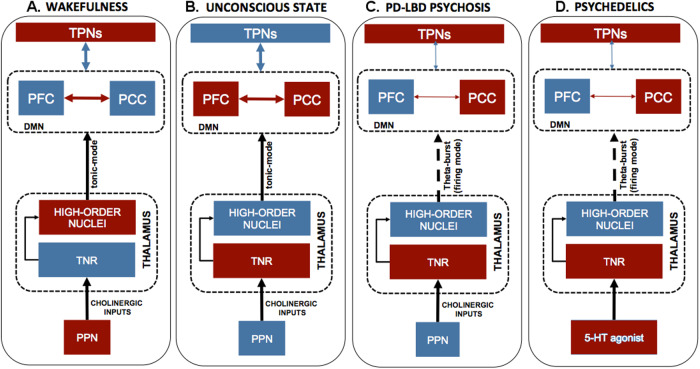
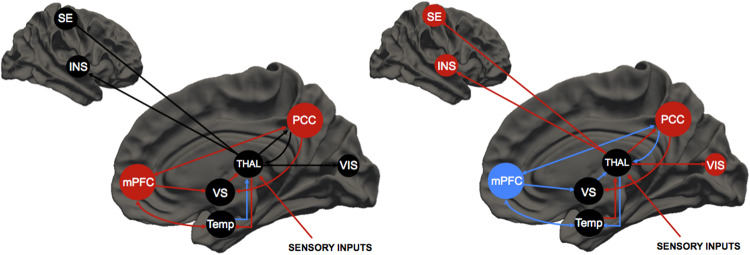
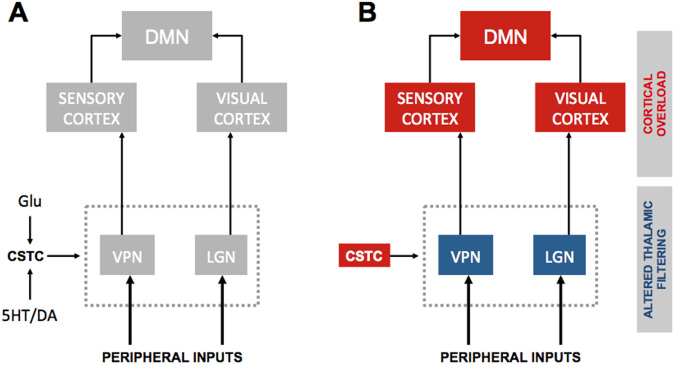
The PD-DLB psychosis complex found in Parkinson’s disease (PD) and Dementia with Lewy Bodies (DLB) includes hallucinations, Somatic Symptom/Functional Disorders, and delusions. These disorders exhibit similar presentation patterns and progression. Mechanisms at the root of these symptoms also share similarities with processes promoting altered states of consciousness found in Rapid Eye Movement sleep, psychiatric disorders, or the intake of psychedelic compounds. We propose that these mechanisms find a crucial driver and trigger in the dysregulated activity of high-order thalamic nuclei set in motion by ThalamoCortical Dysrhythmia (TCD). TCD generates the loss of finely tuned cortico-cortical modulations promoted by the thalamus and unleashes the aberrant activity of the Default Mode Network (DMN). TCD moves in parallel with altered thalamic filtering of external and internal information. The process produces an input overload to the cortex, thereby exacerbating DMN decoupling from task-positive networks. These phenomena alter the brain metastability, creating dreamlike, dissociative, or altered states of consciousness. In support of this hypothesis, mind-altering psychedelic drugs also modulate thalamic-cortical pathways. Understanding the pathophysiological background of these conditions provides a conceptual bridge between neurology and psychiatry, thereby helping to generate a promising and converging area of investigation and therapeutic efforts.
Overview
The claims and statistics of this paper haven’t been checked yet.
Run the check — free, no account needed. It reads the open-access text and checks the sources it cites.
Integrity signals
Registry
Cites
Statistics
Figures
Verification
Claims the paper makes
The claims and statistics of this paper haven’t been checked yet.
Run the check — free, no account needed. It reads the open-access text and checks the sources it cites.
Claims other papers make about this one
Each is checked against this paper’s own text: does it say what the citing paper says it does?
The cited source says what the claim attributes to it.
In the citing paper
“This decoupling could disrupt the comparison between priors and sensory percepts, leading to greater reliance on internally generated content.56”
From Deviations in effective connectivity explain different hallucination subtypes in Parkinson's disease psychosis (2026) · cites this paper as [56]
The cited source says what the claim attributes to it.
In the citing paper
“a recent proposal56 views the thalamus as a driver of unbalanced network recruitment, suggesting that it may induce decoupling between the default mode network and task-positive networks”
From Deviations in effective connectivity explain different hallucination subtypes in Parkinson's disease psychosis (2026) · cites this paper as [56]
Self-check
Percentages, sums and reported differences re-computed from the paper’s own numbers.
The self-check needs the paper’s full text.
Citations
Cites
Diagnostic and Statistical Manual of Mental Disorders
American Psychiatric Association (2013) · doi:10.1176/appi.books.9780890425596 · Cited by 116,369
Staging of brain pathology related to sporadic Parkinson’s disease
Braak, H., Tredici, K. D., Rüb, U., de Vos, R. A. I., Jansen Steur, E. N. H., & Braak, E. (2003) · Neurobiology of Aging · doi:10.1016/s0197-4580(02)00065-9 · Cited by 10,777
The Brain's Default Network: Anatomy, Function, and Relevance to Disease
Buckner, R. L., Andrews‐Hanna, J. R., & Schacter, D. L. (2008) · Annals of the New York Academy of Sciences · doi:10.1196/annals.1440.011 · Cited by 9,761
The human brain is intrinsically organized into dynamic, anticorrelated functional networks
Fox, M. D., Snyder, A. Z., Vincent, J. L., Corbetta, M., Van Essen, D. C., & Raichle, M. E. (2005) · Proceedings of the National Academy of Sciences · doi:10.1073/pnas.0504136102 · Cited by 8,553
The free-energy principle: a unified brain theory?
Friston, K. (2010) · Nature Reviews Neuroscience · doi:10.1038/nrn2787 · Cited by 8,120
Whatever next? Predictive brains, situated agents, and the future of cognitive science
Clark, A. (2013) · Behavioral and Brain Sciences · doi:10.1017/s0140525x12000477 · Cited by 5,924
Rao, R. P. N., & Ballard, D. H. (1999) · Nature Neuroscience · doi:10.1038/4580 · Cited by 5,483
Nalbandian, A., Sehgal, K., Gupta, A., Madhavan, M. V., McGroder, C., Stevens, J. S., Cook, J. R., Nordvig, A. S., Shalev, D., Sehrawat, T. S., et al. (2021) · Nature Medicine · doi:10.1038/s41591-021-01283-z · Cited by 4,862
Diagnosis and management of dementia with Lewy bodies: Fourth consensus report of the DLB Consortium
McKeith, I. G., Boeve, B. F., Dickson, D. W., Halliday, G., Taylor, J.-P., Weintraub, D., Aarsland, D., Galvin, J., Attems, J., Ballard, C. G., et al. (2017) · Neurology · doi:10.1212/wnl.0000000000004058 · Cited by 4,476
The brain's default mode network
Raichle, M. E. (2015) · Annual Review of Neuroscience · doi:10.1146/annurev-neuro-071013-014030 · Cited by 3,904
Sridharan, D., Levitin, D. J., & Menon, V. (2008) · Proceedings of the National Academy of Sciences · doi:10.1073/pnas.0800005105 · Cited by 2,892
The role of the posterior cingulate cortex in cognition and disease
Leech, R., & Sharp, D. J. (2014) · Brain · doi:10.1093/brain/awt162 · Cited by 2,247
Peyron, C., Faraco, J., Rogers, W., Ripley, B., Overeem, S., Charnay, Y., Nevsimalova, S., Aldrich, M., Reynolds, D., Albin, R., et al. (2000) · Nature Medicine · doi:10.1038/79690 · Cited by 2,118
Andrews‐Hanna, J. R., Smallwood, J., & Spreng, R. N. (2014) · Annals of the New York Academy of Sciences · doi:10.1111/nyas.12360 · Cited by 2,102
Salience processing and insular cortical function and dysfunction
Uddin, L. Q. (2015) · Nature Reviews Neuroscience · doi:10.1038/nrn3857 · Cited by 2,083
The neural bases of momentary lapses in attention
Weissman, D. H., Roberts, K. C., Visscher, K. M., & Woldorff, M. G. (2006) · Nature Neuroscience · doi:10.1038/nn1727 · Cited by 1,566
Default Mode Network Activity and Connectivity in Psychopathology
Whitfield-Gabrieli, S., & Ford, J. M. (2012) · Annual Review of Clinical Psychology · doi:10.1146/annurev-clinpsy-032511-143049 · Cited by 1,465
Llinás, R. R., Ribary, U., Jeanmonod, D., Kronberg, E., & Mitra, P. P. (1999) · Proceedings of the National Academy of Sciences · doi:10.1073/pnas.96.26.15222 · Cited by 1,395
Sleep and arousal: thalamocortical mechanisms
McCormick, D. A., & Bal, T. (1997) · Annual Review of Neuroscience · doi:10.1146/annurev.neuro.20.1.185 · Cited by 1,267
Carhart-Harris, R. L., Leech, R., Hellyer, P. J., Shanahan, M., Feilding, A., Tagliazucchi, E., Chialvo, D. R., & Nutt, D. (2014) · Frontiers in Human Neuroscience · doi:10.3389/fnhum.2014.00020 · Cited by 1,252
Alkire, M. T., Hudetz, A. G., & Tononi, G. (2008) · Science · doi:10.1126/science.1149213 · Cited by 1,245
Psychedelics promote structural and functional neural plasticity
Ly, C., Greb, A. C., Cameron, L. P., Wong, J. M., Barragan, E. V., Wilson, P. C., Burbach, K. F., Soltanzadeh Zarandi, S., Sood, A., Paddy, M. R., et al. (2018) · Cell Reports · doi:10.1016/j.celrep.2018.05.022 · Cited by 1,207
REBUS and the anarchic brain: Toward a unified model of the brain action of psychedelics
Carhart-Harris, R. L., & Friston, K. J. (2019) · Pharmacological Reviews · doi:10.1124/pr.118.017160 · Cited by 1,180
Neural correlates of the psychedelic state as determined by fMRI studies with psilocybin
Carhart-Harris, R. L., Erritzoe, D., Williams, T., Stone, J. M., Reed, L. J., Colasanti, A., Tyacke, R. J., Leech, R., Malizia, A. L., Murphy, K., et al. (2012) · Proceedings of the National Academy of Sciences · doi:10.1073/pnas.1119598109 · Cited by 1,172
Kapur, S., & Seeman, P. (2001) · American Journal of Psychiatry · doi:10.1176/appi.ajp.158.3.360 · Cited by 1,140
The Predictive Coding Account of Psychosis
Sterzer, P., Adams, R. A., Fletcher, P., Frith, C., Lawrie, S. M., Muckli, L., Petrovic, P., Uhlhaas, P., Voss, M., & Corlett, P. R. (2018) · Biological Psychiatry · doi:10.1016/j.biopsych.2018.05.015 · Cited by 941 · cited 4×
“According to the predictive coding (or Bayesian inference) model, the brain, acting as a hypothesis generator aimed at reducing the levels of free energy, activates the perception processing along with the generation of valid cognitive outputs by employing a combinatory process [219, 221, 223, 224].”
BackgroundMethodInfluentialSonuga-Barke, E. J. S., & Castellanos, F. X. (2007) · Neuroscience & Biobehavioral Reviews · doi:10.1016/j.neubiorev.2007.02.005 · Cited by 890
Pompeiano, M., Palacios, J. M., & Mengod, G. (1994) · Molecular Brain Research · doi:10.1016/0169-328x(94)90223-2 · Cited by 870
Neural correlates of the LSD experience revealed by multimodal neuroimaging
Carhart-Harris, R. L., Muthukumaraswamy, S., Roseman, L., Kaelen, M., Droog, W., Murphy, K., Tagliazucchi, E., Schenberg, E. E., Nest, T., Orban, C., et al. (2016) · Proceedings of the National Academy of Sciences · doi:10.1073/pnas.1518377113 · Cited by 859
The Computational Anatomy of Psychosis
Adams, R. A., Stephan, K. E., Brown, H. R., Frith, C. D., & Friston, K. J. (2013) · Frontiers in Psychiatry · doi:10.3389/fpsyt.2013.00047 · Cited by 850 · cited 2×
“According to the predictive coding (or Bayesian inference) model, the brain, acting as a hypothesis generator aimed at reducing the levels of free energy, activates the perception processing along with the generation of valid cognitive outputs by employing a combinatory process [219, 221, 223, 224].”
BackgroundMethodA Bayesian account of ‘hysteria’
Edwards, M. J., Adams, R. A., Brown, H., Parees, I., & Friston, K. J. (2012) · Brain · doi:10.1093/brain/aws129 · Cited by 825
Thalamus plays a central role in ongoing cortical functioning
Sherman, S. M. (2016) · Nature Neuroscience · doi:10.1038/nn.4269 · Cited by 809
The cerebellum in Parkinson’s disease
Wu, T., & Hallett, M. (2013) · Brain · doi:10.1093/brain/aws360 · Cited by 766
Tognoli, E., & Kelso, J. A. S. (2014) · Neuron · doi:10.1016/j.neuron.2013.12.022 · Cited by 718
The thalamic reticular nucleus: structure, function and concept
Pinault, D. (2004) · Brain Research Reviews · doi:10.1016/j.brainresrev.2004.04.008 · Cited by 715
The Synaptic Function of α-Synuclein
Burré, J. (2015) · Journal of Parkinson s Disease · doi:10.3233/jpd-150642 · Cited by 610
A Unitary Model of Schizophrenia
Andreasen, N. C. (1999) · Archives of General Psychiatry · doi:10.1001/archpsyc.56.9.781 · Cited by 609
Psilocybin for treatment-resistant depression: fMRI-measured brain mechanisms
Carhart-Harris, R. L., Roseman, L., Bolstridge, M., Demetriou, L., Pannekoek, J. N., Wall, M. B., Tanner, M., Kaelen, M., McGonigle, J., Murphy, K., et al. (2017) · Scientific Reports · doi:10.1038/s41598-017-13282-7 · Cited by 587
The default-mode, ego-functions and free-energy: a neurobiological account of Freudian ideas
Carhart-Harris, R. L., & Friston, K. J. (2010) · Brain · doi:10.1093/brain/awq010 · Cited by 574
Psychedelic drugs: neurobiology and potential for treatment of psychiatric disorders
Vollenweider, F. X., & Preller, K. H. (2020) · Nature Reviews Neuroscience · doi:10.1038/s41583-020-0367-2 · Cited by 570
Thalamic Mechanisms of EEG Alpha Rhythms and Their Pathological Implications
Hughes, S. W., & Crunelli, V. (2005) · The Neuroscientist · doi:10.1177/1073858405277450 · Cited by 565
Rhythmic and dysrhythmic thalamocortical dynamics: GABA systems and the edge effect
Llinás, R., Urbano, F. J., Leznik, E., Ramírez, R. R., & van Marle, H. J. F. (2005) · Trends in Neurosciences · doi:10.1016/j.tins.2005.04.006 · Cited by 549
Hallucinations and strong priors
Corlett, P. R., Horga, G., Fletcher, P. C., Alderson-Day, B., Schmack, K., & Powers, A. R. (2019) · Trends in Cognitive Sciences · doi:10.1016/j.tics.2018.12.001 · Cited by 534
Madsen, M. K., Fisher, P. M., Burmester, D., Dyssegaard, A., Stenbæk, D. S., Kristiansen, S., Johansen, S. S., Lehel, S., Linnet, K., Svarer, C., et al. (2019) · Neuropsychopharmacology · doi:10.1038/s41386-019-0324-9 · Cited by 517
Aghajanian, G. K., & Marek, G. J. (1997) · Neuropharmacology · doi:10.1016/s0028-3908(97)00051-8 · Cited by 516
Increased global functional connectivity correlates with LSD-induced ego dissolution
Tagliazucchi, E., Roseman, L., Kaelen, M., Orban, C., Muthukumaraswamy, S. D., Murphy, K., Laufs, H., Leech, R., McGonigle, J., Crossley, N., et al. (2016) · Current Biology · doi:10.1016/j.cub.2016.02.010 · Cited by 503
Broadband Cortical Desynchronization Underlies the Human Psychedelic State
Muthukumaraswamy, S. D., Carhart-Harris, R. L., Moran, R., Brookes, M. J., Williams, T. M., Errtizoe, D., Sessa, B., Papadopoulos, A., Bolstridge, M., Singh, K. D., et al. (2013) · Journal of Neuroscience · doi:10.1523/jneurosci.2063-13.2013 · Cited by 490
Increased EEG power and slowed dominant frequency in patients with neurogenic pain
Sarnthein, J., Stern, J., Aufenberg, C., Rousson, V., & Jeanmonod, D. (2005) · Brain · doi:10.1093/brain/awh631 · Cited by 485
Review: Sporadic Parkinson's disease: development and distribution ofα‐synuclein pathology
Tredici, K. D., & Braak, H. (2015) · Neuropathology and Applied Neurobiology · doi:10.1111/nan.12298 · Cited by 414
Increased spontaneous MEG signal diversity for psychoactive doses of ketamine, LSD and psilocybin
Schartner, M. M., Carhart-Harris, R. L., Barrett, A. B., Seth, A. K., & Muthukumaraswamy, S. D. (2017) · Scientific Reports · doi:10.1038/srep46421 · Cited by 410
Impulse control disorders in parkinson disease: A multicenter case–control study
Voon, V., Sohr, M., Lang, A. E., Potenza, M. N., Siderowf, A. D., Whetteckey, J., Weintraub, D. A., Wunderlich, G. R., & Stacy, M. A. (2011) · Annals of Neurology · doi:10.1002/ana.22356 · Cited by 400
Thalamic synchrony and dynamic regulation of global forebrain oscillations
Huguenard, J. R., & McCormick, D. A. (2007) · Trends in Neurosciences · doi:10.1016/j.tins.2007.05.007 · Cited by 395
Functional imaging of pain in patients with primary fibromyalgia.
Cook, D. B., Lange, G., Ciccone, D. S., Liu, W., Steffener, J., & Natelson, B. H. (2004) · PubMed · Cited by 393
Thalamus Modulates Consciousness via Layer-Specific Control of Cortex
Redinbaugh, M. J., Phillips, J. M., Kambi, N. A., Mohanta, S., Andryk, S., Dooley, G. L., Afrasiabi, M., Raz, A., & Saalmann, Y. B. (2020) · Neuron · doi:10.1016/j.neuron.2020.01.005 · Cited by 391
The role of serotonin receptors in the action of atypical antipsychotic drugs
Meltzer, H., & Massey, B. W. (2011) · Current Opinion in Pharmacology · doi:10.1016/j.coph.2011.02.007 · Cited by 390
Preller, K. H., Burt, J. B., Ji, J. L., Schleifer, C. H., Adkinson, B. D., Stämpfli, P., Seifritz, E., Repovs, G., Krystal, J. H., Murray, J. D., et al. (2018) · eLife · doi:10.7554/elife.35082 · Cited by 390
A Top-Down Cortical Circuit for Accurate Sensory Perception
Manita, S., Suzuki, T., Homma, C., Matsumoto, T., Odagawa, M., Yamada, K., Ota, K., Matsubara, C., Inutsuka, A., Sato, M., et al. (2015) · Neuron · doi:10.1016/j.neuron.2015.05.006 · Cited by 365
The psychosis spectrum in Parkinson disease
ffytche, D. H., Creese, B., Politis, M., Chaudhuri, K. R., Weintraub, D., Ballard, C., & Aarsland, D. (2017) · Nature Reviews Neurology · doi:10.1038/nrneurol.2016.200 · Cited by 355
Emotional stimuli and motor conversion disorder
Voon, V., Brezing, C., Gallea, C., Ameli, R., Roelofs, K., LaFrance, W. C., & Hallett, M. (2010) · Brain · doi:10.1093/brain/awq054 · Cited by 353
Thalamic circuitry and thalamocortical synchrony
Jones, E. G. (2002) · Philosophical Transactions of the Royal Society of London. Series B: Biological Sciences · doi:10.1098/rstb.2002.1168 · Cited by 340
Prior expectations induce prestimulus sensory templates
Kok, P., Mostert, P., & de Lange, F. P. (2017) · Proceedings of the National Academy of Sciences · doi:10.1073/pnas.1705652114 · Cited by 340
A systems model of altered consciousness: integrating natural and drug-induced psychoses
Vollenweider, F. X., & Geyer, M. A. (2001) · Brain Research Bulletin · doi:10.1016/s0361-9230(01)00646-3 · Cited by 339
Finding the self by losing the self: neural correlates of ego-dissolution under psilocybin
Lebedev, A. V., Lövdén, M., Rosenthal, G., Feilding, A., Nutt, D. J., & Carhart-Harris, R. L. (2015) · Human Brain Mapping · doi:10.1002/hbm.22833 · Cited by 339
Synaptic Plasticity and AMPA Receptor Trafficking
Malenka, R. C. (2003) · Annals of the New York Academy of Sciences · doi:10.1196/annals.1300.001 · Cited by 333
Cognitive impairment and resting-state network connectivity in Parkinson's disease
Baggio, H. C., Segura, B., Sala‐Llonch, R., Martı́, M. J., Valldeoriola, F., Compta, Y., TOLOSA, E. S., & Junqué, C. (2014) · Human Brain Mapping · doi:10.1002/hbm.22622 · Cited by 327
Default-mode network connectivity in cognitively unimpaired patients with Parkinson disease
Tessitore, A., Esposito, F., Vitale, C., Santangelo, G., Amboni, M., Russo, A., Corbo, D., Cirillo, G., Barone, P., & Tedeschi, G. (2012) · Neurology · doi:10.1212/wnl.0b013e31827689d6 · Cited by 326
Potential Therapeutic Effects of Psilocybin
Johnson, M. W., & Griffiths, R. R. (2017) · Neurotherapeutics · doi:10.1007/s13311-017-0542-y · Cited by 323
Neural correlates of the DMT experience assessed with multivariate EEG
Timmermann, C., Roseman, L., Schartner, M., Milliere, R., Williams, L. T. J., Erritzoe, D., Muthukumaraswamy, S., Ashton, M., Bendrioua, A., Kaur, O., et al. (2019) · Scientific Reports · doi:10.1038/s41598-019-51974-4 · Cited by 315
Functional (psychogenic) movement disorders: merging mind and brain
Edwards, M. J., & Bhatia, K. P. (2012) · The Lancet Neurology · doi:10.1016/s1474-4422(11)70310-6 · Cited by 314 · cited 3×
“The activation of these regions generates motor schemes that can cause a variety of symptoms ranging from “ functional ” paresis to catatonia [37, 194].”
BackgroundWilliams, D. R., & Lees, A. J. (2005) · The Lancet Neurology · doi:10.1016/s1474-4422(05)70146-0 · Cited by 302
Lim, S. M., Katsifis, A., Villemagne, V. L., Best, R., Jones, G., Saling, M., Bradshaw, J., Merory, J., Woodward, M., Hopwood, M., et al. (2009) · Journal of Nuclear Medicine · doi:10.2967/jnumed.109.065870 · Cited by 301
Meltzer, H. Y., Mills, R., Revell, S., Williams, H., Johnson, A. D., Bahr, D., & Friedman, J. H. (2009) · Neuropsychopharmacology · doi:10.1038/npp.2009.176 · Cited by 293
The paradoxical psychological effects of lysergic acid diethylamide LSD
Carhart-Harris, R. L., Kaelen, M., Bolstridge, M., Williams, T. M., Williams, L. T., Underwood, R., Feilding, A., & Nutt, D. J. (2016) · Psychological Medicine · doi:10.1017/s0033291715002901 · Cited by 293
Effective connectivity changes in LSD-induced altered states of consciousness in humans
Preller, K. H., Razi, A., Zeidman, P., Stämpfli, P., Friston, K. J., & Vollenweider, F. X. (2019) · Proceedings of the National Academy of Sciences · doi:10.1073/pnas.1815129116 · Cited by 292
The thalamus and behavior: Effects of anatomically distinct strokes
Carrera, E., & Bogousslavsky, J. (2006) · Neurology · doi:10.1212/01.wnl.0000219679.95223.4c · Cited by 290
Synchronized Oscillations at α and θ Frequencies in the Lateral Geniculate Nucleus
Hughes, S. W., Lörincz, M. L., Cope, D. W., Blethyn, K. L., Kékesi, K. A., Parri, H. R., Juhász, G. D., & Crunelli, V. (2004) · Neuron · doi:10.1016/s0896-6273(04)00191-6 · Cited by 281
Gregorio, D. D., Aguilar‐Valles, A., Preller, K. H., Heifets, B. D., Hibicke, M., Mitchell, J., & Gobbi, G. (2020) · Journal of Neuroscience · doi:10.1523/jneurosci.1659-20.2020 · Cited by 279
Self-citationQuantifying fluctuation in dementia with Lewy bodies, Alzheimer’s disease, and vascular dementia
Walker, M. P., Ayre, G., Cummings, J. L., Wesnes, K. A., McKeith, I. G., O'Brien, J. T., & Ballard, C. G. (2000) · Neurology · doi:10.1212/wnl.54.8.1616 · Cited by 270
Serotonin 2A Receptors and Visual Hallucinations in Parkinson Disease
Ballanger, B., Strafella, A. P., van Eimeren, T., Zurowski, M., Rusjan, P. M., Houle, S., & Fox, S. H. (2010) · Archives of Neurology · doi:10.1001/archneurol.2010.35 · Cited by 266
Network connectivity determines cortical thinning in early Parkinson’s disease progression
Yau, Y. H. C., Zeighami, Y., Baker, T. E., Larcher, K. M.-H., Vainik, U., Dadar, M., Fonov, V., Hagmann, P., Griffa, A., Mišić, B., et al. (2017) · Nature Communications · doi:10.1038/s41467-017-02416-0 · Cited by 266
Thalamocortical dysrhythmia detected by machine learning
Vanneste, S., Song, J., & Ridder, D. D. (2018) · Nature Communications · doi:10.1038/s41467-018-02820-0 · Cited by 263
Mason, N. L., Kuypers, K. P. C., Müller, F., Reckweg, J., Tse, D. H. Y., Toennes, S. W., Hutten, N. R. P. W., Jansen, J. F. A., Stiers, P., Feilding, A., et al. (2020) · Neuropsychopharmacology · doi:10.1038/s41386-020-0718-8 · Cited by 258
Rethinking the Pedunculopontine Nucleus: From Cellular Organization to Function
Mena‐Segovia, J., & Bolam, J. P. (2017) · Neuron · doi:10.1016/j.neuron.2017.02.027 · Cited by 257
Functional Connectivity Measures After Psilocybin Inform a Novel Hypothesis of Early Psychosis
Carhart-Harris, R. L., Leech, R., Erritzoe, D., Williams, T. M., Stone, J. M., Evans, J., Sharp, D. J., Feilding, A., Wise, R. G., & Nutt, D. J. (2013) · Schizophrenia Bulletin · doi:10.1093/schbul/sbs117 · Cited by 256
Thalamic dual control of sleep and wakefulness
Gent, T. C., Bandarabadi, M., Herrera, C. G., & Adamantidis, A. (2018) · Nature Neuroscience · doi:10.1038/s41593-018-0164-7 · Cited by 255
Effects of psilocybin on time perception and temporal control of behaviour in humans
Wittmann, M., Carter, O. L., Hasler, F., Cahn, B. R., Grimberg, U., Spring, P., Hell, D., Flohr, H., & Vollenweider, F. X. (2006) · Journal of Psychopharmacology · doi:10.1177/0269881106065859 · Cited by 253
Psychedelics in Psychiatry: Neuroplastic, Immunomodulatory, and Neurotransmitter Mechanisms
Inserra, A., De Gregorio, D., & Gobbi, G. (2021) · Pharmacological Reviews · doi:10.1124/pharmrev.120.000056 · Cited by 232
Self-citationThalamic deactivation at sleep onset precedes that of the cerebral cortex in humans
Magnin, M., Rey, M., Bastuji, H., Guillemant, P., Mauguière, F., & Garcia-Larrea, L. (2010) · Proceedings of the National Academy of Sciences · doi:10.1073/pnas.0909710107 · Cited by 230
Dynamical exploration of the repertoire of brain networks at rest is modulated by psilocybin
Lord, L.-D., Expert, P., Atasoy, S., Roseman, L., Rapuano, K. M., Lambiotte, R., Nutt, D., Deco, G., Carhart-Harris, R. L., Kringelbach, M. L., et al. (2019) · NeuroImage · doi:10.1016/j.neuroimage.2019.05.060 · Cited by 221
Dementia with Lewy bodies and Alzheimer disease
Kantarci, K., Avula, R. T. V., Senjem, M. L., Samikoglu, A. R., Zhang, B., Weigand, S. D., Przybelski, S. A., Edmonson, H. A., Vemuri, P., Knopman, D. S., et al. (2010) · Neurology · doi:10.1212/wnl.0b013e3181e0f7cf · Cited by 216
The Role of the Thalamus in Schizophrenia
Andreasen, N. C. (1997) · The Canadian Journal of Psychiatry · doi:10.1177/070674379704200104 · Cited by 216
Thalamic reticular nucleus induces fast and local modulation of arousal state
Lewis, L. D., Voigts, J., Flores, F. J., Schmitt, L. I., Wilson, M. A., Halassa, M. M., & Brown, E. N. (2015) · eLife · doi:10.7554/elife.08760 · Cited by 215
Models of psychedelic drug action: modulation of cortical-subcortical circuits
Doss, M. K., Madden, M. B., Gaddis, A., Nebel, M. B., Griffiths, R. R., Mathur, B. N., & Barrett, F. S. (2021) · Brain · doi:10.1093/brain/awab406 · Cited by 213
Hellyer, P. J., Shanahan, M., Scott, G., Wise, R. J. S., Sharp, D. J., & Leech, R. (2014) · Journal of Neuroscience · doi:10.1523/jneurosci.1853-13.2014 · Cited by 205
Alterations of consciousness and mystical-type experiences after acute LSD in humans
Liechti, M. E., Dolder, P. C., & Schmid, Y. (2017) · Psychopharmacology · doi:10.1007/s00213-016-4453-0 · Cited by 198
Barrett, F. S., Krimmel, S. R., Griffiths, R. R., Seminowicz, D. A., & Mathur, B. N. (2020) · NeuroImage · doi:10.1016/j.neuroimage.2020.116980 · Cited by 196
Cellular localization of serotonin2A (5HT2A) receptors in the rat brain
Xu, T., & Pandey, S. C. (2000) · Brain Research Bulletin · doi:10.1016/s0361-9230(99)00278-6 · Cited by 194
Vann, S. D., Tsivilis, D., Denby, C. E., Quamme, J. R., Yonelinas, A. P., Aggleton, J. P., Montaldi, D., & Mayes, A. R. (2009) · Proceedings of the National Academy of Sciences · doi:10.1073/pnas.0812097106 · Cited by 185
Benarroch, E. E. (2013) · Neurology · doi:10.1212/wnl.0b013e3182886a76 · Cited by 183
Yanakieva, S., Polychroni, N., Family, N., Williams, L. T. J., Luke, D. P., & Terhune, D. B. (2018) · Psychopharmacology · doi:10.1007/s00213-018-5119-x · Cited by 174
The Neuropsychiatry of Parkinson Disease: A Perfect Storm
Weintraub, D. A., & Mamikonyan, E. (2019) · American Journal of Geriatric Psychiatry · doi:10.1016/j.jagp.2019.03.002 · Cited by 172
fMRI in Patients With Motor Conversion Symptoms and Controls With Simulated Weakness
Stone, J., Zeman, A. Z., Simonotto, E., Meyer, M. E., Azuma, R., Flett, S., & Sharpe, M. (2007) · Psychosomatic Medicine · doi:10.1097/psy.0b013e31815b6c14 · Cited by 170
Wotruba, D., Michels, L., Buechler, R., Metzler, S., Theodoridou, A., Gerstenberg, M., Walitza, S., Kollias, S., Wulf Rössler, A., & Heekeren, K. (2013) · Schizophrenia Bulletin · doi:10.1093/schbul/sbt161 · Cited by 170
Engagement of Pulvino-cortical Feedforward and Feedback Pathways in Cognitive Computations
Jaramillo, J., Mejías, J. F., & Wang, X. (2018) · Neuron · doi:10.1016/j.neuron.2018.11.023 · Cited by 166
Dementia with Lewy bodies: Basis of cingulate island sign
Graff-Radford, J., Murray, M. E., Lowe, V. J., Boeve, B. F., Ferman, T. J., Przybelski, S. A., Lesnick, T. G., Senjem, M. L., Gunter, J. L., Smith, G. E., et al. (2014) · Neurology · doi:10.1212/wnl.0000000000000734 · Cited by 163
Pathogenesis and pathophysiology of functional (psychogenic) movement disorders
Baizabal-Carvallo, J. F., Hallett, M., & Jankovic, J. (2019) · Neurobiology of Disease · doi:10.1016/j.nbd.2019.02.013 · Cited by 163
Schimmers, N., Breeksema, J. J., Smith-Apeldoorn, S. Y., Veraart, J., van den Brink, W., & Schoevers, R. A. (2022) · Psychopharmacology · doi:10.1007/s00213-021-06027-y · Cited by 162
The default mode network is disrupted in parkinson's disease with visual hallucinations
Yao, N., Chang, R. S., Cheung, C., Pang, S. Y.-Y., Lau, K. K., Suckling, J., Rowe, J. B., Yu, K., Mak, H. K., Chua, S.-E., et al. (2014) · Human Brain Mapping · doi:10.1002/hbm.22577 · Cited by 155
Dementia and visual hallucinations associated with limbic pathology in Parkinson's disease
Kalaitzakis, M. E., Christian, L., Moran, L. B., Graeber, M. B., Pearce, R. K. B., & Gentleman, S. (2008) · Parkinsonism & Related Disorders · doi:10.1016/j.parkreldis.2008.05.007 · Cited by 150
Bonanni, L., Perfetti, B., Bifolchetti, S., Taylor, J., Franciotti, R., Parnetti, L., Thomas, A., & ONOFRJ, M. C. (2014) · Neurobiology of Aging · doi:10.1016/j.neurobiolaging.2014.07.009 · Cited by 149
Self-citationIncreased thalamic resting‐state connectivity as a core driver of LSD‐induced hallucinations
Müller, F., Lenz, C., Dolder, P. C., Lang, U. E., Schmidt, A., Liechti, M. E., & Borgwardt, S. (2017) · Acta Psychiatrica Scandinavica · doi:10.1111/acps.12818 · Cited by 144
d-Lysergic Acid Diethylamide (LSD) as a Model of Psychosis: Mechanism of Action and Pharmacology
Gregorio, D. D., Comai, S., Posa, L., & Gobbi, G. (2016) · International Journal of Molecular Sciences · doi:10.3390/ijms17111953 · Cited by 138
Self-citationResting bold fMRI differentiates dementia with Lewy bodies vs Alzheimer disease
Galvin, J. E., Price, J. L., Yan, Z., Morris, J. C., & Sheline, Y. I. (2011) · Neurology · doi:10.1212/wnl.0b013e31821ccc83 · Cited by 137
Höflich, A. S., Hahn, A., Küblböck, M., Kranz, G. S., Vanicek, T., Windischberger, C., Saria, A., Kasper, S. F., Winkler, D., & Lanzenberger, R. R. (2015) · The International Journal of Neuropsychopharmacology · doi:10.1093/ijnp/pyv040 · Cited by 133
Rogers, J. P., Watson, C. J., Badenoch, J., Cross, B., Butler, M., Song, J., Hafeez, D., Morrin, H., Rengasamy, E. R., Thomas, L., et al. (2021) · Journal of Neurology Neurosurgery & Psychiatry · doi:10.1136/jnnp-2021-326405 · Cited by 133
Idiopathic REM sleep behavior disorder
Fantini, M. L., Ferini‐Strambi, L., & Montplaisir, J. Y. (2005) · Neurology · doi:10.1212/01.wnl.0000152878.79429.00 · Cited by 128
Sánchez‐Castañeda, C., Reñé, R., Ramírez‐Ruiz, B., Campdelacreu, J., Gascón, J., Falcón, C., Calopa, M., Jaumà, S., Juncadella, M., & Junqué, C. (2010) · Movement Disorders · doi:10.1002/mds.22873 · Cited by 127
Blanc, F., Colloby, S. J., Philippi, N., Petigny, X. D., Jung, B., Demuynck, C., Phillipps, C., Anthony, P., Thomas, A. J., Bing, F., et al. (2015) · PLoS ONE · doi:10.1371/journal.pone.0127396 · Cited by 124
Gamma oscillations in schizophrenia: Mechanisms and clinical significance
Sun, Y., Farzan, F., Barr, M. S., Kirihara, K., Fitzgerald, P. B., Light, G. A., & Daskalakis, Z. J. (2011) · Brain Research · doi:10.1016/j.brainres.2011.06.065 · Cited by 123
Rüb, U., Tredici, K. D., Schultz, C., Ghebremedhin, E., de Vos, R. A. I., Steur, E. N. H. J., & Braak, H. (2002) · Neurobiology of Aging · doi:10.1016/s0197-4580(01)00269-x · Cited by 121
Functional connectivity in cortical regions in dementia with Lewy bodies and Alzheimer's disease
Kenny, E. R., Blamire, A. M., Firbank, M., & O'Brien, J. T. (2011) · Brain · doi:10.1093/brain/awr327 · Cited by 121
Thalamic Reticular Dysfunction as a Circuit Endophenotype in Neurodevelopmental Disorders
Krol, A., Wimmer, R. D., Halassa, M. M., & Feng, G. (2018) · Neuron · doi:10.1016/j.neuron.2018.03.021 · Cited by 121
Outcome Measures for Functional Neurological Disorder: A Review of the Theoretical Complexities
Nicholson, T. R., Carson, A. J., Edwards, M. J., Goldstein, L. H., Hallett, M., Mildon, B., Nielsen, G., Nicholson, C., Perez, D. L., Pick, S., et al. (2019) · Journal of Neuropsychiatry · doi:10.1176/appi.neuropsych.19060128 · Cited by 121
Crone, J. S., Schurz, M., Höller, Y., Bergmann, J., Monti, M. M., Schmid, E. V., Trinka, E., & Kronbichler, M. (2015) · NeuroImage · doi:10.1016/j.neuroimage.2015.01.037 · Cited by 120
Janzen, J., Ent, D. V. ‘., Lemstra, A. W., Berendse, H. W., Barkhof, F., & Foncke, E. M. J. (2011) · Journal of Neurology · doi:10.1007/s00415-011-6149-z · Cited by 120
The study of brain functional connectivity in Parkinson’s disease
Gao, L., & Wu, T. (2016) · Translational Neurodegeneration · doi:10.1186/s40035-016-0066-0 · Cited by 118
Saalmann, Y. B., & Kästner, S. (2015) · Frontiers in Systems Neuroscience · doi:10.3389/fnsys.2015.00039 · Cited by 117
Pokorny, T., Preller, K., Kraehenmann, R., & Vollenweider, F. (2016) · European Neuropsychopharmacology · doi:10.1016/j.euroneuro.2016.01.005 · Cited by 116
Deep Learning With EEG Spectrograms in Rapid Eye Movement Behavior Disorder
Ruffini, G., Ibañez, D. P., Castellano, M., Dubreuil-Vall, L., Soria‐Frisch, A., Postuma, R., Gagnon, J., & Montplaisir, J. Y. (2019) · Frontiers in Neurology · doi:10.3389/fneur.2019.00806 · Cited by 116
The somatic marker hypothesis: revisiting the role of the ‘body-loop’ in decision-making
Poppa, T., & Bechara, A. (2017) · Current Opinion in Behavioral Sciences · doi:10.1016/j.cobeha.2017.10.007 · Cited by 111
Stone, J., Carson, A., Duncan, R., Roberts, R., Coleman, R., Warlow, C., Murray, G., Pelosi, A., Cavanagh, J., Matthews, K., et al. (2012) · Journal of Neurology · doi:10.1007/s00415-011-6111-0 · Cited by 110
De Gregorio, D., Posa, L., Ochoa-Sanchez, R., McLaughlin, R., Maione, S., Comai, S., & Gobbi, G. (2016) · Pharmacological Research · doi:10.1016/j.phrs.2016.08.022 · Cited by 110
Self-citationBrain tissue damage in dementia with Lewy bodies: an in vivo diffusion tensor MRI study
Bozzali, M., Falini, A., Cercignani, M., Baglio, F., Farina, E., Alberoni, M., Vezzulli, P. Q., Olivotto, F., Mantovani, F., Shallice, T., et al. (2005) · Brain · doi:10.1093/brain/awh493 · Cited by 109
Franciotti, R., Falasca, N. W., Bonanni, L., Anzellotti, F., Maruotti, V., Comani, S., Thomas, A., Tartaro, A., Taylor, J., & ONOFRJ, M. C. (2012) · Neurobiology of Aging · doi:10.1016/j.neurobiolaging.2012.09.015 · Cited by 108
Self-citationPostencephalitic parkinsonism – a review
Casals, J., Elizan, T. S., & Yahr, M. D. (1998) · Journal of Neural Transmission · doi:10.1007/s007020050086 · Cited by 108
Shine, J. M., Muller, A. J., O’Callaghan, C., Hornberger, M., Halliday, G. M., & Lewis, S. J. (2015) · npj Parkinson's Disease · doi:10.1038/npjparkd.2015.3 · Cited by 106
Functional neurological disorders in Parkinson disease
Wissel, B. D., Dwivedi, A. K., Merola, A., Chin, D., Jacob, C., Duker, A. P., Vaughan, J. E., Lovera, L., LaFaver, K., Levy, A., et al. (2018) · Journal of Neurology, Neurosurgery & Psychiatry · doi:10.1136/jnnp-2017-317378 · Cited by 106
Cohort study on somatoform disorders in Parkinson disease and dementia with Lewy bodies
ONOFRJ, M. C., Bonanni, L., Manzoli, L., & Thomas, A. (2010) · Neurology · doi:10.1212/wnl.0b013e3181df09dd · Cited by 105
Self-citationPizzi, S. D., Franciotti, R., Taylor, J., Thomas, A., Tartaro, A., ONOFRJ, M. C., & Bonanni, L. (2014) · Cerebral Cortex · doi:10.1093/cercor/bhu220 · Cited by 101
Self-citationCorticolimbic fast-tracking: enhanced multimodal integration in functional neurological disorder
Diez, I., Ortiz-Terán, L., Williams, B., Jalilianhasanpour, R., Ospina, J. P., Dickerson, B. C., Keshavan, M. S., LaFrance Jr, W. C., Sepulcre, J., & Perez, D. L. (2019) · Journal of Neurology, Neurosurgery & Psychiatry · doi:10.1136/jnnp-2018-319657 · Cited by 99
Swirski, M., Miners, J. S., de Silva, R., Lashley, T., Ling, H., Holton, J. L., Révész, T., & Love, S. (2014) · Alzheimer s Research & Therapy · doi:10.1186/s13195-014-0077-y · Cited by 97
Analysis of haptic information in the cerebral cortex
Sathian, K. (2016) · Journal of Neurophysiology · doi:10.1152/jn.00546.2015 · Cited by 96
Neural Mechanisms and Psychology of Psychedelic Ego Dissolution
Stoliker, D., Egan, G. F., Friston, K. J., & Razi, A. (2022) · Pharmacological Reviews · doi:10.1124/pharmrev.121.000508 · Cited by 96
Consciousness depends on integration between parietal cortex, striatum, and thalamus
Afrasiabi, M., Redinbaugh, M. J., Phillips, J. M., Kambi, N. A., Mohanta, S., Raz, A., Haun, A., & Saalmann, Y. B. (2021) · Cell Systems · doi:10.1016/j.cels.2021.02.003 · Cited by 95
α-Synuclein: An All-Inclusive Trip Around its Structure, Influencing Factors and Applied Techniques
Bisi, N., Feni, L., Peqini, K., Pérez‐Peña, H., Ongeri, S., Pieraccini, S., & Pellegrino, S. (2021) · Frontiers in Chemistry · doi:10.3389/fchem.2021.666585 · Cited by 95
Strategic lacunes and their relationship to cognitive impairment in cerebral small vessel disease
Benjamin, P., Lawrence, A. J., Lambert, C., Patel, B. B., Chung, A. W., MacKinnon, A. D., Morris, R. G., Barrick, T. R., & Markus, H. S. (2014) · NeuroImage Clinical · doi:10.1016/j.nicl.2014.05.009 · Cited by 94
The stationarity bias in research on the environmental determinants of health
Kwan, M. (2021) · Health & Place · doi:10.1016/j.healthplace.2021.102609 · Cited by 93
Visual plus nonvisual hallucinations in Parkinson's disease: Development and evolution over 10 years
Goetz, C. G., Stebbins, G. T., & Ouyang, B. (2011) · Movement Disorders · doi:10.1002/mds.23835 · Cited by 91
Borroni, B., Premi, E., Formenti, A., Turrone, R., Alberici, A., Cottini, E., Rizzetti, M. C., Gasparotti, R., & Padovani, A. (2015) · Parkinsonism & Related Disorders · doi:10.1016/j.parkreldis.2015.06.013 · Cited by 90
Cortico-striatal-thalamic network functional connectivity in hemiparkinsonism
Agosta, F., Caso, F., Stanković, I., Inuggi, A., Petrović, I. N., Svetel, M. V., Kostić, V., & Filippi, M. (2014) · Neurobiology of Aging · doi:10.1016/j.neurobiolaging.2014.05.032 · Cited by 83
Brain circuits implicated in psychogenic paralysis in conversion disorders and hypnosis
Vuilleumier, P. (2014) · Neurophysiologie Clinique/Clinical Neurophysiology · doi:10.1016/j.neucli.2014.01.003 · Cited by 82
Thalamic cholinergic innervation is spared in Alzheimer disease compared to parkinsonian disorders
Kotagal, V., Müller, M. L. T. M., Kaufer, D., Koeppe, R. A., & Bohnen, N. I. (2012) · Neuroscience Letters · doi:10.1016/j.neulet.2012.02.083 · Cited by 82
Symptom-specific amygdala hyperactivity modulates motor control network in conversion disorder
Hassa, T., Sebastian, A., Liepert, J., Weiller, C., Schmidt, R., & Tüscher, O. (2017) · NeuroImage Clinical · doi:10.1016/j.nicl.2017.04.004 · Cited by 82
Functional connectivity in dementia with Lewy bodies: A within‐ and between‐network analysis
Schumacher, J., Peraza, L. R., Firbank, M., Thomas, A. J., Kaiser, M., Gallagher, P., O'Brien, J. T., Blamire, A. M., & Taylor, J. (2017) · Human Brain Mapping · doi:10.1002/hbm.23901 · Cited by 82
Medically unexplained symptoms: continuing challenges for primary care
Chew-Graham, C. A., Heyland, S., Kingstone, T., Shepherd, T., Buszewicz, M., Burroughs, H., & Sumathipala, A. (2017) · British Journal of General Practice · doi:10.3399/bjgp17x689473 · Cited by 80
Serotonergic and Dopaminergic Lesions Underlying Parkinsonian Neuropsychiatric Signs
Maillet, A., Météreau, É., Tremblay, L., Favre, É., Klinger, H., Lhommée, E., Bars, D. L., Castrioto, A., Prange, S., Sgambato, V., et al. (2021) · Movement Disorders · doi:10.1002/mds.28722 · Cited by 80
Franciotti, R., Pizzi, S. D., Perfetti, B., Tartaro, A., Bonanni, L., Thomas, A., Weis, L., Biundo, R., Antonini, A., & ONOFRJ, M. C. (2015) · Movement Disorders · doi:10.1002/mds.26285 · Cited by 79
Self-citationHallucinations, somatic‐functional disorders of PD‐DLB as expressions of thalamic dysfunction
ONOFRJ, M. C., Espay, A. J., Bonanni, L., Pizzi, S. D., & Sensi, S. L. (2019) · Movement Disorders · doi:10.1002/mds.27781 · Cited by 79
Self-citationSánchez‐Castañeda, C., Reñé, R., Ramírez‐Ruiz, B., Campdelacreu, J., Gascón, J., Falcón, C., Calopa, M., Jaumà, S., Juncadella, M., & Junqué, C. (2009) · Movement Disorders · doi:10.1002/mds.22488 · Cited by 78
Fang, J., Chen, H., Cao, Z., et al. (2017) · Neuroscience Letters · doi:10.1016/j.neulet.2017.08.002 · Cited by 77
Sumner, R. L., Chacko, E., McMillan, R. L., Spriggs, M. J., Anderson, C., Chen, J., French, A., Jung, S., Rajan, A., Malpas, G. A., et al. (2021) · Journal of Psychopharmacology · doi:10.1177/0269881121998321 · Cited by 77
Bejr‐Kasem, H., Pagonabarraga, J., Martínez‐Horta, S., Sampedro, F., Marín‐Lahoz, J., Horta‐Barba, A., Aracil‐Bolaños, I., Pérez‐Pérez, J., Boti, M. A., Campolongo, A., et al. (2018) · Movement Disorders · doi:10.1002/mds.27557 · Cited by 76
Multi-trait genome-wide association study of opioid addiction: OPRM1 and beyond
Gaddis, N., Mathur, R., Marks, J. A., Zhou, L., Quach, B. C., Waldrop, A., Levran, O., Arpana Agrawal, A., Randesi, M., Adelson, M., et al. (2022) · Scientific Reports · doi:10.1038/s41598-022-21003-y · Cited by 75
From state dissociation to status dissociatus
Antelmi, E., Ferri, R., Iranzo, Á., Arnulf, I., Dauvilliers, Y. A., Bhatia, K. P., Liguori, R., Schenck, C. H., & Plazzi, G. (2015) · Sleep Medicine Reviews · doi:10.1016/j.smrv.2015.07.003 · Cited by 73
Lee, J. E., Park, B., Song, S., Sohn, Y. H., Park, H., & Lee, P. H. (2009) · Movement Disorders · doi:10.1002/mds.22858 · Cited by 73
“It’s All in Your Head”—Medicine’s Silent Epidemic
Burke, M. J. (2019) · JAMA Neurology · doi:10.1001/jamaneurol.2019.3043 · Cited by 71
Lydic, R., & Baghdoyan, H. A. (2002) · SLEEP · doi:10.1093/sleep/25.6.615 · Cited by 70
Neural correlates of somatoform disorders from a meta-analytic perspective on neuroimaging studies
Boeckle, M., Schrimpf, M., Liegl, G., & Pieh, C. (2016) · NeuroImage Clinical · doi:10.1016/j.nicl.2016.04.001 · Cited by 68
Cognitive correlates of hallucinations and delusions in Parkinson's disease
Factor, S. A., Scullin, M. K., Sollinger, A. B., Land, J. O., Wood‐Siverio, C., Zanders, L., Freeman, A., Bliwise, D. L., McDonald, W. M., & Goldstein, F. C. (2014) · Journal of the Neurological Sciences · doi:10.1016/j.jns.2014.10.033 · Cited by 67
Intralaminar nuclei of the thalamus in Lewy body diseases
Brooks, D., & Halliday, G. M. (2008) · Brain Research Bulletin · doi:10.1016/j.brainresbull.2008.08.014 · Cited by 66
Neuropharmacological modulation of the aberrant bodily self through psychedelics
Ho, J. T., Preller, K. H., & Lenggenhager, B. (2019) · Neuroscience & Biobehavioral Reviews · doi:10.1016/j.neubiorev.2019.12.006 · Cited by 62
Pizzi, S. D., Franciotti, R., Tartaro, A., Caulo, M., Thomas, A., ONOFRJ, M. C., & Bonanni, L. (2014) · PLoS ONE · doi:10.1371/journal.pone.0086624 · Cited by 60
Self-citationThe relationship between thalamic GABA content and resting cortical rhythm in neuropathic pain
Pietro, F. D., Macey, P. M., Rae, C. D., Alshelh, Z., Macefield, V. G., Vickers, E. R., & Henderson, L. A. (2018) · Human Brain Mapping · doi:10.1002/hbm.23973 · Cited by 59
A Stage-Based Approach to Therapy in Parkinson’s Disease
Carrarini, C., Russo, M., Dono, F., Pietro, M. D., Rispoli, M. G., Stefano, V. D., Ferri, L., Barbone, F., Vitale, M., Thomas, A., et al. (2019) · Biomolecules · doi:10.3390/biom9080388 · Cited by 58
Self-citationThe Pharmacology of Visual Hallucinations in Synucleinopathies
Russo, M., Carrarini, C., Dono, F., Rispoli, M. G., Pietro, M. D., Stefano, V. D., Ferri, L., Bonanni, L., Sensi, S. L., & ONOFRJ, M. C. (2019) · Frontiers in Pharmacology · doi:10.3389/fphar.2019.01379 · Cited by 58
Self-citationIizuka, T., & Kameyama, M. (2016) · Annals of Nuclear Medicine · doi:10.1007/s12149-016-1076-9 · Cited by 57
Mediodorsal nucleus and its multiple cognitive functions
Golden, E. C., Graff‐Radford, J., Jones, D. T., & Benarroch, E. E. (2016) · Neurology · doi:10.1212/wnl.0000000000003344 · Cited by 56
Sutherland, M. T., Ray, K. L., Riedel, M. C., Yanes, J. A., Stein, E. A., & Laird, A. R. (2015) · Biological Psychiatry · doi:10.1016/j.biopsych.2014.12.021 · Cited by 55
Turton, S., Nutt, D., & Carhart-Harris, R. L. (2015) · Current Drug Abuse Reviews · doi:10.2174/1874473708666150107120930 · Cited by 55
Fluctuating cognition in the Lewy body dementias
O’Dowd, S., Schumacher, J., Burn, D. J., Bonanni, L., ONOFRJ, M. C., Thomas, A. J., & Taylor, J. (2019) · Brain · doi:10.1093/brain/awz235 · Cited by 54
Self-citationRegion-selective control of the thalamic reticular nucleus via cortical layer 5 pyramidal cells
Hádinger, N., Bősz, E., Tóth, B., Vantomme, G., Lüthi, A., & Acsády, L. (2022) · Nature Neuroscience · doi:10.1038/s41593-022-01217-z · Cited by 54
Carhart-Harris, R. L., Williams, T. A., Sessa, B., Tyacke, R. J., Rich, A. S., Feilding, A., & Nutt, D. (2010) · Journal of Psychopharmacology · doi:10.1177/0269881110367445 · Cited by 52
Nedelská, Z., Schwarz, C. G., Boeve, B. F., Lowe, V. J., Reid, R. I., Przybelski, S. A., Lesnick, T. G., Gunter, J. L., Senjem, M. L., Ferman, T. J., et al. (2015) · Neurobiology of Aging · doi:10.1016/j.neurobiolaging.2015.03.007 · Cited by 52
Relevance of subcortical visual pathways disruption to visual symptoms in dementia with Lewy bodies
Pizzi, S. D., Maruotti, V., Taylor, J., Franciotti, R., Caulo, M., Tartaro, A., Thomas, A., ONOFRJ, M. C., & Bonanni, L. (2014) · Cortex · doi:10.1016/j.cortex.2014.07.003 · Cited by 51
Self-citationPais-Vieira, M., Lebedev, M., Wiest, M., & Nicolelis, M. A. L. (2013) · Journal of Neuroscience · doi:10.1523/jneurosci.1659-12.2013 · Cited by 50
Parkinson's disease is a neuropsychiatric disorder.
Agid, Y., Arnulf, I., Bejjani, P.-B., Bloch, F., Bonnet, A. M., Damier, P., Dubois, B., François, C., Houéto, J., Iacono, D., et al. (2003) · PubMed · Cited by 50
Riga, M. S., Lladó-Pelfort, L., Artigas, F., & Celada, P. (2017) · Neuropharmacology · doi:10.1016/j.neuropharm.2017.11.049 · Cited by 50
Bridging the Gap? Altered Thalamocortical Connectivity in Psychotic and Psychedelic States
Avram, M., Rogg, H. V., Korda, A. I., Andreou, C., Müller, F., & Borgwardt, S. (2021) · Frontiers in Psychiatry · doi:10.3389/fpsyt.2021.706017 · Cited by 49
Parkinson's disease: Is it a consequence of human brain evolution?
Diederich, N. J., Surmeier, D. J., Uchihara, T., Grillner, S. E., & Goetz, C. G. (2019) · Movement Disorders · doi:10.1002/mds.27628 · Cited by 48
Kiuchi, K., Morikawa, M., Taoka, T., Kitamura, S., Nagashima, T., Makinodan, M., Nakagawa, K., Fukusumi, M., Ikeshita, K., Inoue, M., et al. (2011) · Journal of Psychiatric Research · doi:10.1016/j.jpsychires.2011.01.011 · Cited by 47
Degeneration of dementia with Lewy bodies measured by diffusion tensor imaging
Ota, M., Sato, N., Ogawa, M., Murata, M., Kuno, S., Kida, J., & Asada, T. (2008) · NMR in Biomedicine · doi:10.1002/nbm.1321 · Cited by 46
Rogers, J. P., Watson, C. J., Badenoch, J., Cross, B., Butler, M., Song, J., Hafeez, D., Morrin, H., Rengasamy, E. R., Thomas, L., et al. (2021) · medRxiv · doi:10.1101/2021.02.24.21252335 · Cited by 46
Altered Brain Activation and Connectivity in Early Parkinson Disease Tactile Perception
Cao, H., Xu, X., Zhao, Y., Long, D., & Zhang, M. (2011) · American Journal of Neuroradiology · doi:10.3174/ajnr.a2672 · Cited by 45
Stefani, A., Peppe, A., Galati, S., Bassi, M. S., D’Angelo, V., & Pierantozzi, M. (2013) · Frontiers in Neurology · doi:10.3389/fneur.2013.00068 · Cited by 44
Müller, N., KEIL, J. E., Obleser, J., Schulz, H., Grünwald, T., Bernays, R.-L., Huppertz, H., & Weisz, N. (2013) · NeuroImage · doi:10.1016/j.neuroimage.2013.05.001 · Cited by 43
Subjective Reactions to Lysergic Acid Diethylamide (LSD-25)
Linton, H. B. (1962) · Archives of General Psychiatry · doi:10.1001/archpsyc.1962.01710230020003 · Cited by 41
Inserra, A., Gregorio, D. D., Rezai, T., López-Canul, M., Comai, S., & Gobbi, G. (2021) · Journal of Psychopharmacology · doi:10.1177/0269881121991569 · Cited by 41
Self-citationSpecific patterns of neuronal loss in the pulvinar nucleus in dementia with lewy bodies
Erskine, D., Thomas, A. J., Attems, J., Taylor, J., McKeith, I. G., Morris, C. M., & Khundakar, A. A. (2017) · Movement Disorders · doi:10.1002/mds.26887 · Cited by 40
The Evolution-Driven Signature of Parkinson’s Disease
Diederich, N. J., Uchihara, T., Grillner, S. E., & Goetz, C. G. (2020) · Trends in Neurosciences · doi:10.1016/j.tins.2020.05.001 · Cited by 39
Corticothalamic pathways from layer 5: emerging roles in computation and pathology
Mease, R. A., & Gonzalez, A. J. (2021) · Frontiers in Neural Circuits · doi:10.3389/fncir.2021.730211 · Cited by 36
Research works printed but not linked: 6
- Freud S. The Ego and the Id. Hogarth Press, and the Institute of Psycho-analysis; London. 1927.
- Bergouignan M, Loiseau P. Encéphalite épidémique: maladie d’Economo-Cruchet. Encyclédie Med Sur Le Systéme Nerv. 1964;1964:1–12.
- Neville F, editor. Les complications et les sequelles mentales de l’encephalite epidemique. In: Proceedings of the Annales MedicoPsychologiques; Paris: Masson; 1941.
- Van Bogaert L. Hb Spez Path Anat. 2. Vol. 13. Berlin: Springer; 1958.
- De Gregorio D, Posa L, Ochoa-Sanchez R, McLaughlin R, Maione S, Comai S, et al. The hallucinogen d-lysergic diethylamide (LSD) decreases dopamine firing activity through 5-HT1A, D2 and TAAR1 receptors. Pharmacol Res. 2016;113:81–91. · DOI · Paper page
- Müller F, Lenz C, Dolder P, Lang U, Schmidt A, Liechti M, et al. Increased thalamic resting‐state connectivity as a core driver of LSD‐induced hallucinations. Acta Psychiatr Scandinavica. 2017;136:648–57. · DOI
Cited by
Sorted by citations
Le, G. H., Wong, S., Badulescu, S., Au, H., Di Vincenzo, J. D., Gill, H., Phan, L., Rhee, T. G., Ho, R., Teopiz, K. M., et al. (2024) · Journal of Affective Disorders · doi:10.1016/j.jad.2024.03.165 · Cited by 30
Vignando, M., Ffytche, D., Mazibuko, N., Palma, G., Bhat, A., Montagnese, M., Dave, S., Tai, Y. F., Batzu, L., Leta, V., et al. (2026) · Nature Mental Health · doi:10.1038/s44220-026-00669-7
“Previous research has shown that the thalamus plays a role in VH in PD 54,55 , and a recent proposal 56 views the thalamus as a driver of unbalanced network recruitment, suggesting that it may induce decoupling between the default mode network and task-positive networks.”
Metadata
- Authors
- Onofrj, M., Russo, M., Delli Pizzi, S., De Gregorio, D., Inserra, A., Gobbi, G., & Sensi, S. L.
- Affiliations
- University of Chieti-Pescara (IT)
- McGill University (CA)
- Corresponding author
- Onofrj, Marco
- Sensi, Stefano L.
- Venue
- Translational Psychiatry
- Published
- 2023-12-13
- Volume
- 13
- Issue
- 1
- Pages
- 384-384
- ISSN
- 2158-3188 (ISSN-L)
- PMC
- PMC10719401
- OpenAlex
- W4389684661
- Cited by
- 43
- References
- 233
- Citations by year
- 2026: 18 · 2025: 14 · 2024: 11
- FWCI
- 1.62
- Type
- journal article
- Language
- en
- Open access
- gold
- doi.org
- Locations
- Translational Psychiatry (publishedVersion, cc-by)
- PubMed Central (publishedVersion, cc-by)
- PubMed (publishedVersion)
- Archivio Istituzionale della Ricerca - Università Vita-Salute San Raffaele (submittedVersion, cc-by)
- DOAJ (DOAJ: Directory of Open Access Journals) (submittedVersion, cc-by-sa)
- Funders
- Alzheimer's Association (18PTC-19-602325, 18PTC-19-602325 and GEENA-Q-19-596282, GEENA-Q-19-596282, 602325)
- European Commission (HORIZON2020)
- Associazione Italiana Ricerca Alzheimer (18PTC-19-602325, GEENA-Q-19-596282)
- Topics
- Life Sciences › Neuroscience › Cognitive Neuroscience › Hallucinations in medical conditions
- Social Sciences › Psychology › Clinical Psychology › Psychedelics and Drug Studies
- Life Sciences › Neuroscience › Cognitive Neuroscience › Functional Brain Connectivity Studies
- Keywords
- thalamus, psychosis, Parkinson's disease, dementia with Lewy bodies, hallucinations, delusions, somatic symptom disorder, thalamocortical dysrhythmia, default mode network, altered states of consciousness, psychedelics, thalamocortical circuits, neurodegenerative diseases
- MeSH terms
- Hallucinogens, Humans, Parkinson Disease, Psychotic Disorders, Thalamus, Neurodegenerative Diseases, Lewy Body Disease
About these checks
Registry, retraction, Cites and statistics results are computed, not judged, with one exception: a printed reference that no index lists is read once by a model before it counts as a citation error. Claims are extracted by a model and kept only when their quote appears verbatim in the text; each cited source is then checked, with a model’s help, for whether it says what the claim relies on. Those verdicts can be wrong — read the claim’s quote and the cited source before relying on one.
Statistics and arithmetic are recomputed, not judged.
Confidence bands are shown only for fields calibrated on our annotated test set. None is calibrated yet, so no band is shown.
What counts as a claim ›How we measure confidence ›How we check this ›
Are you an author, or do you see a problem with this page? Request a review
