

A systematic review of psychological, physical health factors, and quality of life in adult asthma
Open accessThe DOI matches its Crossref record; 75 of the 75 references it cites were found in a registry or an index; 7 of the 32 sources its claims cite were checked for support.
Abstract
Asthma is a common non-communicable disease, often characterized by activity limitation, negative effects on social life and relationships, problems with finding and keeping employment, and poor quality of life. The objective of the present study was to conduct a systematic review of the literature investigating the potential factors impacting quality of life (QoL) in asthma. Electronic searches were carried out on: MEDLINE, EMBASE, PsycINFO, the Cochrane Library, and Web of Science (initial search April 2017 and updated in January 2019). All primary research studies including asthma, psychological or physical health factors, and quality of life were included. Narrative synthesis was used to develop themes among findings in included studies in an attempt to identify variables impacting QoL in asthma. The search retrieved 43 eligible studies that were grouped in three themes: psychological factors (including anxiety and depression, other mental health conditions, illness representations, and emotion regulation), physical health factors (including BMI and chronic physical conditions), and multifactorial aspects, including the interplay of health and psychological factors and asthma. These were found to have a substantial impact on QoL in asthma, both directly and indirectly, by affecting self-management, activity levels and other outcomes. Findings suggest a complex and negative effect of health and psychological factors on QoL in asthma. The experience of living with asthma is multifaceted, and future research and intervention development studies should take this into account, as well as the variety of variables interacting and affecting the person.
Overview
CoChat Summary
## TL;DR
This systematic review synthesized 43 studies on adult asthma and found that quality of life is consistently worse when asthma co-occurs with psychological factors, higher BMI, or other physical/mental health conditions. The review concludes that these effects are complex, often interacting, and can affect self-management, activity levels, and overall wellbeing.
## Key findings
- The search identified 43 eligible papers published between 2003 and 2019; 41 were cross-sectional and 2 were longitudinal, and only 4 included a control group.
- Anxiety and depression were the most commonly studied psychological factors (n = 30); across studies, depression was associated with poorer QoL, with reported variance explained ranging from 3% to 56%, and anxiety from 2% to 68%.
- BMI consistently influenced QoL: one study found people with asthma and obesity had 5.05 more restricted activity days, another reported QoL was 2 times worse in overweight and 3 times worse in obese people with asthma, and one study found almost 1/2 of obese patients and 25% of overweight patients had problems with mobility, pain, discomfort, self-care, and usual activities.
- Additional physical conditions also mattered: 10 papers examined comorbidity, and the paper reports 72%–86.9% of people with asthma had at least one additional physical condition, with QoL worsening further as conditions accumulated.
## Methods
- Systematic review using searches run in April 2017 and updated in January 2019 across MEDLINE, EMBASE, PsycINFO, the Cochrane Library, and Web of Science, plus reference and Google Scholar searches.
- Included primary research on adults with asthma that examined psychological or physical health factors and quality of life; excluded intervention studies, reviews, conference abstracts, and non-English/German/Spanish full texts.
- Data extraction covered study sample, predictors, QoL measure, and findings; study quality was appraised with the AXIS tool; because of heterogeneity, the authors used narrative synthesis rather than meta-analysis.
## Limitations
- The authors state that the search terms could have limited the number and kind of studies included, because not every potential comorbid condition was listed.
- They also state that socio-demographic factors were not included, which they consider a limitation.
- Most included studies were observational, so the review could not determine causal mechanisms; this is stated by the paper.
- Evident from the text: the evidence base was highly heterogeneous in QoL measures and variables, and many studies relied on self-report and had restrictive exclusion criteria, which may limit generalizability.
Model-written summary. Check it against the paper before relying on it.
Integrity signals
Registry
Cites
Statistics
Figures
Verification
Claims the paper makes
6 Valid · 0 Not valid · 57 Not checked · 40 Own results and interpretations
The cited sources support only part of this claim — read each source’s verdict below.
In the paper
“In addition, studies have pointed towards an impact on QoL in people with asthma of additional health and psychological factors, such as comorbid anxiety or depression, higher body mass index(BMI), professional status, and feelings of lack of control over health (for example, refs 17,18).”
§ A systematic review of psychological, physical health factors, and quality of life in adult asthma > Introduction
What the sources say
- Partly supportedcites [17] Adams RJ Psychological factors and asthma quality of life: a population based study Thorax 2004 59 930 935 10.1136/thx.2003.010256 15516466 PMC1746862 sourceExperimental — accuracy not yet measured
Adams (2004) supports two of the four factors attributed: its RESULTS (p. ~2, table 4) show psychological distress and diagnosed mental health conditions (high/medium risk for anxiety or depression) gave significantly lower SF-12 PCS scores in people with asthma, and the DISCUSSION/RESULTS state that in a multiple regression model among those with current doctor-diagnosed asthma, 'the frequency of a feeling of a lack of control over health' was significantly associated with PCS scores. However, our copy contains no measure or result for body mass index/obesity, and no occupational or 'professional status' variable—the model's covariates were age, education level and family's financial situation plus days partially unable to work (Statistical analysis/RESULTS). Those two elements of the list therefore rest on the other citation in the 'for example, refs 17,18' group, not on this paper. (LLM, conf=0.82)
- Not checked yetcites [18] Leynaert B Neukirch C Liard R Bousquet J Neukirch F Quality of life in allergic rhinitis and asthma: a population-based study of young adults Am. J. Respir. Crit. Care Med. 2000 162 1391 1396 10.1164/ajrccm.162.4.9912033 11029350 source
hedgedstates an association- Asserted: passes — The authors put it forward as true.
- Checkable: passes — It can be checked against evidence.
- Load-bearing: passes — The paper’s conclusions depend on it.
- Based: passes — The paper gives a reason why it holds.
- Partly supported
Every source the paper cites for this claim was checked and supports it.
In the paper
“People with asthma are up to six times more likely than the general population to have anxiety or depression,8”
§ A systematic review of psychological, physical health factors, and quality of life in adult asthma > Introduction
What the sources say
- Supportedcites [8] Thomas M Bruton A Moffat M Cleland J Asthma and psychological dysfunction Prim. Care Respir. J. 2011 20 250 256 10.4104/pcrj.2011.00058 21674122 PMC6549858 source
In 'How common is psychological dysfunction in asthma?' (p. ~2), our copy states that anxiety disorders, reported at 16-52% prevalence across surveys, are 'up to six times more common in people with asthma than in the general population', and that depressive disorders (14-41%) are 'again being up to six times more common in people with asthma than in the general population'. The citing sentence paraphrases exactly this combined figure for anxiety or depression, retaining the 'up to' hedge and the general-population comparator. (LLM, conf=0.92)
plainstates an association- Asserted: passes — The authors put it forward as true.
- Checkable: passes — It can be checked against evidence.
- Load-bearing: unclear — It is unclear whether the paper’s conclusions depend on it.
- Based: passes — The paper gives a reason why it holds.
- Supported
The cited sources support only part of this claim — read each source’s verdict below.
In the paper
“Physical health factors, such as high BMI and co-occurring health conditions, were extremely common in people with asthma, consistent with existing literature.16”
§ A systematic review of psychological, physical health factors, and quality of life in adult asthma > Discussion
What the sources say
- Partly supportedcites [16] Su, X. et al. Prevalence of comorbidities in asthma and nonasthma patients: a meta-analysis. Medicine95, e3459 (2016). PMC4900697 27258489 sourceExperimental — accuracy not yet measured
The Results and Conclusion (pages unavailable in our copy) report significantly higher prevalence of obesity and many comorbidities in patients with asthma than in nonasthma controls. They do not establish that high BMI and co-occurring conditions were “extremely common” in absolute terms; higher relative prevalence is not the same claim. (LLM, conf=0.82)
boostedstates an association- Asserted: passes — The authors put it forward as true.
- Checkable: passes — It can be checked against evidence.
- Load-bearing: unclear — It is unclear whether the paper’s conclusions depend on it.
- Based: passes — The paper gives a reason why it holds.
- Partly supported
None of the sources cited for this claim have been checked yet.
In the paper
“Across several studies, the prevalence of other mental health conditions was 28.31% on average (ranging between 28% and 80%).12,37,38,40,42”
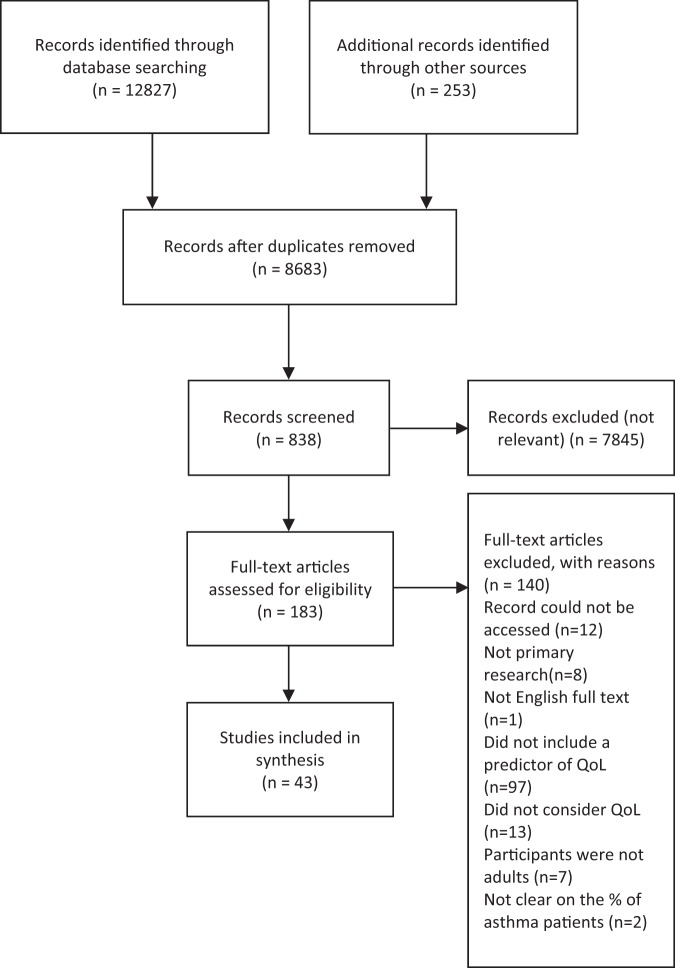
§ A systematic review of psychological, physical health factors, and quality of life in adult asthma > Results > Study characteristics The search and screening process identified 43 eligible papers, published between 2003 and 2019 (see Fig. 1 for PRISMA flowchart19). The characteristics of each study are summarized below in Table 1. Twelve studies were conducted in Europe,20–31 17 in North America,12,32–47 7 in Australia,17,48–53 4 in Asia,54–57 and 3 in Africa.58–60 All papers employed a quantitative approach comprising 2 longitudinal studies31,44 and 41 cross-sectional studies. Only 4 studies included a control group.21,28,29,31 Overall, the majority of papers had a large sample size (ranging between 40 and 39,321 participants; 30 papers included a sample size of >100). The majority of studies recruited from primary care or the general population, using self-report to confirm a diagnosis of asthma. Only a few studies recruited from secondary and tertiary asthma clinics.12,27,36,41,44,48,60 There was a high occurrence (n = 14) of exclusion criteria relating to specific demographic or asthma characteristics, as well as mental health conditions and comorbidities, which restricted the study sample without a reason being given. Most studies used self-report measures,17,20–30,32–37,39,41–46,48,49,51–60 with a small proportion using psychiatric interviews to screen for mental health conditions.12,31,38,40,50 The majority of studies used asthma-specific QoL measures (n = 29),12,21,23,25,27,28,30,32–37,39–42,44,48–51,54–56,58–61 17 included an health-related QoL measure (n = 18),17,20,22–25,28,30,31,34–36,38,43,50–52,55 and 4 used general measures of QoL (n = 7);26,35,45–47,57,62 11 papers used >1 measure of QoL.23,25,28,30,34–37,50,51,55 The average age across included studies was 42.1 years (and 61.57% were female). Papers report prevalence rates of between 16.8% and 48.9% for depression and between 13.3% and 44.4% for anxiety,20,27,33,38,50,56,58,60 with an average of 28.31% for a diagnosis of anxiety or depression. Across several studies, the prevalence of other mental health conditions was 28.31% on average (ranging between 28% and 80%).12,37,38,40,42 Between 72% and 86.9% of people with asthma had at least one additional physical condition and between 21% and 26.3% had ≥2;25,34,56 26.36% had, on average, at least one other physical health condition. On average, people with asthma were significantly more likely to have a BMI of >30 (and between 61% and 75.1% had a BMI >25).26,45,59 The quality assessment identified that most studies were of a reasonable quality; however, it should be noted that some measures used could be considered inappropriate for the research aim or the population under investigation. Examples include measuring general QoL with an asthma-specific measure or administering a geriatric depression questionnaire to a young adult population.
plain- Asserted: passes — The authors put it forward as true.
- Checkable: passes — It can be checked against evidence.
- Load-bearing: unclear — It is unclear whether the paper’s conclusions depend on it.
- Based: passes — The paper gives a reason why it holds.
None of the sources cited for this claim have been checked yet.
In the paper
“In relation to asthma-specific QoL, depression and anxiety were significantly associated with decreased asthma-specific QoL.17,21,23,27,28,32,33,36,37,40,50,54,55,58,61”
§ A systematic review of psychological, physical health factors, and quality of life in adult asthma > Results > Psychological factors
plainstates an association- Asserted: passes — The authors put it forward as true.
- Checkable: passes — It can be checked against evidence.
- Load-bearing: passes — The paper’s conclusions depend on it.
- Based: passes — The paper gives a reason why it holds.
33 more claims
Create a free account to see all 103 claims and to verify the 25 references still open.
- Probably not a substantial claim. 25
- It may state two separate claims as one. 49
Claims other papers make about this one
Each is checked against this paper’s own text: does it say what the citing paper says it does?
The cited source says what the claim attributes to it.
In the citing paper
“The effect of allergic, infectious, and environmental factors are well-established; nevertheless, psychological factors require further precise investigations (2).”
From The Effect of Group Acceptance and Commitment Therapy on the Management of Asthma: A Randomized Clinical Trial (2022) · cites this paper as [2]
Citations
Cites
Preferred Reporting Items for Systematic Reviews and Meta-Analyses: the PRISMA statement
Moher, D., Liberati, A., Tetzlaff, J., Altman, D. G., & for the PRISMA Group (2009) · BMJ · doi:10.1136/bmj.b2535 · Cited by 83,823
Preferred Reporting Items for Systematic Reviews and Meta-Analyses: The PRISMA Statement
Moher, D., Liberati, A., Tetzlaff, J., Altman, D. G., & The PRISMA Group (2009) · PLoS Medicine · doi:10.1371/journal.pmed.1000097 · Cited by 64,042
Preferred reporting items for systematic reviews and meta-analyses: the PRISMA Statement.
(2009) · PubMed Central · Cited by 44,859
Development of a critical appraisal tool to assess the quality of cross-sectional studies (AXIS)
Downes, M. J., Brennan, M. L., Williams, H. C., & Dean, R. S. (2016) · BMJ Open · doi:10.1136/bmjopen-2016-011458 · Cited by 2,376
Popay, J., Roberts, H., Sowden, A., Petticrew, M., Arai, L., Rodgers, M., Britten, N., Roen, K., & Duffy, S. (2006) · Lancaster University · doi:10.13140/2.1.1018.4643 · Cited by 2,070
Multimorbidity and quality of life in primary care: a systematic review
Fortin, M., Lapointe, L., Hudon, C., Vanasse, A., Ntetu, A. L., & Maltais, D. (2004) · Health and Quality of Life Outcomes · doi:10.1186/1477-7525-2-51 · Cited by 963
Measuring Quality of Life in Asthma
Juniper, E. F., Guyatt, G. H., Ferrie, P. J., & Griffith, L. E. (1993) · American Review of Respiratory Disease · doi:10.1164/ajrccm/147.4.832 · Cited by 887 · cited 2×
“Previous evidence shows that QoL is generally lower in people with asthma and compounded by poor asthma control and severity.(13) The narrative synthesis in the present study builds on this by identifying three themes, encompassing a number of factors that substantially explain further impairment in QoL for people wit…”
BackgroundDevelopment and validation of the Mini Asthma Quality of Life Questionnaire
Juniper, E. F., Guyatt, G. H., Cox, F. M., Ferrie, P. J., & King, D. R. (1999) · European Respiratory Journal · doi:10.1034/j.1399-3003.1999.14a08.x · Cited by 786 · cited 4×
“Higher anxiety sensitivity at baseline predicted worse symptoms (β=−0.013, p 0.01) and emotional distress (β=−0.014, p 0.01) but not overall AQLQ.”
BackgroundInfluentialWhy illness perceptions matter
Petrie, K., & Weinman, J. (2006) · Clinical Medicine · doi:10.7861/clinmedicine.6-6-536 · Cited by 475 · cited 1×
“Illness-related cognitions are people’s patterns of beliefs about the characteristics of their conditions, which in turn influence their appraisal of severity and can determine future behaviours.(63) A number of illness-related cognitions and perceptions significantly predicted QoL in seven studies.”
BackgroundQuality of Life in Allergic Rhinitis and Asthma
LEYNAERT, B., NEUKIRCH, C., LIARD, R., BOUSQUET, J., & NEUKIRCH, F. (2000) · American Journal of Respiratory and Critical Care Medicine · doi:10.1164/ajrccm.162.4.9912033 · Cited by 407
Obesity and health-related quality of life: a cross-sectional analysis of the US population
Hassan, M. K., Joshi, A. V., Madhavan, S. S., & Amonkar, M. M. (2003) · International Journal of Obesity · doi:10.1038/sj.ijo.0802396 · Cited by 314
Higher BMI is associated with worse asthma control and quality of life but not asthma severity
Lavoie, K. L., Bacon, S. L., Labrecque, M., Cartier, A., & Ditto, B. (2006) · Respiratory Medicine · doi:10.1016/j.rmed.2005.08.001 · Cited by 243
What Is Worse for Asthma Control and Quality of Life
Lavoie, K. L., Bacon, S. L., Barone, S., Cartier, A., Ditto, B., & Labrecque, M. (2006) · Chest · doi:10.1378/chest.130.4.1039 · Cited by 238 · cited 6×
“Lavoie et al.(40) 504 adult patients with asthma Cross-sectional, consecutive patients with asthma recruited in primary care Primary Care Evaluation of Mental Disorders—PRIME-MD AQLQ Independent effects of depression on AQLQ (F= 38.”
BackgroundInfluentialAsthma and depressive and anxiety disorders among young persons in the community
GOODWIN, R. D., FERGUSSON, D. M., & HORWOOD, L. J. (2004) · Psychological Medicine · doi:10.1017/s0033291704002739 · Cited by 229
Lavoie, K. L., Cartier, A., Labrecque, M., Bacon, S. L., Lemière, C., Malo, J.-L., Lacoste, G., Barone, S., Verrier, P., & Ditto, B. (2005) · Respiratory Medicine · doi:10.1016/j.rmed.2005.03.003 · Cited by 201 · cited 9×
“Nine studies looked at other mental health conditions, such as panic disorder with or without agoraphobia,(24,38,44,57) personality disorders,(31) alexithymia,(23) somatization,(38) mood disorders,(12,40,57) schizophrenia, eating disorders, substance use disorders,(38) and general occurrence of any psychiatric disorde…”
BackgroundMethodResultInfluentialTay, T. R., Radhakrishna, N., Hore‐Lacy, F., Smith, C., Hoy, R., Dabscheck, E., & Hew, M. (2016) · Respirology · doi:10.1111/resp.12838 · Cited by 190 · cited 5×
“Eleven papers exploring BMI found that it consistently influenced QoL for people with asthma both directly as a multimorbid factor and indirectly by increasing the chance of additional conditions and activity limitation.(25,26,28,29,35,42,44,45,48,56,59) In particular, one study found that generic health status decrea…”
BackgroundInfluentialStrine, T. W., Mokdad, A. H., Balluz, L. S., Berry, J. T., & Gonzalez, O. (2008) · Journal of Asthma · doi:10.1080/02770900701840238 · Cited by 179
Effects of depressive symptoms on health-related quality of life in asthma patients
Mancuso, C. A., Peterson, M. G. E., & Charlson, M. E. (2000) · Journal of General Internal Medicine · doi:10.1046/j.1525-1497.2000.07006.x · Cited by 176 · cited 7×
“Ten papers examined additional physical conditions in relation to QoL in asthma; most only referred to ‘comorbidity’ or ‘medical problems’ as a measure of frequency of additional conditions.(34,36,39) Some studies looked at both general and individual co-existing conditions(25,48,52) and others counted chronic conditi…”
BackgroundMethodInfluentialAsthma symptoms associated with depression and lower quality of life: a population survey
Goldney, R. D., Ruffin, R., Wilson, D. H., & Fisher, L. J. (2003) · Medical Journal of Australia · doi:10.5694/j.1326-5377.2003.tb05285.x · Cited by 167
Asthma symptoms associated with depression and lower quality of life: a population survey
Goldney, R. D., Ruffin, R., Wilson, D. H., & Fisher, L. J. (2003) · Medical Journal of Australia · doi:10.5694/j.1326-5377.2003.tb05408.x · Cited by 164
Association of depression and anxiety with health care use and quality of life in asthma patients
Kullowatz, A., Kanniess, F., Dahme, B., Magnussen, H., & Ritz, T. (2007) · Respiratory Medicine · doi:10.1016/j.rmed.2006.06.002 · Cited by 155 · cited 2×
“Krauskopf et al.33 317 participants with asthma aged over 60 Cross-sectional, recruited from outpatient health clinics (secondary care) PHQ-9 (to assess symptoms of depression) Mini-AQLQ Patients with depression showed poorer quality of life than those without (mean score difference in AQLQ= −1.4, p < 0.001). npj Prim…”
MethodInfluentialPsychological factors and asthma quality of life: a population based study
Adams, R. J. (2004) · Thorax · doi:10.1136/thx.2003.010256 · Cited by 154
The National Psychiatric Morbidity Surveys of Great Britain – strategy and methods
JENKINS, R., BEBBINGTON, P., BRUGHA, T., FARRELL, M., GILL, B., LEWIS, G., MELTZER, H., & PETTICREW, M. (1997) · Psychological Medicine · doi:10.1017/s003329179700531x · Cited by 153
How important is quality of life in pediatric asthma?
Juniper, E. F. (1997) · Pediatric Pulmonology · doi:10.1002/(sici)1099-0496(199709)15+<17::aid-ppul5>3.0.co;2-o · Cited by 138
BMI and Health Status Among Adults With Asthma
Vortmann, M., & Eisner, M. D. (2008) · Obesity · doi:10.1038/oby.2007.7 · Cited by 123 · cited 6×
“Seven studies included statistical analyses to explore potential mechanisms for the relationship between asthma QoL and additional physical conditions, BMI, and psychological factors.(17,35,42,45,50,56,59) Results from studies in this group are complex, indicating that people with asthma are at a higher risk of advers…”
BackgroundInfluentialAsthma and psychological dysfunction
Thomas, M., Bruton, A., Moffatt, M., & Cleland, J. (2011) · Primary Care Respiratory Journal · doi:10.4104/pcrj.2011.00058 · Cited by 120 · cited 1×
“Psychological dysfunction is often unrecognized in primary care, despite being significantly associated with poor asthma outcomes, including asthma control and QoL.(8,12,13) Indeed, the European Asthma Research and Innovation Partnership has identified understanding the role of psychological factors as an unmet need i…”
BackgroundSelf-citationThe influence of co-morbidity on health-related quality of life in asthma and COPD patients
WIJNHOVEN, H. A. H., KRIEGSMAN, D. M. W., HESSELINK, A. E., DE HAAN, M., & SCHELLEVIS, F. G. (2003) · Respiratory Medicine · doi:10.1053/rmed.2002.1463 · Cited by 118 · cited 4×
“Eleven papers exploring BMI found that it consistently influenced QoL for people with asthma both directly as a multimorbid factor and indirectly by increasing the chance of additional conditions and activity limitation.(25,26,28,29,35,42,44,45,48,56,59) In particular, one study found that generic health status decrea…”
BackgroundInfluentialCoexistent Chronic Conditions and Asthma Quality of Life
Adams, R., WILSON, D. H., Taylor, A. W., Daly, A., d’Espaignet, E. T., Grande, E. D., & Ruffin, R. E. (2006) · CHEST Journal · doi:10.1378/chest.129.2.285 · Cited by 112
Prevalence of Comorbidities in Asthma and Nonasthma Patients: A Meta-analysis
Su, X., Ren, Y., Li, M., Zhao, X., Kong, L., & Kang, J. (2016) · Medicine · doi:10.1097/md.0000000000003459 · Cited by 110
The socio‐economic burden of asthma is substantial in Europe
Accordini, S., Corsico, A., Cerveri, I., Gislason, D., Gulsvik, A., Janson, C., Jarvis, D., Marcon, A., Pin, I., Vermeire, P., et al. (2008) · Allergy · doi:10.1111/j.1398-9995.2007.01523.x · Cited by 107
Depressive Symptoms, Low Adherence, and Poor Asthma Outcomes in the Elderly
Krauskopf, K., Sofianou, A., Goel, M. S., Wolf, M. S., Wilson, E. A. H., Martynenko, M., Halm, E. A., Leventhal, H., Feldman, J. M., Federman, A. D., et al. (2013) · Journal of Asthma · doi:10.3109/02770903.2012.757779 · Cited by 107 · cited 5×
“Krauskopf et al.33 317 participants with asthma aged over 60 Cross-sectional, recruited from outpatient health clinics (secondary care) PHQ-9 (to assess symptoms of depression) Mini-AQLQ Patients with depression showed poorer quality of life than those without (mean score difference in AQLQ= −1.4, p < 0.001). npj Prim…”
BackgroundInfluentialCoping as a mediator of psychosocial impediments to optimal management and control of asthma
Barton, C., Clarke, D., Sulaiman, N., & Abramson, M. (2003) · Respiratory Medicine · doi:10.1016/s0954-6111(03)00029-5 · Cited by 91 · cited 1×
“In addition, it is argued that people with asthma use more emotion-focused, and generally maladaptive, coping strategies, such as avoidance.(65) Despite this, psychotherapy, such as cognitive-behavioural therapy and counselling has had limited effectiveness in improving asthma outcomes.”
BackgroundEffects of Weight Loss on Airway Responsiveness in Obese Adults With Asthma
Pakhale, S., Baron, J., Dent, R., Vandemheen, K., & Aaron, S. D. (2015) · Chest · doi:10.1378/chest.14-3105 · Cited by 84 · cited 1×
“For instance, a higher proportion of people with asthma seem to have overweight or obese BMI(67) and weight loss intervention studies have been associated with improvements in asthma symptoms.(68) One of the fundamental components of reduced QoL is activity limitation, which is especially relevant to people with asthm…”
BackgroundDESHMUKH, V. M., TOELLE, B. G., USHERWOOD, T., O'GRADY, B., & JENKINS, C. R. (2008) · Respirology · doi:10.1111/j.1440-1843.2008.01310.x · Cited by 77 · cited 3×
“Average scores for people with asthma and anxiety and/or depression were worse than one standard deviation when compared with people with asthma but without anxiety/depression Published in partnership with Primary Care Respiratory Society UK npj Primary Care Respiratory Medicine (2019) 37 Table 1 continued Study Sampl…”
BackgroundInfluentialPsychiatric Comorbidity and Functional Status in Adult Patients with Asthma
Afari, N., Schmaling, K. B., Barnhart, S., & Buchwald, D. (2001) · Journal of Clinical Psychology in Medical Settings · doi:10.1023/a:1011912712262 · Cited by 74 · cited 5×
“Afari et al.(38) 50 adult participants with confirmed asthma Cross-sectional, recruited from an asthma clinic Diagnostic Interview Schedule for DSM-III-R SF-36 Asthma patients with a lifetime diagnosis of depression reported worse physical functioning, mental health functioning, and health perceptions (Fs ranged betwe…”
BackgroundMethodResultInfluentialMILES, J. F., GARDEN, G. M. F., TUNNICLIFFE, W. S., CAYTON, R. M., & AYRES, J. G. (1997) · Clinical & Experimental Allergy · doi:10.1046/j.1365-2222.1997.1080961.x · Cited by 68
MILES, J. E., GARDEN, G. M. E., TUNNICLIFFE, W. S., CAYTON, R. M., & AYRES, J. G. (1997) · Clinical <html_ent glyph="@amp;" ascii="&"/> Experimental Allergy · doi:10.1111/j.1365-2222.1997.tb01152.x · Cited by 68
Association of Asthma Self-efficacy to Asthma Control and Quality of Life
Lavoie, K. L., Bouchard, A., Joseph, M., Campbell, T. S., Favreau, H., & Bacon, S. L. (2008) · Annals of Behavioral Medicine · doi:10.1007/s12160-008-9053-8 · Cited by 66 · cited 9×
“Seven studies included statistical analyses to explore potential mechanisms for the relationship between asthma QoL and additional physical conditions, BMI, and psychological factors.(17,35,42,45,50,56,59) Results from studies in this group are complex, indicating that people with asthma are at a higher risk of advers…”
BackgroundInfluentialPatients' views of the burden of asthma: a qualitative study
Goeman, D. P., Thien, F. C. K., Abramson, M. J., Douglass, J. A., Aroni, R. A., Sawyer, S. M., & Stewart, K. (2002) · Medical Journal of Australia · doi:10.5694/j.1326-5377.2002.tb04786.x · Cited by 64
Favreau, H., Bacon, S. L., Labrecque, M., & Lavoie, K. L. (2014) · Psychosomatic Medicine · doi:10.1097/psy.0000000000000032 · Cited by 63 · cited 4×
“Eleven papers exploring BMI found that it consistently influenced QoL for people with asthma both directly as a multimorbid factor and indirectly by increasing the chance of additional conditions and activity limitation.(25,26,28,29,35,42,44,45,48,56,59) In particular, one study found that generic health status decrea…”
BackgroundInfluentialÇoban, H., & Aydemir, Y. (2014) · Allergy Asthma and Clinical Immunology · doi:10.1186/s13223-014-0067-4 · Cited by 61
Rhinitis in pregnant women with asthma is associated with poorer asthma control and quality of life
Powell, H. A., Murphy, V. E., Hensley, M., Giles, W. B., Clifton, V. L., & Gibson, P. G. (2015) · Journal of Asthma · doi:10.3109/02770903.2015.1054403 · Cited by 55 · cited 2×
“Powell et al.(49) 218 pregnant women with asthma and rhinitis Cross-sectional, recruited from an ante-natal clinic Rhinitis was assessed using a visual analogue scale, Six Item Short-Form State Trait Anxiety Inventory AQLQ-M QoL scores were predicted by the presence of rhinitis, anxiety, and prior history of rhinitis…”
MethodInfluentialEdwards, M. R., Saglani, S., Schwarze, J., Skevaki, C., Smith, J. A., Ainsworth, B., Almond, M., Andreakos, E., Belvisi, M. G., Chung, K. F., et al. (2017) · European Respiratory Journal · doi:10.1183/13993003.02448-2016 · Cited by 55
Self-citationDepression and activity limitations: examining gender differences in the general population
Breslin, F. C., Gnam, W., Franche, R.-L., Mustard, C., & Lin, E. (2006) · Social Psychiatry and Psychiatric Epidemiology · doi:10.1007/s00127-006-0079-6 · Cited by 55
Impact of coping and socioeconomic factors on quality of life in adults with asthma
Adams, R., WILSON, D. H., Smith, B. J., & Ruffin, R. E. (2004) · Respirology · doi:10.1111/j.1440-1843.2003.00538.x · Cited by 50 · cited 8×
“Active coping was a significant predictor of the physical component (r2= 0.69) and satisfaction with illness was a significant predictor of the mental component (r2= 0.54) Adams et al.52 7619 people from the general population (834 with asthma) Cross-sectional, population household interview Any additional condition f…”
BackgroundMethodResultInfluentialAnxiety Sensitivity, Asthma Control, and Quality of Life in Adults with Asthma
Avallone, K. M., McLeish, A. C., Luberto, C. M., & Bernstein, J. A. (2012) · Journal of Asthma · doi:10.3109/02770903.2011.641048 · Cited by 48 · cited 6×
“Ten papers examined additional physical conditions in relation to QoL in asthma; most only referred to ‘comorbidity’ or ‘medical problems’ as a measure of frequency of additional conditions.(34,36,39) Some studies looked at both general and individual co-existing conditions(25,48,52) and others counted chronic conditi…”
BackgroundMethodResultInfluentialERICKSON, S. R., CHRISTIAN, R. D., KIRKING, D. M., & HALMAN, L. J. (2002) · Respiratory Medicine · doi:10.1053/rmed.2001.1274 · Cited by 45 · cited 5×
“Ten papers examined additional physical conditions in relation to QoL in asthma; most only referred to ‘comorbidity’ or ‘medical problems’ as a measure of frequency of additional conditions.(34,36,39) Some studies looked at both general and individual co-existing conditions(25,48,52) and others counted chronic conditi…”
BackgroundMethodInfluentialEffects of Depression and Anxiety on Asthma-Related Quality of Life
Lomper, K., Chudiak, A., Uchmanowicz, I., Rosińczuk, J., & Jankowska-Polanska, B. (2016) · Advances in Respiratory Medicine · doi:10.5603/piap.2016.0026 · Cited by 43 · cited 3×
“Lomper et al.(22) 96 adult patients (33 with controlled asthma, 63 with uncontrolled asthma) Cross-sectional, recruited from an outpatient allergy clinic HADs (measured both anxiety and depression but only performed an analysis of correlations between depression and QoL SF-36 There was a significant difference in the…”
MethodResultInfluentialThe Role of Alexithymia in Quality of Life and Health Care Use in Asthma
Vázquez, I., Sández, E., González-Freire, B., Romero-Frais, E., Blanco‐Aparicio, M., & Verea-Hernando, H. (2010) · Journal of Asthma · doi:10.3109/02770900903560217 · Cited by 41 · cited 4×
“Vasquez et al.(23) 76 adults with asthma Cross-sectional, recruited from a secondary care pneumology department.”
BackgroundInfluentialAssociation of obesity with asthma severity, control and quality of life.
Maâlej, S., Yacoub, Z., Fakhfekh, R., Yaalaoui, S., Kheder, A. B., & Drira, I. (2012) · PubMed Central · Cited by 41
The National Psychiatric Morbidity Surveys of Great Britain--strategy and methods
Jenkins, R., Bebbington, P., Brugha, T., Farrell, M., Gill, B., Lewis, G., Meltzer, H., & Petticrew, M. (2003) · International Review of Psychiatry · doi:10.1080/0954026021000045895 · Cited by 40 · cited 1×
“People with asthma are up to six times more likely than the general population to have anxiety or depression,(8) and 16% of people with asthma in the UK have panic disorder,(9) compared to 1% in the general population.(10) People with brittle asthma (difficult-to-control asthma with severe, recurrent attacks) demonstr…”
BackgroundNishimura, K., Hajiro, T., Oga, T., Tsukino, M., & Ikeda, A. (2004) · Journal of Asthma · doi:10.1081/jas-120024596 · Cited by 35
Psychological Status and Quality of Life in Elderly Patients With Asthma
Oğuztürk, Ö., Ekici, A., Kara, M., Ekici, M. S., Arslan, M., Iteginli, A., Kara, T., & Kurtipek, E. (2005) · Psychosomatics · doi:10.1176/appi.psy.46.1.41 · Cited by 33 · cited 5×
“Oguzturk et al.(21) 70 patients (with stable asthma and aged >60 years) and 40 age-matched controls Cross-sectional, recruited from a secondary care respiratory clinic (matched controls were recruited from local mosques) HADs AQLQ Patients with earlier-onset asthma (duration >8 years) had lower QoL scores than those w…”
BackgroundMethodResultInfluentialAnalysis of longitudinal changes in the psychological status of patients with asthma
Oga, T., Nishimura, K., Tsukino, M., Satô, S., Hajiro, T., & Mishima, M. (2007) · Respiratory Medicine · doi:10.1016/j.rmed.2007.05.009 · Cited by 33 · cited 4×
“Oga et al.(54) 87 adult Patients with stable asthma Longitudinal, recruited from an outpatient secondary care asthma clinic 6 months after treatment and follow-up 5 years HADs AQLQ Changes in HADs scores were significantly correlated with changes in AQLQ on both anxiety and depression scales (r=−0.”
BackgroundMethodInfluentialChoi, G., Shin, Y. S., Kim, J., Choi, S. Y., Lee, S.-K., Nam, Y., Lee, Y. M., Park, H., & Premier Researchers Aiming New Era in Asthma and Allergic Disease (PRANA) Study Group (2014) · Journal of Korean Medical Science · doi:10.3346/jkms.2014.29.12.1626 · Cited by 31
Negative Mood and Quality of Life in Patients with Asthma
Ekici, A., Ekici, M., Kara, T., Keles, H., & Kocyigit, P. (2006) · Quality of Life Research · doi:10.1007/s11136-005-8869-y · Cited by 30 · cited 6×
“Eleven papers exploring BMI found that it consistently influenced QoL for people with asthma both directly as a multimorbid factor and indirectly by increasing the chance of additional conditions and activity limitation.(25,26,28,29,35,42,44,45,48,56,59) In particular, one study found that generic health status decrea…”
BackgroundMethodInfluentialMasefield, S., Edwards, J., Hansen, K., Hamerlijnck, D., Lisspers, K., van der Schee, M., Silva, L., Matthews, J., Gaga, M., Adcock, I., et al. (2017) · European Respiratory Journal · doi:10.1183/13993003.02295-2016 · Cited by 30
Pickles, K., Eassey, D., Reddel, H. K., Locock, L., Kirkpatrick, S., & Smith, L. (2018) · Health Expectations · doi:10.1111/hex.12605 · Cited by 28
Coping and social problem solving correlates of asthma control and quality of life
McCormick, S. P., Nezu, C. M., Nezu, A. M., Sherman, M., Davey, A., & Collins, B. N. (2014) · Chronic Respiratory Disease · doi:10.1177/1479972313516878 · Cited by 27 · cited 4×
“QoL in asthma was found to be influenced by affect and a predisposition to negative states, as found by four studies.(28,39,41,51) For instance, a model of age, gender, negative affect, and medical problems accounted for 20% of symptoms and 23% of activity limitation.”
BackgroundMethodInfluentialBöhmer, M. M., Brandl, M., Brandstetter, S., Finger, T., Fischer, W., Pfeifer, M. A., & Apfelbacher, C. (2016) · Journal of Asthma · doi:10.1080/02770903.2016.1206563 · Cited by 27
Yorke, J., Fleming, S., Shuldham, C., Rao, H., & Smith, H. E. (2015) · Clinical & Experimental Allergy · doi:10.1111/cea.12511 · Cited by 25
Impaired health-related quality of life and related risk factors among US adults with asthma
Pate, C. A., Zahran, H. S., & Bailey, C. M. (2019) · Journal of Asthma · doi:10.1080/02770903.2018.1466314 · Cited by 23 · cited 3×
“Pate et al.(46) 18,856 people with asthma Cross-sectional, sample recruited from wider telephone population study of 39,321 (BRFFS sample) Additional chronic conditions, BMI, presence of depression General Health, Activity Limitation, Physical/Mental Health Impairment (Yes/No Questions) Having additional conditions (P…”
BackgroundInfluentialMiedinger, D., Lavoie, K. L., L'Archeveque, J., Ghezzo, H., & Malo, J.-L. (2011) · Health and Quality of Life Outcomes · doi:10.1186/1477-7525-9-76 · Cited by 22 · cited 6×
“Problem-solving style was the only significant independent predictor of QoL Miedinger et al.37 60 adult participants with occupational asthma Cross-sectional, people recruited after being evaluated for a permanent disability indemnity Primary Care Evaluation of Mental Disorders—PRIME-MD; Psychiatric Symptoms Index AQL…”
BackgroundInfluentialUnderstanding asthma in older Australians: a qualitative approach
Goeman, D., & Douglass, J. A. (2005) · The Medical Journal of Australia · doi:10.5694/j.1326-5377.2005.tb06912.x · Cited by 21
Asthma and Depression: It's Complicated
Gerald, J. K., & Moreno, F. A. (2016) · The Journal of Allergy and Clinical Immunology: In Practice · doi:10.1016/j.jaip.2015.11.020 · Cited by 20
Hommel, K. A., Chaney, J. M., Wagner, J. L., & McLaughlin, M. (2002) · Journal of Clinical Psychology in Medical Settings · doi:10.1023/a:1016066709714 · Cited by 19
Factors influencing quality of life in asthmatics – a case–control study
Al‐Kalemji, A., Petersen, K. D., Sørensen, J. R., Sherson, D., Thilsing, T., Schlünssen, V., Omland, Ø., Thomsen, G. F., & Bælum, J. (2012) · The Clinical Respiratory Journal · doi:10.1111/crj.12006 · Cited by 18 · cited 2×
“Al-kalemji et al.(62) 778 adult participants completed questionnaires (181 with asthma, 597 without) Cross-sectional, recruited from an earlier cohort BMI, 2 questions on the 15D and participants were asked (yes/no) if they had anxiety or depression 15D (measure of global QoL) Depression was significantly associated w…”
BackgroundInfluentialAdeyeye, O. O., Adewumi, T. A., & Adewuya, A. O. (2016) · Respiratory Medicine · doi:10.1016/j.rmed.2016.12.002 · Cited by 18 · cited 4×
“Having two or more conditions (one of which was asthma) was associated with a lower SF-12 score than expected from the effects of asthma and the chronic condition alone Adeyeye et al.60 201 adult participants with moderate and severe asthma Cross-sectional, recruited from an asthma outpatient clinic The Mini Internati…”
BackgroundMethodInfluentialAsthma and health related quality of life in late midlife adults
Urbstonaitis, R., Deshpande, M., & Arnoldi, J. D. (2018) · Research in Social and Administrative Pharmacy · doi:10.1016/j.sapharm.2018.03.003 · Cited by 15 · cited 2×
“Urbstonaitis et al.(47) 5857 late midlife adults with asthma Cross-sectional, sample recruited from wider telephone population study of 39,321 (BRFFS sample) BMI, presence of respiratory comorbidity General Health, Activity Limitation, Physical/Mental Health Impairment (Yes/No Questions) Respiratory comorbidity was si…”
BackgroundMosaku, K. S., Awopeju, O., Gregory, E. E., Abiodun, A. O., Daniel, O., & Bamidele, A. O. (2011) · Libyan Journal of Medicine · doi:10.3402/ljm.v6i0.5846 · Cited by 13 · cited 3×
“Kolawole et al.(58) 81 adult patients with asthma Cross-sectional, consecutive patients recruited from an asthma clinic HADs Mini-AQLQ Presence of anxiety symptoms (χ(2)= 7.”
BackgroundInfluentialThe effect of personality disorders on asthma severity and quality of life.
Yılmaz, A. T., Cumurcu, B. E., Etikán, Í., Hasbek, E., & Doruk, S. (2014) · PubMed · Cited by 12
Faye, A. D., Gawande, S., Tadke, R., Kirpekar, V., Bhave, S., Pakhare, A. P., & Tayade, B. (2015) · Psychiatry Journal · doi:10.1155/2015/608351 · Cited by 11 · cited 2×
“Faye et al.(57) 60 adults with asthma Cross-sectional, consecutive patients recruited from an outpatient tertiary care respiratory hospital DSM-IV-TR criteria for Panic and Agoraphobia (including the Panic and Agoraphobia scale to assess the severity of panic disorder), number of comorbidities WHO QOL BREF scale and t…”
BackgroundInfluentialGonzalez-Barcala, F.-J., De la Fuente-Cid, R., Tafalla, M., Nuevo, J., & Caamaño-Isorna, F. (2012) · Multidisciplinary Respiratory Medicine · doi:10.4081/mrm.2012.619 · Cited by 8 · cited 6×
“Eleven papers exploring BMI found that it consistently influenced QoL for people with asthma both directly as a multimorbid factor and indirectly by increasing the chance of additional conditions and activity limitation.(25,26,28,29,35,42,44,45,48,56,59) In particular, one study found that generic health status decrea…”
BackgroundInfluentialDepression, Panic-Fear, and Quality of Life in Near-Fatal Asthma Patients
Sández, E., Vázquez, M. I., Romero-Frais, E., Blanco-Aparicio, M., Otero, I., & Verea, H. (2005) · Journal of Clinical Psychology in Medical Settings · doi:10.1007/s10880-005-3277-6 · Cited by 6 · cited 3×
“Sandez et al.(24) 40 adult patients with nearfatal asthma Cross-sectional, recruited from an outpatient asthma clinic (secondary care) Beck’s Depression Inventory and the Panic-Fear Scale of the Asthma Symptom Checklist SF-36 (MCS and PCS components) Panic-Fear (PF) and age accounted for 22.”
BackgroundMethodInfluentialHullmann, S. E., Eddington, A. R., Molzon, E. S., & Mullins, L. L. (2013) · International Journal of Adolescent Medicine and Health · doi:10.1515/ijamh-2013-0004 · Cited by 6 · cited 3×
“The combined influence of anxiety and depression accounted for 14% of the variance in QoL; depression contributed significantly to variance in QoL (t= 2.65; p < 0.05) before anxiety was introduced in the model; anxiety demonstrated a significant main effect on asthma-specific QoL (t= 2.58; p < 0.05) Hullmann et al.43…”
BackgroundMethodInfluential
Research works printed but not linked: 2
- Deshmukh VM Toelle BG Usherwood T O’grady B Jenkins CR The association of comorbid anxiety and depression with asthma‐related quality of life and symptom perception in adults Respirology 2008 13 695 702 10.1111/j.1440-1843.2008.01310.x 18513245 · DOI · Paper page
- Al-kalemji A Factors influencing quality of life in asthmatics–a case-control study Clin. Respir. J. 2013 7 288 296 10.1111/crj.12006 23013421 · DOI
Cited by
Obesity, Inflammation, and Severe Asthma: an Update
Sharma, V., & Cowan, D. C. (2021) · Current Allergy and Asthma Reports · doi:10.1007/s11882-021-01024-9 · Cited by 130
Asthma and comorbidities: recent advances
Cazzola, M., Rogliani, P., Ora, J., Calzetta, L., & Matera, M. G. (2022) · Polskie Archiwum Medycyny Wewnętrznej · doi:10.20452/pamw.16250 · Cited by 133
Donaldson, C., Moore, G. F., & Hawkins, J. L. (2022) · School Mental Health · doi:10.1007/s12310-022-09539-w · Cited by 121
“Mental health outcome terms were developed with reference to terms used in other mental health systematic reviews, including Hughes et al. (2013), Wiley et al. (2017) and Stanescu et al. (2019).”
MethodImpact of socioeconomic factors on allergic diseases
Perry, T. T., Grant, T. L., Dantzer, J. A., Udemgba, C., & Jefferson, A. A. (2023) · Journal of Allergy and Clinical Immunology · doi:10.1016/j.jaci.2023.10.025 · Cited by 60
Association between e-cigarette use and asthma: a systematic review and meta-analysis
Chand, B. R., & Hosseinzadeh, H. (2021) · Journal of Asthma · doi:10.1080/02770903.2021.1971703 · Cited by 51
“People living with asthma experience poorer quality of life and higher rates of depression, anxiety, obesity, and hypertension compared to the general population (19,20).”
Background
Metadata
- Authors
- Stanescu, S., Kirby, S. E., Thomas, M., Yardley, L., & Ainsworth, B.
- Affiliations
- University of Southampton (GB)
- NIHR Southampton Respiratory Biomedical Research Unit (GB)
- University of Bath (GB)
- Corresponding author
- Stanescu, Sabina
- Venue
- npj Primary Care Respiratory Medicine
- Published
- 2019-10-21
- Volume
- 29
- Issue
- 1
- Pages
- 37-37
- ISSN
- 2055-1010 (ISSN-L)
- PMC
- PMC6803647
- OpenAlex
- W2980338079
- Cited by
- 124
- References
- 75
- Citations by year
- 2026: 20 · 2025: 14 · 2024: 20 · 2023: 17 · 2022: 27 · 2021: 20 · 2020: 4 · 2019: 1
- FWCI
- 1.53
- Type
- journal article
- Language
- en
- Open access
- gold
- doi.org
- Licence
- cc-by
- creativecommons.org/licenses/by/4.0 (tdm)
- creativecommons.org/licenses/by/4.0 (vor)
- Locations
- npj Primary Care Respiratory Medicine (publishedVersion, cc-by)
- Europe PMC (PubMed Central) (publishedVersion, cc-by)
- PubMed Central (publishedVersion, cc-by)
- PubMed (publishedVersion)
- ePrints Soton (University of Southampton) (acceptedVersion)
- Explore Bristol Research (acceptedVersion, cc-by)
- DOAJ (DOAJ: Directory of Open Access Journals) (submittedVersion)
- Bristol Research (University of Bristol) (submittedVersion, cc-by)
- Funders
- National Institute for Health and Care Research (NF-SI-0617-10079, SPCR-103)
- Topics
- Health Sciences › Medicine › Pulmonary and Respiratory Medicine › Asthma and respiratory diseases
- Health Sciences › Medicine › Pulmonary and Respiratory Medicine › Chronic Obstructive Pulmonary Disease (COPD) Research
- Health Sciences › Medicine › Public Health, Environmental and Occupational Health › Occupational exposure and asthma
- Keywords
- adult asthma, quality of life, psychological factors, anxiety, depression, mental health, illness representations, emotion regulation, body mass index, chronic physical illness, self-management, activity limitation, employment
- MeSH terms
- Adult, Asthma, Health Status, Humans, Quality of Life, Exercise
About these checks
Registry, retraction, Cites and statistics results are computed, not judged, with one exception: a printed reference that no index lists is read once by a model before it counts as a citation error. Claims are extracted by a model and kept only when their quote appears verbatim in the text; each cited source is then checked, with a model’s help, for whether it says what the claim relies on. Those verdicts can be wrong — read the claim’s quote and the cited source before relying on one.
The claim verdicts this report counts are experimental: their accuracy is not yet measured.
A language model drew the claims from the paper on 2026-10-11, under version 3 of the claim definition (model deepseek-v4.1-flash, prompt extract-v3).
A second model labelled each claim on 2026-10-11 (model jev-1.13-20260917, definition revision gold-guideline-v0.2).
Cited sources are checked with a language model’s help (qwen3.8-omni-flash and gpt-6-sol).
Statistics and arithmetic are recomputed, not judged.
Confidence bands are shown only for fields calibrated on our annotated test set. None is calibrated yet, so no band is shown.
What counts as a claim ›How we measure confidence ›How we check this ›
Are you an author, or do you see a problem with this page? Request a review
Data sources
Bibliographic data: Semantic Scholar, OpenAlex, Crossref.
Contains information from the Semantic Scholar Academic Graph Datasets, made available under the ODC Attribution License (ODC-BY 1.0).
Semantic Scholar’s data is described in: Kinney, R., et al. (2023). The Semantic Scholar Open Data Platform. arXiv:2301.10140.
