

A pneumonia outbreak associated with a new coronavirus of probable bat origin
Open accessPublished version of a preprint
The DOI matches its Crossref record; 21 of the 21 references it cites were found in a registry or an index.
Abstract
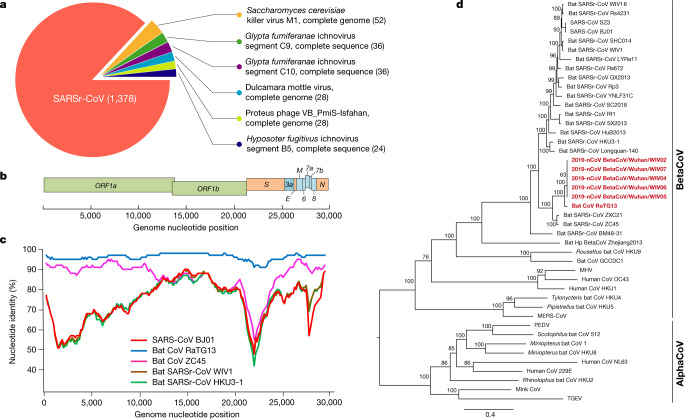
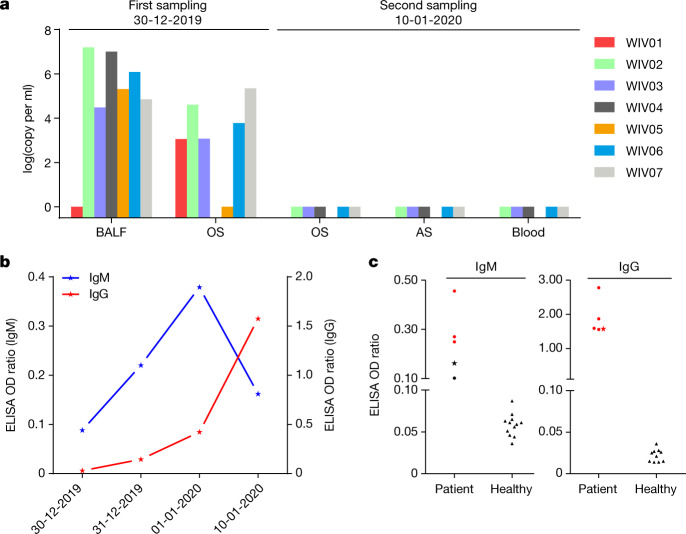
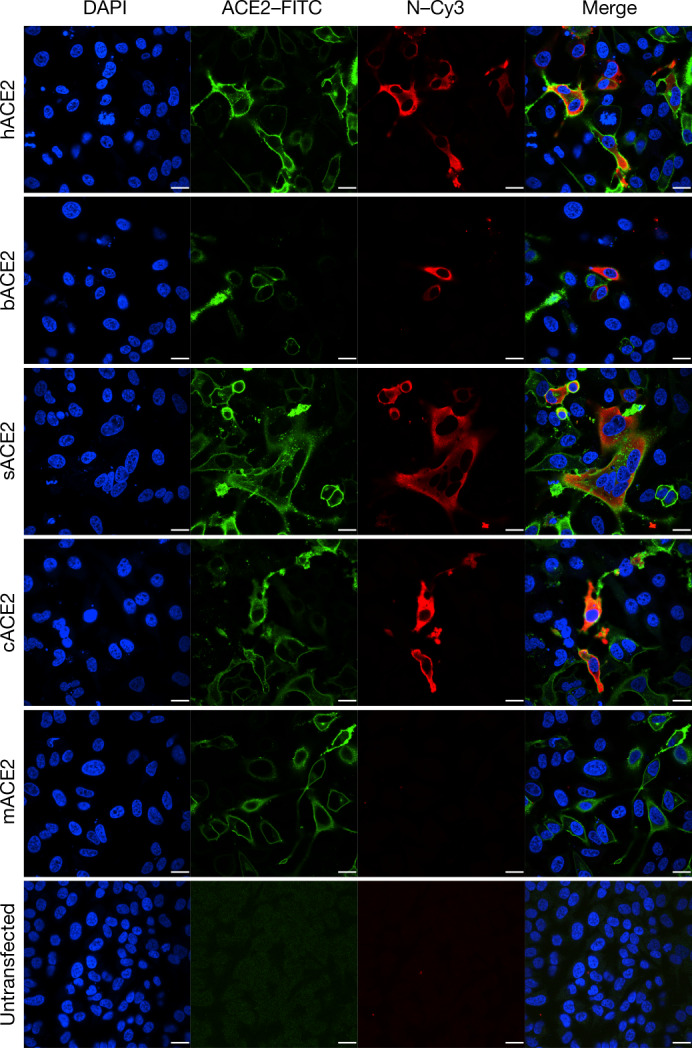
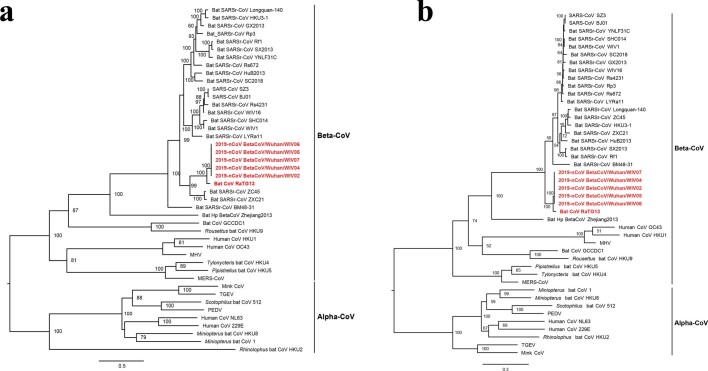
Since the outbreak of severe acute respiratory syndrome (SARS) 18 years ago, a large number of SARS-related coronaviruses (SARSr-CoVs) have been discovered in their natural reservoir host, bats 1–4 . Previous studies have shown that some bat SARSr-CoVs have the potential to infect humans 5–7 . Here we report the identification and characterization of a new coronavirus (2019-nCoV), which caused an epidemic of acute respiratory syndrome in humans in Wuhan, China. The epidemic, which started on 12 December 2019, had caused 2,794 laboratory-confirmed infections including 80 deaths by 26 January 2020. Full-length genome sequences were obtained from five patients at an early stage of the outbreak. The sequences are almost identical and share 79.6% sequence identity to SARS-CoV. Furthermore, we show that 2019-nCoV is 96% identical at the whole-genome level to a bat coronavirus. Pairwise protein sequence analysis of seven conserved non-structural proteins domains show that this virus belongs to the species of . In addition, 2019-nCoV virus isolated from the bronchoalveolar lavage fluid of a critically ill patient could be neutralized by sera from several patients. Notably, we confirmed that 2019-nCoV uses the same cell entry receptor—angiotensin converting enzyme II (ACE2)—as SARS-CoV.
Overview
The claims and statistics of this paper haven’t been checked yet.
Free: it reads the open-access text and checks the first 5 claims that cite a source we can check. Create a free account to check every claim.
Integrity signals
Registry
Cites
Statistics
Figures
Verification
Claims the paper makes
The claims and statistics of this paper haven’t been checked yet.
Free: it reads the open-access text and checks the first 5 claims that cite a source we can check. Create a free account to check every claim.
Claims other papers make about this one
Each is checked against this paper’s own text: does it say what the citing paper says it does?
The source backs part of the claim, not all of it — or backs it for a different population, condition or comparison.
In the citing paper
“SARS-CoV-2 is an enveloped, single-stranded positive-sense RNA virus with the highest, i.e. 96% of genome identity with horseshoe bat virus RaTG13 Rhinolophus affinis [3].”
From Waves and variants of SARS-CoV-2: understanding the causes and effect of the COVID-19 catastrophe (2022) · cites this paper as [3]
Experimental — accuracy not yet measuredThe source backs part of the claim, not all of it — or backs it for a different population, condition or comparison.
In the citing paper
“The disease is estimated to have originated from a seafood market in Wuhan where wild animals were traded such as marmots, bats, snakes and birds (Zhou et al., 2020).”
From How energy innovation in indoor vertical farming can improve food security, sustainability, and food safety? (2020) · cites this paper as Zhou et al., 2020
Experimental — accuracy not yet measuredThe source backs part of the claim, not all of it — or backs it for a different population, condition or comparison.
In the citing paper
“Genome sequencing demonstrated that SARS-CoV-2 shares 79.5% sequence identity with SARS-CoV (Zhou et al., 2020)”
From Oral Microbiome and SARS-CoV-2: Beware of Lung Co-infection (2020) · cites this paper as Zhou et al., 2020
Experimental — accuracy not yet measuredThe source backs part of the claim, not all of it — or backs it for a different population, condition or comparison.
In the citing paper
“This interaction requires cleavage of the S protein, likely by the cell surface protease TMPRSS2, although other proteases (such as Cathepsin B and L, CTSB/CTSL) may also be involved (4-6, 22-25).”
From Non-neuronal expression of SARS-CoV-2 entry genes in the olfactory system suggests mechanisms underlying COVID-19-associated anosmia (2020) · cites this paper as [4]
Experimental — accuracy not yet measuredThe source backs part of the claim, not all of it — or backs it for a different population, condition or comparison.
In the citing paper
“Bats (Chiroptera), representing ~22% of all mammalian species, are natural reservoirs for a wide range of zoonotic viruses, including coronaviruses, rhabdoviruses, and paramyxoviruses ( 1 – 3 ).”
From Ecological vaccination: A strategy to prevent zoonotic spillover from bats (2026) · cites this paper as [1]
Experimental — accuracy not yet measured
8 more claims about this paper
Create a free account to see every claim other papers make about this one.
Self-check
Percentages, sums and reported differences re-computed from the paper’s own numbers.
The self-check needs the paper’s full text.
Citations
Cites
Coronaviridae Study Group of the International Committee on Taxonomy of Viruses, Gorbalenya, A. E., Baker, S. C., Baric, R. S., de Groot, R. J., Drosten, C., Gulyaeva, A. A., Haagmans, B. L., Lauber, C., Leontovich, A. M., et al. (2020) · Nature Microbiology · doi:10.1038/s41564-020-0695-z · Cited by 8,403
Angiotensin-converting enzyme 2 is a functional receptor for the SARS coronavirus
Li, W., Moore, M. J., Vasilieva, N., Sui, J., Wong, S. K., Berne, M. A., Somasundaran, M., Sullivan, J. L., Luzuriaga, K., Greenough, T. C., et al. (2003) · Nature · doi:10.1038/nature02145 · Cited by 5,923
Isolation of a Novel Coronavirus from a Man with Pneumonia in Saudi Arabia
Zaki, A. M., van Boheemen, S., Bestebroer, T. M., Osterhaus, A. D. M. E., & Fouchier, R. A. M. (2012) · New England Journal of Medicine · doi:10.1056/nejmoa1211721 · Cited by 5,735
Origin and evolution of pathogenic coronaviruses
Cui, J., Li, F., & Shi, Z.-L. (2019) · Nature Reviews Microbiology · doi:10.1038/s41579-018-0118-9 · Cited by 5,515
Self-citationIdentification of a novel coronavirus in patients with severe acute respiratory syndrome
Drosten, C., Günther, S., Preiser, W., van der Werf, S., Brodt, H.-R., Becker, S., Rabenau, H., Panning, M., Kolesnikova, L., Fouchier, R. A. M., et al. (2003) · New England Journal of Medicine · doi:10.1056/nejmoa030747 · Cited by 4,574
Bats Are Natural Reservoirs of SARS-Like Coronaviruses
Li, W., Shi, Z., Yu, M., Ren, W., Smith, C., Epstein, J. H., Wang, H., Crameri, G., Hu, Z., Zhang, H., et al. (2005) · Science · doi:10.1126/science.1118391 · Cited by 2,560
Self-citationIsolation and characterization of a bat SARS-like coronavirus that uses the ACE2 receptor
Ge, X.-Y., Li, J.-L., Yang, X.-L., Chmura, A. A., Zhu, G., Epstein, J. H., Mazet, J. K., Hu, B., Zhang, W., Peng, C., et al. (2013) · Nature · doi:10.1038/nature12711 · Cited by 1,778
Self-citationGorbalenya, A. E., Baker, S. C., Baric, R. S., et al. (2020) · bioRxiv (Cold Spring Harbor Laboratory) · doi:10.1101/2020.02.07.937862 · Cited by 1,408
Al-Hanawi, M. K., Angawi, K., Alshareef, N., Qattan, A. M. N., Helmy, H. Z., Abudawood, Y., Alqurashi, M., Kattan, W. M., Kadasah, N. A., Chirwa, G. C., et al. (2020) · Frontiers in Public Health · doi:10.3389/fpubh.2020.00217 · Cited by 967
Hu, B., Zeng, L.-P., Yang, X.-L., Ge, X.-Y., Zhang, W., Li, B., Xie, J.-Z., Shen, X.-R., Zhang, Y.-Z., Wang, N., et al. (2017) · PLOS Pathogens · doi:10.1371/journal.ppat.1006698 · Cited by 950
Self-citation
Cited by
Items 1,001–1,100 of 1,234
COVID-19 and Asthma: Reflection During the Pandemic
Liu, S., Zhi, Y., & Ying, S. (2020) · Clinical Reviews in Allergy & Immunology · doi:10.1007/s12016-020-08797-3 · Cited by 195
“6% sequence identity with SARS-CoV and 96% with a bat CoV [1], belongs to the beta-coronavirus family, which also includes SARS-CoV and MERS-CoV.”
BackgroundCOVID-19: clinical and laboratory manifestations in novel coronavirus infection
Xavier, A. R., Silva, J. S., Almeida, J. P. C. L., Conceição, J. F. F., Lacerda, G. S., & Kanaan, S. (2020) · Jornal Brasileiro de Patologia e Medicina Laboratorial · doi:10.5935/1676-2444.20200049 · Cited by 195
“The transmission of viral particles between individuals is related to the viral load in the upper respiratory tract((15)), and it may occur through droplets from coughing, sneezing and saliva, handshake, or fomites, such as cellphones, door handles, cups, and keys, with subsequent contact with mucous membranes 16, .”
BackgroundBera, B., Bhattacharjee, S., Shit, P. K., Sengupta, N., & Saha, S. (2021) · Environment, Development and Sustainability · doi:10.1007/s10668-020-00898-5 · Cited by 195
Bchetnia, M., Girard, C., Duchaine, C., & Laprise, C. (2020) · Journal of Infection and Public Health · doi:10.1016/j.jiph.2020.07.011 · Cited by 195
A novel SARS-CoV-2 related coronavirus in bats from Cambodia
Delaune, D., Hul, V., Karlsson, E. A., Hassanin, A., Ou, T. P., Baidaliuk, A., Gámbaro, F., Prot, M., Tu, V. T., Chea, S., et al. (2021) · Nature Communications · doi:10.1038/s41467-021-26809-4 · Cited by 195
Circulating ACE2-expressing extracellular vesicles block broad strains of SARS-CoV-2
El-Shennawy, L., Hoffmann, A. D., Dashzeveg, N. K., McAndrews, K. M., Mehl, P. J., Cornish, D., Yu, Z., Tokars, V. L., Nicolaescu, V., Tomatsidou, A., et al. (2022) · Nature Communications · doi:10.1038/s41467-021-27893-2 · Cited by 195
Self-citationDhama, K., Patel, S. K., Pathak, M., Yatoo, M. I., Tiwari, R., Malik, Y. S., Singh, R., Sah, R., Rabaan, A. A., Bonilla-Aldana, D. K., et al. (2020) · Travel Medicine and Infectious Disease · doi:10.1016/j.tmaid.2020.101755 · Cited by 192
Chronic pain after COVID-19: implications for rehabilitation
Kemp, H. I., Corner, E., & Colvin, L. A. (2020) · British Journal of Anaesthesia · doi:10.1016/j.bja.2020.05.021 · Cited by 192
Obesity as a risk factor for COVID-19: an overview
Alberca, R. W., Oliveira, L. D. M., Branco, A. C. C. C., Pereira, N. Z., & Sato, M. N. (2021) · Critical Reviews in Food Science and Nutrition · doi:10.1080/10408398.2020.1775546 · Cited by 192
COVID-19 and the Digestive System
Ma, C., Cong, Y., & Zhang, H. (2020) · American Journal of Gastroenterology · doi:10.14309/ajg.0000000000000691 · Cited by 192
Medicinal Plants as Sources of Active Molecules Against COVID-19
Benarba, B., & Pandiella, A. (2020) · Frontiers in Pharmacology · doi:10.3389/fphar.2020.01189 · Cited by 192
“Actually, the Severe Acute Respiratory Syndrome-related Coronavirus 2 (SARS-CoV-2) was shown to share 96% of the genomic identity with the related bat coronavirus (Zhou et al., 2020).”
BackgroundDual nature of human ACE2 glycosylation in binding to SARS-CoV-2 spike
Mehdipour, A. R., & Hummer, G. (2021) · Proceedings of the National Academy of Sciences · doi:10.1073/pnas.2100425118 · Cited by 192
“S1) and are among the species where SARS-CoV-2 and SARS-CoV do not bind via the ACE2 receptor (6, 21, 26).”
Pathogenicity, transmissibility, and fitness of SARS-CoV-2 Omicron in Syrian hamsters
Yuan, S., Ye, Z.-W., Liang, R., Tang, K., Zhang, A. J., Lu, G., Ong, C. P., Man Poon, V. K., Chan, C. C.-S., Mok, B. W.-Y., et al. (2022) · Science · doi:10.1126/science.abn8939 · Cited by 191
Self-citationComputational analysis of microRNA-mediated interactions in SARS-CoV-2 infection
Saçar Demirci, M. D., & Adan, A. (2020) · PeerJ · doi:10.7717/peerj.9369 · Cited by 190
Bohn, M. K., Lippi, G., Horvath, A., Sethi, S., Koch, D., Ferrari, M., Wang, C.-B., Mancini, N., Steele, S., & Adeli, K. (2020) · Clinical Chemistry and Laboratory Medicine (CCLM) · doi:10.1515/cclm-2020-0722 · Cited by 189
“A common concern in serological testing is cross-reactivity, an aspect magnified by the evidence that SARS-CoV-2 and SARS-CoV-1 share almost 80% genetic identity [51, 52] and common proteins show structural homology with SARS-CoV-1 which caused SARS in 2002–2003 [53].”
BackgroundMarklund, E., Leach, S., Axelsson, H., Nyström, K., Norder, H., Bemark, M., Angeletti, D., Lundgren, A., Nilsson, S., Andersson, L.-M., et al. (2020) · PLOS ONE · doi:10.1371/journal.pone.0241104 · Cited by 189
“Severe acute respiratory syndrome coronavirus 2 (SARS-CoV-2), the causative agent of COVID-19, gains entry to human cells by binding the angiotensin-converting enzyme 2 (ACE2) receptor with the receptor-binding domain (RBD) of its spike (S) protein [2].”
BackgroundCOVID-19—Zoonosis or Emerging Infectious Disease?
Haider, N., Rothman-Ostrow, P., Osman, A. Y., Arruda, L. B., Macfarlane-Berry, L., Elton, L., Thomason, M. J., Yeboah-Manu, D., Ansumana, R., Kapata, N., et al. (2020) · Frontiers in Public Health · doi:10.3389/fpubh.2020.596944 · Cited by 189
“Phylogenetic analysis of the β-coronavirus genera indicated that SARS-CoV-2 is similar to some viruses identified in bats in a group described as SARS/SARS-like CoV (23).”
BackgroundMethodInfluentialSARS‐CoV‐2, the pandemic coronavirus: Molecular and structural insights
Kadam, S. B., Sukhramani, G. S., Bishnoi, P., Pable, A. A., & Barvkar, V. T. (2021) · Journal of Basic Microbiology · doi:10.1002/jobm.202000537 · Cited by 189
“The spherical envelope possesses spike‐like projections of surface glycoprotein [6,7].”
BackgroundMethodKadioglu, O., Saeed, M., Greten, H. J., & Efferth, T. (2021) · Computers in Biology and Medicine · doi:10.1016/j.compbiomed.2021.104359 · Cited by 189
Immune Evasion of SARS-CoV-2 Emerging Variants: What Have We Learnt So Far?
Lazarevic, I., Pravica, V., Miljanovic, D., & Cupic, M. (2021) · Viruses · doi:10.3390/v13071192 · Cited by 189
Animal sales from Wuhan wet markets immediately prior to the COVID-19 pandemic
Xiao, X., Newman, C., Buesching, C. D., Macdonald, D. W., & Zhou, Z.-M. (2021) · Scientific Reports · doi:10.1038/s41598-021-91470-2 · Cited by 180
Hammoutene, A., Biquard, L., Lasselin, J., Kheloufi, M., Tanguy, M., Vion, A.-C., Mérian, J., Colnot, N., Loyer, X., Tedgui, A., et al. (2020) · Journal of Hepatology · doi:10.1016/j.jhep.2019.10.028 · Cited by 188
Molecular Mechanism of Evolution and Human Infection with SARS-CoV-2
He, J., Tao, H., Yan, Y., Huang, S.-Y., & Xiao, Y. (2020) · Viruses · doi:10.3390/v12040428 · Cited by 187
“This hypothesis was further experimentally confirmed by the virus infectivity studies from the Shi group, in which SARS-CoV-2 is able to use the ACE2 proteins from humans, Chinese horseshoe bats, and civet as an entry receptor in the ACE2-expressing cells, but not cells without ACE2 [22].”
BackgroundResultUrra, J. M., Cabrera, C. M., Porras, L., & Ródenas, I. (2020) · Clinical Immunology · doi:10.1016/j.clim.2020.108486 · Cited by 187
Shu, T., Huang, M., Wu, D., Ren, Y., Zhang, X., Han, Y., Mu, J., Wang, R., Qiu, Y., Zhang, D.-Y., et al. (2020) · Virologica Sinica · doi:10.1007/s12250-020-00242-1 · Cited by 187
“Coronaviruses can infect a variety of animals, including humans, bats, mice and birds (Zhou et al. 2020).”
BackgroundFurin Cleavage Site Is Key to SARS-CoV-2 Pathogenesis
Johnson, B. A., Xie, X., Kalveram, B., Lokugamage, K. G., Muruato, A., Zou, J., Zhang, X., Juelich, T., Smith, J. K., Zhang, L., et al. (2020) · bioRxiv (Cold Spring Harbor Laboratory) · doi:10.1101/2020.08.26.268854 · Cited by 187
Self-citationLuchsinger, L. L., Ransegnola, B. P., Jin, D. K., Muecksch, F., Weisblum, Y., Bao, W., George, P. J., Rodriguez, M., Tricoche, N., Schmidt, F., et al. (2020) · Journal of Clinical Microbiology · doi:10.1128/jcm.02005-20 · Cited by 187
“Introduction 49 In late 2019, a cluster of patients in Wuhan, the capital city of China’s Hubei providence, were 50 reported to be afflicted with a severe respiratory illness of unknown origin.(1, 2) Patients presented with 51 symptoms that included high fever, pneumonia, dyspnea, and respiratory failure.”
Blood molecular markers associated with COVID‐19 immunopathology and multi‐organ damage
Chen, Y., Zheng, Y., Yu, Y., Wang, Y., Huang, Q., Qian, F., Sun, L., Song, Z., Chen, Z., Feng, J., et al. (2020) · The EMBO Journal · doi:10.15252/embj.2020105896 · Cited by 187
Self-citationStructural basis for broad coronavirus neutralization
Sauer, M. M., Tortorici, M. A., Park, Y.-J., Walls, A. C., Homad, L., Acton, O. J., Bowen, J. E., Wang, C., Xiong, X., de van der Schueren, W., et al. (2021) · Nature Structural & Molecular Biology · doi:10.1038/s41594-021-00596-4 · Cited by 187
“SARS-CoV and SARS-CoV-2 likely originated in bats(Ge et al., 2013; Hu et al., 2017; Li et al., 2005; Yang et al., 2015; Zhou et al., 2020) with masked palm civets and”
BackgroundWalls, A. C., Miranda, M. C., Schäfer, A., Pham, M. N., Greaney, A., Arunachalam, P. S., Navarro, M.-J., Tortorici, M. A., Rogers, K., O’Connor, M. A., et al. (2021) · Cell · doi:10.1016/j.cell.2021.09.015 · Cited by 185
Viana, S. D., Nunes, S., & Reis, F. (2020) · Ageing Research Reviews · doi:10.1016/j.arr.2020.101123 · Cited by 185
COVID-19 and Obesity: Dangerous Liaisons
Caci, G., Albini, A., Malerba, M., Noonan, D. M., Pochetti, P., & Polosa, R. (2020) · Journal of Clinical Medicine · doi:10.3390/jcm9082511 · Cited by 185
T Cells: Warriors of SARS-CoV-2 Infection
de Candia, P., Prattichizzo, F., Garavelli, S., & Matarese, G. (2021) · Trends in Immunology · doi:10.1016/j.it.2020.11.002 · Cited by 185
“The consistent absence of angiotensin-converting enzyme II expression (ACE2, the cellular receptor for both SARS-CoV-1 and SARS-CoV-2) in immune cells suggests that direct viral infection is an unlikely cause of T cell loss, although this warrants robust investigation [3,37,38].”
Effects of SARS-CoV-2 variants on vaccine efficacy and response strategies
Bian, L., Gao, F., Zhang, J., He, Q., Mao, Q., Xu, M., & Liang, Z. (2021) · Expert Review of Vaccines · doi:10.1080/14760584.2021.1903879 · Cited by 185
Carpinteiro, A., Edwards, M. J., Hoffmann, M., Kochs, G., Gripp, B., Weigang, S., Adams, C., Carpinteiro, E., Gulbins, A., Keitsch, S., et al. (2020) · Cell Reports Medicine · doi:10.1016/j.xcrm.2020.100142 · Cited by 184
“Infections with a novel member of the Coronaviridae family were reported in late 2019 inWuhan, China.(1) The virus was named severe acute respiratory syndrome coronavirus 2 (SARS-CoV-2).”
Zhang, R., Ouyang, H., Fu, L., Wang, S., Han, J., Huang, K., Jia, M., Song, Q., & Fu, Z. (2020) · European Radiology · doi:10.1007/s00330-020-06854-1 · Cited by 183
“Fever Abbreviation ANOVA Analysis of variance CT Computed tomography GGO Ground-glass opacities ICU Intensive care unit LDH Lactate dehydrogenase MERS Middle East respiratory syndrome MERS-CoV Middle East Respiratory Syndrome Novel Coronavirus RT-PCR Reverse transcriptase–polymerase chain reaction SARS Severe acute re…”
BackgroundXie, J., Ding, C., Li, J., Wang, Y., Guo, H., Lu, Z., Wang, J., Zheng, C., Jin, T., Gao, Y., et al. (2020) · Journal of Medical Virology · doi:10.1002/jmv.25930 · Cited by 183
Self-citationMagrone, T., Magrone, M., & Jirillo, E. (2020) · Endocrine, Metabolic & Immune Disorders - Drug Targets · doi:10.2174/1871530320666200427112902 · Cited by 183
Possible environmental effects on the spread of COVID-19 in China
Xu, H., Yan, C., Fu, Q., Xiao, K., Yu, Y., Han, D., Wang, W., & Cheng, J. (2020) · Science of The Total Environment · doi:10.1016/j.scitotenv.2020.139211 · Cited by 183
COVID-19 pandemic: Pathophysiology and manifestations from the gastrointestinal tract
Galanopoulos, M., Gkeros, F., Doukatas, A., Karianakis, G., Pontas, C., Tsoukalas, N., Viazis, N., Liatsos, C., & Mantzaris, G. J. (2020) · World Journal of Gastroenterology · doi:10.3748/wjg.v26.i31.4579 · Cited by 183
I mmunosenescence and Inflammaging: Risk Factors of Severe COVID-19 in Older People
Pietrobon, A. J., Teixeira, F. M. E., & Sato, M. N. (2020) · Frontiers in Immunology · doi:10.3389/fimmu.2020.579220 · Cited by 183
“Since December 2019, SARS-CoV-2, a new type of coronavirus, has caused respiratory infections ranging from mild to severe clinical conditions and death, and the disease caused by it has been called coronavirus disease 2019 (COVID-19) (3).”
BackgroundEndothelium Infection and Dysregulation by SARS-CoV-2: Evidence and Caveats in COVID-19
Bernard, I., Limonta, D., Mahal, L., & Hobman, T. (2020) · Viruses · doi:10.3390/v13010029 · Cited by 183
“Moreover, an early investigation of epidemiological, clinical, laboratory, and radiological markers of COVID-19 disease severity in China found that elevated serum Ang II was positively correlated with viral load and lung injury in COVID-19 [115], likely due to AT1R activation as well as endothelial cell death by oxid…”
BackgroundMethodInfluentialA roadmap to pulmonary delivery strategies for the treatment of infectious lung diseases
He, S., Gui, J., Xiong, K., Chen, M., Gao, H., & Fu, Y. (2022) · Journal of Nanobiotechnology · doi:10.1186/s12951-022-01307-x · Cited by 183
“However, it has been shown to cause serious adverse effects such as cardiotoxicity, resulting in ventricular arrhythmia, conduction block, and cardiovascular failure [12].”
BackgroundCOVID-19, Myocarditis and Pericarditis
Fairweather, D., Beetler, D. J., Di Florio, D. N., Musigk, N., Heidecker, B., & Cooper, L. T. (2023) · Circulation Research · doi:10.1161/circresaha.123.321878 · Cited by 194
A Potently Neutralizing Antibody Protects Mice against SARS-CoV-2 Infection
Alsoussi, W. B., Turner, J. S., Case, J. B., Zhao, H., Schmitz, A. J., Zhou, J. Q., Chen, R. E., Lei, T., Rizk, A. A., McIntire, K. M., et al. (2020) · The Journal of Immunology · doi:10.4049/jimmunol.2000583 · Cited by 181
The Loss of Smell and Taste in the COVID-19 Outbreak: a Tale of Many Countries
Mullol, J., Alobid, I., Mariño-Sánchez, F., Izquierdo-Domínguez, A., Marin, C., Klimek, L., Wang, D.-Y., & Liu, Z. (2020) · Current Allergy and Asthma Reports · doi:10.1007/s11882-020-00961-1 · Cited by 181
“The disease is caused by a new coronavirus (SARS-CoV-2) from a potential bat origin [2] and from which viral genome was rapidly characterized [3].”
BackgroundMohanty, S. K., Satapathy, A., Naidu, M. M., Mukhopadhyay, S., Sharma, S., Barton, L. M., Stroberg, E., Duval, E. J., Pradhan, D., Tzankov, A., et al. (2020) · Diagnostic Pathology · doi:10.1186/s13000-020-01017-8 · Cited by 181
“SARS-CoV and SARSCoV-2 utilize the angiotension-converting enzyme (ACE)-2 as a receptor for their entry into human cells, whereas MERS-CoV utilizes dipeptidyl peptidase (DPP)-4 for cellular entry [7].”
BackgroundInfluentialZhou, Y., Hou, Y., Shen, J., Mehra, R., Kallianpur, A., Culver, D. A., Gack, M. U., Farha, S., Zein, J., Comhair, S., et al. (2020) · PLoS Biology · doi:10.1371/journal.pbio.3000970 · Cited by 180
Construction of SARS-CoV-2 Virus-Like Particles by Mammalian Expression System
Xu, R., Shi, M., Li, J., Song, P., & Li, N. (2020) · Frontiers in Bioengineering and Biotechnology · doi:10.3389/fbioe.2020.00862 · Cited by 178
Linear epitopes of SARS-CoV-2 spike protein elicit neutralizing antibodies in COVID-19 patients
Li, Y., Lai, D.-Y., Zhang, H.-N., Jiang, H.-W., Tian, X., Ma, M.-L., Qi, H., Meng, Q.-F., Guo, S.-J., Wu, Y., et al. (2020) · Cellular & Molecular Immunology · doi:10.1038/s41423-020-00523-5 · Cited by 178
“Cellular & Molecular Immunology (2020) 17:1095–1097; https://doi.org/10.1038/s41423-020-00523-5 COVID-19 is caused by SARS-CoV-2.”
BackgroundInfluentialSelf-citationSeasonality of Respiratory Viral Infections: Will COVID-19 Follow Suit?
Audi, A., AlIbrahim, M., Kaddoura, M., Hijazi, G., Yassine, H. M., & Zaraket, H. (2020) · Frontiers in Public Health · doi:10.3389/fpubh.2020.567184 · Cited by 178
“The severe acute respiratory syndrome coronavirus-2 (SARS-CoV-2) is the third zoonotic and highly pathogenic coronavirus (CoV) to emerge in the twenty-first century (1).”
BackgroundInfluentialOrtega‐Paz, L., Capodanno, D., Montalescot, G., & Angiolillo, D. J. (2021) · Journal of the American Heart Association · doi:10.1161/jaha.120.019650 · Cited by 178
Kinetics and correlates of the neutralizing antibody response to SARS-CoV-2 infection in humans
Vanshylla, K., Di Cristanziano, V., Kleipass, F., Dewald, F., Schommers, P., Gieselmann, L., Gruell, H., Schlotz, M., Ercanoglu, M. S., Stumpf, R., et al. (2021) · Cell Host & Microbe · doi:10.1016/j.chom.2021.04.015 · Cited by 153
Anti-malarial drug, artemisinin and its derivatives for the treatment of respiratory diseases
Cheong, D. H. J., Tan, D. W. S., Wong, F. W. S., & Tran, T. (2020) · Pharmacological Research · doi:10.1016/j.phrs.2020.104901 · Cited by 177
“Unfortunately, no study to date has investigated the effects or interactions of artemisinins on the angiotensin-converting enzyme 2 (ACE2) receptor, that is known to be the critical binding cellular receptor of SARS-CoV-2 [91].”
Bioactive natural compounds against human coronaviruses: a review and perspective
Xian, Y., Zhang, J., Bian, Z., Zhou, H., Zhang, Z., Lin, Z., & Xu, H. (2020) · Acta Pharmaceutica Sinica B · doi:10.1016/j.apsb.2020.06.002 · Cited by 177
“Through analyzing the bronchoalveolar lavage fluid (BALF) from a COVID-19 patient, Zhou et al.(34) and Walls et al.”
MethodAl-Benna, S. (2020) · Obesity Medicine · doi:10.1016/j.obmed.2020.100283 · Cited by 177
Sadeghi, A., Tahmasebi, S., Mahmood, A., Kuznetsova, M., Valizadeh, H., Taghizadieh, A., Nazemiyeh, M., Aghebati‐Maleki, L., Jadidi‐Niaragh, F., Abbaspour‐Aghdam, S., et al. (2021) · Journal of Cellular Physiology · doi:10.1002/jcp.30047 · Cited by 177
“There has been a high risk of contracting the SARS‐CoV2 in middle‐aged and older adults, as well as individuals with underlying diseases (Riou & Althaus, 2020; Zhou et al., 2020).”
BackgroundSusceptibility of Raccoon Dogs for Experimental SARS-CoV-2 Infection
Freuling, C. M., Breithaupt, A., Müller, T., Sehl, J., Balkema-Buschmann, A., Rissmann, M., Klein, A., Wylezich, C., Höper, D., Wernike, K., et al. (2020) · Emerging Infectious Diseases · doi:10.3201/eid2612.203733 · Cited by 177
Mapping and role of T cell response in SARS-CoV-2–infected mice
Zhuang, Z., Lai, X., Sun, J., Chen, Z., Zhang, Z., Dai, J., Liu, D., Li, Y., Li, F., Wang, Y., et al. (2021) · Journal of Experimental Medicine · doi:10.1084/jem.20202187 · Cited by 177
“6% and ∼40% homology with SARS-CoV and MERS-CoV, respectively, indicating that cross-reactive T cell epitopes potentially exist (Zhang et al., 2020; Zhou et al., 2020).”
BackgroundSelf-citationOhashi, H., Watashi, K., Saso, W., Shionoya, K., Iwanami, S., Hirokawa, T., Shirai, T., Kanaya, S., Ito, Y., Kim, K. S., et al. (2021) · iScience · doi:10.1016/j.isci.2021.102367 · Cited by 177
Exploring the Natural Origins of SARS-CoV-2 in the Light of Recombination
Lytras, S., Hughes, J., Martin, D., Swanepoel, P., de Klerk, A., Lourens, R., Kosakovsky Pond, S. L., Xia, W., Jiang, X., & Robertson, D. L. (2022) · Genome Biology and Evolution · doi:10.1093/gbe/evac018 · Cited by 177
“…and focused sequencing efforts have uncovered a number of viruses related to SARS-CoV-2, retrieved from locations in China and Southeast Asia (Hu et al. 2018; Zhou, Chen, et al. 2020; Zhou, Yang, et al. 2020; Delaune et al. 2021; Li et al. 2021; Wacharapluesadee et al. 2021; Zhou et al. 2021).”
BackgroundWu, J., Zhang, P., Zhang, L., Meng, W., Li, J., Tong, C., Li, Y., Cai, J., Yang, Z., Zhu, J., et al. (2020) · medRxiv · doi:10.1101/2020.04.02.20051136 · Cited by 173
“14,15 So this method can only be used as an effective supplement and auxiliary diagnosis of nucleic acid detection.”
MethodSelf-citationUnderstanding SARS‐CoV‐2 endocytosis for COVID‐19 drug repurposing
Glebov, O. O. (2020) · The FEBS Journal · doi:10.1111/febs.15369 · Cited by 173
Ibarra, F. P., Mehrad, M., Mauro, M. D., Godoy, M. F. P., Cruz, E. G., Nilforoushzadeh, M. A., & Russo, G. I. (2020) · International braz j urol · doi:10.1590/s1677-5538.ibju.2020.s116 · Cited by 173
“Furthermore, we should also consider a fecal-oral transmission has been detected in stool samples of infected patients (8, 9).”
BackgroundPsychological effects of nurses and midwives due to COVID-19 outbreak: The case of Turkey
Aksoy, Y. E., & Koçak, V. (2020) · Archives of Psychiatric Nursing · doi:10.1016/j.apnu.2020.07.011 · Cited by 171
Hoiland, R. L., Fergusson, N. A., Mitra, A. R., Griesdale, D. E. G., Devine, D. V., Stukas, S., Cooper, J., Thiara, S., Foster, D., Chen, L. Y. C., et al. (2020) · Blood Advances · doi:10.1182/bloodadvances.2020002623 · Cited by 170
Potential of large “first generation” human‐to‐human transmission of 2019‐nCoV
Li, X., Zai, J., Wang, X., & Li, Y. (2020) · Journal of Medical Virology · doi:10.1002/jmv.25693 · Cited by 170
“To date, 2019‐nCoV is most closely associated with SARS and related viruses that circulate in bats.(15) The hypothesis that 2019‐nCoV jumped from an animal at the Wuhan Huanan Seafood Wholesale Market, which sold processed meats and live consumable animals, is strongly supported by previous study suggesting that this…”
BackgroundResultSelf-citationLiu, Z., Qiao, D., Xu, Y., Zhao, W., Yang, Y., Wen, D., Li, X., Nie, X., Dong, Y., Tang, S., et al. (2021) · Journal of Medical Internet Research · doi:10.2196/26883 · Cited by 169
“COVID-19, caused by a novel coronavirus (SARS-CoV-2) [5], continues to spread worldwide.”
Self-citationZhou, L.-K., Zhou, Z., Jiang, X.-M., Zheng, Y., Chen, X., Fu, Z., Xiao, G., Zhang, C.-Y., Zhang, L.-K., & Yi, Y. (2020) · Cell Discovery · doi:10.1038/s41421-020-00197-3 · Cited by 169
Self-citationHypoxia: A key feature of COVID-19 launching activation of HIF-1 and cytokine storm
Jahani, M., Dokaneheifard, S., & Mansouri, K. (2020) · Journal of Inflammation · doi:10.1186/s12950-020-00263-3 · Cited by 169
“roles in disease progression and its severity [2, 59].”
BackgroundThe m6A methylome of SARS-CoV-2 in host cells
Liu, J., Xu, Y.-P., Li, K., Ye, Q., Zhou, H.-Y., Sun, H., Li, X., Yu, L., Deng, Y.-Q., Li, R.-T., et al. (2021) · Cell Research · doi:10.1038/s41422-020-00465-7 · Cited by 169
“SARS-CoV-2 has a singlestranded, positive-sense genomic RNA of approximately 30 kb in length.(3) Following the entry of SARS-CoV-2, viral genome is released and translated into viral replicase polyproteins, which are then processed by host viral proteinases.”
BackgroundSong, P., & Karako, T. (2020) · BioScience Trends · doi:10.5582/bst.2020.01056 · Cited by 168
“This issue has rapidly reviewed and published articles describing COVID-19, including the drug treatment options for SARS-CoV-2, its clinical characteristics, and therapies involving a combination of Chinese and Western medicine, the efficacy of chloroquine phosphate in the treatment of COVID-19 associated pneumonia a…”
BackgroundInfluentialRauch, S., Roth, N., Schwendt, K., Fotin-Mleczek, M., Mueller, S. O., & Petsch, B. (2021) · npj Vaccines · doi:10.1038/s41541-021-00311-w · Cited by 165
“Consistent with the mode of action of SARS-CoV, which first emerged in 2002-2003 (Li et al., 2003), ACE2 binding allows cellular entry of the virus (Zhou et al., 2020) (Hoffmann et al., 2020b; Letko et al., 2020).”
BackgroundMethodQuantitative computed tomography analysis for stratifying the severity of Coronavirus Disease 2019
Shen, C., Yu, N., Cai, S., Zhou, J., Sheng, J., Liu, K., Zhou, H., Guo, Y., & Niu, G. (2020) · Journal of Pharmaceutical Analysis · doi:10.1016/j.jpha.2020.03.004 · Cited by 164
Fan, J., Wang, H., Ye, G., Cao, X., Xu, X., Tan, W., & Zhang, Y. (2020) · Metabolism · doi:10.1016/j.metabol.2020.154243 · Cited by 164
Profile of a killer: the complex biology powering the coronavirus pandemic
Cyranoski, D. (2020) · Nature · doi:10.1038/d41586-020-01315-7 · Cited by 164
Singh, S., Parmar, K. S., Kumar, J., & Makkhan, S. J. S. (2020) · Chaos, Solitons & Fractals · doi:10.1016/j.chaos.2020.109866 · Cited by 164
Coronavirus Disease Pandemic (COVID-19): Challenges and a Global Perspective
Malik, Y. S., Kumar, N., Sircar, S., Kaushik, R., Bhat, S., Dhama, K., Gupta, P., Goyal, K., Singh, M. P., Ghoshal, U., et al. (2020) · Pathogens · doi:10.3390/pathogens9070519 · Cited by 164
“0 × 109/l), high erythrocyte sedimentation rate, altered myocardial zymogram with elevated levels of lactate dehydrogenase and creatinine kinase, increased levels of alanine aminotransferase or aspartate aminotransferase as indicators of irregular liver function, a rise in hypersensitive troponin I (hs-cTnI) as a sign…”
BackgroundSARS-CoV-2 induced intestinal responses with a biomimetic human gut-on-chip
Guo, Y., Luo, R., Wang, Y., Deng, P., Song, T., Zhang, M., Wang, P., Zhang, X., Cui, K., Tao, T., et al. (2021) · Science Bulletin · doi:10.1016/j.scib.2020.11.015 · Cited by 164
“SARS-CoV-2 is known to use ACE2 as a receptor for cellular entry and the protease TMPRSS2 for viral Spike protein priming [29,30].”
Self-citationInterleukin-8 as a Biomarker for Disease Prognosis of Coronavirus Disease-2019 Patients
Li, L., Li, J., Gao, M., Fan, H., Wang, Y., Xu, X., Chen, C., Liu, J., Kim, J., Aliyari, R., et al. (2021) · Frontiers in Immunology · doi:10.3389/fimmu.2020.602395 · Cited by 164
Self-citationThe Effects of COVID-19 on Placenta and Pregnancy: What Do We Know So Far?
Wong, Y. P., Khong, T. Y., & Tan, G. C. (2021) · Diagnostics · doi:10.3390/diagnostics11010094 · Cited by 164
“The etiological agent was successfully isolated and identified as a previously unknown beta-coronavirus, which was provisionally coined as 2019 novel coronavirus (2019-nCoV) [2].”
BackgroundThe World Goes Bats: Living Longer and Tolerating Viruses
Gorbunova, V., Seluanov, A., & Kennedy, B. K. (2020) · Cell Metabolism · doi:10.1016/j.cmet.2020.06.013 · Cited by 162
Mystery deepens over animal source of coronavirus
Cyranoski, D. (2020) · Nature · doi:10.1038/d41586-020-00548-w · Cited by 161
Glinsky, G. V. (2020) · Biomedicines · doi:10.3390/biomedicines8050129 · Cited by 161
“SARS-CoV-2 virus was discovered in December 2019 and shortly thereafter it was isolated and sequenced [1,2].”
COVID-19 and Dentistry: Prevention in Dental Practice, a Literature Review
Villani, F. A., Aiuto, R., Paglia, L., & Re, D. (2020) · International Journal of Environmental Research and Public Health · doi:10.3390/ijerph17124609 · Cited by 161
“SARS-CoV-2 uses the angiotensin converting enzyme, a glycoprotein localized at the endothelium of the pulmonary capillaries, as a cellular receptor for human infection [5,9].”
BackgroundTidu, A., Janvier, A., Schaeffer, L., Sosnowski, P., Kuhn, L., Hammann, P., Westhof, E., Eriani, G., & Martin, F. (2021) · RNA · doi:10.1261/rna.078121.120 · Cited by 161
“The SARS-CoV-2, of the beta-coronavirus family, recently emerged as responsible for the Covid-19 world pandemic (Andersen et al., 2020; Zhou et al., 2020).”
BackgroundExtreme Genomic CpG Deficiency in SARS-CoV-2 and Evasion of Host Antiviral Defense
Xia, X. (2020) · Molecular Biology and Evolution · doi:10.1093/molbev/msaa094 · Cited by 160
“The most striking pattern in figure 1 is an isolated but dramatic shift in the lineage leading to BatCoV RaTG13 which was reported (Zhou et al. 2020) to be sampled from a bat (Rhinolophus affinis) in Yunnan Province in 2013 but only sequenced by Wuhan Institute of Virology after the outbreak of SARS-CoV-2 infection in…”
BackgroundInfluentialArtificial Intelligence for COVID-19: Rapid Review
(2020) · doi:10.2196/21476 · Cited by 160
“This led to the identification of atazanavir, an antiretroviral medication, which may also be effective against SARS-CoV-2 [25].”
BackgroundInfluentialRole of the Eye in Transmitting Human Coronavirus: What We Know and What We Do Not Know
Sun, C.-B., Wang, Y.-Y., Liu, G.-H., & Liu, Z. (2020) · Frontiers in Public Health · doi:10.3389/fpubh.2020.00155 · Cited by 159
“Genome sequence analysis revealed that 2019-nCoV was distinct from SARS-CoV (about 79% identity) and MERS-CoV (about 50% identity) yet more closely related to SARS-like-CoVs (about 88% identity) in bats (10, 11).”
BackgroundSelf-citationTian, B., Gao, F., Fock, J., Dufva, M., & Hansen, M. F. (2020) · Biosensors and Bioelectronics · doi:10.1016/j.bios.2020.112356 · Cited by 159
Bösmüller, H., Traxler, S., Bitzer, M., Häberle, H., Raiser, W., Nann, D., Frauenfeld, L., Vogelsberg, A., Klingel, K., & Fend, F. (2020) · Virchows Archiv · doi:10.1007/s00428-020-02881-x · Cited by 159
Karami, Z., Knoop, B. T., Dofferhoff, A. S. M., Blaauw, M. J. T., Janssen, N. A., van Apeldoorn, M., Kerckhoffs, A. P. M., van de Maat, J. S., Hoogerwerf, J. J., & ten Oever, J. (2021) · Infectious Diseases · doi:10.1080/23744235.2020.1839672 · Cited by 159
Hobbs, E. C., & Reid, T. J. (2021) · Transboundary and Emerging Diseases · doi:10.1111/tbed.13885 · Cited by 159
“However, the one available study by Zhou et al. (2020b) reported limited viral replication in tree shrews ( n = 24) in-tranasally inoculated with SARS-CoV-2.”
BackgroundMethodHistory of the COVID-19 pandemic: Origin, explosion, worldwide spreading
Platto, S., Wang, Y., Zhou, J., & Carafoli, E. (2021) · Biochemical and Biophysical Research Communications · doi:10.1016/j.bbrc.2020.10.087 · Cited by 159
Self-citationShan, S., Luo, S., Yang, Z., Hong, J., Su, Y., Ding, F., Fu, L., Li, C., Chen, P., Ma, J., et al. (2022) · Proceedings of the National Academy of Sciences · doi:10.1073/pnas.2122954119 · Cited by 157
The N501Y spike substitution enhances SARS-CoV-2 transmission
Liu, Y., Liu, J., Plante, K. S., Plante, J. A., Xie, X., Zhang, X., Ku, Z., An, Z., Scharton, D., Schindewolf, C., et al. (2021) · doi:10.1101/2021.03.08.434499 · Cited by 574
Malaria and COVID-19: unmasking their ties
Hussein, M. I. H., Albashir, A. A. D., Elawad, O. A. M. A., & Homeida, A. (2020) · Malaria Journal · doi:10.1186/s12936-020-03541-w · Cited by 156
“ACE2 is a type I transmembrane amino-peptidase that is mainly anchored at the apical surface of cells of the gastrointestinal system, heart, kidneys, blood vessels and is highly expressed in the heart and type II alveolar cells of the lungs [9].”
BackgroundDiscovery of a Novel Inhibitor of Coronavirus 3CL Protease for the Potential Treatment of COVID-19
Boras, B., Jones, R. M., Anson, B. J., Arenson, D., Aschenbrenner, L., Bakowski, M. A., Beutler, N., Binder, J., Chen, E., Eng, H., et al. (2020) · doi:10.1101/2020.09.12.293498 · Cited by 154
Self-citationAn engineered decoy receptor for SARS-CoV-2 broadly binds protein S sequence variants
Chan, K. K., Tan, T. J. C., Narayanan, K. K., & Procko, E. (2021) · Science Advances · doi:10.1126/sciadv.abf1738 · Cited by 152
A novel receptor-binding domain (RBD)-based mRNA vaccine against SARS-CoV-2
Tai, W., Zhang, X., Drelich, A., Shi, J., Hsu, J. C., Luchsinger, L., Hillyer, C. D., Tseng, C.-T. K., Jiang, S., & Du, L. (2020) · Cell Research · doi:10.1038/s41422-020-0387-5 · Cited by 151
Metadata
- Authors
- Zhou, P., Yang, X.-L., Wang, X.-G., Hu, B., Zhang, L., Zhang, W., Si, H.-R., Zhu, Y., Li, B., Huang, C.-L., Chen, H.-D., Chen, J., Luo, Y., Guo, H., Jiang, R.-D., Liu, M.-Q., Chen, Y., Shen, X.-R., Wang, X., Zheng, X.-S., Zhao, K., Chen, Q.-J., Deng, F., Liu, L.-L., Yan, B., Zhan, F.-X., Wang, Y.-Y., Xiao, G.-F., & Shi, Z.-L.
- Affiliations
- Chinese Academy of Sciences (CN)
- Jinyintan Hospital (CN)
- Hubei Provincial Center for Disease Control and Prevention (CN)
- Corresponding author
- Shi, Zheng-Li
- Venue
- Nature
- Published
- 2020-02-03
- Volume
- 579
- Issue
- 7798
- Pages
- 270-273
- ISSN
- 0028-0836 (ISSN-L)
- 1476-4687
- PMC
- PMC7095418
- OpenAlex
- W3004280078
- Cited by
- 21,969
- References
- 19
- Citations by year
- 2026: 363 · 2025: 769 · 2024: 1366 · 2023: 2080 · 2022: 3751 · 2021: 6147 · 2020: 7448
- FWCI
- 638.99
- Type
- journal article
- Language
- en
- Update notices
- addendum (2020-11-17)
- Open access
- hybrid
- doi.org
- Licence
- cc-by
- creativecommons.org/licenses/by/4.0 (tdm)
- creativecommons.org/licenses/by/4.0 (vor)
- Locations
- Nature (publishedVersion, cc-by)
- bioRxiv (Cold Spring Harbor Laboratory) (acceptedVersion)
- PubMed Central (publishedVersion, cc-by)
- PubMed (publishedVersion)
- LA Referencia (Red Federada de Repositorios Institucionales de Publicaciones Científicas) (publishedVersion, cc-by)
- Digital Commons - University of South Florida (University of South Florida) (submittedVersion)
- RePEc: Research Papers in Economics (submittedVersion)
- LA Referencia (Red Federada de Repositorios Institucionales de Publicaciones Científicas) (submittedVersion, cc-by)
- Funders
- Chinese Academy of Sciences (XDB29010101, 2019328)
- Youth Innovation Promotion Association
- Topics
- Health Sciences › Medicine › Infectious Diseases › SARS-CoV-2 and COVID-19 Research
- Life Sciences › Agricultural and Biological Sciences › Animal Science and Zoology › Animal Virus Infections Studies
- Health Sciences › Medicine › Infectious Diseases › COVID-19 Clinical Research Studies
- Keywords
- SARS-CoV-2, coronavirus outbreak, bat coronaviruses, zoonotic transmission, SARS-related coronaviruses, complete genome sequence, neutralizing antibodies, ACE2 receptor
- MeSH terms
- Betacoronavirus, Angiotensin-Converting Enzyme 2, COVID-19, SARS-CoV-2, Animals, Antibodies, Viral, Cell Line, Chlorocebus aethiops, China, Chiroptera, Disease Outbreaks, Female, Humans, Peptidyl-Dipeptidase A, Male, Phylogeny, Pneumonia, Viral, Sequence Homology, Nucleic Acid, Vero Cells, Genome, Viral, Coronavirus Infections, Severe Acute Respiratory Syndrome, Severe acute respiratory syndrome-related coronavirus
About these checks
Registry, retraction, Cites and statistics results are computed, not judged, with one exception: a printed reference that no index lists is read once by a model before it counts as a citation error. Claims are extracted by a model and kept only when their quote appears verbatim in the text; each cited source is then checked, with a model’s help, for whether it says what the claim relies on. Those verdicts can be wrong — read the claim’s quote and the cited source before relying on one.
Statistics and arithmetic are recomputed, not judged.
Confidence bands are shown only for fields calibrated on our annotated test set. None is calibrated yet, so no band is shown.
What counts as a claim ›How we measure confidence ›How we check this ›
Are you an author, or do you see a problem with this page? Request a review
Data sources
Bibliographic data: Semantic Scholar, OpenAlex, Crossref.
Contains information from the Semantic Scholar Academic Graph Datasets, made available under the ODC Attribution License (ODC-BY 1.0).
Semantic Scholar’s data is described in: Kinney, R., et al. (2023). The Semantic Scholar Open Data Platform. arXiv:2301.10140.
