

A pneumonia outbreak associated with a new coronavirus of probable bat origin
Open accessPublished version of a preprint
The DOI matches its Crossref record; 21 of the 21 references it cites were found in a registry or an index.
Abstract
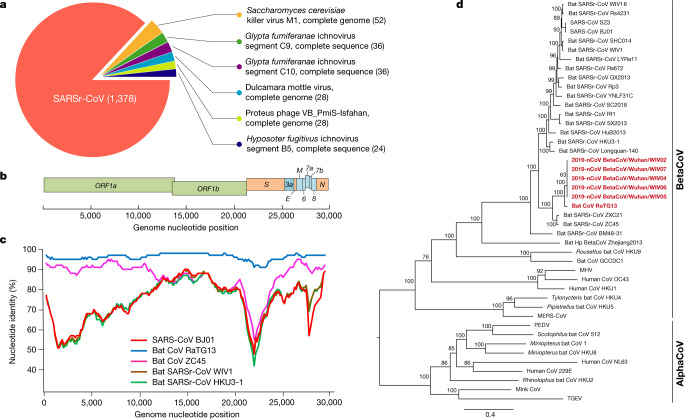
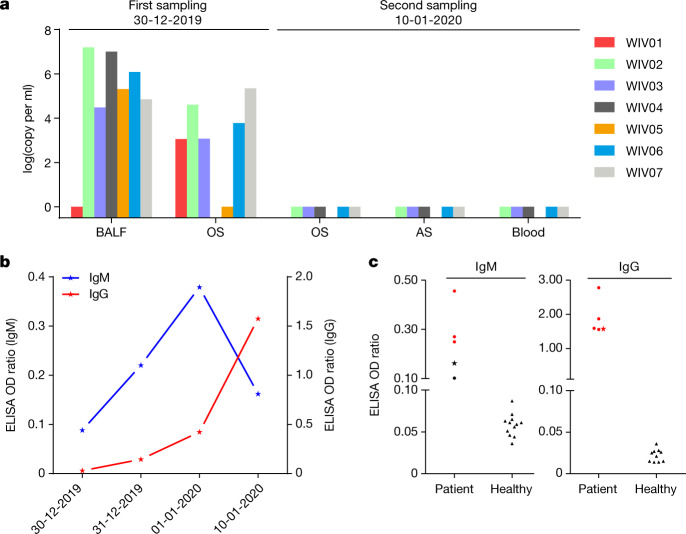
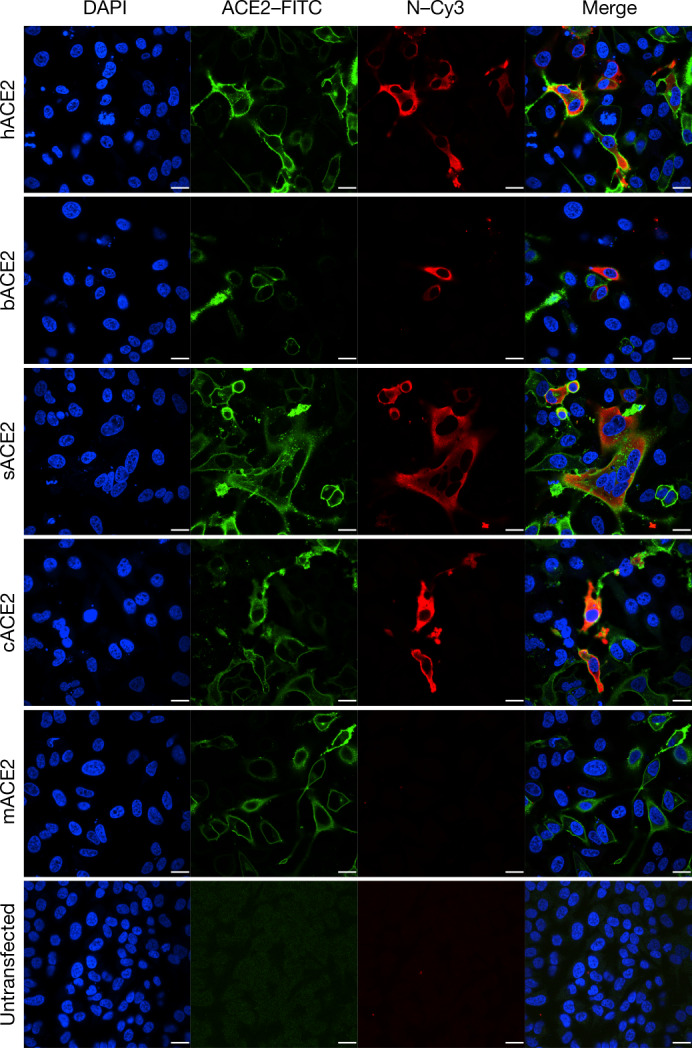
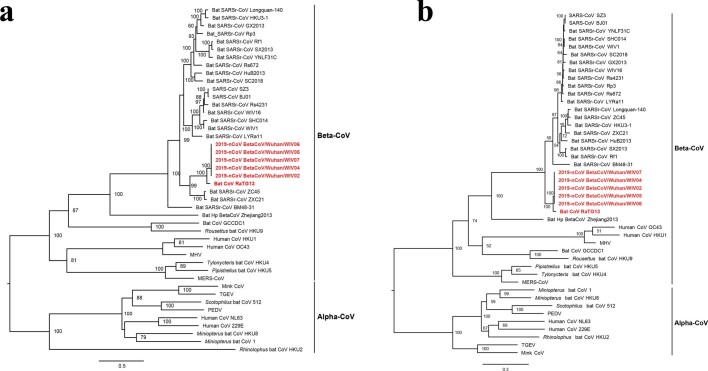
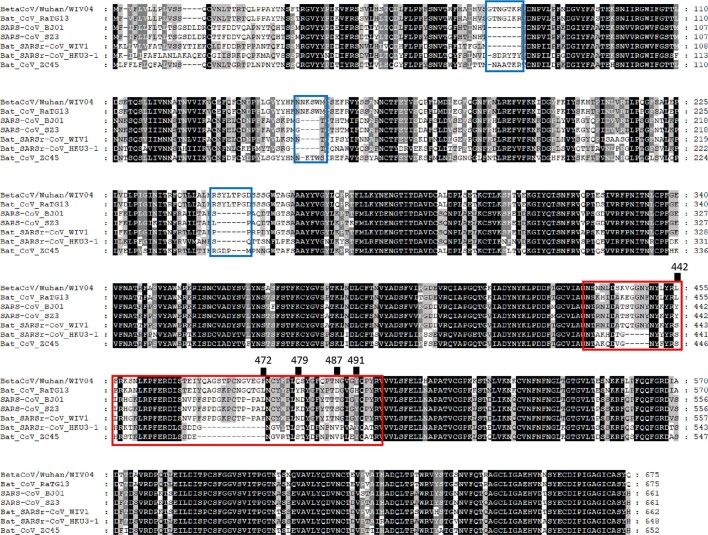
Since the outbreak of severe acute respiratory syndrome (SARS) 18 years ago, a large number of SARS-related coronaviruses (SARSr-CoVs) have been discovered in their natural reservoir host, bats 1–4 . Previous studies have shown that some bat SARSr-CoVs have the potential to infect humans 5–7 . Here we report the identification and characterization of a new coronavirus (2019-nCoV), which caused an epidemic of acute respiratory syndrome in humans in Wuhan, China. The epidemic, which started on 12 December 2019, had caused 2,794 laboratory-confirmed infections including 80 deaths by 26 January 2020. Full-length genome sequences were obtained from five patients at an early stage of the outbreak. The sequences are almost identical and share 79.6% sequence identity to SARS-CoV. Furthermore, we show that 2019-nCoV is 96% identical at the whole-genome level to a bat coronavirus. Pairwise protein sequence analysis of seven conserved non-structural proteins domains show that this virus belongs to the species of . In addition, 2019-nCoV virus isolated from the bronchoalveolar lavage fluid of a critically ill patient could be neutralized by sera from several patients. Notably, we confirmed that 2019-nCoV uses the same cell entry receptor—angiotensin converting enzyme II (ACE2)—as SARS-CoV.
Overview
The claims and statistics of this paper haven’t been checked yet.
Free: it reads the open-access text and checks the first 5 claims that cite a source we can check. Create a free account to check every claim.
Integrity signals
Registry
Cites
Statistics
Figures
Verification
Claims the paper makes
The claims and statistics of this paper haven’t been checked yet.
Free: it reads the open-access text and checks the first 5 claims that cite a source we can check. Create a free account to check every claim.
Claims other papers make about this one
Each is checked against this paper’s own text: does it say what the citing paper says it does?
The source backs part of the claim, not all of it — or backs it for a different population, condition or comparison.
In the citing paper
“SARS-CoV-2 is an enveloped, single-stranded positive-sense RNA virus with the highest, i.e. 96% of genome identity with horseshoe bat virus RaTG13 Rhinolophus affinis [3].”
From Waves and variants of SARS-CoV-2: understanding the causes and effect of the COVID-19 catastrophe (2022) · cites this paper as [3]
Experimental — accuracy not yet measuredThe source backs part of the claim, not all of it — or backs it for a different population, condition or comparison.
In the citing paper
“The disease is estimated to have originated from a seafood market in Wuhan where wild animals were traded such as marmots, bats, snakes and birds (Zhou et al., 2020).”
From How energy innovation in indoor vertical farming can improve food security, sustainability, and food safety? (2020) · cites this paper as Zhou et al., 2020
Experimental — accuracy not yet measuredThe source backs part of the claim, not all of it — or backs it for a different population, condition or comparison.
In the citing paper
“Genome sequencing demonstrated that SARS-CoV-2 shares 79.5% sequence identity with SARS-CoV (Zhou et al., 2020)”
From Oral Microbiome and SARS-CoV-2: Beware of Lung Co-infection (2020) · cites this paper as Zhou et al., 2020
Experimental — accuracy not yet measuredThe source backs part of the claim, not all of it — or backs it for a different population, condition or comparison.
In the citing paper
“This interaction requires cleavage of the S protein, likely by the cell surface protease TMPRSS2, although other proteases (such as Cathepsin B and L, CTSB/CTSL) may also be involved (4-6, 22-25).”
From Non-neuronal expression of SARS-CoV-2 entry genes in the olfactory system suggests mechanisms underlying COVID-19-associated anosmia (2020) · cites this paper as [4]
Experimental — accuracy not yet measuredThe source backs part of the claim, not all of it — or backs it for a different population, condition or comparison.
In the citing paper
“Bats (Chiroptera), representing ~22% of all mammalian species, are natural reservoirs for a wide range of zoonotic viruses, including coronaviruses, rhabdoviruses, and paramyxoviruses ( 1 – 3 ).”
From Ecological vaccination: A strategy to prevent zoonotic spillover from bats (2026) · cites this paper as [1]
Experimental — accuracy not yet measured
8 more claims about this paper
Create a free account to see every claim other papers make about this one.
Self-check
Percentages, sums and reported differences re-computed from the paper’s own numbers.
The self-check needs the paper’s full text.
Citations
Cites
Coronaviridae Study Group of the International Committee on Taxonomy of Viruses, Gorbalenya, A. E., Baker, S. C., Baric, R. S., de Groot, R. J., Drosten, C., Gulyaeva, A. A., Haagmans, B. L., Lauber, C., Leontovich, A. M., et al. (2020) · Nature Microbiology · doi:10.1038/s41564-020-0695-z · Cited by 8,403
Angiotensin-converting enzyme 2 is a functional receptor for the SARS coronavirus
Li, W., Moore, M. J., Vasilieva, N., Sui, J., Wong, S. K., Berne, M. A., Somasundaran, M., Sullivan, J. L., Luzuriaga, K., Greenough, T. C., et al. (2003) · Nature · doi:10.1038/nature02145 · Cited by 5,923
Isolation of a Novel Coronavirus from a Man with Pneumonia in Saudi Arabia
Zaki, A. M., van Boheemen, S., Bestebroer, T. M., Osterhaus, A. D. M. E., & Fouchier, R. A. M. (2012) · New England Journal of Medicine · doi:10.1056/nejmoa1211721 · Cited by 5,735
Origin and evolution of pathogenic coronaviruses
Cui, J., Li, F., & Shi, Z.-L. (2019) · Nature Reviews Microbiology · doi:10.1038/s41579-018-0118-9 · Cited by 5,515
Self-citationIdentification of a novel coronavirus in patients with severe acute respiratory syndrome
Drosten, C., Günther, S., Preiser, W., van der Werf, S., Brodt, H.-R., Becker, S., Rabenau, H., Panning, M., Kolesnikova, L., Fouchier, R. A. M., et al. (2003) · New England Journal of Medicine · doi:10.1056/nejmoa030747 · Cited by 4,574
Bats Are Natural Reservoirs of SARS-Like Coronaviruses
Li, W., Shi, Z., Yu, M., Ren, W., Smith, C., Epstein, J. H., Wang, H., Crameri, G., Hu, Z., Zhang, H., et al. (2005) · Science · doi:10.1126/science.1118391 · Cited by 2,560
Self-citationIsolation and characterization of a bat SARS-like coronavirus that uses the ACE2 receptor
Ge, X.-Y., Li, J.-L., Yang, X.-L., Chmura, A. A., Zhu, G., Epstein, J. H., Mazet, J. K., Hu, B., Zhang, W., Peng, C., et al. (2013) · Nature · doi:10.1038/nature12711 · Cited by 1,778
Self-citationGorbalenya, A. E., Baker, S. C., Baric, R. S., et al. (2020) · bioRxiv (Cold Spring Harbor Laboratory) · doi:10.1101/2020.02.07.937862 · Cited by 1,408
Al-Hanawi, M. K., Angawi, K., Alshareef, N., Qattan, A. M. N., Helmy, H. Z., Abudawood, Y., Alqurashi, M., Kattan, W. M., Kadasah, N. A., Chirwa, G. C., et al. (2020) · Frontiers in Public Health · doi:10.3389/fpubh.2020.00217 · Cited by 967
Hu, B., Zeng, L.-P., Yang, X.-L., Ge, X.-Y., Zhang, W., Li, B., Xie, J.-Z., Shen, X.-R., Zhang, Y.-Z., Wang, N., et al. (2017) · PLOS Pathogens · doi:10.1371/journal.ppat.1006698 · Cited by 950
Self-citation
Cited by
Items 801–900 of 1,208
Current epidemiological and clinical features of COVID-19; a global perspective from China
Tu, H., Tu, S., Gao, S., Shao, A., & Sheng, J. (2020) · Journal of Infection · doi:10.1016/j.jinf.2020.04.011 · Cited by 283
Potential pathogenesis of ageusia and anosmia in COVID‐19 patients
Vaira, L. A., Salzano, G., Fois, A. G., Piombino, P., & De Riu, G. (2020) · International Forum of Allergy & Rhinology · doi:10.1002/alr.22593 · Cited by 283
Current status of potential therapeutic candidates for the COVID-19 crisis
Zhang, J., Xie, B., & Hashimoto, K. (2020) · Brain, Behavior, and Immunity · doi:10.1016/j.bbi.2020.04.046 · Cited by 283
“…2020; Yang et al., 2020; Yao et al., 2020), acute cardiac injury (Han et al., 2020a; Strabelli and Uip, 2020; Wang et al., 2020a; Yao et al., 2020; Zhou et al., 2020a), acute kidney injury (Guan et al., 2020; Li et al., 2020a; Pan et al., 2020; Wang et al., 2020a; Yao et al., 2020), acute liver…”
Tan, T. K., Rijal, P., Rahikainen, R., Keeble, A. H., Schimanski, L., Hussain, S., Harvey, R., Hayes, J. W. P., Edwards, J. C., McLean, R. K., et al. (2021) · Nature Communications · doi:10.1038/s41467-020-20654-7 · Cited by 283
Dong, E., Ratcliff, J., Goyea, T. D., Katz, A., Lau, R., Ng, T. K., Garcia, B., Bolt, E., Prata, S., Zhang, D., et al. (2022) · The Lancet Infectious Diseases · doi:10.1016/s1473-3099(22)00434-0 · Cited by 283
Ogando, N. S., Zevenhoven-Dobbe, J. C., van der Meer, Y., Bredenbeek, P. J., Posthuma, C. C., & Snijder, E. J. (2020) · Journal of Virology · doi:10.1128/jvi.01246-20 · Cited by 282
“This was not expected given the viable phenotype of SARS-CoV ExoN knockout mutants and the close relationship between that virus and SARS-CoV-2 (43, 50), which is for example reflected in nsp14 amino acid sequences being 95% identical between the two viruses (51).”
BackgroundGenome-wide mapping of SARS-CoV-2 RNA structures identifies therapeutically-relevant elements
Manfredonia, I., Nithin, C., Ponce-Salvatierra, A., Ghosh, P., Wirecki, T. K., Marinus, T., Ogando, N. S., Snijder, E. J., van Hemert, M. J., Bujnicki, J. M., et al. (2020) · Nucleic Acids Research · doi:10.1093/nar/gkaa1053 · Cited by 282
“Since then, two other major outbreaks of coronaviruses occurred, one by the Middle East respiratory syndrome coronavirus (MERS-CoV) in 2012 and recently by the new SARS-related coronavirus SARS-CoV-2 (also known as 2019-nCoV) at the end of 2019 (6).”
BackgroundUdwadia, Z. F., Singh, P., Barkate, H., Patil, S., Rangwala, S., Pendse, A., Kadam, J., Wu, W., Caracta, C. F., & Tandon, M. (2021) · International Journal of Infectious Diseases · doi:10.1016/j.ijid.2020.11.142 · Cited by 282
On the origin and evolution of SARS-CoV-2
Singh, D., & Yi, S. V. (2021) · Experimental & Molecular Medicine · doi:10.1038/s12276-021-00604-z · Cited by 281
Epidemiology and Clinical Characteristics of COVID-19
Huang, X., Wei, F., Hu, L., Wen, L., & Chen, K. (2020) · Archives of Iranian Medicine · doi:10.34172/aim.2020.09 · Cited by 281
Boras, B., Jones, R. M., Anson, B. J., Arenson, D., Aschenbrenner, L., Bakowski, M. A., Beutler, N., Binder, J., Chen, E., Eng, H., et al. (2021) · Nature Communications · doi:10.1038/s41467-021-26239-2 · Cited by 280
Self-citationDiscovery and development of safe-in-man broad-spectrum antiviral agents
Andersen, P. I., Ianevski, A., Lysvand, H., Vitkauskiene, A., Oksenych, V., Bjørås, M., Telling, K., Lutsar, I., Dumpis, U., Irie, Y., et al. (2020) · International Journal of Infectious Diseases · doi:10.1016/j.ijid.2020.02.018 · Cited by 280
Basu, A., Sarkar, A., & Maulik, U. (2020) · Scientific Reports · doi:10.1038/s41598-020-74715-4 · Cited by 280
Antibodies to combat viral infections: development strategies and progress
Pantaleo, G., Correia, B., Fenwick, C., Joo, V. S., & Perez, L. (2022) · Nature Reviews Drug Discovery · doi:10.1038/s41573-022-00495-3 · Cited by 279
The coronavirus proofreading exoribonuclease mediates extensive viral recombination
Gribble, J., Stevens, L. J., Agostini, M. L., Anderson-Daniels, J., Chappell, J. D., Lu, X., Pruijssers, A. J., Routh, A. L., & Denison, M. R. (2021) · PLOS Pathogens · doi:10.1371/journal.ppat.1009226 · Cited by 279
Antibody testing for COVID-19: A report from the National COVID Scientific Advisory Panel
Adams, E. R., Ainsworth, M., Anand, R., Andersson, M. I., Auckland, K., Baillie, J. K., Barnes, E., Beer, S., Bell, J. I., Berry, T., et al. (2020) · Wellcome Open Research · doi:10.12688/wellcomeopenres.15927.1 · Cited by 278
COVID–19-associated coagulopathy: An exploration of mechanisms
Colling, M. E., & Kanthi, Y. (2020) · Vascular Medicine · doi:10.1177/1358863x20932640 · Cited by 278
(2020) · doi:10.1101/2020.04.15.20066407 · Cited by 278
Loop mediated isothermal amplification (LAMP) assays as a rapid diagnostic for COVID-19
Kashir, J., & Yaqinuddin, A. (2020) · Medical Hypotheses · doi:10.1016/j.mehy.2020.109786 · Cited by 277
COVID-19: animals, veterinary and zoonotic links
Tiwari, R., Dhama, K., Sharun, K., Iqbal Yatoo, M., Malik, Y. S., Singh, R., Michalak, I., Sah, R., Bonilla-Aldana, D. K., & Rodriguez-Morales, A. J. (2020) · Veterinary Quarterly · doi:10.1080/01652176.2020.1766725 · Cited by 277
“As seen earlier, bats were found involved in the transmission of SARS-CoV and MERS-CoV, thereby researchers forecasted on the role of bats in the origin and transmission for the current pandemic of SARS-CoV-2 (Fan et al. 2019; Malik et al. 2020a; Wong et al. 2019; Zhou et al. 2020a).”
BackgroundInfluentialPeng, Q., Peng, R., Yuan, B., Zhao, J., Wang, M., Wang, X., Wang, Q., Sun, Y., Fan, Z., Qi, J., et al. (2020) · Cell Reports · doi:10.1016/j.celrep.2020.107774 · Cited by 277
“It has been shown that humans have a relatively lower body temperature than bats, which are potentially the natural host of a panel of zoonotic viruses, including SARS-CoV and SARS-CoV-2 (O’Shea et al., 2014; Zhou et al., 2020).”
InfluentialSelf-citationArchitecture and self‐assembly of the SARS‐CoV ‐2 nucleocapsid protein
Ye, Q., West, A. M. V., Silletti, S., & Corbett, K. D. (2020) · Protein Science · doi:10.1002/pro.3909 · Cited by 277
“Isolation and sequencing of SARSCoV-2 were reported in January 2020, and the virus was found to be highly related to SARS and share a probable origin in bats.(2,6) Since its emergence in December 2019 in Wuhan, China, the virus has infected over 10.”
Appelberg, S., Gupta, S., Svensson Akusjärvi, S., Ambikan, A. T., Mikaeloff, F., Saccon, E., Végvári, Á., Benfeitas, R., Sperk, M., Ståhlberg, M., et al. (2020) · Emerging Microbes & Infections · doi:10.1080/22221751.2020.1799723 · Cited by 277
Muecksch, F., Weisblum, Y., Barnes, C. O., Schmidt, F., Schaefer-Babajew, D., Wang, Z., C. Lorenzi, J. C., Flyak, A. I., DeLaitsch, A. T., Huey-Tubman, K. E., et al. (2021) · Immunity · doi:10.1016/j.immuni.2021.07.008 · Cited by 277
Early triage of critically ill COVID-19 patients using deep learning
Liang, W., Yao, J., Chen, A., Lv, Q., Zanin, M., Liu, J., Wong, S., Li, Y., Lu, J., Liang, H., et al. (2020) · Nature Communications · doi:10.1038/s41467-020-17280-8 · Cited by 276
Self-citationCOVID-19 vaccine: A recent update in pipeline vaccines, their design and development strategies
Rawat, K., Kumari, P., & Saha, L. (2021) · European Journal of Pharmacology · doi:10.1016/j.ejphar.2020.173751 · Cited by 276
COVID-19, una emergencia de salud pública mundial
Palacios Cruz, M., Santos, E., Velázquez Cervantes, M. A., & León Juárez, M. (2021) · Revista Clínica Española · doi:10.1016/j.rce.2020.03.001 · Cited by 276
Li, N., Hui, H., Bray, B., Gonzalez, G. M., Zeller, M., Anderson, K. G., Knight, R., Smith, D., Wang, Y., Carlin, A. F., et al. (2021) · Cell Reports · doi:10.1016/j.celrep.2021.109091 · Cited by 275
Self-citationCOVID-19: A review of therapeutic strategies and vaccine candidates
Izda, V., Jeffries, M. A., & Sawalha, A. H. (2021) · Clinical Immunology · doi:10.1016/j.clim.2020.108634 · Cited by 274
Detection of SARS‐CoV‐2 in saliva and characterization of oral symptoms in COVID‐19 patients
Chen, L., Zhao, J., Peng, J., Li, X., Deng, X., Geng, Z., Shen, Z., Guo, F., Zhang, Q., Jin, Y., et al. (2020) · Cell Proliferation · doi:10.1111/cpr.12923 · Cited by 273
Seyed Hosseini, E., Riahi Kashani, N., Nikzad, H., Azadbakht, J., Hassani Bafrani, H., & Haddad Kashani, H. (2020) · Virology · doi:10.1016/j.virol.2020.08.011 · Cited by 273
COVID-19: Emergence, Spread, Possible Treatments, and Global Burden
Keni, R., Alexander, A., Nayak, P. G., Mudgal, J., & Nandakumar, K. (2020) · Frontiers in Public Health · doi:10.3389/fpubh.2020.00216 · Cited by 272
Tajbakhsh, A., Gheibi Hayat, S. M., Taghizadeh, H., Akbari, A., inabadi, M., Savardashtaki, A., Johnston, T. P., & Sahebkar, A. (2021) · Expert Review of Anti-infective Therapy · doi:10.1080/14787210.2020.1822737 · Cited by 272
Robinot, R., Hubert, M., de Melo, G. D., Lazarini, F., Bruel, T., Smith, N., Levallois, S., Larrous, F., Fernandes, J., Gellenoncourt, S., et al. (2021) · Nature Communications · doi:10.1038/s41467-021-24521-x · Cited by 272
An in silico deep learning approach to multi-epitope vaccine design: a SARS-CoV-2 case study
Yang, Z., Bogdan, P., & Nazarian, S. (2021) · Scientific Reports · doi:10.1038/s41598-021-81749-9 · Cited by 271
Wang, J., & Wang, Z. (2020) · International Journal of Environmental Research and Public Health · doi:10.3390/ijerph17072235 · Cited by 270
Pillay, L., Janse van Rensburg, D. C. C., Jansen van Rensburg, A., Ramagole, D. A., Holtzhausen, L., Dijkstra, H. P., & Cronje, T. (2020) · Journal of Science and Medicine in Sport · doi:10.1016/j.jsams.2020.05.016 · Cited by 270
“This study aims to investiate the perceptions of South African elite and semi-elite athletes n (1) return to sport (RTS); (2) maintenance of physical condiioning and other activities; (3) sleep; (4) nutrition; (5) mental ealth; (6) healthcare access; and (7) knowledge of the COVID-19 isease.”
COVID-19, Renin-Angiotensin System and Endothelial Dysfunction
Amraei, R., & Rahimi, N. (2020) · Cells · doi:10.3390/cells9071652 · Cited by 270
“TMPRSS2 can also cleave spike glycoprotein of SARS-CoV and SARS-CoV-2 which activates the spike protein for cathepsin L-independent host cell entry [60,61].”
BackgroundInfluentialCOVID-19 outbreak: history, mechanism, transmission, structural studies and therapeutics
Yesudhas, D., Srivastava, A., & Gromiha, M. M. (2021) · Infection · doi:10.1007/s15010-020-01516-2 · Cited by 270
SARS-CoV-2: from its discovery to genome structure, transcription, and replication
Brant, A. C., Tian, W., Majerciak, V., Yang, W., & Zheng, Z.-M. (2021) · Cell & Bioscience · doi:10.1186/s13578-021-00643-z · Cited by 270
A brief review of socio-economic and environmental impact of Covid-19
Bashir, M. F., MA, B., & Shahzad, L. (2020) · Air Quality, Atmosphere & Health · doi:10.1007/s11869-020-00894-8 · Cited by 269
Propolis and its potential against SARS-CoV-2 infection mechanisms and COVID-19 disease
Berretta, A. A., Silveira, M. A. D., Cóndor Capcha, J. M., & De Jong, D. (2020) · Biomedicine & Pharmacotherapy · doi:10.1016/j.biopha.2020.110622 · Cited by 269
Zimmerman, M. I., Porter, J. R., Ward, M. D., Singh, S., Vithani, N., Meller, A., Mallimadugula, U. L., Kuhn, C. E., Borowsky, J. H., Wiewiora, R. P., et al. (2021) · Nature Chemistry · doi:10.1038/s41557-021-00707-0 · Cited by 269
Rao, S., Lau, A., & So, H.-C. (2020) · Diabetes Care · doi:10.2337/dc20-0643 · Cited by 268
Yamamoto, M., Kiso, M., Sakai-Tagawa, Y., Iwatsuki-Horimoto, K., Imai, M., Takeda, M., Kinoshita, N., Ohmagari, N., Gohda, J., Semba, K., et al. (2020) · Viruses · doi:10.3390/v12060629 · Cited by 268
The impact of COVID-19 pandemic on sustainable development goals – A survey
Wang, Q., & Huang, R. (2021) · Environmental Research · doi:10.1016/j.envres.2021.111637 · Cited by 268
ACE2/ADAM17/TMPRSS2 Interplay May Be the Main Risk Factor for COVID-19
Zipeto, D., Palmeira, J. D. F., Argañaraz, G. A., & Argañaraz, E. R. (2020) · Frontiers in Immunology · doi:10.3389/fimmu.2020.576745 · Cited by 267
Mazini, L., Ezzoubi, M., & Malka, G. (2021) · Stem Cell Research & Therapy · doi:10.1186/s13287-020-02006-w · Cited by 267
Perspectives on therapeutic neutralizing antibodies against the Novel Coronavirus SARS-CoV-2
Zhou, G., & Zhao, Q. (2020) · International Journal of Biological Sciences · doi:10.7150/ijbs.45123 · Cited by 266
Yan, Y., Shin, W. I., Pang, Y. X., Meng, Y., Lai, J., You, C., Zhao, H., Lester, E., Wu, T., & Pang, C. H. (2020) · International Journal of Environmental Research and Public Health · doi:10.3390/ijerph17072323 · Cited by 266
Genome-wide analysis of SARS-CoV-2 virus strains circulating worldwide implicates heterogeneity
Islam, M. R., Hoque, M. N., Rahman, M. S., Alam, A. S. M. R. U., Akther, M., Puspo, J. A., Akter, S., Sultana, M., Crandall, K. A., & Hossain, M. A. (2020) · Scientific Reports · doi:10.1038/s41598-020-70812-6 · Cited by 266
Agley, J., & Xiao, Y. (2021) · BMC Public Health · doi:10.1186/s12889-020-10103-x · Cited by 266
Bakaloudi, D. R., Barazzoni, R., Bischoff, S. C., Breda, J., Wickramasinghe, K., & Chourdakis, M. (2022) · Clinical Nutrition · doi:10.1016/j.clnu.2021.04.015 · Cited by 266
“In December 2019 a severe acute respiratory syndrome caused by a novel coronavirus (SARS-COV-2) was first reported in Wuhan, China due to an outbreak of a severe pneumonia across the population [1].”
UFold: fast and accurate RNA secondary structure prediction with deep learning
Fu, L., Cao, Y., Wu, J., Peng, Q., Nie, Q., & Xie, X. (2022) · Nucleic Acids Research · doi:10.1093/nar/gkab1074 · Cited by 266
Pang, B., Xu, J., Liu, Y., Peng, H., Feng, W., Cao, Y., Wu, J., Xiao, H., Pabbaraju, K., Tipples, G., et al. (2020) · Analytical Chemistry · doi:10.1021/acs.analchem.0c04047 · Cited by 265
Wu, J., Shi, Y., Pan, X., Wu, S., Hou, R., Zhang, Y., Zhong, T., Tang, H., Du, W., Wang, L., et al. (2021) · Cell Reports · doi:10.1016/j.celrep.2021.108761 · Cited by 265
“Sensing CoV genomic ssRNA or replicated dsRNAmainly occurs in the cytosolic or endosomal compartment by TLRs and RLRs. TLR3-TRIF and TLR7-MyD88 signaling are defined as major innate immune pathways against SARS-CoV and MERS-CoV (Cervantes-Barragan et al., 2007; Channappanavar et al., 2019; Sheahan et al., 2008; Totura…”
InfluentialSelf-citationVetter, P., Vu, D. L., L’Huillier, A. G., Schibler, M., Kaiser, L., & Jacquerioz, F. (2020) · BMJ · doi:10.1136/bmj.m1470 · Cited by 264
Identification of Human Single-Domain Antibodies against SARS-CoV-2
Wu, Y., Li, C., Xia, S., Tian, X., Kong, Y., Wang, Z., Gu, C., Zhang, R., Tu, C., Xie, Y., et al. (2020) · Cell Host & Microbe · doi:10.1016/j.chom.2020.04.023 · Cited by 264
“, 2020), marks the third major outbreak caused by a new coronavirus in the past two decades, following severe acute respiratory syndrome coronavirus (SARS-CoV) andMiddle East respiratory syndrome coronavirus (MERS-CoV) (Li et al., 2020;Wu et al., 2020; Zhou et al., 2020; Zhu et al., 2020).”
InfluentialNucleic Acid Tests for Clinical Translation
Li, M., Yin, F., Song, L., Mao, X., Li, F., Fan, C., Zuo, X., & Xia, Q. (2021) · Chemical Reviews · doi:10.1021/acs.chemrev.1c00241 · Cited by 264
Neutrophils and Neutrophil Extracellular Traps Drive Necroinflammation in COVID-19
Tomar, B., Anders, H.-J., Desai, J., & Mulay, S. R. (2020) · Cells · doi:10.3390/cells9061383 · Cited by 263
Mhatre, S., Srivastava, T., Naik, S., & Patravale, V. (2021) · Phytomedicine · doi:10.1016/j.phymed.2020.153286 · Cited by 263
Benetti, E., Tita, R., Spiga, O., Ciolfi, A., Birolo, G., Bruselles, A., Doddato, G., Giliberti, A., Marconi, C., Musacchia, F., et al. (2020) · European Journal of Human Genetics · doi:10.1038/s41431-020-0691-z · Cited by 263
“conducted virus infectivity studies and showed that ACE2 is essential for SARS-CoV-2 to enter HeLa cells [9].”
MethodSARS-CoV-2 infection, disease and transmission in domestic cats
Gaudreault, N. N., Trujillo, J. D., Carossino, M., Meekins, D. A., Morozov, I., Madden, D. W., Indran, S. V., Bold, D., Balaraman, V., Kwon, T., et al. (2020) · Emerging Microbes & Infections · doi:10.1080/22221751.2020.1833687 · Cited by 263
Azuma, K., Yanagi, U., Kagi, N., Kim, H., Ogata, M., & Hayashi, M. (2020) · Environmental Health and Preventive Medicine · doi:10.1186/s12199-020-00904-2 · Cited by 263
ACE2 localizes to the respiratory cilia and is not increased by ACE inhibitors or ARBs
Lee, I. T., Nakayama, T., Wu, C.-T., Goltsev, Y., Jiang, S., Gall, P. A., Liao, C.-K., Shih, L.-C., Schürch, C. M., McIlwain, D. R., et al. (2020) · Nature Communications · doi:10.1038/s41467-020-19145-6 · Cited by 263
Self-citationMa, C., Hu, Y., Townsend, J. A., Lagarias, P. I., Marty, M. T., Kolocouris, A., & Wang, J. (2020) · ACS Pharmacology & Translational Science · doi:10.1021/acsptsci.0c00130 · Cited by 262
Susceptibility of White-Tailed Deer (Odocoileus virginianus) to SARS-CoV-2
Palmer, M. V., Martins, M., Falkenberg, S., Buckley, A., Caserta, L. C., Mitchell, P. K., Cassmann, E. D., Rollins, A., Zylich, N. C., Renshaw, R. W., et al. (2021) · Journal of Virology · doi:10.1128/jvi.00083-21 · Cited by 262
“degree of similarity to coronaviruses circulating in bats (3, 5, 6), with current evidence pointing 66 to horseshoe bats as the most likely source of the ancestral virus that crossed the species barrier 67 to cause the global COVID-19 pandemic in humans (7, 8).”
BackgroundRao, L., Xia, S., Xu, W., Tian, R., Yu, G., Gu, C., Pan, P., Meng, Q.-F., Cai, X., Qu, D., et al. (2020) · Proceedings of the National Academy of Sciences · doi:10.1073/pnas.2014352117 · Cited by 260
Effective Inhibition of SARS-CoV-2 Entry by Heparin and Enoxaparin Derivatives
Tandon, R., Sharp, J. S., Zhang, F., Pomin, V. H., Ashpole, N. M., Mitra, D., McCandless, M. G., Jin, W., Liu, H., Sharma, P., et al. (2021) · Journal of Virology · doi:10.1128/jvi.01987-20 · Cited by 260
Wu, Y., Liu, C., Dong, L., Zhang, C., Chen, Y., Liu, J., Zhang, C., Duan, C., Zhang, H., Mol, B., et al. (2020) · BJOG: An International Journal of Obstetrics & Gynaecology · doi:10.1111/1471-0528.16276 · Cited by 259
“2,23 Therefore, the distribution of ACE2 expression may be closely associated with target-organ damage and viral transmission.”
BackgroundSelf-citationACE2, TMPRSS2 distribution and extrapulmonary organ injury in patients with COVID-19
Dong, M., Zhang, J., Ma, X., Tan, J., Chen, L., Liu, S., Xin, Y., & Zhuang, L. (2020) · Biomedicine & Pharmacotherapy · doi:10.1016/j.biopha.2020.110678 · Cited by 259
Robots Under COVID-19 Pandemic: A Comprehensive Survey
Shen, Y., Guo, D., Long, F., Mateos, L. A., Ding, H., Xiu, Z., Hellman, R. B., King, A., Chen, S., Zhang, C., et al. (2021) · IEEE Access · doi:10.1109/access.2020.3045792 · Cited by 259
Ovsyannikova, I. G., Haralambieva, I. H., Crooke, S. N., Poland, G. A., & Kennedy, R. B. (2020) · Immunological Reviews · doi:10.1111/imr.12897 · Cited by 258
Ravindra, N. G., Alfajaro, M. M., Gasque, V., Huston, N. C., Wan, H., Szigeti-Buck, K., Yasumoto, Y., Greaney, A. M., Habet, V., Chow, R. D., et al. (2021) · PLOS Biology · doi:10.1371/journal.pbio.3001143 · Cited by 258
“SARS-CoV-2 entry into cells depends on the binding of the viral spike (S) protein to its cognate receptor angiotensin converting enzyme II (ACE2) on the cell surface [6,10].”
BackgroundSelf-citationHoffmann, M., Hofmann-Winkler, H., Krüger, N., Kempf, A., Nehlmeier, I., Graichen, L., Arora, P., Sidarovich, A., Moldenhauer, A.-S., Winkler, M. S., et al. (2021) · Cell Reports · doi:10.1016/j.celrep.2021.109415 · Cited by 258
Updated Approaches against SARS-CoV-2
Li, H., Zhou, Y., Zhang, M., Wang, H., Zhao, Q., & Liu, J. (2020) · Antimicrobial Agents and Chemotherapy · doi:10.1128/aac.00483-20 · Cited by 258
Pathophysiology of COVID-19: Mechanisms Underlying Disease Severity and Progression
Bohn, M. K., Hall, A., Sepiashvili, L., Jung, B., Steele, S., & Adeli, K. (2020) · Physiology · doi:10.1152/physiol.00019.2020 · Cited by 258
Impact of COVID-19 in the Mental Health in Elderly: Psychological and Biological Updates
Grolli, R. E., Mingoti, M. E. D., Bertollo, A. G., Luzardo, A. R., Quevedo, J., Réus, G. Z., & Ignácio, Z. M. (2021) · Molecular Neurobiology · doi:10.1007/s12035-020-02249-x · Cited by 258
SARS-CoV-2 infection of primary human lung epithelium for COVID-19 modeling and drug discovery
Mulay, A., Konda, B., Garcia, G., Yao, C., Beil, S., Villalba, J. M., Koziol, C., Sen, C., Purkayastha, A., Kolls, J. K., et al. (2021) · Cell Reports · doi:10.1016/j.celrep.2021.109055 · Cited by 258
“…virus, is the most recent of a series of severe viral infections that typically initiate in the upper respiratory tract but have the potential to cause life-threatening pneumonia as a result of infection and inflammation of the lower respiratory tract (Zhou et al., 2020; Tay et al., 2020).”
Bolay, H., Gül, A., & Baykan, B. (2020) · Headache: The Journal of Head and Face Pain · doi:10.1111/head.13856 · Cited by 257
Humeniuk, R., Mathias, A., Cao, H., Osinusi, A., Shen, G., Chng, E., Ling, J., Vu, A., & German, P. (2020) · Clinical and Translational Science · doi:10.1111/cts.12840 · Cited by 257
Datta, P. K., Liu, F., Fischer, T., Rappaport, J., & Qin, X. (2020) · Theranostics · doi:10.7150/thno.48076 · Cited by 257
“This sequence is conserved among all SARS-CoV-2 isolates sequenced to date, but is not found in the sequence of the S protein of its closest relative, RaTG13 [33].”
BackgroundSARS-CoV-2 uses a multipronged strategy to impede host protein synthesis
Finkel, Y., Gluck, A., Nachshon, A., Winkler, R., Fisher, T., Rozman, B., Mizrahi, O., Lubelsky, Y., Zuckerman, B., Slobodin, B., et al. (2021) · Nature · doi:10.1038/s41586-021-03610-3 · Cited by 257
Early postmortem brain MRI findings in COVID-19 non-survivors
Coolen, T., Lolli, V., Sadeghi, N., Rovaï, A., Trotta, N., Taccone, F. S., Creteur, J., Henrard, S., Goffard, J.-C., De Witte, O., et al. (2020) · doi:10.1101/2020.05.04.20090316 · Cited by 256
Early postmortem brain MRI findings in COVID-19 non-survivors
Coolen, T., Lolli, V., Sadeghi, N., Rovai, A., Trotta, N., Taccone, F. S., Creteur, J., Henrard, S., Goffard, J.-C., Dewitte, O., et al. (2020) · Neurology · doi:10.1212/wnl.0000000000010116 · Cited by 256
Structure, mechanism and crystallographic fragment screening of the SARS-CoV-2 NSP13 helicase
Newman, J. A., Douangamath, A., Yadzani, S., Yosaatmadja, Y., Aimon, A., Brandão-Neto, J., Dunnett, L., Gorrie-stone, T., Skyner, R., Fearon, D., et al. (2021) · Nature Communications · doi:10.1038/s41467-021-25166-6 · Cited by 256
Disease severity-specific neutrophil signatures in blood transcriptomes stratify COVID-19 patients
(DeCOI), G. C.-1. O. I., Aschenbrenner, A. C., Mouktaroudi, M., Krämer, B., Oestreich, M., Antonakos, N., Nuesch-Germano, M., Gkizeli, K., Bonaguro, L., Reusch, N., et al. (2021) · Genome Medicine · doi:10.1186/s13073-020-00823-5 · Cited by 255
Study of SARS-CoV-2 in semen and urine samples of a volunteer with positive naso-pharyngeal swab
Paoli, D., Pallotti, F., Colangelo, S., Basilico, F., Mazzuti, L., Turriziani, O., Antonelli, G., Lenzi, A., & Lombardo, F. (2020) · Journal of Endocrinological Investigation · doi:10.1007/s40618-020-01261-1 · Cited by 255
“In any case, ACE2 expression patterns in different tissues suggests the possibility of different extra-respiratory viral transmission routes through several body fluids, also including the seminal fluid [5].”
BackgroundInfluentialStatus of SARS-CoV-2 in cerebrospinal fluid of patients with COVID-19 and stroke
Al Saiegh, F., Ghosh, R., Leibold, A., Avery, M. B., Schmidt, R. F., Theofanis, T., Mouchtouris, N., Philipp, L., Peiper, S. C., Wang, Z.-X., et al. (2020) · Journal of Neurology, Neurosurgery & Psychiatry · doi:10.1136/jnnp-2020-323522 · Cited by 255
Obesity: A critical risk factor in the COVID‐19 pandemic
Kwok, S., Adam, S., Ho, J. H., Iqbal, Z., Turkington, P., Razvi, S., Le Roux, C. W., Soran, H., & Syed, A. A. (2020) · Clinical Obesity · doi:10.1111/cob.12403 · Cited by 255
“cellular serine protease TMPRSS2, facilitating binding with angiotensinconverting enzyme 2 (ACE2) receptor to gain cellular entry.(6,7) Compared to SARS-CoV, the novel SARS-CoV-2 has higher affinity for ACE2,(8) and”
BackgroundSelf-Reporting and Photothermally Enhanced Rapid Bacterial Killing on a Laser-Induced Graphene Mask
Huang, L., Xu, S., Wang, Z., Xue, K., Su, J., Song, Y., Chen, S., Zhu, C., Tang, B. Z., & Ye, R. (2020) · ACS Nano · doi:10.1021/acsnano.0c05330 · Cited by 255
High‐Throughput Metagenomics for Identification of Pathogens in the Clinical Settings
Li, N., Cai, Q., Miao, Q., Song, Z., Fang, Y., & Hu, B. (2021) · Small Methods · doi:10.1002/smtd.202000792 · Cited by 255
Self-citationA Comprehensive Review of COVID-19 Virology, Vaccines, Variants, and Therapeutics
Forchette, L., Sebastian, W., & Liu, T. (2021) · Current Medical Science · doi:10.1007/s11596-021-2395-1 · Cited by 254
Virome characterization of game animals in China reveals a spectrum of emerging pathogens
He, W.-T., Hou, X., Zhao, J., Sun, J., He, H., Si, W., Wang, J., Jiang, Z., Yan, Z., Xing, G., et al. (2022) · Cell · doi:10.1016/j.cell.2022.02.014 · Cited by 254
Neutralizing antibody vaccine for pandemic and pre-emergent coronaviruses
Saunders, K. O., Lee, E., Parks, R., Martinez, D. R., Li, D., Chen, H., Edwards, R. J., Gobeil, S., Barr, M., Mansouri, K., et al. (2021) · Nature · doi:10.1038/s41586-021-03594-0 · Cited by 253
Self-citationEngineered ACE2 receptor traps potently neutralize SARS-CoV-2
Glasgow, A., Glasgow, J., Limonta, D., Solomon, P., Lui, I., Zhang, Y., Nix, M. A., Rettko, N. J., Zha, S., Yamin, R., et al. (2020) · Proceedings of the National Academy of Sciences · doi:10.1073/pnas.2016093117 · Cited by 251
SARS-CoV-2/COVID-19: el virus, la enfermedad y la pandemia
Díaz-Castrillón, F. J., & Toro-Montoya, A. I. (2020) · Medicina y Laboratorio · doi:10.36384/01232576.268 · Cited by 249
“La ACE2 se encuentra presente en mayores cantidades en el riñón, los pulmones y el corazón, y participa en la trasformación de la angiotensina I en angiotensina 1-9, y de la angiotensina II en angiotensina 1-7.”
BackgroundInfluentialZoonotic spillover: Understanding basic aspects for better prevention
Ellwanger, J. H., & Chies, J. A. B. (2021) · Genetics and Molecular Biology · doi:10.1590/1678-4685-gmb-2020-0355 · Cited by 249
Pan, Y., Long, L., Zhang, D., Yuan, T., Cui, S., Yang, P., Wang, Q., & Ren, S. (2020) · Clinical Chemistry · doi:10.1093/clinchem/hvaa091 · Cited by 248
“(SARS-CoV-2) has caused an expanding pandemic of Corona Virus Disease-2019 (COVID-19) (1, 2, 3, 4).”
BackgroundAntiviral Potential of Nanoparticles—Can Nanoparticles Fight Against Coronaviruses?
Gurunathan, S., Qasim, M., Choi, Y., Do, J. T., Park, C., Hong, K., Kim, J.-H., & Song, H. (2020) · Nanomaterials · doi:10.3390/nano10091645 · Cited by 248
“COVID-19 is caused by the novel CoV, SARS-CoV-2 [4,5].”
BackgroundMethod
Metadata
- Authors
- Zhou, P., Yang, X.-L., Wang, X.-G., Hu, B., Zhang, L., Zhang, W., Si, H.-R., Zhu, Y., Li, B., Huang, C.-L., Chen, H.-D., Chen, J., Luo, Y., Guo, H., Jiang, R.-D., Liu, M.-Q., Chen, Y., Shen, X.-R., Wang, X., Zheng, X.-S., Zhao, K., Chen, Q.-J., Deng, F., Liu, L.-L., Yan, B., Zhan, F.-X., Wang, Y.-Y., Xiao, G.-F., & Shi, Z.-L.
- Affiliations
- Chinese Academy of Sciences (CN)
- Jinyintan Hospital (CN)
- Hubei Provincial Center for Disease Control and Prevention (CN)
- Corresponding author
- Shi, Zheng-Li
- Venue
- Nature
- Published
- 2020-02-03
- Volume
- 579
- Issue
- 7798
- Pages
- 270-273
- ISSN
- 0028-0836 (ISSN-L)
- 1476-4687
- PMC
- PMC7095418
- OpenAlex
- W3004280078
- Cited by
- 21,969
- References
- 19
- Citations by year
- 2026: 363 · 2025: 769 · 2024: 1366 · 2023: 2080 · 2022: 3751 · 2021: 6147 · 2020: 7448
- FWCI
- 638.99
- Type
- journal article
- Language
- en
- Update notices
- addendum (2020-11-17)
- Open access
- hybrid
- doi.org
- Licence
- cc-by
- creativecommons.org/licenses/by/4.0 (tdm)
- creativecommons.org/licenses/by/4.0 (vor)
- Locations
- Nature (publishedVersion, cc-by)
- bioRxiv (Cold Spring Harbor Laboratory) (acceptedVersion)
- PubMed Central (publishedVersion, cc-by)
- PubMed (publishedVersion)
- LA Referencia (Red Federada de Repositorios Institucionales de Publicaciones Científicas) (publishedVersion, cc-by)
- Digital Commons - University of South Florida (University of South Florida) (submittedVersion)
- RePEc: Research Papers in Economics (submittedVersion)
- LA Referencia (Red Federada de Repositorios Institucionales de Publicaciones Científicas) (submittedVersion, cc-by)
- Funders
- Chinese Academy of Sciences (XDB29010101, 2019328)
- Youth Innovation Promotion Association
- Topics
- Health Sciences › Medicine › Infectious Diseases › SARS-CoV-2 and COVID-19 Research
- Life Sciences › Agricultural and Biological Sciences › Animal Science and Zoology › Animal Virus Infections Studies
- Health Sciences › Medicine › Infectious Diseases › COVID-19 Clinical Research Studies
- Keywords
- SARS-CoV-2, coronavirus outbreak, bat coronaviruses, zoonotic transmission, SARS-related coronaviruses, complete genome sequence, neutralizing antibodies, ACE2 receptor
- MeSH terms
- Betacoronavirus, Angiotensin-Converting Enzyme 2, COVID-19, SARS-CoV-2, Animals, Antibodies, Viral, Cell Line, Chlorocebus aethiops, China, Chiroptera, Disease Outbreaks, Female, Humans, Peptidyl-Dipeptidase A, Male, Phylogeny, Pneumonia, Viral, Sequence Homology, Nucleic Acid, Vero Cells, Genome, Viral, Coronavirus Infections, Severe Acute Respiratory Syndrome, Severe acute respiratory syndrome-related coronavirus
About these checks
Registry, retraction, Cites and statistics results are computed, not judged, with one exception: a printed reference that no index lists is read once by a model before it counts as a citation error. Claims are extracted by a model and kept only when their quote appears verbatim in the text; each cited source is then checked, with a model’s help, for whether it says what the claim relies on. Those verdicts can be wrong — read the claim’s quote and the cited source before relying on one.
Statistics and arithmetic are recomputed, not judged.
Confidence bands are shown only for fields calibrated on our annotated test set. None is calibrated yet, so no band is shown.
What counts as a claim ›How we measure confidence ›How we check this ›
Are you an author, or do you see a problem with this page? Request a review
Data sources
Bibliographic data: Semantic Scholar, OpenAlex, Crossref.
Contains information from the Semantic Scholar Academic Graph Datasets, made available under the ODC Attribution License (ODC-BY 1.0).
Semantic Scholar’s data is described in: Kinney, R., et al. (2023). The Semantic Scholar Open Data Platform. arXiv:2301.10140.
