

A pneumonia outbreak associated with a new coronavirus of probable bat origin
Open accessPublished version of a preprint
The DOI matches its Crossref record; 21 of the 21 references it cites were found in a registry or an index.
Abstract
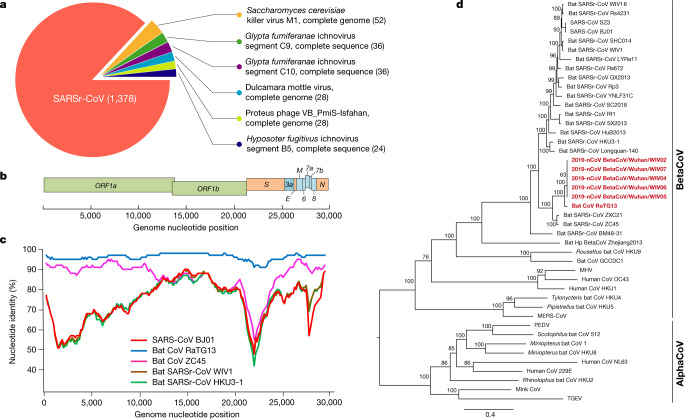
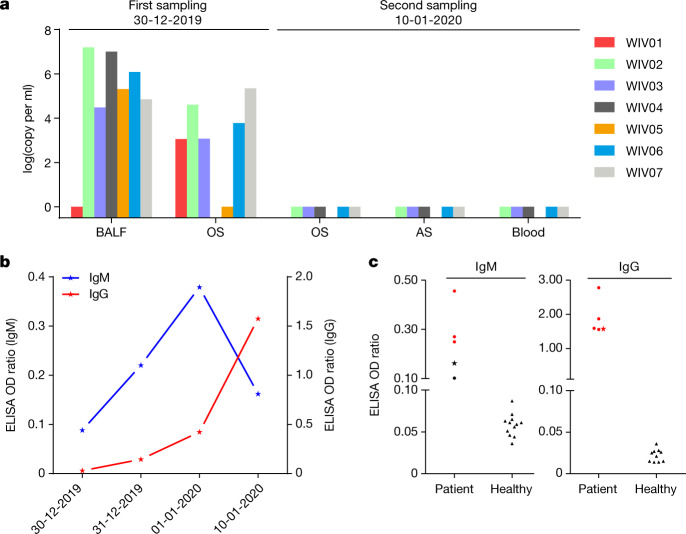
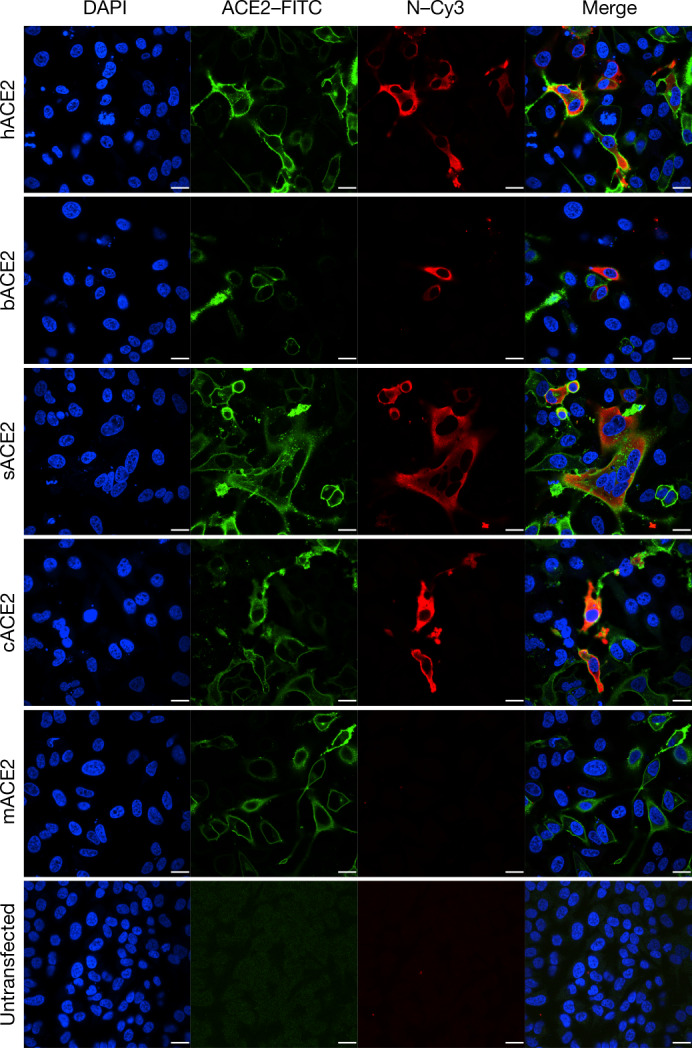
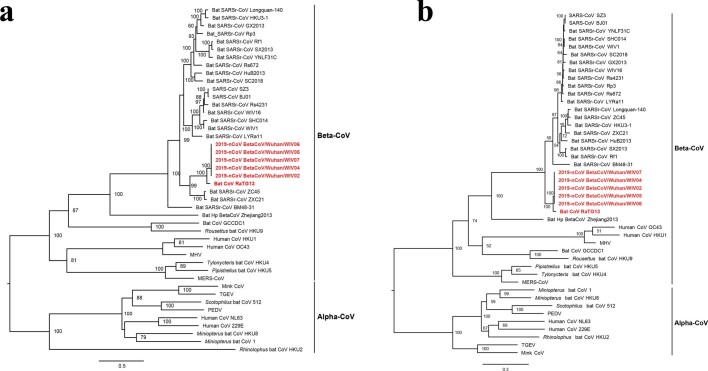
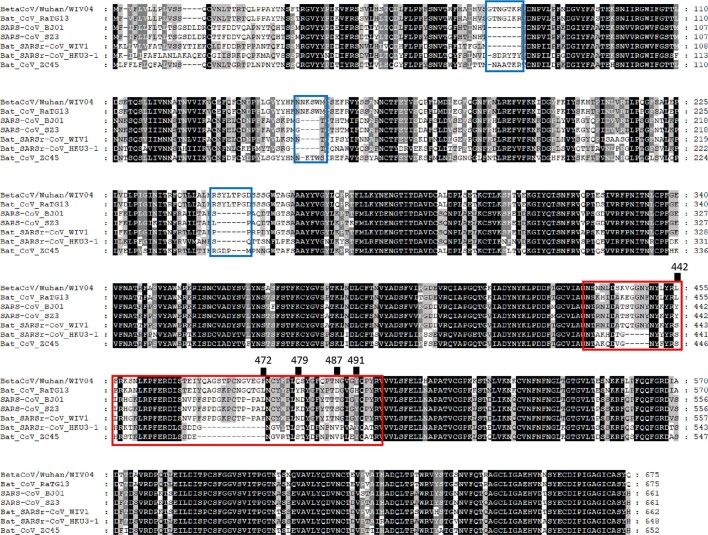
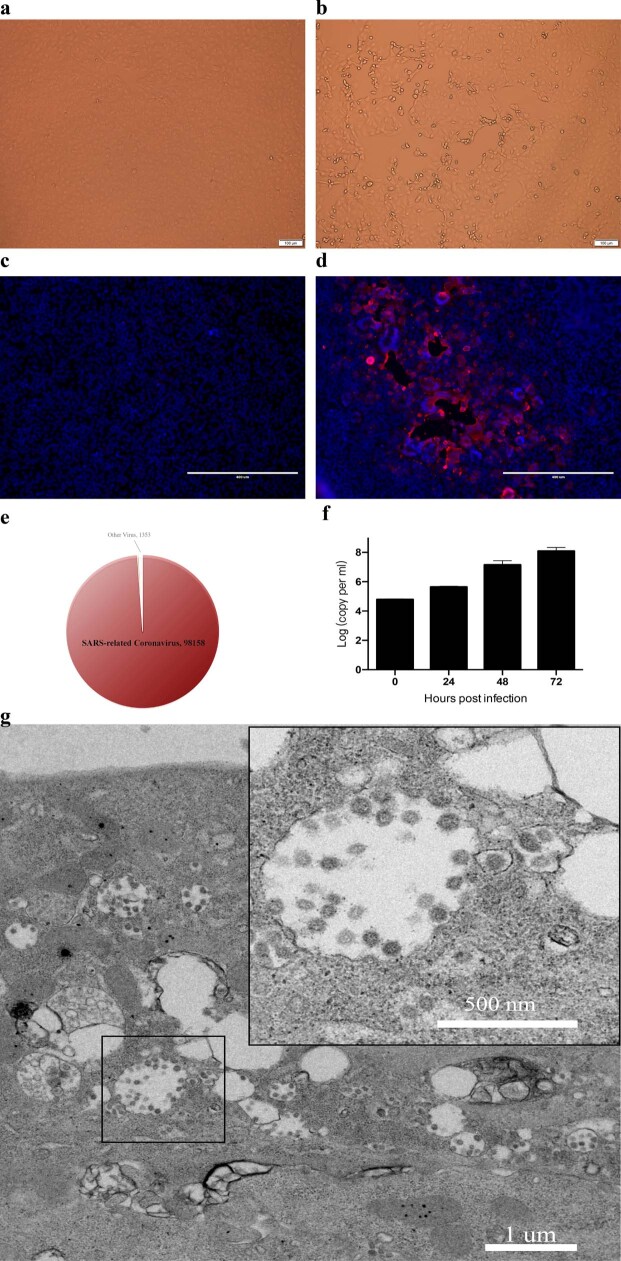
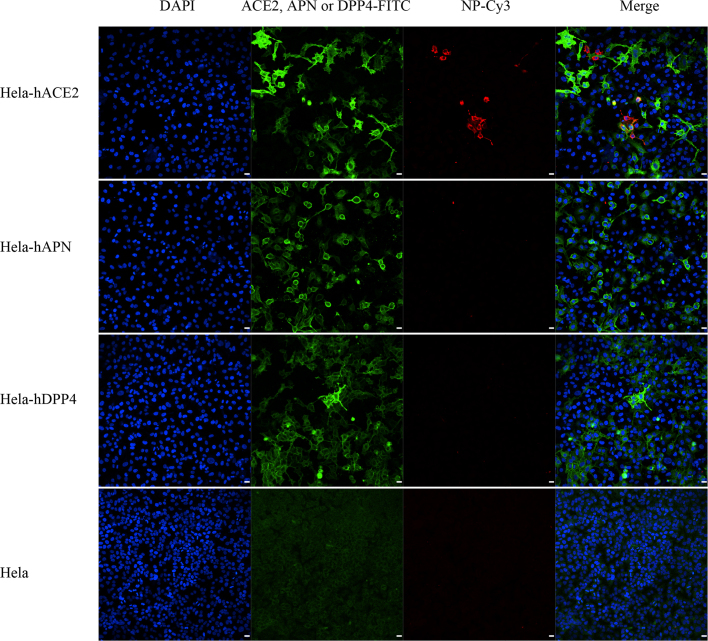
Since the outbreak of severe acute respiratory syndrome (SARS) 18 years ago, a large number of SARS-related coronaviruses (SARSr-CoVs) have been discovered in their natural reservoir host, bats 1–4 . Previous studies have shown that some bat SARSr-CoVs have the potential to infect humans 5–7 . Here we report the identification and characterization of a new coronavirus (2019-nCoV), which caused an epidemic of acute respiratory syndrome in humans in Wuhan, China. The epidemic, which started on 12 December 2019, had caused 2,794 laboratory-confirmed infections including 80 deaths by 26 January 2020. Full-length genome sequences were obtained from five patients at an early stage of the outbreak. The sequences are almost identical and share 79.6% sequence identity to SARS-CoV. Furthermore, we show that 2019-nCoV is 96% identical at the whole-genome level to a bat coronavirus. Pairwise protein sequence analysis of seven conserved non-structural proteins domains show that this virus belongs to the species of . In addition, 2019-nCoV virus isolated from the bronchoalveolar lavage fluid of a critically ill patient could be neutralized by sera from several patients. Notably, we confirmed that 2019-nCoV uses the same cell entry receptor—angiotensin converting enzyme II (ACE2)—as SARS-CoV.
Overview
The claims and statistics of this paper haven’t been checked yet.
Free: it reads the open-access text and checks the first 5 claims that cite a source we can check. Create a free account to check every claim.
Integrity signals
Registry
Cites
Statistics
Figures
Verification
Claims the paper makes
The claims and statistics of this paper haven’t been checked yet.
Free: it reads the open-access text and checks the first 5 claims that cite a source we can check. Create a free account to check every claim.
Claims other papers make about this one
Each is checked against this paper’s own text: does it say what the citing paper says it does?
The source backs part of the claim, not all of it — or backs it for a different population, condition or comparison.
In the citing paper
“SARS-CoV-2 is an enveloped, single-stranded positive-sense RNA virus with the highest, i.e. 96% of genome identity with horseshoe bat virus RaTG13 Rhinolophus affinis [3].”
From Waves and variants of SARS-CoV-2: understanding the causes and effect of the COVID-19 catastrophe (2022) · cites this paper as [3]
Experimental — accuracy not yet measuredThe source backs part of the claim, not all of it — or backs it for a different population, condition or comparison.
In the citing paper
“The disease is estimated to have originated from a seafood market in Wuhan where wild animals were traded such as marmots, bats, snakes and birds (Zhou et al., 2020).”
From How energy innovation in indoor vertical farming can improve food security, sustainability, and food safety? (2020) · cites this paper as Zhou et al., 2020
Experimental — accuracy not yet measuredThe source backs part of the claim, not all of it — or backs it for a different population, condition or comparison.
In the citing paper
“Genome sequencing demonstrated that SARS-CoV-2 shares 79.5% sequence identity with SARS-CoV (Zhou et al., 2020)”
From Oral Microbiome and SARS-CoV-2: Beware of Lung Co-infection (2020) · cites this paper as Zhou et al., 2020
Experimental — accuracy not yet measuredThe source backs part of the claim, not all of it — or backs it for a different population, condition or comparison.
In the citing paper
“This interaction requires cleavage of the S protein, likely by the cell surface protease TMPRSS2, although other proteases (such as Cathepsin B and L, CTSB/CTSL) may also be involved (4-6, 22-25).”
From Non-neuronal expression of SARS-CoV-2 entry genes in the olfactory system suggests mechanisms underlying COVID-19-associated anosmia (2020) · cites this paper as [4]
Experimental — accuracy not yet measuredThe source backs part of the claim, not all of it — or backs it for a different population, condition or comparison.
In the citing paper
“Bats (Chiroptera), representing ~22% of all mammalian species, are natural reservoirs for a wide range of zoonotic viruses, including coronaviruses, rhabdoviruses, and paramyxoviruses ( 1 – 3 ).”
From Ecological vaccination: A strategy to prevent zoonotic spillover from bats (2026) · cites this paper as [1]
Experimental — accuracy not yet measured
8 more claims about this paper
Create a free account to see every claim other papers make about this one.
Self-check
Percentages, sums and reported differences re-computed from the paper’s own numbers.
The self-check needs the paper’s full text.
Citations
Cites
Coronaviridae Study Group of the International Committee on Taxonomy of Viruses, Gorbalenya, A. E., Baker, S. C., Baric, R. S., de Groot, R. J., Drosten, C., Gulyaeva, A. A., Haagmans, B. L., Lauber, C., Leontovich, A. M., et al. (2020) · Nature Microbiology · doi:10.1038/s41564-020-0695-z · Cited by 8,403
Angiotensin-converting enzyme 2 is a functional receptor for the SARS coronavirus
Li, W., Moore, M. J., Vasilieva, N., Sui, J., Wong, S. K., Berne, M. A., Somasundaran, M., Sullivan, J. L., Luzuriaga, K., Greenough, T. C., et al. (2003) · Nature · doi:10.1038/nature02145 · Cited by 5,923
Isolation of a Novel Coronavirus from a Man with Pneumonia in Saudi Arabia
Zaki, A. M., van Boheemen, S., Bestebroer, T. M., Osterhaus, A. D. M. E., & Fouchier, R. A. M. (2012) · New England Journal of Medicine · doi:10.1056/nejmoa1211721 · Cited by 5,735
Origin and evolution of pathogenic coronaviruses
Cui, J., Li, F., & Shi, Z.-L. (2019) · Nature Reviews Microbiology · doi:10.1038/s41579-018-0118-9 · Cited by 5,515
Self-citationIdentification of a novel coronavirus in patients with severe acute respiratory syndrome
Drosten, C., Günther, S., Preiser, W., van der Werf, S., Brodt, H.-R., Becker, S., Rabenau, H., Panning, M., Kolesnikova, L., Fouchier, R. A. M., et al. (2003) · New England Journal of Medicine · doi:10.1056/nejmoa030747 · Cited by 4,574
Bats Are Natural Reservoirs of SARS-Like Coronaviruses
Li, W., Shi, Z., Yu, M., Ren, W., Smith, C., Epstein, J. H., Wang, H., Crameri, G., Hu, Z., Zhang, H., et al. (2005) · Science · doi:10.1126/science.1118391 · Cited by 2,560
Self-citationIsolation and characterization of a bat SARS-like coronavirus that uses the ACE2 receptor
Ge, X.-Y., Li, J.-L., Yang, X.-L., Chmura, A. A., Zhu, G., Epstein, J. H., Mazet, J. K., Hu, B., Zhang, W., Peng, C., et al. (2013) · Nature · doi:10.1038/nature12711 · Cited by 1,778
Self-citationGorbalenya, A. E., Baker, S. C., Baric, R. S., et al. (2020) · bioRxiv (Cold Spring Harbor Laboratory) · doi:10.1101/2020.02.07.937862 · Cited by 1,408
Al-Hanawi, M. K., Angawi, K., Alshareef, N., Qattan, A. M. N., Helmy, H. Z., Abudawood, Y., Alqurashi, M., Kattan, W. M., Kadasah, N. A., Chirwa, G. C., et al. (2020) · Frontiers in Public Health · doi:10.3389/fpubh.2020.00217 · Cited by 967
Hu, B., Zeng, L.-P., Yang, X.-L., Ge, X.-Y., Zhang, W., Li, B., Xie, J.-Z., Shen, X.-R., Zhang, Y.-Z., Wang, N., et al. (2017) · PLOS Pathogens · doi:10.1371/journal.ppat.1006698 · Cited by 950
Self-citation
Cited by
Items 601–700 of 1,208
2019 Novel Coronavirus—Important Information for Clinicians
del Rio, C., & Malani, P. N. (2020) · JAMA · doi:10.1001/jama.2020.1490 · Cited by 377
Immunopathological characteristics of coronavirus disease 2019 cases in Guangzhou, China
Tan, M., Liu, Y., Zhou, R., Deng, X., Li, F., Liang, K., & Shi, Y. (2020) · Immunology · doi:10.1111/imm.13223 · Cited by 377
“In one report, elevation of neutrophil cellularity, serum IL-6, and c-reactive protein was found together with lymphopenia in COVID-19 patients 3 .”
BackgroundCoronaviruses and SARS-CoV-2: A Brief Overview
Ludwig, S., & Zarbock, A. (2020) · Anesthesia & Analgesia · doi:10.1213/ane.0000000000004845 · Cited by 376
“22 SARS-CoV-2 is efficiently transmitted from personto-person and has thus able to spread rapidly across all continents in our globalized world.”
BackgroundCOVID-19 vaccines: The status and perspectives in delivery points of view
Chung, J. Y., Thone, M. N., & Kwon, Y. J. (2021) · Advanced Drug Delivery Reviews · doi:10.1016/j.addr.2020.12.011 · Cited by 375
Diagnostic methods and potential portable biosensors for coronavirus disease 2019
Cui, F., & Zhou, H. S. (2020) · Biosensors and Bioelectronics · doi:10.1016/j.bios.2020.112349 · Cited by 373
COVID-19 and Cardiovascular Disease: From Bench to Bedside
Chung, M. K., Zidar, D. A., Bristow, M. R., Cameron, S. J., Chan, T., Harding, C. V., Kwon, D. H., Singh, T., Tilton, J. C., Tsai, E. J., et al. (2021) · Circulation Research · doi:10.1161/circresaha.121.317997 · Cited by 373
COVID-19: Virology, biology and novel laboratory diagnosis
Mohamadian, M., Chiti, H., Shoghli, A., Biglari, S., Parsamanesh, N., & Esmaeilzadeh, A. (2021) · The Journal of Gene Medicine · doi:10.1002/jgm.3303 · Cited by 371
COVID-19 outbreak: current scenario of Pakistan
Waris, A., Atta, U. K., Ali, M., Asmat, A., & Baset, A. (2020) · New Microbes and New Infections · doi:10.1016/j.nmni.2020.100681 · Cited by 370
“The previous coronavirus outbreaks include Severe Acute Respiratory Syndrome Coronavirus (SARS-CoV) outbreak and Middle East Respiratory Syndrome Coronavirus (MERS-CoV) outbreak [8].”
Cytokine storm and COVID-19: a chronicle of pro-inflammatory cytokines
Fara, A., Mitrev, Z., Rosalia, R. A., & Assas, B. M. (2020) · Open Biology · doi:10.1098/rsob.200160 · Cited by 369
Serological immunochromatographic approach in diagnosis with SARS-CoV-2 infected COVID-19 patients
Pan, Y., Li, X., Yang, G., Fan, J., Tang, Y., Zhao, J., Long, X., Guo, S., Zhao, Z., Liu, Y., et al. (2020) · Journal of Infection · doi:10.1016/j.jinf.2020.03.051 · Cited by 366
Chen, L., Deng, C., Chen, X., Zhang, X., Chen, B., Yu, H., Qin, Y., Xiao, K., Zhang, H., & Sun, X. (2020) · Acta Ophthalmologica · doi:10.1111/aos.14472 · Cited by 366
SARS‐CoV‐2 nucleocapsid protein phase‐separates with RNA and with human hnRNPs
Perdikari, T. M., Murthy, A. C., Ryan, V. H., Watters, S., Naik, M. T., & Fawzi, N. L. (2020) · The EMBO Journal · doi:10.15252/embj.2020106478 · Cited by 364
“The novel SARS-CoV-2 is an enveloped, non-segmented, positive-sense, single stranded ~ 30 kb RNA virus of the family Coronaviridae (Zhou et al , 2012).”
Abd El-Aziz, T. M., & Stockand, J. D. (2020) · Infection, Genetics and Evolution · doi:10.1016/j.meegid.2020.104327 · Cited by 363
“A number of scientists pointed out that as a result of the similarity of this new virus with SARS-CoV and MERS-CoV, SARS-CoV-2 has probably moved from un unknown intermediate host to humans or directly to humans [16] .”
BackgroundInfluentialCOVID-19: breaking down a global health crisis
Mallah, S. I., Ghorab, O. K., Al-Salmi, S., Abdellatif, O. S., Tharmaratnam, T., Iskandar, M. A., Sefen, J. A. N., Sidhu, P., Atallah, B., El-Lababidi, R., et al. (2021) · Annals of Clinical Microbiology and Antimicrobials · doi:10.1186/s12941-021-00438-7 · Cited by 363
Zhou, T., Tsybovsky, Y., Gorman, J., Rapp, M., Cerutti, G., Chuang, G.-Y., Katsamba, P. S., Sampson, J. M., Schön, A., Bimela, J., et al. (2020) · Cell Host & Microbe · doi:10.1016/j.chom.2020.11.004 · Cited by 362
“The expression plasmids were constructed and the protein purified as described previously (Zhou et al., 2020b).”
InfluentialImpaired local intrinsic immunity to SARS-CoV-2 infection in severe COVID-19
Ziegler, C. G. K., Miao, V. N., Owings, A. H., Navia, A. W., Tang, Y., Bromley, J. D., Lotfy, P., Sloan, M., Laird, H., Williams, H. B., et al. (2021) · Cell · doi:10.1016/j.cell.2021.07.023 · Cited by 362
Predictors of adverse prognosis in COVID‐19: A systematic review and meta‐analysis
Figliozzi, S., Masci, P. G., Ahmadi, N., Tondi, L., Koutli, E., Aimo, A., Stamatelopoulos, K., Dimopoulos, M., Caforio, A. L. P., & Georgiopoulos, G. (2020) · European Journal of Clinical Investigation · doi:10.1111/eci.13362 · Cited by 361
Garvin, M. R., Alvarez, C., Miller, J. I., Prates, E. T., Walker, A. M., Amos, B. K., Mast, A. E., Justice, A., Aronow, B., & Jacobson, D. (2020) · eLife · doi:10.7554/elife.59177 · Cited by 361
“However, results from our differential gene expression analysis of RAS genes in cells taken from BAL samples from individuals presenting with severe symptoms of COVID-19 (Zhou et al., 2020) demonstrates upregulation of ACE2 (199 fold) and disruption of this system compared to controls.”
ResultLi, J., Guo, M., Tian, X., Wang, X., Yang, X., Wu, P., Liu, C., Xiao, Z., Qu, Y., Yin, Y., et al. (2021) · Med · doi:10.1016/j.medj.2020.07.002 · Cited by 360
Self-citationMorphogenesis and cytopathic effect of SARS-CoV-2 infection in human airway epithelial cells
Zhu, N., Wang, W., Liu, Z., Liang, C., Wang, W., Ye, F., Huang, B., Zhao, L., Wang, H., Zhou, W., et al. (2020) · Nature Communications · doi:10.1038/s41467-020-17796-z · Cited by 360
Chia, W. N., Zhu, F., Ong, S. W. X., Young, B. E., Fong, S.-W., Le Bert, N., Tan, C. W., Tiu, C., Zhang, J., Tan, S. Y., et al. (2021) · The Lancet Microbe · doi:10.1016/s2666-5247(21)00025-2 · Cited by 360
Phase 1 randomized trial of a plant-derived virus-like particle vaccine for COVID-19
Ward, B. J., Gobeil, P., Séguin, A., Atkins, J., Boulay, I., Charbonneau, P.-Y., Couture, M., D’Aoust, M.-A., Dhaliwall, J., Finkle, C., et al. (2021) · Nature Medicine · doi:10.1038/s41591-021-01370-1 · Cited by 360
SARS-CoV-2, COVID-19 and the aging immune system
Bartleson, J. M., Radenkovic, D., Covarrubias, A. J., Furman, D., Winer, D. A., & Verdin, E. (2021) · Nature Aging · doi:10.1038/s43587-021-00114-7 · Cited by 359
Novel coronavirus treatment with ribavirin: Groundwork for an evaluation concerning COVID‐19
Khalili, J. S., Zhu, H., Mak, N. S. A., Yan, Y., & Zhu, Y. (2020) · Journal of Medical Virology · doi:10.1002/jmv.25798 · Cited by 359
Self-citationThe emergence of SARS-CoV-2 in Europe and North America
Worobey, M., Pekar, J., Larsen, B. B., Nelson, M. I., Hill, V., Joy, J. B., Rambaut, A., Suchard, M. A., Wertheim, J. O., & Lemey, P. (2020) · Science · doi:10.1126/science.abc8169 · Cited by 358
Kreutz, R., Algharably, E. A. E.-H., Azizi, M., Dobrowolski, P., Guzik, T., Januszewicz, A., Persu, A., Prejbisz, A., Riemer, T. G., Wang, J.-G., et al. (2020) · Cardiovascular Research · doi:10.1093/cvr/cvaa097 · Cited by 357
“Recent studies indicate that SARS-CoV-2 also uses ACE2 for cell entry and also employs TMPRSS2 for priming its spike protein.(5,6) Consequently, ACE2, being the cell entry receptor for SARS-CoV-2, establishes the link between COVID-19 and”
BackgroundPrasetyo, Y. T., Castillo, A. M., Salonga, L. J., Sia, J. A., & Seneta, J. A. (2020) · International Journal of Infectious Diseases · doi:10.1016/j.ijid.2020.07.074 · Cited by 357
Rapid Molecular Detection of SARS-CoV-2 (COVID-19) Virus RNA Using Colorimetric LAMP
Zhang, Y., Odiwuor, N., Xiong, J., Sun, L., Nyaruaba, R. O., Wei, H., & Tanner, N. A. (2020) · medRxiv · doi:10.1101/2020.02.26.20028373 · Cited by 355
“Although a small number of samples were tested here, the colorimetric LAMP assay enables reliable SARS-CoV-2 detection without sophisticated instrumentation, matching the RT-qPCR performance in field and point-of-care settings.”
MethodInfluentialHypolipidemia is associated with the severity of COVID-19
Wei, X., Zeng, W., Su, J., Wan, H., Yu, X., Cao, X., Tan, W., & Wang, H. (2020) · Journal of Clinical Lipidology · doi:10.1016/j.jacl.2020.04.008 · Cited by 355
“The disease is believed to be of zoonotic origin.(2,3) Snakes, pangolins, and turtles are speculated to be intermediate host(s).”
BackgroundMiao, G., Zhao, H., Li, Y., Ji, M., Chen, Y., Shi, Y., Bi, Y., Wang, P., & Zhang, H. (2021) · Developmental Cell · doi:10.1016/j.devcel.2020.12.010 · Cited by 354
Clinical characteristics of severe acute respiratory syndrome coronavirus 2 reactivation
Ye, G., Pan, Z., Pan, Y., Deng, Q., Chen, L., Li, J., Li, Y., & Wang, X. (2020) · Journal of Infection · doi:10.1016/j.jinf.2020.03.001 · Cited by 353
Self-citationDiabetes, infection risk and COVID-19
Erener, S. (2020) · Molecular Metabolism · doi:10.1016/j.molmet.2020.101044 · Cited by 351
Going global – Travel and the 2019 novel coronavirus
Rodríguez-Morales, A. J., MacGregor, K., Kanagarajah, S., Patel, D., & Schlagenhauf, P. (2020) · Travel Medicine and Infectious Disease · doi:10.1016/j.tmaid.2020.101578 · Cited by 349
“Recent studies suggest that the 2019-nCoV does not use other coronavirus receptors, aminopeptidase N and DPP4/CD26 [10].”
BackgroundRecurrence of positive SARS-CoV-2 RNA in COVID-19: A case report
Chen, D., Xu, W., Lei, Z., Huang, Z., Liu, J., Gao, Z., & Peng, L. (2020) · International Journal of Infectious Diseases · doi:10.1016/j.ijid.2020.03.003 · Cited by 349
Don't Overlook Digestive Symptoms in Patients With 2019 Novel Coronavirus Disease (COVID-19)
Luo, S., Zhang, X., & Xu, H. (2020) · Clinical Gastroenterology and Hepatology · doi:10.1016/j.cgh.2020.03.043 · Cited by 348
Zhou, L., Xu, Z., Castiglione, G. M., Soiberman, U. S., Eberhart, C. G., & Duh, E. J. (2020) · The Ocular Surface · doi:10.1016/j.jtos.2020.06.007 · Cited by 348
SARS-CoV-2 genomic variations associated with mortality rate of COVID-19
Toyoshima, Y., Nemoto, K., Matsumoto, S., Nakamura, Y., & Kiyotani, K. (2020) · Journal of Human Genetics · doi:10.1038/s10038-020-0808-9 · Cited by 348
“The novel betacoronavirus, severe acute respiratory syndrome coronavirus 2 (SARS-CoV-2), which causes coronavirus disease 2019 (COVID-19), was first reported in Wuhan, China in December 2019 [1, 2].”
BackgroundStructural insights into SARS-CoV-2 proteins
Arya, R., Kumari, S., Pandey, B., Mistry, H., Bihani, S. C., Das, A., Prashar, V., Gupta, G. D., Panicker, L., & Kumar, M. (2021) · Journal of Molecular Biology · doi:10.1016/j.jmb.2020.11.024 · Cited by 348
Kreye, J., Reincke, S. M., Kornau, H.-C., Sánchez-Sendin, E., Corman, V. M., Liu, H., Yuan, M., Wu, N. C., Zhu, X., Lee, C.-C. D., et al. (2020) · Cell · doi:10.1016/j.cell.2020.09.049 · Cited by 347
“It complements two very recent demonstrations of a therapeutic effect of mAbs in a hamster model of COVID-19 (Baum et al., 2020; Li et al., 2020).”
Identification of bioactive molecules from tea plant as SARS-CoV-2 main protease inhibitors
Bhardwaj, V. K., Singh, R., Sharma, J., Rajendran, V., Purohit, R., & Kumar, S. (2021) · Journal of Biomolecular Structure and Dynamics · doi:10.1080/07391102.2020.1766572 · Cited by 347
The role of imaging in 2019 novel coronavirus pneumonia (COVID-19)
Yang, W., Sirajuddin, A., Zhang, X., Liu, G., Teng, Z., Zhao, S., & Lu, M. (2020) · European Radiology · doi:10.1007/s00330-020-06827-4 · Cited by 346
Muralidar, S., Ambi, S. V., Sekaran, S., & Krishnan, U. M. (2020) · Biochimie · doi:10.1016/j.biochi.2020.09.018 · Cited by 346
Aboudounya, M. M., & Heads, R. J. (2021) · Mediators of Inflammation · doi:10.1155/2021/8874339 · Cited by 346
“Cells with ACE2 expression, such as type II alveolar cells in the lungs, are susceptible to SARS-CoV-2 infection [10, 11].”
Corticosteroid treatment of patients with coronavirus disease 2019 ( COVID ‐19)
Zha, L., Li, S., Pan, L., Tefsen, B., Li, Y., French, N., Chen, L., Yang, G., & Villanueva, E. V. (2020) · Medical Journal of Australia · doi:10.5694/mja2.50577 · Cited by 344
Goyal, B., & Goyal, D. (2020) · ACS Combinatorial Science · doi:10.1021/acscombsci.0c00058 · Cited by 344
Lessons learned 1 year after SARS-CoV-2 emergence leading to COVID-19 pandemic
To, K. K.-W., Sridhar, S., Chiu, K. H.-Y., Hung, D. L.-L., Li, X., Hung, I. F.-N., Tam, A. R., Chung, T. W.-H., Chan, J. F.-W., Zhang, A. J.-X., et al. (2021) · Emerging Microbes & Infections · doi:10.1080/22221751.2021.1898291 · Cited by 344
Vuong, Q.-H., Le, T.-T., La, V.-P., Nguyen, H. T. T., Ho, M.-T., Van Khuc, Q., & Nguyen, M.-H. (2022) · Humanities and Social Sciences Communications · doi:10.1057/s41599-022-01034-6 · Cited by 344
Xie, C., Jiang, L., Huang, G., Pu, H., Gong, B., Lin, H., Ma, S., Chen, X., Long, B., Si, G., et al. (2020) · International Journal of Infectious Diseases · doi:10.1016/j.ijid.2020.02.050 · Cited by 343
Self-citationMeng, Y., Wu, P., Lu, W., Liu, K., Ma, K., Huang, L., Cai, J., Zhang, H., Qin, Y., Sun, H., et al. (2020) · PLOS Pathogens · doi:10.1371/journal.ppat.1008520 · Cited by 343
“In December 2019, the first coronavirus disease-19 (COVID-19) cases associated with severe acute respiratory syndrome coronavirus 2 (SARS-CoV-2) were identified in Wuhan, Hubei, China [1] [2] [3] .”
BackgroundIL-6: Relevance for immunopathology of SARS-CoV-2
Gubernatorova, E. O., Gorshkova, E. A., Polinova, A. I., & Drutskaya, M. S. (2020) · Cytokine & Growth Factor Reviews · doi:10.1016/j.cytogfr.2020.05.009 · Cited by 343
Ali, M. A., Hu, C., Jahan, S., Yuan, B., Saleh, M. S., Ju, E., Gao, S., & Panat, R. (2021) · Advanced Materials · doi:10.1002/adma.202006647 · Cited by 343
BNT162b2-elicited neutralization of B.1.617 and other SARS-CoV-2 variants
Liu, J., Liu, Y., Xia, H., Zou, J., Weaver, S. C., Swanson, K. A., Cai, H., Cutler, M., Cooper, D., Muik, A., et al. (2021) · Nature · doi:10.1038/s41586-021-03693-y · Cited by 342
Chen, X., Li, R., Pan, Z., Qian, C., Yang, Y., You, R., Zhao, J., Liu, P., Gao, L., Li, Z., et al. (2020) · Cellular & Molecular Immunology · doi:10.1038/s41423-020-0426-7 · Cited by 342
Cao, Y., Liu, X., Xiong, L., & Cai, K. (2020) · Journal of Medical Virology · doi:10.1002/jmv.25822 · Cited by 342
“Certainly, prevention of imported cases is also extremely important.45 Particularly, in some densely populated markets, stations, large ports, and other places, protective deployment measures should be strengthened to ensure that protective equipment, drugs, medical supplies, and so on are sufficient.46 National publi…”
BackgroundInfluentialYang, G., Tan, Z., Zhou, L., Yang, M., Peng, L., Liu, J., Cai, J., Yang, R., Han, J., Huang, Y., et al. (2020) · Hypertension · doi:10.1161/hypertensionaha.120.15143 · Cited by 342
“Email huangy2018@hust.edu.cn Key Words: angiotensin-converting enzyme inhibitors ◼ angiotensin receptor blocker ◼ coronavirus ◼ COVID-19 ◼ hypertension ◼ inflammation © 2020 American Heart Association, Inc. Hypertension is available at https://www.ahajournals.org/journal/hyp DOI: 10.1161/HYPERTENSIONAHA.120.15143 infe…”
BackgroundInfluentialA Guide to COVID‐19: a global pandemic caused by the novel coronavirus SARS‐CoV‐2
Atzrodt, C. L., Maknojia, I., McCarthy, R. D. P., Oldfield, T. M., Po, J., Ta, K. T. L., Stepp, H. E., & Clements, T. P. (2020) · The FEBS Journal · doi:10.1111/febs.15375 · Cited by 341
Broad Spectrum Antiviral Agent Niclosamide and Its Therapeutic Potential
Xu, J., Shi, P.-Y., Li, H., & Zhou, J. (2020) · ACS Infectious Diseases · doi:10.1021/acsinfecdis.0c00052 · Cited by 340
COVID-19 and the Immune System
PACES, J., STRIZOVA, Z., SMRZ, D., & CERNY, J. (2020) · Physiological Research · doi:10.33549/physiolres.934492 · Cited by 340
COVID-19 and the Chemical Senses: Supporting Players Take Center Stage
Cooper, K. W., Brann, D. H., Farruggia, M. C., Bhutani, S., Pellegrino, R., Tsukahara, T., Weinreb, C., Joseph, P. V., Larson, E. D., Parma, V., et al. (2020) · Neuron · doi:10.1016/j.neuron.2020.06.032 · Cited by 340
“…to these observations, several reports have suggested that SARS-CoV-2 may be ‘‘neuroinvasive,’’ which we take here to mean the direct infection of neurons or glia in the central nervous system (Baig et al., 2020; Li et al., 2020; Meinhardt et al., 2020; Morris and Zohrabian, 2020; Wu et al., 2020).”
Liang, Y., Wang, M.-L., Chien, C.-S., Yarmishyn, A. A., Yang, Y.-P., Lai, W.-Y., Luo, Y.-H., Lin, Y.-T., Chen, Y.-J., Chang, P.-C., et al. (2020) · Frontiers in Immunology · doi:10.3389/fimmu.2020.01022 · Cited by 339
Self-citationRETRACTED ARTICLE: Origin and cross-species transmission of bat coronaviruses in China
Latinne, A., Hu, B., Olival, K. J., Zhu, G., Zhang, L., Li, H., Chmura, A. A., Field, H. E., Zambrana-Torrelio, C., Epstein, J. H., et al. (2020) · Nature Communications · doi:10.1038/s41467-020-17687-3 · Cited by 339
Self-citationRetractedMolecular mechanism of interaction between SARS-CoV-2 and host cells and interventional therapy
Zhang, Q., Xiang, R., Huo, S., Zhou, Y., Jiang, S., Wang, Q., & Yu, F. (2021) · Signal Transduction and Targeted Therapy · doi:10.1038/s41392-021-00653-w · Cited by 339
Immune-mediated approaches against COVID-19
Florindo, H. F., Kleiner, R., Vaskovich-Koubi, D., Acúrcio, R. C., Carreira, B., Yeini, E., Tiram, G., Liubomirski, Y., & Satchi-Fainaro, R. (2020) · Nature Nanotechnology · doi:10.1038/s41565-020-0732-3 · Cited by 338
Plasma Proteomics Identify Biomarkers and Pathogenesis of COVID-19
Shu, T., Ning, W., Wu, D., Xu, J., Han, Q., Huang, M., Zou, X., Yang, Q., Yuan, Y., Bie, Y., et al. (2020) · Immunity · doi:10.1016/j.immuni.2020.10.008 · Cited by 337
“…is the third coronavirus to cause severe respiratory disease in humans in addition to SARS-CoV and Middle East respiratory syndrome coronavirus (MERS-CoV) (Lu et al., 1108 Immunity 53, 1108–1122, November 17, 2020 ª 2020 Elsevier I 2020; Wu et al., 2020b; Zhou et al., 2020b; Zhu et al., 2020).”
BackgroundMethodSelf-citationCD209L/L-SIGN and CD209/DC-SIGN Act as Receptors for SARS-CoV-2
Amraei, R., Yin, W., Napoleon, M. A., Suder, E. L., Berrigan, J., Zhao, Q., Olejnik, J., Chandler, K. B., Xia, C., Feldman, J., et al. (2021) · ACS Central Science · doi:10.1021/acscentsci.0c01537 · Cited by 337
“Journal of virology 2002, 76 (13), 6841-4.”
Crystal structure of SARS-CoV-2 papain-like protease
Gao, X., Qin, B., Chen, P., Zhu, K., Hou, P., Wojdyla, J. A., Wang, M., & Cui, S. (2021) · Acta Pharmaceutica Sinica B · doi:10.1016/j.apsb.2020.08.014 · Cited by 336
In Vitro Diagnostic Assays for COVID-19: Recent Advances and Emerging Trends
Vashist, S. K. (2020) · Diagnostics · doi:10.3390/diagnostics10040202 · Cited by 336
COVID-19 in Children: Initial Characterization of the Pediatric Disease
Cruz, A. T., & Zeichner, S. L. (2020) · Pediatrics · doi:10.1542/peds.2020-0834 · Cited by 336
SARS-CoV-2 and the pandemic of COVID-19
Adil, M. T., Rahman, R., Whitelaw, D., Jain, V., Al-Taan, O., Rashid, F., Munasinghe, A., & Jambulingam, P. (2021) · Postgraduate Medical Journal · doi:10.1136/postgradmedj-2020-138386 · Cited by 335
COVID-19 Pandemic: Prevention and Protection Measures to Be Adopted at the Workplace
Cirrincione, L., Plescia, F., Ledda, C., Rapisarda, V., Martorana, D., Moldovan, R. E., Theodoridou, K., & Cannizzaro, E. (2020) · Sustainability · doi:10.3390/su12093603 · Cited by 334
Liu, H., Ye, F., Sun, Q., Liang, H., Li, C., Li, S., Lu, R., Huang, B., Tan, W., & Lai, L. (2021) · Journal of Enzyme Inhibition and Medicinal Chemistry · doi:10.1080/14756366.2021.1873977 · Cited by 334
Schultheiß, C., Paschold, L., Simnica, D., Mohme, M., Willscher, E., von Wenserski, L., Scholz, R., Wieters, I., Dahlke, C., Tolosa, E., et al. (2020) · Immunity · doi:10.1016/j.immuni.2020.06.024 · Cited by 333
Mesenchymal Stem Cell Therapy for COVID-19: Present or Future
Golchin, A., Seyedjafari, E., & Ardeshirylajimi, A. (2020) · Stem Cell Reviews and Reports · doi:10.1007/s12015-020-09973-w · Cited by 332
Ultra-sensitive and high-throughput CRISPR-p owered COVID-19 diagnosis
Huang, Z., Tian, D., Liu, Y., Lin, Z., Lyon, C. J., Lai, W., Fusco, D., Drouin, A., Yin, X., Hu, T., et al. (2020) · Biosensors and Bioelectronics · doi:10.1016/j.bios.2020.112316 · Cited by 332
“SARS-CoV-2, first detected in China’s Hubei province late in 2019, rapidly spread from its initial outbreak site to produce a pandemic (Zhou et al., 2020), and has to date been detected in more than 200 countries, where it has infected more than 1.9 million people and caused more than 116,000…”
InfluentialA distinct name is needed for the new coronavirus
Jiang, S., Shi, Z., Shu, Y., Song, J., Gao, G. F., Tan, W., & Guo, D. (2020) · The Lancet · doi:10.1016/s0140-6736(20)30419-0 · Cited by 329
Self-citationProteolytic Cleavage of the SARS-CoV-2 Spike Protein and the Role of the Novel S1/S2 Site
Jaimes, J. A., Millet, J. K., & Whittaker, G. R. (2020) · iScience · doi:10.1016/j.isci.2020.101212 · Cited by 329
The variant gambit: COVID-19’s next move
Plante, J. A., Mitchell, B. M., Plante, K. S., Debbink, K., Weaver, S. C., & Menachery, V. D. (2021) · Cell Host & Microbe · doi:10.1016/j.chom.2021.02.020 · Cited by 328
The Earth BioGenome Project 2020: Starting the clock
Lewin, H. A., Richards, S., Lieberman Aiden, E., Allende, M. L., Archibald, J. M., Bálint, M., Barker, K. B., Baumgartner, B., Belov, K., Bertorelle, G., et al. (2022) · Proceedings of the National Academy of Sciences · doi:10.1073/pnas.2115635118 · Cited by 328
Jafarzadeh, A., Chauhan, P., Saha, B., Jafarzadeh, S., & Nemati, M. (2020) · Life Sciences · doi:10.1016/j.lfs.2020.118102 · Cited by 327
“The S protein of SARS-CoV-2 plays a central role in the viral entry into host type 2 alveolar cells that express its receptor angiotensin-converting enzyme 2 (ACE2) [4,5].”
The pro-inflammatory cytokines in COVID-19 pathogenesis: What goes wrong?
Darif, D., Hammi, I., Kihel, A., El Idrissi Saik, I., Guessous, F., & Akarid, K. (2021) · Microbial Pathogenesis · doi:10.1016/j.micpath.2021.104799 · Cited by 326
“as an entry receptor in the cells expressing this receptor [7].”
BackgroundHand Sanitizers: A Review on Formulation Aspects, Adverse Effects, and Regulations
Jing, J. L. J., Pei Yi, T., Bose, R. J. C., McCarthy, J. R., Tharmalingam, N., & Madheswaran, T. (2020) · International Journal of Environmental Research and Public Health · doi:10.3390/ijerph17093326 · Cited by 325
Serology assays to manage COVID-19
Krammer, F., & Simon, V. (2020) · Science · doi:10.1126/science.abc1227 · Cited by 325
Departmrnt of Microbiology and Immunology, F. O. M., Alzoubi, H., Alnawaiseh, N., Community Medicine and Public Health Department, F. O. M., Al-Mnayyis, A., Department of clinical sciences, C. O. M., Abu- Lubad, M., Departmrnt of Microbiology and Immunology, F. O. M., Aqel, A., Departmrnt of Microbiology and Immunology, F. O. M., et al. (2020) · Journal of Pure and Applied Microbiology · doi:10.22207/jpam.14.1.04 · Cited by 324
SARS-CoV-2 proteome microarray for global profiling of COVID-19 specific IgG and IgM responses
Jiang, H.-W., Li, Y., Zhang, H.-N., Wang, W., Yang, X., Qi, H., Li, H., Men, D., Zhou, J., & Tao, S.-C. (2020) · Nature Communications · doi:10.1038/s41467-020-17488-8 · Cited by 329
Self-citationFu, Z., Huang, B., Tang, J., Liu, S., Liu, M., Ye, Y., Liu, Z., Xiong, Y., Zhu, W., Cao, D., et al. (2021) · Nature Communications · doi:10.1038/s41467-020-20718-8 · Cited by 322
Self-citationTransmission dynamics and evolutionary history of 2019‐nCoV
Li, X., Wang, W., Zhao, X., Zai, J., Zhao, Q., Li, Y., & Chaillon, A. (2020) · Journal of Medical Virology · doi:10.1002/jmv.25701 · Cited by 321
Wang, Y., Liu, Y., Liu, L., Wang, X., Luo, N., & Li, L. (2020) · The Journal of Infectious Diseases · doi:10.1093/infdis/jiaa119 · Cited by 321
Self-citationBULUT, C., & KATO, Y. (2020) · TURKISH JOURNAL OF MEDICAL SCIENCES · doi:10.3906/sag-2004-172 · Cited by 321
Plasma CRP level is positively associated with the severity of COVID-19
Chen, W., Zheng, K. I., Liu, S., Yan, Z., Xu, C., & Qiao, Z. (2020) · Annals of Clinical Microbiology and Antimicrobials · doi:10.1186/s12941-020-00362-2 · Cited by 321
Atri, D., Siddiqi, H. K., Lang, J. P., Nauffal, V., Morrow, D. A., & Bohula, E. A. (2020) · JACC: Basic to Translational Science · doi:10.1016/j.jacbts.2020.04.002 · Cited by 321
Nanozyme chemiluminescence paper test for rapid and sensitive detection of SARS-CoV-2 antigen
Liu, D., Ju, C., Han, C., Shi, R., Chen, X., Duan, D., Yan, J., & Yan, X. (2021) · Biosensors and Bioelectronics · doi:10.1016/j.bios.2020.112817 · Cited by 321
Cao, Y.-C., Deng, Q.-X., & Dai, S.-X. (2020) · Travel Medicine and Infectious Disease · doi:10.1016/j.tmaid.2020.101647 · Cited by 320
“However, through calculation methods of molecular structure simulation, the interaction bet ween the S protein of SARS-CoV and the ACE2 receptor has perfectly maintained in a holistic man ner.([11]) At present, it has been proved that the binding affinity between the extracellular domain o f the S protein of SARS-CoV-…”
BackgroundMethodCoast-to-Coast Spread of SARS-CoV-2 during the Early Epidemic in the United States
Fauver, J. R., Petrone, M. E., Hodcroft, E. B., Shioda, K., Ehrlich, H. Y., Watts, A. G., Vogels, C. B. F., Brito, A. F., Alpert, T., Muyombwe, A., et al. (2020) · Cell · doi:10.1016/j.cell.2020.04.021 · Cited by 320
Wunsch, K., Kienberger, K., & Niessner, C. (2022) · International Journal of Environmental Research and Public Health · doi:10.3390/ijerph19042250 · Cited by 320
A high-throughput neutralizing antibody assay for COVID-19 diagnosis and vaccine evaluation
Muruato, A. E., Fontes-Garfias, C. R., Ren, P., Garcia-Blanco, M. A., Menachery, V. D., Xie, X., & Shi, P.-Y. (2020) · Nature Communications · doi:10.1038/s41467-020-17892-0 · Cited by 319
Domains and Functions of Spike Protein in SARS-Cov-2 in the Context of Vaccine Design
Xia, X. (2021) · Viruses · doi:10.3390/v13010109 · Cited by 319
New understanding of the damage of SARS-CoV-2 infection outside the respiratory system
Zhang, Y., Geng, X., Tan, Y., Li, Q., Xu, C., Xu, J., Hao, L., Zeng, Z., Luo, X., Liu, F., et al. (2020) · Biomedicine & Pharmacotherapy · doi:10.1016/j.biopha.2020.110195 · Cited by 319
Outcomes of COVID-19 in 79 patients with IBD in Italy: an IG-IBD study
Bezzio, C., Saibeni, S., Variola, A., Allocca, M., Massari, A., Gerardi, V., Casini, V., Ricci, C., Zingone, F., Amato, A., et al. (2020) · Gut · doi:10.1136/gutjnl-2020-321411 · Cited by 319
Impact of city lockdown on the air quality of COVID-19-hit of Wuhan city
Lian, X., Huang, J., Huang, R., Liu, C., Wang, L., & Zhang, T. (2020) · Science of The Total Environment · doi:10.1016/j.scitotenv.2020.140556 · Cited by 319
“Recently, a new type of coronavirus has caused mass viral pneumonia (COVID-19), thus posing a major threat to international health (Zhou et al., 2020).”
No evidence for increased transmissibility from recurrent mutations in SARS-CoV-2
van Dorp, L., Richard, D., Tan, C. C. S., Shaw, L. P., Acman, M., & Balloux, F. (2020) · Nature Communications · doi:10.1038/s41467-020-19818-2 · Cited by 319
“Severe acute respiratory coronavirus syndrome 2 (SARS-CoV-2), the causative agent of Covid19, is a positive single-stranded RNA virus that jumped into the human population towards the end of 2019 [1-4] from a yet uncharacterised zoonotic reservoir [5].”
BackgroundResult
Metadata
- Authors
- Zhou, P., Yang, X.-L., Wang, X.-G., Hu, B., Zhang, L., Zhang, W., Si, H.-R., Zhu, Y., Li, B., Huang, C.-L., Chen, H.-D., Chen, J., Luo, Y., Guo, H., Jiang, R.-D., Liu, M.-Q., Chen, Y., Shen, X.-R., Wang, X., Zheng, X.-S., Zhao, K., Chen, Q.-J., Deng, F., Liu, L.-L., Yan, B., Zhan, F.-X., Wang, Y.-Y., Xiao, G.-F., & Shi, Z.-L.
- Affiliations
- Chinese Academy of Sciences (CN)
- Jinyintan Hospital (CN)
- Hubei Provincial Center for Disease Control and Prevention (CN)
- Corresponding author
- Shi, Zheng-Li
- Venue
- Nature
- Published
- 2020-02-03
- Volume
- 579
- Issue
- 7798
- Pages
- 270-273
- ISSN
- 0028-0836 (ISSN-L)
- 1476-4687
- PMC
- PMC7095418
- OpenAlex
- W3004280078
- Cited by
- 21,969
- References
- 19
- Citations by year
- 2026: 363 · 2025: 769 · 2024: 1366 · 2023: 2080 · 2022: 3751 · 2021: 6147 · 2020: 7448
- FWCI
- 638.99
- Type
- journal article
- Language
- en
- Update notices
- addendum (2020-11-17)
- Open access
- hybrid
- doi.org
- Licence
- cc-by
- creativecommons.org/licenses/by/4.0 (tdm)
- creativecommons.org/licenses/by/4.0 (vor)
- Locations
- Nature (publishedVersion, cc-by)
- bioRxiv (Cold Spring Harbor Laboratory) (acceptedVersion)
- PubMed Central (publishedVersion, cc-by)
- PubMed (publishedVersion)
- LA Referencia (Red Federada de Repositorios Institucionales de Publicaciones Científicas) (publishedVersion, cc-by)
- Digital Commons - University of South Florida (University of South Florida) (submittedVersion)
- RePEc: Research Papers in Economics (submittedVersion)
- LA Referencia (Red Federada de Repositorios Institucionales de Publicaciones Científicas) (submittedVersion, cc-by)
- Funders
- Chinese Academy of Sciences (XDB29010101, 2019328)
- Youth Innovation Promotion Association
- Topics
- Health Sciences › Medicine › Infectious Diseases › SARS-CoV-2 and COVID-19 Research
- Life Sciences › Agricultural and Biological Sciences › Animal Science and Zoology › Animal Virus Infections Studies
- Health Sciences › Medicine › Infectious Diseases › COVID-19 Clinical Research Studies
- Keywords
- SARS-CoV-2, coronavirus outbreak, bat coronaviruses, zoonotic transmission, SARS-related coronaviruses, complete genome sequence, neutralizing antibodies, ACE2 receptor
- MeSH terms
- Betacoronavirus, Angiotensin-Converting Enzyme 2, COVID-19, SARS-CoV-2, Animals, Antibodies, Viral, Cell Line, Chlorocebus aethiops, China, Chiroptera, Disease Outbreaks, Female, Humans, Peptidyl-Dipeptidase A, Male, Phylogeny, Pneumonia, Viral, Sequence Homology, Nucleic Acid, Vero Cells, Genome, Viral, Coronavirus Infections, Severe Acute Respiratory Syndrome, Severe acute respiratory syndrome-related coronavirus
About these checks
Registry, retraction, Cites and statistics results are computed, not judged, with one exception: a printed reference that no index lists is read once by a model before it counts as a citation error. Claims are extracted by a model and kept only when their quote appears verbatim in the text; each cited source is then checked, with a model’s help, for whether it says what the claim relies on. Those verdicts can be wrong — read the claim’s quote and the cited source before relying on one.
Statistics and arithmetic are recomputed, not judged.
Confidence bands are shown only for fields calibrated on our annotated test set. None is calibrated yet, so no band is shown.
What counts as a claim ›How we measure confidence ›How we check this ›
Are you an author, or do you see a problem with this page? Request a review
Data sources
Bibliographic data: Semantic Scholar, OpenAlex, Crossref.
Contains information from the Semantic Scholar Academic Graph Datasets, made available under the ODC Attribution License (ODC-BY 1.0).
Semantic Scholar’s data is described in: Kinney, R., et al. (2023). The Semantic Scholar Open Data Platform. arXiv:2301.10140.
