

A pneumonia outbreak associated with a new coronavirus of probable bat origin
Open accessPublished version of a preprint
The DOI matches its Crossref record; 21 of the 21 references it cites were found in a registry or an index.
Abstract
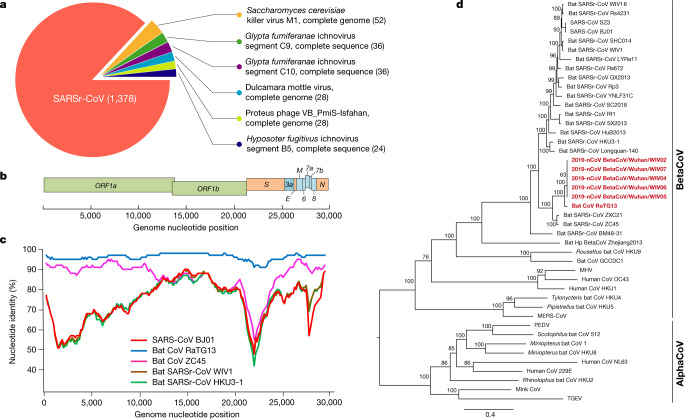
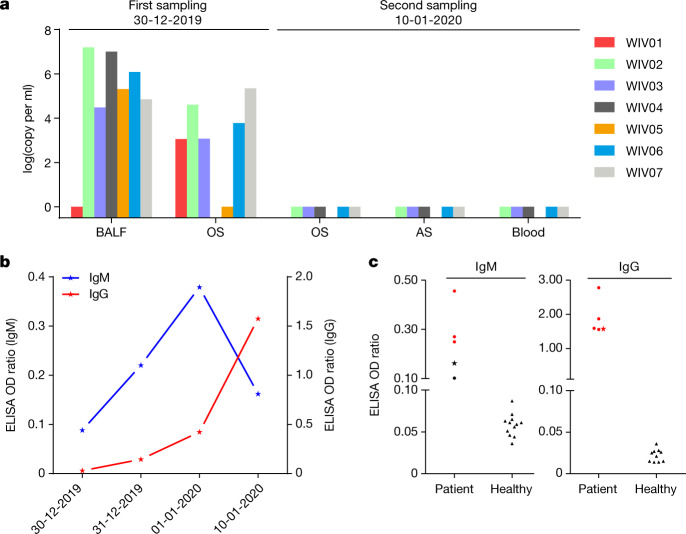
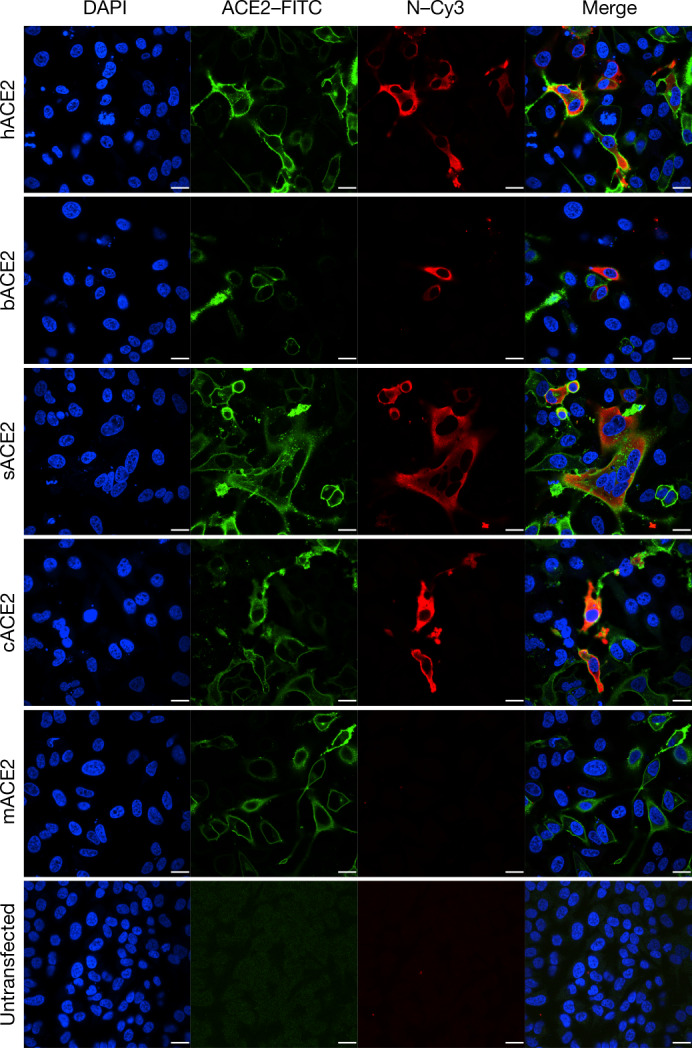
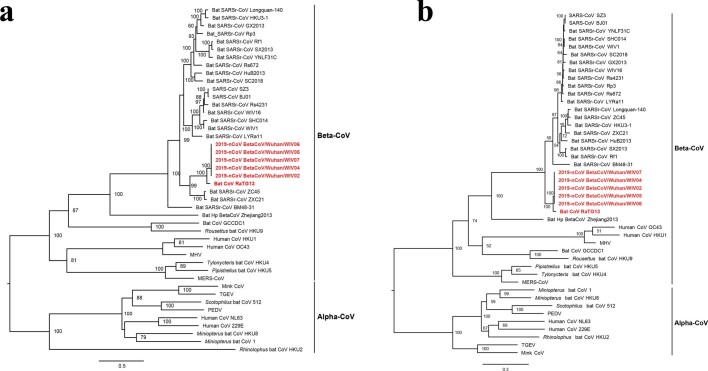
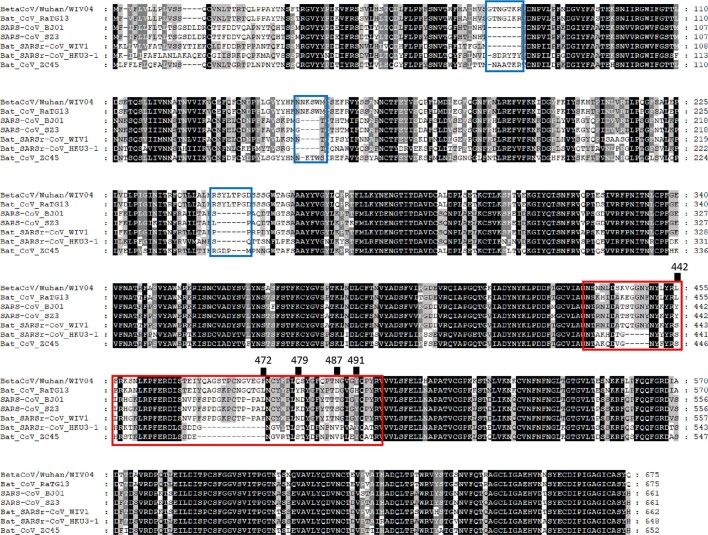
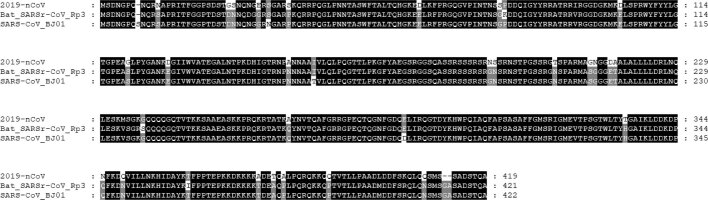
Since the outbreak of severe acute respiratory syndrome (SARS) 18 years ago, a large number of SARS-related coronaviruses (SARSr-CoVs) have been discovered in their natural reservoir host, bats 1–4 . Previous studies have shown that some bat SARSr-CoVs have the potential to infect humans 5–7 . Here we report the identification and characterization of a new coronavirus (2019-nCoV), which caused an epidemic of acute respiratory syndrome in humans in Wuhan, China. The epidemic, which started on 12 December 2019, had caused 2,794 laboratory-confirmed infections including 80 deaths by 26 January 2020. Full-length genome sequences were obtained from five patients at an early stage of the outbreak. The sequences are almost identical and share 79.6% sequence identity to SARS-CoV. Furthermore, we show that 2019-nCoV is 96% identical at the whole-genome level to a bat coronavirus. Pairwise protein sequence analysis of seven conserved non-structural proteins domains show that this virus belongs to the species of . In addition, 2019-nCoV virus isolated from the bronchoalveolar lavage fluid of a critically ill patient could be neutralized by sera from several patients. Notably, we confirmed that 2019-nCoV uses the same cell entry receptor—angiotensin converting enzyme II (ACE2)—as SARS-CoV.
Overview
The claims and statistics of this paper haven’t been checked yet.
Free: it reads the open-access text and checks the first 5 claims that cite a source we can check. Create a free account to check every claim.
Integrity signals
Registry
Cites
Statistics
Figures
Verification
Claims the paper makes
The claims and statistics of this paper haven’t been checked yet.
Free: it reads the open-access text and checks the first 5 claims that cite a source we can check. Create a free account to check every claim.
Claims other papers make about this one
Each is checked against this paper’s own text: does it say what the citing paper says it does?
The source backs part of the claim, not all of it — or backs it for a different population, condition or comparison.
In the citing paper
“SARS-CoV-2 is an enveloped, single-stranded positive-sense RNA virus with the highest, i.e. 96% of genome identity with horseshoe bat virus RaTG13 Rhinolophus affinis [3].”
From Waves and variants of SARS-CoV-2: understanding the causes and effect of the COVID-19 catastrophe (2022) · cites this paper as [3]
Experimental — accuracy not yet measuredThe source backs part of the claim, not all of it — or backs it for a different population, condition or comparison.
In the citing paper
“The disease is estimated to have originated from a seafood market in Wuhan where wild animals were traded such as marmots, bats, snakes and birds (Zhou et al., 2020).”
From How energy innovation in indoor vertical farming can improve food security, sustainability, and food safety? (2020) · cites this paper as Zhou et al., 2020
Experimental — accuracy not yet measuredThe source backs part of the claim, not all of it — or backs it for a different population, condition or comparison.
In the citing paper
“Genome sequencing demonstrated that SARS-CoV-2 shares 79.5% sequence identity with SARS-CoV (Zhou et al., 2020)”
From Oral Microbiome and SARS-CoV-2: Beware of Lung Co-infection (2020) · cites this paper as Zhou et al., 2020
Experimental — accuracy not yet measuredThe source backs part of the claim, not all of it — or backs it for a different population, condition or comparison.
In the citing paper
“This interaction requires cleavage of the S protein, likely by the cell surface protease TMPRSS2, although other proteases (such as Cathepsin B and L, CTSB/CTSL) may also be involved (4-6, 22-25).”
From Non-neuronal expression of SARS-CoV-2 entry genes in the olfactory system suggests mechanisms underlying COVID-19-associated anosmia (2020) · cites this paper as [4]
Experimental — accuracy not yet measuredThe source backs part of the claim, not all of it — or backs it for a different population, condition or comparison.
In the citing paper
“Bats (Chiroptera), representing ~22% of all mammalian species, are natural reservoirs for a wide range of zoonotic viruses, including coronaviruses, rhabdoviruses, and paramyxoviruses ( 1 – 3 ).”
From Ecological vaccination: A strategy to prevent zoonotic spillover from bats (2026) · cites this paper as [1]
Experimental — accuracy not yet measured
8 more claims about this paper
Create a free account to see every claim other papers make about this one.
Self-check
Percentages, sums and reported differences re-computed from the paper’s own numbers.
The self-check needs the paper’s full text.
Citations
Cites
Coronaviridae Study Group of the International Committee on Taxonomy of Viruses, Gorbalenya, A. E., Baker, S. C., Baric, R. S., de Groot, R. J., Drosten, C., Gulyaeva, A. A., Haagmans, B. L., Lauber, C., Leontovich, A. M., et al. (2020) · Nature Microbiology · doi:10.1038/s41564-020-0695-z · Cited by 8,403
Angiotensin-converting enzyme 2 is a functional receptor for the SARS coronavirus
Li, W., Moore, M. J., Vasilieva, N., Sui, J., Wong, S. K., Berne, M. A., Somasundaran, M., Sullivan, J. L., Luzuriaga, K., Greenough, T. C., et al. (2003) · Nature · doi:10.1038/nature02145 · Cited by 5,923
Isolation of a Novel Coronavirus from a Man with Pneumonia in Saudi Arabia
Zaki, A. M., van Boheemen, S., Bestebroer, T. M., Osterhaus, A. D. M. E., & Fouchier, R. A. M. (2012) · New England Journal of Medicine · doi:10.1056/nejmoa1211721 · Cited by 5,735
Origin and evolution of pathogenic coronaviruses
Cui, J., Li, F., & Shi, Z.-L. (2019) · Nature Reviews Microbiology · doi:10.1038/s41579-018-0118-9 · Cited by 5,515
Self-citationIdentification of a novel coronavirus in patients with severe acute respiratory syndrome
Drosten, C., Günther, S., Preiser, W., van der Werf, S., Brodt, H.-R., Becker, S., Rabenau, H., Panning, M., Kolesnikova, L., Fouchier, R. A. M., et al. (2003) · New England Journal of Medicine · doi:10.1056/nejmoa030747 · Cited by 4,574
Bats Are Natural Reservoirs of SARS-Like Coronaviruses
Li, W., Shi, Z., Yu, M., Ren, W., Smith, C., Epstein, J. H., Wang, H., Crameri, G., Hu, Z., Zhang, H., et al. (2005) · Science · doi:10.1126/science.1118391 · Cited by 2,560
Self-citationIsolation and characterization of a bat SARS-like coronavirus that uses the ACE2 receptor
Ge, X.-Y., Li, J.-L., Yang, X.-L., Chmura, A. A., Zhu, G., Epstein, J. H., Mazet, J. K., Hu, B., Zhang, W., Peng, C., et al. (2013) · Nature · doi:10.1038/nature12711 · Cited by 1,778
Self-citationGorbalenya, A. E., Baker, S. C., Baric, R. S., et al. (2020) · bioRxiv (Cold Spring Harbor Laboratory) · doi:10.1101/2020.02.07.937862 · Cited by 1,408
Al-Hanawi, M. K., Angawi, K., Alshareef, N., Qattan, A. M. N., Helmy, H. Z., Abudawood, Y., Alqurashi, M., Kattan, W. M., Kadasah, N. A., Chirwa, G. C., et al. (2020) · Frontiers in Public Health · doi:10.3389/fpubh.2020.00217 · Cited by 967
Hu, B., Zeng, L.-P., Yang, X.-L., Ge, X.-Y., Zhang, W., Li, B., Xie, J.-Z., Shen, X.-R., Zhang, Y.-Z., Wang, N., et al. (2017) · PLOS Pathogens · doi:10.1371/journal.ppat.1006698 · Cited by 950
Self-citation
Cited by
Hoffmann, M., Kleine-Weber, H., Schroeder, S., Krüger, N., Herrler, T., Erichsen, S., Schiergens, T. S., Herrler, G., Wu, N.-H., Nitsche, A., et al. (2020) · Cell · doi:10.1016/j.cell.2020.02.052 · Cited by 20,286
Lu, R., Zhao, X., Li, J., Niu, P., Yang, B., Wu, H., Wang, W., Song, H., Huang, B., Zhu, N., et al. (2020) · The Lancet · doi:10.1016/s0140-6736(20)30251-8 · Cited by 11,907
Self-citationA new coronavirus associated with human respiratory disease in China
Wu, F., Zhao, S., Yu, B., Chen, Y.-M., Wang, W., Song, Z.-G., Hu, Y., Tao, Z.-W., Tian, J.-H., Pei, Y.-Y., et al. (2020) · Nature · doi:10.1038/s41586-020-2008-3 · Cited by 11,688
Self-citationCryo-EM structure of the 2019-nCoV spike in the prefusion conformation
Wrapp, D., Wang, N., Corbett, K. S., Goldsmith, J. A., Hsieh, C.-L., Abiona, O., Graham, B. S., & McLellan, J. S. (2020) · Science · doi:10.1126/science.abb2507 · Cited by 8,897
Structure, function and antigenicity of the SARS-CoV-2 spike glycoprotein
Walls, A. C., Park, Y.-J., Tortorici, M. A., Wall, A., McGuire, A. T., & Veesler, D. (2020) · doi:10.1101/2020.02.19.956581 · Cited by 8,586
Coronaviridae Study Group of the International Committee on Taxonomy of Viruses, Gorbalenya, A. E., Baker, S. C., Baric, R. S., de Groot, R. J., Drosten, C., Gulyaeva, A. A., Haagmans, B. L., Lauber, C., Leontovich, A. M., et al. (2020) · Nature Microbiology · doi:10.1038/s41564-020-0695-z · Cited by 8,403
Wu, C., Chen, X., Cai, Y., Xia, J., Zhou, X., Xu, S., Huang, H., Zhang, L., Zhou, X., Du, C., et al. (2020) · JAMA Internal Medicine · doi:10.1001/jamainternmed.2020.0994 · Cited by 8,249
Neurologic manifestations of hospitalized patients with coronavirus disease 2019 in Wuhan, China
Mao, L., Jin, H., Wang, M., Hu, Y., Chen, S., He, Q., Chang, J., Hong, C., Zhou, Y., Wang, D., et al. (2020) · JAMA Neurology · doi:10.1001/jamaneurol.2020.1127 · Cited by 7,166
“Acute cerebrovascular disease 9 (1-18) 10 (1-18) 1 (1) NA”
BackgroundSelf-citationLai, C.-C., Shih, T.-P., Ko, W.-C., Tang, H.-J., & Hsueh, P.-R. (2020) · International Journal of Antimicrobial Agents · doi:10.1016/j.ijantimicag.2020.105924 · Cited by 6,068
Structure of the SARS-CoV-2 spike receptor-binding domain bound to the ACE2 receptor
Lan, J., Ge, J., Yu, J., Shan, S., Zhou, H., Fan, S., Zhang, Q., Shi, X., Wang, Q., Zhang, L., et al. (2020) · Nature · doi:10.1038/s41586-020-2180-5 · Cited by 5,983
Self-citationCharacteristics of SARS-CoV-2 and COVID-19
Hu, B., Guo, H., Zhou, P., & Shi, Z.-L. (2021) · Nature Reviews Microbiology · doi:10.1038/s41579-020-00459-7 · Cited by 5,291
“2% identical to that of SARS- CoV-2 (ref.(11)).”
BackgroundResultSelf-citationThe proximal origin of SARS-CoV-2
Andersen, K. G., Rambaut, A., Lipkin, W. I., Holmes, E. C., & Garry, R. F. (2020) · Nature Medicine · doi:10.1038/s41591-020-0820-9 · Cited by 5,081
Structural basis for the recognition of SARS-CoV-2 by full-length human ACE2
Yan, R., Zhang, Y., Li, Y., Xia, L., Guo, Y., & Zhou, Q. (2020) · Science · doi:10.1126/science.abb2762 · Cited by 5,040
Clinical and immunological features of severe and moderate coronavirus disease 2019
Chen, G., Wu, D., Guo, W., Cao, Y., Huang, D., Wang, H., Wang, T., Zhang, X., Chen, H., Yu, H., et al. (2020) · Journal of Clinical Investigation · doi:10.1172/jci137244 · Cited by 4,750
“It has been revealed that SARS-CoV-2 has a genome sequence 75% to 80% identical to the SARS-CoV and has more similarities to several bat CoVs (7).”
Self-citationGuo (2020) · doi:10.1186/s40779-020-00240-0 · Cited by 4,735
“2% overall genome sequence identity [8], suggesting that bat CoV”
BackgroundInfluentialThe trinity of COVID-19: immunity, inflammation and intervention
Tay, M. Z., Poh, C. M., Rénia, L., MacAry, P. A., & Ng, L. F. P. (2020) · Nature Reviews Immunology · doi:10.1038/s41577-020-0311-8 · Cited by 4,360
“(4) In a novel treatment method that targets the cytokine storm symptoms, the blood of patients with”
MethodStructure of Mpro from SARS-CoV-2 and discovery of its inhibitors
Jin, Z., Du, X., Xu, Y., Deng, Y., Liu, M., Zhao, Y., Zhang, B., Li, X., Zhang, L., Peng, C., et al. (2020) · Nature · doi:10.1038/s41586-020-2223-y · Cited by 4,358
Self-citationCancer patients in SARS-CoV-2 infection: a nationwide analysis in China
Liang, W., Guan, W., Chen, R., Wang, W., Li, J., Xu, K., Li, C., Ai, Q., Lu, W., Liang, H., et al. (2020) · The Lancet Oncology · doi:10.1016/s1470-2045(20)30096-6 · Cited by 4,384
Wan, Y., Shang, J., Graham, R., Baric, R. S., & Li, F. (2020) · Journal of Virology · doi:10.1128/jvi.00127-20 · Cited by 4,341
“Our structural analyses confidently predict that 2019-nCoV uses ACE2 as its host receptor, consistent with two other new publications (30, 31).”
ResultKorber, B., Fischer, W. M., Gnanakaran, S., Yoon, H., Theiler, J., Abfalterer, W., Hengartner, N., Giorgi, E. E., Bhattacharya, T., Foley, B., et al. (2020) · Cell · doi:10.1016/j.cell.2020.06.043 · Cited by 4,281
“First reported in China in December 2019 (Zhou et al., 2020), it rapidly became a pandemic with devastating effects.”
Epidemiology of COVID-19 Among Children in China
Dong, Y., Mo, X., Hu, Y., Qi, X., Jiang, F., Jiang, Z., & Tong, S. (2020) · Pediatrics · doi:10.1542/peds.2020-0702 · Cited by 4,090
“Recent evidence indicates that ACE2 is also likely the cell receptor of 2019nCoV.(20,21) It is speculated that children were less sensitive to 2019-nCoV because the maturity and function (eg, binding ability) of ACE2 in children may be lower than in adults.”
BackgroundChen, H., Guo, J., Wang, C., Luo, F., Yu, X., Zhang, W., Li, J., Zhao, D., Xu, D., Gong, Q., et al. (2020) · The Lancet · doi:10.1016/s0140-6736(20)30360-3 · Cited by 3,919
Self-citationClinical characteristics of 113 deceased patients with coronavirus disease 2019: retrospective study
Chen, T., Wu, D., Chen, H., Yan, W., Yang, D., Chen, G., Ma, K., Xu, D., Yu, H., Wang, H., et al. (2020) · BMJ · doi:10.1136/bmj.m1091 · Cited by 3,903
Self-citationStructural basis of receptor recognition by SARS-CoV-2
Shang, J., Ye, G., Shi, K., Wan, Y., Luo, C., Aihara, H., Geng, Q., Auerbach, A., & Li, F. (2020) · Nature · doi:10.1038/s41586-020-2179-y · Cited by 3,661
COVID-19 infection: Emergence, transmission, and characteristics of human coronaviruses
Shereen, M. A., Khan, S., Kazmi, A., Bashir, N., & Siddique, R. (2020) · Journal of Advanced Research · doi:10.1016/j.jare.2020.03.005 · Cited by 3,536
“SARS-CoV-2 possesses the typical coronavirus structure with spike protein and also expressed other polyproteins, nucleoproteins, and membrane proteins, such as RNA polymerase, 3chymotrypsin-like protease, papain-like protease, helicase, glycoprotein, and accessory proteins [30,31].”
Letko, M., Marzi, A., & Munster, V. (2020) · Nature Microbiology · doi:10.1038/s41564-020-0688-y · Cited by 3,109
Zhang, L., Lin, D., Sun, X., Curth, U., Drosten, C., Sauerhering, L., Becker, S., Rox, K., & Hilgenfeld, R. (2020) · Science · doi:10.1126/science.abb3405 · Cited by 2,895
Self-citationCoronavirus biology and replication: implications for SARS-CoV-2
V’kovski, P., Kratzel, A., Steiner, S., Stalder, H., & Thiel, V. (2021) · Nature Reviews Microbiology · doi:10.1038/s41579-020-00468-6 · Cited by 3,197
Extrapulmonary manifestations of COVID-19
Gupta, A., Madhavan, M. V., Sehgal, K., Nair, N., Mahajan, S., Sehrawat, T. S., Bikdeli, B., Ahluwalia, N., Ausiello, J. C., Wan, E. Y., et al. (2020) · Nature Medicine · doi:10.1038/s41591-020-0968-3 · Cited by 3,185
Cell entry mechanisms of SARS-CoV-2
Shang, J., Wan, Y., Luo, C., Ye, G., Geng, Q., Auerbach, A., & Li, F. (2020) · Proceedings of the National Academy of Sciences · doi:10.1073/pnas.2003138117 · Cited by 3,142
Mechanisms of SARS-CoV-2 entry into cells
Jackson, C. B., Farzan, M., Chen, B., & Choe, H. (2022) · Nature Reviews Molecular Cell Biology · doi:10.1038/s41580-021-00418-x · Cited by 3,022
Ou, X., Liu, Y., Lei, X., Li, P., Mi, D., Ren, L., Guo, L., Guo, R., Chen, T., Hu, J., et al. (2020) · Nature Communications · doi:10.1038/s41467-020-15562-9 · Cited by 3,097
“Both S proteins use hACE2 as the receptor for binding and entry 13, 21 , which we further confirmed by flow cytometry analysis and competitive inhibition experiment using soluble hACE2 in this study (Fig.”
BackgroundMethodSelf-citationTo, K. K.-W., Tsang, O. T.-Y., Leung, W.-S., Tam, A. R., Wu, T.-C., Lung, D. C., Yip, C. C.-Y., Cai, J.-P., Chan, J. M.-C., Chik, T. S.-H., et al. (2020) · The Lancet Infectious Diseases · doi:10.1016/s1473-3099(20)30196-1 · Cited by 3,066
Self-citationCOVID-19 and the cardiovascular system
Zheng, Y.-Y., Ma, Y.-T., Zhang, J.-Y., & Xie, X. (2020) · Nature Reviews Cardiology · doi:10.1038/s41569-020-0360-5 · Cited by 2,970
“After virus identification and isolation, the pathogen for this pneumonia was originally called 2019 novel corona virus (2019-nCoV) 2 but has subsequently been officially named severe acute respiratory syndrome coronavirus 2 (SARS-CoV-2) by the WHO.”
BackgroundHigh expression of ACE2 receptor of 2019-nCoV on the epithelial cells of oral mucosa
Xu, H., Zhong, L., Deng, J., Peng, J., Dan, H., Zeng, X., Li, T., & Chen, Q. (2020) · International Journal of Oral Science · doi:10.1038/s41368-020-0074-x · Cited by 2,838
Self-citationKidney disease is associated with in-hospital death of patients with COVID-19
Cheng, Y., Luo, R., Wang, K., Zhang, M., Wang, Z., Dong, L., Li, J., Yao, Y., Ge, S., & Xu, G. (2020) · Kidney International · doi:10.1016/j.kint.2020.03.005 · Cited by 2,941
“19 Recent human tissue RNA-sequencing data demonstrated tha-tACE2 expression in urinary organs (kidney) was nearly 100-fold higher than in respiratory organs (lung).”
BackgroundStructural and Functional Basis of SARS-CoV-2 Entry by Using Human ACE2
Wang, Q., Zhang, Y., Wu, L., Niu, S., Song, C., Zhang, Z., Lu, G., Qiao, C., Hu, Y., Yuen, K.-Y., et al. (2020) · Cell · doi:10.1016/j.cell.2020.03.045 · Cited by 2,892
“After the outbreak of COVID-19, Chinese scientists promptly determined that SARSCoV-2 also utilizes hACE2 for cell entry (Zhou et al., 2020).”
InfluentialBikdeli, B., Madhavan, M. V., Jimenez, D., Chuich, T., Dreyfus, I., Driggin, E., Nigoghossian, C. D., Ageno, W., Madjid, M., Guo, Y., et al. (2020) · Journal of the American College of Cardiology · doi:10.1016/j.jacc.2020.04.031 · Cited by 2,885
“Common laboratory abnormalities found in patients wi h COVID-19 include lymphopenia (15) and elevation in lactate dehydroge nas and inflammatory markers such as, C-”
BackgroundEvidence for gastrointestinal infection of SARS-CoV-2
Xiao, F., Tang, M., Zheng, X., Liu, Y., Li, X., & Shan, H. (2020) · Gastroenterology · doi:10.1053/j.gastro.2020.02.055 · Cited by 2,836
Self-citationZhang, H., Penninger, J. M., Li, Y., Zhong, N., & Slutsky, A. S. (2020) · Intensive Care Medicine · doi:10.1007/s00134-020-05985-9 · Cited by 2,684
Single-cell landscape of bronchoalveolar immune cells in patients with COVID-19
Liao, M., Liu, Y., Yuan, J., Wen, Y., Xu, G., Zhao, J., Cheng, L., Li, J., Wang, X., Wang, F., et al. (2020) · Nature Medicine · doi:10.1038/s41591-020-0901-9 · Cited by 2,614
Self-citationClinical, laboratory and imaging features of COVID-19: A systematic review and meta-analysis
Rodriguez-Morales, A. J., Cardona-Ospina, J. A., Gutiérrez-Ocampo, E., Villamizar-Peña, R., Holguin-Rivera, Y., Escalera-Antezana, J. P., Alvarado-Arnez, L. E., Bonilla-Aldana, D. K., Franco-Paredes, C., Henao-Martinez, A. F., et al. (2020) · Travel Medicine and Infectious Disease · doi:10.1016/j.tmaid.2020.101623 · Cited by 2,542
“This induces a cytokine storm in the body and generates a series of immune responses, that cause changes in peripheral white blood cells and immune cells such as lymphocytes [56,57].”
BackgroundHCA Lung Biological Network, Sungnak, W., Huang, N., Bécavin, C., Berg, M., Queen, R., Litvinukova, M., Talavera-López, C., Maatz, H., Reichart, D., et al. (2020) · Nature Medicine · doi:10.1038/s41591-020-0868-6 · Cited by 2,501
“The SARS-CoV-2 has been shown to infect and replicate in Vero cells, a Cercopithecus aethiops (old world monkey) kidney epithelial cell line, and huh7 cells, a human hepatocarcinoma cell line 15 .”
BackgroundInfluentialReduction and Functional Exhaustion of T Cells in Patients With Coronavirus Disease 2019 (COVID-19)
Diao, B., Wang, C., Tan, Y., Chen, X., Liu, Y., Ning, L., Chen, L., Li, M., Liu, Y., Wang, G., et al. (2020) · Frontiers in Immunology · doi:10.3389/fimmu.2020.00827 · Cited by 2,475
“Negative Correlations Between T Cell Numbers and Cytokines The expression of angiotensin converting enzyme 2 (ACE2), the predicted receptor of SARS-CoV-2 viruses, is absent on T cells (11), suggesting that the depressed T counts in COVID19 patients mentioned above (Figure 1) were likely not caused by direct infection…”
Velavan, T. P., & Meyer, C. G. (2020) · Tropical Medicine & International Health · doi:10.1111/tmi.13383 · Cited by 2,439
“SARS-CoV-2 is 96% identical at the whole-genome level to a bat coronavirus [4].”
BackgroundInfluentialTransmission routes of 2019-nCoV and controls in dental practice
Peng, X., Xu, X., Li, Y., Cheng, L., Zhou, X., & Ren, B. (2020) · International Journal of Oral Science · doi:10.1038/s41368-020-0075-9 · Cited by 2,437
Adhikari, S. P., Meng, S., Wu, Y.-J., Mao, Y.-P., Ye, R.-X., Wang, Q.-Z., Sun, C., Sylvia, S., Rozelle, S., Raat, H., et al. (2020) · Infectious Diseases of Poverty · doi:10.1186/s40249-020-00646-x · Cited by 2,402
Genome Composition and Divergence of the Novel Coronavirus (2019-nCoV) Originating in China
Wu, A., Peng, Y., Huang, B., Ding, X., Wang, X., Niu, P., Meng, J., Zhu, Z., Zhang, Z., Wang, J., et al. (2020) · Cell Host & Microbe · doi:10.1016/j.chom.2020.02.001 · Cited by 2,361
Self-citationZou, X., Chen, K., Zou, J., Han, P., Hao, J., & Han, Z. (2020) · Frontiers of Medicine · doi:10.1007/s11684-020-0754-0 · Cited by 2,287
“Therefore, the cells with ACE2 expression may act as target cells and thus are susceptible to 2019-nCoV infection; such cells include type II alveolar cells (AT2) of the lungs [3].”
BackgroundF. T. Z. H. O. W. U. N. C. M. A. R. T., Jin, Y.-H., Cai, L., Cheng, Z.-S., Cheng, H., Deng, T., Fan, Y.-P., Fang, C., Huang, D., Huang, L.-Q., et al. (2020) · Military Medical Research · doi:10.1186/s40779-020-0233-6 · Cited by 2,254
“2 宿主 野生动物,可能为蝙蝠([10])。2019-nCoV感染的肺炎是由蝙蝠直接传播还是通过中间宿主传播,”
BackgroundInfluentialSelf-citationHuman organoids: model systems for human biology and medicine
Kim, J., Koo, B.-K., & Knoblich, J. A. (2020) · Nature Reviews Molecular Cell Biology · doi:10.1038/s41580-020-0259-3 · Cited by 2,187
Therapeutic Peptides: Current Applications and Future Directions
Wang, L., Wang, N., Zhang, W., Cheng, X., Yan, Z., Shao, G., Wang, X., Wang, R., & Fu, C. (2022) · Signal Transduction and Targeted Therapy · doi:10.1038/s41392-022-00904-4 · Cited by 2,131
Self-citationThe Architecture of SARS-CoV-2 Transcriptome
Kim, D., Lee, J.-Y., Yang, J.-S., Kim, J. W., Kim, V. N., & Chang, H. (2020) · Cell · doi:10.1016/j.cell.2020.04.011 · Cited by 2,123
Monteil, V., Kwon, H., Prado, P., Hagelkrüys, A., Wimmer, R. A., Stahl, M., Leopoldi, A., Garreta, E., Hurtado del Pozo, C., Prosper, F., et al. (2020) · Cell · doi:10.1016/j.cell.2020.04.004 · Cited by 2,122
“In December 2019, a novel coronavirus (SARS-CoV-2) crossed species barriers to infect humans (Gorbalenya et al., 2020) and was effectively transmitted from person to person, leading to a pneumonia outbreak first reported in Wuhan, China (Guan et al., 2020; Jiang et al., 2020; Zhou et al., 2020b) .”
SARS-CoV-2 vaccines in development
Krammer, F. (2020) · Nature · doi:10.1038/s41586-020-2798-3 · Cited by 2,098
Coronavirus Disease 2019 (COVID-19): A Perspective from China
Zu, Z. Y., Jiang, M. D., Xu, P. P., Chen, W., Ni, Q. Q., Lu, G. M., & Zhang, L. J. (2020) · Radiology · doi:10.1148/radiol.2020200490 · Cited by 2,070
“clusters of infected family members and medical workers confirmed the presence of humanto-human transmission (12) by droplets, contact and fomite (26-27).”
BackgroundSelf-citationRisk factors of critical & mortal COVID-19 cases: A systematic literature review and meta-analysis
Zheng, Z., Peng, F., Xu, B., Zhao, J., Liu, H., Peng, J., Li, Q., Jiang, C., Zhou, Y., Liu, S., et al. (2020) · Journal of Infection · doi:10.1016/j.jinf.2020.04.021 · Cited by 2,074
“The pathogen was designated as SARS-CoV-2 by the International Committee on Taxonomy of Viruses, and this pneumonia was named as Coronavirus Disease2019 by World Health Organization (WHO) [2] .”
BackgroundSelf-citationNeuropilin-1 facilitates SARS-CoV-2 cell entry and infectivity
Cantuti-Castelvetri, L., Ojha, R., Pedro, L. D., Djannatian, M., Franz, J., Kuivanen, S., van der Meer, F., Kallio, K., Kaya, T., Anastasina, M., et al. (2020) · Science · doi:10.1126/science.abd2985 · Cited by 1,925
An oral SARS-CoV-2 M pro inhibitor clinical candidate for the treatment of COVID-19
Owen, D. R., Allerton, C. M. N., Anderson, A. S., Aschenbrenner, L., Avery, M., Berritt, S., Boras, B., Cardin, R. D., Carlo, A., Coffman, K. J., et al. (2021) · Science · doi:10.1126/science.abl4784 · Cited by 2,033
Self-citationDriggin, E., Madhavan, M. V., Bikdeli, B., Chuich, T., Laracy, J., Biondi-Zoccai, G., Brown, T. S., Der Nigoghossian, C., Zidar, D. A., Haythe, J., et al. (2020) · Journal of the American College of Cardiology · doi:10.1016/j.jacc.2020.03.031 · Cited by 2,017
“It is highly expressed in lung alveolar cells, providing the main entry site for the virus into human hosts (8,9).”
Tian, H., Liu, Y., Li, Y., Wu, C.-H., Chen, B., Kraemer, M. U. G., Li, B., Cai, J., Xu, B., Yang, Q., et al. (2020) · Science · doi:10.1126/science.abb6105 · Cited by 2,010
Self-citationEffectiveness of convalescent plasma therapy in severe COVID-19 patients
Duan, K., Liu, B., Li, C., Zhang, H., Yu, T., Qu, J., Zhou, M., Chen, L., Meng, S., Hu, Y., et al. (2020) · Proceedings of the National Academy of Sciences · doi:10.1073/pnas.2004168117 · Cited by 1,960
“The neutralizing activity against SARS-CoV-2 was evaluated by classical plaque reduction test using a recently isolated viral strain (1).”
Self-citationStarr, T. N., Greaney, A. J., Hilton, S. K., Ellis, D., Crawford, K. H. D., Dingens, A. S., Navarro, M. J., Bowen, J. E., Tortorici, M. A., Walls, A. C., et al. (2020) · Cell · doi:10.1016/j.cell.2020.08.012 · Cited by 1,956
“We purified mammalian-expressed RBDs from six sarbecoviruses (SARS-CoV-2, SARS-CoV-1, WIV1, RaTG13, ZXC21, and ZC45) and measured their 1:1 binding affinities for monomeric human ACE2 using biolayer interferometry, which agreed with the measurements from our deep mutational scan (Figures 4D and S4A–S4F).”
InfluentialSusceptibility of ferrets, cats, dogs, and other domesticated animals to SARS–coronavirus 2
Shi, J., Wen, Z., Zhong, G., Yang, H., Wang, C., Huang, B., Liu, R., He, X., Shuai, L., Sun, Z., et al. (2020) · Science · doi:10.1126/science.abb7015 · Cited by 1,911
Self-citationSARS-CoV-2-specific T cell immunity in cases of COVID-19 and SARS, and uninfected controls
Le Bert, N., Tan, A. T., Kunasegaran, K., Tham, C. Y. L., Hafezi, M., Chia, A., Chng, M. H. Y., Lin, M., Tan, N., Linster, M., et al. (2020) · Nature · doi:10.1038/s41586-020-2550-z · Cited by 1,887
Cross-neutralization of SARS-CoV-2 by a human monoclonal SARS-CoV antibody
Pinto, D., Park, Y.-J., Beltramello, M., Walls, A. C., Tortorici, M. A., Bianchi, S., Jaconi, S., Culap, K., Zatta, F., De Marco, A., et al. (2020) · Nature · doi:10.1038/s41586-020-2349-y · Cited by 1,885
Measuring the impact of COVID-19 vaccine misinformation on vaccination intent in the UK and USA
Loomba, S., de Figueiredo, A., Piatek, S. J., de Graaf, K., & Larson, H. J. (2021) · Nature Human Behaviour · doi:10.1038/s41562-021-01056-1 · Cited by 1,800
Gheblawi, M., Wang, K., Viveiros, A., Nguyen, Q., Zhong, J.-C., Turner, A. J., Raizada, M. K., Grant, M. B., & Oudit, G. Y. (2020) · Circulation Research · doi:10.1161/circresaha.120.317015 · Cited by 1,882
“29, 30 The ACE2 Gene and Basic Biochemistry”
BackgroundIdentifying SARS-CoV-2-related coronaviruses in Malayan pangolins
Lam, T. T.-Y., Jia, N., Zhang, Y.-W., Shum, M. H.-H., Jiang, J.-F., Zhu, H.-C., Tong, Y.-G., Shi, Y.-X., Ni, X.-B., Liao, Y.-S., et al. (2020) · Nature · doi:10.1038/s41586-020-2169-0 · Cited by 1,877
Coronavirus Disease 2019–COVID-19
Dhama, K., Khan, S., Tiwari, R., Sircar, S., Bhat, S., Malik, Y. S., Singh, K. P., Chaicumpa, W., Bonilla-Aldana, D. K., & Rodriguez-Morales, A. J. (2020) · Clinical Microbiology Reviews · doi:10.1128/cmr.00028-20 · Cited by 1,876
Aerodynamic Analysis of SARS-CoV-2 in Two Wuhan Hospitals
Liu, Y., Ning, Z., Chen, Y., Guo, M., Liu, Y., Gali, N. K., Sun, L., Duan, Y., Cai, J., Westerdahl, D., et al. (2020) · Nature · doi:10.1038/s41586-020-2271-3 · Cited by 1,872
Hoffmann, M., Kleine-Weber, H., & Pöhlmann, S. (2020) · Molecular Cell · doi:10.1016/j.molcel.2020.04.022 · Cited by 1,852
“In particular, we exchanged the multibasic cleavage site against its monobasic counterparts present in SARS-S or RaTG13-S (Figure 2A , RaTG13 is a bat coronavirus closely related to SARS-CoV-2 [Zhou et al., 2020b] ).”
Seo, G., Lee, G., Kim, M. J., Baek, S.-H., Choi, M., Ku, K. B., Lee, C.-S., Jun, S., Park, D., Kim, H. G., et al. (2020) · ACS Nano · doi:10.1021/acsnano.0c02823 · Cited by 1,837
Zhang, W., Du, R.-H., Li, B., Zheng, X.-S., Yang, X.-L., Hu, B., Wang, Y.-Y., Xiao, G.-F., Yan, B., Shi, Z.-L., et al. (2020) · Emerging Microbes & Infections · doi:10.1080/22221751.2020.1729071 · Cited by 1,799
Self-citationA serological assay to detect SARS-CoV-2 seroconversion in humans
Amanat, F., Stadlbauer, D., Strohmeier, S., Nguyen, T. H. O., Chromikova, V., McMahon, M., Jiang, K., Arunkumar, G. A., Jurczyszak, D., Polanco, J., et al. (2020) · Nature Medicine · doi:10.1038/s41591-020-0913-5 · Cited by 1,769
Functional exhaustion of antiviral lymphocytes in COVID-19 patients
Zheng, M., Gao, Y., Wang, G., Song, G., Liu, S., Sun, D., Xu, Y., & Tian, Z. (2020) · Cellular & Molecular Immunology · doi:10.1038/s41423-020-0402-2 · Cited by 1,768
“5% sequence homology with SARS-CoV.(3) In our cohort of 68 COVID-19 patients admitted to The First Affiliated Hospital (Hefei) and Fuyang Hospital (Fuyang), both of which are part of Anhui Medical University in China, there were 55 cases of mild disease (MD) and 13 cases of severe disease (SD).”
InfluentialDiagnosing COVID-19: The Disease and Tools for Detection
Udugama, B., Kadhiresan, P., Kozlowski, H. N., Malekjahani, A., Osborne, M., Li, V. Y. C., Chen, H., Mubareka, S., Gubbay, J. B., & Chan, W. C. W. (2020) · ACS Nano · doi:10.1021/acsnano.0c02624 · Cited by 1,754
“1, 23 Higher viral loads have been recorded in the nose versus the throat, with similar viral loads seen in asymptomatic and symptomatic patients.”
BackgroundInfluentialSelf-citationRenal histopathological analysis of 26 postmortem findings of patients with COVID-19 in China
Su, H., Yang, M., Wan, C., Yi, L.-X., Tang, F., Zhu, H.-Y., Yi, F., Yang, H.-C., Fogo, A. B., Nie, X., et al. (2020) · Kidney International · doi:10.1016/j.kint.2020.04.003 · Cited by 1,755
“SARS-CoV-2 shares 79% homology with SARS-CoV, the causal agent of SARS outbreaks in China 18 years ago.(7) They both belong to the b-coronavirus family and utilize the same cellular receptor ACE2 for their entrance to target cells.”
Structural and functional analysis of a potent sarbecovirus neutralizing antibody
Pinto, D., Park, Y.-J., Beltramello, M., Walls, A. C., Tortorici, M. A., Bianchi, S., Jaconi, S., Culap, K., Zatta, F., De Marco, A., et al. (2020) · doi:10.1101/2020.04.07.023903 · Cited by 1,752
Molecular immune pathogenesis and diagnosis of COVID-19
Li, X., Geng, M., Peng, Y., Meng, L., & Lu, S. (2020) · Journal of Pharmaceutical Analysis · doi:10.1016/j.jpha.2020.03.001 · Cited by 1,721
Zhang, W.-R., Wang, K., Yin, L., Zhao, W.-F., Xue, Q., Peng, M., Min, B.-Q., Tian, Q., Leng, H.-X., Du, J.-L., et al. (2020) · Psychotherapy and Psychosomatics · doi:10.1159/000507639 · Cited by 1,690
“Many accomplishments on COVID-19, including virus information, clinical features, and diagnosis have been achieved, but no effective treatment is available yet [2, [6] [7] [8] .”
BackgroundSelf-citationHuman neutralizing antibodies elicited by SARS-CoV-2 infection
Ju, B., Zhang, Q., Ge, J., Wang, R., Sun, J., Ge, X., Yu, J., Shan, S., Zhou, B., Song, S., et al. (2020) · Nature · doi:10.1038/s41586-020-2380-z · Cited by 1,667
Self-citationTai, W., He, L., Zhang, X., Pu, J., Voronin, D., Jiang, S., Zhou, Y., & Du, L. (2020) · Cellular & Molecular Immunology · doi:10.1038/s41423-020-0400-4 · Cited by 1,654
“Since SARS-CoV-2 is more phylogenetically related to SARS-CoV than MERS-CoV, 22 we further detected the cross-reactivity of SARS-CoV RBD-specific antibodies with SARS-CoV-2 RBD and crossneutralizing activity of SARS-CoV RBD-specific antibodies against pseudotyped SARS-CoV-2.”
BackgroundResultInfluentialThe cytokine storm and COVID-19
Hu, B., Huang, S., & Yin, L. (2021) · Journal of Medical Virology · doi:10.1002/jmv.26232 · Cited by 1,655
“2% homologous.(9) As of 11 May 2020, COVID‐19 has”
BackgroundSelf-citationCheung, K. S., Hung, I. F. N., Chan, P. P. Y., Lung, K. C., Tso, E., Liu, R., Ng, Y. Y., Chu, M. Y., Chung, T. W. H., Tam, A. R., et al. (2020) · Gastroenterology · doi:10.1053/j.gastro.2020.03.065 · Cited by 1,631
“1 Together with the other two previously identified coronaviruses SARS-CoV and MERS-CoV that cause Severe Acute Respiratory Syndrome and Middle East Respiratory Syndrome (MERS), this is the third coronavirus identified to cause severe viral pneumonia in humans ( Table 1) .”
BackgroundThe COVID-19 Cytokine Storm; What We Know So Far
Ragab, D., Salah Eldin, H., Taeimah, M., Khattab, R., & Salem, R. (2020) · Frontiers in Immunology · doi:10.3389/fimmu.2020.01446 · Cited by 1,622
“Although the first data available about COVID-19 indicates possible animal-to-human transmission via wild animals in Huanan seafood Market in Wuhan (5, 6), epidemiological data and studies, after that, have increasingly demonstrated that the virus transmits human-tohuman, through droplets or direct contact, with the r…”
BackgroundOn the origin and continuing evolution of SARS-CoV-2
Tang, X., Wu, C., Li, X., Song, Y., Yao, X., Wu, X., Duan, Y., Zhang, H., Wang, Y., Qian, Z., et al. (2020) · National Science Review · doi:10.1093/nsr/nwaa036 · Cited by 1,616
“It has also been confirmed that the SARS-CoV-2 uses the same receptor, the angiotensin converting enzyme II (ACE2), as the SARS-CoV [2].”
Self-citationOkba, N. M. A., Müller, M. A., Li, W., Wang, C., GeurtsvanKessel, C. H., Corman, V. M., Lamers, M. M., Sikkema, R. S., de Bruin, E., Chandler, F. D., et al. (2020) · Emerging Infectious Diseases · doi:10.3201/eid2607.200841 · Cited by 1,614
“I December 2019, a new coronavirus emerged in China and caused an acute respiratory disease now known as coronavirus disease 2019 (COVID-19) (1).”
BackgroundStructure of the RNA-dependent RNA polymerase from COVID-19 virus
Gao, Y., Yan, L., Huang, Y., Liu, F., Zhao, Y., Cao, L., Wang, T., Sun, Q., Ming, Z., Zhang, L., et al. (2020) · Science · doi:10.1126/science.abb7498 · Cited by 1,609
Self-citationVirology, Epidemiology, Pathogenesis, and Control of COVID-19
Jin, Y., Yang, H., Ji, W., Wu, W., Chen, S., Zhang, W., & Duan, G. (2020) · Viruses · doi:10.3390/v12040372 · Cited by 1,603
“However, there is 94.6% sequence identity between the seven conserved replicase domains in ORF1ab of SARS-CoV-2 and SARS-CoV [8], and less than 90% sequence identity between those of SARS-CoV-2 and other β-CoVs [2], implying that SARS-CoV-2 belongs to the lineage B (Sarbecovirus) of β-CoVs [12].”
BackgroundMethodInfluentialSelf-citationNetwork-based drug repurposing for novel coronavirus 2019-nCoV/SARS-CoV-2
Zhou, Y., Hou, Y., Shen, J., Huang, Y., Martin, W., & Cheng, F. (2020) · Cell Discovery · doi:10.1038/s41421-020-0153-3 · Cited by 1,597
Expression of the SARS-CoV-2 cell receptor gene ACE2 in a wide variety of human tissues
Li, M.-Y., Li, L., Zhang, Y., & Wang, X.-S. (2020) · Infectious Diseases of Poverty · doi:10.1186/s40249-020-00662-x · Cited by 1,583
“Like SARS-related coronavirus (SARS-CoV) [5] , SARS-CoV-2 uses the angiotensin-converting enzyme 2 (ACE2) as a host cell receptor [6] [7] [8] .”
BackgroundSelf-citationSpike mutation D614G alters SARS-CoV-2 fitness
Plante, J. A., Liu, Y., Liu, J., Xia, H., Johnson, B. A., Lokugamage, K. G., Zhang, X., Muruato, A. E., Zou, J., Fontes-Garfias, C. R., et al. (2021) · Nature · doi:10.1038/s41586-020-2895-3 · Cited by 1,558
Immune responses in COVID-19 and potential vaccines: Lessons learned from SARS and MERS epidemic
(2020) · Asian Pacific Journal of Allergy and Immunology · doi:10.12932/ap-200220-0772 · Cited by 1,537
Wang, Y., Wang, Y., Chen, Y., & Qin, Q. (2020) · Journal of Medical Virology · doi:10.1002/jmv.25748 · Cited by 1,531
“A recent large diagnostic study(72) showed 316 patients were confirmed infected with multiple respiratory pathogens including common human coronavirus (5 cases), influenza A virus (2), rhinovirus (12), and influenza A H3N2 (12), respiratory syncytial virus (7), influenza B virus (6), metapneumovirus (4).”
BackgroundSelf-citationCiotti, M., Ciccozzi, M., Terrinoni, A., Jiang, W.-C., Wang, C.-B., & Bernardini, S. (2020) · Critical Reviews in Clinical Laboratory Sciences · doi:10.1080/10408363.2020.1783198 · Cited by 1,514
Structure-based design of antiviral drug candidates targeting the SARS-CoV-2 main protease
Dai, W., Zhang, B., Jiang, X.-M., Su, H., Li, J., Zhao, Y., Xie, X., Jin, Z., Peng, J., Liu, F., et al. (2020) · Science · doi:10.1126/science.abb4489 · Cited by 1,478
Self-citationBacker, J. A., Klinkenberg, D., & Wallinga, J. (2020) · Eurosurveillance · doi:10.2807/1560-7917.es.2020.25.5.2000062 · Cited by 1,500
COVID-19: Gastrointestinal Manifestations and Potential Fecal–Oral Transmission
Gu, J., Han, B., & Wang, J. (2020) · Gastroenterology · doi:10.1053/j.gastro.2020.02.054 · Cited by 1,501
“5, 6 It is widely accepted that coronavirus human transmissibility and pathogenesis mainly depend on the interactions, including virus attachment, receptor recognition, protease cleaving and membrane fusion, of its transmembrane spike glycoprotein (S-protein) receptor-binding domain, specific cell receptors (ACE2), an…”
BackgroundZhang, L., Zhu, F., Xie, L., Wang, C., Wang, J., Chen, R., Jia, P., Guan, H. Q., Peng, L., Chen, Y., et al. (2020) · Annals of Oncology · doi:10.1016/j.annonc.2020.03.296 · Cited by 1,498
“Earlier cases were linked to a large seafood and live animal market selling different wild animal species.(3) The causative agent of the pneumonia”
BackgroundSelf-citation
Metadata
- Authors
- Zhou, P., Yang, X.-L., Wang, X.-G., Hu, B., Zhang, L., Zhang, W., Si, H.-R., Zhu, Y., Li, B., Huang, C.-L., Chen, H.-D., Chen, J., Luo, Y., Guo, H., Jiang, R.-D., Liu, M.-Q., Chen, Y., Shen, X.-R., Wang, X., Zheng, X.-S., Zhao, K., Chen, Q.-J., Deng, F., Liu, L.-L., Yan, B., Zhan, F.-X., Wang, Y.-Y., Xiao, G.-F., & Shi, Z.-L.
- Affiliations
- Chinese Academy of Sciences (CN)
- Jinyintan Hospital (CN)
- Hubei Provincial Center for Disease Control and Prevention (CN)
- Corresponding author
- Shi, Zheng-Li
- Venue
- Nature
- Published
- 2020-02-03
- Volume
- 579
- Issue
- 7798
- Pages
- 270-273
- ISSN
- 0028-0836 (ISSN-L)
- 1476-4687
- PMC
- PMC7095418
- OpenAlex
- W3004280078
- Cited by
- 21,969
- References
- 19
- Citations by year
- 2026: 363 · 2025: 769 · 2024: 1366 · 2023: 2080 · 2022: 3751 · 2021: 6147 · 2020: 7448
- FWCI
- 638.99
- Type
- journal article
- Language
- en
- Update notices
- addendum (2020-11-17)
- Open access
- hybrid
- doi.org
- Licence
- cc-by
- creativecommons.org/licenses/by/4.0 (tdm)
- creativecommons.org/licenses/by/4.0 (vor)
- Locations
- Nature (publishedVersion, cc-by)
- bioRxiv (Cold Spring Harbor Laboratory) (acceptedVersion)
- PubMed Central (publishedVersion, cc-by)
- PubMed (publishedVersion)
- LA Referencia (Red Federada de Repositorios Institucionales de Publicaciones Científicas) (publishedVersion, cc-by)
- Digital Commons - University of South Florida (University of South Florida) (submittedVersion)
- RePEc: Research Papers in Economics (submittedVersion)
- LA Referencia (Red Federada de Repositorios Institucionales de Publicaciones Científicas) (submittedVersion, cc-by)
- Funders
- Chinese Academy of Sciences (XDB29010101, 2019328)
- Youth Innovation Promotion Association
- Topics
- Health Sciences › Medicine › Infectious Diseases › SARS-CoV-2 and COVID-19 Research
- Life Sciences › Agricultural and Biological Sciences › Animal Science and Zoology › Animal Virus Infections Studies
- Health Sciences › Medicine › Infectious Diseases › COVID-19 Clinical Research Studies
- Keywords
- SARS-CoV-2, coronavirus outbreak, bat coronaviruses, zoonotic transmission, SARS-related coronaviruses, complete genome sequence, neutralizing antibodies, ACE2 receptor
- MeSH terms
- Betacoronavirus, Angiotensin-Converting Enzyme 2, COVID-19, SARS-CoV-2, Animals, Antibodies, Viral, Cell Line, Chlorocebus aethiops, China, Chiroptera, Disease Outbreaks, Female, Humans, Peptidyl-Dipeptidase A, Male, Phylogeny, Pneumonia, Viral, Sequence Homology, Nucleic Acid, Vero Cells, Genome, Viral, Coronavirus Infections, Severe Acute Respiratory Syndrome, Severe acute respiratory syndrome-related coronavirus
About these checks
Registry, retraction, Cites and statistics results are computed, not judged, with one exception: a printed reference that no index lists is read once by a model before it counts as a citation error. Claims are extracted by a model and kept only when their quote appears verbatim in the text; each cited source is then checked, with a model’s help, for whether it says what the claim relies on. Those verdicts can be wrong — read the claim’s quote and the cited source before relying on one.
Statistics and arithmetic are recomputed, not judged.
Confidence bands are shown only for fields calibrated on our annotated test set. None is calibrated yet, so no band is shown.
What counts as a claim ›How we measure confidence ›How we check this ›
Are you an author, or do you see a problem with this page? Request a review
Data sources
Bibliographic data: Semantic Scholar, OpenAlex, Crossref.
Contains information from the Semantic Scholar Academic Graph Datasets, made available under the ODC Attribution License (ODC-BY 1.0).
Semantic Scholar’s data is described in: Kinney, R., et al. (2023). The Semantic Scholar Open Data Platform. arXiv:2301.10140.
