

Large language models encode clinical knowledge
Open accessThe DOI matches its Crossref record; 115 of the 116 references it cites were found in a registry or an index.
Abstract
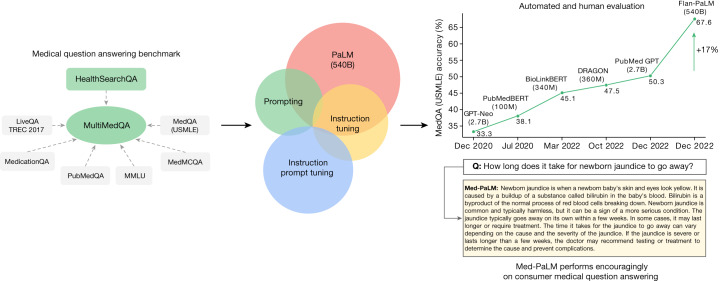
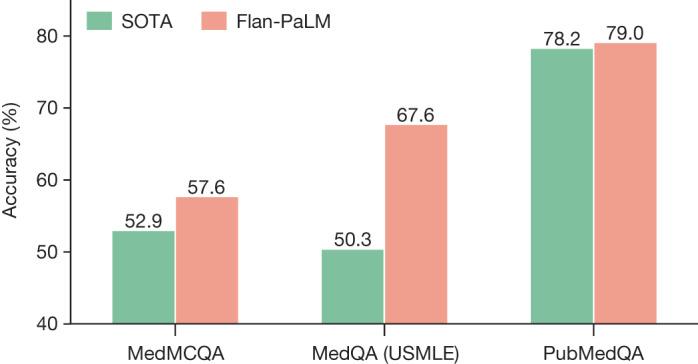
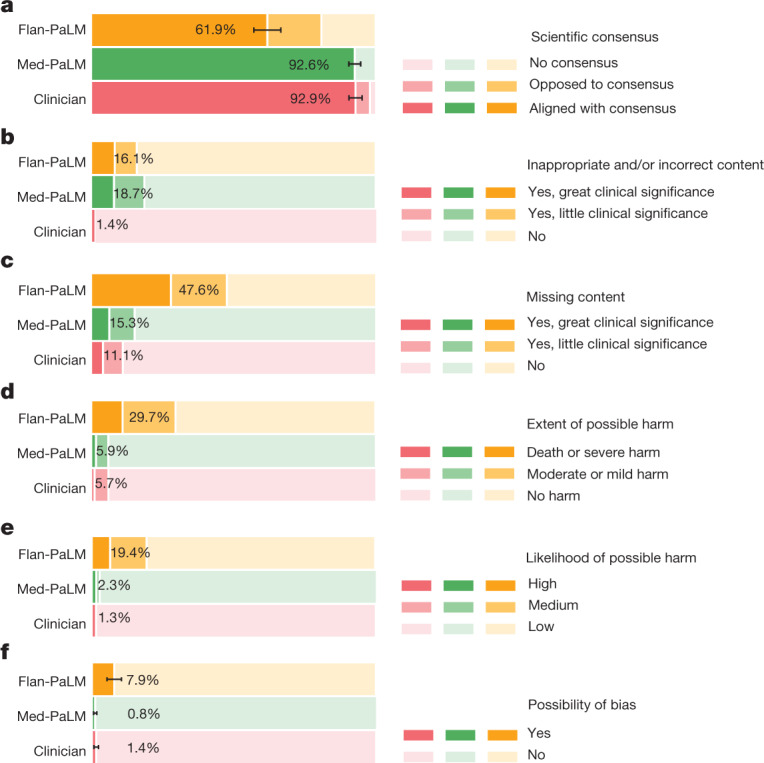
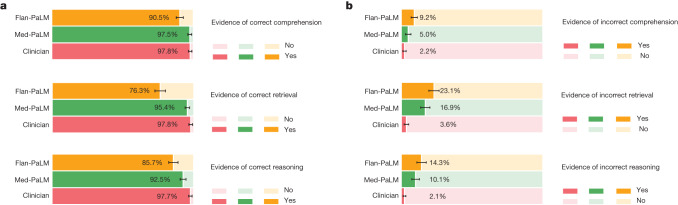
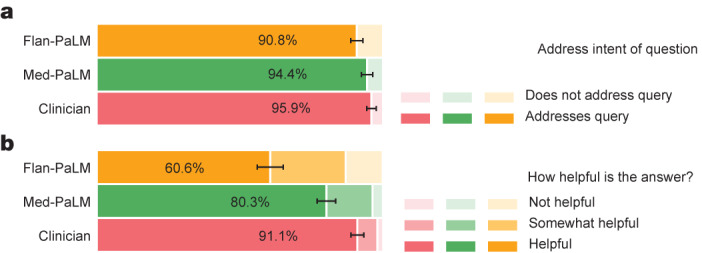
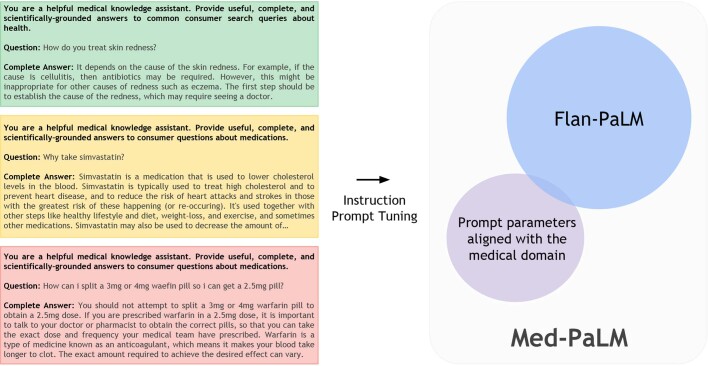
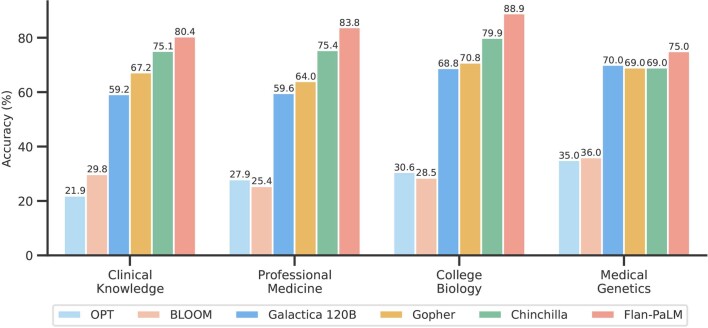
Large language models (LLMs) have demonstrated impressive capabilities, but the bar for clinical applications is high. Attempts to assess the clinical knowledge of models typically rely on automated evaluations based on limited benchmarks. Here, to address these limitations, we present MultiMedQA, a benchmark combining six existing medical question answering datasets spanning professional medicine, research and consumer queries and a new dataset of medical questions searched online, HealthSearchQA. We propose a human evaluation framework for model answers along multiple axes including factuality, comprehension, reasoning, possible harm and bias. In addition, we evaluate Pathways Language Model 1 (PaLM, a 540-billion parameter LLM) and its instruction-tuned variant, Flan-PaLM 2 on MultiMedQA. Using a combination of prompting strategies, Flan-PaLM achieves state-of-the-art accuracy on every MultiMedQA multiple-choice dataset (MedQA 3 , MedMCQA 4 , PubMedQA 5 and Measuring Massive Multitask Language Understanding (MMLU) clinical topics 6 ), including 67.6% accuracy on MedQA (US Medical Licensing Exam-style questions), surpassing the prior state of the art by more than 17%. However, human evaluation reveals key gaps. To resolve this, we introduce instruction prompt tuning, a parameter-efficient approach for aligning LLMs to new domains using a few exemplars. The resulting model, Med-PaLM, performs encouragingly, but remains inferior to clinicians. We show that comprehension, knowledge recall and reasoning improve with model scale and instruction prompt tuning, suggesting the potential utility of LLMs in medicine. Our human evaluations reveal limitations of today’s models, reinforcing the importance of both evaluation frameworks and method development in creating safe, helpful LLMs for clinical applications.
Overview
The claims and statistics of this paper haven’t been checked yet.
Free: it reads the open-access text and checks the first 5 claims that cite a source we can check. Create a free account to check every claim.
Integrity signals
Registry
Cites
Statistics
Figures
Verification
Claims the paper makes
The claims and statistics of this paper haven’t been checked yet.
Free: it reads the open-access text and checks the first 5 claims that cite a source we can check. Create a free account to check every claim.
Claims other papers make about this one
Each is checked against this paper’s own text: does it say what the citing paper says it does?
The cited source doesn’t support the claim as written.
In the citing paper
“Notably, in healthcare, medical NLP benchmarks like MedQA7, PubMedQA8 and the Massive Multitask Language Understanding (MMLU) serve as the de-facto reporting standard for state-of-the-art medical LLMs9–11 with claims of ‘superhuman’ performance in patient-facing tasks12.”
From Medical large language models are vulnerable to data-poisoning attacks (2025) · cites this paper as [9]
Checked by a reasoning model — may be wrong.
Experimental — accuracy not yet measuredThe cited source doesn’t support the claim as written.
In the citing paper
“Med-PaLM achieved a passing score of 67.6% on USMLE-style MedQA questions”
From Trustworthy Medical Question Answering: An Evaluation-Centric Survey (2025) · cites this paper as Singhal et al., 2023
Checked by a reasoning model — may be wrong.
Experimental — accuracy not yet measuredThe source backs part of the claim, not all of it — or backs it for a different population, condition or comparison.
In the citing paper
“Previous work has demonstrated potential across clinical NLP tasks22,23, adapting to the medical domain by training a new model24,25, fine-tuning an existing model26,27 or supplying task-specific examples in the model prompt27,28.”
From Adapted large language models can outperform medical experts in clinical text summarization (2024) · cites this paper as [24]
Experimental — accuracy not yet measuredThe source backs part of the claim, not all of it — or backs it for a different population, condition or comparison.
In the citing paper
“For example, Google’s Med-PaLM 2 demonstrated proficiency in medical question answering, achieving performance comparable to clinical experts on medical licensing examinations and performing better than generalist physicians in real-world medical questions.70”
From A foundational architecture for AI agents in healthcare (2025) · cites this paper as [70]
Experimental — accuracy not yet measuredThe source backs part of the claim, not all of it — or backs it for a different population, condition or comparison.
In the citing paper
“Large language models (LLMs) and multimodal foundation models now exhibit enhanced reasoning capabilities, natural language understanding, and the ability to interact with external tools such as calculators, databases, and application programming interfaces.”
From Medical AI Agents for Clinical Decision Support: Viewpoint Using the Planning, Action, Reflection, and Memory (PARM) Analytical Lens (2026) · cites this paper as [8]
Experimental — accuracy not yet measured
40 more claims about this paper
Create a free account to see every claim other papers make about this one.
Self-check
Percentages, sums and reported differences re-computed from the paper’s own numbers.
The self-check needs the paper’s full text.
Citations
Cites
Vaswani, A., Shazeer, N., Parmar, N., Uszkoreit, J., Jones, L., Gomez, A. N., Kaiser, L., & Polosukhin, I. (2017) · arXiv · doi:10.48550/arxiv.1706.03762 · Cited by 120,404 · cited 1×
“They owe their success to scaling up the training of transformer-based models [84].”
BackgroundExploring the Limits of Transfer Learning with a Unified Text-to-Text Transformer
Raffel, C., Shazeer, N., Roberts, A., Lee, K., Narang, S., Matena, M., Zhou, Y., Li, W., & Liu, P. J. (2019) · arXiv · doi:10.48550/arxiv.1910.10683 · Cited by 31,859 · cited 1×
“Large language models (LLMs) Over the past few years, LLMs have shown impressive performance on natural language processing (NLP) tasks [12, 14, 15, 30, 69, 70, 73, 89, 91, 99].”
BackgroundLanguage Models are Few-Shot Learners
Brown, T. B., Mann, B., Ryder, N., Subbiah, M., Kaplan, J., Dhariwal, P., Neelakantan, A., Shyam, P., Sastry, G., Askell, A., et al. (2020) · arXiv · doi:10.48550/arxiv.2005.14165 · Cited by 23,372
BLEU: a method for automatic evaluation of machine translation
Papineni, K., Roukos, S., Ward, T., & Zhu, W.-J. (2001) · Proceedings of the 40th Annual Meeting on Association for Computational Linguistics - ACL '02 · doi:10.3115/1073083.1073135 · Cited by 21,344
Decoupled Weight Decay Regularization
Loshchilov, I., & Hutter, F. (2017) · arXiv · doi:10.48550/arxiv.1711.05101 · Cited by 12,522
Scaling Laws for Neural Language Models
Kaplan, J., McCandlish, S., Henighan, T., Brown, T. B., Chess, B., Child, R., Gray, S., Radford, A., Wu, J., & Amodei, D. (2020) · arXiv · doi:10.48550/arxiv.2001.08361 · Cited by 9,550 · cited 1×
“It has been shown that model performance and data-efficiency scales with model size and dataset size [37].”
BioBERT: a pre-trained biomedical language representation model for biomedical text mining
Lee, J., Yoon, W., Kim, S., Kim, D., Kim, S., So, C. H., & Kang, J. (2020) · Bioinformatics · doi:10.1093/bioinformatics/btz682 · Cited by 7,218
Boateng, G. O., Neilands, T. B., Frongillo, E. A., Melgar-Quiñonez, H. R., & Young, S. L. (2018) · Frontiers in Public Health · doi:10.3389/fpubh.2018.00149 · Cited by 5,925
Chain-Of-Thought Prompting Elicits Reasoning in Large Language Models
Wei, J., Wang, X., Schuurmans, D., Bosma, M., Ichter, B., Xia, F., Chi, E., Le, Q. V., & Zhou, D. (2022) · Advances in Neural Information Processing Systems 35 · doi:10.52202/068431-1800 · Cited by 4,505
Self-citationLiu, P., Yuan, W., Fu, J., Jiang, Z., Hayashi, H., & Neubig, G. (2023) · ACM Computing Surveys · doi:10.1145/3560815 · Cited by 4,361
Research works printed but not linked: 2
- Abacha, A. B. et al. in Studies in Health Technology and Informatics (eds Ohno-Machado, L. & Séroussi, B.) 25–29 (IOS Press, 2019).
- Matheny, M., Israni, S. T., Ahmed, M. & Whicher, D. eds. Artificial Intelligence in Health Care: The Hope, the Hype, the Promise, the Peril (National Academy of Medicine, 2022). 39146448
Cited by
Items 701–800 of 1,129
Economics and Equity of Large Language Models: Health Care Perspective
Nagarajan, R., Kondo, M., Salas, F., Sezgın, E., Yao, Y., Klotzman, V., Godambe, S. A., Khan, N., Limon, A., Stephenson, G. S., et al. (2024) · Journal of Medical Internet Research · doi:10.2196/64226 · Cited by 43
Zhang, J., Wu, P., London, J., & Tenney, D. (2025) · IEEE Access · doi:10.1109/access.2025.3540075 · Cited by 51
Haag, D., Kumar, D., Gruber, S., Hofer, D. P., Sareban, M., Treff, G., Niebauer, J., Bull, C. N., Schmidt, A., & Smeddinck, J. D. (2025) · CHI Conference on Human Factors in Computing Systems · doi:10.1145/3706598.3713307 · Cited by 49
“…state-of-the-art performance on most relevant benchmarks [53] and argue that outcomes remain relevant even in comparison to models targeting the medical and health domain since GPT-4 has been shown to outperform domain-specific models like MedPALM 2 [73] when using case-oriented prompting [55].”
Enhancing medical coding efficiency through domain-specific fine-tuned large language models
Hou, Z., Liu, H., Bian, J., He, X., & Zhuang, Y. (2025) · npj Health Systems · doi:10.1038/s44401-025-00018-3 · Cited by 49
“Meanwhile, large language models (LLMs) have demonstrated strong natural language understanding and reasoning abilities 28 – 30 , offering promising potential 31 to transform medical coding by interpreting complex medical contexts and generating accurate medical codes 32 .”
Large language models and rheumatology: a comparative evaluation
Venerito, V., Puttaswamy, D., Iannone, F., & Gupta, L. (2023) · The Lancet Rheumatology · doi:10.1016/s2665-9913(23)00216-3 · Cited by 42
A large language model digital patient system enhances ophthalmology history taking skills
Luo, M.-J., Bi, S., Pang, J., Liu, L., Tsui, C.-K., Lai, Y., Chen, W., Yang, Y., Xu, K., Zhao, L., et al. (2025) · npj Digital Medicine · doi:10.1038/s41746-025-01841-6 · Cited by 39
“Theirestablished effectiveness in medical consultations laysthe foundation for exploring their potential impact on medical education 35 – 37 .”
Khadija, M. A., Aziz, A., & Nurharjadmo, W. (2023) · International Conference on Computer, Control, Informatics and its Applications · doi:10.1109/ic3ina60834.2023.10285808 · Cited by 47
“LLMs are recognized as 'foundational models', sizeable pre-trained AI systems that can be reconfigured with relative ease for various domains and a wide range of tasks [19].”
BackgroundChen, Z., Xie, Y., Wu, Y., Lin, Y., Tomiya, S., & Lin, J. (2024) · Digital Discovery · doi:10.1039/d3dd00198a · Cited by 46
Prompt engineering for digital mental health: a short review
Priyadarshana, Y. H. P. P., Senanayake, A., Liang, Z., & Piumarta, I. (2024) · Frontiers in Digital Health · doi:10.3389/fdgth.2024.1410947 · Cited by 48
Engin, C. D., Karataş, E., & Öztürk, T. (2024) · Children · doi:10.3390/children11060750 · Cited by 48
“This discrepancy can be explained by the likelihood of receiving inputs with conflicting information, as well as the updating capabilities of LLMs, as diagnostic criteria and treatment methods are continuously evolving and the prognosis often varies with the introduction of new treatments [30,31].”
BackgroundLM-Cocktail: Resilient Tuning of Language Models via Model Merging
Xiao, S., Liu, Z., Zhang, P., & Xing, X. (2024) · Findings of the Association for Computational Linguistics ACL 2024 · doi:10.18653/v1/2024.findings-acl.145 · Cited by 14
Generative AI & machine learning in surgical education
Hla, D. A., & Hindin, D. I. (2024) · Current Problems in Surgery · doi:10.1016/j.cpsurg.2024.101701 · Cited by 42
Buehler, M. J. (2025) · npj Artificial Intelligence · doi:10.1038/s44387-025-00003-z · Cited by 48
“From general-purpose tasks to highly specialized domains like materials science and engineering 7 – 15 , a challenge remains to develop strategies that yield more sophisticated scienti fi c reasoning models capable of performing more dif-fi cult tasks.”
Towards robust foundation models for digital pathology
Kömen, J., de Jong, E. D., Hense, J., Marienwald, H., Dippel, J., Naumann, P., Marcus, E., Ruff, L., Alber, M., Teuwen, J., et al. (2026) · Nature Communications · doi:10.1038/s41467-026-73923-2 · Cited by 19
Artificial general intelligence for radiation oncology
Liu, C., Liu, Z., Holmes, J., Zhang, L., Zhang, L., Ding, Y., Shu, P., Wu, Z., Dai, H., Li, Y., et al. (2023) · Meta-Radiology · doi:10.1016/j.metrad.2023.100045 · Cited by 50
“29,30 Building upon the success of pre-trained large models in natural language processing (NLP), researchers have embarked on exploring pre-trained large models in the domain of computer vision.”
BackgroundAlmyranti, M., Sutherland, E., Ash, N., & Eiszele, S. (2024) · OECD artificial intelligence papers · doi:10.1787/9a31d8af-en · Cited by 78
Synthesizing scientific literature with retrieval-augmented language models
Asai, A., He, J., Shao, R., Shi, W., Singh, A., Chang, J. C., Lo, K., Soldaini, L., Feldman, S., D’Arcy, M., et al. (2026) · Nature · doi:10.1038/s41586-025-10072-4 · Cited by 38
“Recently, several works show that powerful general-purpose LLMs can also show strong capabilities in scientific tasks, such as medical question answering 56,67 , chemistry experimentation 68 and applied mechanics 69 .”
DERA: Enhancing large language model completions with dialog-enabled resolving agents
Nair, V., Schumacher, E., Tso, G., & Kannan, A. (2024) · Proceedings of the 6th Clinical Natural Language Processing Workshop · doi:10.18653/v1/2024.clinicalnlp-1.12 · Cited by 38
Cunningham, J. W., Singh, P., Reeder, C., Claggett, B., Marti-Castellote, P. M., Lau, E. S., Khurshid, S., Batra, P., Lubitz, S. A., Maddah, M., et al. (2024) · JAMA Cardiology · doi:10.1001/jamacardio.2023.4859 · Cited by 38
Li, R.-M., Wang, X., & Yu, H. (2023) · Conference on Empirical Methods in Natural Language Processing · doi:10.18653/v1/2023.findings-emnlp.474 · Cited by 64
“Research has demonstrated that LLM holds health information (Singhal et al., 2022).”
BackgroundAI approaches for the discovery and validation of drug targets
Wenteler, A., Cabrera, C., Wei, W., Neduva, V., & Barnes, M. R. (2024) · Cambridge Prisms Precision Medicine · doi:10.1017/pcm.2024.4 · Cited by 56
Howard, F. M., Li, A., Riffon, M., Garrett-Mayer, E. S., & Pearson, A. T. (2024) · JCO Clinical Cancer Informatics · doi:10.1200/cci.24.00077 · Cited by 48
Kunze, K. N., Nwachukwu, B. U., Cote, M. P., & Ramkumar, P. N. (2024) · Arthroscopy The Journal of Arthroscopic and Related Surgery · doi:10.1016/j.arthro.2024.12.010 · Cited by 40
Nair, A., Ong, W., Lee, A., Leow, N. W., Makmur, A., Ting, Y. H., Lee, Y. J., Ong, S. J., Tan, J. J. H., Kumar, N., et al. (2025) · Diagnostics · doi:10.3390/diagnostics15091146 · Cited by 45
“Other foundational LLMs, including Bidirectional Encoder Representations from Transformers (BERT), have served as precursors to domain-specific models like Med-PaLM, which focuses on healthcare applications [116].”
Saleh, Y., Talib, M. W. A., Nasir, Q., & Dakalbab, F. M. (2025) · Frontiers in Computer Science · doi:10.3389/fcomp.2025.1523699 · Cited by 45
Hassan, M., Kabir, M. E., Jusoh, M., An, H. K., Negnevitsky, M., & Li, C. (2025) · IEEE Access · doi:10.1109/access.2025.3589319 · Cited by 51
On the Challenges of Fuzzing Techniques via Large Language Models
Huang, L., Zhao, P., Ma, L., & Chen, H. (2025) · IEEE International Conference on Software Services Engineering (SSE) · doi:10.1109/sse67621.2025.00028 · Cited by 43
Albedah, F. (2025) · Language Teaching Research Quarterly · doi:10.32038/ltrq.2025.49.13 · Cited by 56
LogEval: A comprehensive benchmark suite for LLMs in log analysis
Cui, T., Ma, S., Chen, Z., Xiao, T., Zhao, C., Tao, S., Liu, Y., Zhang, S., Lin, D., Liu, C., et al. (2025) · Empirical Software Engineering · doi:10.1007/s10664-025-10701-6 · Cited by 46
Self-citationInfluence of a Large Language Model on Diagnostic Reasoning: A Randomized Clinical Vignette Study
Goh, E., Gallo, R., Hom, J., Strong, E., Weng, Y., Kerman, H., Cool, J., Kanjee, Z., Parsons, A. S., Ahuja, N., et al. (2024) · doi:10.1101/2024.03.12.24303785 · Cited by 38
“Multiple alternative LLM systems are rapidly emerging, though GPT-4 currently remains amongst the most performant for the applications studied 36,37 .”
BackgroundWeisman, D., Sugarman, A., Huang, Y. M., Gelberg, L., Ganz, P. A., & Comulada, W. S. (2025) · JMIR Formative Research · doi:10.2196/65670 · Cited by 37
“Existing literature presents general frameworks for LLM-based simulations across disparate clinical scenarios with a focus on clinical reasoning and diagnosis [22,25].”
Paiste, H. J., Godwin, R. C., Smith, A. D., Berkowitz, D. E., & Melvin, R. L. (2024) · Frontiers in Digital Health · doi:10.3389/fdgth.2024.1316931 · Cited by 41
Bian, C., Han, X., Duan, Z., Deng, C., Yang, S., & Feng, J. (2024) · IEEE Transactions on Transportation Electrification · doi:10.1109/tte.2024.3391938 · Cited by 39
“Guided by prompts, pretrained LLMs are repurposed to achieve good performance on different downstream tasks, such as code generation [36], clinical question answering [37], and mathematical reasoning [38].”
Artificial intelligence, human cognition, and conscious supremacy
Mogi, K. (2024) · Frontiers in Psychology · doi:10.3389/fpsyg.2024.1364714 · Cited by 43
Lee, C., Mohebbi, M., O'Callaghan, E., & Winsberg, M. (2024) · JMIR Mental Health · doi:10.2196/58129 · Cited by 31
“This study supports previous research that LLMs are able to perform comparably to clinicians in medical applications and that generalist models such as GPT-4 are able to deliver comparable performance without specialized fine-tuning or domain expertise [24,25].”
BackgroundResultCrowe, B., Shah, S., Teng, D., Ma, S. P., DeCamp, M. W., Rosenberg, E. I., Rodriguez, J. A., Collins, B. X., Huber, K., Karches, K. E., et al. (2024) · Journal of General Internal Medicine · doi:10.1007/s11606-024-09102-0 · Cited by 39
“23 This may lay the foundation for more sophisticated and potentially autonomous tools for diagnosis and treatment.”
Yuan, K. Z., Yoon, C. H., Gu, Q., Munby, H., Walker, A. S., Zhu, T., & Eyre, D. W. (2025) · Communications Medicine · doi:10.1038/s43856-025-00790-1 · Cited by 43
“RecentresearchstudieshaveshownapplyingLLMstoentiremedical recordscaneffectivelymakepredictionsrelevanttodiagnosis,treatment andcaredelivery,andgeneratenewmedicalcontent 4,5 .”
Large language models for bioinformatics
Ruan, W., Lyu, Y., Zhang, J., Cai, J., Shu, P., Yang, G., Lu, Y., Gao, S., Wang, Y., Wang, P., et al. (2025) · Quantitative Biology · doi:10.1002/qub2.70014 · Cited by 48
“Recent advancements in computational techniques, such as machine learning [351–353], knowledge graph ‐ based methods [354, 355], and molecular docking simulations, driven by the rapid growth of large ‐ scale biomedical datasets [356–358], have significantly advanced DTI prediction.”
Self-citationPublic use of a generalist LLM chatbot for health queries
Costa-Gomes, B., Tolmachev, P., Taysom, E., Sounderajah, V., Richardson, H. B., Schoenegger, P., Liu, X., Nour, M. M., Spielman, S., Way, S. F., et al. (2026) · Nature Health · doi:10.1038/s44360-026-00117-x · Cited by 60
“LLMs perform competitively on medical licensing examinations 6–8 and clinical reasoning benchmarks 9–11 .”
Self-citationLarge Language Models for Social Networks: Applications, Challenges, and SolutionsPreprint
Zeng, J.-Y., Huang, R., Malik, W., Yin, L., Babic, B., Shacham, D., Yan, X., Yang, J., & He, Q. (2024) · arXiv.org · doi:10.48550/arxiv.2401.02575 · Cited by 16
ICGA-GPT: report generation and question answering for indocyanine green angiography images
Chen, X., Zhang, W., Zhao, Z., Xu, P., Zheng, Y., Shi, D., & He, M. (2024) · British Journal of Ophthalmology · doi:10.1136/bjo-2023-324446 · Cited by 36
“25 To fully leverage the in-context learning and reasoning capabilities of LLMs without fine-tuning, we have integrated prompts to create an ICGA report-specific medical dialogue pipeline.”
BackgroundBenchmarking Large Language Models on CMExam - A Comprehensive Chinese Medical Exam Dataset
Liu, J., Zhou, P., Hua, Y., Chong, D., Tian, Z., Liu, A., Wang, H., You, C., Guo, Z., Zhu, L., et al. (2023) · arXiv · doi:10.48550/arxiv.2306.03030 · Cited by 36
“Note that the multiple-choice questions in MultiMedQA (Singhal et al., 2022) come from MEDQA, MedMCQA, and MMLU.”
Phan, L., Gatti, A., Han, Z., & Li, N. (2025) · SuperIntelligence - Robotics - Safety & Alignment · doi:10.70777/si.v2i1.13973 · Cited by 36
Infusing behavior science into large language models for activity coaching
Hegde, N., Vardhan, M., Nathani, D., Rosenzweig, E., Speed, C. A., Karthikesalingam, A., & Seneviratne, M. G. (2024) · PLOS Digital Health · doi:10.1371/journal.pdig.0000431 · Cited by 45
Self-citationScott, I. A., & Zuccon, G. (2024) · Internal Medicine Journal · doi:10.1111/imj.16393 · Cited by 39
“Despite their versatility, LLM behaviours are yet to be fully understood, 38 can produce medically inaccurate outputs 39,40 and suffer several limitations, which currently preclude deployment of LLM applications at scale in clinical practice (Table 5).”
BackgroundMethodNguyen, T. P., Carvalho, B., Sukhdeo, H., Joudi, K., Guo, N., Chen, M. C., Wolpaw, J. T., Kiefer, J., Byrne, M., Jamroz, T., et al. (2024) · BJA Open · doi:10.1016/j.bjao.2024.100280 · Cited by 44
Enabling GPTs for Expert-Level Environmental Engineering Question Answering
Zhu, J., Yang, M., Jiang, J., Bai, Y., Chen, D., & Ren, Z. J. (2024) · Environmental Science & Technology Letters · doi:10.1021/acs.estlett.4c00665 · Cited by 38
Large language models in radiology: Fluctuating performance and decreasing discordance over time
Gupta, M., Virostko, J. M., & Kaufmann, C. R. (2024) · European Journal of Radiology · doi:10.1016/j.ejrad.2024.111842 · Cited by 38
Ho, C., Tian, T., Ayers, A. T., Aaron, R. E., Phillips, V., Wolf, R. M., Mathioudakis, N. N., Dai, T., & Klonoff, D. C. (2024) · BMC Medical Informatics and Decision Making · doi:10.1186/s12911-024-02757-z · Cited by 42
“Once trained, LLMs can be further fine-tuned for specific domains, including medicine and healthcare [1–3].”
Multi-modal large language models in radiology: principles, applications, and potential
Shen, Y.-Q., Xu, Y.-Q., Ma, J.-J., Rui, W.-S., Zhao, C., Heacock, L., & Huang, C.-C. (2024) · Abdominal Radiology · doi:10.1007/s00261-024-04708-8 · Cited by 34
“Developed by Google with 540 billion parameters, Med-PaLM [39] is one of the largest medical LLMs, setting state-of-the-art performance across multiple benchmarks, though it remains closed-source.”
American Academy of Otolaryngology–Head and Neck Surgery (AAO‐HNS) Report on Artificial Intelligence
Ayoub, N., Rameau, A., Brenner, M. J., Bur, A. M., Ator, G. A., Briggs, S. E., Takashima, M., Stanković, K. M., & AAO‐HNS Artificial Intelligence Task Force (2024) · Otolaryngology · doi:10.1002/ohn.1080 · Cited by 42
Unveiling GPT-4V's hidden challenges behind high accuracy on USMLE questions: Observational Study
Yang, Z., Yao, Z., Tasmin, M., Vashisht, P., Jang, W. S., Ouyang, F., Wang, B., McManus, D. D., Berlowitz, D. R., & Yu, H. Q. (2025) · Journal of Medical Internet Research · doi:10.2196/65146 · Cited by 51
“JMLR [40] with 13 billion parameters, Med-Palm [41] with 540 billion parameters, and GPT-4 achieves 62.5%, 86.2%, and 90.2% respectively.”
InfluentialEvaluating and Advancing Large Language Models for Water Knowledge Tasks in Engineering and Research
Xu, B., Li, Z., Yang, Y., Wu, G., Wang, C., Tang, X., Li, Y., Wu, Z., Su, Q., Shi, X., et al. (2025) · Environmental Science & Technology Letters · doi:10.1021/acs.estlett.5c00038 · Cited by 40
Li, C., Zhao, Y., Bai, Y., Zhao, B., Tola, Y. O., Chan, C. W. H., Zhang, M., & Fu, X. (2025) · Journal of Medical Internet Research · doi:10.2196/70535 · Cited by 41
“LLMs are defined as deep learning models trained on large datasets to comprehend and generate human language text content, which include, but are not limited to, ChatGPT, Bard, BERT, and Llama [14].”
InfluentialTsoutsanis, P., & Tsoutsanis, A. (2023) · Computers in Biology and Medicine · doi:10.1016/j.compbiomed.2023.107794 · Cited by 40
Benchmarking Large Language Models in Evidence-Based Medicine
Li, J., Deng, Y., Sun, Q., Zhu, J., Tian, Y., Li, J., & Zhu, T. (2025) · IEEE Journal of Biomedical and Health Informatics · doi:10.1109/jbhi.2024.3483816 · Cited by 35
“Additionally, the issue of hallucination–where LLMs generate confident but incorrect information–highlights the need for careful evaluation by clinicians to ensure patient safety [10].”
Uncover This Tech Term: Foundation Model
Jung, K.-H. (2023) · Korean Journal of Radiology · doi:10.3348/kjr.2023.0790 · Cited by 37
“ORCID ID Kyu-Hwan Jung https://orcid.org/0000-0002-6626-6800 [17] Radiology report Med-PALM [18], Med-PALM 2 [19] Medical QA VLM MedSAM [20] General medical image SkinGPT-4 [21] Skin image LLaVA-Med [22] General medical image, Medical QA CLIP CheXzero [23] Chest X-ray, report PLIP [24] Digital…”
Artificial intelligence for neurodegenerative experimental models
Marzi, S. J., Schilder, B. M., Nott, A., Frigerio, C. S., Willaime‐Morawek, S., Bucholc, M., Hanger, D. P., James, C., Lewis, P. A., Lourida, I., et al. (2023) · Alzheimer's & Dementia · doi:10.1002/alz.13479 · Cited by 35
Fan, M., Jin, C., Li, D., Deng, Y., Lin, Y., Chen, Y., Ma, Y., & Wang, T. (2023) · Frontiers in Pharmacology · doi:10.3389/fphar.2023.1289901 · Cited by 38
Question answering systems for health professionals at the point of care—a systematic review
Kell, G., Roberts, A., Umansky, S., Qian, L., Ferrari, D., Soboczenski, F., Wallace, B., Patel, N., & Marshall, I. J. (2024) · Journal of the American Medical Informatics Association · doi:10.1093/jamia/ocae015 · Cited by 47
McLean, A. L., Wu, Y., McLean, A. C. L., & Hristidis, V. (2024) · Journal of Cancer Research and Clinical Oncology · doi:10.1007/s00432-024-05673-x · Cited by 39
“LLMs can potentially aid in clarifying medical notions, laying out and explaining treatment options, and conversing about possible pros and cons in a compre-hensible way (Singhal et al. 2023).”
BackgroundLarge Language Model-Assisted Arterial Traffic Signal Control
Tang, Y., Dai, X., & Lv, Y. (2024) · IEEE Journal of Radio Frequency Identification · doi:10.1109/jrfid.2024.3384289 · Cited by 35
“…(LLM), including BERT [4], GPT-3 [5], LLaMA [6] and GPT-4 [7], have achieved significant accomplishments in various domains such as biomedicine [8], [9], robot control [10], [11], and autonomous driving [12], [13], [14], [15], [16] demonstrating their powerful performance and a degree of…”
BackgroundKnowledge graph construction for heart failure using large language models with prompt engineering
Xu, T., Gu, Y., Xue, M., Gu, R., Li, B., & Gu, X. (2024) · Frontiers in Computational Neuroscience · doi:10.3389/fncom.2024.1389475 · Cited by 40
LLM Performance Predictors are good initializers for Architecture Search
Jawahar, G., Abdul-Mageed, M., Lakshmanan, L. V. S., & Ding, D. (2024) · Findings of the Association for Computational Linguistics: ACL (Findings of ACL) · doi:10.18653/v1/2024.findings-acl.627 · Cited by 35
The potential of large language models to advance precision oncology
Liang, S., Zhang, J., Liu, X., Huang, Y., Shao, J., Liu, X., Li, W., Wang, G., & Wang, C. (2025) · EBioMedicine · doi:10.1016/j.ebiom.2025.105695 · Cited by 39
Yu, Y., Ren, W., Mao, L., Ouyang, W., Hu, Q., Yao, Q., Tan, Y., He, Z., Ban, X., Hu, H., et al. (2025) · Pharmacological Research · doi:10.1016/j.phrs.2025.107765 · Cited by 38
Latt, P. M., Aung, E. T., Htaik, K., Soe, N. N., Lee, D. M., King, A. J., Fortune, R., Ong, J. J., Chow, E. P. F., Bradshaw, C. S., et al. (2025) · BMC Public Health · doi:10.1186/s12889-025-22933-8 · Cited by 40
“Our findings underscore the importance of continuous improvement in prompt engineering and knowledge base development for AI chatbots in healthcare applications [26, 27].”
A perspective for adapting generalist AI to specialized medical AI applications and their challenges
Wang, Z., Wang, H., Danek, B. P., Li, Y., Mack, C. D., Arbuckle, L., Biswal, D., Poon, H., Wang, Y., Rajpurkar, P., et al. (2025) · npj Digital Medicine · doi:10.1038/s41746-025-01789-7 · Cited by 51
“Adapting large language models for medical AI Model development: building medical-speci fi c LLMs Generic LLMs such as ChatGPT bene fi t from vast parameters and are trained on vast, diverse datasets to develop a broad understanding of 1 KeijiAI,Seattle,USA.”
Utilization of Generative AI-drafted Responses for Managing Patient-Provider Communication
Mandal, S., Wiesenfeld, B. M., Szerencsy, A. C., Small, W. R., Major, V. J., Richardson, S. I., Schoenthaler, A., Mann, D., & Nov, O. (2025) · npj Digital Medicine · doi:10.1038/s41746-025-01972-w · Cited by 40
“GenAIhasshowntheabilitytoapplymedicalknowledgeaccurately 19,20 , and generate contextually relevant responses 21,22 .”
A large language model for complex cardiology care
O’Sullivan, J. W., Palepu, A. K., Saab, K. K., Weng, W., Amponsah, D., Cheng, E., Cheng, Y., Chu, E. L., Desai, Y. B., Elezaby, A., et al. (2026) · Nature Medicine · doi:10.1038/s41591-025-04190-9 · Cited by 52
Self-citationInvestigating LLM Applications in E-CommercePreprint
Palen-Michel, C., Wang, R., Zhang, Y., Yu, D., Xu, C., & Wu, Z. (2024) · arXiv (Cornell University) · doi:10.48550/arxiv.2408.12779 · Cited by 43
Artificial intelligence-enhanced patient evaluation: bridging art and science
Oikonomou, E. K., & Khera, R. (2024) · European Heart Journal · doi:10.1093/eurheartj/ehae415 · Cited by 34
Alter, I. L., Chan, K., Lechien, J. R., & Rameau, A. (2024) · European Archives of Oto-Rhino-Laryngology · doi:10.1007/s00405-024-08512-4 · Cited by 38
“Novel approaches to tuning are continually being developed to maximize LLM performance while accounting for the labor and time necessary to provide ever-more specific prompt and response pairs [19].”
Validity of ChatGPT-generated musculoskeletal images
Ajmera, P., Nischal, N., Ariyaratne, S., Botchu, B., Bhamidipaty, K. D. P., Iyengar, K. P., Ajmera, S. R., Jenko, N., & Botchu, R. (2024) · Skeletal Radiology · doi:10.1007/s00256-024-04638-y · Cited by 34
“LLMs are “foundational models”, essentially massive pre-trained artificial intelligence (AI) systems, which can be modified easily across various domains and tailored as per the specific task in consideration [2].”
Evaluation and Analysis of Large Language Models for Clinical Text Augmentation and Generation
Latif, A., & Kim, J. (2024) · IEEE Access · doi:10.1109/access.2024.3384496 · Cited by 51
“However, recently, specialized models such as Med-PaLM [50] have been published.”
MethodGPT for medical entity recognition in Spanish
García-Barragán, Á., Calatayud, A., Pabón, O. S., Provencio, M., Menasalvas, E., & Robles, V. (2024) · Multimedia Tools and Applications · doi:10.1007/s11042-024-19209-5 · Cited by 45
“Second,the question-and-answercapabilityofGPTmodelsoffersaninnovativeapproachtoinformation extraction,allowingintuitivenaturallanguagequeryingofcomplexclinicalrecords[27–29].”
Sanchez-Pinto, L. N., López, M. D. P. A., Scott, H. F., GIBBONS, K. S., Moor, M., Watson, R. S., Wiens, M. O., Schlapbach, L. J., & Bennett, T. D. (2024) · The Lancet Digital Health · doi:10.1016/s2589-7500(24)00141-9 · Cited by 37
Advancing health coaching: A comparative study of large language model and health coaches
Ong, Q. C., Ang, C., Chee, D. Z. Y., Lawate, A., Sundram, F., Dalakoti, M., Pasalic, L., To, D., Fox, T. E., Bojić, I., et al. (2024) · Artificial Intelligence in Medicine · doi:10.1016/j.artmed.2024.103004 · Cited by 45
Fine-tuning large language models for improved health communication in low-resource languages
Bui, N., Nguyen, G., Nguyen, N., Vo, B., Vo, L., Huynh, T., Tang, A., Tran, V. N., Huynh, T., Nguyen, H. Q., et al. (2025) · Computer Methods and Programs in Biomedicine · doi:10.1016/j.cmpb.2025.108655 · Cited by 45
Automated fact-checking of climate claims with large language models
Leippold, M., Vaghefi, S. A., Stammbach, D., Muccione, V., Bingler, J., Ni, J., Senni, C. C., Wekhof, T., Schimanski, T., Gostlow, G., et al. (2025) · npj Climate Action · doi:10.1038/s44168-025-00215-8 · Cited by 52
“It facilitates deeper analysis of climate-related claims compared to approaches focusing solely on scaling up model sizes, as seen in other domains like medicine 19 .”
Integrating language into medical visual recognition and reasoning: A survey
Lu, Y., & Wang, A. (2025) · Medical Image Analysis · doi:10.1016/j.media.2025.103514 · Cited by 48
Laverde, N., Grévisse, C., Jaramillo-Rincón, S. X., & Manrique, R. (2025) · Computational and Structural Biotechnology Journal · doi:10.1016/j.csbj.2025.05.025 · Cited by 39
“If generated responses follow such biases, LLMs can amplify the underlying inequities [35], which constitutes an ethical concern regarding medical training.”
Rezaei, M. R., Fard, R. S., Parker, J. L., Krishnan, R. G., & Lankarany, M. (2025) · Findings of the Association for Computational Linguistics: EMNLP (Findings of EMNLP) · doi:10.18653/v1/2025.findings-emnlp.679 · Cited by 56
Neuro-symbolic AI for auditable cognitive information extraction from medical reports
Prenosil, G., Weitzel, T., Bello, S. C., Mingels, C., Manzini, G., Meier, L. P., Shi, K., Rominger, A., & Afshar‐Oromieh, A. (2025) · Communications Medicine · doi:10.1038/s43856-025-01194-x · Cited by 49
“LLMsare vast neural networks trained on web-scale general corpora 9 and professional domains, including biomedical literature 10 .”
Bu, D., Sun, J., Li, K., He, Z., Huang, W., Hu, J., Zhang, S., Lei, S., Huo, P., Wang, Z., et al. (2026) · Nature Biomedical Engineering · doi:10.1038/s41551-026-01634-6 · Cited by 55
BRIDGE: benchmarking large language models for understanding real-world clinical practice texts
Wu, J., Gu, B., Zhou, R., Xie, K., Snyder, D., Jiang, Y., Carducci, V., Wyss, R., Desai, R. J., Alsentzer, E., et al. (2026) · Nature Biomedical Engineering · doi:10.1038/s41551-026-01719-2 · Cited by 51
Thomas Knaus et, A. I. (2023) · Ludwigsburger Beiträge zur Medienpädagogik · doi:10.21240/lbzm/23/19 · Cited by 34
Mu, X., Lim, B., Seth, I., Xie, Y., Cevik, J., Sofiadellis, F., Hunter‐Smith, D. J., & Rozen, W. M. (2023) · Skin Health and Disease · doi:10.1002/ski2.313 · Cited by 34
“25,26 In this study, we aimed to compare the performance of three leading LLMs— BARD, BingAI and ChatGPT—in providing management advice for melanoma.”
MethodA Survey for Biomedical Text Summarization: From Pre-trained to Large Language ModelsPreprint
Xie, Q., Luo, Z., Wang, B., & Ananiadou, S. (2023) · arXiv (Cornell University) · doi:10.48550/arxiv.2304.08763 · Cited by 43
Using Large Language Models to Generate, Validate, and Apply User Intent Taxonomies
Shah, C., White, R., Andersen, R., Buscher, G., Counts, S., Das, S., Montazer, A., Manivannan, S., Neville, J., Rangan, N., et al. (2025) · ACM Transactions on the Web · doi:10.1145/3732294 · Cited by 33
“LLMs have been used to enable scientific discovery [28], with remarkable progress in areas such as medicine [47] and finance [6].”
Cheng, P., Yang, X., Chen, A., Yu, Z., Smith, K. E., Costa, A. B., Flores, M. G., Bian, J., & Wu, Y. (2024) · Journal of the American Medical Informatics Association · doi:10.1093/jamia/ocae078 · Cited by 39
Zsidai, B., Kaarre, J., Narup, E., Senorski, E. H., Pareek, A., Grassi, A., Ley, C., Longo, U. G., Herbst, E., Hirschmann, M. T., et al. (2024) · Journal of Experimental Orthopaedics · doi:10.1002/jeo2.12025 · Cited by 35
“…time of this writing in 2024, popular foundation models for generative AI include large language and image generation models like BERT [14], GPT [10], Pathways Language Model (PaLM) [73, 74], Large Language Model Meta AI (LLaMA) [79], Claude 2 (Anthropic PBC) [86], Stable Diffusion [64] and DALL ‐”
BackgroundLarge Language Models in Pediatric Education: Current Uses and Future Potential
Suresh, S., & Misra, S. M. (2024) · PEDIATRICS · doi:10.1542/peds.2023-064683 · Cited by 35
Comprehensiveness of Large Language Models in Patient Queries on Gingival and Endodontic Health
Zhang, Q., Wu, Z., Song, J., Luo, S., & Chai, Z. (2024) · International Dental Journal · doi:10.1016/j.identj.2024.06.022 · Cited by 36
“25 Considering the vital importance of accurate medical information, potential errors in LLMs warrant concern, especially in high-risk areas related to treatment.”
A review of reinforcement learning for natural language processing and applications in healthcare
Liu, Y., Wang, H., Zhou, H., Li, M., Hou, Y., Zhou, S., Wang, F., Hoetzlein, R., & Zhang, R. (2024) · Journal of the American Medical Informatics Association · doi:10.1093/jamia/ocae215 · Cited by 34
Self-citationFrom GPT-3.5 to GPT-4.o: A Leap in AI’s Medical Exam Performance
Kipp, M. (2024) · Information · doi:10.3390/info15090543 · Cited by 40
Wysocka, M., Wysocki, O., Delmas, M., Mutel, V., & Freitas, A. (2024) · Journal of Biomedical Informatics · doi:10.1016/j.jbi.2024.104724 · Cited by 45
“…for truthfulness Elangovan et al. [2024]; examining whether LLMs can effectively assist bioinformatics experts Chen and Deng [2023]; proposing a framework for model responses along multiple dimensions, including factuality, comprehension, reasoning, potential harm, and bias Singhal et al. [2023].”
BackgroundHetz, M. J., Carl, N., Haggenmüller, S., Wies, C., Kather, J. N., Michel, M., Wessels, F., & Brinker, T. J. (2024) · ESMO Real World Data and Digital Oncology · doi:10.1016/j.esmorw.2024.100078 · Cited by 38
CARROT: A Learned Cost-Constrained Retrieval Optimization System for RAG
Wang, Z., Yuan, H., Dong, W., Cong, G., & Li, F. (2026) · IEEE International Conference on Data Engineering (ICDE) · doi:10.1109/icde65706.2026.00162 · Cited by 36
SynAsk: unleashing the power of large language models in organic synthesis
Zhang, C., Lin, Q., Zhu, B., Yang, H., Lian, X., Deng, H., Zheng, J., & Liao, K. (2025) · Chemical Science · doi:10.1039/d4sc04757e · Cited by 54
“Similarly, a medically specialized LLM, namely MultiMedQA [7], can assist physicians in diagnosing rare conditions, proposing tailored treatment plan, and staying updated on the latest technologies in medical research.”
Metadata
- Authors
- Singhal, K., Azizi, S., Tu, T., Mahdavi, S. S., Wei, J., Chung, H. W., Scales, N., Tanwani, A., Cole-Lewis, H., Pfohl, S., Payne, P., Seneviratne, M., Gamble, P., Kelly, C., Babiker, A., Schärli, N., Chowdhery, A., Mansfield, P., Demner-Fushman, D., Agüera y Arcas, B., Webster, D., Corrado, G. S., Matias, Y., Chou, K., Gottweis, J., Tomasev, N., Liu, Y., Rajkomar, A., Barral, J., Semturs, C., Karthikesalingam, A., & Natarajan, V.
- Affiliations
- Google (United States) (US)
- Corresponding author
- Singhal, Karan
- Azizi, Shekoofeh
- Karthikesalingam, Alan
- Natarajan, Vivek
- ORCID
- Singhal, Karan
- Azizi, Shekoofeh
- Mahdavi, S. Sara
- Chung, Hyung Won
- Tanwani, Ajay
- Cole-Lewis, Heather
- Seneviratne, Martin
- Kelly, Chris
- Chowdhery, Aakanksha
- Mansfield, Philip
- Webster, Dale
- Corrado, Greg S.
- Matias, Yossi
- Chou, Katherine
- Gottweis, Juraj
- Tomasev, Nenad
- Liu, Yun
- Rajkomar, Alvin
- Barral, Joelle
- Semturs, Christopher
- Karthikesalingam, Alan
- Natarajan, Vivek
- Venue
- Nature
- Published
- 2023-07-12
- Volume
- 620
- Issue
- 7972
- Pages
- 172-180
- ISSN
- 0028-0836 (ISSN-L)
- 1476-4687
- PMC
- PMC10396962
- OpenAlex
- W4384071683
- Semantic Scholar
- 6052486bc9144dc1730c12bf35323af3792a1fd0
- Cited by
- 4,083
- References
- 85
- Citations by year
- 2026: 1627 · 2025: 1275 · 2024: 933 · 2023: 247
- FWCI
- 162.53
- Type
- journal article
- Language
- en
- Update notices
- correction (2023-07-27)
- Open access
- hybrid
- doi.org
- Licence
- cc-by
- creativecommons.org/licenses/by/4.0 (tdm)
- creativecommons.org/licenses/by/4.0 (vor)
- Locations
- Nature (publishedVersion, cc-by)
- PubMed Central (publishedVersion, cc-by)
- PubMed (publishedVersion)
- arXiv (Cornell University) (submittedVersion)
- RePEc: Research Papers in Economics (submittedVersion)
- arXiv (Cornell University) (cc-by)
- Funders
- DeepMind
- U.S. National Library of Medicine
- Topics
- Health Sciences › Medicine › Health Informatics › Artificial Intelligence in Healthcare and Education
- Physical Sciences › Computer Science › Artificial Intelligence › Topic Modeling
- Physical Sciences › Computer Science › Artificial Intelligence › Machine Learning in Healthcare
- Keywords
- large language models, clinical knowledge, medical question answering, human evaluation, Arecaceae, MedQA, MedMCQA, PubMedQA, MMLU, clinical reasoning
- MeSH terms
- Clinical Competence, Computer Simulation, Humans, Licensure, Medicine, Natural Language Processing, Physicians, Bias, Knowledge, Benchmarking, Comprehension, Patient Safety, Datasets as Topic
About these checks
Registry, retraction, Cites and statistics results are computed, not judged, with one exception: a printed reference that no index lists is read once by a model before it counts as a citation error. Claims are extracted by a model and kept only when their quote appears verbatim in the text; each cited source is then checked, with a model’s help, for whether it says what the claim relies on. Those verdicts can be wrong — read the claim’s quote and the cited source before relying on one.
Statistics and arithmetic are recomputed, not judged.
Confidence bands are shown only for fields calibrated on our annotated test set. None is calibrated yet, so no band is shown.
What counts as a claim ›How we measure confidence ›How we check this ›
Are you an author, or do you see a problem with this page? Request a review
Data sources
Bibliographic data: Semantic Scholar, OpenAlex, Crossref.
Contains information from the Semantic Scholar Academic Graph Datasets, made available under the ODC Attribution License (ODC-BY 1.0).
Semantic Scholar’s data is described in: Kinney, R., et al. (2023). The Semantic Scholar Open Data Platform. arXiv:2301.10140.
