

Large language models encode clinical knowledge
Open accessThe DOI matches its Crossref record; 115 of the 116 references it cites were found in a registry or an index.
Abstract
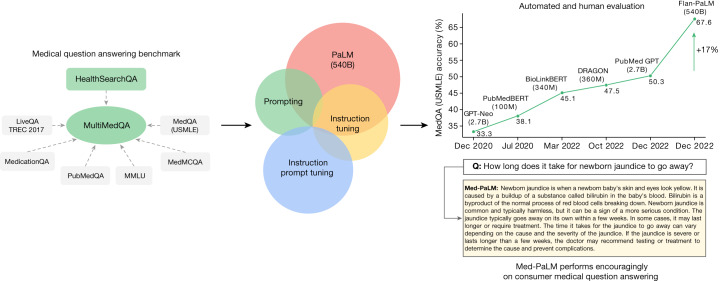
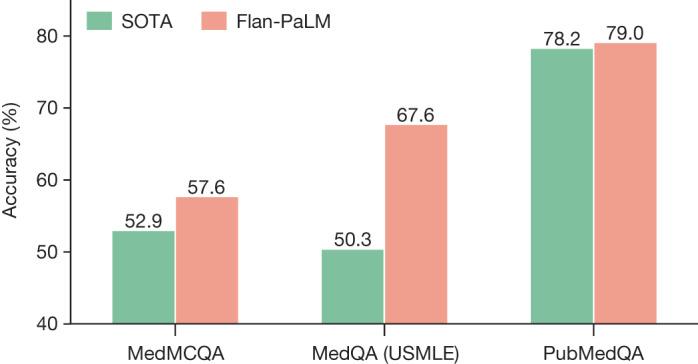
Large language models (LLMs) have demonstrated impressive capabilities, but the bar for clinical applications is high. Attempts to assess the clinical knowledge of models typically rely on automated evaluations based on limited benchmarks. Here, to address these limitations, we present MultiMedQA, a benchmark combining six existing medical question answering datasets spanning professional medicine, research and consumer queries and a new dataset of medical questions searched online, HealthSearchQA. We propose a human evaluation framework for model answers along multiple axes including factuality, comprehension, reasoning, possible harm and bias. In addition, we evaluate Pathways Language Model 1 (PaLM, a 540-billion parameter LLM) and its instruction-tuned variant, Flan-PaLM 2 on MultiMedQA. Using a combination of prompting strategies, Flan-PaLM achieves state-of-the-art accuracy on every MultiMedQA multiple-choice dataset (MedQA 3 , MedMCQA 4 , PubMedQA 5 and Measuring Massive Multitask Language Understanding (MMLU) clinical topics 6 ), including 67.6% accuracy on MedQA (US Medical Licensing Exam-style questions), surpassing the prior state of the art by more than 17%. However, human evaluation reveals key gaps. To resolve this, we introduce instruction prompt tuning, a parameter-efficient approach for aligning LLMs to new domains using a few exemplars. The resulting model, Med-PaLM, performs encouragingly, but remains inferior to clinicians. We show that comprehension, knowledge recall and reasoning improve with model scale and instruction prompt tuning, suggesting the potential utility of LLMs in medicine. Our human evaluations reveal limitations of today’s models, reinforcing the importance of both evaluation frameworks and method development in creating safe, helpful LLMs for clinical applications.
Overview
The claims and statistics of this paper haven’t been checked yet.
Free: it reads the open-access text and checks the first 5 claims that cite a source we can check. Create a free account to check every claim.
Integrity signals
Registry
Cites
Statistics
Figures
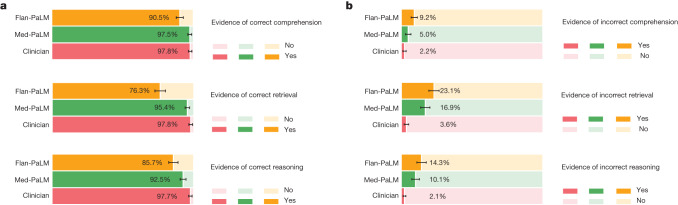
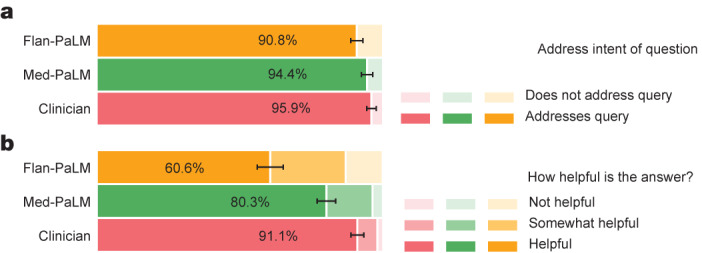
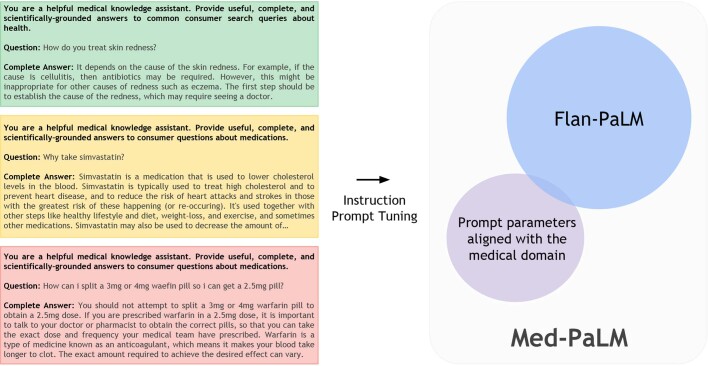
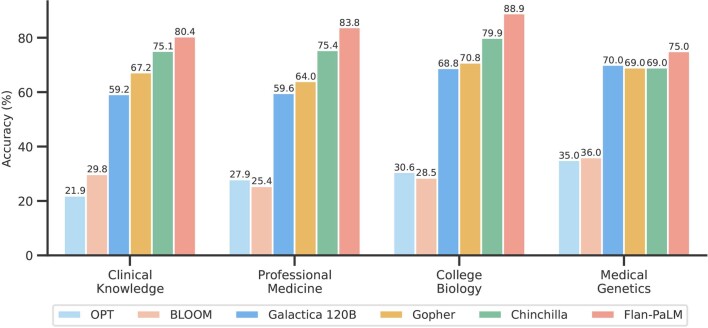
Verification
Claims the paper makes
The claims and statistics of this paper haven’t been checked yet.
Free: it reads the open-access text and checks the first 5 claims that cite a source we can check. Create a free account to check every claim.
Claims other papers make about this one
Each is checked against this paper’s own text: does it say what the citing paper says it does?
The cited source doesn’t support the claim as written.
In the citing paper
“Notably, in healthcare, medical NLP benchmarks like MedQA7, PubMedQA8 and the Massive Multitask Language Understanding (MMLU) serve as the de-facto reporting standard for state-of-the-art medical LLMs9–11 with claims of ‘superhuman’ performance in patient-facing tasks12.”
From Medical large language models are vulnerable to data-poisoning attacks (2025) · cites this paper as [9]
Checked by a reasoning model — may be wrong.
Experimental — accuracy not yet measuredThe cited source doesn’t support the claim as written.
In the citing paper
“Med-PaLM achieved a passing score of 67.6% on USMLE-style MedQA questions”
From Trustworthy Medical Question Answering: An Evaluation-Centric Survey (2025) · cites this paper as Singhal et al., 2023
Checked by a reasoning model — may be wrong.
Experimental — accuracy not yet measuredThe source backs part of the claim, not all of it — or backs it for a different population, condition or comparison.
In the citing paper
“Previous work has demonstrated potential across clinical NLP tasks22,23, adapting to the medical domain by training a new model24,25, fine-tuning an existing model26,27 or supplying task-specific examples in the model prompt27,28.”
From Adapted large language models can outperform medical experts in clinical text summarization (2024) · cites this paper as [24]
Experimental — accuracy not yet measuredThe source backs part of the claim, not all of it — or backs it for a different population, condition or comparison.
In the citing paper
“For example, Google’s Med-PaLM 2 demonstrated proficiency in medical question answering, achieving performance comparable to clinical experts on medical licensing examinations and performing better than generalist physicians in real-world medical questions.70”
From A foundational architecture for AI agents in healthcare (2025) · cites this paper as [70]
Experimental — accuracy not yet measuredThe source backs part of the claim, not all of it — or backs it for a different population, condition or comparison.
In the citing paper
“Large language models (LLMs) and multimodal foundation models now exhibit enhanced reasoning capabilities, natural language understanding, and the ability to interact with external tools such as calculators, databases, and application programming interfaces.”
From Medical AI Agents for Clinical Decision Support: Viewpoint Using the Planning, Action, Reflection, and Memory (PARM) Analytical Lens (2026) · cites this paper as [8]
Experimental — accuracy not yet measured
40 more claims about this paper
Create a free account to see every claim other papers make about this one.
Self-check
Percentages, sums and reported differences re-computed from the paper’s own numbers.
The self-check needs the paper’s full text.
Citations
Cites
Vaswani, A., Shazeer, N., Parmar, N., Uszkoreit, J., Jones, L., Gomez, A. N., Kaiser, L., & Polosukhin, I. (2017) · arXiv · doi:10.48550/arxiv.1706.03762 · Cited by 120,404 · cited 1×
“They owe their success to scaling up the training of transformer-based models [84].”
BackgroundExploring the Limits of Transfer Learning with a Unified Text-to-Text Transformer
Raffel, C., Shazeer, N., Roberts, A., Lee, K., Narang, S., Matena, M., Zhou, Y., Li, W., & Liu, P. J. (2019) · arXiv · doi:10.48550/arxiv.1910.10683 · Cited by 31,859 · cited 1×
“Large language models (LLMs) Over the past few years, LLMs have shown impressive performance on natural language processing (NLP) tasks [12, 14, 15, 30, 69, 70, 73, 89, 91, 99].”
BackgroundLanguage Models are Few-Shot Learners
Brown, T. B., Mann, B., Ryder, N., Subbiah, M., Kaplan, J., Dhariwal, P., Neelakantan, A., Shyam, P., Sastry, G., Askell, A., et al. (2020) · arXiv · doi:10.48550/arxiv.2005.14165 · Cited by 23,372
BLEU: a method for automatic evaluation of machine translation
Papineni, K., Roukos, S., Ward, T., & Zhu, W.-J. (2001) · Proceedings of the 40th Annual Meeting on Association for Computational Linguistics - ACL '02 · doi:10.3115/1073083.1073135 · Cited by 21,344
Decoupled Weight Decay Regularization
Loshchilov, I., & Hutter, F. (2017) · arXiv · doi:10.48550/arxiv.1711.05101 · Cited by 12,522
Scaling Laws for Neural Language Models
Kaplan, J., McCandlish, S., Henighan, T., Brown, T. B., Chess, B., Child, R., Gray, S., Radford, A., Wu, J., & Amodei, D. (2020) · arXiv · doi:10.48550/arxiv.2001.08361 · Cited by 9,550 · cited 1×
“It has been shown that model performance and data-efficiency scales with model size and dataset size [37].”
BioBERT: a pre-trained biomedical language representation model for biomedical text mining
Lee, J., Yoon, W., Kim, S., Kim, D., Kim, S., So, C. H., & Kang, J. (2020) · Bioinformatics · doi:10.1093/bioinformatics/btz682 · Cited by 7,218
Boateng, G. O., Neilands, T. B., Frongillo, E. A., Melgar-Quiñonez, H. R., & Young, S. L. (2018) · Frontiers in Public Health · doi:10.3389/fpubh.2018.00149 · Cited by 5,925
Chain-Of-Thought Prompting Elicits Reasoning in Large Language Models
Wei, J., Wang, X., Schuurmans, D., Bosma, M., Ichter, B., Xia, F., Chi, E., Le, Q. V., & Zhou, D. (2022) · Advances in Neural Information Processing Systems 35 · doi:10.52202/068431-1800 · Cited by 4,505
Self-citationLiu, P., Yuan, W., Fu, J., Jiang, Z., Hayashi, H., & Neubig, G. (2023) · ACM Computing Surveys · doi:10.1145/3560815 · Cited by 4,361
Research works printed but not linked: 2
- Abacha, A. B. et al. in Studies in Health Technology and Informatics (eds Ohno-Machado, L. & Séroussi, B.) 25–29 (IOS Press, 2019).
- Matheny, M., Israni, S. T., Ahmed, M. & Whicher, D. eds. Artificial Intelligence in Health Care: The Hope, the Hype, the Promise, the Peril (National Academy of Medicine, 2022). 39146448
Cited by
Items 301–400 of 1,129
ChatCAD+: Toward a Universal and Reliable Interactive CAD Using LLMs
Zhao, Z., Wang, S., Gu, J., Zhu, Y., Mei, L., Zhuang, Z., Cui, Z., Wang, Q., & Shen, D. (2024) · IEEE Transactions on Medical Imaging · doi:10.1109/tmi.2024.3398350 · Cited by 75
“Med-PaLM [17] was developed using meticulously curated biomedical corpora and human feedback, showcasing its potential with notable achievements, including a remarkable 67.6% accuracy on the MedQA exam.”
MethodInfluentialTowards Lifelong Learning of Large Language Models: A Survey
Zheng, J., Qiu, S., Shi, C., & Ma, Q. (2025) · ACM Computing Surveys · doi:10.1145/3716629 · Cited by 179
“…evolving with various techniques, including but not limited to experience replay [47, 78, 115, 156], parameter-efficient fine-tuning [47, 78, 111, 176], mixture of experts [50, 73], knowledge distillation [78, 155], model expansion [17, 89, 156, 215], re-warming [49], and data selection [2, 111,…”
Wan, P., Huang, Z., Tang, W., Nie, Y., Pei, D., Deng, S., Chen, J., Zhou, Y., Duan, H., Chen, Q., et al. (2024) · Nature Medicine · doi:10.1038/s41591-024-03148-7 · Cited by 97
“Although close-to-human performance of LLMs has been achieved in answering United States Medical Licensing Examination (USMLE)-style questions and patient questions on a public forum 11,12 , several issues have constrained the implementation of LLMs 13 .”
The Role of Artificial Intelligence in the Future of Pharmacy Education
Cain, J., Malcom, D. R., & Aungst, T. D. (2023) · American Journal of Pharmaceutical Education · doi:10.1016/j.ajpe.2023.100135 · Cited by 80
Health-LLM: Personalized Retrieval-Augmented Disease Prediction SystemPreprint
Yu, Q., Jin, M., Shu, D., Zhang, C., Fan, L., Hua, W., Zhu, S., Meng, Y., Wang, Z., Du, M., et al. (2024) · arXiv (Cornell University) · doi:10.48550/arxiv.2402.00746 · Cited by 97
“This evolution is significantly driven by the emergence of LLMs, as seen in studies such as (Biswas, 2023; Singhal et al., 2022; Rasmy et al., 2021).”
MolXPT: Wrapping Molecules with Text for Generative Pre-training
Liu, Z., Zhang, W., Xia, Y., Wu, L., Xie, S., Qin, T., Zhang, M., & Liu, T. (2023) · Proceedings of the conference - Association for Computational Linguistics. Meeting · doi:10.18653/v1/2023.acl-short.138 · Cited by 142
Harskamp, R. E., & De Clercq, L. (2024) · Acta Cardiologica · doi:10.1080/00015385.2024.2303528 · Cited by 91
“Similar models have shown a capacity for storing and reasoning with clinical information contained in their training data [7,8].”
BackgroundCui, Z., Qi, C., Zhou, T., Yu, Y., Wang, Y., Zhang, Z., Zhang, Y., Wang, W., & Liu, Y. (2025) · Comprehensive Reviews in Food Science and Food Safety · doi:10.1111/1541-4337.70068 · Cited by 106
Self-citationDerraz, B., Breda, G., Kaempf, C., Baenke, F., Cotte, F., Reiche, K., Köhl, U., Kather, J. N., Eskenazy, D., & Gilbert, S. (2024) · npj Precision Oncology · doi:10.1038/s41698-024-00517-w · Cited by 94
“Large language model (LLM)- based CDS approaches have recently been proposed including in the area of oncology 48 – 50 , which show impressive but variable performance 51,52 .”
BackgroundMethodApplication of large language models in medicine
Liu, F., Zhou, H., Gu, B., Zou, X., Huang, J., Wu, J., Li, Y., Chen, S. S., Hua, Y., Zhou, P., et al. (2025) · Nature Reviews Bioengineering · doi:10.1038/s44222-025-00279-5 · Cited by 94
Reconciling privacy and accuracy in AI for medical imaging
Ziller, A., Mueller, T. T., Stieger, S., Feiner, L., Brandt, J., Braren, R., Rueckert, D., & Kaissis, G. A. (2024) · Nature Machine Intelligence · doi:10.1038/s42256-024-00858-y · Cited by 116
Performance of ChatGPT in Diagnosis of Corneal Eye Diseases
Delsoz, M., Madadi, Y., Raja, H., Munir, W. M., Tamm, B., Mehravaran, S., Soleimani, M., Djalilian, A., & Yousefi, S. (2024) · Cornea · doi:10.1097/ico.0000000000003492 · Cited by 86
Carlà, M. M., Gambini, G., Baldascino, A., Boselli, F., Giannuzzi, F., Margollicci, F., & Rizzo, S. (2024) · Graefe s Archive for Clinical and Experimental Ophthalmology · doi:10.1007/s00417-024-06470-5 · Cited by 110
Yuan, M., Bao, P., Yuan, J., Shen, Y., Chen, Z., Xie, Y., Zhao, J., Li, Q., Chen, Y., Zhang, L., et al. (2024) · Medicine Plus · doi:10.1016/j.medp.2024.100030 · Cited by 70
Embracing ChatGPT for Medical Education: Exploring Its Impact on Doctors and Medical Students
Wu, Y., Zheng, Y., Feng, B., Yang, Y., Kang, K., & Zhao, A. (2024) · JMIR Medical Education · doi:10.2196/52483 · Cited by 92
“By training the ChatGPT model, medical learners can tap into its powerful natural language generation and understanding capabilities to master the methods and skills of clinical reasoning and decision-making [8,9].”
MethodRLHF Deciphered: A Critical Analysis of Reinforcement Learning from Human Feedback for LLMs
Chaudhari, S., Aggarwal, P., Murahari, V., Rajpurohit, T., Kalyan, A., Narasimhan, K., Deshpande, A., & Castro da Silva, B. (2026) · ACM Computing Surveys · doi:10.1145/3743127 · Cited by 92
“The remarkable utility of these models holds the potential to transform established workflows in critical sectors such as technology, healthcare, finance, and education [173, 195, 203].”
Savage, T., Wang, J., Gallo, R., Boukil, A., Patel, V., Safavi-Naini, S. A. A., Soroush, A., & Chen, J. H. (2025) · Journal of the American Medical Informatics Association · doi:10.1093/jamia/ocae254 · Cited by 92
Constructing a Large Language Model to Generate Impressions from Findings in Radiology Reports
Zhang, L., Liu, M., Wang, L., Zhang, Y., Xiangjun, X., Pan, Z., Feng, Y., Zhao, J., Zhang, L., Yao, G., et al. (2024) · Radiology · doi:10.1148/radiol.240885 · Cited by 102
Large language model use in clinical oncology
Carl, N., Schramm, F., Haggenmüller, S., Kather, J. N., Hetz, M. J., Wies, C., Michel, M. S., Wessels, F., & Brinker, T. J. (2024) · npj Precision Oncology · doi:10.1038/s41698-024-00733-4 · Cited by 80
Evaluating the ChatGPT family of models for biomedical reasoning and classification
Chen, S., Li, Y., Lu, S., Van, H., Aerts, H. J. W. L., Savova, G. K., & Bitterman, D. S. (2024) · Journal of the American Medical Informatics Association · doi:10.1093/jamia/ocad256 · Cited by 91
“A paper by Google Research and DeepMind 11 presents experiments with Google’s PaLM family of LLMs, suggesting the potential utility of LLMs in medicine but also revealing important limitations, reinforcing the importance of evaluation frameworks and methods development.”
BackgroundMethodPretraining a foundation model for generalizable fluorescence microscopy-based image restoration
Ma, C., Tan, W., He, R., & Yan, B. (2024) · Nature Methods · doi:10.1038/s41592-024-02244-3 · Cited by 109
“Recently, the concept of foundation models has been utilized in diverse life science applications, and foundation models have also demonstrated their impressive capabilities for clinical cases 26–30 , biotechnology 31,32 and so on (Supplementary Note 1).”
Large language models for medicine: a survey
Zheng, Y., Gan, W., Chen, Z., Qi, Z., Liang, Q., & Yu, P. S. (2024) · International Journal of Machine Learning and Cybernetics · doi:10.1007/s13042-024-02318-w · Cited by 132
“P a L M [ 28 ] M e d -”
Evaluating the Utilities of Foundation Models in Single‐Cell Data Analysis
Liu, T., Li, K., Wang, Y., Li, H., & Zhao, H. (2026) · Advanced Science · doi:10.1002/advs.202514490 · Cited by 61
Hua, R., Xin, D., Wei, Y., Shu, Z., Yang, P., Hu, Y., Zhou, S., Sun, H., Yan, K., Yan, X., et al. (2024) · Journal of the American Medical Informatics Association · doi:10.1093/jamia/ocae087 · Cited by 107
Kiran, M., Xie, Y., Anjum, N., Ball, G., Pierscionek, B. K., & Russell, D. (2025) · Frontiers in Digital Health · doi:10.3389/fdgth.2025.1557467 · Cited by 109
Foundation models and intelligent decision-making: Progress, challenges, and perspectives
Huang, J., Xu, Y., Wang, Q., Wang, Q., Liang, X., Wang, F., Zhang, Z., Wei, W., Zhang, B., Huang, L., et al. (2025) · The Innovation · doi:10.1016/j.xinn.2025.100948 · Cited by 192
Machine learning in computational histopathology: Challenges and opportunities
Cooper, M., Ji, Z., & Krishnan, R. G. (2023) · Genes, Chromosomes and Cancer · doi:10.1002/gcc.23177 · Cited by 79
Review of applications of deep learning in veterinary diagnostics and animal health
Xiao, S., Dhand, N. K., Wang, Z., Hu, K., Thomson, P. C., House, J. K., & Khatkar, M. S. (2025) · Frontiers in Veterinary Science · doi:10.3389/fvets.2025.1511522 · Cited by 99
Practical AI application in psychiatry: historical review and future directions
Sun, J., Lu, T., Shao, X., Han, Y., Xia, Y., Zheng, Y., Wang, Y., Li, X., Ravindran, A. V., Fan, L., et al. (2025) · Molecular Psychiatry · doi:10.1038/s41380-025-03072-3 · Cited by 100
“Large Language Models, such as PaLM and Flan-PaLM, have shown state-of-the-art performance in the MultiMedQA benchmark, achieving high accuracy across multiple medical datasets [79].”
A survey on retrieval-augmentation generation (RAG) models for healthcare applications
El-Enen, M. A. A., Saad, S., & Nazmy, T. M. (2025) · Neural Computing and Applications · doi:10.1007/s00521-025-11666-9 · Cited by 123
Large language models provide unsafe answers to patient-posed medical questions
Draelos, R. L., Afreen, S., Blasko, B., Brazile, T. L., Chase, N., Desai, D. P., Evert, J., Gardner, H. L., Herrmann, L., House, A. V., et al. (2026) · npj Digital Medicine · doi:10.1038/s41746-026-02428-5 · Cited by 87
“To generate these additional questions, we leveraged the search engine methodology previously described by Singhal et al. 25 In this approach, medical search terms are typed into a Google search engine to retrievepublicly available,commonlysearchedqueriesdisplayedtoall users entering these medical search terms.”
Two Tales of Persona in LLMs: A Survey of Role-Playing and Personalization
Tseng, Y.-M., Huang, Y.-C., Hsiao, T.-Y., Chen, W.-L., Huang, C.-W., Meng, Y., & Chen, Y.-N. (2024) · Findings of the Association for Computational Linguistics: EMNLP 2024 · doi:10.18653/v1/2024.findings-emnlp.969 · Cited by 87
Black-Box Access is Insufficient for Rigorous AI Audits
Casper, S., Ezell, C., Siegmann, C., Kolt, N., Curtis, T. L., Bucknall, B., Haupt, A., Wei, K., Scheurer, J., Hobbhahn, M., et al. (2024) · The 2024 ACM Conference on Fairness, Accountability, and Transparency · doi:10.1145/3630106.3659037 · Cited by 86
Democratizing protein language models with parameter-efficient fine-tuning
Sledzieski, S., Kshirsagar, M., Baek, M., Dodhia, R., Lavista Ferres, J., & Berger, B. (2024) · Proceedings of the National Academy of Sciences · doi:10.1073/pnas.2405840121 · Cited by 86
Raimondi, R., Tzoumas, N., Salisbury, T., Di Simplicio, S., Romano, M. R., North East Trainee Research in Ophthalmology Network (NETRiON), Bommireddy, T., Chawla, H., Chen, Y., Connolly, S., et al. (2023) · Eye · doi:10.1038/s41433-023-02563-3 · Cited by 85
Task-Specific Transformer-Based Language Models in Health Care: Scoping Review
Cho, H. N., Jun, T. J., Kim, Y., Kang, H. J., Ahn, I., Gwon, H., Kim, Y., Seo, H., Choi, H., Kim, M., et al. (2024) · JMIR Medical Informatics · doi:10.2196/49724 · Cited by 107
Systematic Analysis of Retrieval-Augmented Generation-Based LLMs for Medical Chatbot Applications
Bora, A., & Cuayáhuitl, H. (2024) · Machine Learning and Knowledge Extraction · doi:10.3390/make6040116 · Cited by 61
Open challenges and opportunities in federated foundation models towards biomedical healthcare
Li, X., Peng, L., Wang, Y., & Zhang, W. (2025) · BioData Mining · doi:10.1186/s13040-024-00414-9 · Cited by 108
“• MultiMedQA [219]: MultiMedQA is a comprehensive benchmark combining six existing medical question answering datasets, which span a variety of contexts from professional medicine to consumer health inquiries.”
AI Hospital: Benchmarking Large Language Models in a Multi-agent Medical Interaction Simulator
Fan, Z., Tang, J., Chen, W., Wang, S., Wei, Z., Xi, J., Huang, F., & Zhou, J. (2024) · arXiv · doi:10.48550/arxiv.2402.09742 · Cited by 84
“Models like Med-PaLM (Singhal et al., 2022), CPLLM (Shoham and Rappoport, 2023), DoctorGLM (Xiong et al., 2023), BenTsao (Wang et al., 2023a), ChatGLM-Med (Wang et al., 2023b), Bianque-2 (Chen et al., 2023d), ChatMed-Consult (Zhu and Wang, 2023), MedicalGPT (Xu, 2023), and DISC-MedLLM (Bao et al., 2023) fine-tune usin…”
Large Language Models: A Guide for Radiologists
Kim, S., Lee, C., & Kim, S. (2024) · Korean Journal of Radiology · doi:10.3348/kjr.2023.0997 · Cited by 95
“Several more recently released medical domain fine-tuned LLMs, such as Med-PaLM [31], Med-PaLM2 [32], and ClinicalGPT [33], have demonstrated outstanding performance in medical question-answering benchmarks, outperforming both pure generalist and older specialist AI models.”
BackgroundBhayana, R., Nanda, B., Dehkharghanian, T., Deng, Y., Bhambra, N., Elias, G. J. B., Datta, D., Kambadakone, A. R., Shwaartz, C. G., Moulton, C.-A. E., et al. (2024) · Radiology · doi:10.1148/radiol.233117 · Cited by 90
Generative artificial intelligence, patient safety and healthcare quality: a review
Howell, M. D. (2024) · BMJ Quality & Safety · doi:10.1136/bmjqs-2023-016690 · Cited by 88
“9 Perhaps more significantly, it was also able to write long-form answers to people’s medical questions.”
BackgroundJung, K.-H. (2025) · Healthcare Informatics Research · doi:10.4258/hir.2025.31.2.114 · Cited by 106
Buess, L., Keicher, M., Navab, N., Maier, A., & Arasteh, S. T. (2025) · Biomedical Engineering Letters · doi:10.1007/s13534-025-00497-1 · Cited by 109
“…tokens Literature MedDialog-EN [68] 250K dialogues Dialogue MedC-K [50] 4.8M papers, 30K textbooks Literature MedC-I [50] 202M tokens Dialogue, QA Medical Meadow [45] 160K instances QA MIMIC-IV [66] 299K patients EHR MMedC [48] 25.5B tokens Multilingual literature MultiMedQA [47] 213K instances QA”
Scientific evidence for clinical text summarization using large language models: scoping review
Bednarczyk, L., Reichenpfader, D., Gaudet-Blavignac, C., Ette, A. K., Zaghir, J., Zheng, Y., Bensahla, A., Bjelogrlic, M., & Lovis, C. (2025) · Journal of Medical Internet Research · doi:10.2196/68998 · Cited by 83
Yildirim, N., Richardson, H., Wetscherek, M. T., Bajwa, J., Jacob, J., Pinnock, M. A., Harris, S., Coelho De Castro, D., Bannur, S., Hyland, S., et al. (2024) · Proceedings of the CHI Conference on Human Factors in Computing Systems · doi:10.1145/3613904.3642013 · Cited by 82
“The sessions also involved reviews of VLM capabilities from recent literature (e.g., [17, 117]) to discuss opportunity areas.”
BackgroundA critical review of large language models: Sensitivity, bias, and the path toward specialized AI
Hajikhani, A., & Cole, C. H. (2024) · Quantitative Science Studies · doi:10.1162/qss_a_00310 · Cited by 95
“…specialized language model and the GPT, we would expect a fuzzy overlap in the classification results, where detections exhibit similarity for a core set of textual inputs but diverge when dealing with less evident detections in which the models' approach to nuance and context plays a larger role.”
BackgroundLarge Language Models in Biomedical and Health Informatics: A Review with Bibliometric Analysis
Yu, H., Fan, L., Li, L., Zhou, J., Ma, Z., Xian, L., Hua, W., He, S., Jin, M., Zhang, Y., et al. (2024) · Journal of Healthcare Informatics Research · doi:10.1007/s41666-024-00171-8 · Cited by 102
Performance of Large Language Models on Medical Oncology Examination Questions
Longwell, J. B., Hirsch, I., Binder, F., Gonzalez Conchas, G. A., Mau, D., Jang, R., Krishnan, R. G., & Grant, R. C. (2024) · JAMA Network Open · doi:10.1001/jamanetworkopen.2024.17641 · Cited by 81
Leveraging long context in retrieval augmented language models for medical question answering
Zhang, G., Xu, Z., Jin, Q., Chen, F., Fang, Y., Liu, Y., Rousseau, J. F., Xu, Z., Lu, Z., Weng, C., et al. (2025) · npj Digital Medicine · doi:10.1038/s41746-025-01651-w · Cited by 81
“Large language models (LLMs) are fi nding their way into an expanding range of healthcare domains, holding tremendous potential for improving patient care, enhancing communication and education, and facilitating clinical work fl ow effectiveness 1 – 7 .”
Self-citationDoctorGLM: Fine-tuning your Chinese Doctor is not a Herculean Task
Xiong, H., Wang, S., Zhu, Y., Zhao, Z., Liu, Y., Huang, L., Wang, Q., & Shen, D. (2023) · arXiv · doi:10.48550/arxiv.2304.01097 · Cited by 81
“Recent advances in Transformer architecture [11] and computing power have enabled the training of large language models with billions of parameters, leading to a significant improvement in their ability to summarize, translate, predict and generate human-like text [2, 8, 9].”
BackgroundMethodSelf-citationCPLLM: Clinical prediction with large language models
Shoham, O. B., & Rappoport, N. (2023) · PLOS Digital Health · doi:10.1371/journal.pdig.0000680 · Cited by 76
“One of the main focus of applications of LLM in the clinic is on the chat capability of these models [27, 5] or using an LLM for medical texts [28, 29, 30, 31, 32, 33].”
Current and future state of evaluation of large language models for medical summarization tasks
Croxford, E., Gao, Y., Pellegrino, N., Wong, K., Wills, G., First, E., Liao, F., Goswami, C., Patterson, B., & Afshar, M. (2025) · npj Health Systems · doi:10.1038/s44401-024-00011-2 · Cited by 63
“Common themes in these adapted rubrics include safety 14 , modality 15,16 , and correctness 17,18 .”
Transforming wearable data into personal health insights using large language model agents
Merrill, M. A., Paruchuri, A., Rezaei, N., Kovacs, G., Perez, J., Liu, Y., Schenck, E., Hammerquist, N., Sunshine, J., Tailor, S. A., et al. (2026) · Nature Communications · doi:10.1038/s41467-025-67922-y · Cited by 106
“Fifth, we emphasize that the aim of this research is not to build an LLM agent capable of addressing highly specialized or complex medical questions requiring expert knowledge 16,18 beyond the scope of wearable data.”
Self-citationMedBLIP: Bootstrapping Language-Image Pretraining from 3D Medical Images and Texts
Chen, Q., & Hong, Y. (2024) · Lecture notes in computer science · doi:10.1007/978-981-96-0908-6_6 · Cited by 99
Large language models and multimodal foundation models for precision oncology
Truhn, D., Eckardt, J.-N., Ferber, D., & Kather, J. N. (2024) · npj Precision Oncology · doi:10.1038/s41698-024-00573-2 · Cited by 79
“Also, Google ’ s LLM “ PALM ” was fi ne-tuned on medical training data, resulting in Med-PaLM, which outperformed its previous version in medical use cases 11 .”
MethodHindelang, M., Sitaru, S., & Zink, A. (2024) · JMIR Medical Informatics · doi:10.2196/56628 · Cited by 79
Cappellani, F., Card, K. R., Shields, C. L., Pulido, J. S., & Haller, J. A. (2024) · Eye · doi:10.1038/s41433-023-02906-0 · Cited by 85
Almansour, M., & Alfhaid, F. M. (2024) · Medicine · doi:10.1097/md.0000000000038955 · Cited by 52
“[30] 32] This propensity may result in unsuitable treatment regimens and inaccurate diagnoses, which has repercussions for the delivery of healthcare.”
BackgroundFine-tuning can cripple your foundation model; preserving features may be the solutionPreprint
Mukhoti, J., Gal, Y., Torr, P. H. S., & Dokania, P. K. (2024) · Oxford University Research Archive (ORA) (University of Oxford) · doi:10.48550/arxiv.2308.13320 · Cited by 101
Informed consent for artificial intelligence in emergency medicine: A practical guide
Iserson, K. V. (2023) · The American Journal of Emergency Medicine · doi:10.1016/j.ajem.2023.11.022 · Cited by 89
Frontier AI Regulation: Managing Emerging Risks to Public Safety
Anderljung, M., Barnhart, J., Korinek, A., Leung, J., O'Keefe, C., Whittlestone, J., Avin, S., Brundage, M., Bullock, J., Cass-Beggs, D., et al. (2023) · arXiv · doi:10.48550/arxiv.2307.03718 · Cited by 77
“Responsible AI innovation can provide extraordinary benefits to society, such as delivering medical [1, 2, 3, 4] and legal [5, 6, 7] services to more people at lower cost, enabling scalable personalized education [8], and contributing solutions to pressing global challenges like climate change [9, 10, 11, 12] and pand…”
BackgroundHow ChatGPT works: a mini review
Briganti, G. (2023) · European Archives of Oto-Rhino-Laryngology · doi:10.1007/s00405-023-08337-7 · Cited by 101
Artificial intelligence in liver cancer — new tools for research and patient management
Caldéraro, J., Žigutytė, L., Truhn, D., Jaffe, A., & Kather, J. N. (2024) · Nature Reviews Gastroenterology & Hepatology · doi:10.1038/s41575-024-00919-y · Cited by 80
“LLMs encode clinical knowledge 67 , can process diverse medical textual data 68 , and can be used for logical reasoning 69 and beyond that for many tasks in clinical research, practice, and education 70 .”
A Comprehensive Survey on Communication-Efficient Federated Learning in Mobile Edge Environments
Jia, N., Qu, Z., Ye, B., Wang, Y., Hu, S., & Guo, S. (2025) · IEEE Communications Surveys & Tutorials · doi:10.1109/comst.2025.3535957 · Cited by 111
“First, while FL saves communication resources, the communication overhead, associated with the iterative transmission of model parameters during the data generation and transmission phase, intensifies significantly with the increase in the size of model parameters [15], [16], [17].”
Wiest, I. C., Leßmann, M.-E., Wolf, F., Ferber, D., van Treeck, M., Zhu, J., Ebert, M. P., Westphalen, C. B., Wermke, M., & Kather, J. N. (2025) · NEJM AI · doi:10.1056/aidbp2400537 · Cited by 103
Prompt Engineering in Clinical Practice: Tutorial for Clinicians
Liu, J., Liu, F., Wang, C., & Liu, S. (2025) · Journal of Medical Internet Research · doi:10.2196/72644 · Cited by 76
“Large language models (LLMs), including OpenAI’s GPT series and Google’s PaLM, have catalyzed transformative changes in health care by enabling applications such as clinical decision support (CDS), patient education, and administrative automation [1-3].”
Gabrielson, A. T., Odisho, A. Y., & Canes, D. (2023) · Journal of Urology · doi:10.1097/ju.0000000000003383 · Cited by 76
Evaluation of GPT-3.5 and GPT-4 for supporting real-world information needs in healthcare delivery
Dash, D., Thapa, R., Banda, J. M., Swaminathan, A., Cheatham, M., Kashyap, M., Kotecha, N., Chen, J. H., Gombar, S., Downing, N. L., et al. (2023) · arXiv (Cornell University) · doi:10.48550/arxiv.2304.13714 · Cited by 33
Challenges of Large Language Models for Mental Health CounselingPreprint
Chung, N. C., Dyer, G., & Brocki, L. (2023) · arXiv (Cornell University) · doi:10.48550/arxiv.2311.13857 · Cited by 82
Towards a holistic framework for multimodal LLM in 3D brain CT radiology report generation
Li, C.-Y., Chang, K.-J., Yang, C.-F., Wu, H.-Y., Chen, W., Bansal, H., Chen, L., Yang, Y.-P., Chen, Y.-C., Chen, S.-P., et al. (2025) · Nature Communications · doi:10.1038/s41467-025-57426-0 · Cited by 75
“Our fine-tuning conditions included regular visual instruction tuning (RVIT): (1) Plain Instruction (conveys the model’s role as a radiology assistant) and (2 4) Keyword Instruction (categorical guidelines focused on keywords added to the Plain Instruction).”
InfluentialChallenges in AI-driven Biomedical Multimodal Data Fusion and Analysis
Liu, J., Cen, X., Yi, C., Wang, F.-A., Ding, J., Cheng, J., Wu, Q., Gai, B., Zhou, Y., He, R., et al. (2025) · Genomics, Proteomics & Bioinformatics · doi:10.1093/gpbjnl/qzaf011 · Cited by 75
“To address these problems, one approach is to combine prompt tuning to enhance LLMs for learning medical knowledge and adaptation for biomedical applications [200]; another approach is to infuse knowledge graphs into the LLMs [201].”
Hulman, A., Dollerup, O. L., Mortensen, J. F., Fenech, M. E., Norman, K., Støvring, H., & Hansen, T. K. (2023) · PLOS ONE · doi:10.1371/journal.pone.0290773 · Cited by 70
“More studies and the scientific discourse have mostly focused on ChatGPT’s role in medical research (e.g. scientific writing 6,19,20 ), formal testing of large language models’ medical knowledge e.g. by taking medical licensing exams, 7-9 or answering questions in highly specialized topics.”
Multimodal LLMs for Health Grounded in Individual-Specific Data
Belyaeva, A., Cosentino, J., Hormozdiari, F., Eswaran, K., Shetty, S., Corrado, G. S., Carroll, A. W., McLean, C. Y., & Furlotte, N. A. (2023) · Lecture notes in computer science · doi:10.1007/978-3-031-47679-2_7 · Cited by 129
Self-citationHadid, A., Chakraborty, T., & Busby, D. (2024) · Expert Systems · doi:10.1111/exsy.13654 · Cited by 94
“…and medicine (Antaki et al., 2023; Levine et al., 2023; Liévin et al., 2022; Nori et al., 2023; Sharma et al., 2023; Singhal, Azizi, et al., 2023; Singhal, Tu, et al., 2023), education (Dai et al., 2023; Pardos & Bhandari, 2023; Tack & Piech, 2022; Wang & Demszky, 2023), legislation…”
A multi-center study on the adaptability of a shared foundation model for electronic health records
Guo, L., Fries, J., Steinberg, E., Fleming, S. L., Morse, K., Aftandilian, C. C., Posada, J., Shah, N. H., & Sung, L. (2024) · npj Digital Medicine · doi:10.1038/s41746-024-01166-w · Cited by 120
Large Language Models Meet Next-Generation Networking Technologies: A Review
Hang, C.-N., Yu, P.-D., Morabito, R., & Tan, C.-W. (2024) · Future Internet · doi:10.3390/fi16100365 · Cited by 64
International multicenter validation of AI-driven ultrasound detection of ovarian cancer
Christiansen, F., Konuk, E., Ganeshan, A. R., Welch, R., Huix, J. P., Czekierdowski, A., Leone, F. P. G., Haak, L. A., Fruscio, R., Gaurilčikas, A., et al. (2025) · Nature Medicine · doi:10.1038/s41591-024-03329-4 · Cited by 86
“Transformerbased models originate from the field of natural language processing 44 , an area that has seen immense progress in recent years with the advent of large language models 45 .”
Nie, J., Shao, H., Fan, Y., Shao, Q., You, H., Preindl, M., & Jiang, X. (2026) · ACM Transactions on Computing for Healthcare · doi:10.1145/3712299 · Cited by 91
“Moreover, Google introduced Med-PaLM and Med-PaLM 2[81, 82], LLMs explicitly tailored for the medical domain, providing high-quality responses to medical inquiries.”
Artificial Intelligence in Cardiovascular Care—Part 2: Applications
Jain, S. S., Elias, P., Poterucha, T., Randazzo, M., Lopez Jimenez, F., Khera, R., Perez, M., Ouyang, D., Pirruccello, J., Salerno, M., et al. (2024) · Journal of the American College of Cardiology · doi:10.1016/j.jacc.2024.03.401 · Cited by 74
Self-citationMedical foundation large language models for comprehensive text analysis and beyond
Xie, Q., Chen, Q., Chen, A., Peng, C., Hu, Y., Lin, F., Peng, X., Huang, J., Zhang, J., Keloth, V., et al. (2025) · npj Digital Medicine · doi:10.1038/s41746-025-01533-1 · Cited by 74
PrivacyAsst: Safeguarding User Privacy in Tool-Using Large Language Model Agents
Zhang, X., Xu, H., Ba, Z., Wang, Z., Hong, Y., Liu, J., Qin, Z., & Ren, K. (2024) · IEEE Transactions on Dependable and Secure Computing · doi:10.1109/tdsc.2024.3372777 · Cited by 117
Cohen, S., Brant, A. R., Fisher, A. C., Pershing, S., Diana, V., & Pan, C. K. (2024) · Seminars in Ophthalmology · doi:10.1080/08820538.2024.2326058 · Cited by 84
Bienefeld, N., Keller, E., & Grote, G. (2024) · Journal of Medical Internet Research · doi:10.2196/50130 · Cited by 62
Human–AI collectives most accurately diagnose clinical vignettes
Zöller, N., Berger, J., Lin, I., Fu, N., Komarneni, J., Barabucci, G., Laskowski, K., Shia, V., Harack, B., Chu, E. A., et al. (2025) · Proceedings of the National Academy of Sciences · doi:10.1073/pnas.2426153122 · Cited by 98
Me-LLaMA: Foundation Large Language Models for Medical Applications
Xie, Q., Chen, Q., Chen, A., Peng, C., Hu, Y., Lin, F., Peng, X., Huang, J., Zhang, J., Keloth, V., et al. (2024) · Research Square · doi:10.21203/rs.3.rs-4240043/v1 · Cited by 56
“17,18 To address these shortcomings, there has been a shift towards developing medical foundation LLMs 11,12,13,19,20,21,22 by pre-training or tuning instructions for open-source LLMs in the general domain using biomedical data, to enhance domain-specific performance.”
BackgroundYan, C., Grabowska, M. E., Dickson, A. L., Li, B., Wen, Z., Roden, D. M., Michael Stein, C., Embí, P. J., Peterson, J. F., Feng, Q., et al. (2024) · npj Digital Medicine · doi:10.1038/s41746-024-01038-3 · Cited by 73
“subsequent optimization of responses that display reasoning processes 4,5 .”
Should we be going MAD? A Look at Multi-Agent Debate Strategies for LLMs
Smit, A., Duckworth, P., Grinsztajn, N., Barrett, T. D., & Pretorius, A. (2023) · arXiv · doi:10.48550/arxiv.2311.17371 · Cited by 73
“In medicine, for example, such models include Med-PaLM (Singhal et al., 2022), Med-PaLM2 (Singhal et al., 2023), MedAl-paca (Han et al., 2023), Galactica (Taylor et al., 2022), Clin-icalGPT (Wang et al., 2023a) and Medprompt (Nori et al., 2023).”
MethodInfluentialYang, R., Zhu, J., Man, J., Li, F., & Zhou, Y. J. (2024) · Knowledge-Based Systems · doi:10.1016/j.knosys.2024.112155 · Cited by 87
Zhong, W., Luo, J., & Lyu, Y. (2024) · PLoS ONE · doi:10.1371/journal.pone.0313314 · Cited by 76
“While Generative AI tools offer advanced capabilities, such as personalized learning experiences, immediate feedback, and the potential to enhance productivity [4, 5].”
BackgroundHadweh, P., Niset, A., Salvagno, M., Barajraji, M. A., Hadwe, S. E., Taccone, F. S., & Barrit, S. (2025) · Journal of Clinical Medicine · doi:10.3390/jcm14124026 · Cited by 86
“LLMs and clinical adaptations, such as the Medical Pathways Language Model (Med-PaLM), represent this new paradigm [41].”
An automated framework for assessing how well LLMs cite relevant medical references
Wu, K., Wu, E., Wei, K., Zhang, A., Casasola, A., Nguyen, T., Riantawan, S., Shi, P., Ho, D., & Zou, J. (2025) · Nature Communications · doi:10.1038/s41467-025-58551-6 · Cited by 72
“…commercially available LLMs are currently approved by the FDA for use in medical decision support settings 1 , top-performing LLMs like GPT-4o, Claude, and Med-PaLM have nonetheless demonstrated superior performance over clinicians on medical exams like the US Medical Licensing Exam (USMLE) 2 – 4 .”
FFA-GPT: an automated pipeline for fundus fluorescein angiography interpretation and question-answer
Chen, X., Zhang, W., Xu, P., Zhao, Z., Zheng, Y., Shi, D., & He, M. (2024) · npj Digital Medicine · doi:10.1038/s41746-024-01101-z · Cited by 72
“In addition to accuracy and completeness, we added two dimensions of harmfulness and satisfaction to the evaluation criteria 39 .”
MethodLarge language models for diabetes care: Potentials and prospects
Sheng, B., Guan, Z., Lim, L., Jiang, Z., Mathioudakis, N. N., Li, J., Liu, R., Bao, Y., Bee, Y. M., Wang, Y. X., et al. (2024) · Science Bulletin · doi:10.1016/j.scib.2024.01.004 · Cited by 85
Progress and opportunities of foundation models in bioinformatics
Li, Q., Hu, Z., Wang, Y., Li, L., Fan, Y., King, I., Jia, G., Wang, S., Song, L., & Li, Y. (2024) · Briefings in Bioinformatics · doi:10.1093/bib/bbae548 · Cited by 91
“Semantic-level biological information encoded within biological text has been a central focus for FMs. Models like BioBERT [24], Med-PaLM [75], BioBLECTRA [76], CodonBERT [77], and BioBART [78] efficiently shift from the general domain to the biological multimedia domain through efficient…”
BackgroundLiu, H., Sun, W., Cai, W., Luo, K., Lü, C., Jin, A., Zhang, J., & Liu, Y. (2025) · Theranostics · doi:10.7150/thno.105109 · Cited by 78
Self-citationBiomedRAG: A retrieval augmented large language model for biomedicine
Li, M., Kilicoglu, H., Xu, H., & Zhang, R. (2025) · Journal of Biomedical Informatics · doi:10.1016/j.jbi.2024.104769 · Cited by 106
Zsidai, B., Hilkert, A., Kaarre, J., Narup, E., Senorski, E. H., Grassi, A., Ley, C., Longo, U. G., Herbst, E., Hirschmann, M. T., et al. (2023) · Journal of Experimental Orthopaedics · doi:10.1186/s40634-023-00683-z · Cited by 73
Kim, J., Leonte, K. G., Chen, M. L., Torous, J. B., Linos, E., Pinto, A., & Rodriguez, C. I. (2024) · npj Digital Medicine · doi:10.1038/s41746-024-01181-x · Cited by 60
Woo, J. J., Yang, A. J., Olsen, R. J., Hasan, S. S., Nawabi, D. H., Nwachukwu, B. U., Williams, R. J., & Ramkumar, P. N. (2025) · Arthroscopy: The Journal of Arthroscopic & Related Surgery · doi:10.1016/j.arthro.2024.10.042 · Cited by 57
Metadata
- Authors
- Singhal, K., Azizi, S., Tu, T., Mahdavi, S. S., Wei, J., Chung, H. W., Scales, N., Tanwani, A., Cole-Lewis, H., Pfohl, S., Payne, P., Seneviratne, M., Gamble, P., Kelly, C., Babiker, A., Schärli, N., Chowdhery, A., Mansfield, P., Demner-Fushman, D., Agüera y Arcas, B., Webster, D., Corrado, G. S., Matias, Y., Chou, K., Gottweis, J., Tomasev, N., Liu, Y., Rajkomar, A., Barral, J., Semturs, C., Karthikesalingam, A., & Natarajan, V.
- Affiliations
- Google (United States) (US)
- Corresponding author
- Singhal, Karan
- Azizi, Shekoofeh
- Karthikesalingam, Alan
- Natarajan, Vivek
- ORCID
- Singhal, Karan
- Azizi, Shekoofeh
- Mahdavi, S. Sara
- Chung, Hyung Won
- Tanwani, Ajay
- Cole-Lewis, Heather
- Seneviratne, Martin
- Kelly, Chris
- Chowdhery, Aakanksha
- Mansfield, Philip
- Webster, Dale
- Corrado, Greg S.
- Matias, Yossi
- Chou, Katherine
- Gottweis, Juraj
- Tomasev, Nenad
- Liu, Yun
- Rajkomar, Alvin
- Barral, Joelle
- Semturs, Christopher
- Karthikesalingam, Alan
- Natarajan, Vivek
- Venue
- Nature
- Published
- 2023-07-12
- Volume
- 620
- Issue
- 7972
- Pages
- 172-180
- ISSN
- 0028-0836 (ISSN-L)
- 1476-4687
- PMC
- PMC10396962
- OpenAlex
- W4384071683
- Semantic Scholar
- 6052486bc9144dc1730c12bf35323af3792a1fd0
- Cited by
- 4,083
- References
- 85
- Citations by year
- 2026: 1627 · 2025: 1275 · 2024: 933 · 2023: 247
- FWCI
- 162.53
- Type
- journal article
- Language
- en
- Update notices
- correction (2023-07-27)
- Open access
- hybrid
- doi.org
- Licence
- cc-by
- creativecommons.org/licenses/by/4.0 (tdm)
- creativecommons.org/licenses/by/4.0 (vor)
- Locations
- Nature (publishedVersion, cc-by)
- PubMed Central (publishedVersion, cc-by)
- PubMed (publishedVersion)
- arXiv (Cornell University) (submittedVersion)
- RePEc: Research Papers in Economics (submittedVersion)
- arXiv (Cornell University) (cc-by)
- Funders
- DeepMind
- U.S. National Library of Medicine
- Topics
- Health Sciences › Medicine › Health Informatics › Artificial Intelligence in Healthcare and Education
- Physical Sciences › Computer Science › Artificial Intelligence › Topic Modeling
- Physical Sciences › Computer Science › Artificial Intelligence › Machine Learning in Healthcare
- Keywords
- large language models, clinical knowledge, medical question answering, human evaluation, Arecaceae, MedQA, MedMCQA, PubMedQA, MMLU, clinical reasoning
- MeSH terms
- Clinical Competence, Computer Simulation, Humans, Licensure, Medicine, Natural Language Processing, Physicians, Bias, Knowledge, Benchmarking, Comprehension, Patient Safety, Datasets as Topic
About these checks
Registry, retraction, Cites and statistics results are computed, not judged, with one exception: a printed reference that no index lists is read once by a model before it counts as a citation error. Claims are extracted by a model and kept only when their quote appears verbatim in the text; each cited source is then checked, with a model’s help, for whether it says what the claim relies on. Those verdicts can be wrong — read the claim’s quote and the cited source before relying on one.
Statistics and arithmetic are recomputed, not judged.
Confidence bands are shown only for fields calibrated on our annotated test set. None is calibrated yet, so no band is shown.
What counts as a claim ›How we measure confidence ›How we check this ›
Are you an author, or do you see a problem with this page? Request a review
Data sources
Bibliographic data: Semantic Scholar, OpenAlex, Crossref.
Contains information from the Semantic Scholar Academic Graph Datasets, made available under the ODC Attribution License (ODC-BY 1.0).
Semantic Scholar’s data is described in: Kinney, R., et al. (2023). The Semantic Scholar Open Data Platform. arXiv:2301.10140.
