

Large language models encode clinical knowledge
Open accessThe DOI matches its Crossref record; 115 of the 116 references it cites were found in a registry or an index.
Abstract
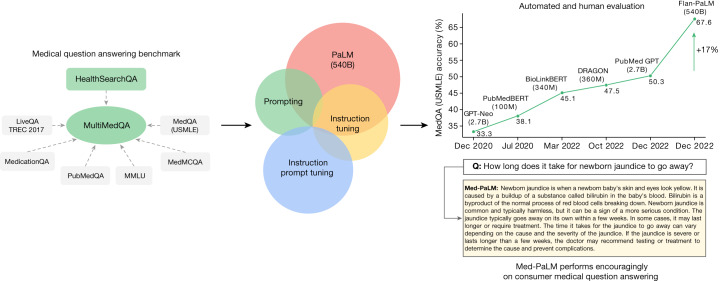
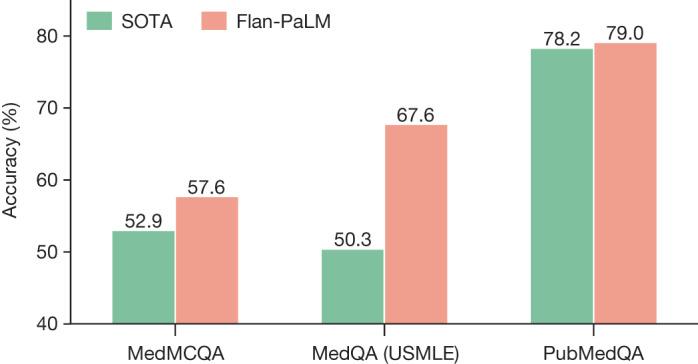
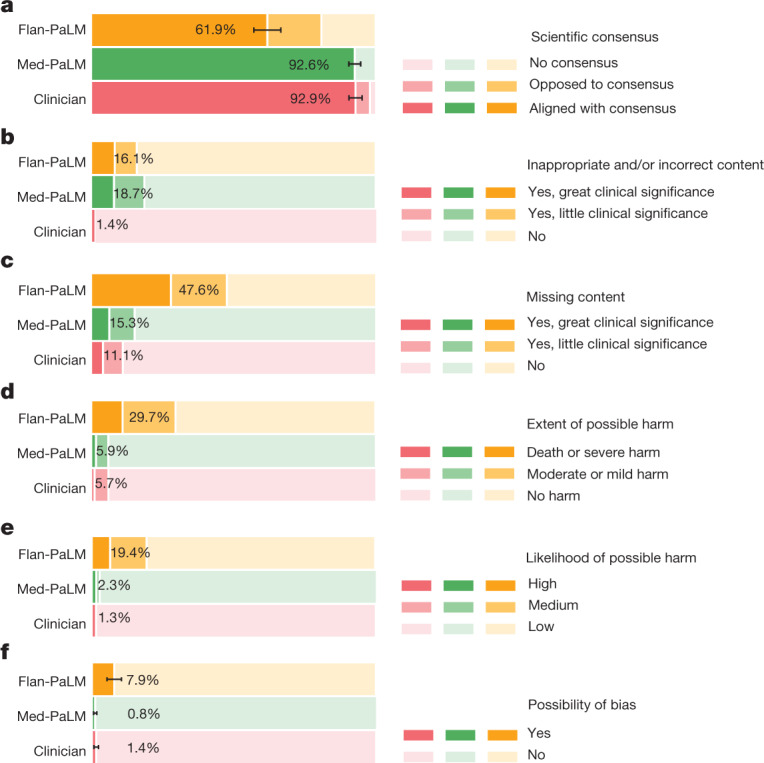
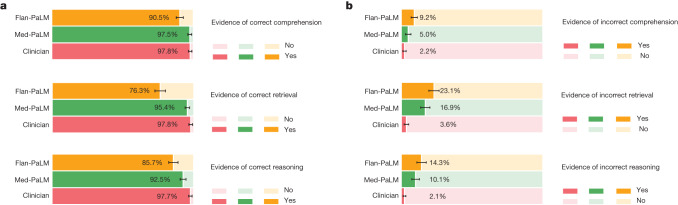
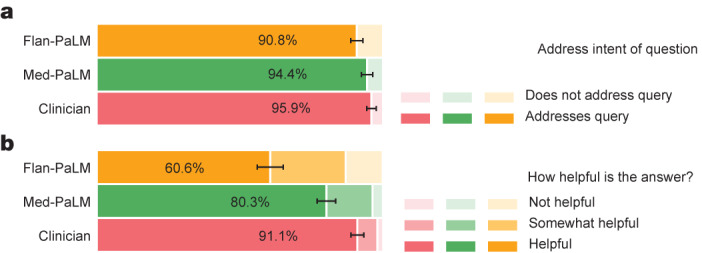
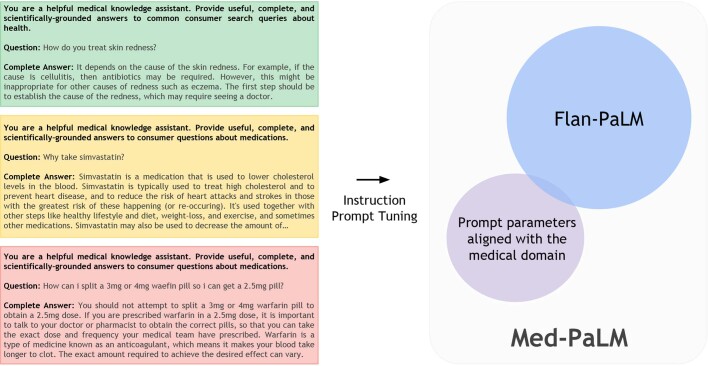
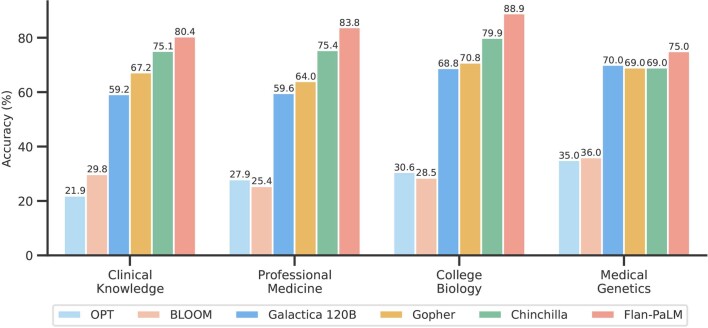
Large language models (LLMs) have demonstrated impressive capabilities, but the bar for clinical applications is high. Attempts to assess the clinical knowledge of models typically rely on automated evaluations based on limited benchmarks. Here, to address these limitations, we present MultiMedQA, a benchmark combining six existing medical question answering datasets spanning professional medicine, research and consumer queries and a new dataset of medical questions searched online, HealthSearchQA. We propose a human evaluation framework for model answers along multiple axes including factuality, comprehension, reasoning, possible harm and bias. In addition, we evaluate Pathways Language Model 1 (PaLM, a 540-billion parameter LLM) and its instruction-tuned variant, Flan-PaLM 2 on MultiMedQA. Using a combination of prompting strategies, Flan-PaLM achieves state-of-the-art accuracy on every MultiMedQA multiple-choice dataset (MedQA 3 , MedMCQA 4 , PubMedQA 5 and Measuring Massive Multitask Language Understanding (MMLU) clinical topics 6 ), including 67.6% accuracy on MedQA (US Medical Licensing Exam-style questions), surpassing the prior state of the art by more than 17%. However, human evaluation reveals key gaps. To resolve this, we introduce instruction prompt tuning, a parameter-efficient approach for aligning LLMs to new domains using a few exemplars. The resulting model, Med-PaLM, performs encouragingly, but remains inferior to clinicians. We show that comprehension, knowledge recall and reasoning improve with model scale and instruction prompt tuning, suggesting the potential utility of LLMs in medicine. Our human evaluations reveal limitations of today’s models, reinforcing the importance of both evaluation frameworks and method development in creating safe, helpful LLMs for clinical applications.
Overview
The claims and statistics of this paper haven’t been checked yet.
Free: it reads the open-access text and checks the first 5 claims that cite a source we can check. Create a free account to check every claim.
Integrity signals
Registry
Cites
Statistics
Figures
Verification
Claims the paper makes
The claims and statistics of this paper haven’t been checked yet.
Free: it reads the open-access text and checks the first 5 claims that cite a source we can check. Create a free account to check every claim.
Claims other papers make about this one
Each is checked against this paper’s own text: does it say what the citing paper says it does?
The cited source doesn’t support the claim as written.
In the citing paper
“Notably, in healthcare, medical NLP benchmarks like MedQA7, PubMedQA8 and the Massive Multitask Language Understanding (MMLU) serve as the de-facto reporting standard for state-of-the-art medical LLMs9–11 with claims of ‘superhuman’ performance in patient-facing tasks12.”
From Medical large language models are vulnerable to data-poisoning attacks (2025) · cites this paper as [9]
Checked by a reasoning model — may be wrong.
Experimental — accuracy not yet measuredThe cited source doesn’t support the claim as written.
In the citing paper
“Med-PaLM achieved a passing score of 67.6% on USMLE-style MedQA questions”
From Trustworthy Medical Question Answering: An Evaluation-Centric Survey (2025) · cites this paper as Singhal et al., 2023
Checked by a reasoning model — may be wrong.
Experimental — accuracy not yet measuredThe source backs part of the claim, not all of it — or backs it for a different population, condition or comparison.
In the citing paper
“Previous work has demonstrated potential across clinical NLP tasks22,23, adapting to the medical domain by training a new model24,25, fine-tuning an existing model26,27 or supplying task-specific examples in the model prompt27,28.”
From Adapted large language models can outperform medical experts in clinical text summarization (2024) · cites this paper as [24]
Experimental — accuracy not yet measuredThe source backs part of the claim, not all of it — or backs it for a different population, condition or comparison.
In the citing paper
“For example, Google’s Med-PaLM 2 demonstrated proficiency in medical question answering, achieving performance comparable to clinical experts on medical licensing examinations and performing better than generalist physicians in real-world medical questions.70”
From A foundational architecture for AI agents in healthcare (2025) · cites this paper as [70]
Experimental — accuracy not yet measuredThe source backs part of the claim, not all of it — or backs it for a different population, condition or comparison.
In the citing paper
“Large language models (LLMs) and multimodal foundation models now exhibit enhanced reasoning capabilities, natural language understanding, and the ability to interact with external tools such as calculators, databases, and application programming interfaces.”
From Medical AI Agents for Clinical Decision Support: Viewpoint Using the Planning, Action, Reflection, and Memory (PARM) Analytical Lens (2026) · cites this paper as [8]
Experimental — accuracy not yet measured
40 more claims about this paper
Create a free account to see every claim other papers make about this one.
Self-check
Percentages, sums and reported differences re-computed from the paper’s own numbers.
The self-check needs the paper’s full text.
Citations
Cites
Vaswani, A., Shazeer, N., Parmar, N., Uszkoreit, J., Jones, L., Gomez, A. N., Kaiser, L., & Polosukhin, I. (2017) · arXiv · doi:10.48550/arxiv.1706.03762 · Cited by 120,404 · cited 1×
“They owe their success to scaling up the training of transformer-based models [84].”
BackgroundExploring the Limits of Transfer Learning with a Unified Text-to-Text Transformer
Raffel, C., Shazeer, N., Roberts, A., Lee, K., Narang, S., Matena, M., Zhou, Y., Li, W., & Liu, P. J. (2019) · arXiv · doi:10.48550/arxiv.1910.10683 · Cited by 31,859 · cited 1×
“Large language models (LLMs) Over the past few years, LLMs have shown impressive performance on natural language processing (NLP) tasks [12, 14, 15, 30, 69, 70, 73, 89, 91, 99].”
BackgroundLanguage Models are Few-Shot Learners
Brown, T. B., Mann, B., Ryder, N., Subbiah, M., Kaplan, J., Dhariwal, P., Neelakantan, A., Shyam, P., Sastry, G., Askell, A., et al. (2020) · arXiv · doi:10.48550/arxiv.2005.14165 · Cited by 23,372
BLEU: a method for automatic evaluation of machine translation
Papineni, K., Roukos, S., Ward, T., & Zhu, W.-J. (2001) · Proceedings of the 40th Annual Meeting on Association for Computational Linguistics - ACL '02 · doi:10.3115/1073083.1073135 · Cited by 21,344
Decoupled Weight Decay Regularization
Loshchilov, I., & Hutter, F. (2017) · arXiv · doi:10.48550/arxiv.1711.05101 · Cited by 12,522
Scaling Laws for Neural Language Models
Kaplan, J., McCandlish, S., Henighan, T., Brown, T. B., Chess, B., Child, R., Gray, S., Radford, A., Wu, J., & Amodei, D. (2020) · arXiv · doi:10.48550/arxiv.2001.08361 · Cited by 9,550 · cited 1×
“It has been shown that model performance and data-efficiency scales with model size and dataset size [37].”
BioBERT: a pre-trained biomedical language representation model for biomedical text mining
Lee, J., Yoon, W., Kim, S., Kim, D., Kim, S., So, C. H., & Kang, J. (2020) · Bioinformatics · doi:10.1093/bioinformatics/btz682 · Cited by 7,218
Boateng, G. O., Neilands, T. B., Frongillo, E. A., Melgar-Quiñonez, H. R., & Young, S. L. (2018) · Frontiers in Public Health · doi:10.3389/fpubh.2018.00149 · Cited by 5,925
Chain-Of-Thought Prompting Elicits Reasoning in Large Language Models
Wei, J., Wang, X., Schuurmans, D., Bosma, M., Ichter, B., Xia, F., Chi, E., Le, Q. V., & Zhou, D. (2022) · Advances in Neural Information Processing Systems 35 · doi:10.52202/068431-1800 · Cited by 4,505
Self-citationLiu, P., Yuan, W., Fu, J., Jiang, Z., Hayashi, H., & Neubig, G. (2023) · ACM Computing Surveys · doi:10.1145/3560815 · Cited by 4,361
Research works printed but not linked: 2
- Abacha, A. B. et al. in Studies in Health Technology and Informatics (eds Ohno-Machado, L. & Séroussi, B.) 25–29 (IOS Press, 2019).
- Matheny, M., Israni, S. T., Ahmed, M. & Whicher, D. eds. Artificial Intelligence in Health Care: The Hope, the Hype, the Promise, the Peril (National Academy of Medicine, 2022). 39146448
Cited by
Items 101–200 of 1,129
Pre-trained Language Models in Biomedical Domain: A Systematic Survey
Wang, B., Xie, Q., Pei, J., Chen, Z., Tiwari, P., Li, Z., & Fu, J. (2024) · ACM Computing Surveys · doi:10.1145/3611651 · Cited by 169
“3 [270] adopts instruction prompt tuning on medical data.”
BackgroundInfluentialLarge Models for Time Series and Spatio-Temporal Data: A Survey and Outlook
Jin, M., Kong, Y., Liang, Y., Zhang, C., Xue, S., Wang, X., Zhang, J., Wang, Y., Chen, H., Li, X., et al. (2026) · ACM Computing Surveys · doi:10.1145/3821637 · Cited by 251
Evaluation of ChatGPT-generated medical responses: A systematic review and meta-analysis
Wei, Q., Yao, Z., Cui, Y., Wei, B., Jin, Z., & Xu, X. (2024) · Journal of Biomedical Informatics · doi:10.1016/j.jbi.2024.104620 · Cited by 201
The Opportunities and Risks of Large Language Models in Mental Health
Lawrence, H. R., Schneider, R. A., Rubin, S. B., Matarić, M. J., McDuff, D. J., & Jones Bell, M. (2024) · JMIR Mental Health · doi:10.2196/59479 · Cited by 235
“It should be apparent when information is generated using LLMs, how LLMs were developed and tested, and whether LLMs are general-purpose or fine-tuned for the domain of mental health [46,58,68].”
BackgroundInfluentialVision–language foundation model for echocardiogram interpretation
Christensen, M., Vukadinovic, M., Yuan, N., & Ouyang, D. (2024) · Nature Medicine · doi:10.1038/s41591-024-02959-y · Cited by 231
“While EchoCLIP is not the first instance of a foundation model trained on biomedical datasets 17,33,34 , EchoCLIP is a model specific for echocardiography, the most common modality for cardiovascular imaging and not represented in prior foundation model training.”
BackgroundA guide to artificial intelligence for cancer researchers
Perez-Lopez, R., Ghaffari Laleh, N., Mahmood, F., & Kather, J. N. (2024) · Nature Reviews Cancer · doi:10.1038/s41568-024-00694-7 · Cited by 211
“In medical applications, zero-shot methods have been used to summarize unstructured radiology reports 106 , pathology reports 107 or clinical notes 108,118 ; furthermore, to provide treatment recommendations based on radiology images or to respond to medical examination questions 109 .”
Friha, O., Amine Ferrag, M., Kantarci, B., Cakmak, B., Ozgun, A., & Ghoualmi-Zine, N. (2024) · IEEE Open Journal of the Communications Society · doi:10.1109/ojcoms.2024.3456549 · Cited by 189
CoLLM: Integrating Collaborative Embeddings Into Large Language Models for Recommendation
Zhang, Y., Feng, F., Zhang, J., Bao, K., Wang, Q., & He, X. (2025) · IEEE Transactions on Knowledge and Data Engineering · doi:10.1109/tkde.2025.3540912 · Cited by 361
“These exceptional proficien-cies have sparked intense interest and enthusiasm for exploring and utilizing LLMs across diverse fields and disciplines [24, 33, 34].”
BackgroundCascella, M., Semeraro, F., Montomoli, J., Bellini, V., Piazza, O., & Bignami, E. (2024) · Journal of Medical Systems · doi:10.1007/s10916-024-02045-3 · Cited by 219
“This capability is domain, it incorporates information from different medi - cal question-answering datasets, research, and consumer queries [23 ].”
BackgroundChen, Q., Hu, Y., Peng, X., Xie, Q., Jin, Q., Gilson, A., Singer, M. B., Ai, X., Lai, P.-T., Wang, Z., et al. (2025) · Nature Communications · doi:10.1038/s41467-025-56989-2 · Cited by 219
“This is also supported by the existing studies on medical question answering 38,46 .”
Explainable Generative AI (GenXAI): a survey, conceptualization, and research agenda
Schneider, J. (2024) · Artificial Intelligence Review · doi:10.1007/s10462-024-10916-x · Cited by 156
“It can also encode additional domain-specific knowledge, such as medical information (Singhal et al. 2023).”
Large Language Models are Few-Shot Health Learners
Liu, X., McDuff, D., Kovacs, G., Galatzer‐Levy, I. R., Sunshine, J. E., Zhan, J., Poh, M., Liao, S., Achille, P. D., & Patel, S. (2023) · arXiv (Cornell University) · doi:10.48550/arxiv.2305.15525 · Cited by 35
“Medical-domain language models have shown remarkable capabilities to capture sophisticated knowledge [10, 22], performing well on multiple-choice examination questions (e.g., board exams).”
BackgroundBioMedLM: A 2.7B Parameter Language Model Trained On Biomedical TextPreprint
Bolton, E., Venigalla, A., Yasunaga, M., Hall, D., Xiong, B., Lee, T., Daneshjou, R., Frankle, J., Liang, P., Carbin, M., et al. (2024) · arXiv (Cornell University) · doi:10.48550/arxiv.2403.18421 · Cited by 280
“This is especially meaningful in the biomedical context, where models trained on general English data can benefit from further training on specialized tasks (Singhal et al., 2023a,b).”
BackgroundMethodInfluentialFoundation metrics for evaluating effectiveness of healthcare conversations powered by generative AI
Abbasian, M., Khatibi, E., Azimi, I., Oniani, D., Shakeri Hossein Abad, Z., Thieme, A., Sriram, R., Yang, Z., Wang, Y., Lin, B., et al. (2024) · npj Digital Medicine · doi:10.1038/s41746-024-01074-z · Cited by 213
Physics of Language Models: Part 3.1, Knowledge Storage and ExtractionPreprint
Allen-Zhu, Z., & Li, Y. (2025) · SSRN Electronic Journal · doi:10.2139/ssrn.5250633 · Cited by 240
Ning, Y., Teixayavong, S., Shang, Y., Savulescu, J., Nagaraj, V., Miao, D., Mertens, M., Ting, D. S. W., Ong, J. C. L., Liu, M., et al. (2024) · The Lancet Digital Health · doi:10.1016/s2589-7500(24)00143-2 · Cited by 212
“…their responsibilities in preventing ethical issues from arising in the first place 16 and by developing benchmarks to evaluate the ethics of LLMs to facilitate future mitigation, 10 but such discussions are not easily operationalised in future GenAI research without detailed actionable guides.”
BackgroundLarge language model AI chatbots require approval as medical devices
Gilbert, S., Harvey, H., Melvin, T., Vollebregt, E., & Wicks, P. (2023) · Nature Medicine · doi:10.1038/s41591-023-02412-6 · Cited by 207
Kresevic, S., Giuffrè, M., Ajcevic, M., Accardo, A., Crocè, L. S., & Shung, D. L. (2024) · npj Digital Medicine · doi:10.1038/s41746-024-01091-y · Cited by 207
Ge, J., Sun, S., Owens, J., Galvez, V., Gologorskaya, O., Lai, J. C., Pletcher, M. J., & Lai, K. (2024) · Hepatology · doi:10.1097/hep.0000000000000834 · Cited by 178
“We then sent an anonymous survey to a convenience sample of hepatologists within and outside our institution to rate the outputs on a 1 to 5 Likert Scale (from least to most) by the following dimensions that were previously used for LLM evaluation: [ 25,26 ] 1.”
Omar, M., Sorin, V., Collins, J. D., Reich, D., Freeman, R., Gavin, N., Charney, A., Stump, L., Bragazzi, N. L., Nadkarni, G. N., et al. (2025) · Communications Medicine · doi:10.1038/s43856-025-01021-3 · Cited by 204
“Specialized medical LLMs, such as Google ’ s Med-PaLM 2, show improvement, reportedly aligning with clinical reasoning in over 90% of long-form answers 13 .”
Takita, H., Kabata, D., Walston, S. L., Tatekawa, H., Saito, K., Tsujimoto, Y., Miki, Y., & Ueda, D. (2025) · npj Digital Medicine · doi:10.1038/s41746-025-01543-z · Cited by 203
Health-LLM: Large Language Models for Health Prediction via Wearable Sensor DataPreprint
Kim, Y., Xu, X., McDuff, D., Breazeal, C., & Park, H. W. (2024) · arXiv (Cornell University) · doi:10.48550/arxiv.2401.06866 · Cited by 308
“For instance, (Singhal et al., 2022) demonstrated the efficacy of LLMs through a combination of base improvements (PaLM 2), medical domain fine-tuning, and ensemble refinement, outperforming benchmarks across various datasets.”
BackgroundAn evaluation framework for clinical use of large language models in patient interaction tasks
Johri, S., Jeong, J., Tran, B. A., Schlessinger, D. I., Wongvibulsin, S., Barnes, L. A., Zhou, H.-Y., Cai, Z. R., Van Allen, E. M., Kim, D., et al. (2025) · Nature Medicine · doi:10.1038/s41591-024-03328-5 · Cited by 201
Levine, D. M., Tuwani, R., Kompa, B., Varma, A., Finlayson, S. G., Mehrotra, A., & Beam, A. (2024) · The Lancet Digital Health · doi:10.1016/s2589-7500(24)00097-9 · Cited by 199
Putting ChatGPT’s Medical Advice to the (Turing) Test: Survey Study
Nov, O., Singh, N., & Mann, D. (2023) · JMIR Medical Education · doi:10.2196/46939 · Cited by 198
“Recent studies have had health care professionals judge ChatGPT’s responses to health-related questions [14-16], with findings such as 84% of answers to cardiovascular disease prevention questions being appropriate [15] and ChatGPT overall scoring higher for quality and empathy than health care…”
BackgroundMethodInfluentialArtificial Intelligence in Oncology: Current Landscape, Challenges, and Future Directions
Lotter, W., Hassett, M. J., Schultz, N., Kehl, K. L., Van Allen, E. M., & Cerami, E. (2024) · Cancer Discovery · doi:10.1158/2159-8290.cd-23-1199 · Cited by 196
Hadi, M. U., tashi, Q. A., Qureshi, R., Shah, A., muneer, A., Irfan, M., Zafar, A., Shaikh, M. B., Akhtar, N., Wu, J., et al. (2023) · doi:10.36227/techrxiv.23589741.v4 · Cited by 103
Pre-trained multimodal large language model enhances dermatological diagnosis using SkinGPT-4
Zhou, J., He, X., Sun, L., Xu, J., Chen, X., Chu, Y., Zhou, L., Liao, X., Zhang, B., Afvari, S., et al. (2024) · Nature Communications · doi:10.1038/s41467-024-50043-3 · Cited by 189
“Never-theless, the development of multimodal large language models for medical diagnosis is still in its early stages 51,52 , particularly considering the prevalence of image-based data in the fi eld of medical diagnosis, among which, dermatological diagnosis is a very important task but lacks…”
Deep Learning in Breast Cancer Imaging: State of the Art and Recent Advancements in Early 2024
Carriero, A., Groenhoff, L., Vologina, E., Basile, P., & Albera, M. (2024) · Diagnostics · doi:10.3390/diagnostics14080848 · Cited by 166
“Basing on them, multiple domain-specific LLMs have been trained to better perform in the medical and radiology field, such as Med-PaLM [44], MedAlpaca [47], and LaVA-Med [48], some of them even integrating image assessment capabilities and therefore fully automating the reporting workflow.”
BackgroundMethodConcepts and applications of digital twins in healthcare and medicine
Zhang, K., Zhou, H.-Y., Baptista‐Hon, D. T., Gao, Y., Liu, X., Oermann, E. K., Xu, S. H., Jin, S., Zhang, J., Sun, Z., et al. (2024) · Patterns · doi:10.1016/j.patter.2024.101028 · Cited by 225
“43 It can consider various treatment options, such as chemotherapy, radiotherapy, immunotherapy, and targeted therapy and assess their potential effectiveness.”
BackgroundLarge language models for disease diagnosis: a scoping review
Zhou, S., Xu, Z., Zhang, M., Xu, C., Guo, Y., Zhan, Z., Fang, Y., Ding, S., Wang, J., Xu, K., et al. (2025) · npj Artificial Intelligence · doi:10.1038/s44387-025-00011-z · Cited by 122
Assessing the research landscape and clinical utility of large language models: a scoping review
Park, Y.-J., Pillai, A., Deng, J., Guo, E., Gupta, M., Paget, M., & Naugler, C. (2024) · BMC Medical Informatics and Decision Making · doi:10.1186/s12911-024-02459-6 · Cited by 187
Thirunavukarasu, A. J., Hassan, R., Mahmood, S., Sanghera, R., Barzangi, K., El Mukashfi, M., & Shah, S. (2023) · JMIR Medical Education · doi:10.2196/46599 · Cited by 187
“5, and GPT-4 [6,17,26,28].”
BackgroundCollaboration between clinicians and vision–language models in radiology report generation
Tanno, R., Barrett, D. G. T., Sellergren, A., Ghaisas, S., Dathathri, S., See, A., Welbl, J., Lau, C., Tu, T., Azizi, S., et al. (2025) · Nature Medicine · doi:10.1038/s41591-024-03302-1 · Cited by 186
Self-citationParameter-efficient fine-tuning in large language models: a survey of methodologies
Wang, L., Chen, S., Jiang, L., Pan, S., Cai, R., Yang, S., & Yang, F. (2025) · Artificial Intelligence Review · doi:10.1007/s10462-025-11236-4 · Cited by 186
“Previous studies [97], [84], [98], [99] have demonstrated that parameter-efficient fine-tuning can be effectively integrated with instruction tuning, either before or after the instruction tuning process.”
Three Epochs of Artificial Intelligence in Health Care
Howell, M. D., Corrado, G. S., & DeSalvo, K. B. (2024) · JAMA · doi:10.1001/jama.2023.25057 · Cited by 185
Self-citationA generalist medical language model for disease diagnosis assistance
Liu, X., Liu, H., Yang, G., Jiang, Z., Cui, S., Zhang, Z., Wang, H., Tao, L., Sun, Y., Song, Z., et al. (2025) · Nature Medicine · doi:10.1038/s41591-024-03416-6 · Cited by 183
“The development of the CLEVER framework was inspired by previous work 14,59 and involved consultations with expert physicians in the United Kingdom and China.”
Fine-Tuning Large Language Models for Specialized Use Cases
Anisuzzaman, D., Malins, J. G., Friedman, P. A., & Attia, Z. I. (2024) · Mayo Clinic Proceedings Digital Health · doi:10.1016/j.mcpdig.2024.11.005 · Cited by 272
“For example, Singhal et al 36 developed Med-PaLM for answering medical questions and had clinicians review outputs to ensure that the responses were medically sound and factually accurate.”
Large language models for scientific discovery in molecular property prediction
Zheng, Y., Koh, H. Y., Ju, J., Nguyen, A. T. N., May, L. T., Webb, G. I., & Pan, S. (2025) · Nature Machine Intelligence · doi:10.1038/s42256-025-00994-z · Cited by 258
Ibrahim, M. K., Alkhalil, Y., Amirrajab, S., Sun, C., Breeuwer, M., Pluim, J., Elen, B., Ertaylan, G., & Dumontier, M. (2024) · Comput. Biol. Medicine · doi:10.1016/j.compbiomed.2025.109834 · Cited by 162
Yang, S., Zhao, H., Zhu, S., Zhou, G., Xu, H., Jia, Y., & Zan, H. (2024) · Proceedings of the AAAI Conference on Artificial Intelligence · doi:10.1609/aaai.v38i17.29907 · Cited by 120
Can Generalist Foundation Models Outcompete Special-Purpose Tuning? Case Study in Medicine
Nori, H., Lee, Y. T., Zhang, S., Carignan, D., Edgar, R., Fusi, N., King, N., Larson, J., Li, Y., Liu, W., et al. (2023) · arXiv · doi:10.48550/arxiv.2311.16452 · Cited by 178
“Flan-PaLM 540B * Sourced directly from [29] and [30].”
BackgroundMethodInfluentialAI chatbots not yet ready for clinical use.
Au Yeung, J., Kraljevic, Z., Luintel, A., Balston, A., Idowu, E., Dobson, R. J., & Teo, J. T. (2023) · Frontiers in Digital Health · doi:10.3389/fdgth.2023.1161098 · Cited by 176
“…close to human-level performances in medical question and answering benchmarks and summarisation tasks (7 – 9), and with techniques like self-consistency (9), chain of thought prompting (10), and reinforcement learning from human feedback (11) the model performance can be further enhanced.”
BackgroundMethodJin, Q., Yang, Y., Chen, Q., & Lu, Z. (2024) · Bioinformatics · doi:10.1093/bioinformatics/btae075 · Cited by 176
“They also achieve state-of-the-art performance on many domain-specific tasks like biomedical question answering (Singhal et al., 2022; Liévin et al., 2022; Nori et al., 2023).”
BackgroundAI chatbots not yet ready for clinical use
Yeung, J. A., Kraljevic, Z., Luintel, A., Balston, A., Idowu, E., Dobson, R. J., & Teo, J. T. (2023) · doi:10.1101/2023.03.02.23286705 · Cited by 176
Ferber, D., El Nahhas, O. S. M., Wölflein, G., Wiest, I. C., Clusmann, J., Leßmann, M.-E., Foersch, S., Lammert, J., Tschochohei, M., Jäger, D., et al. (2025) · Nature Cancer · doi:10.1038/s43018-025-00991-6 · Cited by 175
Large Language Models lack essential metacognition for reliable medical reasoning
Griot, M., Hemptinne, C., Vanderdonckt, J., & Yuksel, D. (2025) · Nature Communications · doi:10.1038/s41467-024-55628-6 · Cited by 172
From Matching to Generation: A Survey on Generative Information Retrieval
Li, X., Jin, J., Zhou, Y., Zhang, Y., Zhang, P., Zhu, Y., & Dou, Z. (2025) · ACM Transactions on Information Systems · doi:10.1145/3722552 · Cited by 172
“Additionally, whether increasing model and data size could lead to emergent phenomena similar to those observed in LLMs [345, 346] is also a promising research direction.”
Freyer, O., Wiest, I. C., Kather, J. N., & Gilbert, S. (2024) · The Lancet Digital Health · doi:10.1016/s2589-7500(24)00124-9 · Cited by 157
The Virtual Lab of AI agents designs new SARS-CoV-2 nanobodies
Swanson, K., Wu, W., Bulaong, N. L., Pak, J. E., & Zou, J. (2025) · Nature · doi:10.1038/s41586-025-09442-9 · Cited by 169
Deiana, G., Dettori, M., Arghittu, A., Azara, A., Gabutti, G., & Castiglia, P. (2023) · Vaccines · doi:10.3390/vaccines11071217 · Cited by 168
“In particular, taking into consideration the growing amount of medical data and the complexity of clinical decisions, these tools could theoretically help physicians make timely and informed decisions and improve the overall quality and efficiency of healthcare [22,23].”
BackgroundClinical reasoning of a generative artificial intelligence model compared with physicians
Cabral, S., Restrepo, D., Kanjee, Z., Wilson, P., Crowe, B., Abdulnour, R.-E., & Rodman, A. (2024) · JAMA Internal Medicine · doi:10.1001/jamainternmed.2024.0295 · Cited by 168
Tihanyi, N., Ferrag, M. A., Jain, R., Bisztray, T., & Debbah, M. A. (2024) · IEEE International Conference on Cyber Security and Resilience (CSR) · doi:10.1109/csr61664.2024.10679494 · Cited by 222
“These break-throughs extend into sectors like medicine [22], finance [23], and notably, cybersecurity [7].”
BackgroundEvaluation of the performance of GPT-3.5 and GPT-4 on the Polish Medical Final Examination
Rosoł, M., Gąsior, J. S., Łaba, J., Korzeniewski, K., & Młyńczak, M. (2023) · Scientific Reports · doi:10.1038/s41598-023-46995-z · Cited by 157
Li, X., Chan, S., Zhu, X., Pei, Y., Ma, Z., Liu, X., & Shah, S. (2023) · Conference on Empirical Methods in Natural Language Processing (EMNLP) · doi:10.18653/v1/2023.emnlp-industry.39 · Cited by 240
Wang, H., Wu, W., Dou, Z., He, L., & Yang, L. (2023) · International Journal of Medical Informatics · doi:10.1016/j.ijmedinf.2023.105173 · Cited by 155
E-waste challenges of generative artificial intelligence
Wang, P., Zhang, L., Tzachor, A., Masanet, E. R., & Chen, W. (2024) · Nature Computational Science · doi:10.1038/s43588-024-00712-6 · Cited by 200
Foundation Model for Advancing Healthcare: Challenges, Opportunities and Future Directions
He, Y., Huang, F., Jiang, X., Nie, Y., Wang, M., Wang, J., & Chen, H. (2024) · IEEE Reviews in Biomedical Engineering · doi:10.1109/rbme.2024.3496744 · Cited by 248
“It learned from large-scale medical language data, and has shown extraordinary performance in medical text processing [15] and dialogue [16] tasks. b) Vision foundation model [11] (VFM) has demonstrated remarkable potentialities in medical images.”
Reliability of LLMs as medical assistants for the general public: a randomized preregistered study
Bean, A. M., Payne, R. E., Parsons, G., Kirk, H. R., Ciro, J., Mosquera-Gómez, R., Sara Hincapié, M., Ekanayaka, A. S., Tarassenko, L., Rocher, L., et al. (2026) · Nature Medicine · doi:10.1038/s41591-025-04074-y · Cited by 236
“We then scored the models on only those questions using five-shot prompting, where models are given five examples of the question/answer format before the real question 20 .”
Large language models and their impact in ophthalmology
Betzler, B. K., Chen, H., Cheng, C.-Y., Lee, C. S., Ning, G., Song, S. J., Lee, A. Y., Kawasaki, R., van Wijngaarden, P., Grzybowski, A., et al. (2023) · The Lancet Digital Health · doi:10.1016/s2589-7500(23)00201-7 · Cited by 161
Sequential diagnosis with language models
Nori, H., Daswani, M., Kelly, C. J., Lundberg, S., Ribeiro, M. T., Wilson, M., Liu, X., Sounderajah, V., Carlson, J. M., Lungren, M. P., et al. (2026) · Science · doi:10.48550/arxiv.2506.22405 · Cited by 187
“…at unprecedented scale, but most evaluations still rely on static, vignette-style tasks that pre-package all relevant information presented and analyzed in a single step(Bedi et al., 2025; Brin et al., 2023; Chakraborty et al., 2020; Gilson et al., 2023; Gu et al., 2021; Singhal et al., 2023).”
Self-citationA Survey on Large Language Models with some Insights on their Capabilities and LimitationsPreprint
Matarazzo, A., & Torlone, R. (2025) · arXiv (Cornell University) · doi:10.48550/arxiv.2501.04040 · Cited by 206
Scarfe, P., Watcham, K., Clarke, A., & Roesch, E. (2024) · PLOS ONE · doi:10.1371/journal.pone.0305354 · Cited by 108
Choudhury, A., & Chaudhry, Z. (2024) · Journal of Medical Internet Research · doi:10.2196/56764 · Cited by 159
“…of information quality are indeed significant concerns; however, when these LLMs, such as the Medical Pathways Language Model (Med-PaLM) [32], are specifically fine-tuned and tailored for health care applications, the severity of these issues can be mitigated through stringent quality…”
Analysis of large-language model versus human performance for genetics questions
Duong, D., & Solomon, B. D. (2024) · European Journal of Human Genetics · doi:10.1038/s41431-023-01396-8 · Cited by 159
Nam, Y., Kim, J., Jung, S., Woerner, J., Suh, E. H., Lee, D. A., Shivakumar, M., Lee, M. E., & Kim, D. (2024) · Annual Review of Biomedical Data Science · doi:10.1146/annurev-biodatasci-102523-103801 · Cited by 187
Revolutionizing Health Care: The Transformative Impact of Large Language Models in Medicine
Zhang, K., Meng, X., Yan, X., Ji, J., Liu, J., Xu, H., Zhang, H., Liu, D., Wang, J., Wang, X., et al. (2025) · Journal of Medical Internet Research · doi:10.2196/59069 · Cited by 124
Alkhalaf, M., Yu, P., Yin, M., & Deng, C. (2024) · Journal of Biomedical Informatics · doi:10.1016/j.jbi.2024.104662 · Cited by 156
A personal health large language model for sleep and fitness coaching
Khasentino, J., Belyaeva, A., Liu, X., Yang, Z., Furlotte, N. A., Lee, C., Schenck, E., Patel, Y., Cui, J., Schneider, L. D., et al. (2025) · Nature Medicine · doi:10.1038/s41591-025-03888-0 · Cited by 196
“Accuracy was used as the metric to evaluate the performance of our model in professional examinations, in line with previous work evaluating MedMCQA 44 .”
Self-citationA medical multimodal large language model for future pandemics
Liu, F., Zhu, T., Wu, X., Yang, B., You, C., Wang, C., Lu, L., Liu, Z., Zheng, Y., Sun, X., et al. (2023) · npj Digital Medicine · doi:10.1038/s41746-023-00952-2 · Cited by 155
Large language models: a survey of their development, capabilities, and applications
Yadagiri, A., & Pakray, P. (2024) · Knowledge and Information Systems · doi:10.1007/s10115-024-02310-4 · Cited by 220
A Survey of Techniques for Optimizing Transformer Inference
Chitty-Venkata, K. T., Mittal, S., Emani, M., Vishwanath, V., & Somani, A. K. (2023) · Journal of Systems Architecture · doi:10.1016/j.sysarc.2023.102990 · Cited by 154
A comprehensive survey of large language models and multimodal large language models in medicine
Xiao, H., Zhou, F., Liu, X., Liu, T., Li, Z., Liu, X., & Huang, X. (2025) · Information Fusion · doi:10.1016/j.inffus.2024.102888 · Cited by 113
“The lungs are free of focal airspace disease ...”
PubMed and beyond: biomedical literature search in the age of artificial intelligence
Jin, Q., Leaman, R., & Lu, Z. (2024) · eBioMedicine · doi:10.1016/j.ebiom.2024.104988 · Cited by 124
“65 This suggests that LLMs can provide direct answers to natural language questions using relevant documents returned from a traditional search engine.”
BackgroundInvestigating Students’ Perceptions towards Artificial Intelligence in Medical Education
Buabbas, A. J., Miskin, B., Alnaqi, A. A., Ayed, A. K., Shehab, A. A., Syed-Abdul, S., & Uddin, M. (2023) · Healthcare · doi:10.3390/healthcare11091298 · Cited by 152
Towards multimodal foundation models in molecular cell biology
Cui, H., Tejada-Lapuerta, A., Brbić, M., Sáez-Rodríguez, J., Cristea, S., Goodarzi, H., Lotfollahi, M., Theis, F. J., & Wang, B. (2025) · Nature · doi:10.1038/s41586-025-08710-y · Cited by 186
“Recent retrieval-based chatbots have succeeded in industrial and clinical applications 103,104 , in which existing unstructured text is represented as databases of vector embeddings with the help of current large-language models, such as recent BioGPT 105 and Med-PaLM 106 .”
Tripathi, S., Sukumaran, R., & Cook, T. S. (2024) · Journal of the American Medical Informatics Association · doi:10.1093/jamia/ocad258 · Cited by 135
McIntosh, T. R., Susnjak, T., Liu, T., Watters, P., Xu, D., Liu, D., Nowrozy, R., & Halgamuge, M. N. (2024) · Computers & Security · doi:10.1016/j.cose.2024.103964 · Cited by 84
“Continuous monitoring and auditing [46, 78] Continuous learning [70, 71] Over-reliance on outdated training data [79] Periodic AI assessment ( Article 61, 84 ).”
BackgroundA Survey on Large Language Models for Critical Societal Domains: Finance, Healthcare, and Law
Chen, Z. Z., Ma, J., Zhang, X., Hao, N., Yan, A., Nourbakhsh, A., Yang, X., McAuley, J., Petzold, L. R., & Wang, W. Y. (2024) · Transactions on machine learning research · doi:10.48550/arxiv.2405.01769 · Cited by 205
Prompt Engineering for Healthcare: Methodologies and Applications
Wang, J., Shi, E., Yu, S., Wu, Z., Ma, C., Dai, H., Yang, Q., Kang, Y., Wu, J., Hu, H., et al. (2023) · arXiv · doi:10.48550/arxiv.2304.14670 · Cited by 150
“Additionally, different medical tasks require different prompt designs, which requires balancing the complexity and interpretability of prompts while also utilizing existing medical domain knowledge to guide the model to generate high-quality predictions [67].”
Self-citationMedical Artificial Intelligence and Human Values
Yu, K.-H., Healey, E., Leong, T.-Y., Kohane, I. S., & Manrai, A. K. (2024) · New England Journal of Medicine · doi:10.1056/nejmra2214183 · Cited by 149
Novel research and future prospects of artificial intelligence in cancer diagnosis and treatment
Zhang, C., Xu, J., Tang, R., Yang, J., Wang, W., Yu, X., & Shi, S. (2023) · Journal of Hematology & Oncology · doi:10.1186/s13045-023-01514-5 · Cited by 148
“Another excellent example is Med-PaLM [245], a Google-developed chatbot for medical Q&A.”
MethodThe effect of using a large language model to respond to patient messages
Chen, S., Guevara, M., Moningi, S., Hoebers, F., Elhalawani, H., Kann, B. H., Chipidza, F. E., Leeman, J., Aerts, H. J. W. L., Miller, T., et al. (2024) · The Lancet Digital Health · doi:10.1016/s2589-7500(24)00060-8 · Cited by 147
“Assessments of encoded general biomedical knowledge, such as performance on medical board exams, are a first step toward clinical applications, 5 but should not be used as surrogates for the clinical expertise and acumen needed to care for patients.”
Enhancing diagnostic capability with multi-agents conversational large language models
Chen, X., Yi, H., You, M., Liu, W., Wang, L., Li, H., Zhang, X., Guo, Y., Fan, L., Chen, G., et al. (2025) · npj Digital Medicine · doi:10.1038/s41746-025-01550-0 · Cited by 147
“Although existing benchmarks offered comprehensive evaluation of LLMs ’ medical knowledge, challenges remain in assessing their application in clinical senarios 1,37 .”
Towards building multilingual language model for medicine
Qiu, P., Wu, C., Zhang, X., Lin, W., Wang, H., Zhang, Y., Wang, Y., & Xie, W. (2024) · Nature Communications · doi:10.1038/s41467-024-52417-z · Cited by 147
“In the recent literature, large language models (LLMs) have demonstrated great promise in healthcare, for example, closed-source models such as GPT-4 [20] and MedPalm-2 [23] have shown remarkable performance, and successfully passed the United States Medical Licensing Examination (USMLE).”
BackgroundResultHe, K., Mao, R., Lin, Q., Ruan, Y., Lan, X., Feng, M., & Cambria, E. (2025) · Information Fusion · doi:10.1016/j.inffus.2025.102963 · Cited by 147
Hidden flaws behind expert-level accuracy of multimodal GPT-4 vision in medicine
Jin, Q., Chen, F., Zhou, Y., Xu, Z., Cheung, J. M., Chen, R., Summers, R. M., Rousseau, J. F., Ni, P., Landsman, M. J., et al. (2024) · npj Digital Medicine · doi:10.1038/s41746-024-01185-7 · Cited by 146
“These re fl ect the multimodal nature of the task as well as the commonly evaluated capabilities for text-only LLMs 6,8 .”
BackgroundInfluentialCoLLM: Integrating Collaborative Embeddings into Large Language Models for Recommendation
Zhang, Y., Feng, F., Zhang, J., Bao, K., Wang, Q., & He, X. (2023) · arXiv · doi:10.48550/arxiv.2310.19488 · Cited by 146
Evaluation of ChatGPT for NLP-based Mental Health Applications
Lamichhane, B. (2023) · arXiv (Cornell University) · doi:10.48550/arxiv.2303.15727 · Cited by 53
Evaluating large language models as agents in the clinic
Mehandru, N., Miao, B. Y., Almaraz, E. R., Sushil, M., Butte, A. J., & Alaa, A. (2024) · npj Digital Medicine · doi:10.1038/s41746-024-01083-y · Cited by 143
Oniani, D., Hilsman, J., Peng, Y., Poropatich, R. K., Pamplin, J. C., Legault, G. L., & Wang, Y. (2023) · npj Digital Medicine · doi:10.1038/s41746-023-00965-x · Cited by 143
“The use and impact of AI in clinical Natural Language Processing (NLP) in the context of Electronic Health Records (EHRs) have been profound 10 – 13 .”
BackgroundPrompt Engineering Paradigms for Medical Applications: Scoping Review
Zaghir, J., Naguib, M., Bjelogrlic, M., Névéol, A., Tannier, X., & Lovis, C. (2024) · Journal of Medical Internet Research · doi:10.2196/60501 · Cited by 143
“Figure 4 [16,20,26,41,47, 88-123 88-123 ] illustrates Figure 5 [ 10-87 10-87 ]”
Artificial Intelligence for Cardiovascular Care—Part 1: Advances
Elias, P. A., Jain, S. S., Poterucha, T. J., Randazzo, M. J., Jimenez, F. L., Khera, R., Perez, M. V., Ouyang, D., Pirruccello, J. P., Salerno, M., et al. (2024) · Journal of the American College of Cardiology · doi:10.1016/j.jacc.2024.03.400 · Cited by 157
Self-citationLarge Language Model Capabilities in Perioperative Risk Prediction and Prognostication
Chung, P., Fong, C. T., Walters, A. M., Aghaeepour, N., Yetisgen, M., & O’Reilly-Shah, V. N. (2024) · JAMA Surgery · doi:10.1001/jamasurg.2024.1621 · Cited by 118
Peer review of GPT-4 technical report and systems card
Gallifant, J., Fiske, A., Levites Strekalova, Y. A., Osorio-Valencia, J. S., Parke, R., Mwavu, R., Martinez, N., Gichoya, J. W., Ghassemi, M., Demner-Fushman, D., et al. (2024) · PLOS Digital Health · doi:10.1371/journal.pdig.0000417 · Cited by 111
“Healthcare-specific LLMs, including MedPaLM from Google [33] and GatorTRON from researchers at the University of Florida and Nvidia [6], have offered extensive detail regarding their training datasets and evaluation processes.”
MethodSelf-citationIntegration of large language models and federated learning
Chen, C., Feng, X., Li, Y., Lyu, L., Zhou, J., Zheng, X., & Yin, J. (2024) · Patterns · doi:10.1016/j.patter.2024.101098 · Cited by 174
“Since the introduction of ChatGPT and other LLMs, numerous studies have applied these technologies in the healthcare field [140, 141, 190].”
Risks of AI scientists: prioritizing safeguarding over autonomy
Tang, X., Jin, Q., Zhu, K., Yuan, T., Zhang, Y., Zhou, W., Qu, M., Zhao, Y., Tang, J., Zhang, Z., et al. (2025) · Nature Communications · doi:10.1038/s41467-025-63913-1 · Cited by 51
“Recently, the advancement of large language models (LLMs) has marked a revolutionary breakthrough, demonstrating their effectiveness across a wide spectrum of tasks [1, 2, 3, 4, 5, 6].”
Digital twins as global learning health and disease models for preventive and personalized medicine
Li, X., Loscalzo, J., Mahmud, A. K. M. F., Aly, D. M., Rzhetsky, A., Žitnik, M., & Benson, M. (2025) · Genome Medicine · doi:10.1186/s13073-025-01435-7 · Cited by 152
Large Language Models Are Poor Medical Coders — Benchmarking of Medical Code Querying
Soroush, A., Glicksberg, B. S., Zimlichman, E., Barash, Y., Freeman, R., Charney, A. W., Nadkarni, G. N., & Klang, E. (2024) · NEJM AI · doi:10.1056/aidbp2300040 · Cited by 137
A Comprehensive Survey of Foundation Models in Medicine
Khan, W., Leem, S., See, K. B., Wong, J. K., Zhang, S., & Fang, R. (2025) · IEEE Reviews in Biomedical Engineering · doi:10.1109/rbme.2025.3531360 · Cited by 218
“Consequently, training methods and model architectures that are specifically designed towards clinical tasks are required to overcome the inherent limitation of current backbone models in healthcare application.”
Metadata
- Authors
- Singhal, K., Azizi, S., Tu, T., Mahdavi, S. S., Wei, J., Chung, H. W., Scales, N., Tanwani, A., Cole-Lewis, H., Pfohl, S., Payne, P., Seneviratne, M., Gamble, P., Kelly, C., Babiker, A., Schärli, N., Chowdhery, A., Mansfield, P., Demner-Fushman, D., Agüera y Arcas, B., Webster, D., Corrado, G. S., Matias, Y., Chou, K., Gottweis, J., Tomasev, N., Liu, Y., Rajkomar, A., Barral, J., Semturs, C., Karthikesalingam, A., & Natarajan, V.
- Affiliations
- Google (United States) (US)
- Corresponding author
- Singhal, Karan
- Azizi, Shekoofeh
- Karthikesalingam, Alan
- Natarajan, Vivek
- ORCID
- Singhal, Karan
- Azizi, Shekoofeh
- Mahdavi, S. Sara
- Chung, Hyung Won
- Tanwani, Ajay
- Cole-Lewis, Heather
- Seneviratne, Martin
- Kelly, Chris
- Chowdhery, Aakanksha
- Mansfield, Philip
- Webster, Dale
- Corrado, Greg S.
- Matias, Yossi
- Chou, Katherine
- Gottweis, Juraj
- Tomasev, Nenad
- Liu, Yun
- Rajkomar, Alvin
- Barral, Joelle
- Semturs, Christopher
- Karthikesalingam, Alan
- Natarajan, Vivek
- Venue
- Nature
- Published
- 2023-07-12
- Volume
- 620
- Issue
- 7972
- Pages
- 172-180
- ISSN
- 0028-0836 (ISSN-L)
- 1476-4687
- PMC
- PMC10396962
- OpenAlex
- W4384071683
- Semantic Scholar
- 6052486bc9144dc1730c12bf35323af3792a1fd0
- Cited by
- 4,083
- References
- 85
- Citations by year
- 2026: 1627 · 2025: 1275 · 2024: 933 · 2023: 247
- FWCI
- 162.53
- Type
- journal article
- Language
- en
- Update notices
- correction (2023-07-27)
- Open access
- hybrid
- doi.org
- Licence
- cc-by
- creativecommons.org/licenses/by/4.0 (tdm)
- creativecommons.org/licenses/by/4.0 (vor)
- Locations
- Nature (publishedVersion, cc-by)
- PubMed Central (publishedVersion, cc-by)
- PubMed (publishedVersion)
- arXiv (Cornell University) (submittedVersion)
- RePEc: Research Papers in Economics (submittedVersion)
- arXiv (Cornell University) (cc-by)
- Funders
- DeepMind
- U.S. National Library of Medicine
- Topics
- Health Sciences › Medicine › Health Informatics › Artificial Intelligence in Healthcare and Education
- Physical Sciences › Computer Science › Artificial Intelligence › Topic Modeling
- Physical Sciences › Computer Science › Artificial Intelligence › Machine Learning in Healthcare
- Keywords
- large language models, clinical knowledge, medical question answering, human evaluation, Arecaceae, MedQA, MedMCQA, PubMedQA, MMLU, clinical reasoning
- MeSH terms
- Clinical Competence, Computer Simulation, Humans, Licensure, Medicine, Natural Language Processing, Physicians, Bias, Knowledge, Benchmarking, Comprehension, Patient Safety, Datasets as Topic
About these checks
Registry, retraction, Cites and statistics results are computed, not judged, with one exception: a printed reference that no index lists is read once by a model before it counts as a citation error. Claims are extracted by a model and kept only when their quote appears verbatim in the text; each cited source is then checked, with a model’s help, for whether it says what the claim relies on. Those verdicts can be wrong — read the claim’s quote and the cited source before relying on one.
Statistics and arithmetic are recomputed, not judged.
Confidence bands are shown only for fields calibrated on our annotated test set. None is calibrated yet, so no band is shown.
What counts as a claim ›How we measure confidence ›How we check this ›
Are you an author, or do you see a problem with this page? Request a review
Data sources
Bibliographic data: Semantic Scholar, OpenAlex, Crossref.
Contains information from the Semantic Scholar Academic Graph Datasets, made available under the ODC Attribution License (ODC-BY 1.0).
Semantic Scholar’s data is described in: Kinney, R., et al. (2023). The Semantic Scholar Open Data Platform. arXiv:2301.10140.
