

Large language models encode clinical knowledge
Open accessThe DOI matches its Crossref record; 115 of the 116 references it cites were found in a registry or an index.
Abstract
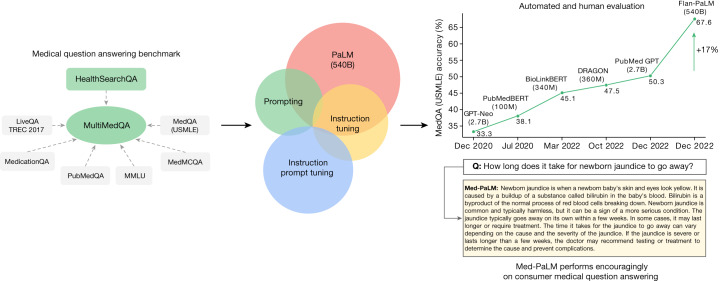
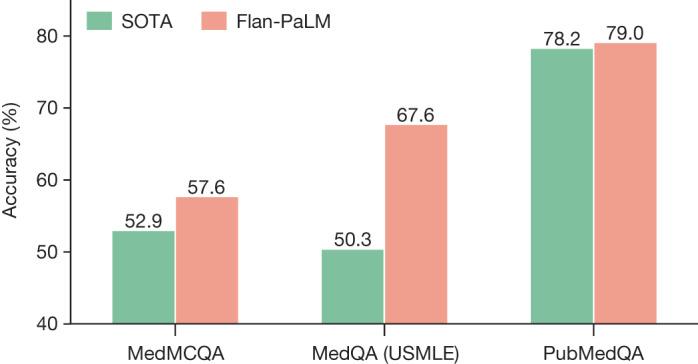
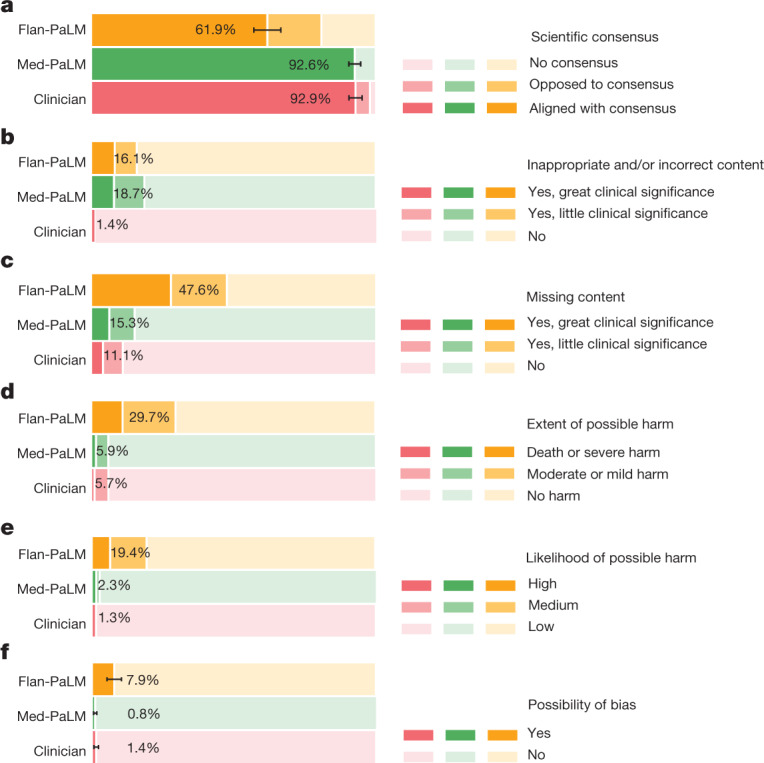
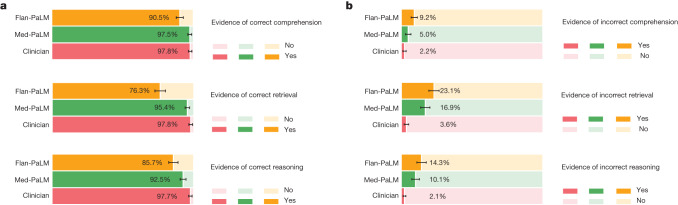
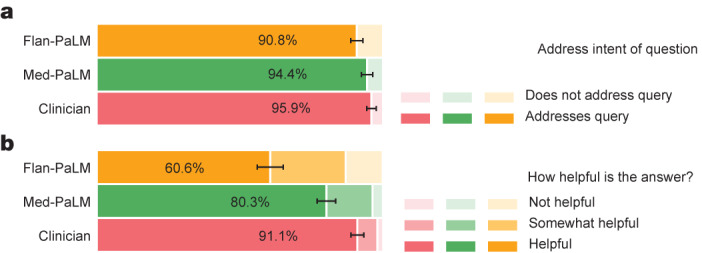
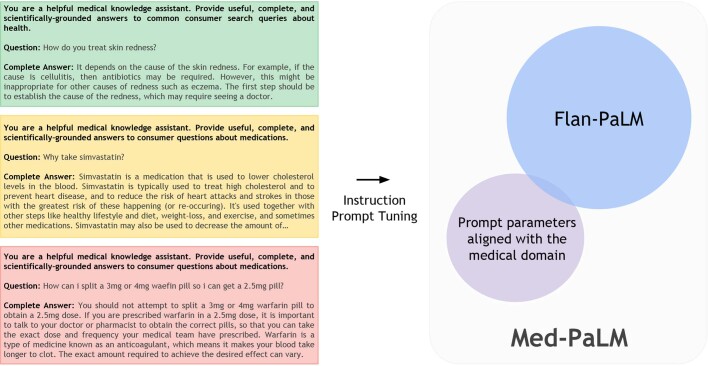
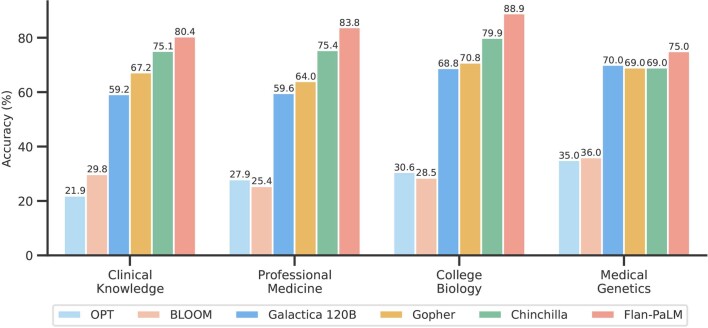
Large language models (LLMs) have demonstrated impressive capabilities, but the bar for clinical applications is high. Attempts to assess the clinical knowledge of models typically rely on automated evaluations based on limited benchmarks. Here, to address these limitations, we present MultiMedQA, a benchmark combining six existing medical question answering datasets spanning professional medicine, research and consumer queries and a new dataset of medical questions searched online, HealthSearchQA. We propose a human evaluation framework for model answers along multiple axes including factuality, comprehension, reasoning, possible harm and bias. In addition, we evaluate Pathways Language Model 1 (PaLM, a 540-billion parameter LLM) and its instruction-tuned variant, Flan-PaLM 2 on MultiMedQA. Using a combination of prompting strategies, Flan-PaLM achieves state-of-the-art accuracy on every MultiMedQA multiple-choice dataset (MedQA 3 , MedMCQA 4 , PubMedQA 5 and Measuring Massive Multitask Language Understanding (MMLU) clinical topics 6 ), including 67.6% accuracy on MedQA (US Medical Licensing Exam-style questions), surpassing the prior state of the art by more than 17%. However, human evaluation reveals key gaps. To resolve this, we introduce instruction prompt tuning, a parameter-efficient approach for aligning LLMs to new domains using a few exemplars. The resulting model, Med-PaLM, performs encouragingly, but remains inferior to clinicians. We show that comprehension, knowledge recall and reasoning improve with model scale and instruction prompt tuning, suggesting the potential utility of LLMs in medicine. Our human evaluations reveal limitations of today’s models, reinforcing the importance of both evaluation frameworks and method development in creating safe, helpful LLMs for clinical applications.
Overview
The claims and statistics of this paper haven’t been checked yet.
Free: it reads the open-access text and checks the first 5 claims that cite a source we can check. Create a free account to check every claim.
Integrity signals
Registry
Cites
Statistics
Figures
Verification
Claims the paper makes
The claims and statistics of this paper haven’t been checked yet.
Free: it reads the open-access text and checks the first 5 claims that cite a source we can check. Create a free account to check every claim.
Claims other papers make about this one
Each is checked against this paper’s own text: does it say what the citing paper says it does?
The cited source doesn’t support the claim as written.
In the citing paper
“Notably, in healthcare, medical NLP benchmarks like MedQA7, PubMedQA8 and the Massive Multitask Language Understanding (MMLU) serve as the de-facto reporting standard for state-of-the-art medical LLMs9–11 with claims of ‘superhuman’ performance in patient-facing tasks12.”
From Medical large language models are vulnerable to data-poisoning attacks (2025) · cites this paper as [9]
Checked by a reasoning model — may be wrong.
Experimental — accuracy not yet measuredThe cited source doesn’t support the claim as written.
In the citing paper
“Med-PaLM achieved a passing score of 67.6% on USMLE-style MedQA questions”
From Trustworthy Medical Question Answering: An Evaluation-Centric Survey (2025) · cites this paper as Singhal et al., 2023
Checked by a reasoning model — may be wrong.
Experimental — accuracy not yet measuredThe source backs part of the claim, not all of it — or backs it for a different population, condition or comparison.
In the citing paper
“Previous work has demonstrated potential across clinical NLP tasks22,23, adapting to the medical domain by training a new model24,25, fine-tuning an existing model26,27 or supplying task-specific examples in the model prompt27,28.”
From Adapted large language models can outperform medical experts in clinical text summarization (2024) · cites this paper as [24]
Experimental — accuracy not yet measuredThe source backs part of the claim, not all of it — or backs it for a different population, condition or comparison.
In the citing paper
“For example, Google’s Med-PaLM 2 demonstrated proficiency in medical question answering, achieving performance comparable to clinical experts on medical licensing examinations and performing better than generalist physicians in real-world medical questions.70”
From A foundational architecture for AI agents in healthcare (2025) · cites this paper as [70]
Experimental — accuracy not yet measuredThe source backs part of the claim, not all of it — or backs it for a different population, condition or comparison.
In the citing paper
“Large language models (LLMs) and multimodal foundation models now exhibit enhanced reasoning capabilities, natural language understanding, and the ability to interact with external tools such as calculators, databases, and application programming interfaces.”
From Medical AI Agents for Clinical Decision Support: Viewpoint Using the Planning, Action, Reflection, and Memory (PARM) Analytical Lens (2026) · cites this paper as [8]
Experimental — accuracy not yet measured
40 more claims about this paper
Create a free account to see every claim other papers make about this one.
Self-check
Percentages, sums and reported differences re-computed from the paper’s own numbers.
The self-check needs the paper’s full text.
Citations
Cites
Vaswani, A., Shazeer, N., Parmar, N., Uszkoreit, J., Jones, L., Gomez, A. N., Kaiser, L., & Polosukhin, I. (2017) · arXiv · doi:10.48550/arxiv.1706.03762 · Cited by 120,404 · cited 1×
“They owe their success to scaling up the training of transformer-based models [84].”
BackgroundExploring the Limits of Transfer Learning with a Unified Text-to-Text Transformer
Raffel, C., Shazeer, N., Roberts, A., Lee, K., Narang, S., Matena, M., Zhou, Y., Li, W., & Liu, P. J. (2019) · arXiv · doi:10.48550/arxiv.1910.10683 · Cited by 31,859 · cited 1×
“Large language models (LLMs) Over the past few years, LLMs have shown impressive performance on natural language processing (NLP) tasks [12, 14, 15, 30, 69, 70, 73, 89, 91, 99].”
BackgroundLanguage Models are Few-Shot Learners
Brown, T. B., Mann, B., Ryder, N., Subbiah, M., Kaplan, J., Dhariwal, P., Neelakantan, A., Shyam, P., Sastry, G., Askell, A., et al. (2020) · arXiv · doi:10.48550/arxiv.2005.14165 · Cited by 23,372
BLEU: a method for automatic evaluation of machine translation
Papineni, K., Roukos, S., Ward, T., & Zhu, W.-J. (2001) · Proceedings of the 40th Annual Meeting on Association for Computational Linguistics - ACL '02 · doi:10.3115/1073083.1073135 · Cited by 21,344
Decoupled Weight Decay Regularization
Loshchilov, I., & Hutter, F. (2017) · arXiv · doi:10.48550/arxiv.1711.05101 · Cited by 12,522
Scaling Laws for Neural Language Models
Kaplan, J., McCandlish, S., Henighan, T., Brown, T. B., Chess, B., Child, R., Gray, S., Radford, A., Wu, J., & Amodei, D. (2020) · arXiv · doi:10.48550/arxiv.2001.08361 · Cited by 9,550 · cited 1×
“It has been shown that model performance and data-efficiency scales with model size and dataset size [37].”
BioBERT: a pre-trained biomedical language representation model for biomedical text mining
Lee, J., Yoon, W., Kim, S., Kim, D., Kim, S., So, C. H., & Kang, J. (2020) · Bioinformatics · doi:10.1093/bioinformatics/btz682 · Cited by 7,218
Boateng, G. O., Neilands, T. B., Frongillo, E. A., Melgar-Quiñonez, H. R., & Young, S. L. (2018) · Frontiers in Public Health · doi:10.3389/fpubh.2018.00149 · Cited by 5,925
Chain-Of-Thought Prompting Elicits Reasoning in Large Language Models
Wei, J., Wang, X., Schuurmans, D., Bosma, M., Ichter, B., Xia, F., Chi, E., Le, Q. V., & Zhou, D. (2022) · Advances in Neural Information Processing Systems 35 · doi:10.52202/068431-1800 · Cited by 4,505
Self-citationLiu, P., Yuan, W., Fu, J., Jiang, Z., Hayashi, H., & Neubig, G. (2023) · ACM Computing Surveys · doi:10.1145/3560815 · Cited by 4,361
Research works printed but not linked: 2
- Abacha, A. B. et al. in Studies in Health Technology and Informatics (eds Ohno-Machado, L. & Séroussi, B.) 25–29 (IOS Press, 2019).
- Matheny, M., Israni, S. T., Ahmed, M. & Whicher, D. eds. Artificial Intelligence in Health Care: The Hope, the Hype, the Promise, the Peril (National Academy of Medicine, 2022). 39146448
Cited by
Items 401–500 of 1,129
Generative Artificial Intelligence in Mental Healthcare: An Ethical Evaluation
Blease, C., & Rodman, A. M. (2024) · Current Treatment Options in Psychiatry · doi:10.1007/s40501-024-00340-x · Cited by 82
“Studies show some medically trained bots and humans perform at similar levels [28, 46].”
InfluentialMohammadabadi, S. M. S., Kara, B. C., Eyüpoğlu, C., Uzay, C., Tosun, M. S., & Karakuş, O. (2025) · Electronics · doi:10.3390/electronics14183580 · Cited by 90
Hadi, M. U., tashi, Q. A., Qureshi, R., Shah, A., muneer, A., Irfan, M., Zafar, A., Shaikh, M. B., Akhtar, N., Wu, J., et al. (2023) · doi:10.36227/techrxiv.23589741.v3 · Cited by 53
Development and Evaluation of a Retrieval-Augmented Large Language Model Framework for Ophthalmology
Luo, M.-J., Pang, J., Bi, S., Lai, Y., Zhao, J., Shang, Y., Cui, T., Yang, Y., Lin, Z., Zhao, L., et al. (2024) · JAMA Ophthalmology · doi:10.1001/jamaophthalmol.2024.2513 · Cited by 70
Suchikova, Y., Tsybuliak, N., Teixeira da Silva, J. A., & Nazarovets, S. (2026) · Accountability in Research · doi:10.1080/08989621.2025.2544331 · Cited by 70
The transition from genomics to phenomics in personalized population health
Yurkovich, J. T., Evans, S. J., Rappaport, N., Boore, J. L., Lovejoy, J. C., Price, N. D., & Hood, L. (2023) · Nature Reviews Genetics · doi:10.1038/s41576-023-00674-x · Cited by 82
“Recently, large language models (LLMs) and their underlying trans-former technology have demonstrated potential in helping deliver personalized population health 117,118 .”
Chorus: Foundation Models for Unified Data Discovery and Exploration
Kayali, M., Lykov, A., Fountalis, I., Vasiloglou, N., Olteanu, D., & Suciu, D. M. (2024) · Proceedings of the VLDB Endowment · doi:10.14778/3659437.3659461 · Cited by 91
Abbas, S. R., Seol, H., Abbas, Z., & Lee, S. W. (2025) · Healthcare · doi:10.3390/healthcare13141642 · Cited by 80
“While these models show promise, they require significant advancement in natural language understanding, multimodal processing, and interoperability [113].”
Shao, Y., Tang, X., Sohn, J., Chen, J., Liao, Y., Zhang, J., Xiang, J., Wu, F., Zhao, Y., Wu, C., et al. (2026) · Patterns · doi:10.1016/j.patter.2026.101658 · Cited by 69
He, K., Mao, R., Lin, Q., Ruan, Y., Lan, X., Feng, M., & Cambria, E. (2024) · doi:10.2139/ssrn.4809363 · Cited by 69
ChatGPT’s Response Consistency: A Study on Repeated Queries of Medical Examination Questions
Funk, P. F., Hoch, C. C., Knoedler, S., Knoedler, L., Cotofana, S., Sofo, G., Bashiri Dezfouli, A., Wollenberg, B., Guntinas-Lichius, O., & Alfertshofer, M. (2024) · European Journal of Investigation in Health, Psychology and Education · doi:10.3390/ejihpe14030043 · Cited by 69
A bibliometric analysis of the rise of ChatGPT in medical research
Barrington, N. M., Gupta, N., Musmar, B., Doyle, D., Panico, N., Godbole, N., Reardon, T., & D’Amico, R. S. (2023) · Medical Sciences · doi:10.3390/medsci11030061 · Cited by 69
The Emerging Role of Generative Artificial Intelligence in Medical Education, Research, and Practice
Shoja, M. M., Van de Ridder, J. M. M., & Rajput, V. (2023) · Cureus · doi:10.7759/cureus.40883 · Cited by 69
“Med-PaLM (Mountain View, CA, USA) and DeepMind (London, UK), both developed by Google, are LLMs geared toward medicine that produce answers that align with the scientific consensus in 92.9% of cases [34].”
InfluentialA review of LLMs and their applications in the architecture, engineering and construction industry
Kampelopoulos, D., Tsanousa, A., Vrochidis, S., & Kompatsiaris, I. (2025) · Artificial Intelligence Review · doi:10.1007/s10462-025-11241-7 · Cited by 69
How artificial intelligence could transform emergency care
Kachman, M. M., Brennan, I., Oskvarek, J. J., Waseem, T. C., & Pines, J. M. (2024) · The American Journal of Emergency Medicine · doi:10.1016/j.ajem.2024.04.024 · Cited by 85
Large language models for biomedicine: foundations, opportunities, challenges, and best practices
Sahoo, S. S., Plasek, J. M., Xu, H., Uzuner, Ö., Cohen, T., Yetisgen, M., Liu, H., Meystre, S., & Wang, Y. (2024) · Journal of the American Medical Informatics Association · doi:10.1093/jamia/ocae074 · Cited by 57
Scalable information extraction from free text electronic health records using large language models
Gu, B., Shao, V., Liao, Z., Carducci, V., Brufau, S. R., Yang, J., & Desai, R. J. (2025) · BMC Medical Research Methodology · doi:10.1186/s12874-025-02470-z · Cited by 80
“With their capabilities of zero-shot and few-shot learning, LLMs can extract target clinical information from EHR notes without the need for complex rules creation or extensive data annotation [17–19].”
A guide to prompt design: foundations and applications for healthcare simulationists
Maaz, S., Palaganas, J. C., Palaganas, G., & Bajwa, M. (2025) · Frontiers in Medicine · doi:10.3389/fmed.2024.1504532 · Cited by 84
“Specialized healthcare solutions such as Azure by IBM Cloud (68), MedPaLM (69), and MedLM (70) reportedly address privacy concerns by offering different data safety measures.”
Qibo: A Large Language Model for traditional Chinese medicine
Jia, Y., Ji, X., Wang, X., Zhang, H., Meng, Z., Zhang, J., Chen, Z., Zhuang, P., Xu, D., Guo, W., et al. (2025) · Expert Systems with Applications · doi:10.1016/j.eswa.2025.127672 · Cited by 75
Self-citationLarge Language Models in Medical Diagnostics: Scoping Review With Bibliometric Analysis
Su, H., Sun, Y., Li, R., Zhang, A., Yang, Y., Xiao, F., Duan, Z., Chen, J., Hu, Q., Yang, T., et al. (2025) · Journal of Medical Internet Research · doi:10.2196/72062 · Cited by 81
“Models such as MedPaLM [20], GPT-4, and MedPaLM2 clearly indicate a trend that suggests a substantial increase in the accuracy of LLMs in answering questions in the MedQA dataset in a short period.”
Evaluation and mitigation of cognitive biases in medical language models
Schmidgall, S., Harris, C., Essien, I., Olshvang, D., Rahman, T., Kim, J. W., Ziaei, R., Eshraghian, J., Abadir, P., & Chellappa, R. (2024) · npj Digital Medicine · doi:10.1038/s41746-024-01283-6 · Cited by 68
“However, several of the highest-performing medical language models use closed-sourcemodelweightsandmodelinference 25,26 .”
Szczesniewski, J. J., Fouz, C. T., Alba, A. R., Díaz-Goizueta, F. J., García-Tello, A., & González, L. L. (2023) · World Journal of Urology · doi:10.1007/s00345-023-04563-0 · Cited by 72
“In the future, there may be the possibility of developing customized medical dialogue boxes [13, 14, 17].”
BackgroundWu, H., Li, Y., Lin, A., Fan, H., Fan, K., Xie, J., & Luo, W. (2024) · International Journal of Geographical Information Systems · doi:10.1080/13658816.2024.2379468 · Cited by 77
“Second, LLMs go beyond simple ‘fill-in-the-blank’ models by leveraging their vast exposure to online data, allowing them to reason and infer common sense (Singhal et al .”
Development of a large-scale medical visual question-answering dataset
Zhang, X., Wu, C., Zhao, Z., Lin, W., Zhang, Y., Wang, Y., & Xie, W. (2024) · Communications Medicine · doi:10.1038/s43856-024-00709-2 · Cited by 116
Nia, M. F., Ahmadi, M., & Irankhah, E. (2025) · Frontiers in Dental Medicine · doi:10.3389/fdmed.2024.1456208 · Cited by 82
Healthcare agent: eliciting the power of large language models for medical consultation
Ren, Z., Zhan, Y., Yu, B., Ding, L., Xu, P., & Tao, D. (2025) · npj Artificial Intelligence · doi:10.1038/s44387-025-00021-x · Cited by 86
MDCrow: automating molecular dynamics workflows with large language models
Campbell, Q., Cox, S., Medina, J., Watterson, B., & White, A. (2026) · Machine Learning Science and Technology · doi:10.1088/2632-2153/ae4b07 · Cited by 87
“…improvement in automating and creating MD toolkits (EasyAmber [18], PACKMOL [19], MDAnalysis [20], MDTraj [21], OpenMM [22], GROMACS [23], LAMMPS [24]) and user-friendly interfaces and visualizations (MDANSE [25], QwikMD [26], MDWiZ [27], METAGUI [28], VMD [29], Gromita [30], PlayMolecule [31]).”
Ghaffarzadegan, N., Majumdar, A., Williams, R., & Hosseinichimeh, N. (2023) · arXiv · doi:10.48550/arxiv.2309.11456 · Cited by 68
“…et al., 2023), providing support for mental wellbeing (Ma et al., 2023), exploring economic behavior (Horton, 2023), predicting U.S. Supreme Court decisions (Hamilton, 2023), assisting with research design and experiments (Boiko et al., 2023), and encoding clinical knowledge (Singhal et al., 2023).”
Answering real-world clinical questions using large language model based systems
Low, Y. S., Jackson, M. L., Hyde, R. J., Brown, R. E., Sanghavi, N. M., Baldwin, J. D., Pike, C. W., Muralidharan, J., Hui, G., Alexander, N., et al. (2024) · arXiv · doi:10.48550/arxiv.2407.00541 · Cited by 68
Distilling large language models for matching patients to clinical trials
Nievas, M., Basu, A., Wang, Y., & Singh, H. (2024) · Journal of the American Medical Informatics Association · doi:10.1093/jamia/ocae073 · Cited by 67
Toward Clinical Generative AI: Conceptual Framework
Bragazzi, N. L., & Garbarino, S. (2024) · JMIR AI · doi:10.2196/55957 · Cited by 57
“To overcome these shortcomings, Singhal et al [25] recently introduced MultiMedQA, a comprehensive benchmark that merges 6 medical question-answering data sets covering a range of areas from professional medicine to consumer queries and includes HealthSearchQA, a new data set of medically related…”
BackgroundFrom intention to implementation: automating biomedical research via LLMs
Luo, Y., Shi, L., Li, Y., Zhuang, A., Gong, Y., Liu, L., & Chen, L. (2025) · Science China Information Sciences · doi:10.1007/s11432-024-4485-0 · Cited by 88
“Therefore, we have seen large amounts of applications based on LLMs [35–39].”
Large language models for the mental health community: framework for translating code to care
Malgaroli, M., Schultebraucks, K., Myrick, K., Loch, A., Ospina-Pinillos, L., Choudhury, T., Kotov, R., de Choudhury, M., & Torous, J. (2025) · The Lancet Digital Health · doi:10.1016/s2589-7500(24)00255-3 · Cited by 64
An eyecare foundation model for clinical assistance: a randomized controlled trial
Wu, Y.-L., Qian, B., Li, T., Qin, Y., Guan, Z., Chen, T., Jia, Y., Zhang, P., Zeng, D., Moroi, S. E., et al. (2025) · Nature Medicine · doi:10.1038/s41591-025-03900-7 · Cited by 97
Gong, E. J., Bang, C. S., Lee, J. J., & Baik, G. H. (2025) · Journal of Medical Internet Research · doi:10.2196/84120 · Cited by 96
“Our systematic review identified 39 medical LLM benchmarks [10,12,16,17, 34-68 34-68] spanning from 2017 to The collective scope of these benchmarks is substantial: over 2.3 million questions and clinical scenarios across 45 languages spanning 172 medical specialties, with individual benchmarks…”
InfluentialBias Patterns in the Application of LLMs for Clinical Decision Support
Poulain, R., Adiba, F. I., Fayyaz, H., & Beheshti, R. (2026) · Delaware Journal of Public Health · doi:10.32481/djph.2026.03.10 · Cited by 76
“In particular, several preliminary studies have been performed in the same context as general LLMs, such as investigating the biases toward different demographics in medical question answering [47; 63; 40].”
BackgroundDevelopment of a large-scale grounded vision language dataset for chest CT analysis
Zhang, X., Wu, C., Zhao, Z., Lei, J., Tian, W., Zhang, Y., Xie, W., & Wang, Y. (2025) · Scientific Data · doi:10.1038/s41597-025-05922-9 · Cited by 82
Evaluation of large language models as a diagnostic aid for complex medical cases
Ríos-Hoyo, A., Shan, N. L., Li, A., Pearson, A. T., Pusztai, L., & Howard, F. M. (2024) · Frontiers in Medicine · doi:10.3389/fmed.2024.1380148 · Cited by 66
PMC-VQA: Visual Instruction Tuning for Medical Visual Question Answering
Zhang, X., Wu, C., Zhao, Z., Lin, W., Zhang, Y., Wang, Y., & Xie, W. (2023) · arXiv · doi:10.48550/arxiv.2305.10415 · Cited by 66
“Notably, even in domains where expert knowledge is supposed to play a critical role, like medical diagnosis, these language models have also achieved impressive success, passing the United States Medical Licensing Examination (USMLE) [13, 17, 26, 32].”
BackgroundHow Do Large Language Models Capture the Ever-changing World Knowledge? A Review of Recent Advances
Zhang, Z., Fang, M., Chen, L., Namazi‐Rad, M., & Wang, Y.-X. (2023) · Conference on Empirical Methods in Natural Language Processing (EMNLP) · doi:10.18653/v1/2023.emnlp-main.516 · Cited by 117
Azimi, I., Qi, M., Li, W., Rahmani, A. M., & Li, Y. (2025) · Scientific Reports · doi:10.1038/s41598-024-85003-w · Cited by 77
“Recent studies have explored the role of fine-tuning 32,62,63 and agentic methods 12,23,64 in healthcare and nutrition applications.”
Collaborative large language models for automated data extraction in living systematic reviews
Khan, M. A., Ayub, U., Naqvi, S. A. A., Khakwani, K. Z. R., Sipra, Z. B. R., Raina, A., Zhou, S., He, H., Saeidi, A., Hasan, B., et al. (2025) · Journal of the American Medical Informatics Association · doi:10.1093/jamia/ocae325 · Cited by 50
Phan, L., Gatti, A., Han, Z., Li, N., Hu, J., Zhang, H., Zhang, C. B. C., Shaaban, M., Ling, J., Shi, S., et al. (2025) · arXiv · doi:10.48550/arxiv.2501.14249 · Cited by 65
Data-Centric Foundation Models in Computational Healthcare: A Survey
Zhang, Y., Gao, J. G., Tan, Z., Zhou, L., Ding, K., Zhou, M., Zhang, S., & Wang, D. (2026) · ACM Computing Surveys · doi:10.1145/3800677 · Cited by 75
“Researchers make efforts to pre-train FMs based on large-scale unlabeled healthcare data for health record examination [6, 79, 214], medical imaging diagnosis [8, 96], and protein sequence analysis [35, 133].”
A survey for large language models in biomedicine
Wang, C., Li, M., He, J., Wang, Z., Darzidehkalani, E., Chen, Z., Ye, J., Li, T., Su, Y., Ke, J., et al. (2025) · Artificial Intelligence in Medicine · doi:10.1016/j.artmed.2025.103268 · Cited by 77
Phan, L. (2025) · doi:10.21203/rs.3.rs-6615297/v1 · Cited by 65
Ke, Y., Yang, R., Lie, S. A., Lim, T. X. Y., Ning, Y., Li, I., Abdullah, H. R., Ting, D. S. W., & Liu, N. (2024) · Journal of Medical Internet Research · doi:10.2196/59439 · Cited by 64
“…while LLMs have demonstrated potential as a valuable clinical aid in correcting cognitive biases, the implementation of such technology in health care necessitates rigorous ethical and regulatory oversight [52] and should continue to augment rather than replace the human clinician’s expertise [14].”
Remy, F., Demuynck, K., & Demeester, T. (2024) · Journal of the American Medical Informatics Association · doi:10.1093/jamia/ocae029 · Cited by 64
CORAL: Expert-Curated Oncology Reports to Advance Language Model Inference
Sushil, M., Kennedy, V. E., Mandair, D., Miao, B. Y., Zack, T., & Butte, A. J. (2024) · NEJM AI · doi:10.1056/aidbp2300110 · Cited by 64
The impending impacts of large language models on medical education
Ahn, S. (2023) · Korean Journal of Medical Education · doi:10.3946/kjme.2023.253 · Cited by 62
“6% on MedQA (US Medical License Exam) questions [3].”
BackgroundTransforming clinical trials: the emerging roles of large language models
Ghim, J.-L., & Ahn, S. (2023) · Translational and Clinical Pharmacology · doi:10.12793/tcp.2023.31.e16 · Cited by 60
“They have been demonstrated to have considerable potential in handling complex medical information [5].”
Bozkir, E., Özdel, S., Lau, K. H. C., Wang, M., Gao, H., & Kasneci, E. (2024) · ACM Conference on Conversational User Interfaces (CUI) · doi:10.1145/3640794.3665563 · Cited by 75
“In fact, possibilities and related opportunities have been emphasized for different communities, such as education [34] and medicine [62]; however, they have not been addressed and studied in depth in the XR domain yet, except from few works mentioning their potentials as conversation agents in XR…”
BackgroundUtility of artificial intelligence‐based large language models in ophthalmic care
Biswas, S., Davies, L. N., Sheppard, A. L., Logan, N. S., & Wolffsohn, J. S. (2024) · Ophthalmic and Physiological Optics · doi:10.1111/opo.13284 · Cited by 73
“24 The later versions, GPT- 25 In addition, a team of physicians found that ChatGPT generated written responses to healthcare-related patient questions collected from a public social media forum, that were comparable to those by physicians in quality and empathy, even surpassing some physician…”
BackgroundLLM-Based Framework for Administrative Task Automation in Healthcare
Gebreab, S. A., Salah, K., Jayaraman, R., Habib ur Rehman, M., & Ellaham, S. (2024) · 2024 12th International Symposium on Digital Forensics and Security (ISDFS) · doi:10.1109/isdfs60797.2024.10527275 · Cited by 53
“Med-PaLM [10] and Med-PaLM 2 [11] are two fine-tuned versions of the Flan-Palm model by Google.”
MethodMedical Ethics of Large Language Models in Medicine
Ong, J. C. L., Chang, S. Y.-H., William, W., Butte, A. J., Shah, N. H., Chew, L. S. T., Liu, N., Doshi-Velez, F., Lu, W., Savulescu, J., et al. (2024) · NEJM AI · doi:10.1056/aira2400038 · Cited by 58
Large Language Models for More Efficient Reporting of Hospital Quality Measures
Boussina, A., Krishnamoorthy, R., Quintero, K., Joshi, S., Wardi, G., Pour, H., Hilbert, N., Malhotra, A., Hogarth, M., Sitapati, A. M., et al. (2024) · NEJM AI · doi:10.1056/aics2400420 · Cited by 55
Self-eXplainable AI for medical image analysis: A survey and new outlooks
Hou, J., Liu, S., Bie, Y., Wang, H., Tan, A., Luo, L., & Chen, H. (2026) · Information Fusion · doi:10.1016/j.inffus.2026.104791 · Cited by 66
Wellawatte, G. P., & Schwaller, P. (2025) · Communications Chemistry · doi:10.1038/s42004-024-01393-y · Cited by 76
“PMC-LLaMA 34 , Galactica 35 , and Med-PaLM 36 are a few more examples of fi netuned LLMs for scienti fi c research.”
Xu, P., Chen, X., Zhao, Z., & Shi, D. (2024) · British Journal of Ophthalmology · doi:10.1136/bjo-2023-325054 · Cited by 63
“The image modalities and diagnoses are presented in online supplemental table 1.”
Introduction to large language models (LLMs) for dementia care and research
Treder, M. S., Lee, S., & Tsvetanov, K. A. (2024) · Frontiers in Dementia · doi:10.3389/frdem.2024.1385303 · Cited by 63
Conceptualizing generative AI as style engines: Application archetypes and implications
Riemer, K., & Peter, S. (2024) · International Journal of Information Management · doi:10.1016/j.ijinfomgt.2024.102824 · Cited by 63
ChatGPT as a tool for medical education and clinical decision-making on the wards: Case study
Skryd, A., & Lawrence, K. (2024) · JMIR Formative Research · doi:10.2196/51346 · Cited by 63
“Popular general-use commercial LLMs include ChatGPT (OpenAI), Palm (Google), and LLaMA (Meta); health care–specific LLMs also in development but less widely available include Med-PaLM (Google), PMC-LLaMA (Meta), and BioGPT (Microsoft Corp) [2].”
MethodSummarizing, Simplifying, and Synthesizing Medical Evidence using GPT-3 (with Varying Success)
Shaib, C., Li, M., Joseph, S., Marshall, I., Li, J. J., & Wallace, B. (2023) · Proceedings of the 61st Annual Meeting of the Association for Computational Linguistics (Volume 2: Short Papers) · doi:10.18653/v1/2023.acl-short.119 · Cited by 44
Examining ChatGPT Performance on USMLE Sample Items and Implications for Assessment
Yaneva, V., Baldwin, P., Jurich, D. P., Swygert, K., & Clauser, B. E. (2024) · Academic Medicine · doi:10.1097/acm.0000000000005549 · Cited by 60
GPT-4 can pass the Korean National Licensing Examination for Korean Medicine Doctors
Jang, D., Yun, T.-R., Lee, C.-Y., Kwon, Y.-K., & Kim, C.-E. (2023) · PLOS Digital Health · doi:10.1371/journal.pdig.0000416 · Cited by 59
Large language models for science and medicine
Telenti, A., Auli, M., Hie, B. L., Maher, C., Saria, S., & Ioannidis, J. P. A. (2024) · European Journal of Clinical Investigation · doi:10.1111/eci.14183 · Cited by 54
“46 This LLM used a pre-training corpus that included significant quantities of high-quality medical content.”
MethodChen, Z., Lin, Z., Yang, J., Chen, C., Liu, D., Shan, L., Hu, Y., Guo, T., & Chen, H. (2024) · Nature Communications · doi:10.1038/s41467-024-46246-3 · Cited by 67
Foundation models in ophthalmology
Chia, M. A., Antaki, F., Zhou, Y., Turner, A. W., Lee, A., & Keane, P. A. (2024) · British Journal of Ophthalmology · doi:10.1136/bjo-2024-325459 · Cited by 71
“26 27 Both generalist all-purpose and medical fine-tuned models have been evaluated.”
BackgroundResearch status and application of artificial intelligence large models in the oil and gas industry
Liu, H., Ren, Y., Li, X., Deng, Y., Wang, Y., Cao, Q., Jinyang, D. U., Lin, Z., & Wang, W. (2024) · Petroleum Exploration and Development · doi:10.1016/s1876-3804(24)60524-0 · Cited by 75
Ma, R., Cheng, Q., Yao, J., Peng, Z., Yan, M., Lu, J., Liao, J., Tian, L., Shu, W., Zhang, Y., et al. (2025) · npj Digital Medicine · doi:10.1038/s41746-025-01461-0 · Cited by 73
Mitigating the risk of health inequity exacerbated by large language models
Ji, Y., Ma, W., Sivarajkumar, S., Zhang, H., Sadhu, E. M., Li, Z., Wu, X., Visweswaran, S., & Wang, Y. (2025) · npj Digital Medicine · doi:10.1038/s41746-025-01576-4 · Cited by 83
Transparency of medical artificial intelligence systems
Kim, C., Gadgil, S. U., & Lee, S. (2025) · Nature Reviews Bioengineering · doi:10.1038/s44222-025-00363-w · Cited by 83
A Survey on the Optimization of Large Language Model-based Agents
Du, S., Zhao, J., Shi, J., Xie, Z., Jiang, X., Bai, Y., & He, L. (2026) · ACM Computing Surveys · doi:10.1145/3789261 · Cited by 26
“Moreover, some datasets often include interactions generated by multi-agent systems or refined by LLMs, which can introduce cognitive biases from the LLMs, potentially amplifying or creating new biases based on prior model behavior.”
Evaluating GPT-3.5 and GPT-4 Models on Brazilian University Admission Exams
Nunes, D., Primi, R., Pires, R., Lotufo, R., & Nogueira, R. F. (2023) · arXiv (Cornell University) · doi:10.48550/arxiv.2303.17003 · Cited by 21
“In the medical domain, researchers finetuned PALM [4], a large LM pretrained on diverse texts, on a curated set of medical-related question-answering examples [21].”
BackgroundMedExpQA: Multilingual benchmarking of Large Language Models for Medical Question Answering
Alonso, I., Oronoz, M., & Agerri, R. (2024) · Artificial Intelligence in Medicine · doi:10.1016/j.artmed.2024.102938 · Cited by 62
“…has been further motivated by rather strong claims about Large Language Models (LLMs) in medical Question Answering (QA) tasks, such as that they obtain passing marks for medical licensing exams like the United States Medical Licensing Examination (USMLE) (Singhal et al., 2023a; Nori et al., 2023).”
BackgroundMethodInfluentialMedical large language models are susceptible to targeted misinformation attacks
Han, T., Nebelung, S., Khader, F., Wang, T., Müller-Franzes, G., Kuhl, C., Försch, S., Kleesiek, J., Haarburger, C., Bressem, K. K., et al. (2024) · npj Digital Medicine · doi:10.1038/s41746-024-01282-7 · Cited by 62
“LLMsencodepriorknowledgeaboutthemedical fi eld 20,27 .”
Evaluating the Utilities of Foundation Models in Single-cell Data Analysis
Liu, T., Li, K., Wang, Y., Li, H., & Zhao, H. (2023) · doi:10.1101/2023.09.08.555192 · Cited by 62
“While FMs have seen marked success in the realms of DNA analysis [26] and biomedical NLP [27, 28], their application in single-cell research remains largely uncharted.”
Systems engineering issues for industry applications of large language model
Chen, W., Yan-yi, L., Tie-zheng, G., Li, D., Tao, H., Li, Z., Yang, Q., Hui-han, W., & Ying-you, W. (2023) · Applied Soft Computing · doi:10.1016/j.asoc.2023.111165 · Cited by 78
Systematic review: The use of large language models as medical chatbots in digestive diseases
Giuffrè, M., Kresevic, S., You, K., Dupont, J., Huebner, J., Grimshaw, A. A., & Shung, D. L. (2024) · Alimentary Pharmacology & Therapeutics · doi:10.1111/apt.18058 · Cited by 68
“55,56 We also present a quantitative cluster analysis to characterise the prompts studied across published studies.”
Liu, Y., Chen, S., Cheng, H., Yu, M., Ran, X., Mo, A., Tang, Y., & Huang, Y. (2024) · Proceedings of the CHI Conference on Human Factors in Computing Systems · doi:10.1145/3613904.3642698 · Cited by 61
Self-citationLarge Language Models and Large Multimodal Models in Medical Imaging: A Primer for Physicians
Bradshaw, T., Tie, X., Warner, J., Hu, J., Li, Q., & Li, X. (2025) · Journal of Nuclear Medicine · doi:10.2967/jnumed.124.268072 · Cited by 65
“For patients, LLM-powered chatbots are valuable tools for explaining complex medical concepts ( 54 ), simplifying diagnostic reports ( 55 ), and answering questions regarding radiologic procedures ( 56 ).”
AI-empowered human microbiome research
Tian, Z., & Zhao, F. (2025) · Gut · doi:10.1136/gutjnl-2025-335946 · Cited by 84
“42 By bridging structured omics data with unstructured biological knowledge, LLMs are reshaping our understanding of microbial communities and host interactions.”
Towards autonomous medical artificial intelligence agents
Ferber, D., Hilgers, L., Höper, C., Kinny‐Köster, B., Eckardt, J., Egger‐Heidrich, K., Bill, M., Schneider, M. M. K., Clusmann, J., Kadric, L., et al. (2026) · Nature · doi:10.1038/s41586-026-10675-5 · Cited by 85
“2 and 3).”
Yang, H., Li, M., Zhou, H., Xiao, Y., Fang, Q., Zhou, S., & Zhang, R. (2025) · Journal of Medical Internet Research · doi:10.2196/70080 · Cited by 60
A strategy for cost-effective large language model use at health system-scale
Klang, E., Apakama, D., Abbott, E. E., Vaid, A., Lampert, J., Sakhuja, A., Freeman, R., Charney, A. W., Reich, D., Kraft, M., et al. (2024) · npj Digital Medicine · doi:10.1038/s41746-024-01315-1 · Cited by 43
“Researchers have also shown that LLMs are able to encodemedicalknowledgeassessedthroughmedicalquestionanswering 3,10 .”
When Geoscience Meets Foundation Models: Toward a general geoscience artificial intelligence system
Zhang, H., Xu, J., Cui, H., Li, L., Yang, Y., Tang, C., & Boers, N. (2024) · IEEE Geoscience and Remote Sensing Magazine · doi:10.1109/mgrs.2024.3496478 · Cited by 84
“Moreover, many contemporary FMs are capable of processing both images and text, finding applications in diverse fields, such as medicine, transportation, RS, and urban planning [41], [42], [43], [44], [45], [46].”
Progress and challenges of artificial intelligence in lung cancer clinical translation
Zhu, E., Muneer, A., Zhang, J., Yang, X., Li, X., Zhou, C., Heymach, J. V., Wu, J., & Le, X. (2025) · npj Precision Oncology · doi:10.1038/s41698-025-00986-7 · Cited by 65
Collaborative, T. C. (2025) · BMJ · doi:10.1136/bmj-2024-083305 · Cited by 77
“Generative AI chatbots occupy a unique position in healthcare AI, offering interactive, language based interfaces for health information and advice, with the potential to substantially change ways of delivering medical education and patient care.”
InfluentialHolistic evaluation of large language models for medical tasks with MedHELM
Bedi, S., Cui, H., Fuentes, M., Unell, A., Wornow, M., Banda, J. M., Kotecha, N., Keyes, T., Mai, Y., Oez, M., et al. (2026) · Nature Medicine · doi:10.1038/s41591-025-04151-2 · Cited by 59
A survey on deep learning in medical ultrasound imaging
Song, K., Feng, J., & Chen, D. (2024) · Frontiers in Physics · doi:10.3389/fphy.2024.1398393 · Cited by 59
SECap: Speech Emotion Captioning with Large Language Model
Xu, Y., Chen, H., Yu, J., Huang, Q., Wu, Z., Zhang, S.-X., Li, G., Luo, Y., & Gu, R. (2024) · Proceedings of the AAAI Conference on Artificial Intelligence · doi:10.1609/aaai.v38i17.29902 · Cited by 127
Kraišniković, C., Harb, R., Plass, M., Zoughbi, W. A., Holzinger, A., & Müller, H. (2024) · Engineering Applications of Artificial Intelligence · doi:10.1016/j.engappai.2024.109561 · Cited by 69
Xu, Q., Qiu, F., Zhou, G., Zhang, C., Ding, K., Chang, F., Lu, F., Yu, Y., Ma, D., & Liu, J. (2025) · Advanced Engineering Informatics · doi:10.1016/j.aei.2025.103244 · Cited by 72
Urban planning in the era of large language models
Zheng, Y., Xu, F., Lin, Y., Santi, P., Ratti, C., Wang, Q., & Li, Y. (2025) · Nature Computational Science · doi:10.1038/s43588-025-00846-1 · Cited by 88
LLaMoCo: Instruction Tuning of Large Language Models for Optimization Code Generation
Ma, Z., Gong, Y., Guo, H., Chen, J., Ma, Y., Cao, Z., & Zhang, J. (2026) · IEEE Transactions on Evolutionary Computation · doi:10.1109/tevc.2026.3656374 · Cited by 78
“It enables the transfer of LLMs to specific experts in domains like medicine [26], law [27], and finance [28].”
Abbas, A., Rehman, M. S., & Rehman, S. S. (2024) · Cureus · doi:10.7759/cureus.55991 · Cited by 58
“These advanced models assist healthcare professionals in complex tasks, from cancer detection and categorization to adjusting insulin regimens in diabetic patients [2-4].”
BackgroundMartindale, A. P. L., Llewellyn, C. D., de Visser, R. O., Ng, B., Ngai, V., Kale, A. U., di Ruffano, L. F., Golub, R. M., Collins, G. S., Moher, D., et al. (2024) · Nature Communications · doi:10.1038/s41467-024-45355-3 · Cited by 58
Self-citationNayak, A., Alkaitis, M. S., Nayak, K., Nikolov, M., Weinfurt, K. P., & Schulman, K. (2023) · JAMA Internal Medicine · doi:10.1001/jamainternmed.2023.2561 · Cited by 56
Palermi, S., Vecchiato, M., Saglietto, A., Niederseer, D., Oxborough, D., Ortega‐Martorell, S., Olier, I., Castelletti, S., Baggish, A. L., Maffessanti, F., et al. (2024) · European Journal of Preventive Cardiology · doi:10.1093/eurjpc/zwae008 · Cited by 60
Neo, J. R. E., Ser, J. S., & Tay, S. S. (2024) · Frontiers in Digital Health · doi:10.3389/fdgth.2024.1395501 · Cited by 44
“A fourth limitation is the use of more outdated LLM frameworks over more recent or speci fi c ones such as GPT-4 and Med-PaLM.”
Background
Metadata
- Authors
- Singhal, K., Azizi, S., Tu, T., Mahdavi, S. S., Wei, J., Chung, H. W., Scales, N., Tanwani, A., Cole-Lewis, H., Pfohl, S., Payne, P., Seneviratne, M., Gamble, P., Kelly, C., Babiker, A., Schärli, N., Chowdhery, A., Mansfield, P., Demner-Fushman, D., Agüera y Arcas, B., Webster, D., Corrado, G. S., Matias, Y., Chou, K., Gottweis, J., Tomasev, N., Liu, Y., Rajkomar, A., Barral, J., Semturs, C., Karthikesalingam, A., & Natarajan, V.
- Affiliations
- Google (United States) (US)
- Corresponding author
- Singhal, Karan
- Azizi, Shekoofeh
- Karthikesalingam, Alan
- Natarajan, Vivek
- ORCID
- Singhal, Karan
- Azizi, Shekoofeh
- Mahdavi, S. Sara
- Chung, Hyung Won
- Tanwani, Ajay
- Cole-Lewis, Heather
- Seneviratne, Martin
- Kelly, Chris
- Chowdhery, Aakanksha
- Mansfield, Philip
- Webster, Dale
- Corrado, Greg S.
- Matias, Yossi
- Chou, Katherine
- Gottweis, Juraj
- Tomasev, Nenad
- Liu, Yun
- Rajkomar, Alvin
- Barral, Joelle
- Semturs, Christopher
- Karthikesalingam, Alan
- Natarajan, Vivek
- Venue
- Nature
- Published
- 2023-07-12
- Volume
- 620
- Issue
- 7972
- Pages
- 172-180
- ISSN
- 0028-0836 (ISSN-L)
- 1476-4687
- PMC
- PMC10396962
- OpenAlex
- W4384071683
- Semantic Scholar
- 6052486bc9144dc1730c12bf35323af3792a1fd0
- Cited by
- 4,083
- References
- 85
- Citations by year
- 2026: 1627 · 2025: 1275 · 2024: 933 · 2023: 247
- FWCI
- 162.53
- Type
- journal article
- Language
- en
- Update notices
- correction (2023-07-27)
- Open access
- hybrid
- doi.org
- Licence
- cc-by
- creativecommons.org/licenses/by/4.0 (tdm)
- creativecommons.org/licenses/by/4.0 (vor)
- Locations
- Nature (publishedVersion, cc-by)
- PubMed Central (publishedVersion, cc-by)
- PubMed (publishedVersion)
- arXiv (Cornell University) (submittedVersion)
- RePEc: Research Papers in Economics (submittedVersion)
- arXiv (Cornell University) (cc-by)
- Funders
- DeepMind
- U.S. National Library of Medicine
- Topics
- Health Sciences › Medicine › Health Informatics › Artificial Intelligence in Healthcare and Education
- Physical Sciences › Computer Science › Artificial Intelligence › Topic Modeling
- Physical Sciences › Computer Science › Artificial Intelligence › Machine Learning in Healthcare
- Keywords
- large language models, clinical knowledge, medical question answering, human evaluation, Arecaceae, MedQA, MedMCQA, PubMedQA, MMLU, clinical reasoning
- MeSH terms
- Clinical Competence, Computer Simulation, Humans, Licensure, Medicine, Natural Language Processing, Physicians, Bias, Knowledge, Benchmarking, Comprehension, Patient Safety, Datasets as Topic
About these checks
Registry, retraction, Cites and statistics results are computed, not judged, with one exception: a printed reference that no index lists is read once by a model before it counts as a citation error. Claims are extracted by a model and kept only when their quote appears verbatim in the text; each cited source is then checked, with a model’s help, for whether it says what the claim relies on. Those verdicts can be wrong — read the claim’s quote and the cited source before relying on one.
Statistics and arithmetic are recomputed, not judged.
Confidence bands are shown only for fields calibrated on our annotated test set. None is calibrated yet, so no band is shown.
What counts as a claim ›How we measure confidence ›How we check this ›
Are you an author, or do you see a problem with this page? Request a review
Data sources
Bibliographic data: Semantic Scholar, OpenAlex, Crossref.
Contains information from the Semantic Scholar Academic Graph Datasets, made available under the ODC Attribution License (ODC-BY 1.0).
Semantic Scholar’s data is described in: Kinney, R., et al. (2023). The Semantic Scholar Open Data Platform. arXiv:2301.10140.
